

5 am we were up and packing to head off to Lucca train station for the first of two train trips today.
It was only a 22 minute trip to Viareggio, on the Mediterranean coast. I had contemplated us riding the 22 km but given the time of day and connection to Milan, we took the easier option.
There were a flight of stairs involved in getting to our platform, and lucky Tony is strong enough to carry both loaded bikes up.
We had seats allocated in carriage four, and put the bikes there, but two blokes sitting nearby indicated we should move the bikes to carriage three. They had hanging rails there, and Tony removed our heavy rear panniers to protect the front wheels taking all the weight.
The trip followed the Mediterranean coastline via La Spezia to Genoa, lots of scenic coastline and also tunnels through the hills.
The train was packed full from Genoa and a lovely young bloke from Germany who was concluding a solo two month cycle tour sat with us, and we shared our adventures with each other.
Milan train station was super busy. People pushing and shoving to get off the train, pushed passed our bikes impatiently.
Once we escaped the station, the city streets were just as bad.
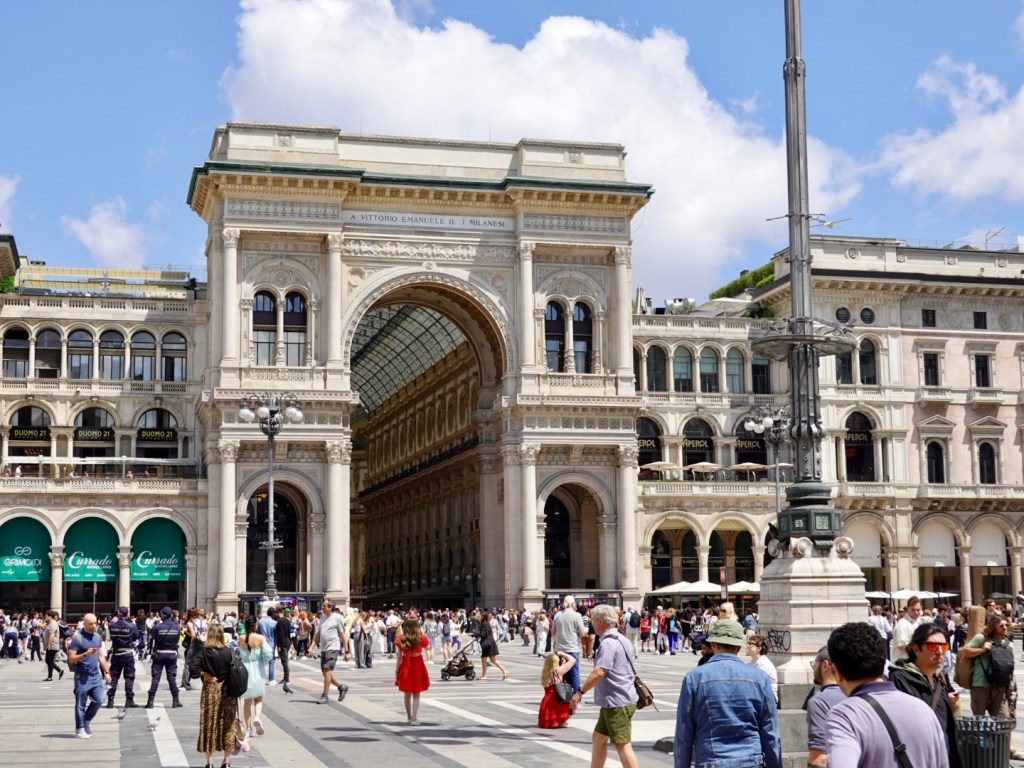
Our route took us to the famous duomo, the third largest church in Europe. How we got there in one piece is pure luck.
Red lights seems to be the new green in Milan. A seriously crazy city to cycle in. We have ridden through London and Paris without anywhere near the same hassles and pressure as Milan.
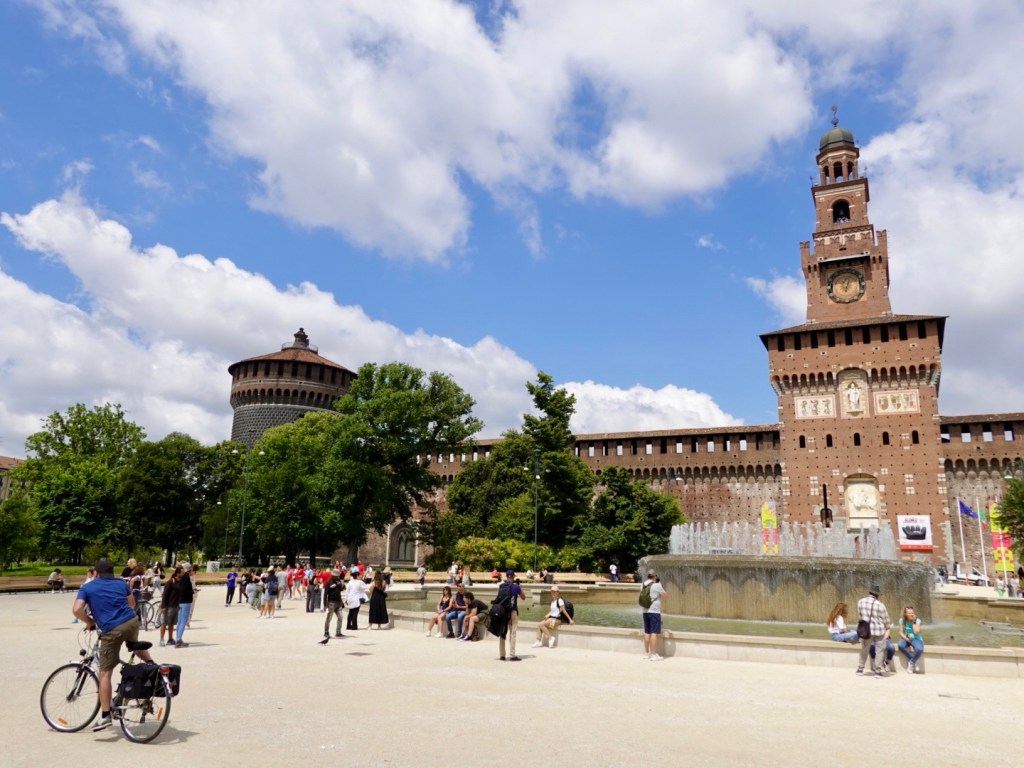
Castello Sforzesco was the first of sight we rode past. Built in the 15th century by the then Duke of Milan on the site of a 14th century fortification. It was one of the largest citadels in Europe after additional renovations and extensions in the 16th and 17th centuries.
Today is a museum.
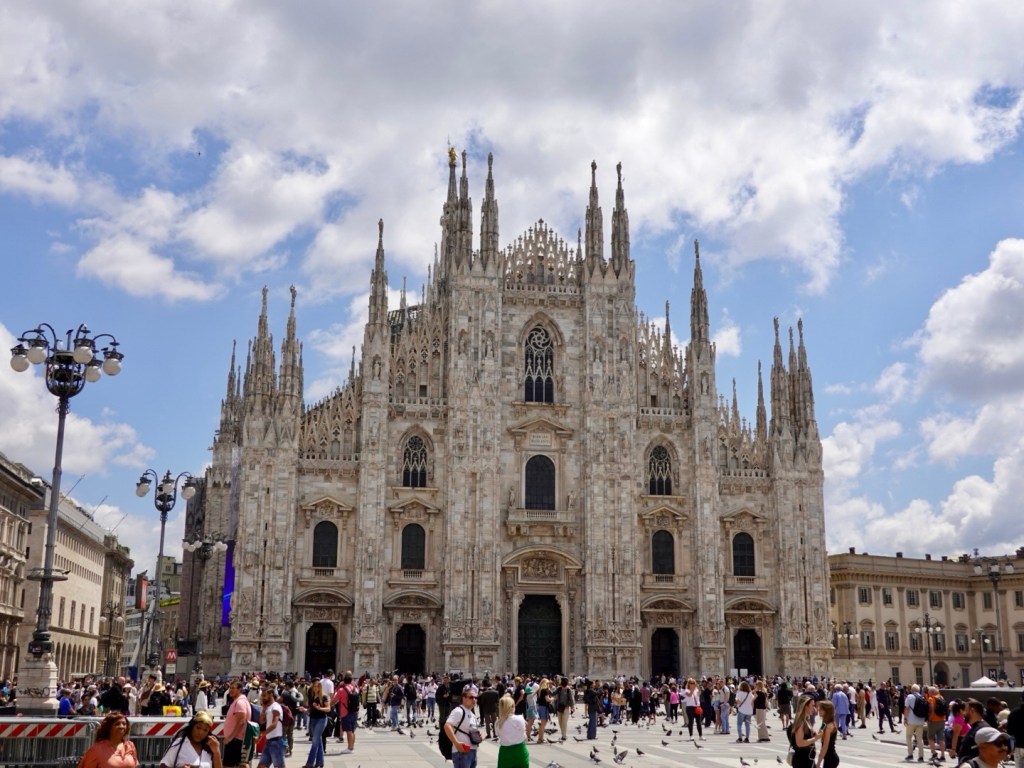
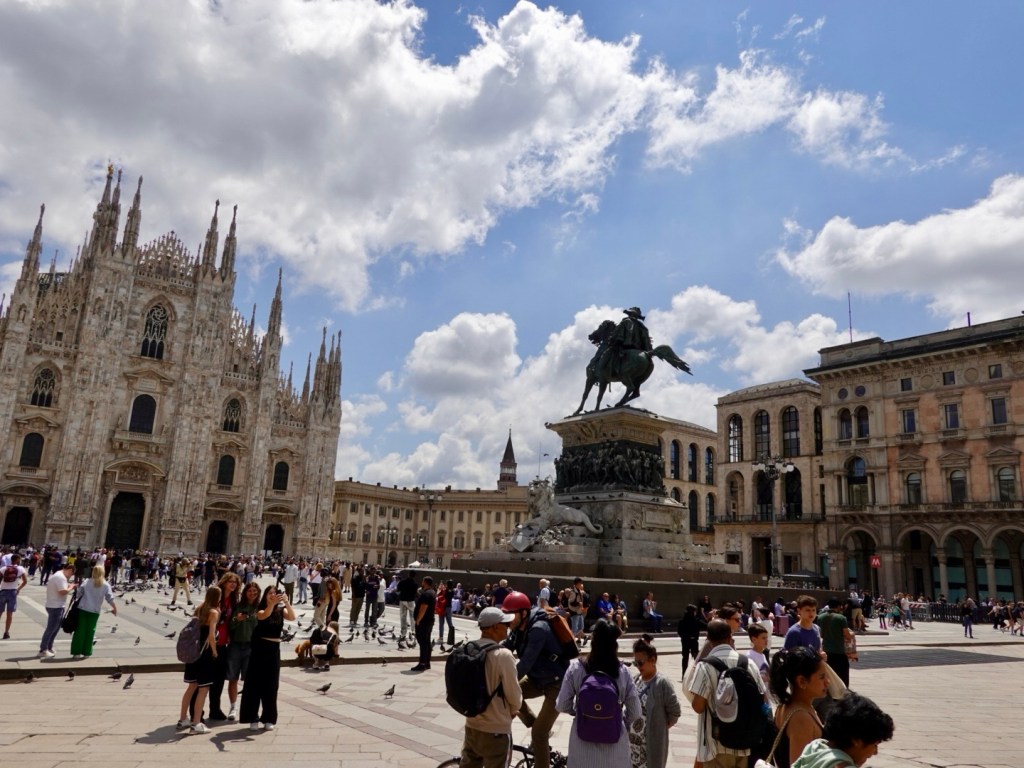
Finally we made it to the Duomo di Milano, the seat of the Archbishop of Milan.
Taking six centuries to construct, with final details completed in 1965, it is the largest cathedral in Italy ( St Peter’s basilica in Vatican City is larger, but the Vatican is a sovereign state, the smallest country in the world).
I would really like to have gone inside, but the queues were very long. A few days in Milan would be warranted on a hop on, hop off bus I think plus a pre booked tour! Another day.
We were very hungry. Very hungry not having consumed any food since about 6 pm the night before. We were up to a 19 hour or so fast!
We presumed we would grab food at the railway station, but nothing available at either bar chocolate bars from a vending machine.
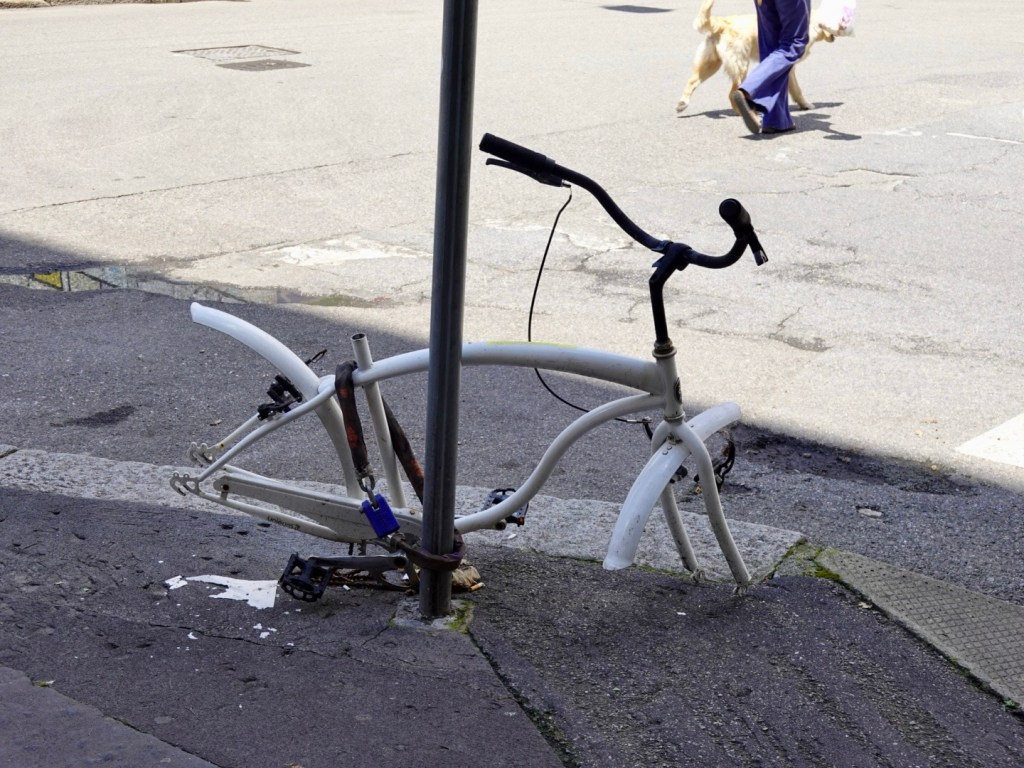
So we were keen to find somewhere a bit quieter to sit down, and about 7 km later we were ‘in the burbs’, and found a Japanese restaurant, with an outdoor area where we could park our bikes next to us.
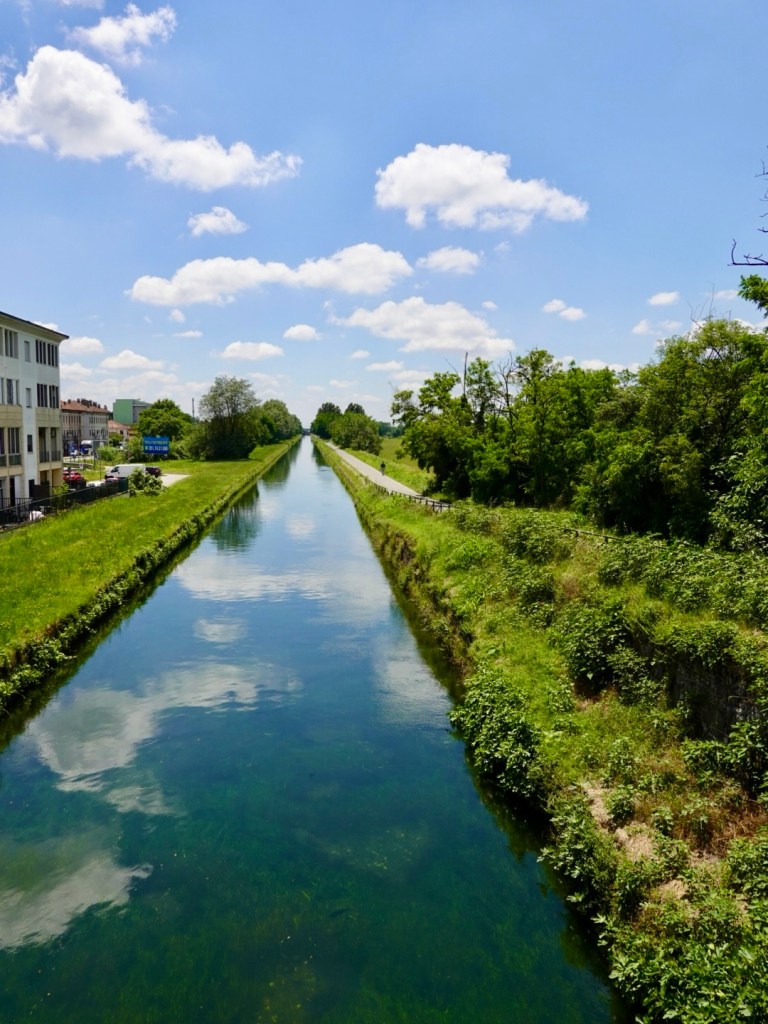
Milan’s canals were first developed in the 12th century to transport goods and defend the town. The canal network was expanded and eventually linked to the Italian lakes and Switzerland, and the Adriatic Sea to the south. Many canals were built over during the 20th century for reasons of hygiene and mobility.
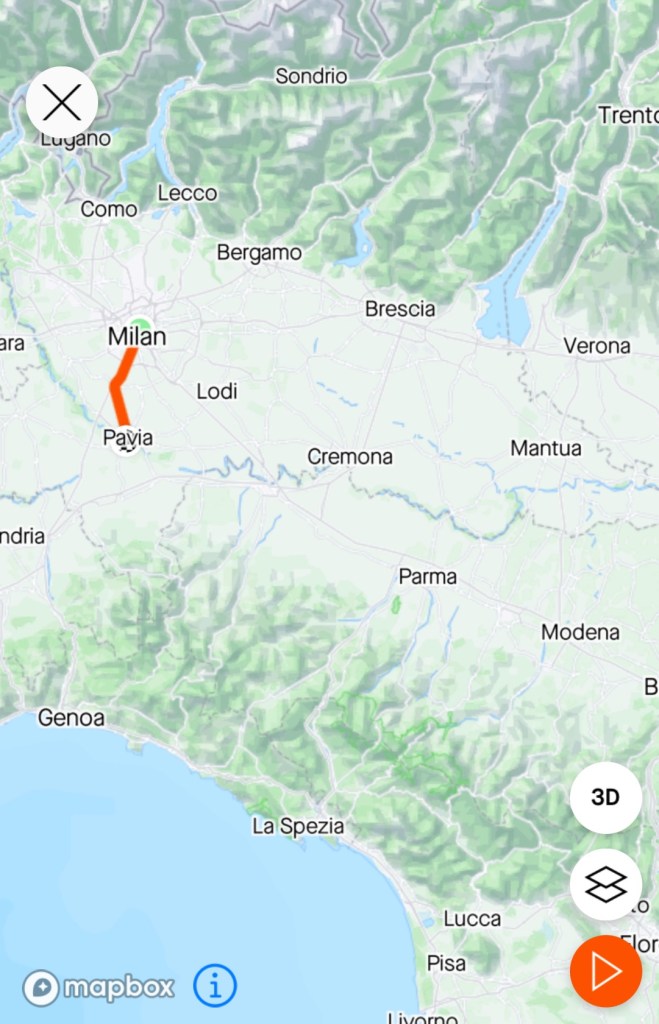
In picking a route to Pavia, I selected one of the canals that went into Pavia, Naviglio Pavese. It started off nicely, well formed pathways.
We came to a roadblock on the path and it was dang! The nearby road was super busy. We consulted our maps and a lycra clad road cyclist stopped and checked where we were headed, offering to show us a way around the roadblock.
We followed him for a few km and thanked him once we were back on the path and he flew off at circa 30 kmh.
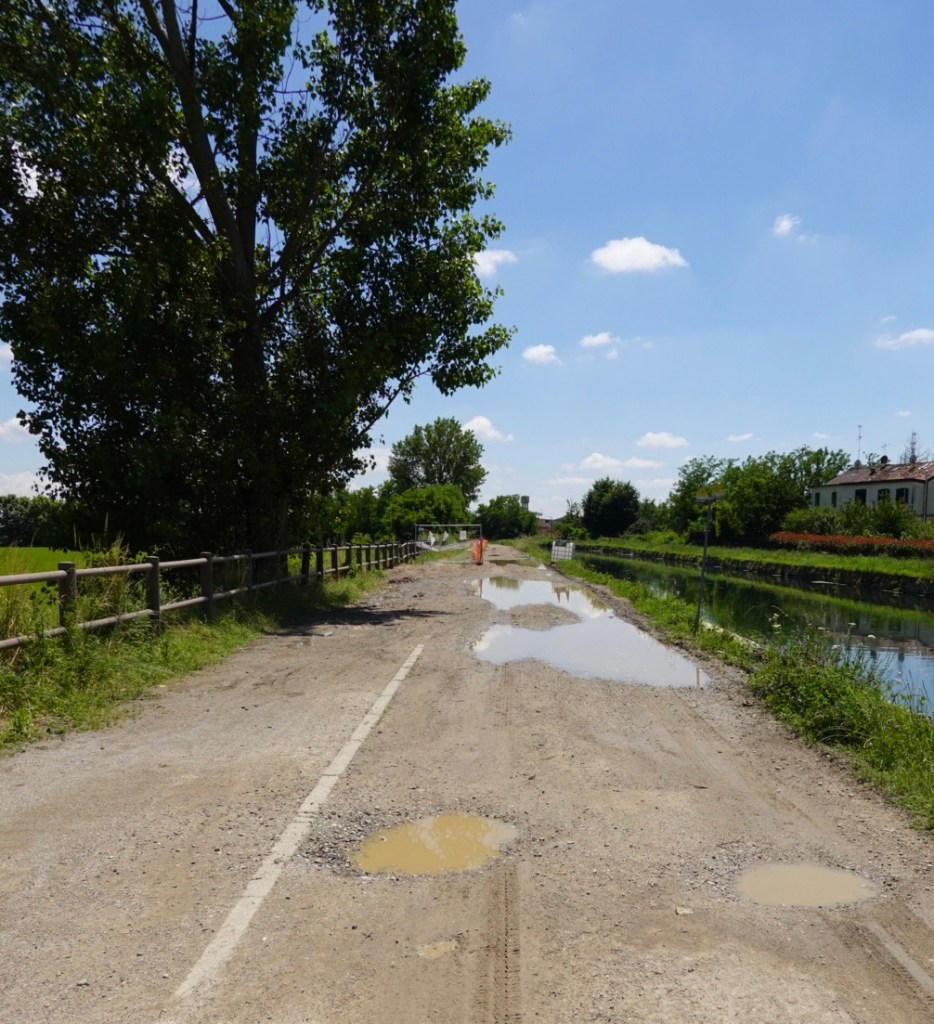
Maybe 10 km further on we came to this mess. At this point, we agreed to give it a crack as that is not so bad. However we regretted our decision. About one km on and we were walking our bikes around huge puddles that consumed the entire width.
Then we arrived at the excavator, totally blocking the way, plus huge excavations. Annoyingly we had to retrace our steps through the mud, back to the road.
By this time our shoe cleats were mud clogged necessitating a solid shoe cleaning exercise.
Down the busy road for maybe 5-7 km we were eventually able to rejoin the quieter canal pathway. They are upgrading the path and resealing and we benefited from a nice surface.
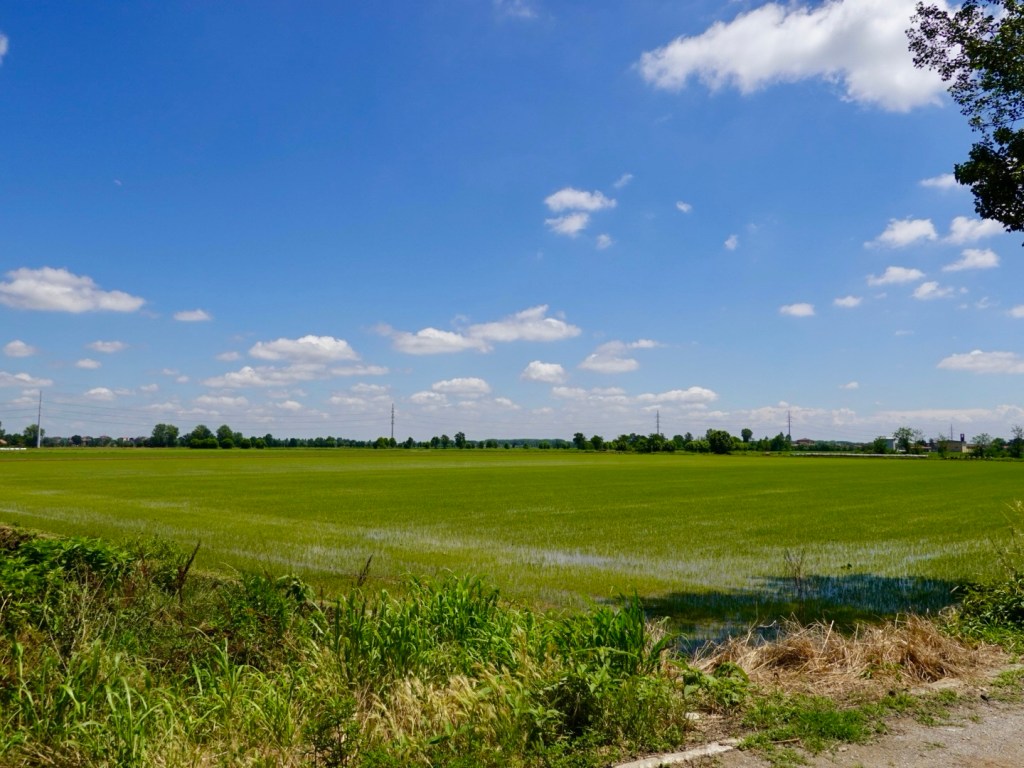
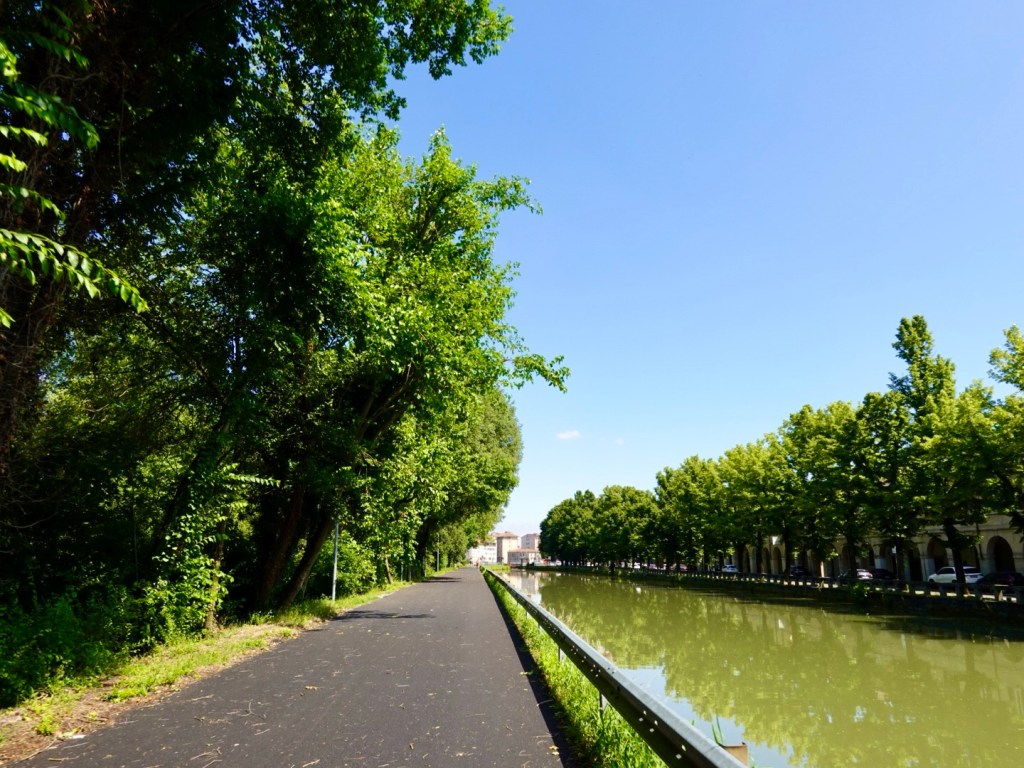
We arrived in Pavia, our overnight destination. A short and flat ride of 48 km.
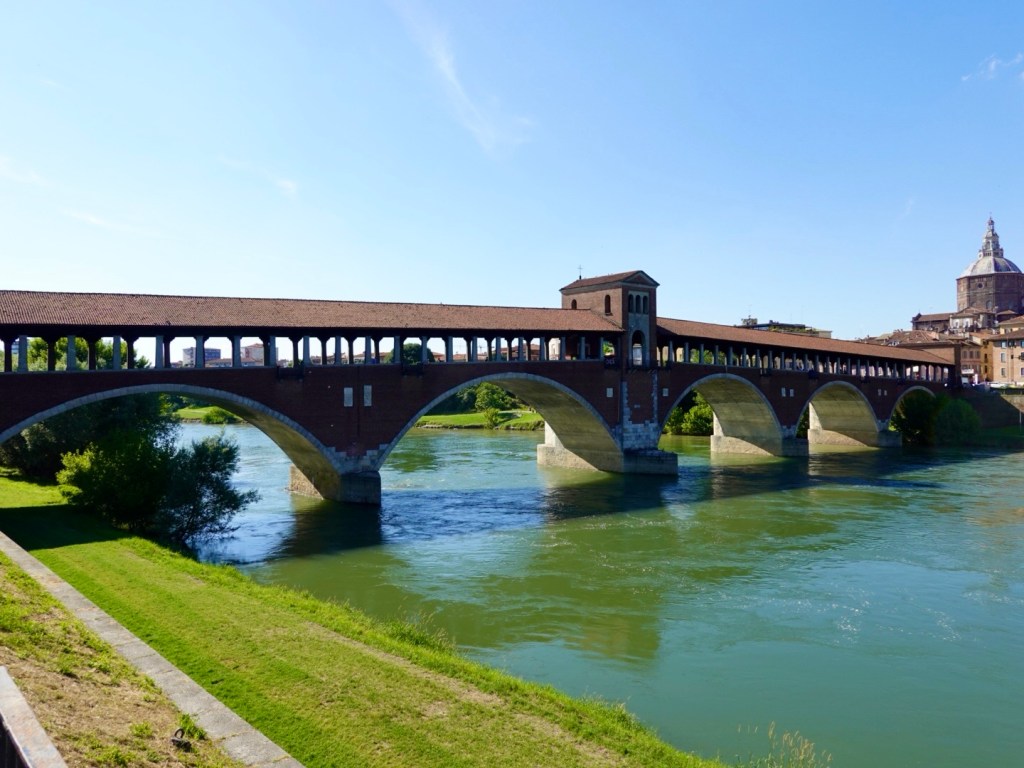
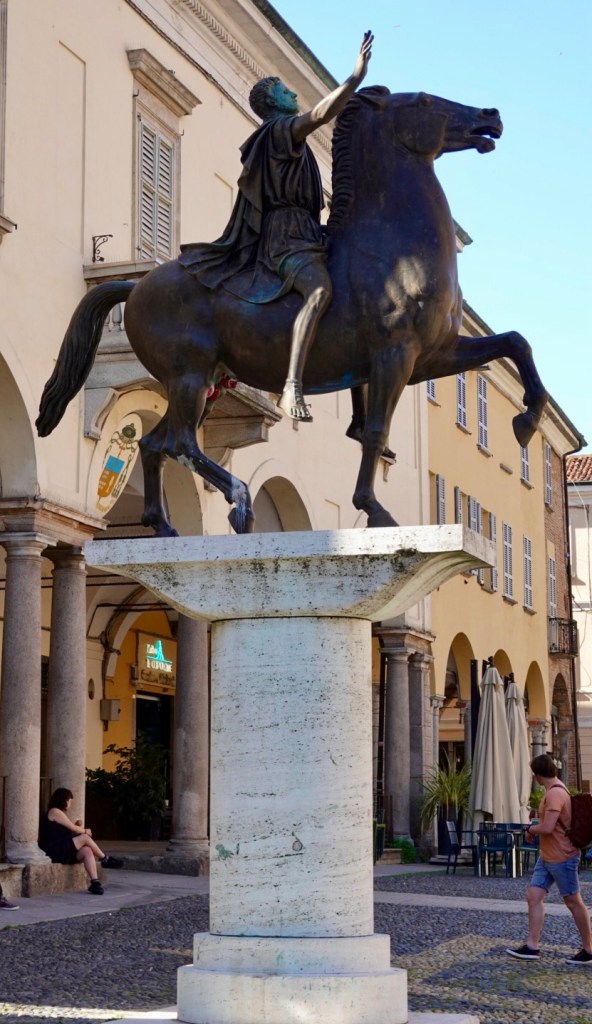
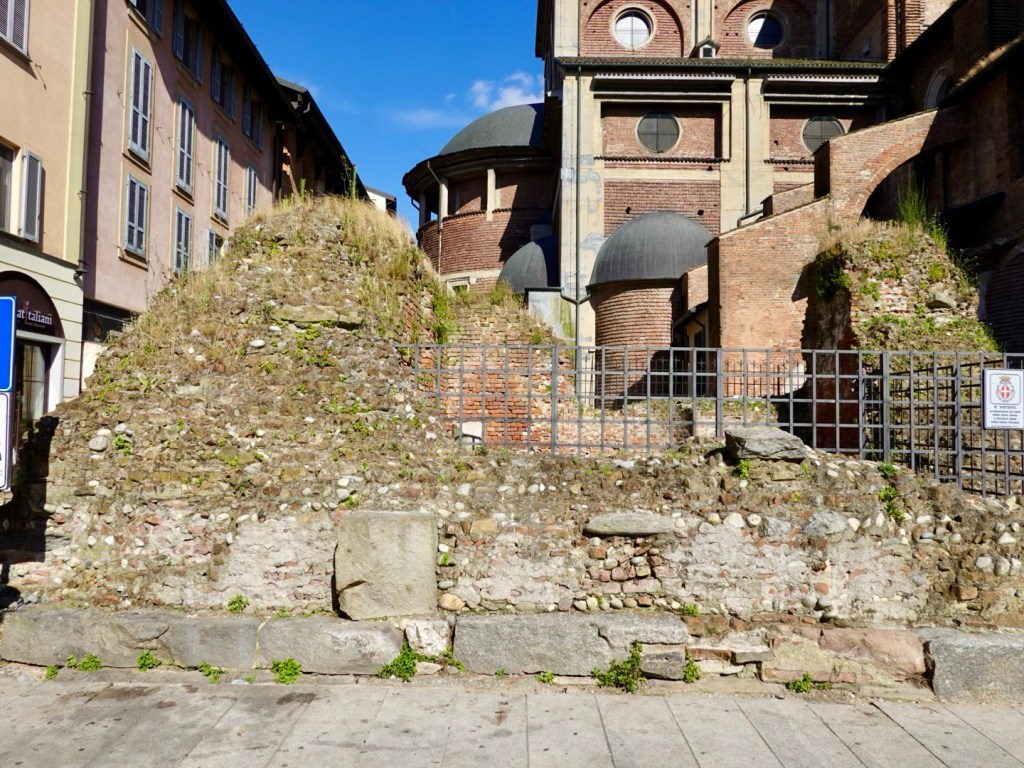
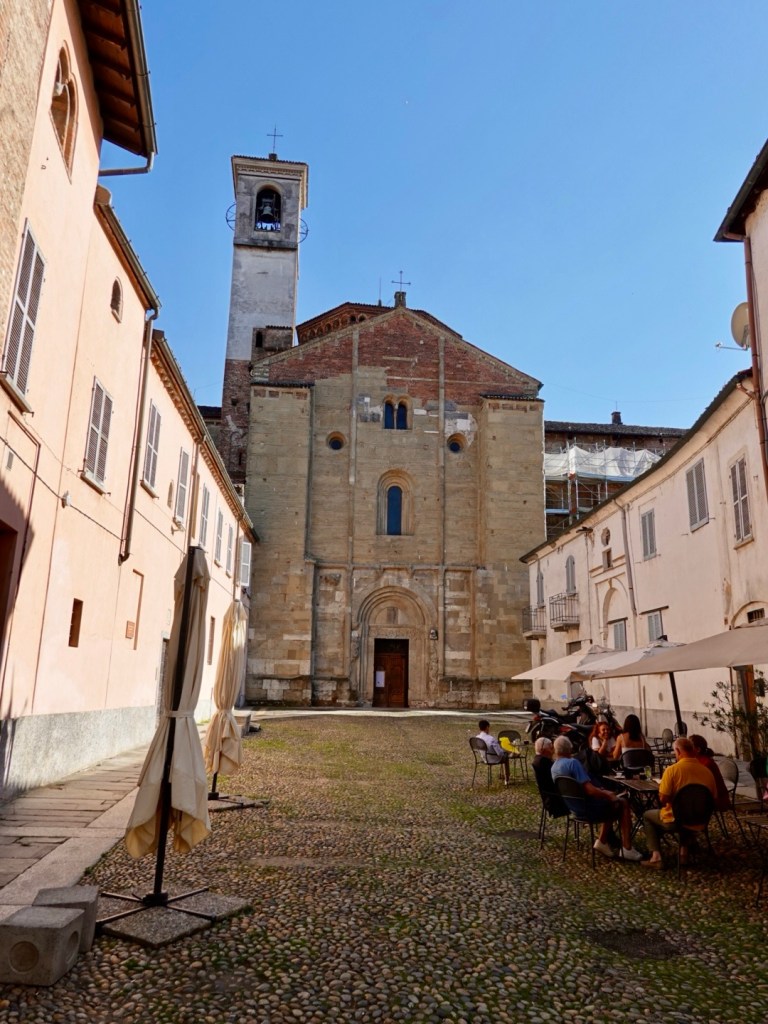
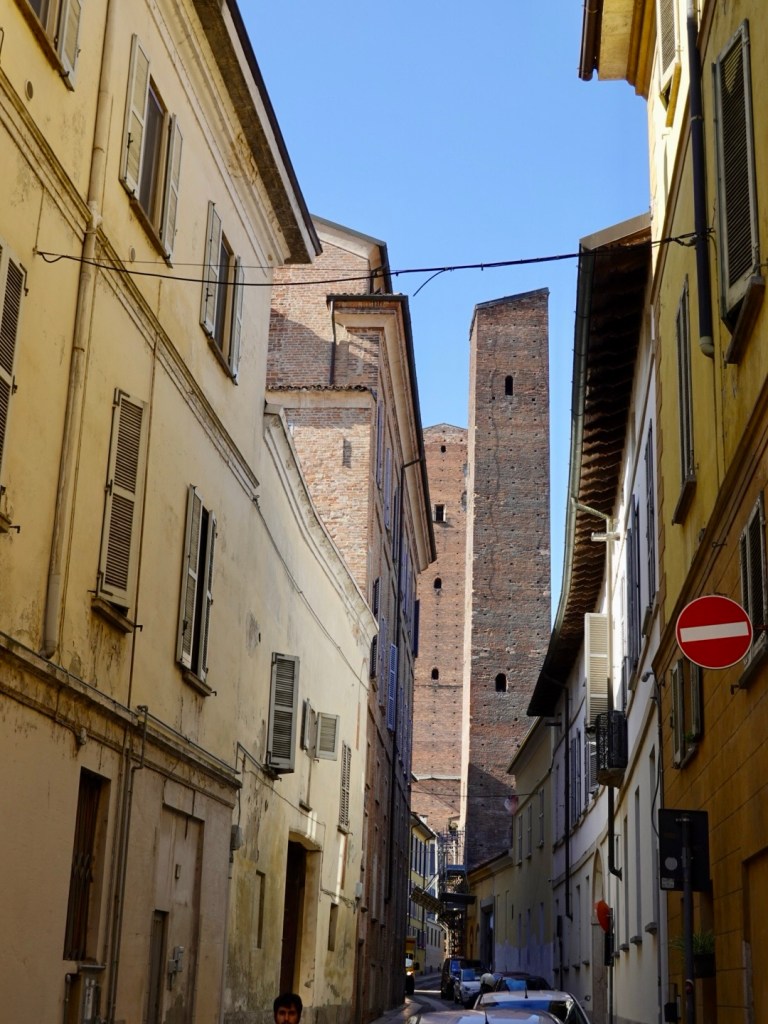
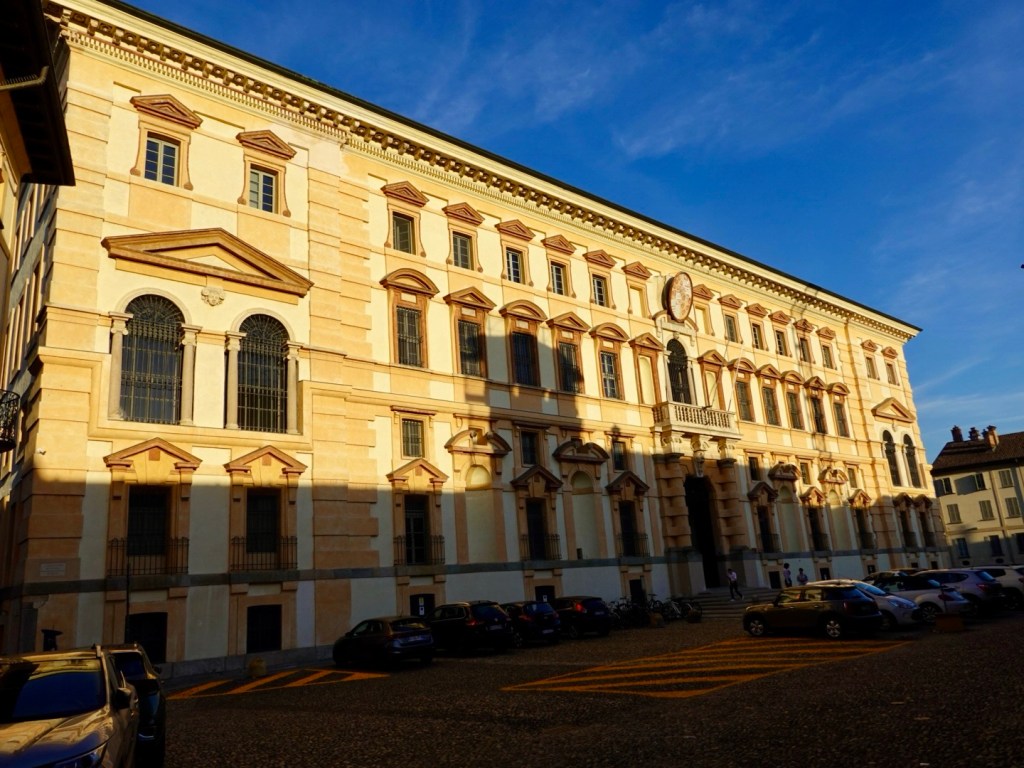
Pavia is build on the banks of the Ticino River, near its confluence with the Po (we rode through the Po delta some ten days ago). It has a population of around 75,000, with a significant ancient history. There is a University that was established in 1361 and still runs today.
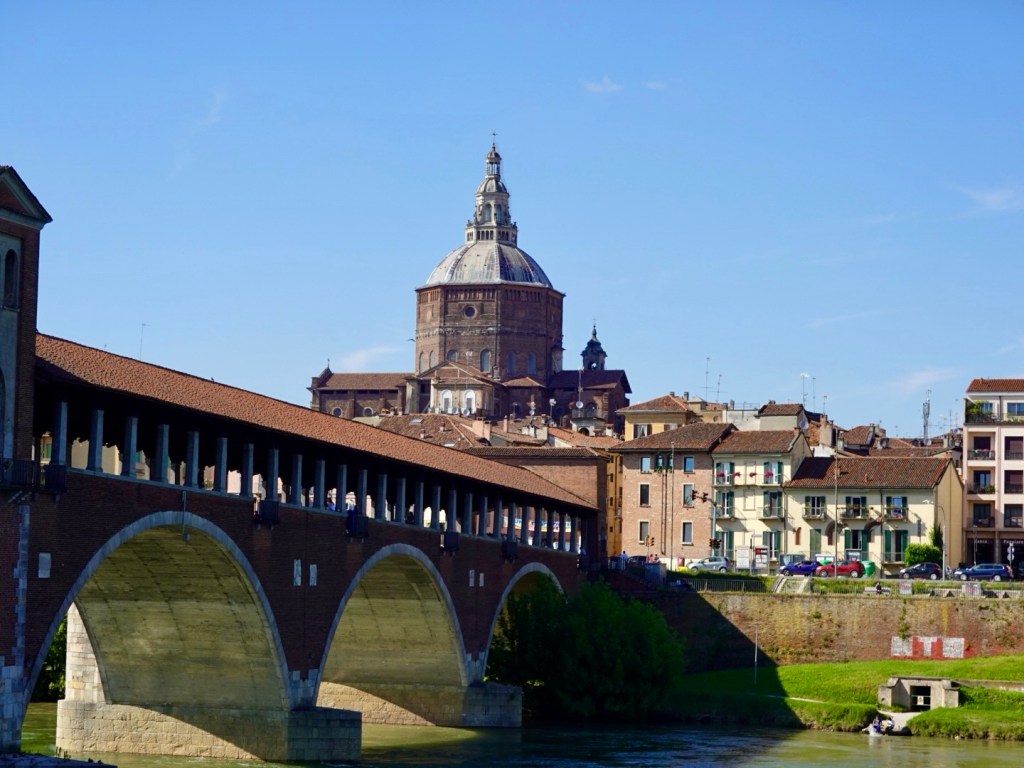
After settling into our accomodation on the southern side of the bridge, we headed back across the bridge on foot to check out the old sites, and find more food!
The statue of the laundress represents the history where the laundresses once used to wash their clothes in the river.
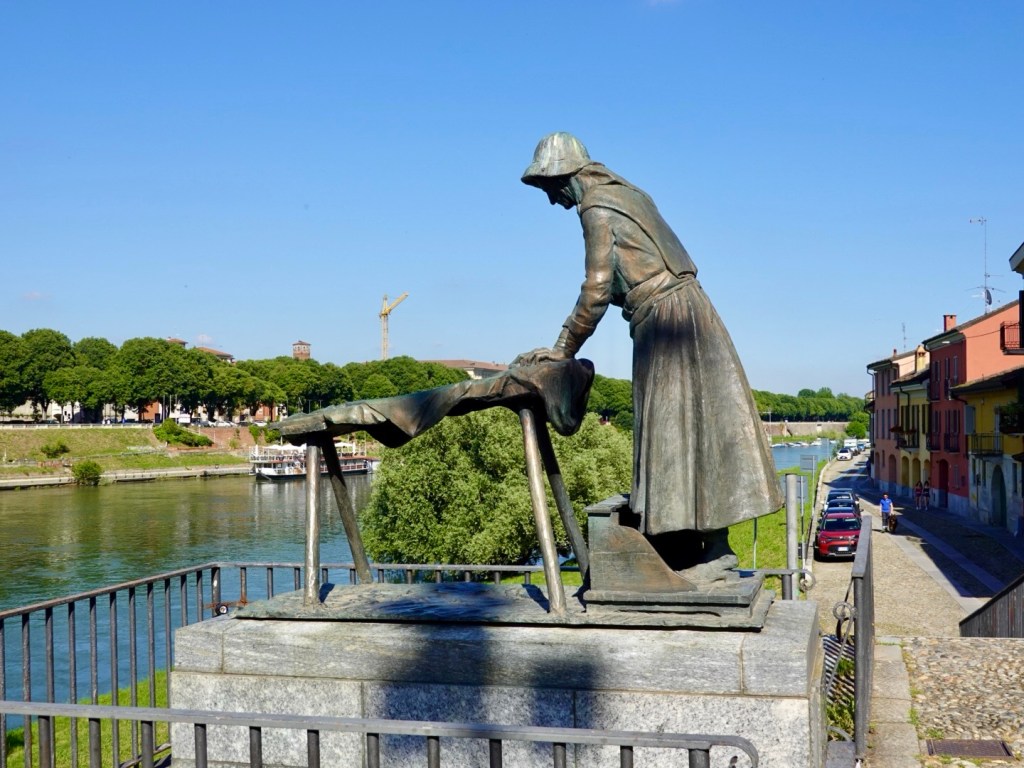
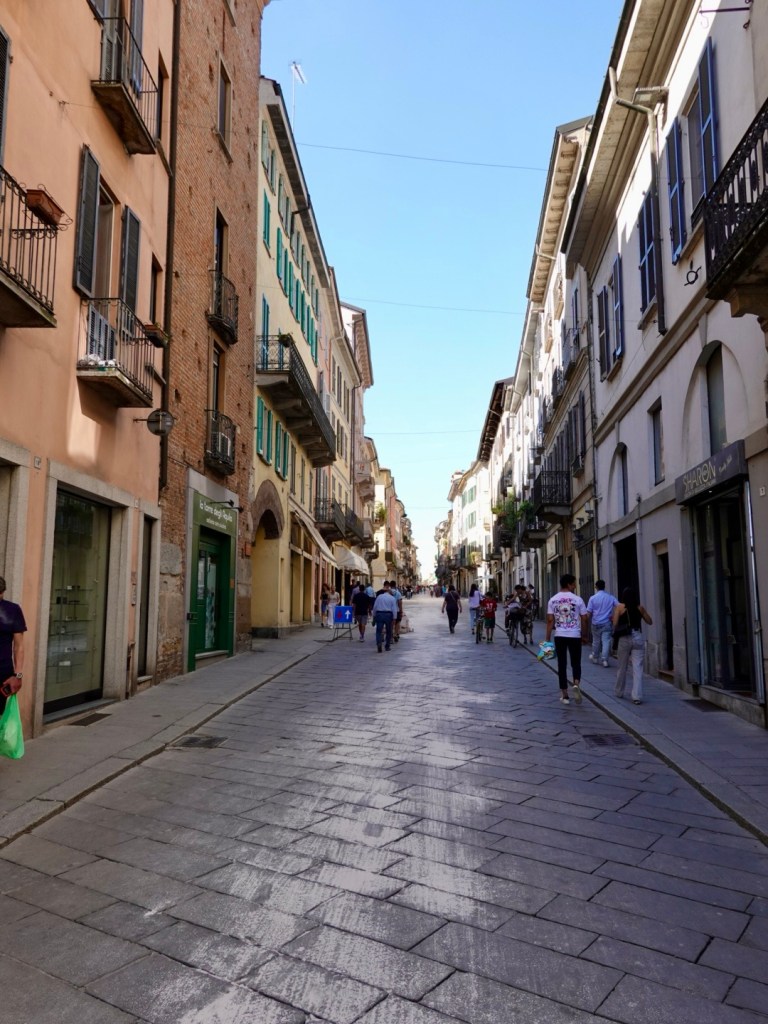
The streets are quite wide, and well paved.
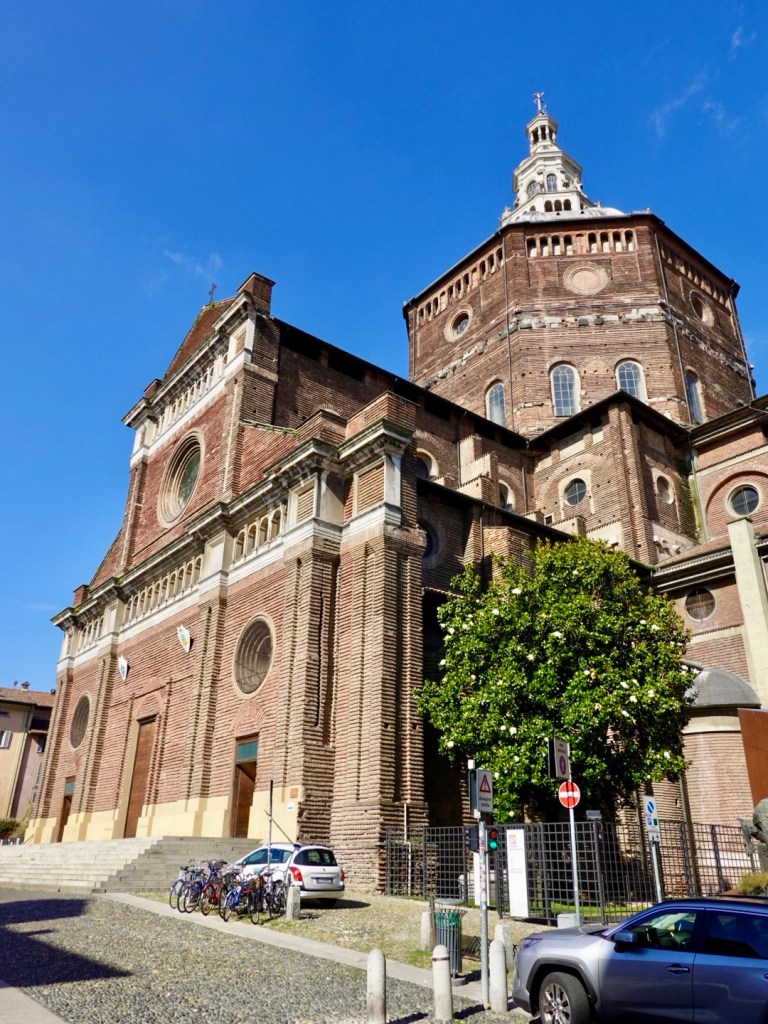
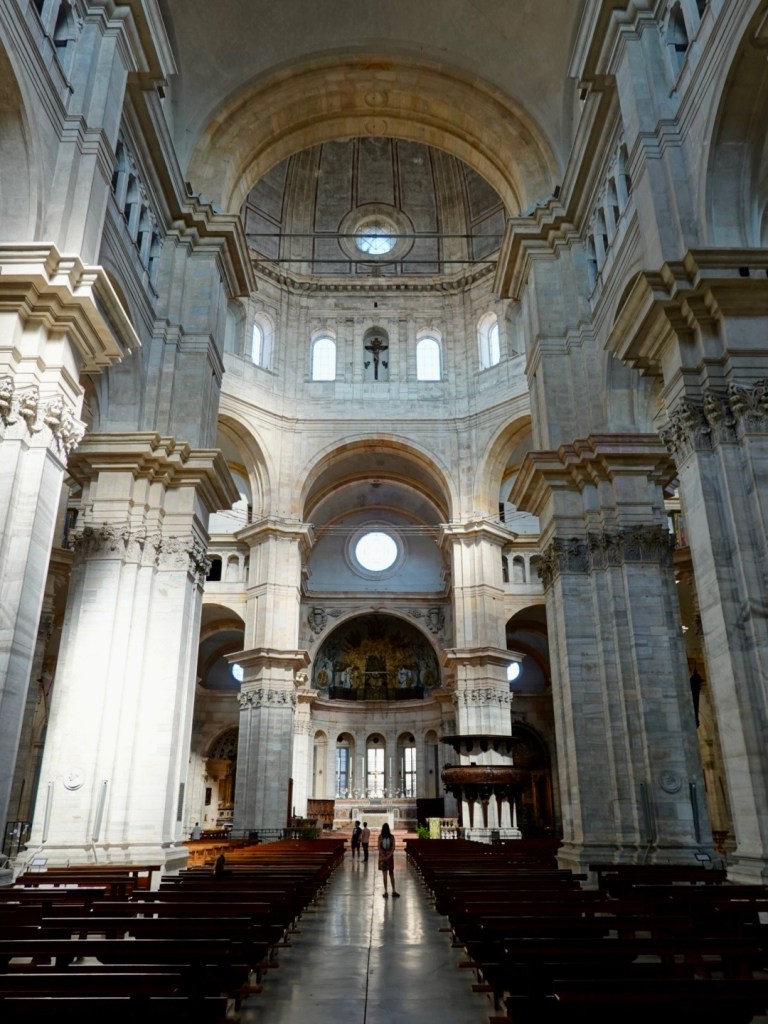
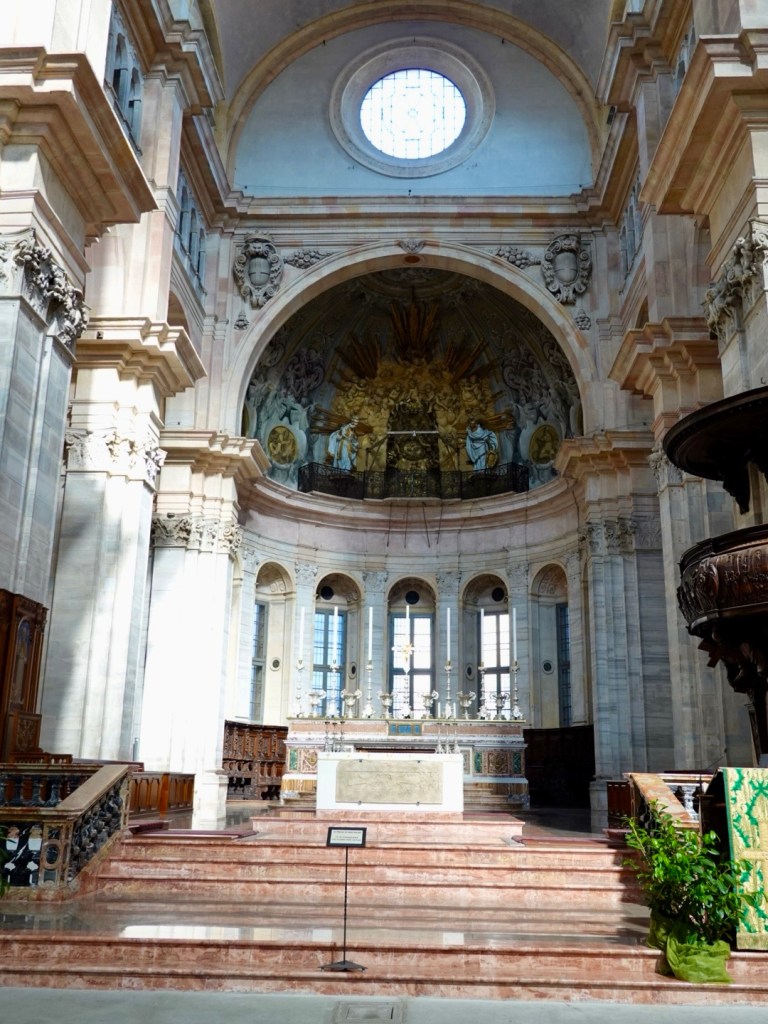
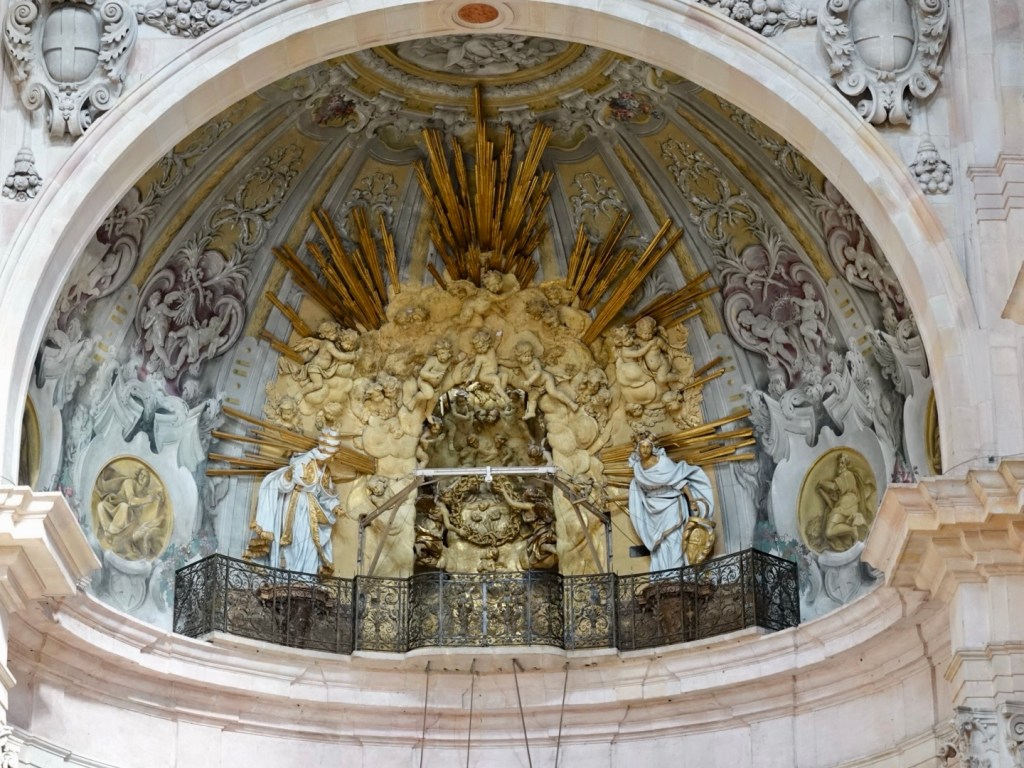
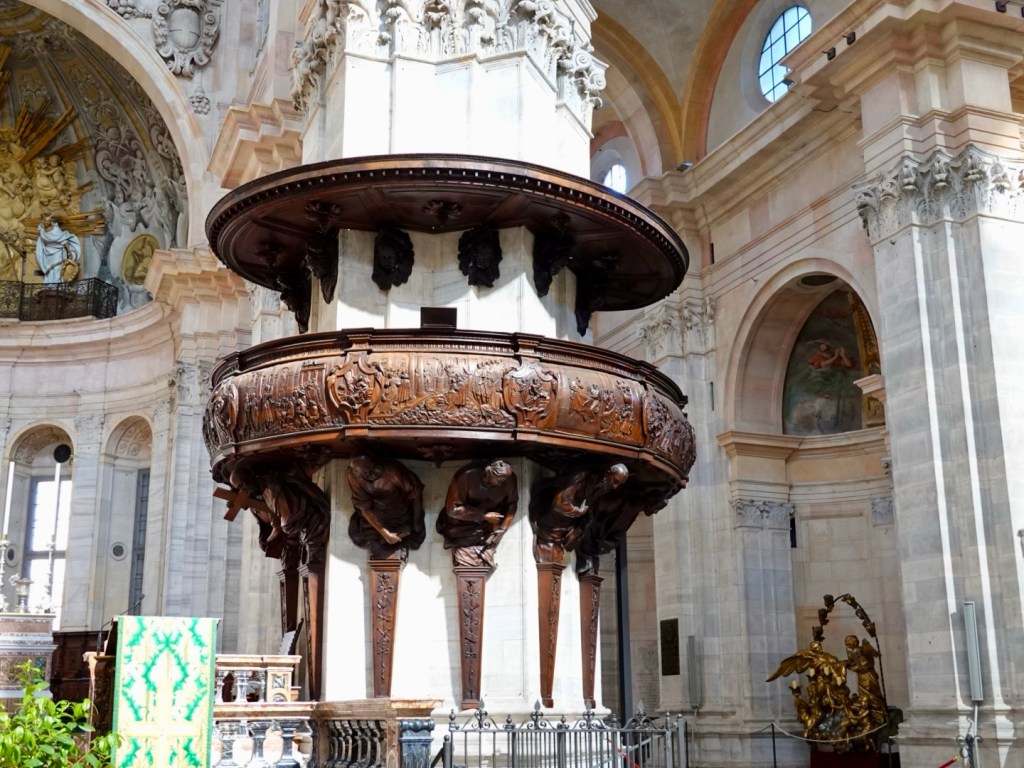
We headed to yet another duomo, the obvious sights as they are usually the tallest structures in each town, with a significant history and extraordinary architecture.
Construction commenced in 1488, on the site of two medieval churches.
The central dome has an octagonal plan and is 97m high, weighing 20,000 tonnes. It is the third largest dome in Italy.
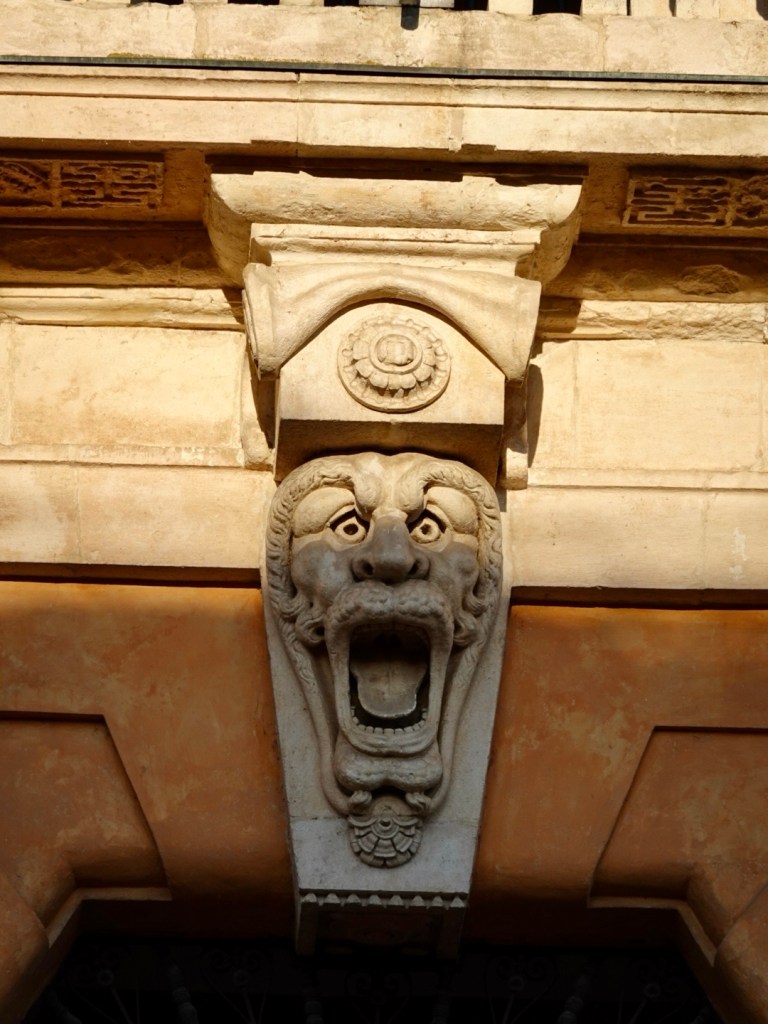

The penultimate day awaits. One more day.
Thanks for reading 😊❣️
 yakkablog
I’m always amazed at what people built without modern machinery. Just incredible 😍 must be bittersweet looking onto your last day. Thanks for sharing your adventure 🙂
LikeLiked by 1 person
Totally is bittersweet. I just love looking up at the incredible architectural and building feats of all those centuries ago. We just don’t see that kind of craftsmanship these days…the opulence is a bit gob smacking at times.., I hope the artisans were paid their worth, but reality tells me many of the craftsmen were probably paid a pittance, others likely slaves…
LikeLike