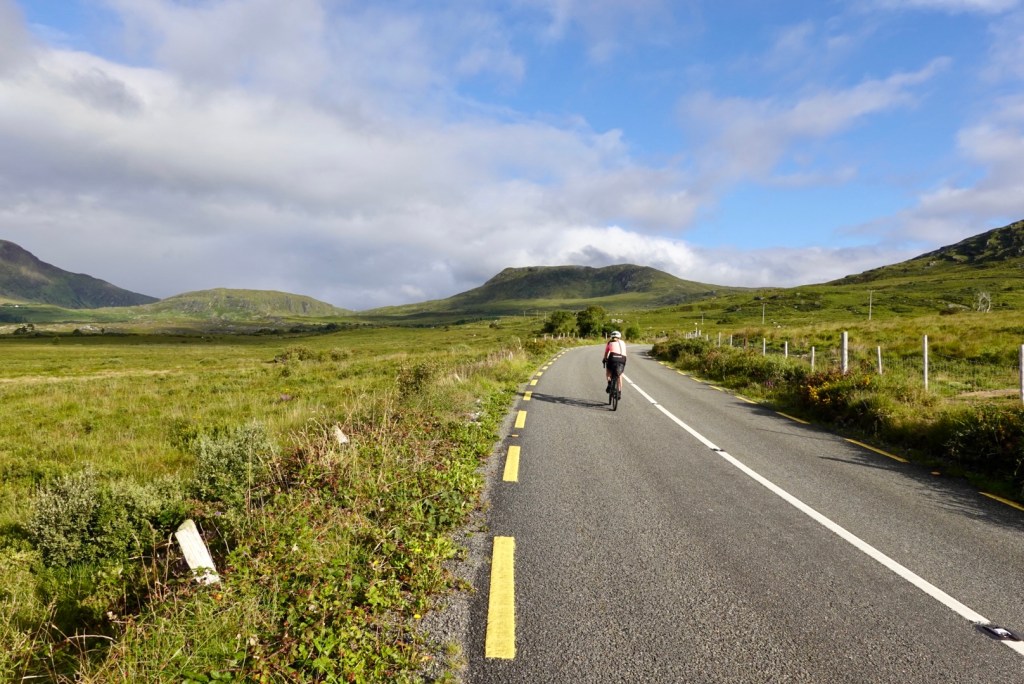
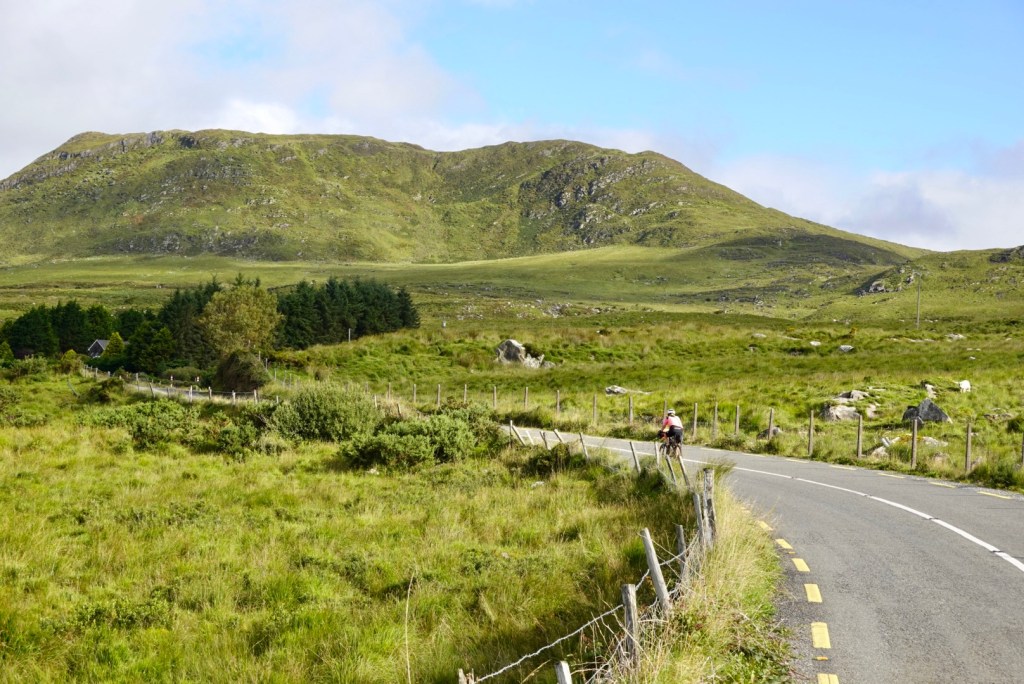
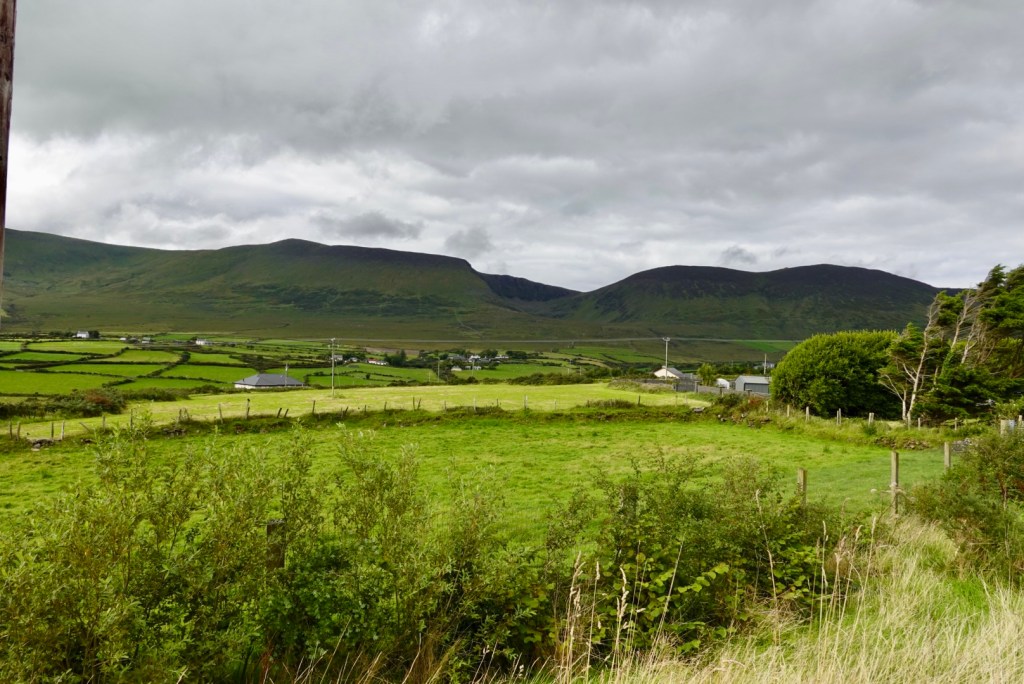
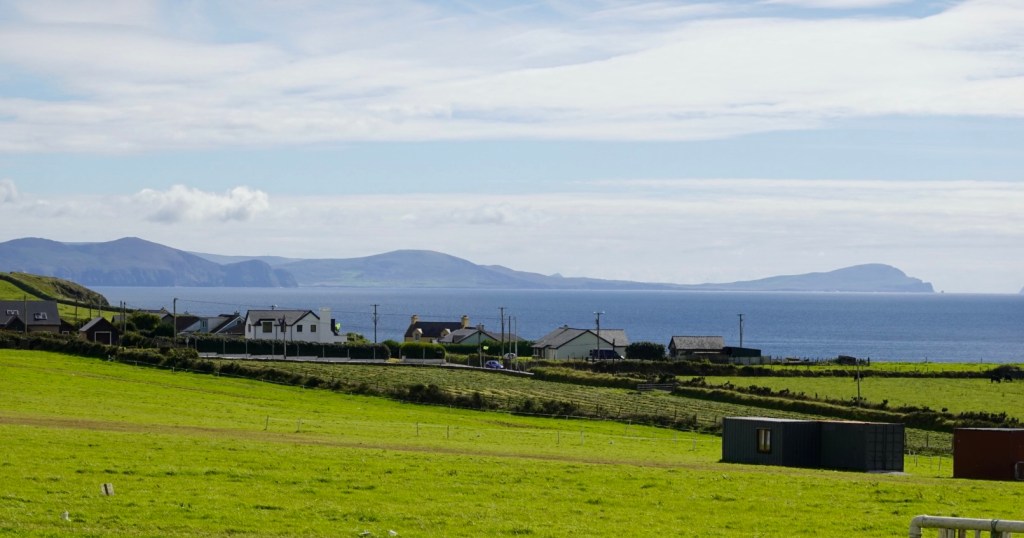
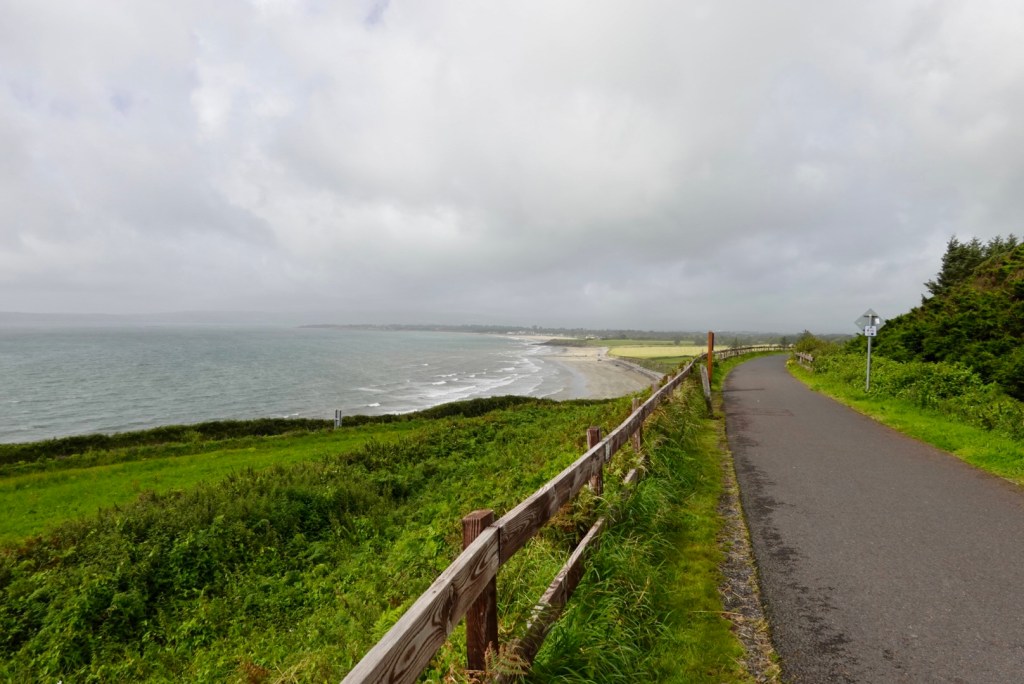
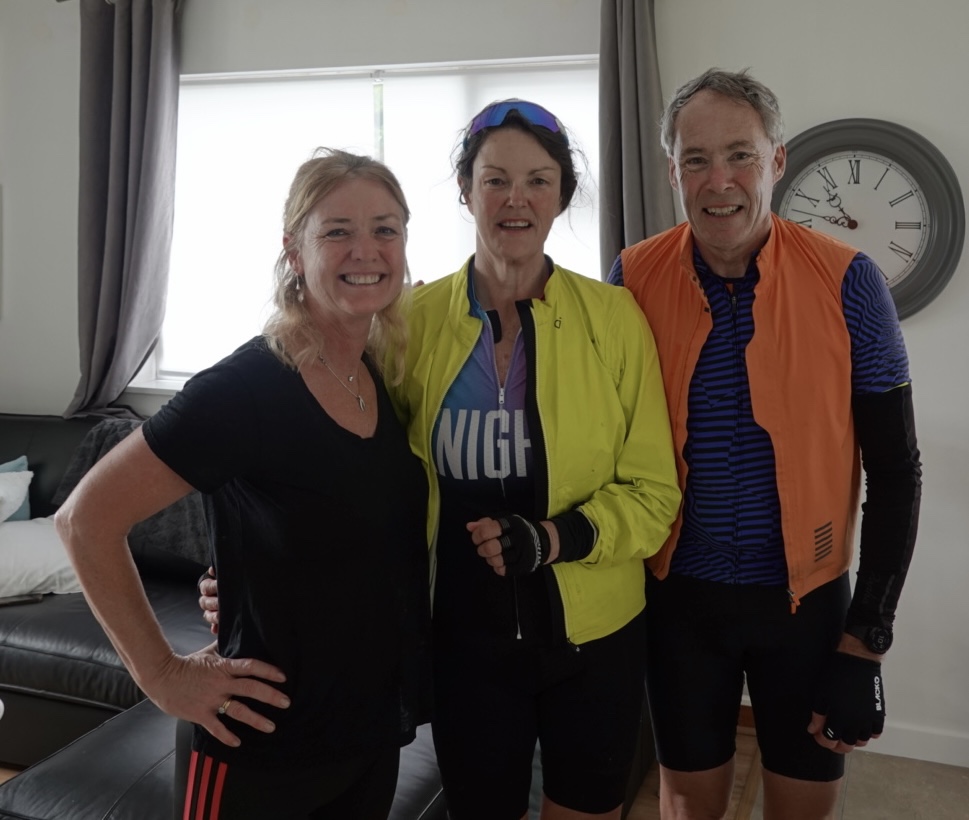
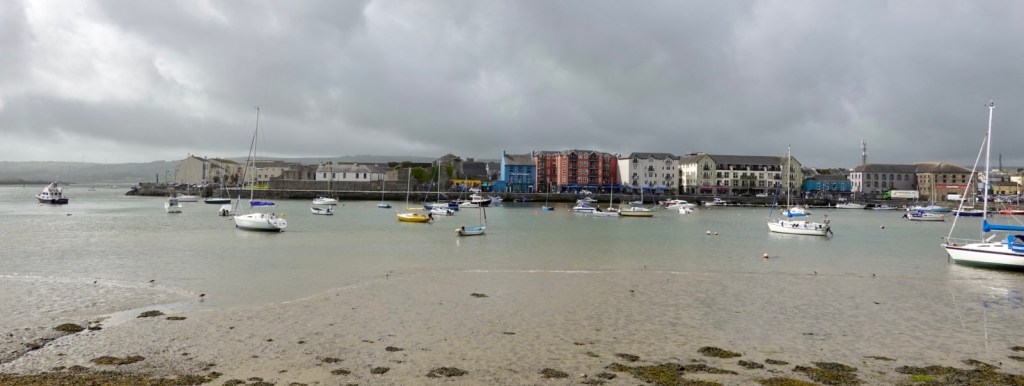
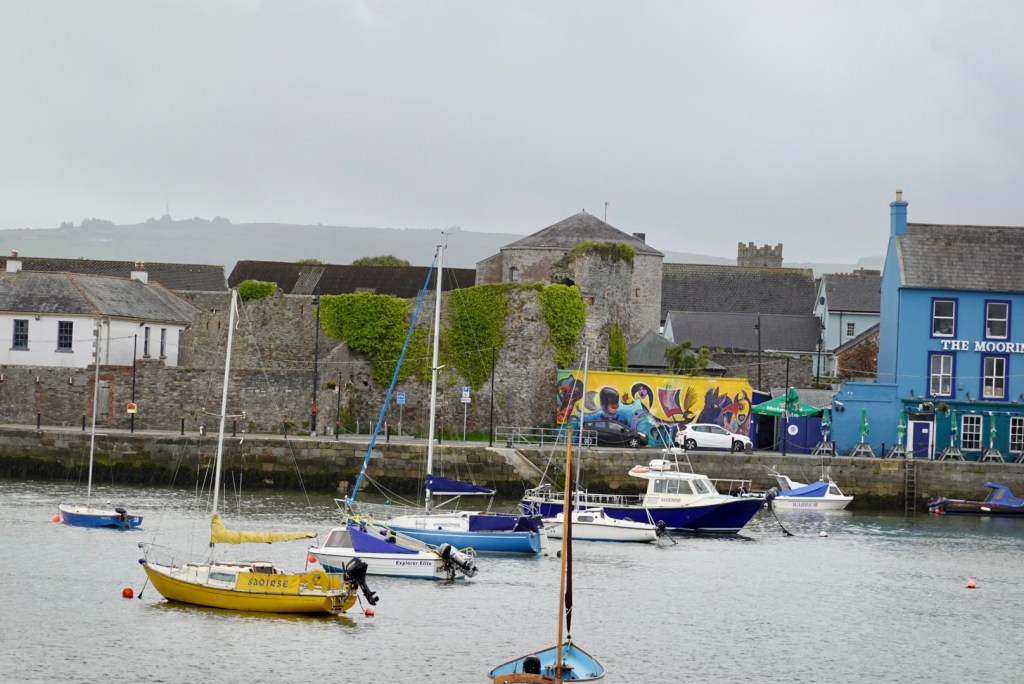
Day 16: Tralee to Limerick

Today was always going to be anti climatic after four wonderful days on the southern peninsula’s of Ireland with amazing scenery. Today we were heading for Limerick then lining ourselves up to cross Ireland for our ferry to France.

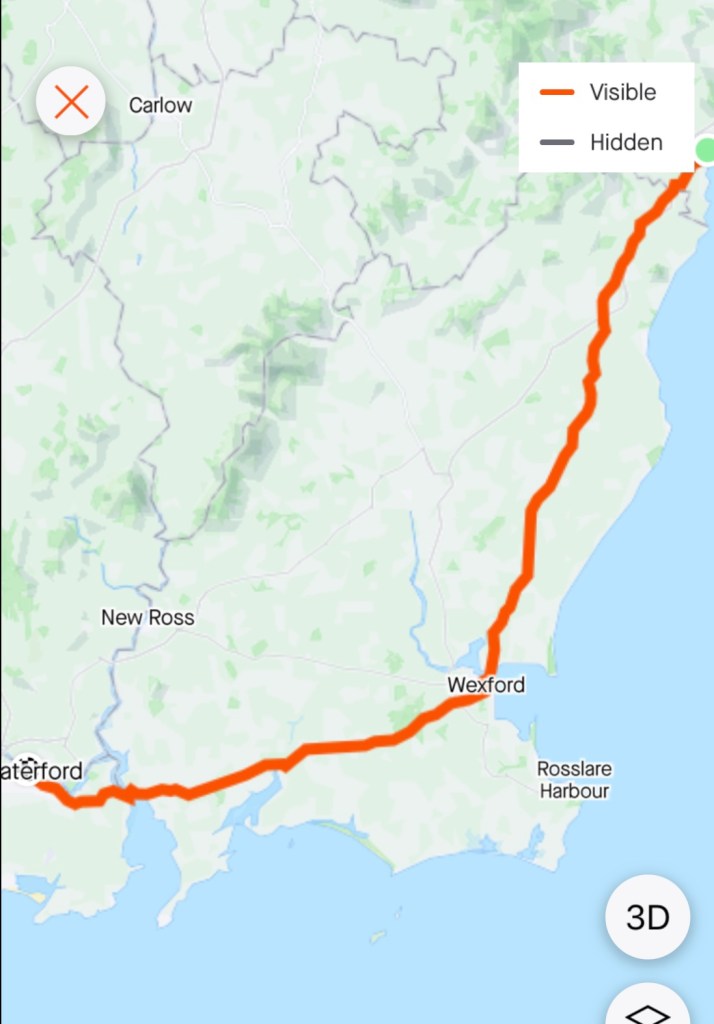
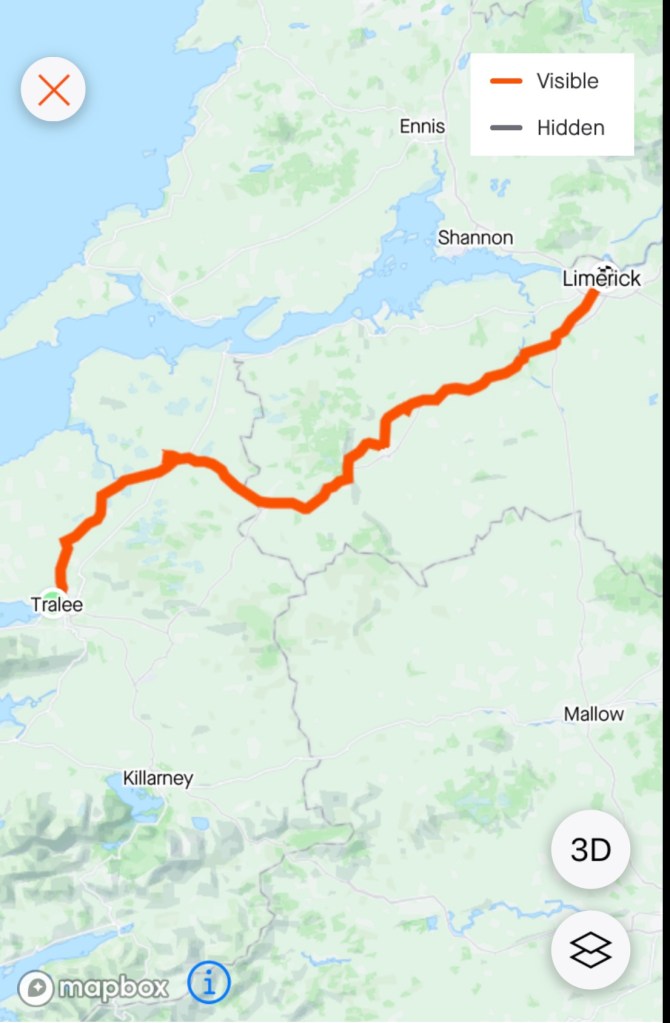
The plan was 30 km on open road, 50 km or so on greenways, and 30 km or so back on the open road, so a 110 km day.

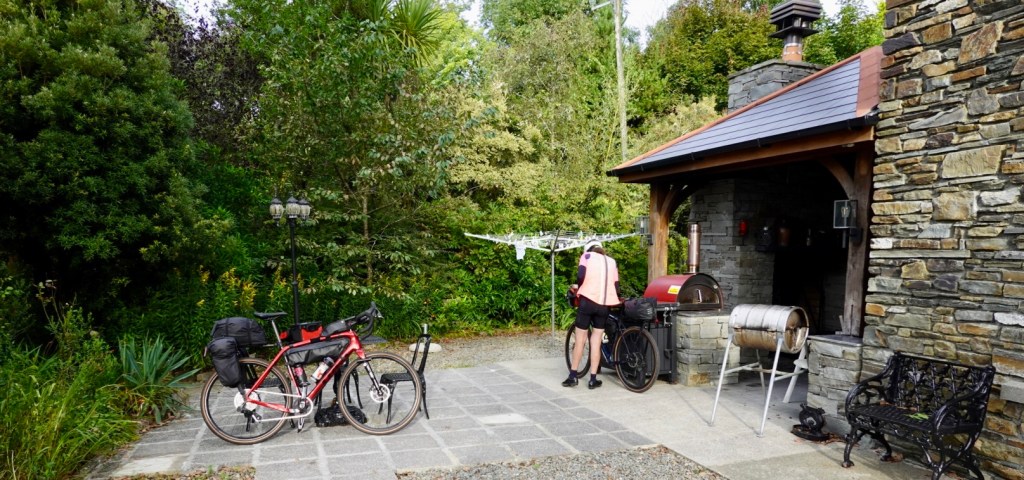
We had a lovely stay with Mary in Tralee. She had put a load of washing on for us and put it on her clothes line. Our clothes smelt wonderful after hand washing since staying with Sue and Alan in Wales.

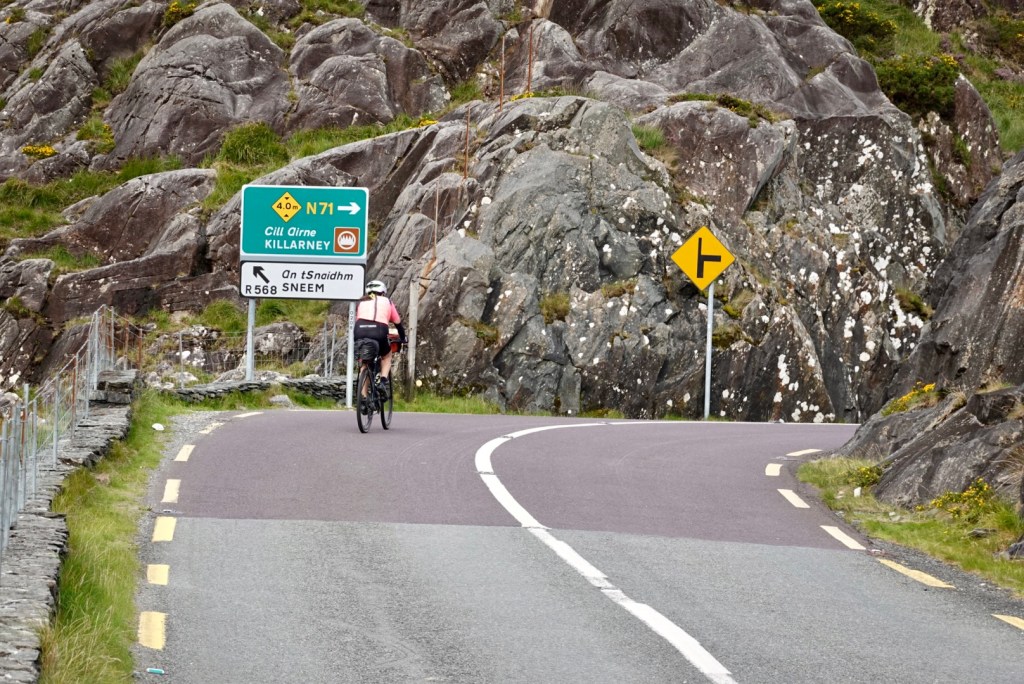
A yummy breakfast and off we set, straight up a 3 km climb to warm those legs up.

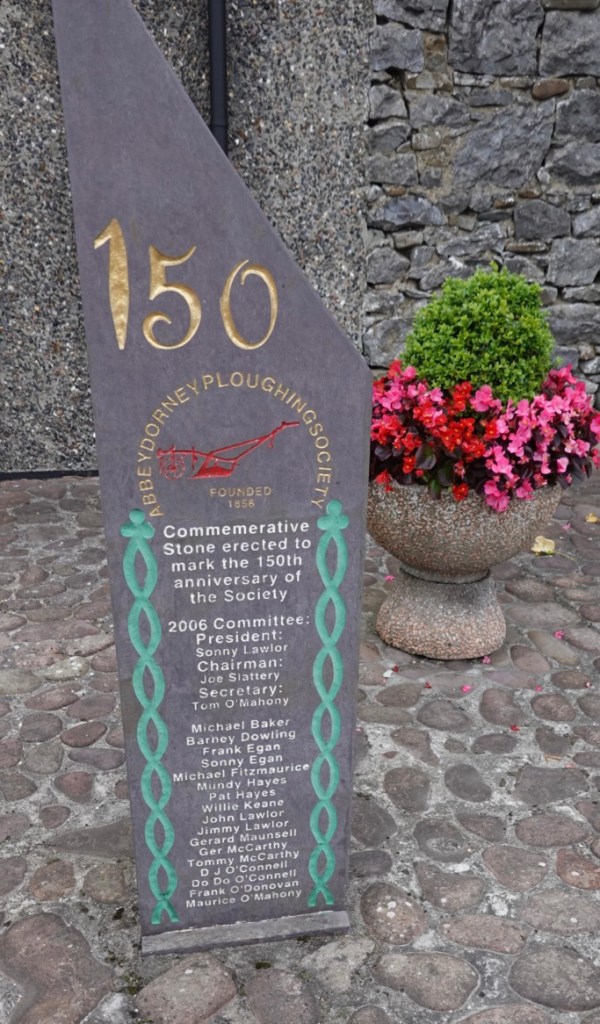
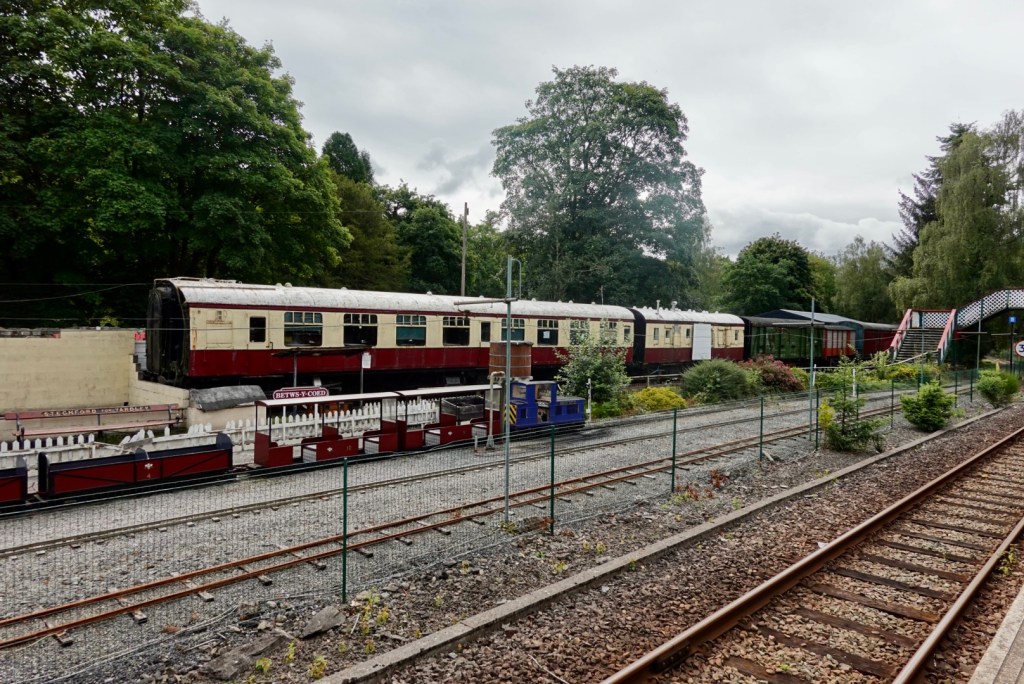
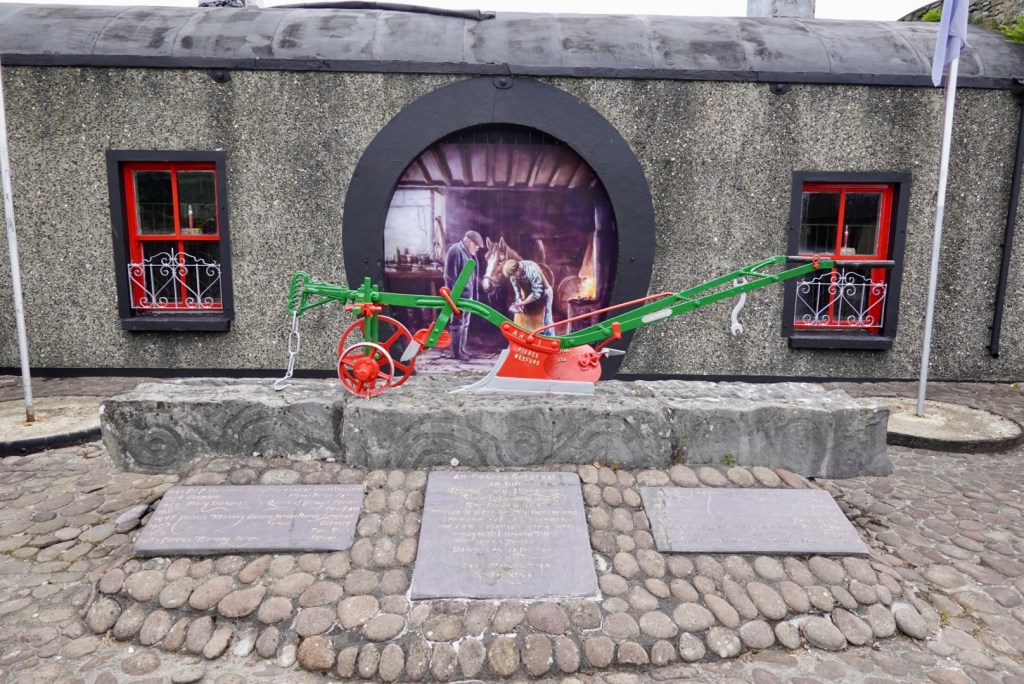
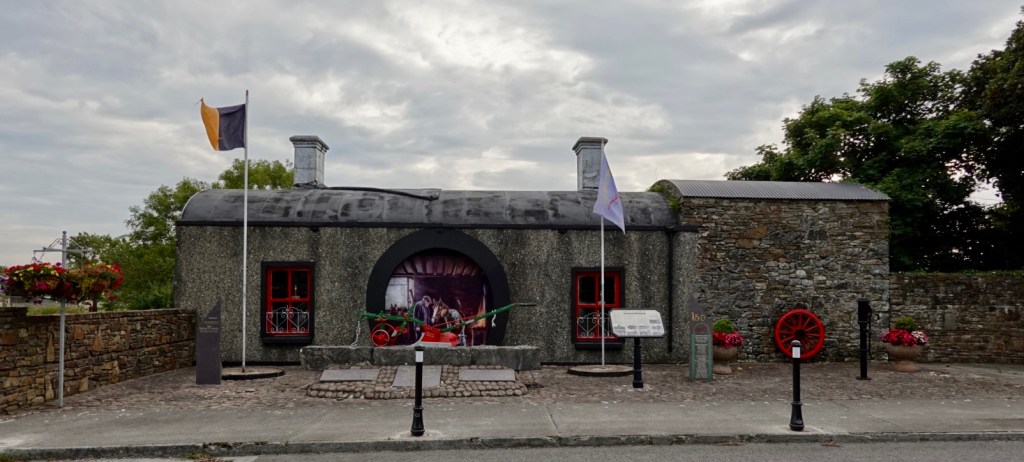
Abbeydorney was the first town, seemingly famous for its ploughing society and train shaped structure.
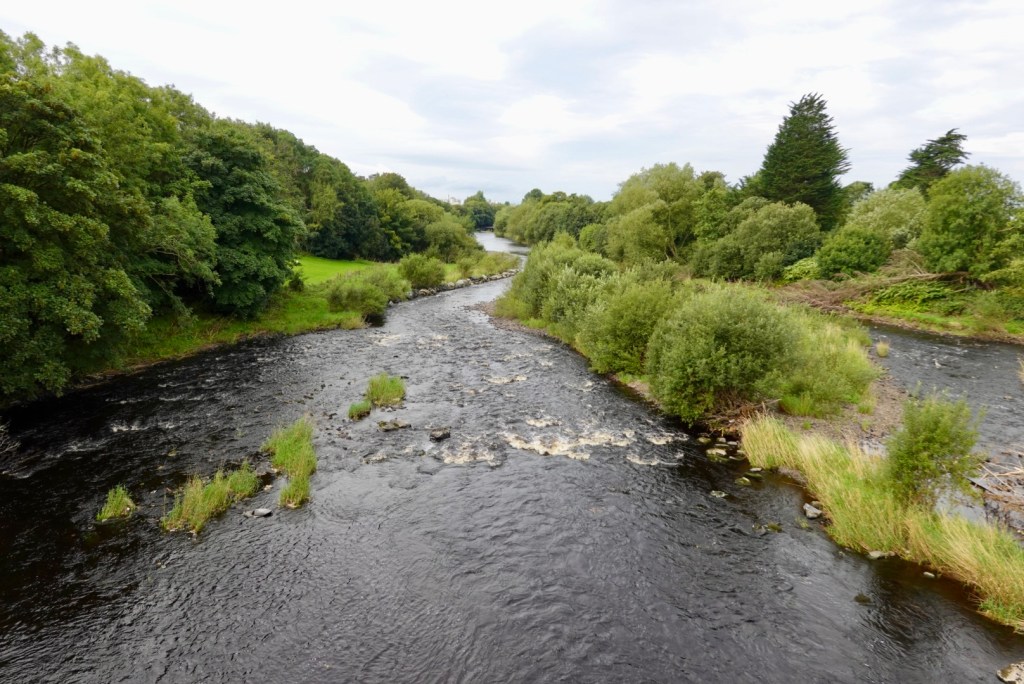
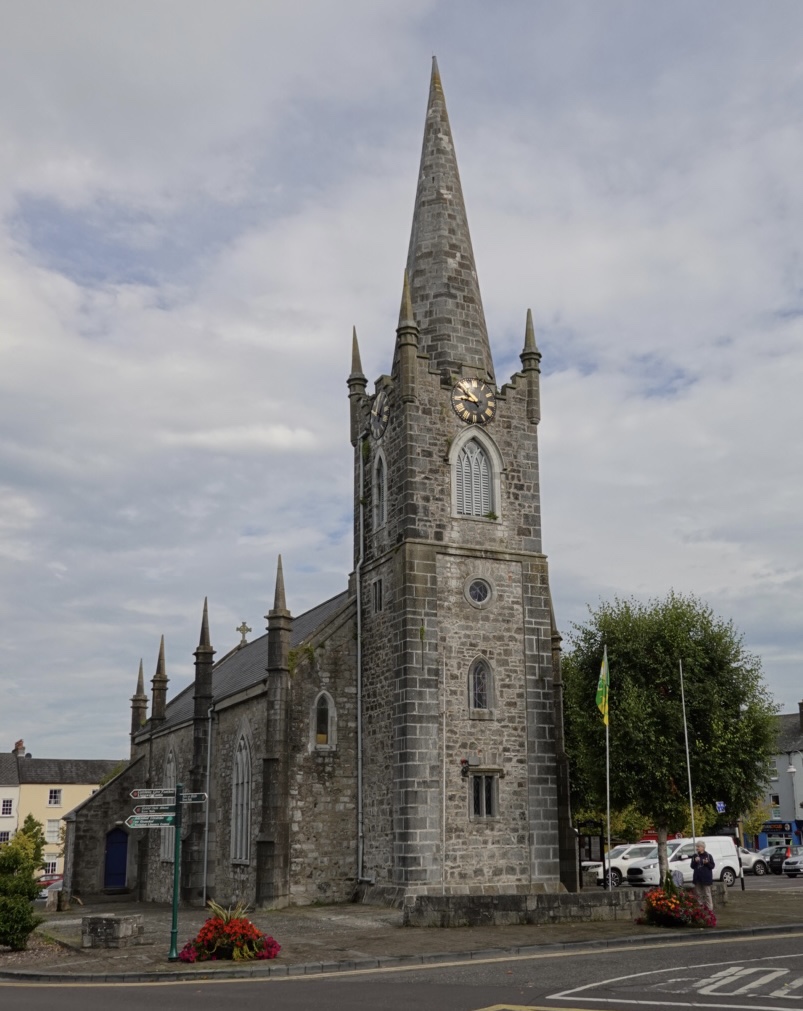
By 30 km we reached Listowel, a market town situated on the River Feale at the head of the North Kerry limestone plain. The history of the town dates back to 1303.
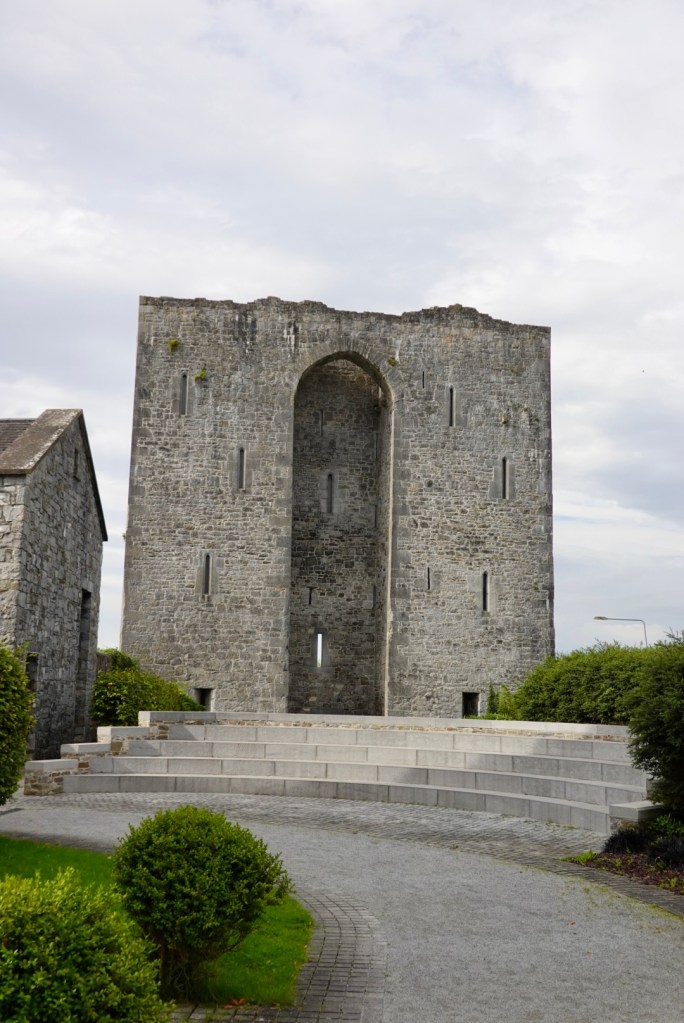
Listowel castle was built in the 15th century and only this part of the Norman style tower remains. There was a similar second tower. The castle was the last bastion to fall to Elizabeth 1 forces during the Desmond Rebellion (Ireland vs England) in 1569. When captured, all the soldiers were executed.
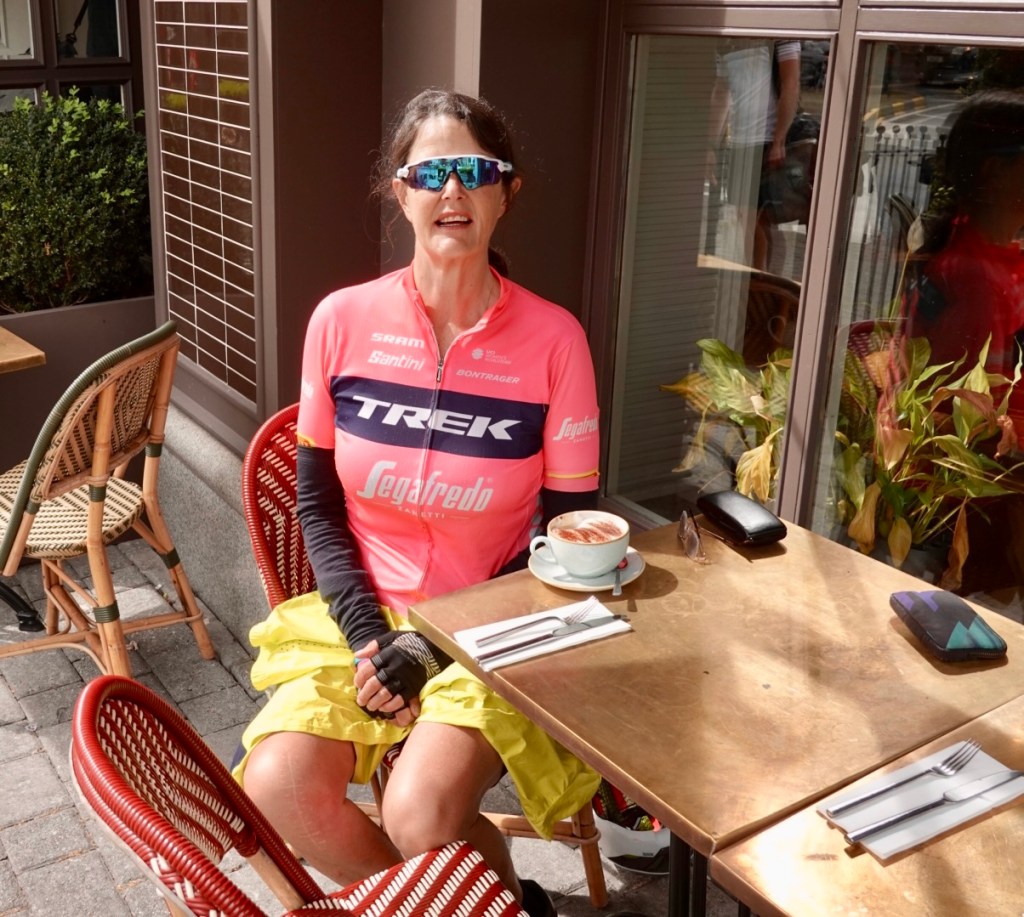
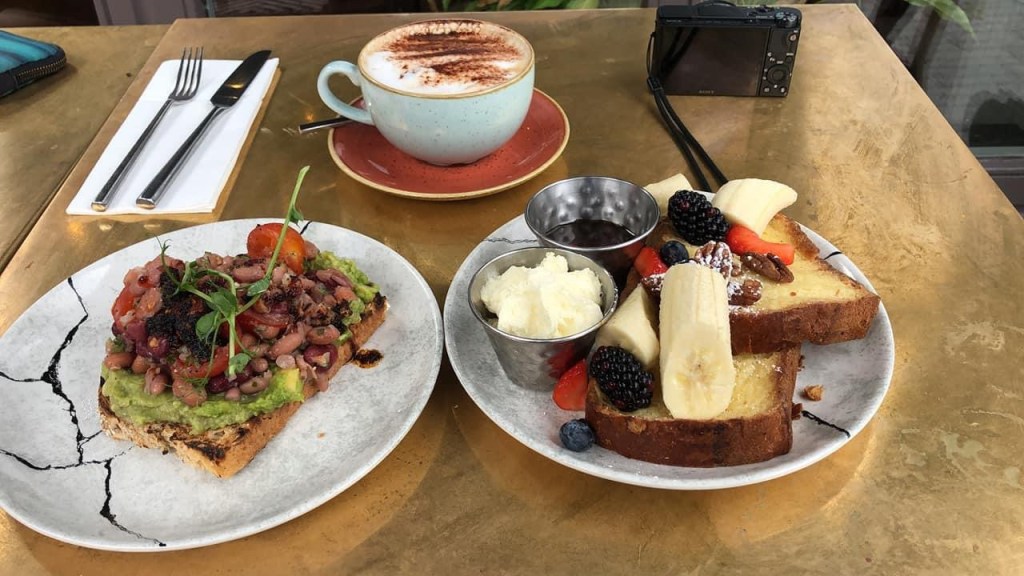
We had our morning coffee break in Listowel finding this cafe on a corner as we road past. We thought this looked a good place to stop. We look for outdoor seating close to our bikes. We never sit indoors when we have our bikes.

Even of a night, we are looking for fresh air dining given Covid has tripled here in Ireland in the last few weeks.
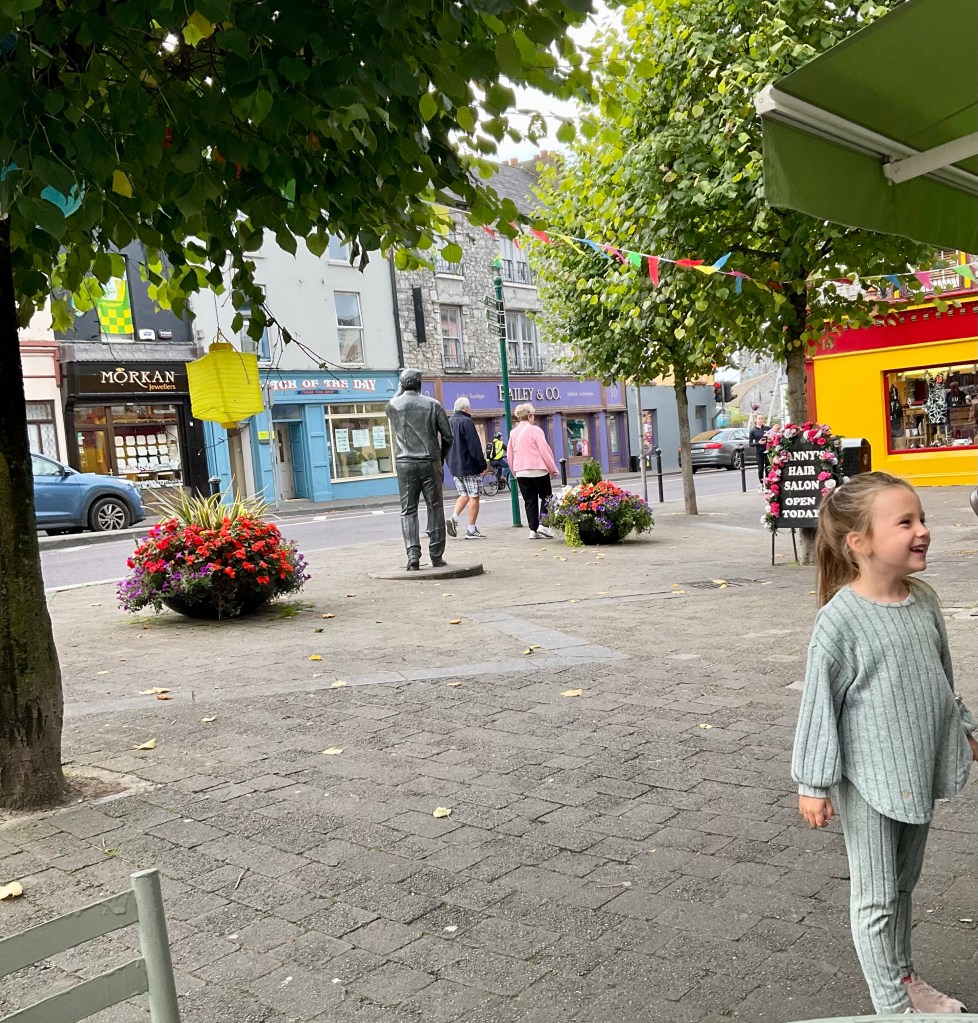
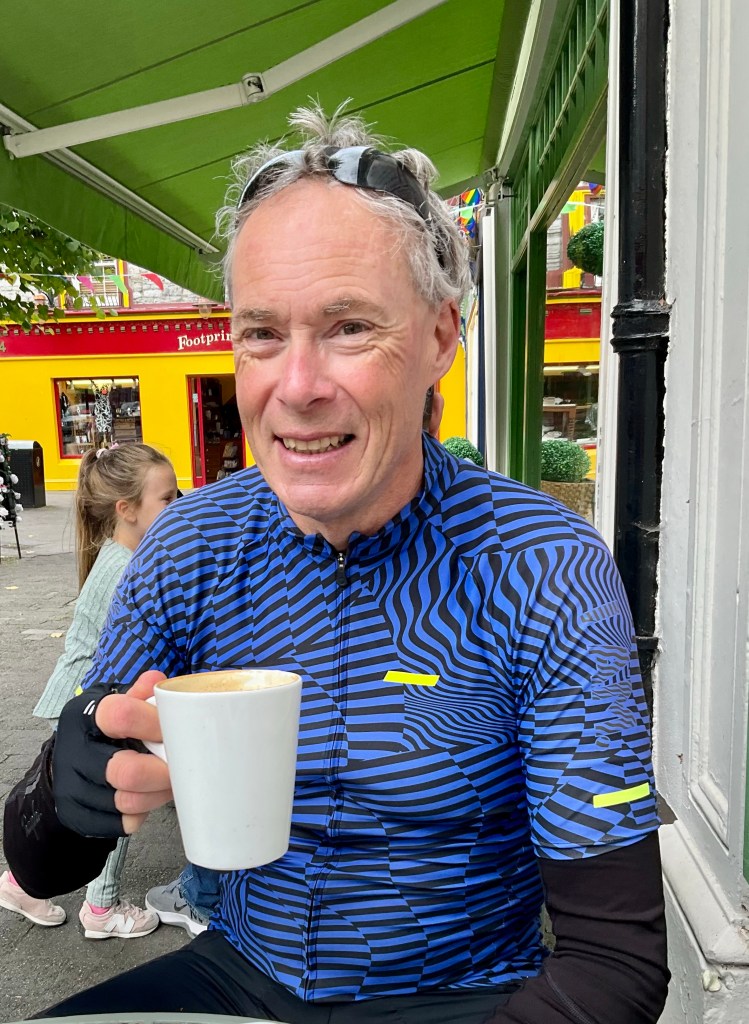
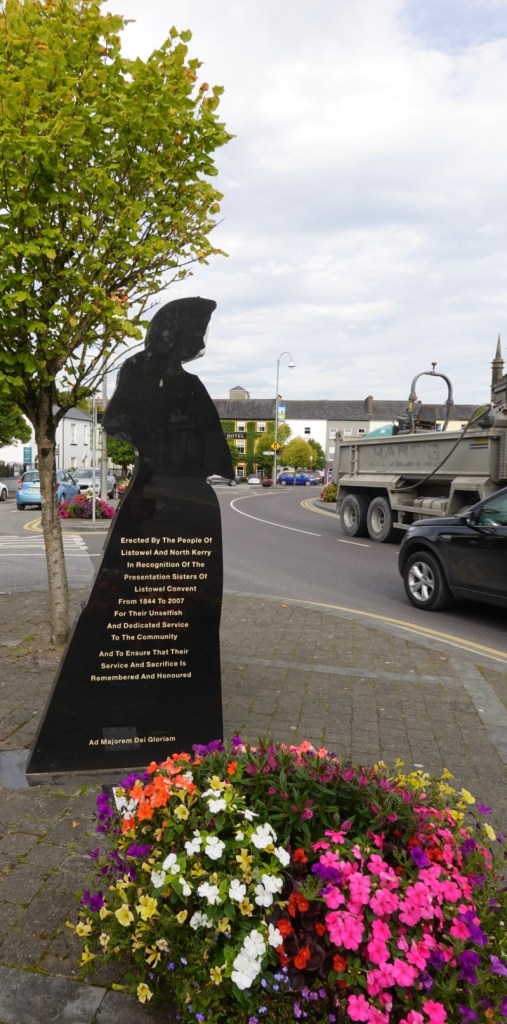
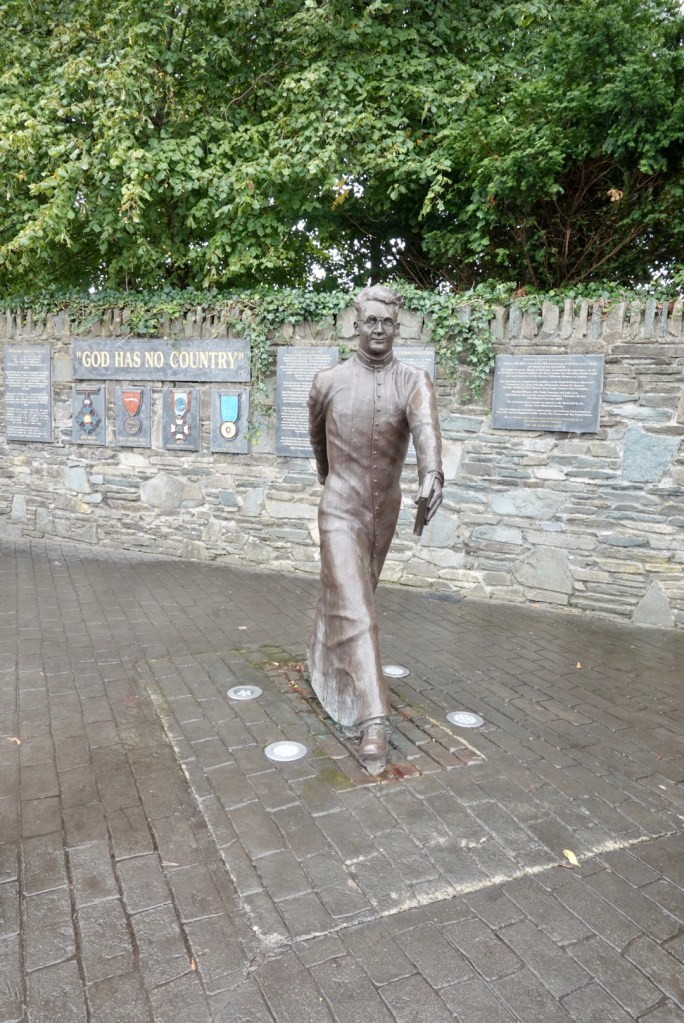
Nice little square with statue, flowers and a great cafe
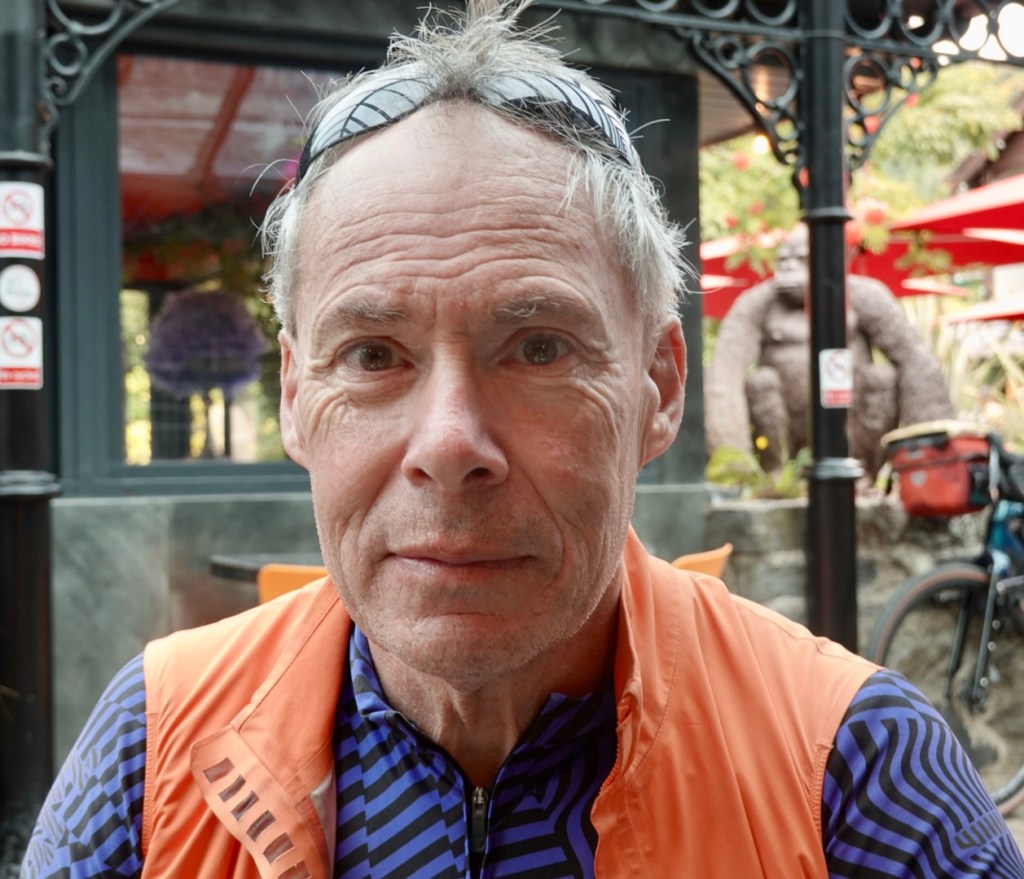
Happy Tony

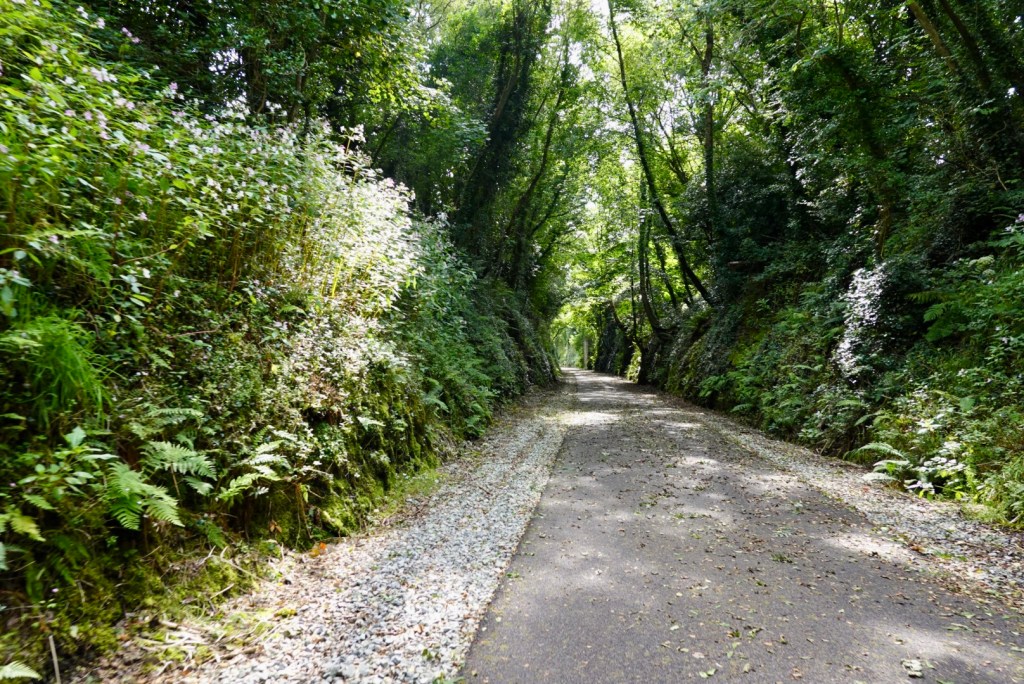
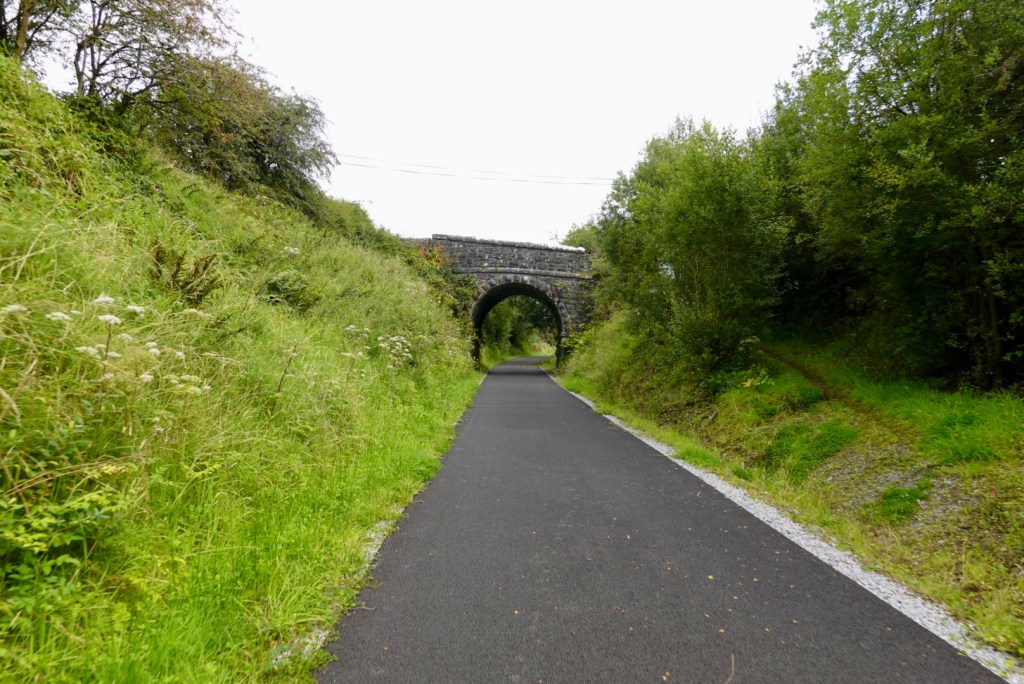
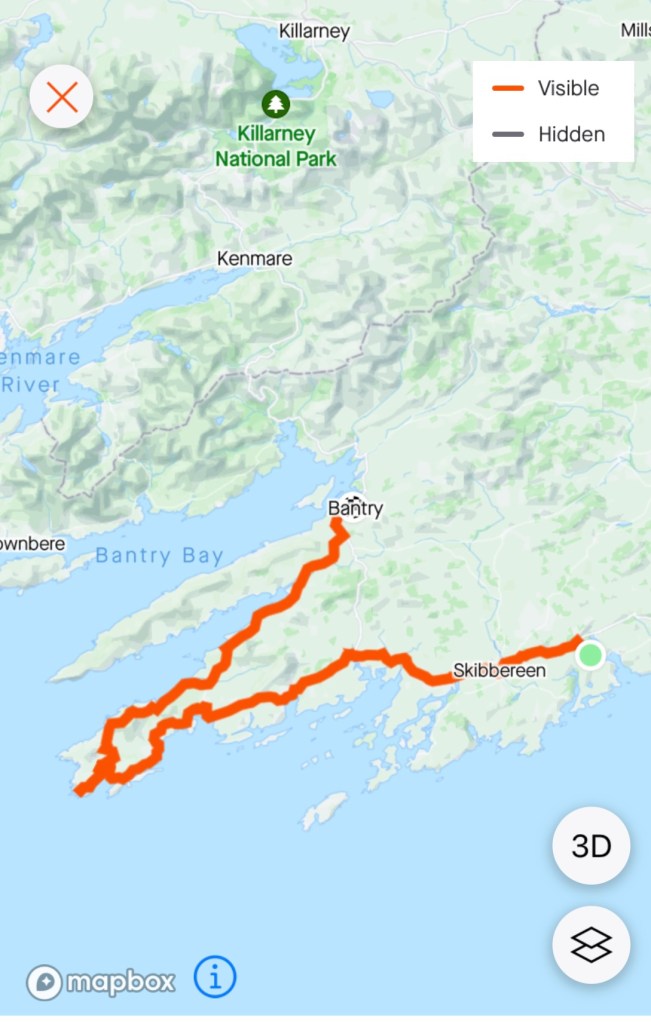
The Limerick Greenway (Great Southern Trail) is a unique 53 km stretch of countryside following the old Limerick-Tralee railway line that was closed in the mid 1970’s.

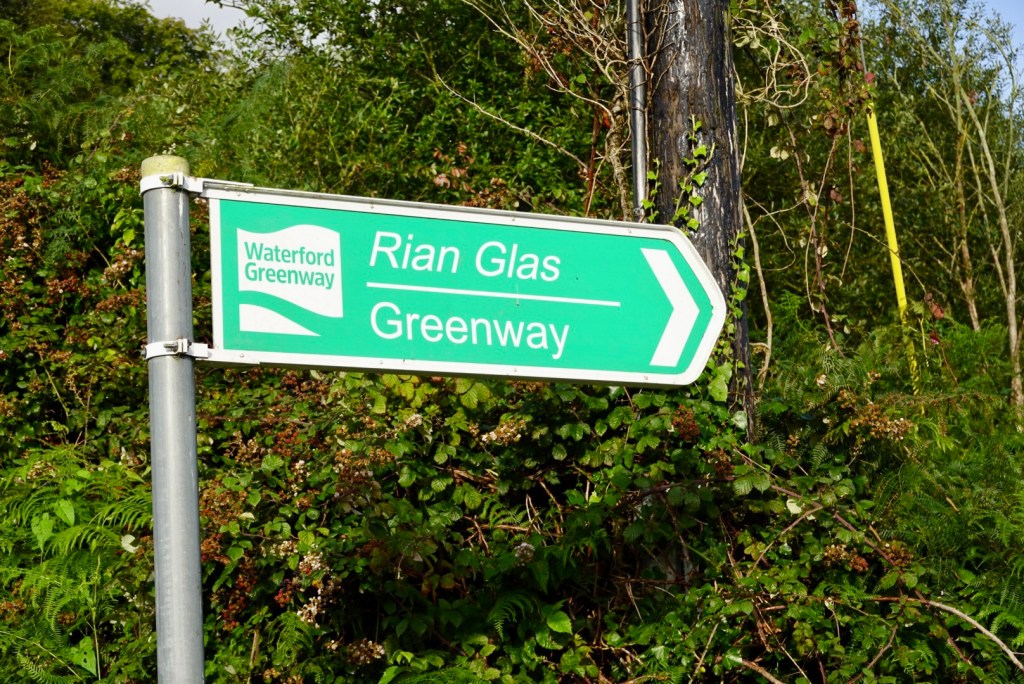
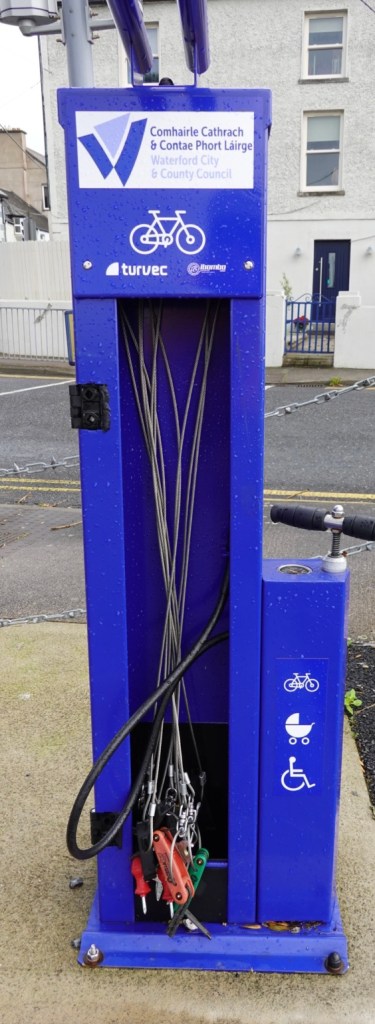
It has been very well constructed with many bridges above, greenery, signage, tables to rest at, bike maintenance areas ( air pumps, tools).

We saw a range of users. Walkers, runners, cyclists (touring, social and active), parents with prams and kids with little bikes and dogs.
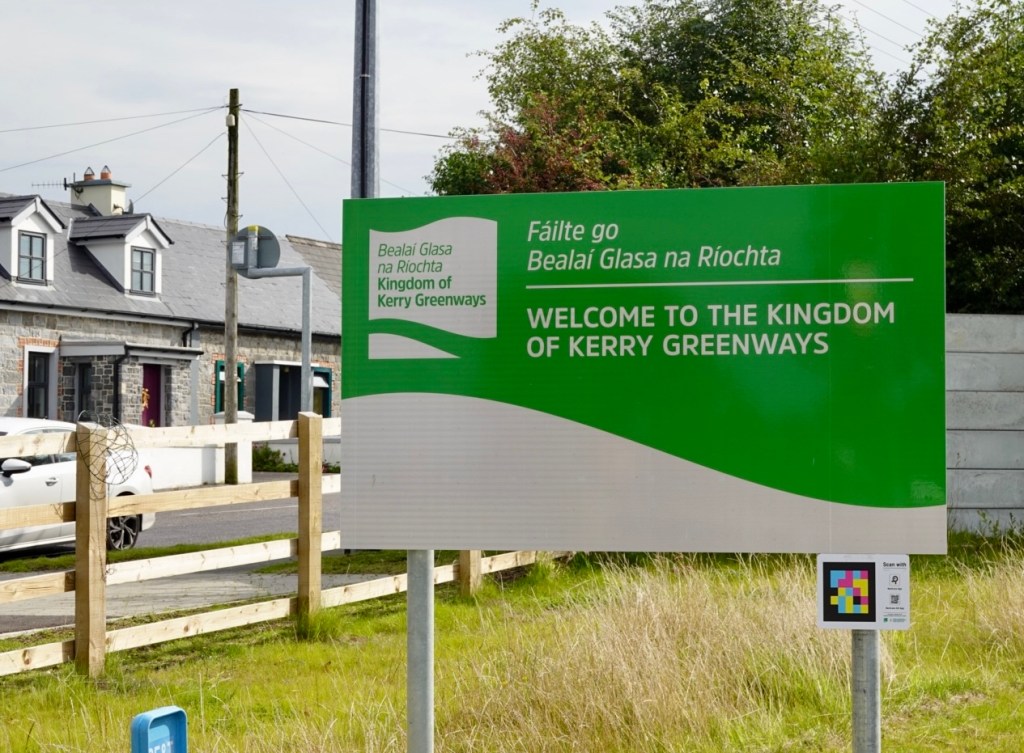
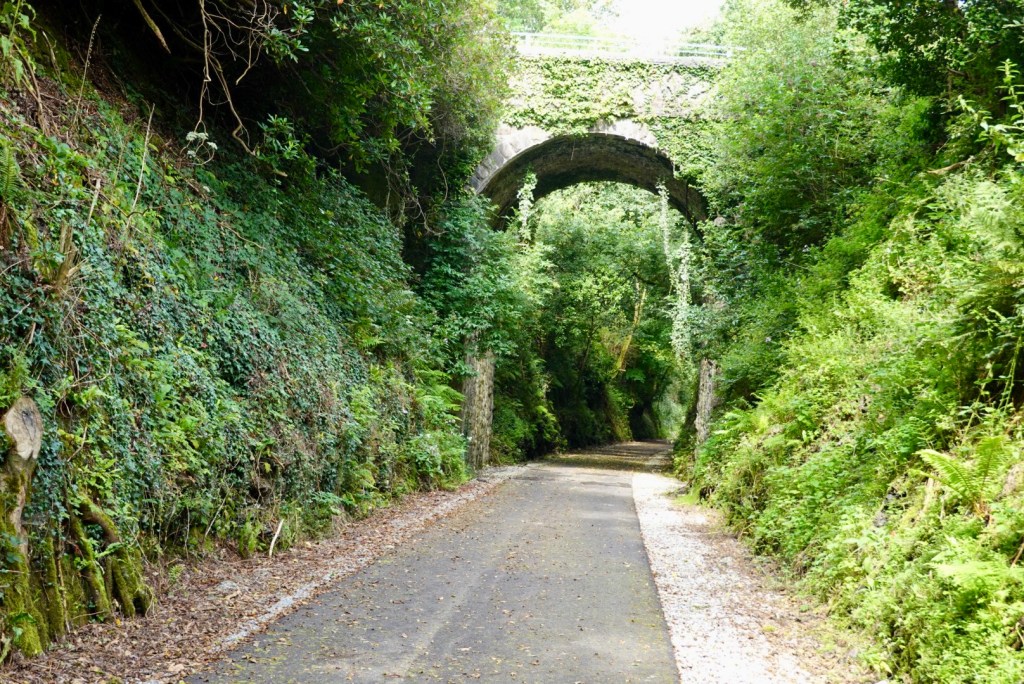
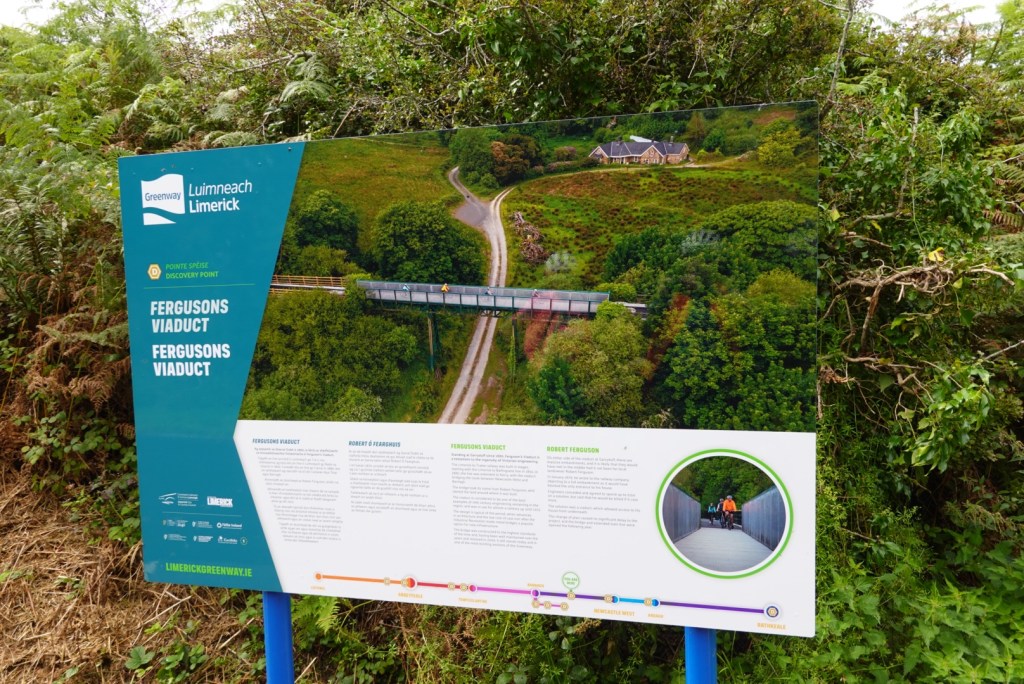
Informative panels with some history,
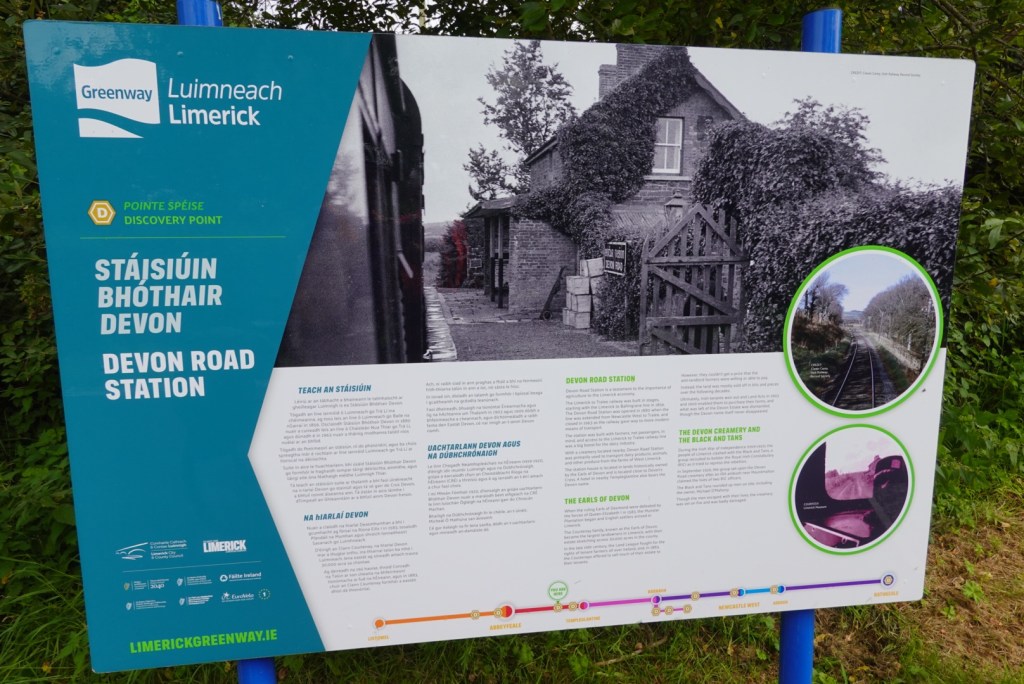
A few remaining old buildings from railway days.

Near Newcastle West we stopped to eat some food we had with us. The wind had been shite again (very annoying how it had turned from a SW to a NW as we were now heading N).
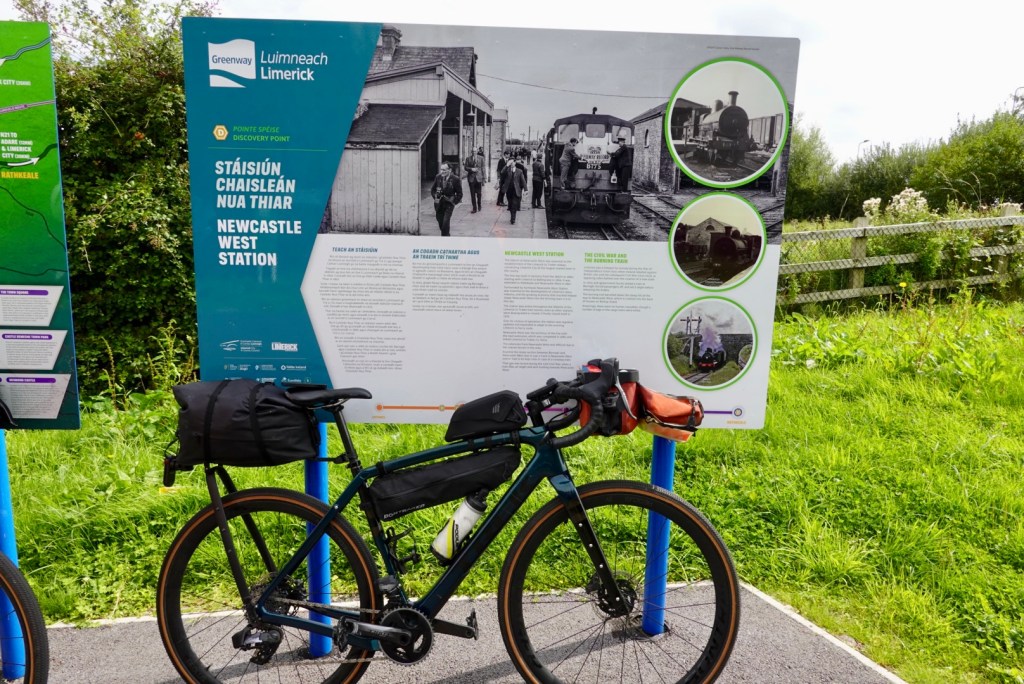
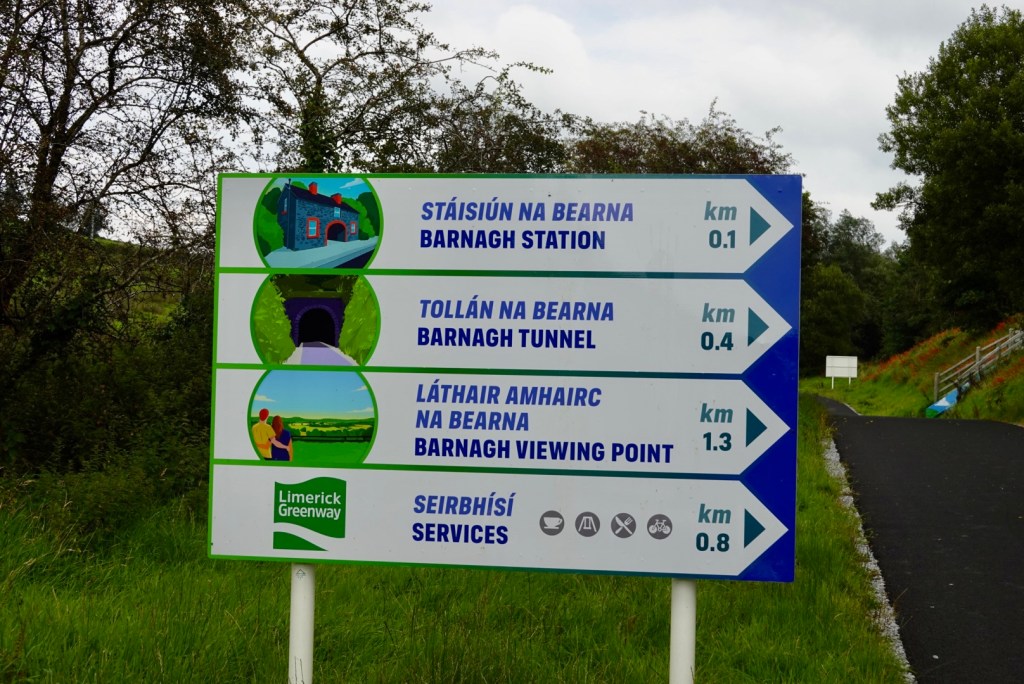
Great signage advises you what is where.
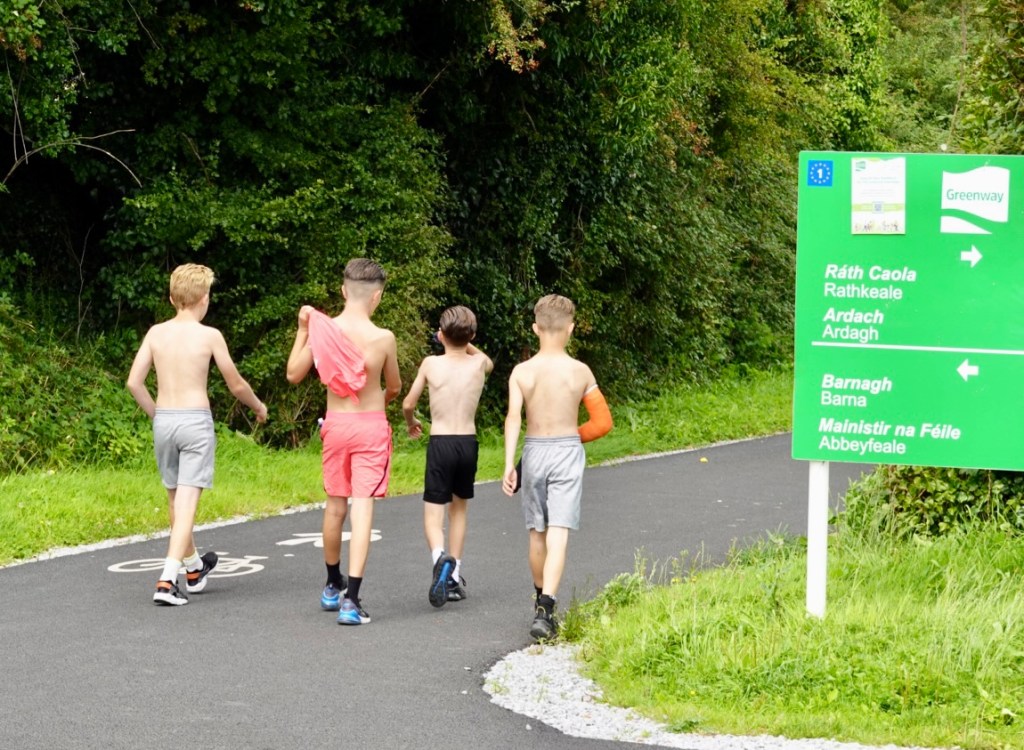
These young lads made us laugh. They were acting super tough as they passed by. It was not THAT warm either, but I guess when you are tough you can cope.
We now only had about 15 km of greenway left, so we pushed on, but also stopped for photos.
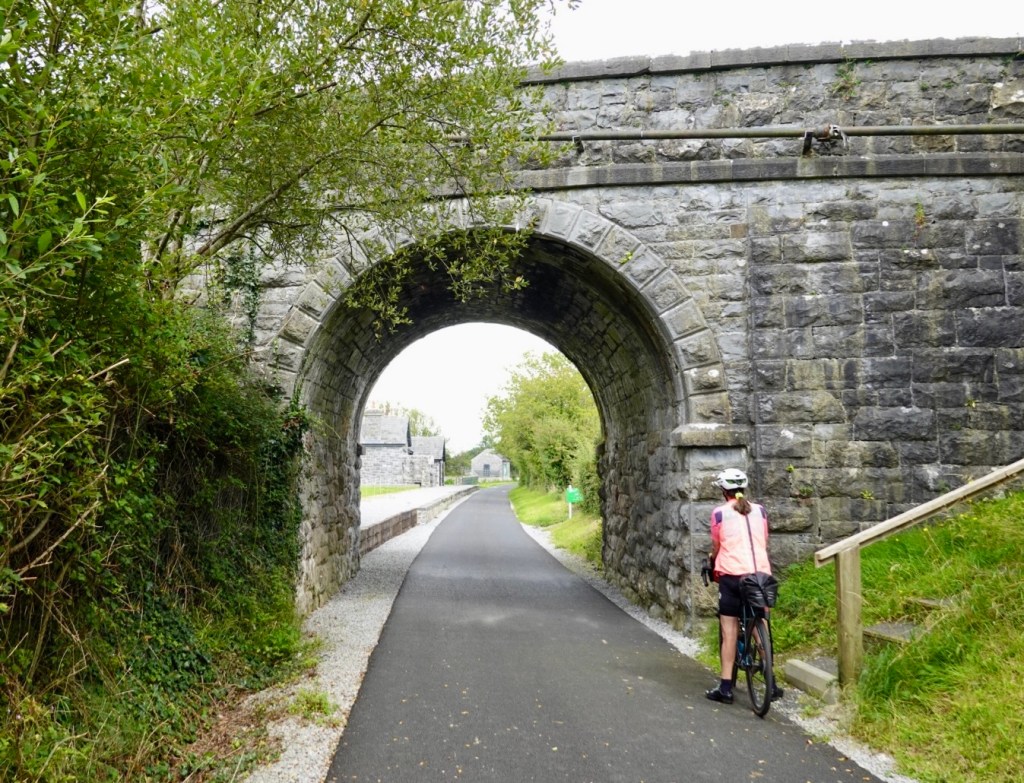
We passed through so many of these today. Here are four gates, two either side of a laneway. The gates slow the users down when there is a road or driveway to cross. It works well as a user calming device.

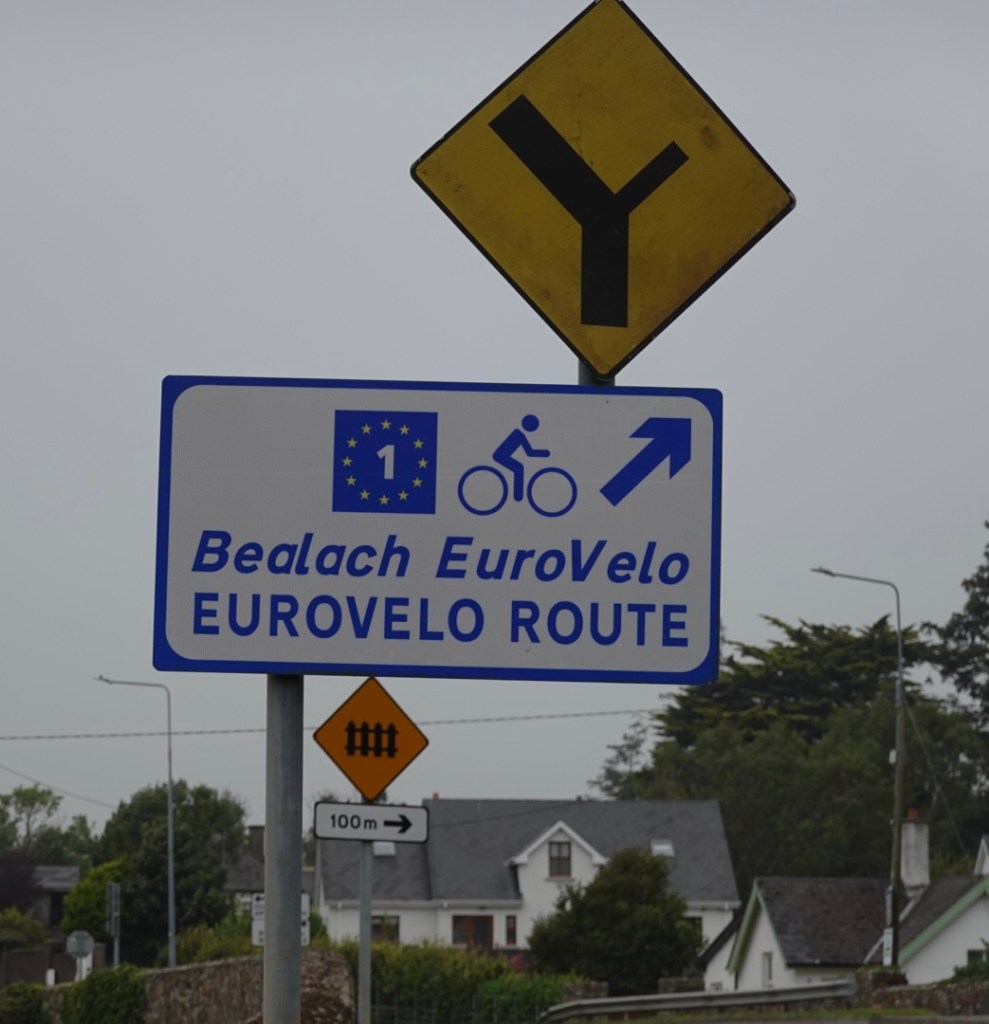
Back on the road again with 30 km left, we had a great verge. It suddenly stopped. There was a EuroVelo 1 sign to the left. Our route went straight ahead.

We did stop to discuss this, but given the great verge proceeded per our route.

Should have taken EV1.

Ahead was a road block some 2 km out from Adare. It continued through the town and out the other side. I have never ridden in anything quite like it. We did not skirt around the traffic, holding our spot mid lane as that is safest in the circumstances (and no verge).

A real problem to be addressed as the town is super popular with tourists, adding to the traffic congestion.

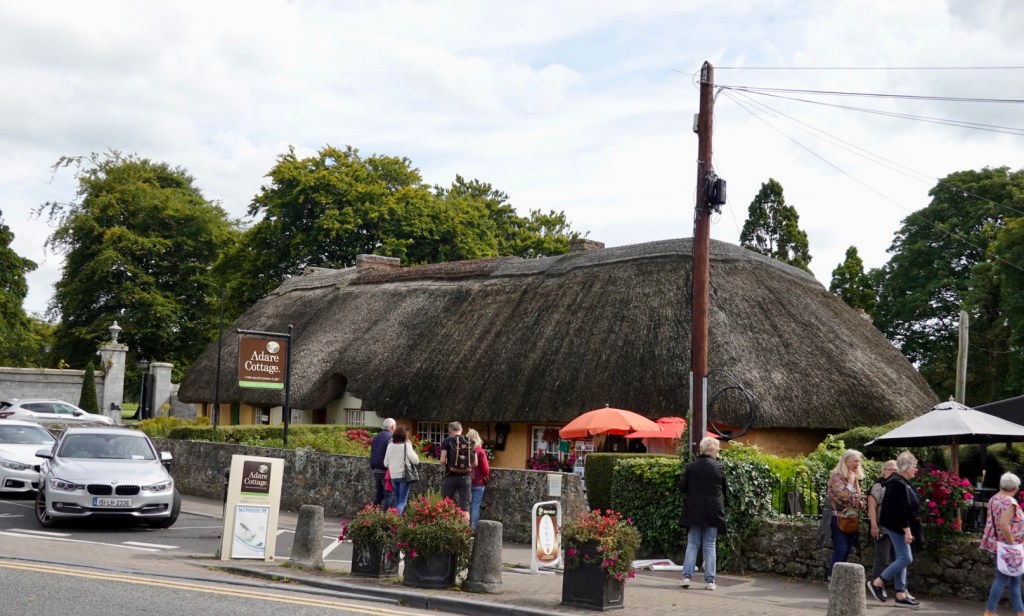
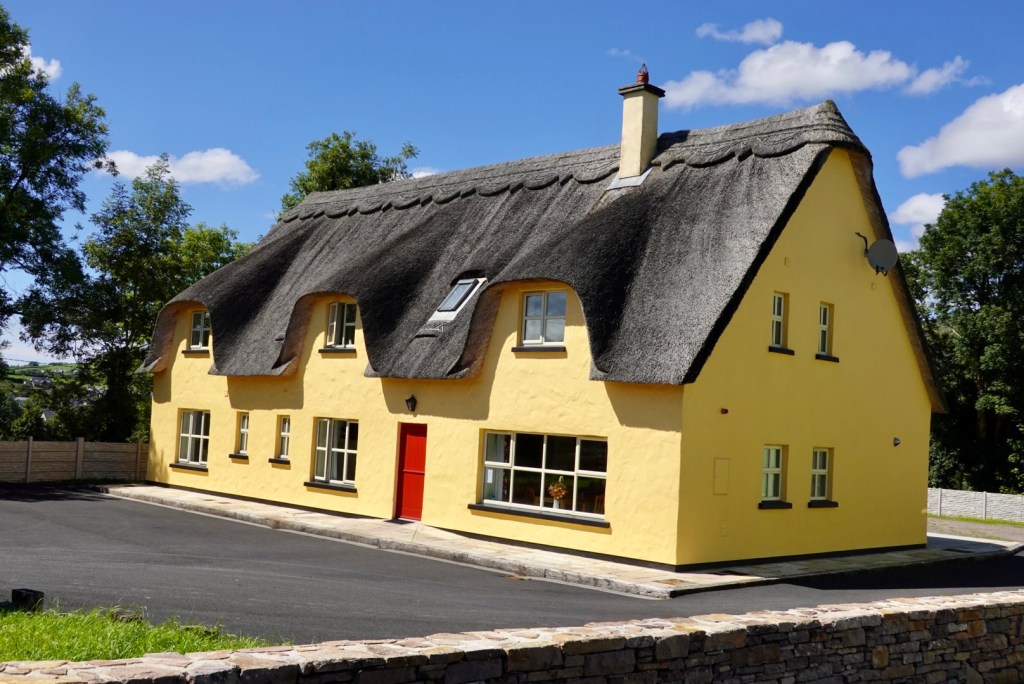
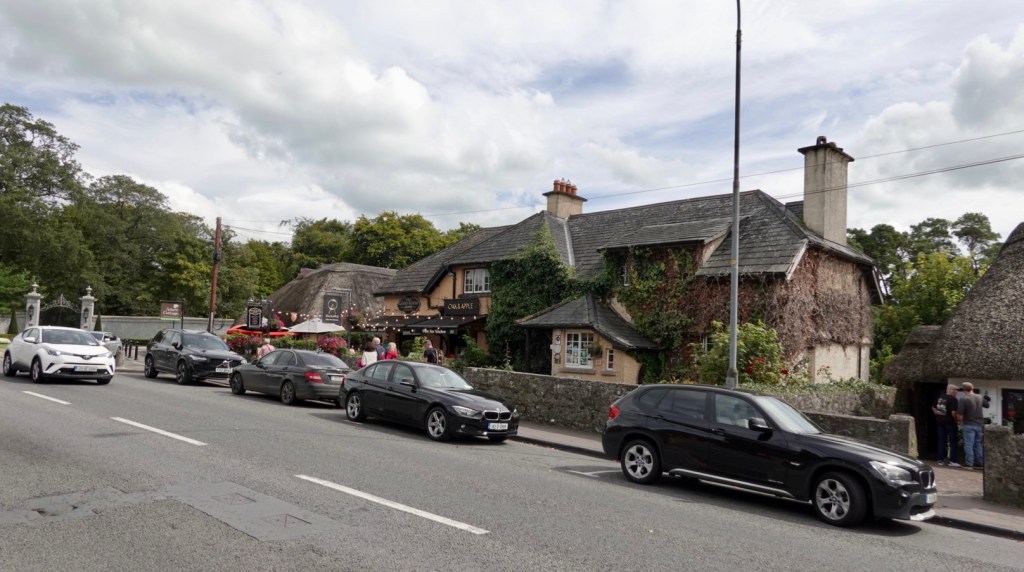
Adare overlooks the fording point of the RIver Maigue from which the village derives its meaning “The ford of the oak”. Picture postcard thatched cottages line its main street. There are medieval buildings, ancient and archaeological ruins. Hence the tourists.
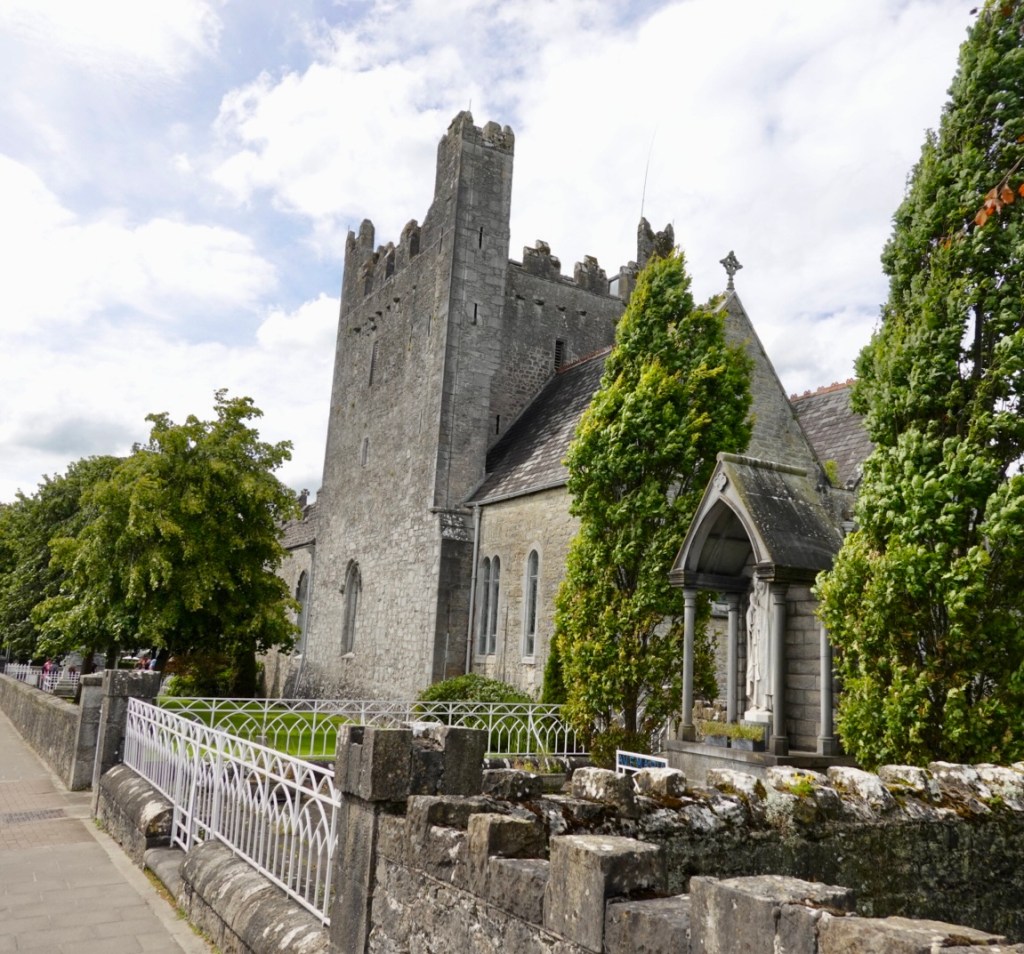
The Augustinian Friary was as we left town. In 1316 they were given this land and constructed the abbey. It is also known as the Black Abbey.

As part of the Tudor (ie Henry VIII) suppression of Irish monasteries, the Augustinians were driven out of Adare and moved to Limerick in 1633.

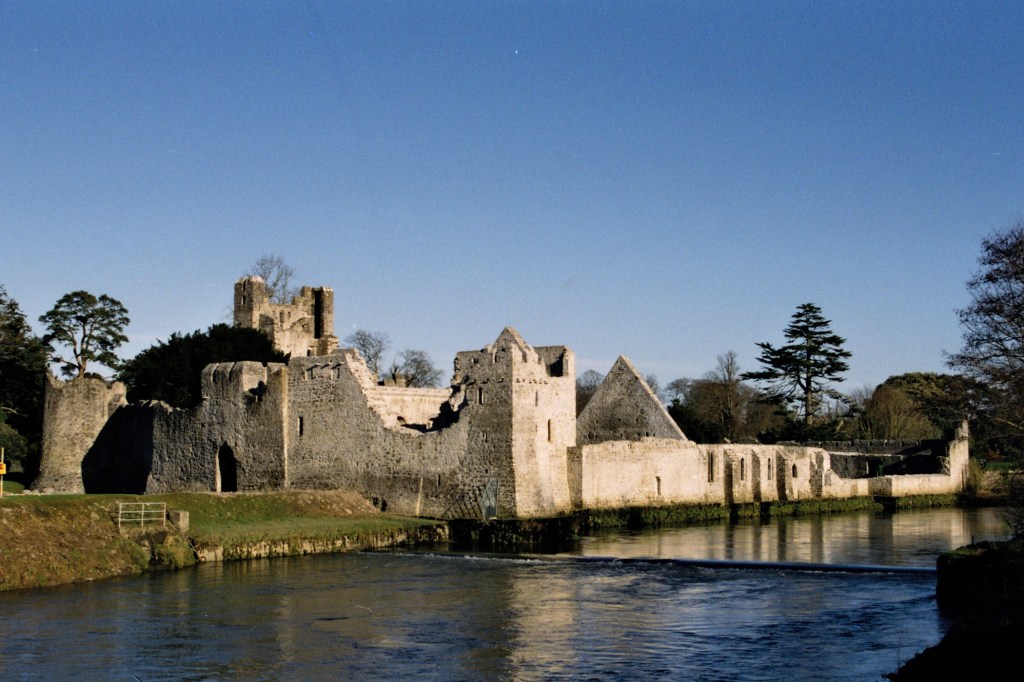
We crossed a bridge, still in heavy traffic, with nowhere to stop and noted this castle on the rivers edge. A stolen photo, it is Desmond Castle, also from the early 1300’s ultimately dismantled by Cromwellian forces (the era between Charles 1 and Charles II under the protectorship of Oliver Cromwell).
Limerick is a beautiful city located on the River Shannon. Home of The Cranberries and Pulitzer prizewinning author Frank McCourt, it was to be our home this evening.
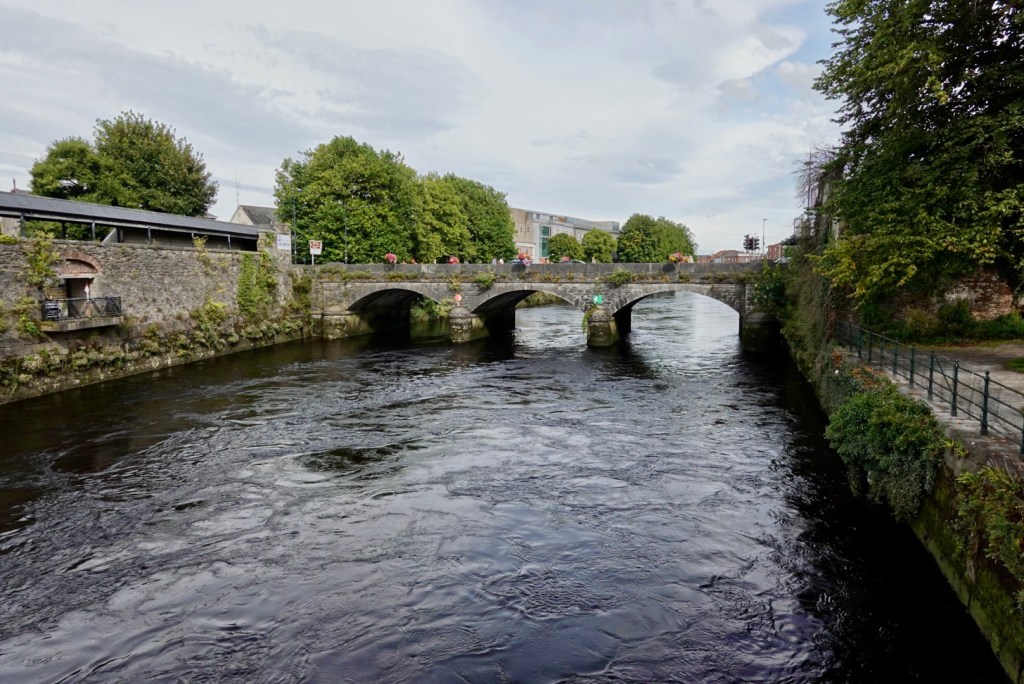
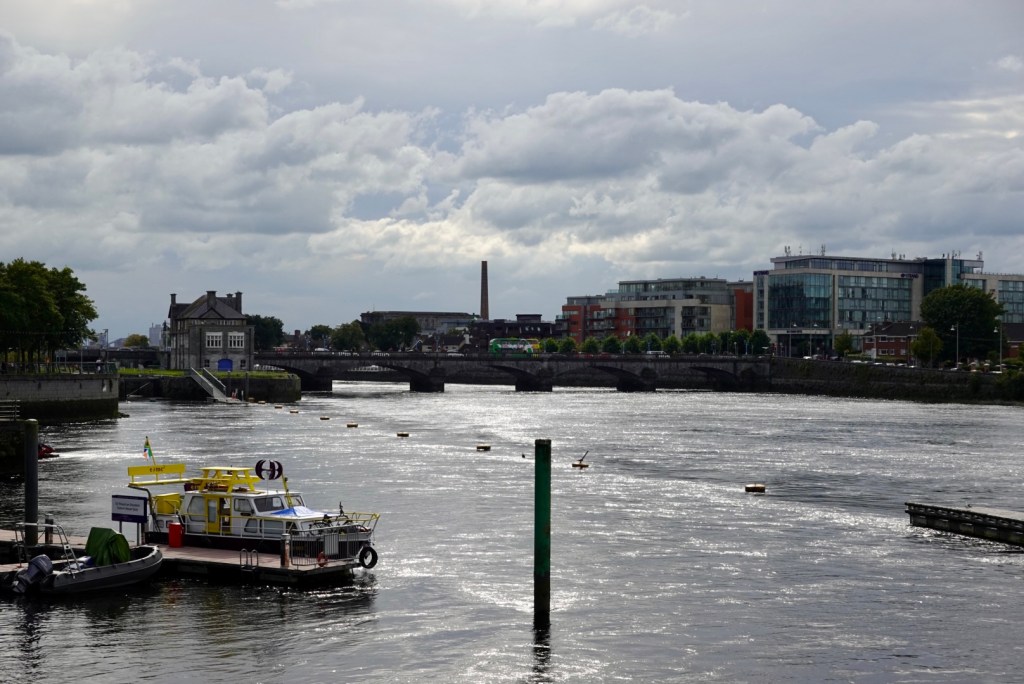
Overall the traffic was fairly ok as we approached a large city. Bikes can use the bus lane providing us with plenty of space. This is indicated by signs and writing on the lanes.

Of course, that is unless you are a taxi driver it seems. We had one cut in and and swerve very closely around Tony missing him by maybe 10 cm.

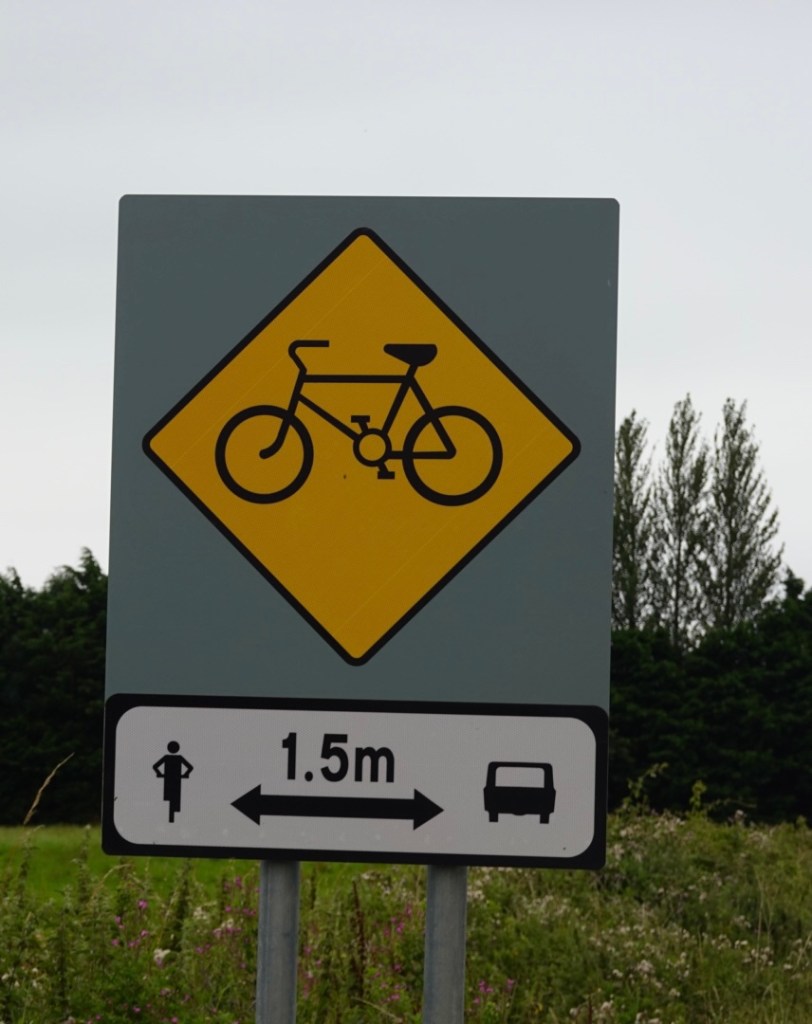
We all pulled up at the red lights, his passenger front window was down, and I asked him if he was aware of the 1.5 metre rule in Ireland. He responded he was allowed in the bus lane. I told him, you are required to give 1.5 metres to a cyclist, and that he was in my opinion, a dangerous taxi driver. I am sure he was glad when the light turned green but I do hope he pays more attention to cyclists safety moving forward.

After settling in to our accomodation (huge room, can sleep five people), we set off for a walk to see King John’s castle.

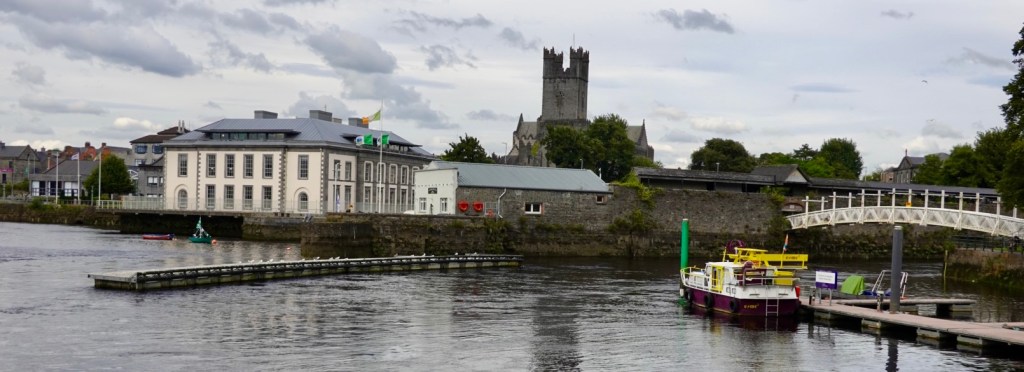
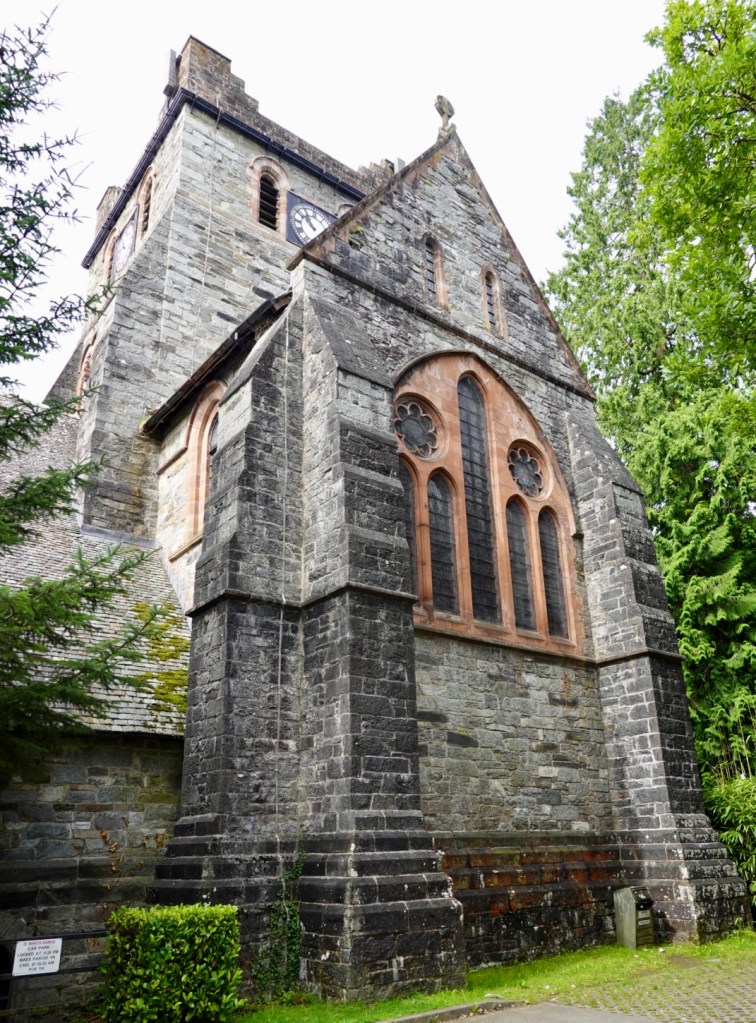
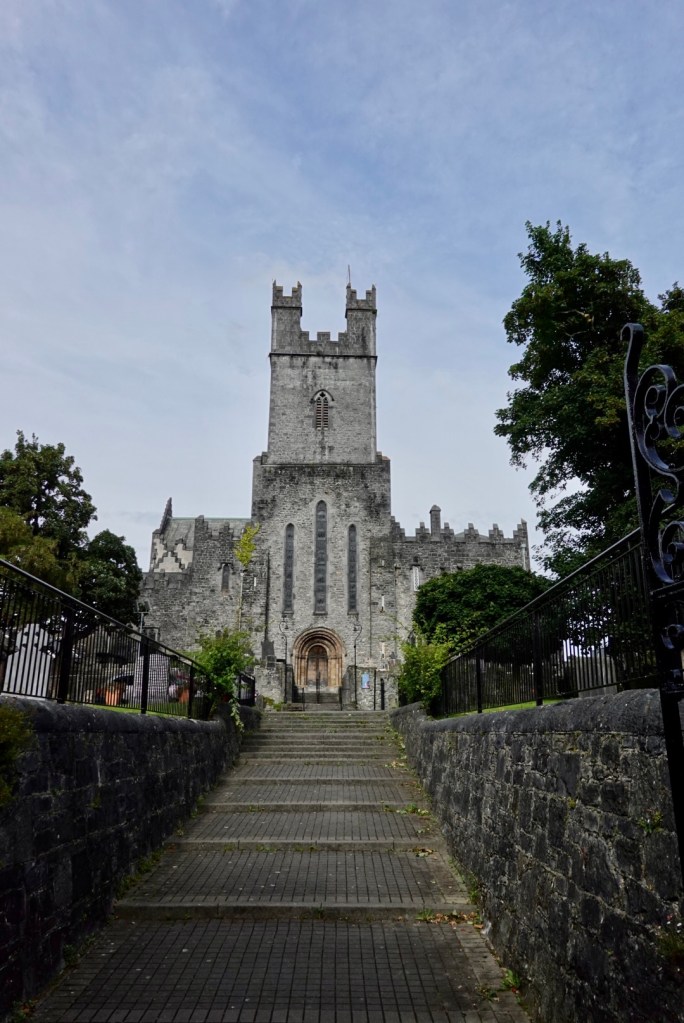
Following the riverside walkway we walked through the old potato market up to St Mary’s cathedral. Founded in 1168 and the oldest building in Limerick in continuous use. It has a roof high monks walk, damage from 17th century cannonballs and a ‘lepers squint’ (a small opening in the cathedral wall through which lepers in medieval times could hear mass”.
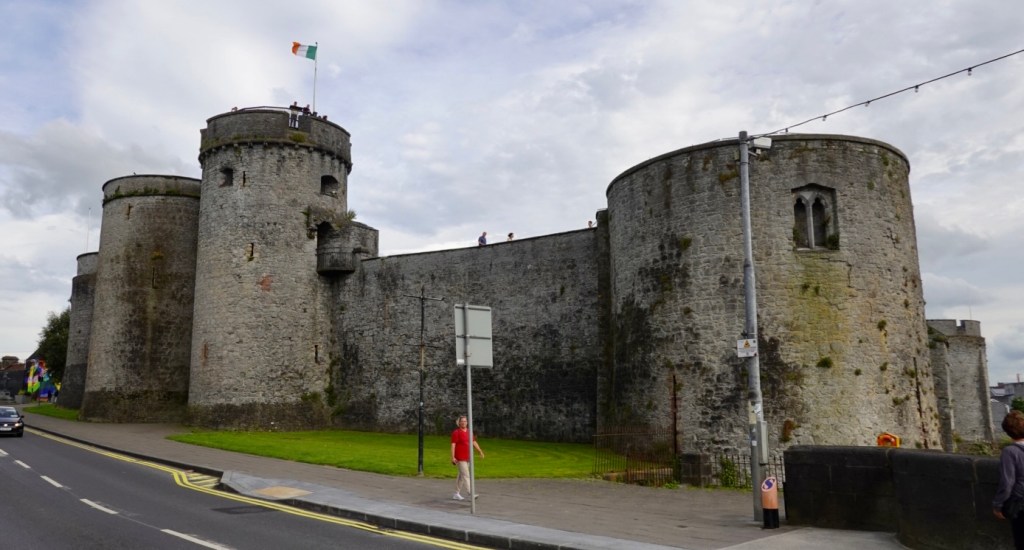
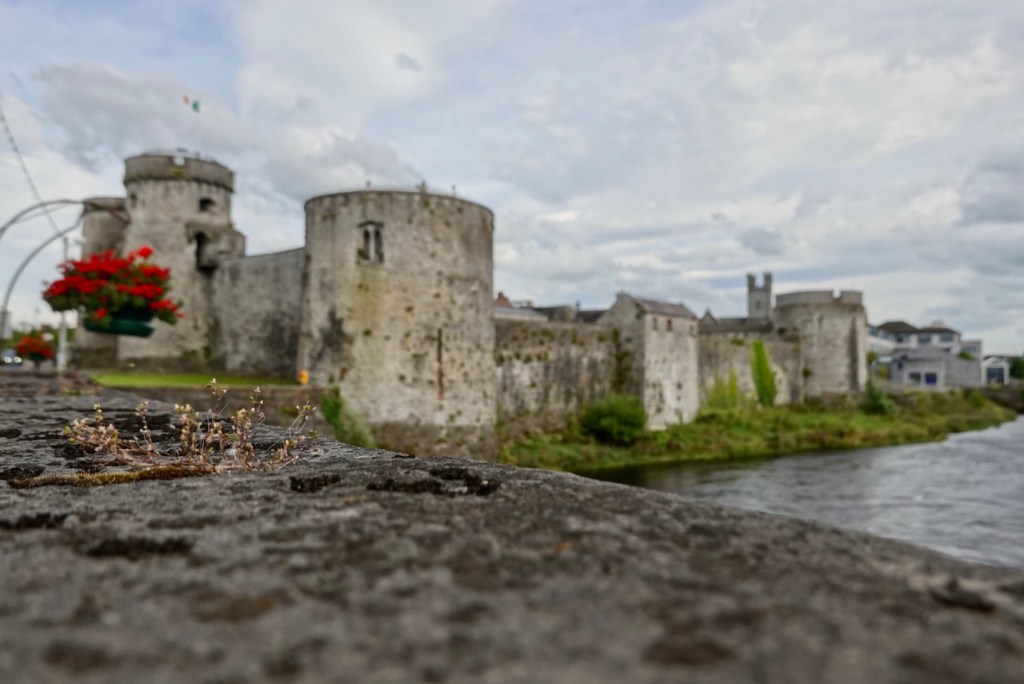
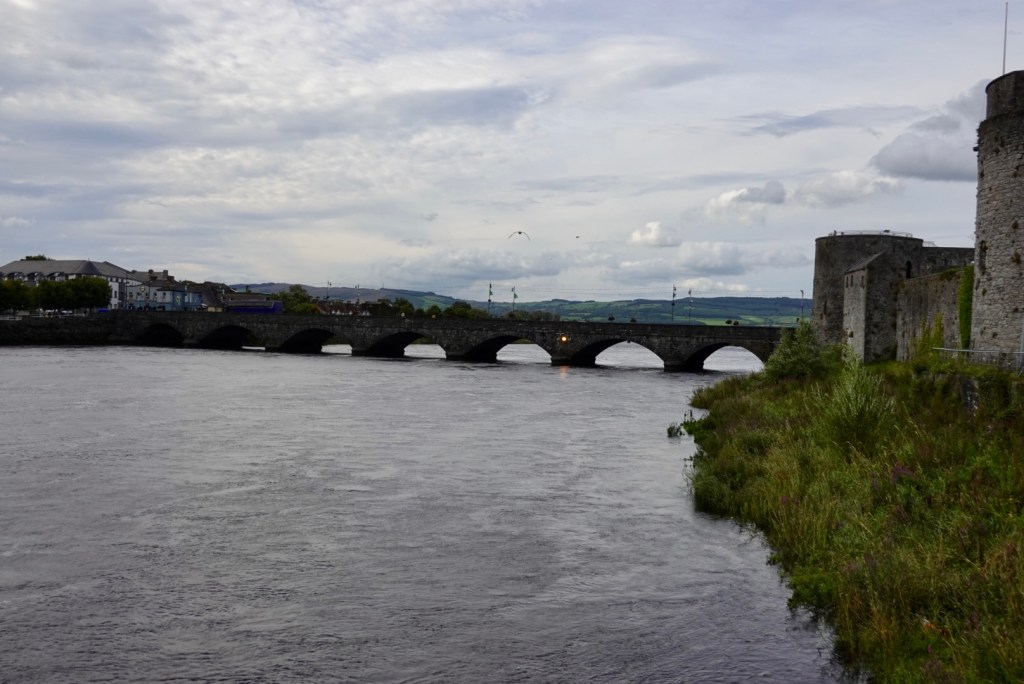
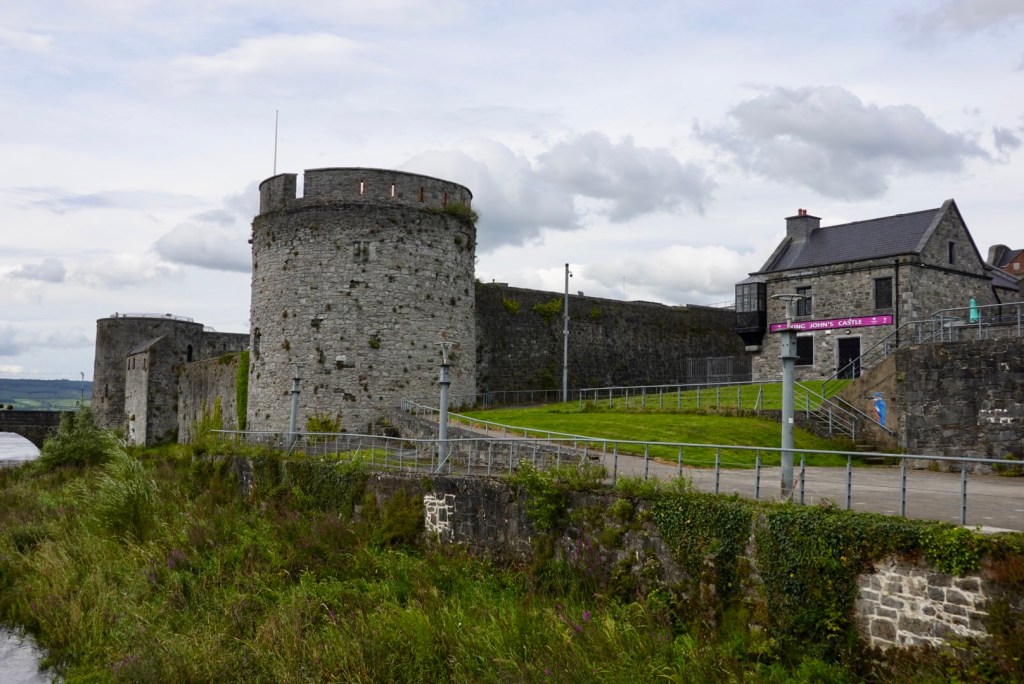
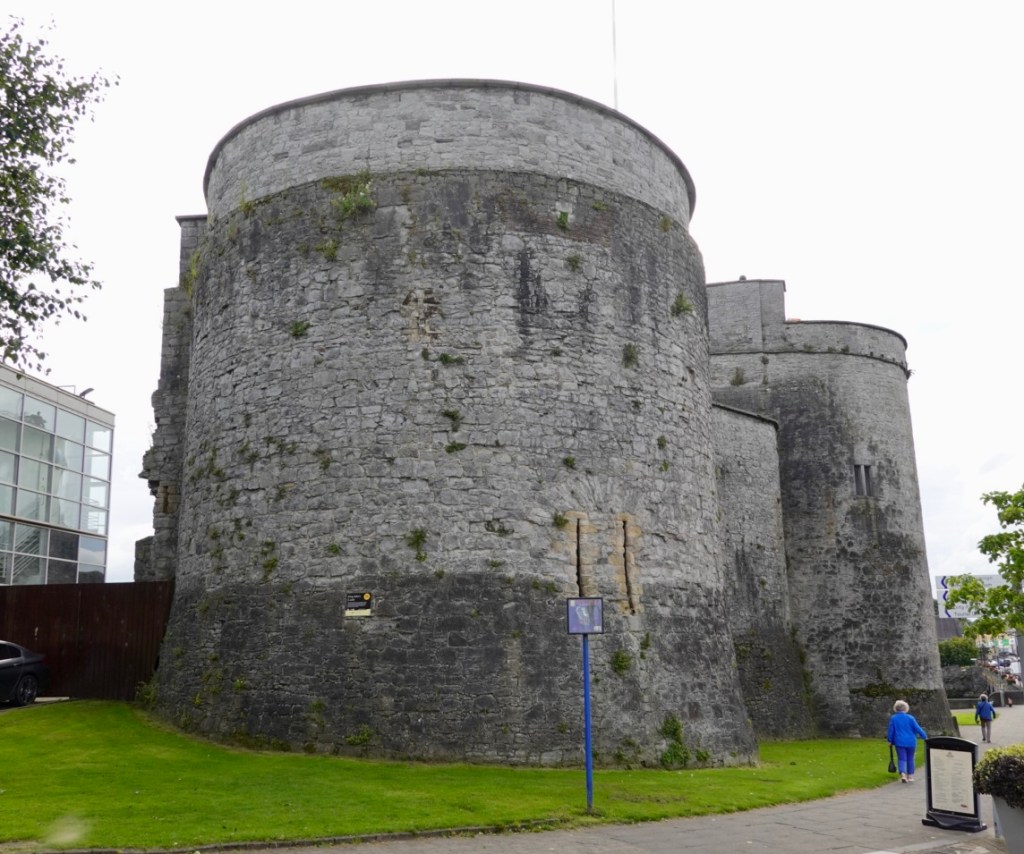
King John’s castle is perched on King Island, by the fast-flowing Shannon. It has been here for over 1000 years and is thought to have been built on an earlier Viking site.

Last admission is at 5 pm. We got there at 5.13 pm…..ah, the Chepstow curse continues.
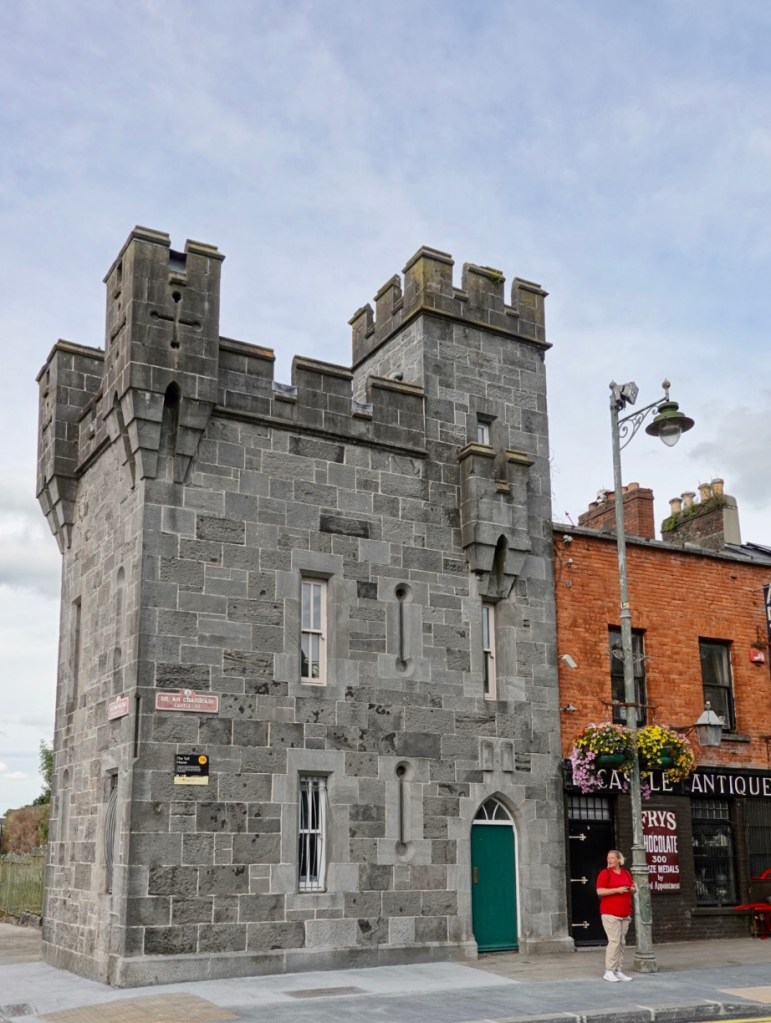
Over the road from the castle is an old toll house.
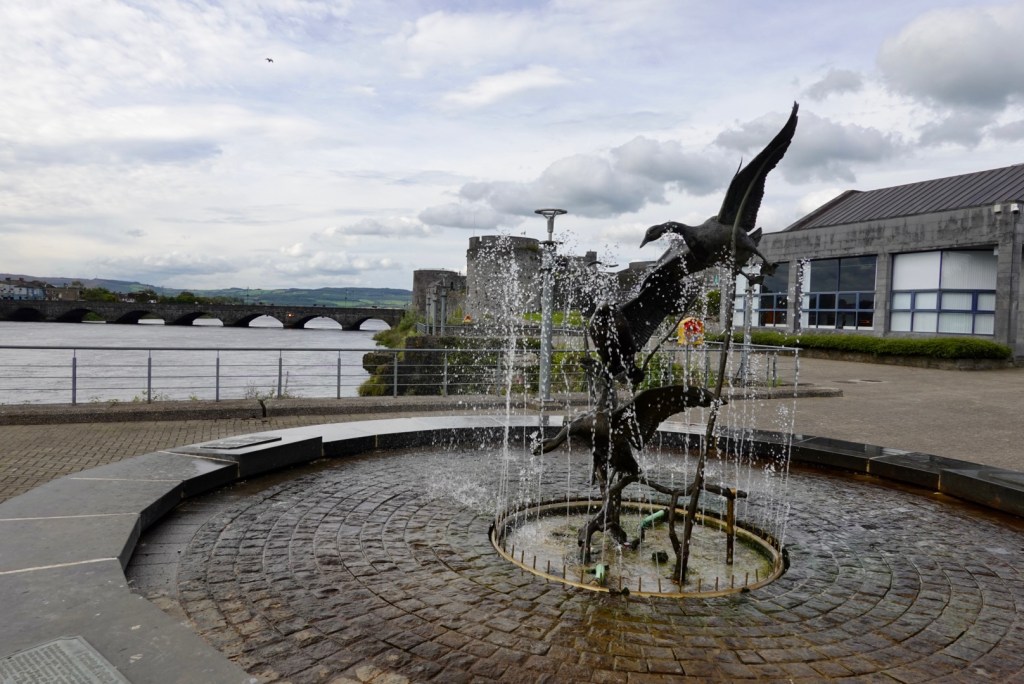
We headed back along the river to find our dinner.
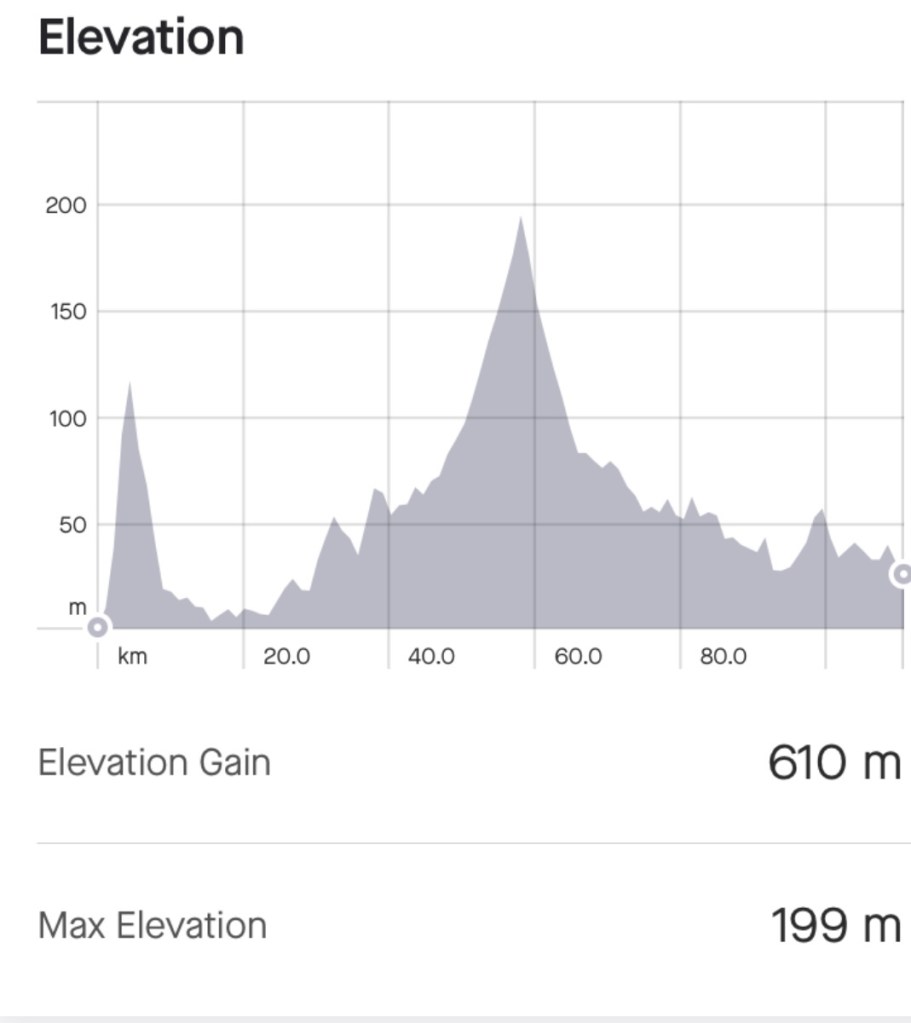
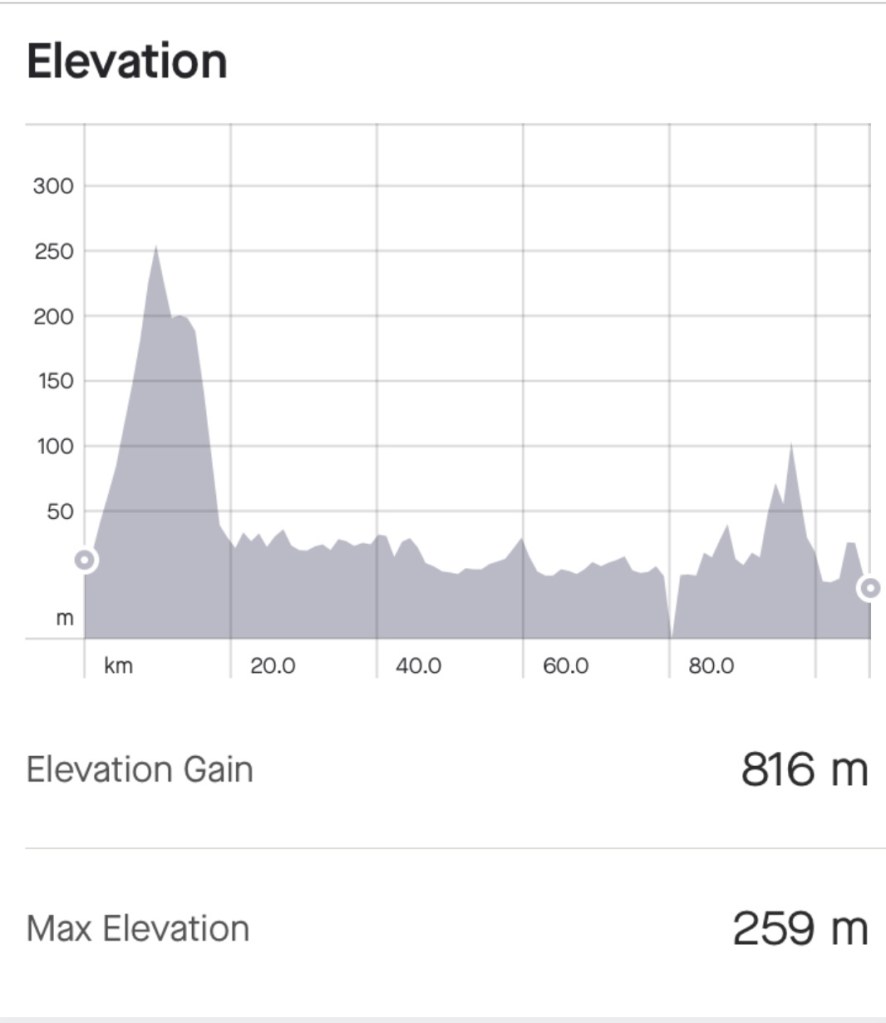
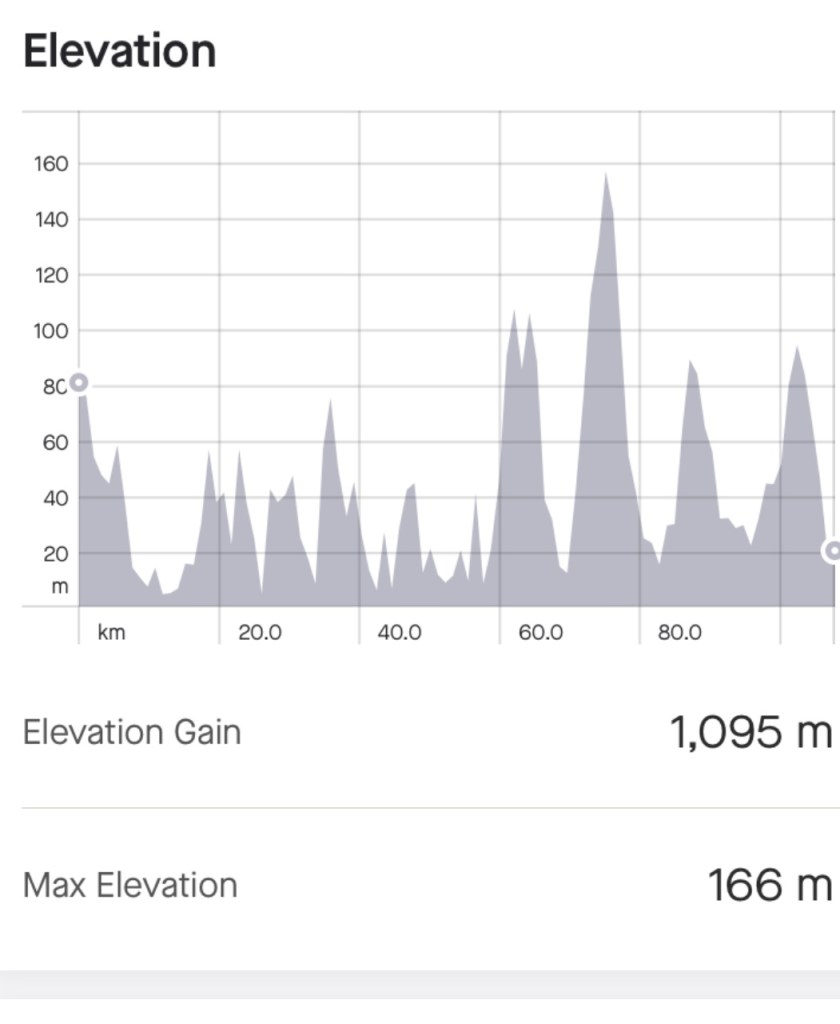
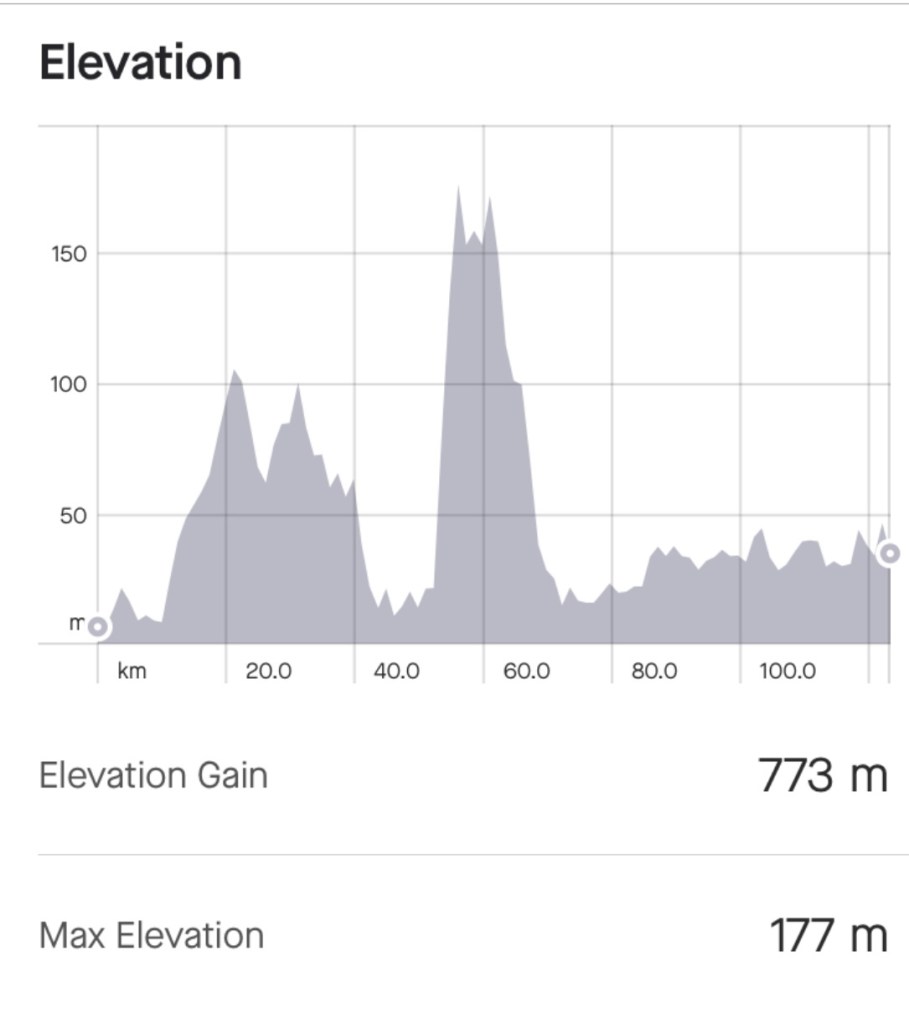
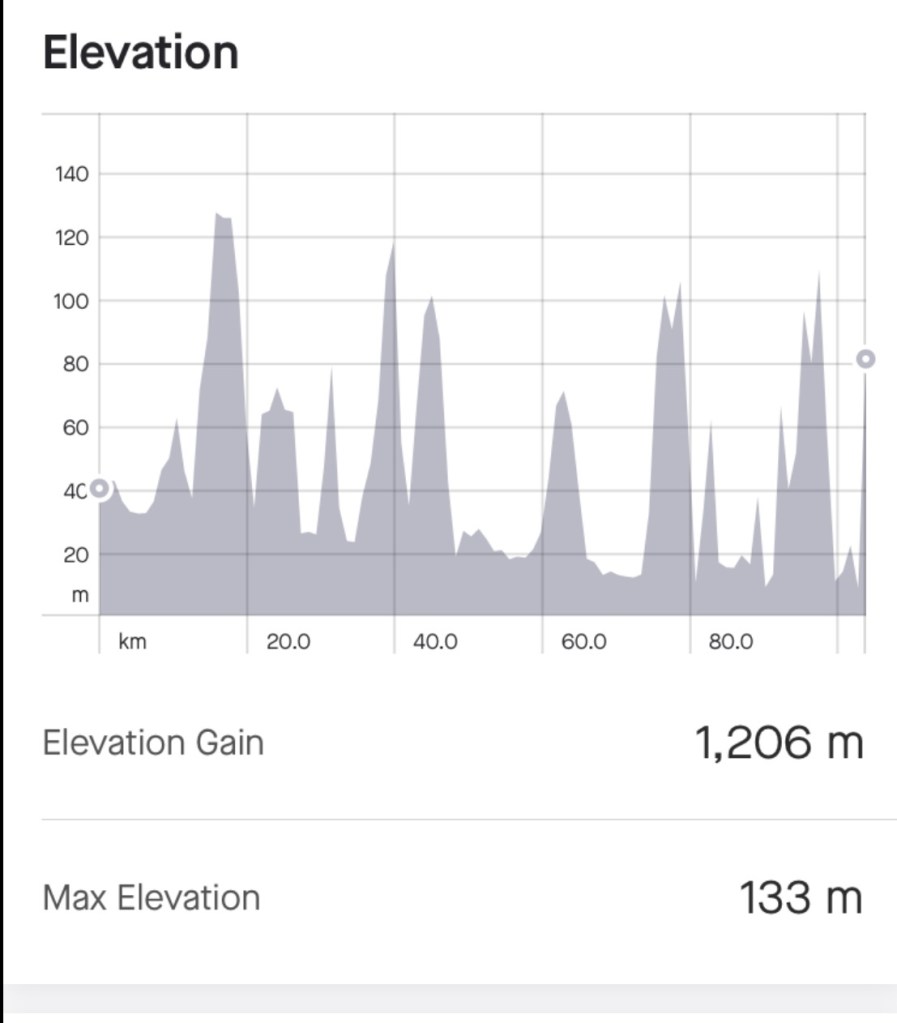
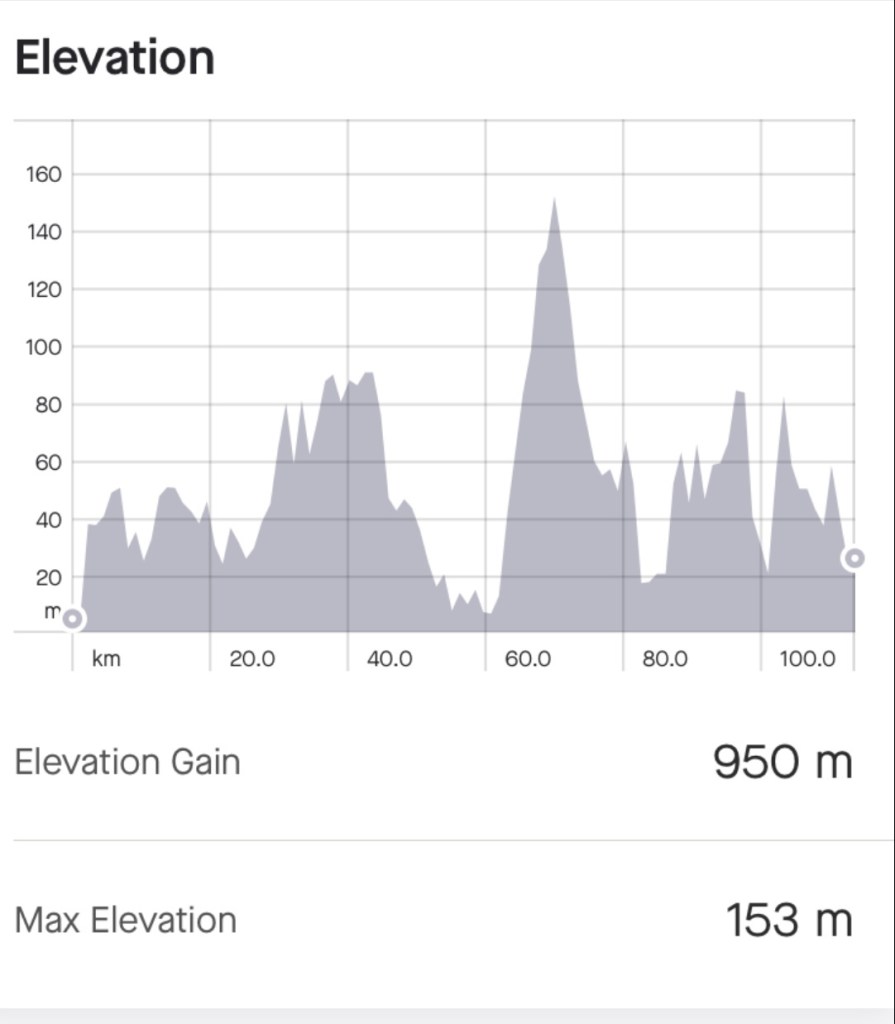
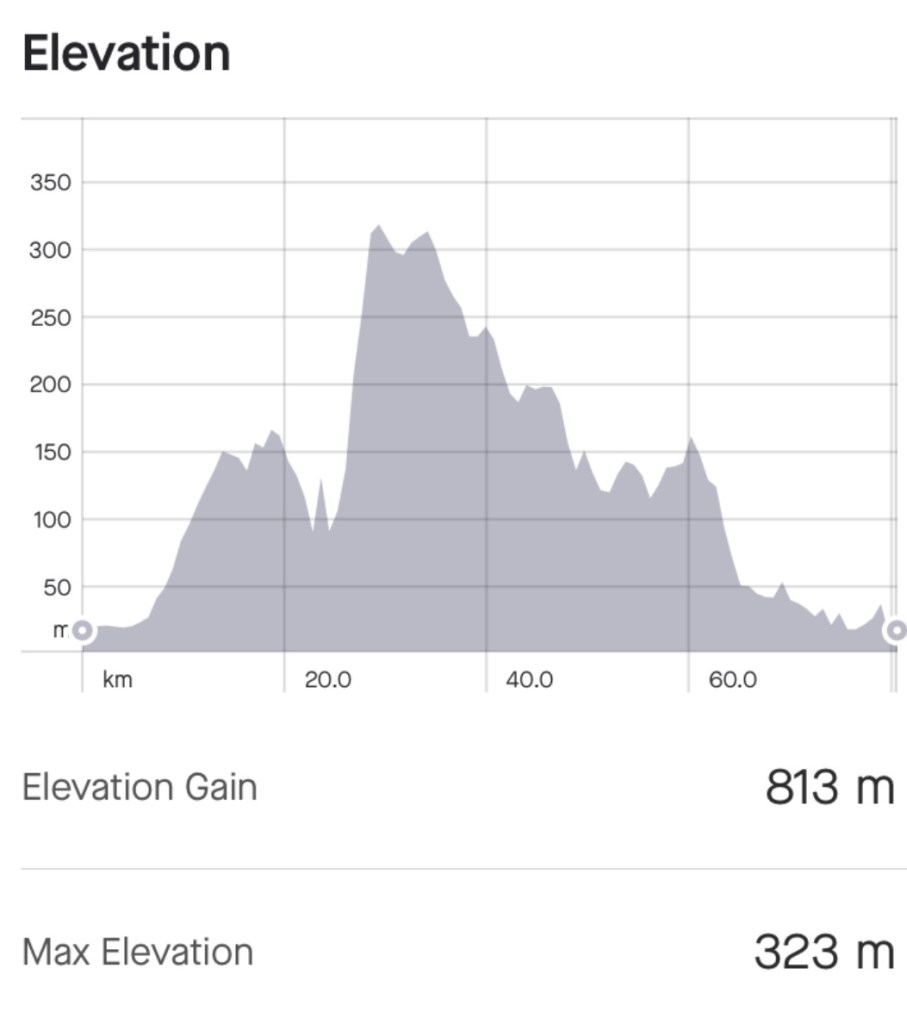
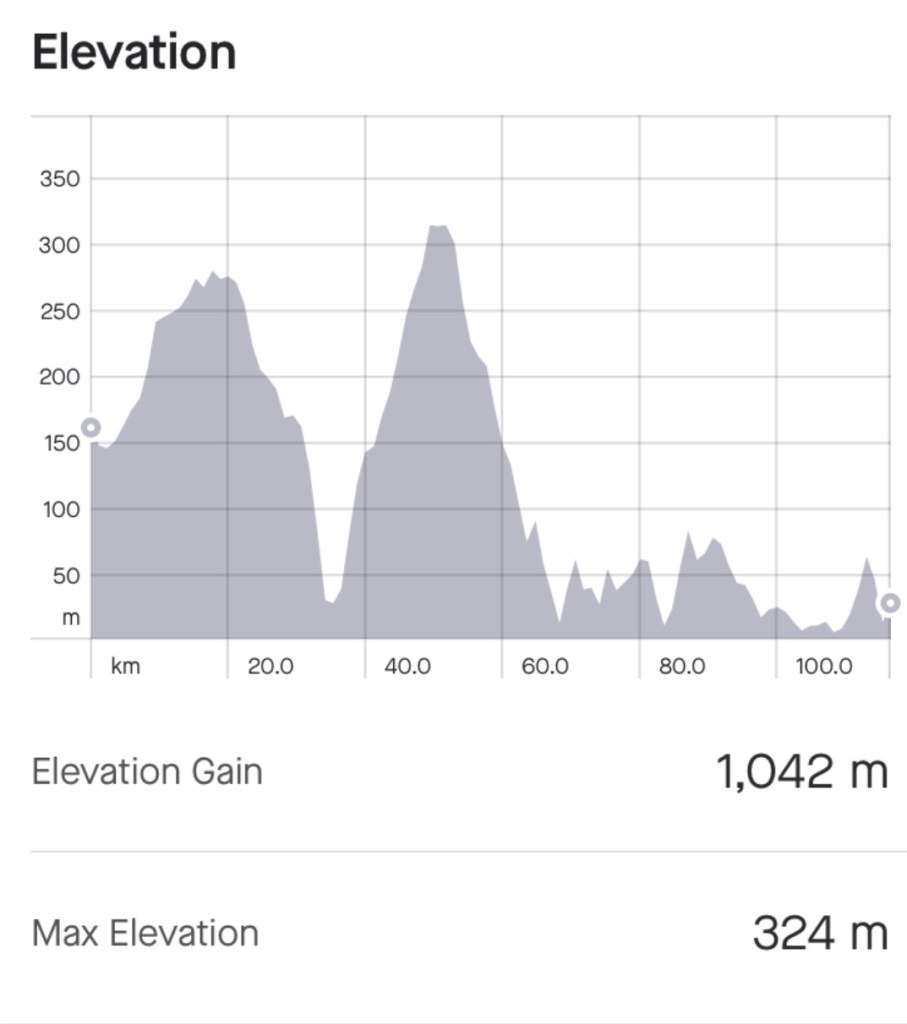
An interesting day made tougher by the wind. We had two climbs as you can see below, and we rode 110 km.

Tomorrow is of concern. There is a large rain band on the radar with yellow and green and red, the colours you do not want. Winds over 50 kmh ( headwinds).

We have a few possible plans as options and will wait until morning to decide what to do. We need to move on as w have a ferry to catch on Saturday.

Thanks for reading 😊❣️
London Calling

London is calling – one of my favourite cities, so much history. We are heading back for the first time since 2016, so overdue for sure. Last time we were there we headed off and rode to Venice – some 2200 km away.

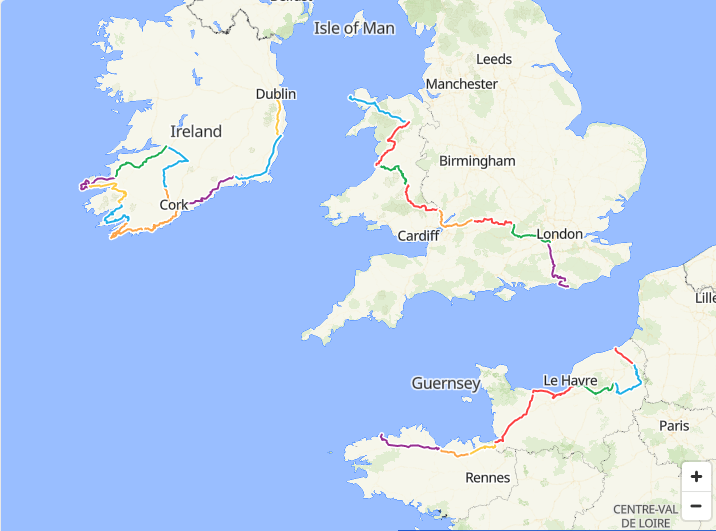
This is our current planned route:

This route is over 2700 km and connected by three ferries, including an overnight ferry from Cork (Ireland) to Roscoff (France).

We will ride for 28 days. To put that into context our recent Japan ride was 14 days riding and over 1200 km riding. Per day, this will be a higher daily average of around 98 km and plenty of hills!

We will be spending 8 nights in England, 6 in Wales, 11 in Ireland, 7 in France – this includes days either side of the ride commencement, and one rest day (in Wales).

The ride will start and finish at Benson in Oxfordshire and we will head via Thames Head, Tetbury, Thornbury to the Severn River bridge to cross into Wales. Hoping to catch up with Zwift friend Ali around Thames Head.

We will ride past Chepstow (not chancing an ill-fated ‘no you cannot visit’ Chepstow Castle a third time!) but will likely stop as we head up the beautiful Wye Valley past Tintern Abbey as it is an iconic structure.

Our route through Wales to Aberystwyth has been constructed by our cycling friend Graeme (spelled the posh way he tells us), who we do hope to catch up with on our return into England, at a coffee shop in Ditchling! Graeme and his daughter Matilda are currently riding from Bristol through Wales.

We will overnight in Monmouth, Builth Wells and Aberstwyth before climbing up to Corwen, where we will have our first, and only, rest day with Alan, whom we rode with in 2013 from Lands End to John O’Groats.

Then it is off to Holyhead to catch the ferry across to Dublin, the capital of the Republic of Ireland. We move down the Irish coast to Arklow and follow the Wild Atlantic Way and also ride through the famed Killarney National Park to Dingle.

The beautiful, but super narrow, Slea Head Drive and Ireland’s highest mountain pass, Conor Pass will be done on the same day as we head to Tralee – so hoping for particularly good weather!

From Limerick we head to Mallow to line up for the ferry to France, but not before deviating somewhat to ride to Tipperary – as ‘it’s a long way to Tipperary!”.

An overnight ferry will transport us to Roscoff, on the coast of Brittany. We will ride through Brittany and Normandy including Saint Brieuc, Dinan, Mont Saint Michel, Bayeaux, Honfleur, Rouen and Neufchatel-en-Bray.

Our final ferry returns us back to the motherland, and a night in Lewes where we have stayed before, then we head back towards London to stay on an island in the Thames at Hampton Court for two nights. We will catch up with Graeme for coffee on the way out of Lewes, and also Zwift friend, Chris at Hampton Court.

As we return to Benson, hoping to catch up with another LeJogger Ian – and if any Zwift friends are reading this and en route, please let us know via Facebook Messenger or Strava.

I feel incredibly humbled to be able to consider undertaking this trip. My first heart anniversary is this weekend. I was given a second chance – others are not so lucky, such as my lovely dermatology doctor, who had a terminal cardiac event in May whilst we were in Japan. He and I had talked about not judging a book by its cover with cardiac issues – and Chris was a fit looking, tall and lean man – only 18 months older than me.

I watched his funeral a few weeks after his passing on You Tube and was so saddened when his son spoke and said that they believed his dad’s death was avoidable. I recalled my conversation over two visits since my surgery with Chris and I just groaned audibly “Chris, NO!” As his son said, stop being so busy and make that time to prioritise your own health.

That is the message I keep beating the drum to!

I am doing everything I can to rehab the best I can – my body is not the same as before open heart surgery – I do not think your body was designed to be sawn open in this manner, as it does not go back together quite the same way – there are notable differences.

Those differences, that numbness, that soreness, that left lung, that scar – all reminders of how damn lucky I am to have a second chance.

Live life like there is no tomorrow!

Tucked away safe from grandchildren 🤣❣️


Day 15: Dingle to Tralee

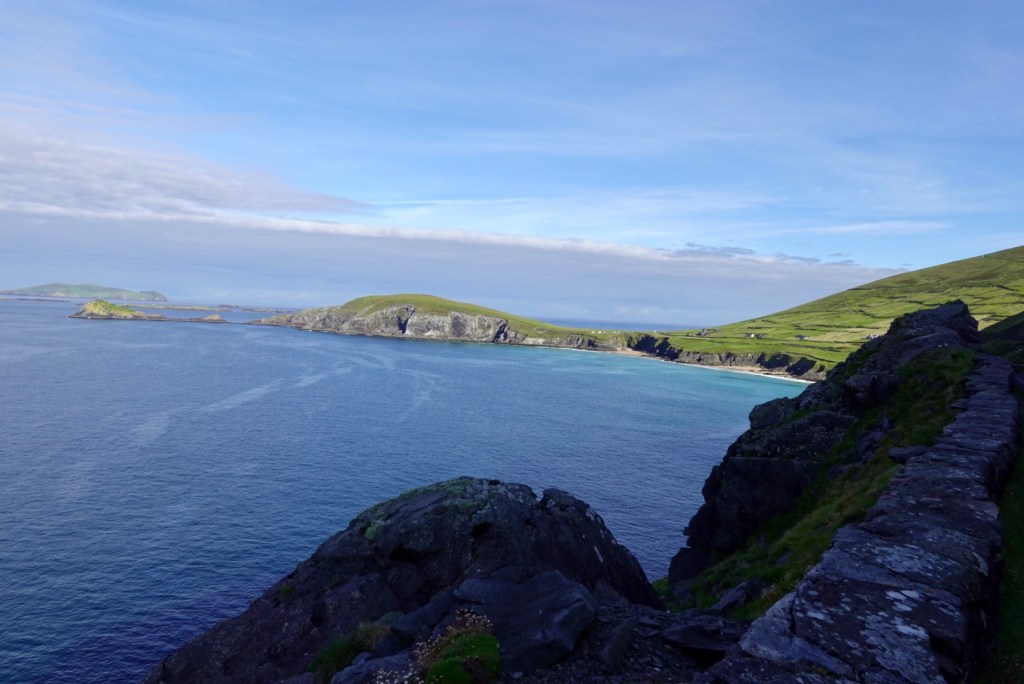
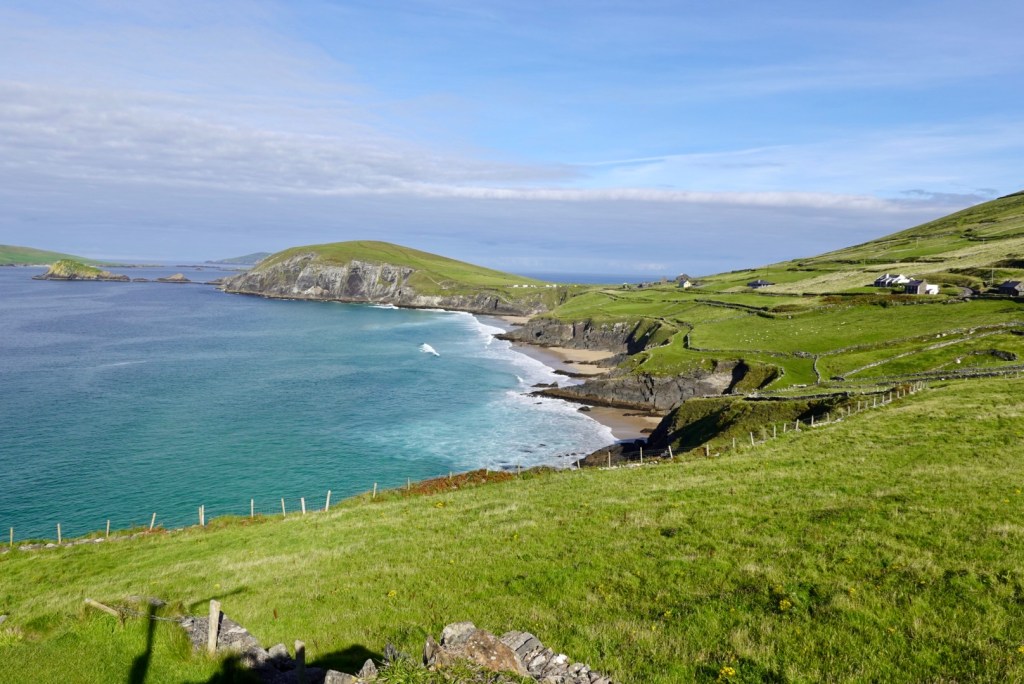
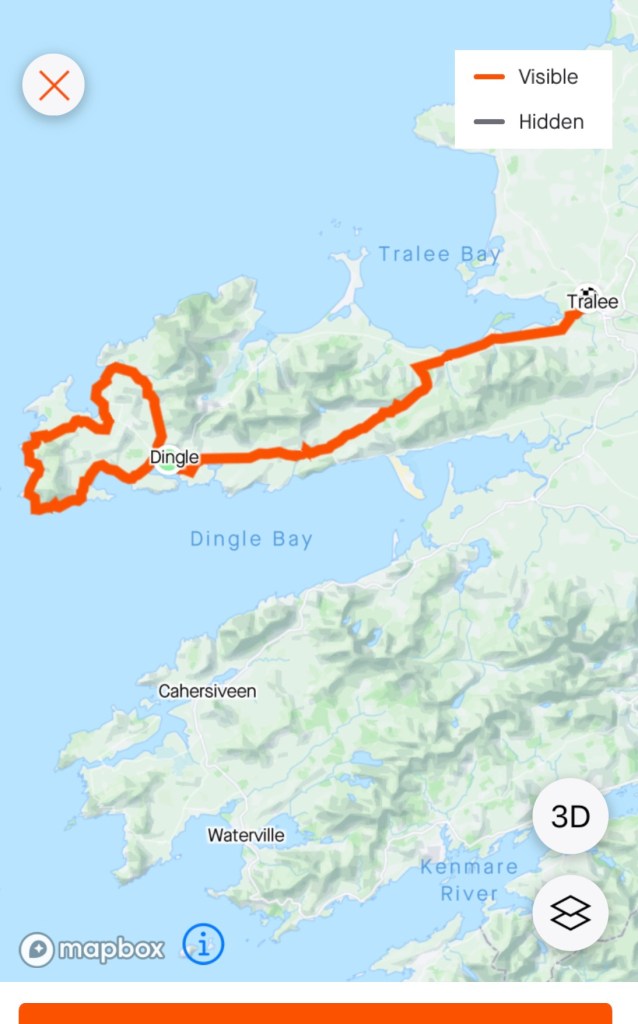
This morning was to be one of the highlights of our Irish trip, riding the loop from Dingle along Slea Head drive, regarded as one of the Ireland’s most stunning routes.

The morning was bright and sunny, and a local walked last as we set up our bikes and said it was going to be a great day.

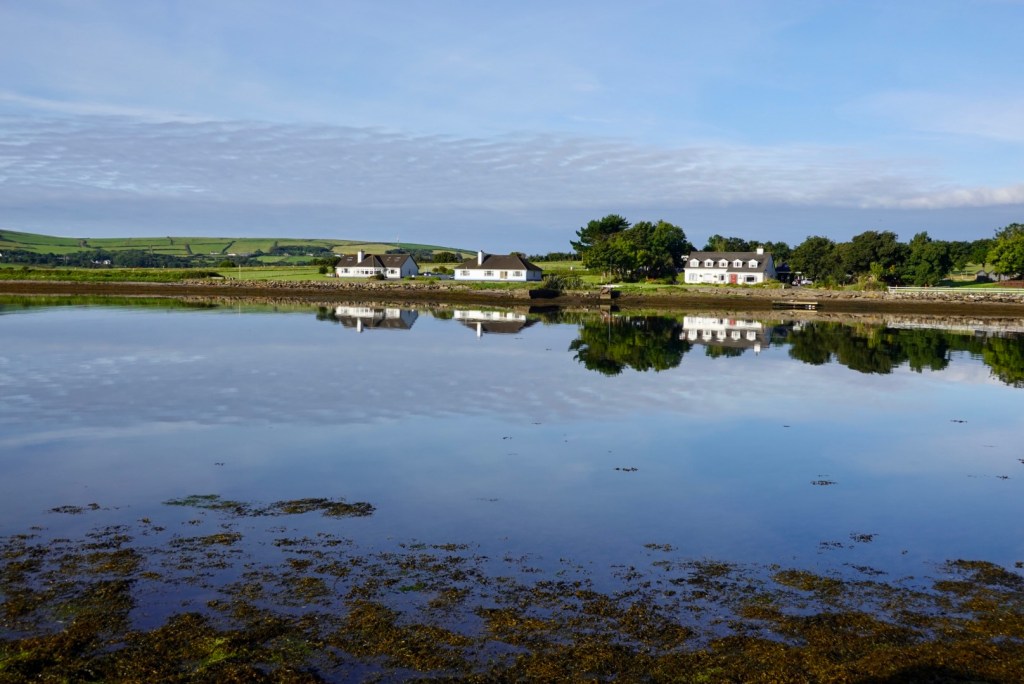
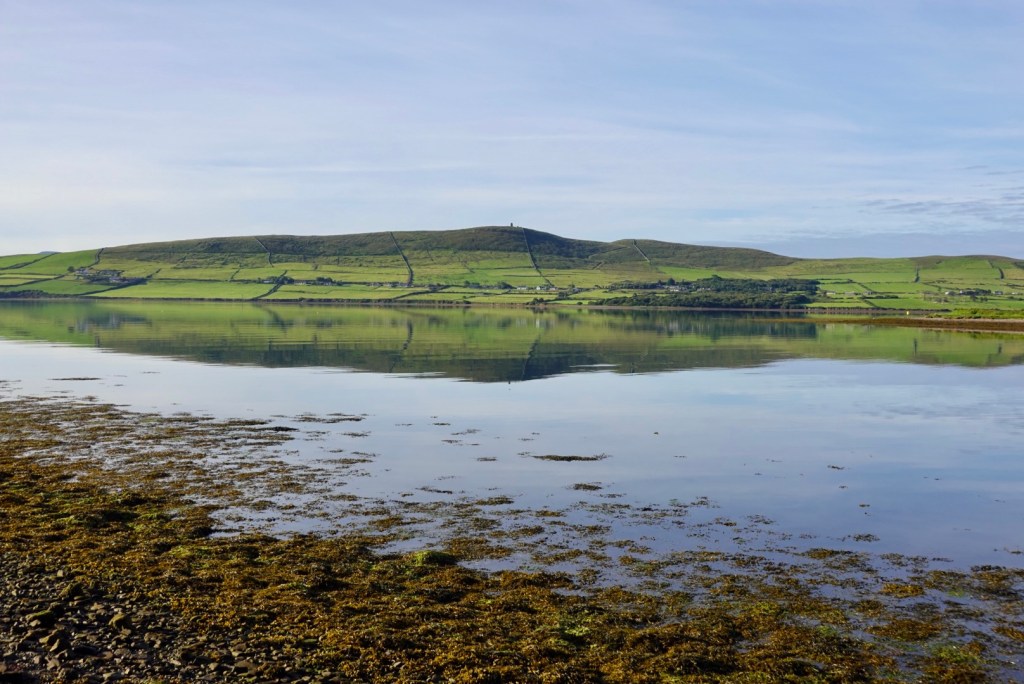
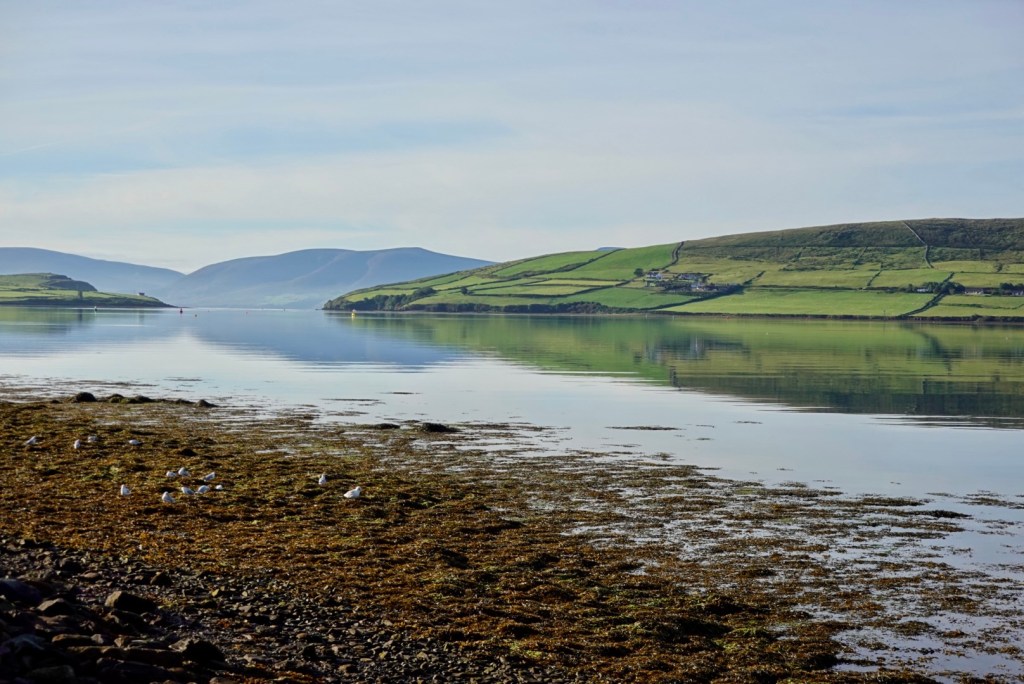
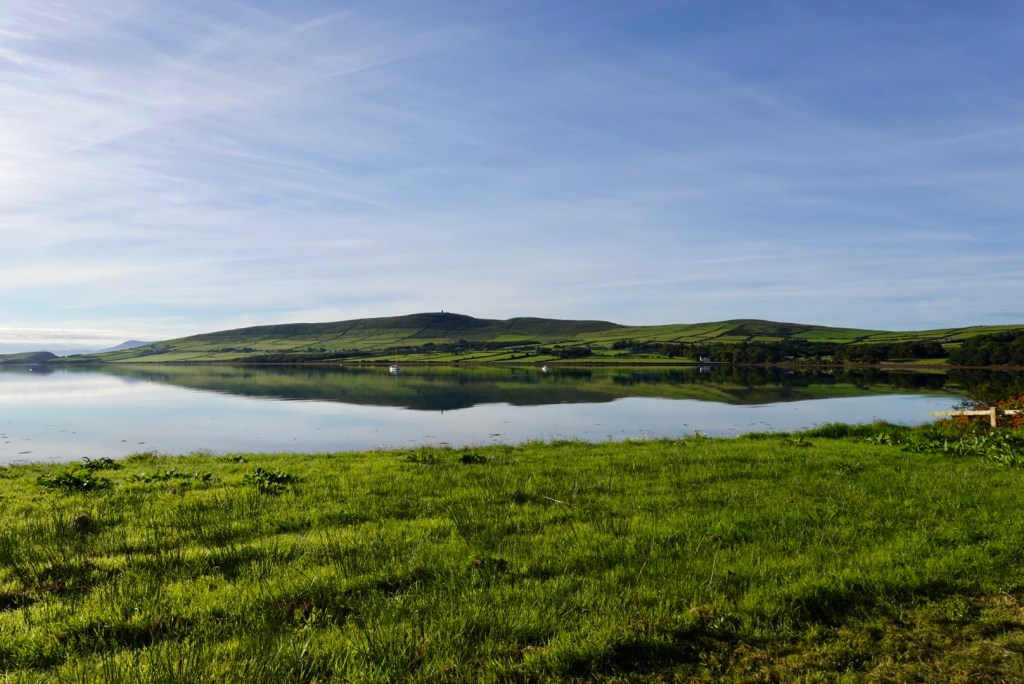
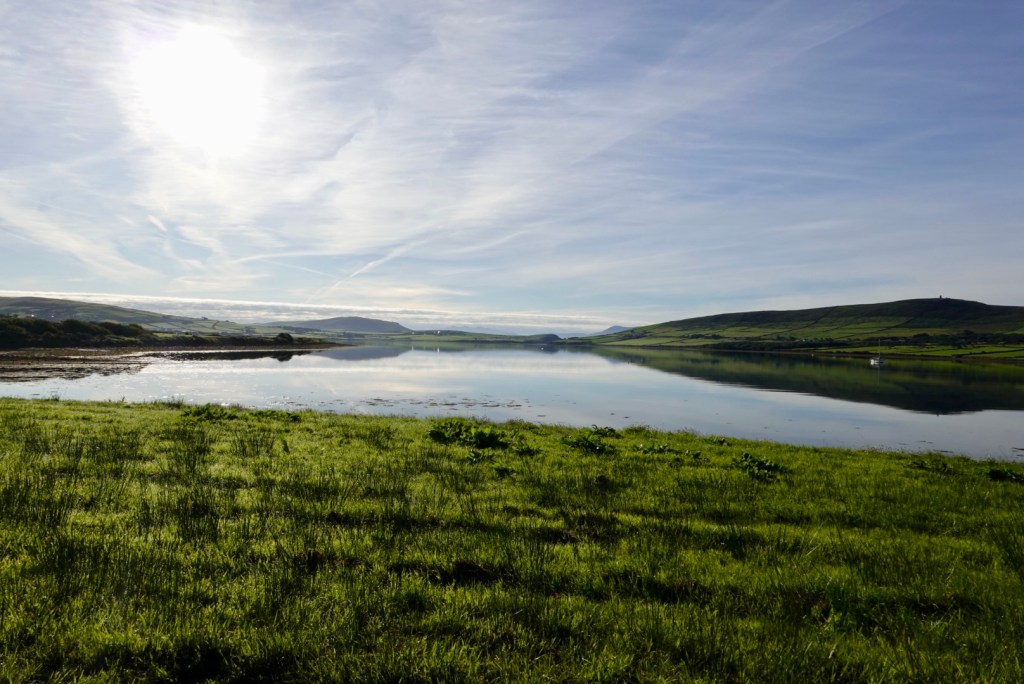
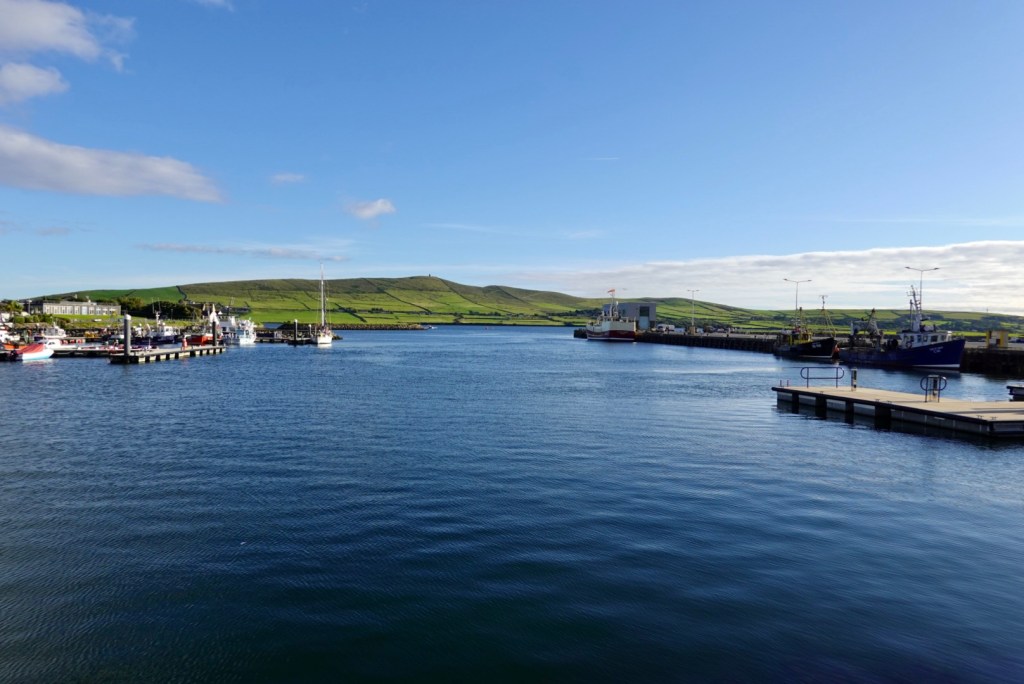
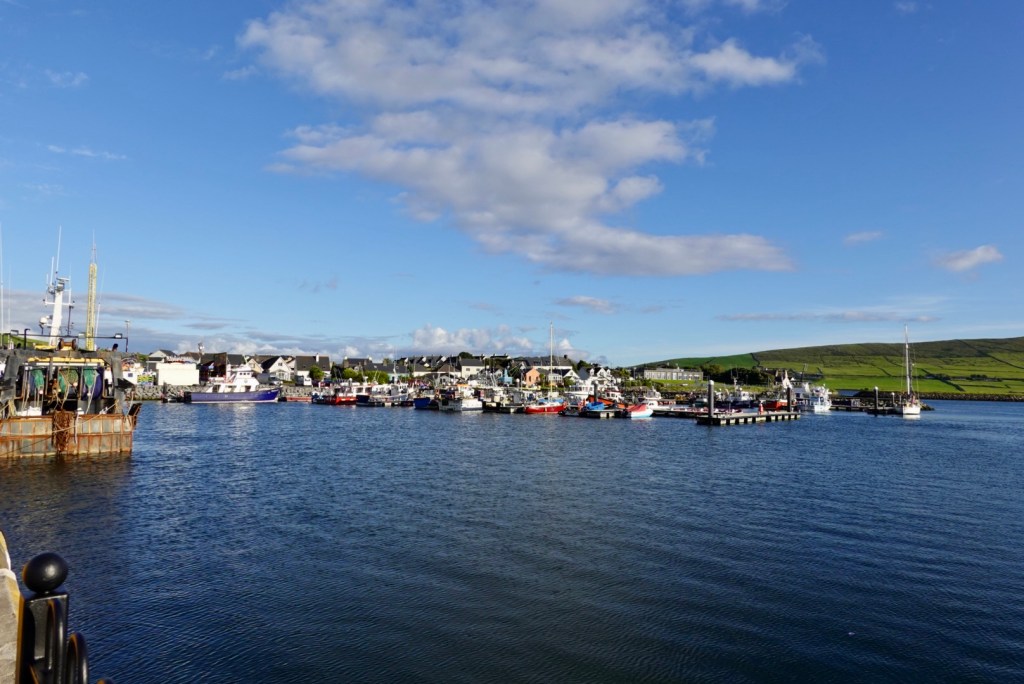
The following photos are of Dingle Harbour, beautiful reflections.

We climbed to leave the harbour and head towards Ventry, and Ventry Harbour.

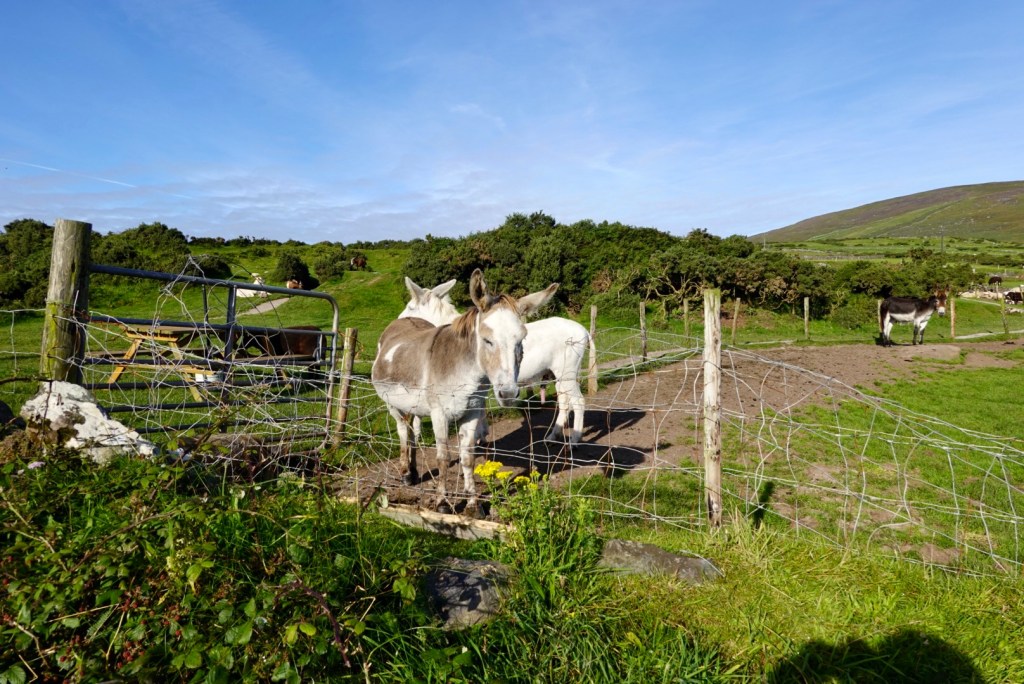
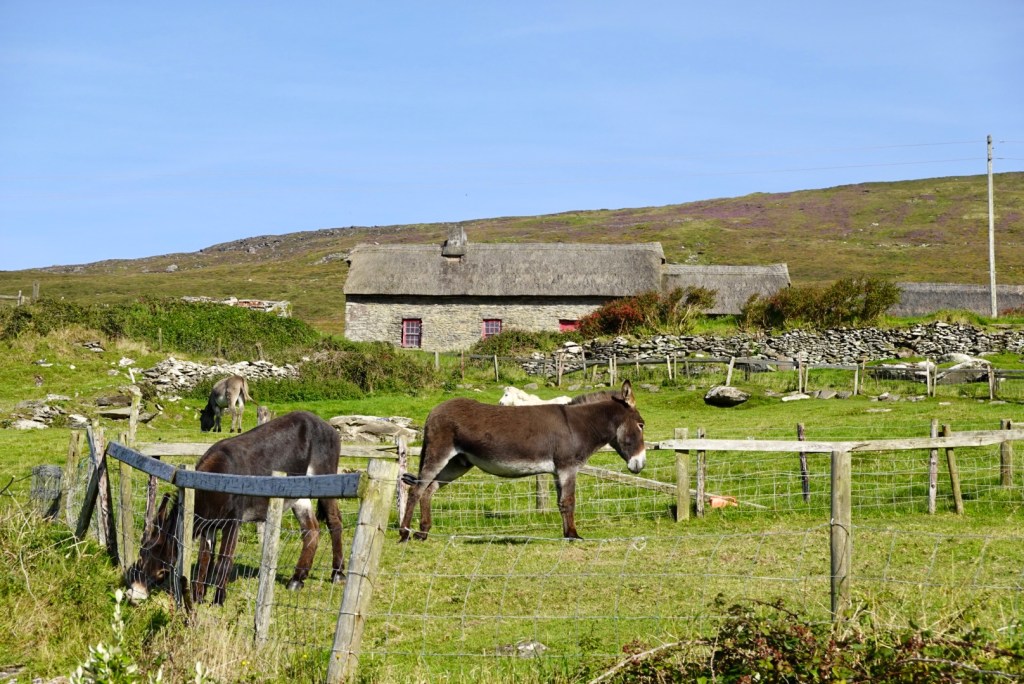
Lots of donkeys todays, outnumbered horses.

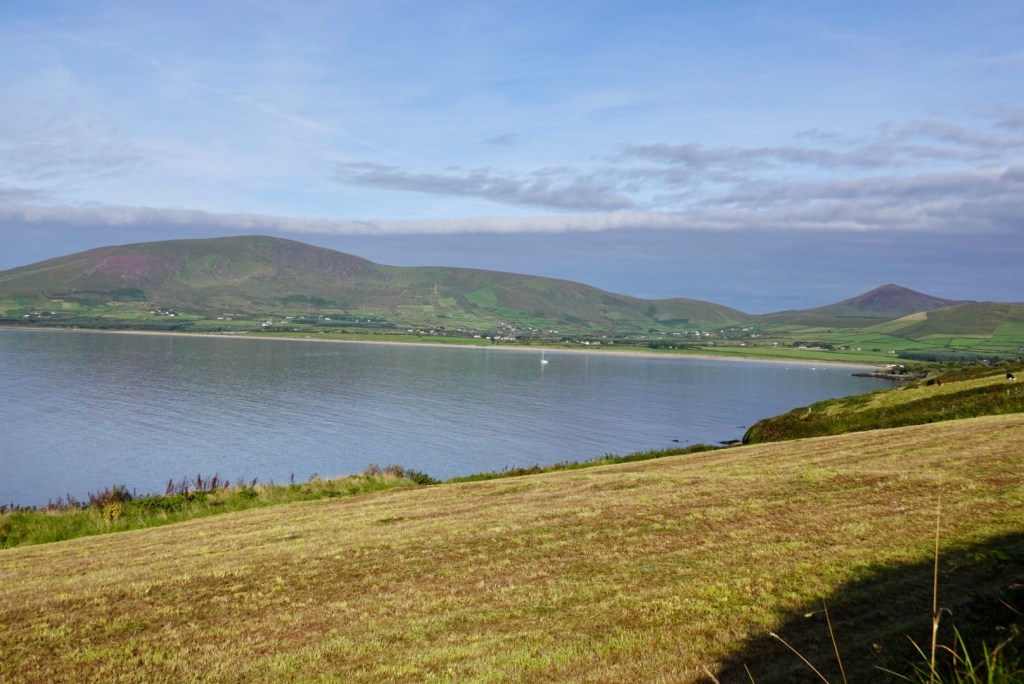
Views towards the North Atlantic Ocean and neighbouring Iveragh Peninsula.

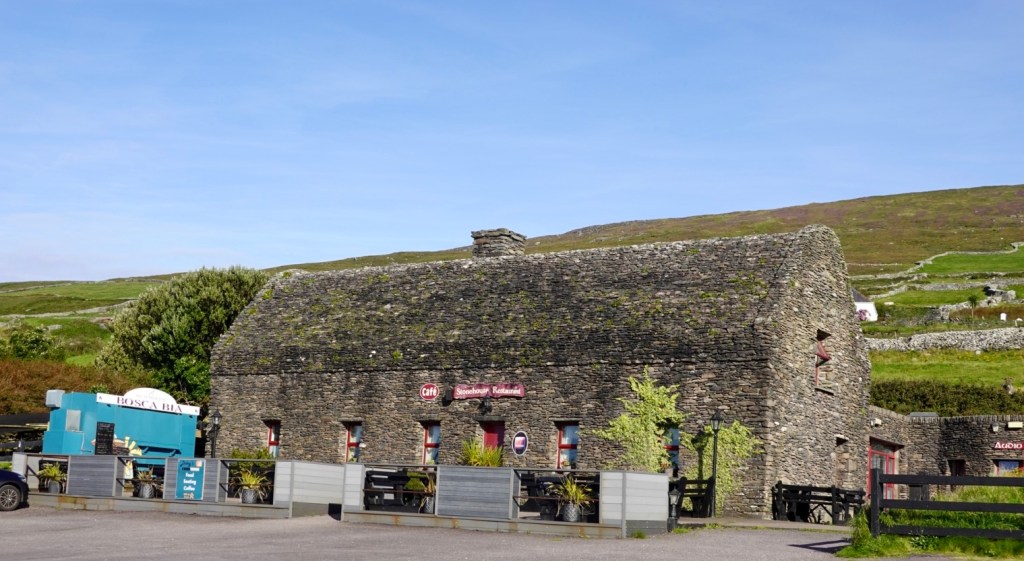
An interesting stone building being used as a restaurant. The food van was just opening offering coffee and lobster.

The old building behind the donkeys were used during the famine to house two families. They were constructed by the Earl of Cork.

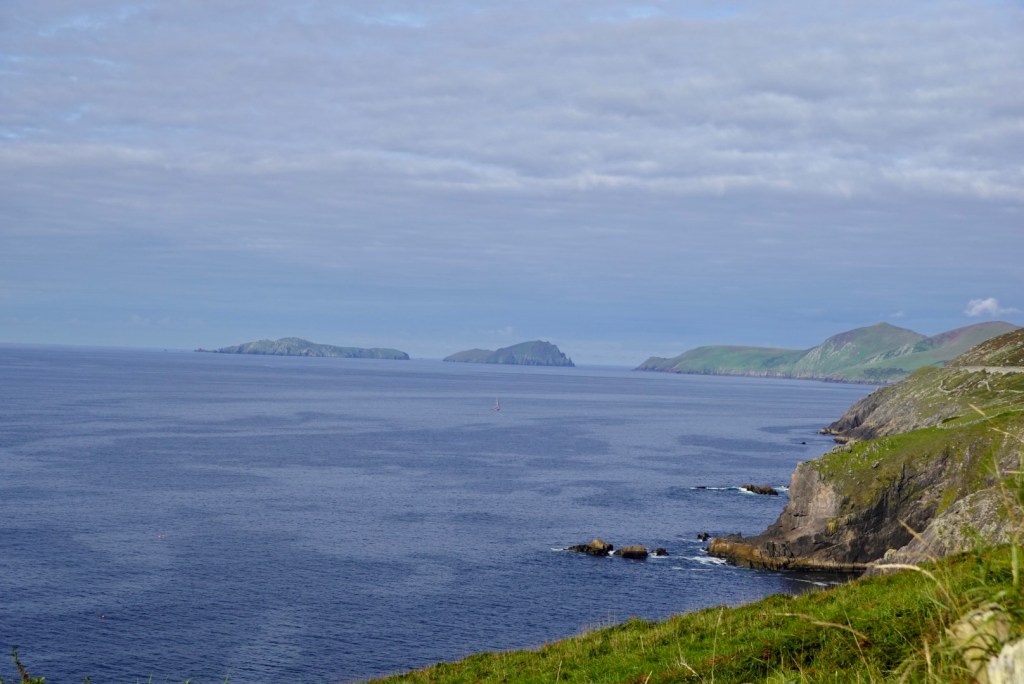
Heading further south you can see Blasket Island group, last inhabited in 1954 when population numbers dwindled and for safety reasons the last families were forced to leave. Day trippers now visit, and you can camp overnight. The area is a grey seal breeding colony.

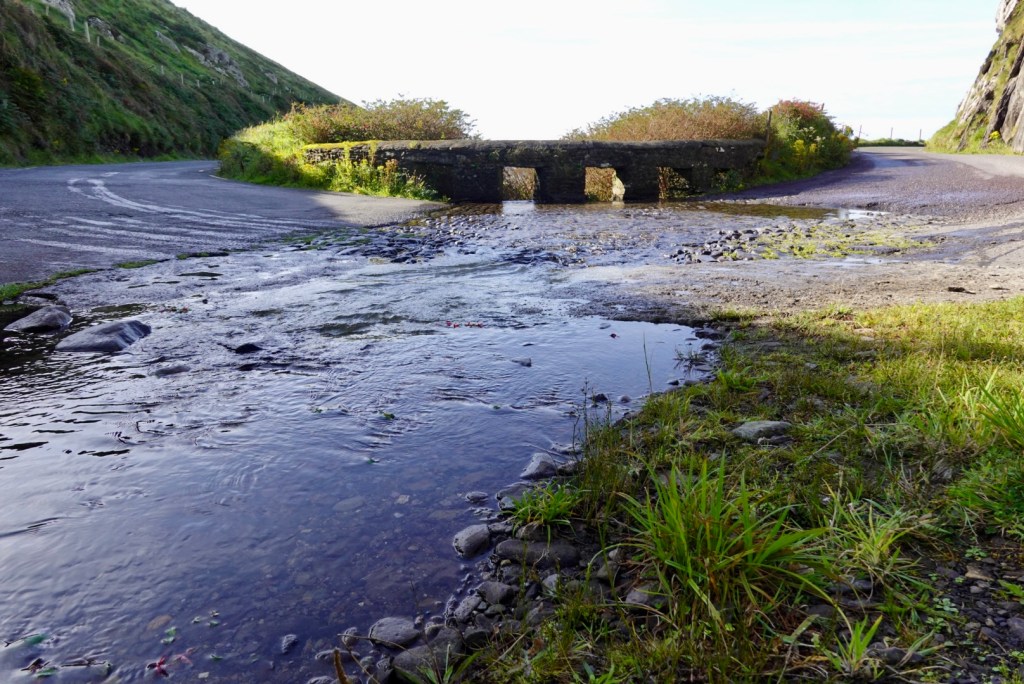
This section of road took us by surprise as we rounded a bend.

Looks washed out, but it did have pebbles laid into cement underneath it.

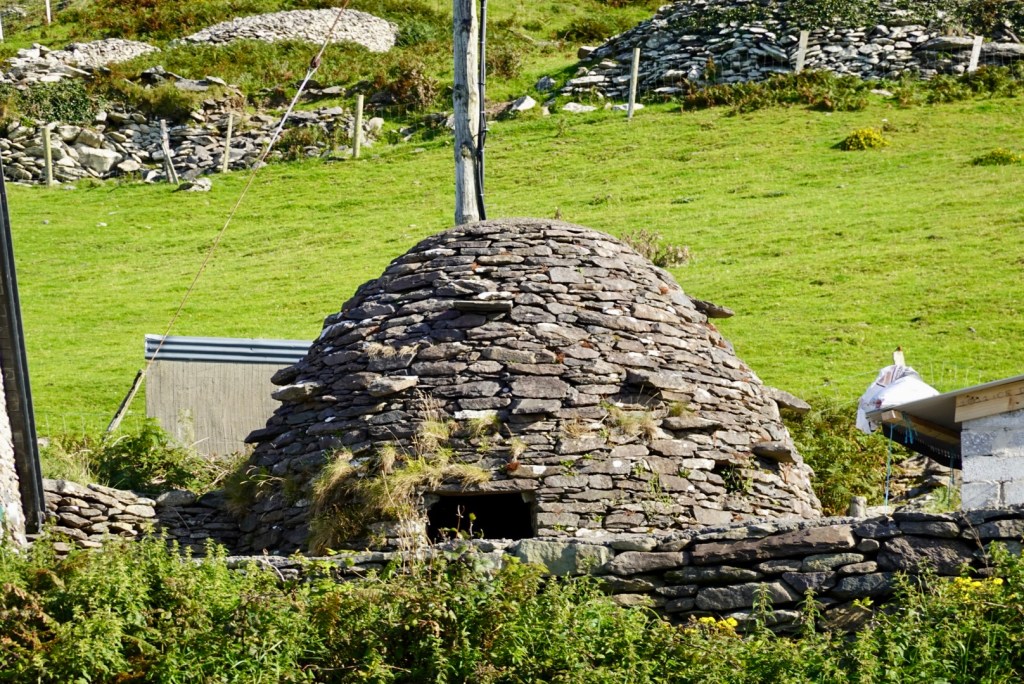
A beehive hut. There are many of these scattered around the Dingle Peninsula. Their age is disputed, but scientific evidence states the eldest no older than 700 BC…..so,they are pretty ancient.

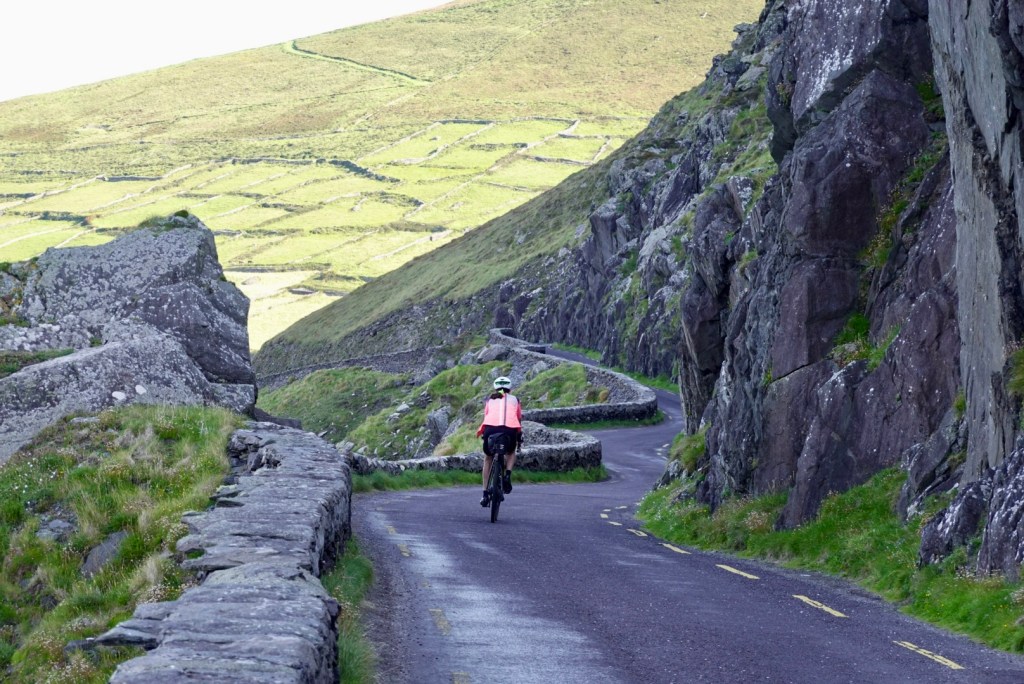
Single land road with the occasional lay by

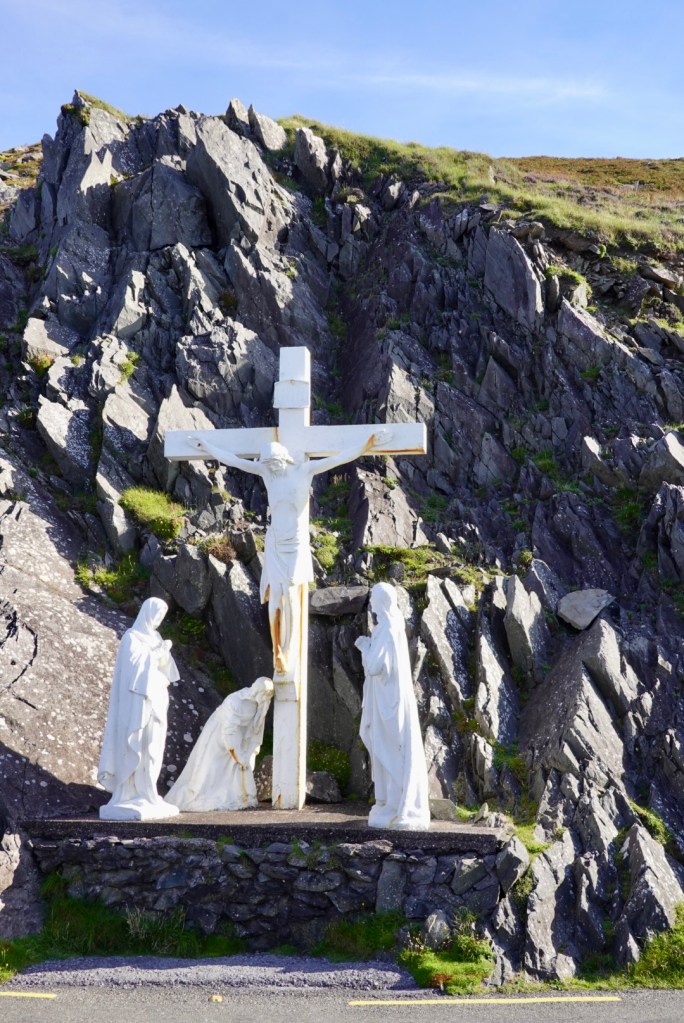
Slea Head is marked by the white crucifixion statue.

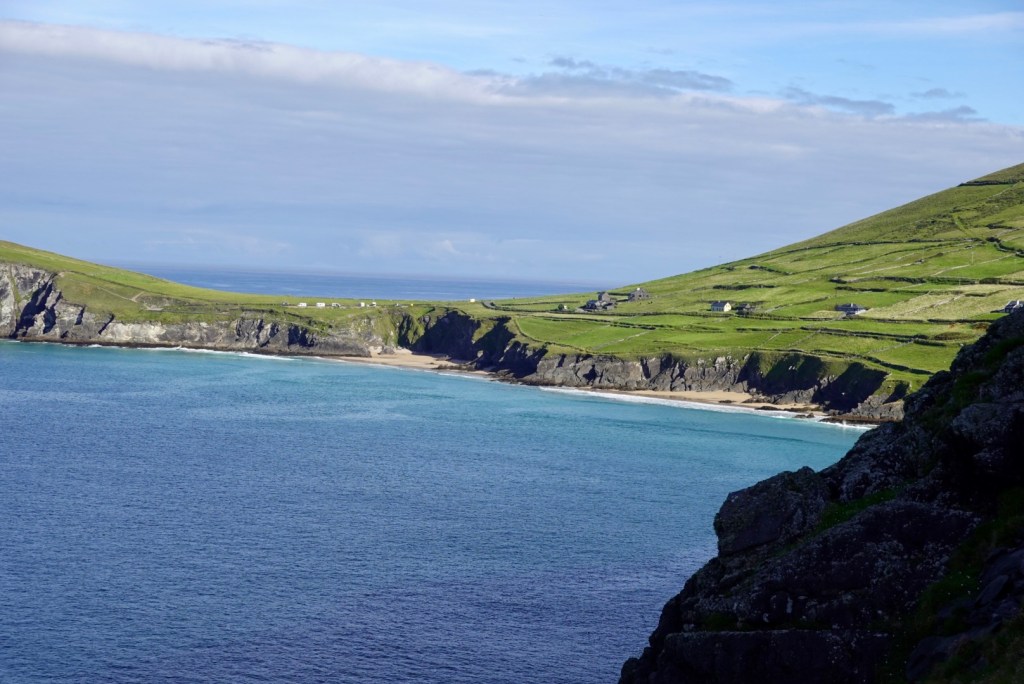
Now we are on the western flank of the peninsula with different views.

Louis Mulcahy operates an amazing ceramics facility at Ballyferriter. Lucky I can’t carry much on the bike!

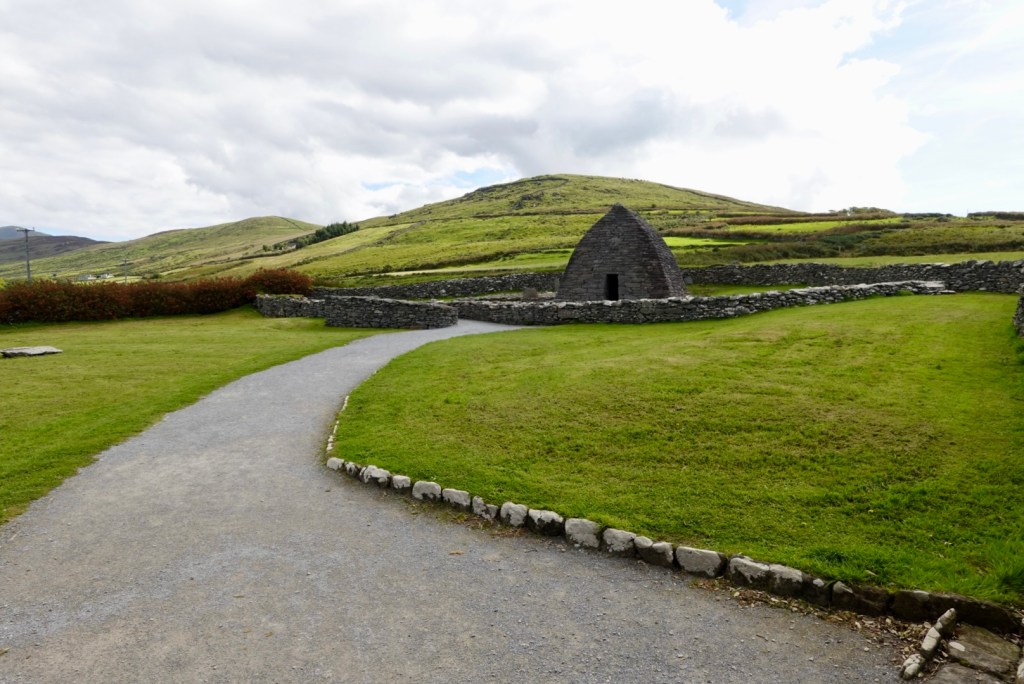
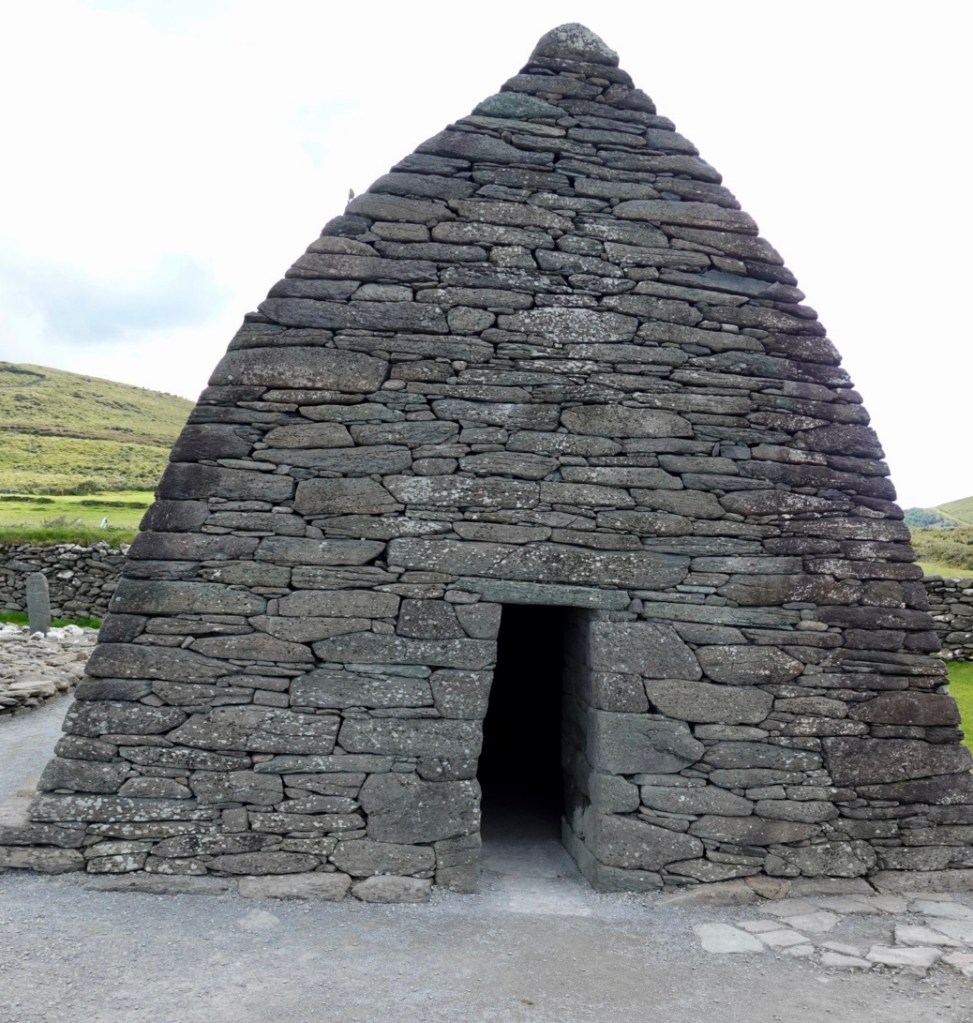
Gallatus Oratory is a chapel that has several interpretations. Opinions vary including an early Christian stone church, a 12th century romanesque church, a shelter for pilgrims, a funerary chapel built for a family.

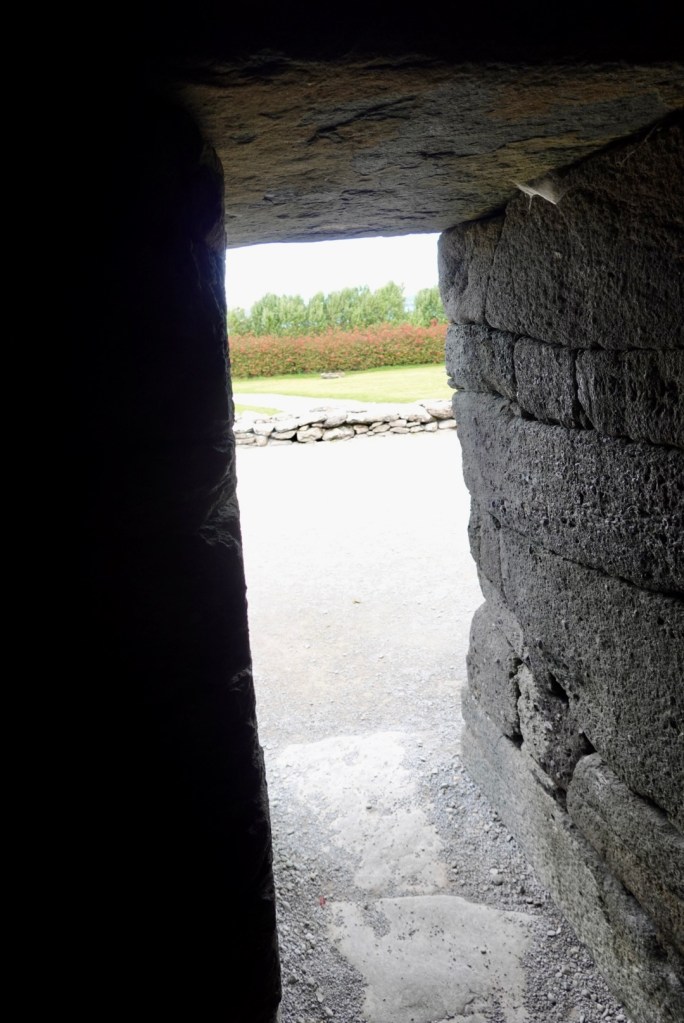
One fact that is agreed, it was discovered in 1756, and each stone have been cut on every side and end so that they fit together perfectly.

There is a free way in via a back road and walkway, but I took the paid route.. you walk up a paddock and through a gate and this is the view.

We needed to get back to Dingle for lunch to head off to our accomodation in Tralee. It was goodbye to the western coast and then headed inland cutting back towards Dingle.

After lunch we retraced some of our previous day route and then new ground to travel to Tralee. The road was very rough and pot holes and our bums and arms were unimpressed.

Neither of us felt like climbing Conor Pass so had chosen the lower altitude route. a series of photos from the afternoon.

With about 30 km to go, we did see the west coast again. We also met a Swiss cyclist at a lay by with his maps open, a bit lost. He was heading to Kilkenny but he was on the wrong road.

He either needed to backtrack and turn, or go to a Tralee and head back. Not sure what he decided to do, but it does show how important gps mapping is in not getting lost with cycle touring.

We are in Tralee. It was another great day, 102 km, 960 m climbing. The temperature got up to 25c today and I finally have a leg tan despite sunscreen.

We had another great meal at an Irish pub. Predominately I have been having fish dishes, as fish is local and been really nice.

A few quirky photos to finish.

On the west coast of the Dingle Peninsula
On the road to Tralee. Spurious name for the business, plus the

Thanks for reading 😊❣️

Day 14: Kenmare to Dingle

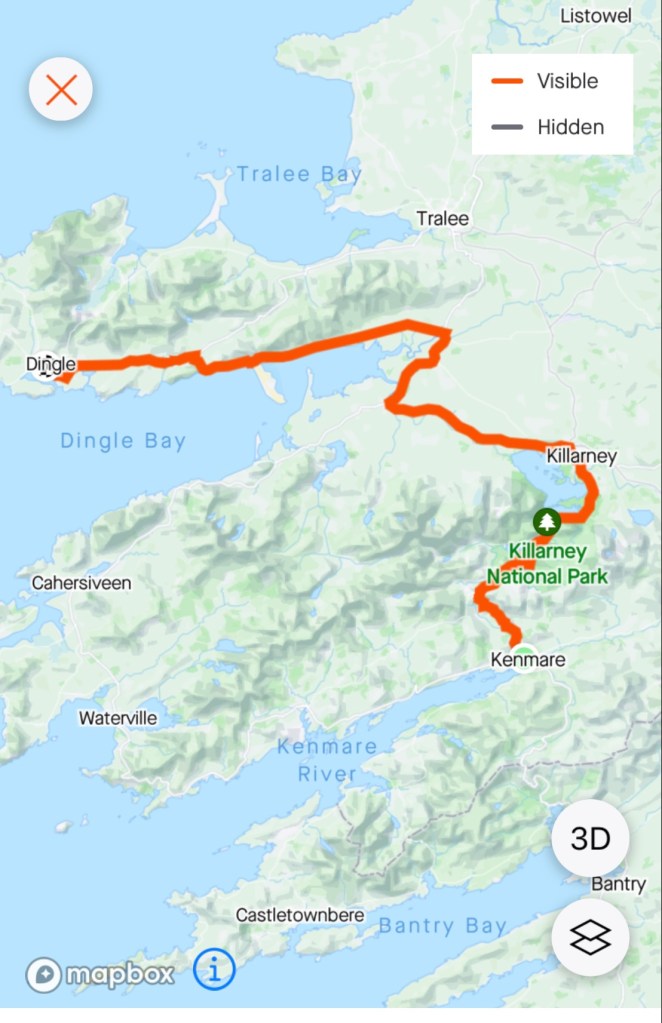
Leaving Kenmare we turned left and started climbing for the next 9.5 km, our first goal was Moll’s Gap

Molls Gap is a mountain pass on the road from Kenmare to Killarney, offering views of the MacGillycuddy’s Reek mountains.

Just about to reach the top, turn right then….

Ahead is Killarney National Park
This is looking back
About to head off down this road
The first big peak is the climb to Moll’s Gap

We then start descending.

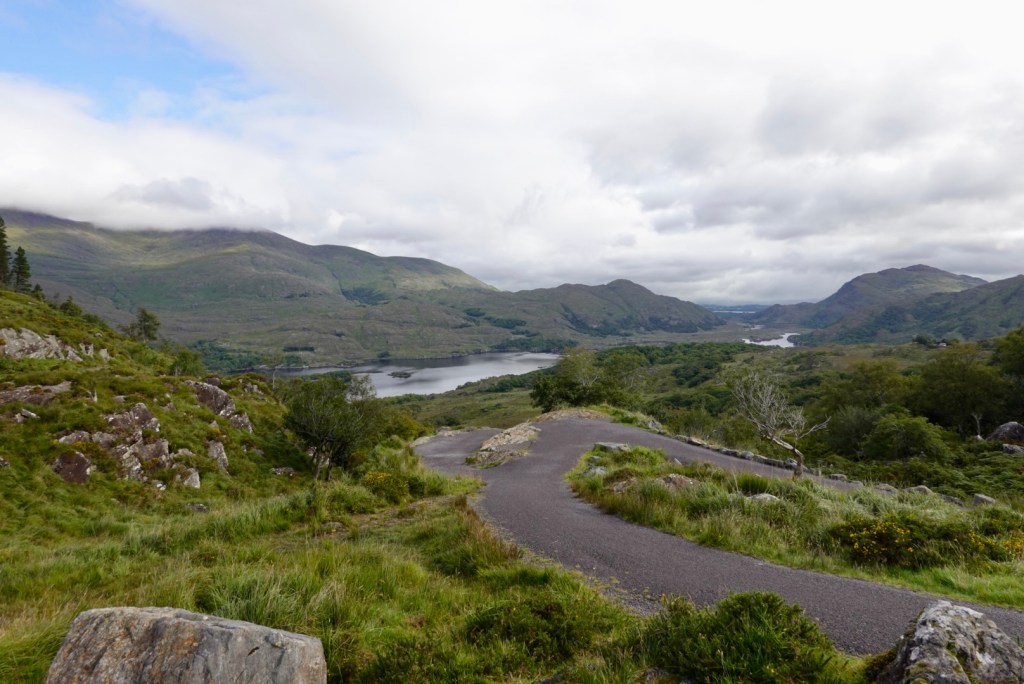
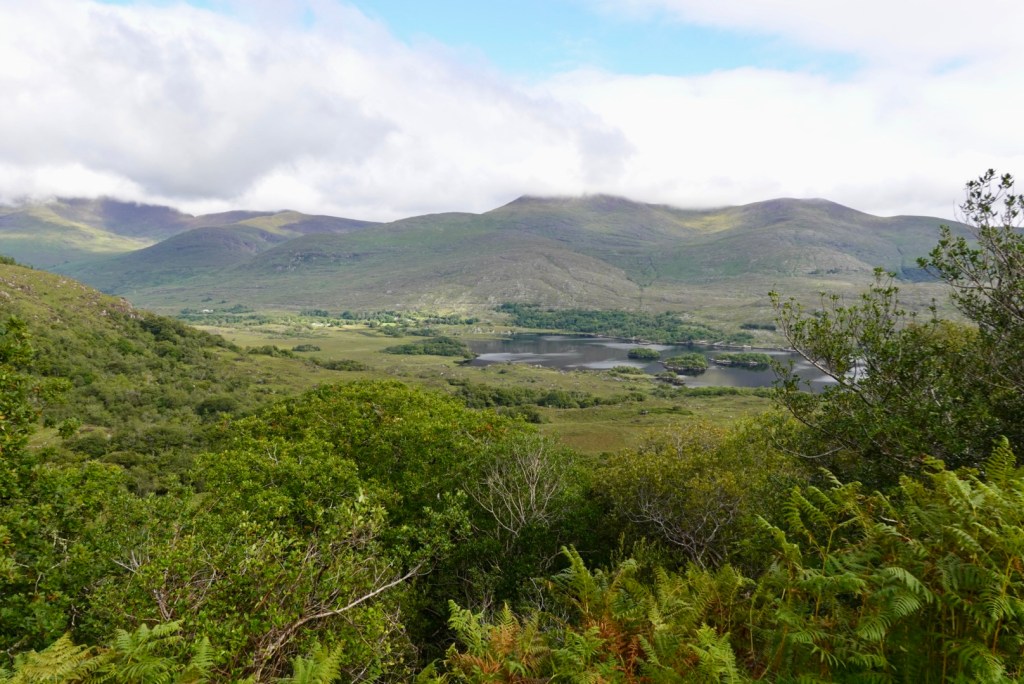
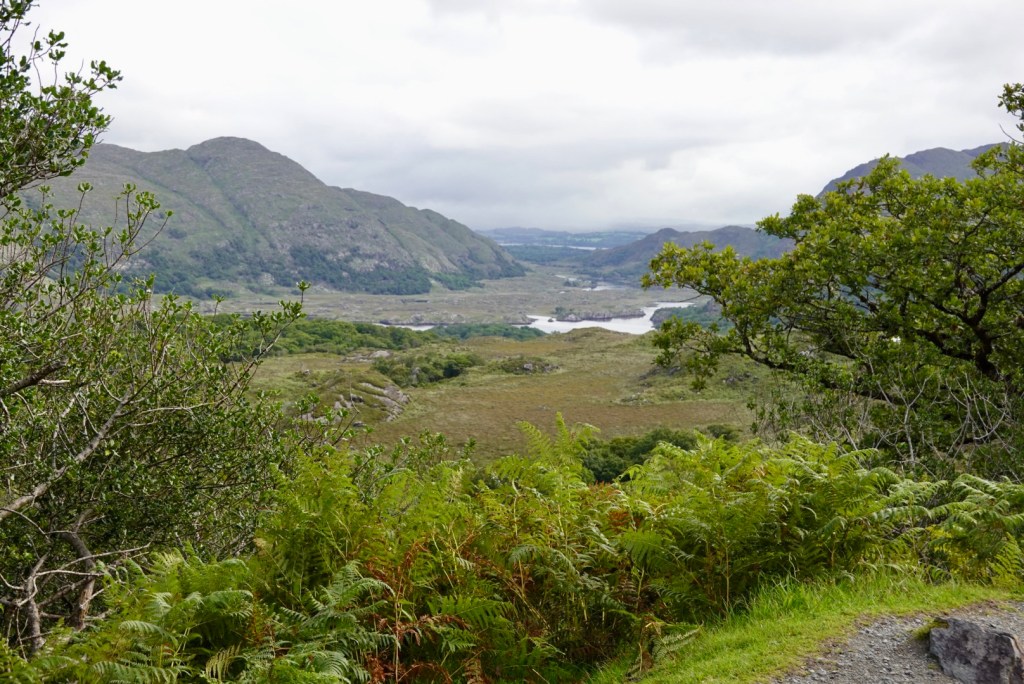
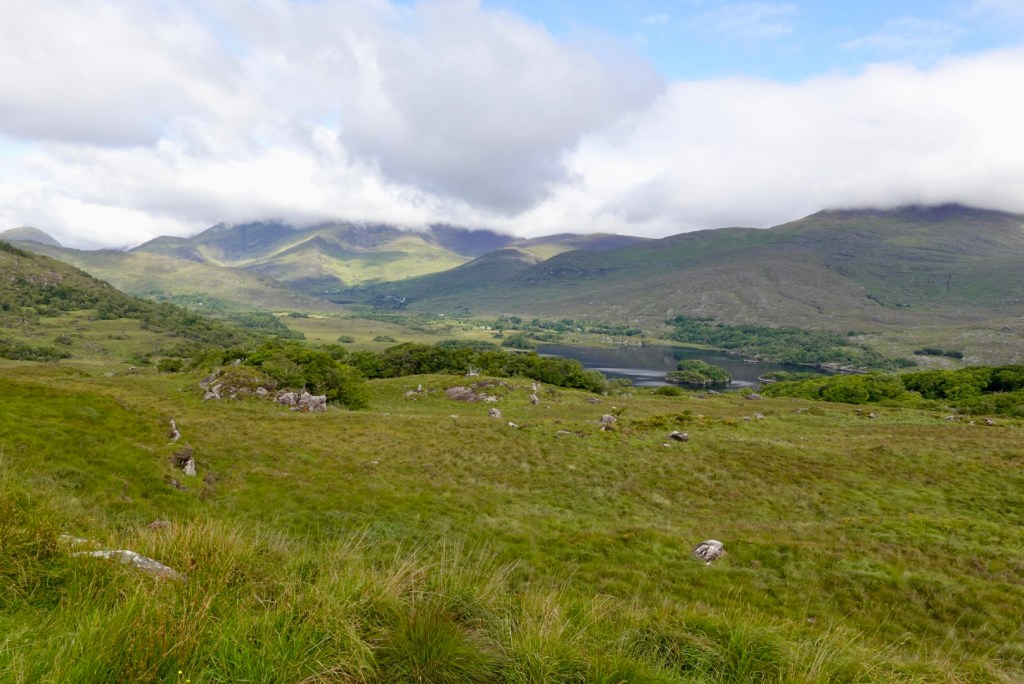
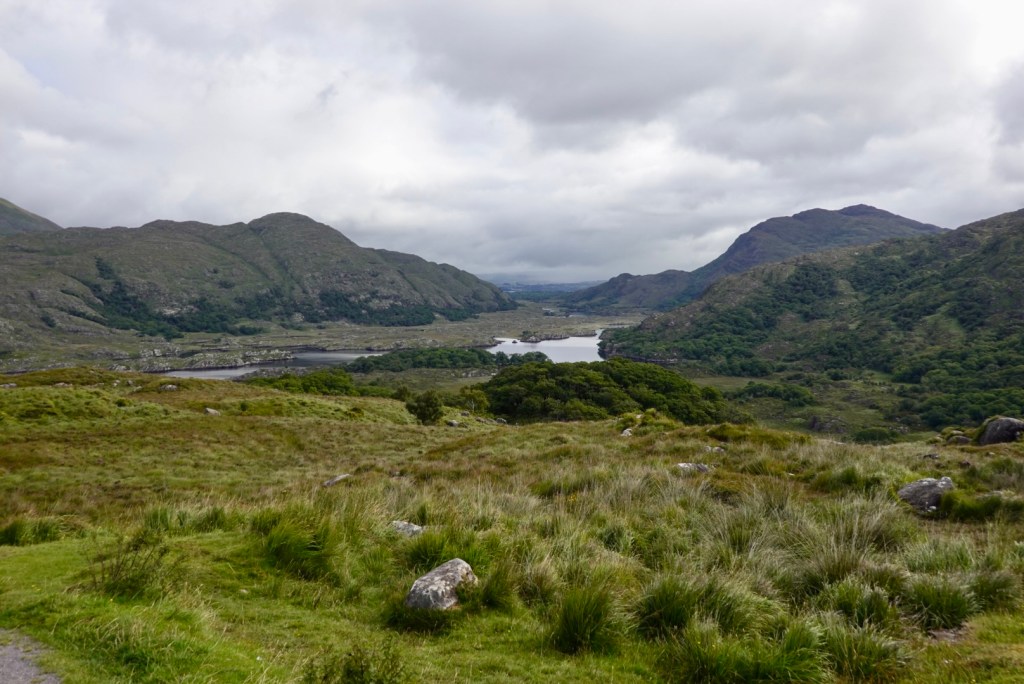
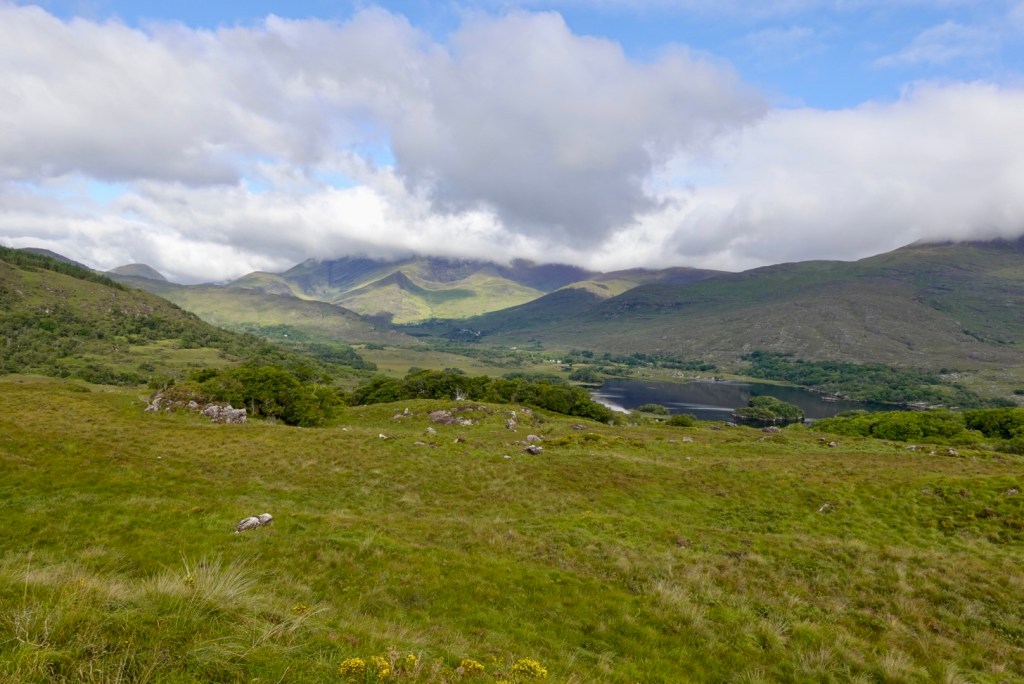
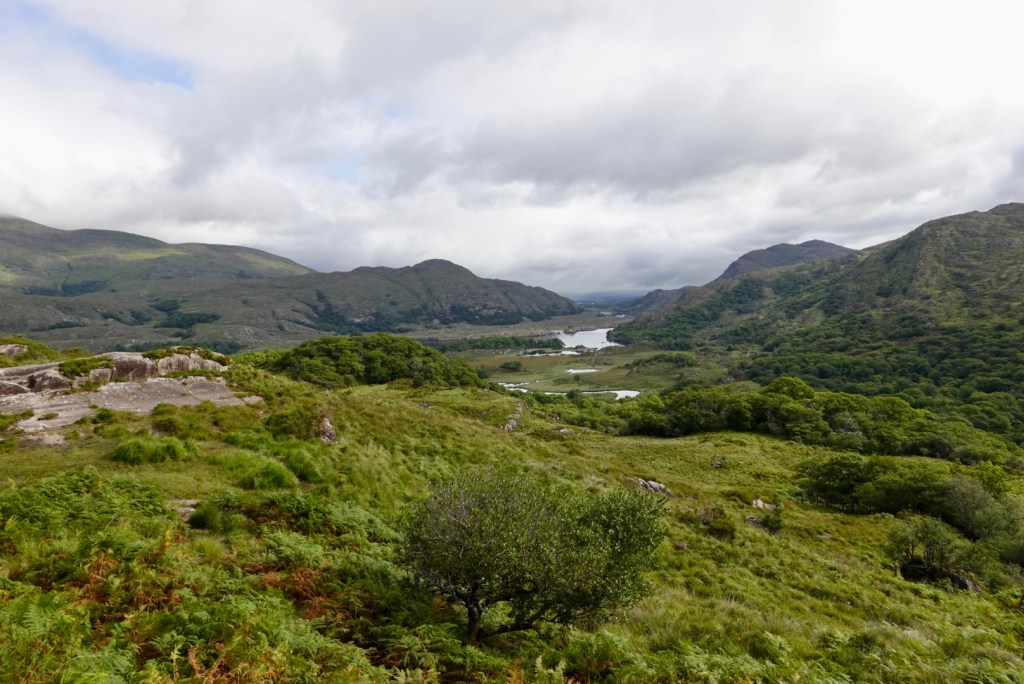
The Ladies View is a great vantage point overlooking all of Killarney Park (in good weather). The view is so beautiful that Queen Victoria is said to have allowed her ladies-in-waiting to admire the landscape with her, which was regarded as a rare privilege – hence how it earned the site name of Ladies View.

We kept descending through the Killarney National Park.

Killarney National Park was the first national park in Ireland in 1932 but humans have lived in the area since at least the Bronze Age, 4000 years ago.

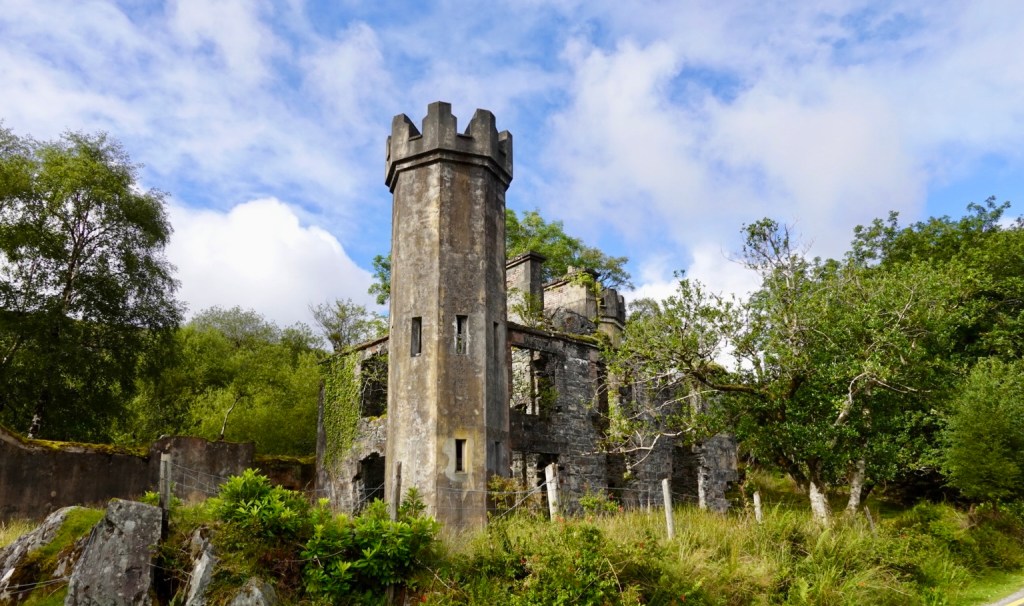
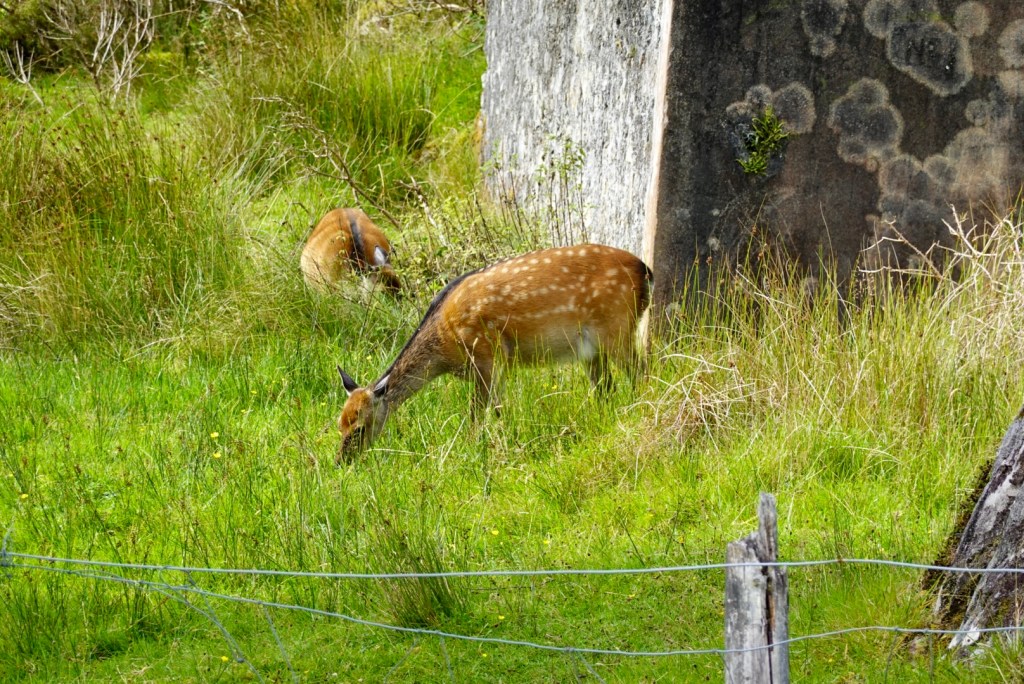
An old abandoned structure with a nice turret and wild deer. There had been warning signs on the road re wild deer. A wild goat had run out onto the road a little earlier reinforcing the need to descend with care.

The vegetation changed as we got lower. It became more lush.

This tunnel is carved through rock. it has a height limit of 4 metres. A tour pass had passed us earlier. I would like to see how slowly it passes through here.

A section of Upper Lake.

Torc waterfall flows into Muckross Lake.

Killarney town is super busy, lined with large and small accomodation. Very busy with tourists and locals, you can sit in a horse carriage and travel up to the Torc Falls and sights in between.

It had started to rain as we left Torc Falls, so went into this cafe for an earlier lunch, and popped our booties on (of course, it did not rain after that!).

Me eating healthy had envy of Tony’s choice.

A few local sights as we left Killarney.

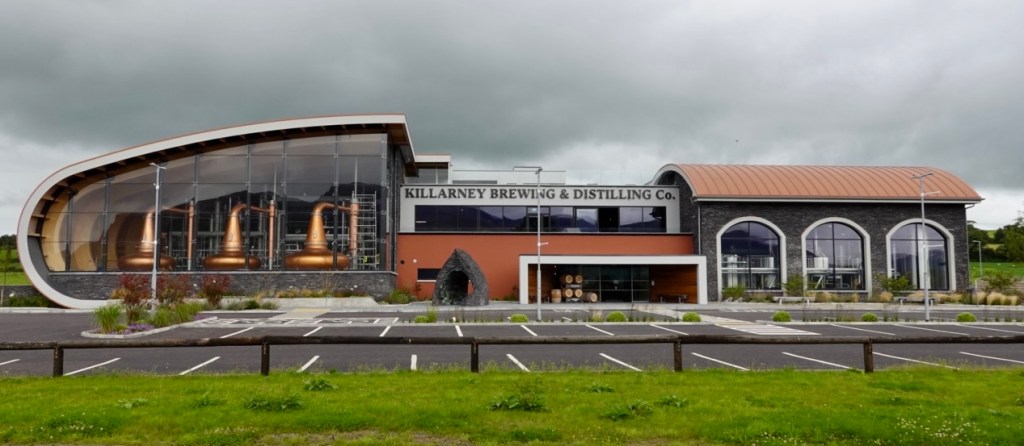
A lot of copper in these stills.

Back into the countryside!

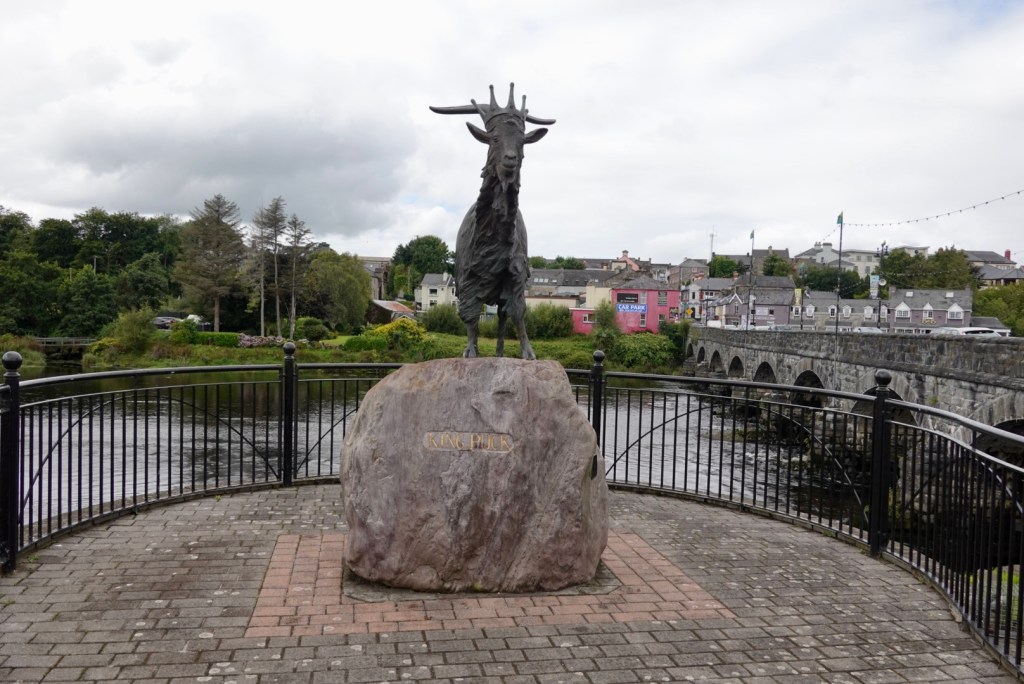
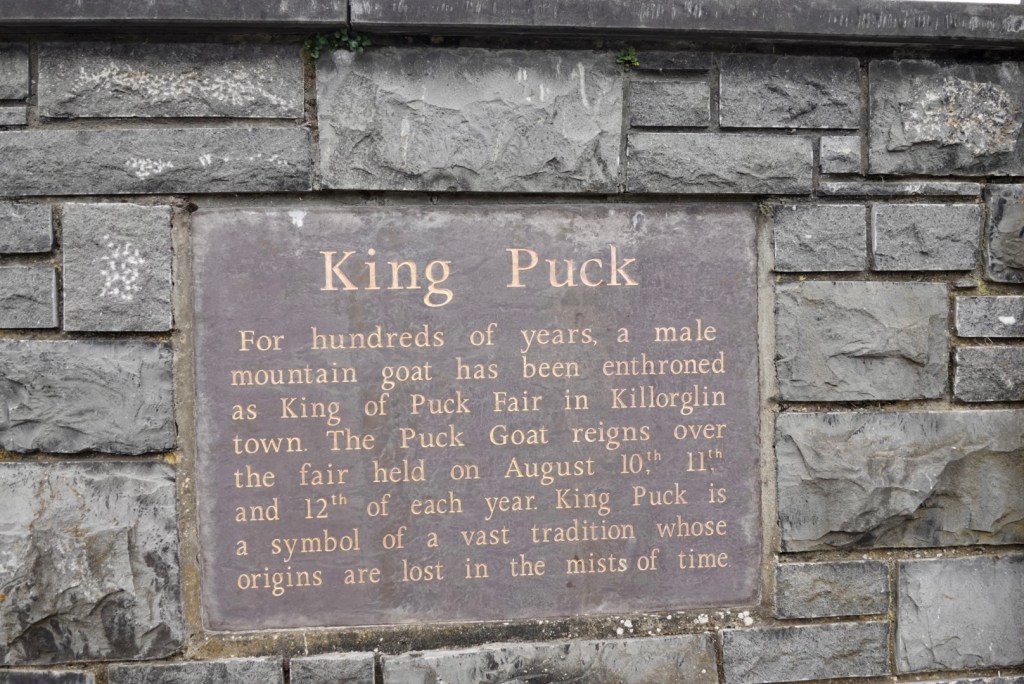
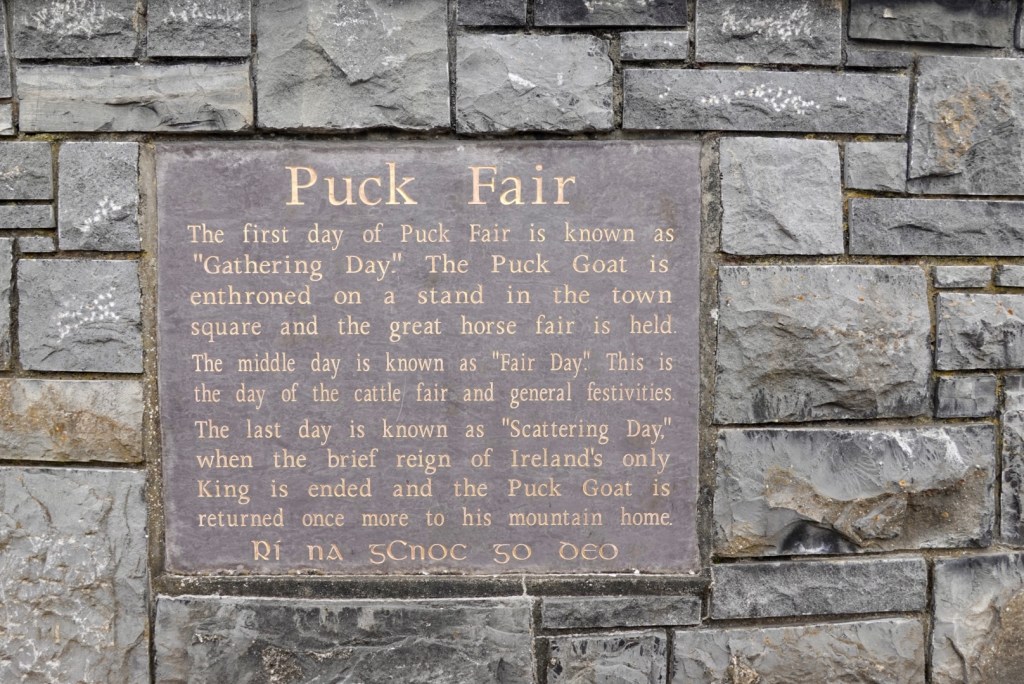
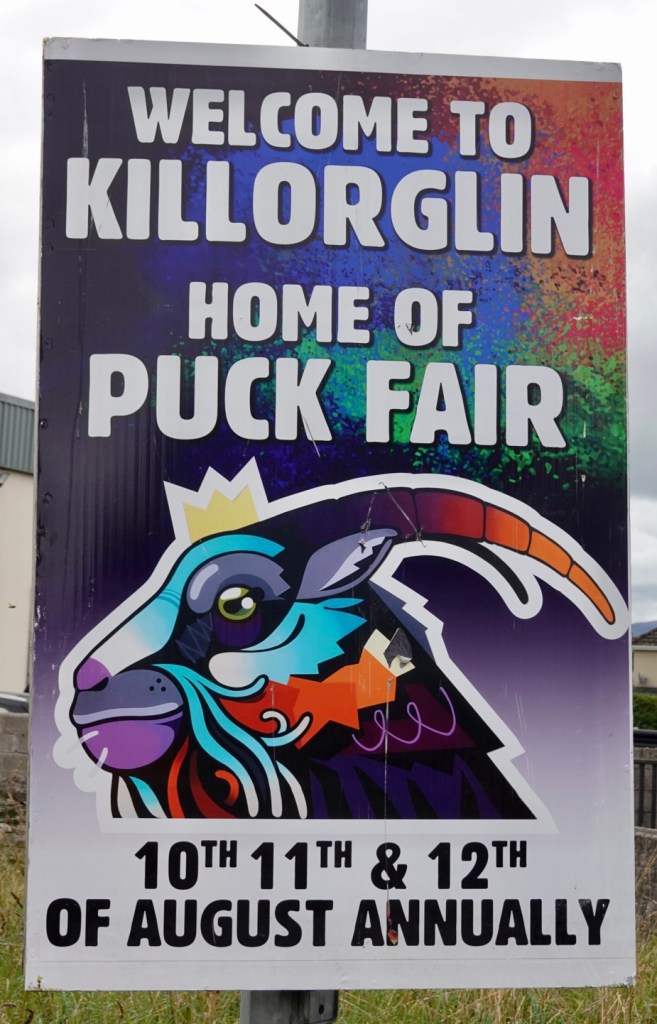
Killorglin is known for the annual Puck Fair festival, which traditionally starts with the crowning of a ‘king goat’. There is a large bronze King Puck statue on the edge of town, close to the bridge.

We just missed out on the Puck Fair….it is the 15th August.

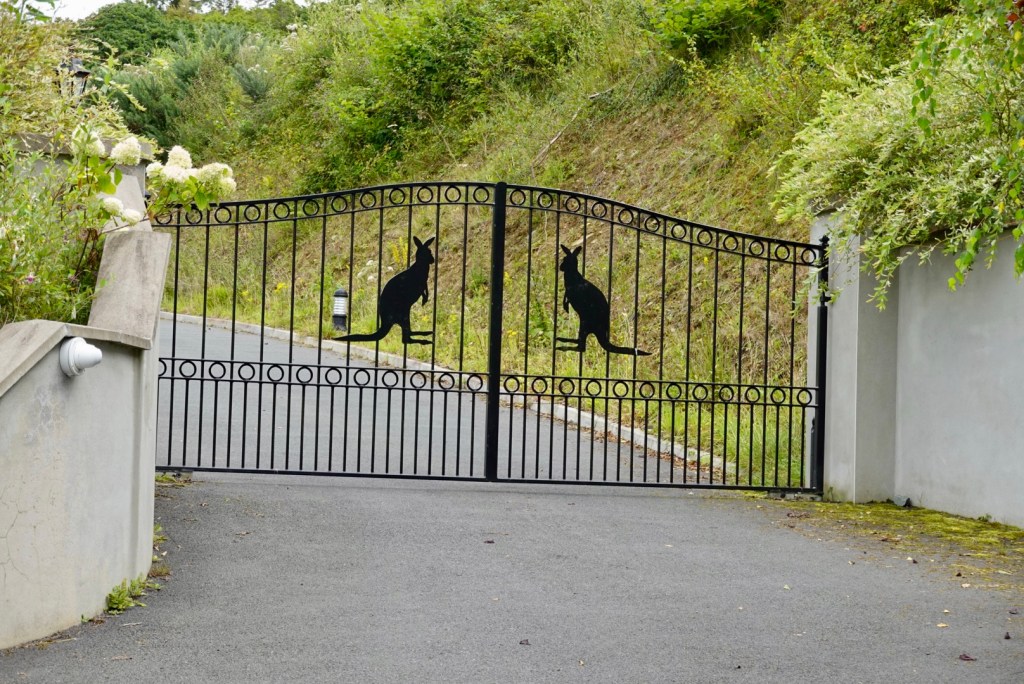
A bit of Australiana in the next section as we crossed towards the Dingle Peninsula.

I wonder if the owners are Australian?
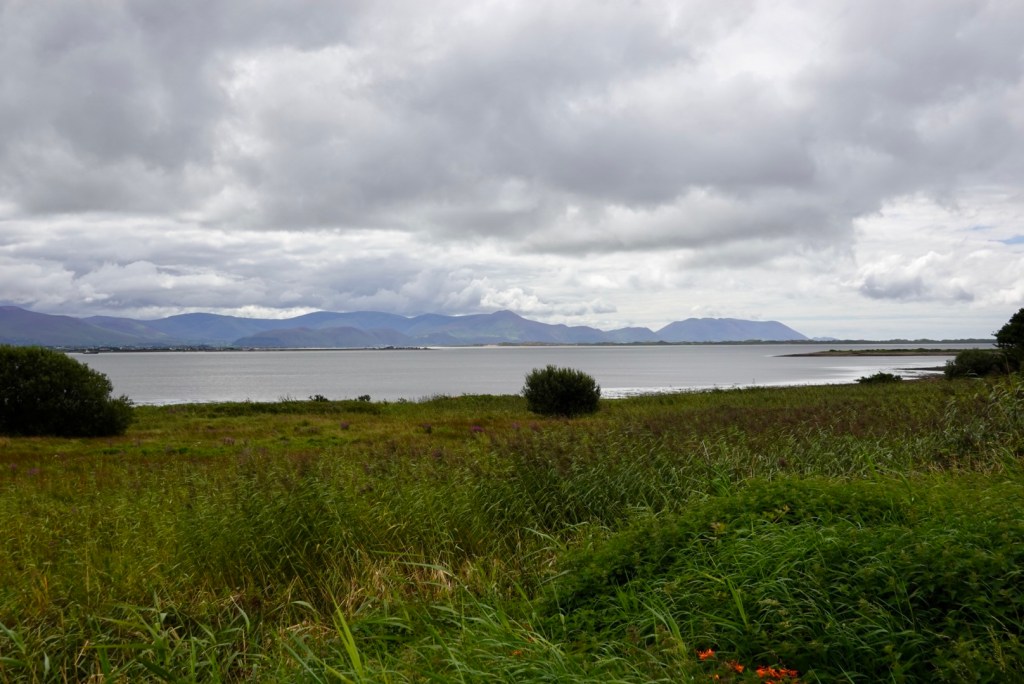
Long range view towards Dingle Peninsula, looking a bit claggy.

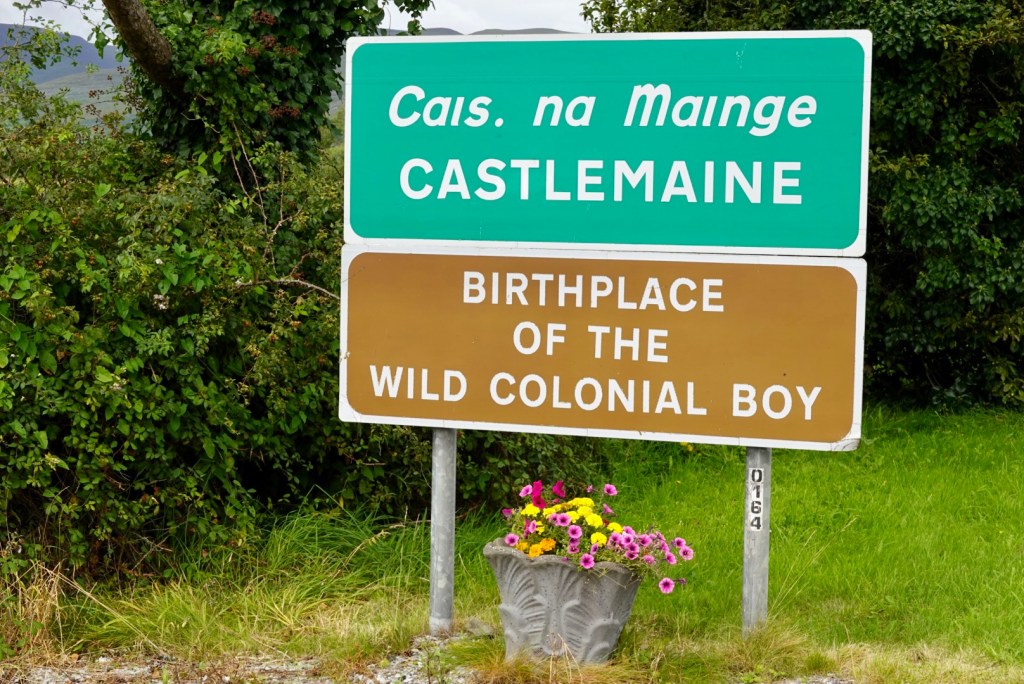
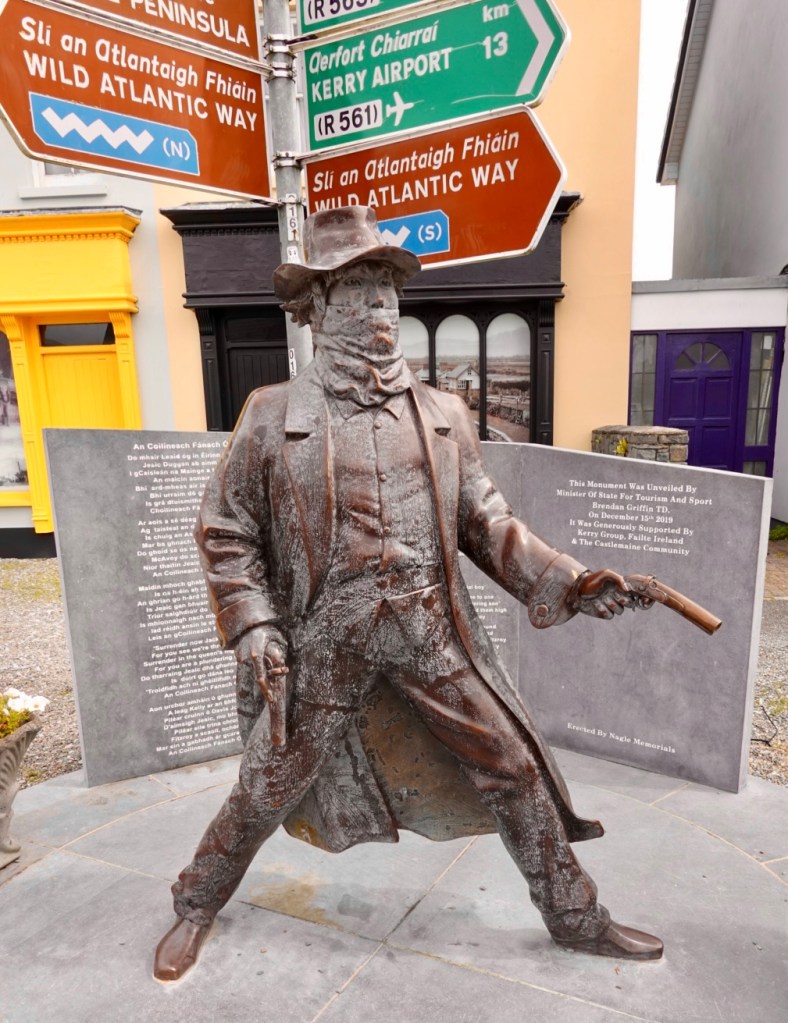
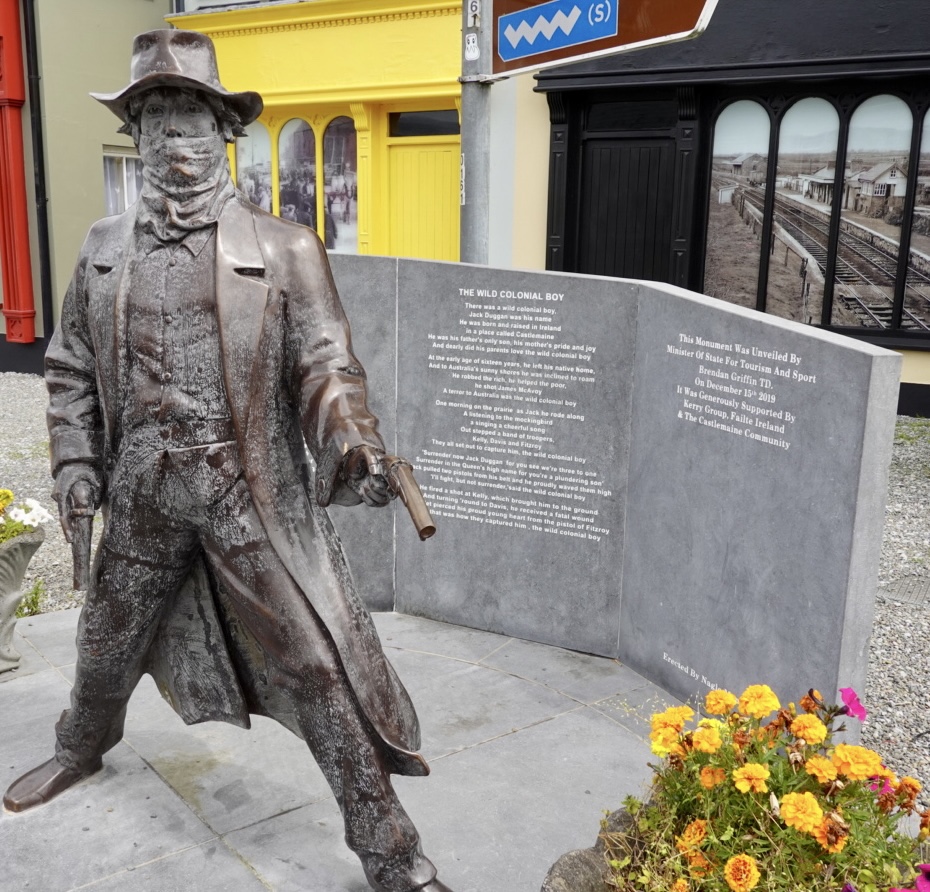
This sign got us talking. The Wild Colonial Boy was a song we both sung at primary school. One and the same?

Yes, one and the same….there was a wild colonial boy, Jack Duggan was his name….

The words to the song

Post ride research indicates it is likely that Jack Duggan was fictitious, but a great song and surprise find today.

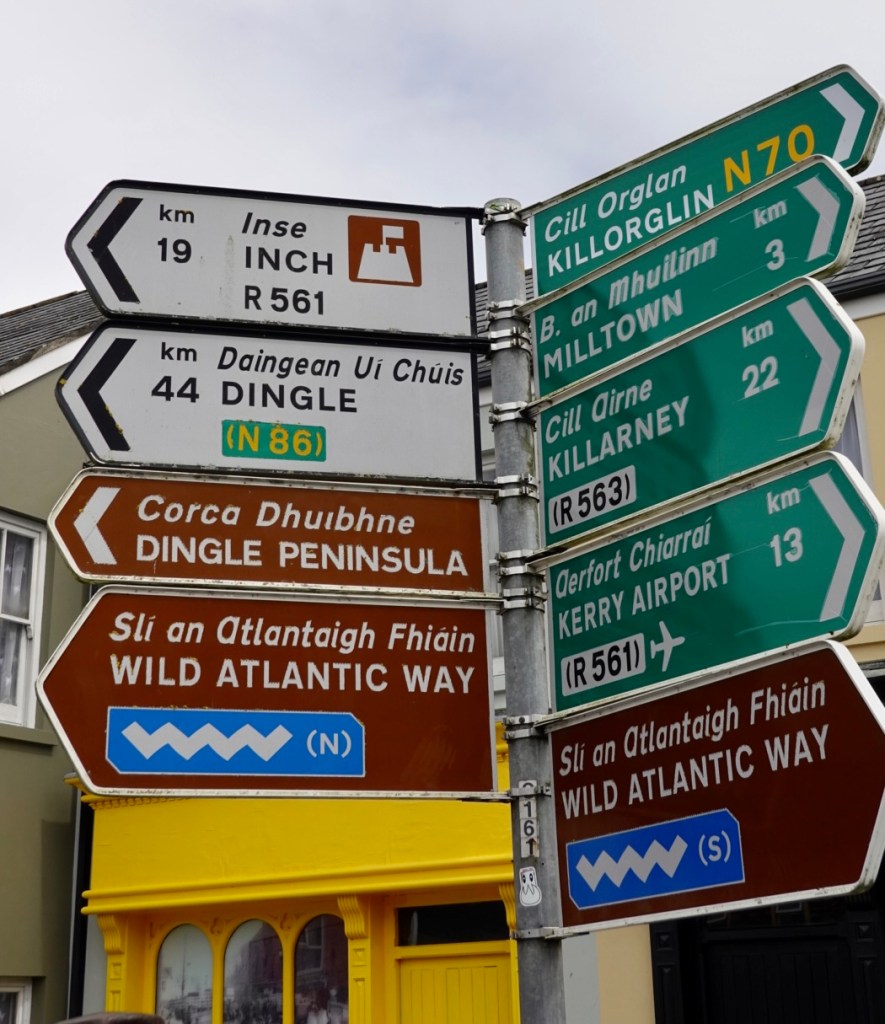
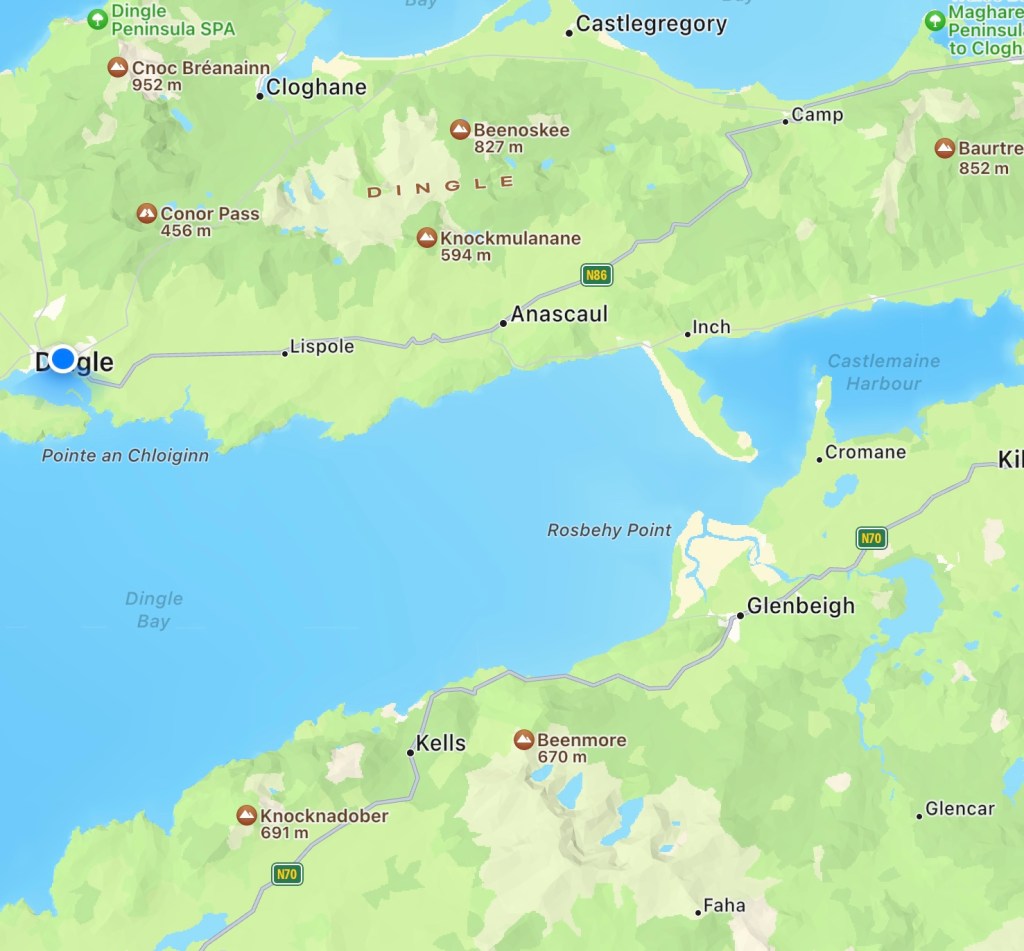
Castlemaine is a turning point to many places. You can see where we have come from, and where we are heading to, still on the Wild Atlantic Way, but no longer on the Ring of Kerry.

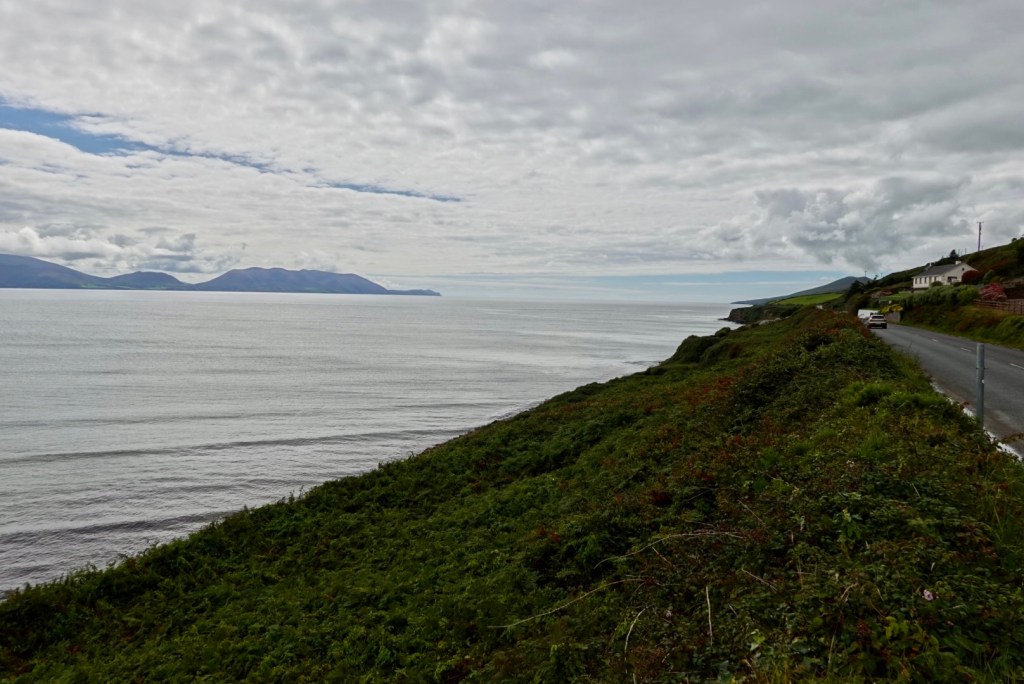
Now on the Dingle Peninsula looking towards Iveragh Peninsula.

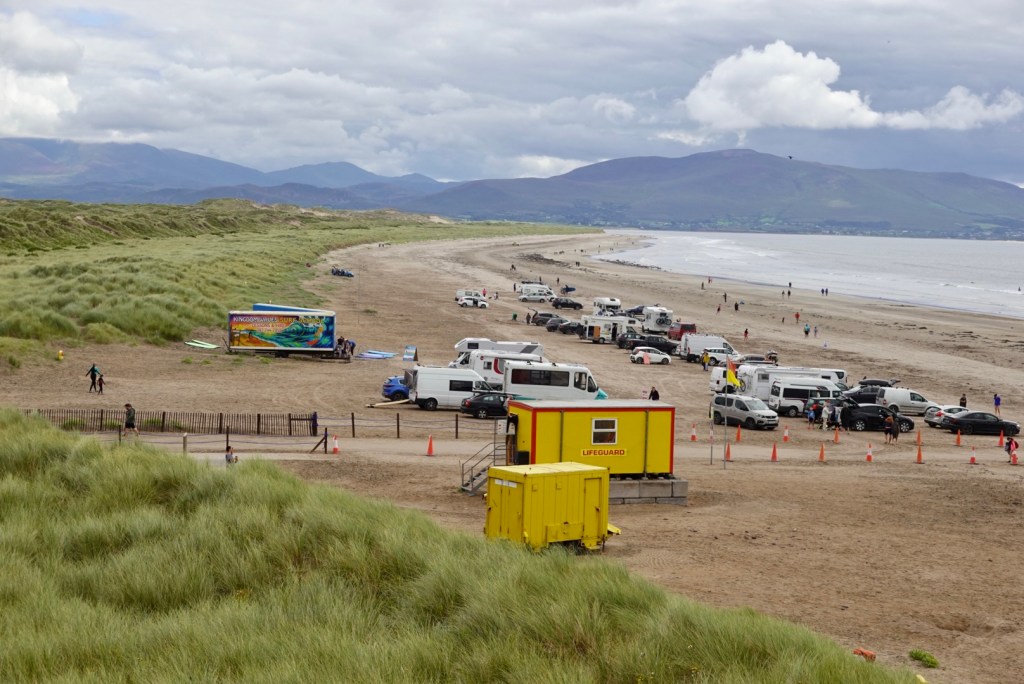
Inches Beach is famous for a few reasons. It is the only place where an inch is actually three miles long! The movie Ryan’s Daughter was also filmed here.

You can see how it just out into Castlemaine Harbour and Dingle Bay.

There was a sign up reminding drivers of high tide times and to ensure all cars are removed from the beach.

The last stint into Dingle predominately following the coast, but also heading inland for a section.

Back to the coast, then Dingle.

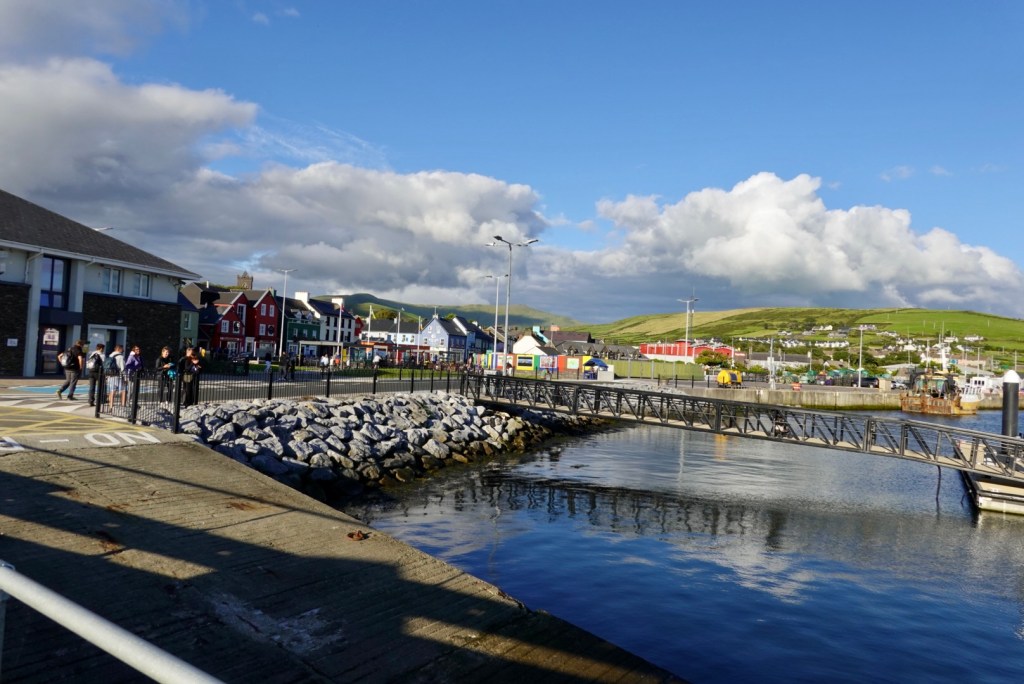
Dingle sits on the Atlantic coast and was developed following the Norman invasion of Ireland. It is a super busy town with tourists, fishing and agricultural pursuits.

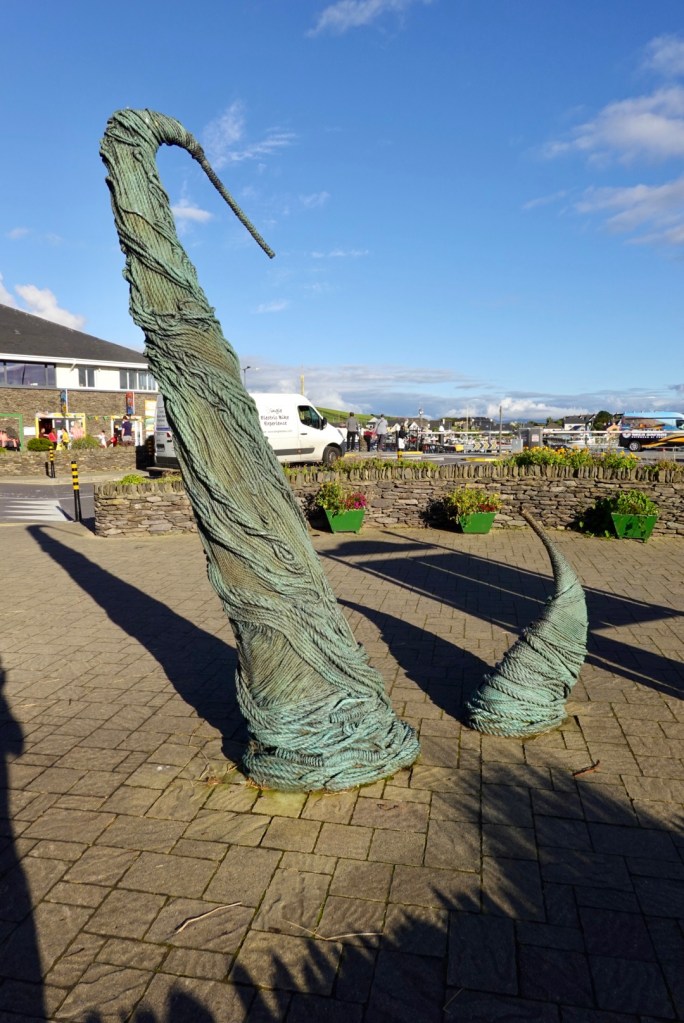
Use your imagination….no interpretive panel…I thought a stylised anchor?

The end of another day, and this is the half way point of our holiday. We have now ridden for 14 days, with numerous consecutive days over 100 km per day.

We are holding up ok. Our butts felt it a bit yesterday as some of the roads around Killarney and Dingle were very uneven, patched, pot holes so lots of bouncing around and trying to avoid hitting holes.

A big day planned tomorrow with the Slea Head Drive, a very popular circuit. We hope to leave early enough to avoid heavy traffic. We then come back to Dingle to refuel before the challenging Conor Pass.

Our hotel room is the smallest in living history. It is 3 m x 3 m. The shower is in a cupboard. The toilet is in another cupboard. The bed is about 6 inches short.

You cannot shut the toilet door if sitting on the loo. The hand basin is tiny and to clean your teeth you need to be able to be a contortionist. 🤣🤣🤣 Fortunately the bikes are in the rear courtyard!

Thanks for reading 😊❣️

Day 12: Union Hall to Bantry

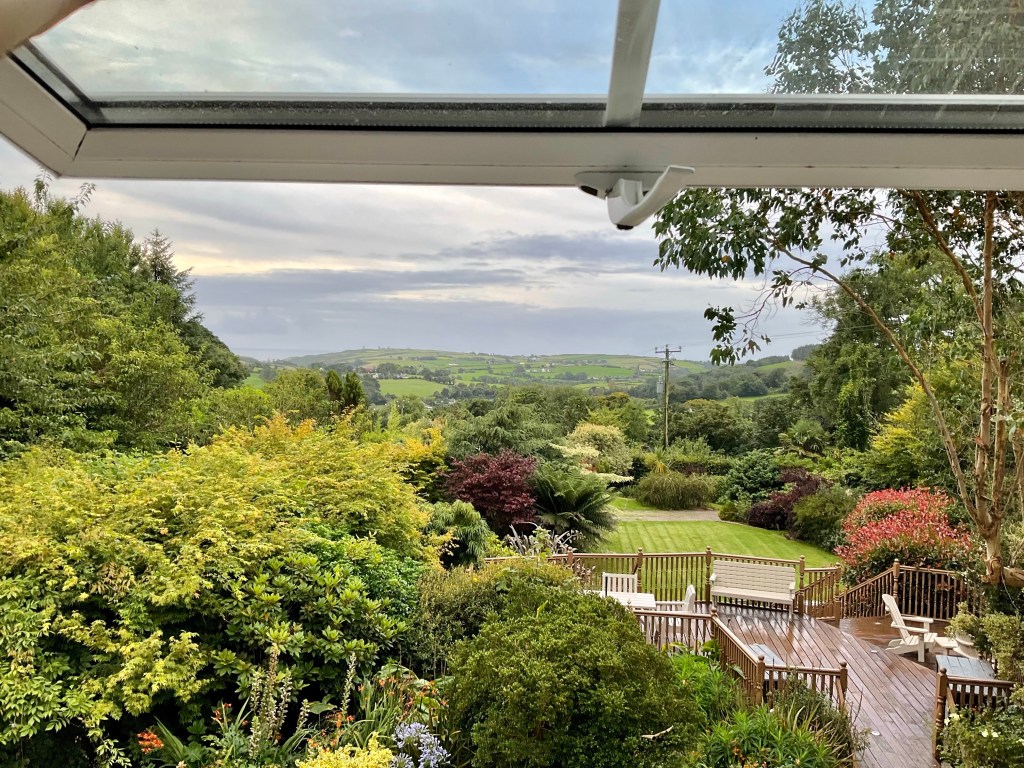
A beautiful view from our bedroom window enjoying the distant panoramic views. The forecast was ok, with lighter winds, and light rain around 3 pm.

We enjoyed a lovely breakfast prepared by our hosts Jim and Carol and got underway soon thereafter.

Finalising the bike packing before leaving our accomodation.

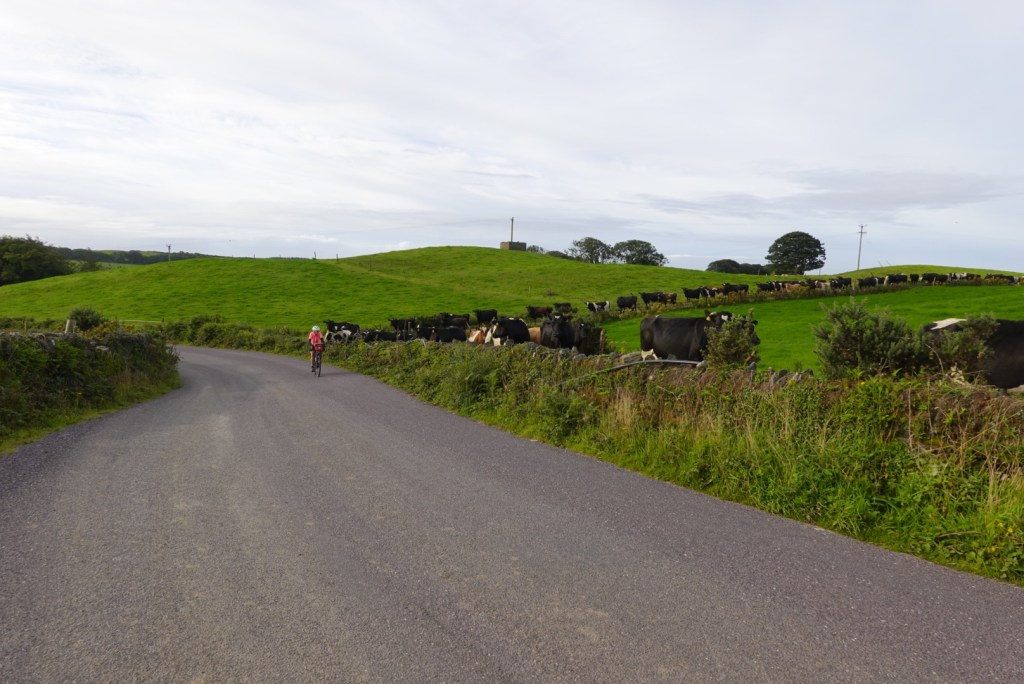
It was straight up to the top of the hills down to the conga line of curious cows.

The first town was Skibbereen, the capital of West Cork. It was fairly quiet being a Sunday morning.

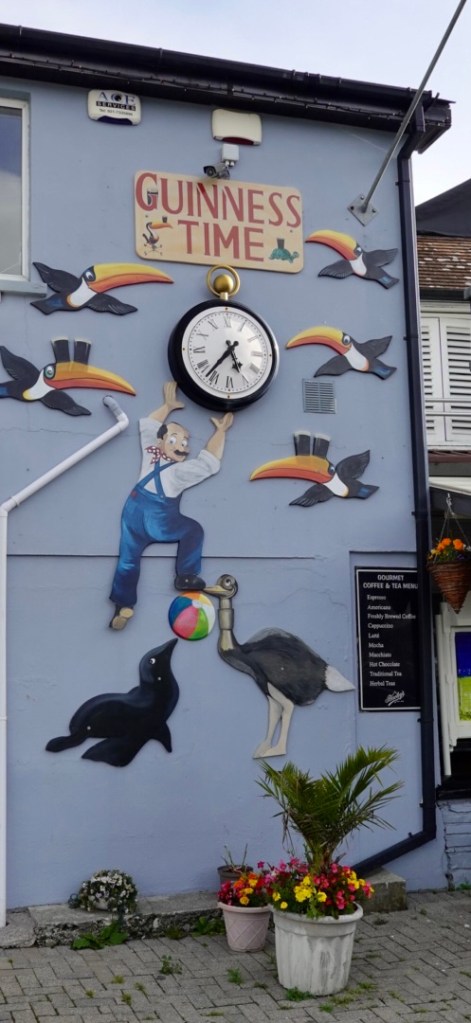
Not quite Guinness time as this pub was likely shut. The clock is not correct.
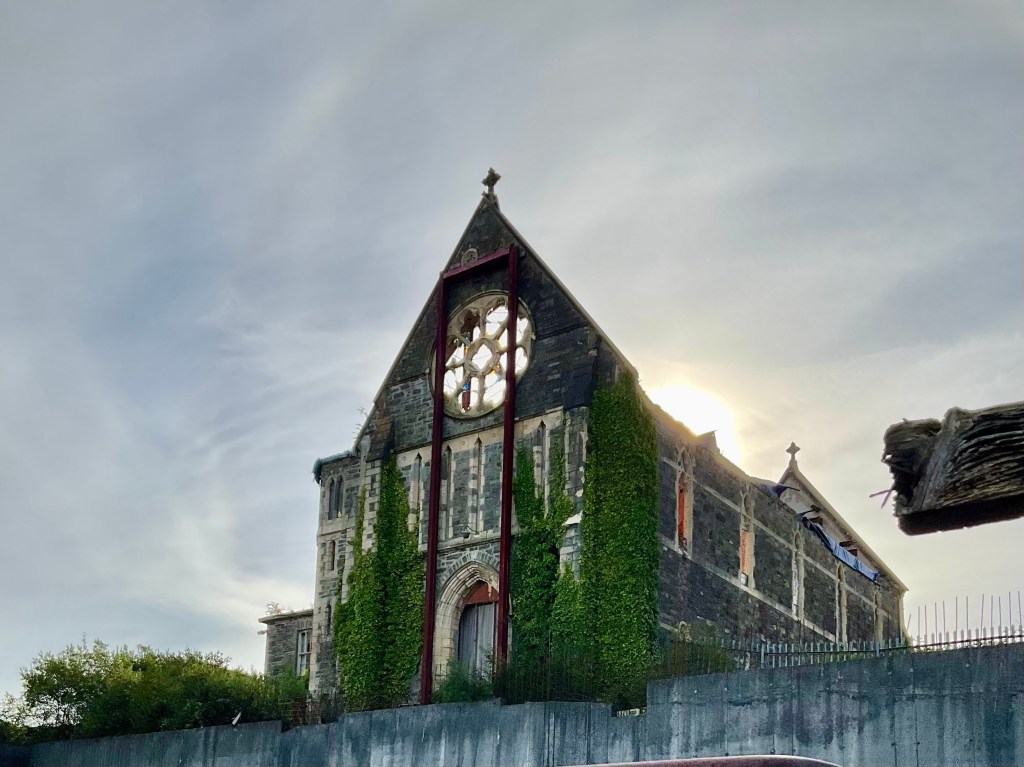
An old church that has seen better days, having some work done to it.

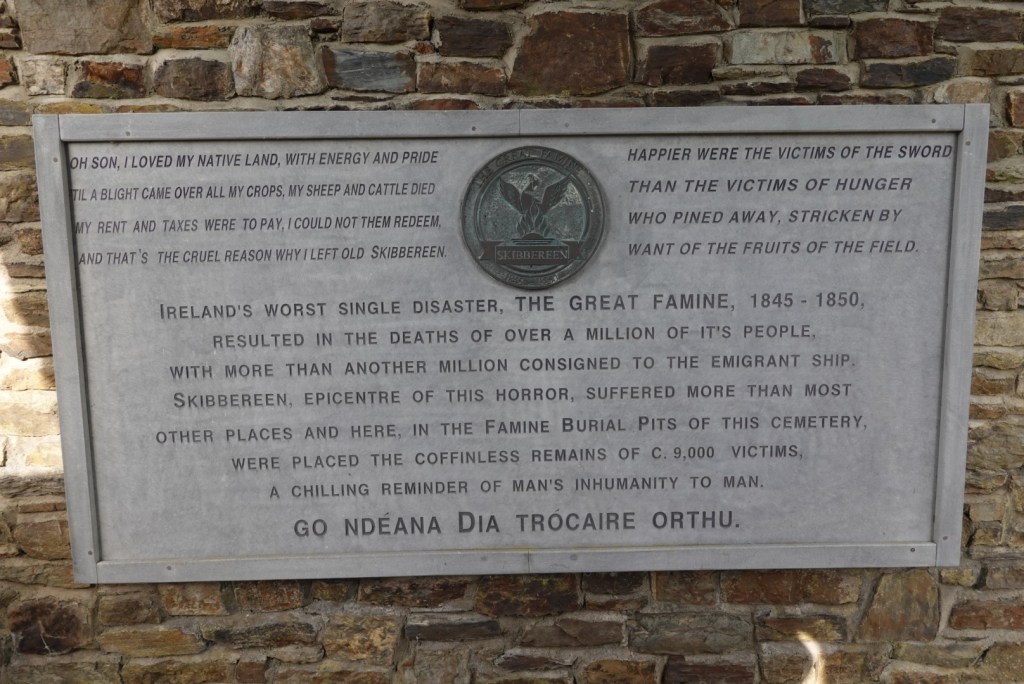
Not far from Skibbereen is the Abbeystrowry burial ground, a totally sobering experience. It is the site of what is regarded as one of the most poignant and significant Famine memorials in Ireland.

This is the location of the infamous ‘pits’ or mass graves where possibly 8,000 to 10,000 Famine victims were buried in 7 years.

The dead were thrown in the pits coffin-less and nameless, by the hundreds, daily without mourning or ceremony. A few inches of dirt would be added waiting for the next batch.

At the entrance gate
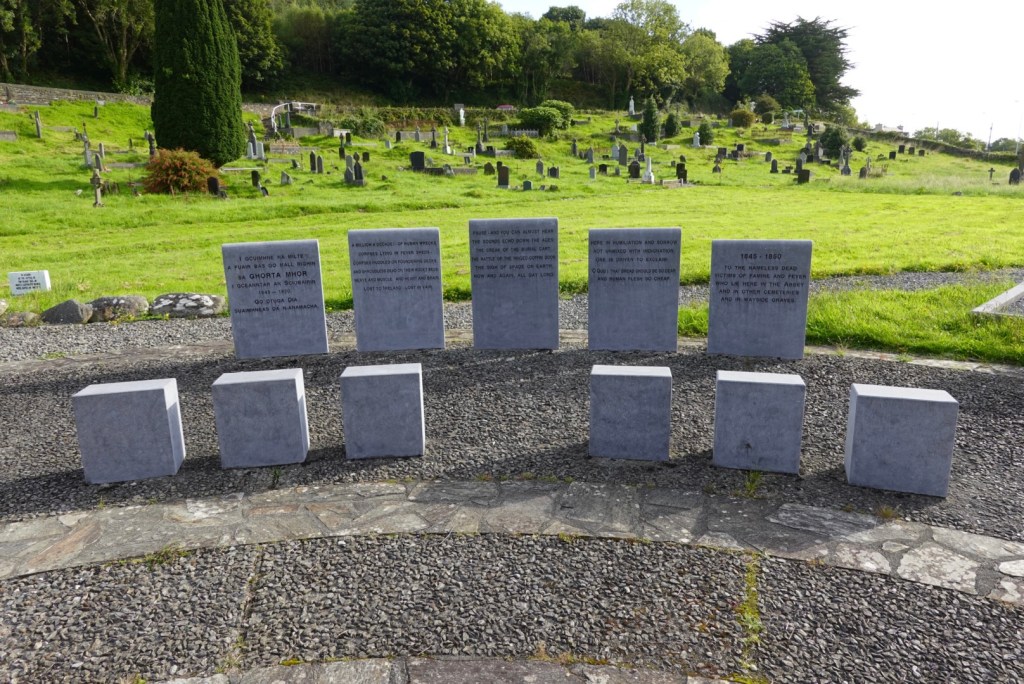
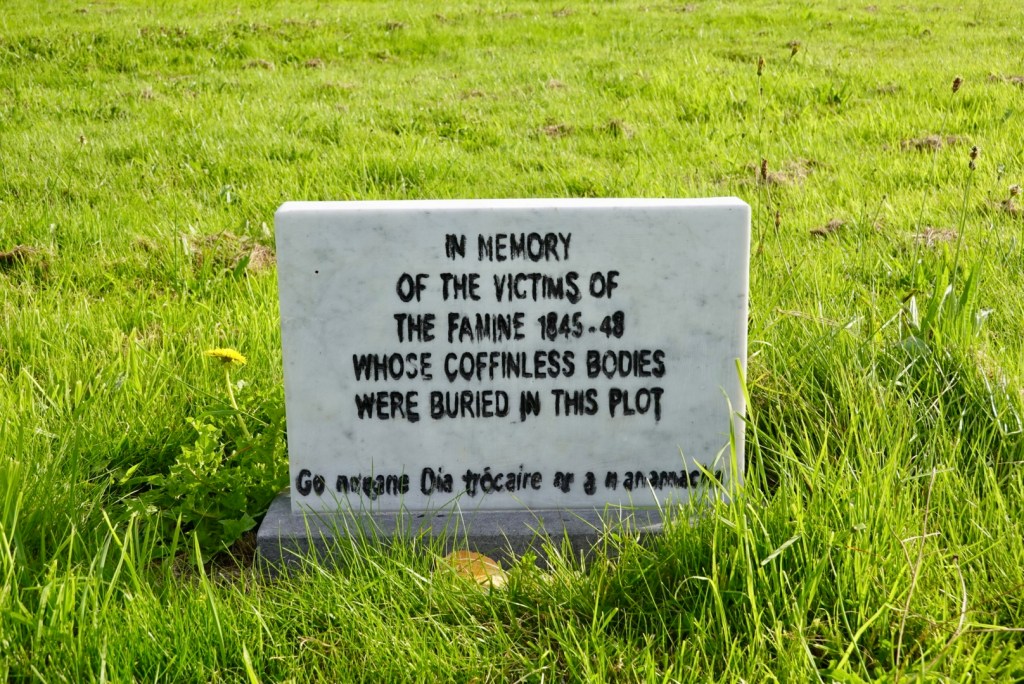
The green grass without markers is the top of the Famine pits. This is the main memorial.
A smaller memorial
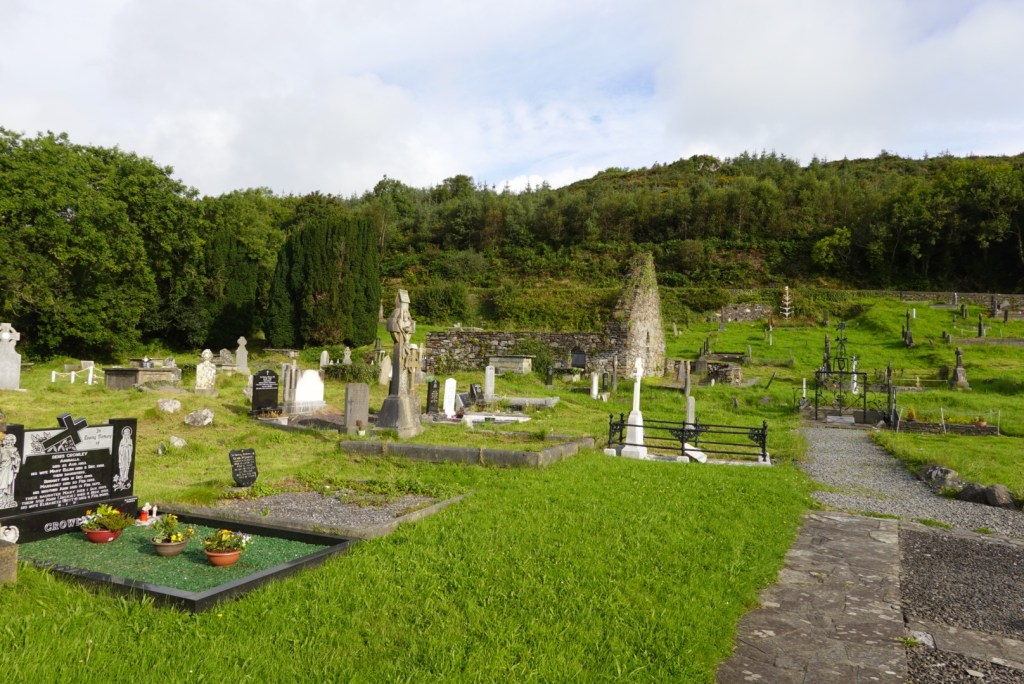
A broader view of those whose names are remembered from better times.
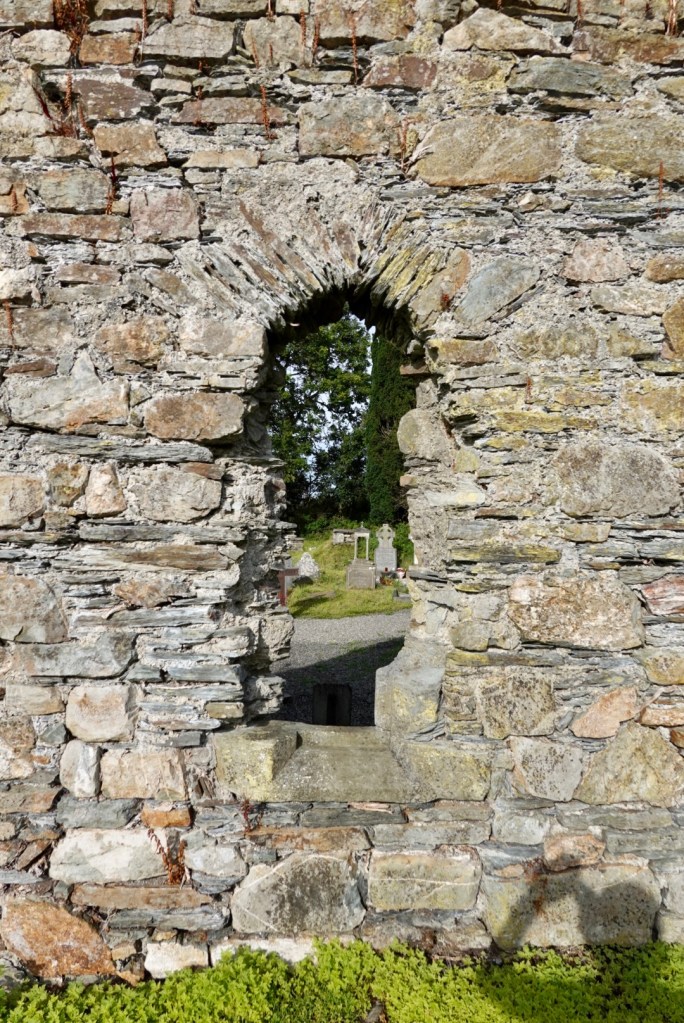
Window into the stone wall looking into the graveyard.

We moved on, but you had to feel compassion for the dreadful times experience here in Ireland where they lost 25% of their population to the Famine and subsequent emigration.

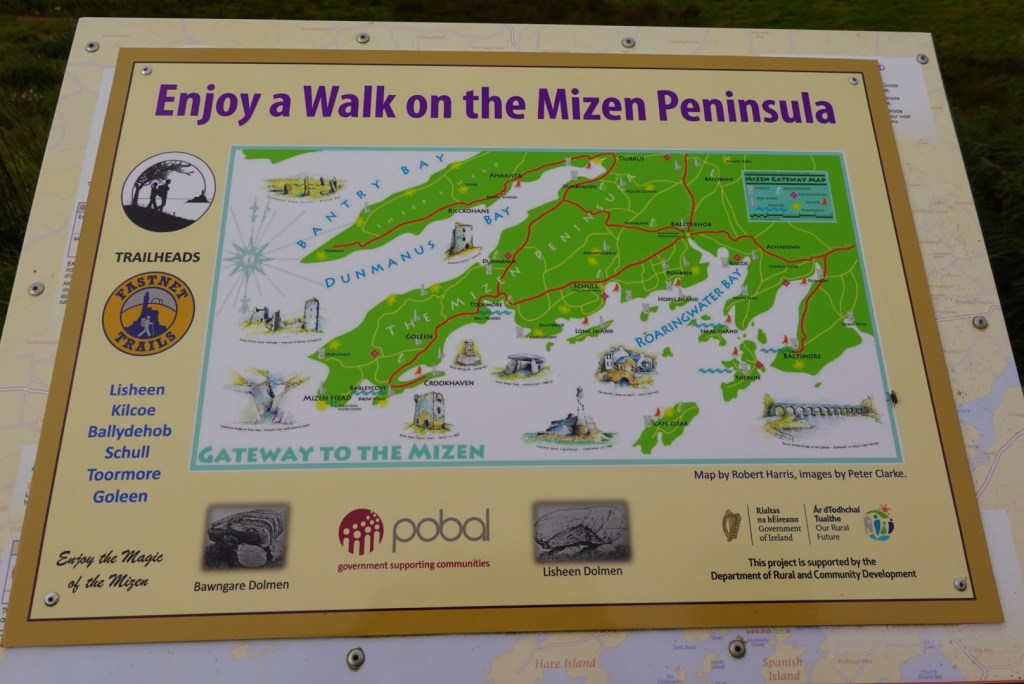
A short climb had a lay by we stopped at. There was a plaque promoting walks on the Mizen Peninsula.

We are between Aghadown and Ballydehob looking down towards Kilcoe
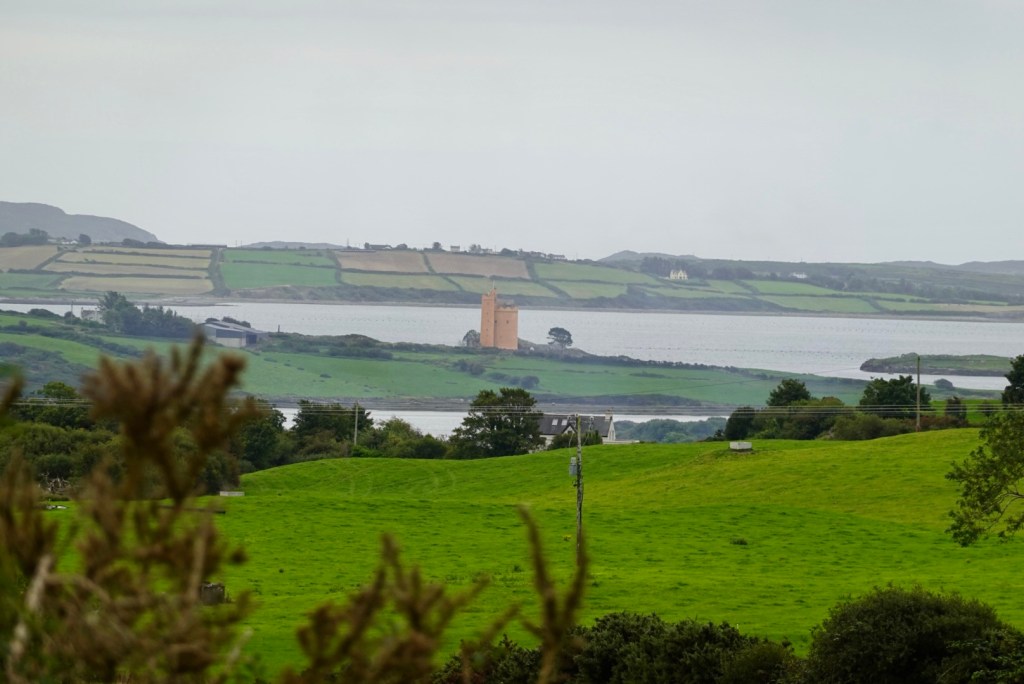
The castle at Kilcoe

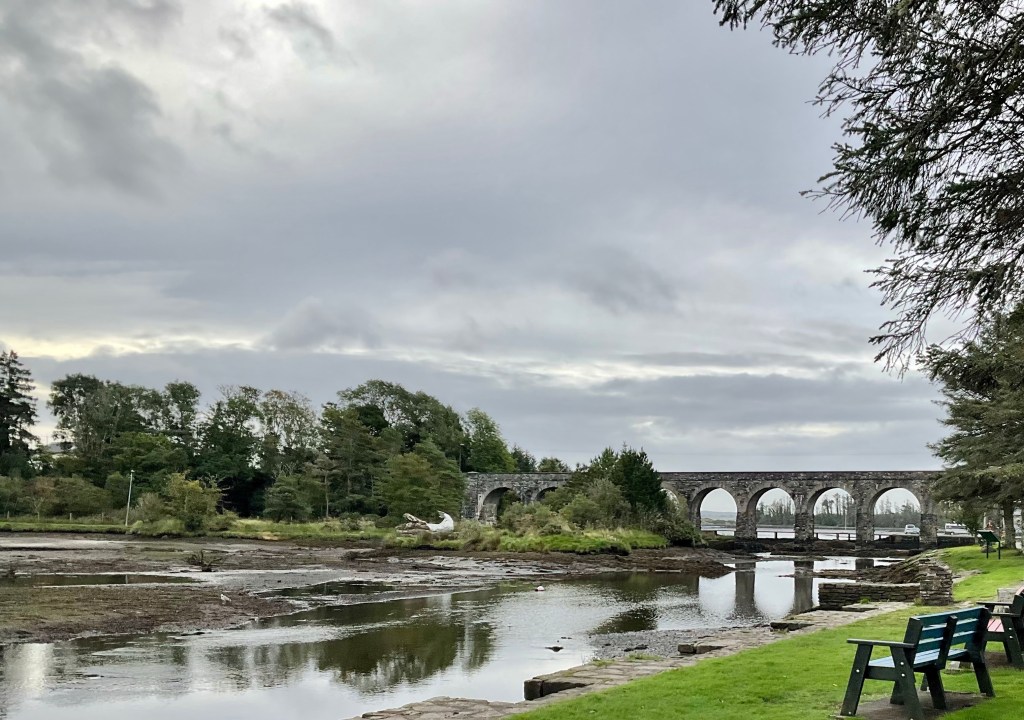
Ballydehob was the next town, and it has an impressive 12 arch viaduct that was used by West Cork Rail in the last century

Low tide view from the west
Easterly view
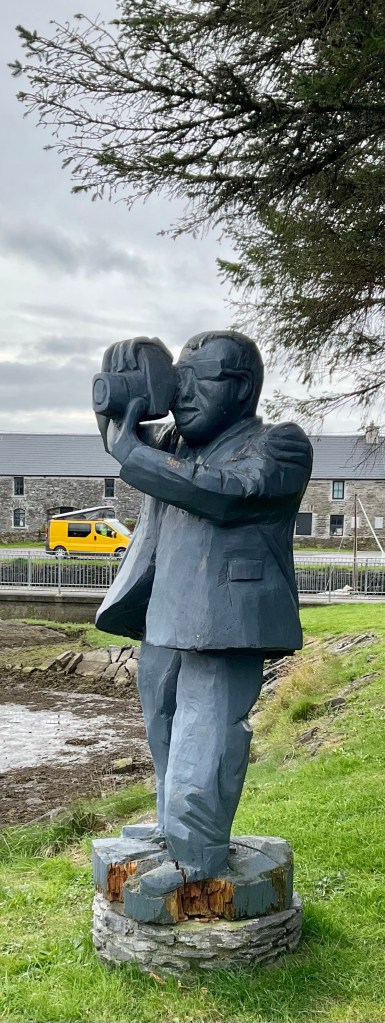
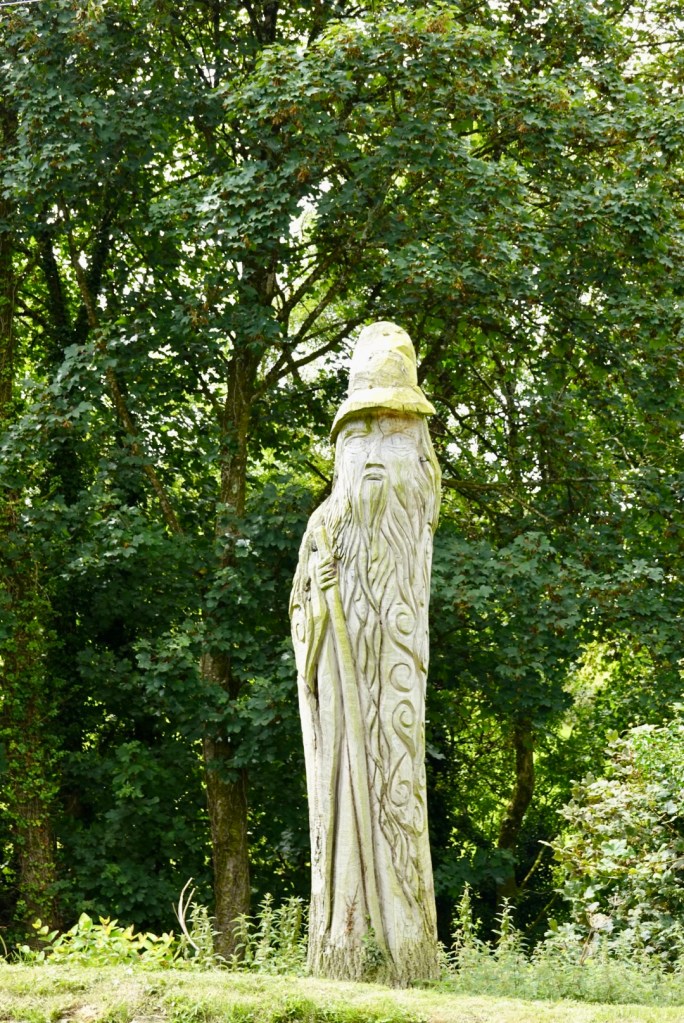
Wooden carved statue looking towards the viaduct

Schull lies at the foothills of Mount Gabriel and Schull Harbour. Very popular with yachtsmen.

Part of Schull Harbour

We stopped for a coffee at a small cafe that was super busy, and drank our coffee next to the doggy minus a leg, overlooking the harbour.

Getting out of town down the narrow busy Main Street was like riding a scooter, crawling pace if lucky, ready to jump off at short notice. A steep but short climb out had us moving again, fairly clear of traffic. Where does it all go?

We were on the main route to Mizen Head and to our right was Knockaphuca. I just wanted to type the word, even in Irish is Cnoc an Phuca!

It is a mountain summit in Cork and a popular walking trail. Our route took us to the eastern and western flanks today.

Lowertown had seemingly seen better days. There were multiple commemorative plaques recognising what was on this site before. As an example, the little post office niche is where the Macleain post office once stood. It was closed in the late 1920’s.

It also memorialises,the former owners son who was killed by British forces in 1919 as part of the so called Troubles during the War for Irish Independence.

On a brighter note is this dancing platform. The dancing platform was a traditional meeting place where courtships and social gatherings built local community relationships.

Lowertown had a dancing platform, Locals would come and listen to Irish music, trade stories, watch and often dance themselves.

The coast was to be a constant companion for much of the rest of the ride. The scenery was outstanding along the Mizen Peninsula.

We stopped off to view The Altar. It has existed for over 4,000 with scientific research finding ancient bone fragments buried deep within. It is believed that these were the ashes of loved family from the Bronze Age.

In the 18th century, priests used the site to conduct services when it was illegal to say Catholic mass.

Wild Atlantic Way signage with the name of the site in the left.

Magnificent coastal views as we headed to Mizen Head.

We crossed down to the right hand side of this beach, climbing up past the string of buildings you can see on the left hill.

Then looking back towards where we had ridden and the previous photo stop point.

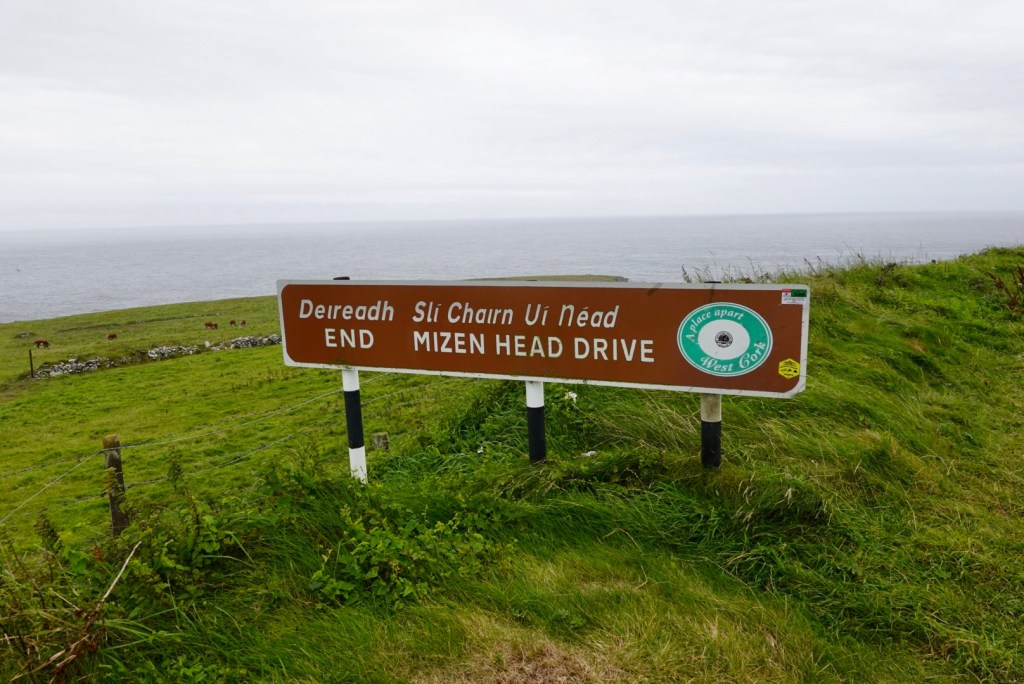
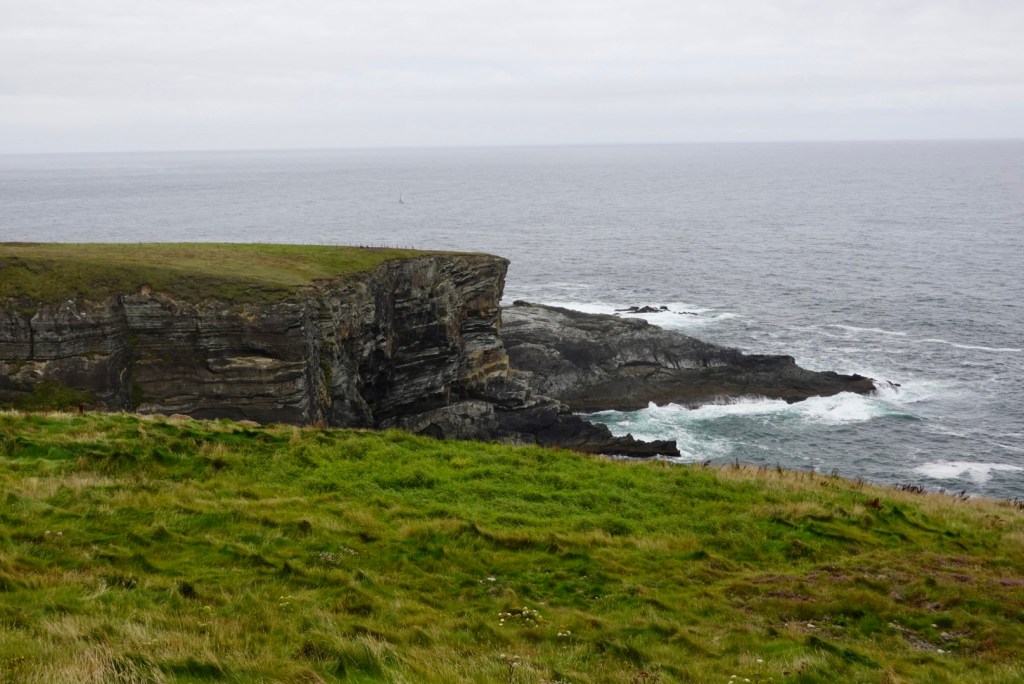
Mizen Head is Irelands most South Westerly point. The site is operated by a tourism cooperative and costs 7.5 euro to enter. It has long been reported as the most southerly point of Ireland, but another head nearby is about two metres further south (but inaccessible?).

In earlier years we had contemplated a supported ride from Mizen Head to Malin Head ( far Northern Ireland), but changed our minds after that company kept 3,000 pounds ($6,000 aud) of a deposit six months out from a trip. That was the motivator for us doing our own thing. Look at us now, having our own solo bike adventures 😊❣️

Tony paid the fee and walked around the site, whilst I watched our bikes and got bailed up by curious, but well intentioned USA tourists. The place was crawling with tourists. The parking area was full of tour buses, campers and cars.

Tony found on the walk conga lines of slow moving tourists on the steep steps in various areas. We try to avoid conga lines! Here are some of the photos from his walk as he cut it short to return and not join the long lines.

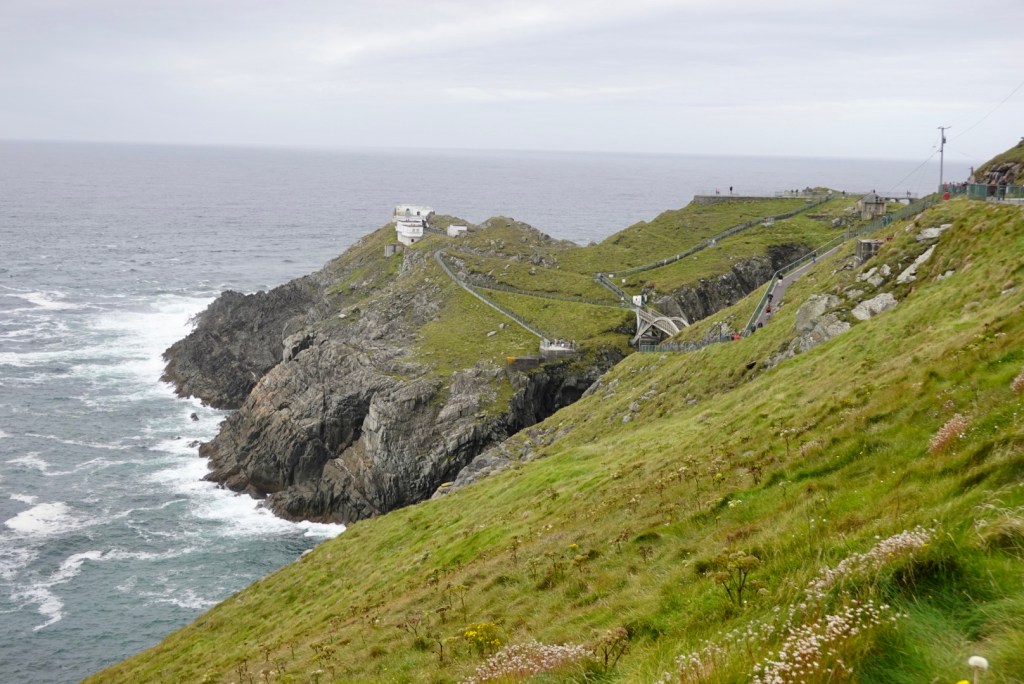
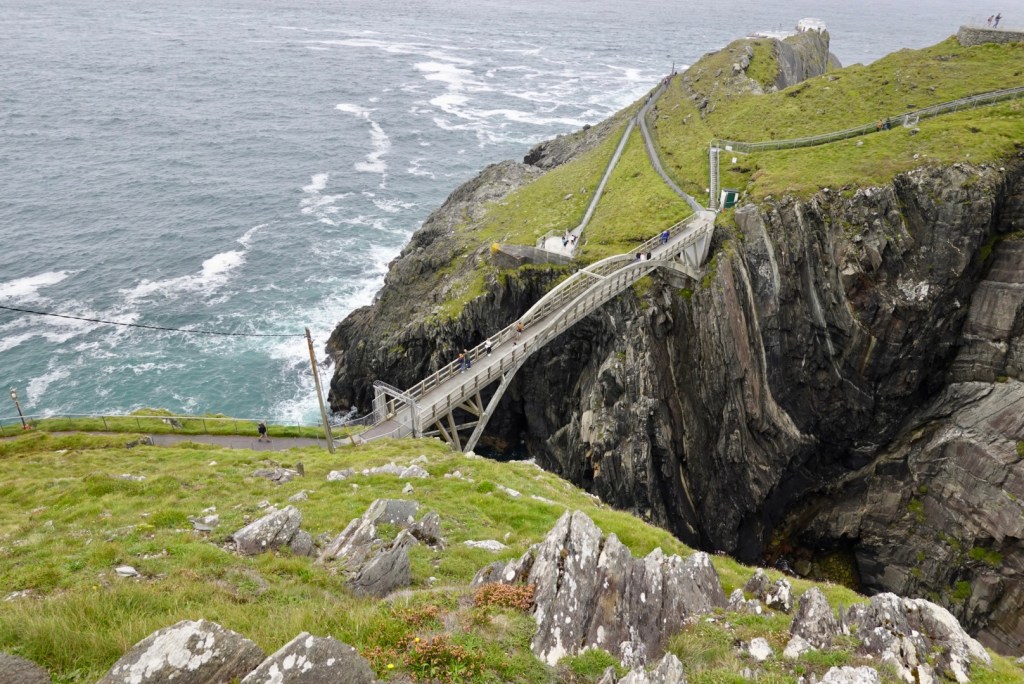
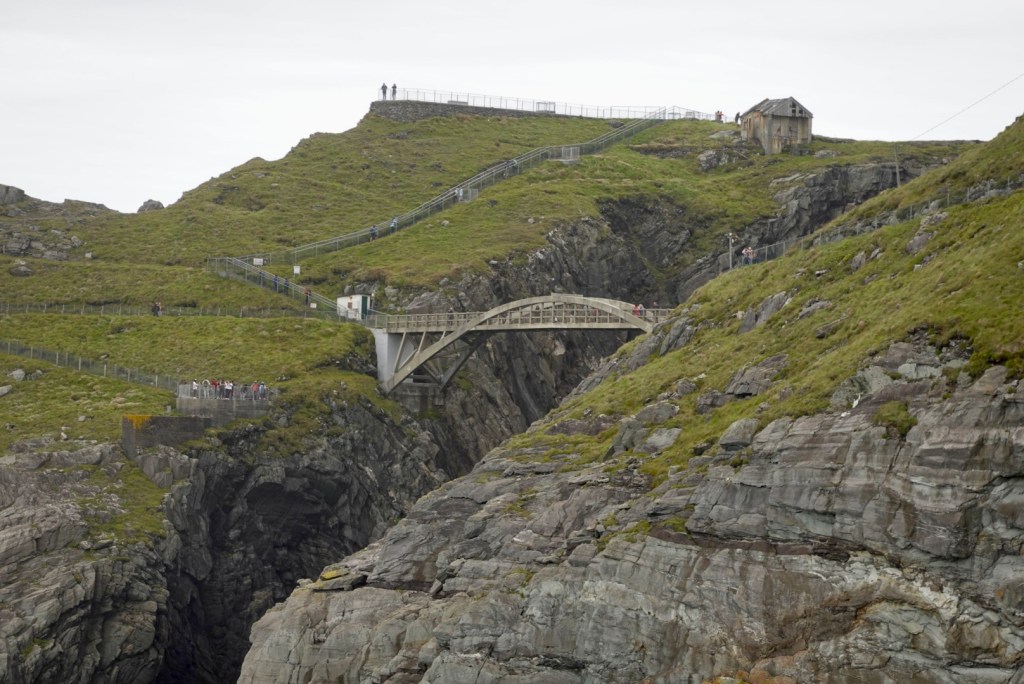
The bridge connecting to the last jut of land

We decided not to lunch here to get away from the crowds, and had noted a pub and pop up food van as we climbed the 4 km climb towards Mizen Head.

We scooted back to the food van, sat at an outdoor table and enjoyed a Belgian waffle with Nutella and banana, and a fruit smoothie.

The next section of ride was our favourite. The western flank of the Mizen Peninsula for 20 km or so, along a road that buses cannot enter, and large cars and caravans would find difficult. We encountered only four vehicles in 20 km, and one of those was the Garda (police).

Some of the photos of this blissful and beautiful section.

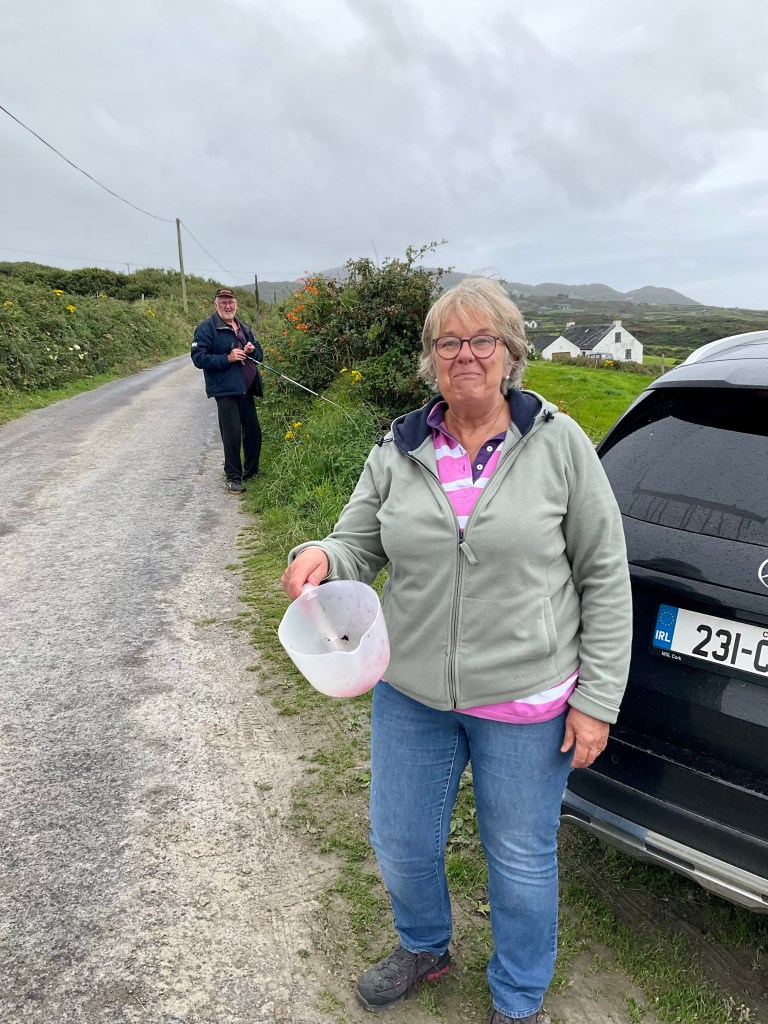
As we scooted along we last this couple blackberry picking. They both shouted at us, and the only word I recognised was “Aussie”. I’m like WT.??? Who could know we are Aussie, so we stopped and went back.

To our surprise and disbelief, it was Jim and Carol who cooked our breakfast, owning the lovely overnight accomodation in Union Hall. They had picked buckets of blackberries already.

Jim and Carol, from Union Hall

We moved on to finish this lovely section of ride.

All good things must come to an end, and that quieter section of road ultimately joined the main road to Bantry, our overnight stay. Traffic was busy but for most there was a small verge.

Bantry is located at the mouth of Bantry Bay, twice entered by French fleets in 1689 to support James II against William of Orange.

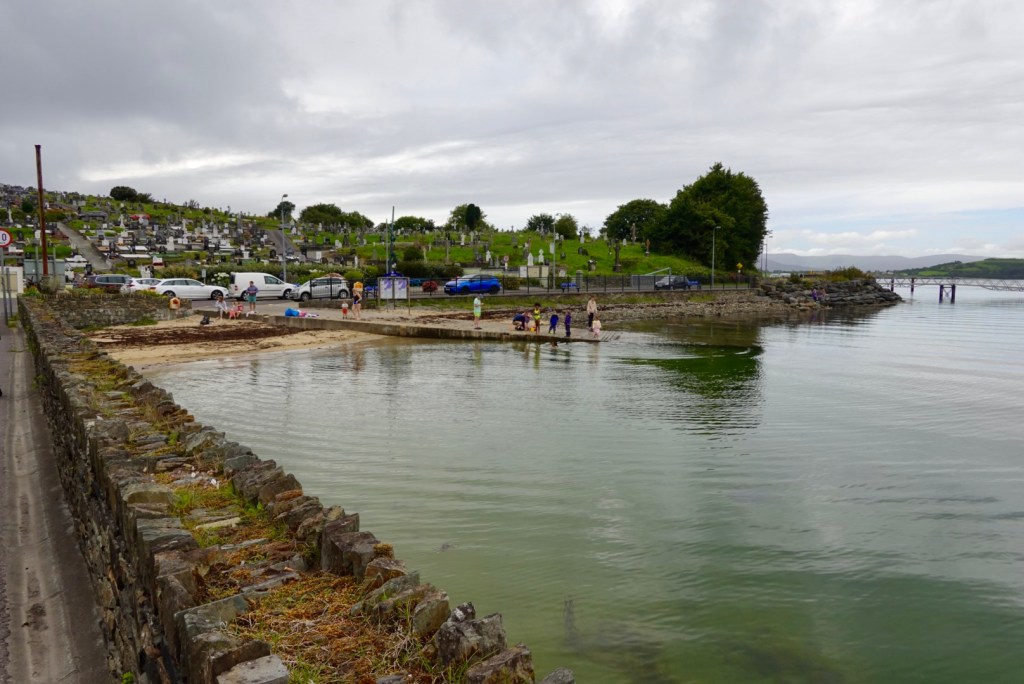
As we entered we noted the children playing in the water, adjacent to the cemetery.

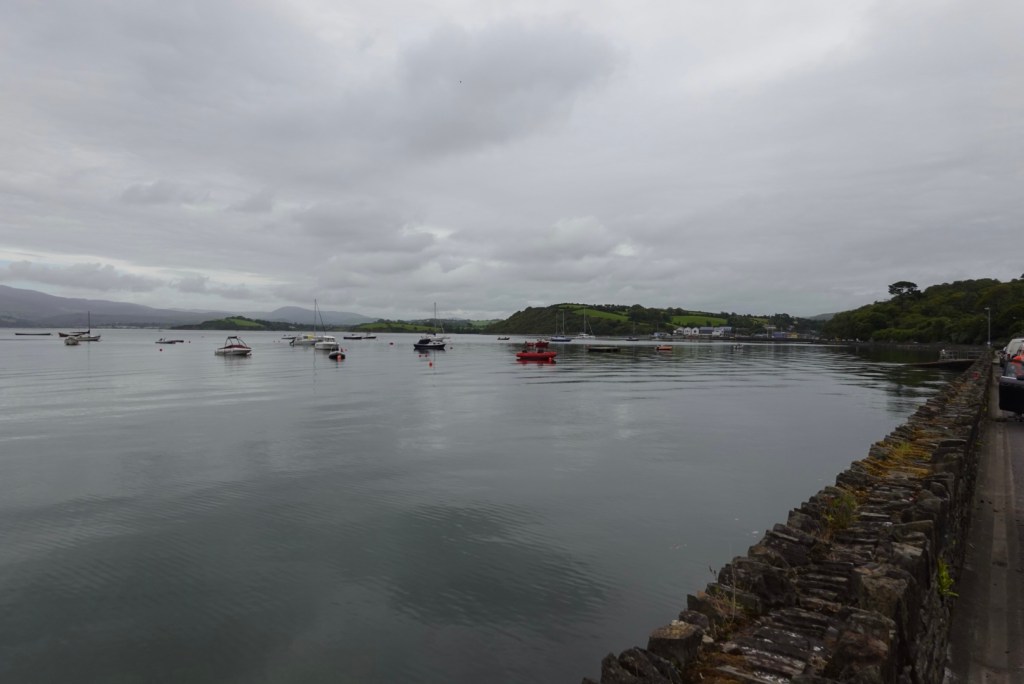
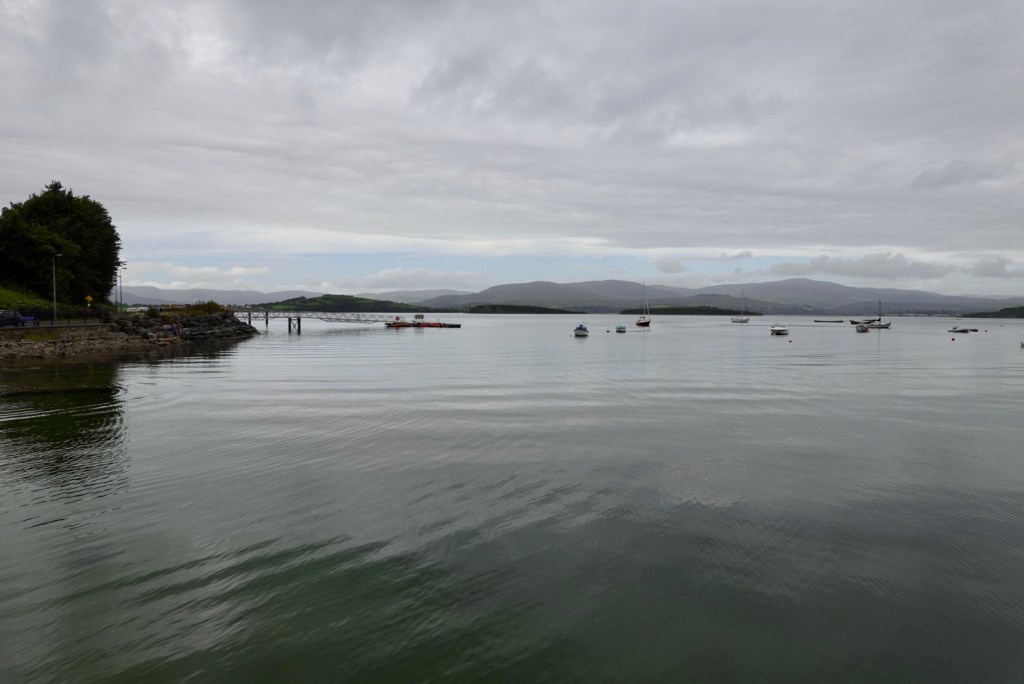
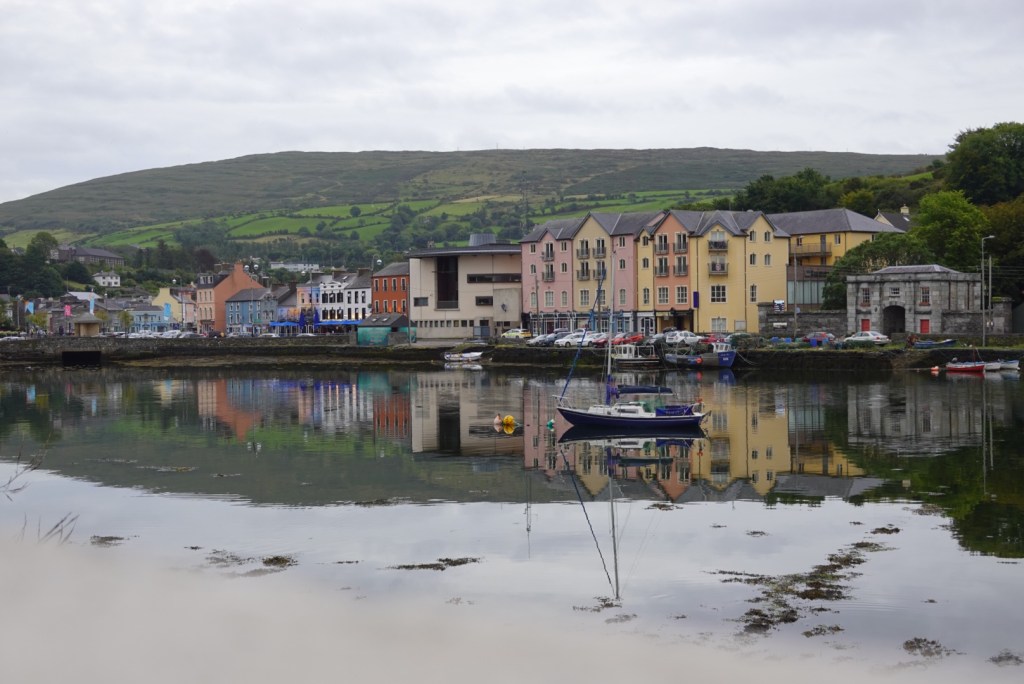
The bay is peaceful.

We checked into our accomodation, showered and crossed the road to check out dinner options.

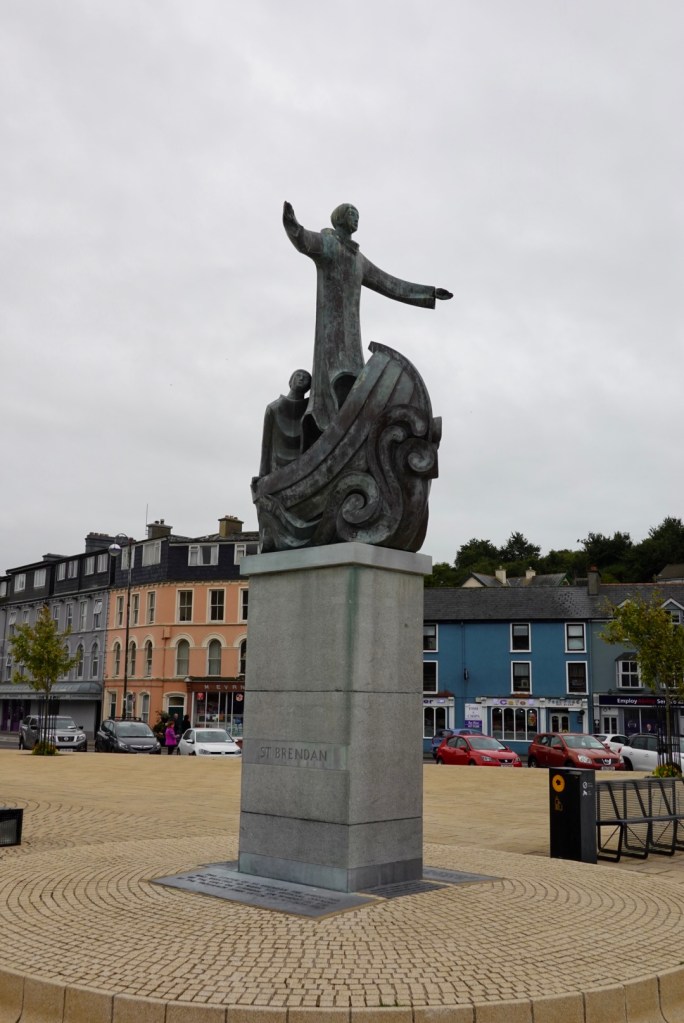
St Brendan statue
Looking from our side of the river to the Main Street
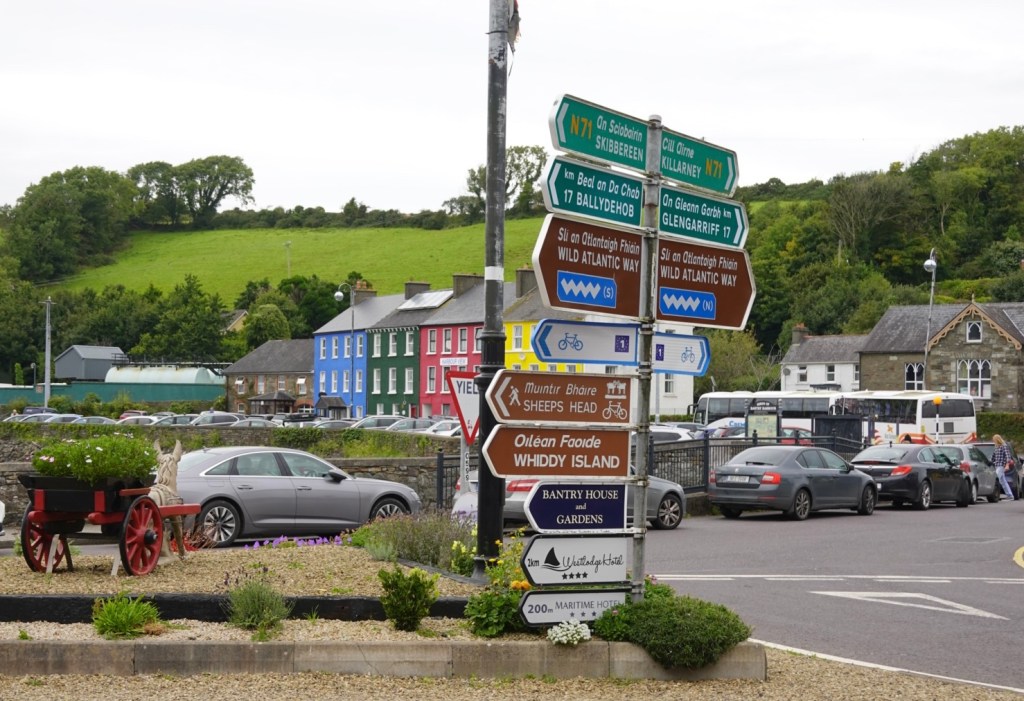
Lots of signs, and our accomodation is the green house in the string of four colourful buildings.

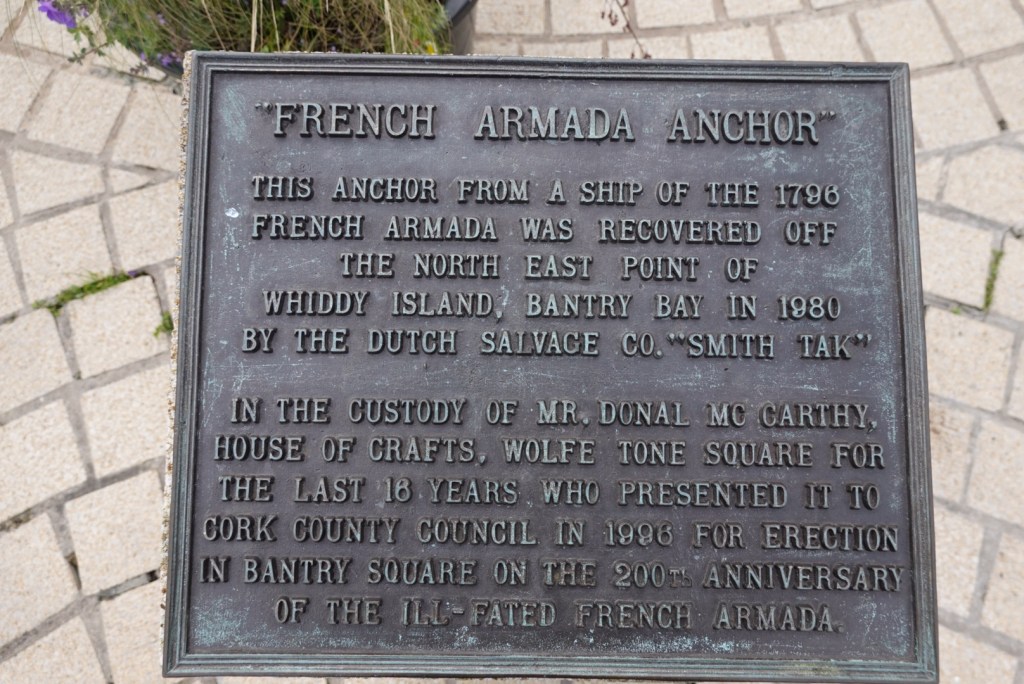
A famous anchor.

We enjoyed our meal. Not cheap, as we had a main course each and a non alcoholic drink each, and it was $99 aud.( Seafood linguini and a lasagna, lemonade and a sparkling water).

The Australian dollar is not strong on the Euro or Sterling. making our dollar low helps our exporters be more competitive, but makes Aussies having international holidays pay more for the privilege.

The end of another day. It was a brilliant day. The winds were not an issue, the scenery and route was magnificent. 108 km and 1100 metres of climbing. A solid day.

Thanks for reading 😊❣️
Day 10: Waterford to Cobh

Our accomodation in Waterford was …a bit of a a dive really. Breakfast would be at 8.30 so we decided to pass as we needed to be on the road earlier for a longer day ahead exacerbated by forecast high winds.

Finding food at the local convenience store we headed off towards the Waterford Greenway.

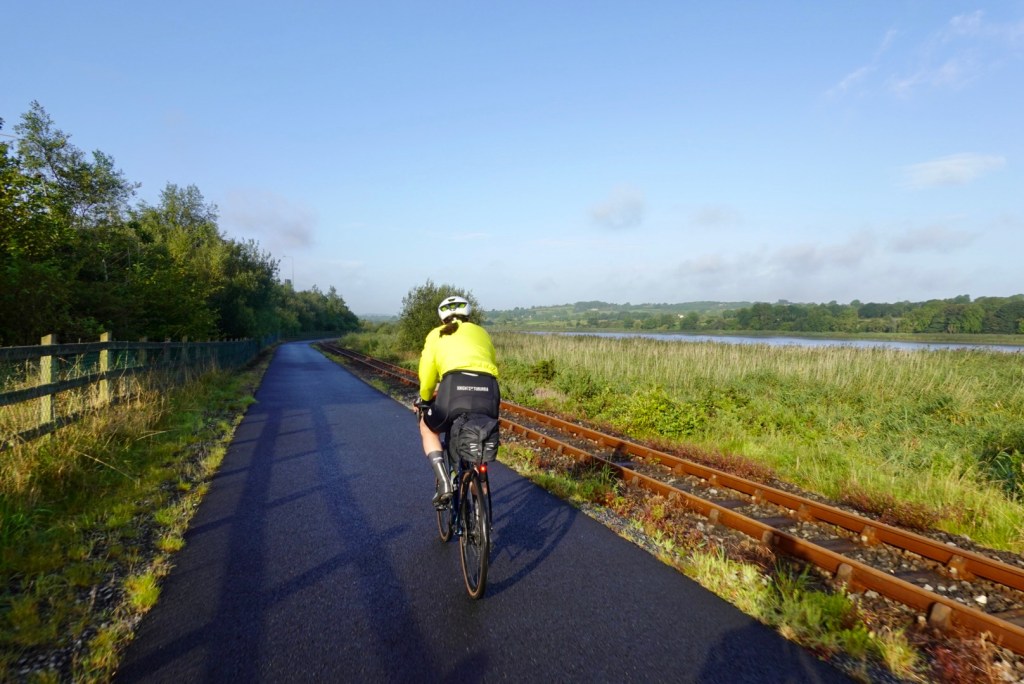
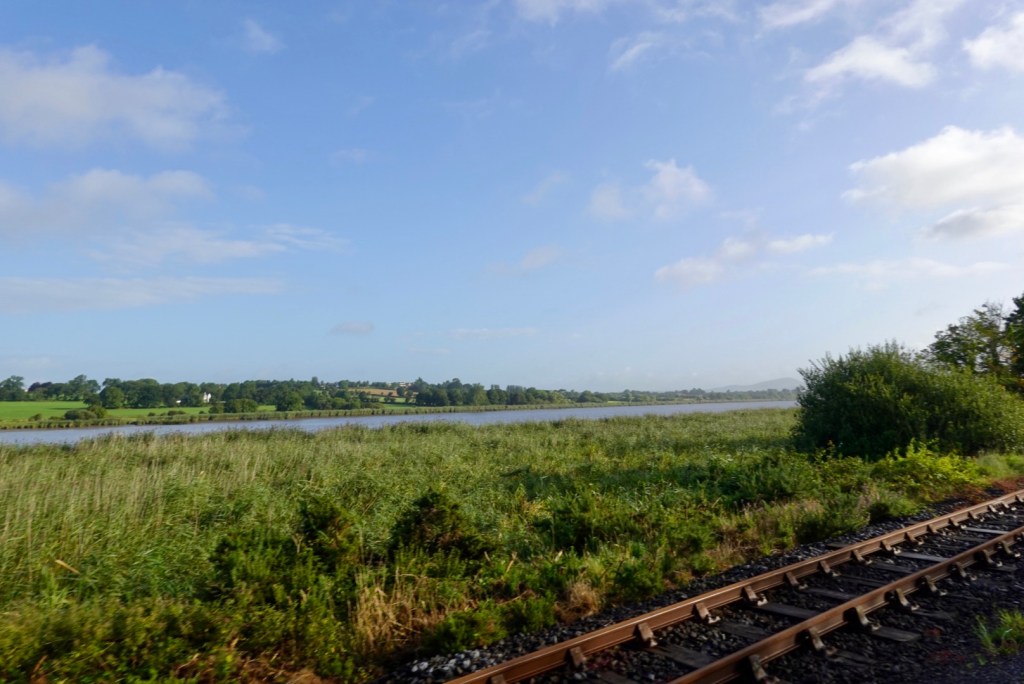
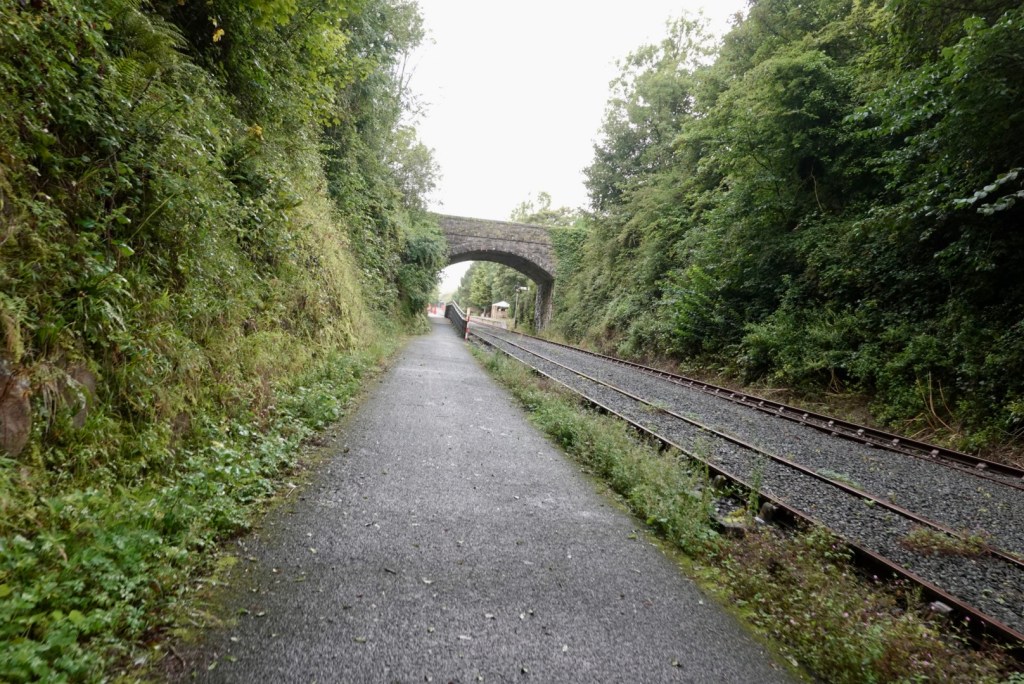
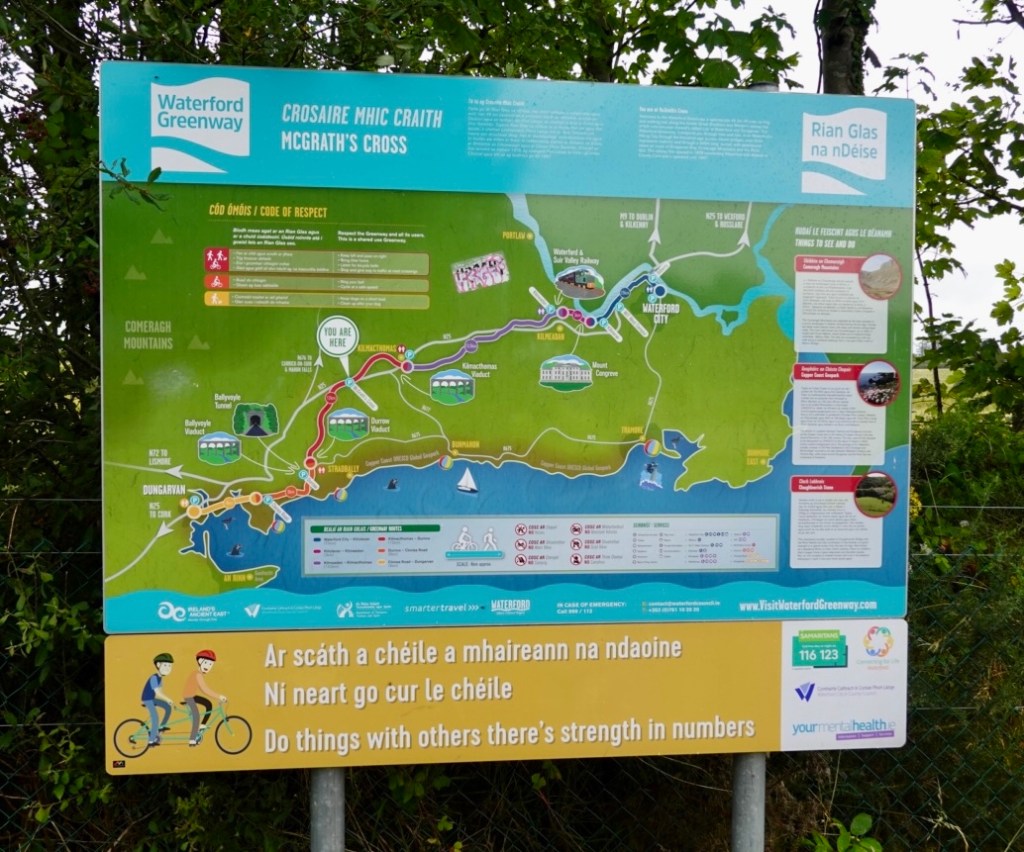
Waterford Greenway is a 46 km shared off road trail, running from Waterford City to Dungarvan along an old railway line. The cycle and walking paths follow the gently flowing River Suir beside the rugged Comeragh Mountains.

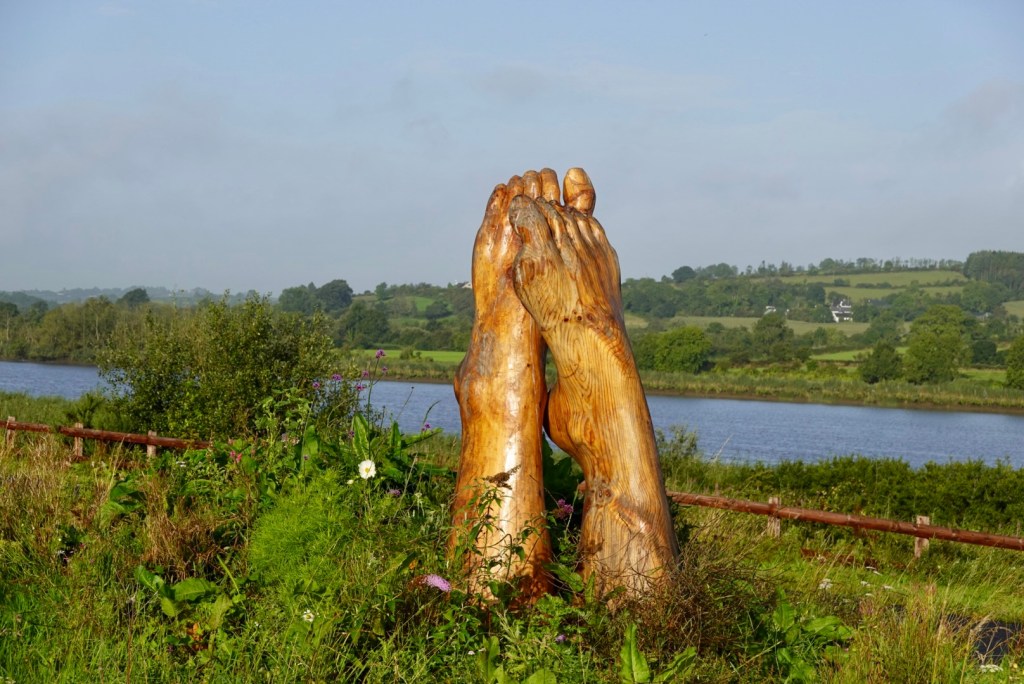
I really like this photo. The weather looks great (you can’t see wind 🤣), and something about those feet.

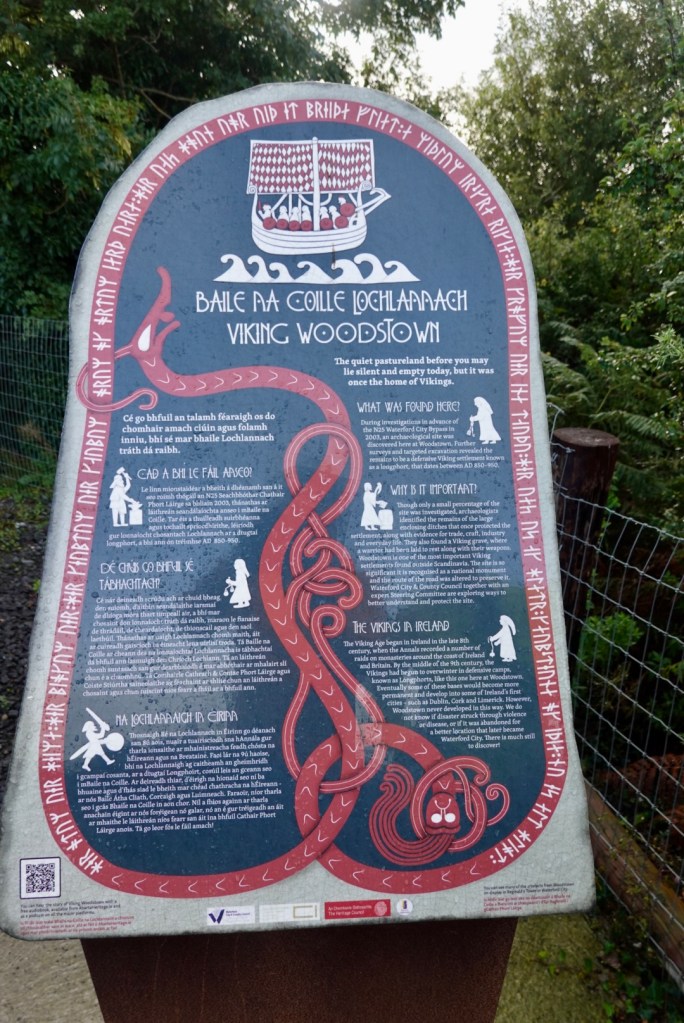
At this site they found significant Viking settlement remnants as they excavated for a major road. As a result, the road was diverted.

Quite a few of these road overpasses. This one is just before the end of the rail line.

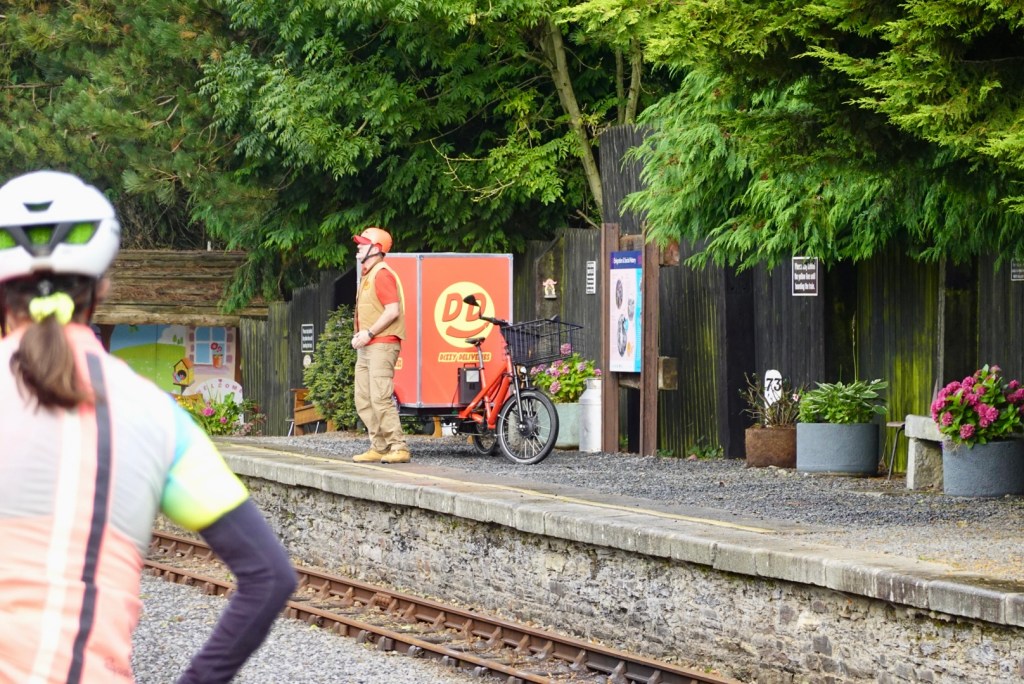
As we went around a bend there was a commotion with this guy. He rode that cycle with the Dizzy Deliveries trailer over the rail line, jumped off, and carried on a treat in ultra dramatic style. We were halted in our ride. There was a film crew there filming his antics.

Dizzy Deliveries is an Irish tv show. Lamh is a manual sign system of communication used by children and adults with intellectual disabilities and communication needs in Ireland.

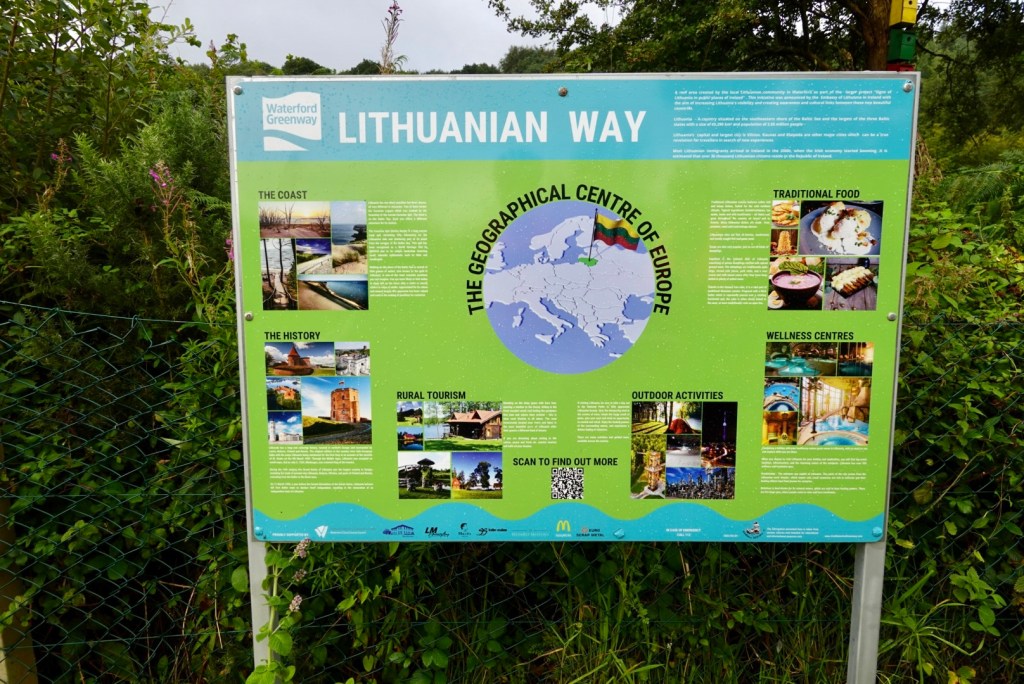
Moving on from that excitement we stopped to discover what the Lithuanian Way was. In essence, a cross country promotion.

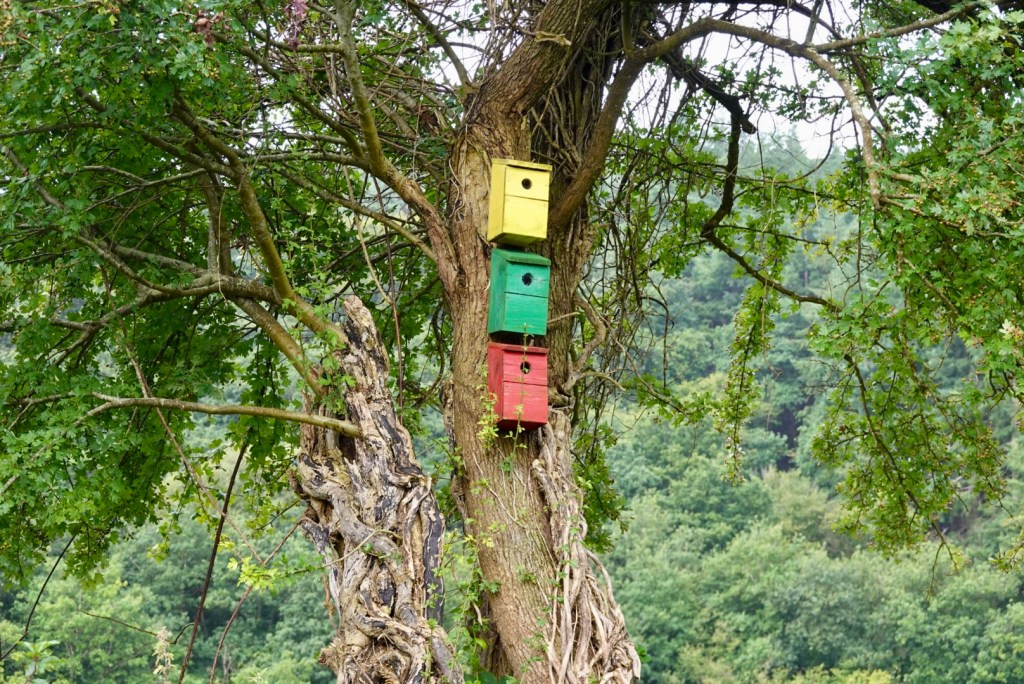
It did feature colourful nesting boxes.

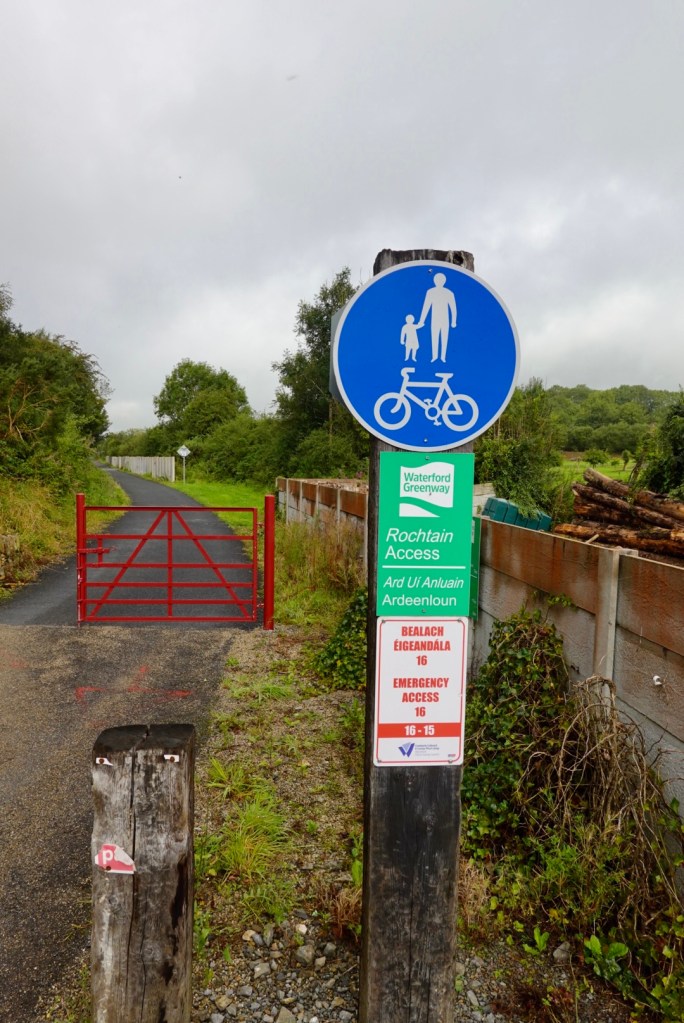
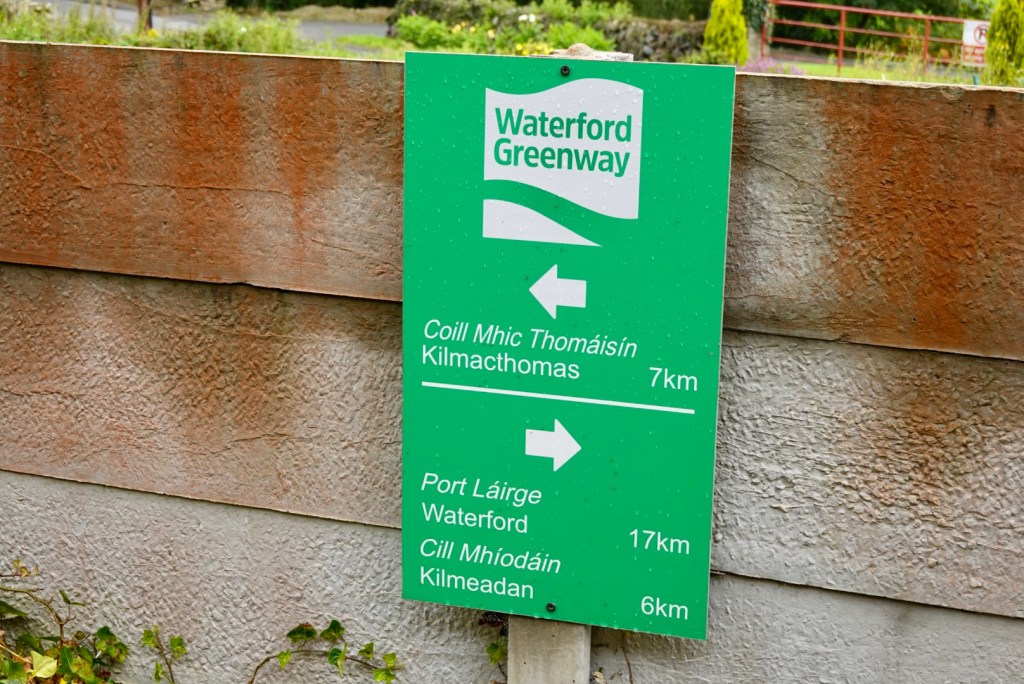
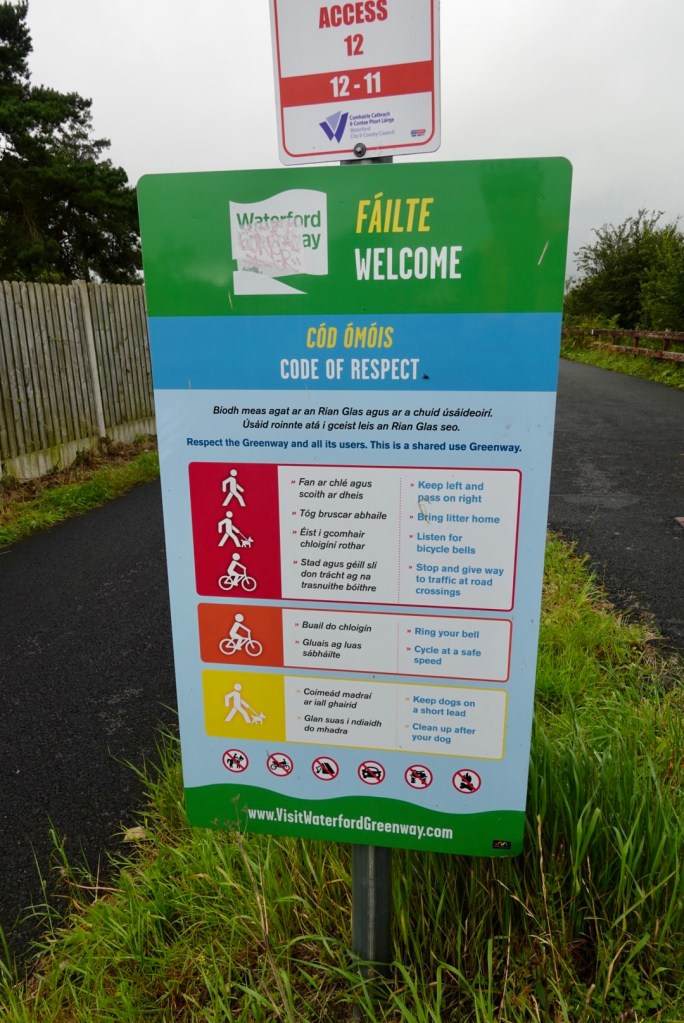
The signage on the Greenway was excellent. Some examples.

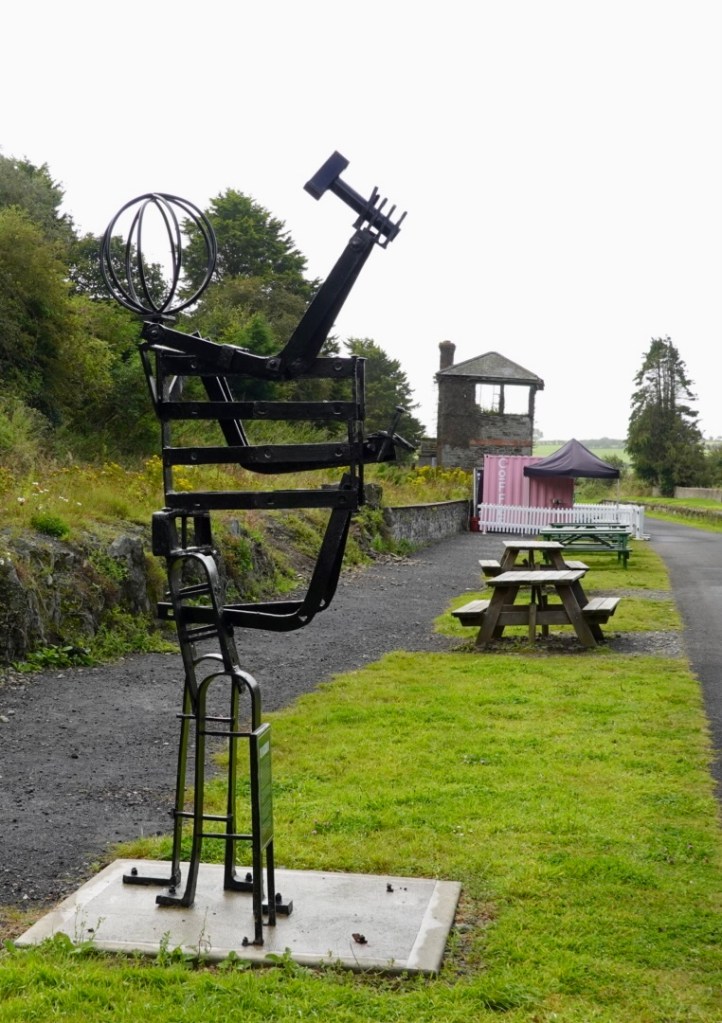
An interesting art work built from old railway metal, installed at an old railway station, now featuring a small portable coffee shop and badly maintained portaloos.

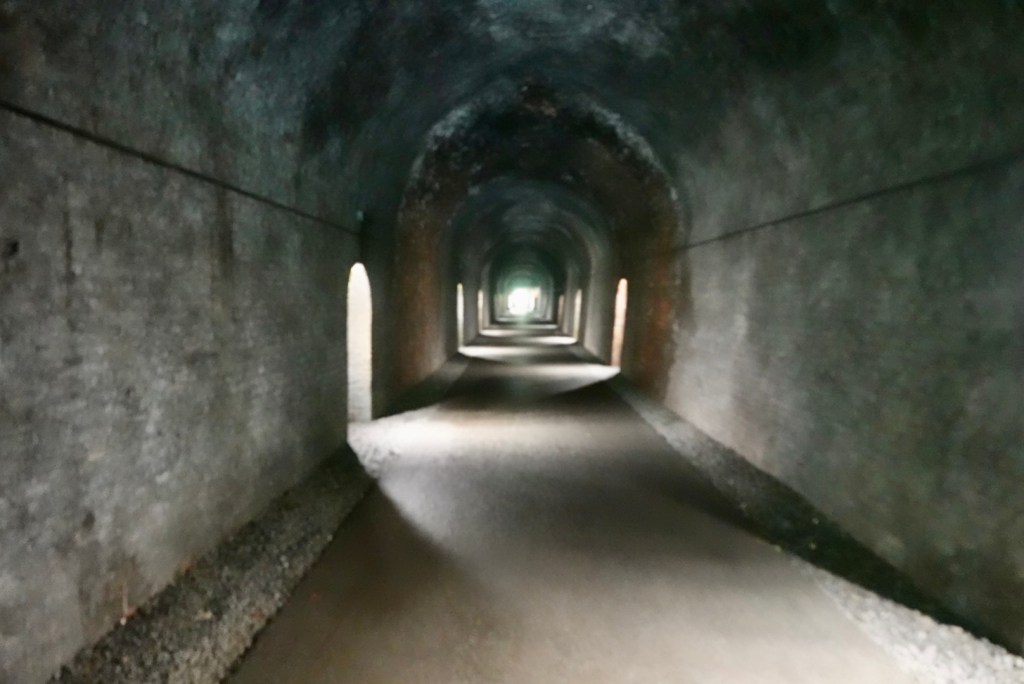
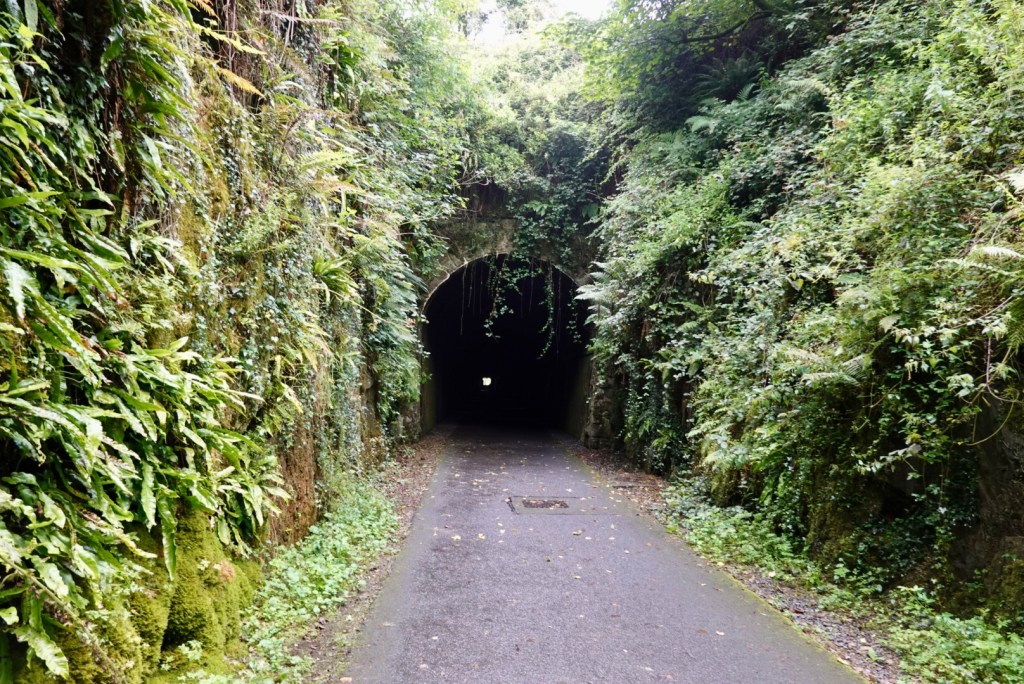
Just ahead was a lengthy tunnel.

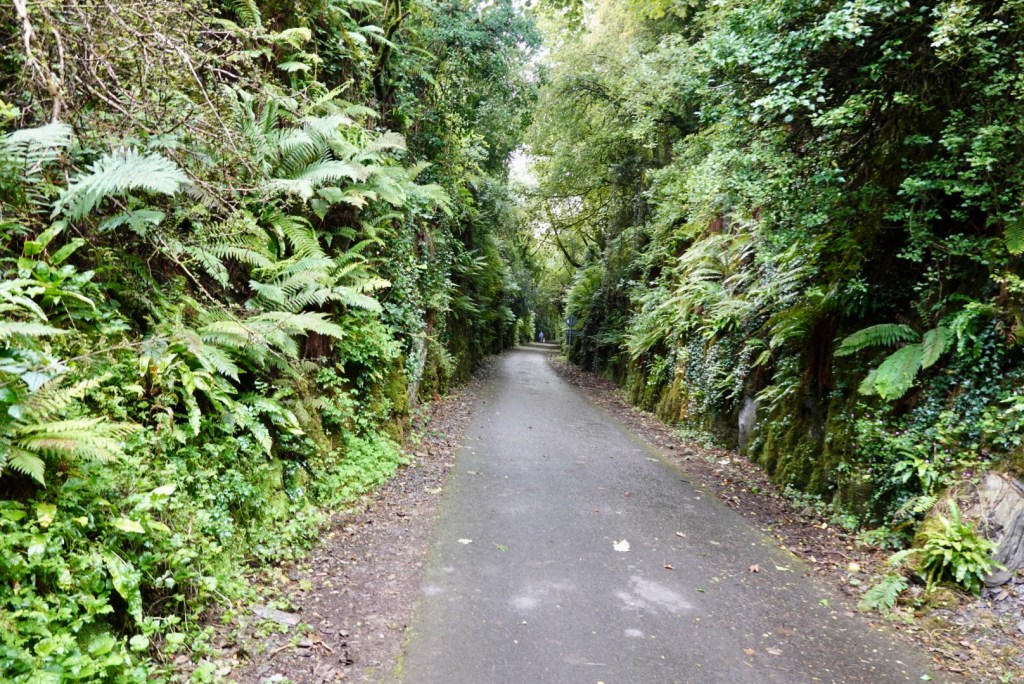
The other end of the tunnel came out into a pretty, ferny cutting.

Overlooking Dungarvan on this windswept day.

At this point we detoured, heading up a solid hill to find Catherine. She is a family member of Tony’s cousin Melissa, having more recently returned from where she was living in France, now running a B&B (with a wonderful view), supported by son Ben who makes a mean chocolate brownie.

Catherine was a fun delight to meet and although our visit was short, we shared quite a few laughs. 😊

Thankyou to Tony’s Aunty Kay for the introduction, and cousin Melissa for helping to make the connection with comms. Aunty Kay has provided me with lots of personal support and encouragement, both with this blog and my open heart journey, sending me positive messages and encouragement regularly. I am truly thankful ❣️💐xx.

Leaving Catherine’s it was downhill back to the Greenway that finishes a few km ahead in Dungarvan. A pretty town. Water is lower tide at this point.

Eu flag flying
Looking towards the old castle, note the hills behind. We’re heading that way.

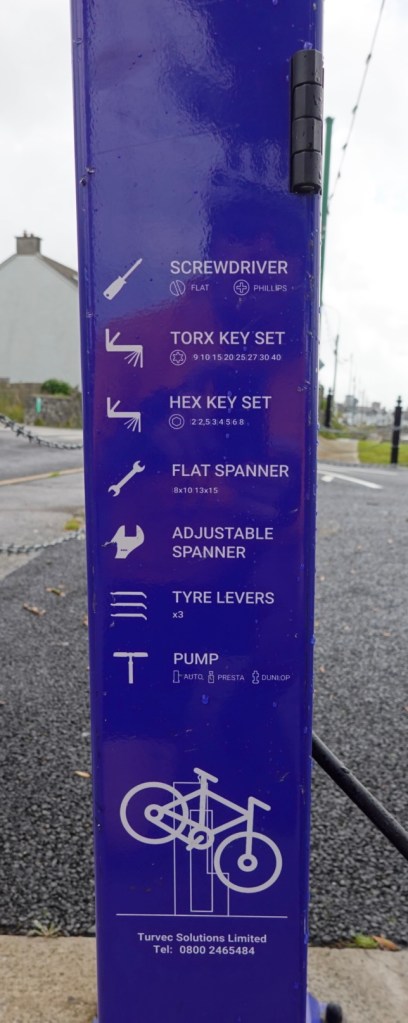
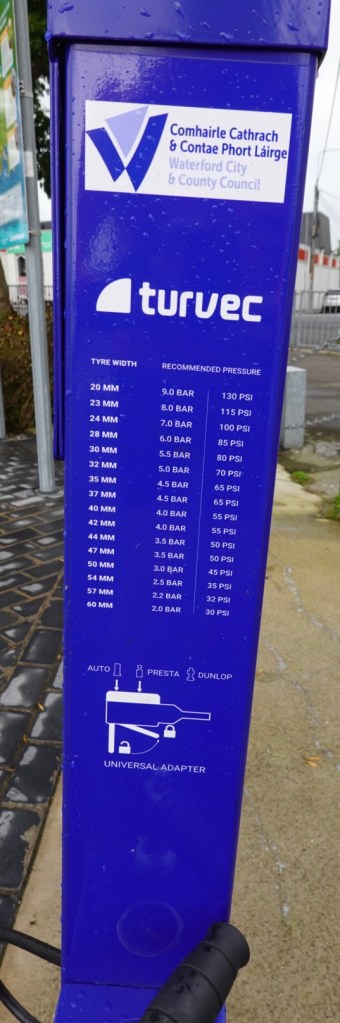
At the end of the track, Tony was interested in all the information on the tyre pump.

Next goal was Youghal. It was a fairly busy road once we left Dungarvan, but for the most had a good verge. We had the longest climb of the day at 3.9 km, and the first half were fortunately protected from the wind, but second half was blown away.

In an area with little verge I was passed very closely by a truck with portaloos on it. Must have heard my earlier negative comment 🙈😳. Near the top of the climb was a lay by, and here was the snoozer of a driver having a sleep.

He had 20 portaloos on his 2 trailers, and his vehicle was named “bear”. My luck in life to be taken out by a full portaloo…hopefully not. I felt like tapping on his window! So if you’re riding in Ireland, keep an eye out for this 💩 of a driver.

Youghal, is a former military and economic centre, located on the edge of a steep riverbank. Viking settlements date back to the 11th century.

Sir Walter Raleigh’s home “Myrtle Grove” is in the town. Tradition has it that it was here that he smoked the first cigarette and planted the first potatoes – true story?

We stopped in town for refreshments, at the supermarket. We sat in an area protected from the wind, enjoying the warm sun. But, we needed to keep moving and get back into the headwind, not before finding some toilets at the local Information Centre.

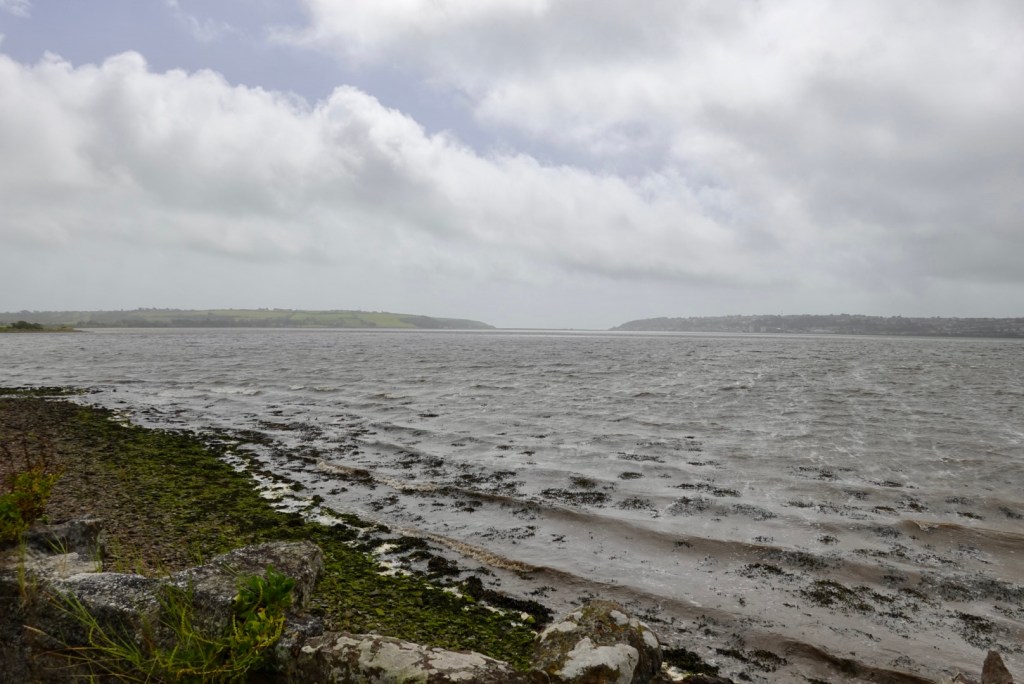
Distant views across choppy waters
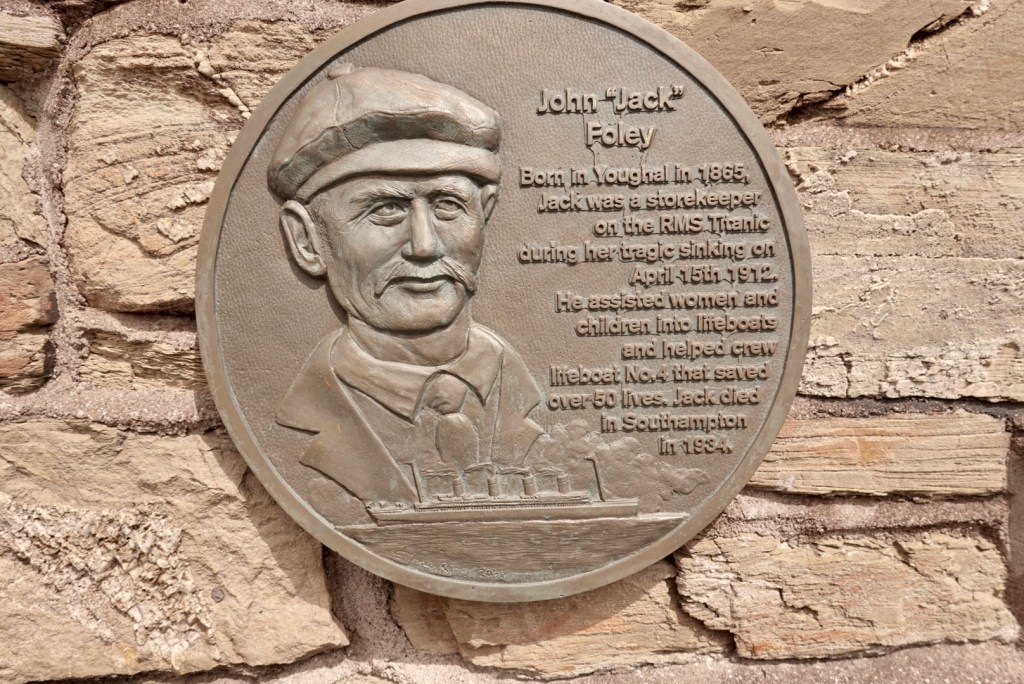
Interesting story about Jack on the walls of the Information Centre
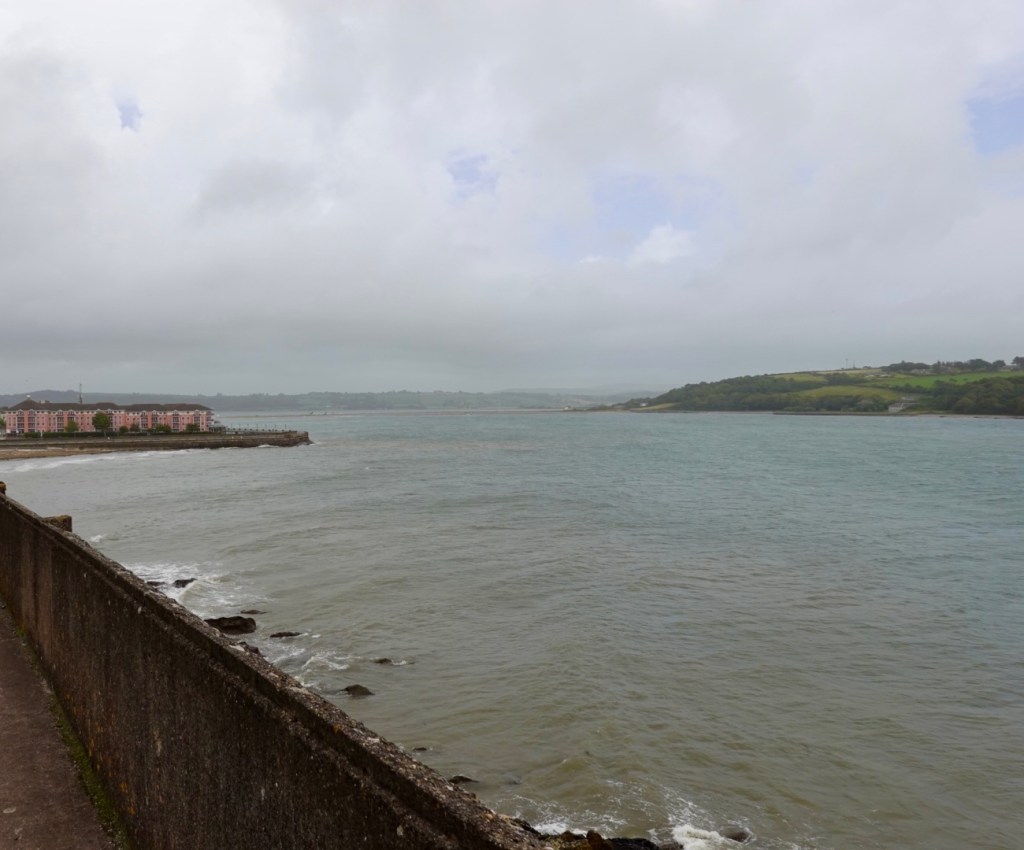
Calmer waters this side, protected by the hill and bluff

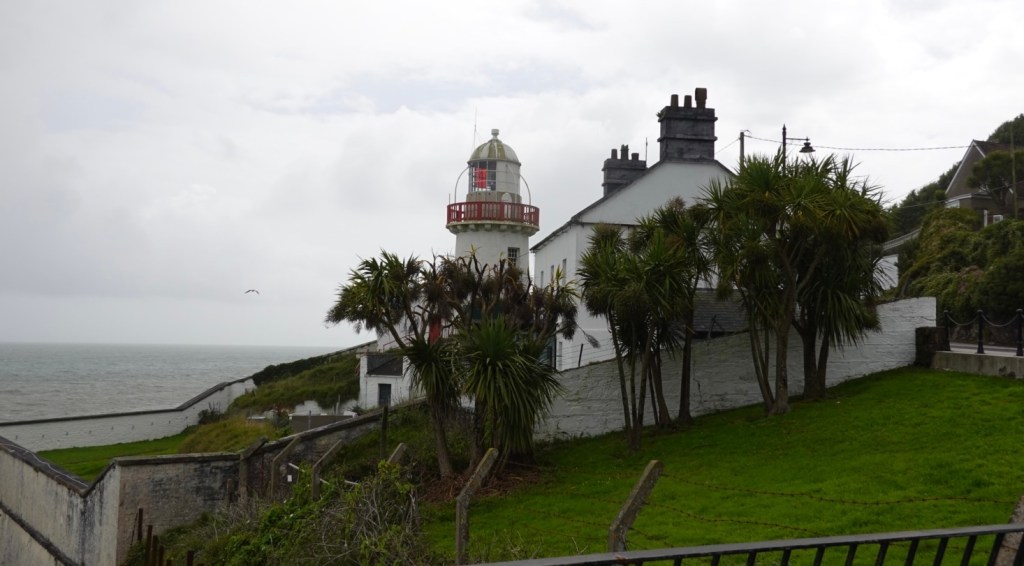
The local lighthouse, was built on this site after great local consternation and arguments. A lighthouse had existed on this site for 800 years but locals wanted it elsewhere on Capel Island. Construction was commenced, then locals changed their mind and wanted it where it us today.

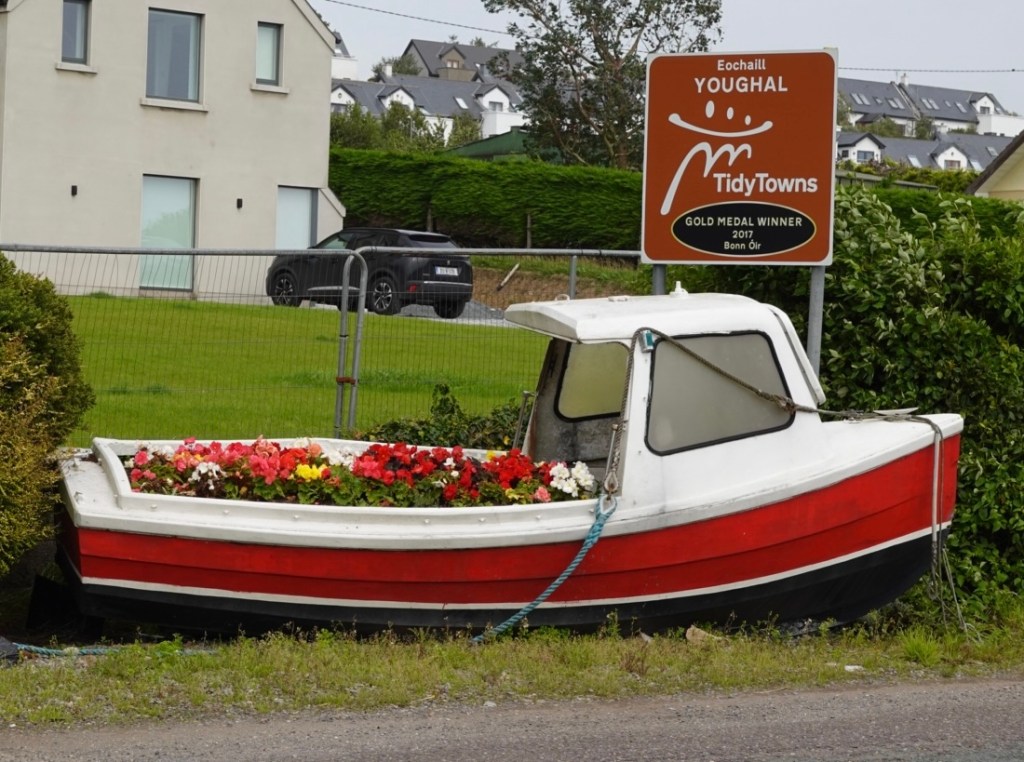
Leaving town, the old boat high and dry full of colourful flowers.

Castle martyr had a pretty little Kiltha River, adjacent was a great named pub.

The wind was hard work. Wind you cannot control. It slows you down heaps (unless a tailwind 😊), and we knew it was strong. In Dungarvan it was reported as 32-50 kmh. It had freshened even more.

We stopped regularly just to stretch and were not unhappy to leave the busier road and head down towards Great Island and our overnight destination Cobh.

Great Island, roads were narrow and busy as we were approaching late afternoon on a Friday. These are some of the sites around Great Island.

Cobh was a major transatlantic Irish port, and the departure point for 2.5 million Irish who emigrated to North America between 1848 and 1950. It is located on Great Island, one of the three large islands in Cork Harbour.

Our accomodation is in a skinny 6 storey house that was instructed for the US Defence when they lived in town. An elderly man eventually opened the door and spent 30 minutes explaining everything in great detail including the macerating toilet.

We have a great sea view room on the top floor, and I must count the steps. He took me up via lift the first time, but that lift goes to his bedroom, a floor below. I am sure it is a one person lift as we were far too close for strangers 🤣. Then he coughed 😳😳😳

He does have a wife ,but not yet seen her, but she will leave us croissants at 8.15 am, we are told. Later than we want but I dared not say anything out of the script. We will just start later to keep harmony.

We headed off to a local pub for dinner and had huge servings. After dinner we needed to walk. Our puffer jackets were worn for the first time this trip.

Can you notice something different here? Look at the cutlery settings…all tables were set this way. Irish thing or dyslexic staff?

Cobh was the final port of call for the Titanic before it headed off on the last leg of her maiden voyage. There is an pay upon entry exhibition on the waterfront that was closed plus memorial gardens.

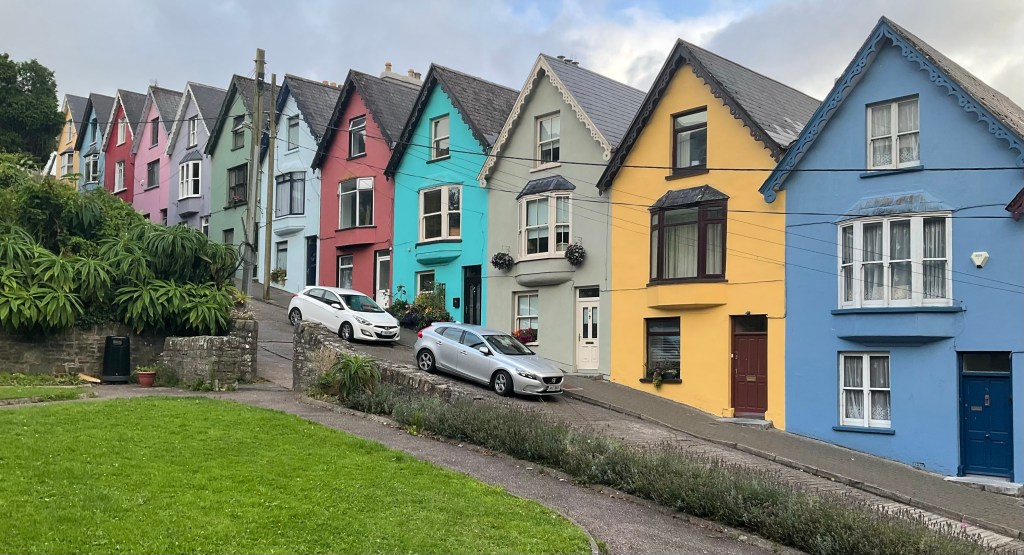
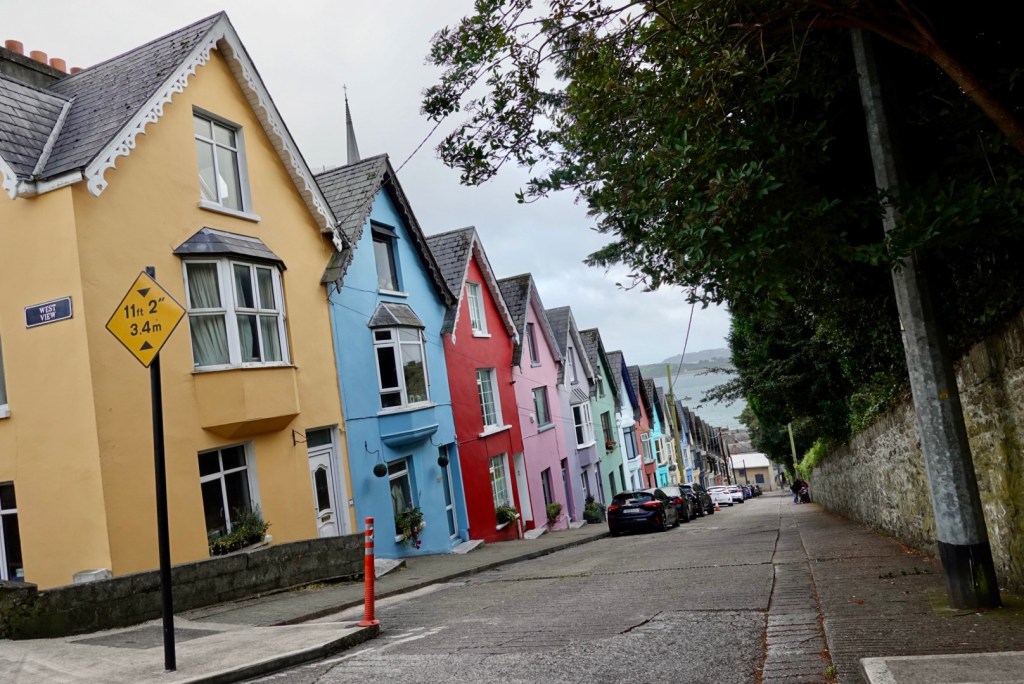
The town has some really pretty sites. There are steep hills and we walked up this one with the colourful houses to reach the cathedral at the top.

Looking up the hill from a park
Looking down to the harbour.
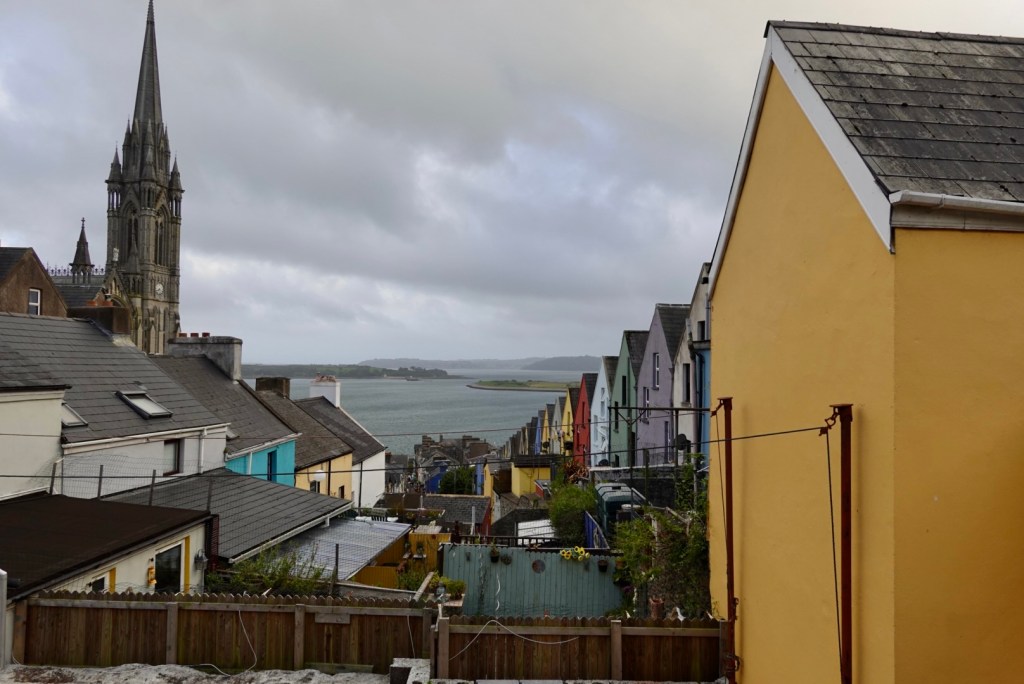
Back of colourful houses looking towards Spike Island. Tours go there daily from the JFK Wharf.

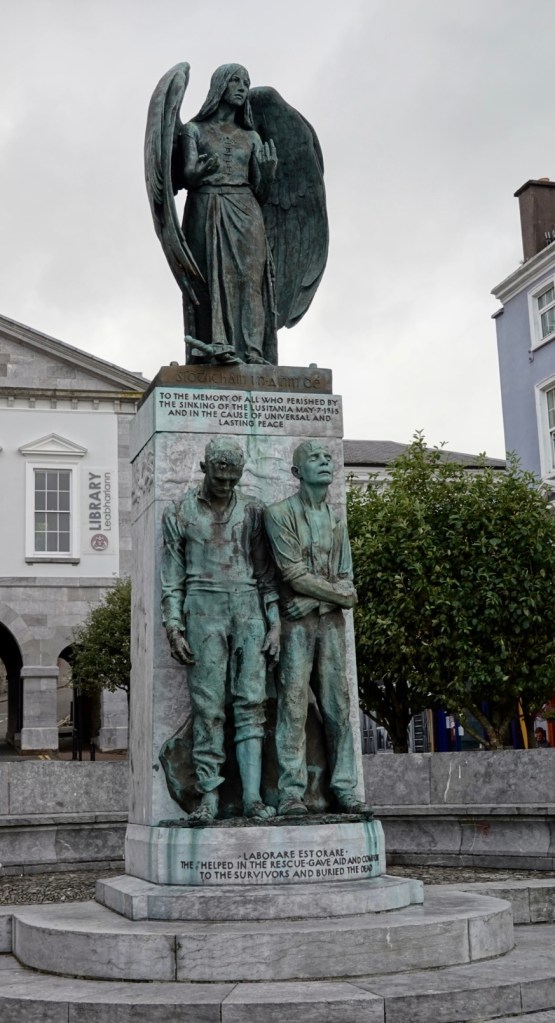
There is a memorial to the victims of the Lusitania, many of whom are buried in Cobh’s Old Church Cemetry. The ship was sunk off the coast in 1915 by a German submarine, an action which was responsible for bringing the USA into WWI.

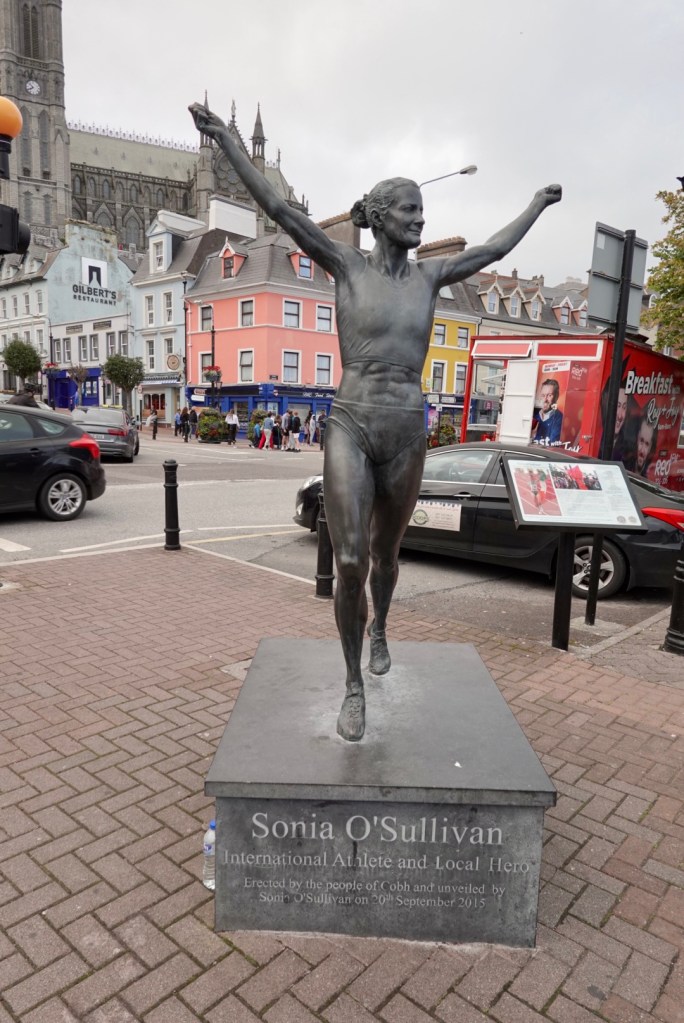
This I did not know. Sonia O’Sullivan was born here. A great female athlete regarded as Ireland’s greatest. She went to four Olympics, won three world titles and still holds world records.

Thousands of teenagers filled the streets. I reckon the ratio if teenagers to adults was about 80/20. It was the place to be. On the waterfront were sideshow carnivals and loud music.

Back in our room we wanted to keep our window open as the headwind blew in to dry our clothes hanging off the curtain rails. On the other hand the music was very loud.

9 pm, it all switched off and the town drained itself of teenagers. Like the pied piper led them away.

The end of another day and our longest for this trip at 123 km. We have now ridden in excess of 1,000 km. The forecast tomorrow is for more wind of over 32 kmh. The rain radar looks favourable.

Thanks for reading 😊❣️
Day 11: Cobh to Union Hall

I did something today that I do not recall happening before. The house we stayed in is very old. The floors are not even. I felt that the bed was on a slope.

During the night, sound asleep, I must have rolled over, and I fell out of bed, hitting my face on the bedside table as I crashed onto the timber floor from the high bed. It woke me up 😳🤣

I did get back to sleep but it took a while.

Looking out the window in the morning this was the view.

Looking straight ahead towards Spike Island
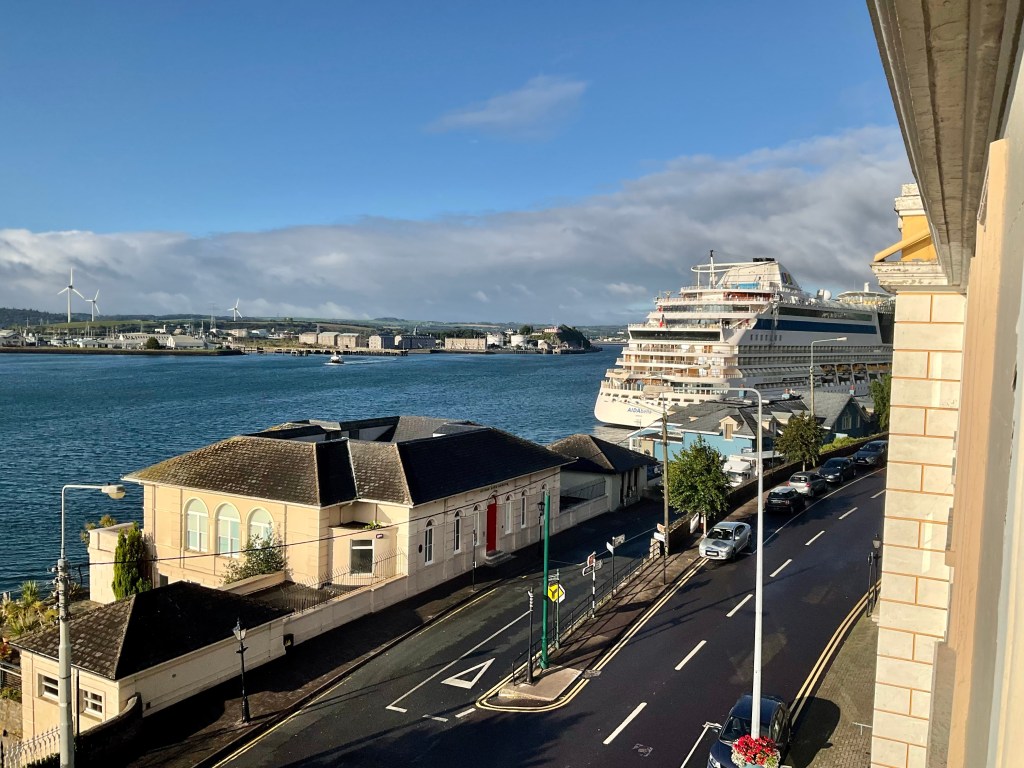
Looking hard right, a large cruise ship had arrived in town. Many of the larger towns today had cruise ship, bus tour people just wandering around. We did not hang around. Anything you tried to photograph, they were sitting on! Give us the quietness and genuineness of the little villages

The allotted croissants had not arrived per the male owner’s time slot. We were super keen to pack the bikes and get cracking so I took a few pieces of our luggage down to the front door, with reason, as the kitchen is adjacent.

I found Mary busy chatting to other guests, and as they left, took our croissants outside to where our bikes were safe in the courtyard. We smashed the croissants down, packed our bikes and headed off.

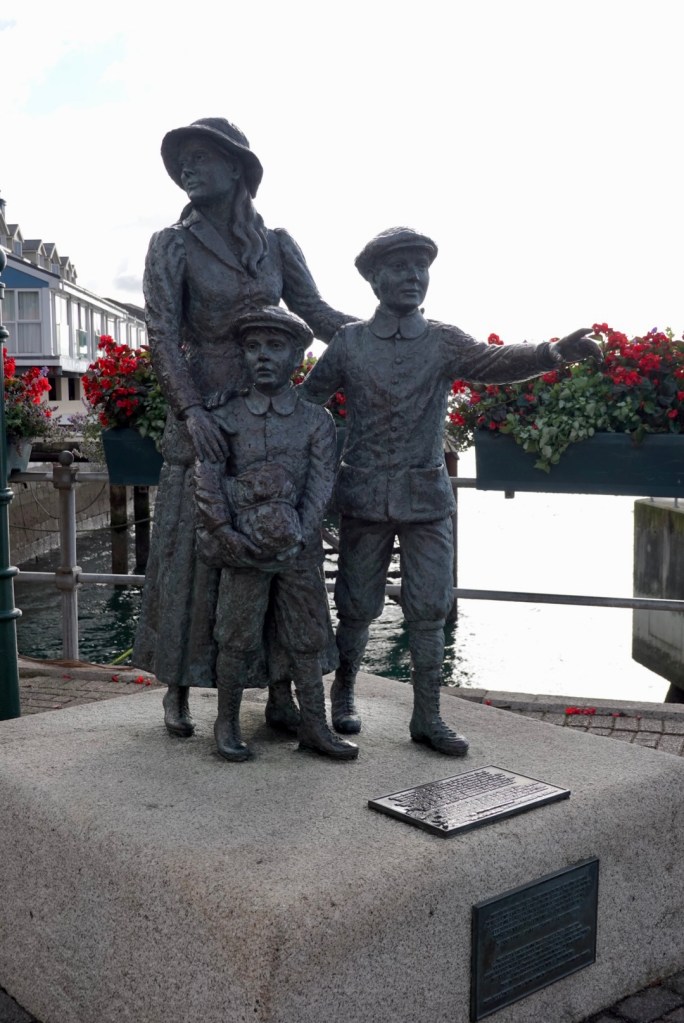
Soon enough we were in our way, and first stop was this statue celebrating Annie Moore and her two brothers who emigrated to New York from Cobh. They were the first immigrants to be processed at Ellis Island. A similar statue is on display at Ellis Island.

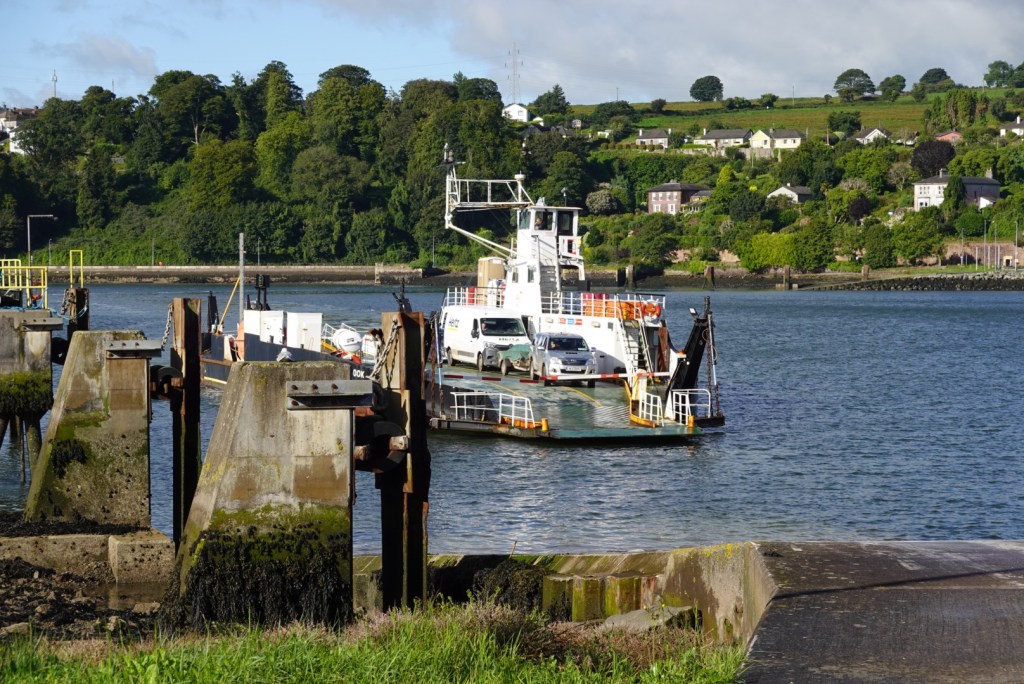
Then it was a 3.5 km ride to the ferry. We waited for it to arrive, walked the bikes on, and then it waited maybe 10 minutes for anyone else to board.

It costs about 3 euro each way and only takes about 5 minutes to cross.

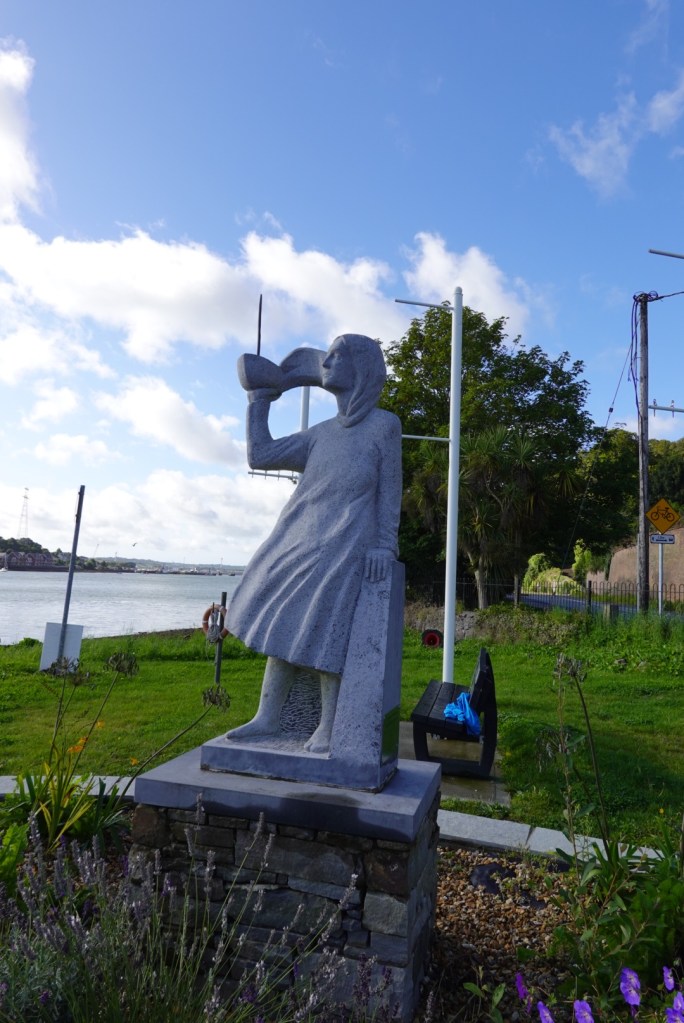
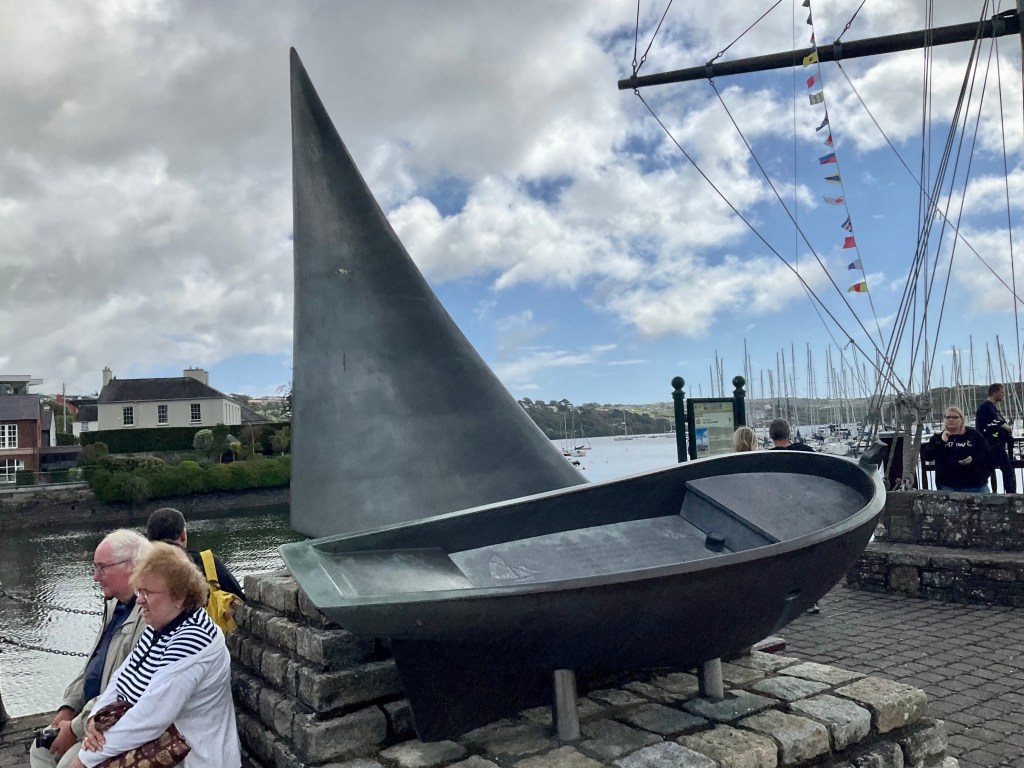
On the Glenbrook (southern) side is another statue of a young woman holding a boat looking towards where the Sirius left to emigrate to America. the Sirius was the first steamship to make the trans Atlantic crossing with immigrants.

Up to 2 million Irish immigrated after the Great Famine. Death from the famine and immigration saw a loss of 25% of the population.

Water was to be a feature today as we crossed rivers, inlets and saw the coastline as we headed in a south west trajectory. Wind was the other feature. The forecast was for a WSW wind of 32 kmh. It was very tough.

At times, on the flat, we struggled to push 12 kmh into the headwind. At other times, the road might deviate to a different angle and we would welcome a short reprieve. Out of the wind when we rested, it was quite warm and we enjoyed the sun.

Lovely rural scene
Disengaged bus tourists sitting on what I wanted to photograph
Near the top of a climb. We climbed over 1200 metres today.
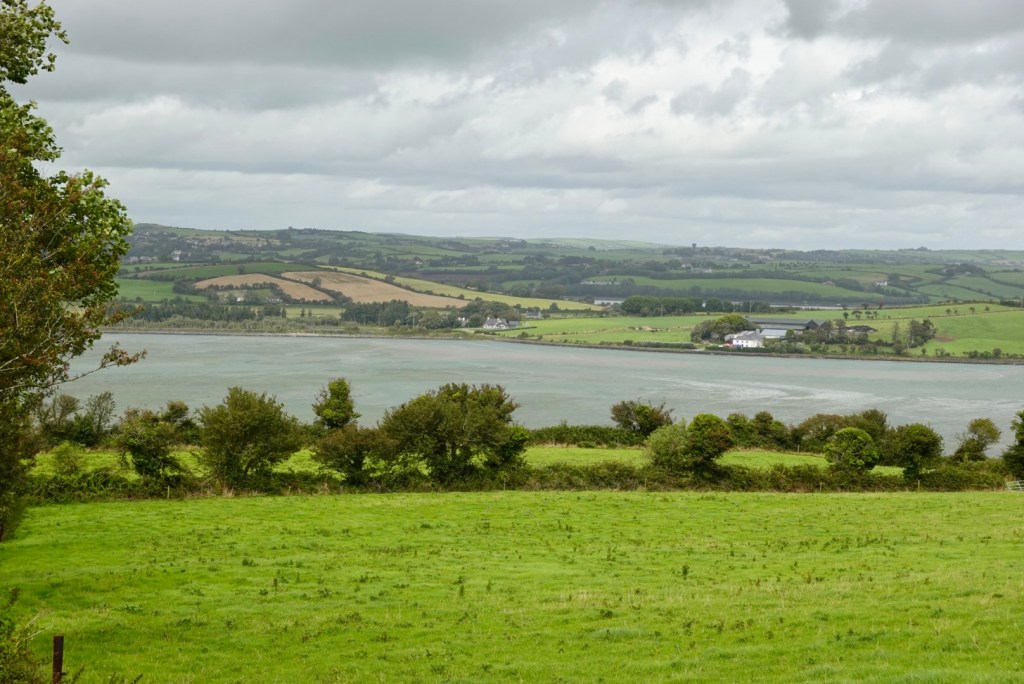
Lovely sea inlet. The tides were fairly low.
Very flat beach, low tide.
An inlet
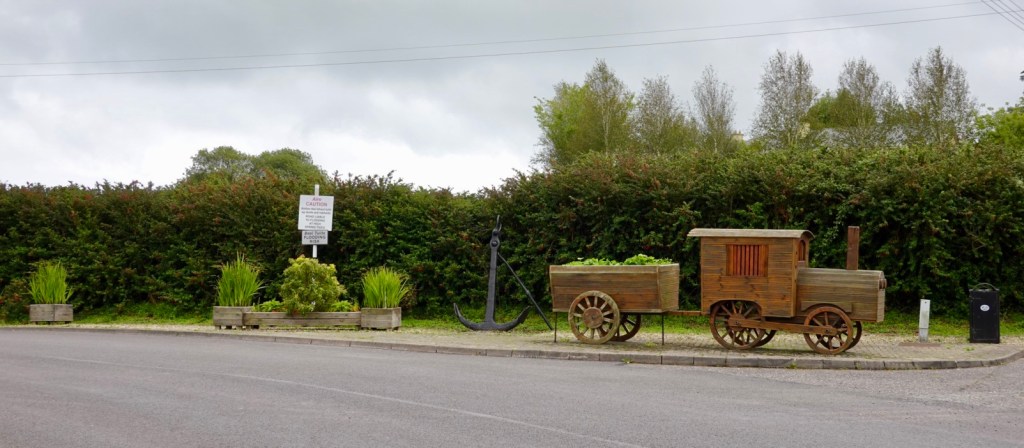
Quirky roadside feature
Looking towards the ocean
An old derelict church
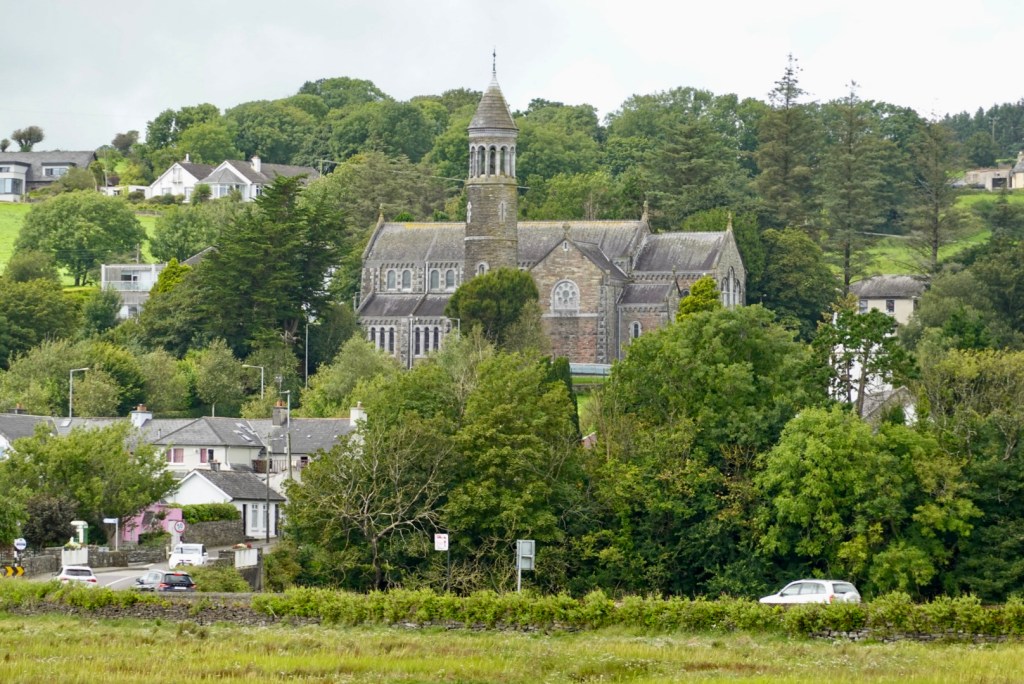
A newer church

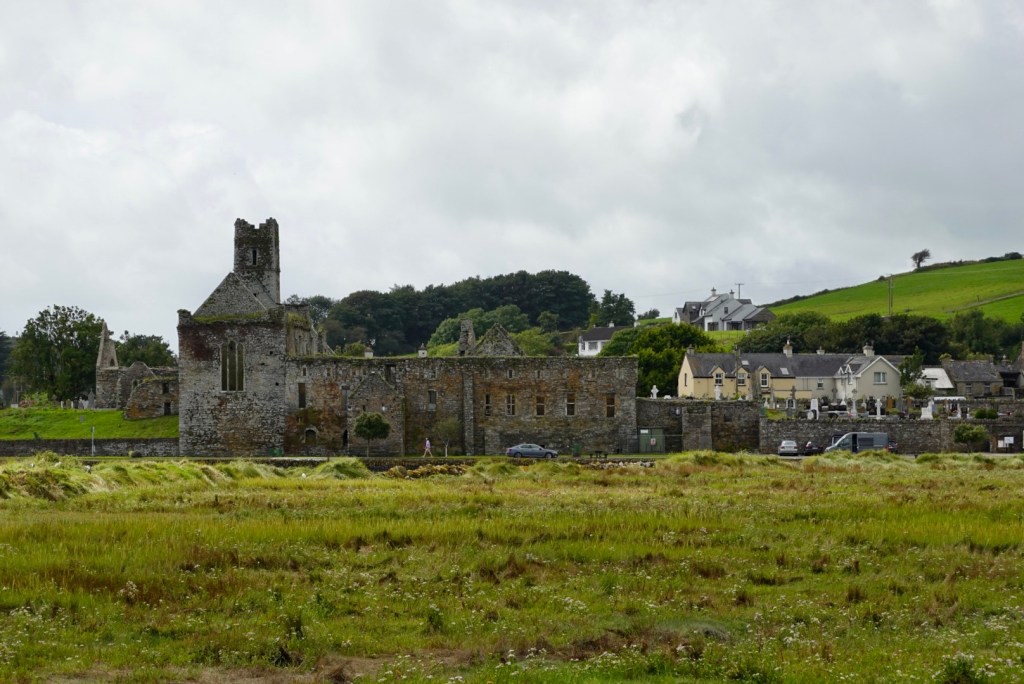
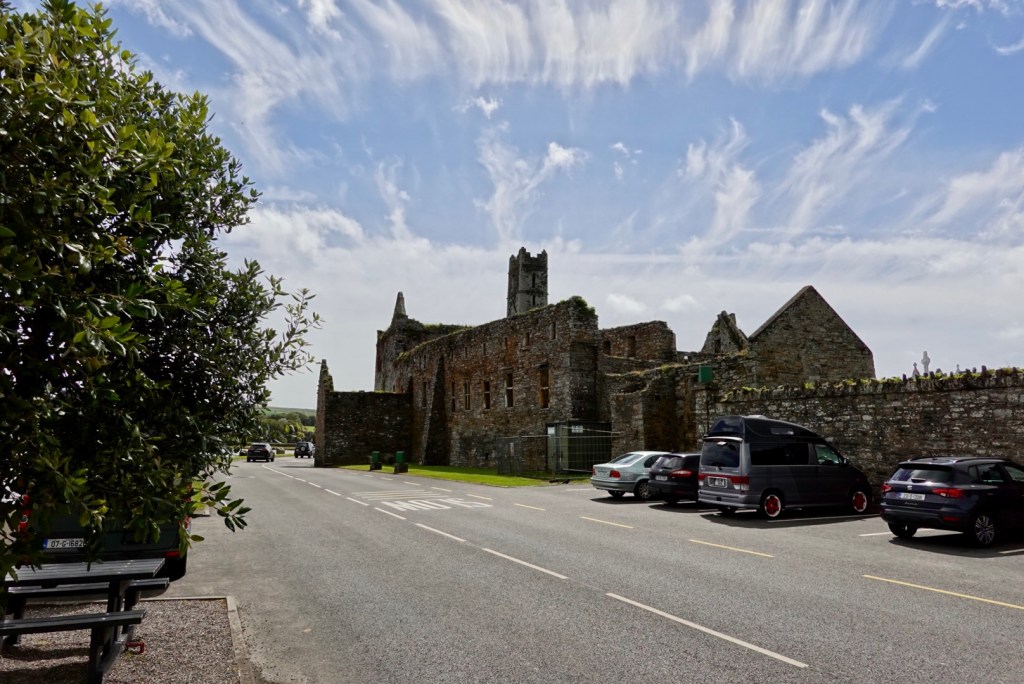
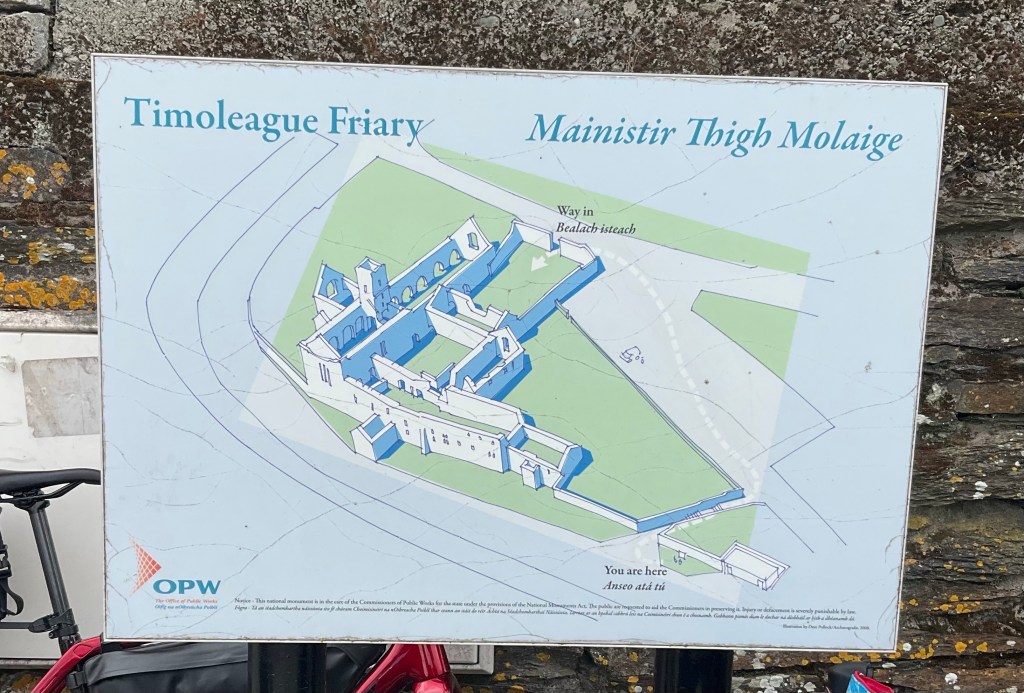
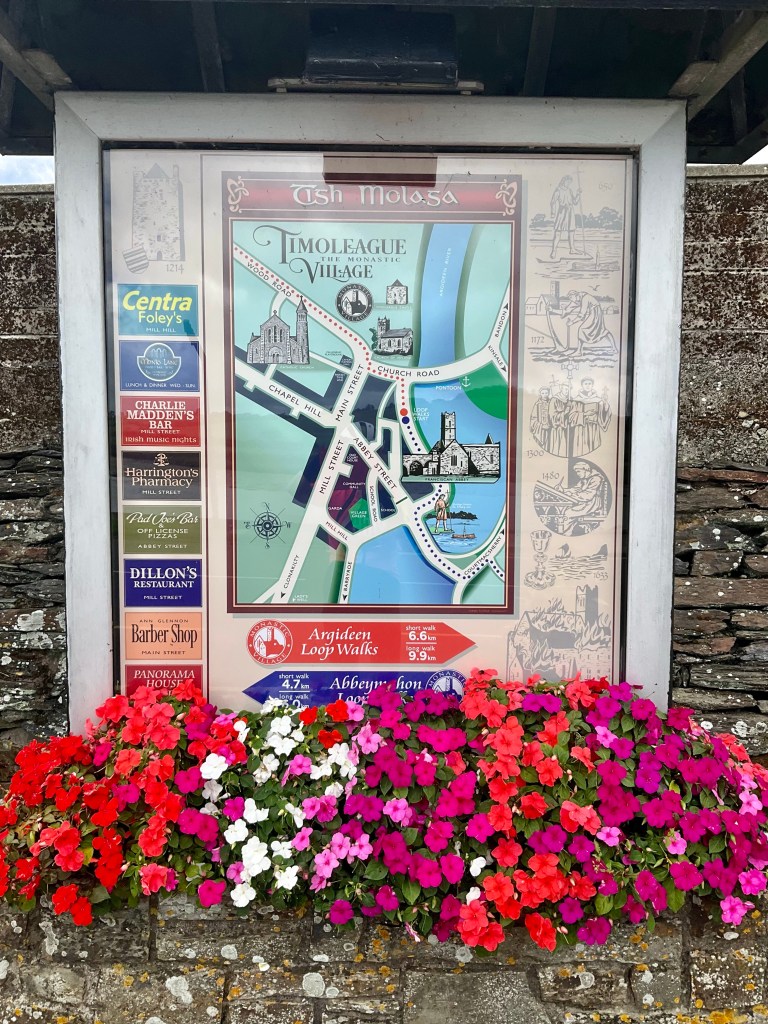
Timoleague Abbey is the main focal point in Timoleague standing picturesquely at the water’s edge at the head of a long sea inlet. In its day it was one of the largest and most important religious house in Ireland. It was founded in 1240 by the Franciscans.

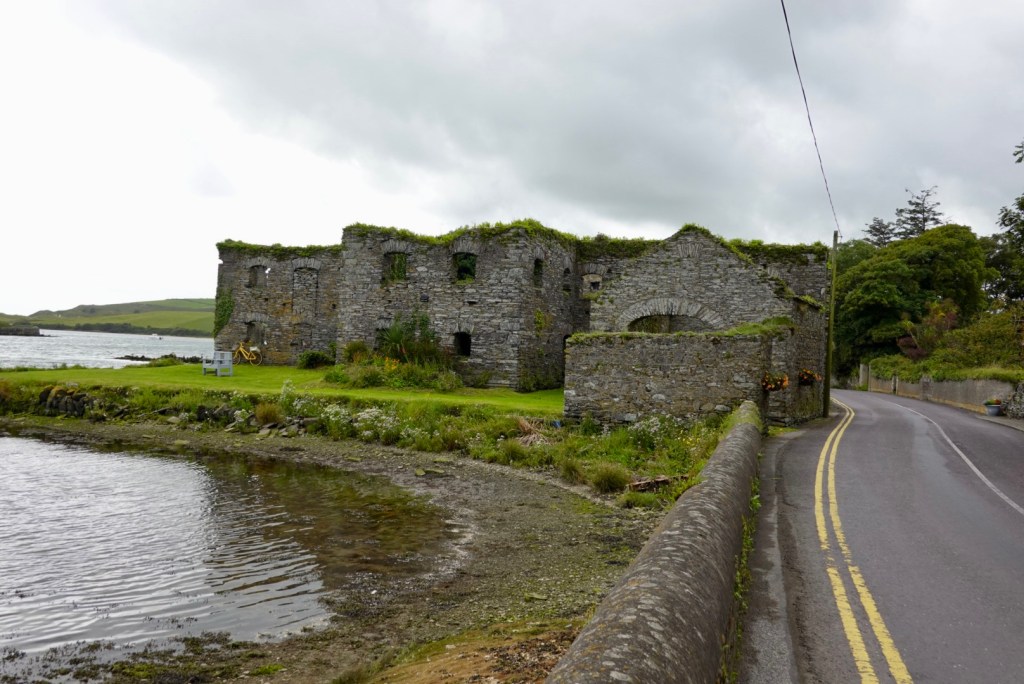
A little further on was the old Arundel Grain store built in the 16th century to store grain for a nearby flour mill. Later it stored potatoes and coal. In 1837 the local port of Ring exported 5,000 bushels of wheat, 1,000 tons of potatoes and large qua titles of ‘superior’ slate.

We stopped at this intersection. Our route was heading left, but we noted EuroVelo went straight ahead. We changed plans and took EV1, as Tony said ‘it surely won’t have a nasty hill’. But it did 🤣

As we crossed the top the sea views came into focus.

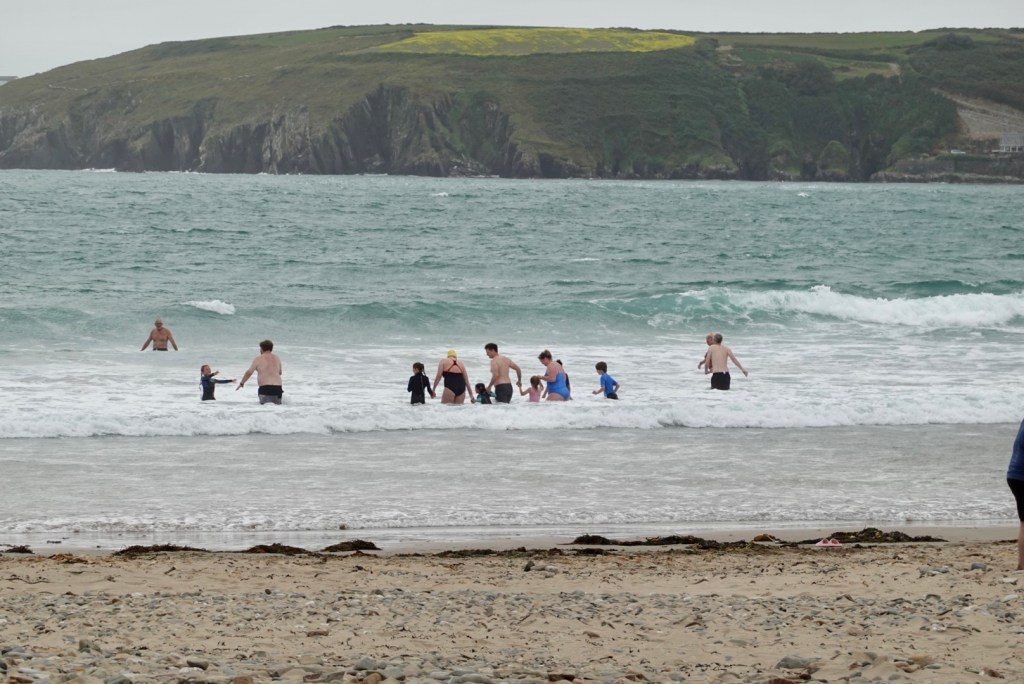
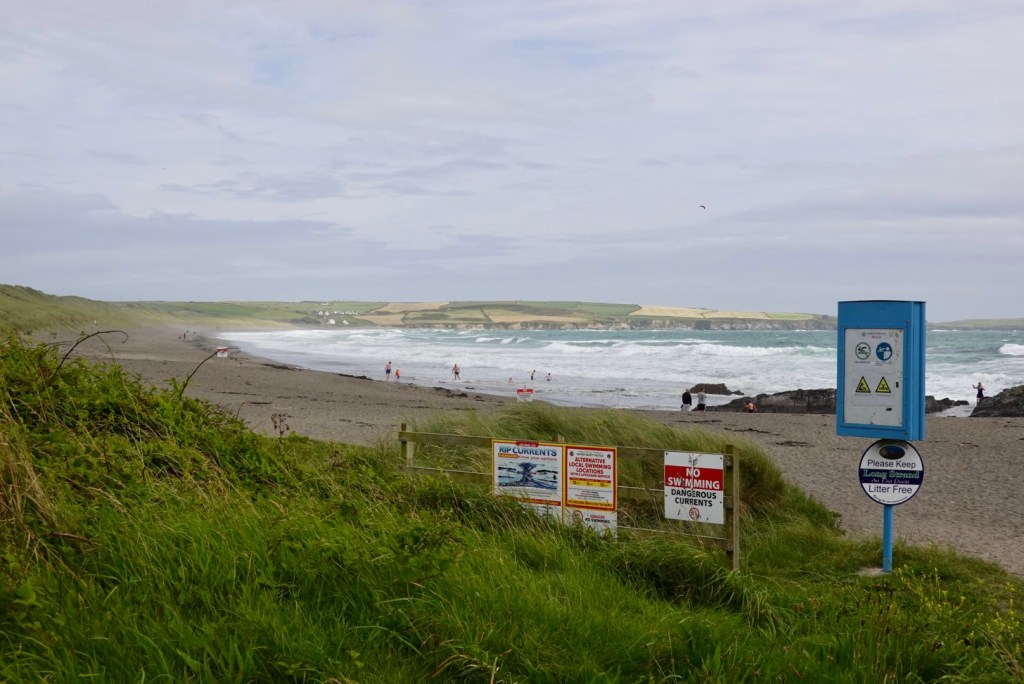
Castlefreke Beach at Warren Bay was the place to be. These swimmers have a seriously strong headwind smacking into them and it is only 17c. The beach also had a portable barrel shaped sauna that people were hopping into after the beach.

The scenes as we headed south were delightful. Remote housing, green pastures, wind blown, like a rural tv show with mystery.

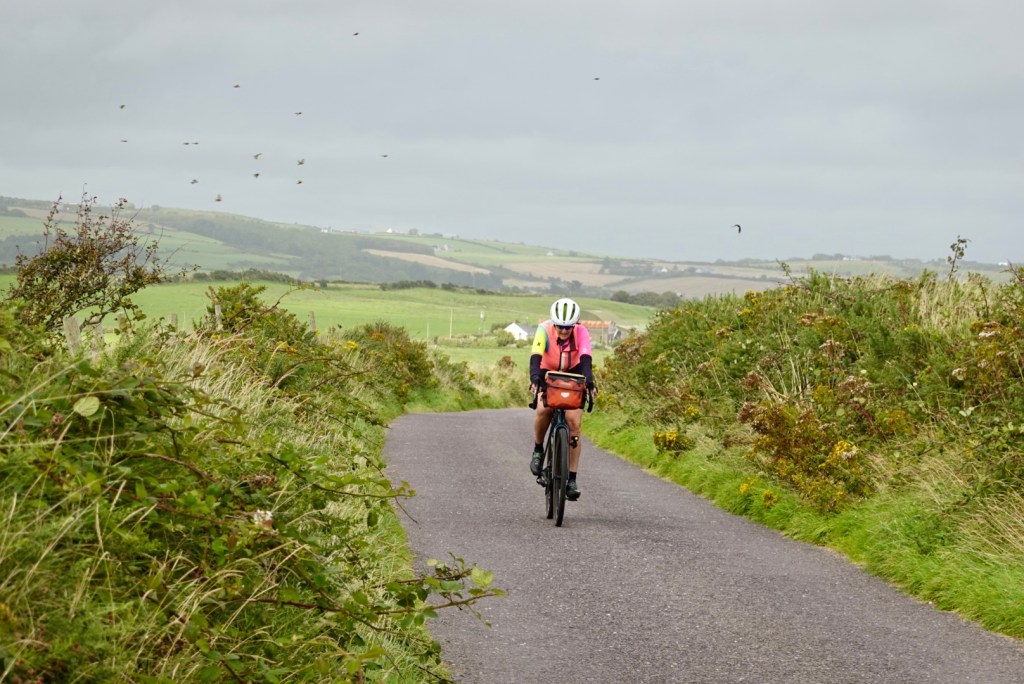
I quite like this one as I finish yet another climb. Note the birds to my right.

What a gorgeous vista these houses have.

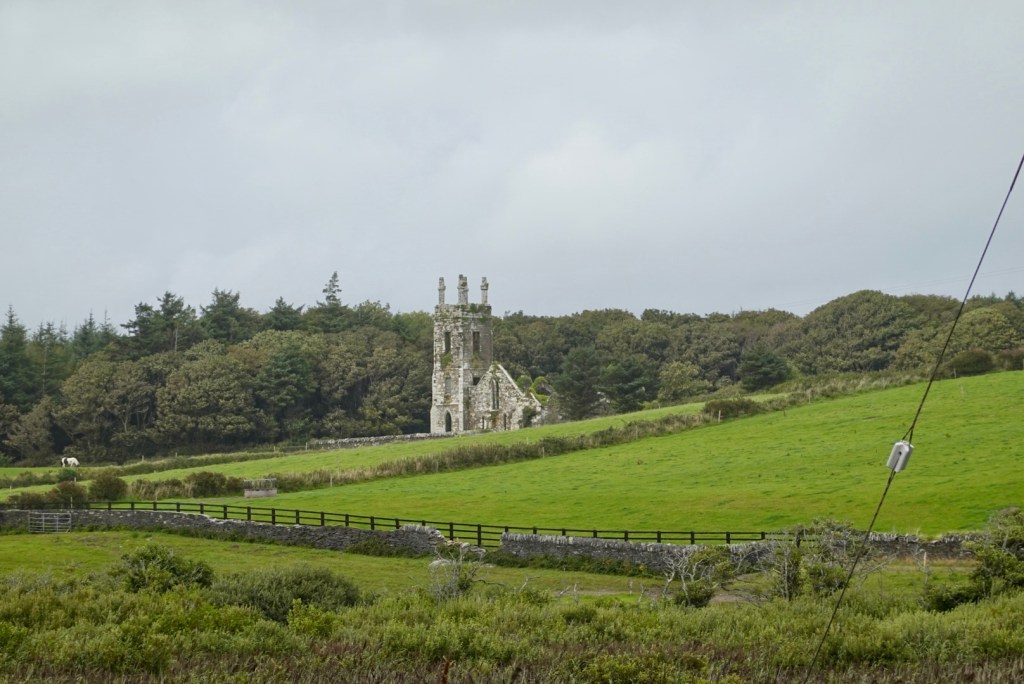
Desolate isolation of an old church.

Another beach with the waves smashing in.

After climbing up the hill, there was a lay by we pulled into.

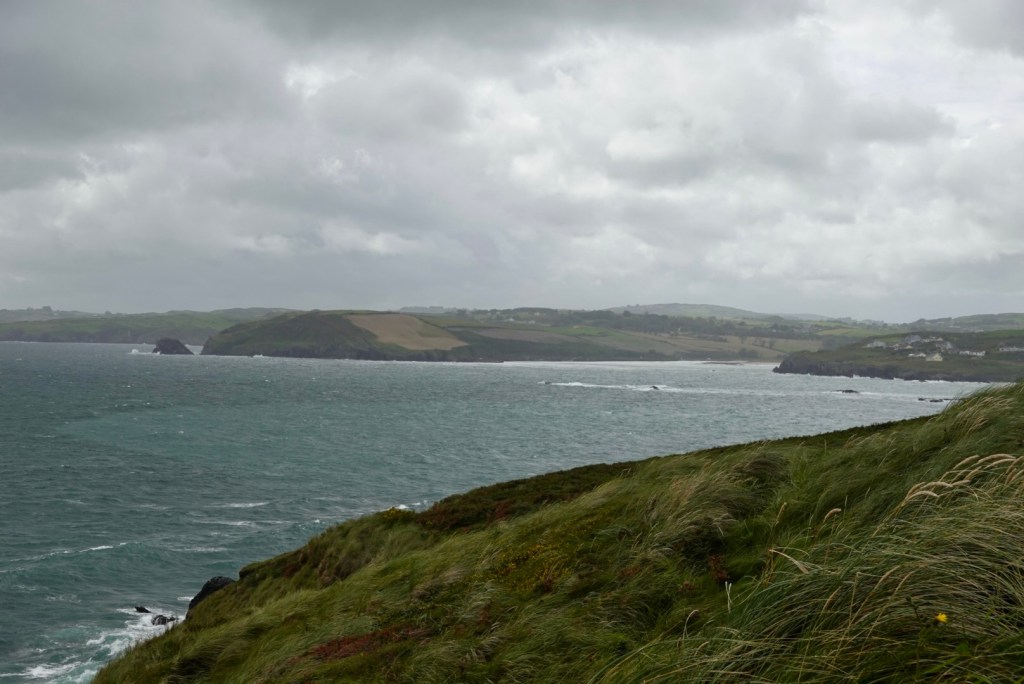
Looking south
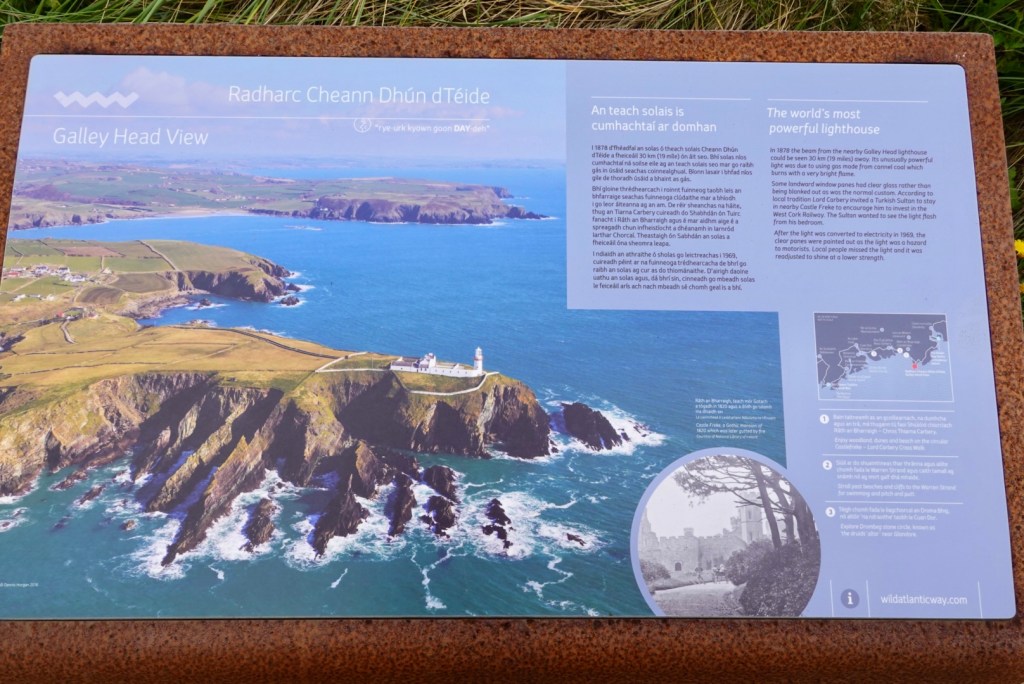
Information board on the area and the worlds most powerful lighthouse

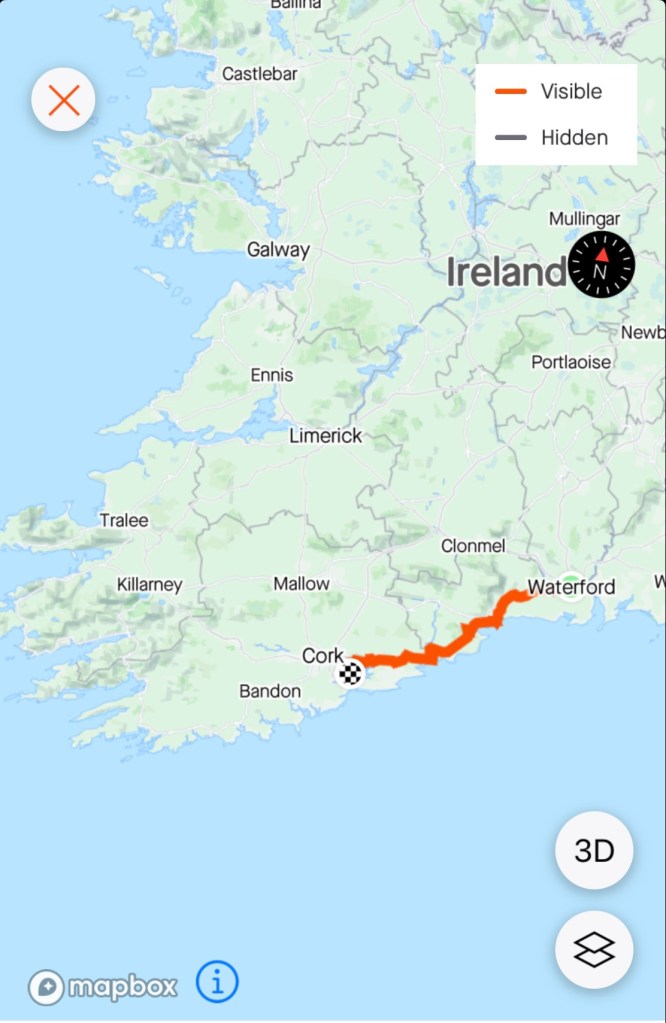
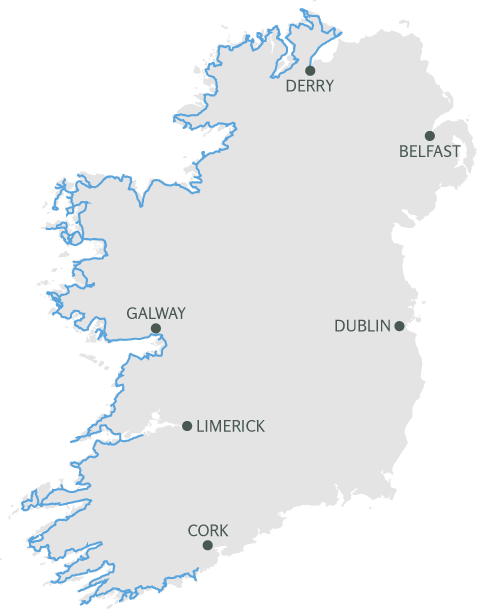
The Wild Atlantic Way is a 2,600 km route (road) and one of the longest defined routes in the world. We are only riding a section of the route from south of Cork around to Limerick, before we cut back to Cork to catch the ferry to France.

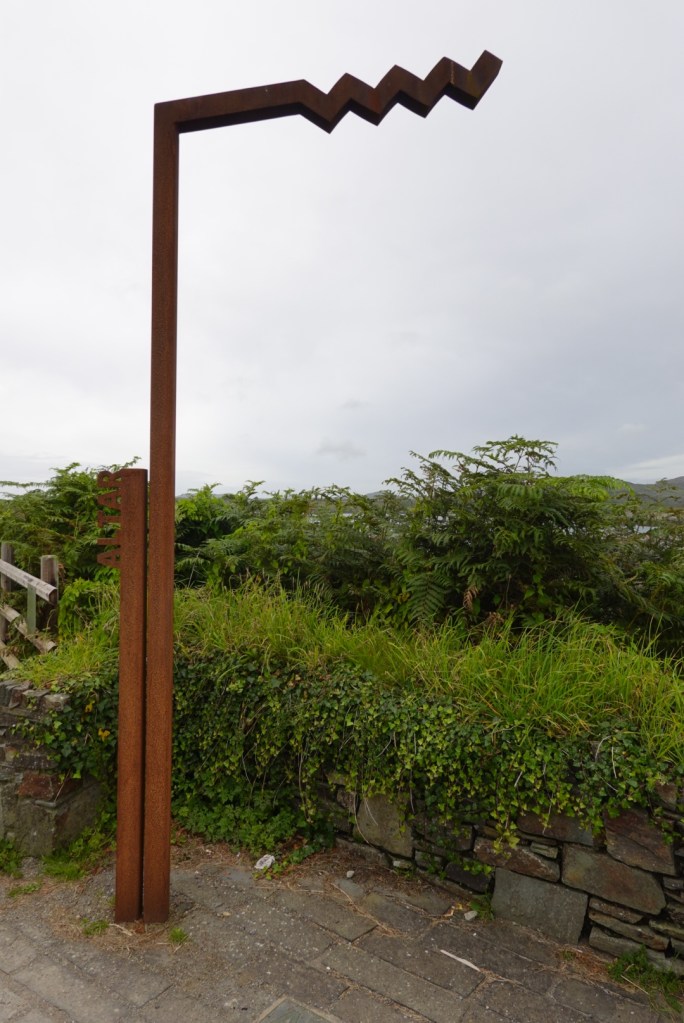
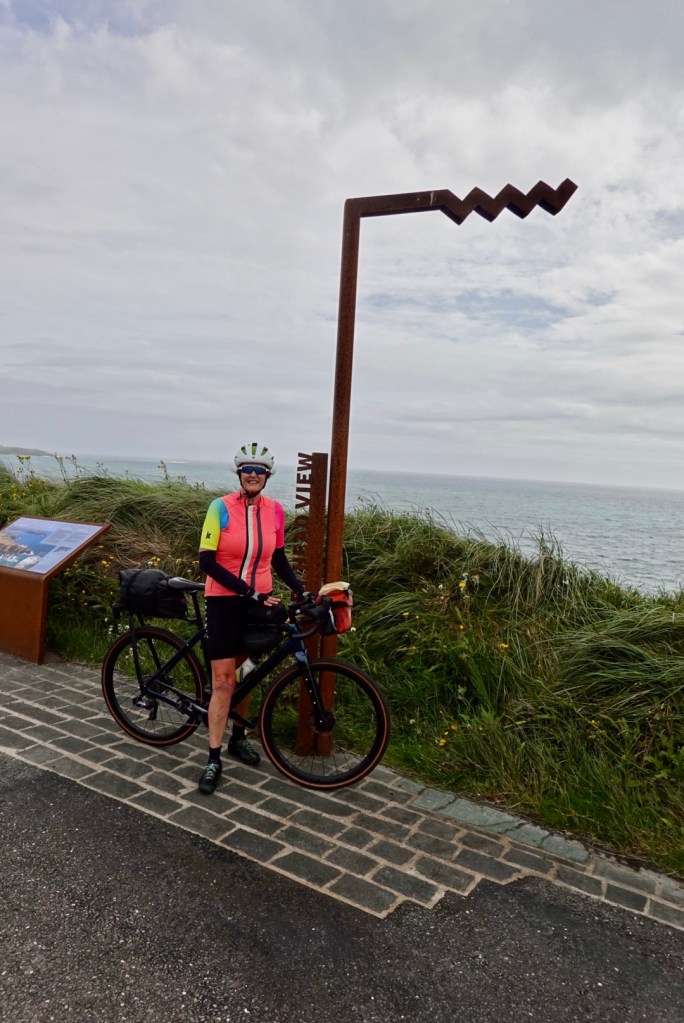
There is signage along the way. Route signs plus metal art, all with the same waves,

Dromberg Stone Circle, the Druid’s Alter, is a small axial stone circle, and one of the most visited megalithic sites in Ireland.

It originally consisted of 17 closely spaced stones, of which 13 survive. Radiocarbon dating of samples indicate it was constructed around 1100-800 BC.

The only other people there when we visited were these three French siblings enjoying a touring ride together. Michael, Laura and David live in Grenoble. They will be heading to Australia in a few months, and if visiting Tasmania, have offered them beds at our house.

It was refreshing to see their closeness and joy in their touring endeavours. Tres Bon!

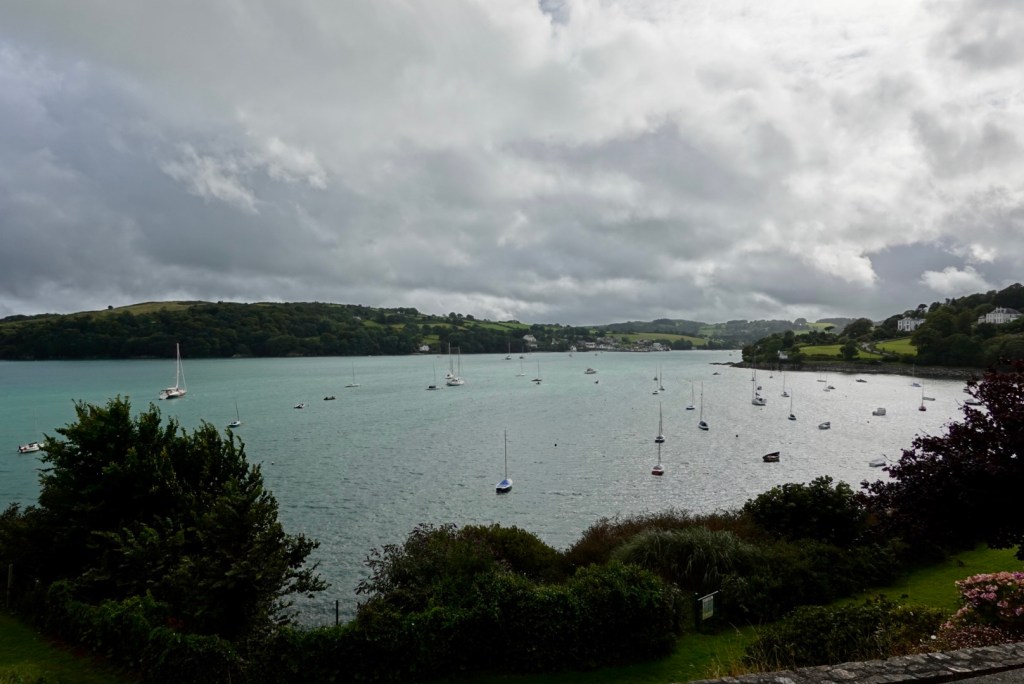
Closing in on tonight’s destination, the waters were calm and protected! Finally some reprieve.

Glandore is known locally as Cuan Dor – Harbour of the Oaks. It was one of the earliest settlements in West Cork, with the Normans building two castles here in 1215.

Union Hall is a small fishing village, with its own ice plant and fish processing factory.

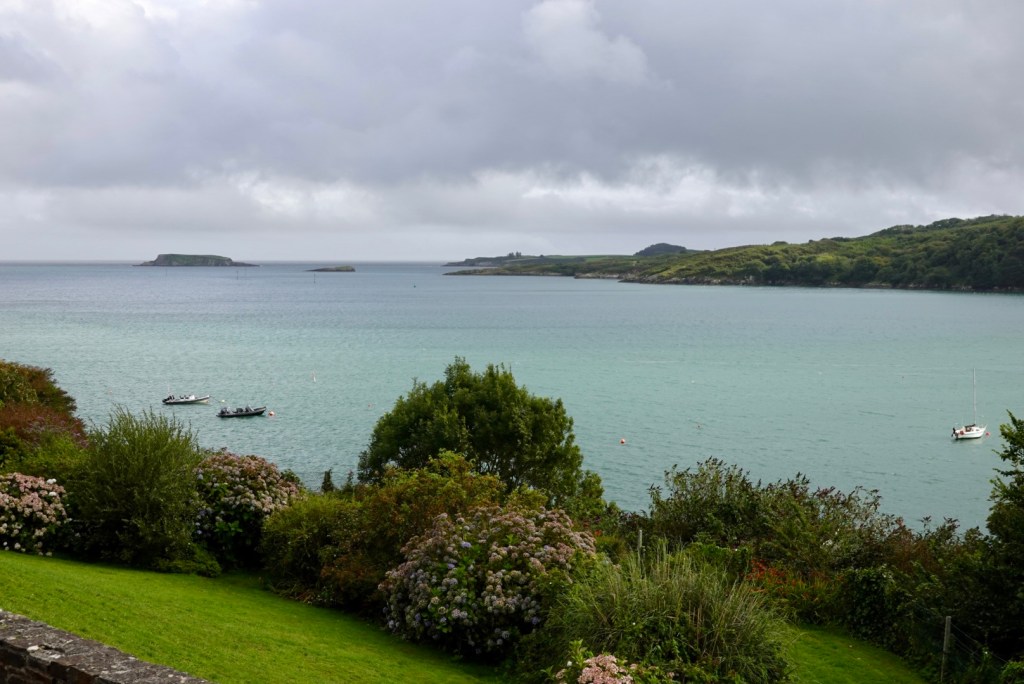
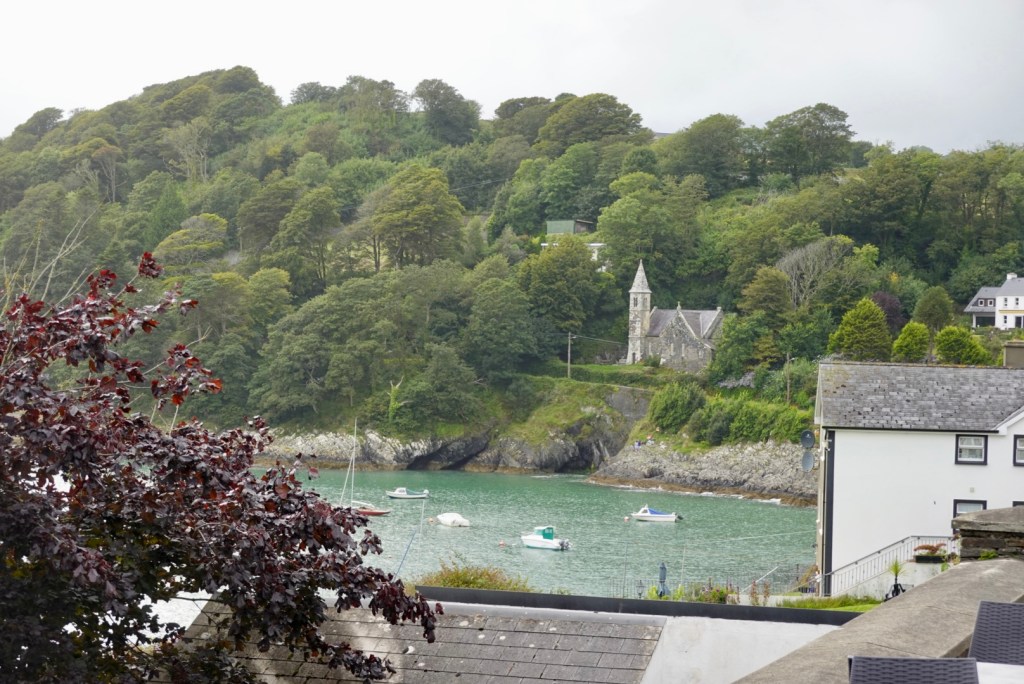
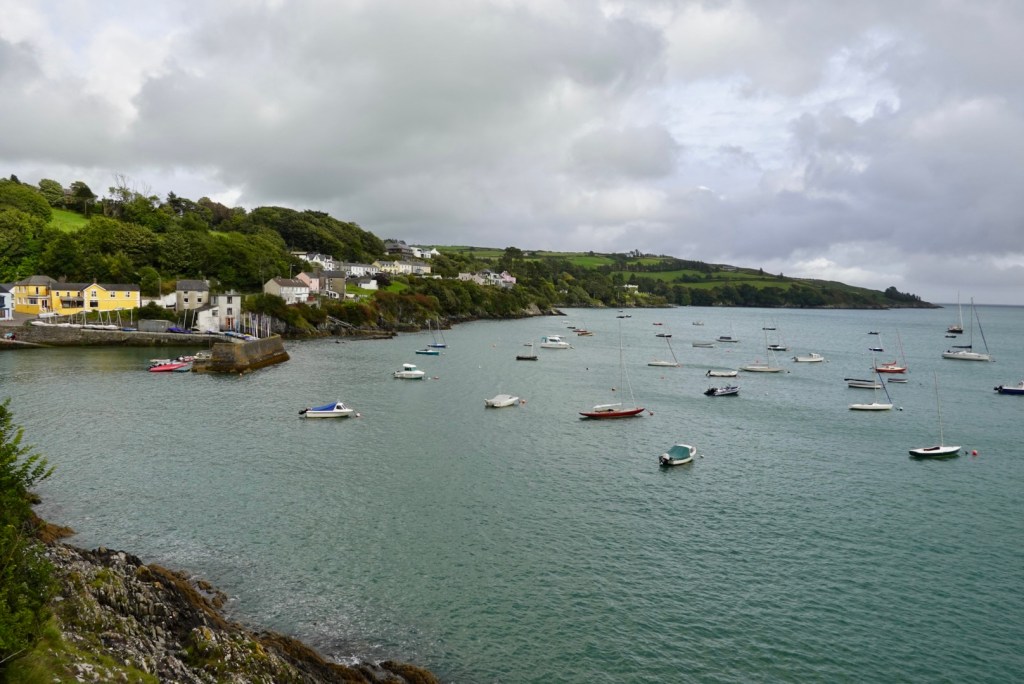
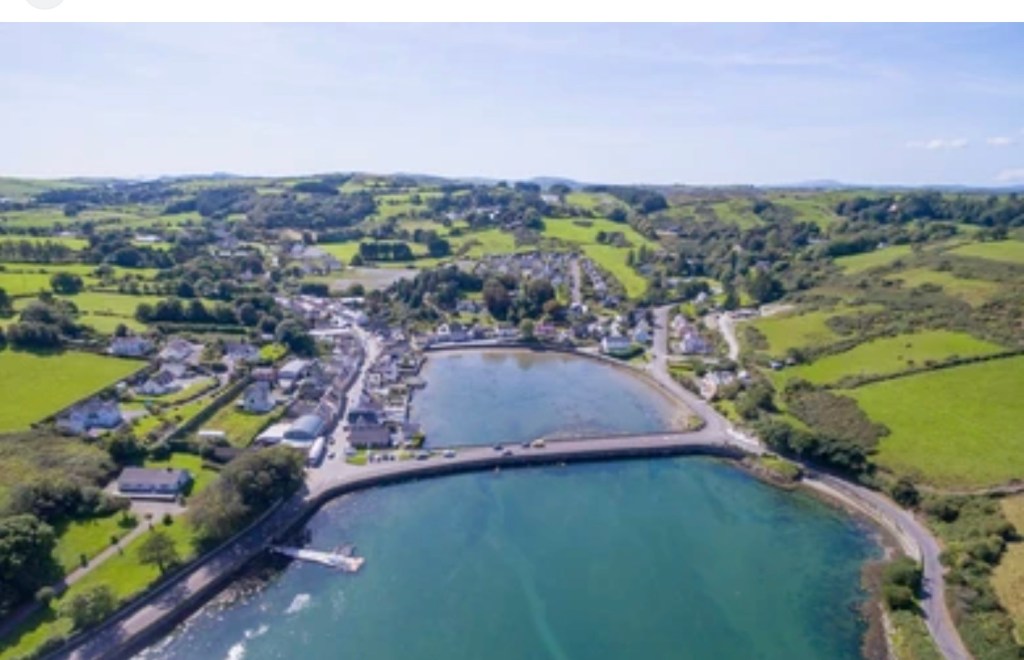
A borrowed photo aerial view of Union Hall. Our accomodation is at the top of the hill in the background.
In town the inner harbour
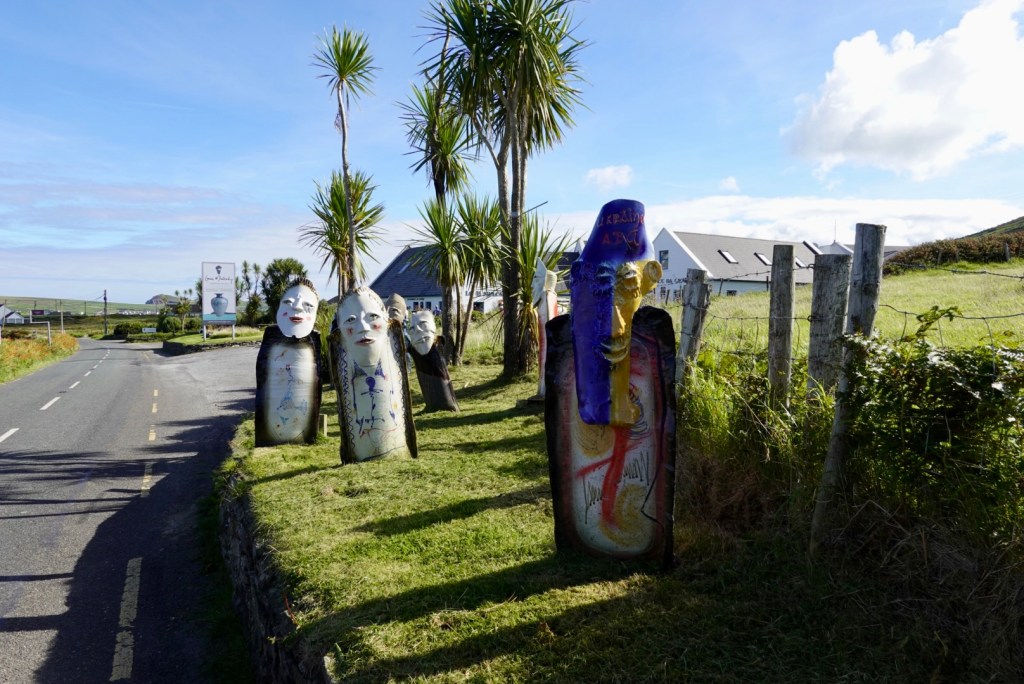
Local roadside art

As time was getting on, and the accomodation was up a hill, we decided to grab dinner first. We ordered at this pub as there were seats outside, so we could keep an eye on our bikes.

Whilst we waited for our dinner, Tony changed my brake pads as I’ve worn a set out already! That’s probably a record for me at 1,000 km and indicates how hilly it has been. Thankful Tony can do it for me too.

After dinner getting up to our accomodation was hard. Cold legs, full tummy, steep hill are not great partners.

Our room here is amazing. It is very large and spacious with beautiful views.

We were given options of 7.30 am or 9 am for breakfast 😳🤣 I said 7.30 am please. She responded “that was quick, you didn’t have to think about it?” No….

Another day (105 km, 1200 m climbing) and that’s a wrap. Thanks for reading. 😊❣️

Day 9: Arklow to Waterford

After a solid breakfast, including tucking away a few spare items for morning tea we left Arklow.

We had weird weather today. It drizzled and mizzled but did not really rain. We had a very low mist for much of the day.

The ride today was 114 km with 950m climbing. The climbs were all ok, nothing too onerous. The roads varied, some were very busy, some had no verge, others had a verge of even a cycle path.

A series of one off sights to start with. Leaving Arklow at this roundabout was the honey hive.

Pity we are not around for this event. Lock away your treasured oldies!

A nice church and house.

Beautiful gardens with nice security detail.

Don’t shoot me!

Dang, another event we are missing out on 🤣🤣.

Really new signage, but some drivers today did not get that particular memo.

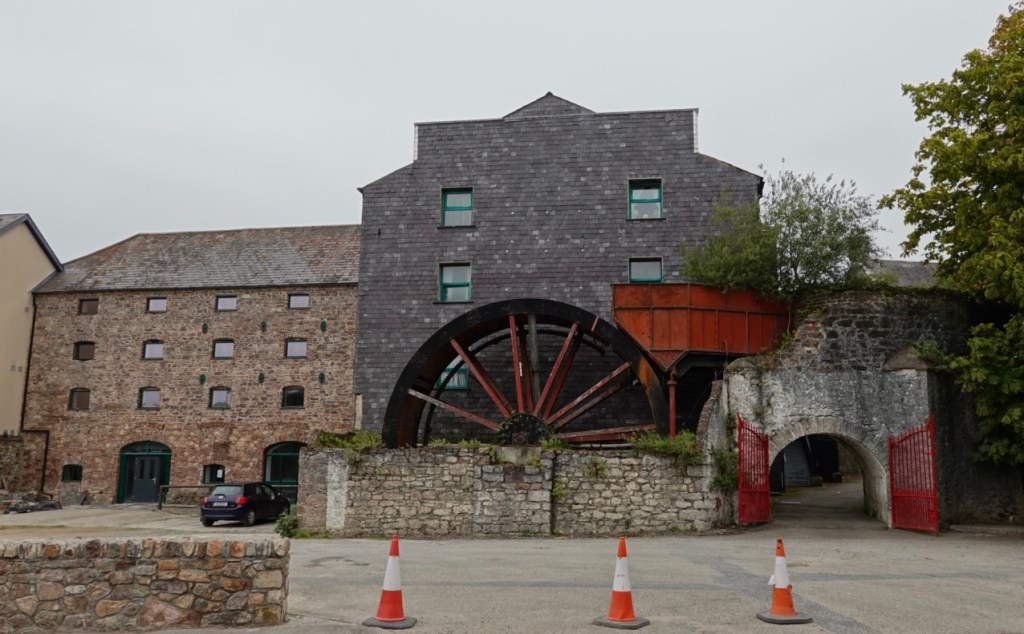
An old flour mill.

Wexford another town founded by the Vikings around 800 AD. Nearby is Rosslare Harbour, a ferry terminal with ferries travelling to Wales, France and Spain.

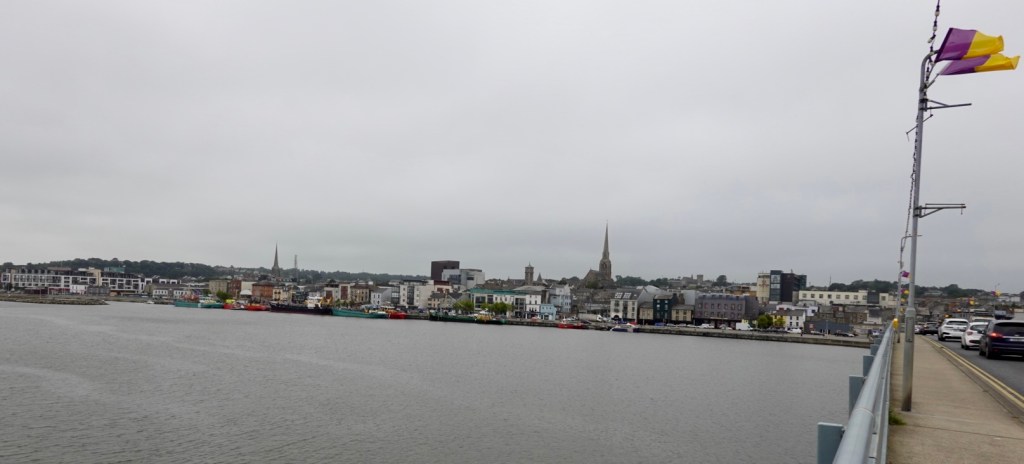
Lunch was planned for Wexford. We crossed the bridge, and I fancied sitting outside in a cafe along the river. Not to be, as we could not find one. We went to Tesco supermarket up the hill instead and sat in the carpark. Food was good!

A statue dedicated to John Barry, the father of the USA Navy, who was born in a nearby village.

Lots of pretty flowers along the waterfront.

Leaving Wexford, this sign had me off the bike to photograph. My four children have an Irish heritage, and their surname is Geelan. Their great grandfather emigrated to Australia from Ireland. However, he was from Co. Leitrim, further north, closer to Northern Ireland.

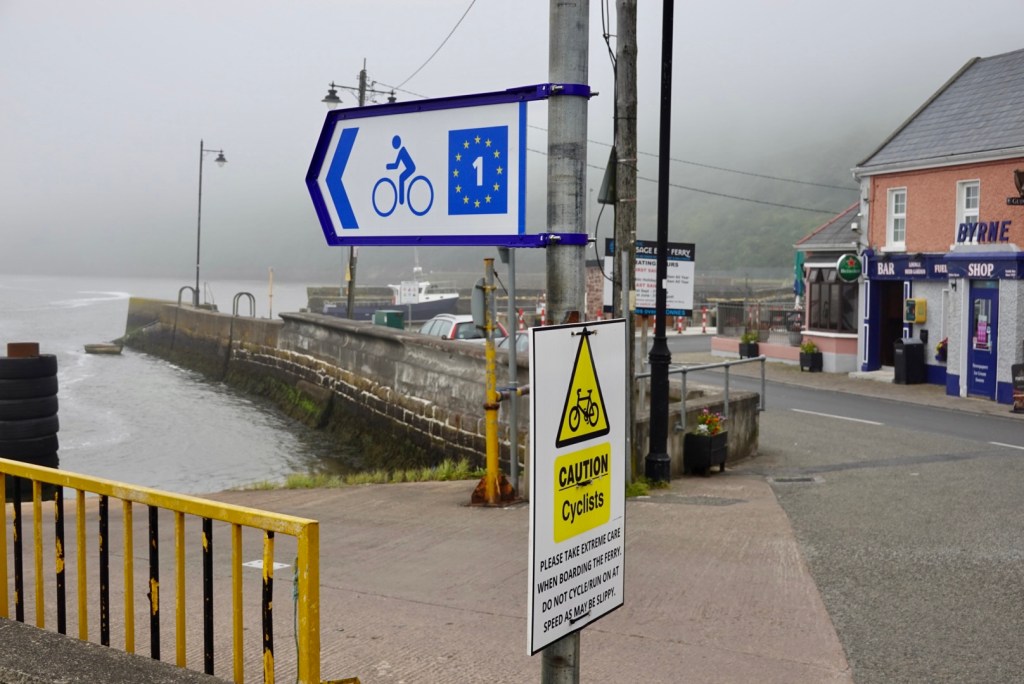
We started to see some of the EuroVelo 1 signs. We will criss cross, and follow EV1 on our continuing journey.

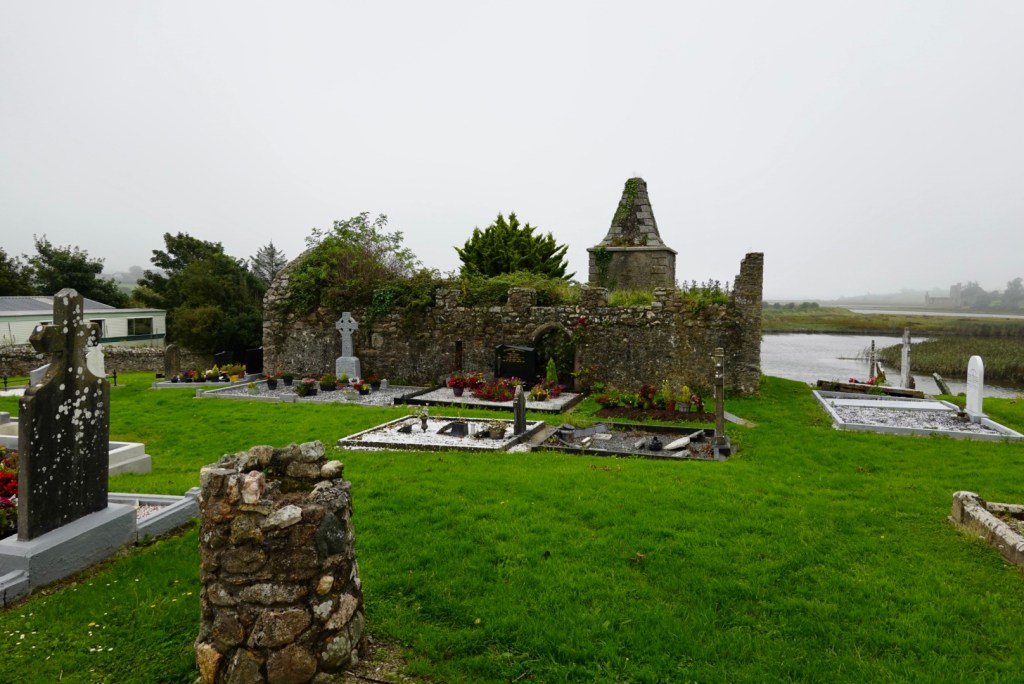
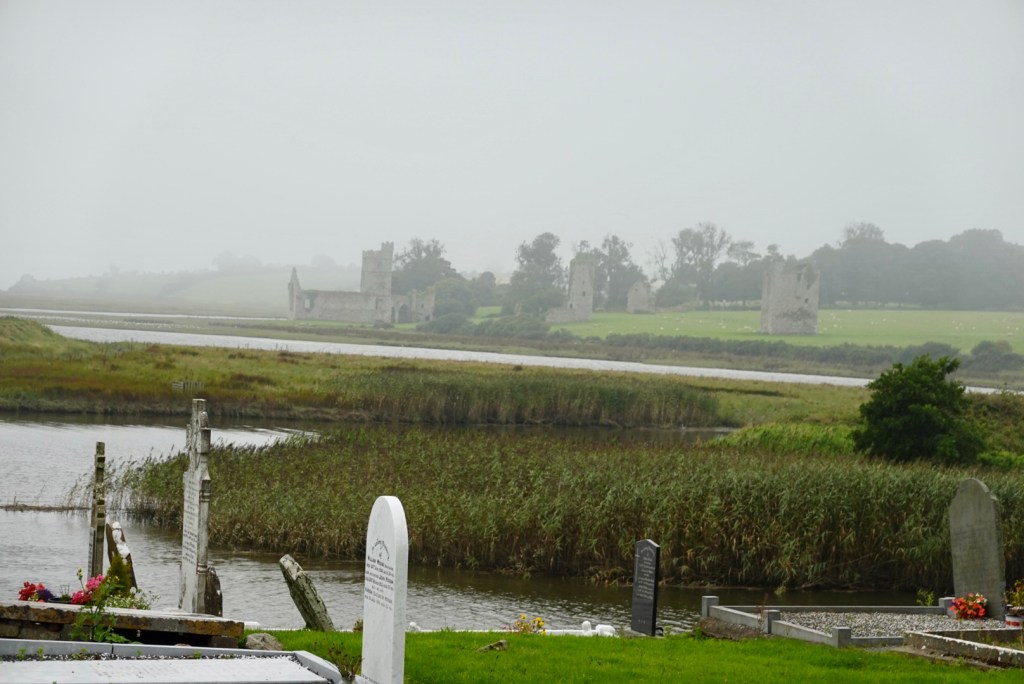
We stopped at this ruined church, then noted something else across the water, per the following photo.

The ruins across the water look interesting, and very eerie in the mist.

Post ride research indicates that this site is known as Clonmines Abbey. It is on private land. It is a deserted medieval borough dating back to the 13th century.

Arthurstown looked eerie too.

We rode up to the left and around this headland

Up the hill, and around the corner from Arthurstown is Ballyhack.

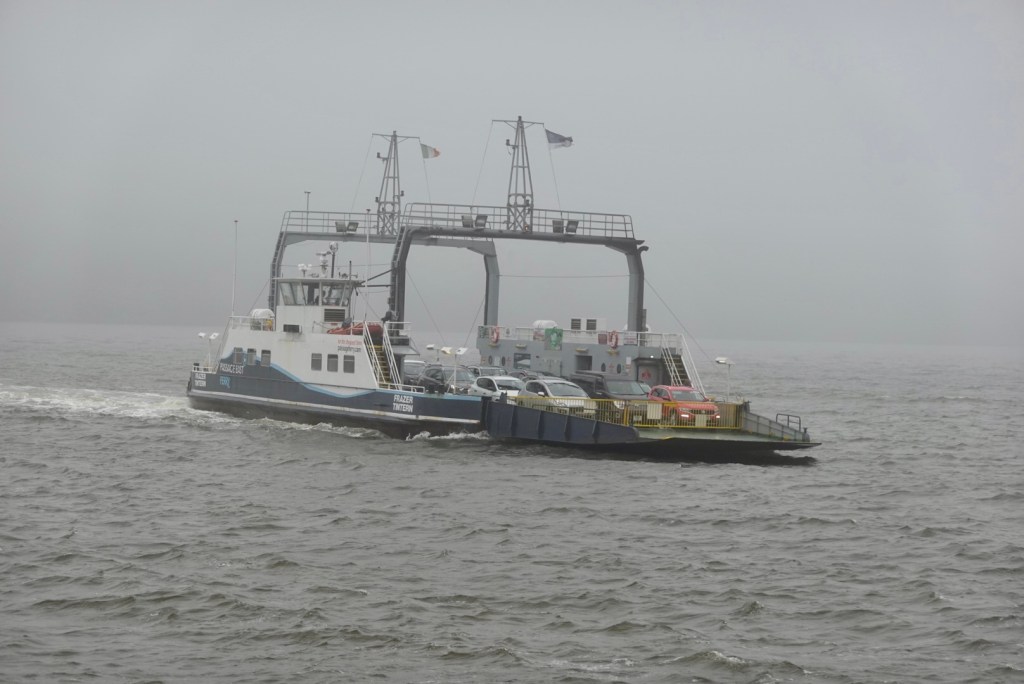
Ballyhack contains a 15th century Norman castle that has been partially restored. Features include its dungeon and a murder hole! It was from this village that we hopped onto the ferry, that crosses the broad estuary of The Three Sisters, to Passage East. Using the ferry saves around 55 km cycling.

Over the road from the ferry
The ferry arriving

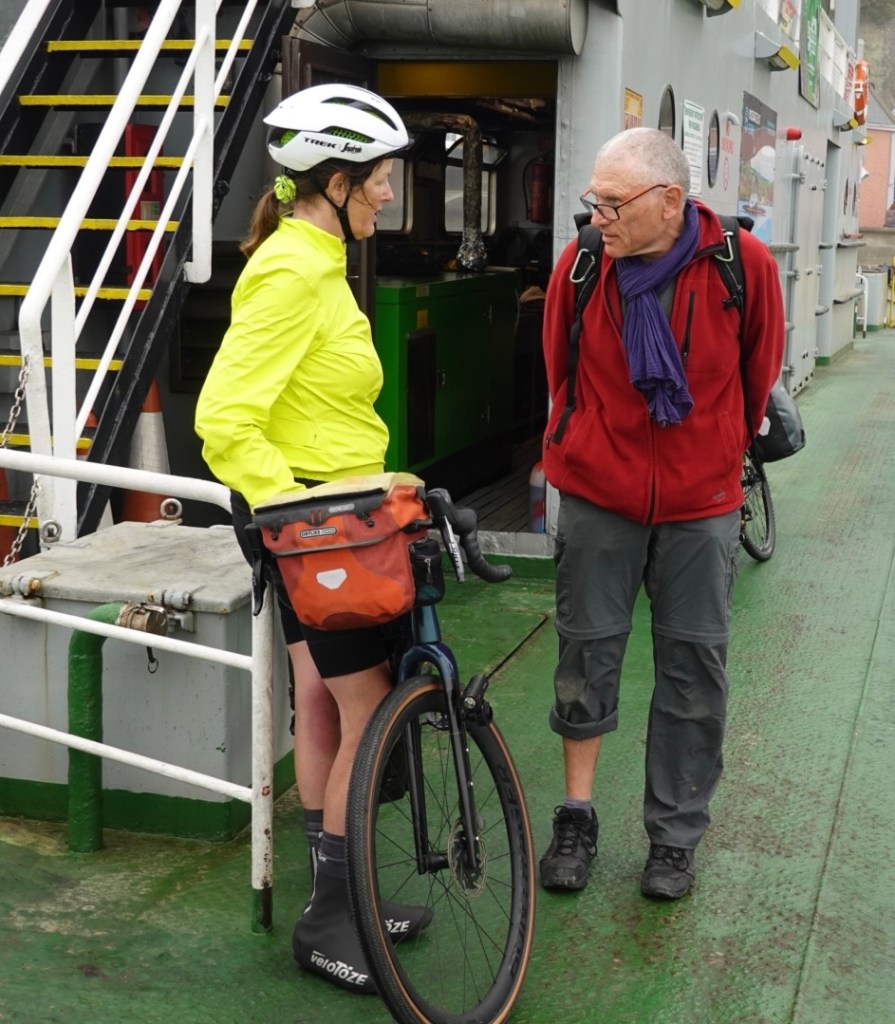
I chatted with another cyclist. He is from France, living near the Swiss border. He is on a three week cycle ride and following a similar route to us.

In earnest conversation

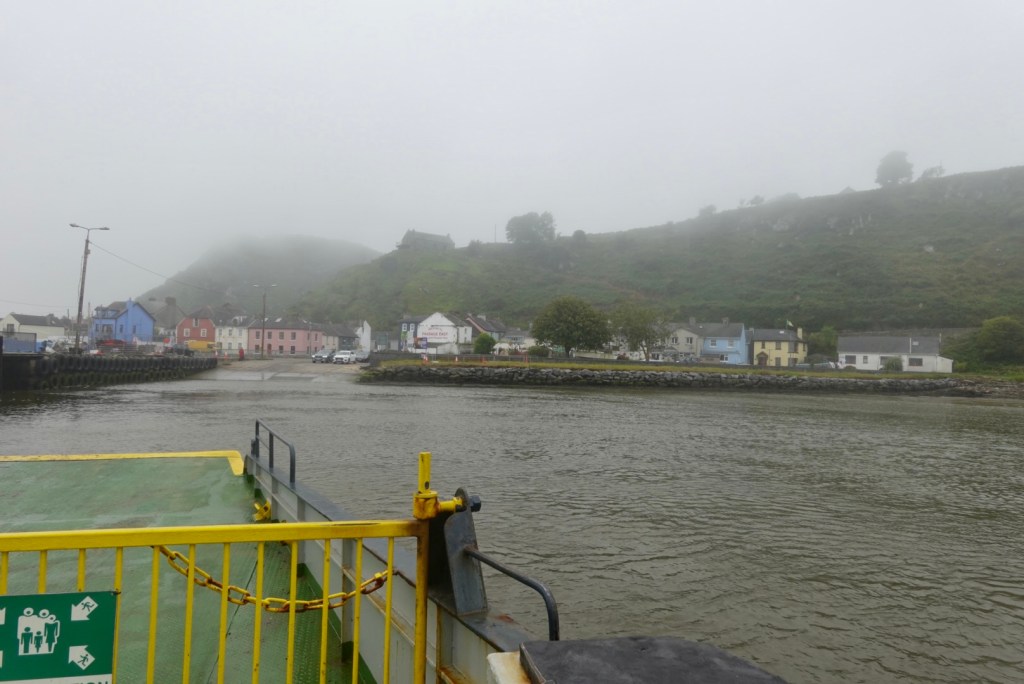
Passage East is a small fishing village on the west bank of Waterford Harbour. The Norman invasion of Ireland began here in 1170.

Up the hill and around, was very pleasant. After about 8 km we were on the outskirts of Waterford, in super busy traffic again.

Waterford is the fifth largest city in the Republic of Ireland famous these days for Waterford Crystal (although sadly was shut down in 2009 after the falling into receivership).

Again, it was the Viking raiders who first established a settlement nearby in 853.

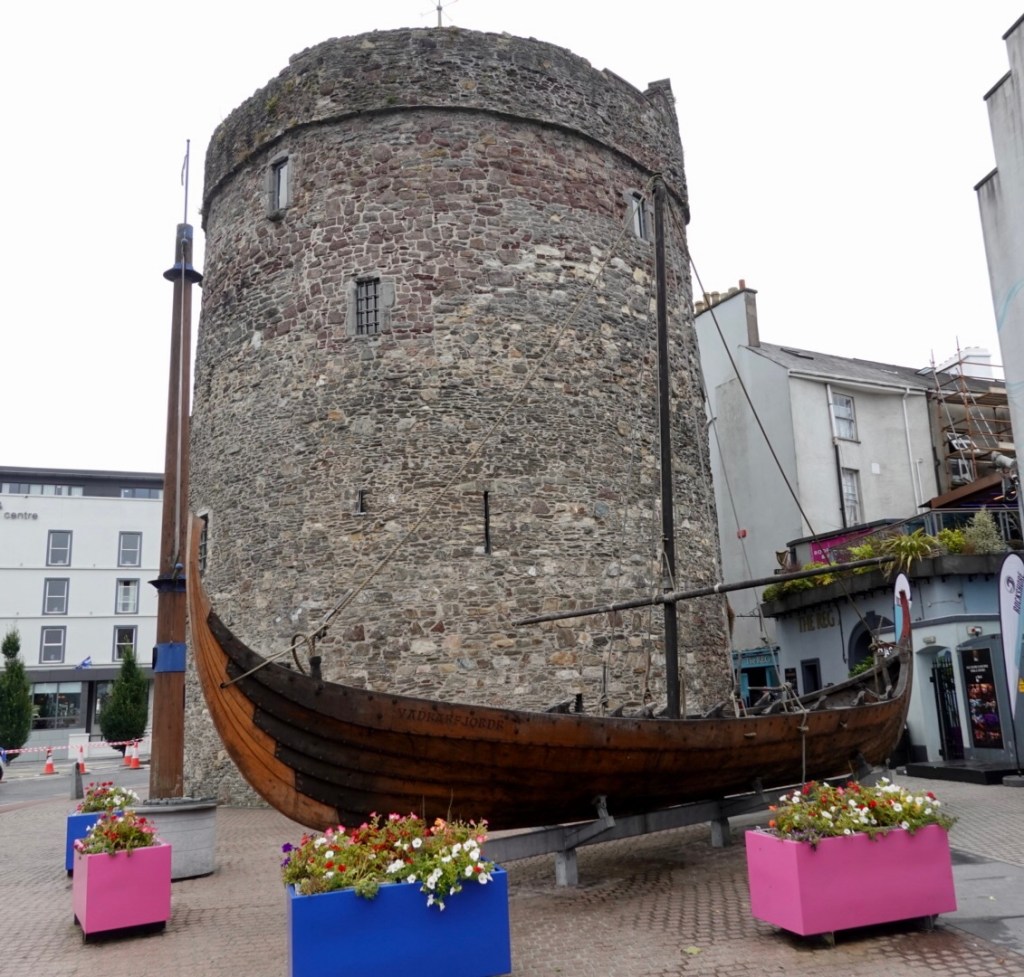
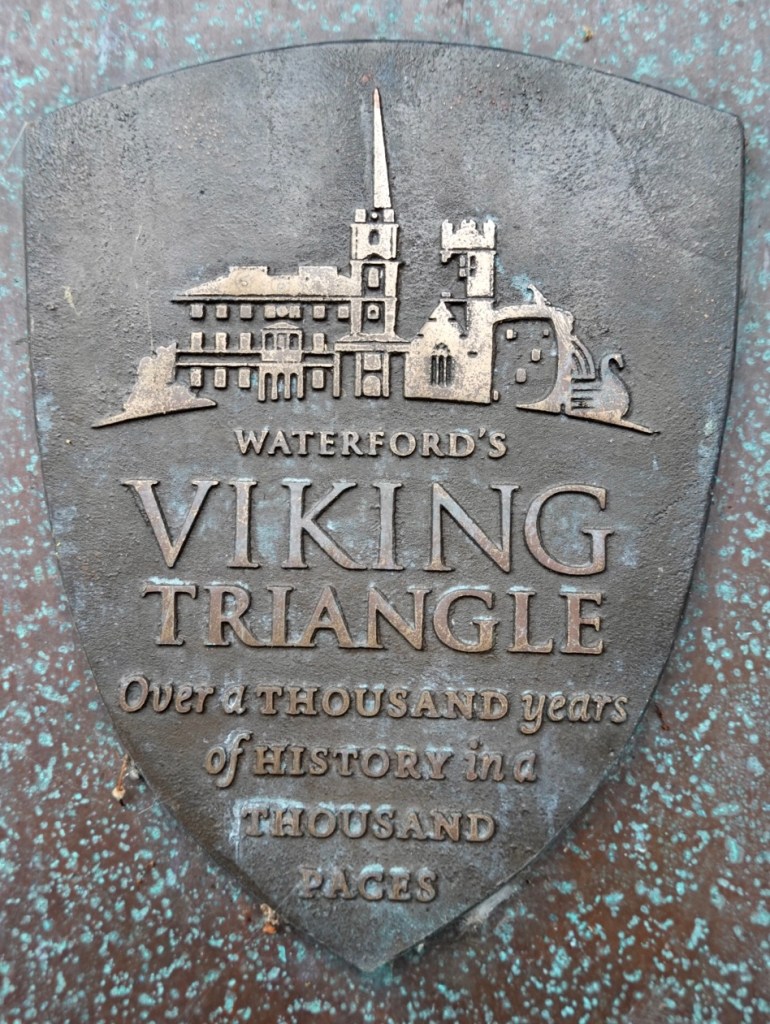
Reginalds Tower is the oldest building in Ireland and believed to be the first in Ireland to use mortar. It is located in the area known as the Viking Triangle. A replica Viking longship, 12 metres in length is on display outside the Tower.

The tower has a long and interesting history.

Waterford has an interesting series of buildings relating to their history, within an area known as the Viking triangle. Everywhere you walk, there are Viking references. Even the wifi password at our accomodation is ‘Viking city’.

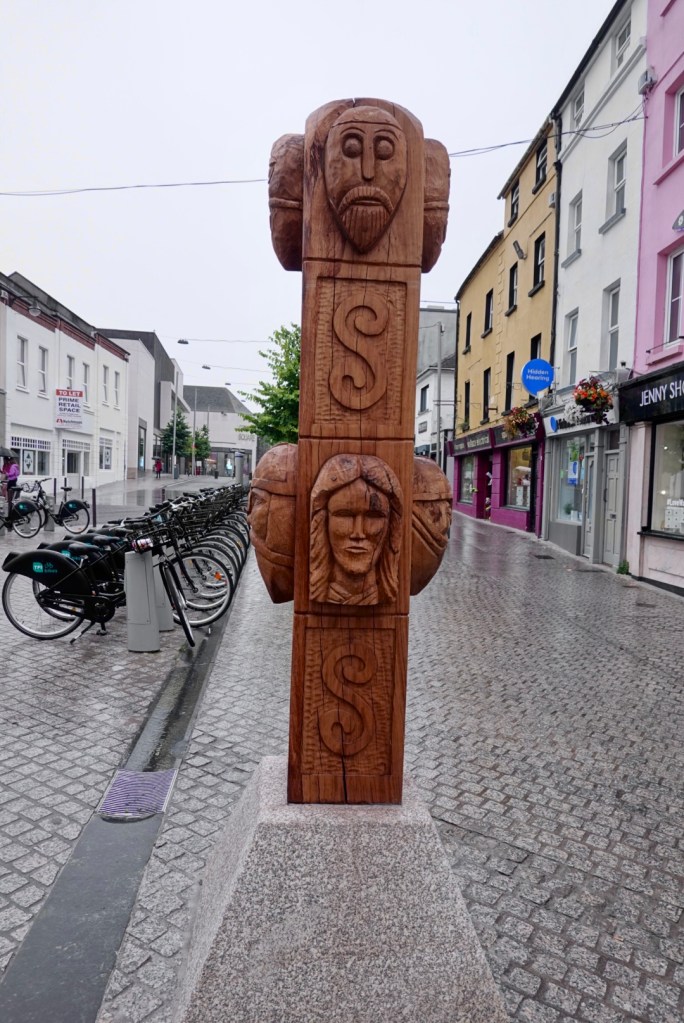
Eyes are watching you

This is a memorial to the youngest British soldier killed in Word War 1, John Condon, aged 14. His war grave is one of the most visited in Belgium. John was born in Waterford in 1900.

A cathedral has stood on this site since 1096 when Malchus, the first bishop was consecrated by the Archbishop of Canterbury. With an extensive history, the medieval cathedral was demolished in 1773 and Rep,aced by this current cathedral.

The Bishop’s Palace was built in the site of the medieval palace. It has been describes the finest 18th century ecclesiastical palace in Ireland.

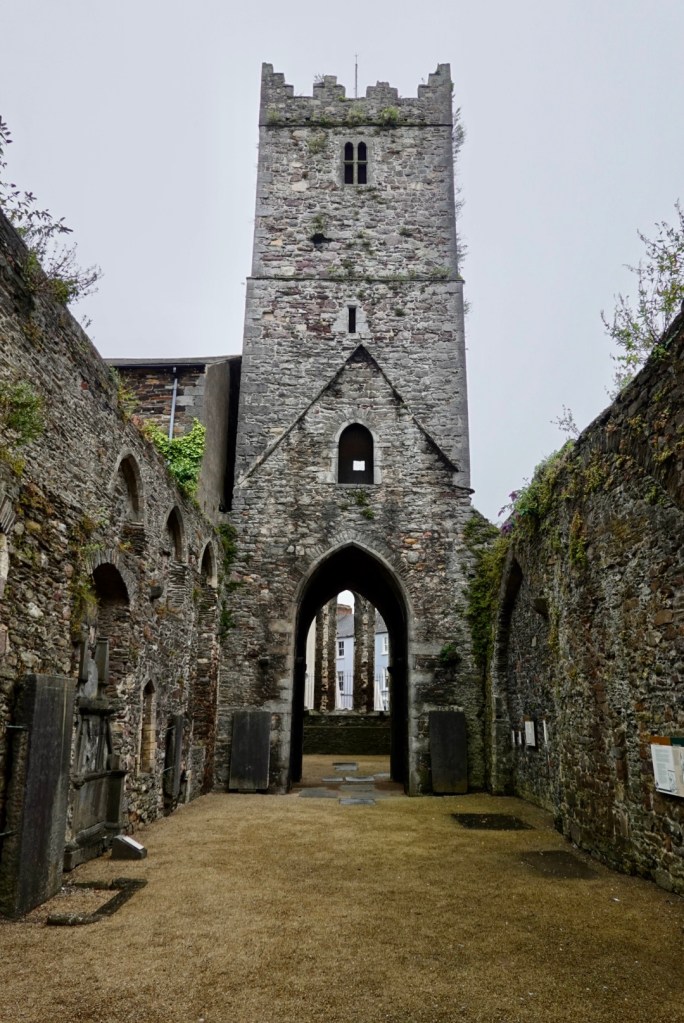
These are the remains of the Franciscan Friary, funded in 1241 by King Henry III. In 1541 King Henry VIIIclosed the monasteries and it reopened as an alms house. Inmates were required to pray for the soul of Henry VIII right up until the middle of the 20th century!

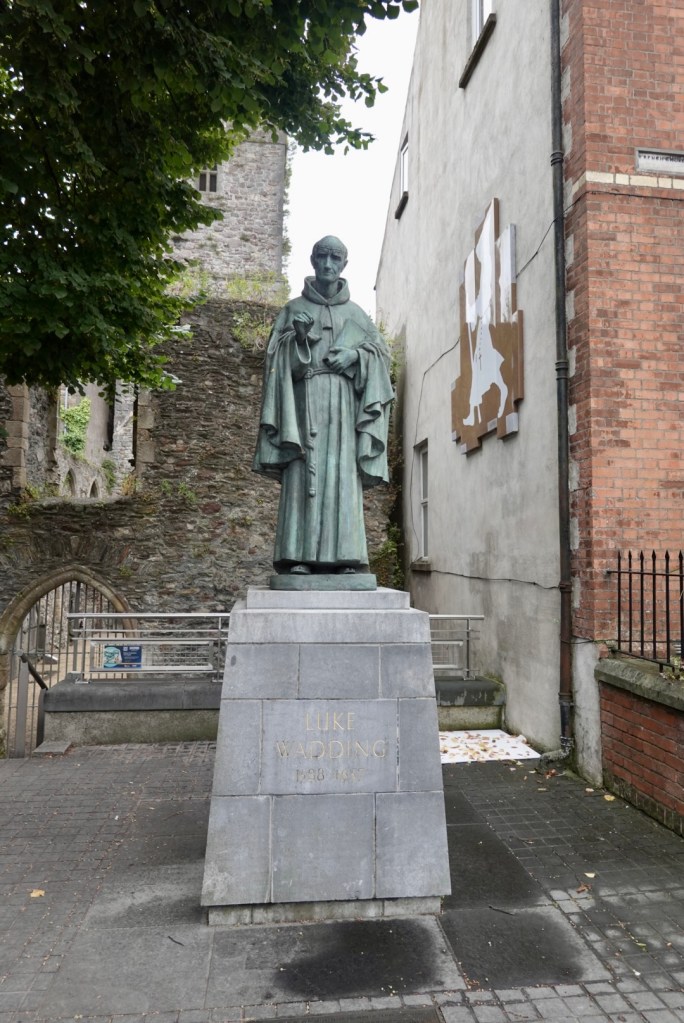
The entrance is watched over by Luke Wadding the only Irishman to have ever received votes in a papal enclave.

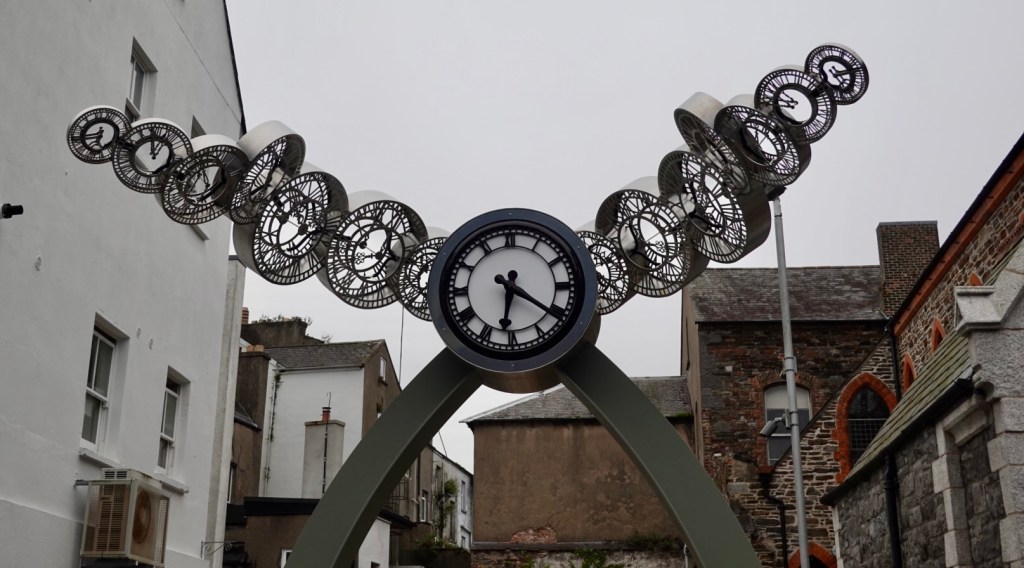
There are a number of museums in the area including Waterford crystal, medieval and a Time museum. Everything had closed when we wandered around by this installation is outside the Time Museum.

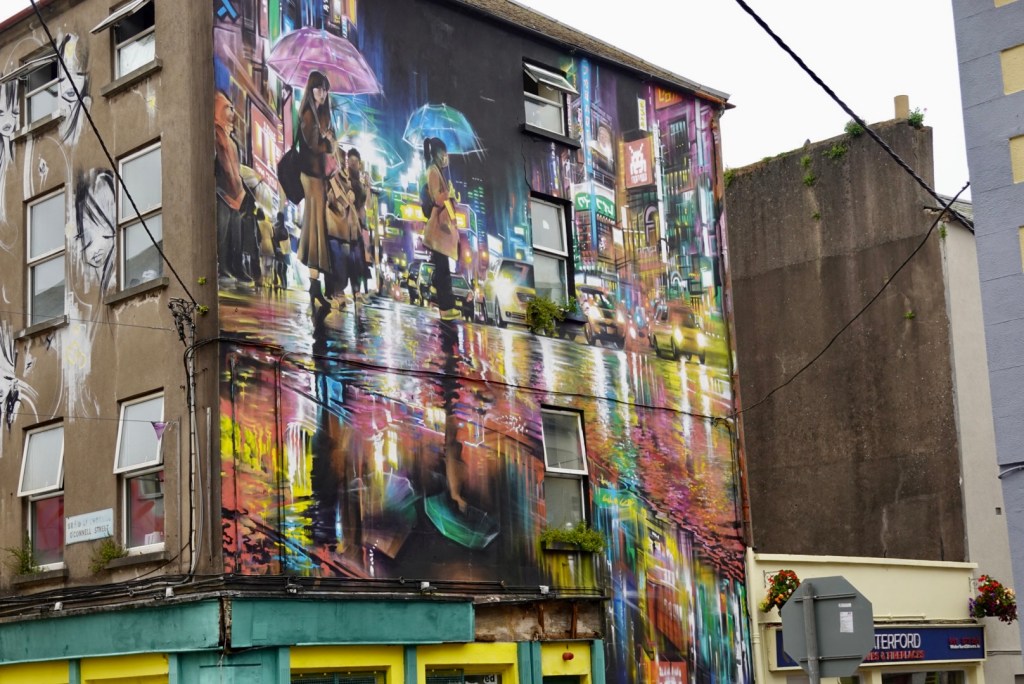
Paintings on building exteriors is another feature in Waterford. Many clever ones, but given it was rainy, this seemed appropriate.

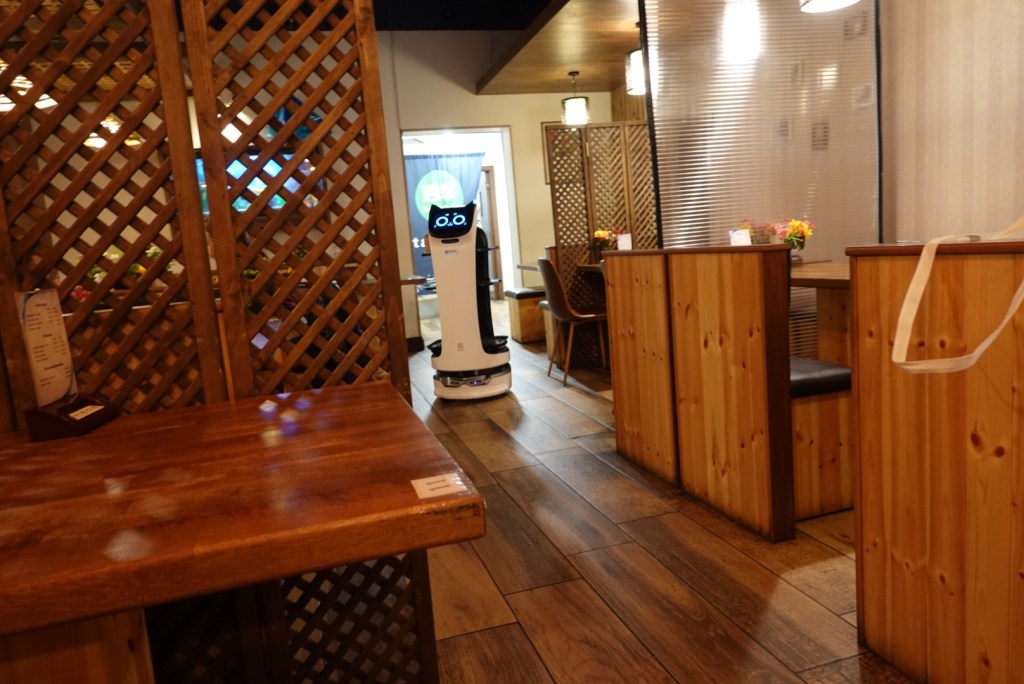
We had dinner at a Japanese restaurant. It has a robot that delivers food to tables, and takeaway to the front. It’s name is Bella.

Another day is done. Thankyou for reading 😊❣️

Day 8: Holyhead to Arklow

A new country day today. The Republic of Ireland.

We headed off to the ferry around 730 am. You cannot head directly in to the port as there is a very long security fence you need to get around first.

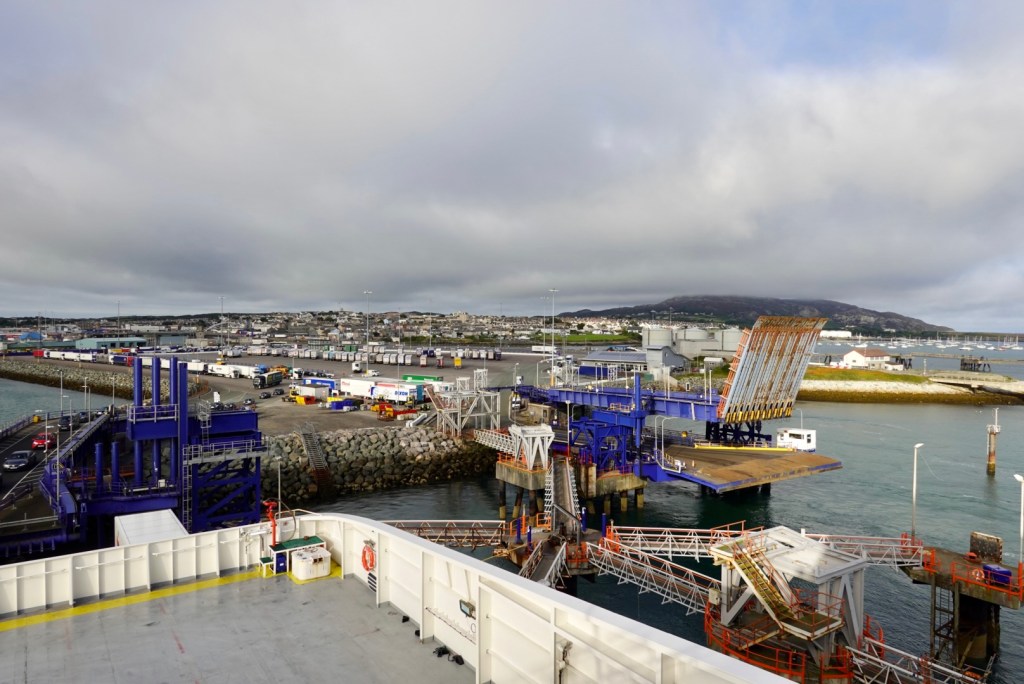
As we headed to the ferry, view of boats in the harbour at Holyhead

Once in, check in was quite simple. Security even simpler. Foot passengers were having luggage and belongings xrayed and walking through a scanner.

Take a bike, security not checked. We were sent around the side of security to meet two men at oversized luggage. That lack of security surprised us for cyclists vs foot passengers.

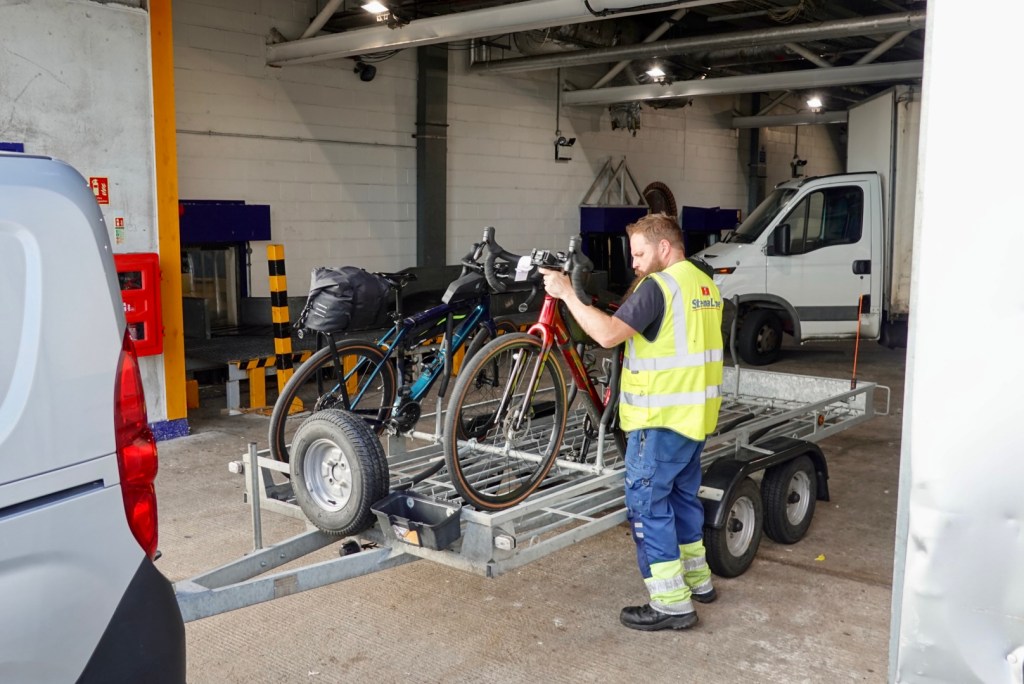
The bikes are strapped onto a trailer, that is towed onto the ferry, remains in situ for the trip, trailer towed off in Dublin.

We then boarded a transfer bus that drives onto a vehicle deck, and we then headed to our cabin on deck level 9.

Looking back to Holyhead port , an Irish ferry had just departed from the next berth. We had initially tried to book on that one as it left earlier, but they do not take bikes on that crossing.

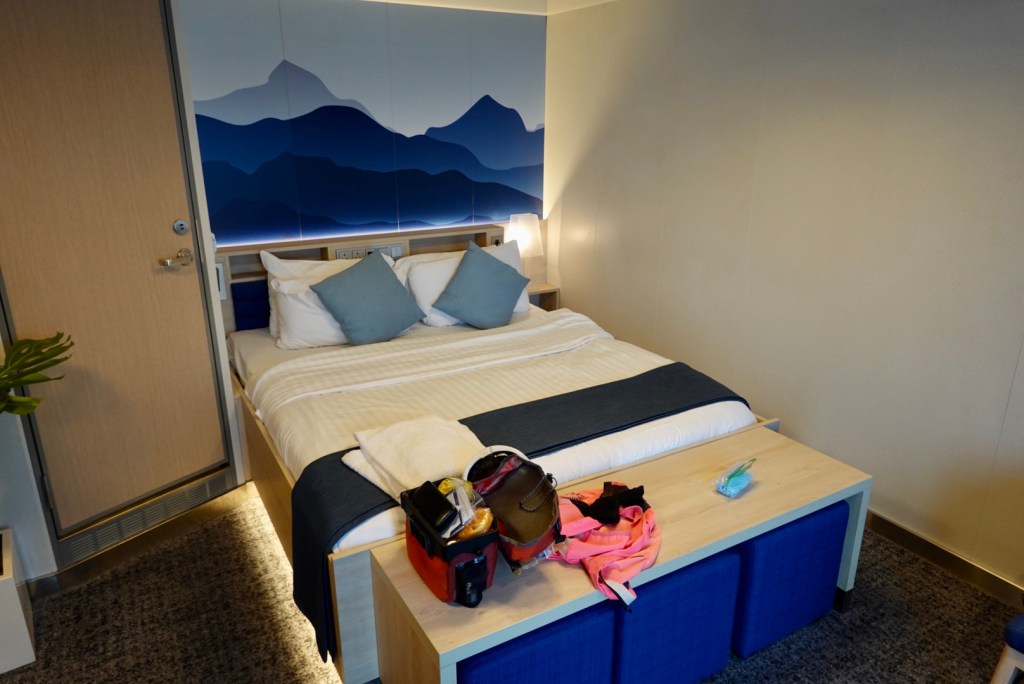
I had purchased a cabin for the trip, a superior portside. We were both very impressed with it vs our experiences in Tasmania and Croatia with ferry cabins.

The cabin was so spacious it had a full sized double bed
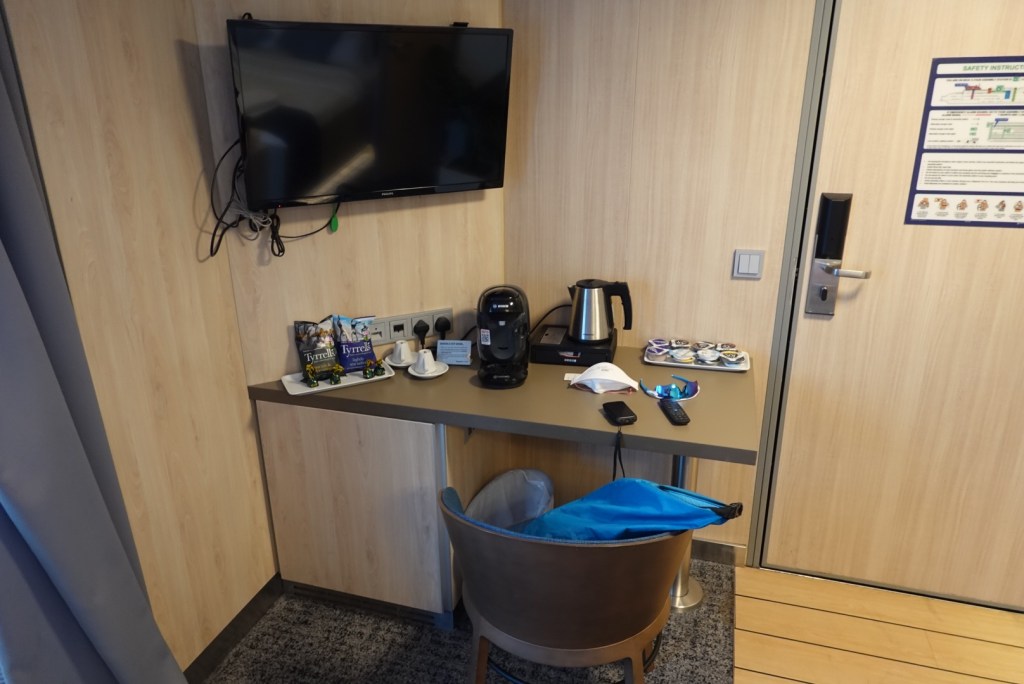
Pod coffee maker with a huge range of coffee pods, and hot chocolate. The fridge had 6 drinks in there. Plus there were chocolate and chips.
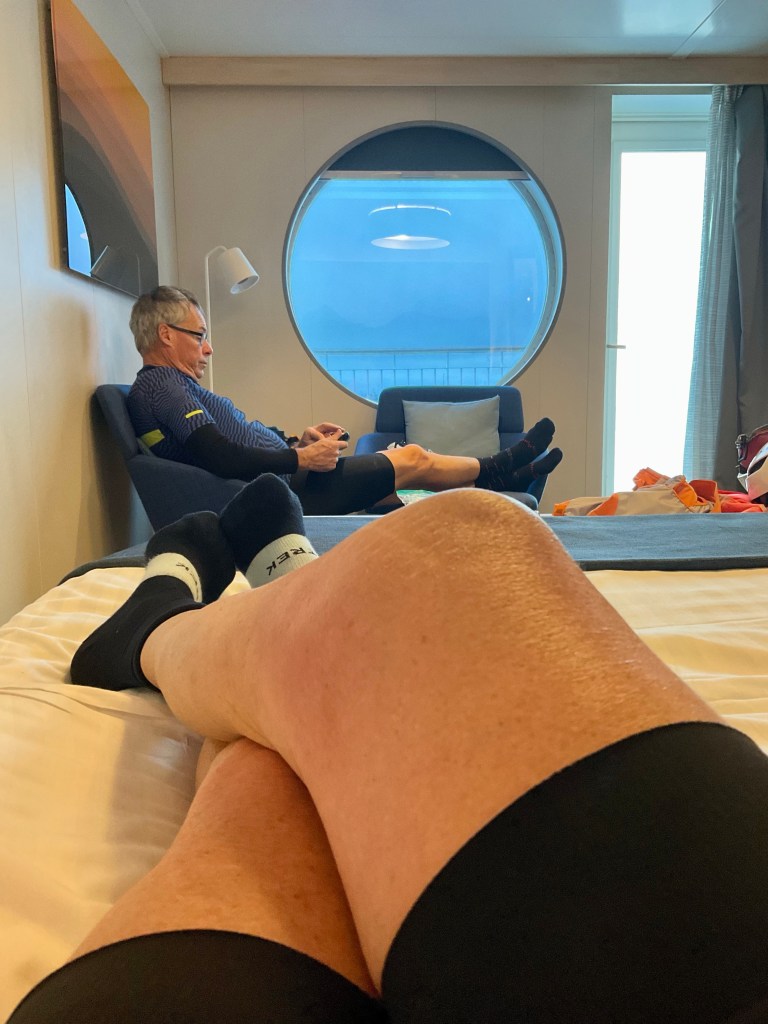
There were two lounge chairs, plus a huge window. You could sit up on the bed and see out the window.

So we had a super chillaxing trip. We were in the cabin for over four hours, with the actual travel time 3 hours 20.

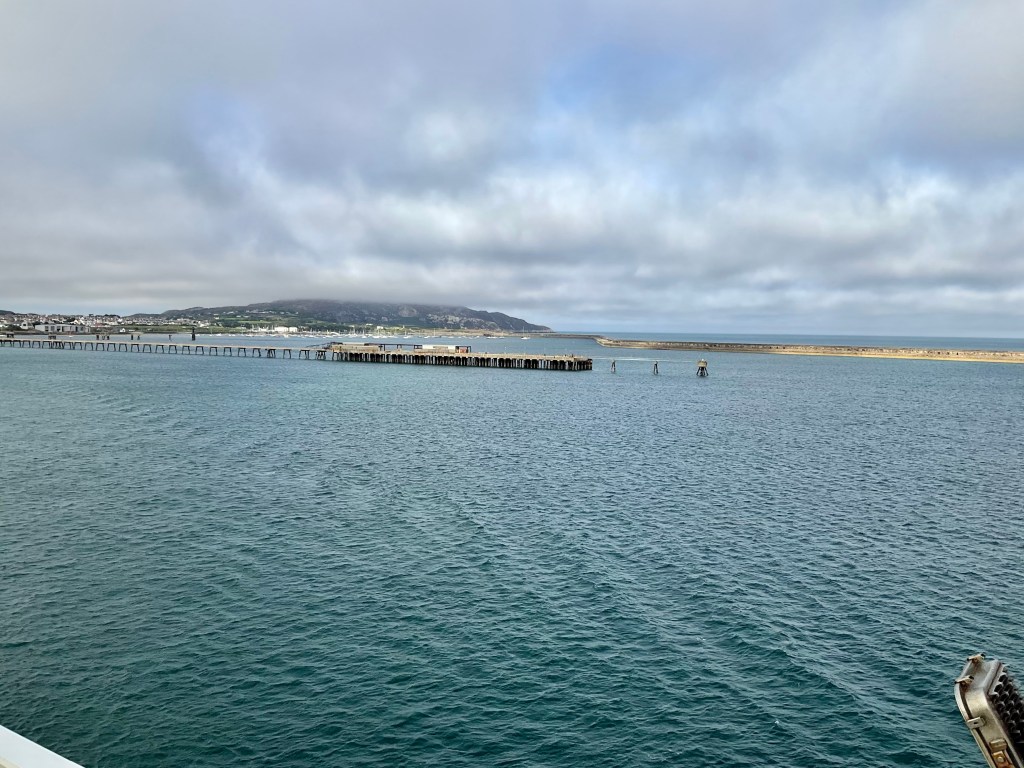
Leaving the harbour, Holyhead Mountain under cloud.

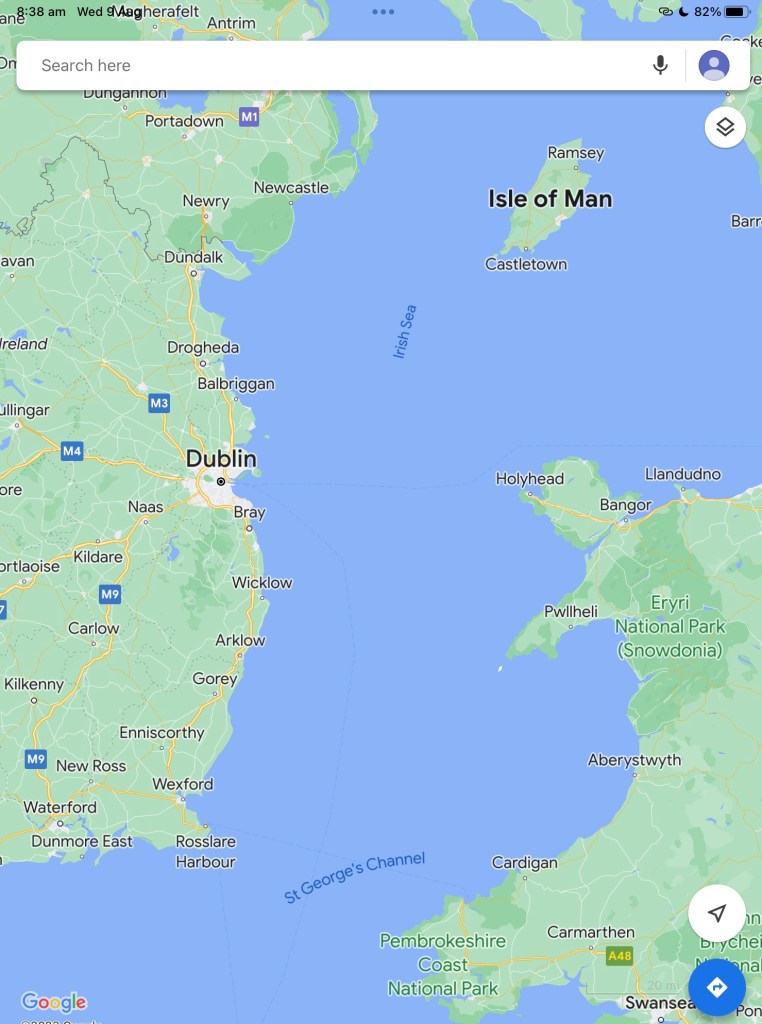
You can see both Holyhead and Dublin on this map, close points between Wales and Ireland. Arklow, to the south, was our destination today.

It was a non eventful crossing. Tony slept for part of it.

As we closed in on the Irish coast land ahoy.

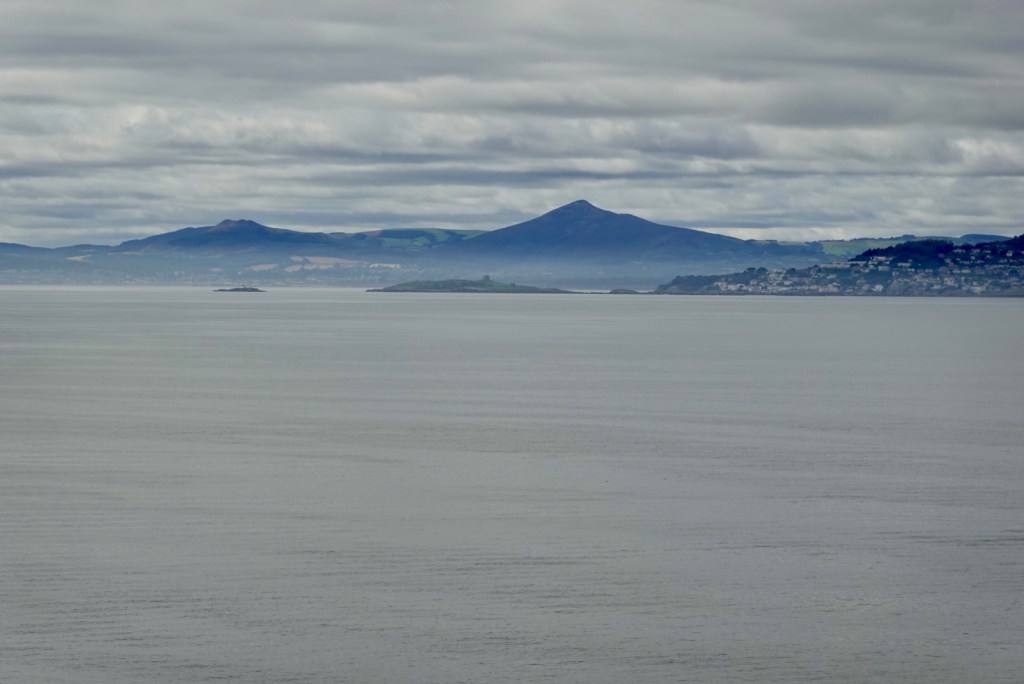
Looking south towards the Wicklow Mountains, where we were headed.
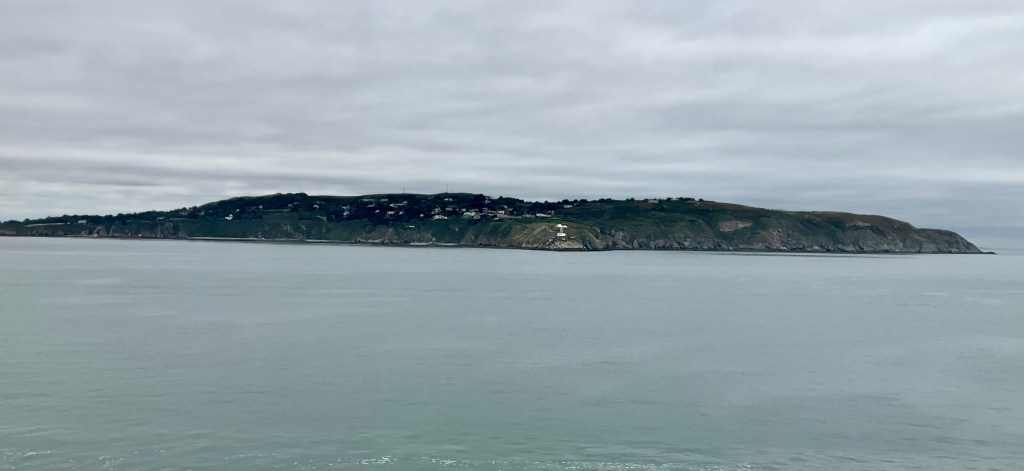
Looking north, Howth, a nice suburb of Dublin.
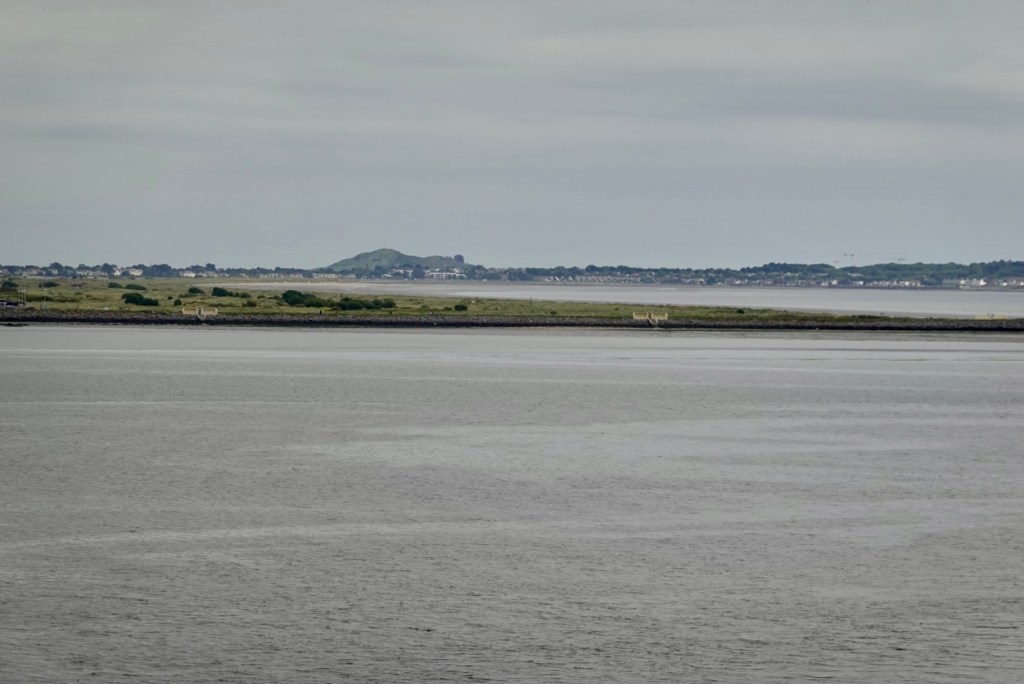
Looking north towards North Bull Island, a flat sand island and Howth. We have just entered Dublin Bay and the mouth of the River Liffey.

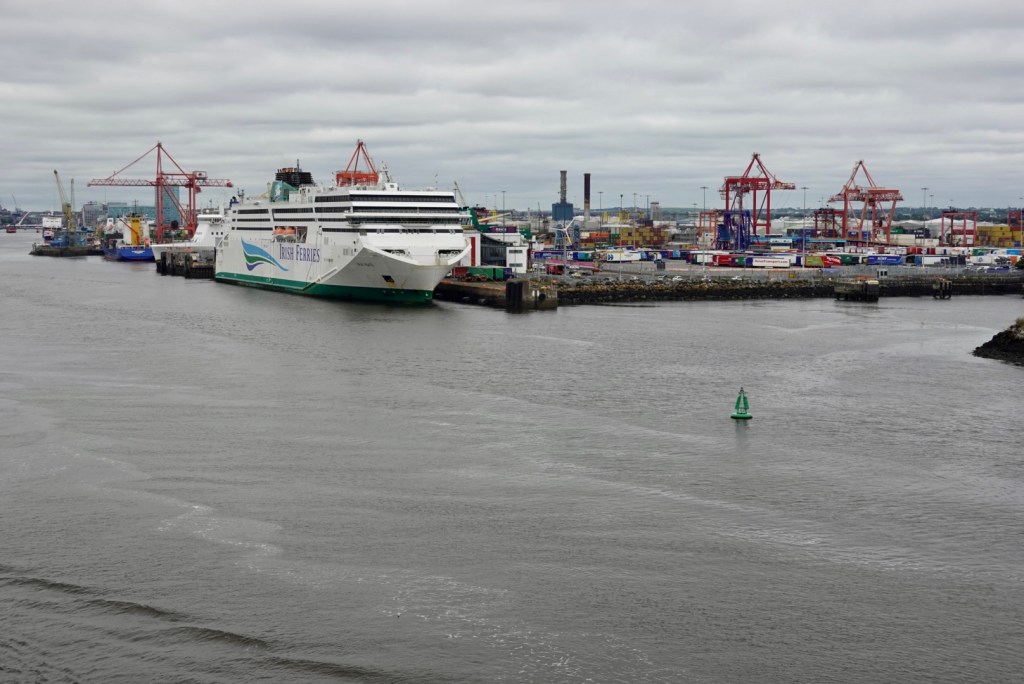
The port is spread out over a larger area. Our ferry nosed into its dock, as it is a roll on, roll off ferry with openings either end.

Being a foot passenger, keen to get pedalling, was super frustrating. It took maybe 45 minutes to leave the ferry, transfer onto a bus, then get our bikes, waiting for us at the luggage carousel.

Then getting out of the port took time. It is hugely busy with big trucks and cargo container movements. . There is a cycle path and many red lights. After a few km we left the port premises to begin the next part of our ride.

Dublin is the capital of the Republic of Ireland, located on a bay at the mouth of the River Liffey It was established by the Gaels around the 7th century followed by the Vikings.

Today it seems we had the route ‘tour de red lights, road works and crazy antics’ to commence our Dublin memories.

It was super stressful riding out. There are some crazy drivers, but also patient ones. Thencyclists were the worst. No helmets, going across the flow of traffic, weaving in and out of cars, whilst we just went with the flow, obeying everything.

It is taxing as you do not realise until later how exhausting it is concentrating so hard. Make no mistake, we do concentrate on the open road too, but the intensity and adrenaline factor is just different.

After about 10 km, we were on quieter arterial roads heading towards the Wicklow Mountain National Park, Irelands largest national park covering 23,000 hectares.

The area we went through was Djouce and Tonduff on the eastern flank.

We stopped at a local convenience store and grabbed some food, as were were both hungry. The map on the outside of the local park section. We had just been through Killegar Woods, and Knocksink Woods were next.

The area was hilly. The graph below shows our bigger climbs. The first was getting out of Dublin from sea level. The second was ahead through the Wicklow NP.

When we climb, our bike computer has a graph for each climb, showing where you are, what the gradient is currently, what the gradient is ahead, and each gradient section is colour coded. This climb had a red section, ie steep steep steep.

The view on the red section looking west
The view looking east
East
West

Looking towards Roundwood, where we stopped at the chemist to grab more toothpaste, and Panadol for Tony.

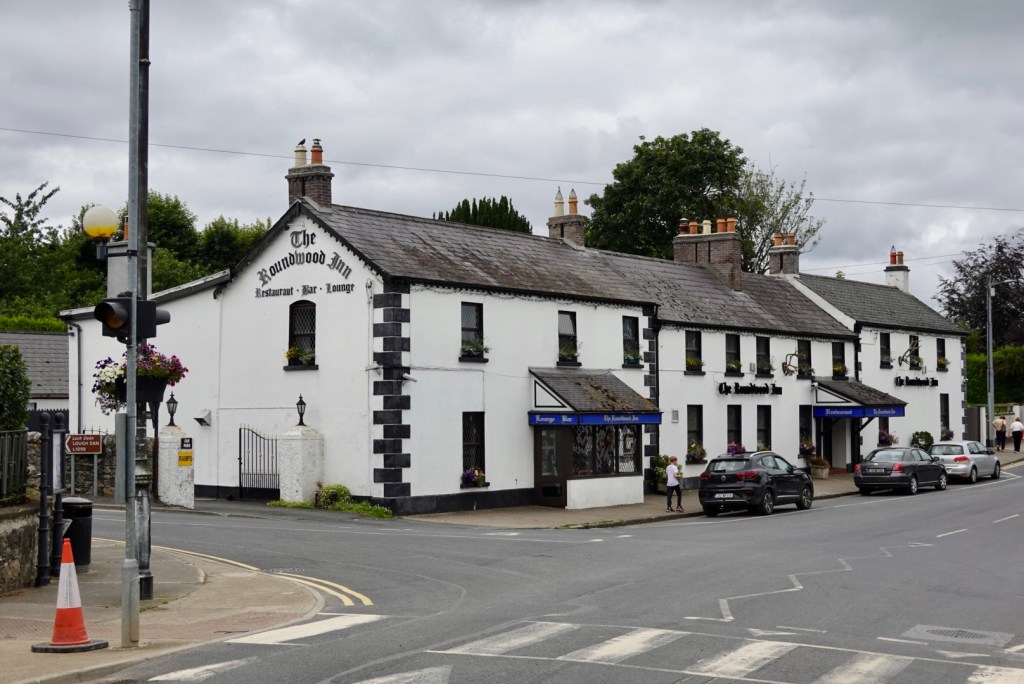
The pub in Roundwood

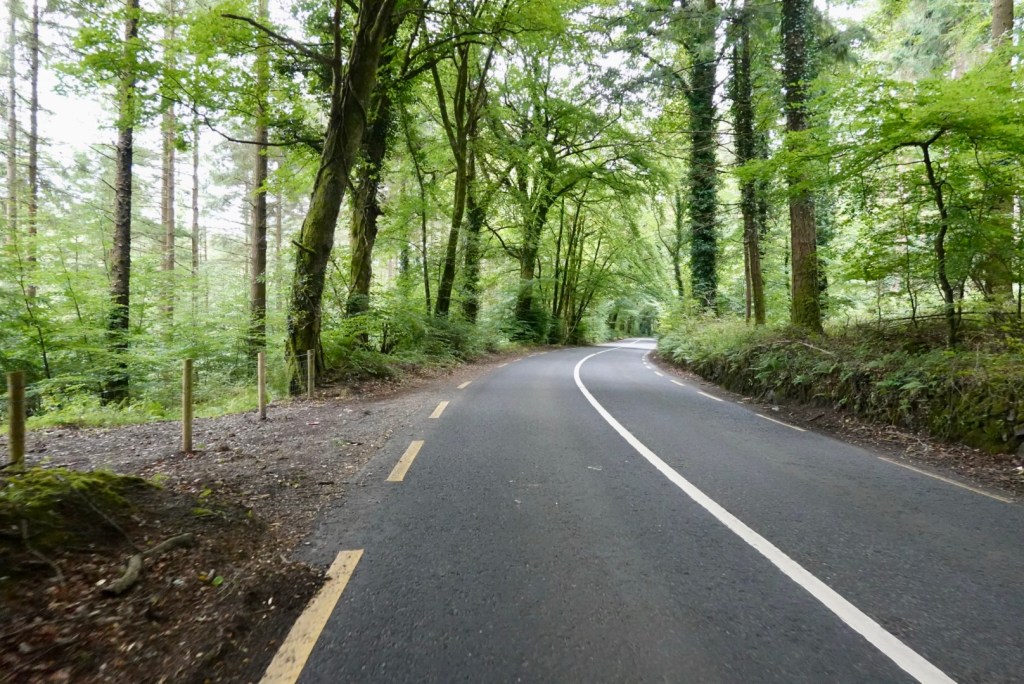
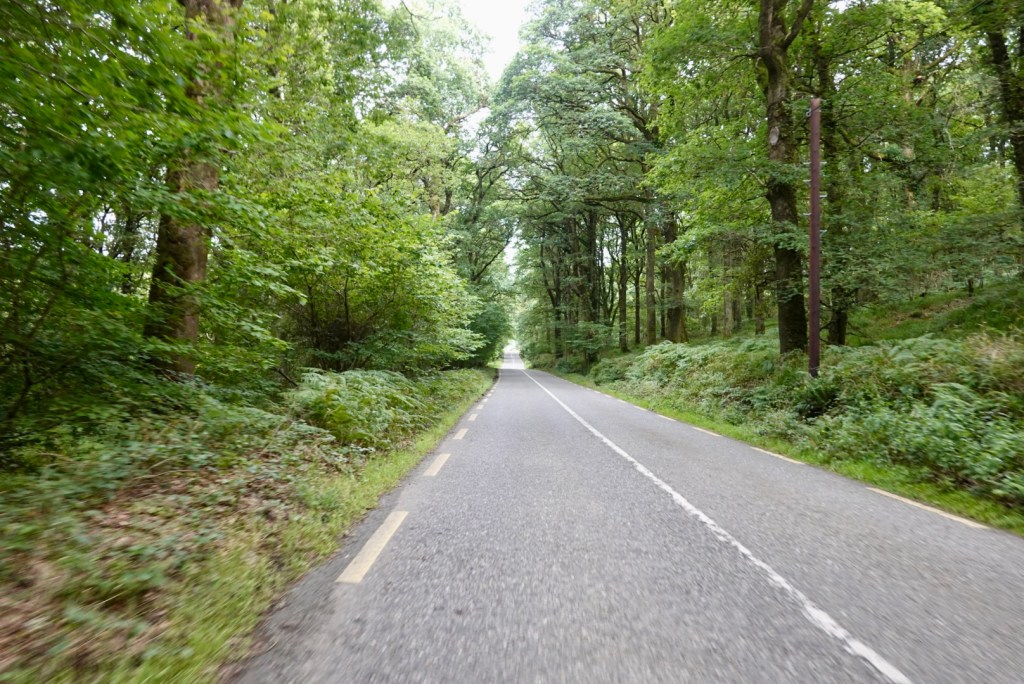
Riding through forests was to be a feature for the rest of the ride. Lush, green, stone walls edging.

Most of these were taken by Tony as he rode. Without slowing significantly, he opens up his front bag, gets the camera out, takes the photos, puts the camera back. I watch from behind knowing I would end up on the ground if I tried that.

Rathdrum situated high on the western side of the Avonmore River valley, flowing through the Vale of Clara.

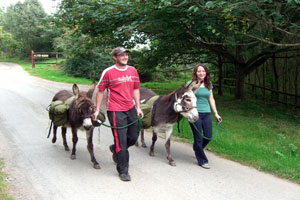
A local business promoted in the area is “donkey walking” where you travel from village to village at a donkey’s pace and overnight in local accommodation. The donkey can carry 15 kilos and cover 10-15 km per day.

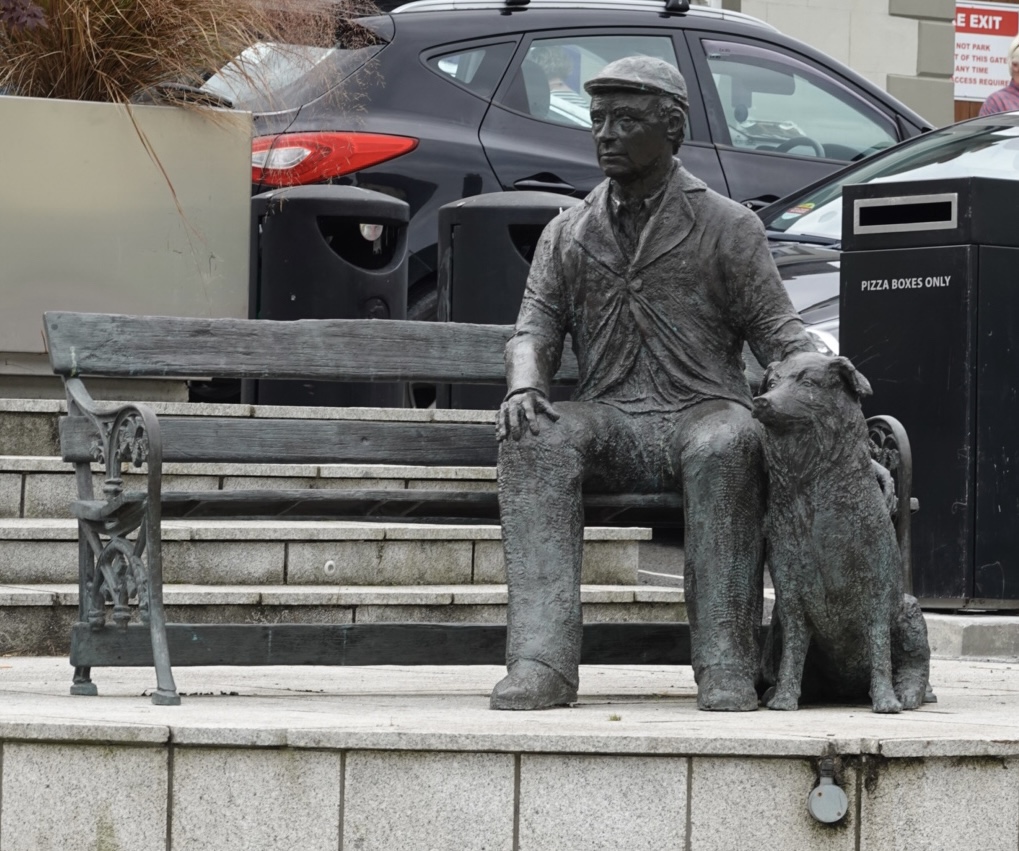
We did not see the donkeys today, but saw this statue. Named the Farmer and his dog. It was placed as part of a town rejuvenation project in 2019.

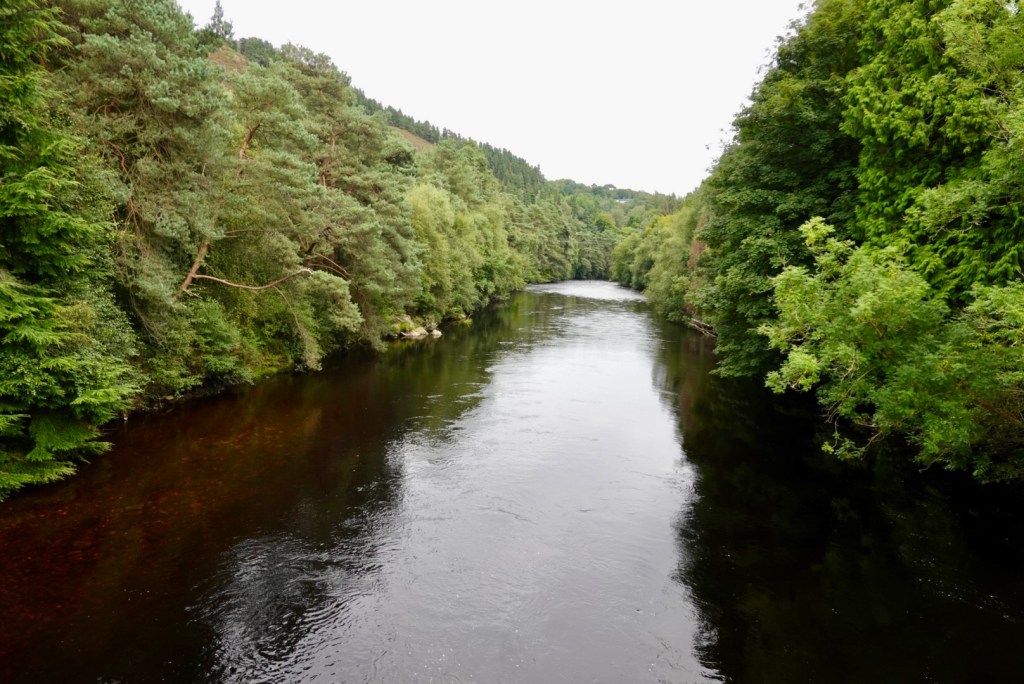
The Vale of Avoca was very pleasant to ride through, as it was predominantly downhill, following the River Avoca. The area is known for its woven products, with many smaller mills and local producers having signs out.

River Avoca

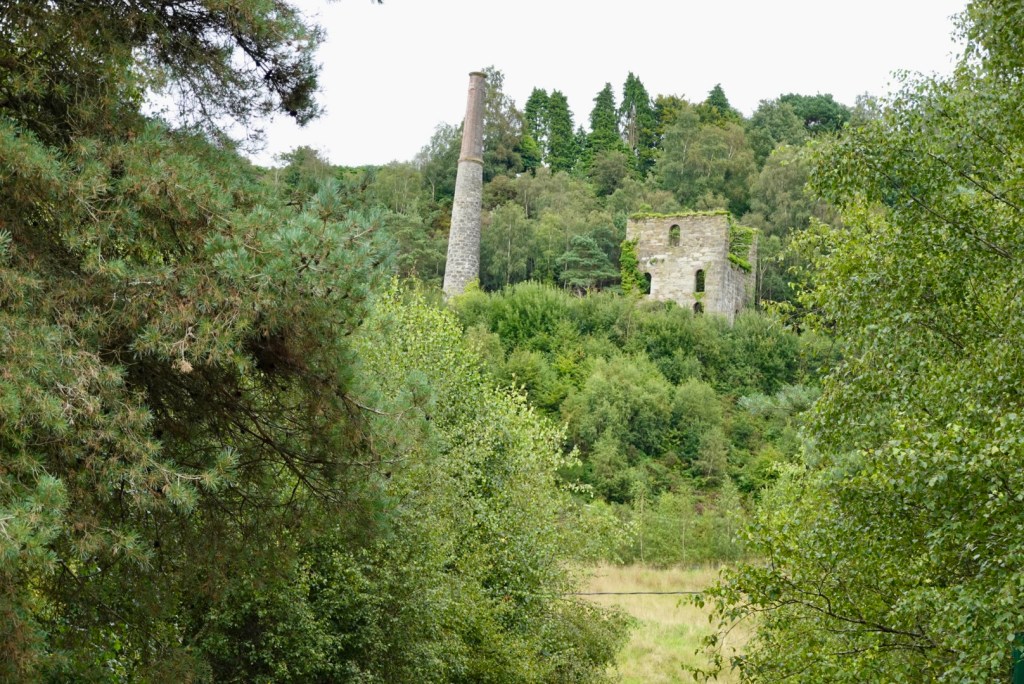
Looking up the hill from the river, is this old mine installation, known as Williams Engine House, one of the few remaining in Ireland. Mining was huge here in the 1800’s predominantly copper and pyrite.

Williams engine house

These are both newer churches, from the 1800’s, one in better knick than the other.

The final major town today was Woodenbridge, where I originally had us staying. It has a stone bridge known as the “wooden bridge” – only in Ireland!

Arklow was today’s final destination and we are now on the southeast coast of Ireland. The town was founded by the Vikings in the ninth century. The town is at the mouth of the River Avoca, the longest river within County Wicklow.

We were really pleased to arrive at our accomodation. Super friendly lady stored one bike in a locked area but she was apologetic for the junk in there leaving no room for the second.

She would find another area to lock the second bike. I casually suggested perhaps we could take it to our room? (That always tests the accomodation providers and you get a very clear no if unacceptable to them).

She said, oh yes you can, but won’t it be in your way? We are like…..nope ! So we have one bike with us. That means we can get it set up before breakfast at 7.15.

We had a great meal in their restaurant. Fish and vegetables for me, beef, sweet potatoes chips and vegetables Tony.

So that’s a wrap for today. Total km less at 81 for the day with just over 800 metres of climbing.

Tomorrow is about 113 km, 900 metres of climbing ( I think?) and we are heading to Waterford. A bit of rain is possible, but we will see.

Thanks for reading 😊❣️
Day 7: Corwen to Holyhead

We said farewell to Sue and Alan this morning. We had a lovely time and thankful for the friendship. 😊❣️
Leaving Sue and Alan’s house

Todays ride was excellent. The scenery was amazing, the weather was good, and despite fairly solid and consistent traffic on the A5, on the whole, the drivers were patient.

Sue and Alan had recommended a coffee stop in Betws y Coed, a popular town to visit within Snowdonia, a centre for outdoor activities within Gwydyr Forest.

Over the road from the town sign, Tony checking maps to THE coffee shop

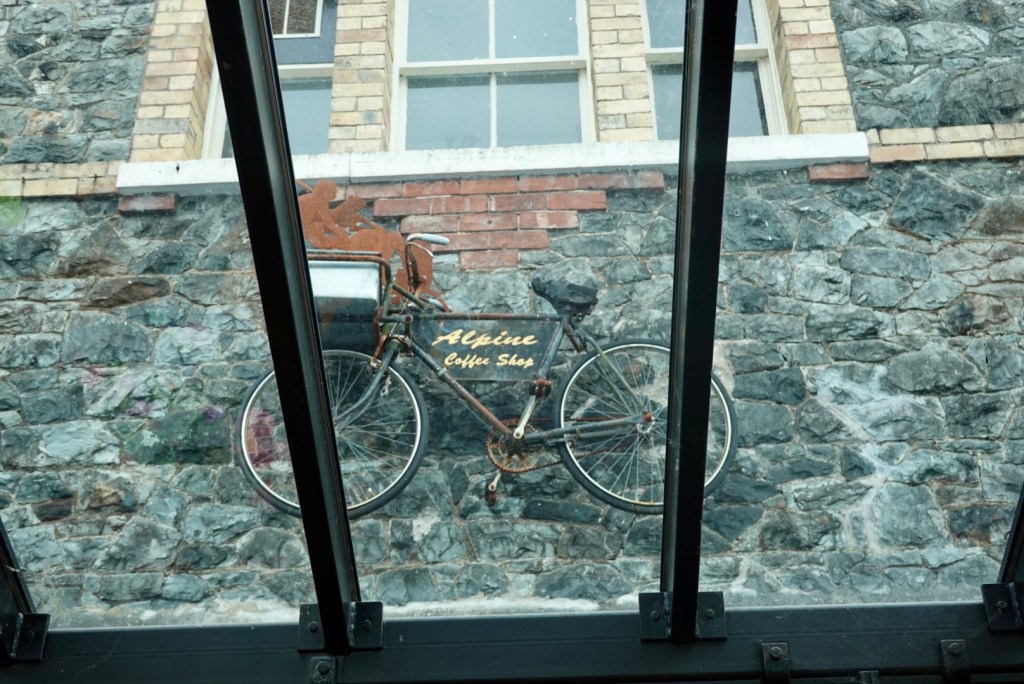
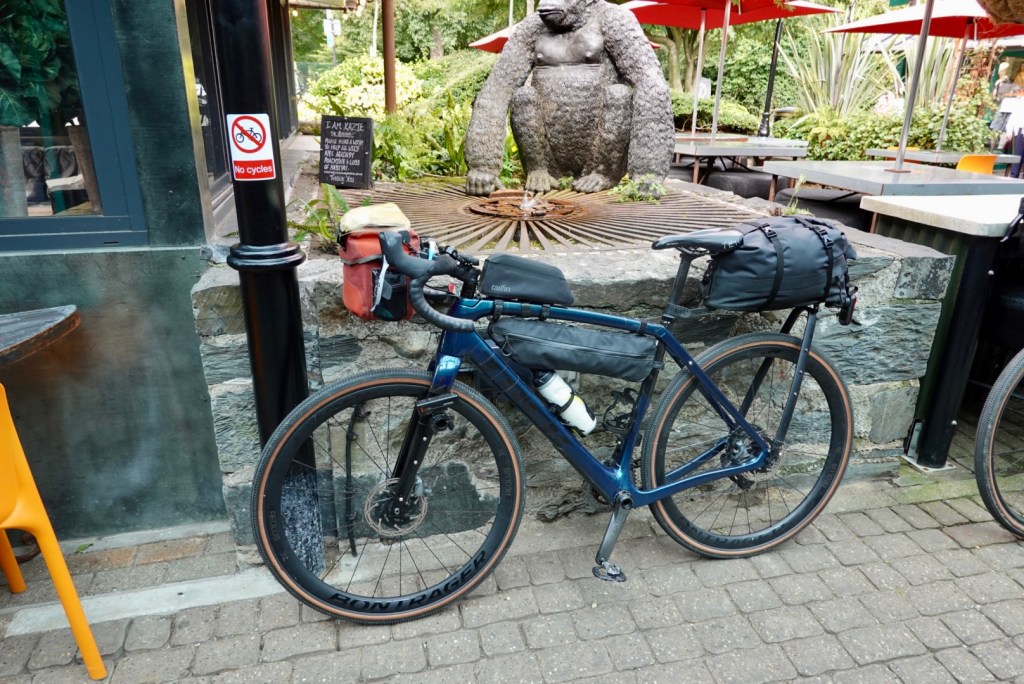
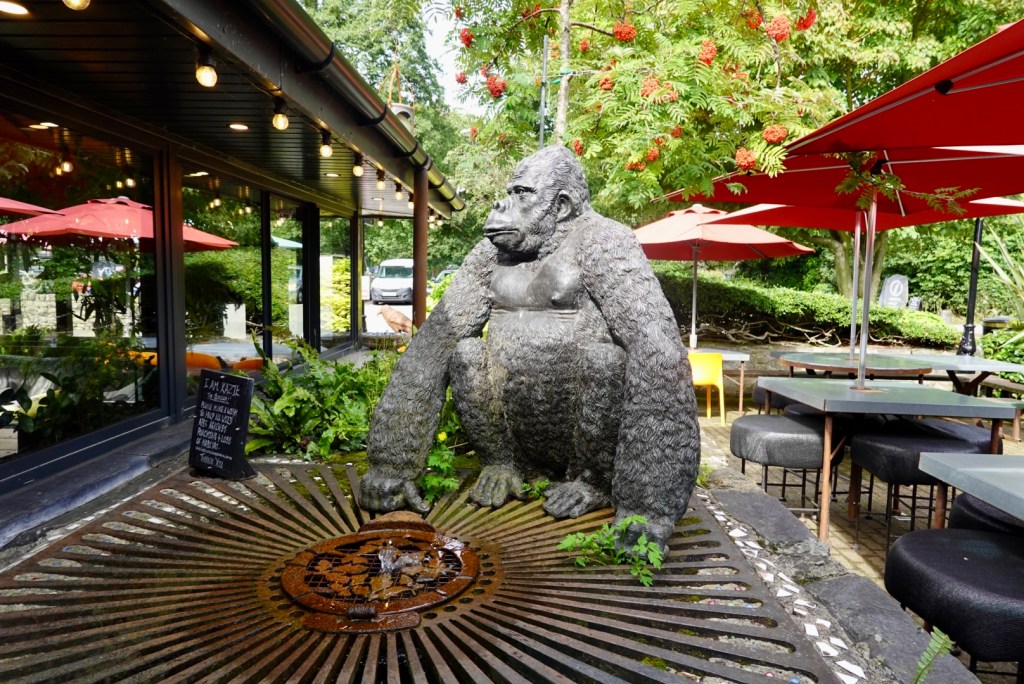
We found it! The Alpine coffee shop, complete with a bike on the glass roof, and an orangutan.

The No Bikes signs were everywhere.

Inside the coffee shop they have items to sell raising funds for the preservation of endangered orangutans. This is a cause dear to my heart, as for a number of years I was the Tasmanian Coordinator for the Australian Orangutang Project, aiming to raise awareness and funds to assist stop these intelligent and beautiful animals becoming extinct.

How can you help? Do not buy products with palm oil (unless certified sustainable), donate or sponsor an orphaned orangutan, and learn more about their plight. Australian Orangutan Project

I threw some pounds into the wishing well ❣️
Behind the cafe are old railway carriages, and station platform.

Tony looking suitably impressed

Next door to the Alpine Cafe is another cafe, with this sign. We did laugh.

Leaving town we passed by this church. A relatively young church built in 1870, replacing the former 14th century church.

Heading out of town we climbed from about 28 km to 50 km. It was very doable and easier than the graph looks.

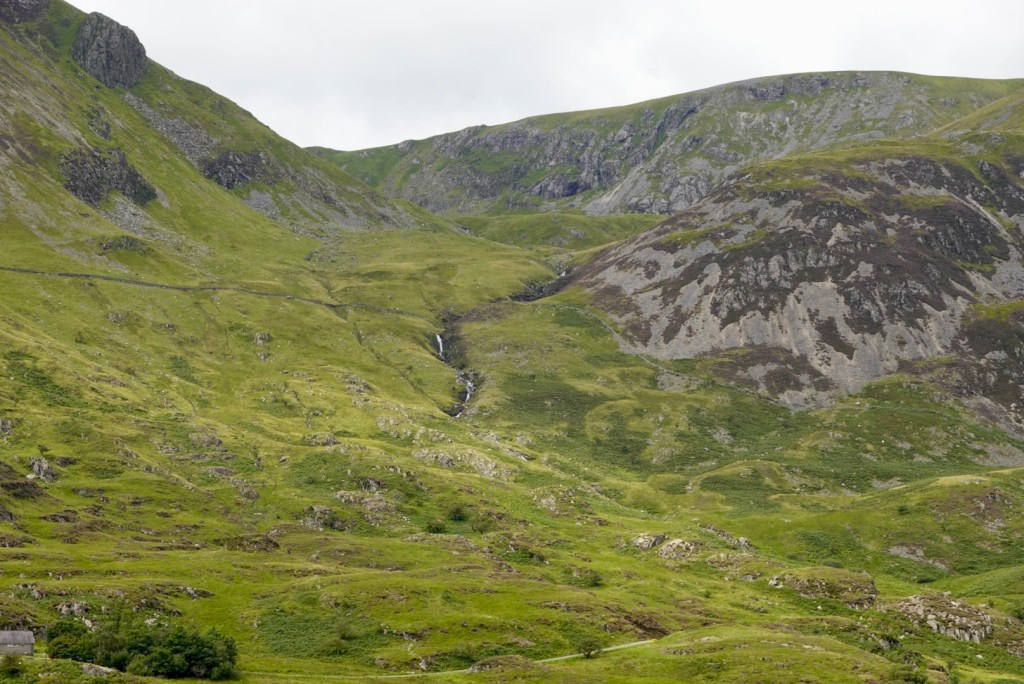
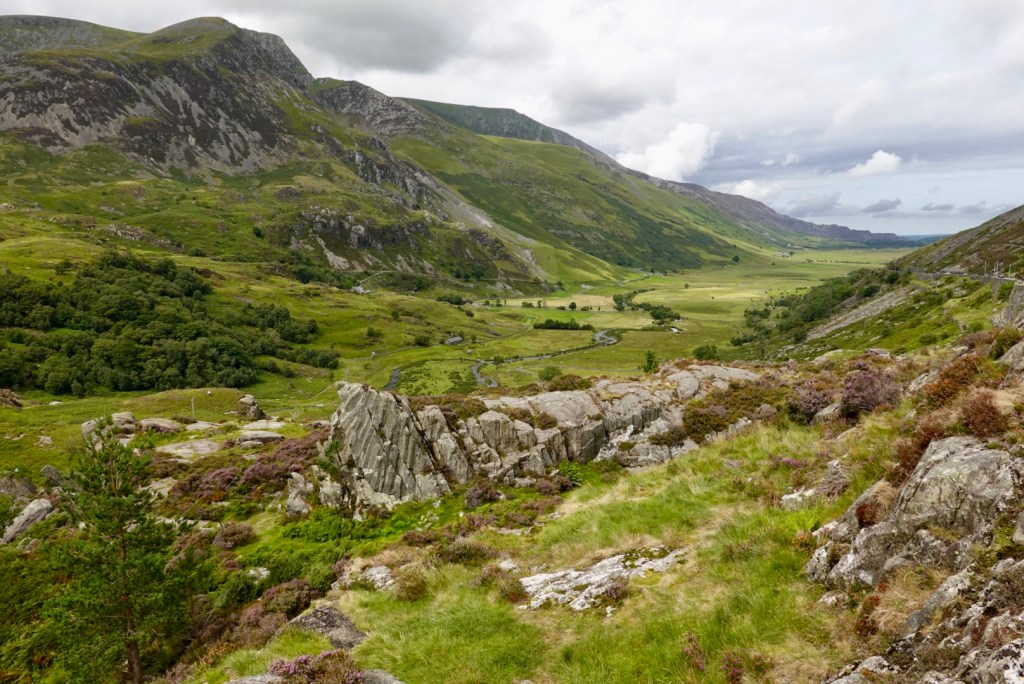
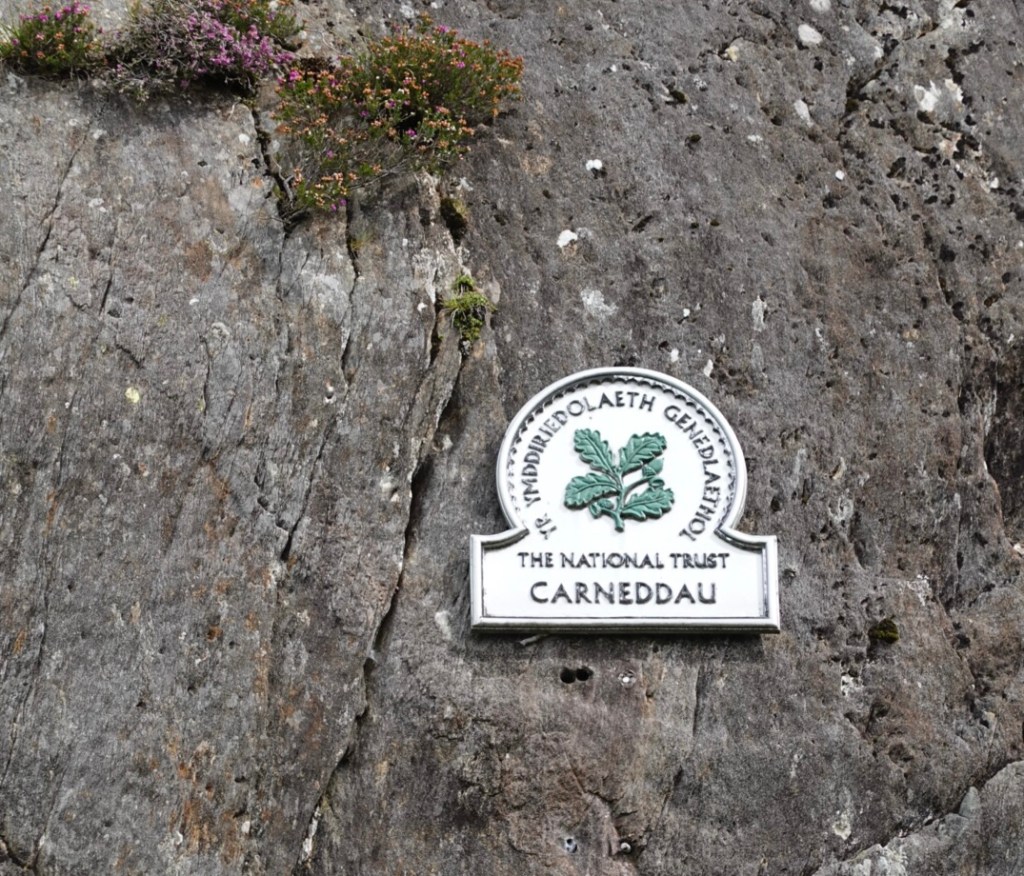
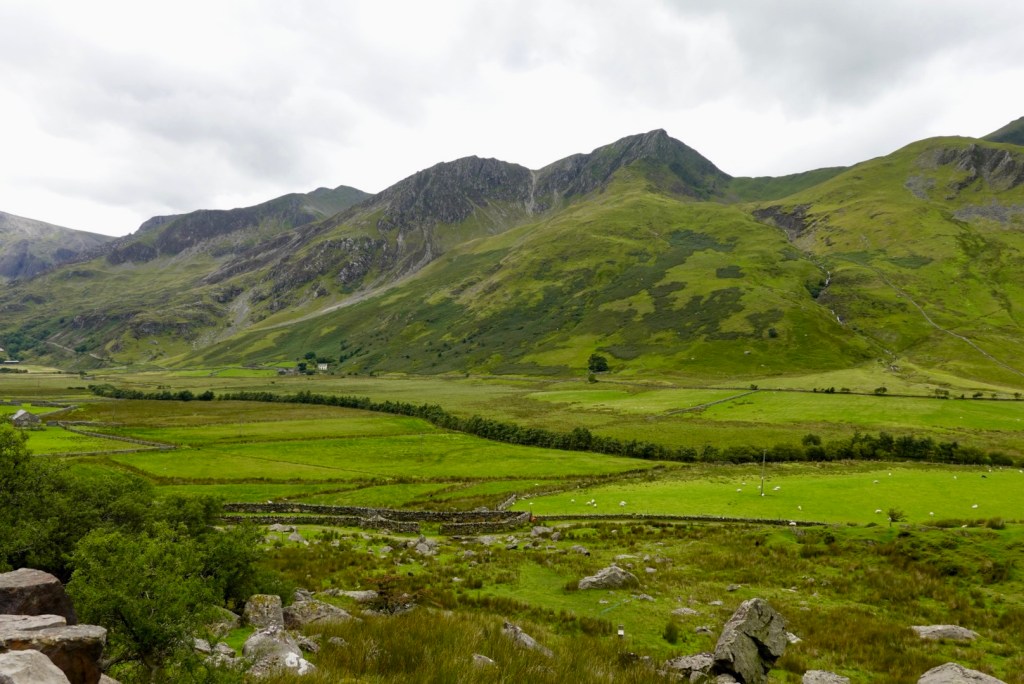
We were riding along the A5 between two our twin ranges of Snowdonia, the Carneddau and the Glyderau.

It was spectacular, and the photos do not show how high they really are. It was awesome riding this region. Lots of ‘wows’.

A string of photos as we progressed along the road.

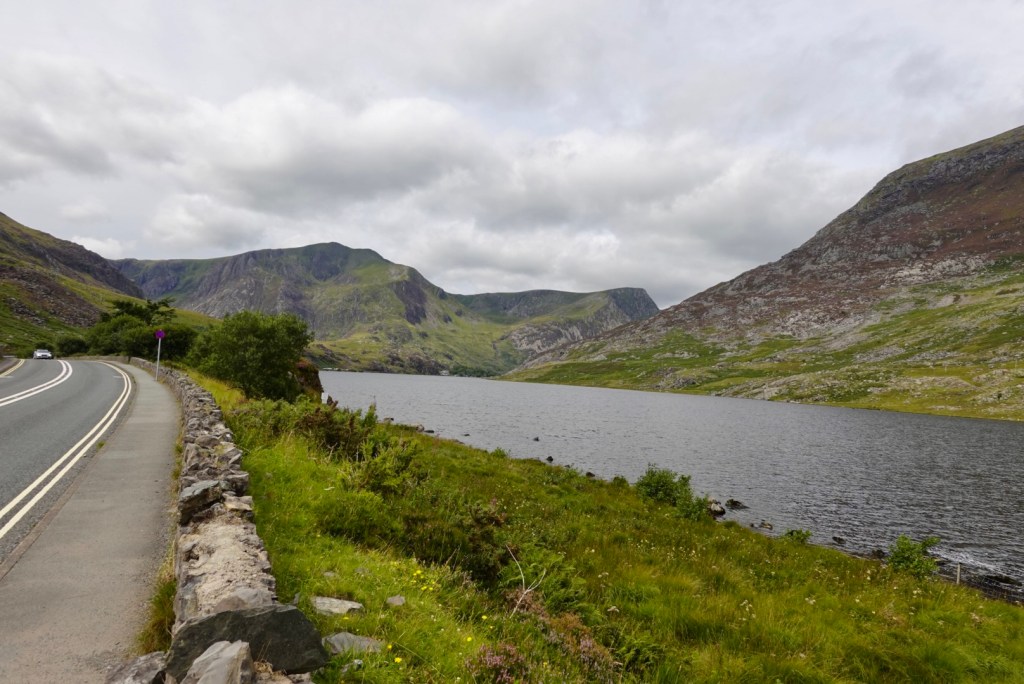
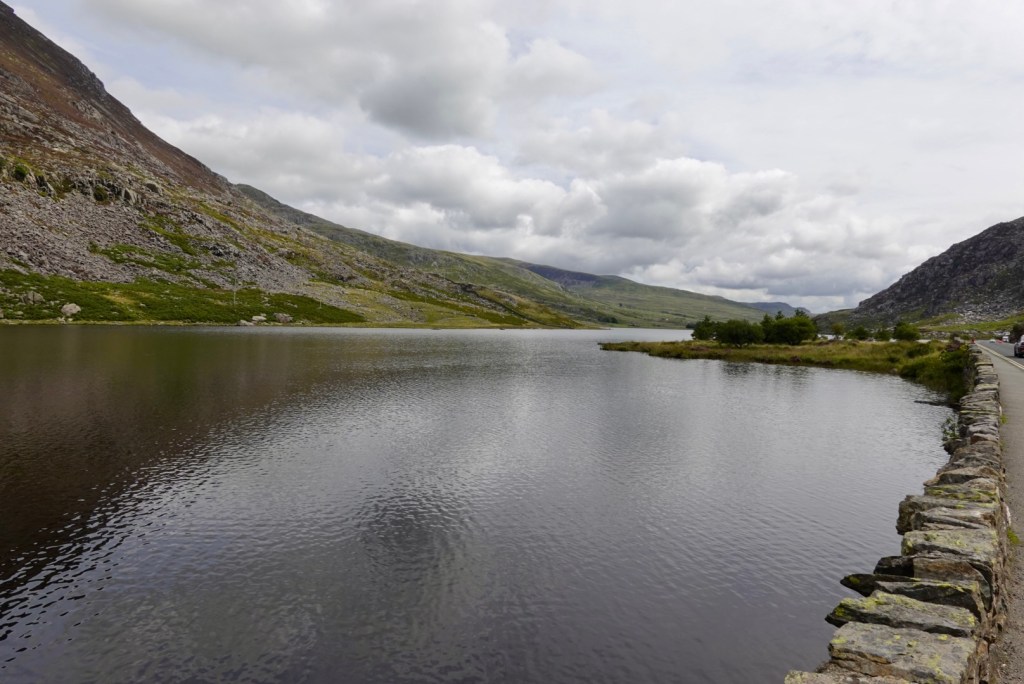
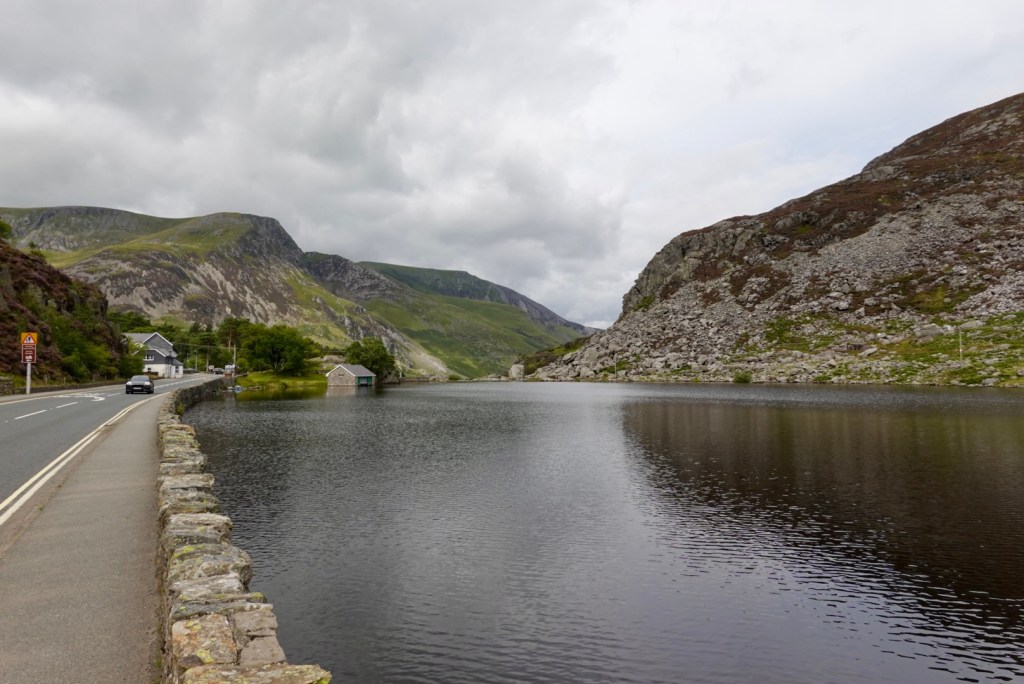
A lake approached. Llyn Ogwen lies at a height of 310 masl, and has an area of 78 acres. It is very shallow with a maximum depth of 3 metres.

Of far greater interest though, it is claimed that after King Arthur’s final battle (Battle of Camlann), Sir Bedivere cast the sword Excalibur into this lake, where it was caught by The Lady of the Lake.

One of the Zwift clubs has referred to me on many occasions as The Lady of the Lake, when we are having a Monty Python banter fest, so riding by this lake did give me a laugh and giggle.

Click to view a video of the lake area.

Before we descended we pulled off the road as we crossed a bridge to have a look.

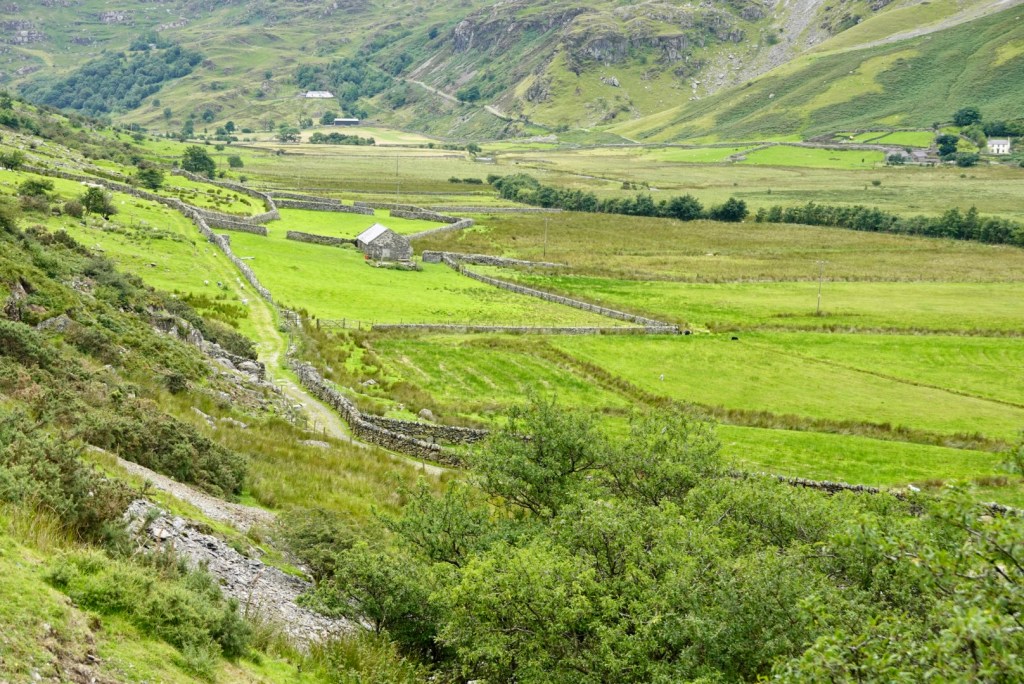
Looking back up the mountains you can see old stone fences.

I particularly liked this one looking down the valley.

Over the road walking trail signs pointed the way.

Descending and looking back

note all the stone fences

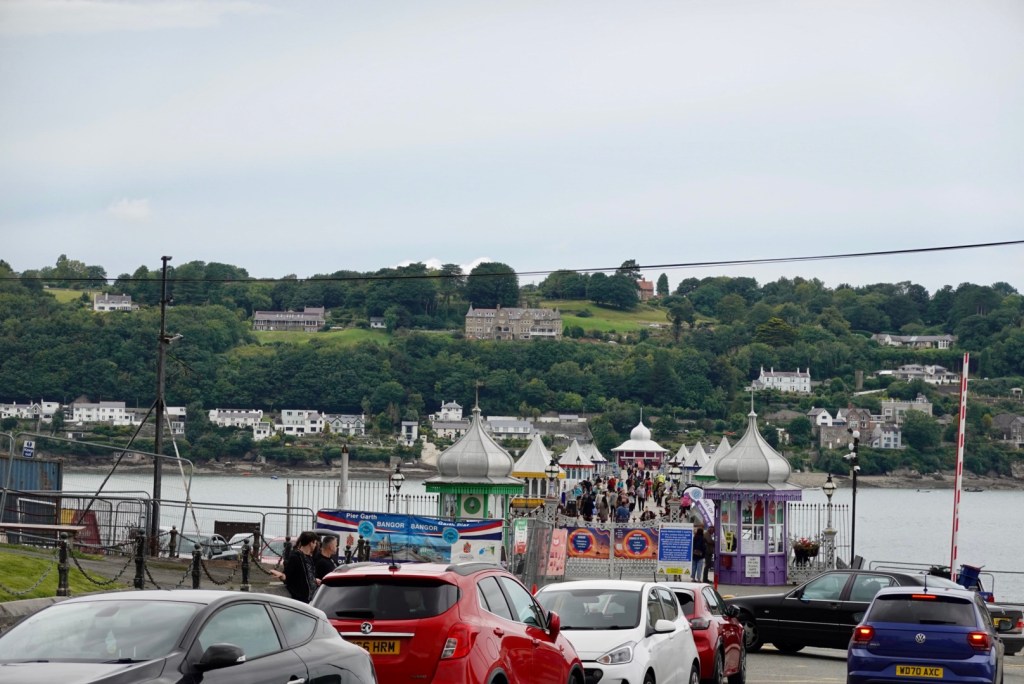
Having left the mountains we arrived back on the coast at Bangor at the Menai Strait. The jetty was super busy.

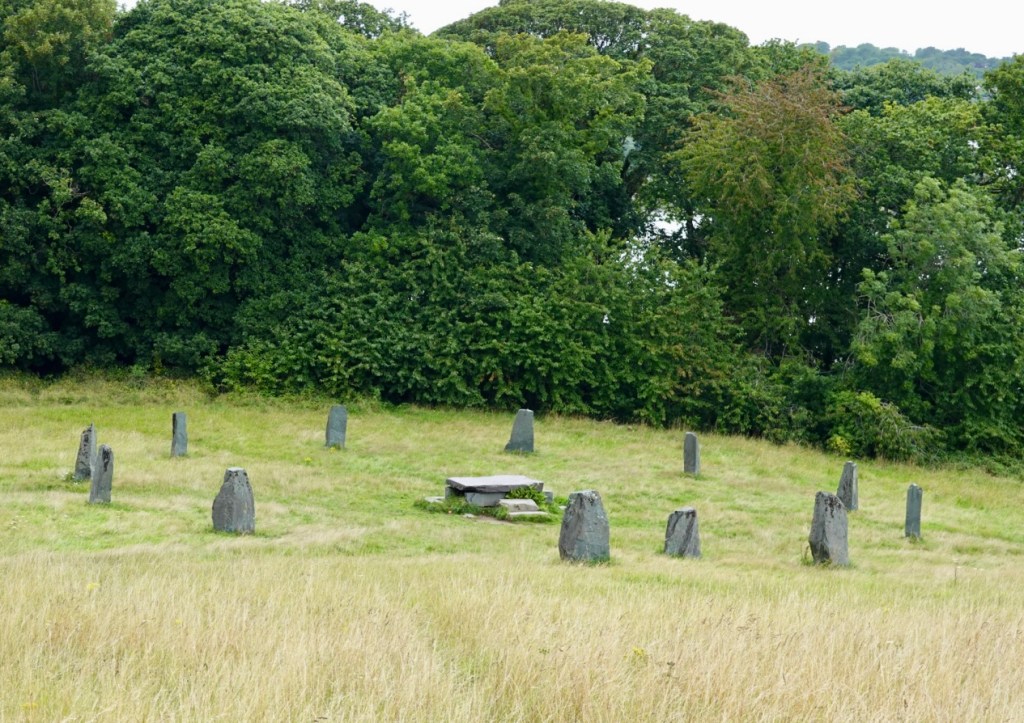
Although there was no interpretive panel, these stones and sacrificial slab are not ancient ruins. I think these are Gorsedd stones, which form an integral part of Druidic Gorsedd ceremonies.

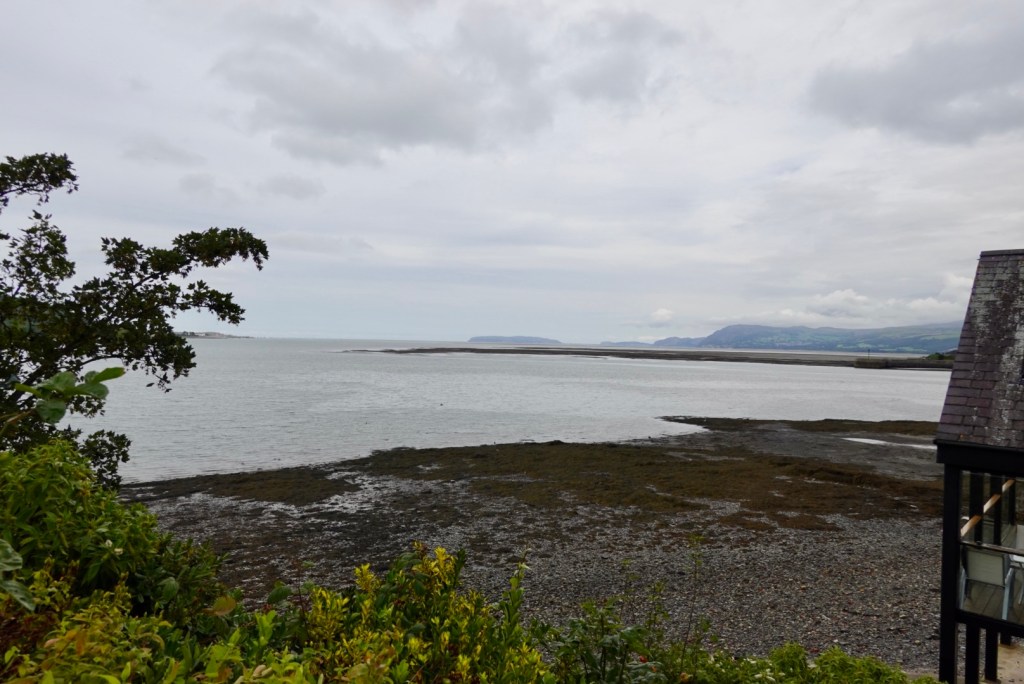
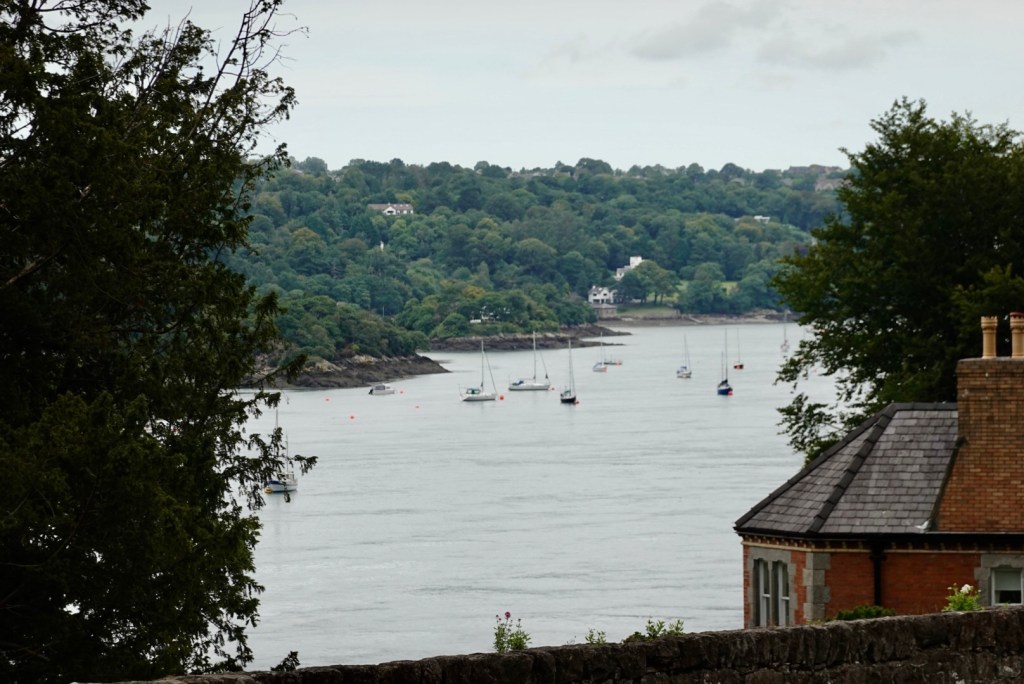
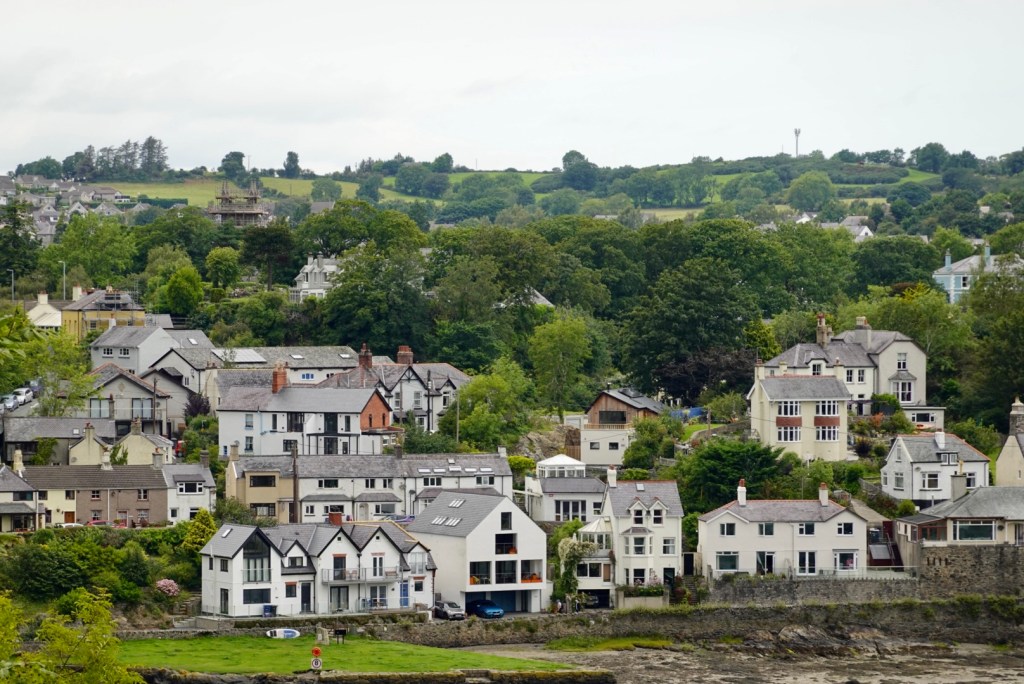
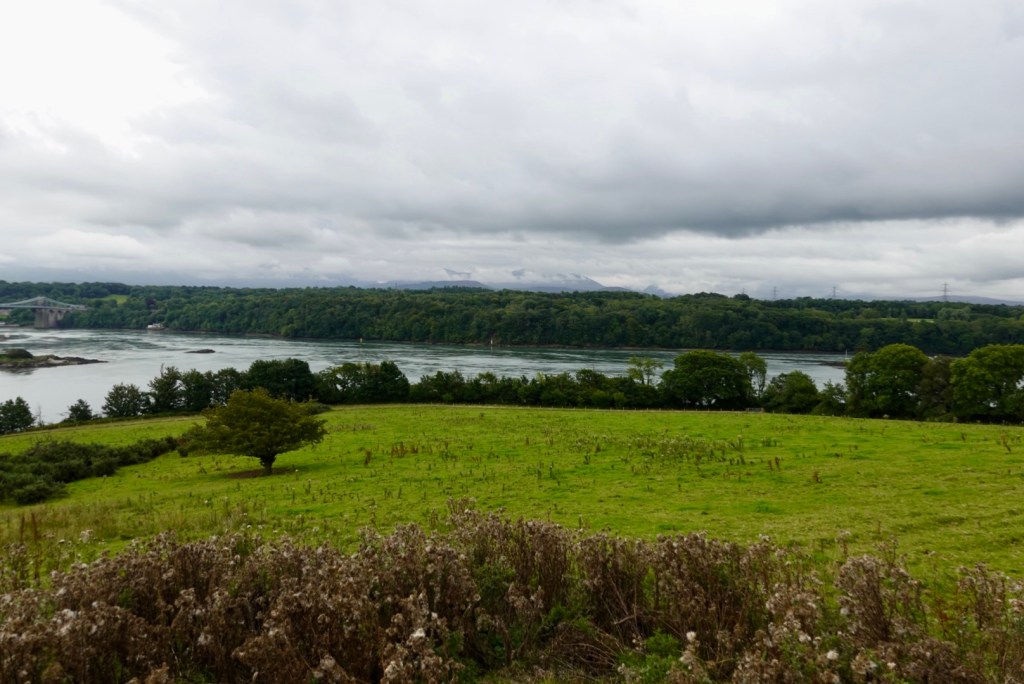
There were pleasant views across the Menai Strait to the island of Anglesey.

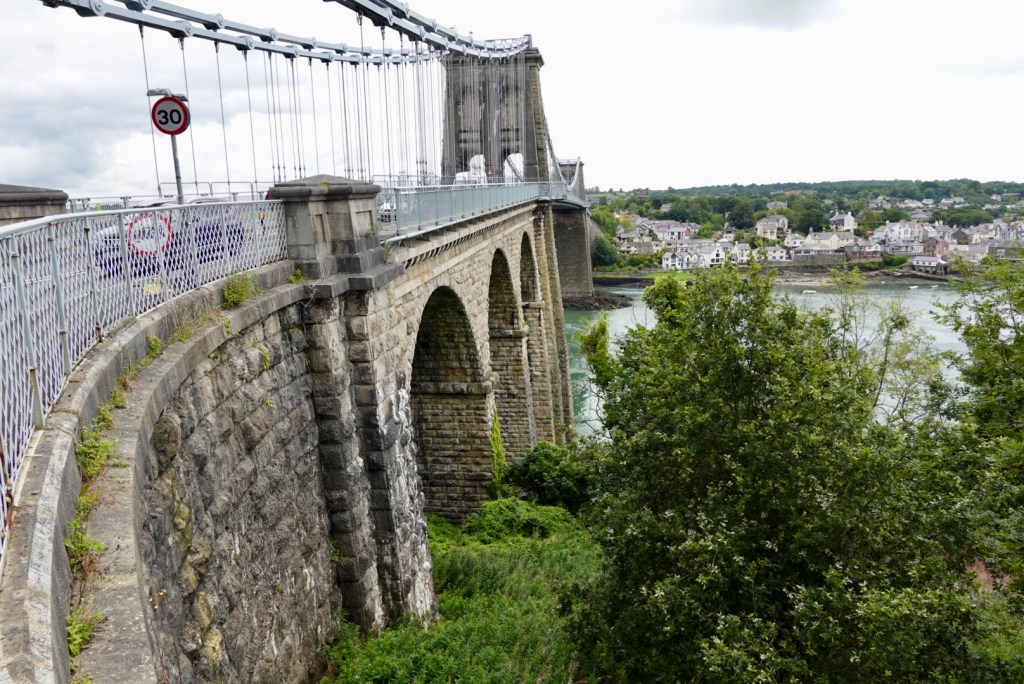
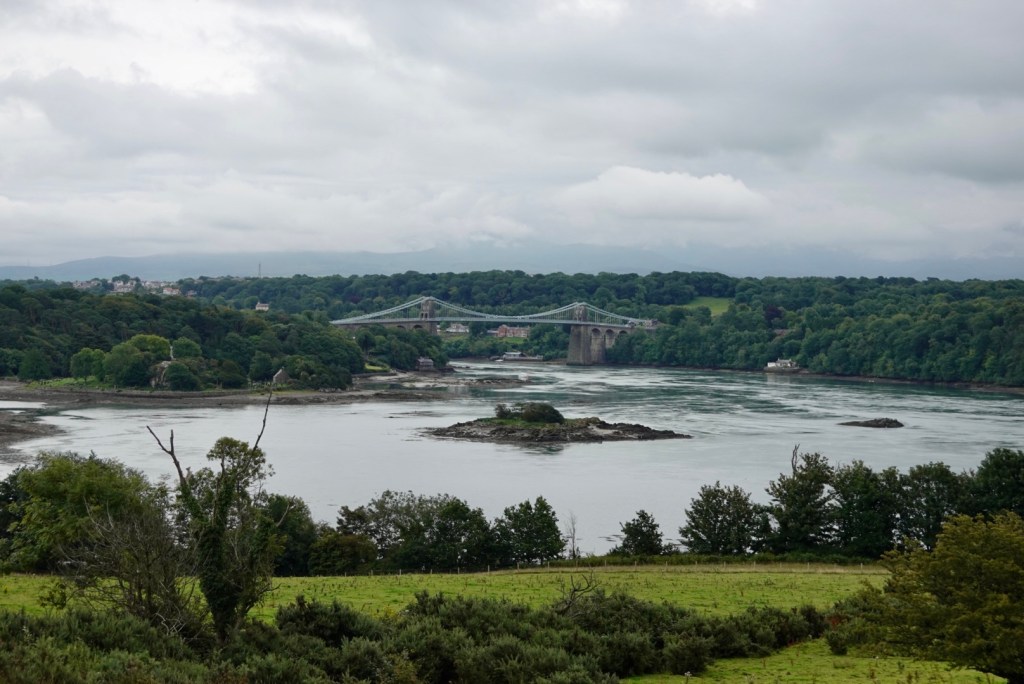
The Menai Bridge was built by Thomas Telford in 1826….I mentioned him yesterday re the aqueducts we visited. He was a super busy man! We crossed this bridge to Anglesey.

Looking back towards the Menai Bridge.

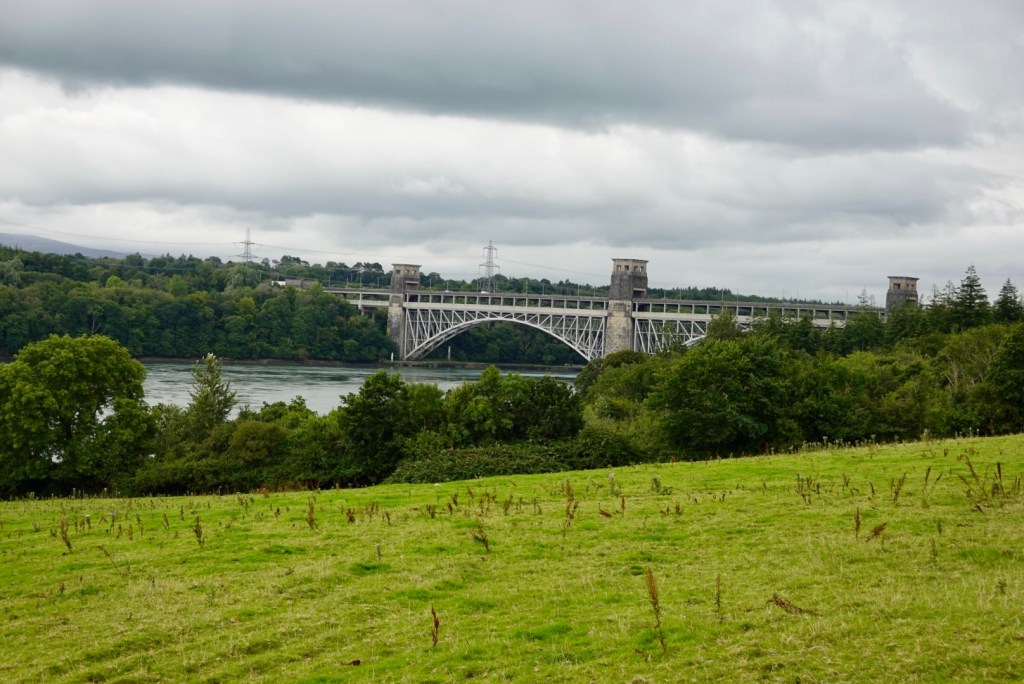
Looking forwards towards the second crossing, the Britannia Bridge.

Nice views and forests.

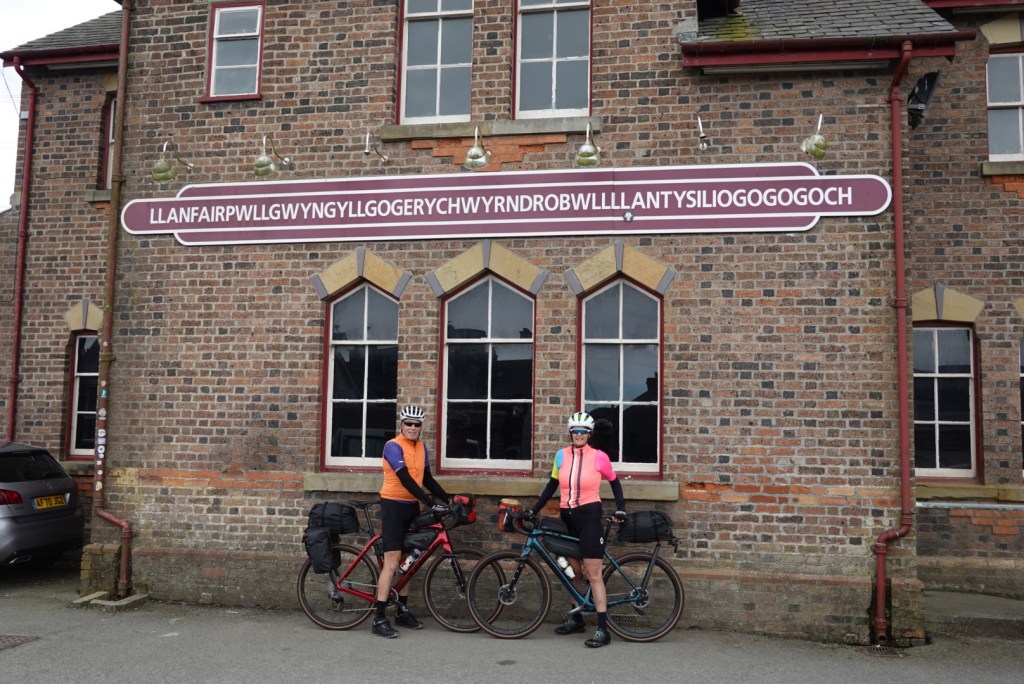
Then we arrive at the town with the unpronounceable name! That is the shortened version.

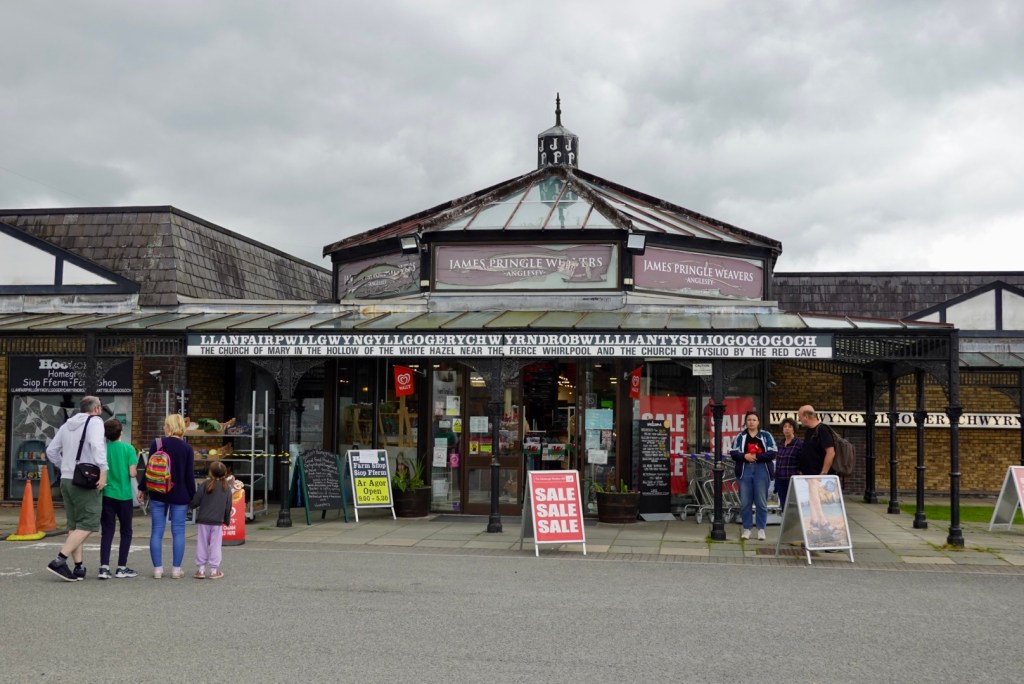
In full, knock yourself out!

The tourist hub has what it means.

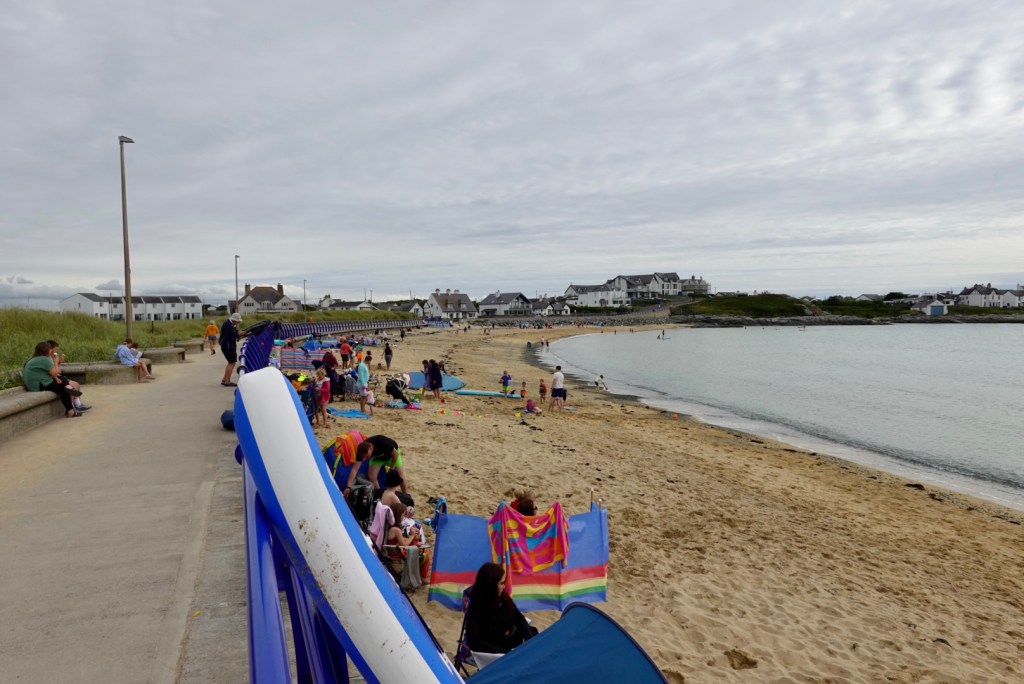
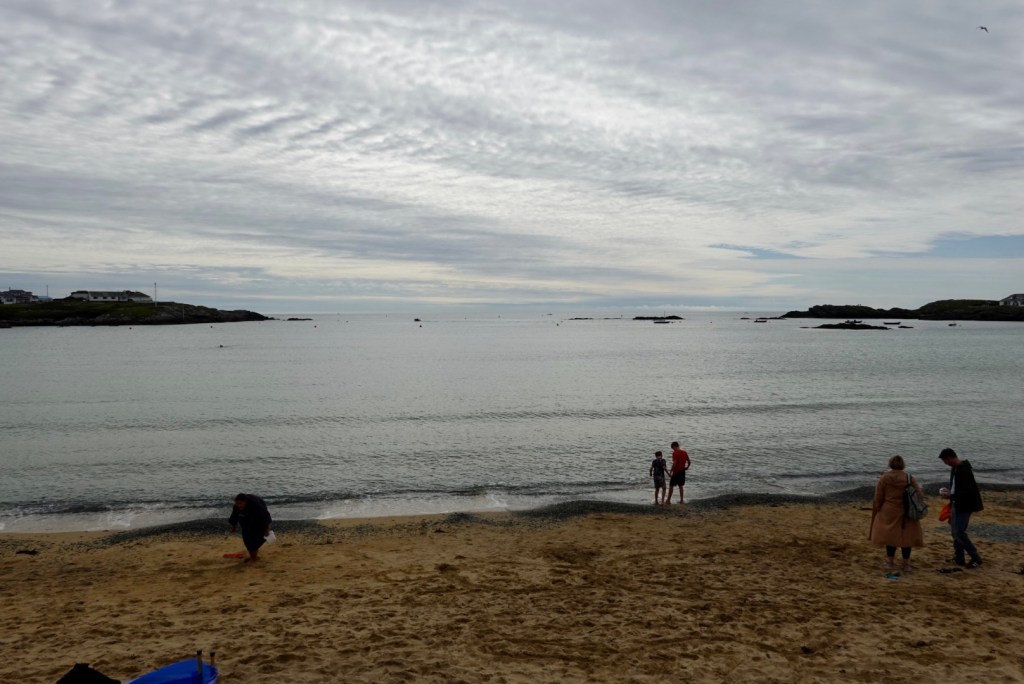
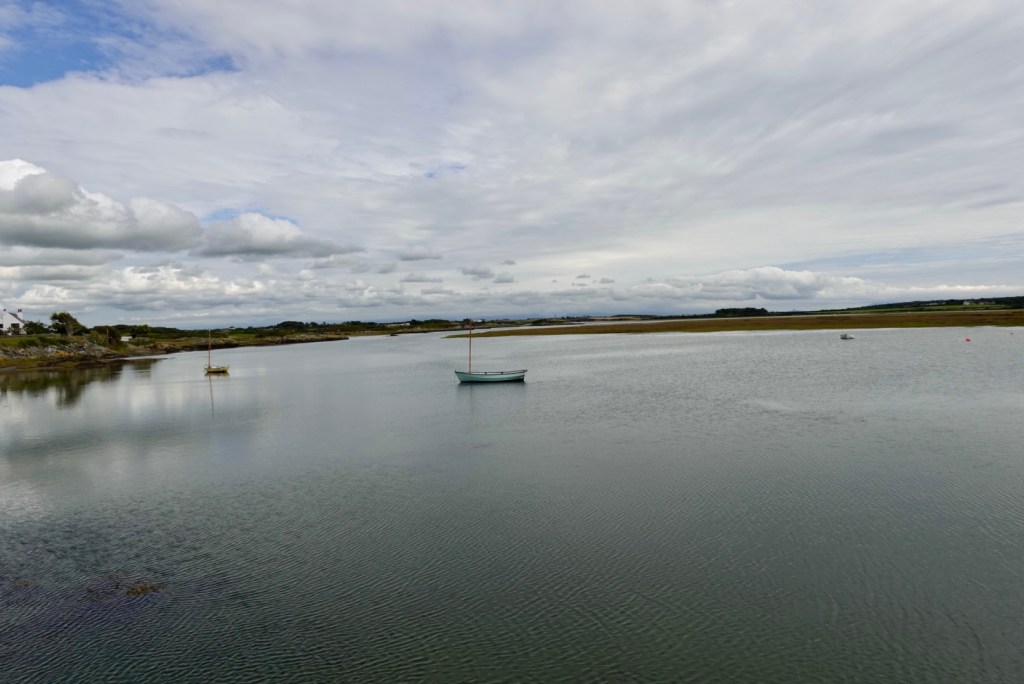
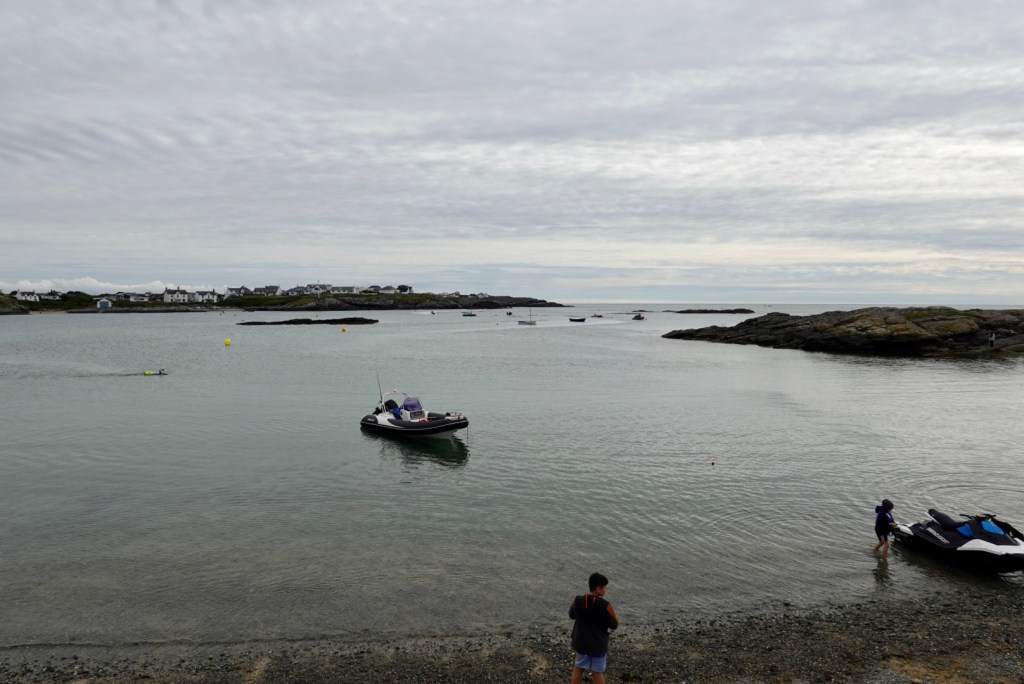
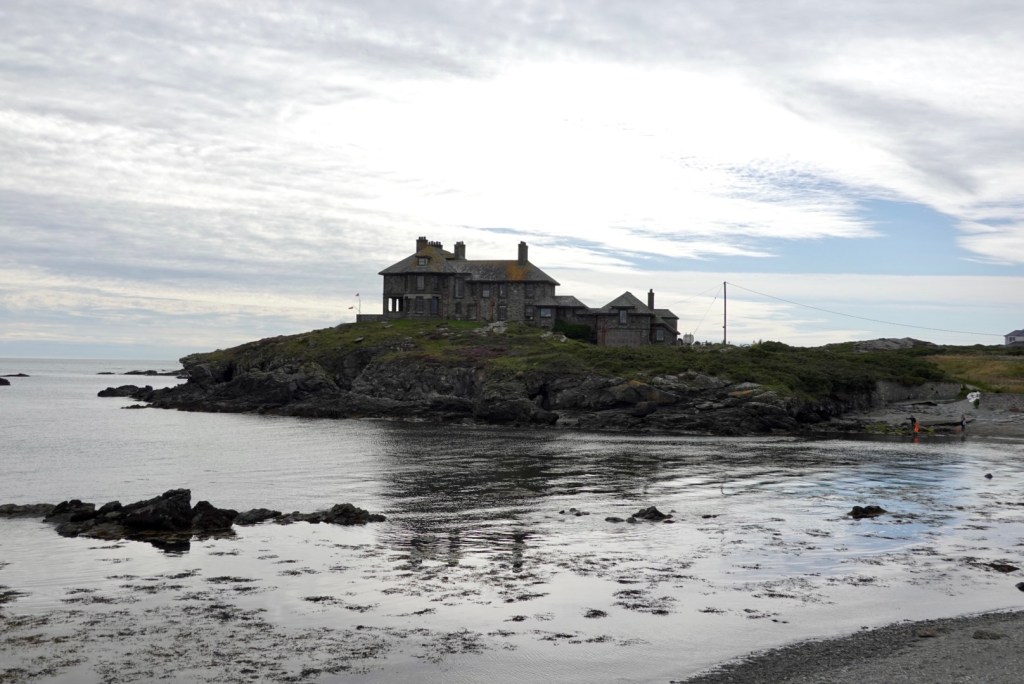
The next point of interest was on Holy Island reached by bridge crossing the Cymyran Strait. Trearddur Bay was busy with bathers and families on the beach. I checked the weather gauge. It was 17C.

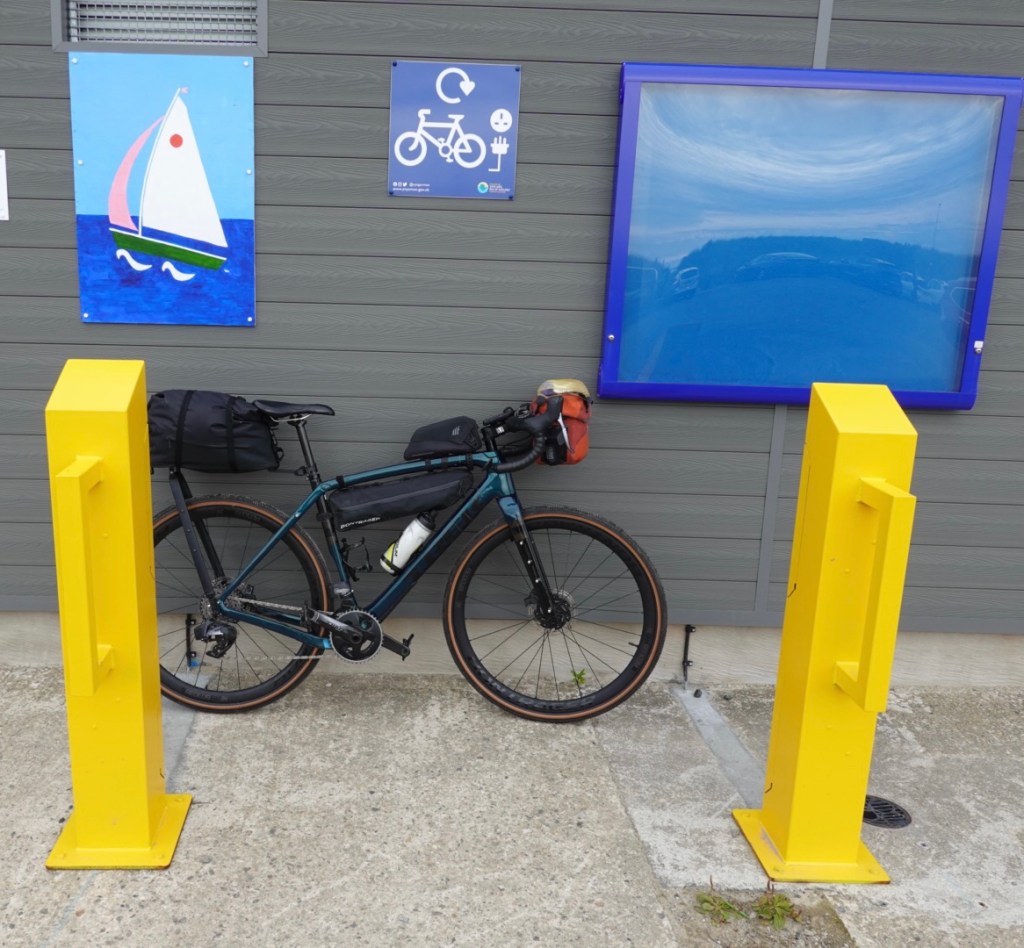
The toilets had a recharge station for e-bikes.

We were now only 5 km from our accomodation so we moved on.

The end of the last climb.

We are now in Holyhead. Another solid day, 117 km and over 1000 m climbing…again!

We ate our breakfast for dinner. Tony has a pinched nerve in his neck/shoulder area so hopefully that might abate overnight.

Thanks for reading, bed time 😊❣️