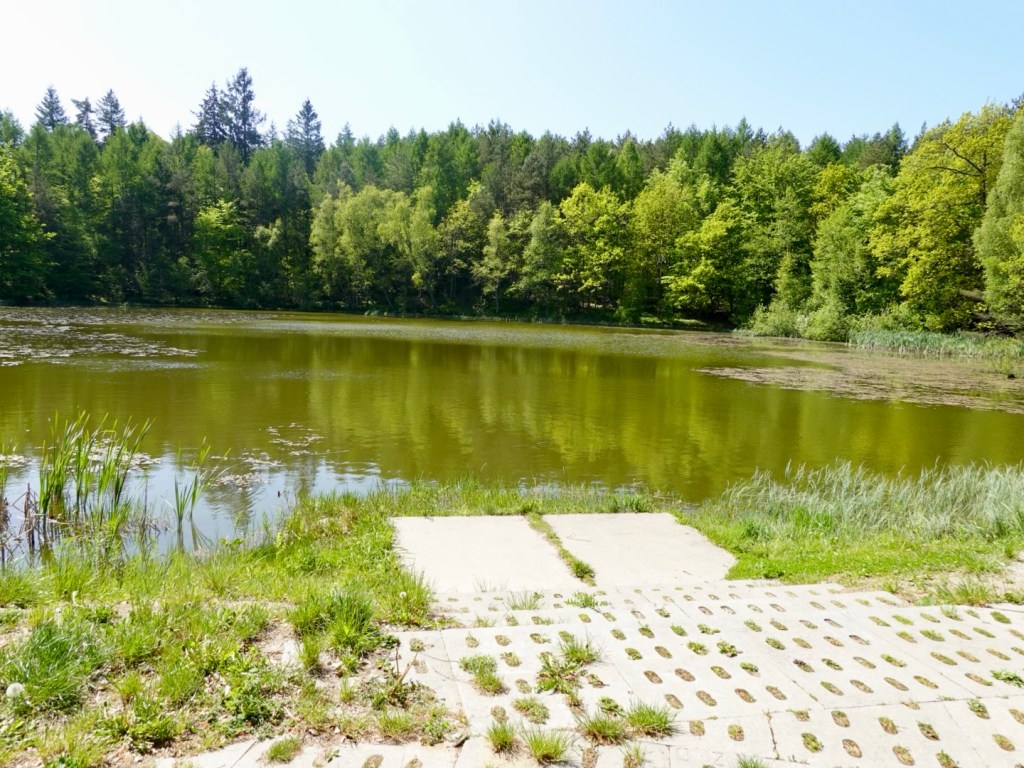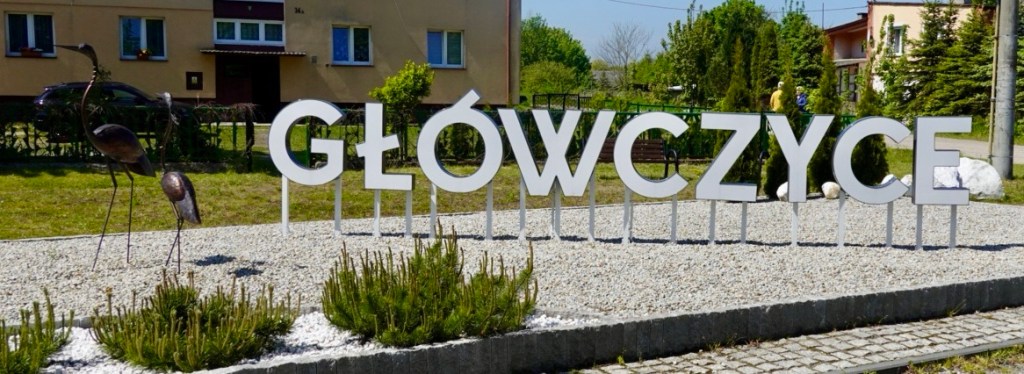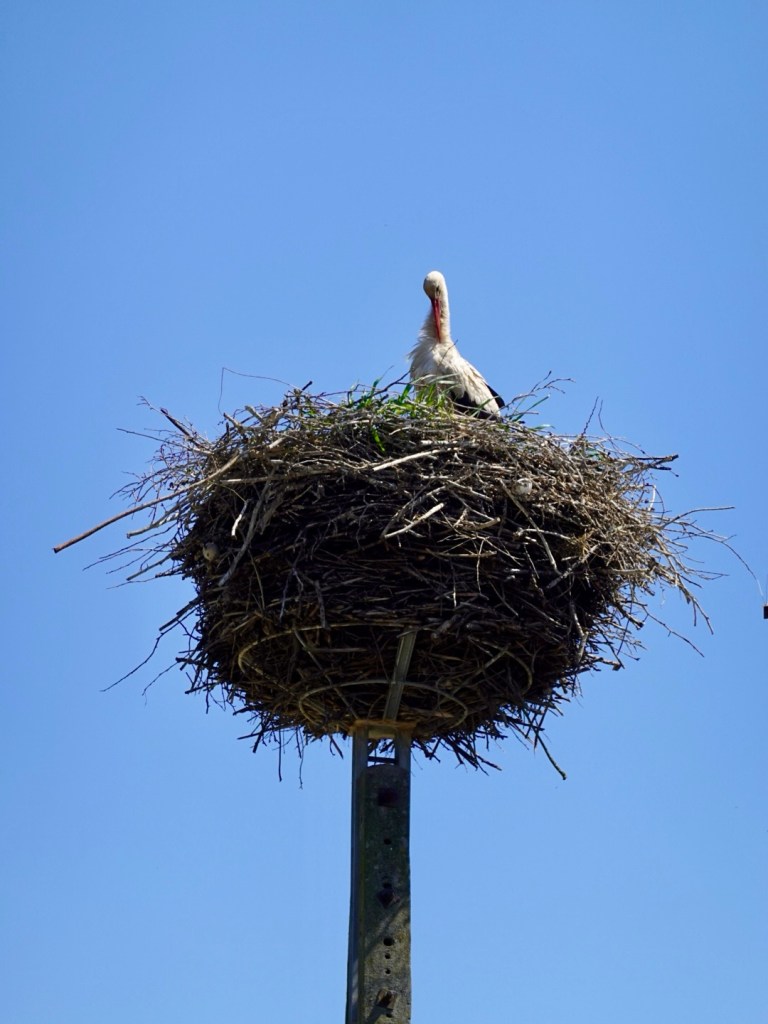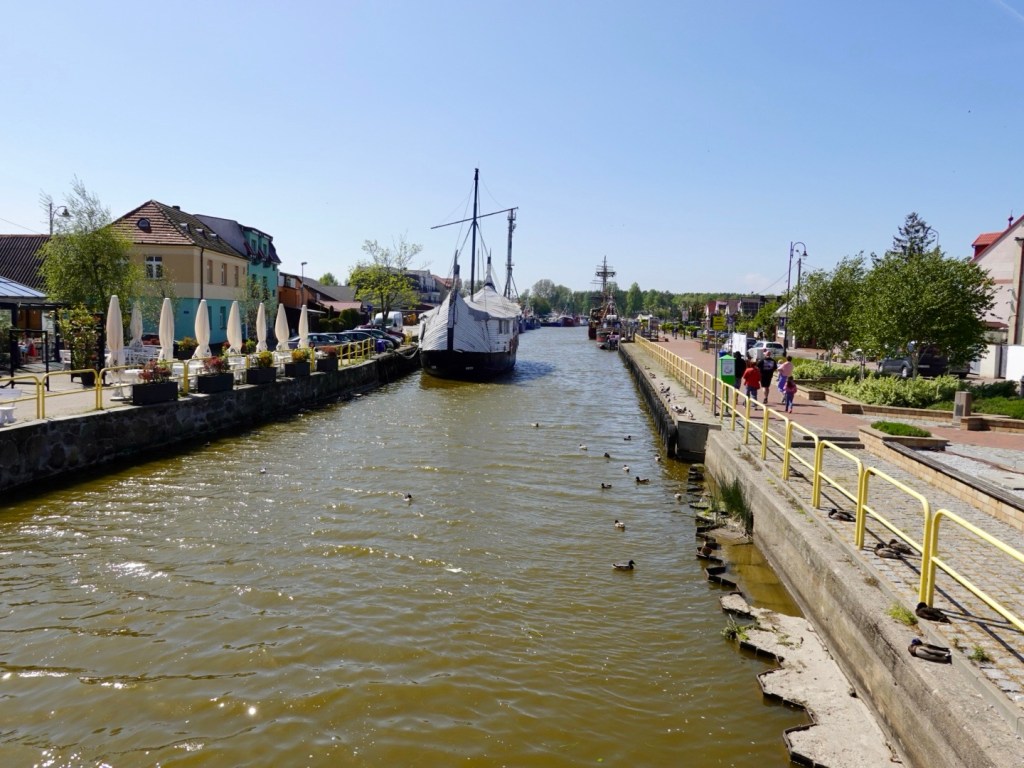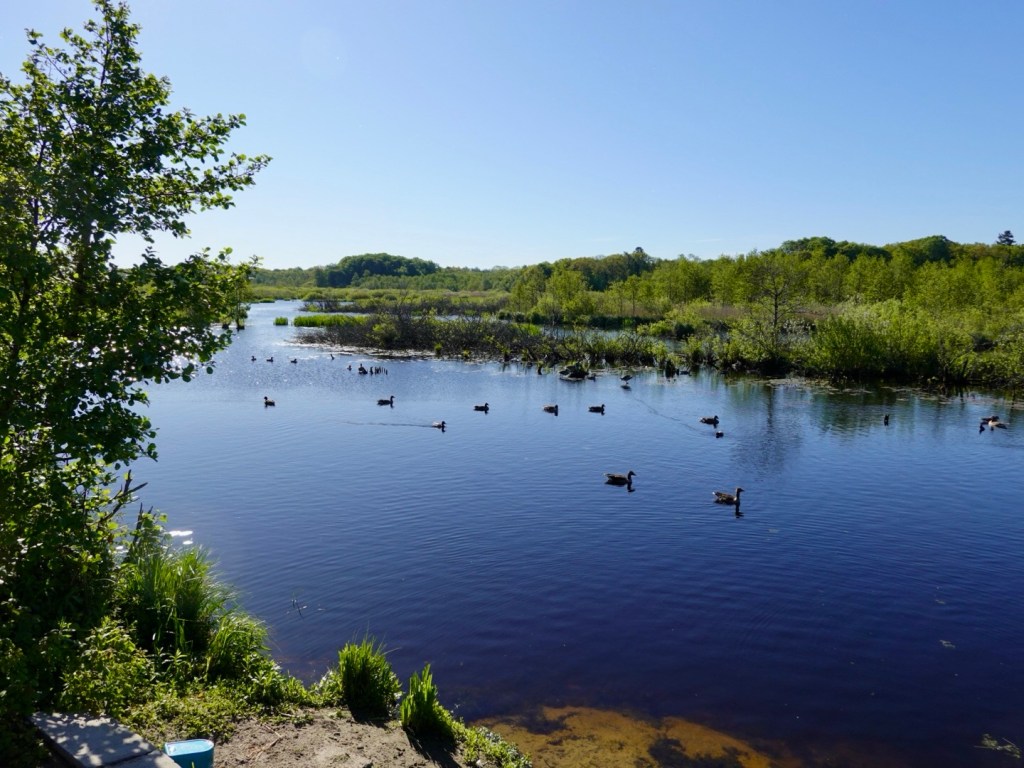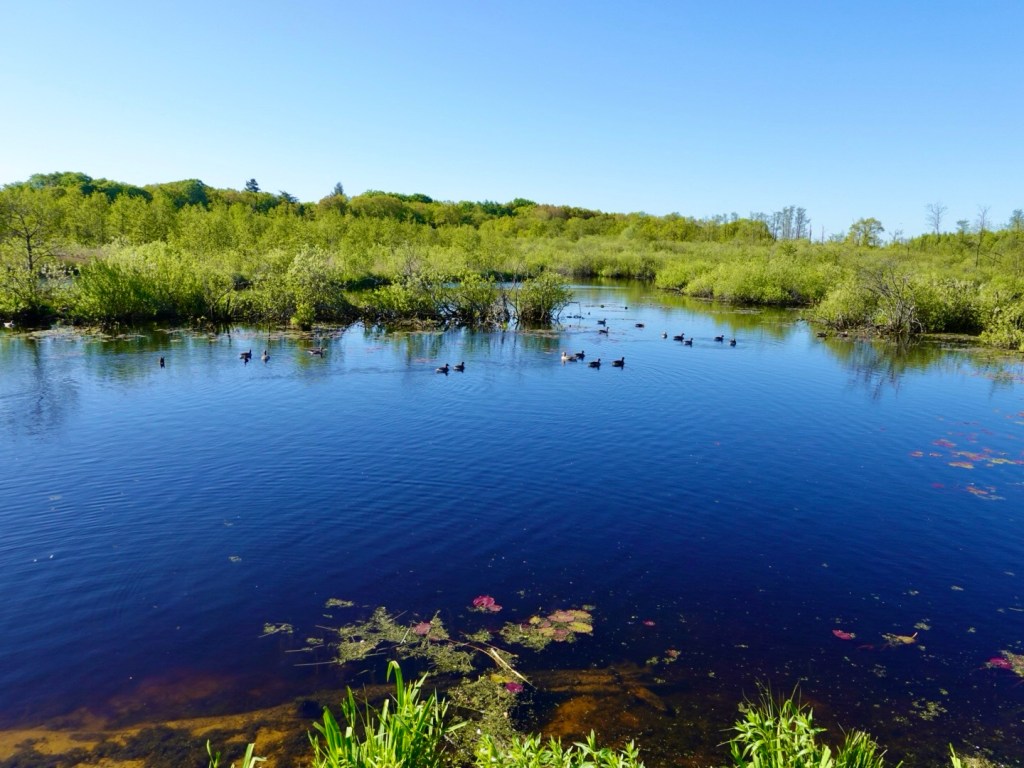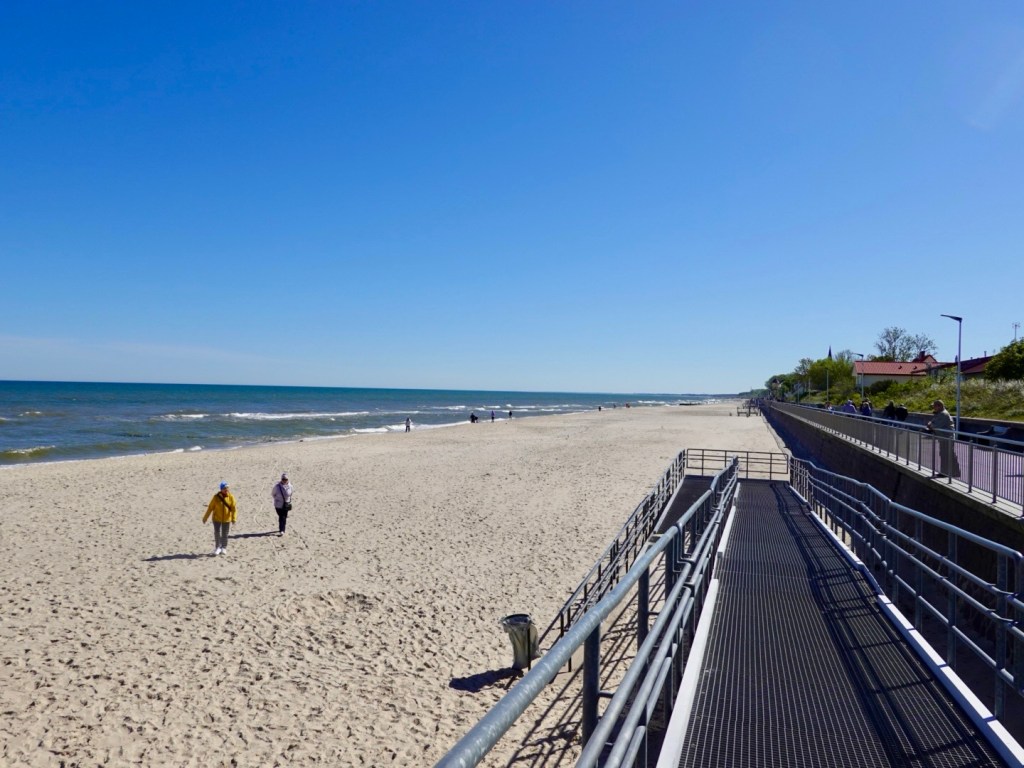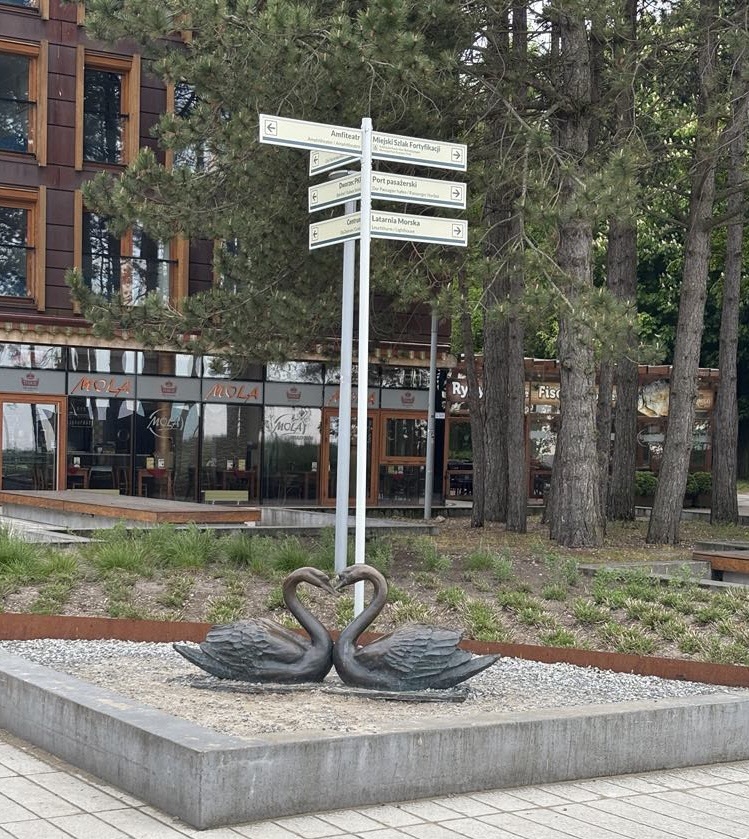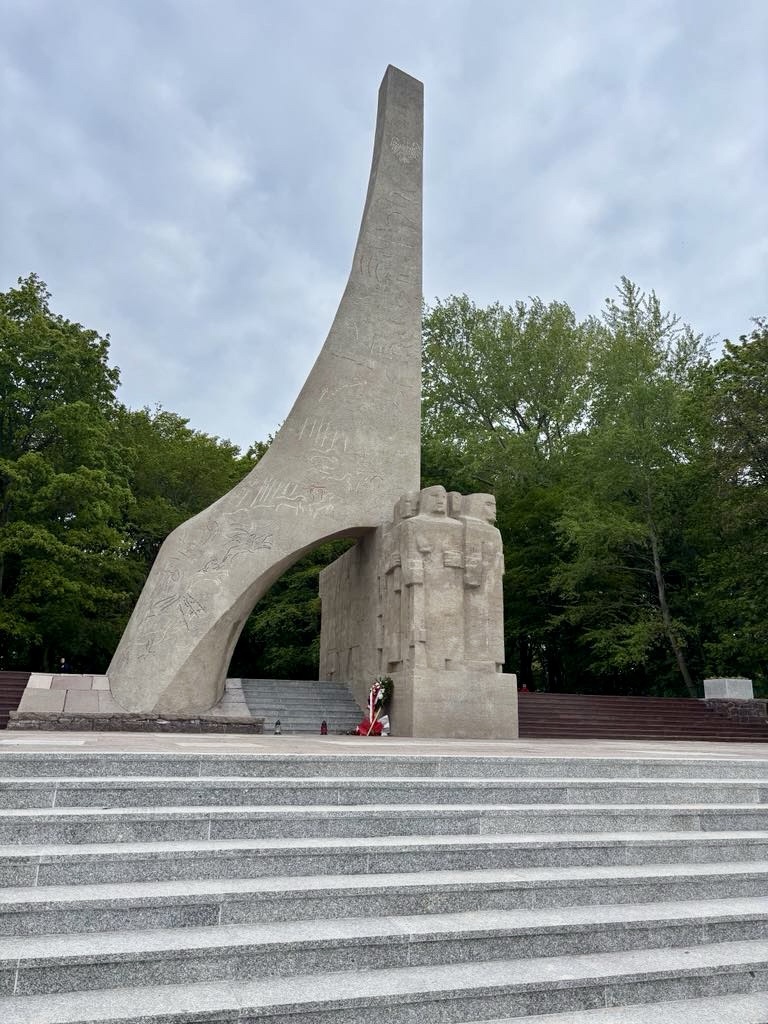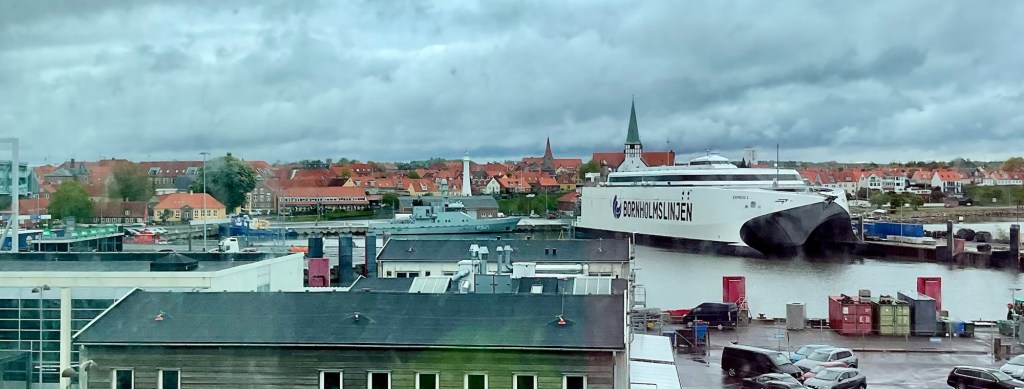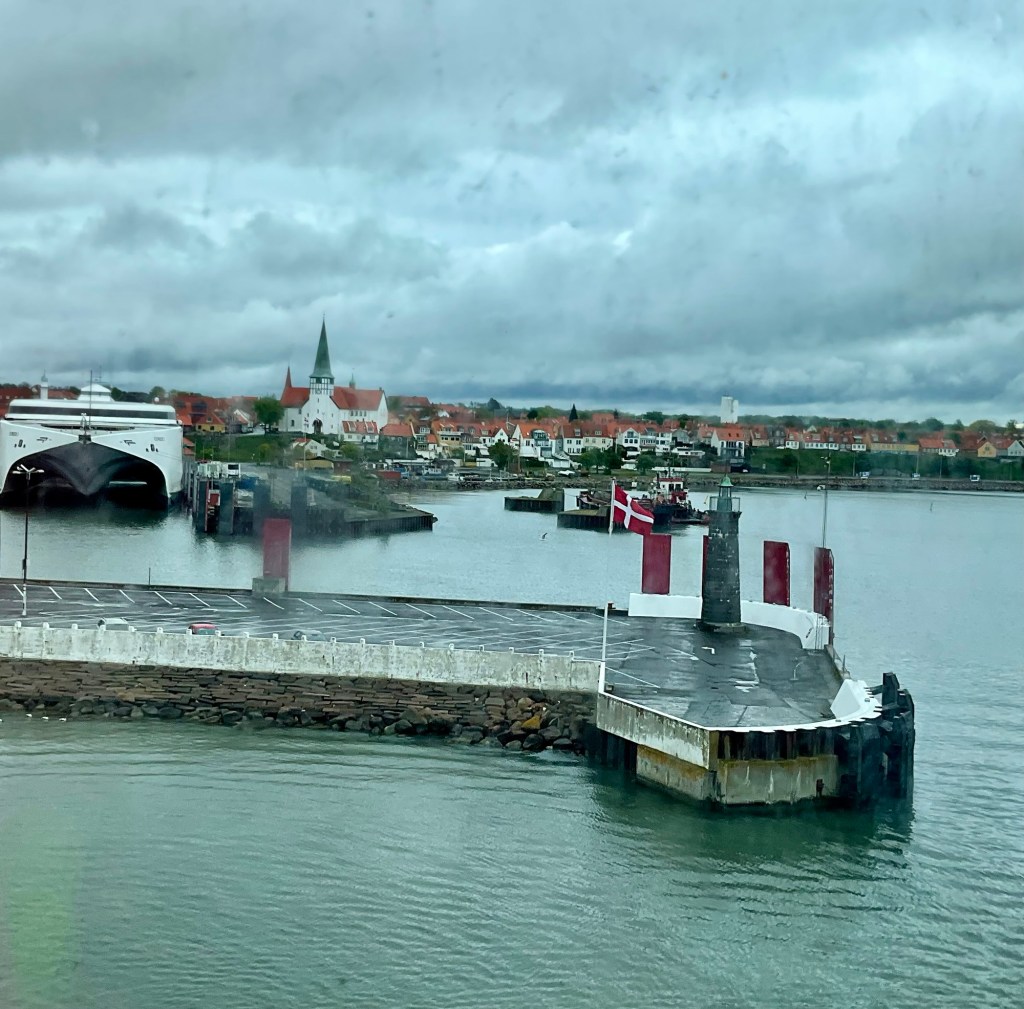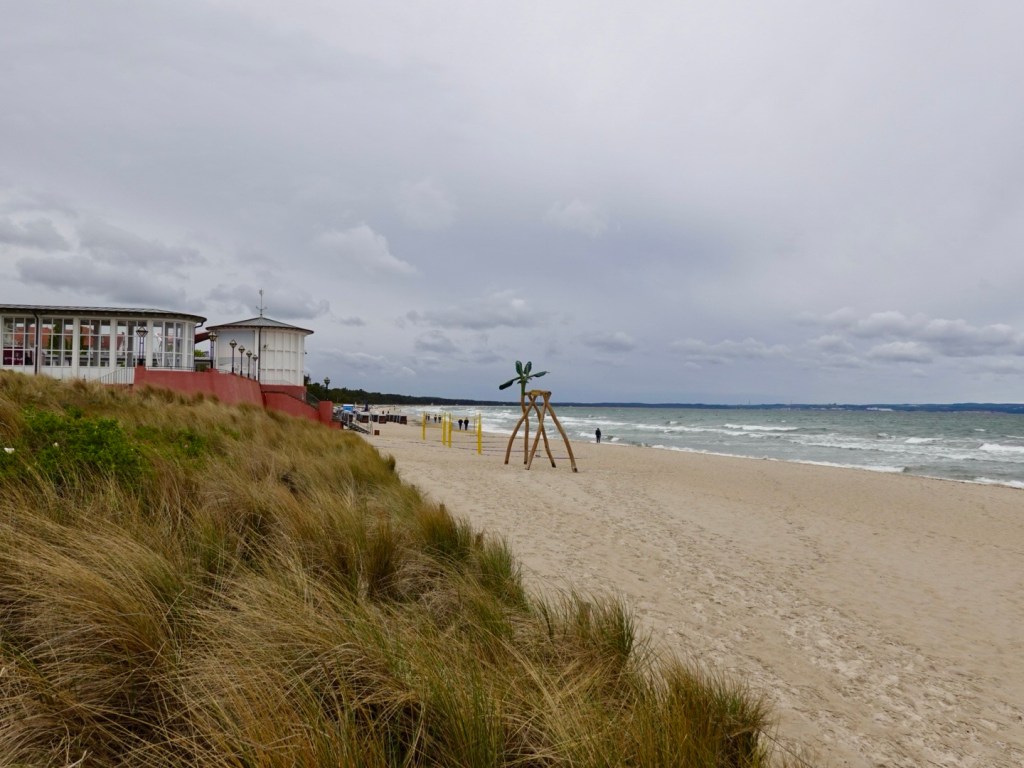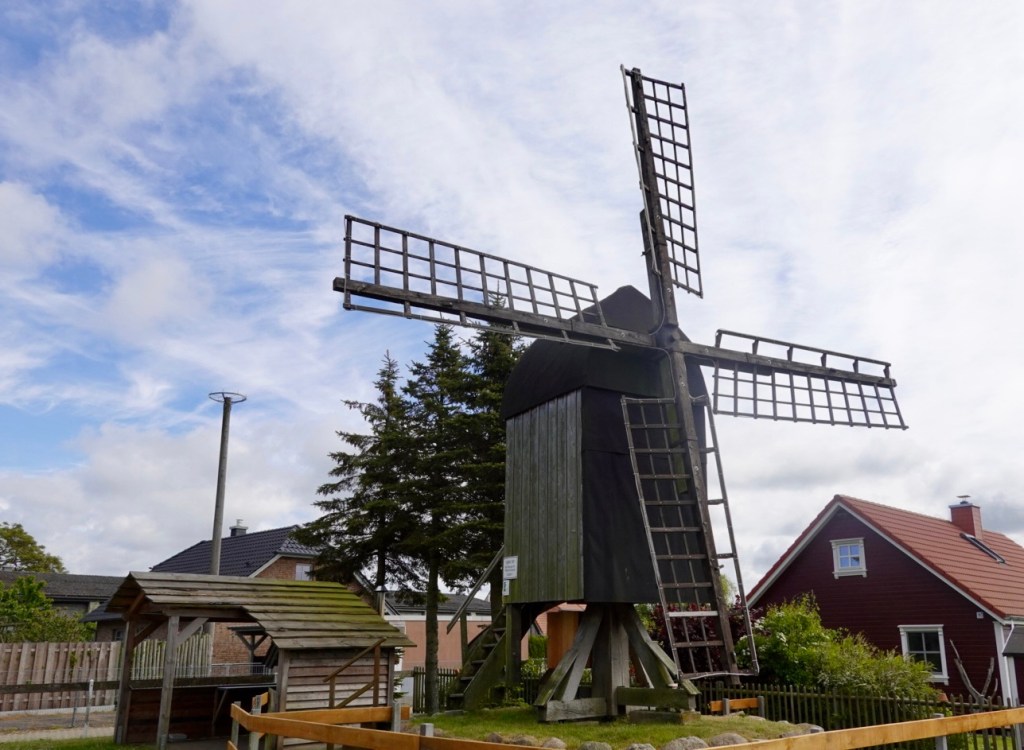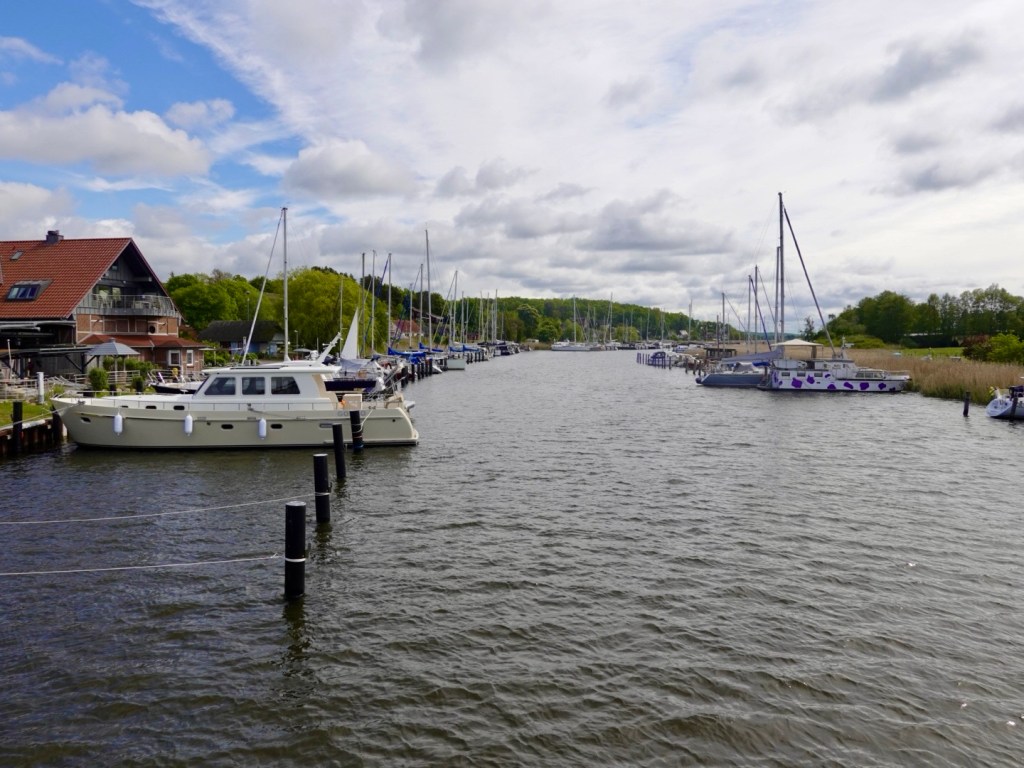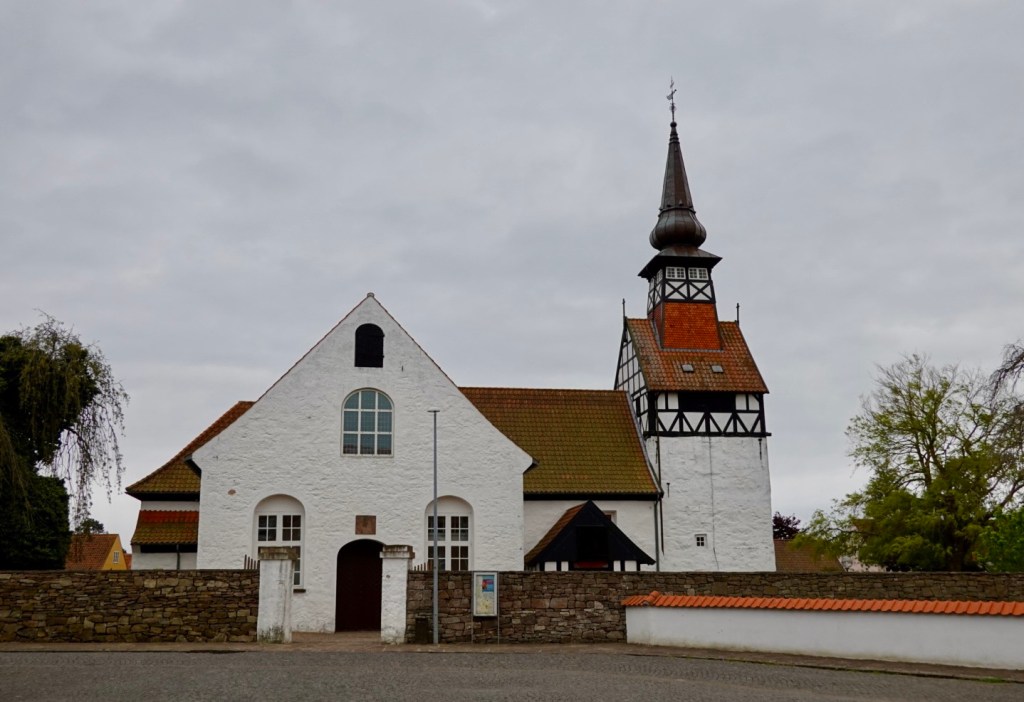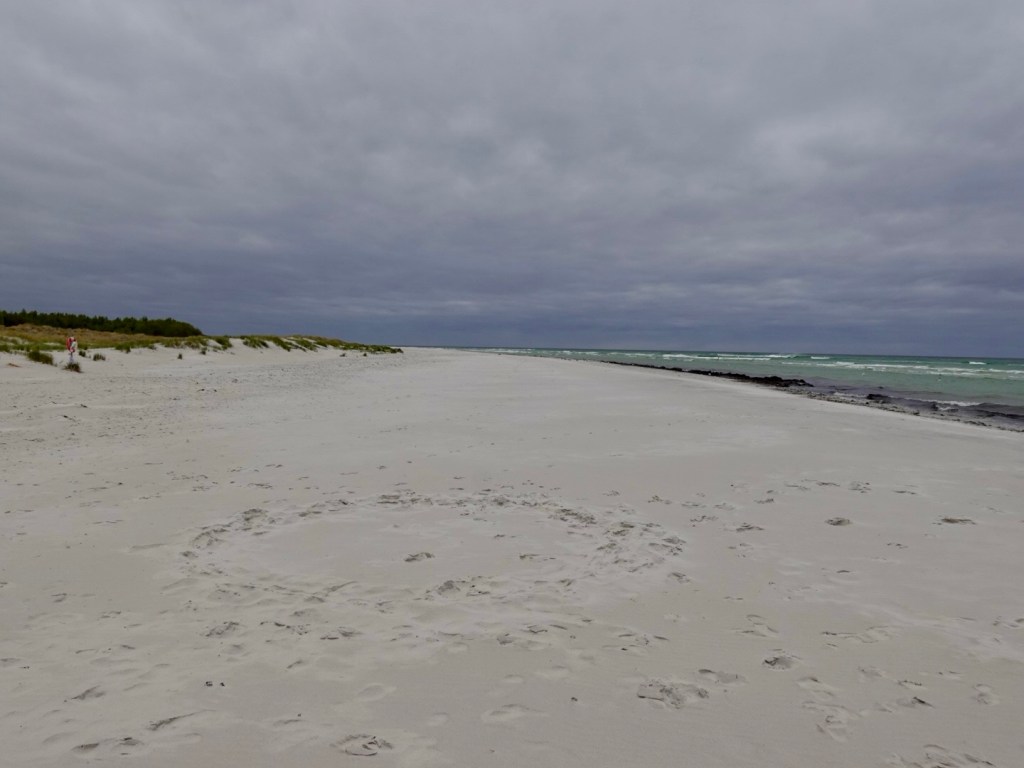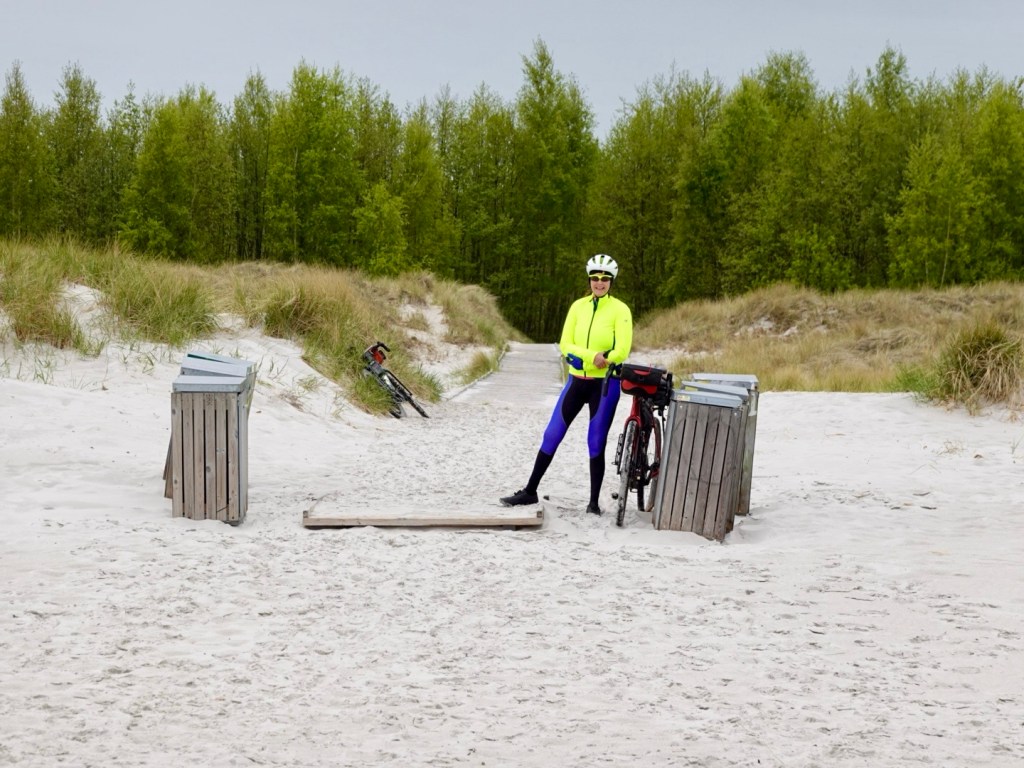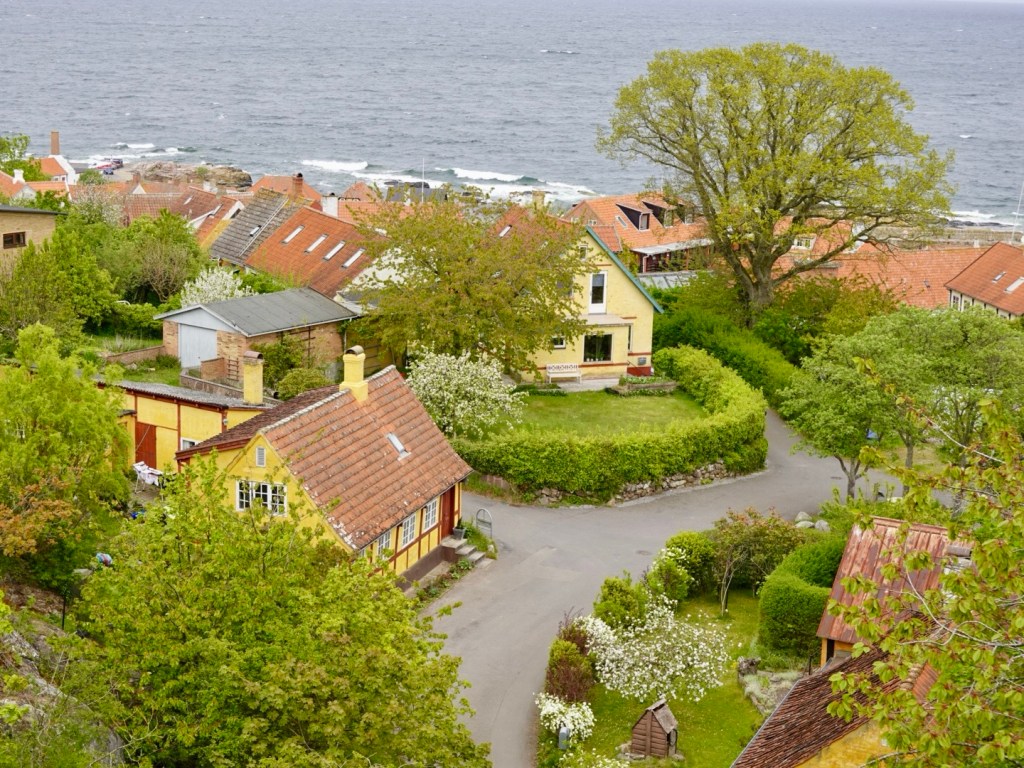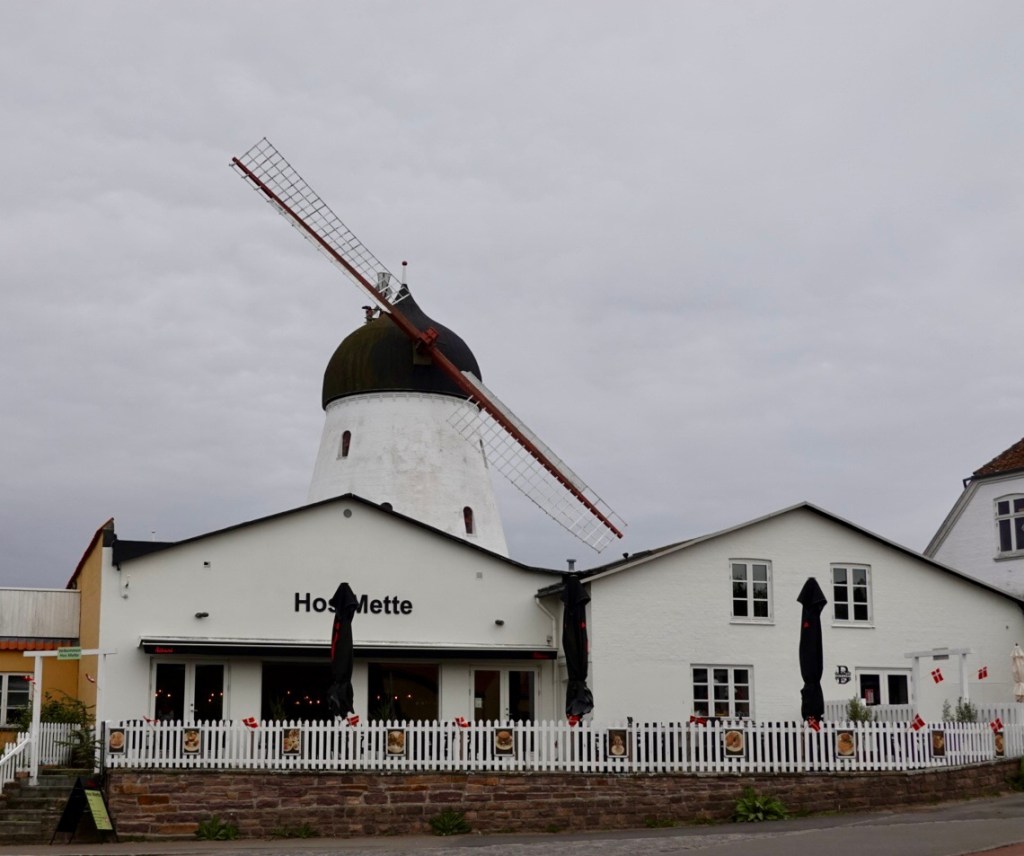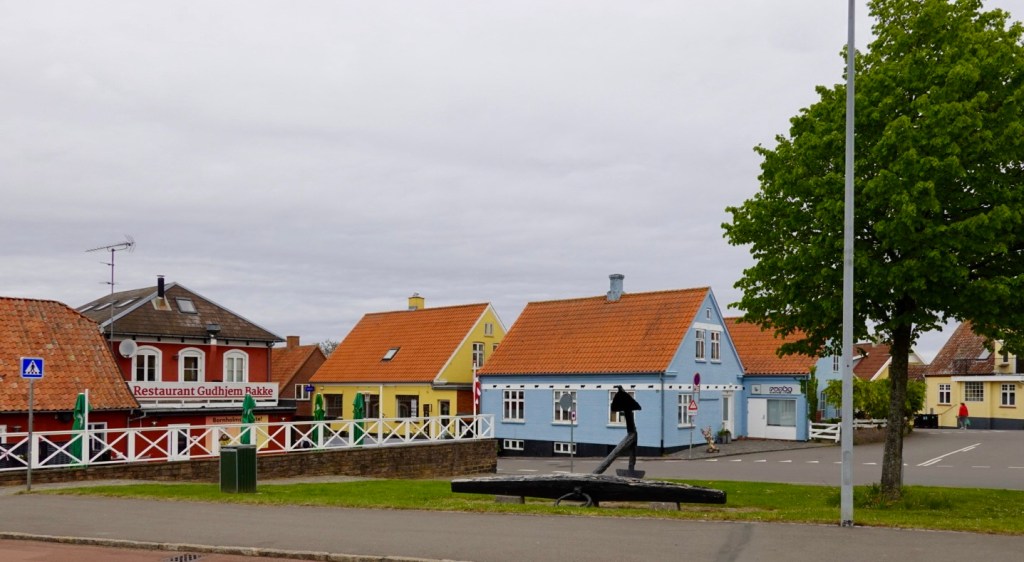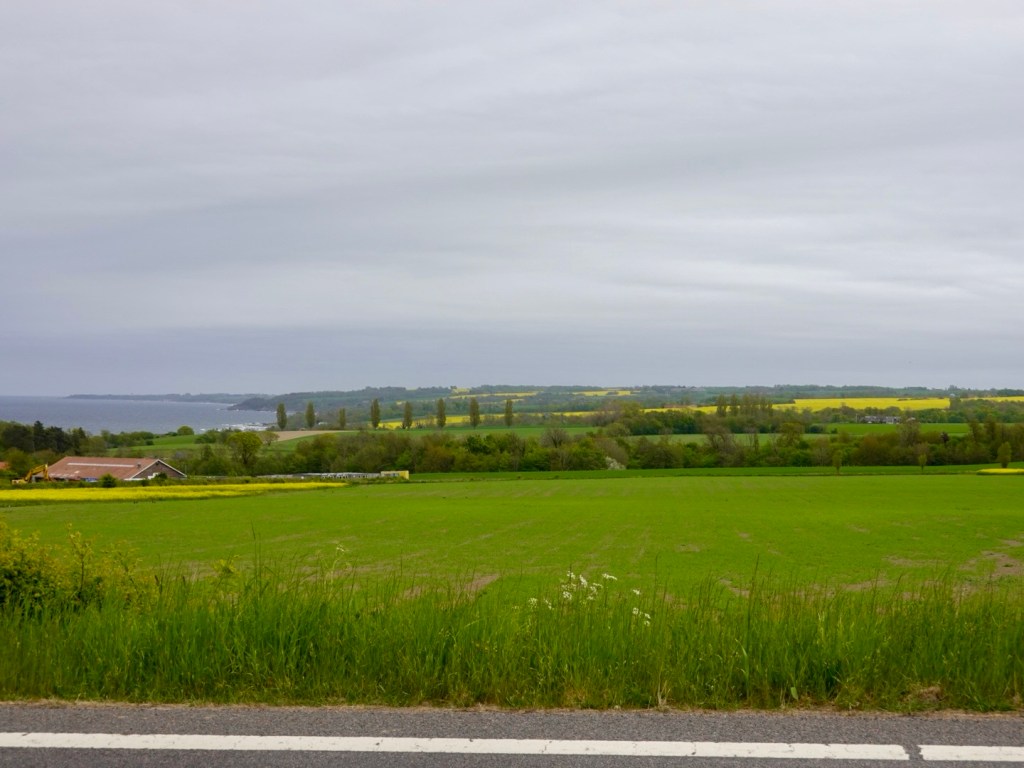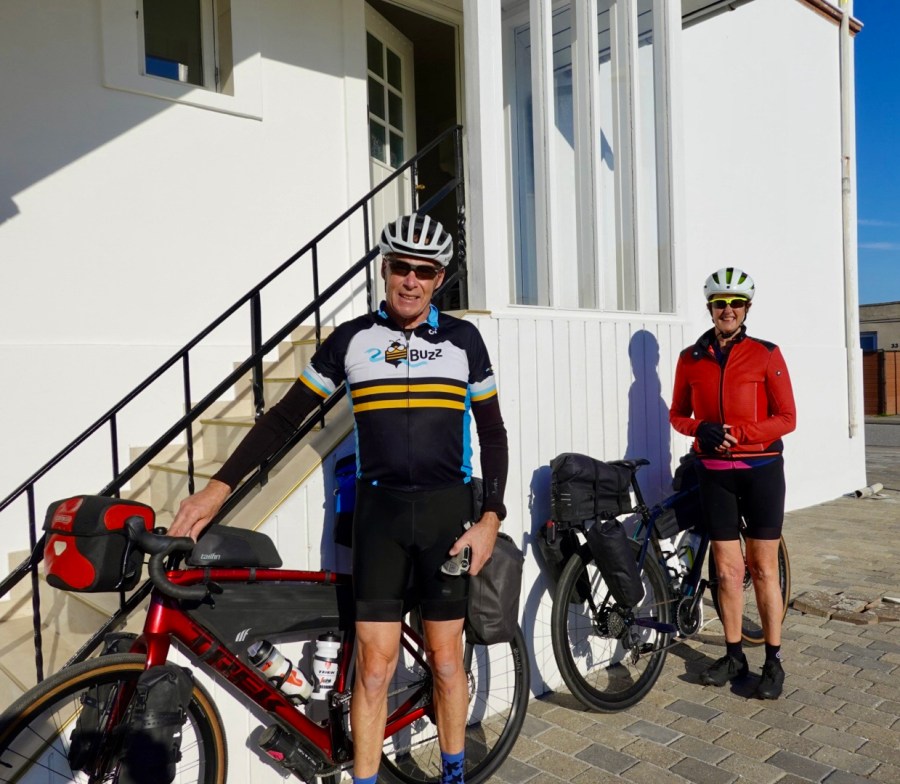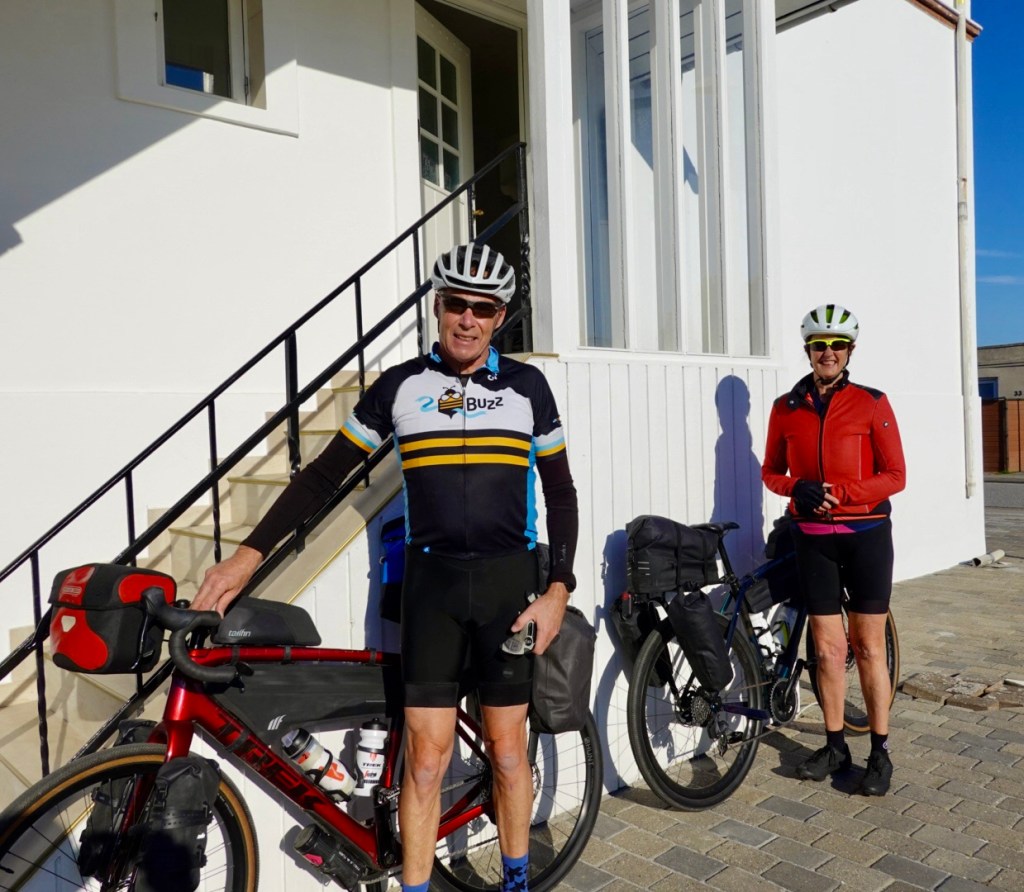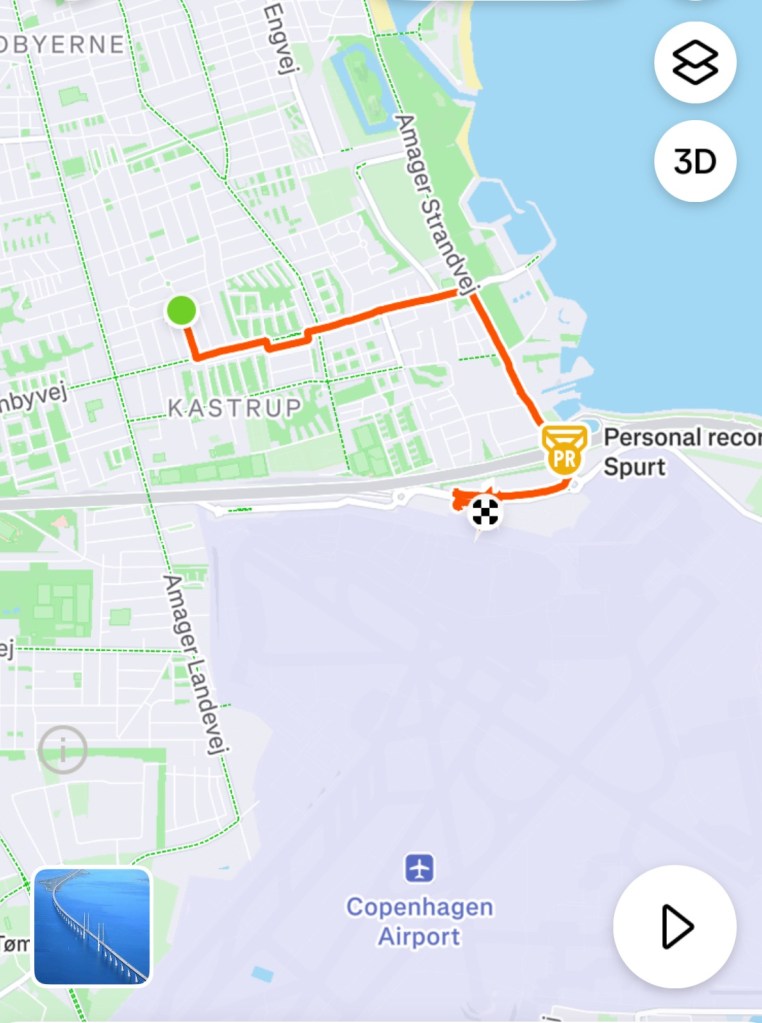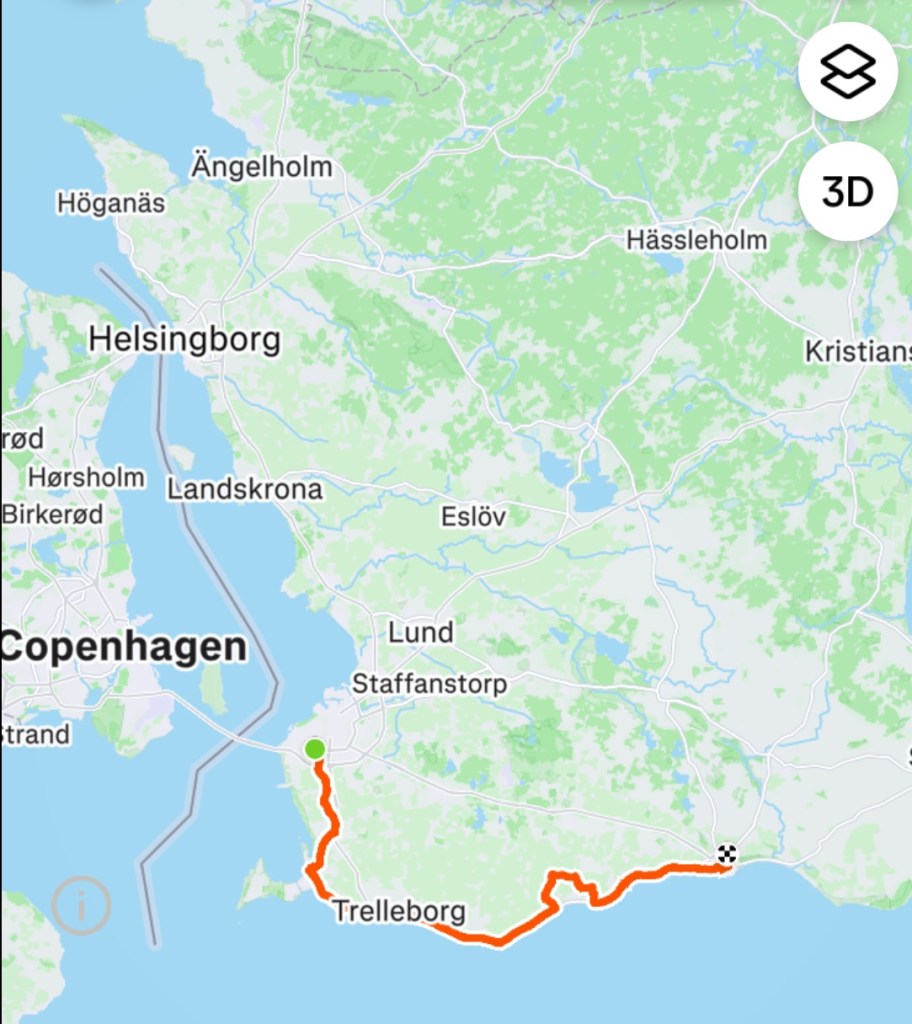
Day 10: Leba (Poland) to Hel Peninsula (Poland)

The best laid plans can go wrong despite everything.

Today was to be one of those days.

After a lovely Polish breakfast, where the young chef explained what he’d made and had so much interest in me liking his food, understanding its local origin and no chemicals.

He’d made this lovely crepes with a light creamy filling. I enjoyed those with locally cured beef.

Everything has onions though. Onion and I are not best friends and these little balls he insisted I try…onion, onion and a bit more onion.

I secretly hid them in my disposable serviette, popped into my jersey pocket to deal with later.

We packed our bikes and Tony decided to pump up his front tyre. Lots of cursing, his tyre totally deflated and he could not get air in.

We were going nowhere.

I recalled seeing bikes at the back of the shed so went back into the small castle to enquire. A man arrived a few minutes later and said he had a compressor.

The wheel was removed, taken to the compressor and we had air and off we tootled.

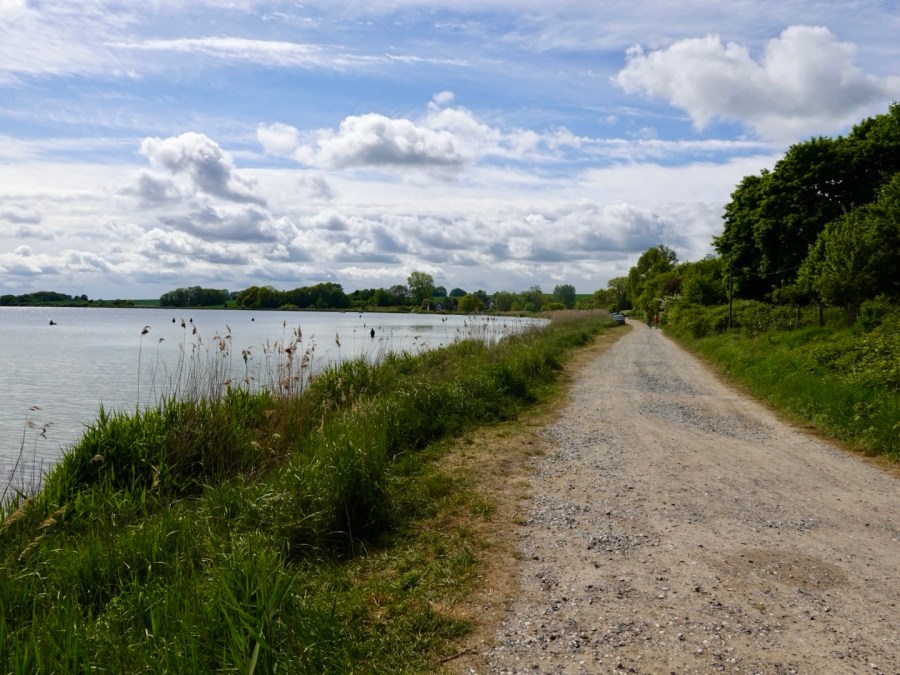
After only a few km of sealed road we hit non sealed surfaces. Another 45 km or so today of varying surfaces.

This was shitty! When I see Tony sliding ahead if me and release his foot from the pedal cleats, I know to go slower than slow.
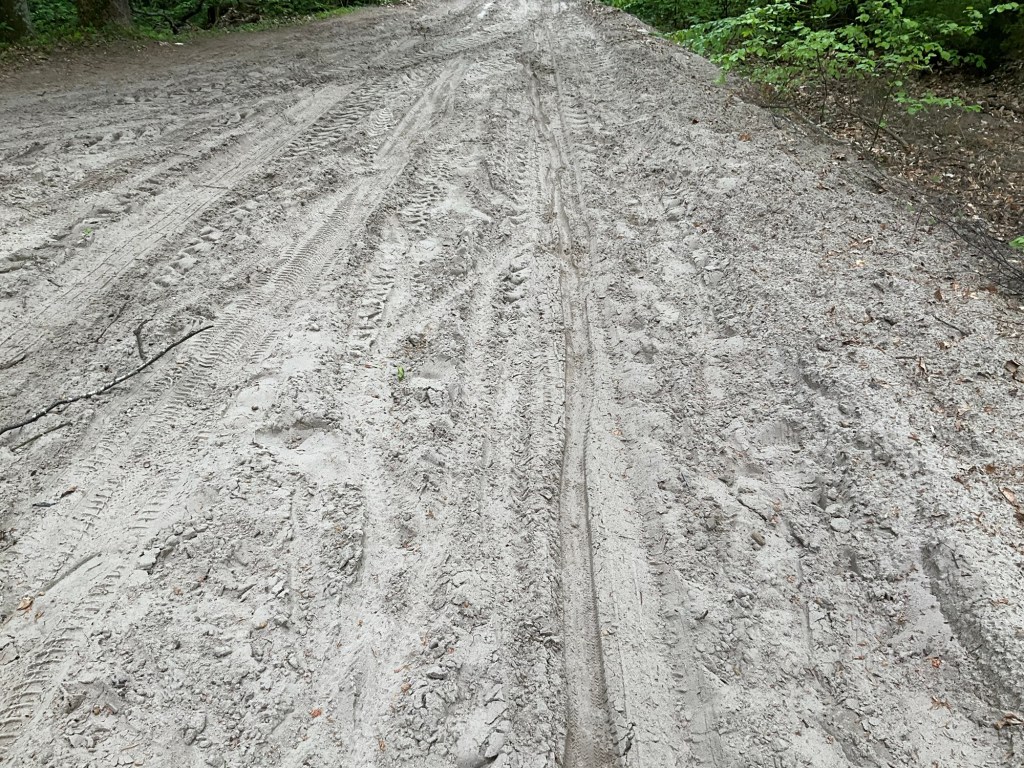
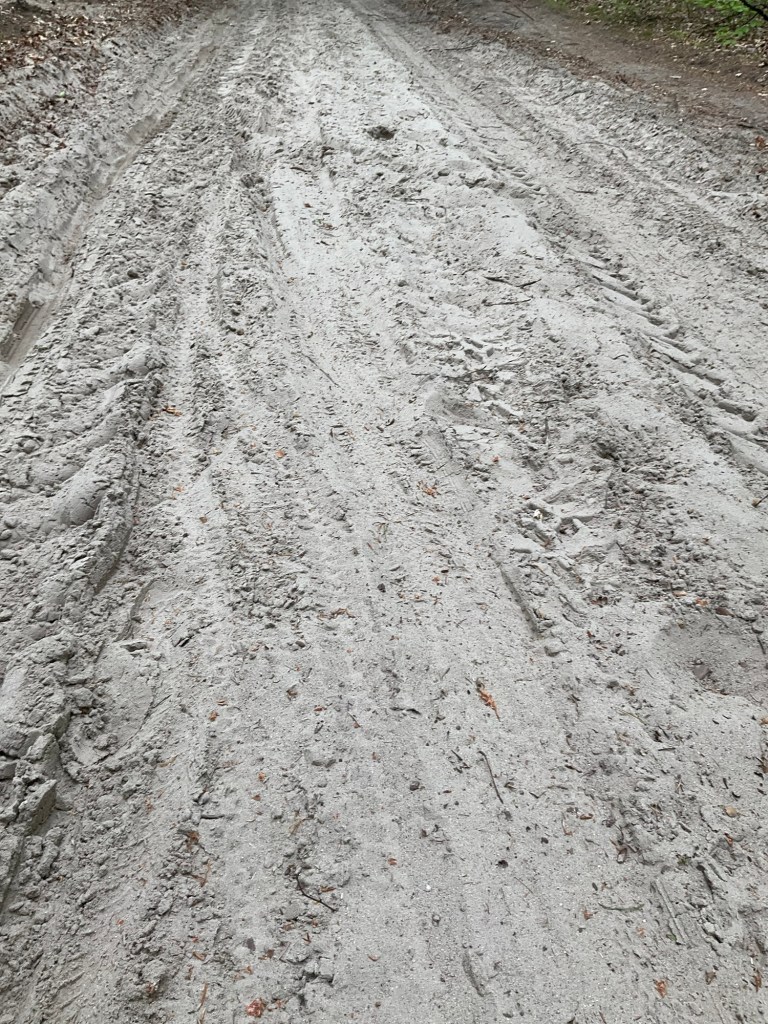
Riding through sand is hard, many points you push your bike.

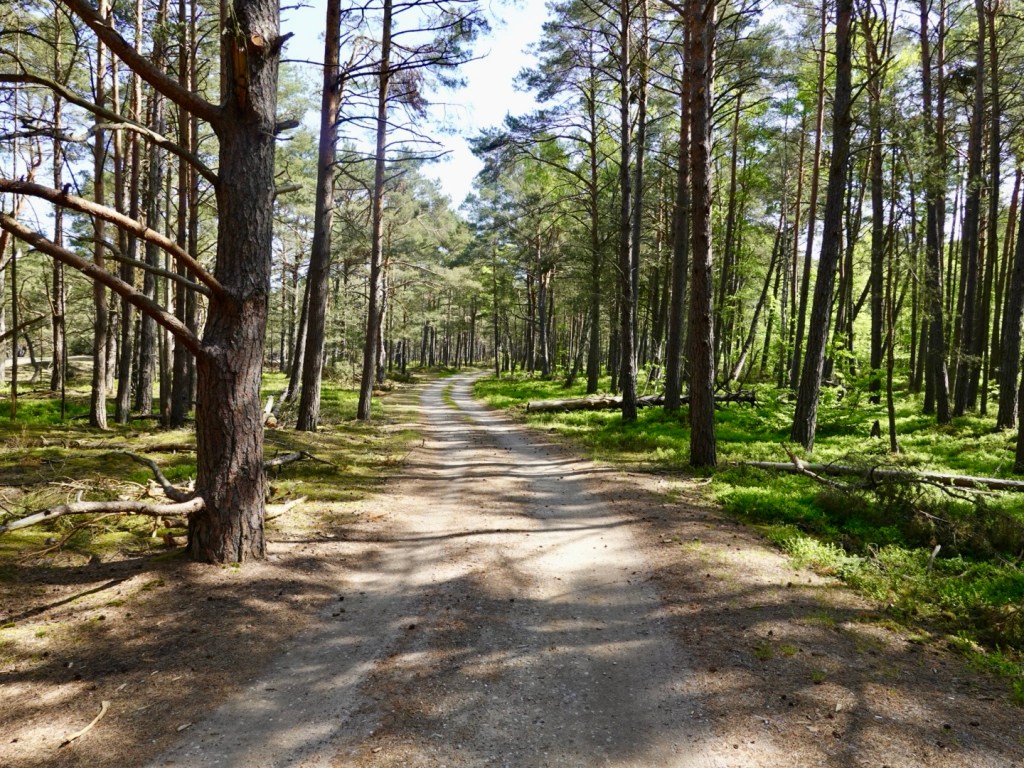
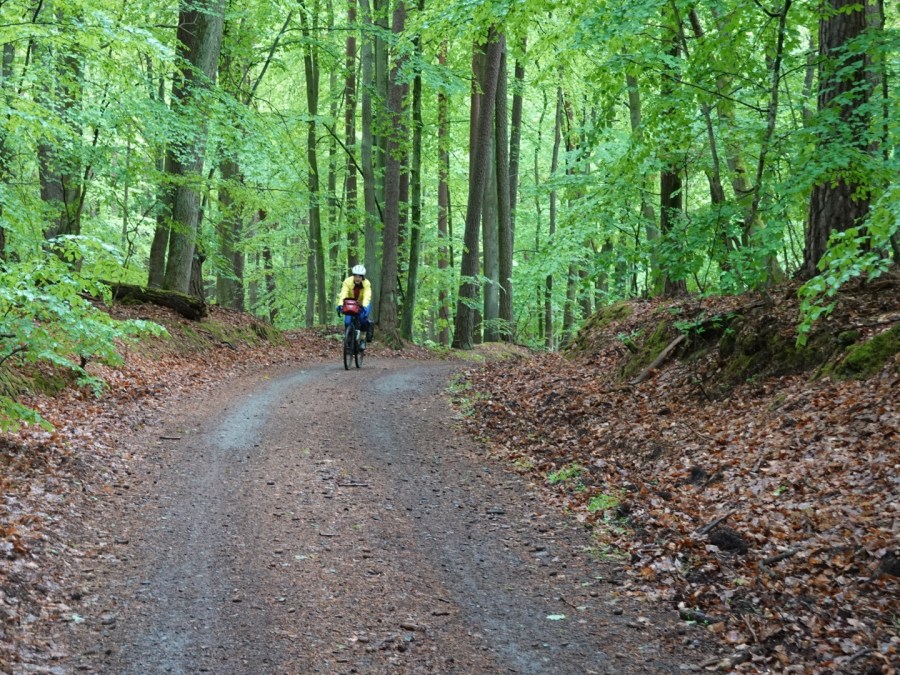
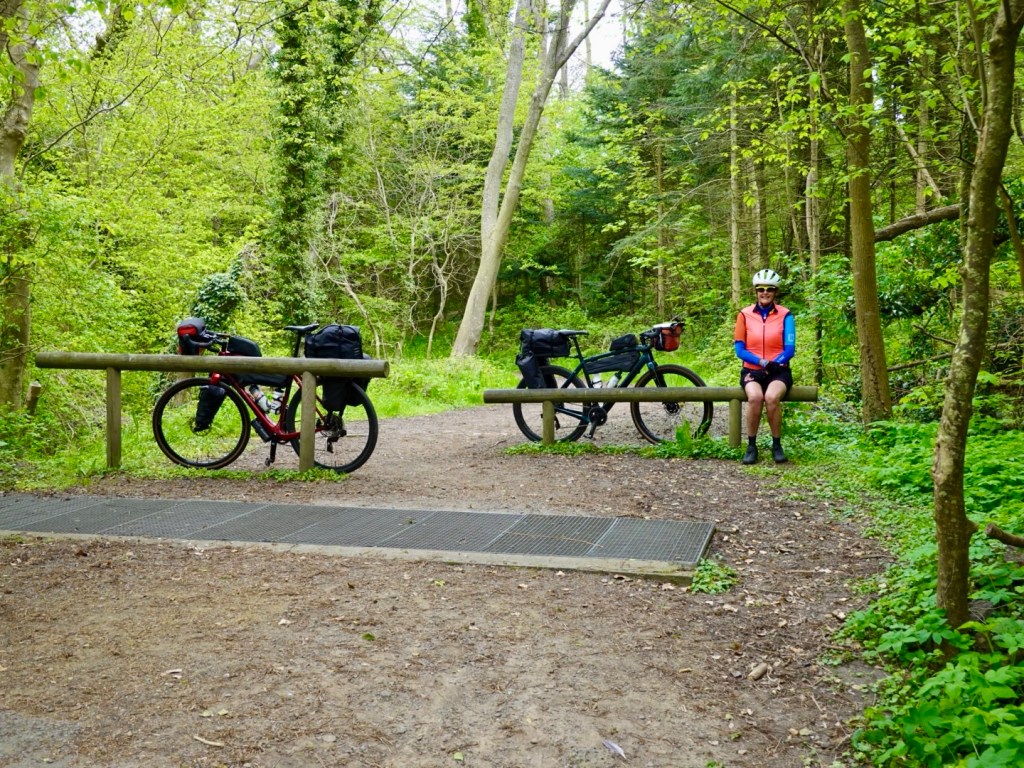
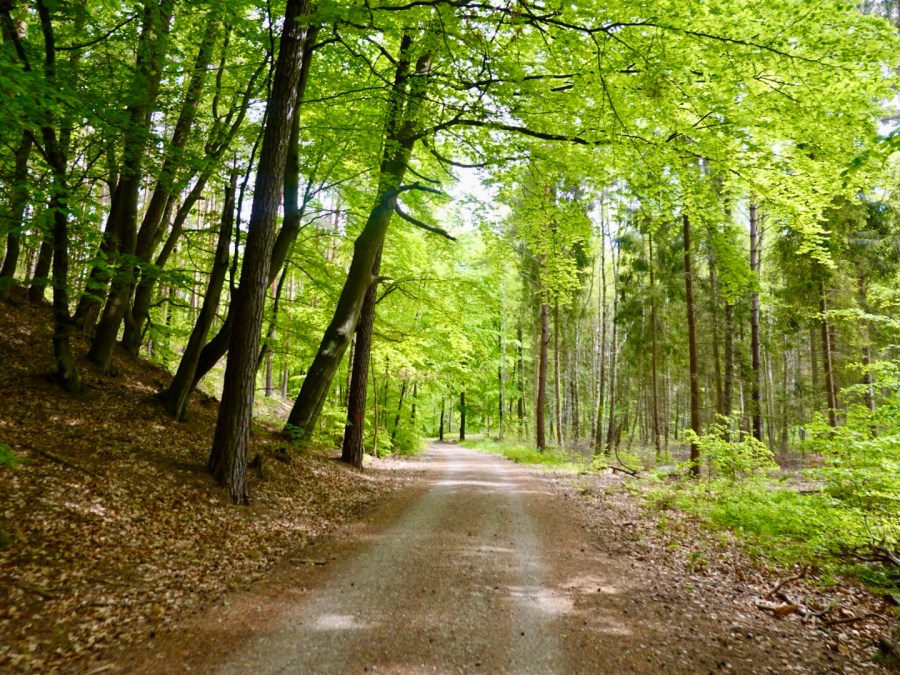
At this nice junction in a forest we stopped to remove some clothing. It was only 11 degrees Celsius, cloudy, but with occasional sun we had warmed up.
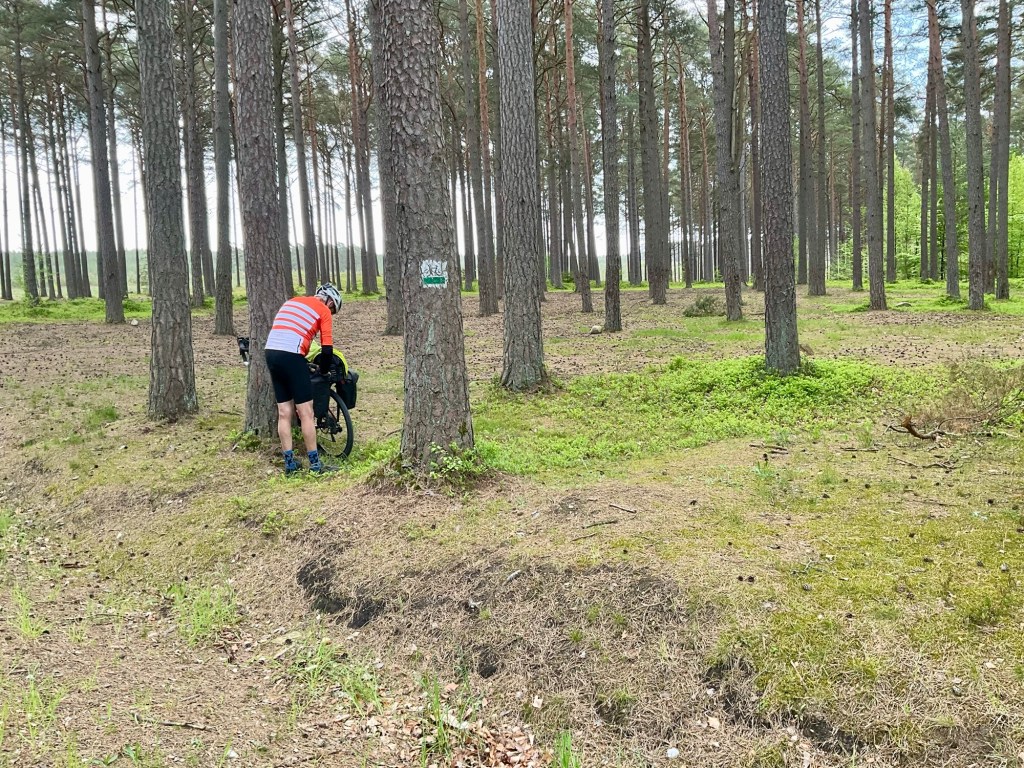
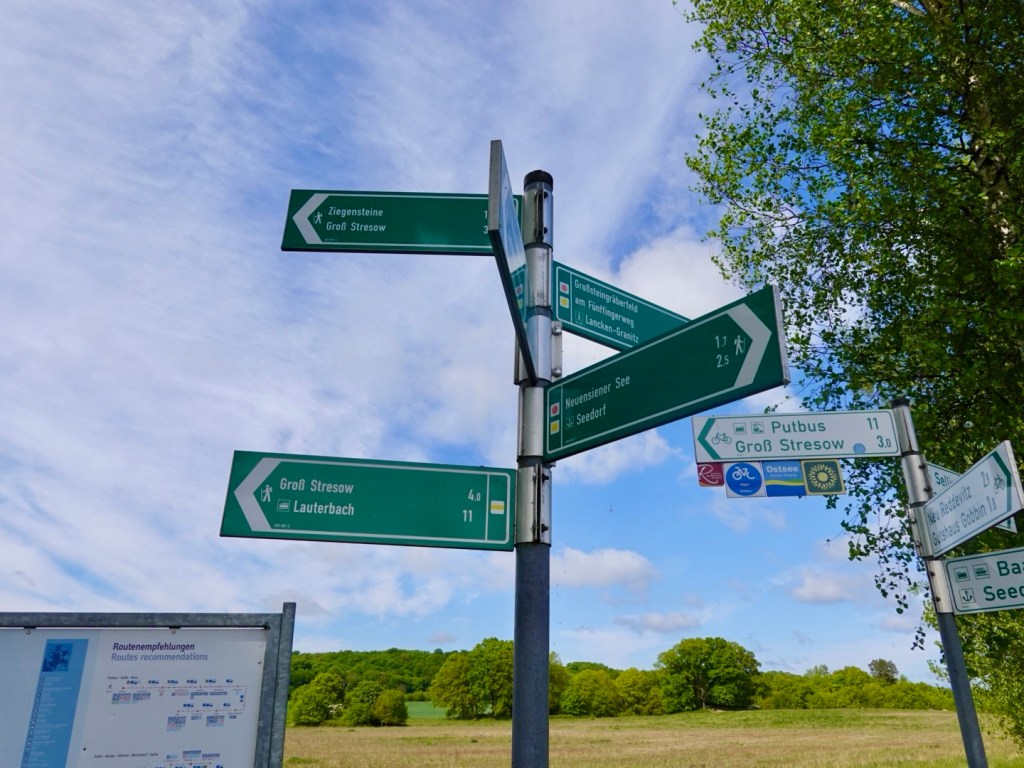
Again today we mainly followed EuroVelo 10 and 13. Whilst having our routes clearly on our bike computers, it is always nice to see the EV signs.
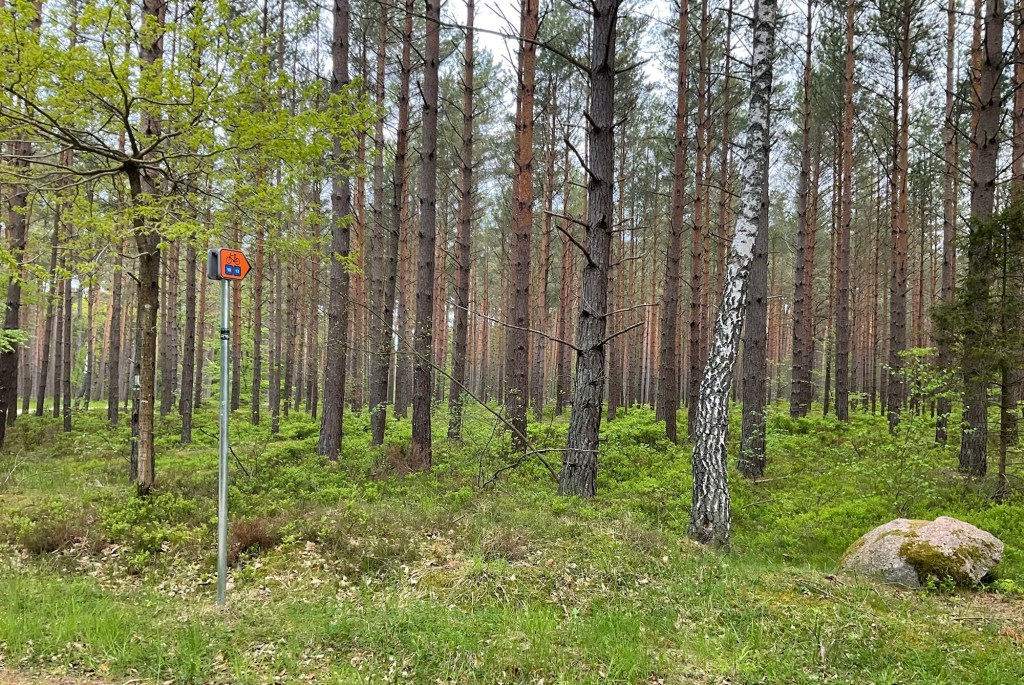
We had sandy and muddy pot holes.

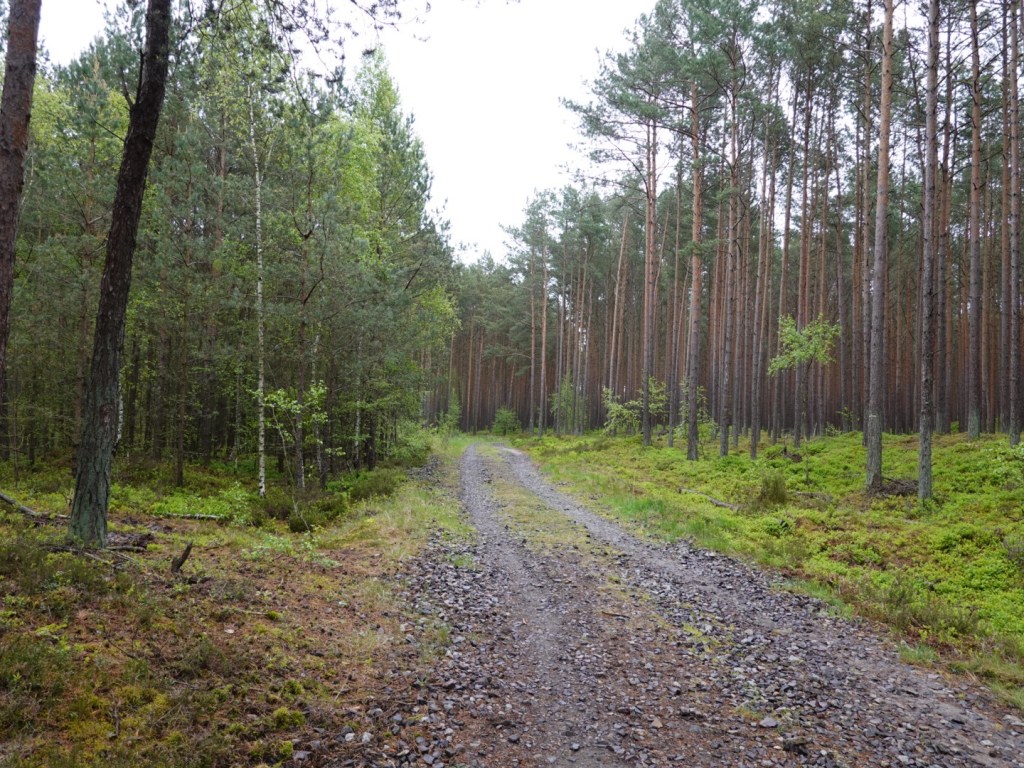
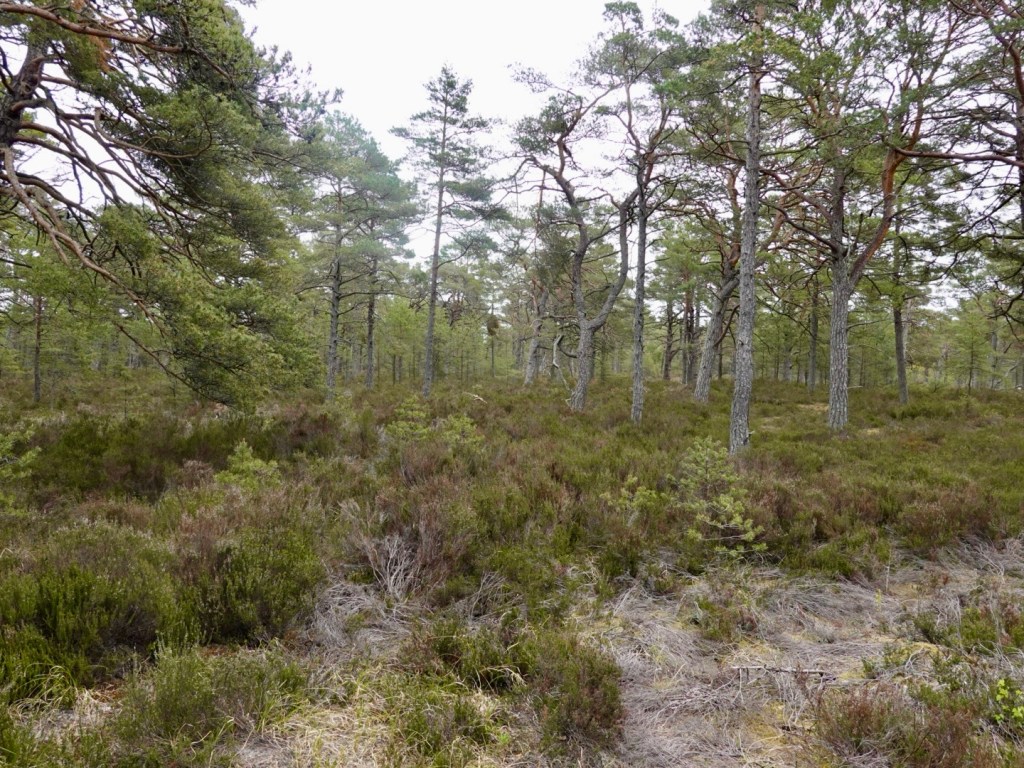
The undergrowth vegetation had changed. Lots of heath like plants.
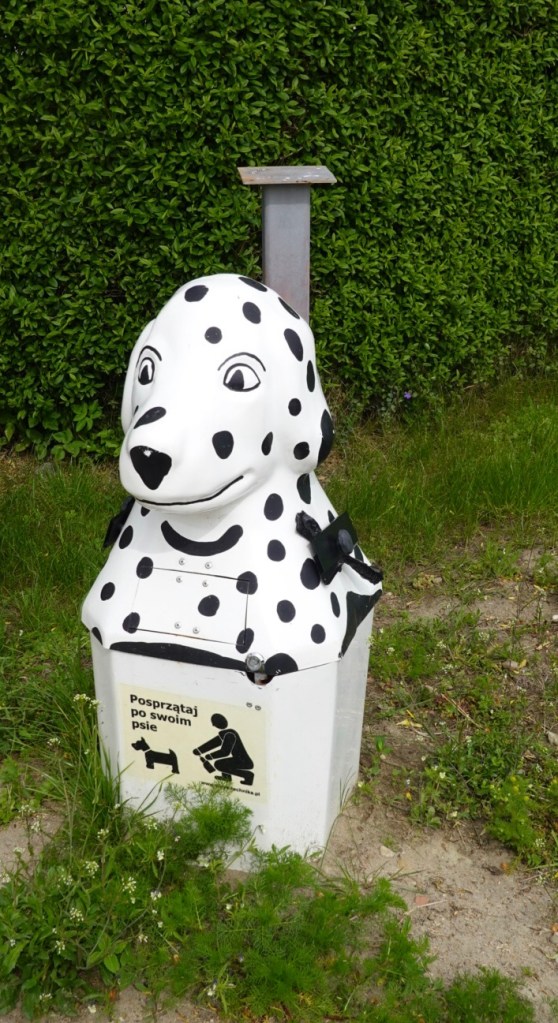
These were cute. In two villages were thesedog poo bins. We could do with some of these near us for the ones too lazy to pick up after their dog and dispose appropriately, including a couple of public areas I try to maintain.
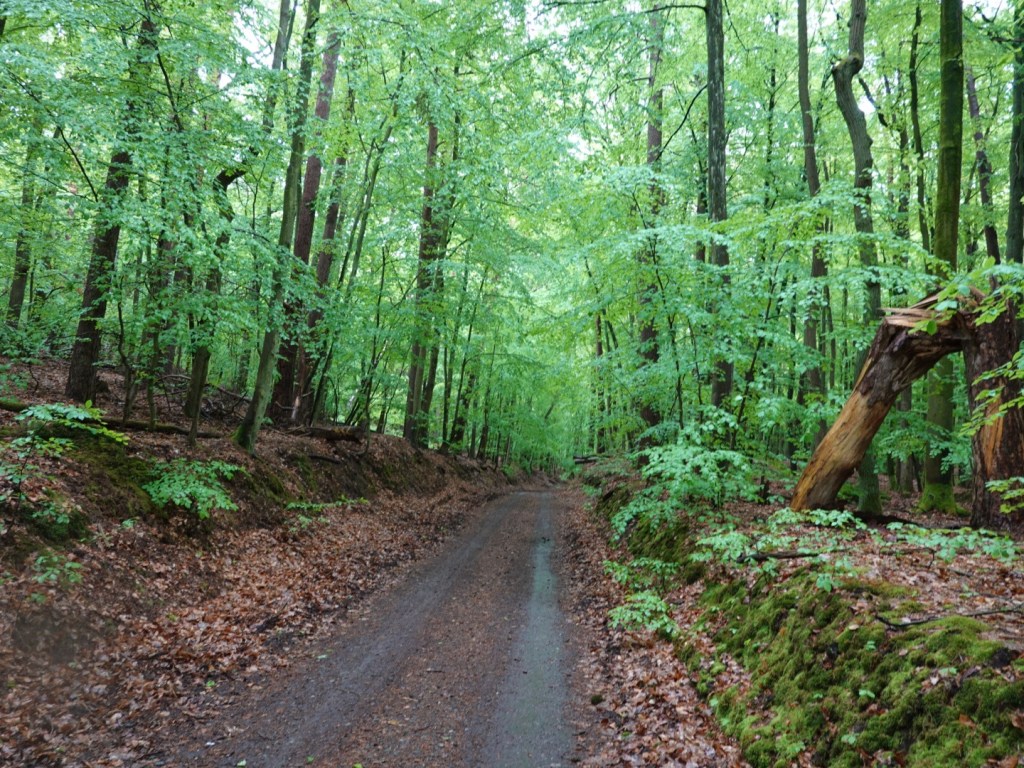
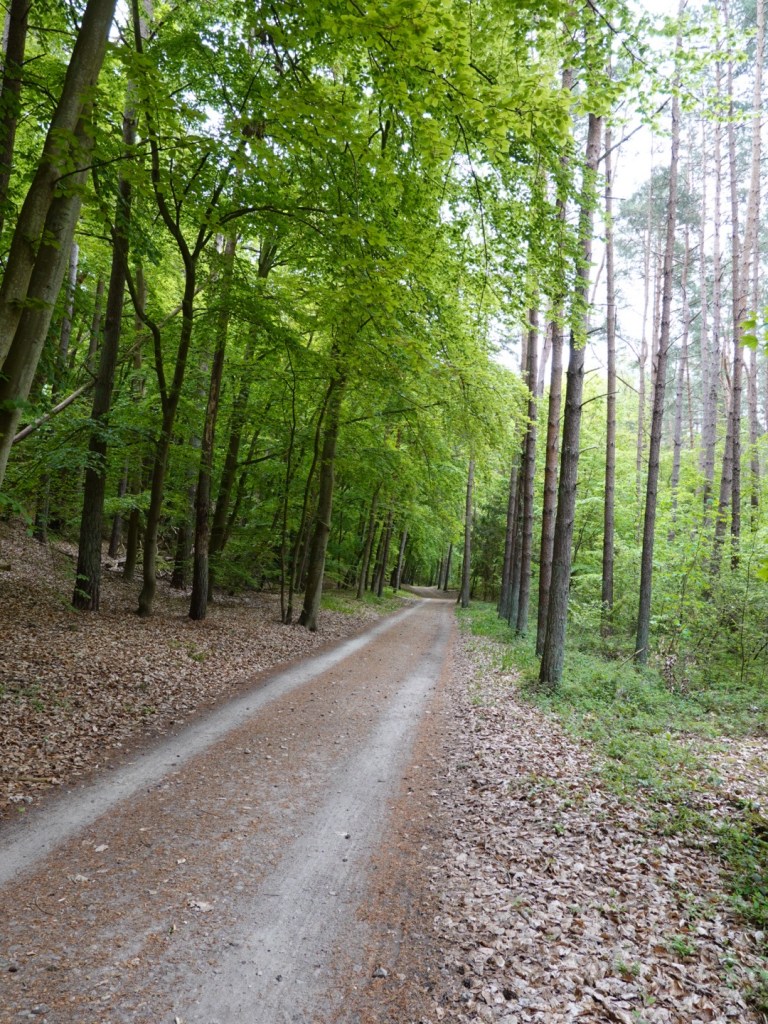
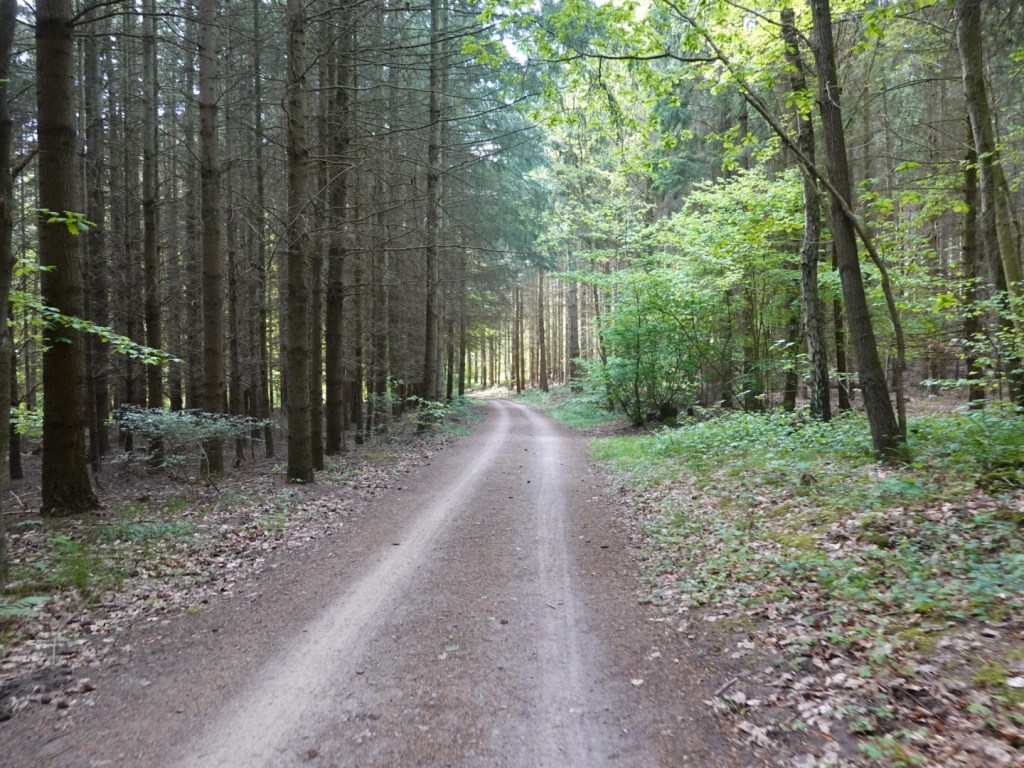
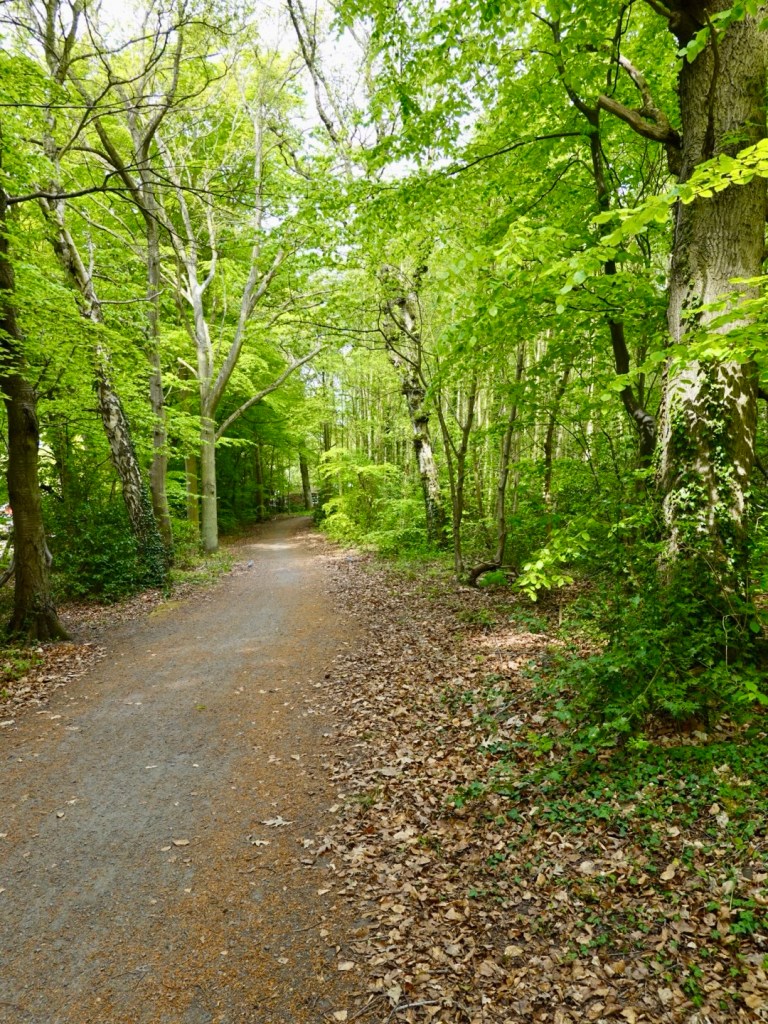
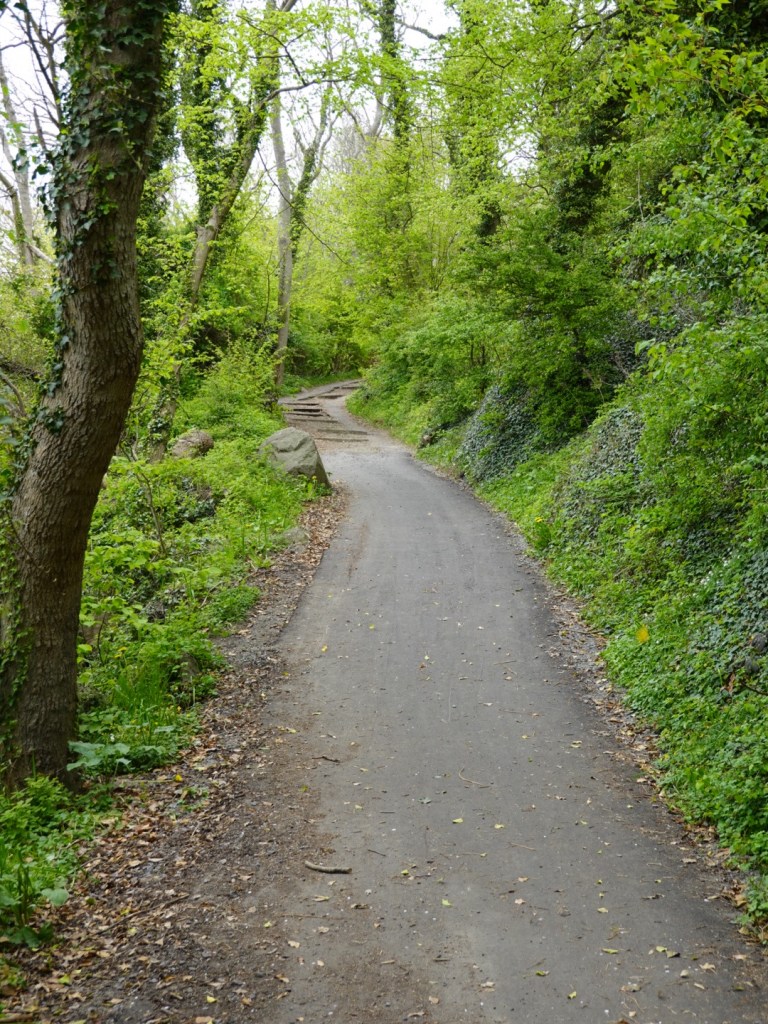
It is very pleasant riding through here. Nice trail and forest.

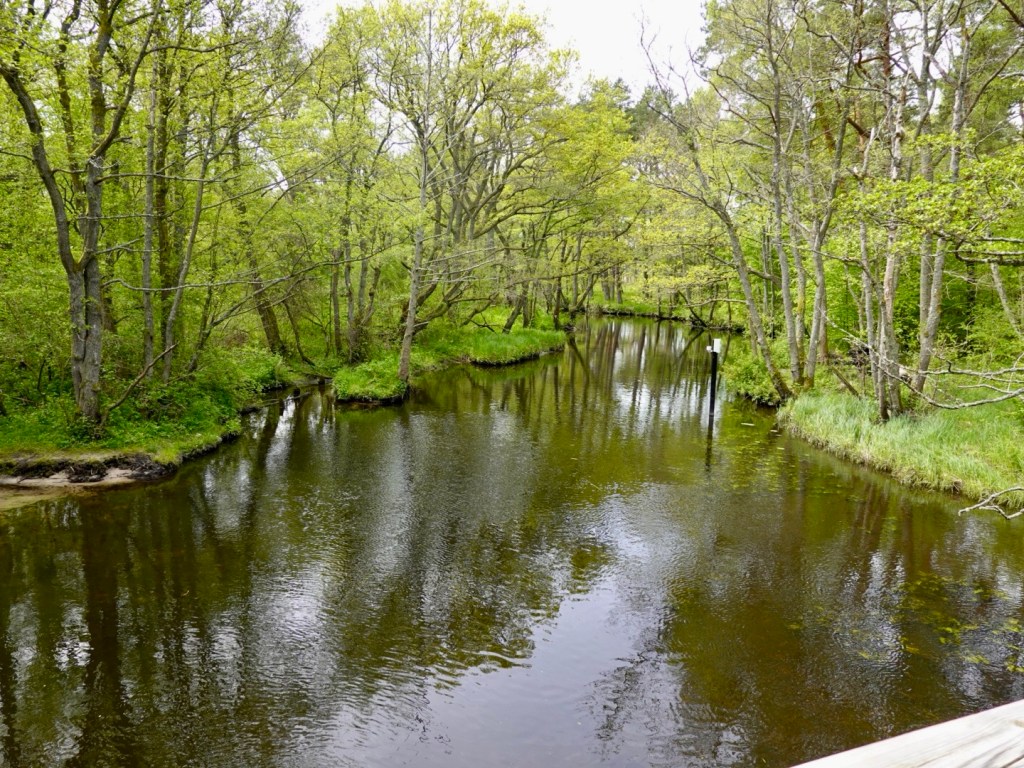
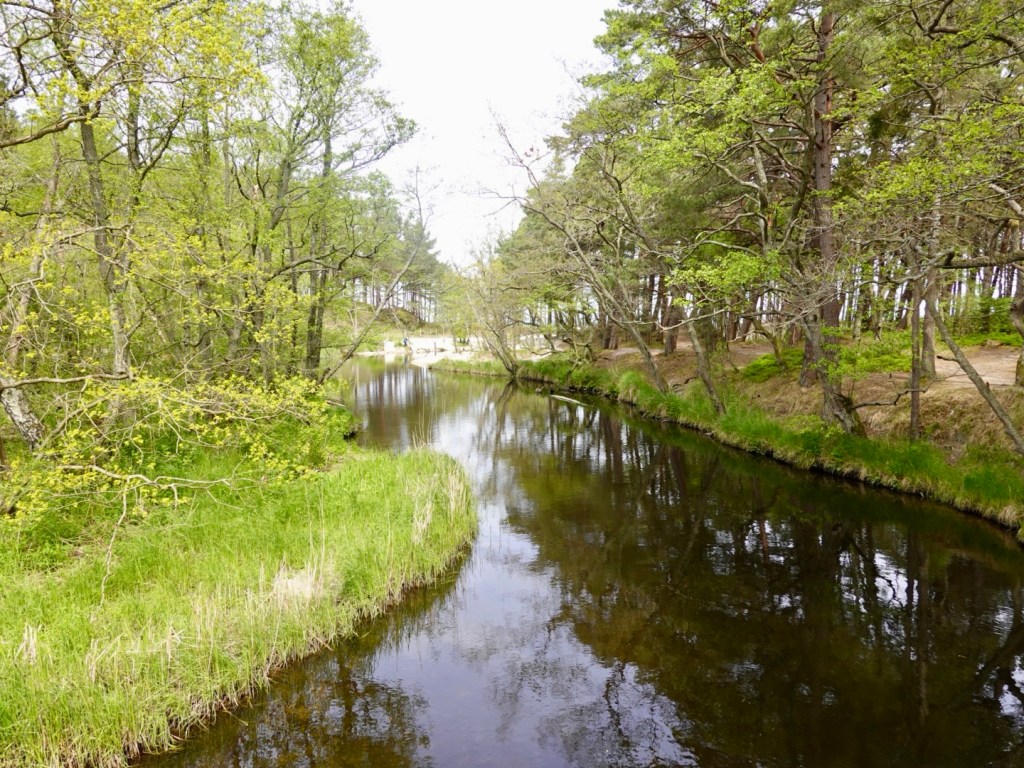
We crossed a bridge in the forest. Views to the right and left.
In Wladyslawowo we searched for a bike shop. We had been very conscious that our pump was faulty and if either of us got a flat we’d be a bit stuck and need to wait for the next cyclist to venture along.

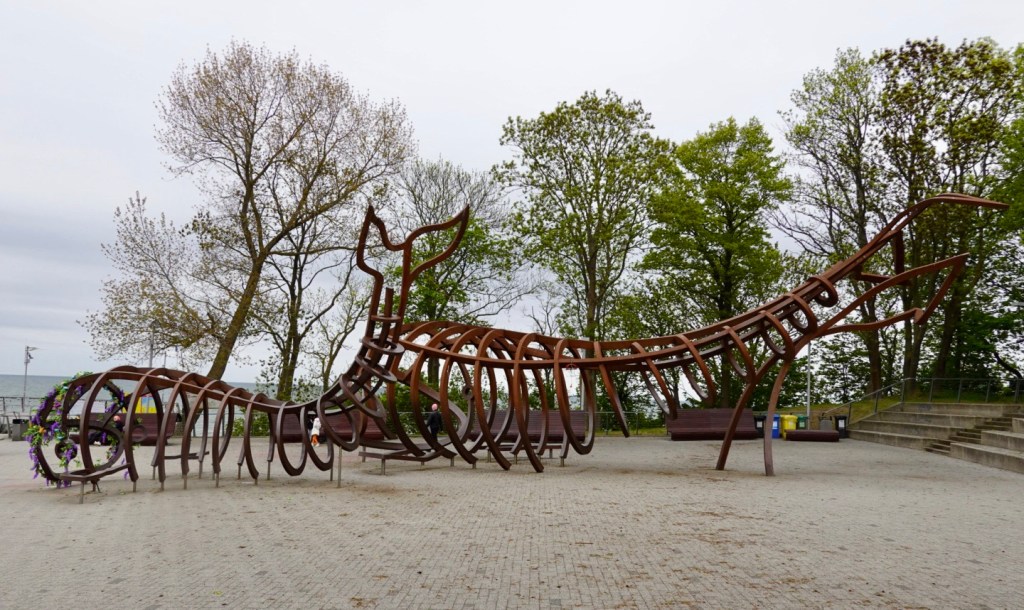
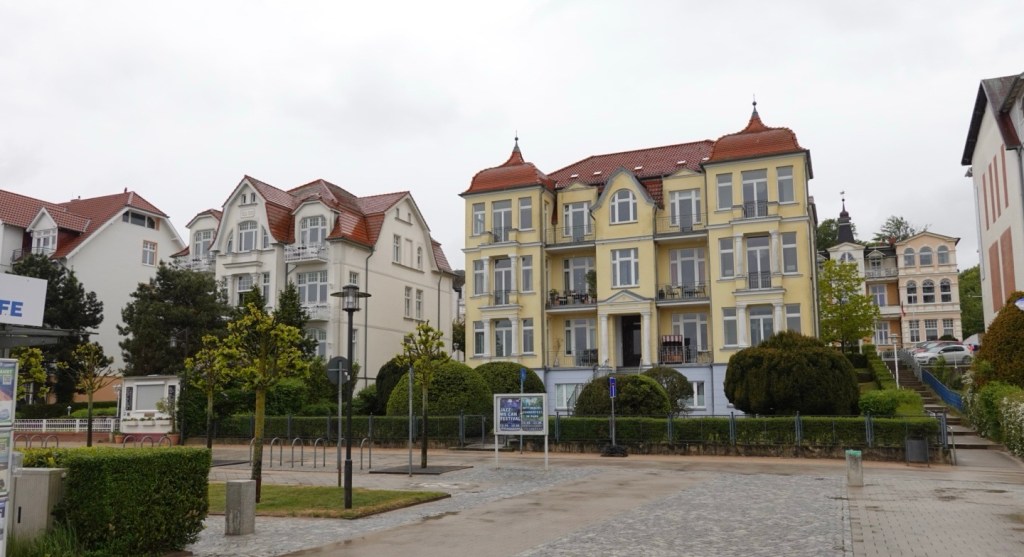
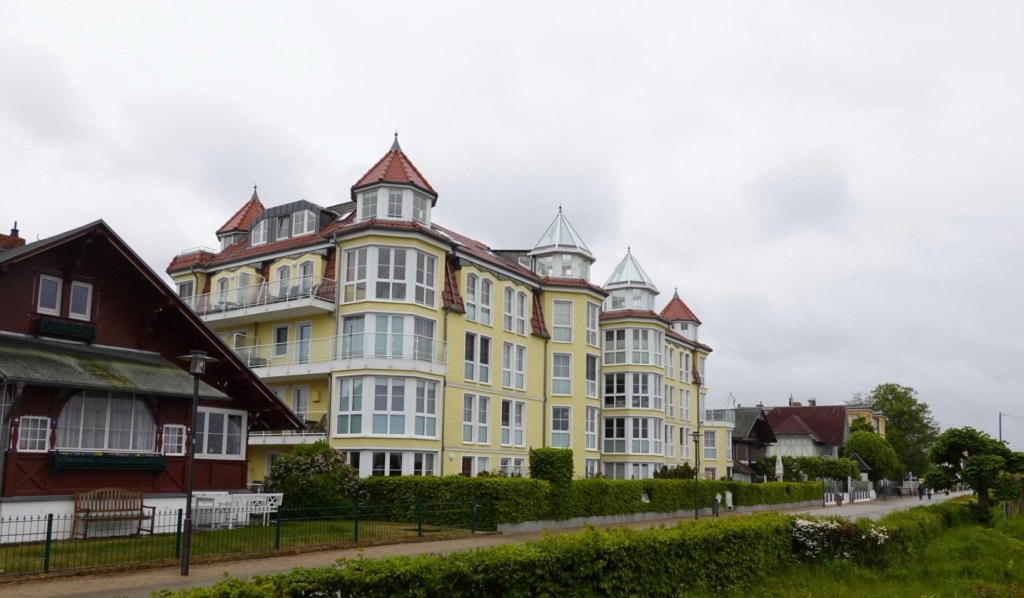
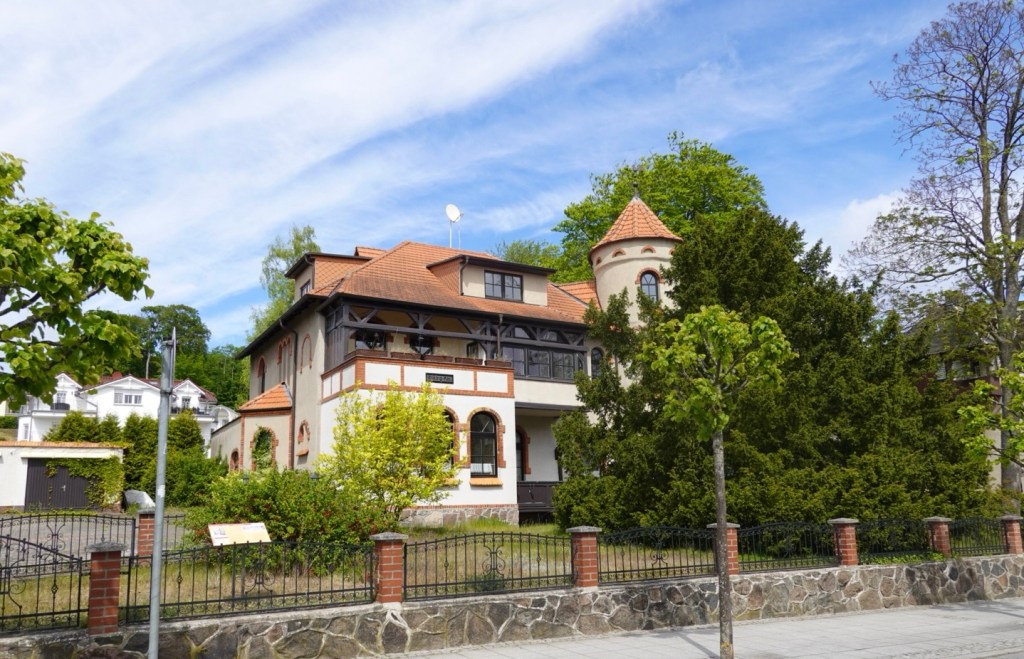
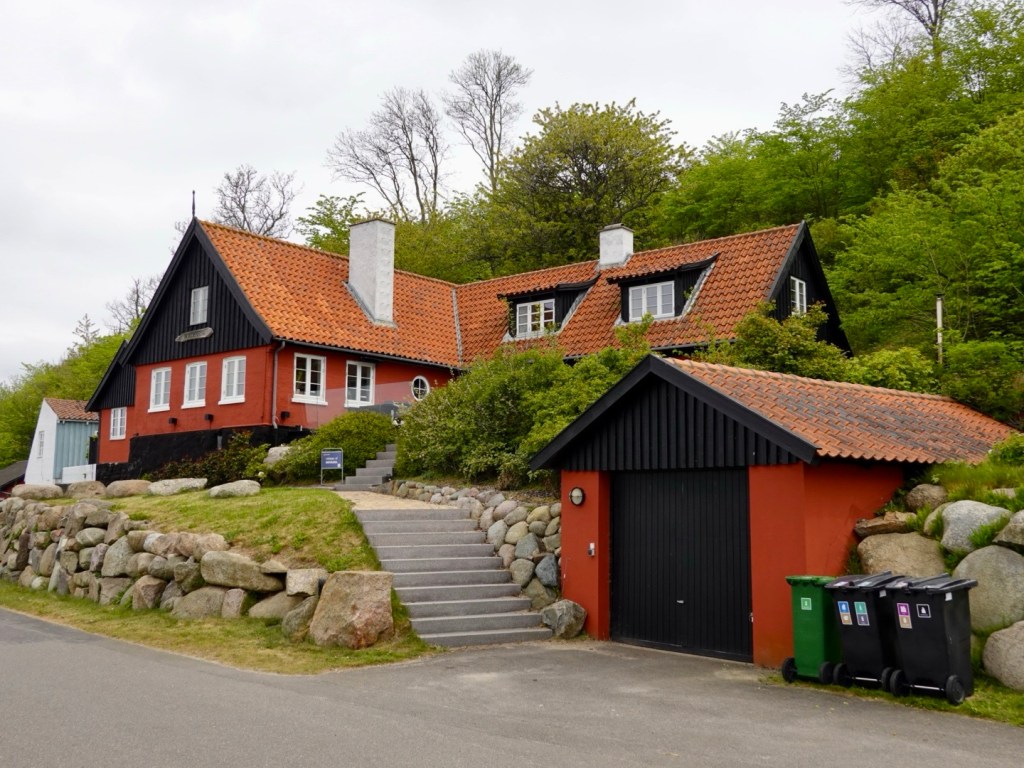
Wladyslawowo is a large town and whilst searching saw a few interesting buildings.
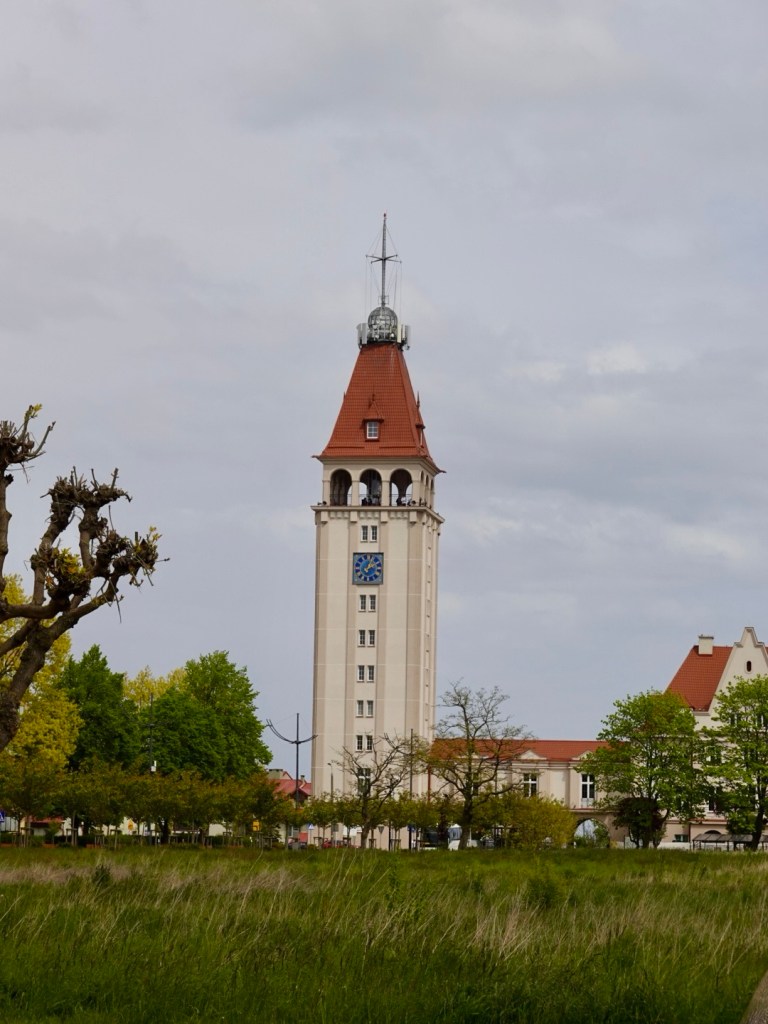
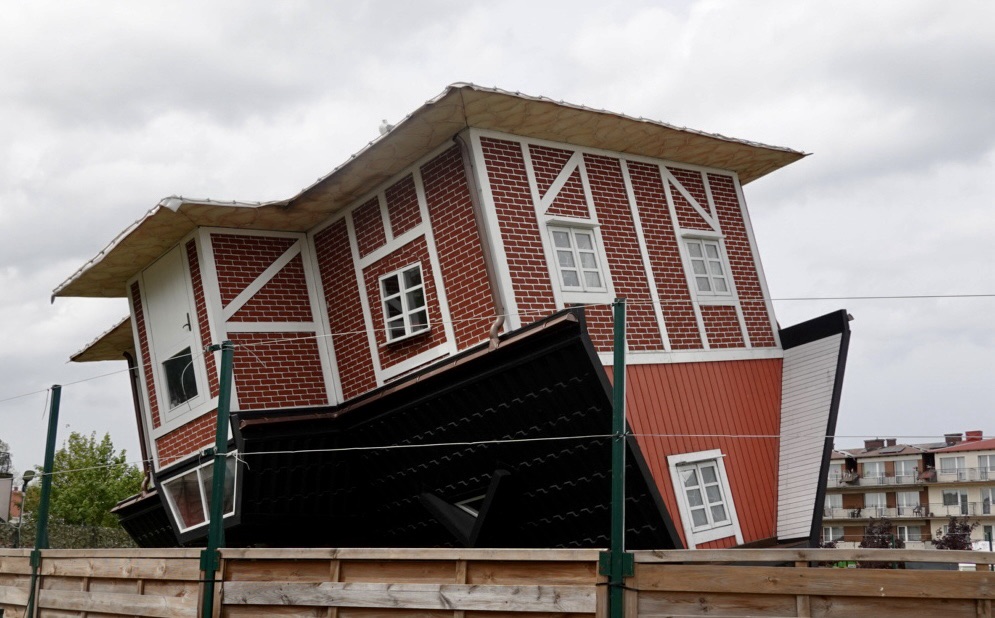
This is surely purely ‘decorative’?

Found the bike shop and this lovely bloke who is Polish but speaks great English.He has been touring around Poland for around 2,000 km so far. He went into the shop to assist with interpretations in purchasing a replacement pump.
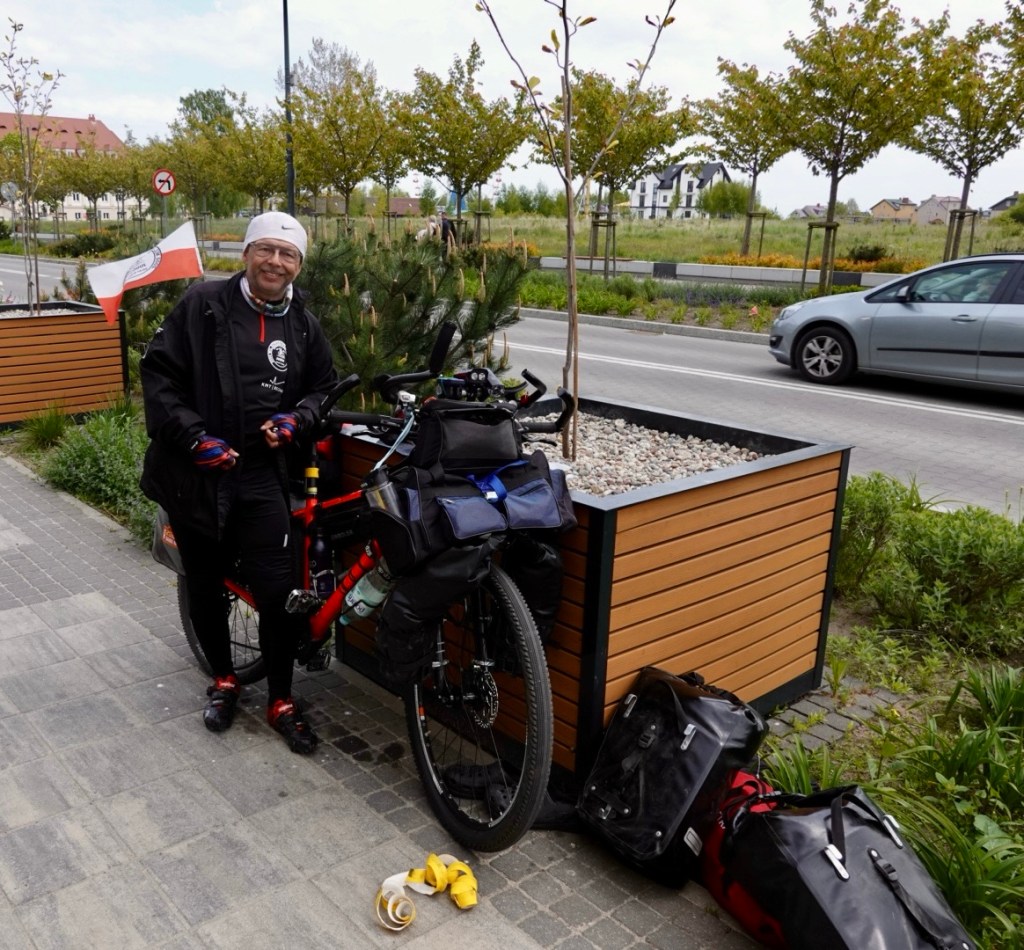
We arrived on the Hel Peninsula, a 35 km sandbar separating the Baltic Sea from the Bay of Puck.

The plan was to ride to our accomodation, some 8 km short of the peninsula end, ride up there sans gear, grab dinner and head back to our lodgings.

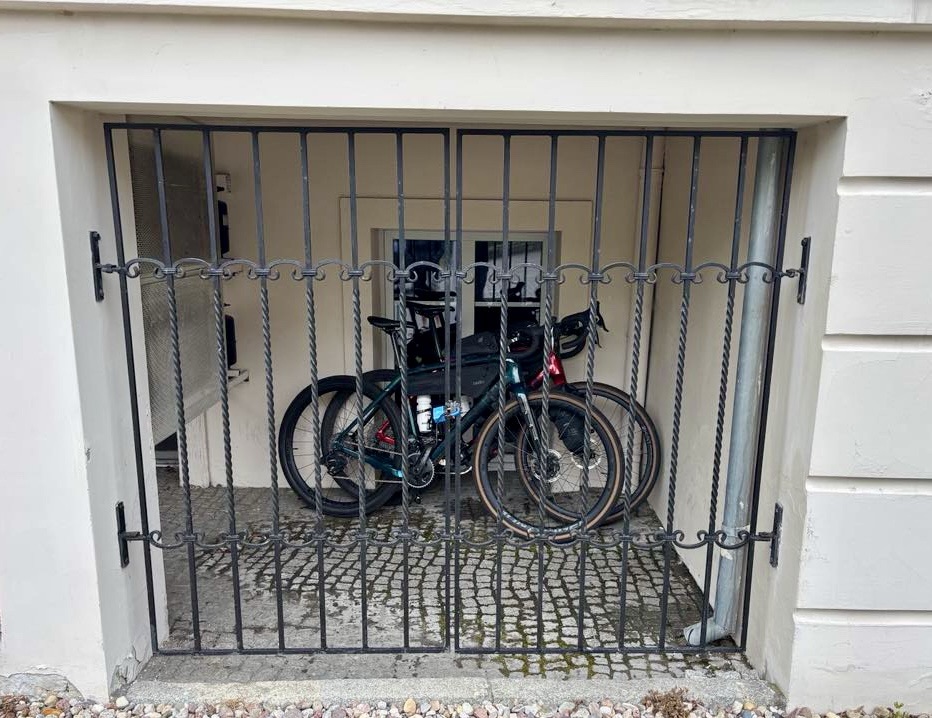
Tonight we were booked into camp huts that looked ok in the pictures. I had lots of difficulties finding somewhere suitable for the bikes as most accomodation is privately owned apartments who were not keen on bike storage.

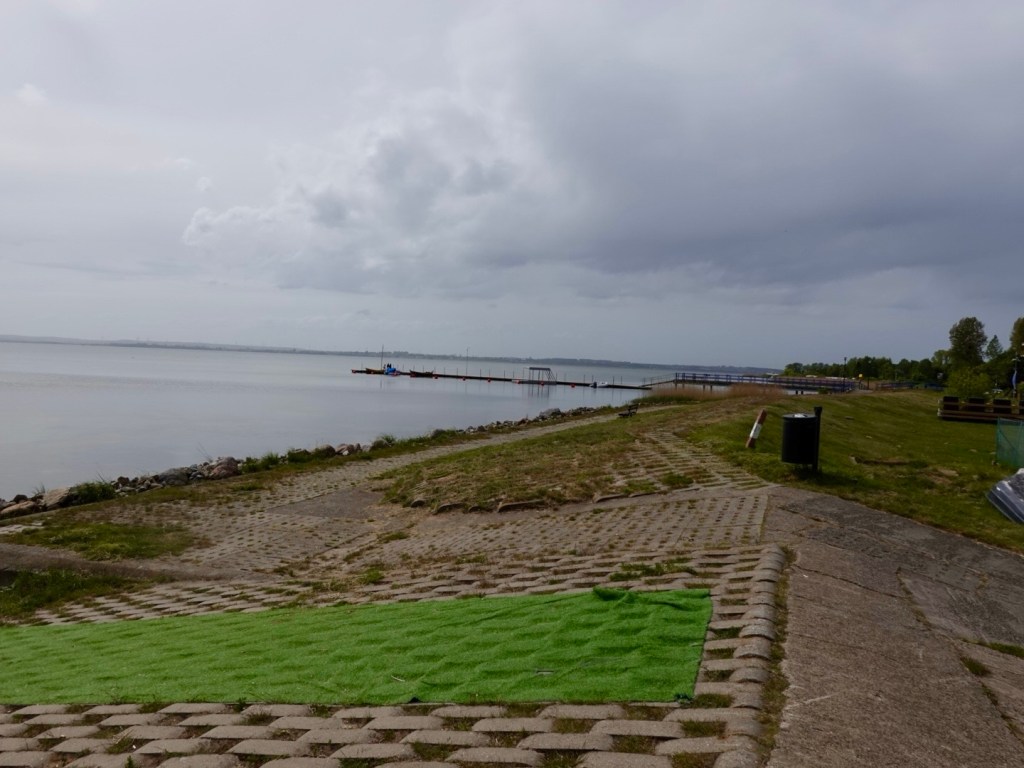
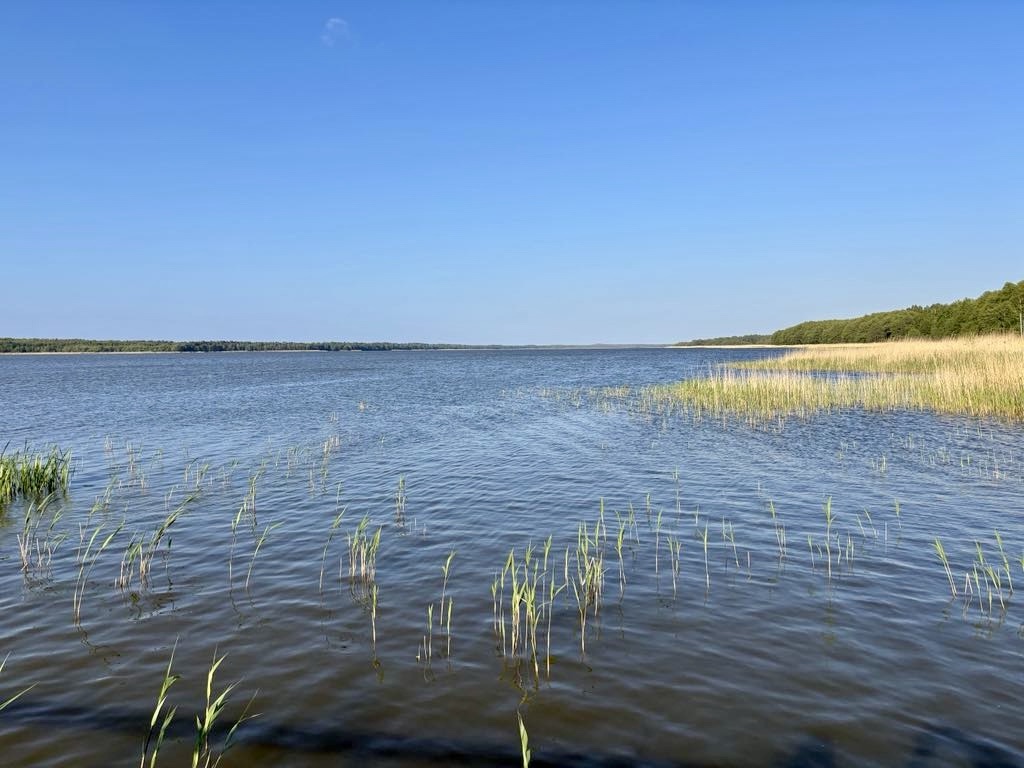
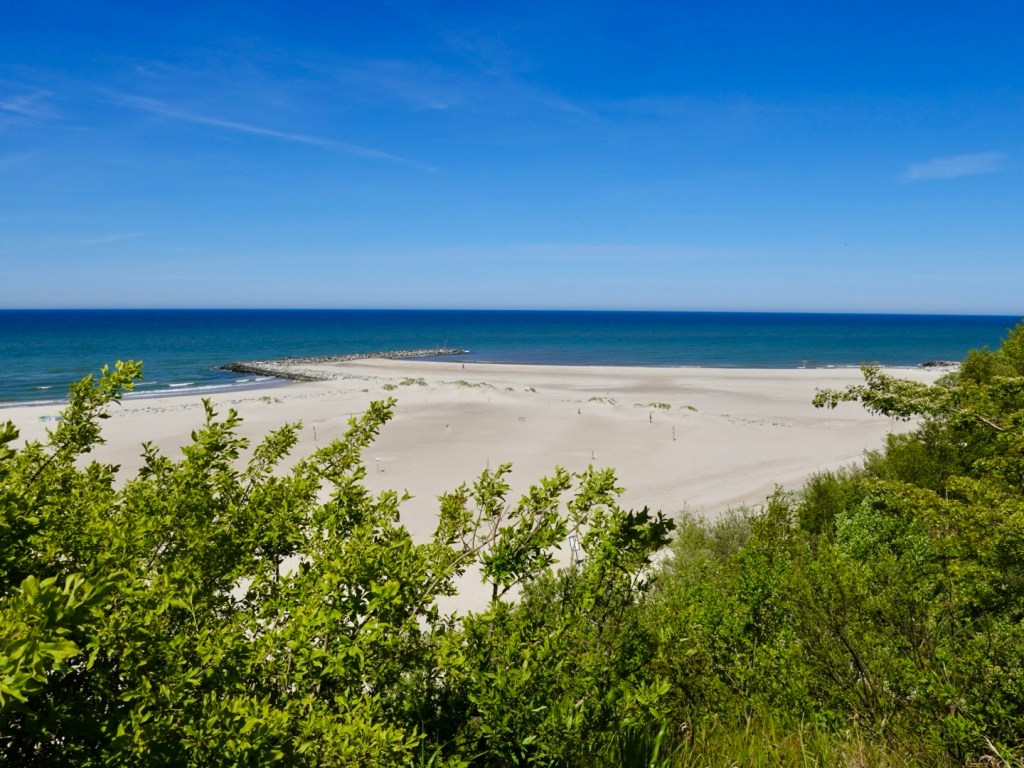
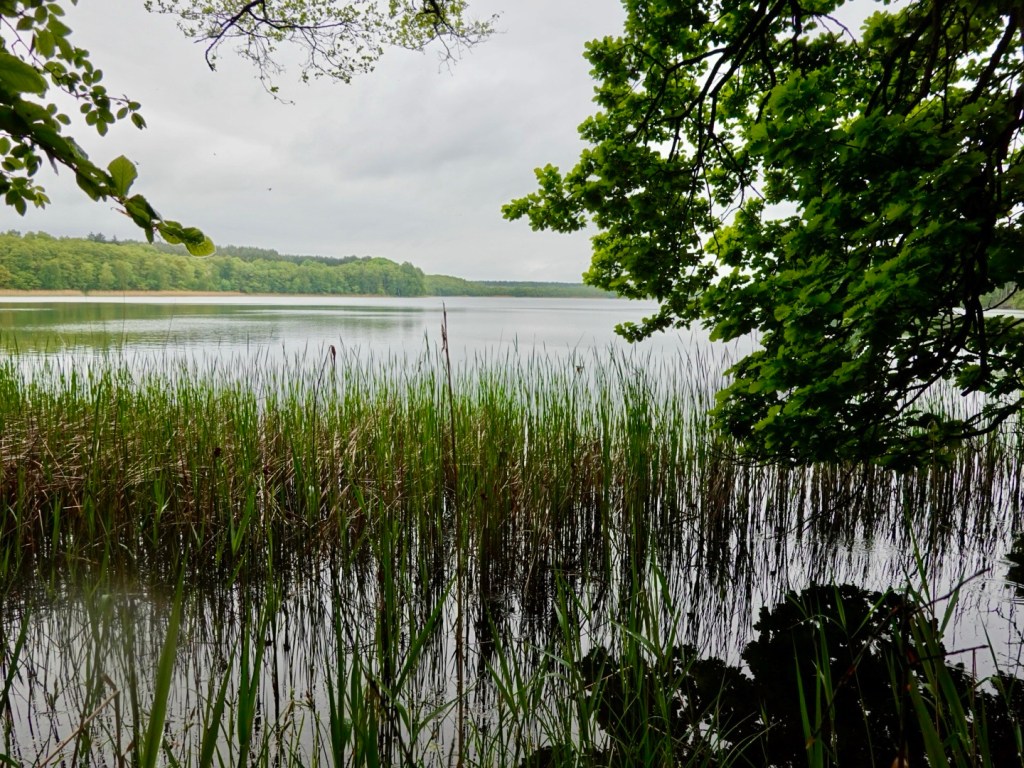
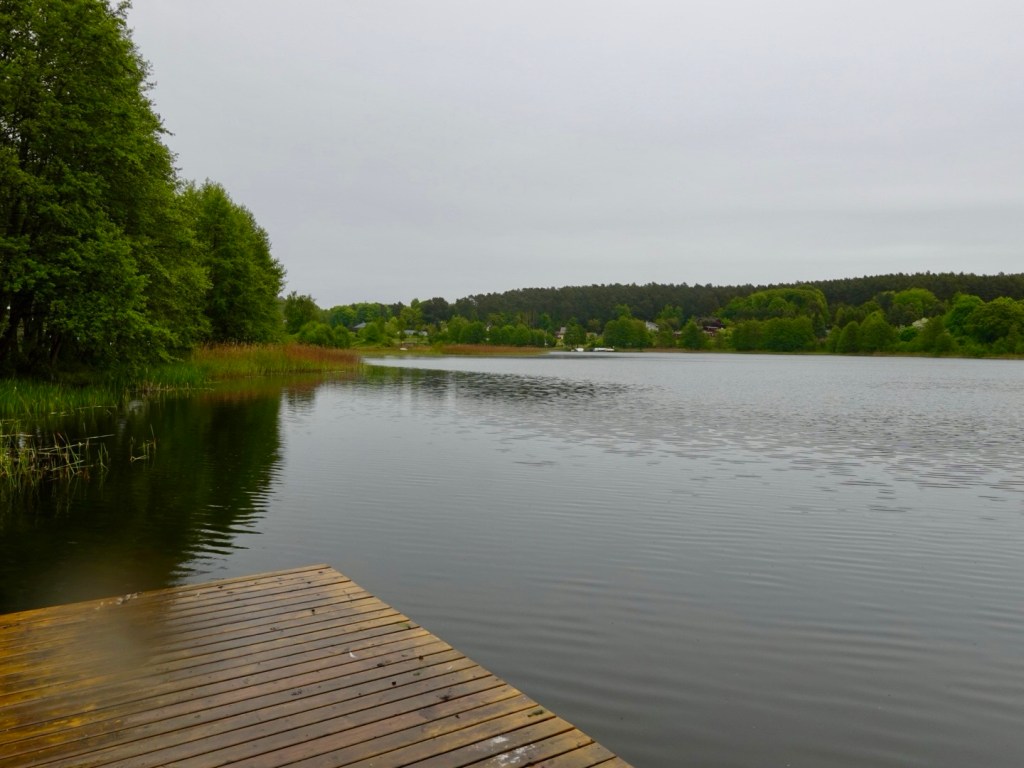
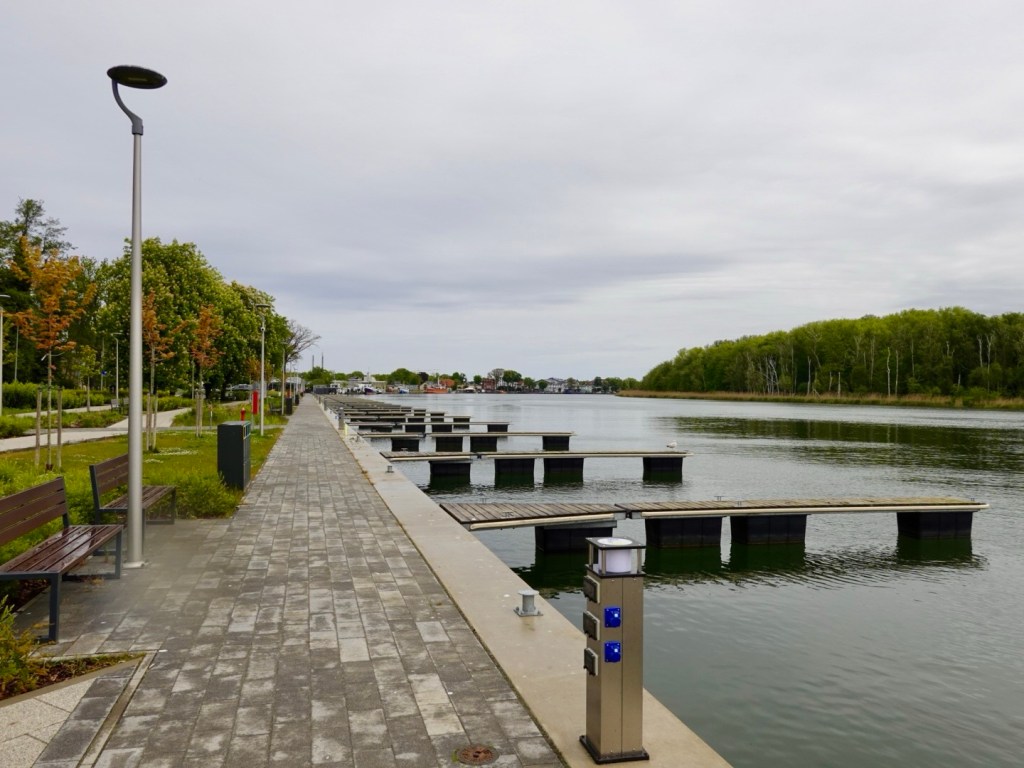
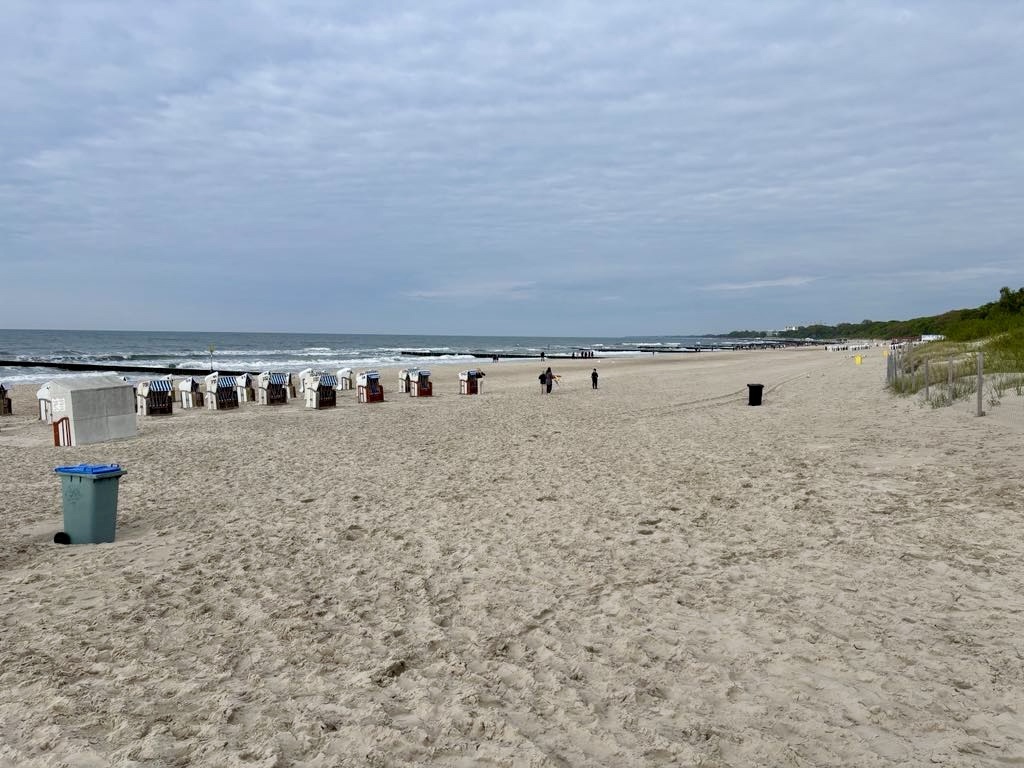
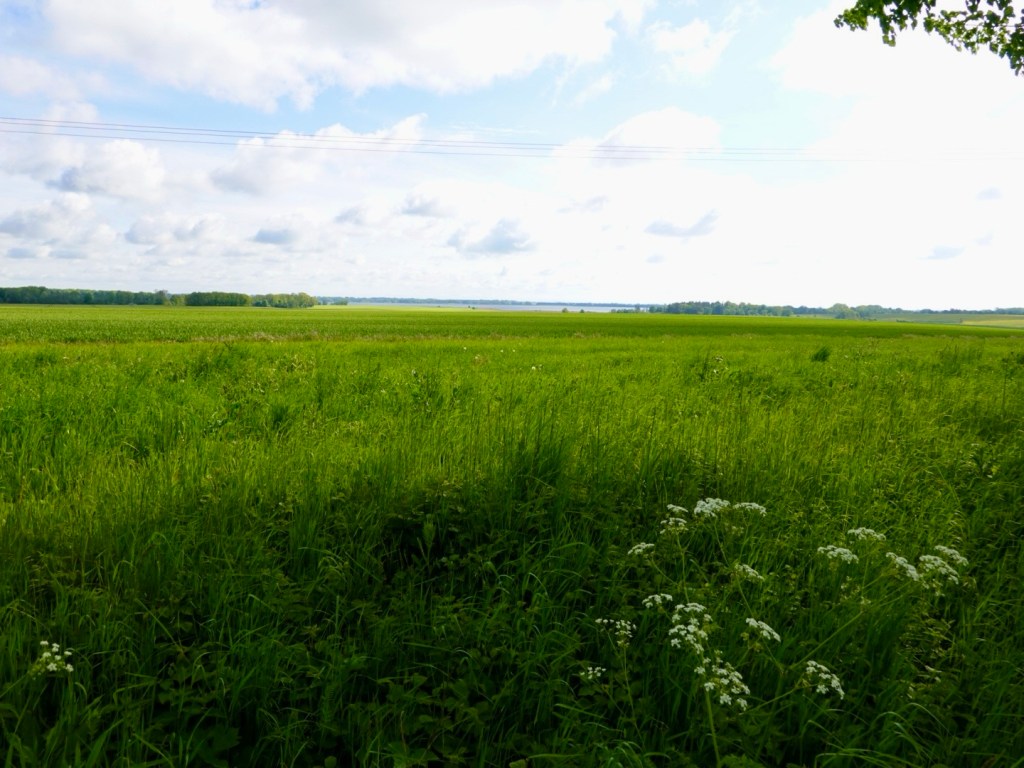
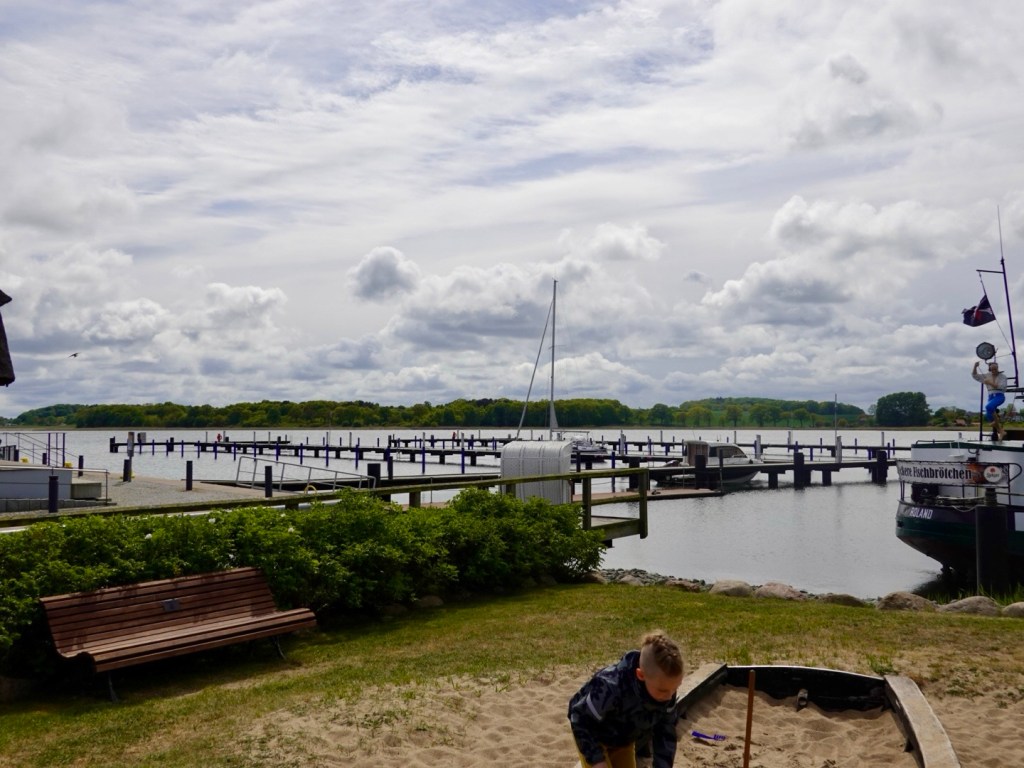
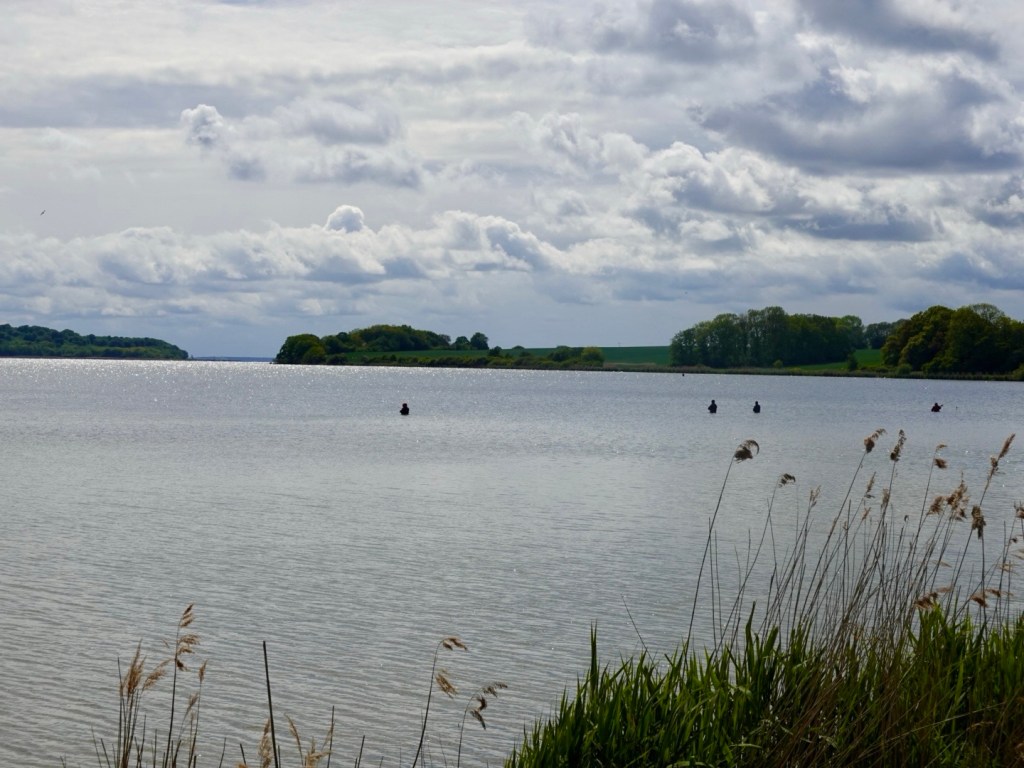
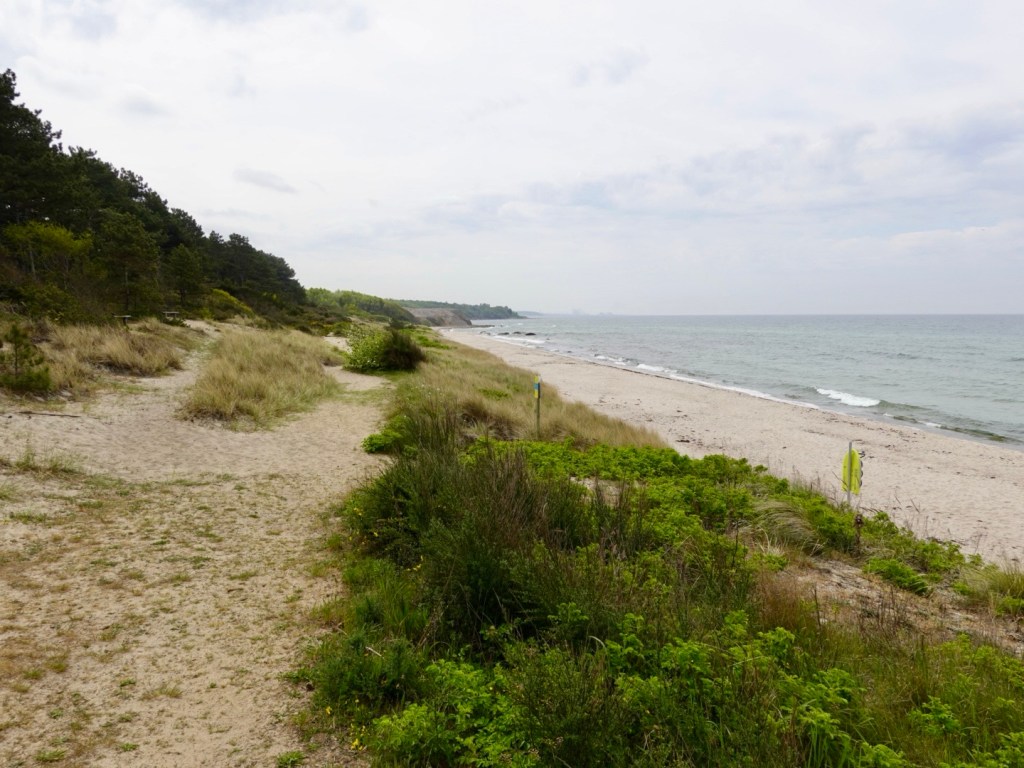
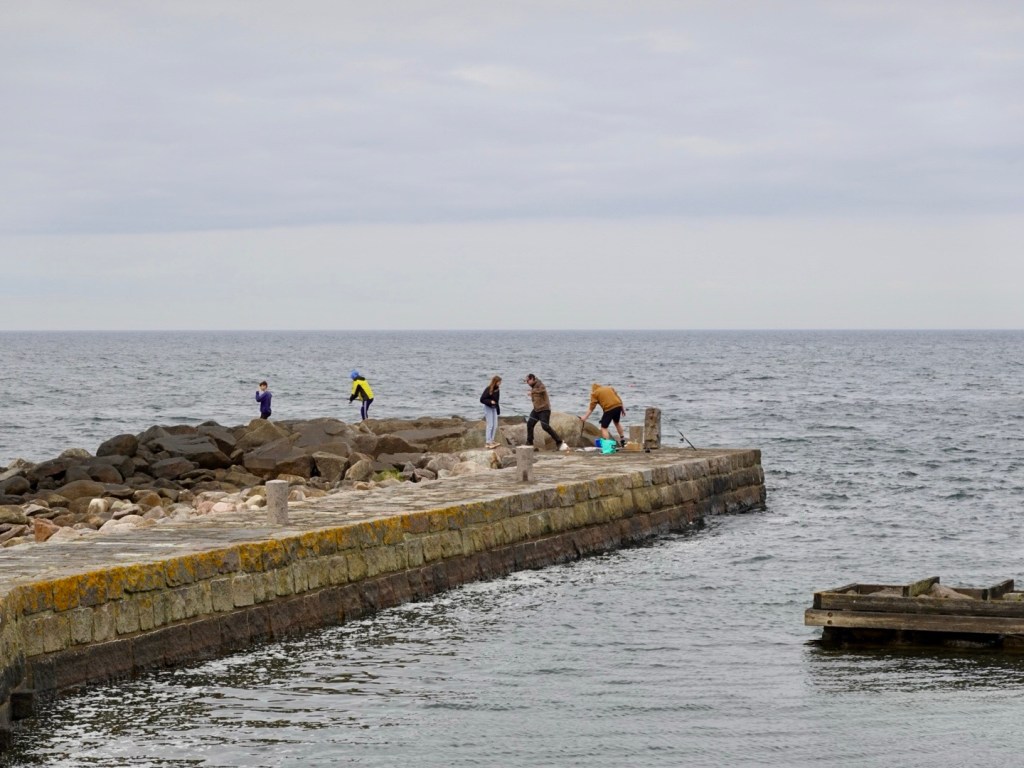
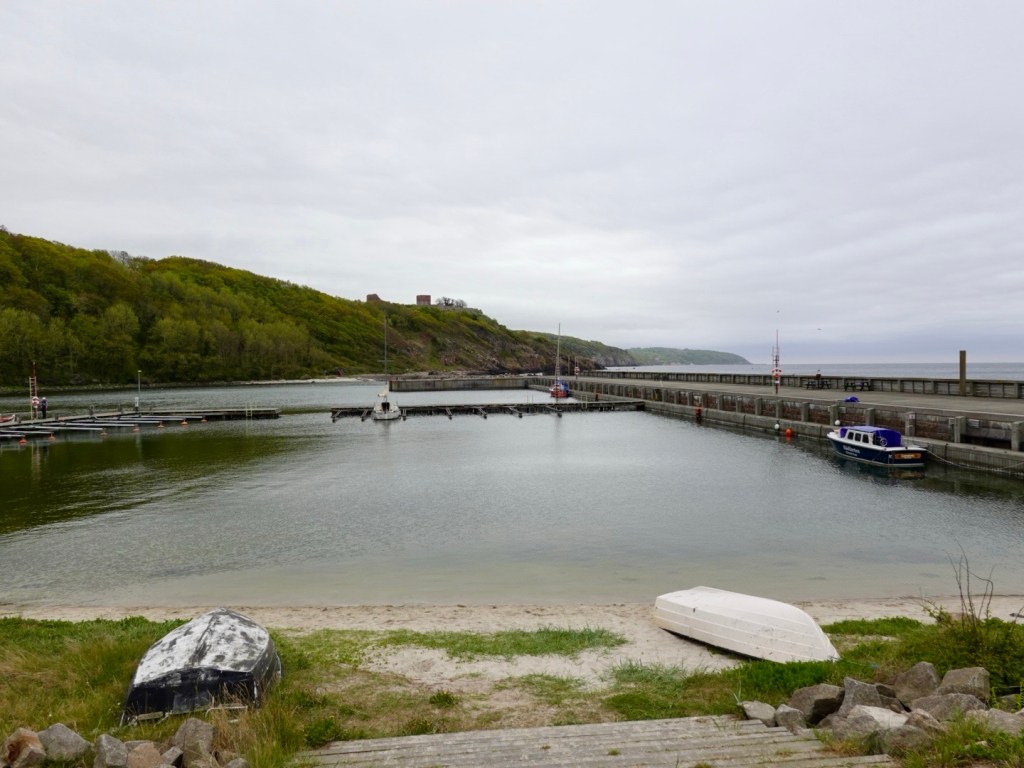
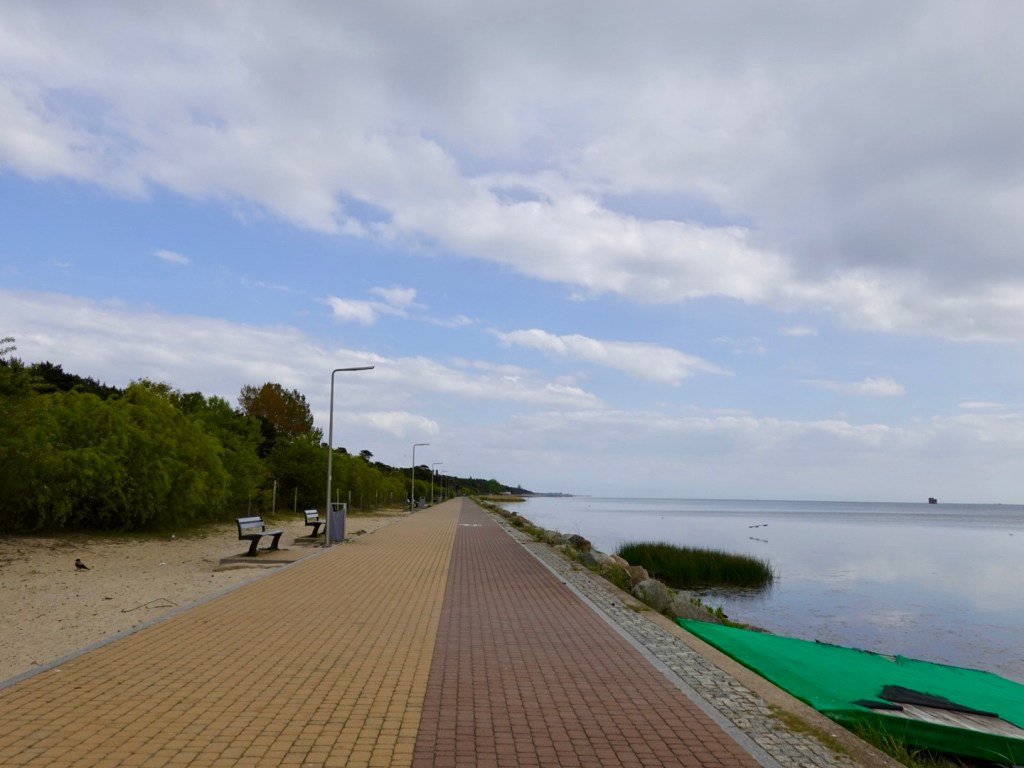
The bay was calm.
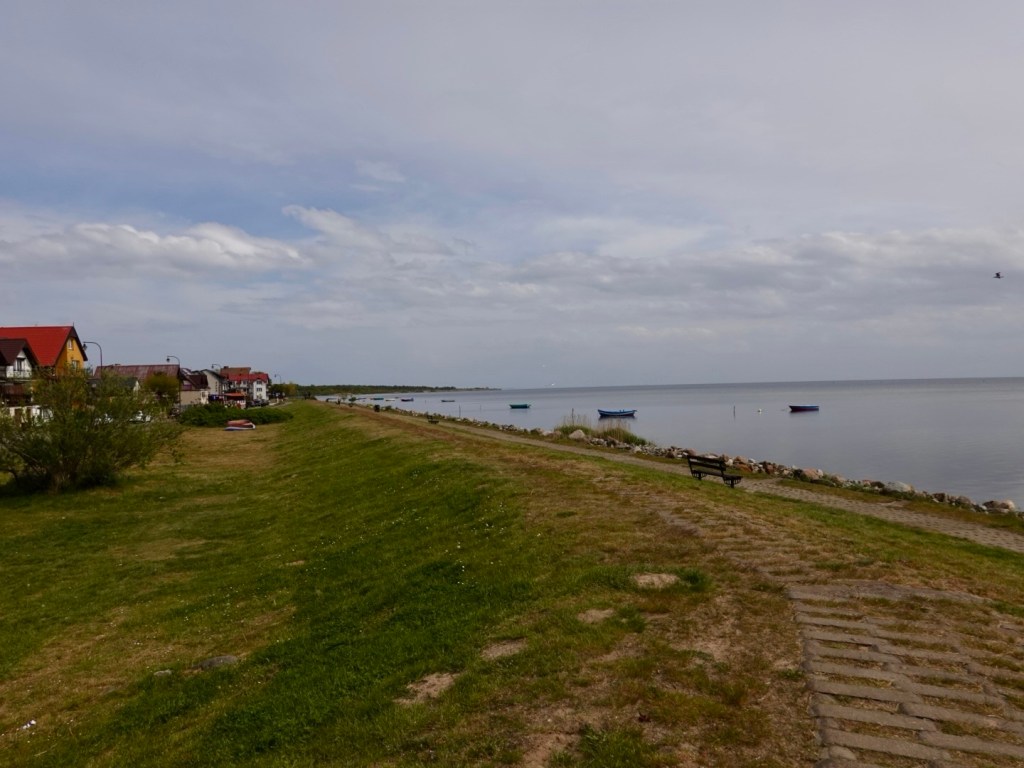
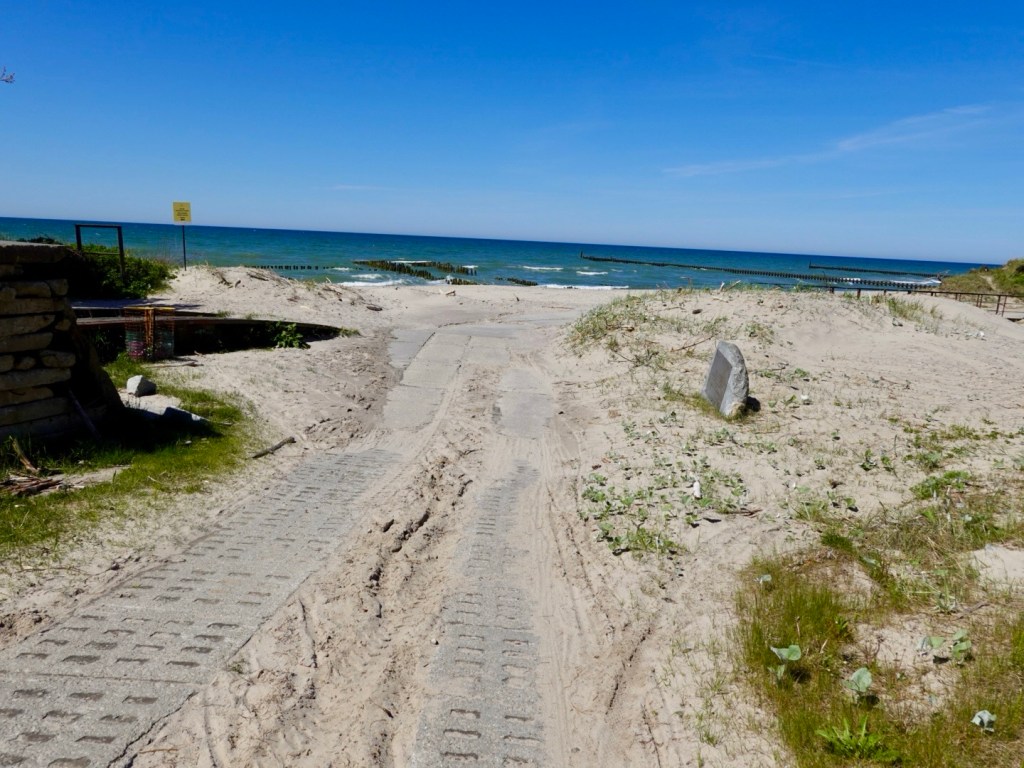
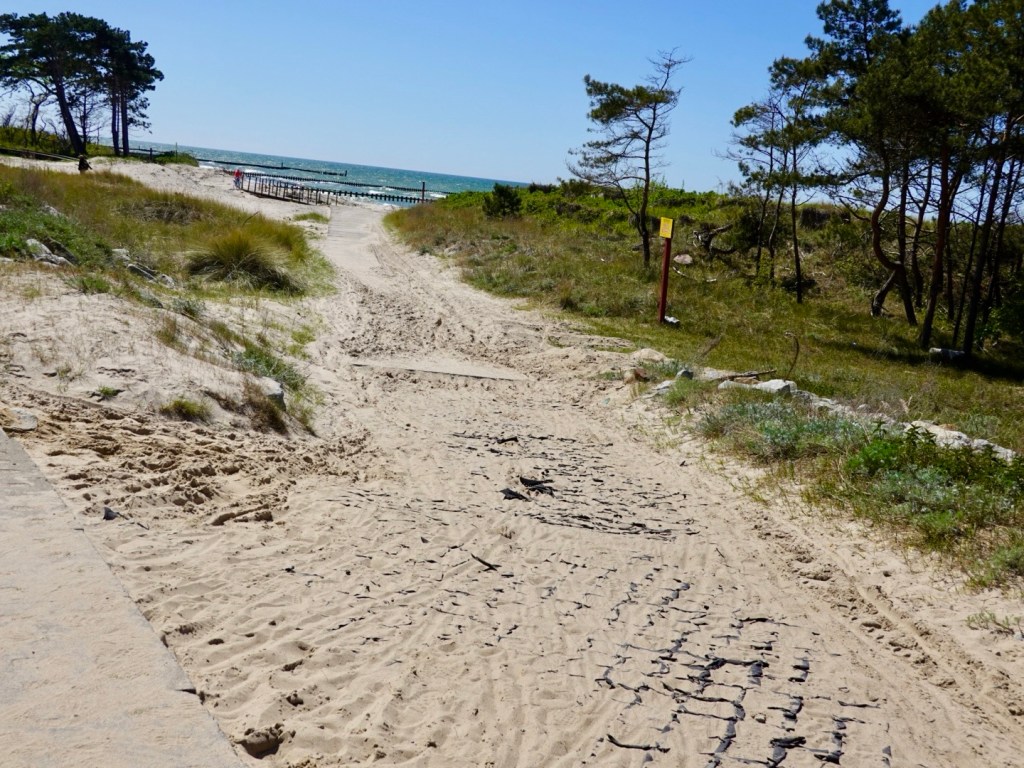
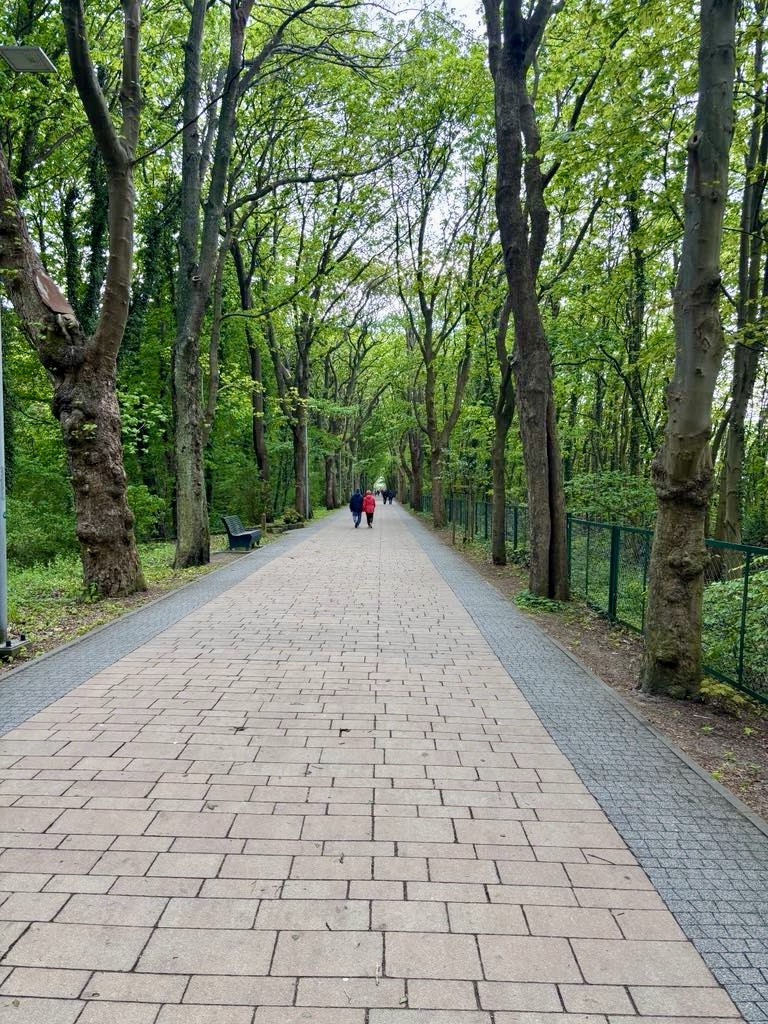
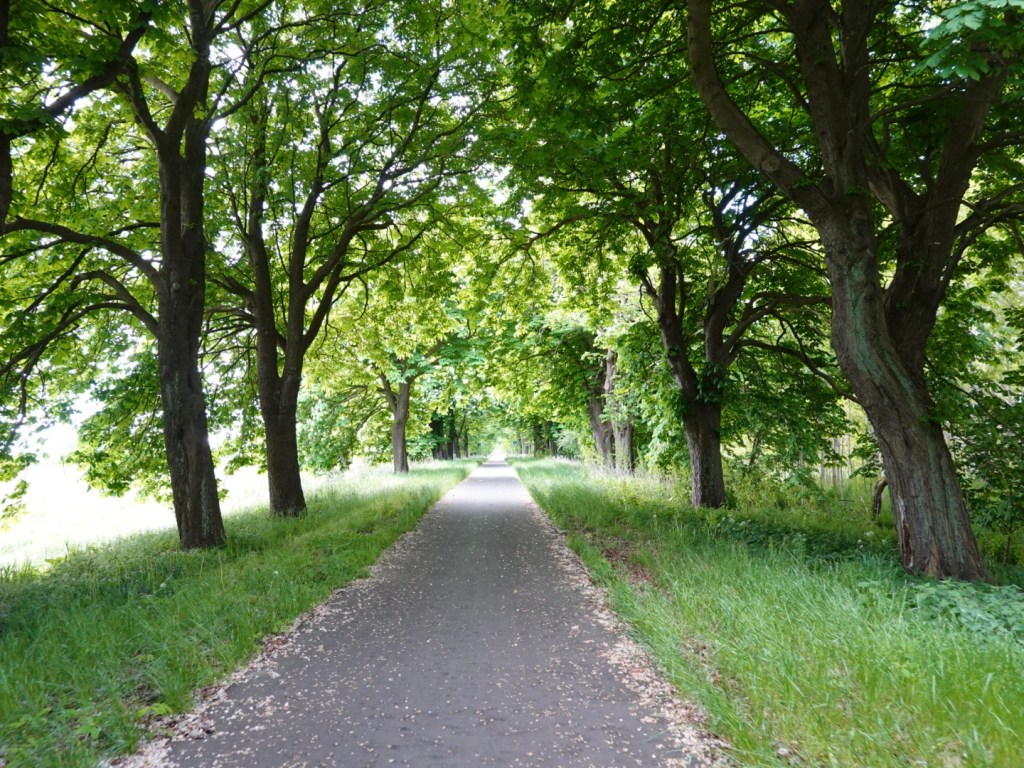
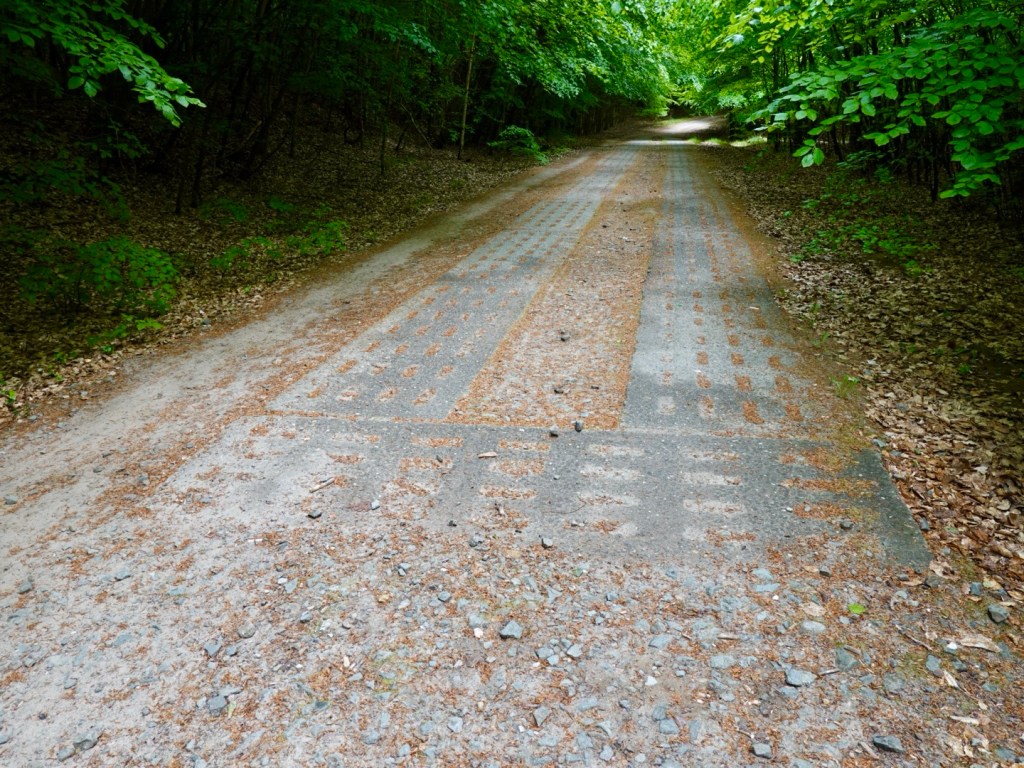
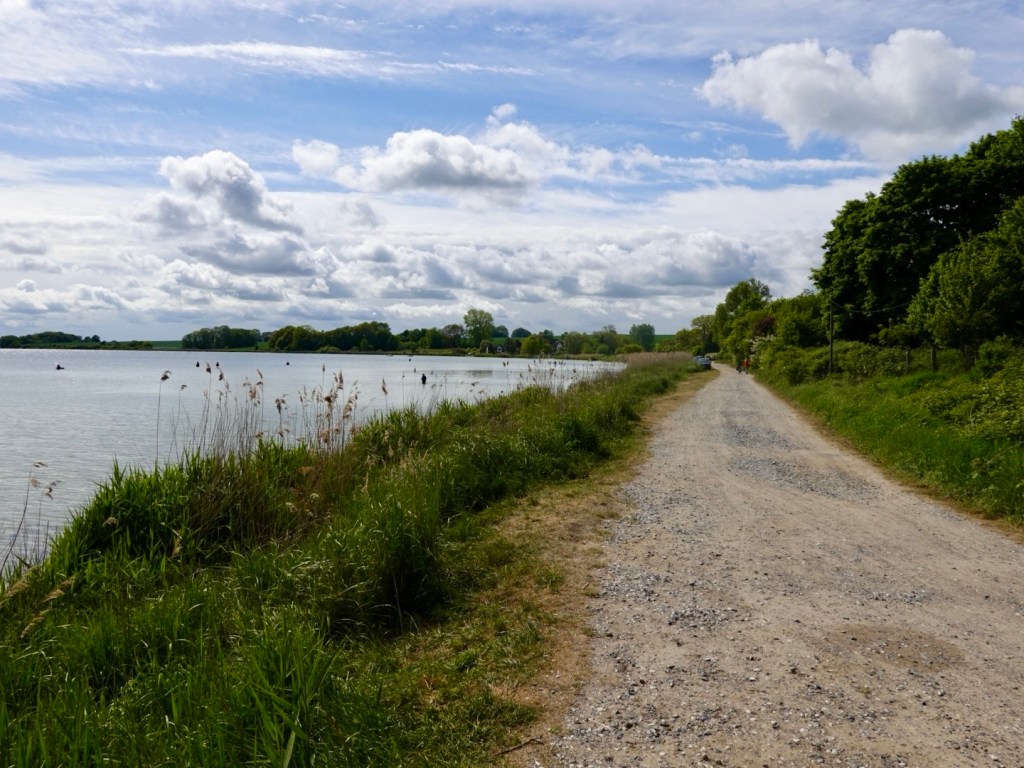
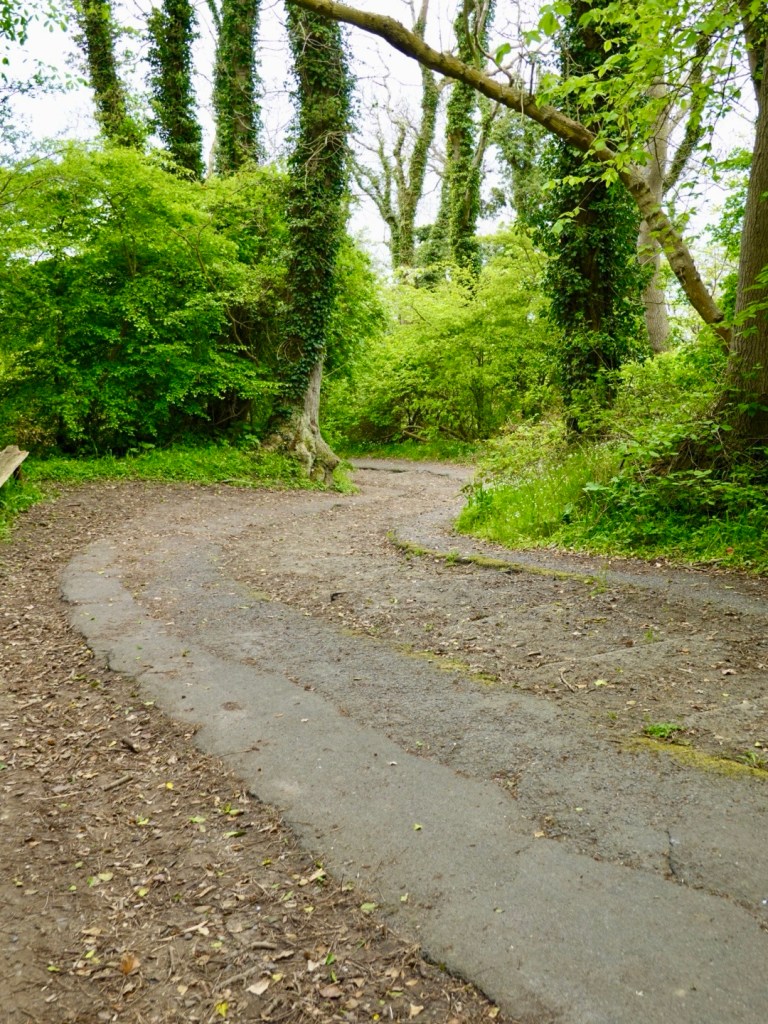
For the most, this was the cycle path surface.
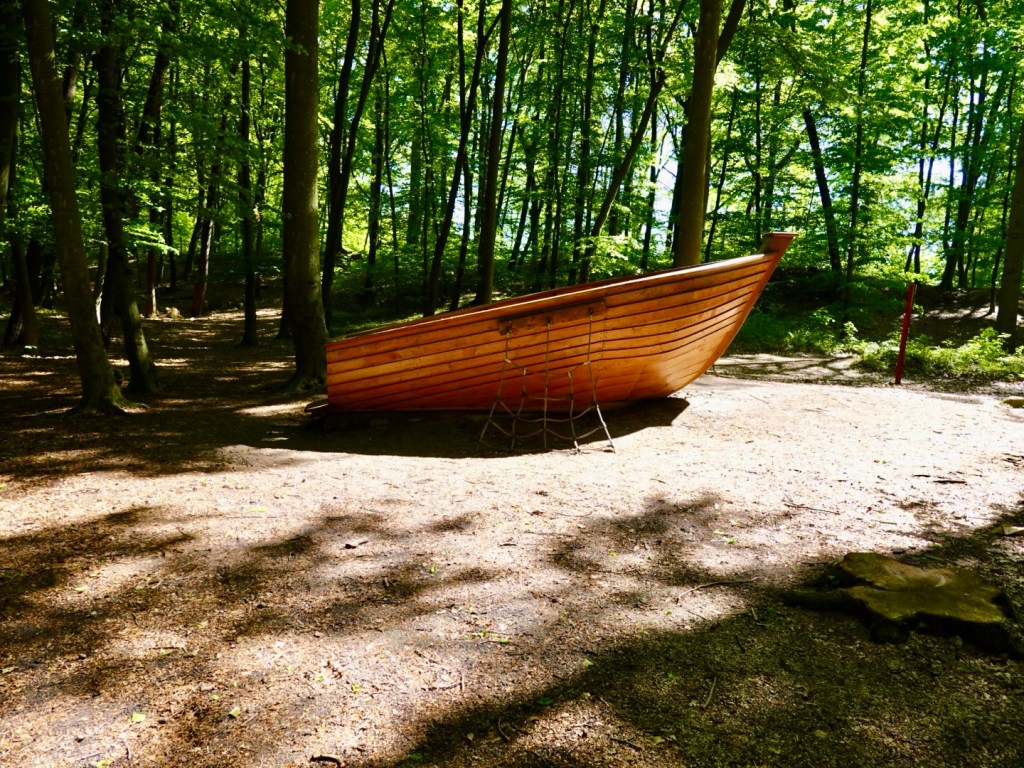
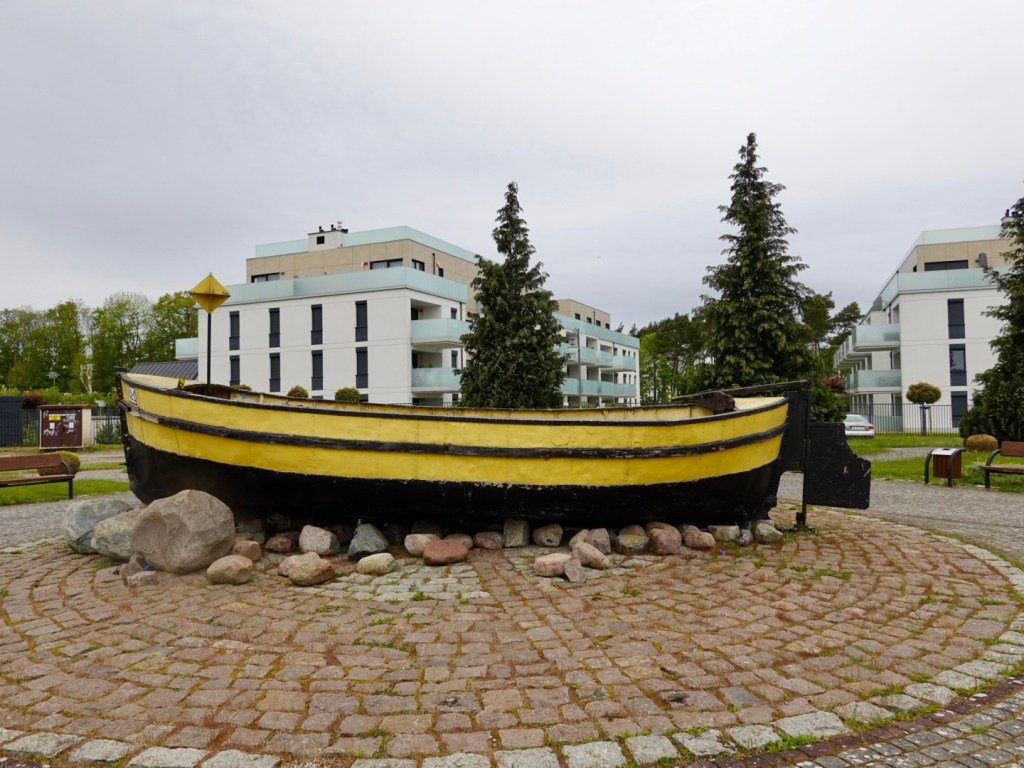
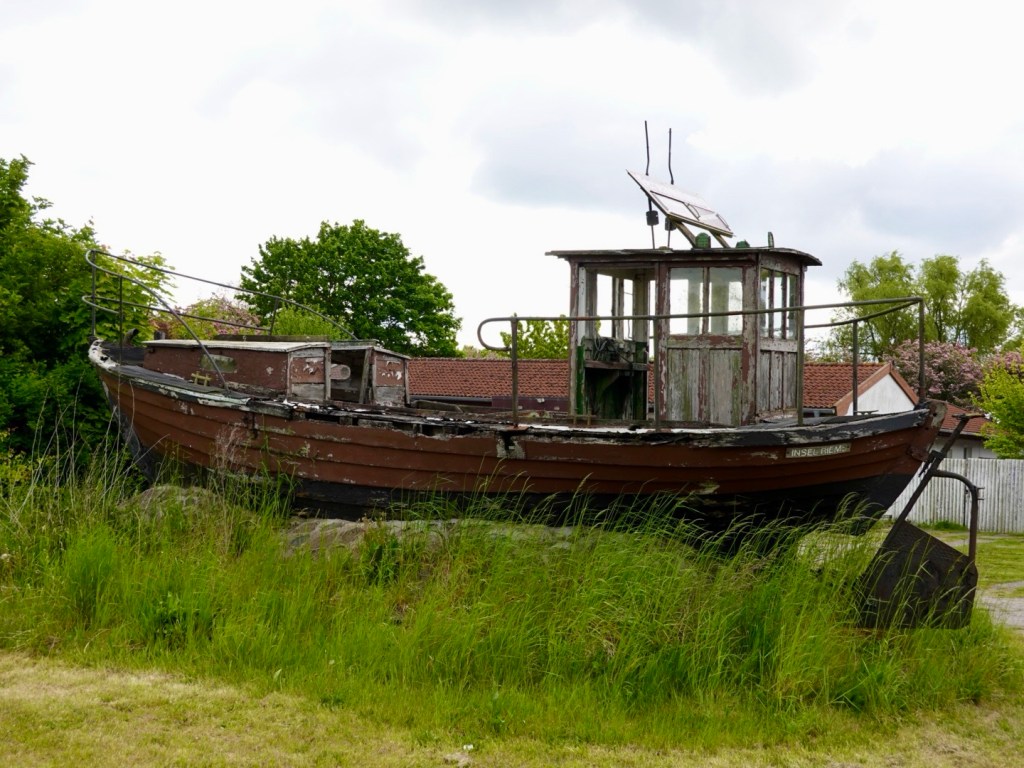
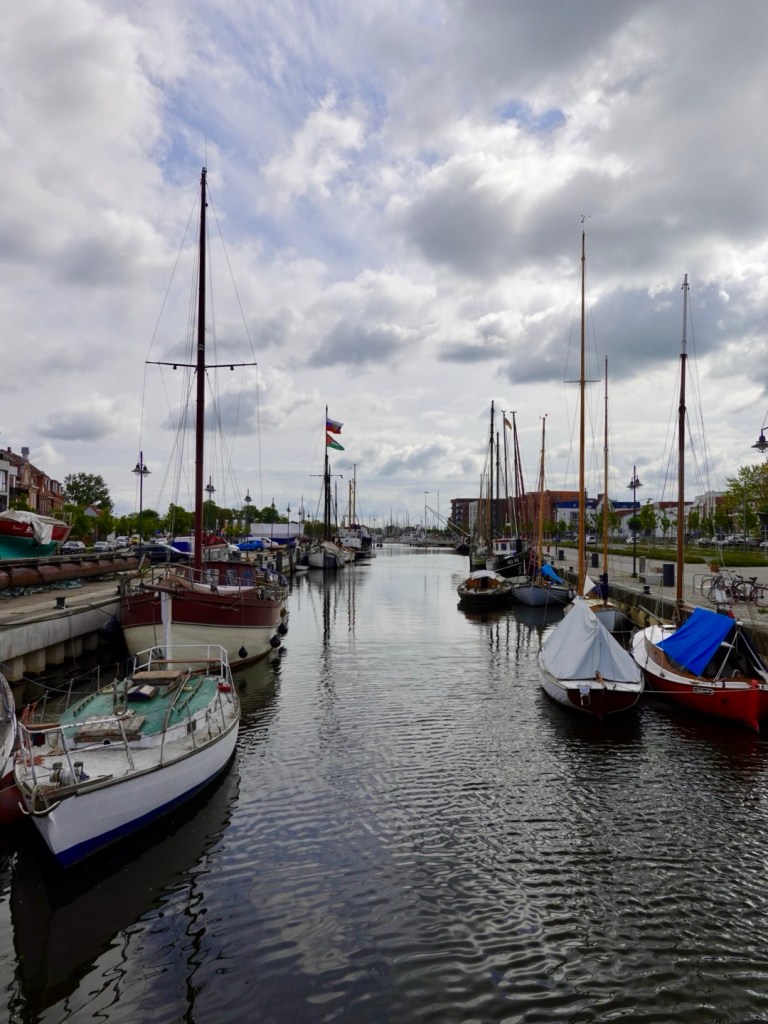
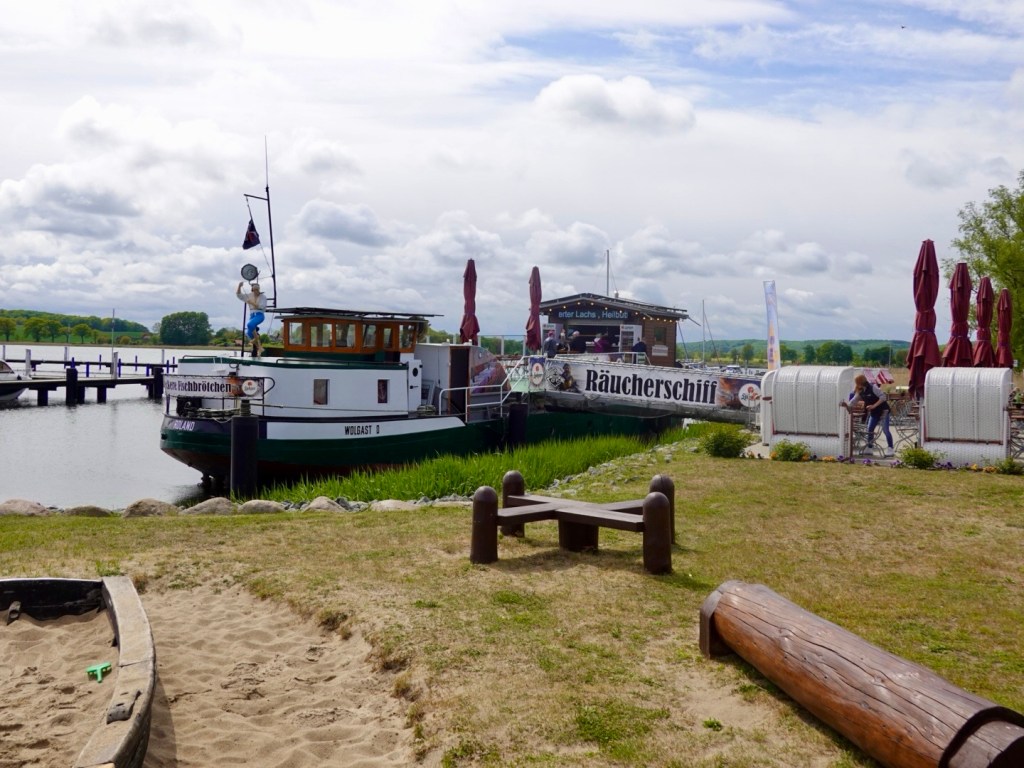
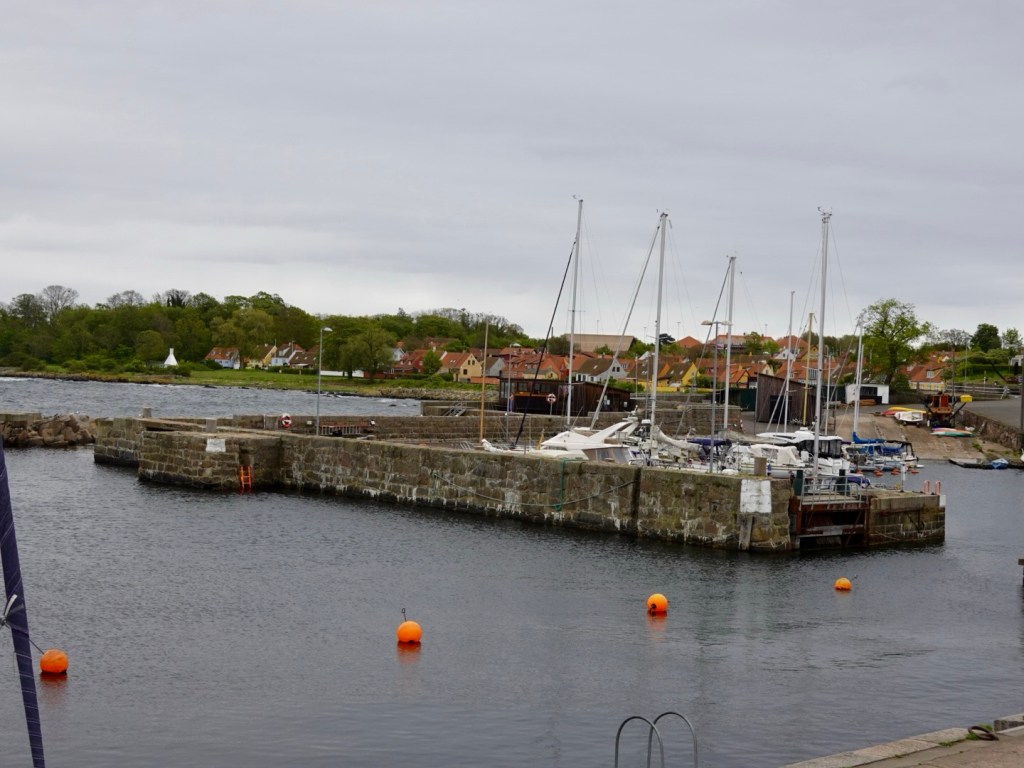
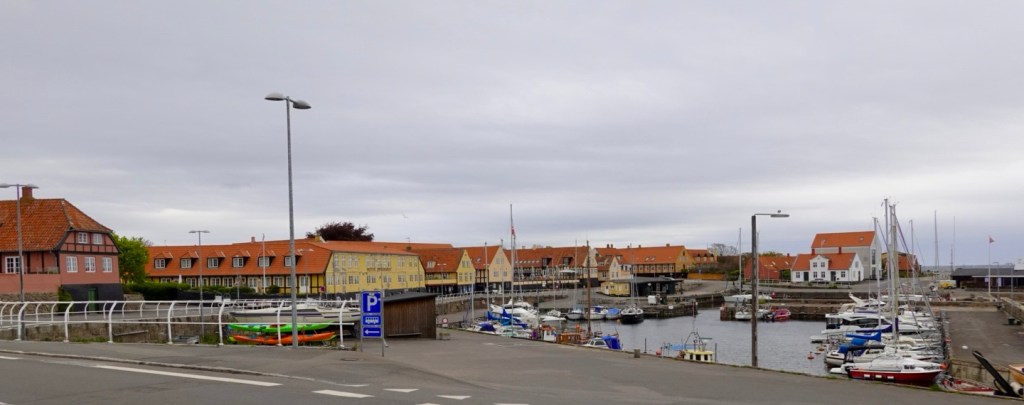
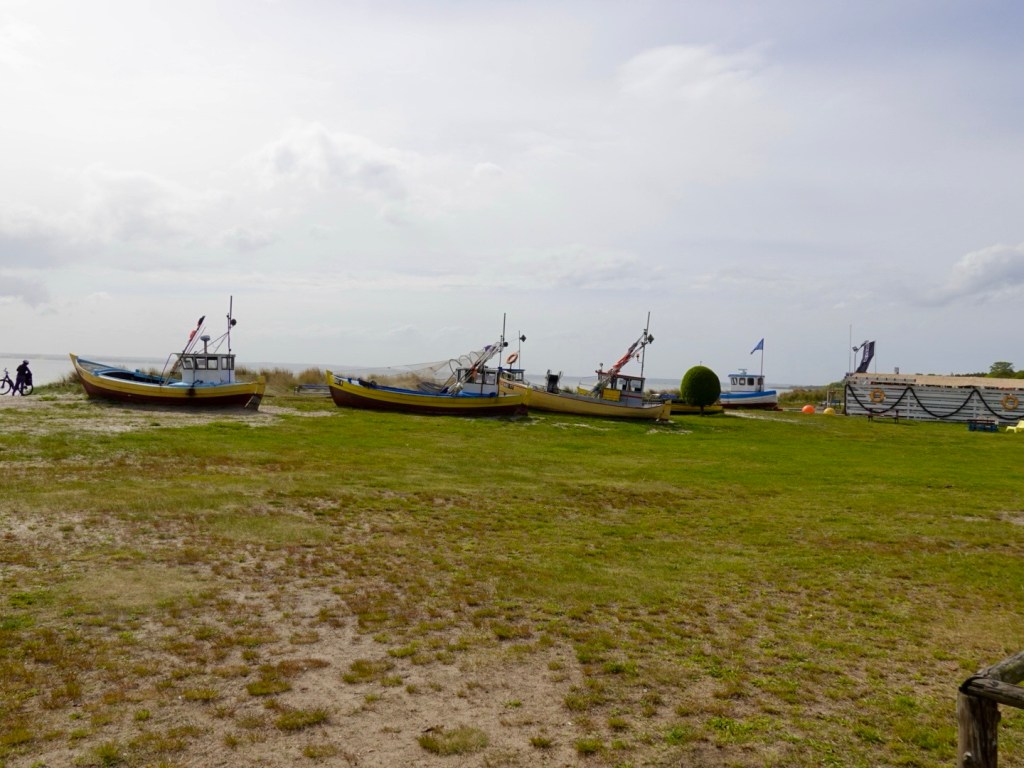
Boats out of water.
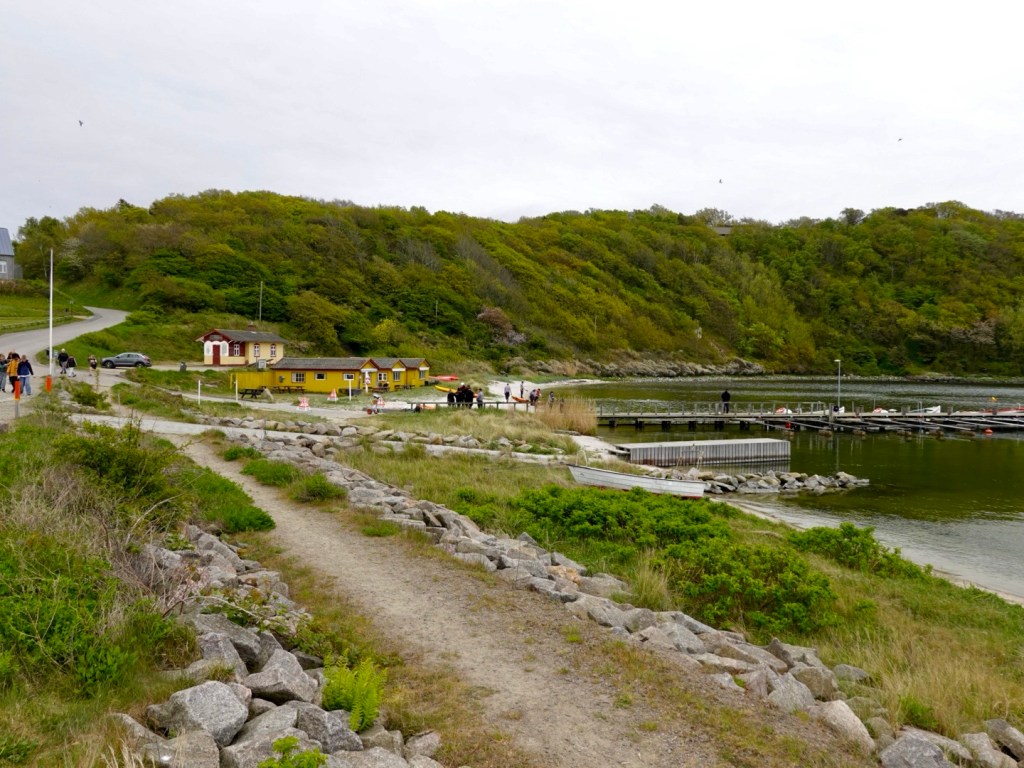
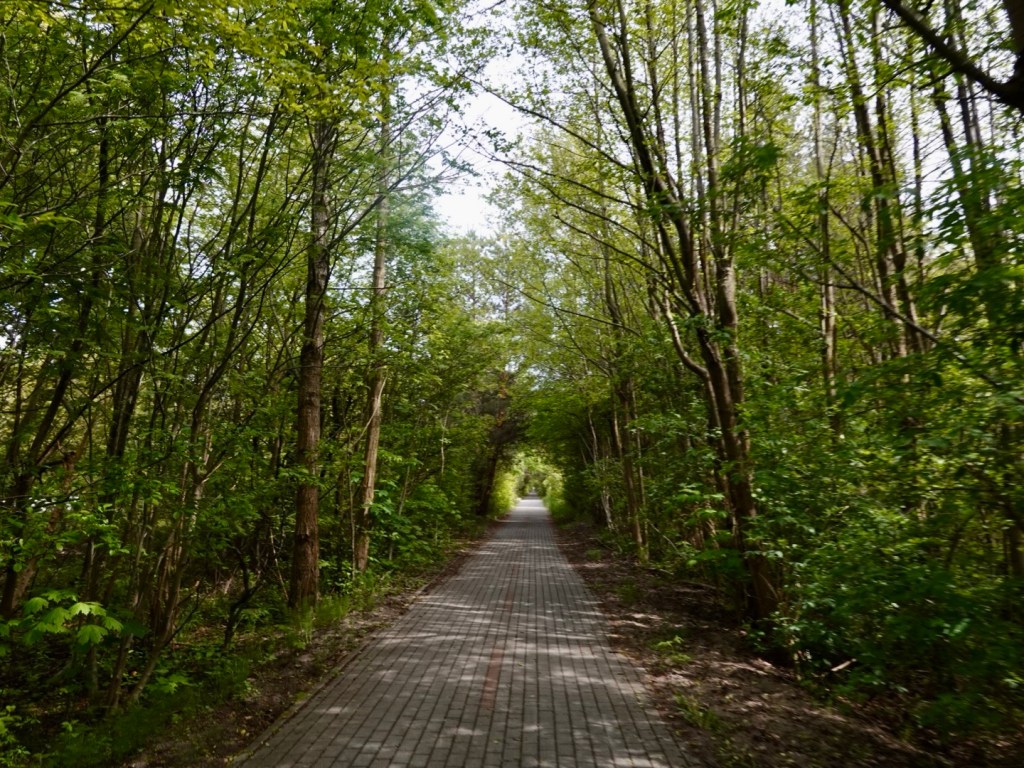
Continuing on our merry way.
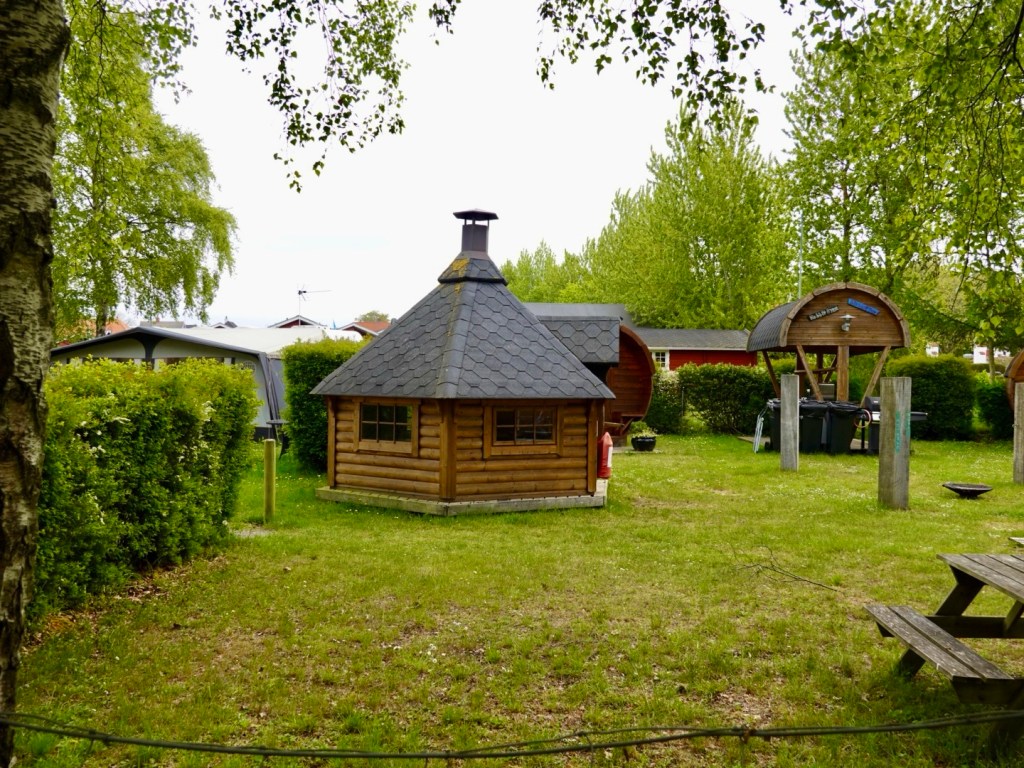
We were staying in a campground that had many good reviews. It looked like this from Booking.com images.
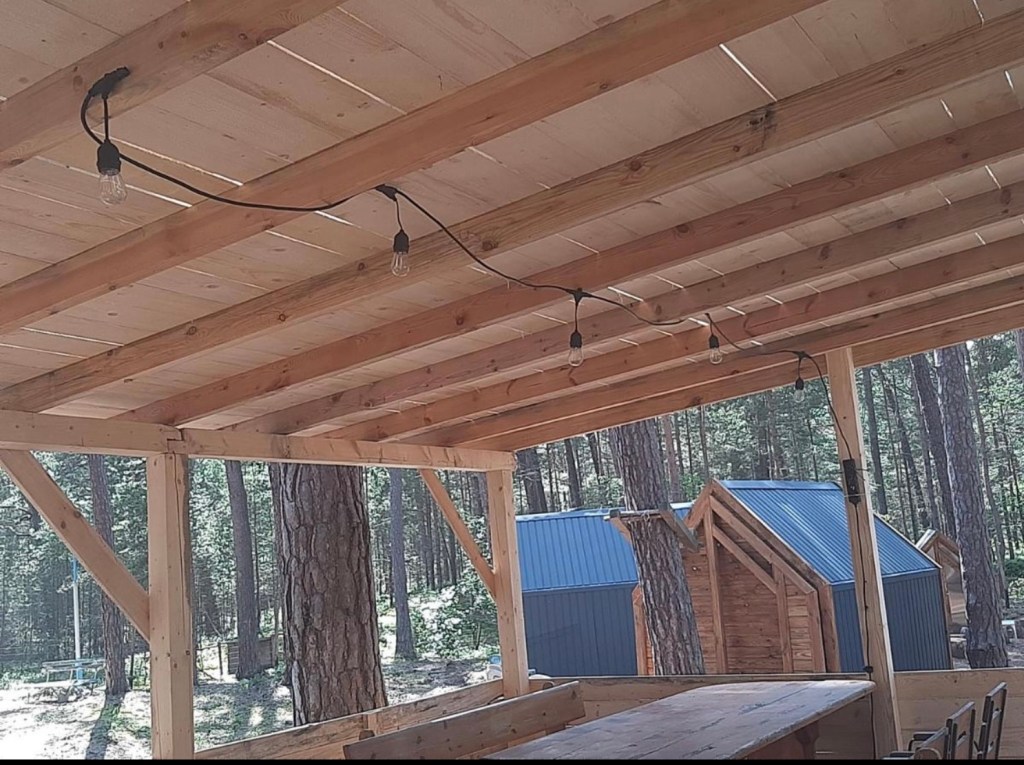
We could not figure how to get in there. There was a caravan storage place for derelict caravans and a desolate, abandoned, graffitied building with fences and locked gates.

We rode up and down the road.

We noted a small pedestrian gate not latched. We pushed through, riding through long grass, past what looked like the setting for a horror movie.

The place was abandoned and desolate and plain creepy.

We got to the cabins and quite clearly, they had not been used for some time.

There was noone waiting to greet us as per our check in instructions. I messaged them as there was no phone number.

Surrounding the cabins, maybe 50 metres away were more crappy looking caravans. One had a car and motorbike.

We just needed John Jarratt’s Wolf Creek character to pop out and I’d have screamed.

We could not stay here even as the only guests. We did not feel safe.

We made the decision to bolt.

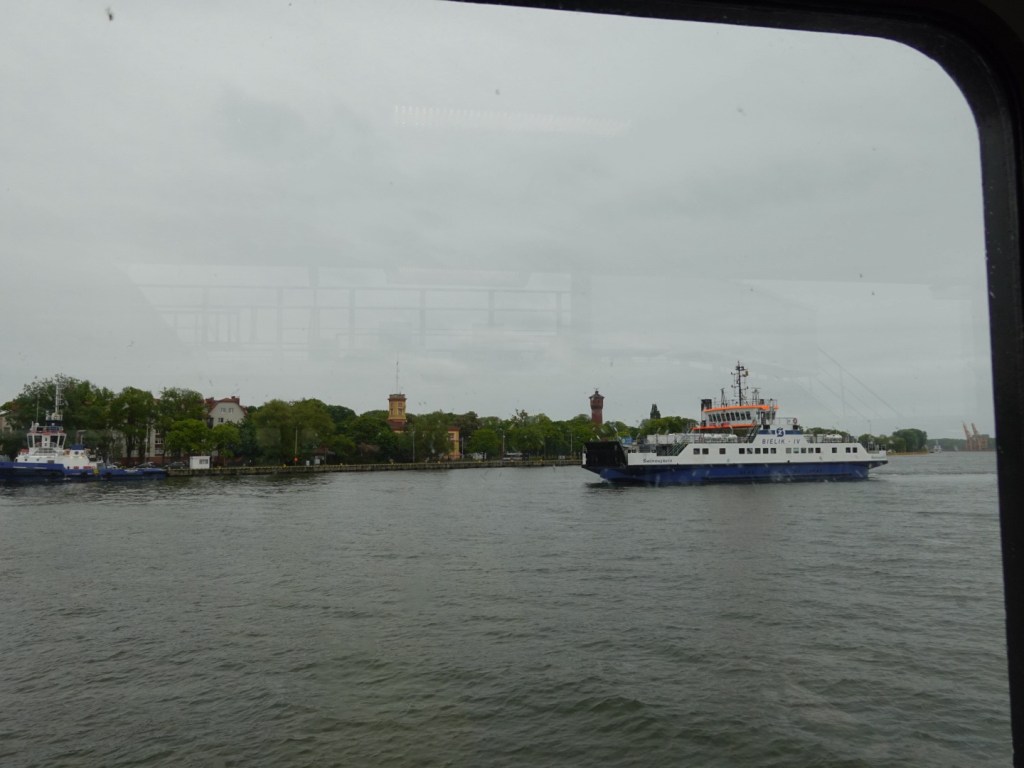
The plan tomorrow had been to train to Gydnia for our next section so we headed to the nearest railway station. The ferry left too late in the day.

There is a one way train from Hel! Good to know.

There were ticket vending machines. I purchased two adult tickets but it would not let me do the bikes. The machine does not print a ticket.

The train arrived, we boarded. There were two other bikes on board. The Polish conductor protested in Polish re our bikes. He did speak minimal English enough to say that there was no room for our bikes.

I pleaded my case. He ended up rolling his eyes and blew the whistle and the train departed, with us on board.

He came back multiple times with long messages in Polish.

I handed over our credit card and he charged us for the bikes. Problem solved.

We later found out from a lady using her Google translator that only two bikes are permitted. We were bikes three and four.

The reason I could not add the bikes to the ticket was that those two owners had already booked bike tickets.

Fortunately they both got off within two stations.

So a bit of tension and we arrived into Gdynia to find a hotel. I had a quick look and noted two larger ones that may cope with bikes.

Took a mountain of energy to get the bikes out of the station, down stairs, up stairs, up ramps that were designed by non cycling engineers.

We found the Mercure hotel by chance. It was one of the two. I went in, booked a room and our bikes are in our room!

So here we are. I have requested a refund from Dodgyville Camping and Booking.com.

With self planned tours, you need to think on your feet and come up with solutions. You are self reliant. But it’s worked out ok.

The only down side is not seeing the best parts of Hel.

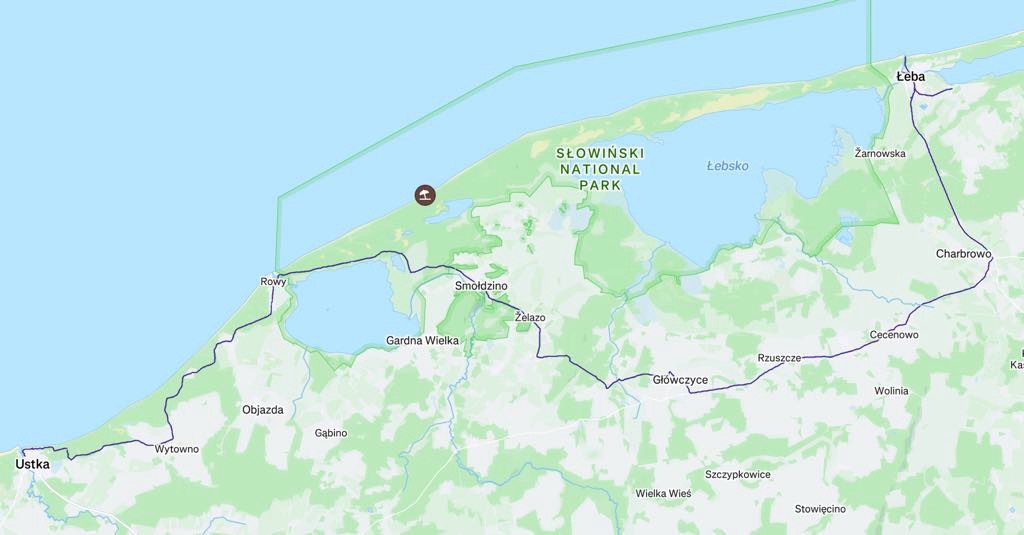
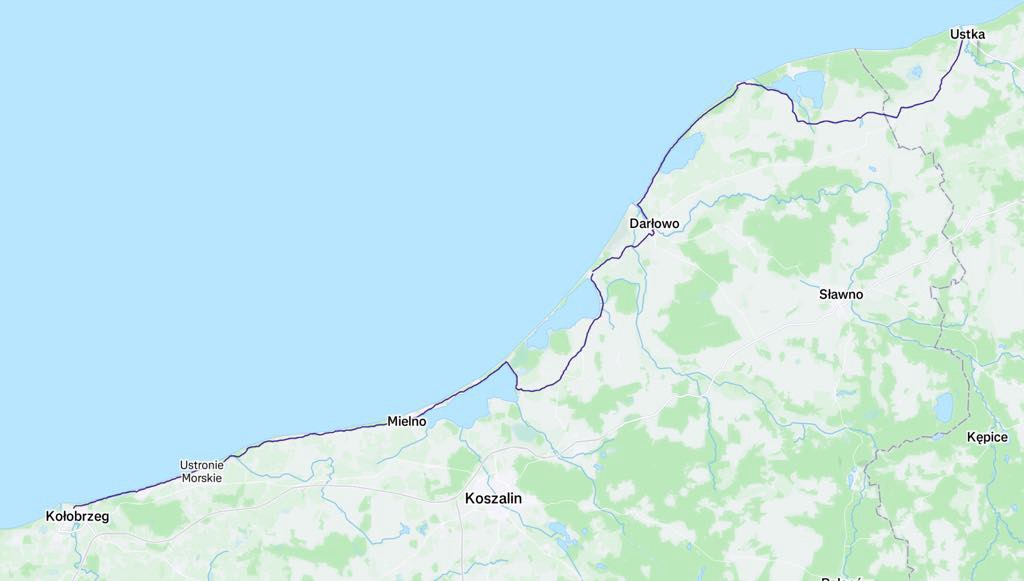
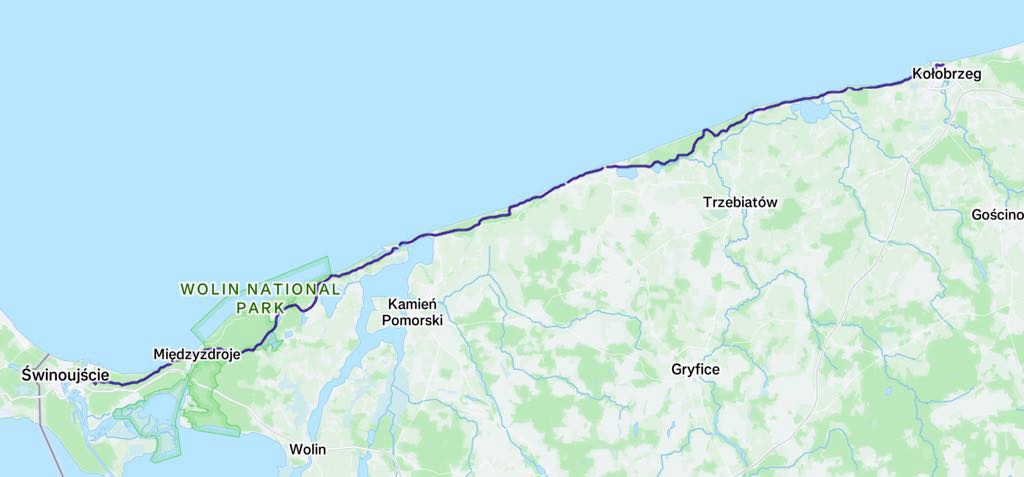
We have ridden 113 km today so another solid day. Here is our route.

That’s it for today. Thanks for reading 😊❣️🚴💪
Day 9: Ustka (Poland) to Leba (Poland)

Another fine day.

A great start to the day with a lovely breakfast. The lady spoke to us in English with an Irish accent. Turns out she is Polish but lived in Dublin for 9 years.

She gave us wrap to make some rolls to take with us today. Super nice of her.

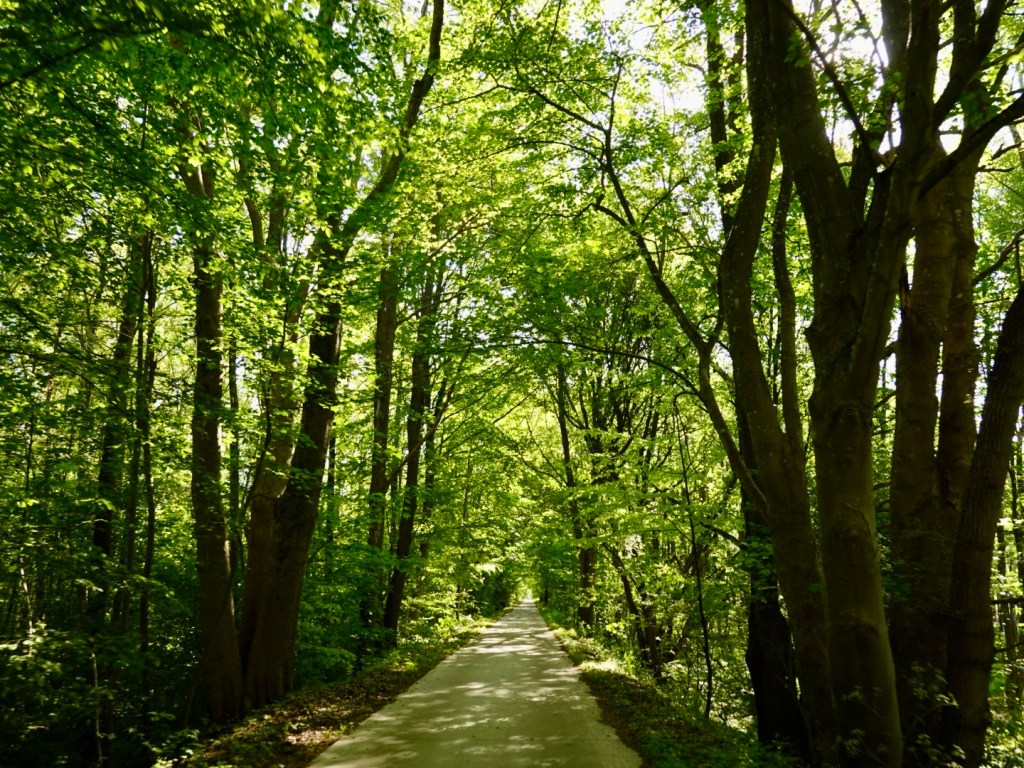
We headed off via a paved pathway through forest, running parallel with the beach.

Again we would follow EuroVelo 10/13 for most of the day.

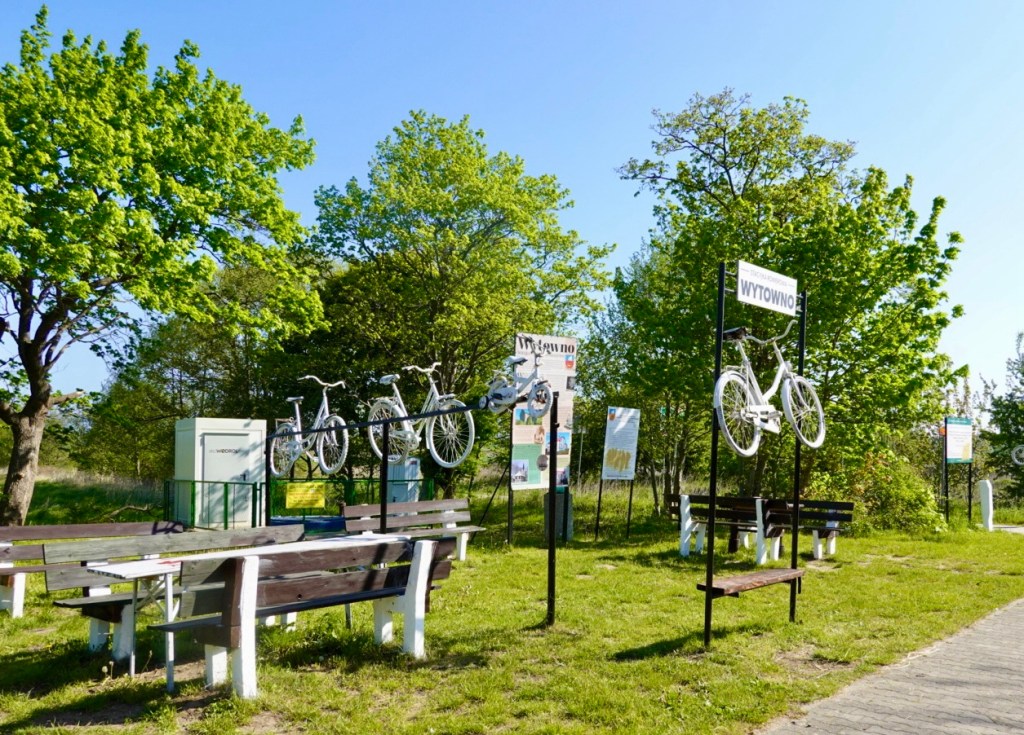
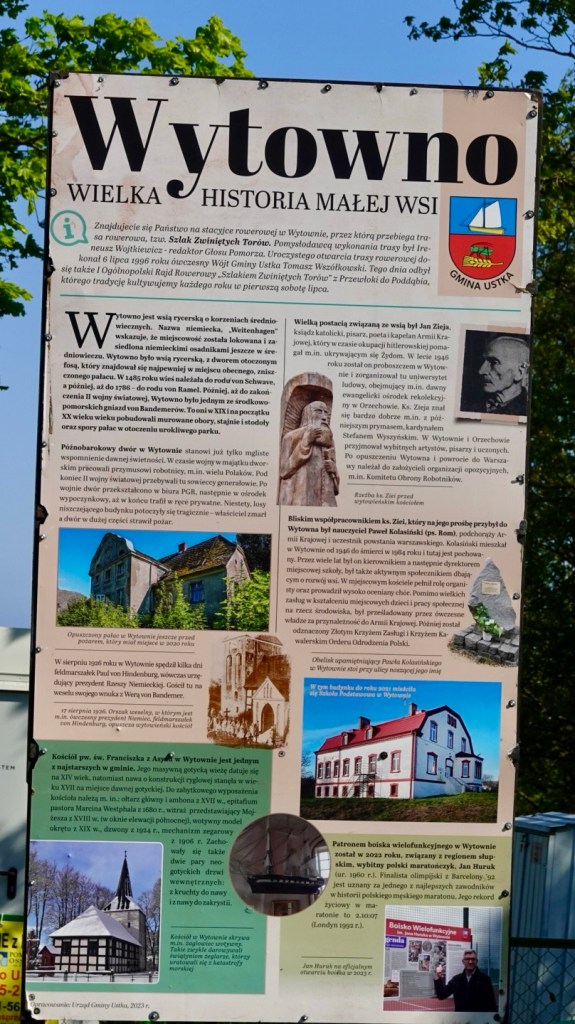
The village of Wytowno put old bikes to use plus an information board with local history.

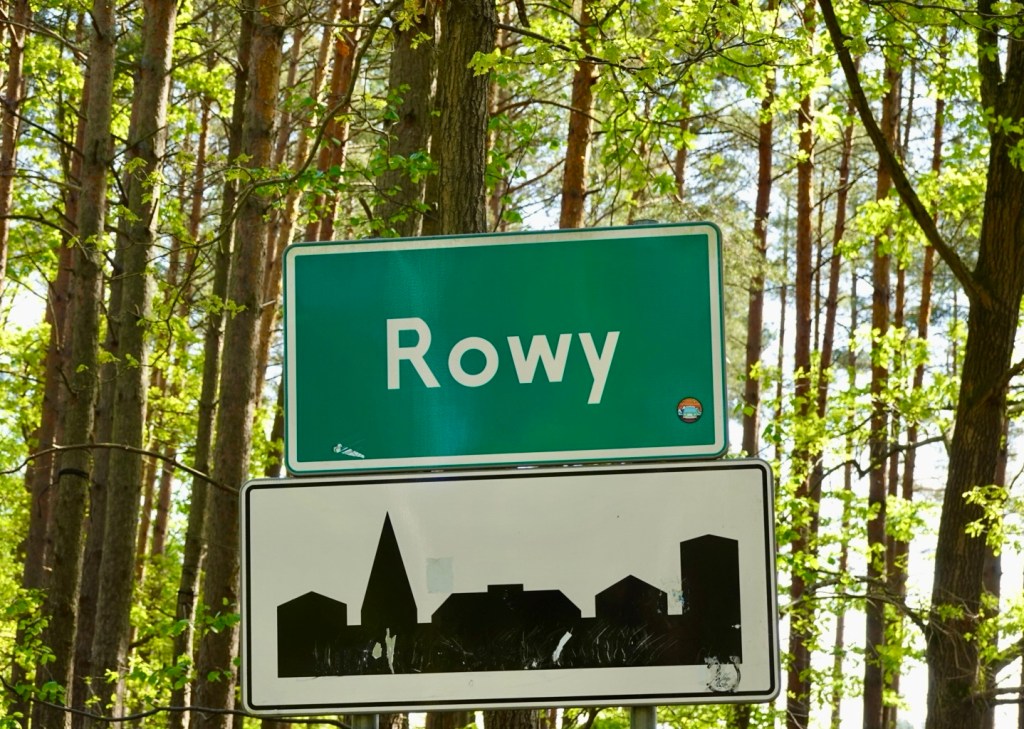
Towns and villages all have similar signs. The lower sign was also used in Germany.

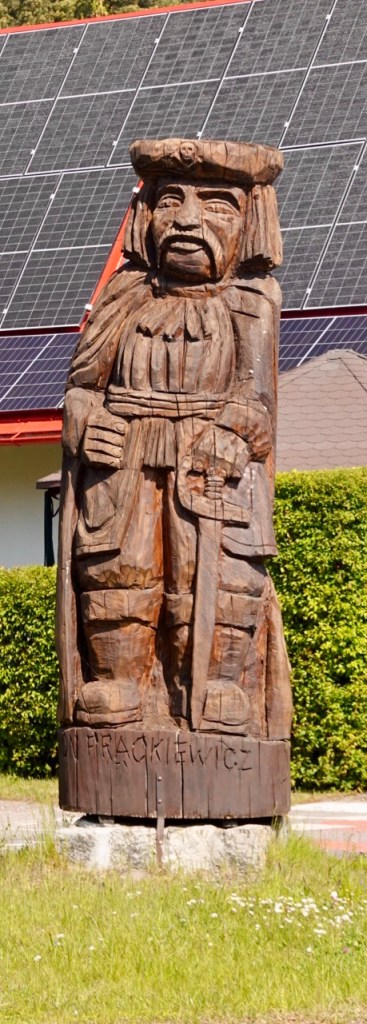
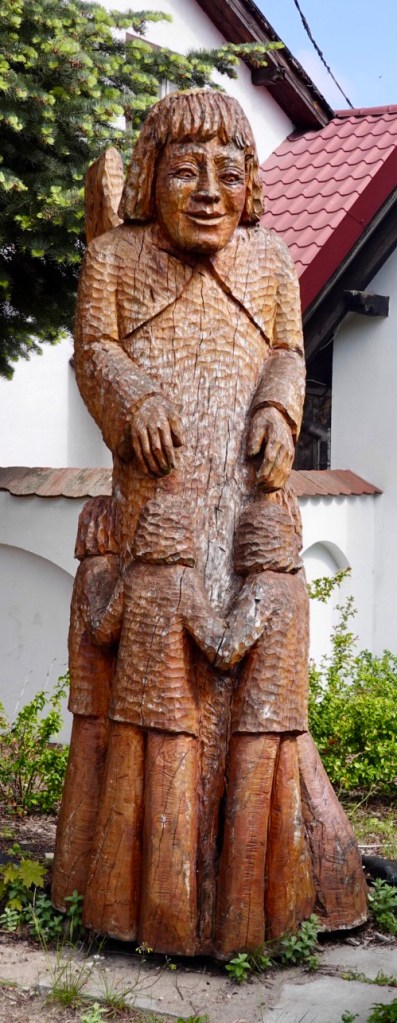
In Rowy wooden carved statues appear every hundred metres or so.

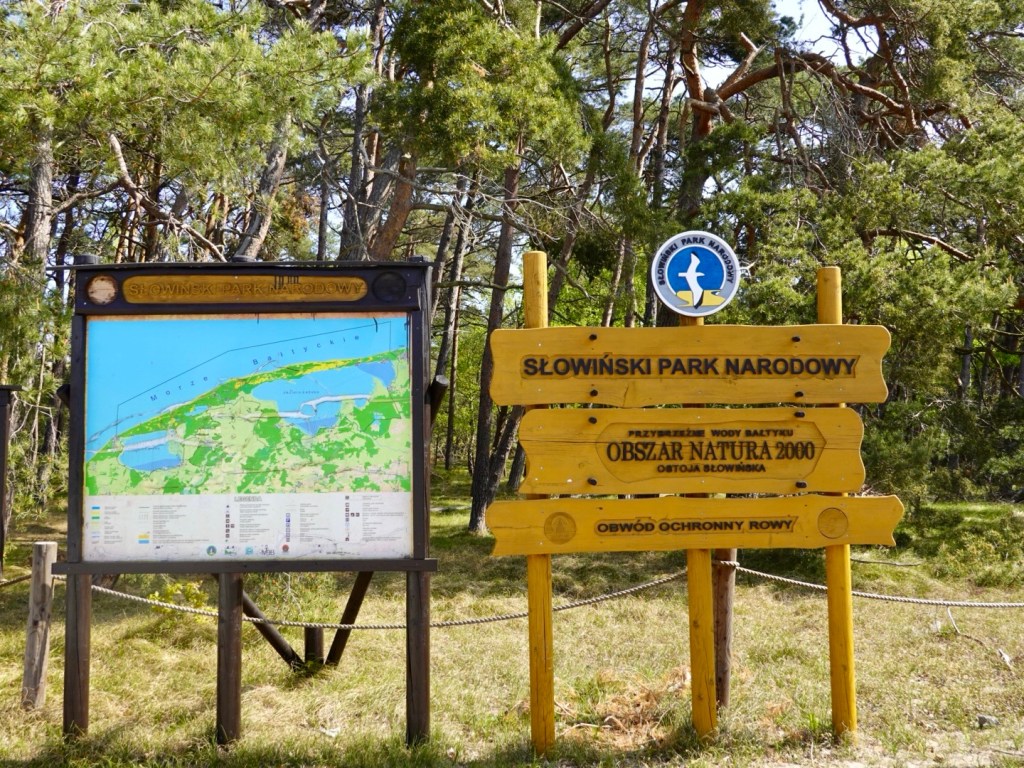
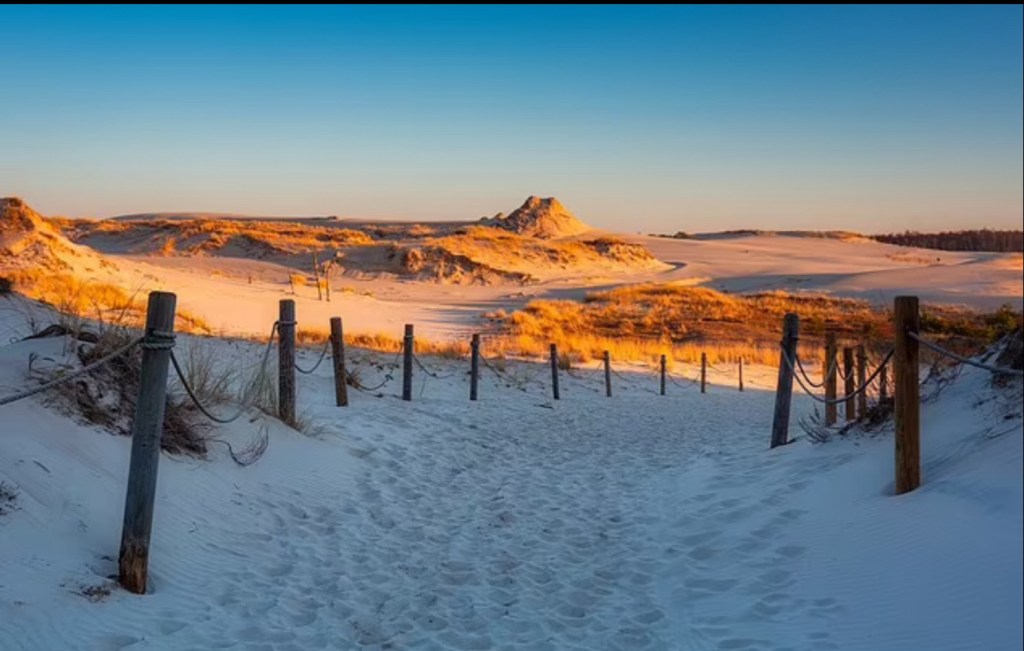
The Slowinski National Park is another Baltic coast park. It was formed in the late 1960’s to protect the area known for its large, shifting sand dunes. The dunes are encroaching at up to 10 metres per year.

The three lakes were once bays off the Baltic. Forests have been swallowed as has a village!

Sand dunes and touring bikes don’t play together well. Horse riding and trekking are the recommended ways of seeing the dunes.

Shutter stock images:

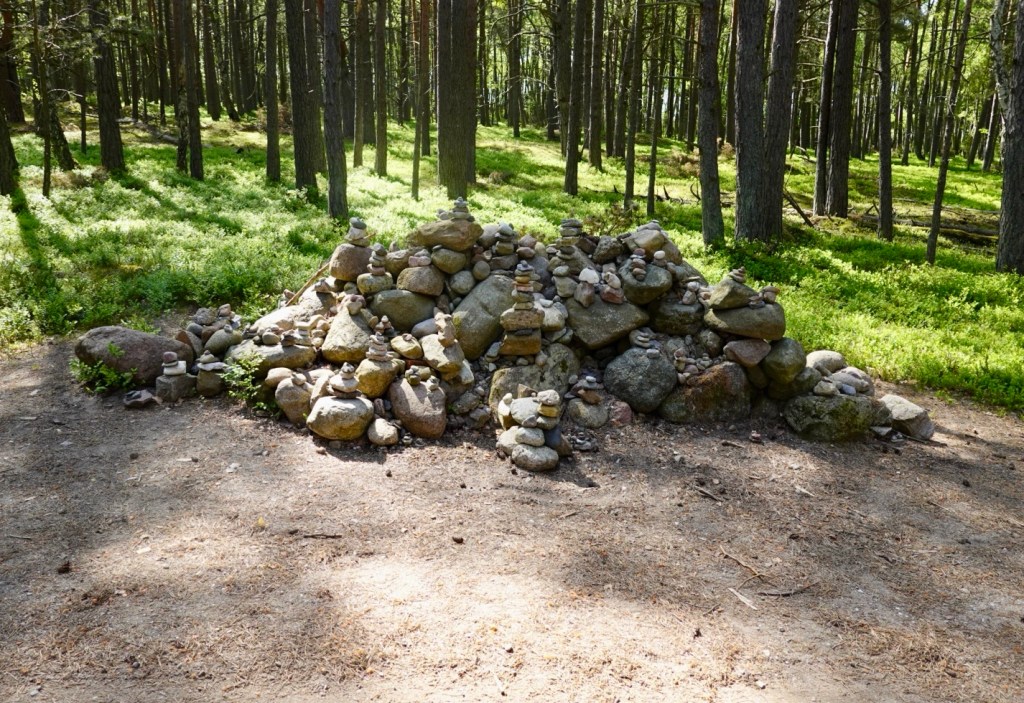
Meantime, we’re in the forest section. Someone made themselves busy with this pile of rocks.

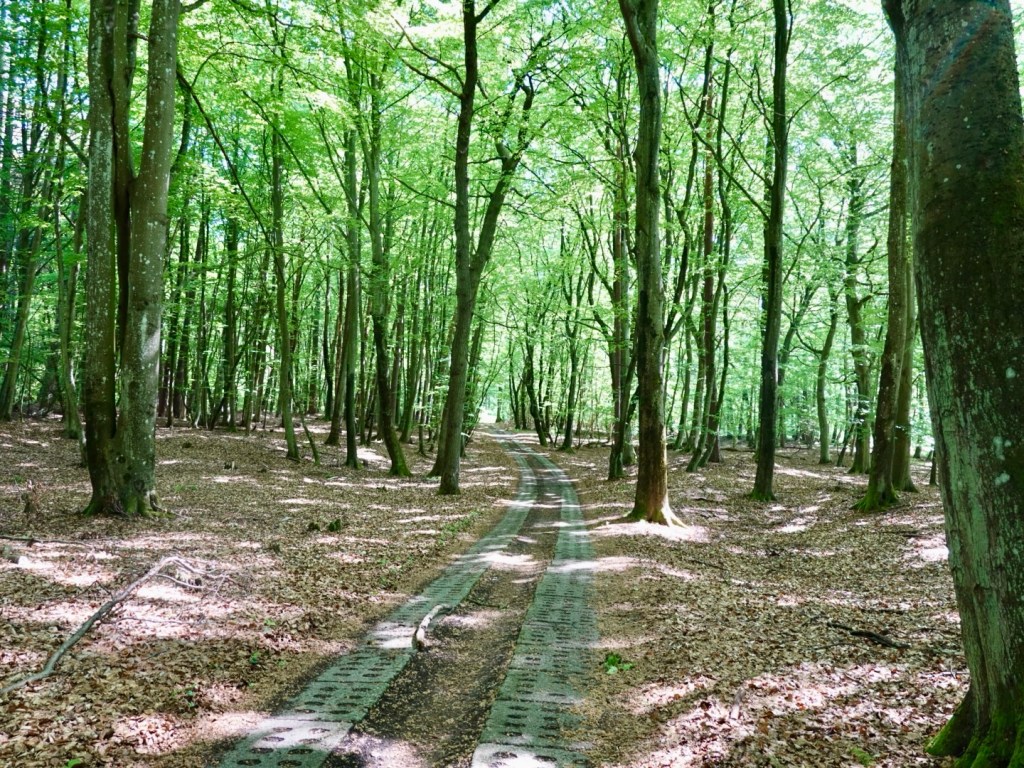
The trails varied. These are good sections. we did have some very pot holed sections and far too many km of mislaid, multi angled concrete slabs that were jarring.

We did around 45 km today off road.

Another village, more wood carvings.

Little lakes surrounded by peat bog marshes.

We had lunch on a bench seat to the left of this sign. I was having very light food due to an upset stomach. Too many different foods perhaps.

This is where we deviated from EuroVelo for the rest of today’s ride. It went through more unpaved forest and given my tummy and Tony’s sore neck we opted for the busier, sealed arterial road.

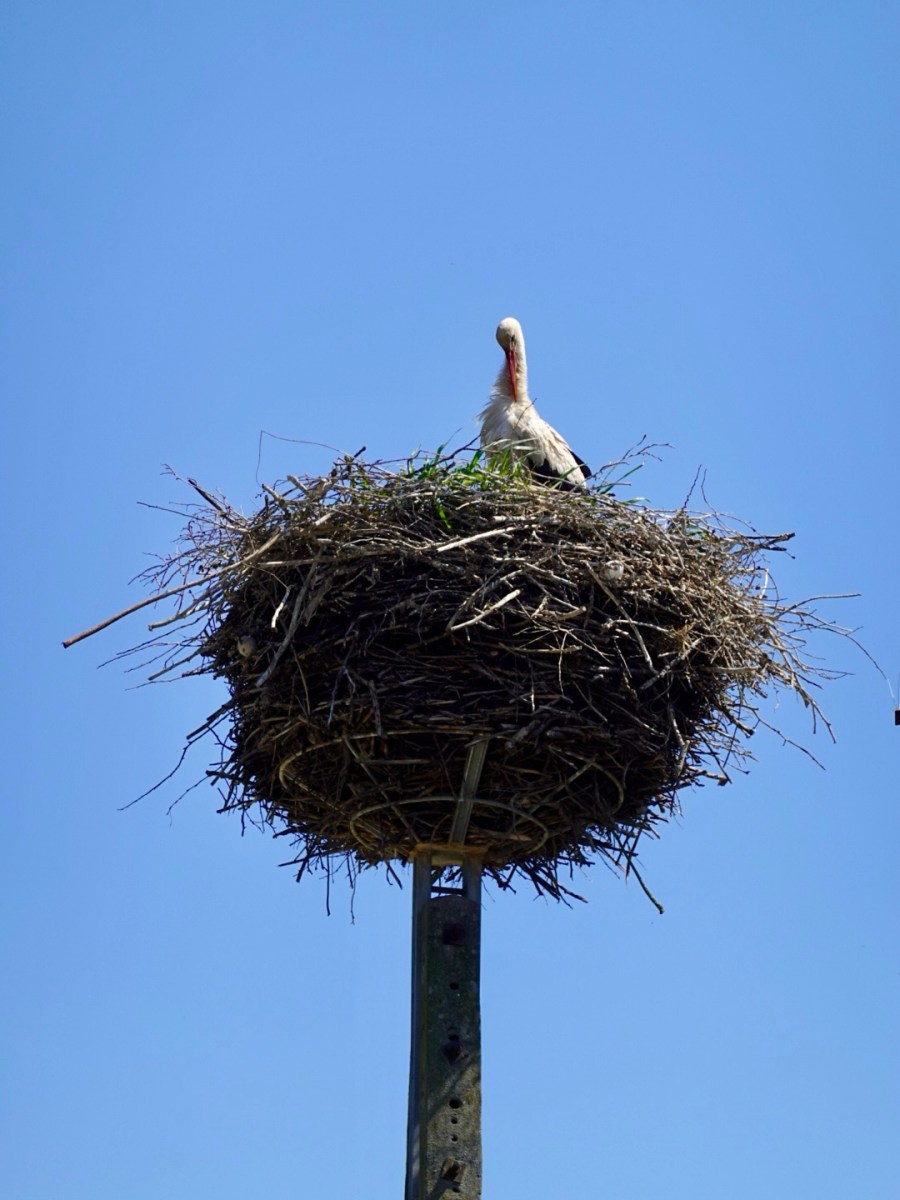
We do love to the storks nests. In this village we counted five. In the second image you can see the nest is formed on a man made ring provided for this purpose.

The nests are incredible structures. So high up.

The last 10 km featured a nice sealed and separated bike path. The headwind made it tougher, but nice to be on a path.

Leba was the last town in today’s ride, another busy tourist town, with the wind biting hard.

After World War II, Leba was occupied by the Red Army. Eventually after the Potsdam Conference, unit was returned to Poland.

Leba was where the defence prime Rheinmetall tested long range weapons back in the 1940’s. Up until 1973, Meteor sounding rockets were also launched.

Leba port area
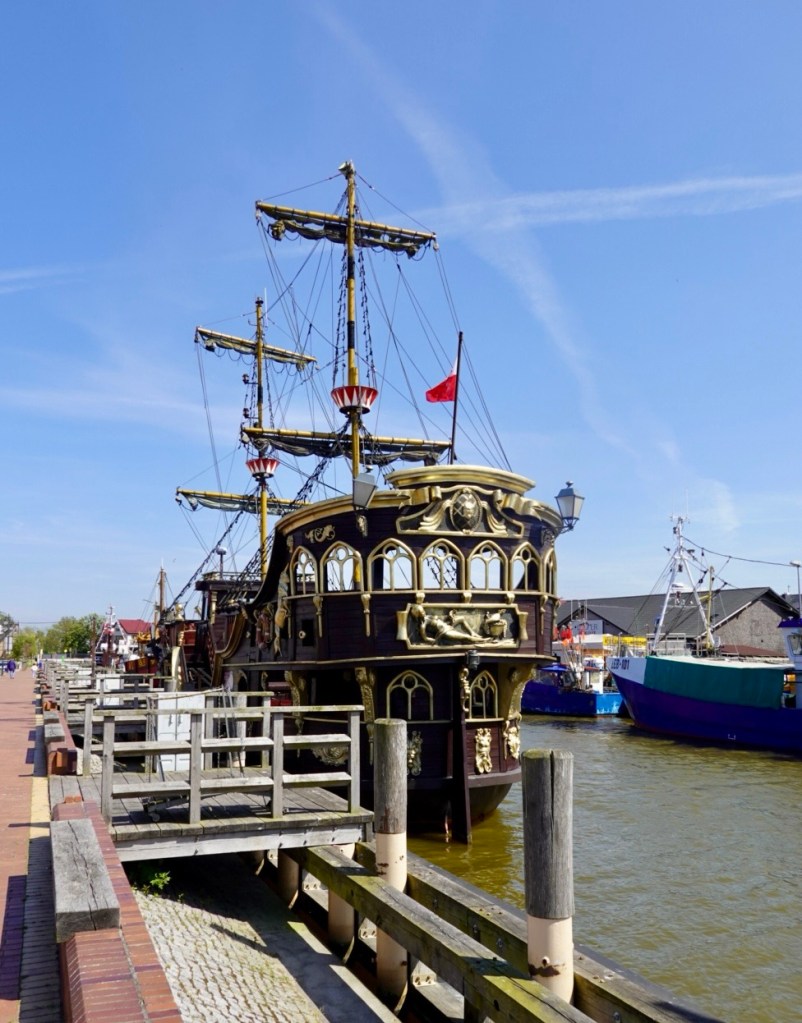
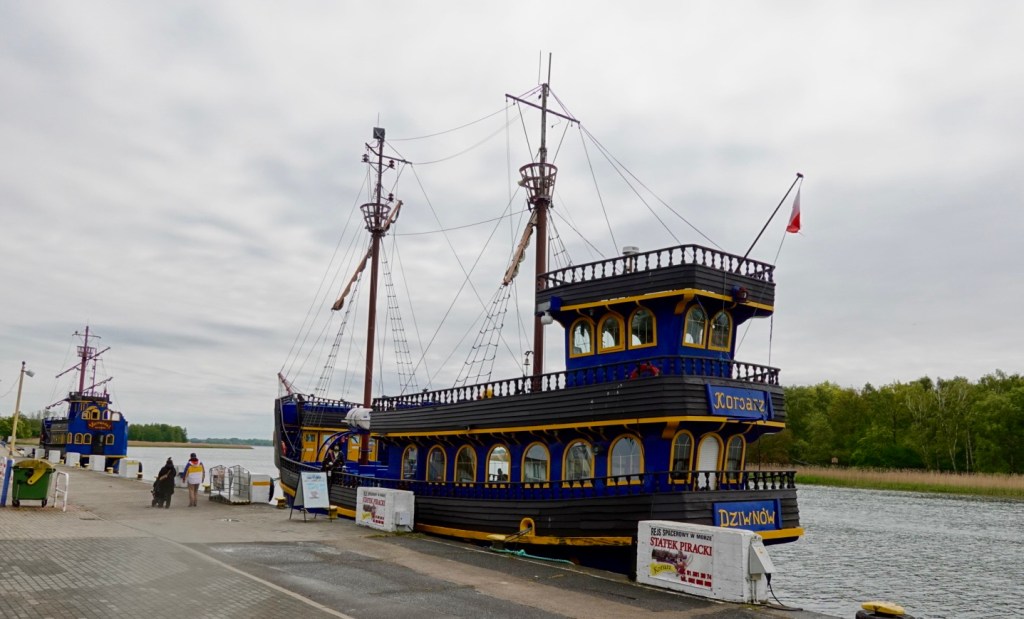
Three days running we’ve seen similar ships.

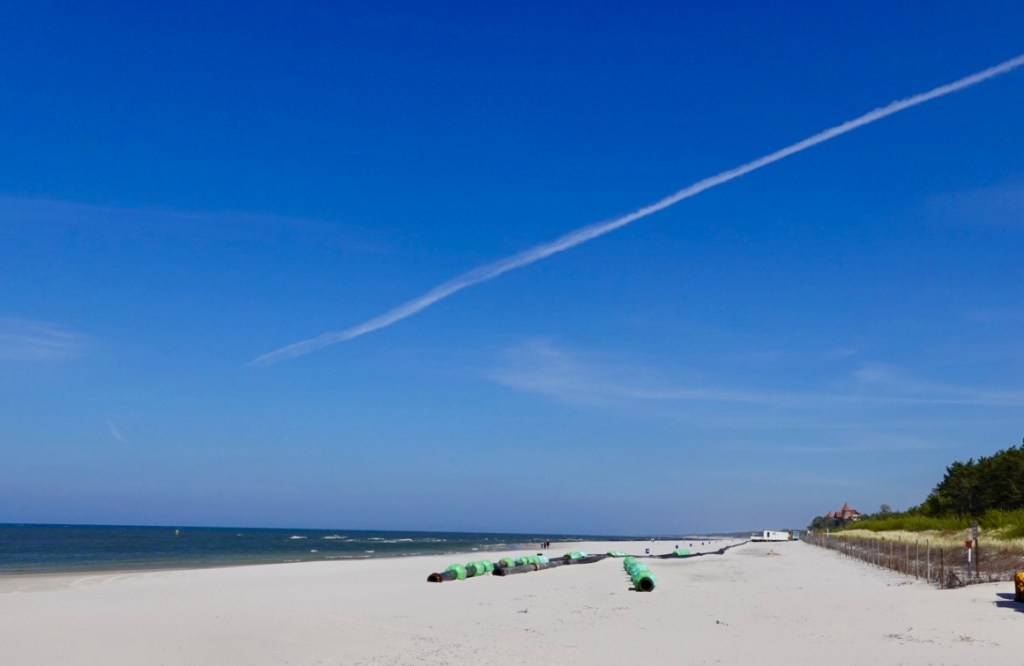
A beautiful white beach. Not sure if the dredging equipment is for the river channel or do they move sand around?

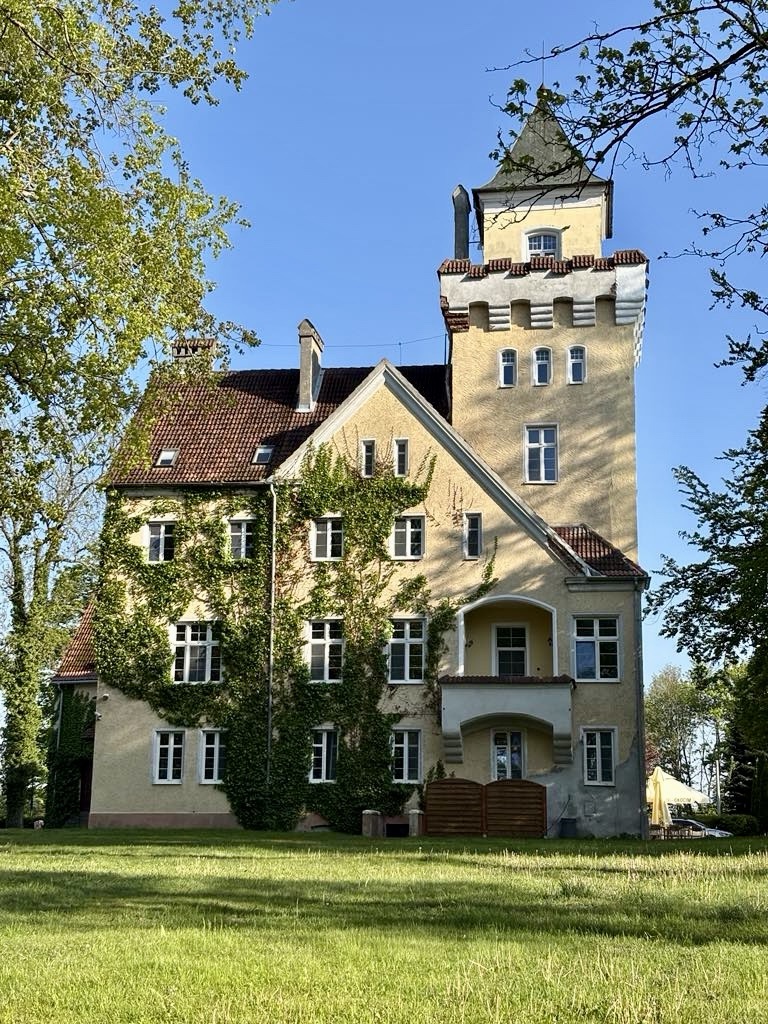
Tonight’s accomodation is an old 14th century castle in Nowacin, on the shores of lake Sarbsko. Our bikes are well secured in a stone outbuilding.

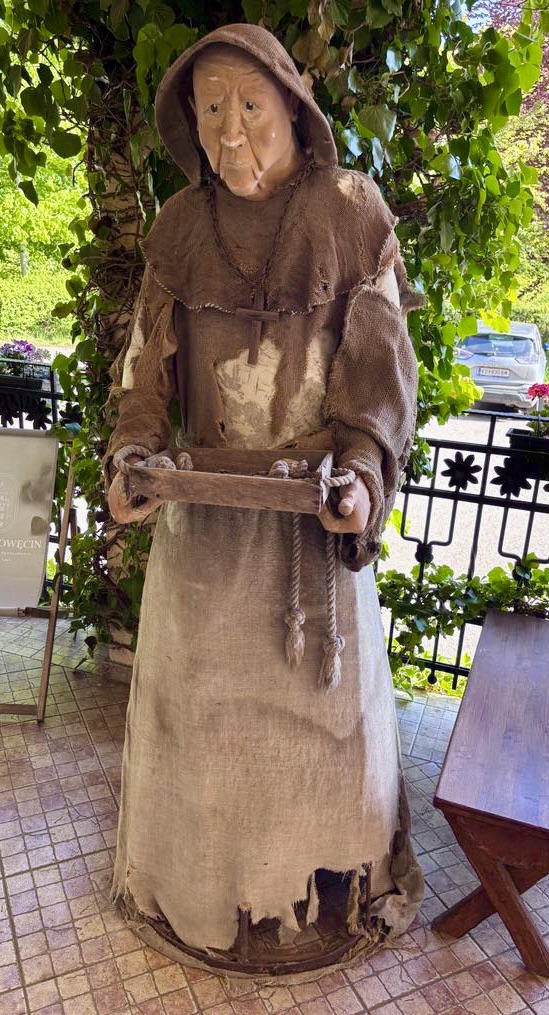
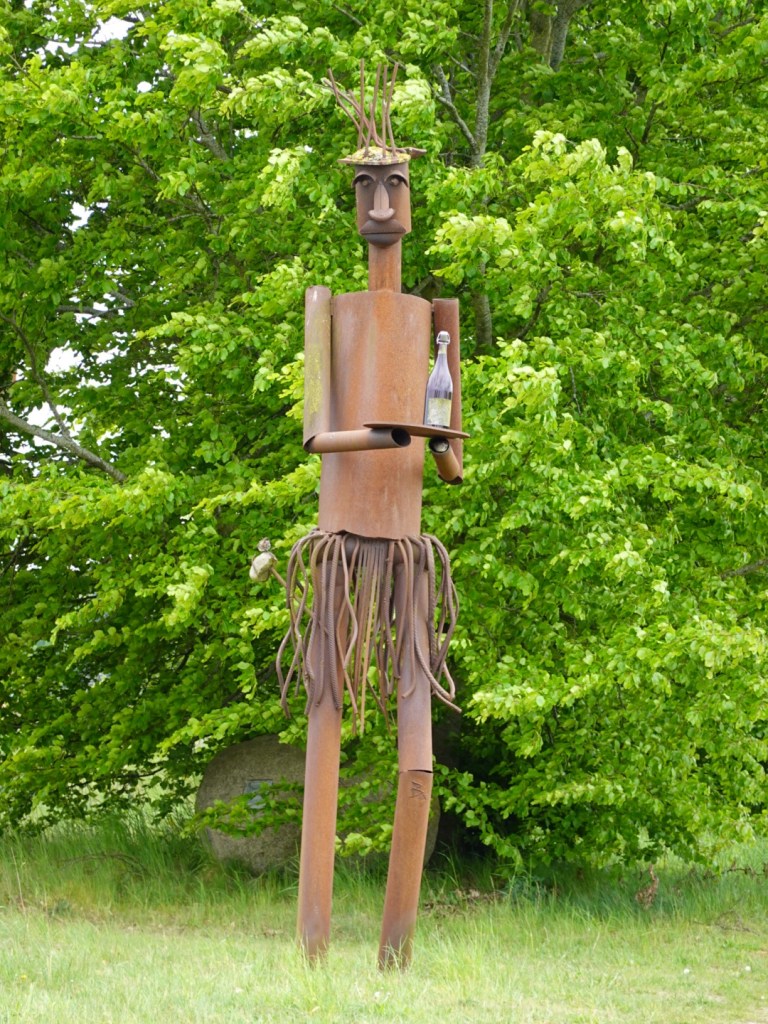
At the entrance is this dude. There is small change on the tray.

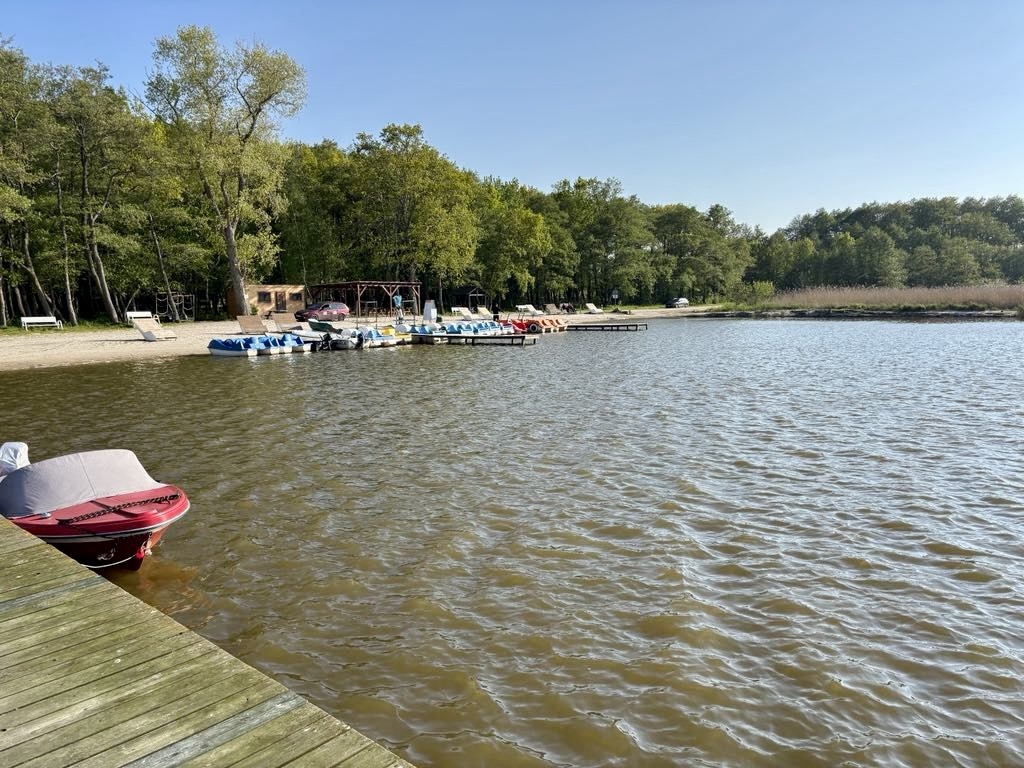
After dinner we wandered to the lake. Hire boats were available.

84 km today. We still have three full days riding left in Poland.

One thing impressing us is the amount of green forest that is preserved, and just how many people are out and about enjoying the forests and parks. In wet weather, they are still out and an out, just with appropriate clothing.

Todays route.

Thanks for reading. ❣️😊🚴💪

Day 8: Kotobrzeg (Poland) to Ustka (Poland)

Sunny skies. Yes! today we had 122 km to ride to get to Ustka, another town on the edge of the Baltic Sea.

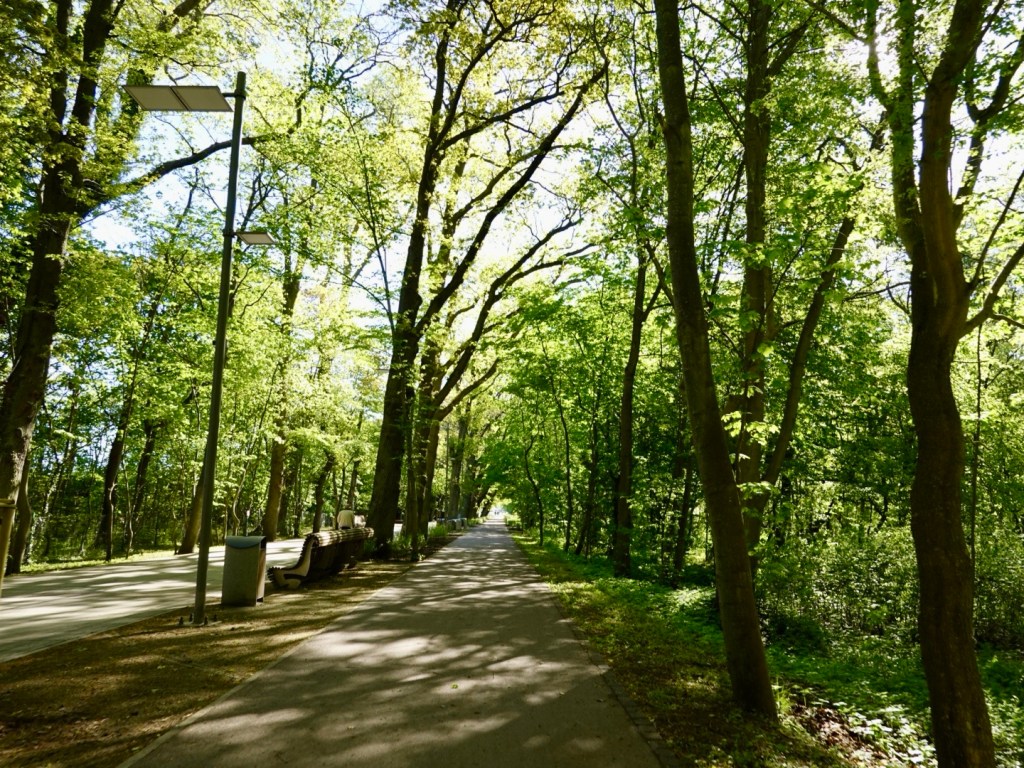
We headed back up to the beach and turned to the east. Paved boulevards through more forests.

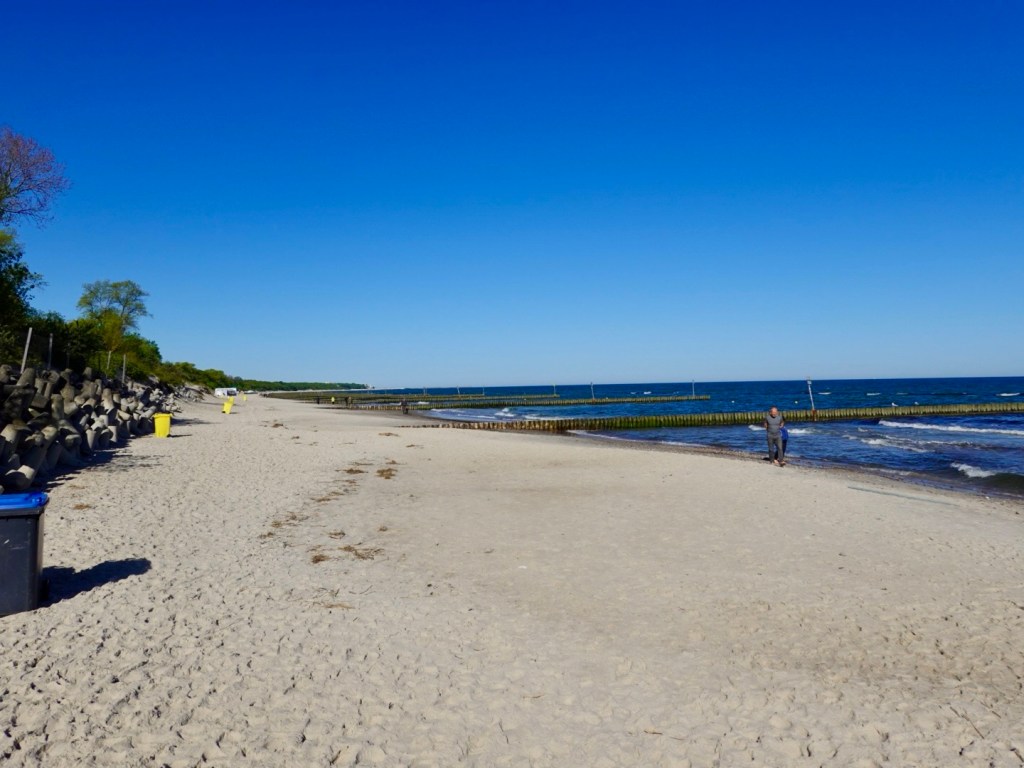
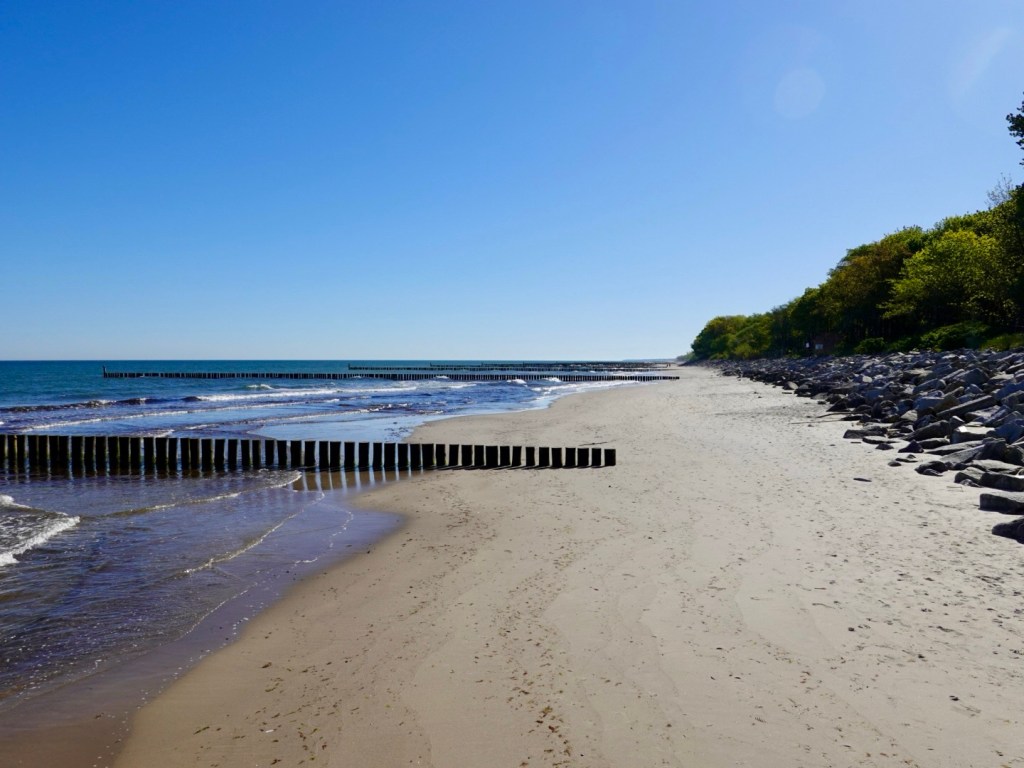
Nice long white beaches, only broken with the erosion control posts.

We were to follow Eurovelo10 and 13 for most of today. EV10 is a Baltic route over 13,000 km long. EV10 is an iron curtain route some 10,000 km long.

The surfaces today were mixed. Overall very good compared to yesterday, interspersed with dirt and gravel section, and other parts with those cement slabs with holes so you go bump, bump, bump for the length.

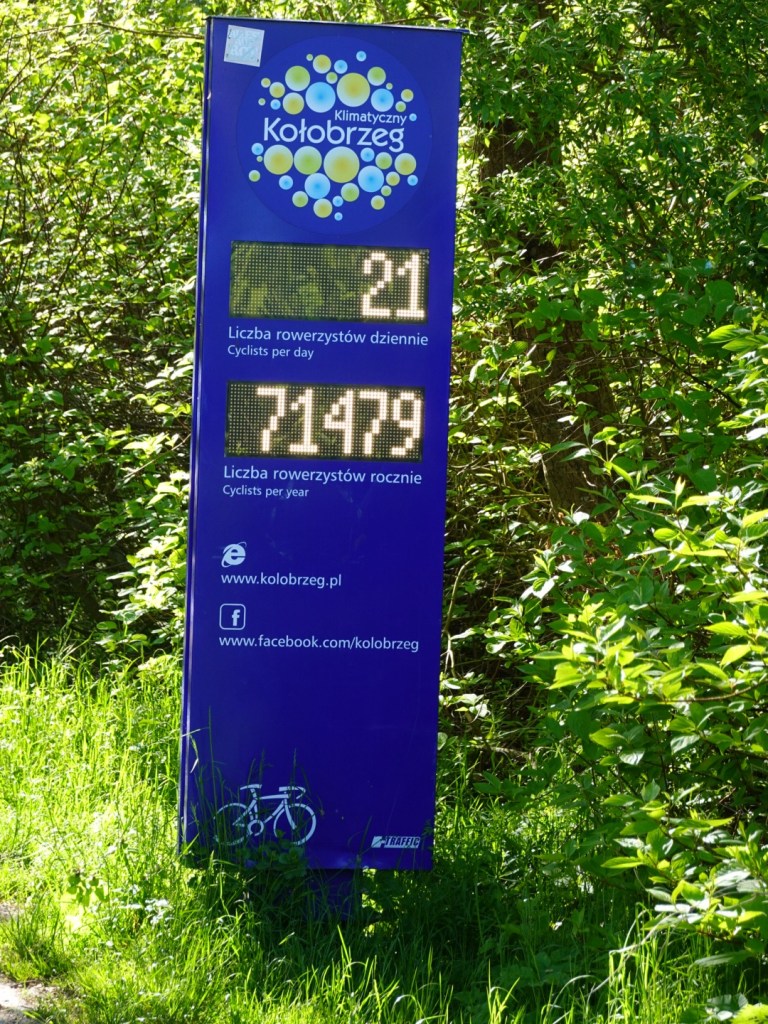
We were cyclists 22 and 23 to enter this section, and nearly 71,500 have passed through since January.

We were riding along narrow stretches of Land with the sea to our left and inlets, lakes or other waterways to our right.

Gaski, a name I can pronounce, as there are so many Polish names I cannot get my tongue around.

This cute statue was near the Gaski sign.

The beach here was long and unimpeded.

It was 10 am and whilst the sun was out, maybe 15 degrees Celsius and there was a strong, coolish breeze. Never too early to sunbake on the Baltic.

Random nicely renovated wooden boat in the forest.

We headed inland twice today to go around large sea lagoons.

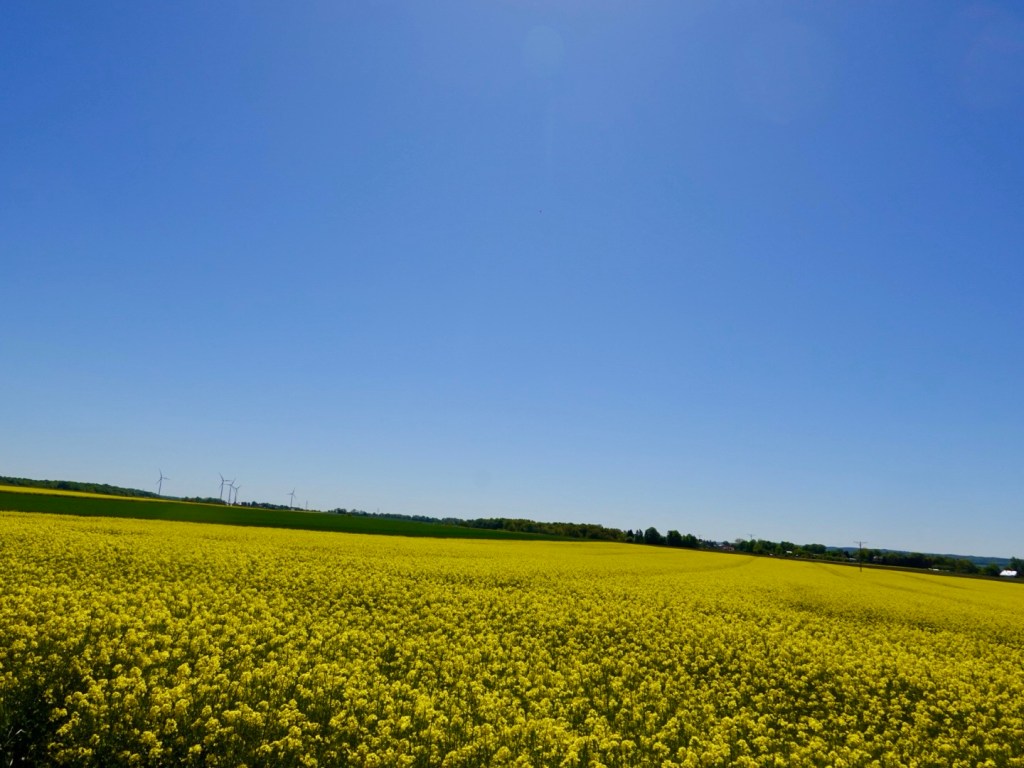
Predominantly farmland, with rapeseed (canola) the dominant crop along with wheat and occasional vegetables.

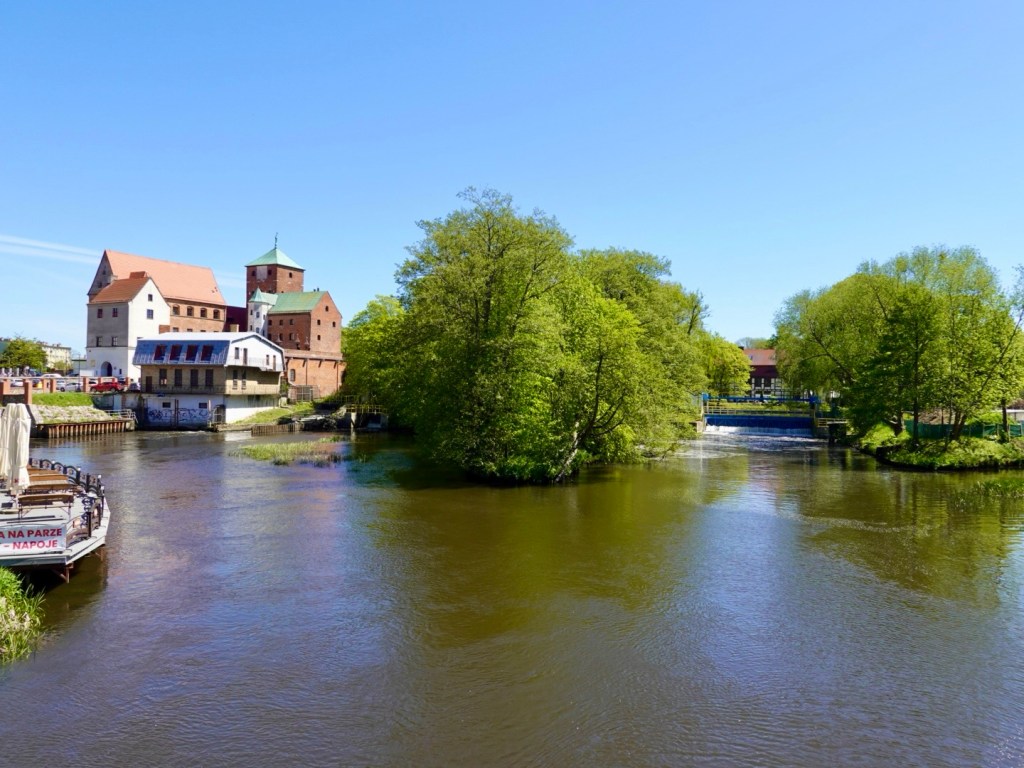
I think the next two pictures are Darlowo.

Riding back along a narrow slither of land, with the cement blocks seen below, we did encounter a few sand drifts.

This was a push the bike up section. The path may have originally gone to the higher side on the left, but there was a large washed out section not yet repaired.

At the next town we learned how to use a tap and go toilet with all instructions in Polish. There was a turn style preventing you entering the toilet, with cameras watching.

We did eventually press the right sequence and pay 4 zloty each to use the loo. There was no light in the toilet for 4 zloty either! One zloty is about 41 cents AUD.

Jaroslawiec was the last larger town of the day, located on the coast. Another lighthouse, and shops selling the same soft toys, buckets, balls and a plentiful supply of icecream shops.

I liked this statue. Lots of detail.

A really pretty inland lagoon.

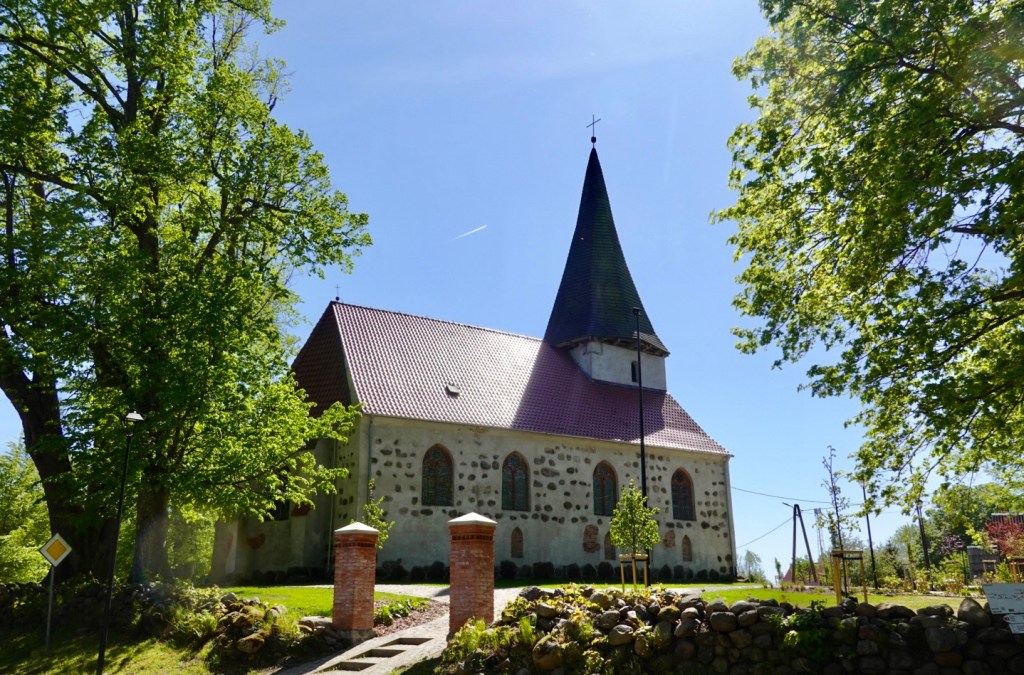
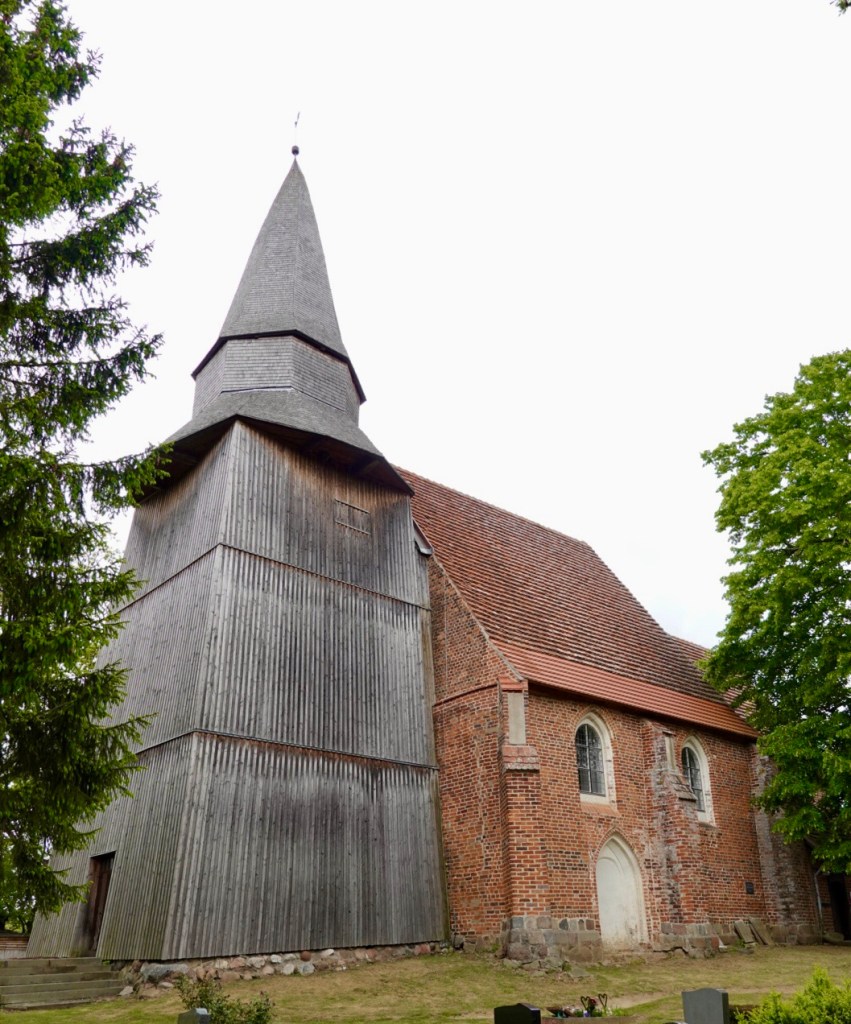
A nice village church.

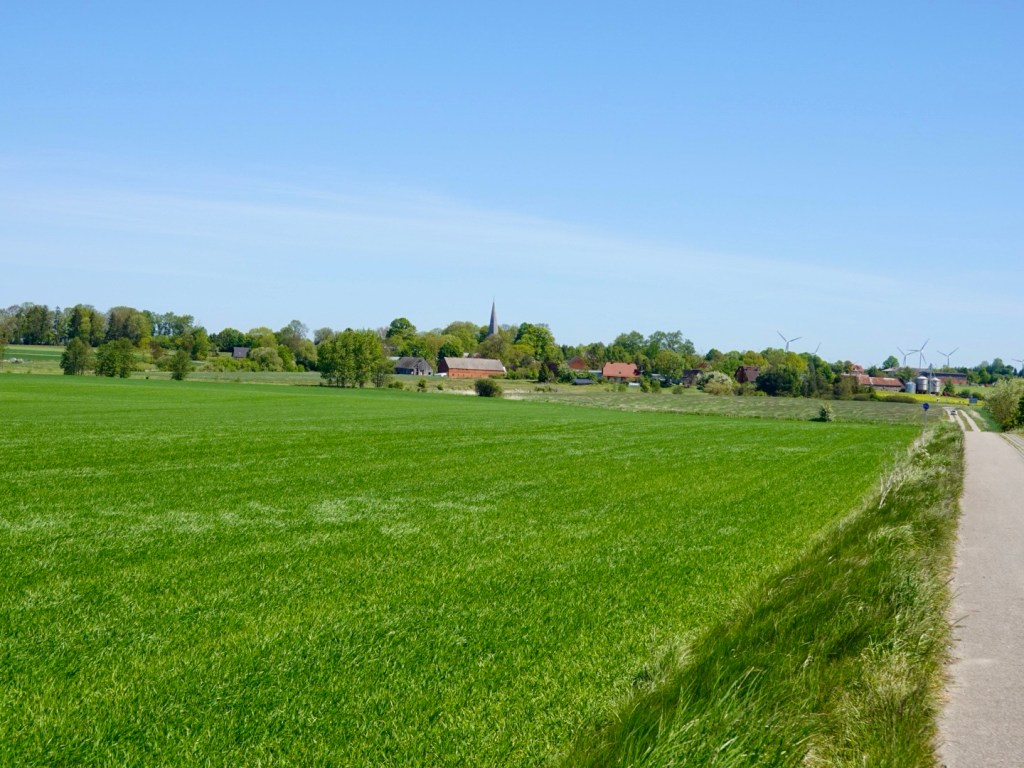
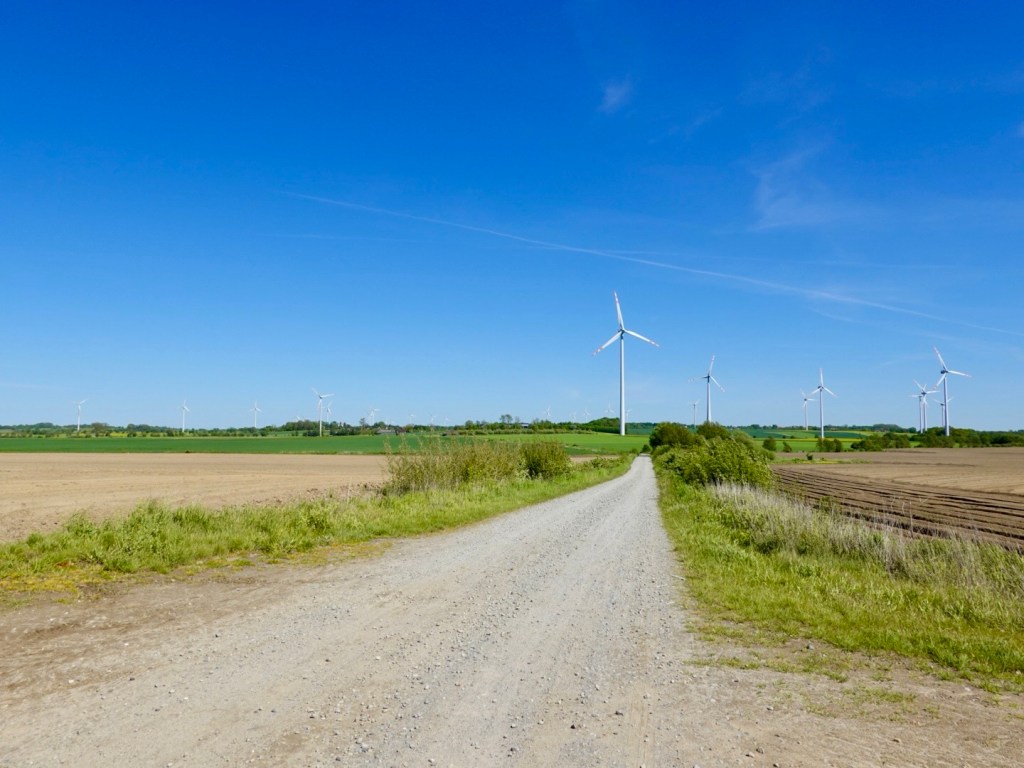
Then we had a long gravel section weaving through farmland and wind towers.

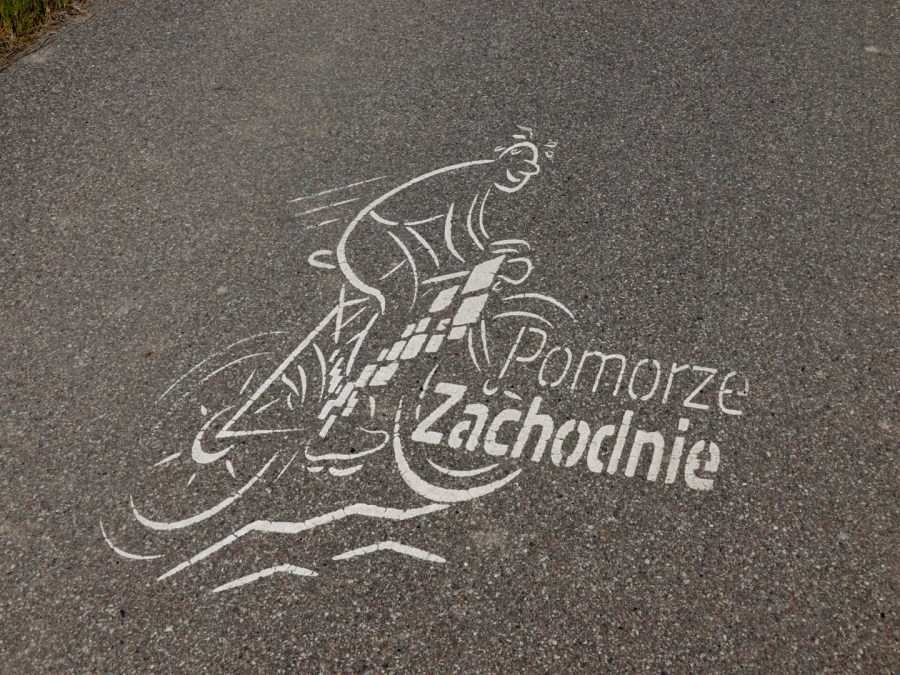
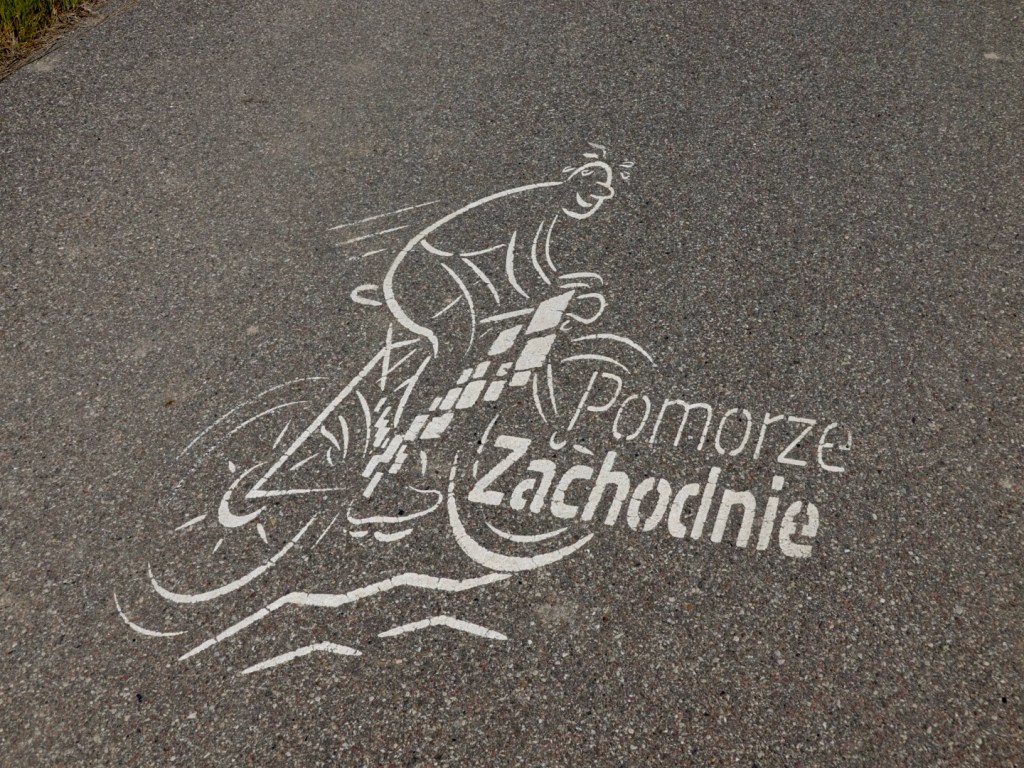
The final section of about 6 km into Ustka was an excellent sealed path. The sign below has been on paths the last three days.

Translated, it says Western Pomerania, the region of Poland we have been travelling through.

As we found our lodgings, two blokes in cycling gear were locking an exterior door to a bike shed. Awesome!

Today was a longer day, flattish, but still with surface challenges. After 122 km we were glad to be here, shower, launder our clothes and head off for a walk.

Walking is good after cycling as many hours as we have. Stretches different muscles and helps with the lactic acid build up.

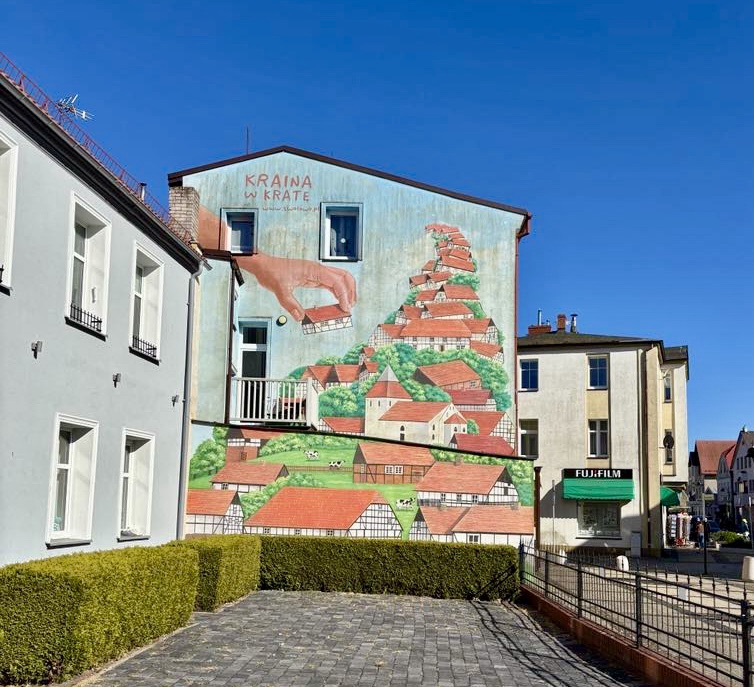
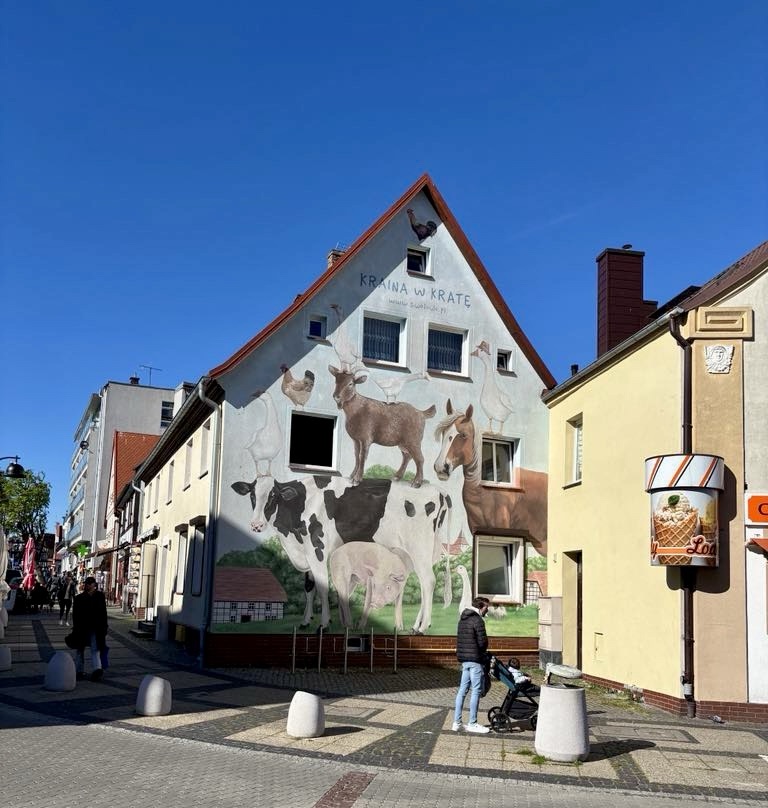
The town is quaint, some with painted images.

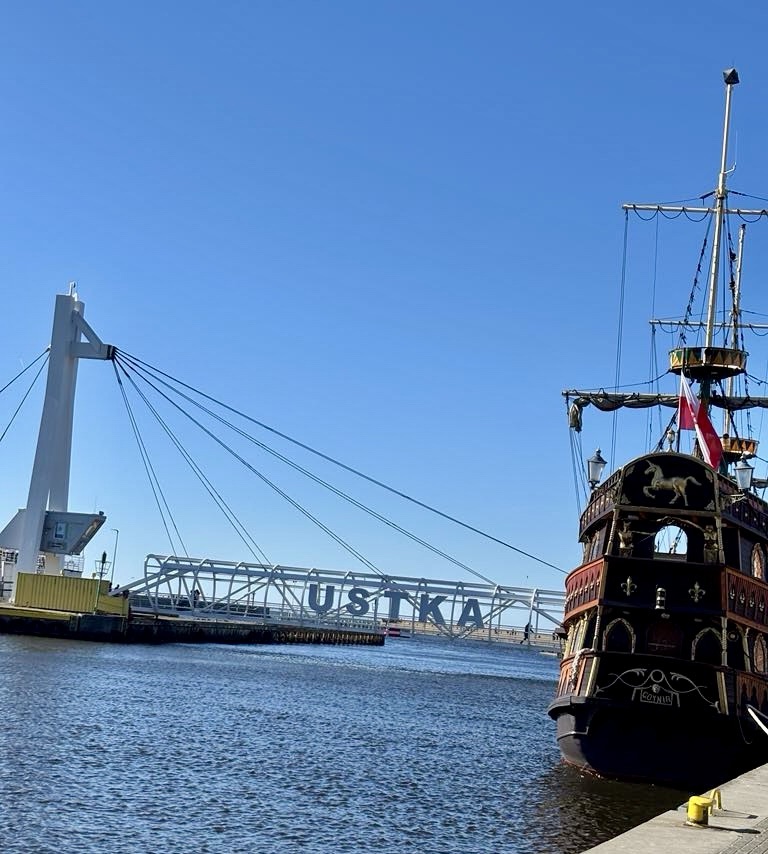
Down by the river, there are decorated boats and a draw bridge that lifts every hour for 15 minutes.

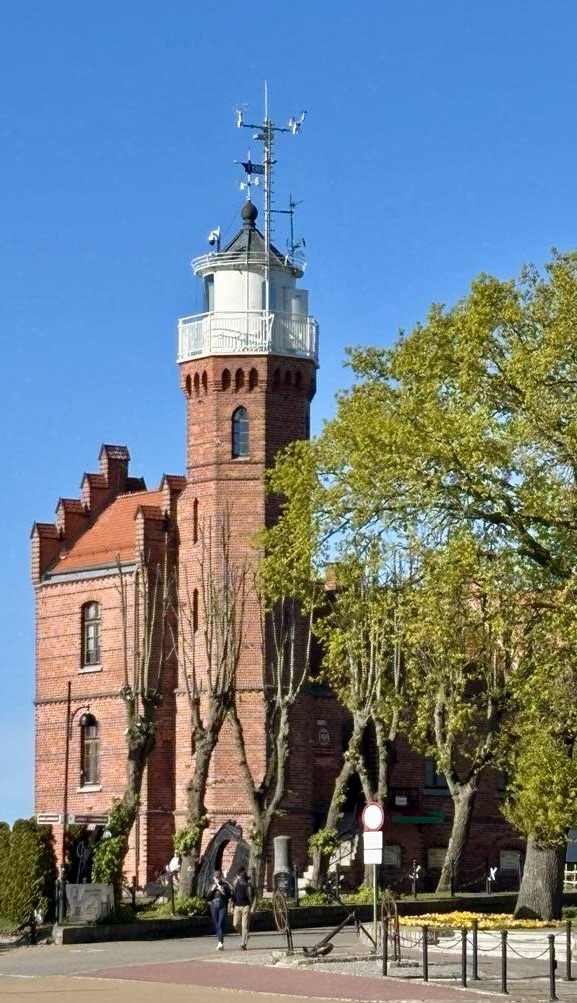
The ubiquitous lighthouse features.

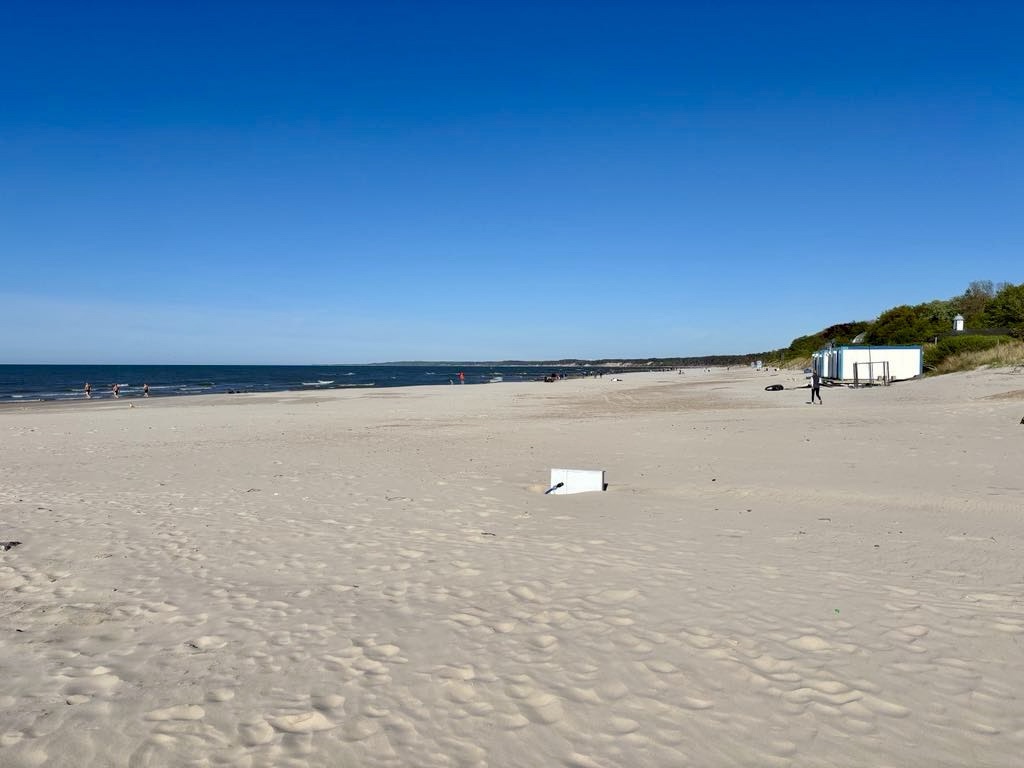
Glorious beaches. No sunbathers.

We found a nice restaurant along the waterfront boulevard for dinner. We were hungry and they supplied the food quickly.

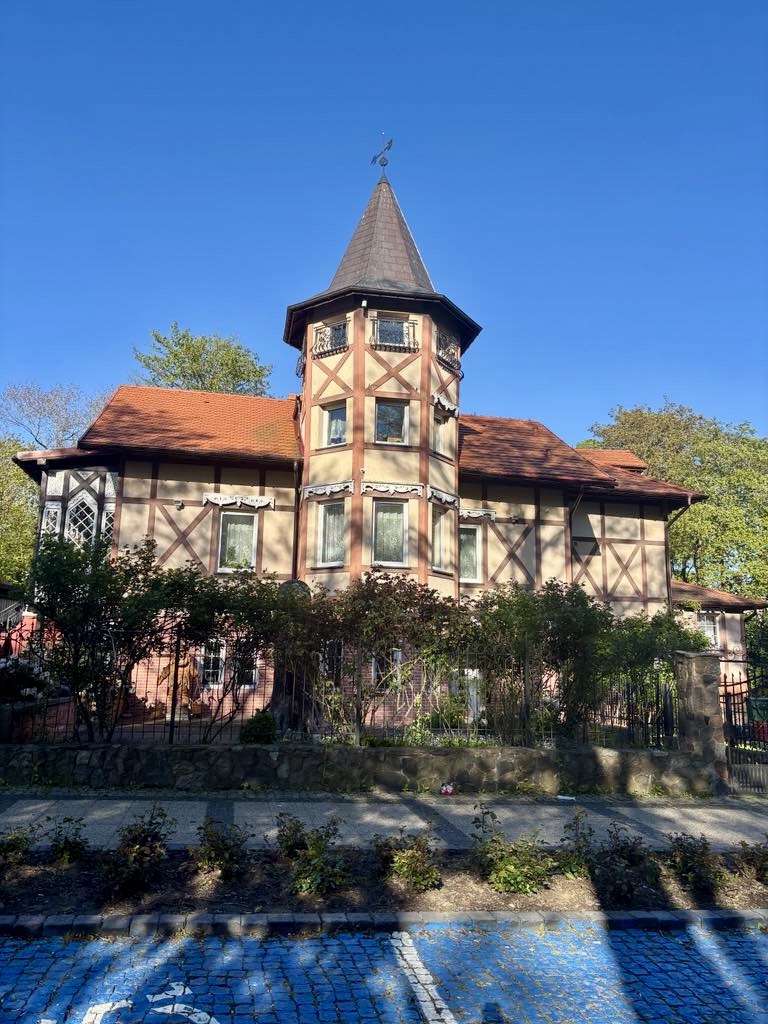
Ustka is a nice town, lots of interesting homes and architecture.

This is our hotel. Well positioned, convenient, good bike shed and hopefully a great breakfast.

Check in was quick and easy. Usually our passports are checked, copied but here they did not want to see them. No city tax here either.

Our route today along the Baltic coast. A solid day but another wonderful day to see the region, communities and way of life.

Thanks for reading. 🚴❤️💪😊

Day 7: Swinoujscie (Poland) to Kotobrzeg (Poland)

Not the most exciting view from our room, but I do love the sign on the window.

Cloudy with drizzle was how we started our cycling day, but not before a lovely breakfast.

There are four floors of accomodation here and we think there are only two other rooms in use based on the breakfast table set up. It certainly was super quiet.

We packed the bikes and headed to the river. There are a distinct lack of bridges in this town and we needed to transfer across by ferry.

The ferry is free. No cars crossed with us on this trip, but there were a handful of cyclists and a few walk in pedestrians.

Ferries leave every 20 minutes from both sides. I presume the ferry operational costs are cheaper than building a bridge and the payback would be far too many years.

Ferry crossing from the other side

After a few km we were riding through a forest on dirt tracks. We did about 20 continual km on non sealed in the first 25 km. in places there were thick drifts of wet sand that were difficult to get through.

A good section

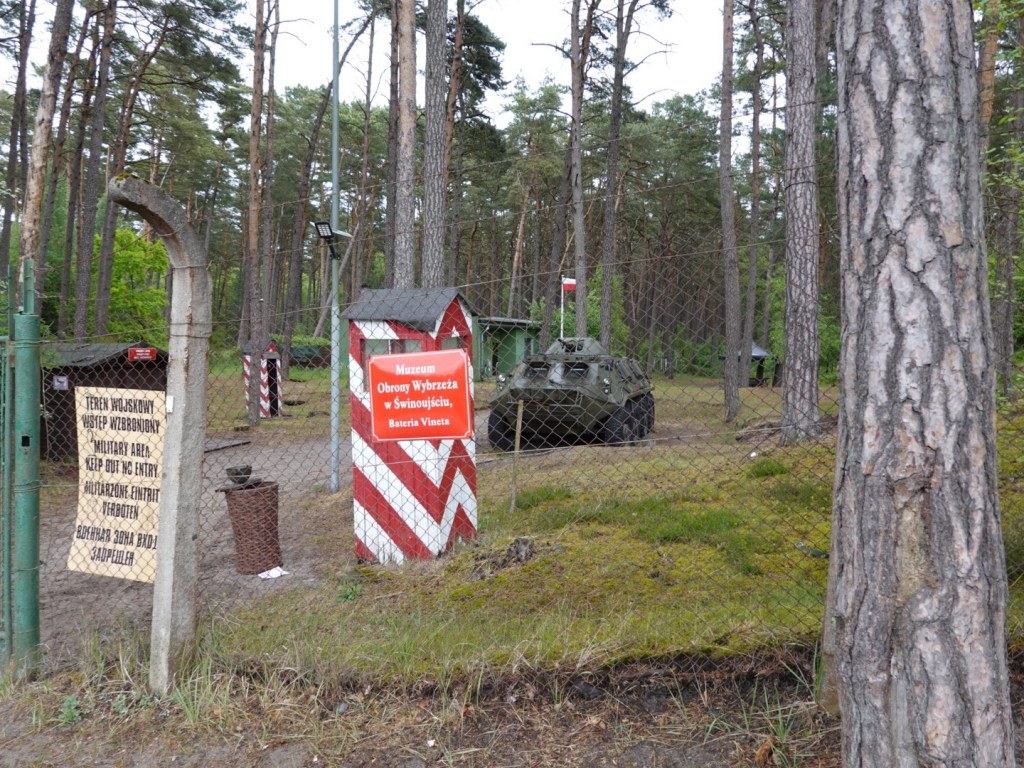
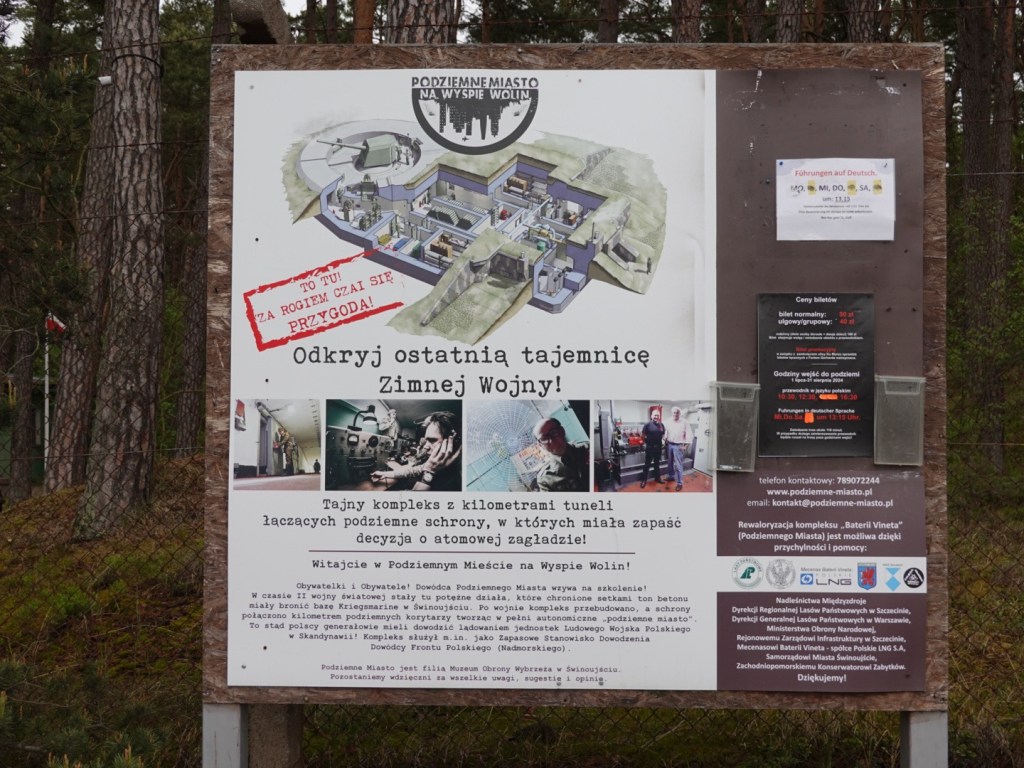
This was interesting. Wolin had an underground complex here pre World War II. The area formerly belonged to Germany and there are over one km of underground tunnels. You can visit in guided groups.

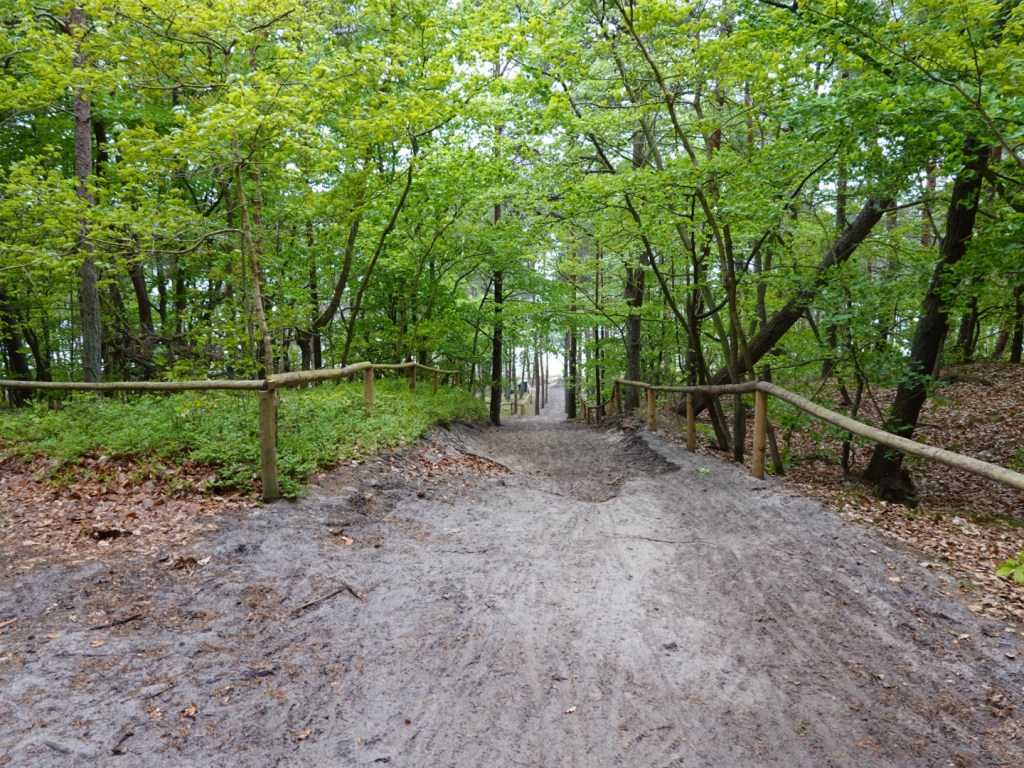
The forest traverse was close to the ocean. We needed to walk our bikes down the next section as the sand was over 30 cm deep with large ruts and wash aways.

We passed two young blokes who had been on our ferry crossing here. They had made a concerted effort to pass us earlier on so we smiled that the oldies caught up.

We were to see them on and off again for the next few hours with various stoppages.

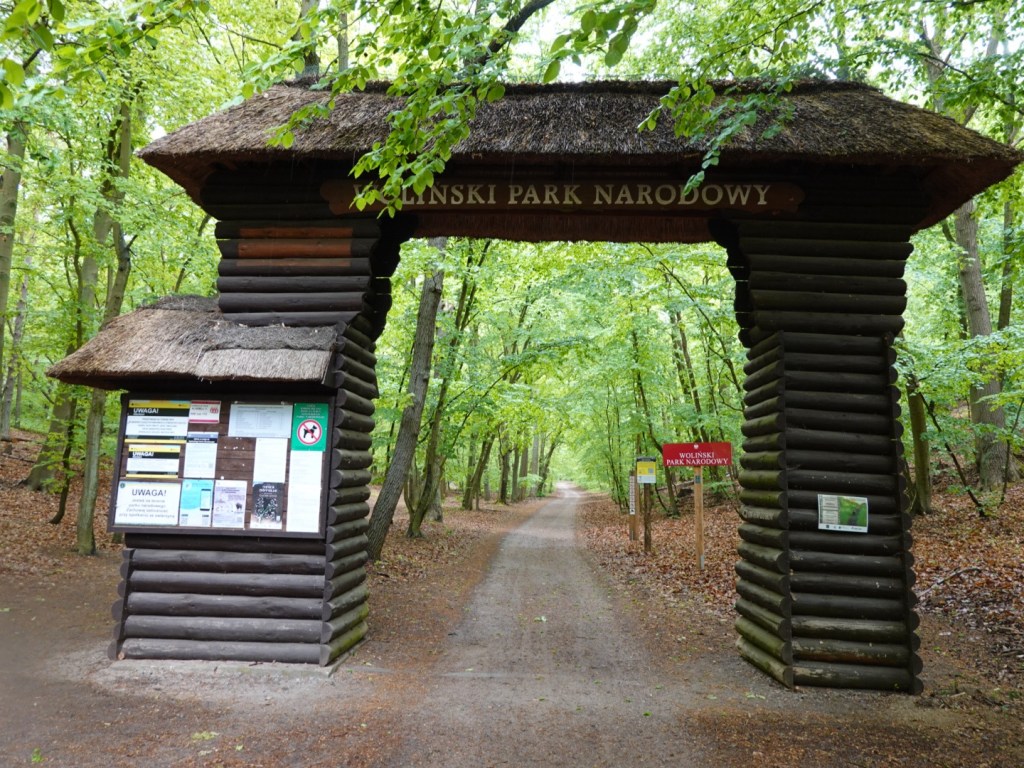
We rode through the Wolinski National Park. It was particularly nice with lush vegetation, red squirrels and small deer. The paths were better quality than the earlier sloppy ones. There were many walking trails and a zoo.

With the Baltic Sea close on our left hand side, the forest provided great protection from the blustery coastal winds and persistent light rain.

On our right hand side (south), we passed numerous small lakes.

Czajcze Lake

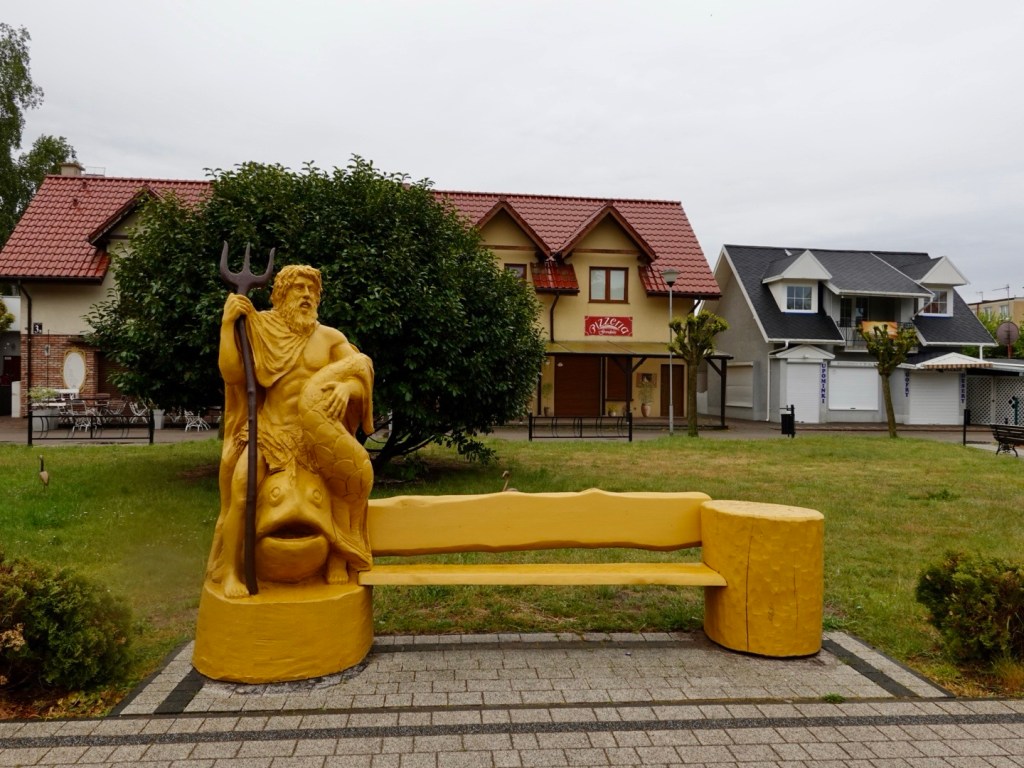
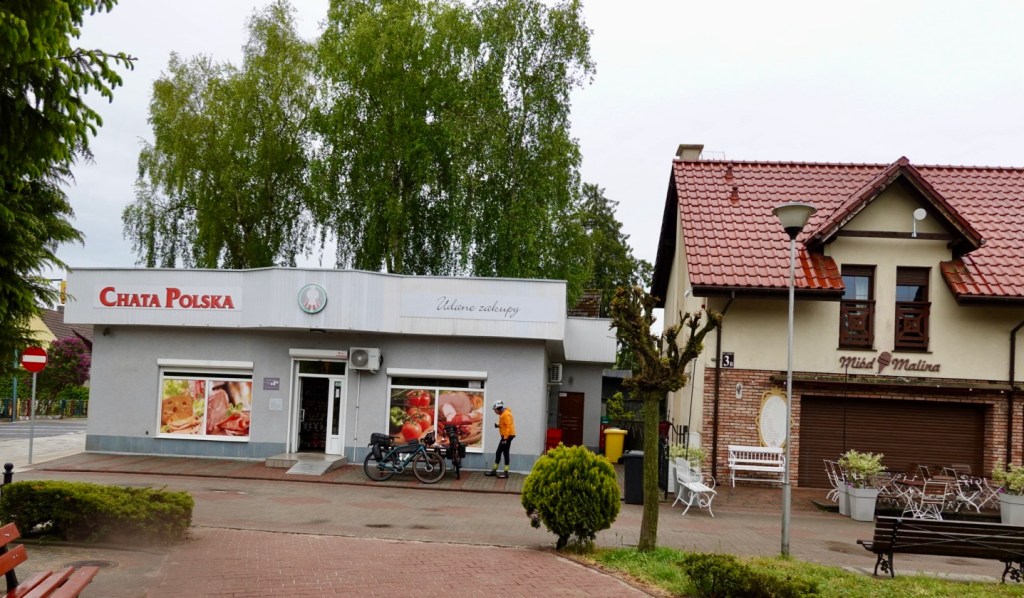
We stopped in a small town looking for food. A statue of Neptune drew our attention in the village of Wiselka. We found a small shop to grab some supplies.

Leaving the town and dirt behind for a while, we were following EuroVelo 10 and the path was nice and smooth!

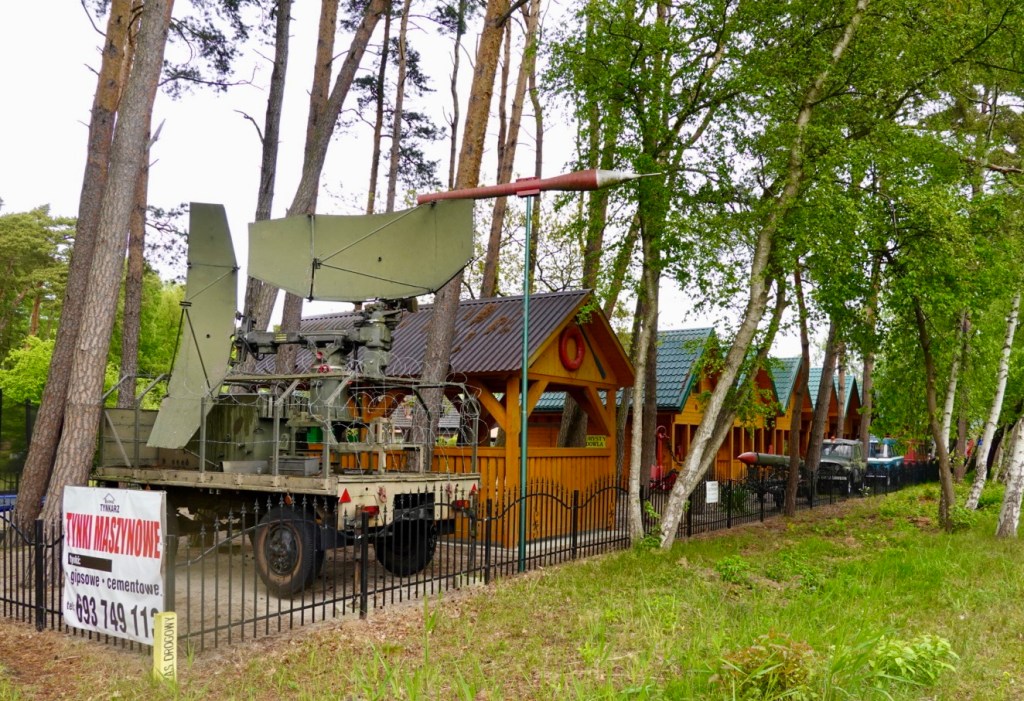
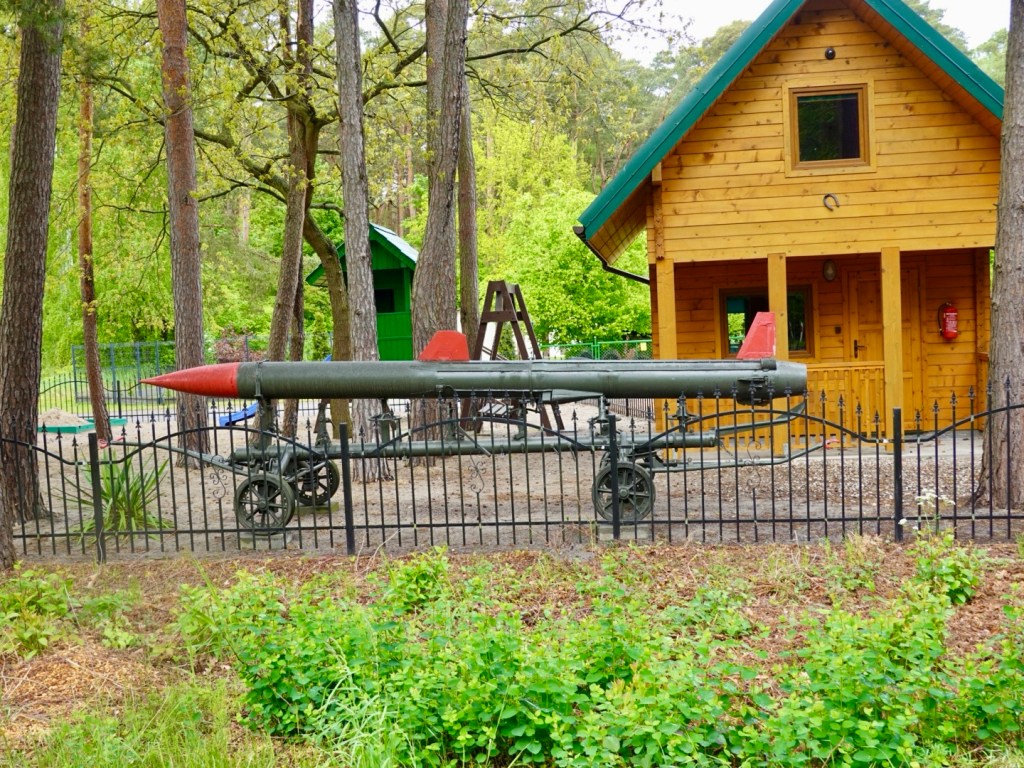
The further we travelled, the more holiday and camping sites appeared. There does appear to be an interest in all things military in the area.

I thought the little blue vehicle was ‘cute’.

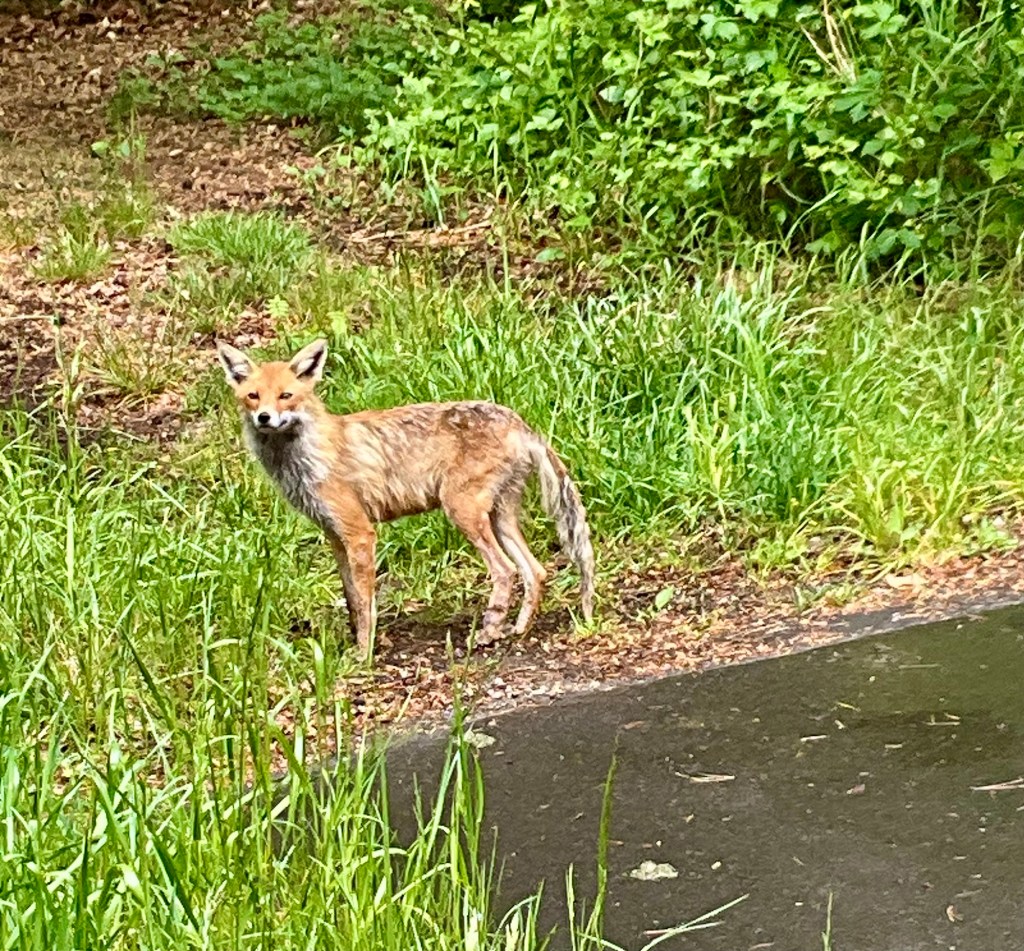
We continued to ride adjacent to forests between the ocean front and the main arterial road. A curious fox darted out to have a better look at us. Unlike the non cooperative deer and squirrels, this little one stood watching us enabling me to grab my iPad.

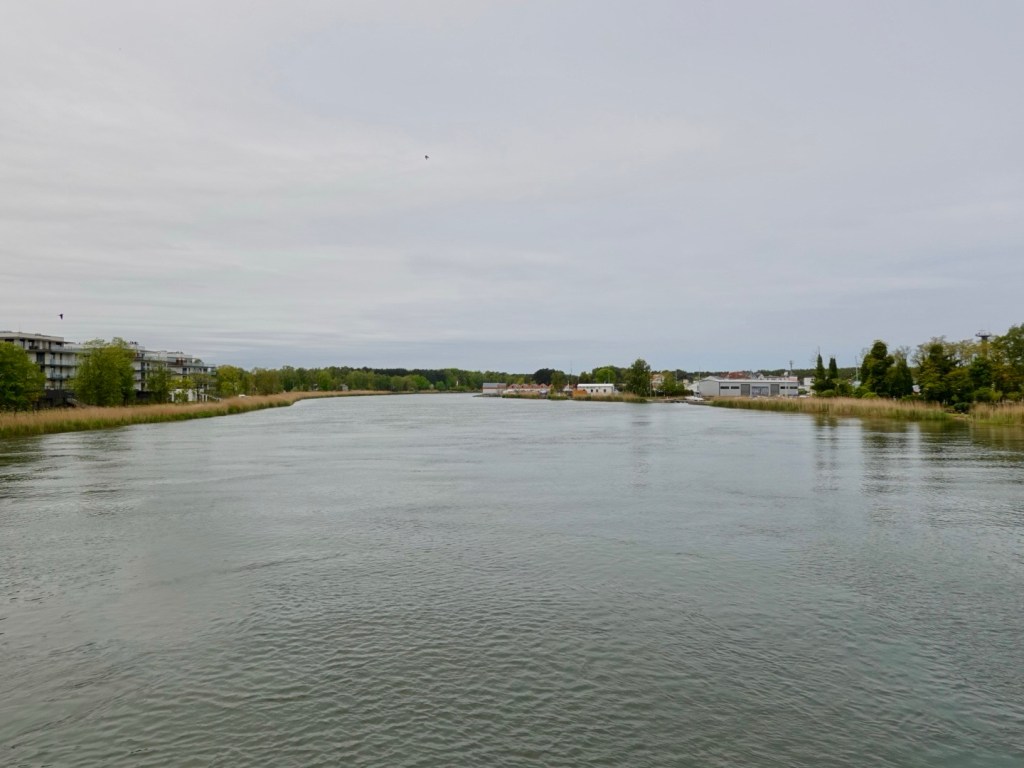
The town of Dziwnow is a holiday township these days, with salt springs discovered last century. We followed the river along for some distance.

Village after village along this stretch seemed dedicated to tourism with lots of construction occurring.

We have noted that overall, the Polish coast has been less affluent than the German, but with the amount of construction and tourism in the region, can only think the region will become a power house in the regional economy in time.

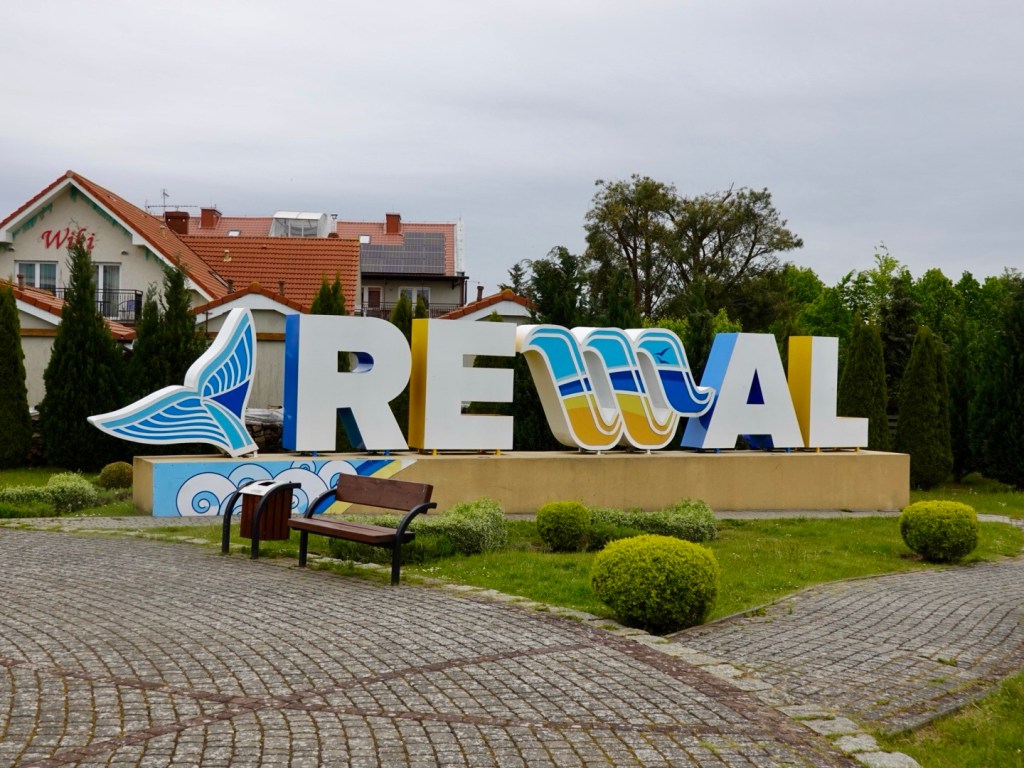
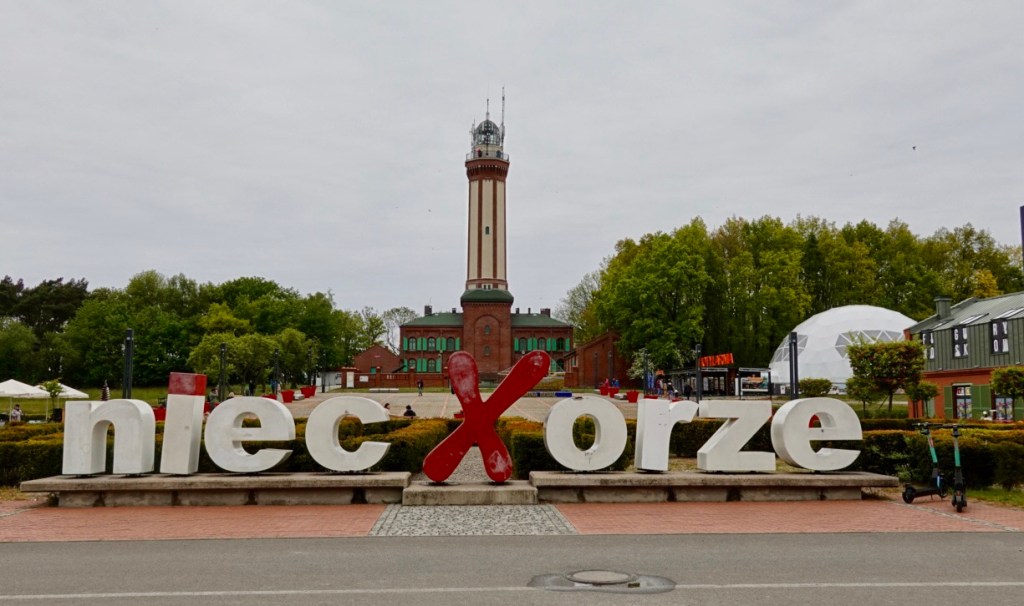
We went through Rewal and Niecxorze.

EuroVelo 10 had significant trail sections in the last 20 or so km, through plantation forestry areas. Still not as bad as our first 25 km by any means.

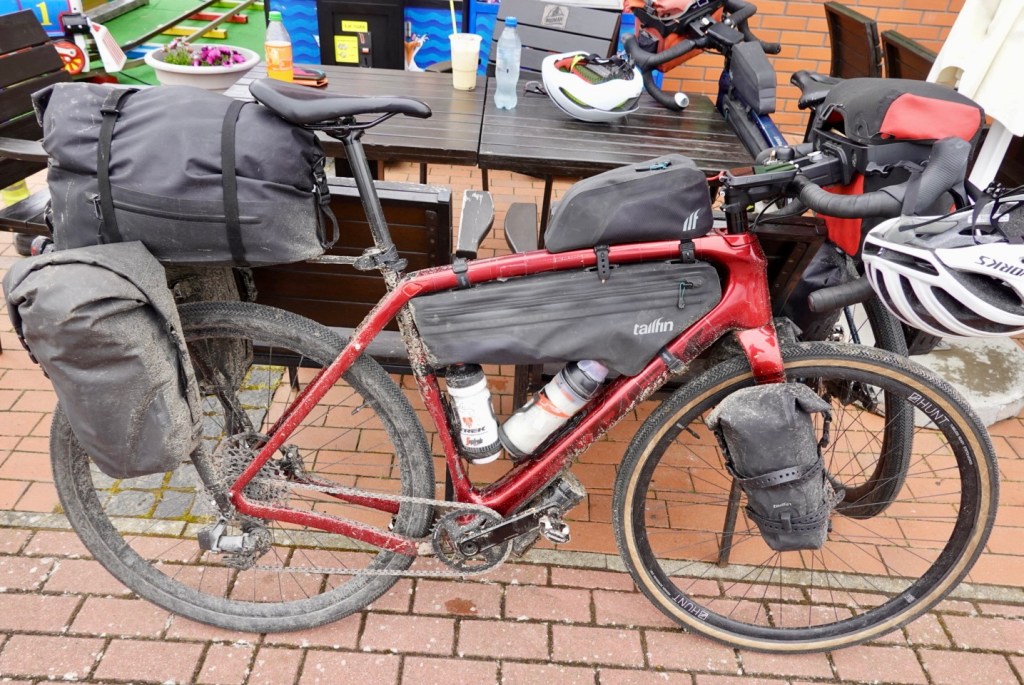
After 108 km, with around half being on dirt of various quality, we were thankful to arrive into Kolobrzeg safe and sound and without mishap. Both the bikes and our legs needed cleaning before checking in.

The reasonable clean bikes are in penitentiary.

We have half board lodgings here so dinner was included. Tony noted we were by far the youngest there! This is a spa town so I guess there are many seeking the youth elixir.

We ate far too much of a variety of Polish dishes on offer. Fish being very popular here as a main ingredient. We headed off for a post dinner walk of around 4 km.

Heading to the beach following broad paths through more forest.

A Baltic Sea white beach. These beaches stretch along the northern German and Polish coastline for many hundreds of km.

Looking to the east, our direction tomorrow
Looking to the west.

Lots of signage and curios.

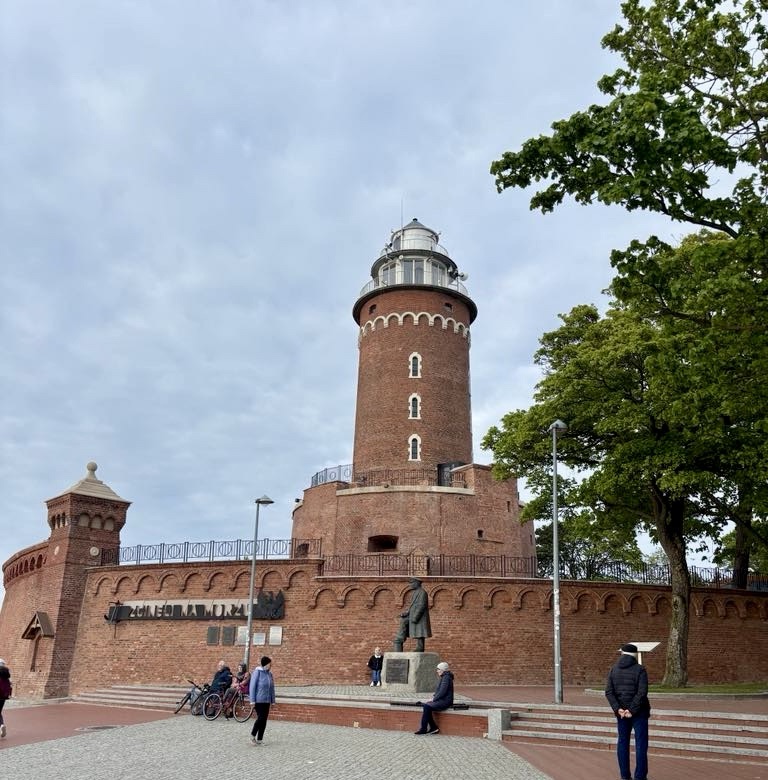
The lighthouse was first constructed in 1899, and stands at the entrance to the port of Kolobrzeg.The Germans blew the lighthouse up in World War II as it was a lookout point for the Polish artillery. After the war it was rebuilt at a slightly differing location.

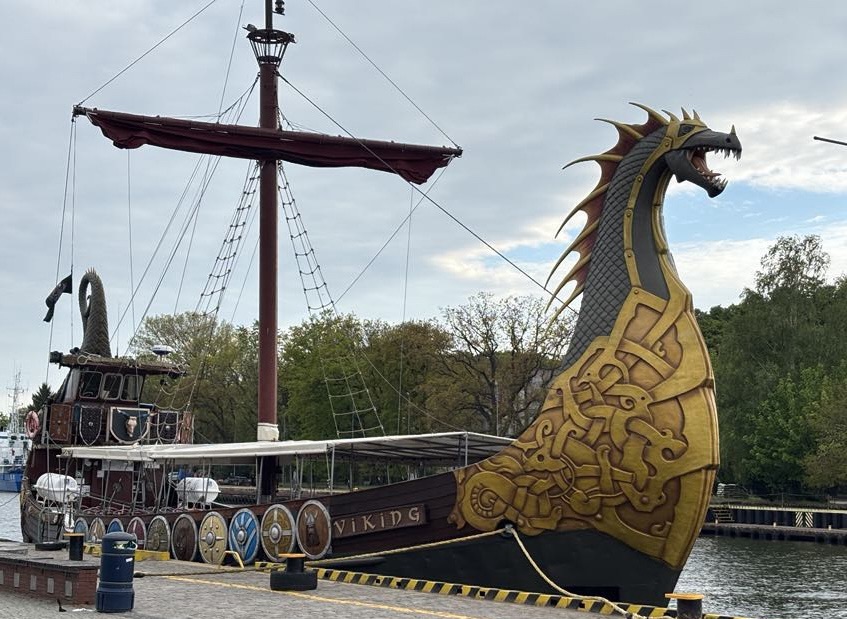
Found a Viking boat, of sorts 🤣

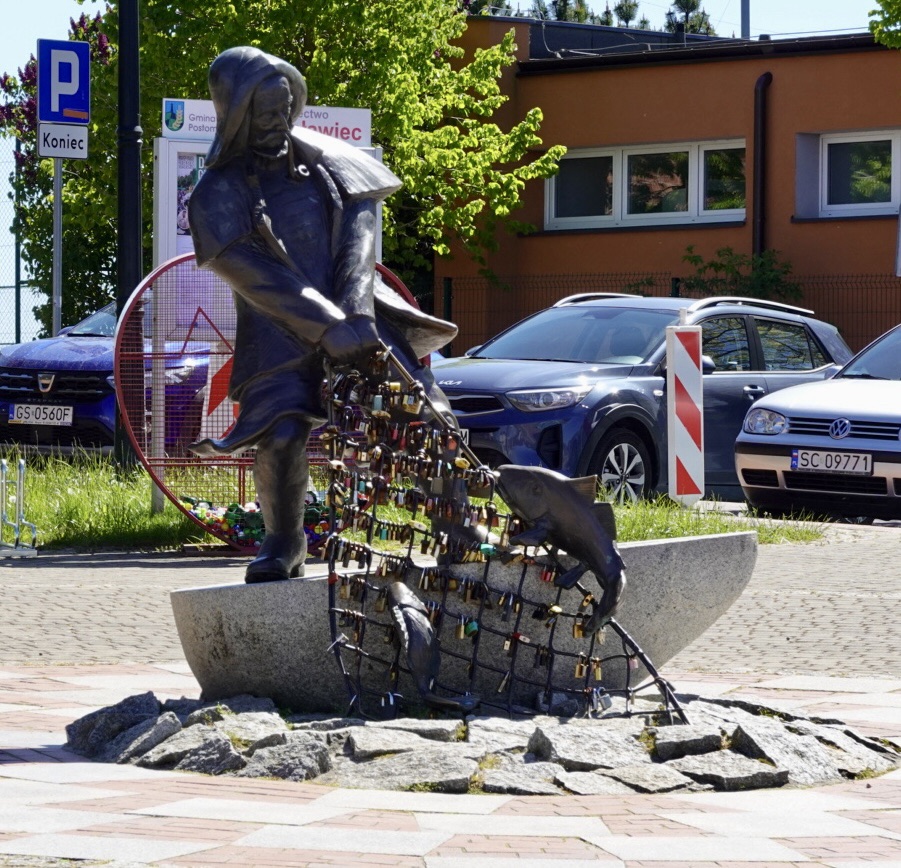
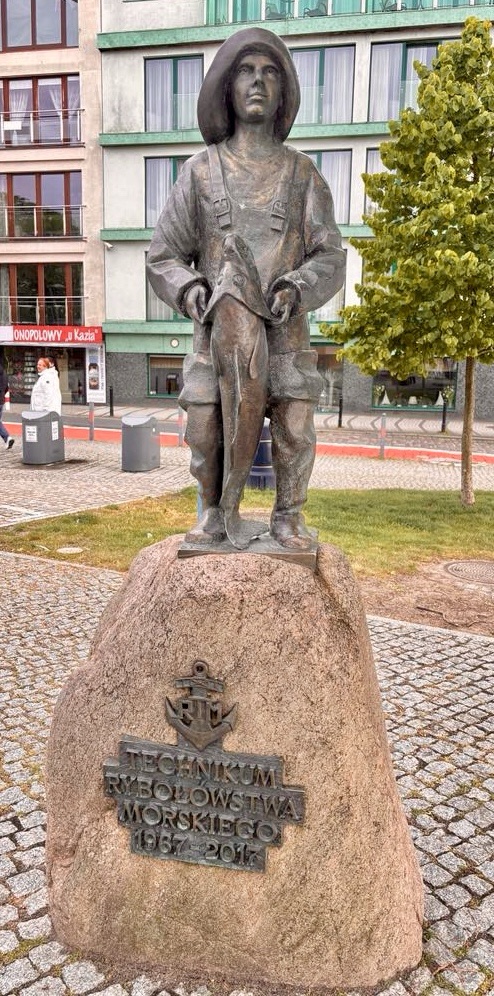
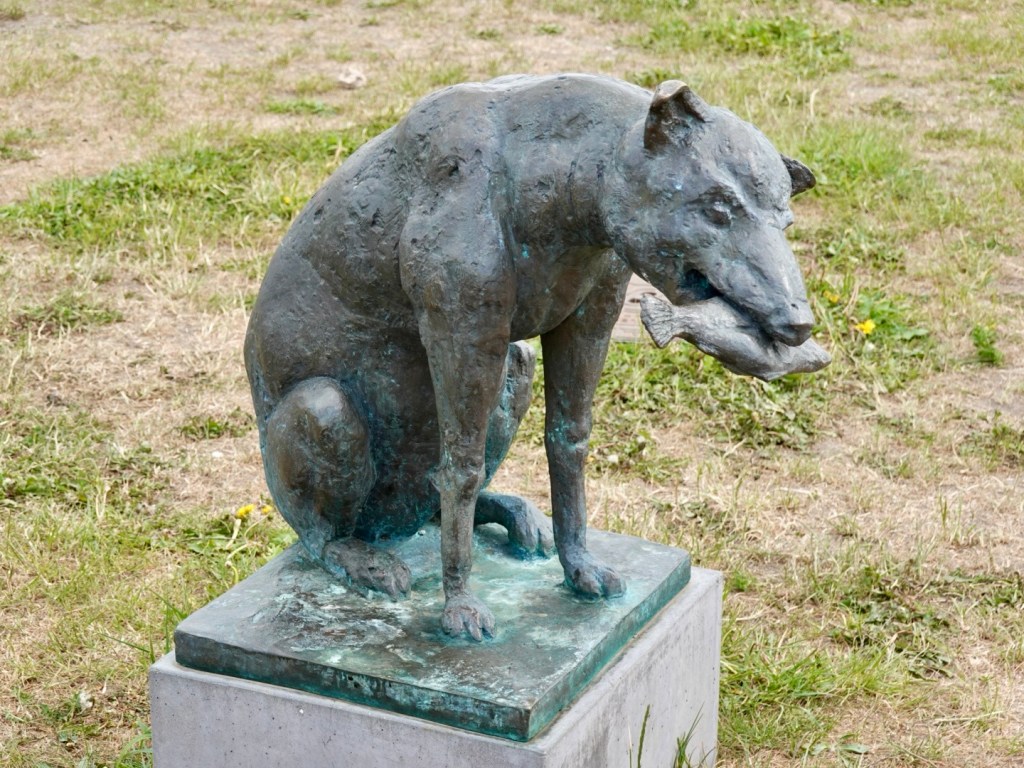
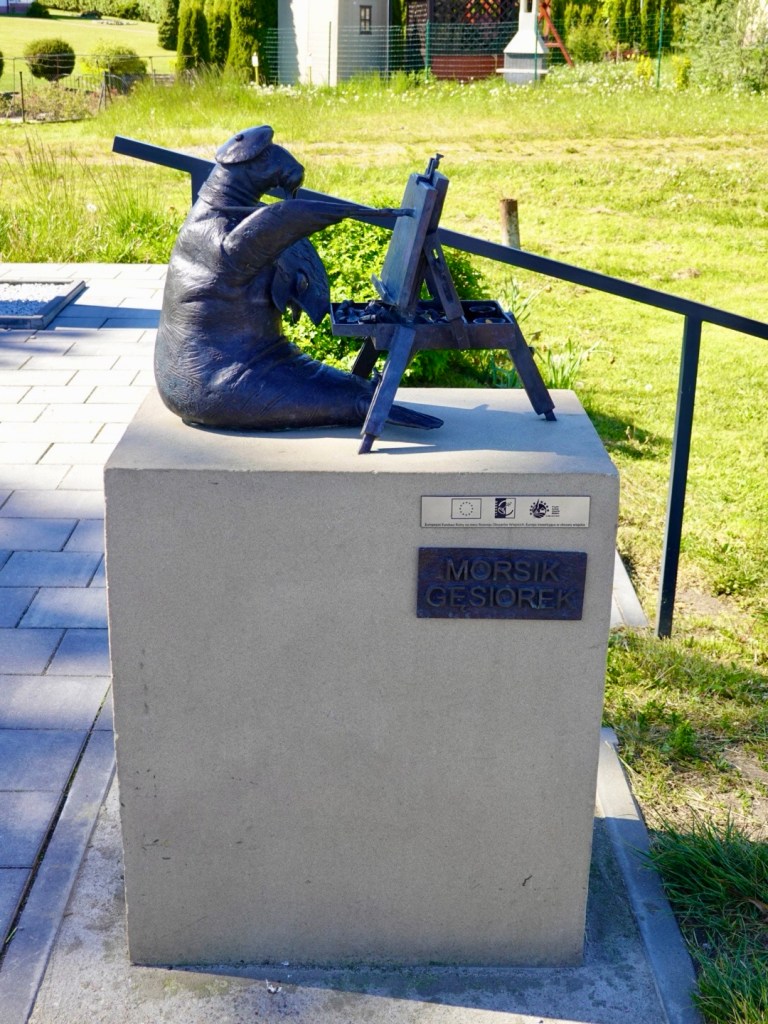
This statue intrigued me. Either the guy was little, or the fish was huge.

We have now been on the road for a week. We have ridden just over 700 km in our first week. Not a bad touring effort.

Today’s route along the Baltic coast.

Okey dokey, I’m having trouble keeping my eyes open. I need sleep.

Thanks for reading 🚴❣️💪😊

Day 6: Stralsund (Germany) to Swinoujscie (Poland)

Today had it all. Sun, rain, wind, shelter, sealed paths, cobbles, dirt, rougher tracks, great sights, friendly cyclists.

We enjoyed our stay in Stralsund, what a gem of a city. Great hotel with our first buffet breakfast in one week away.

The bikes were stored in a lower level bike storage room. Great place for touring cyclists.

Leaving the city we followed the Stralsunder Fahrwasser around the coast.

Our first shot of the day looking back towards Stralsund

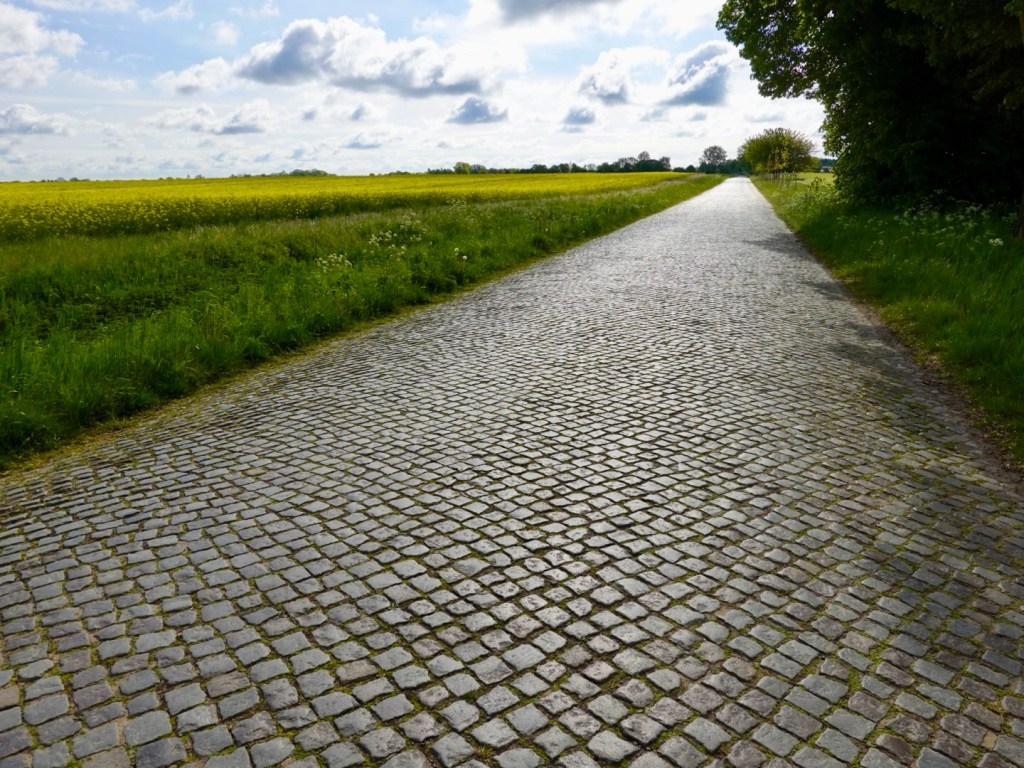
As we turned slightly inland on the designated cycle route, adjacent to a busy arterial road we started what would be around 20 km of cobbles. At the start we had no idea it went so far as our maps showed a sealed surface, not what type.

Lots of rolling resistance and bumps that jar through your hands. After about 10 km of this, Tony had enough and headed to the busy road at a junction.

It was a busy and there was no verge, and he realised we were safer on the cobbles.

It looks smoothish but on a bike it rattles.

It went on and on. In villages the cobbles became a larger cut, very rough cobble.

We were in a crop growing farm region, interspersed with the occasional dairy farm. The cows were still in their sheds.

Elation when we hit this. Would it last?

A renovators delight.

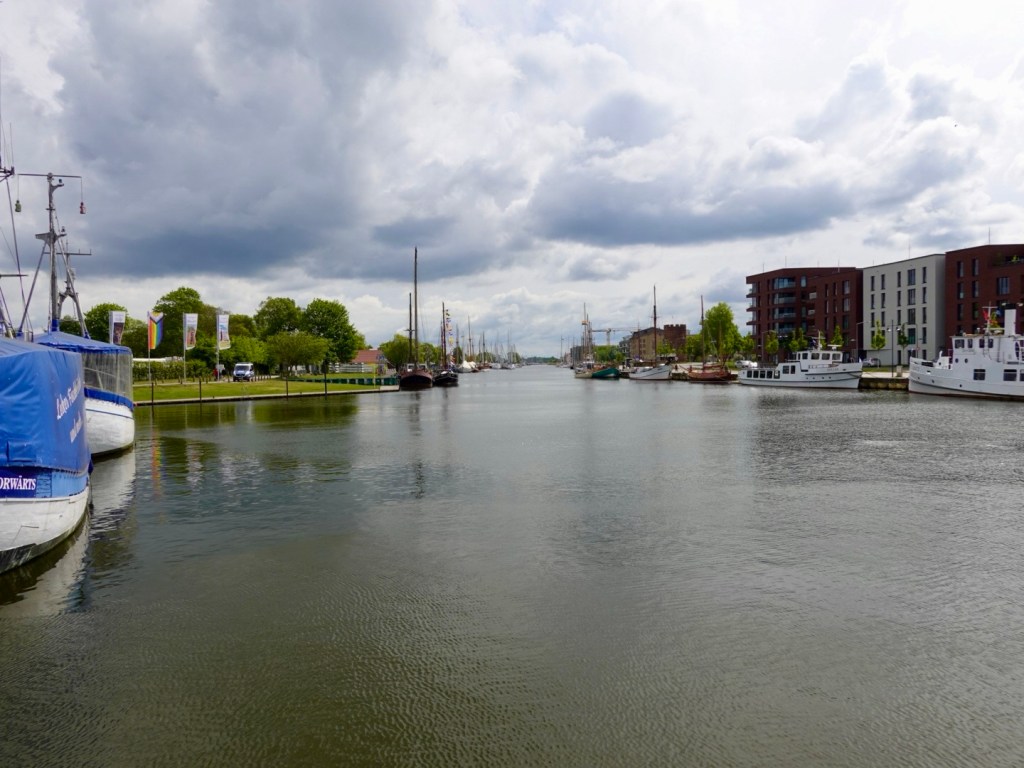
Plenty of renovated boats in the first large town of the day, Greifswald. The river Ryck runs through and at the mouth through a series of bays into the Baltic Sea.

Small statues adorn the riverside. We found a place for a ‘coffee’ and a loo. The coffee was not the best, but it was warm.

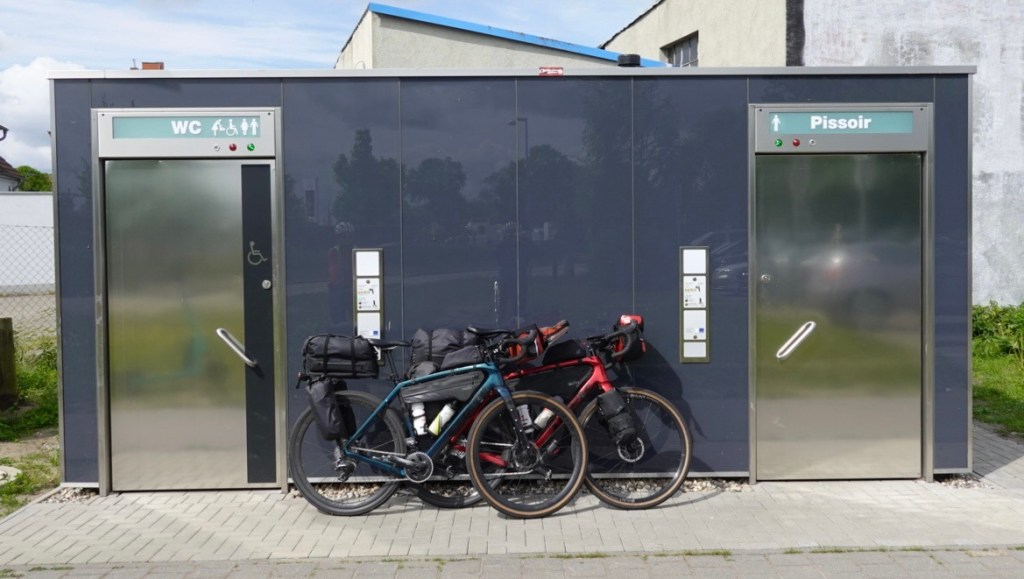
Pit stop, love the Pissoir name. We payed 50 cents to use the loo.

We edged closer to the river mouth then headed slightly inland again.

Nice church in the little village Kemnitz.

We passed a sculpture park.

Wolgast was where we found some lunch. Being Sunday very few places were open, including supermarkets.

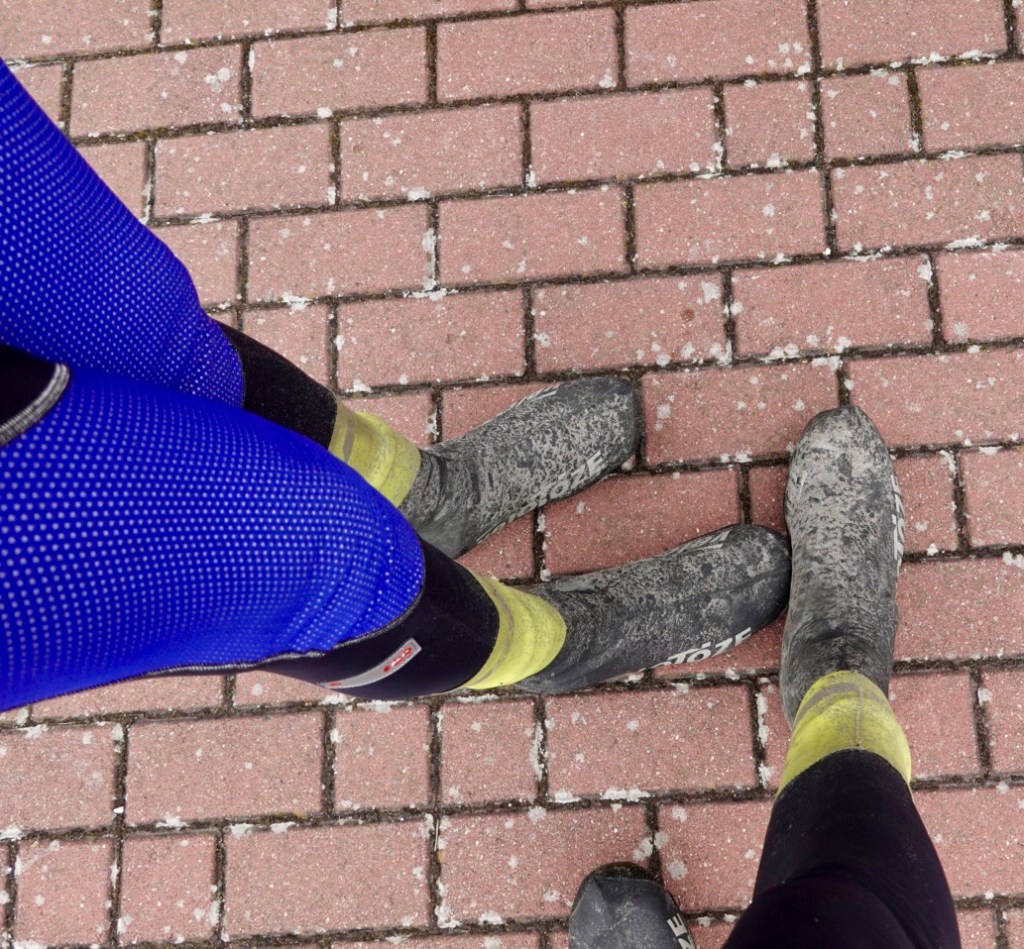
As we ate it started to lightly spit with rain, so we donned our over shoe booties and raincoats. Rain was forecast and you always hope they are wrong and you might reach your destination first. Today was not that day.

Wolgast is coastal and we were to cross a bridge to the island of Usedom, where our journey would continue.

Usedom is a Baltic Sea island, shared between Germany and Poland. It is the second largest Pomeranian island after Rugen (where we rode through yesterday from the ferry terminal at Sassnitz).

Interestingly it is the sunniest region in both Germany and Poland with 1906 hours of sunshine annually. Today was not using any of that ‘allocation’.

It is super popular as a holiday destination as we would see with very large villas ahead.

There are also heavily forested areas with really pretty walking and cycle trails.

Much of the rest of the day we utilised these paths. The forest provided protection from the rain as it got heavier (more nuisance level, not pouring) and the wind that was super strong along the beachfront.

Typical flat section in the forest. The path weaved and undulated.

There were various jetties and access points along the way.

Signs by lakes
More forest paths.

Huge villas in the tourist haven of Ahlbeck.. In this area we were riding along a paved, wide boulevard adorned with places to buy food such as crepes, ice creams or beer. We could imagine that when the 1906 sunshine hours are in action, the place would be packed.

No one was swimming today.

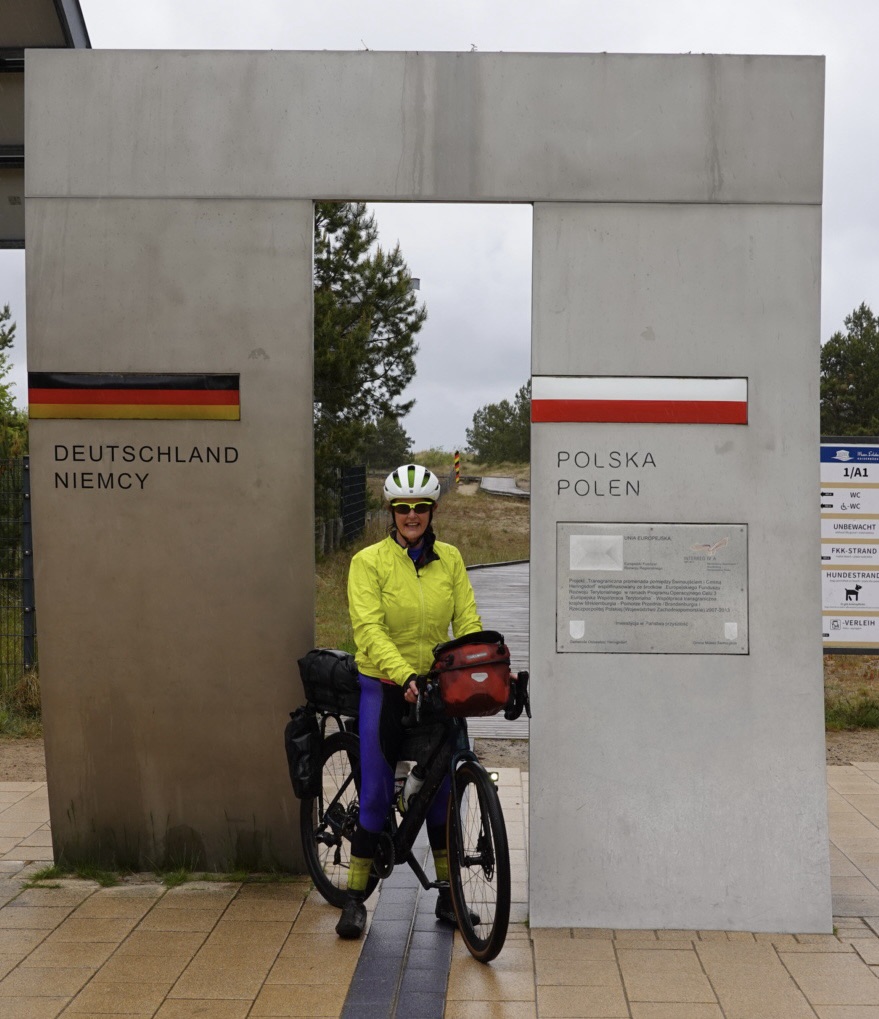
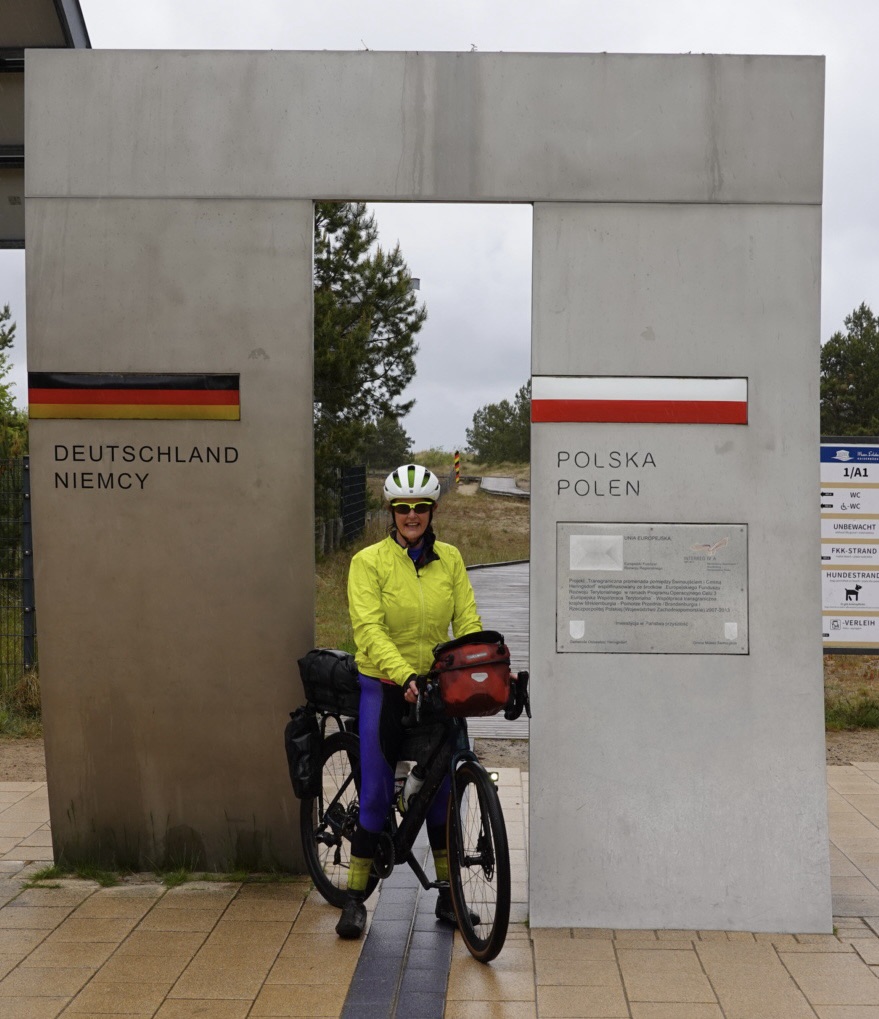
Here I am, half in Germany, half in Poland. The boardwalk behind me heading to the beach had German coloured uprights to the left, Polish coloured to the right.

We were only a few km from our destination in the Polish town of Swinoujscie. We are in the far north west corner of Poland, in the region of Pomerania.

At our hotel when I checked in, I sorted out where the bikes would go. I had been given two options with booking. Upon checking both options, we took the dead end corridor only accessible from reception.

As I filled out the paperwork for our passport ID, I was aware I was dripping water on the forms and floor.

Tony had cleaned the grime of our bikes, relubed the chains ready for tomorrow and making them look decent enough to be in the building.

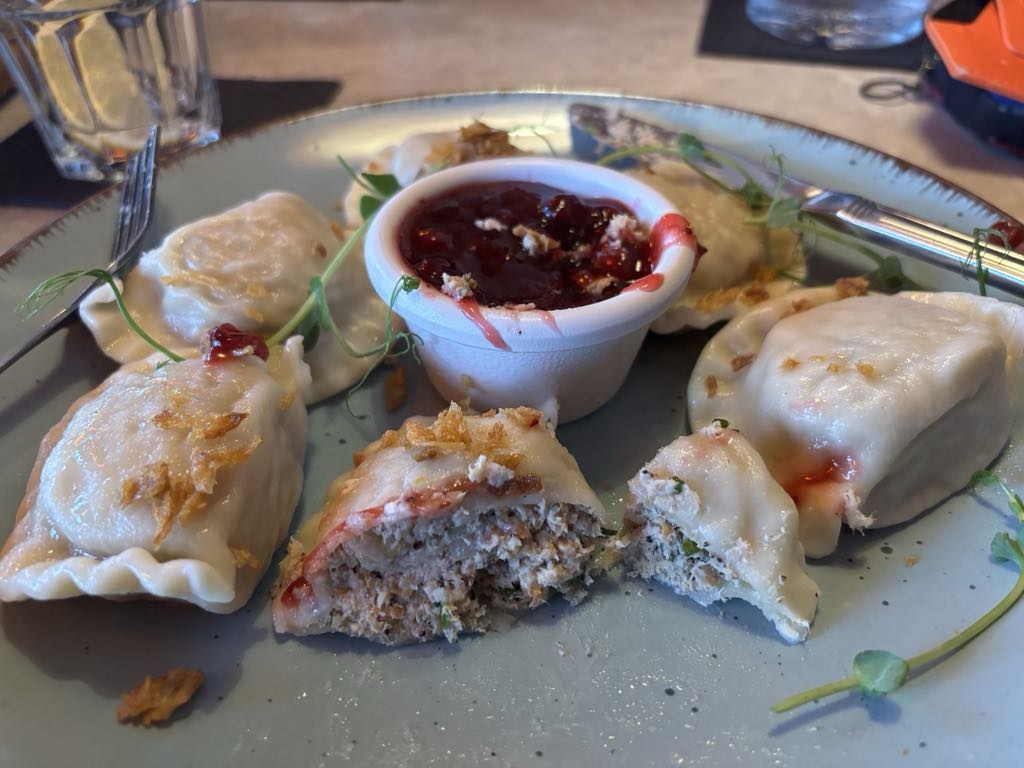
A welcome shower and we headed off to dinner at a recommended local restaurant. I had Polish chicken dumplings with cranberry sauce. Very tasty.

Rain is forecast for the start of tomorrow, then hopefully clearing and sun is forecast for the next few days.

Poland will be interesting as we weave our way along the Baltic coast.

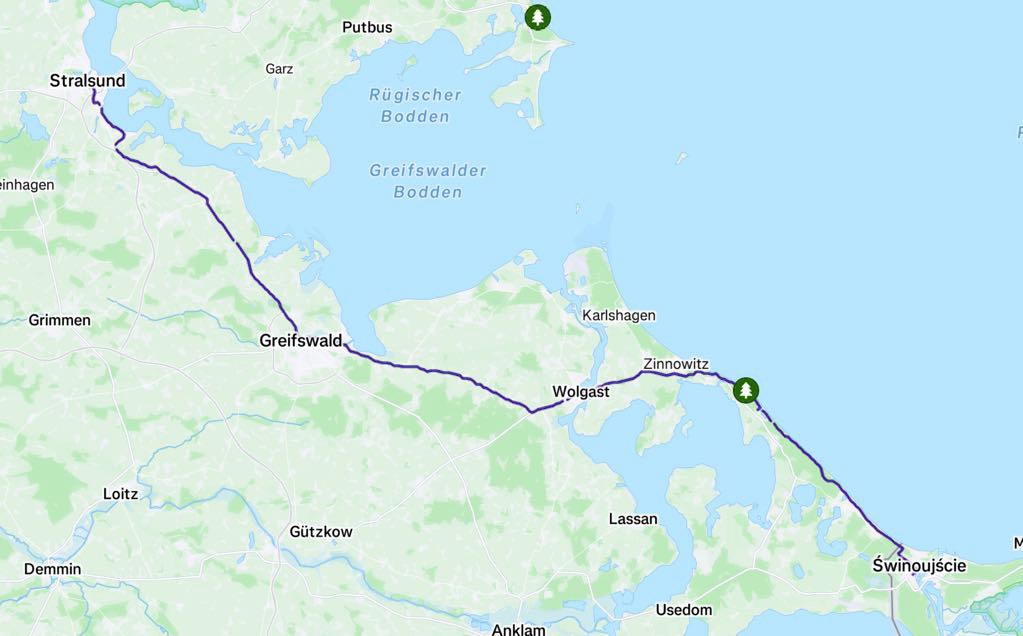
Our route today is below. We rode 110 km and climbed just over 500 metres.

Thanks for reading.

❣️😊🚴💪

Day 5: Bornholm Island (Denmark) to Straslund (Germany)

We arose early to finalise our pack and leave Stavehol, our home for the last three days.

There was a light misty rain as we hopped on the bikes at 6.15 am.

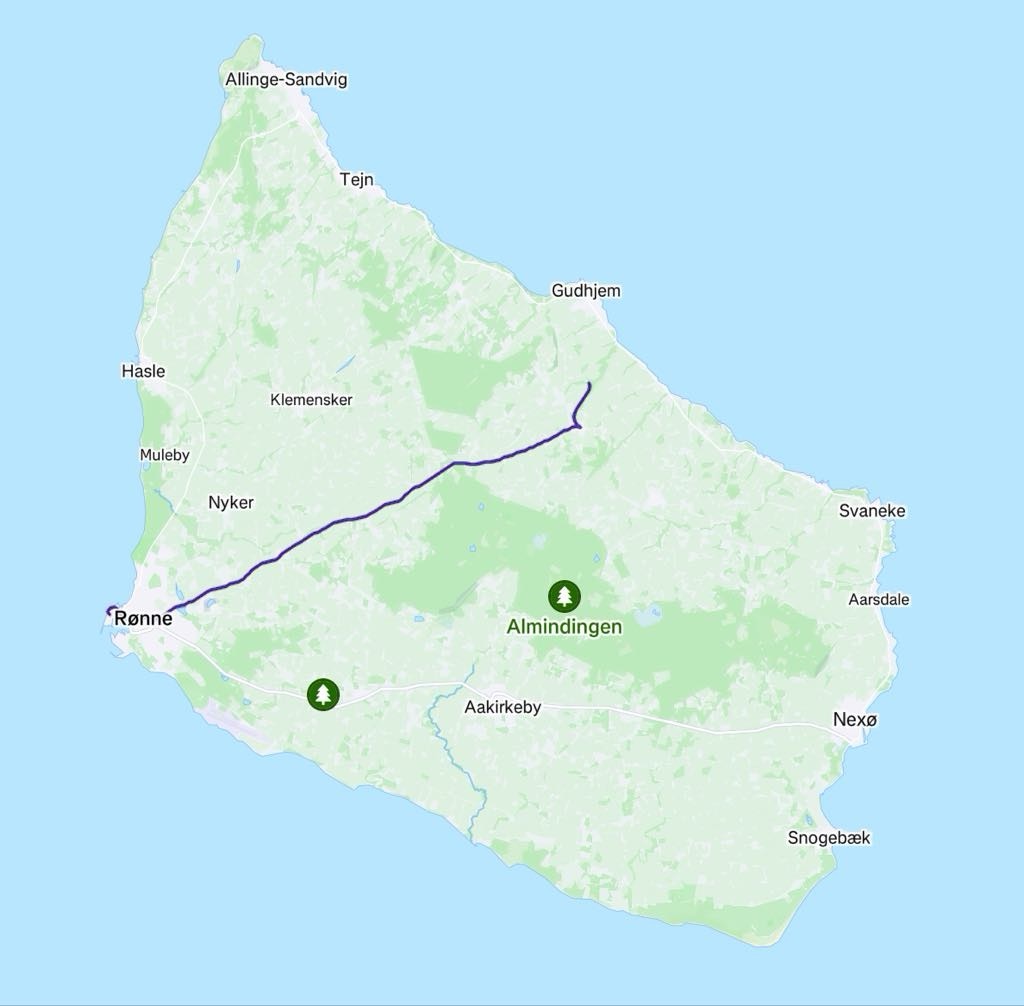
Our destination was Ronne, 21 km away, where we were to catch a ferry to Germany.

It was a quiet ride with not a lot of traffic around, and we appreciated our last ride here surrounded mainly by farms.

Quiet road in Ronne

We checked in and headed to Lane 21, set aside for bicycles and motor bikes.

The couple ahead of us here are from Rostock, Germany and are returning home after a one week bike packing ride.

The wait was cold. It was about 7 degrees Celsius as we stood in the light rain for around an hour.

Our ferry finally arrived.

It was very packed on board which surprised us based on the number of cars lined up (as in not as many as we expected).

However, two large German tourist buses were the first to board the ship and the place was milling.

We found a table and seating by a window upstairs as the ferry departs.

Our final views.

On the PA the voice announced cabins were available. We lashed out and grabbed one and did enjoy our own room, bathroom and rested for the most.

Bornholm Island has been a wonderful experience. I have been asked a few times, why Bornholm?

I had never heard of it until I started researching ferry options to Germany and Poland. I looked into it more and considered this could be an interesting island to spend a few days riding.

That it was!

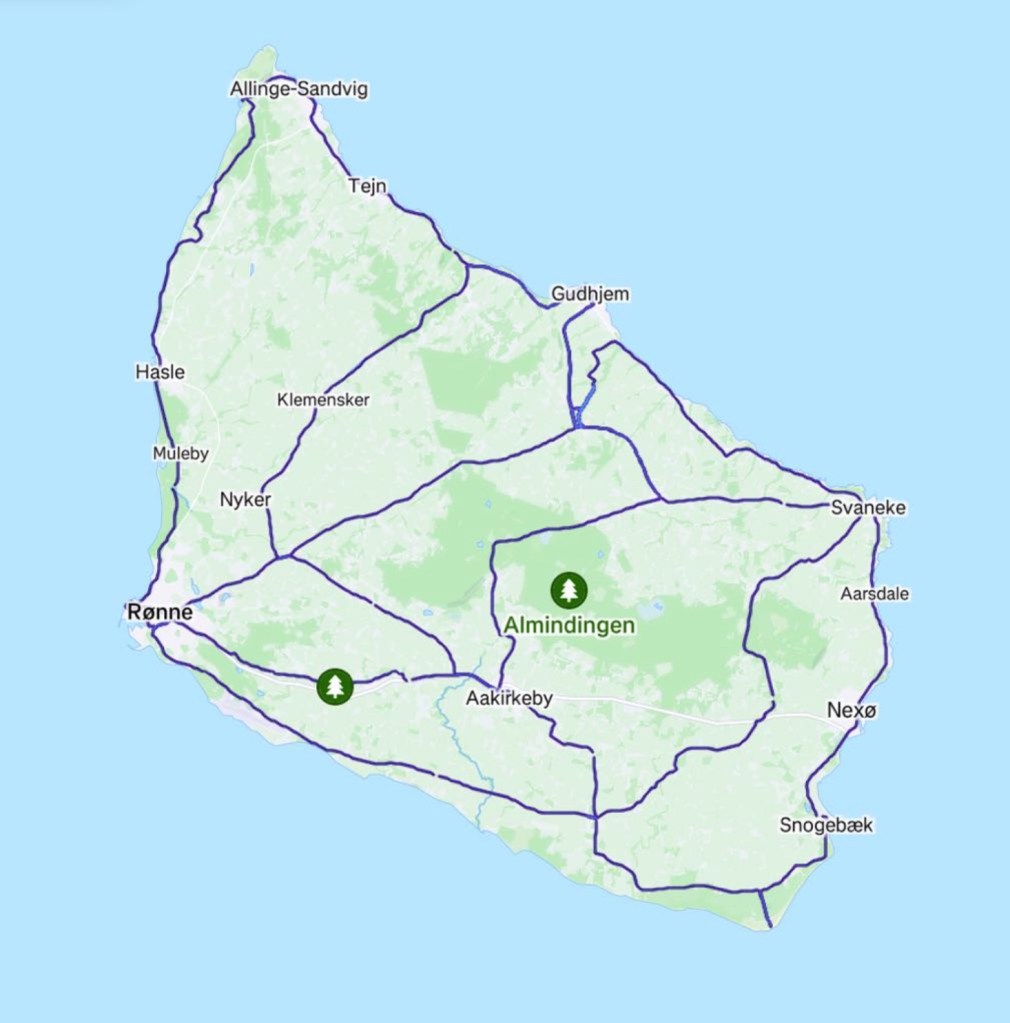
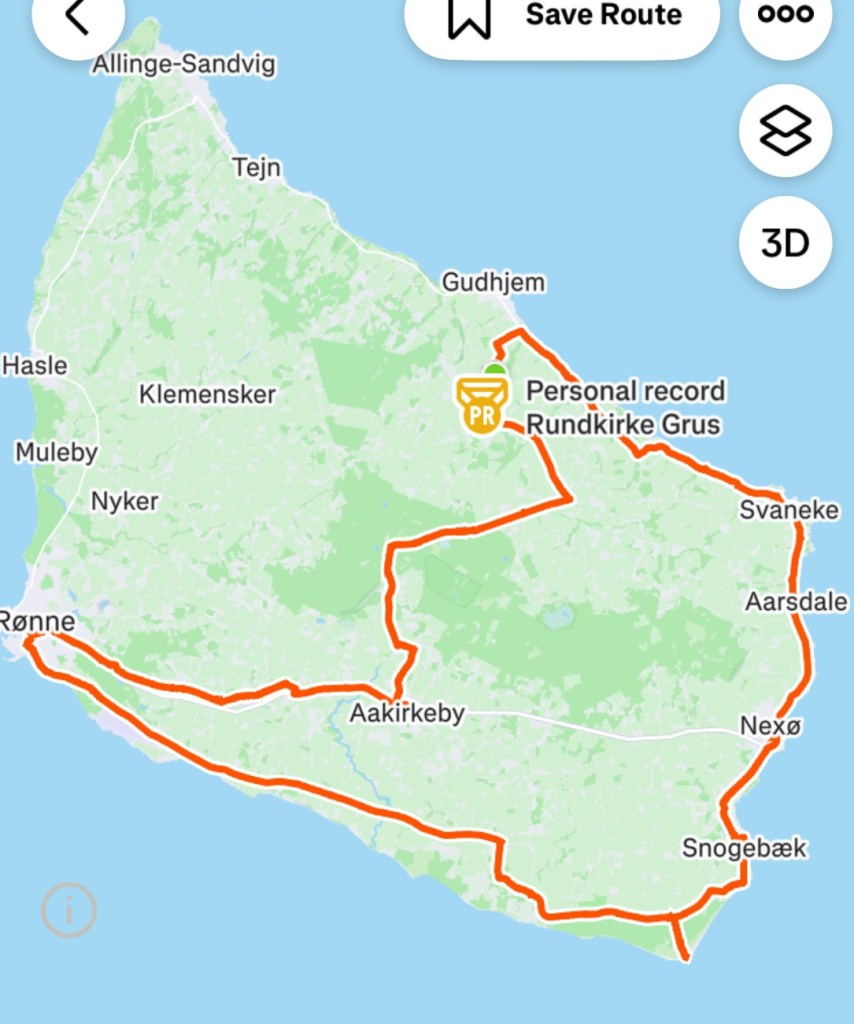
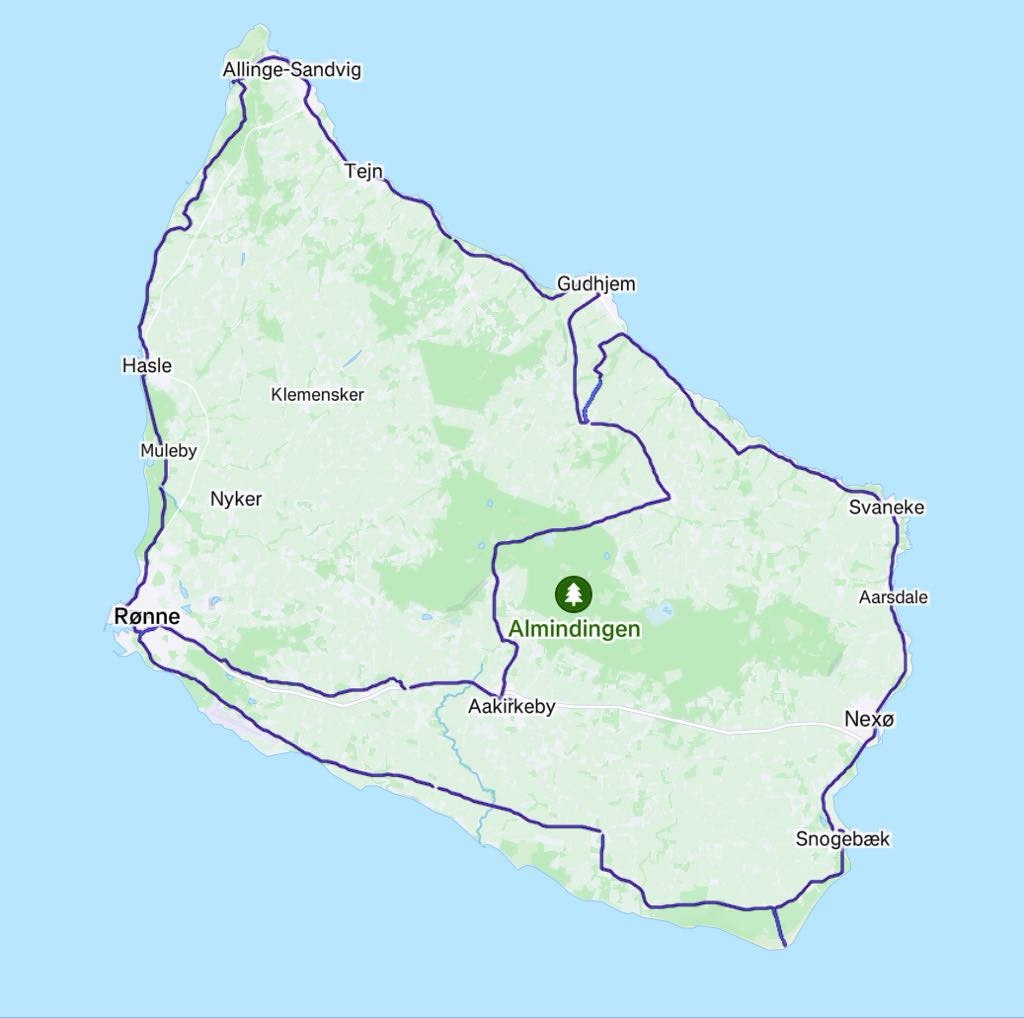
This is our heat map from riding 270 km on the island. Reasonably comprehensive.

Arriving in the Sassnitz Port we departed slowly as all cyclists were required to push their bikes from the boat following a bloke as he criss crossed around the port to the exit.

It was drizzling so we then stopped to put our over booties on (go over our cycling shoes).

The first 5-8 km was on a path passing derelict large old buildings, appearing like old residential blocks from the regions earlier East German era.

There was also significant construction in the area.

The path varied in quality and width. At Ostseebad Binz we found a lovely cafe for a bite of lunch.

The sun was out, the raincoat and heavier duty outer layers were replaced with lighter layering. The breeze still had a bite to it, but pleasant sitting out of the wind.

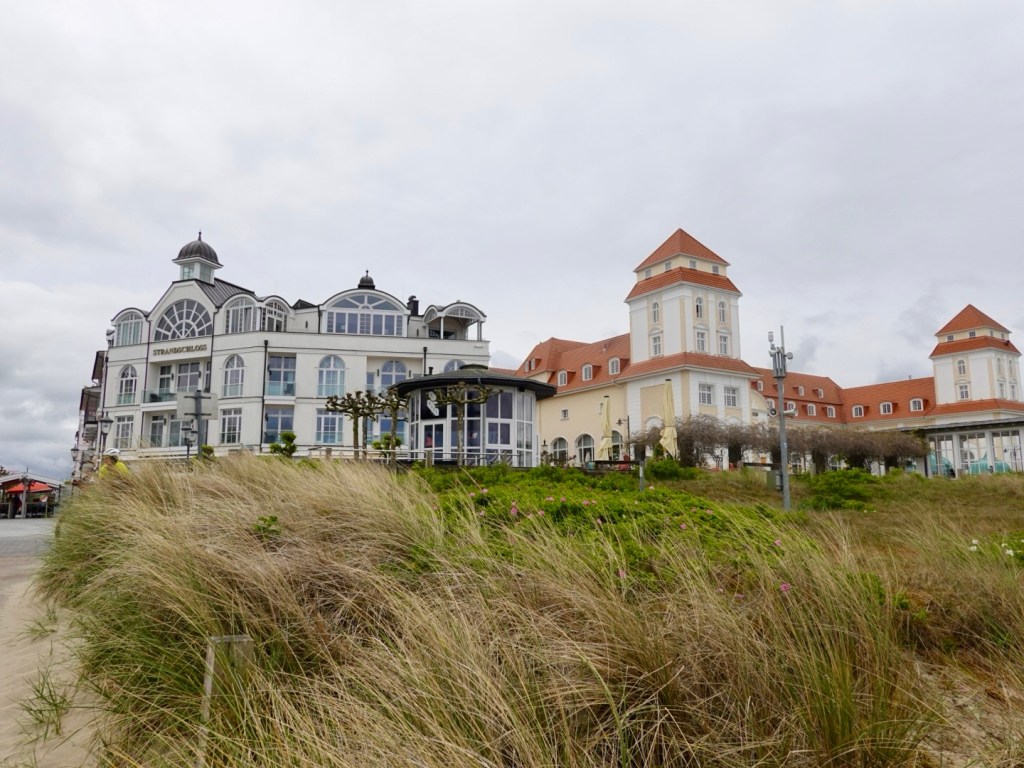
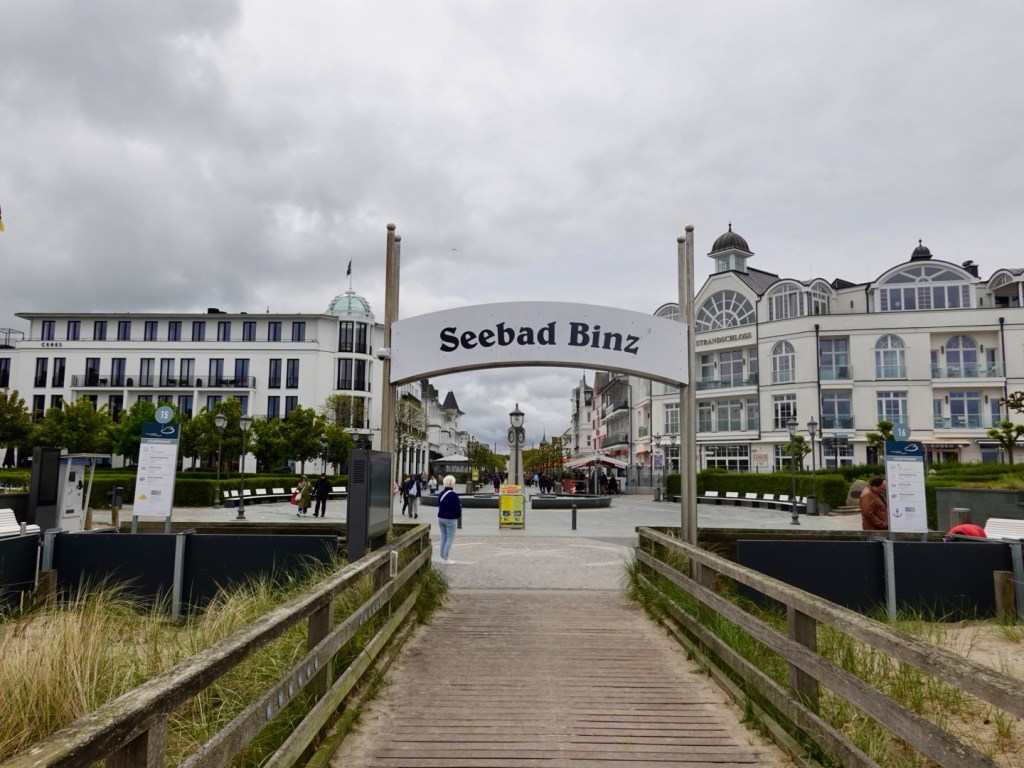
Binz is the largest seaside town on the island of Rugen. Yes we were in an island. It was a popular holiday town and during the communist era, the East German government compulsory acquired many of the fancy homes and hotels for their members use.

After the fall of the East German government these places were returned to the original owners families.

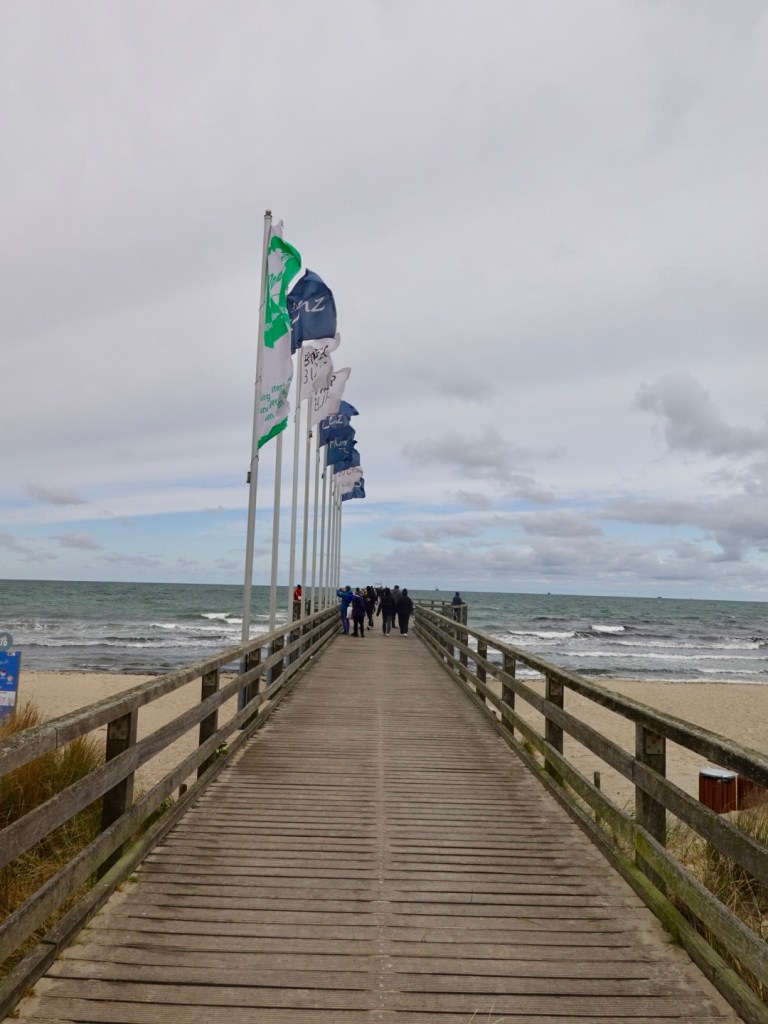
Some sights of the town:

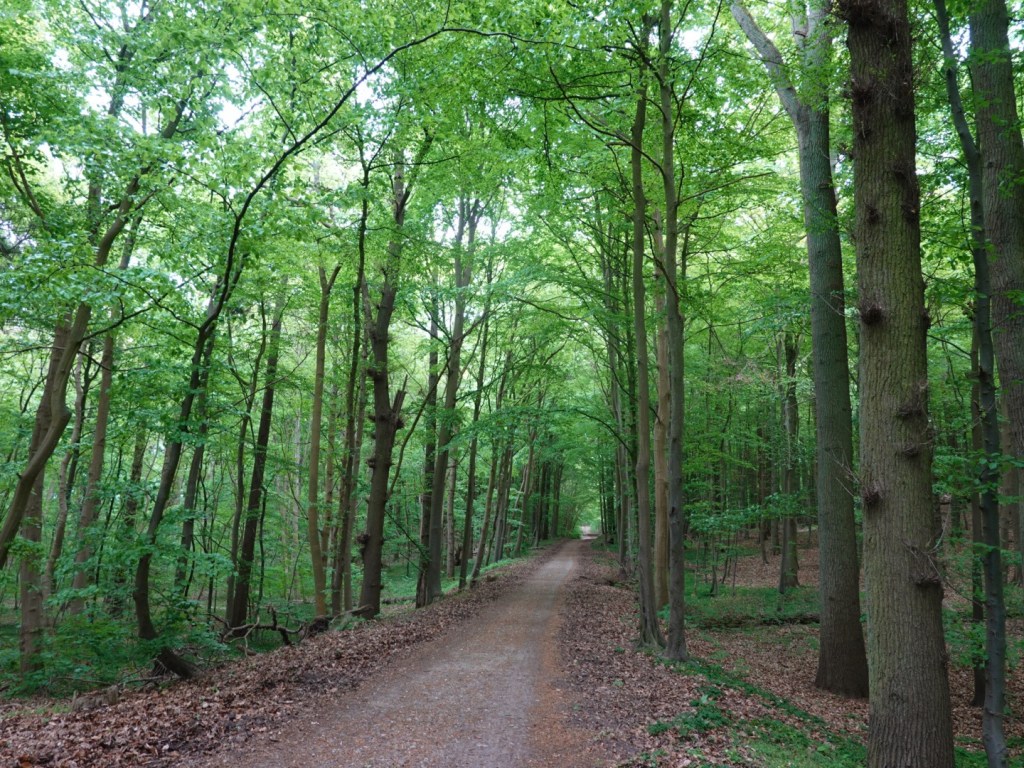
The route to the next town of Sellin took us through forest. It was beautiful but the first four-five km very hard work.

That path is not as nicely compacted as it appears. It consists of smaller blocks of a blue stone maybe 3-4 inches square all at varying angles.

It was a bladder stimulating section for sure.

When the path climbed or descended there were these blocks of cement. Each of those little inserts are lower than the cement and rough as guts to ride on.

I was lucky to be doing 6-8 kmh through the five km.

Tony’s bladder had enough and we stopped, just around the next bend the path was a much nicer compacted gravel.

Signposting was excellent, although we also use our Hammerhead maps where we have uploaded our planned routes. Signs are nice confirmations.

Sellin featured many large homes.

We then skirted around the shores of Neuensiener See, an internal lake that empties into the Baltic.

Tourism boats, marinas, little homes, lovely views made the next 10 km one of our favourites for the day.

More signs,with signage for both walkers and cyclists. Many of the paths differ. We were heading to Putbus.

Riding through beautiful forests.

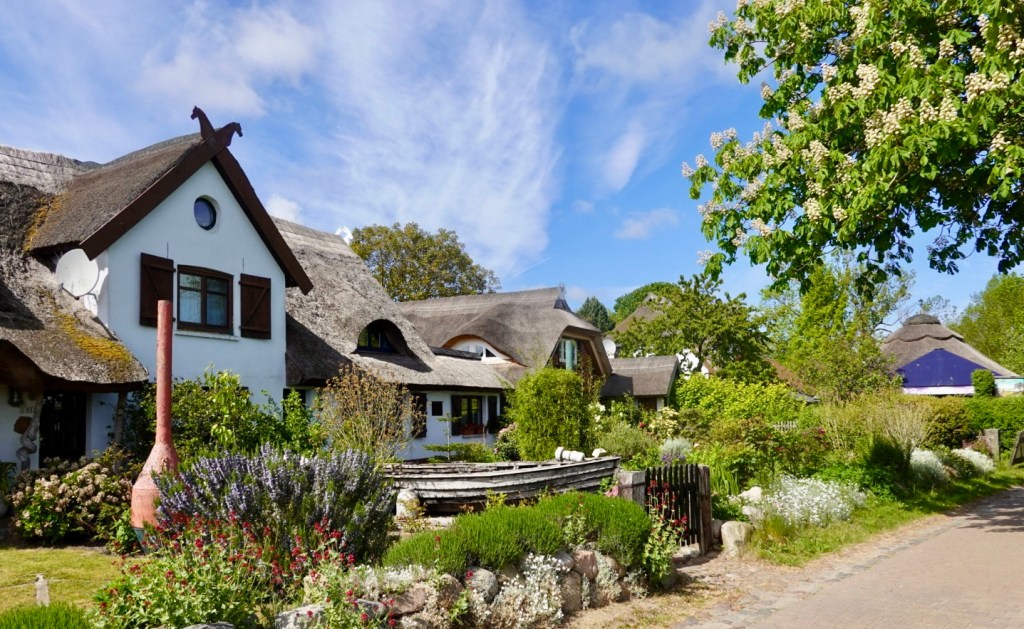
Lovely thatched houses.

People fishing out in the deeper waters.

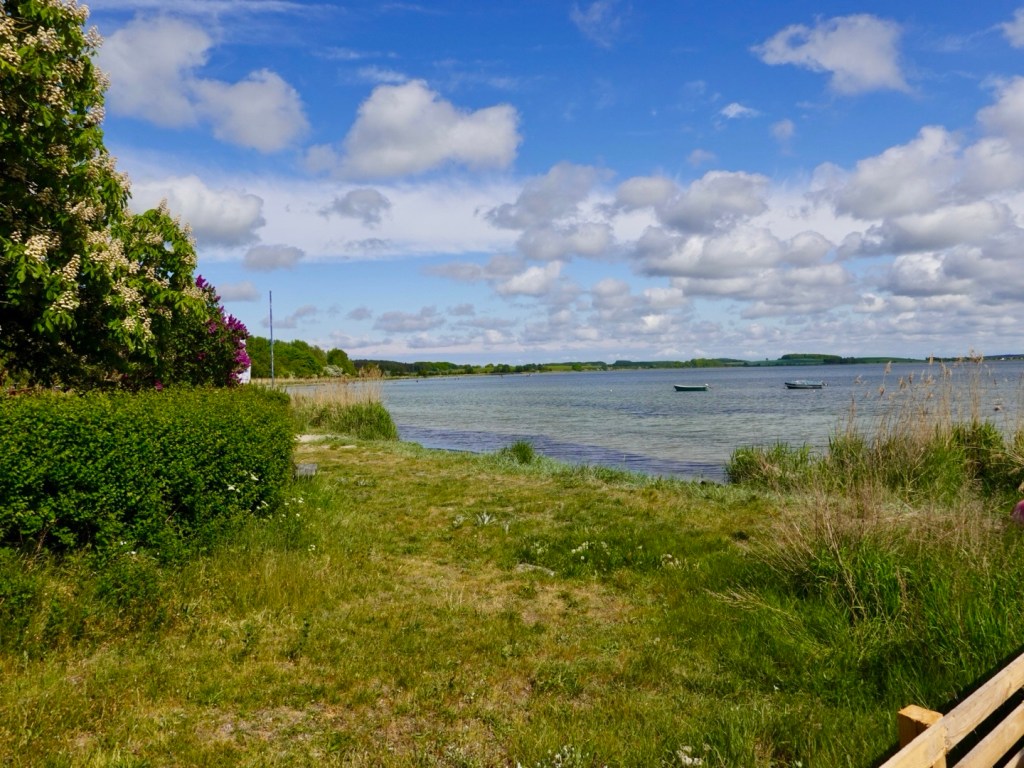
Path still following the coast.

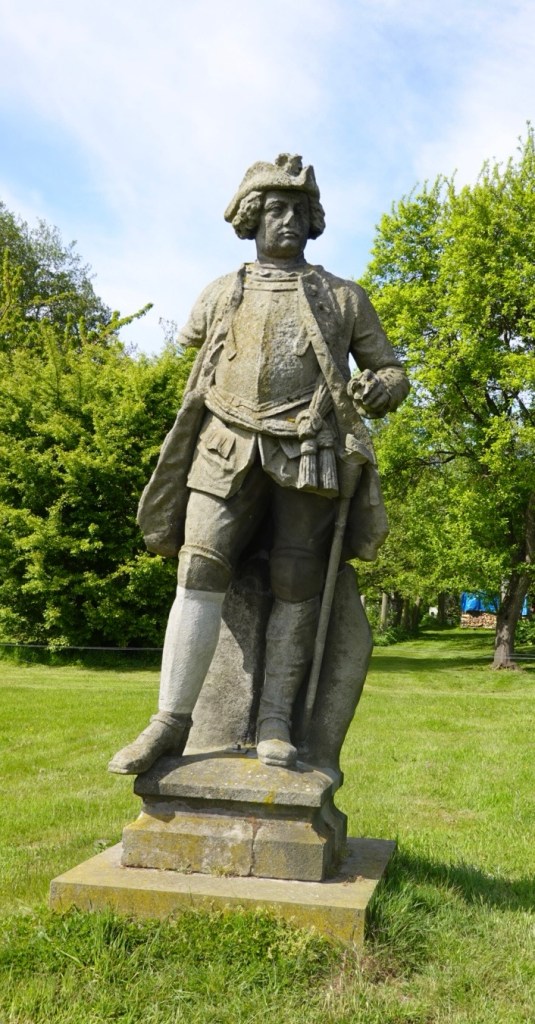
King Friedrich Wilhelm 1 of Prussia (1688-1740)

This village was very cute with varying thatched roofed, gardens, wooden boats all overlooking the coast.

We crossed a long bridge to leave the island of Rugen and land on the European continent.

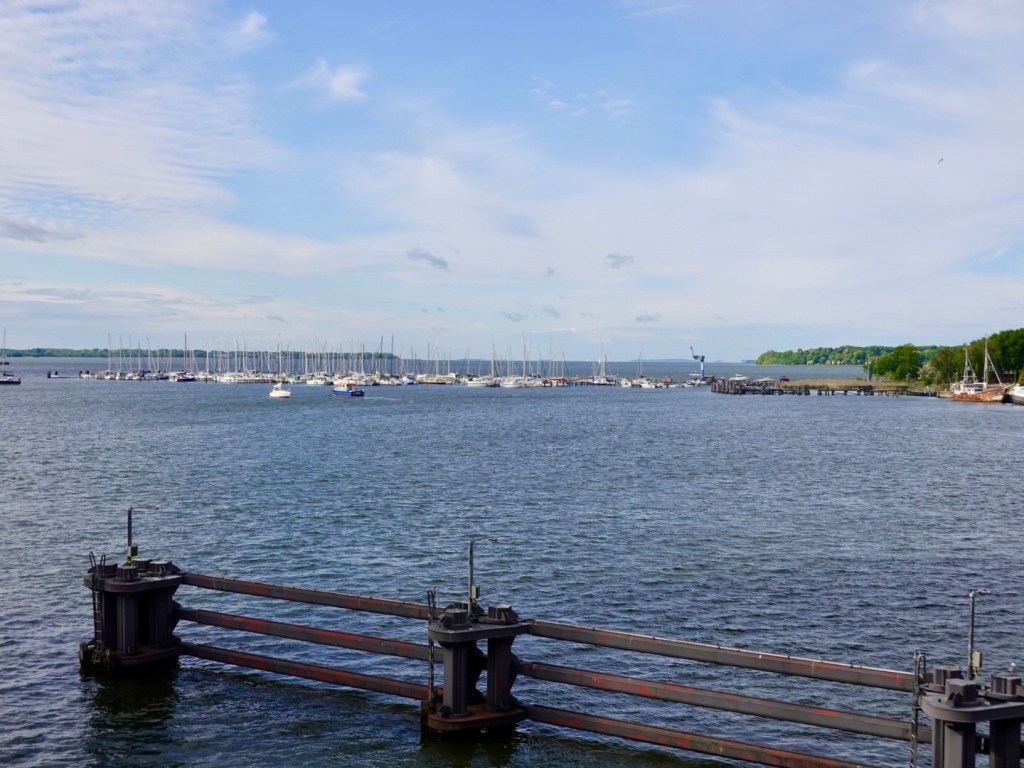
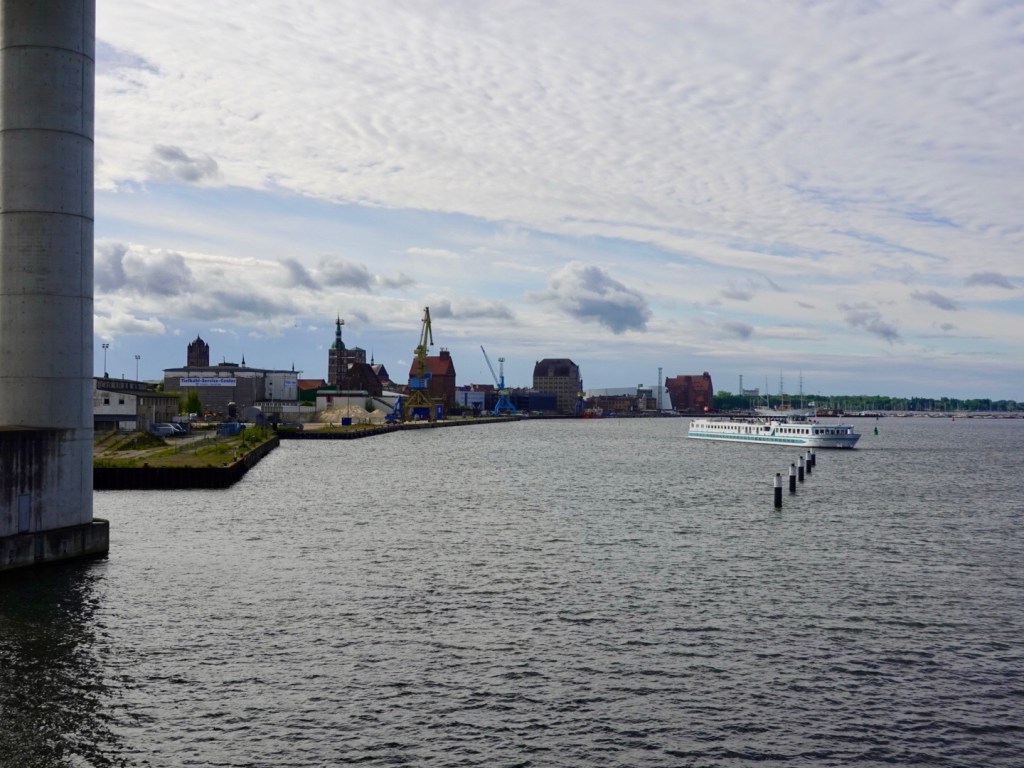
Our destination lay ahead in Stralsund. It looked a bit industrial from the bridge.

We do love it when my ride maps finish us at the front door precisely. Boom!

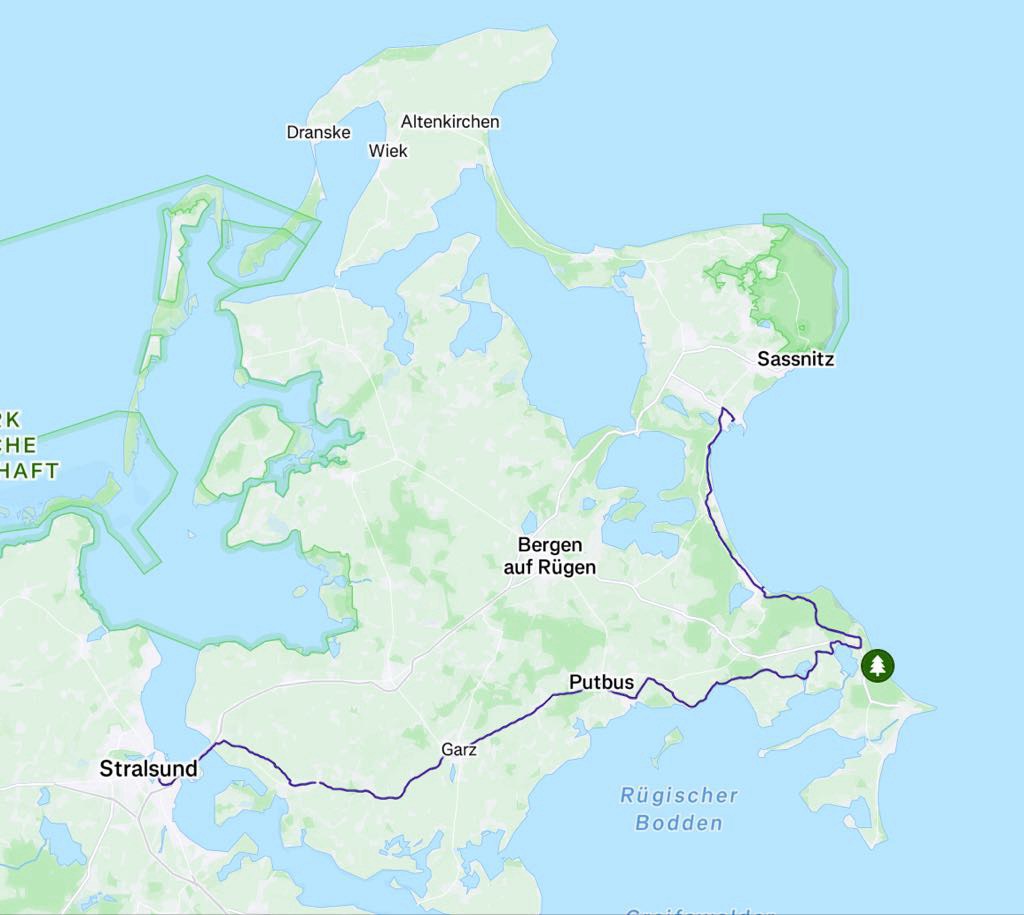
A total of 99 km today plus a 3.5 hour ferry transfer.

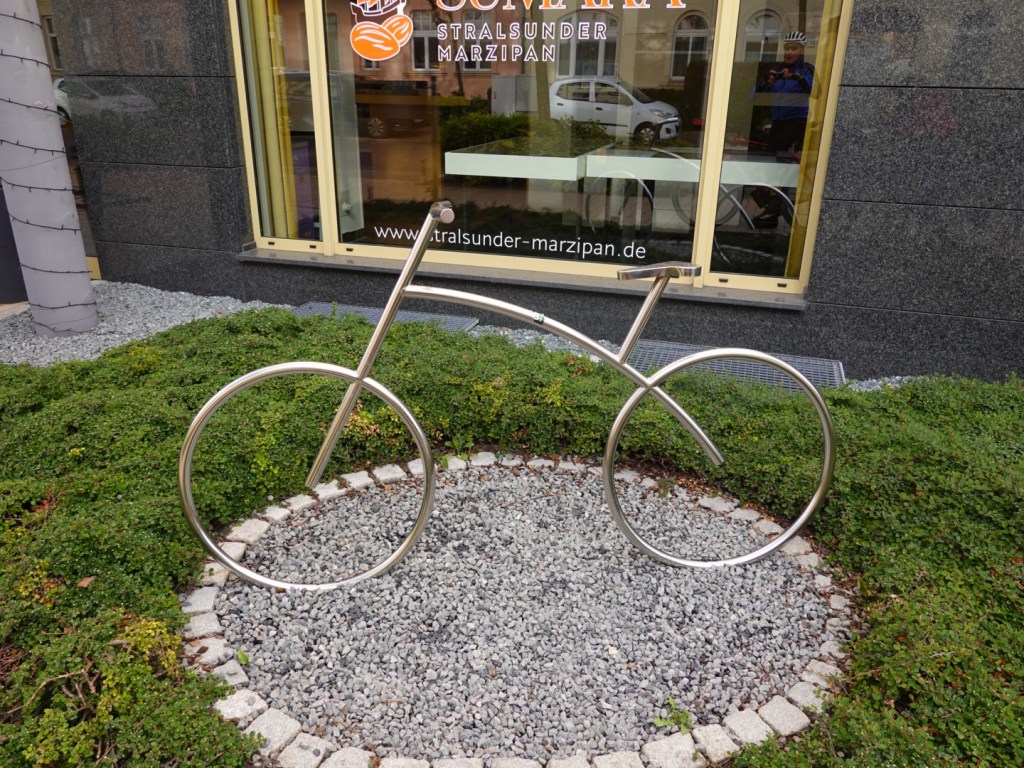
As I checked in, we were given two chocolates. This hotel is known as the house of marzipan and has quite an assortment available. I enjoyed mine, Tony tolerated his.

We were delighted to find two water column heaters in our room. This meant we could wash lots and get them dry.

After showering we walked into the older part of town to source a meal. The town seemed quiet for a Saturday. Many restaurants had just a few people, then we saw a sign for a lower level restaurant and we recognised the word schnitzel.

We had a wonderful meal, served quickly, good value (relatively 😁).

Straslund developed as a medieval fortress stronghold back in the 13th century. Many of the buildings were commenced then.

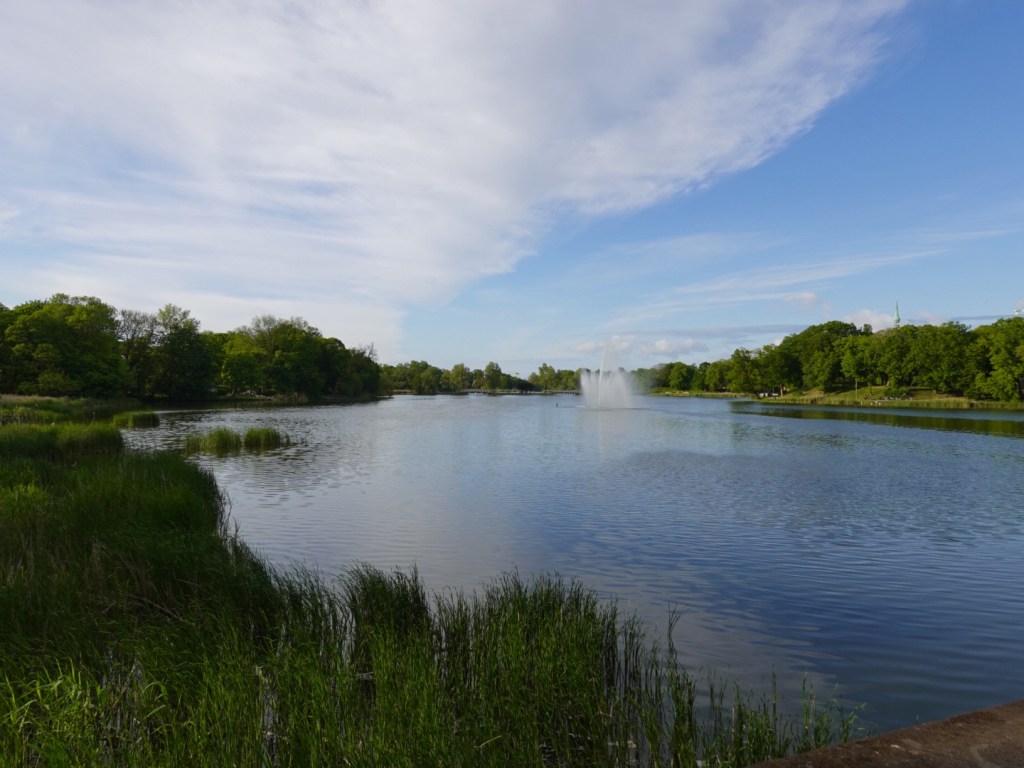
Knieperteich

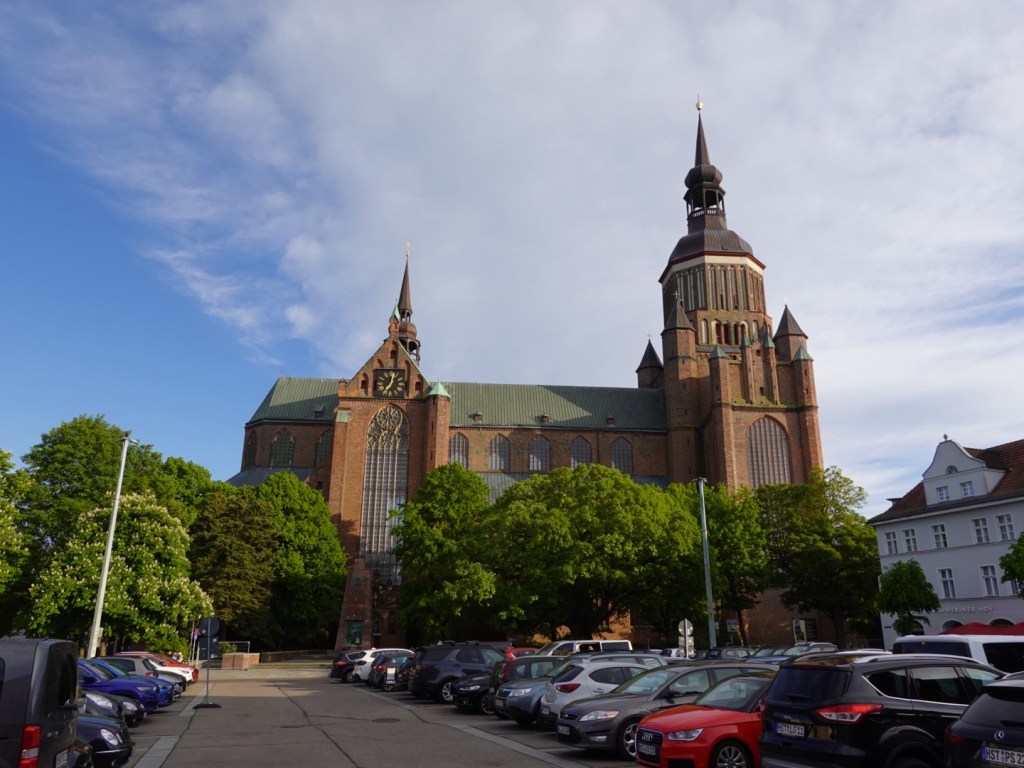
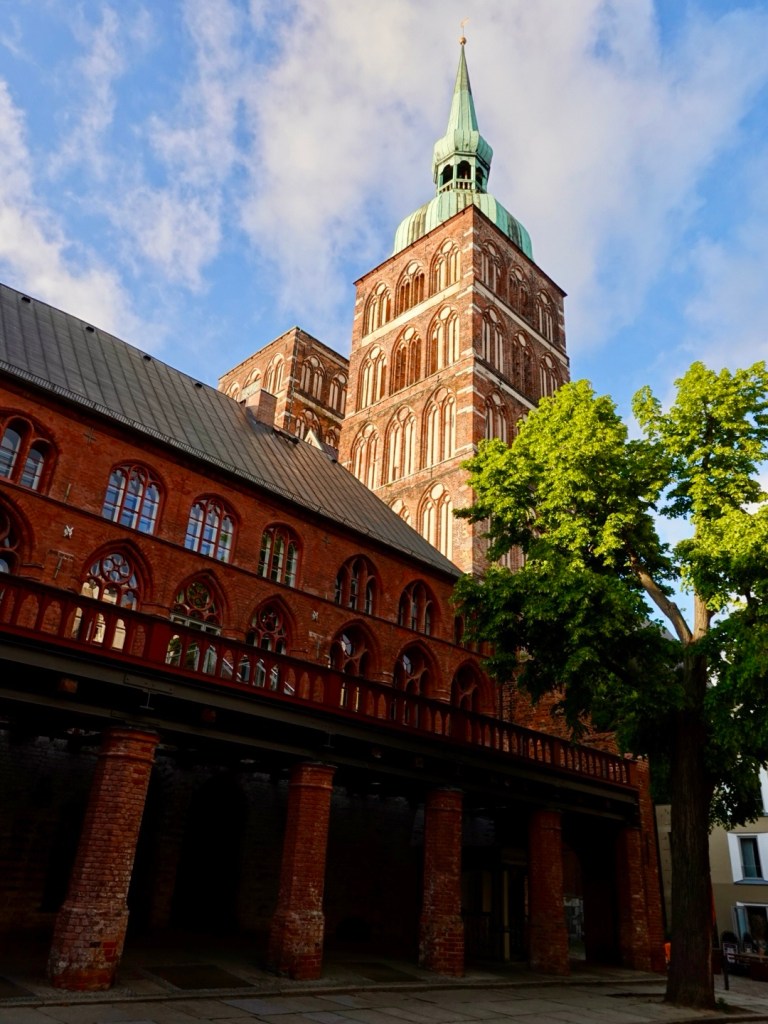
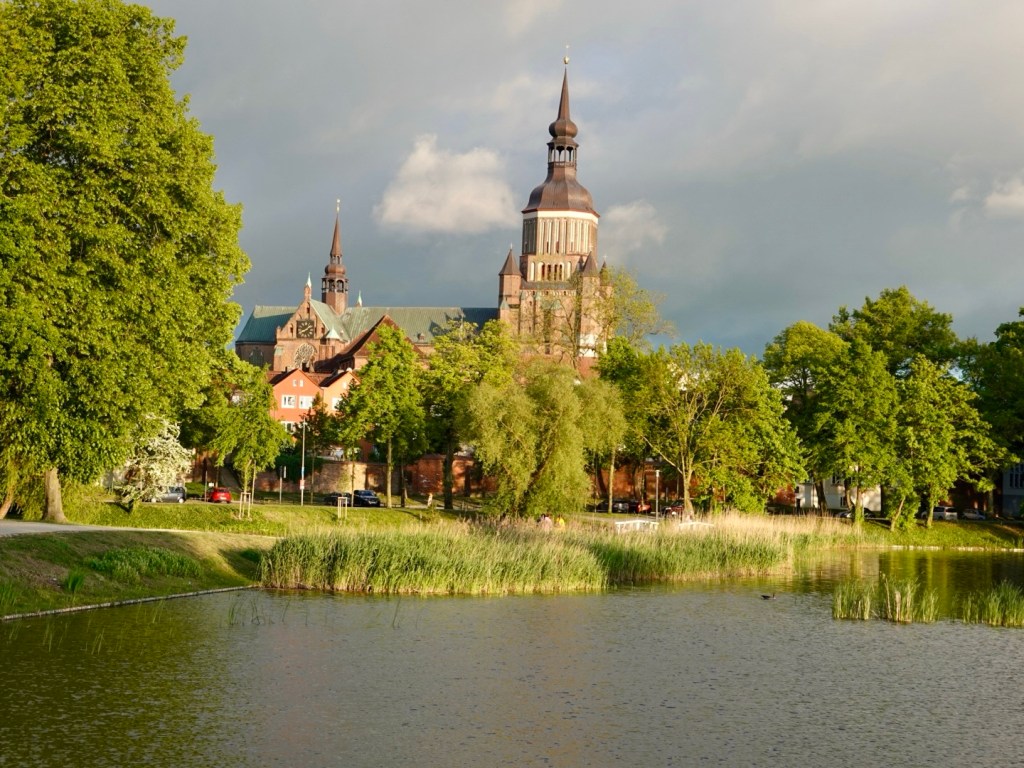
St Marien church is a Lutheran church built around 1380. It was the world’s tallest building between 1549 and 1647.

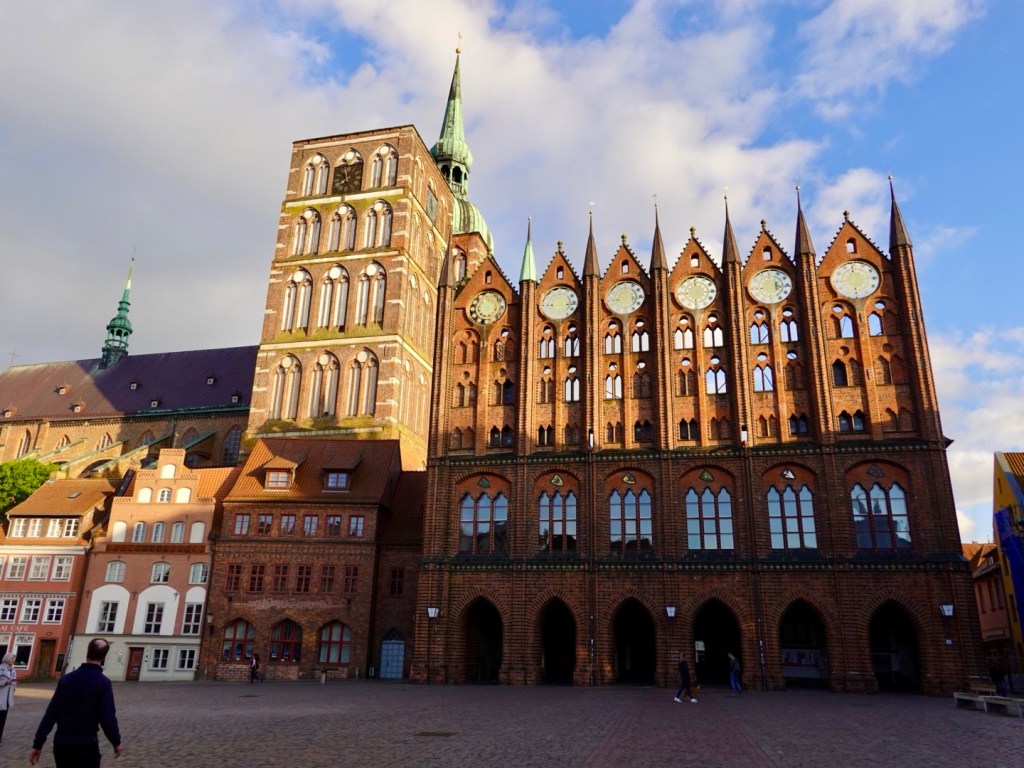
The Rathaus is a Gothic town hall, again from the 1300’s. The towers of St Nikolai in the background.

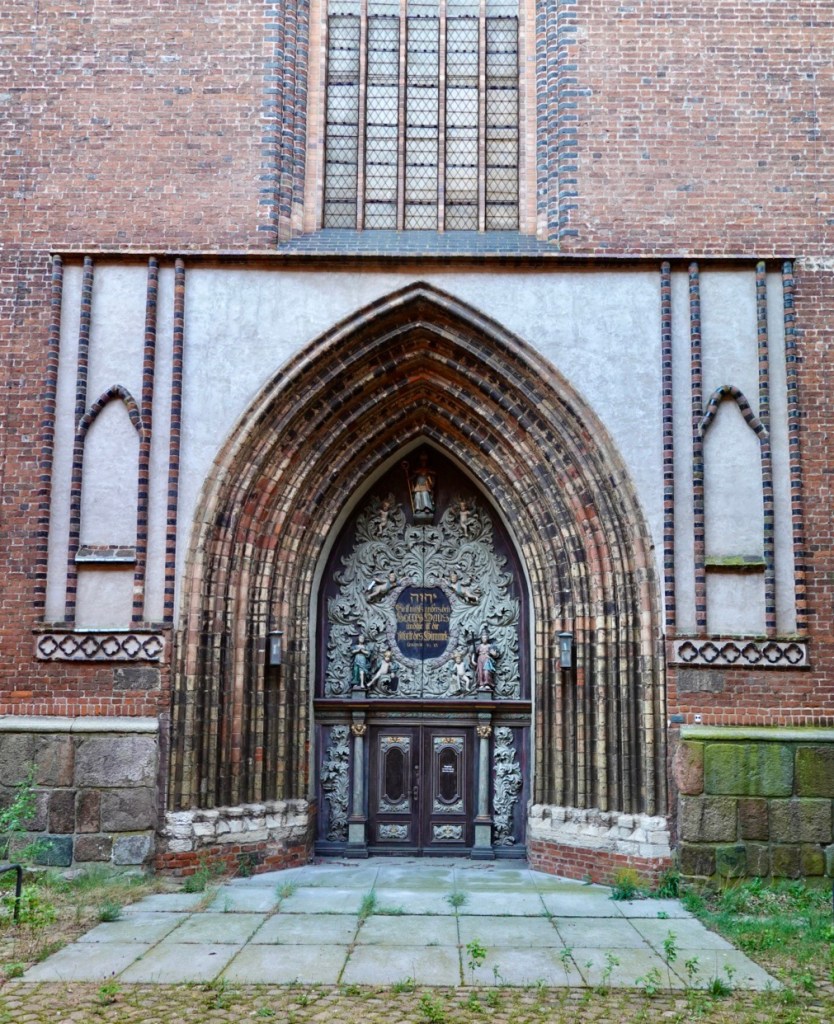
Door into St Nikolai that is not accessible.

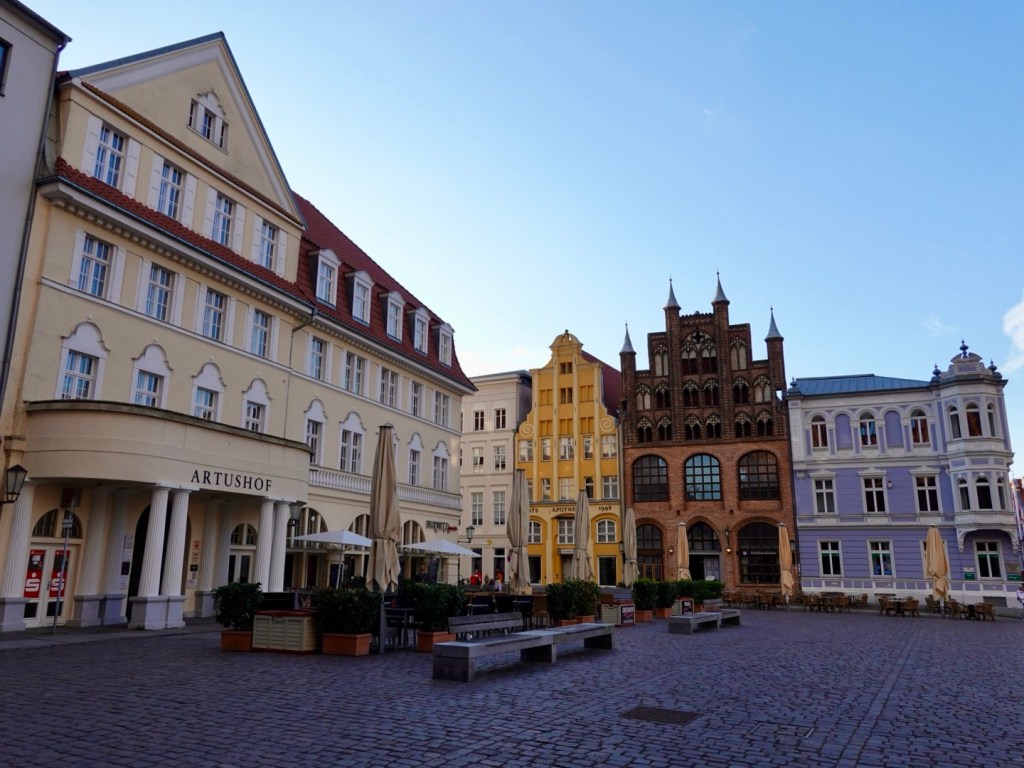
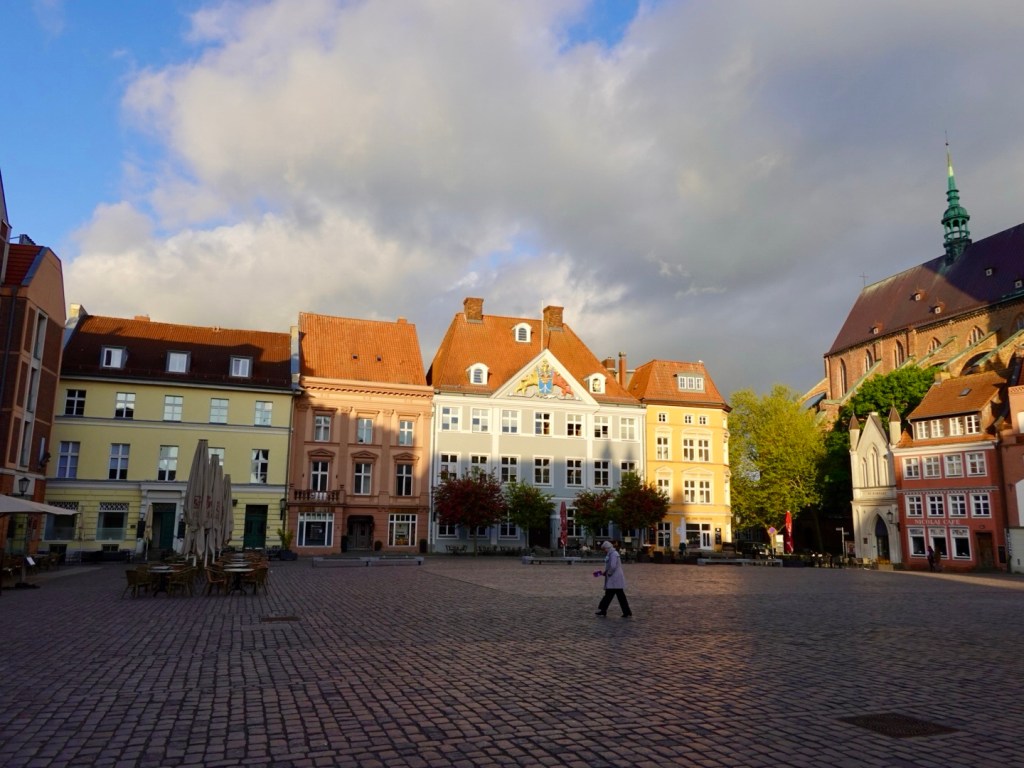
Alter Markt is a large spacious square featuring beautiful buildings.

One entrance to the Rathaus. We walked out from there.
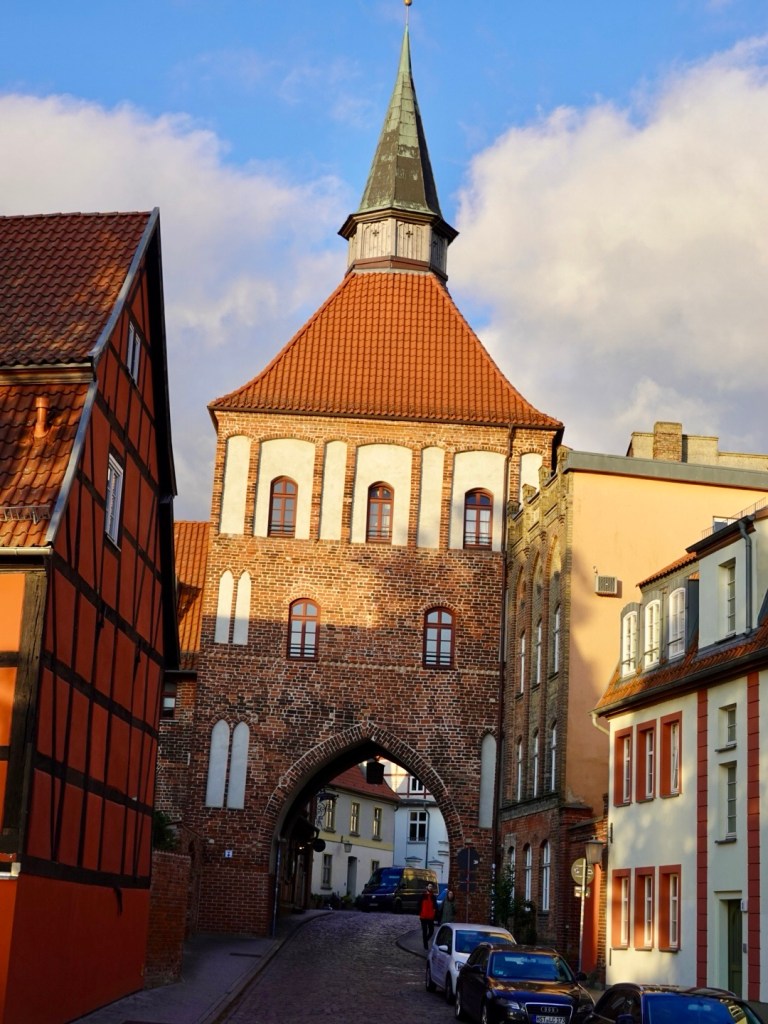
Old entrance to the town

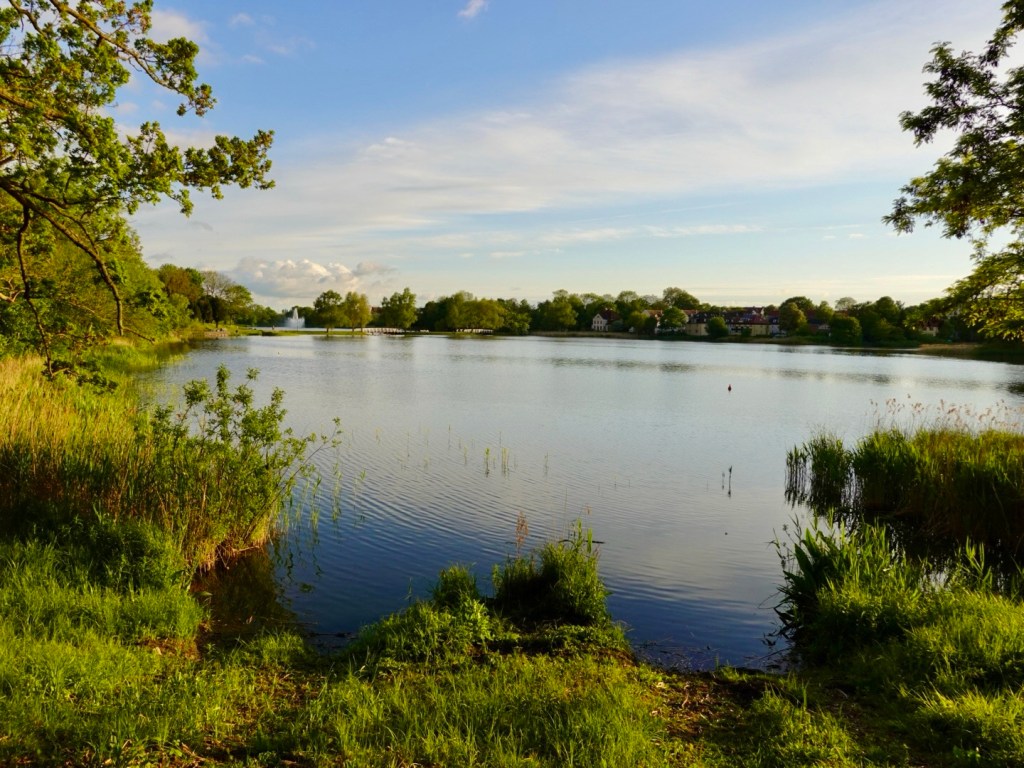
We followed the Knieperteich, large ponds around the old city centre back to our hotel.

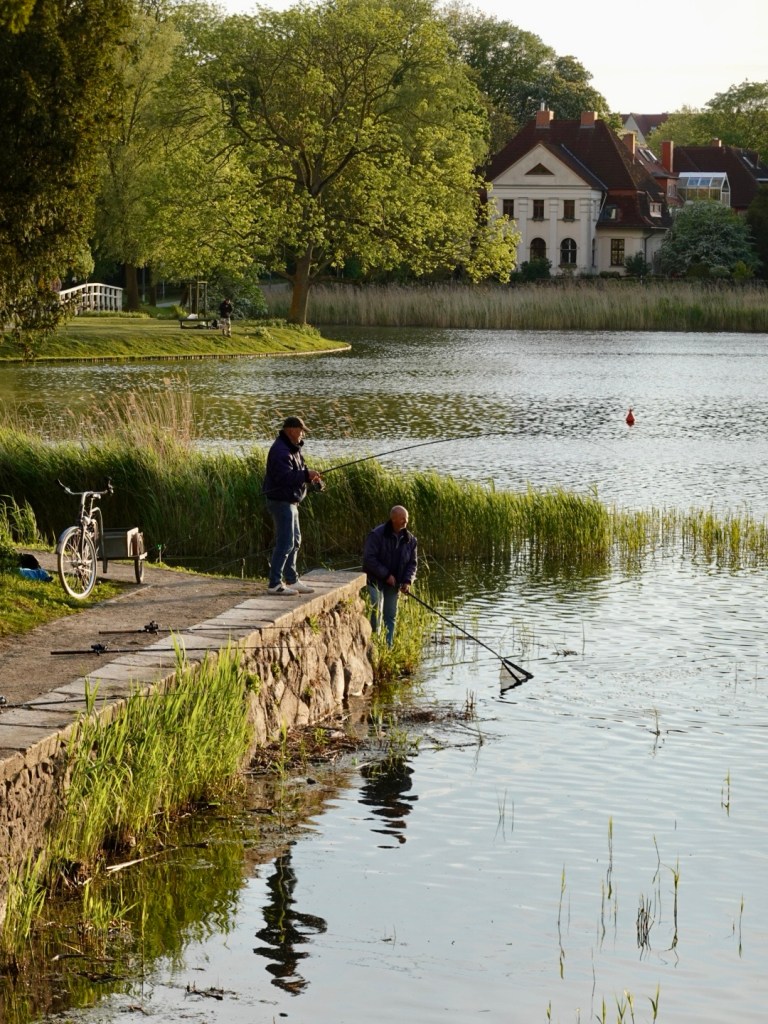
We stopped to watch these two guys fishing. They had caught something large. It took the two of them to land it in the net. We are not sure what type, but it was very large.

Our last city view for the night.

A solid day today. Our routes. Along with the 99 km, we also climbed over 560 metres.

That’s it for today folks. Thanks for reading and joining us.

Tomorrow we ride towards Poland.

😊❣️💪🚴

Day 4: Bornholm Island

The sun was shining! Whoot woo.

It was only 8 degrees Celsius, but at least the sun was out and we could see blue sky.

We did debate clothing – bare legs, covered legs? I chose to wear my long legged bibs, Tony wore leg warmers. We both donned multiple upper layers, and had other clothes with us to add or reduce layering.

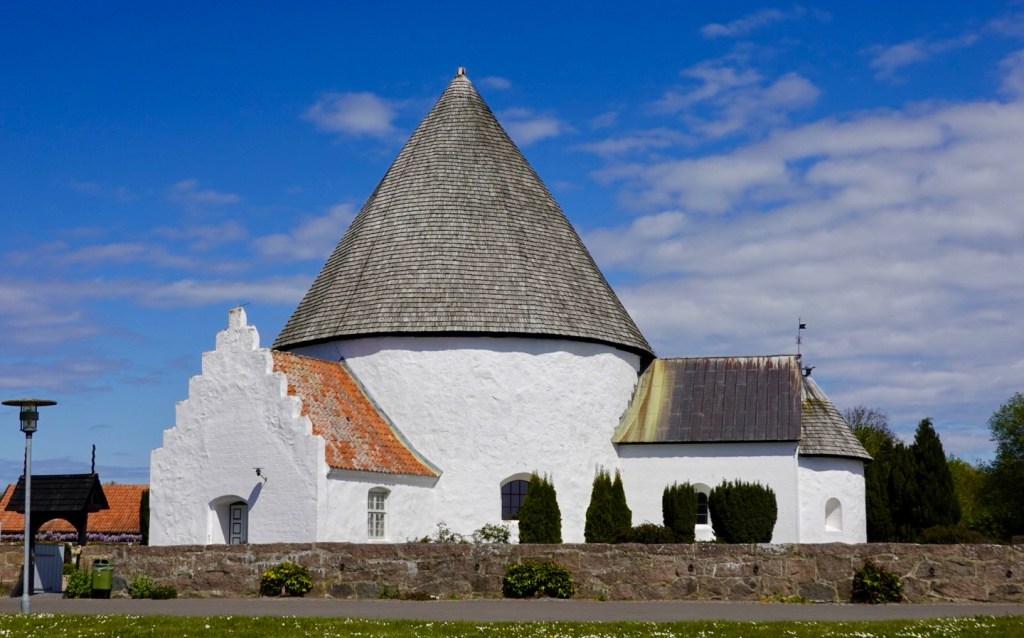
Heading off up the dirt bike path we headed to Bornholm’s most famous sight, Osterlars Kirke.

We were too early to enter so decided to pop back at the end of our days ride.

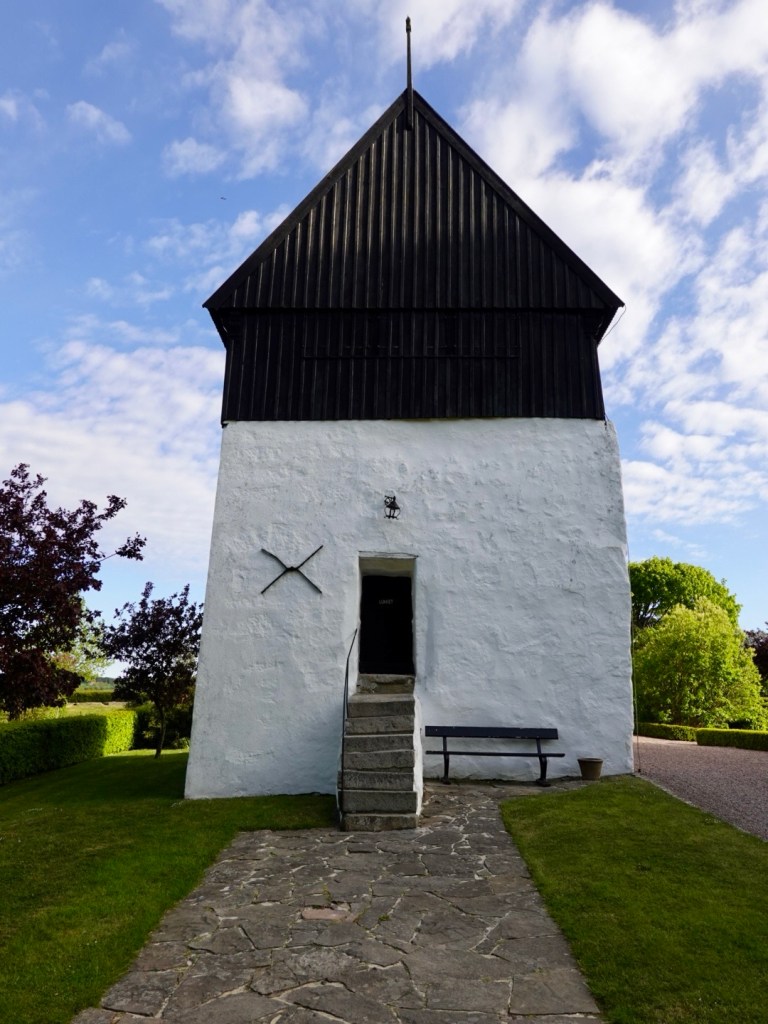
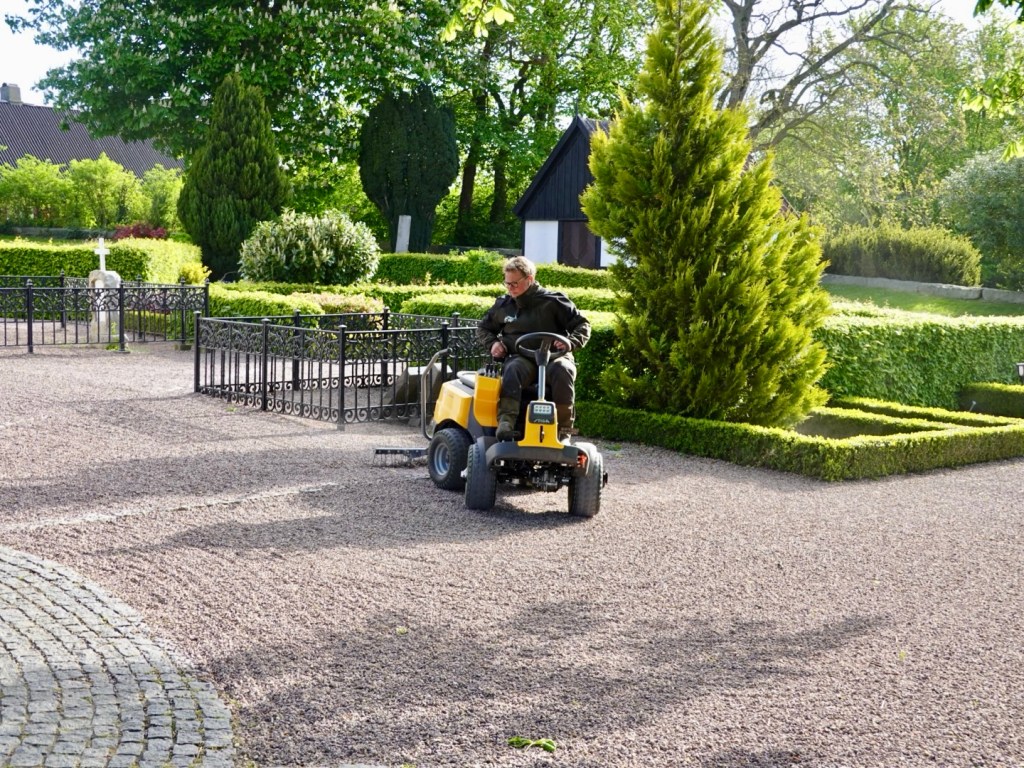
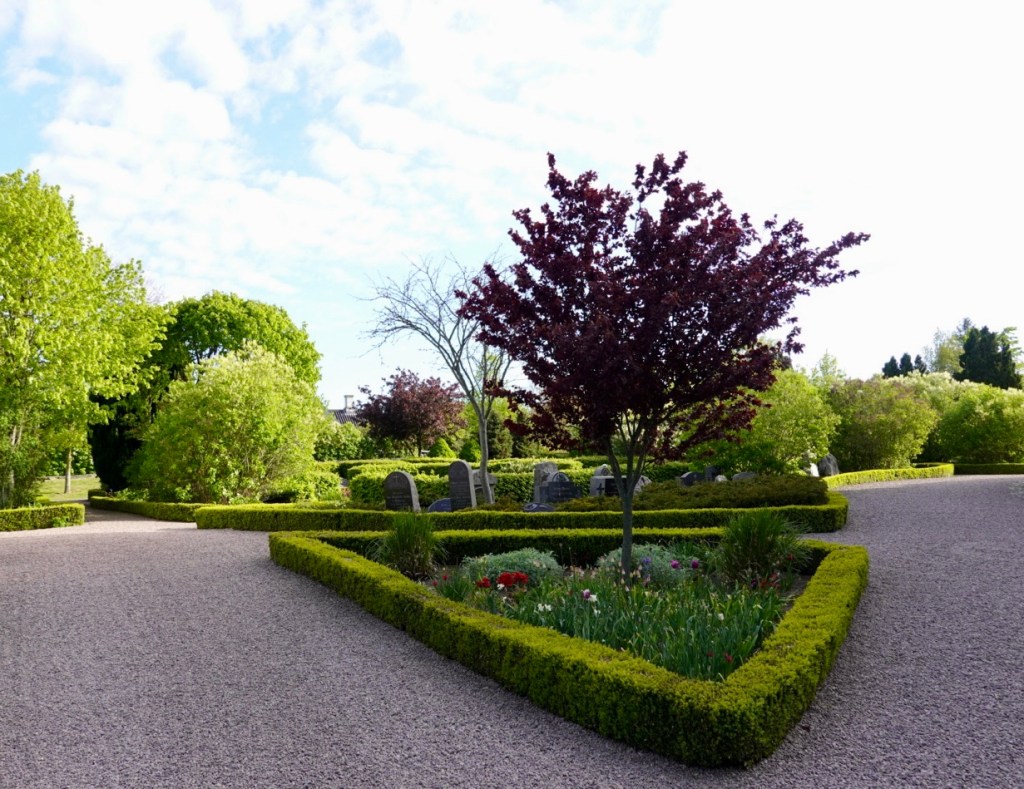
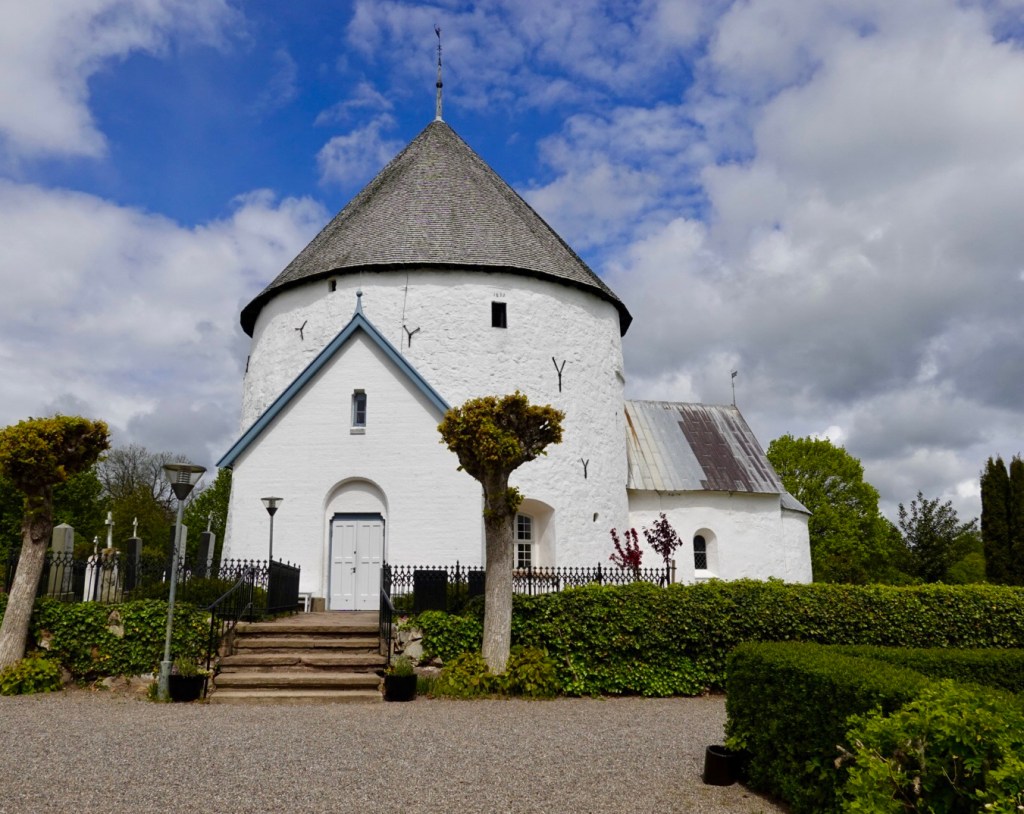
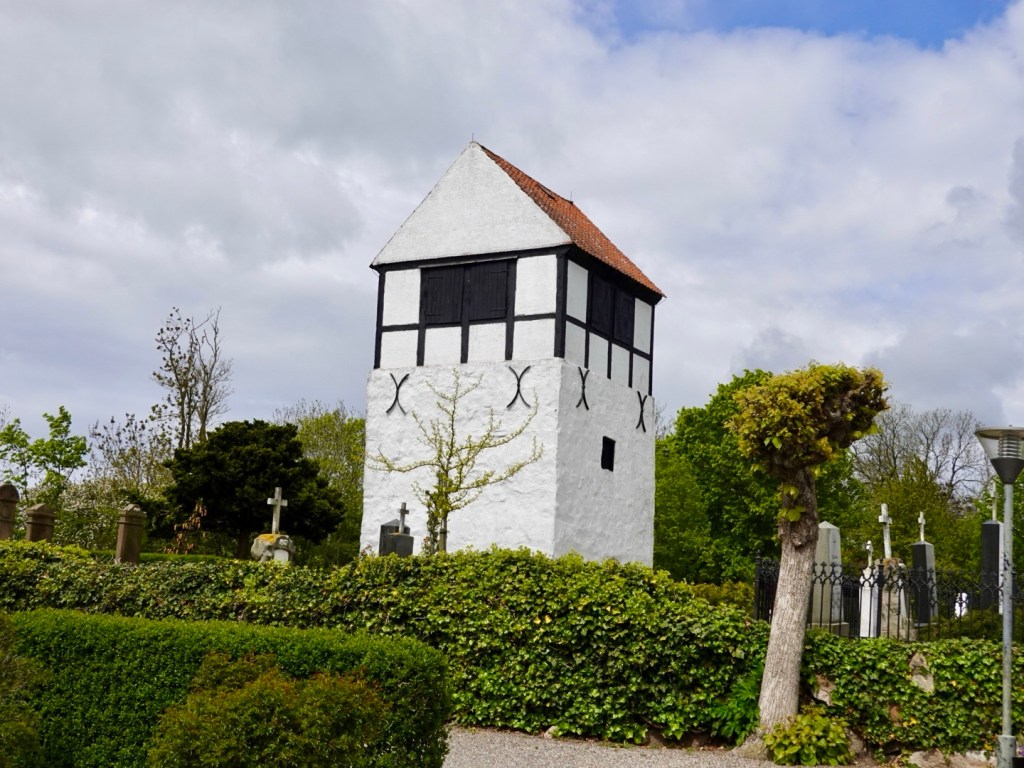
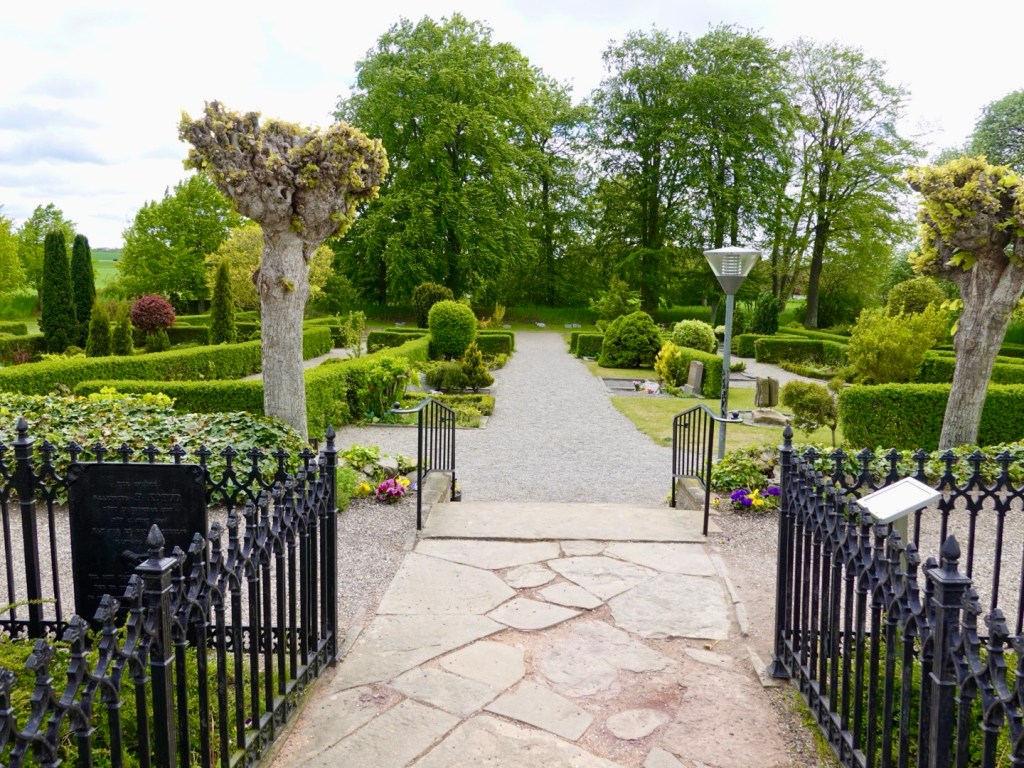
A few photos of the exterior and watching the people tending the cemetery. Another exquisitely maintained cemetery. There is pride in their work.

Today there were a lot of churches. For an island of 37,000 people, there are many.

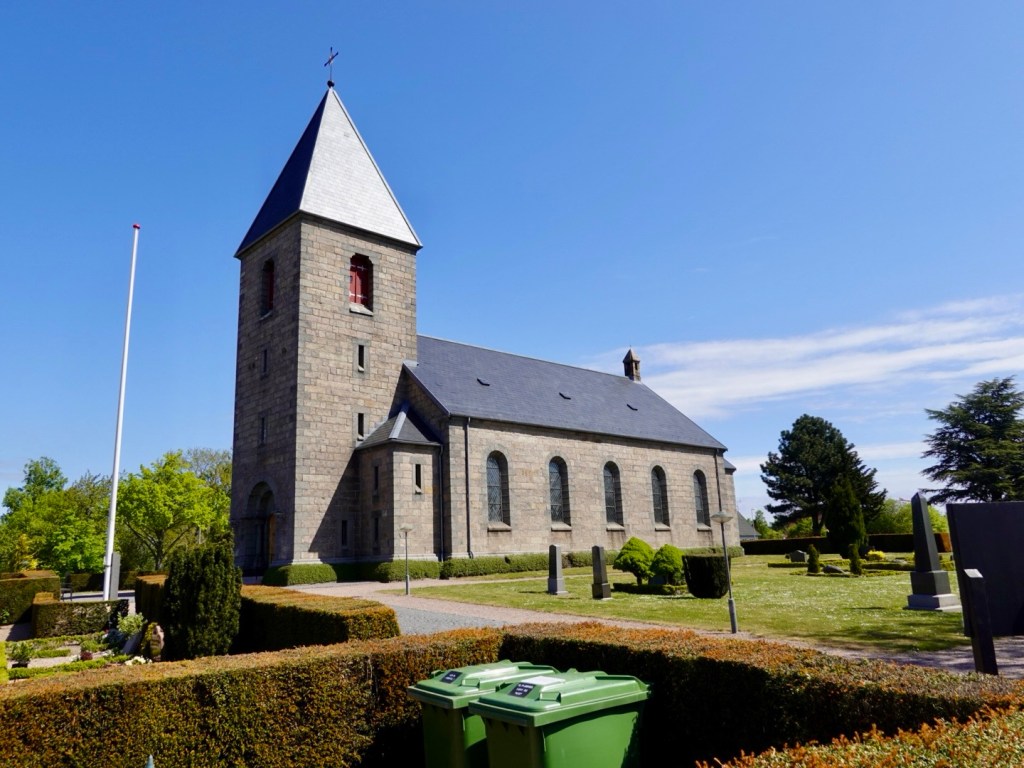
This is Østermarie kirke, circa 1891.

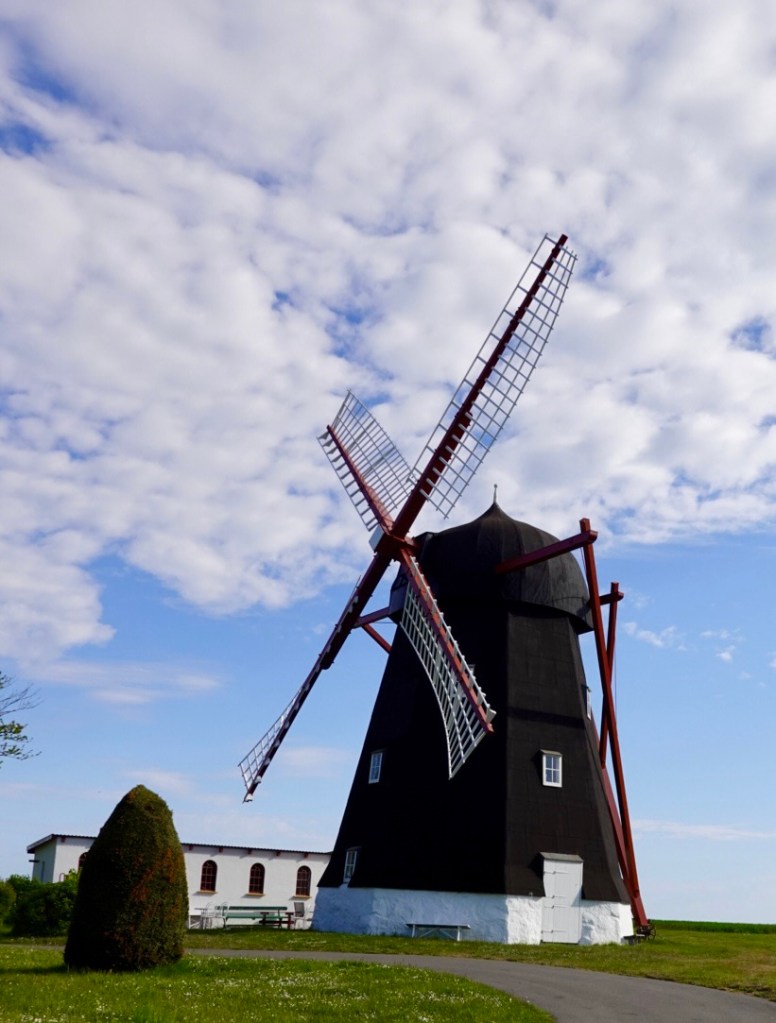
Windmills also featured today. This is Kuremollen and dates from 1861. It remained in service until 1960. Visitors can tour during summer.

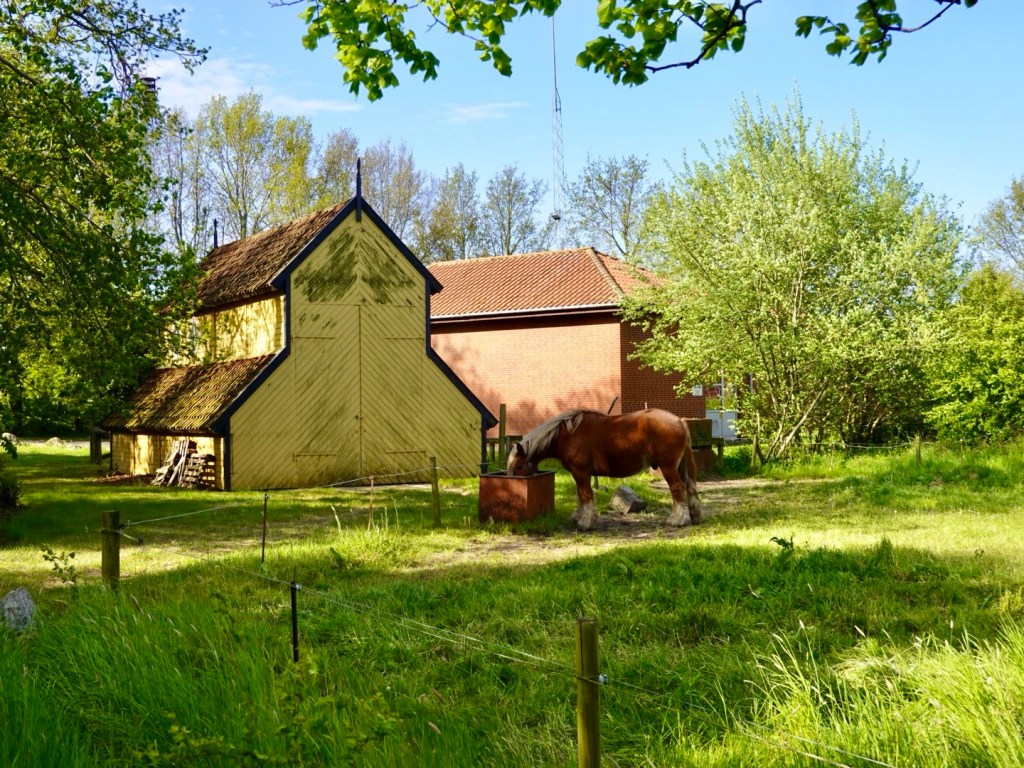
We rode around the edge of Svaneke, a village we had ridden through yesterday. Climbing out of town we encountered some lovely horses and barn.

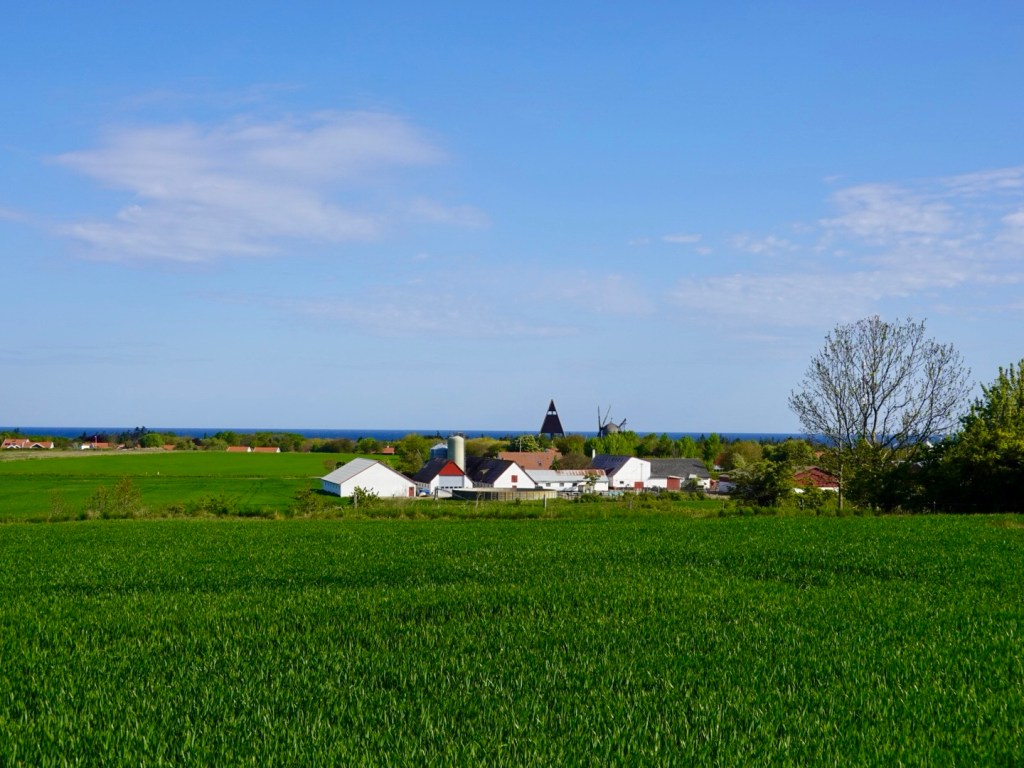
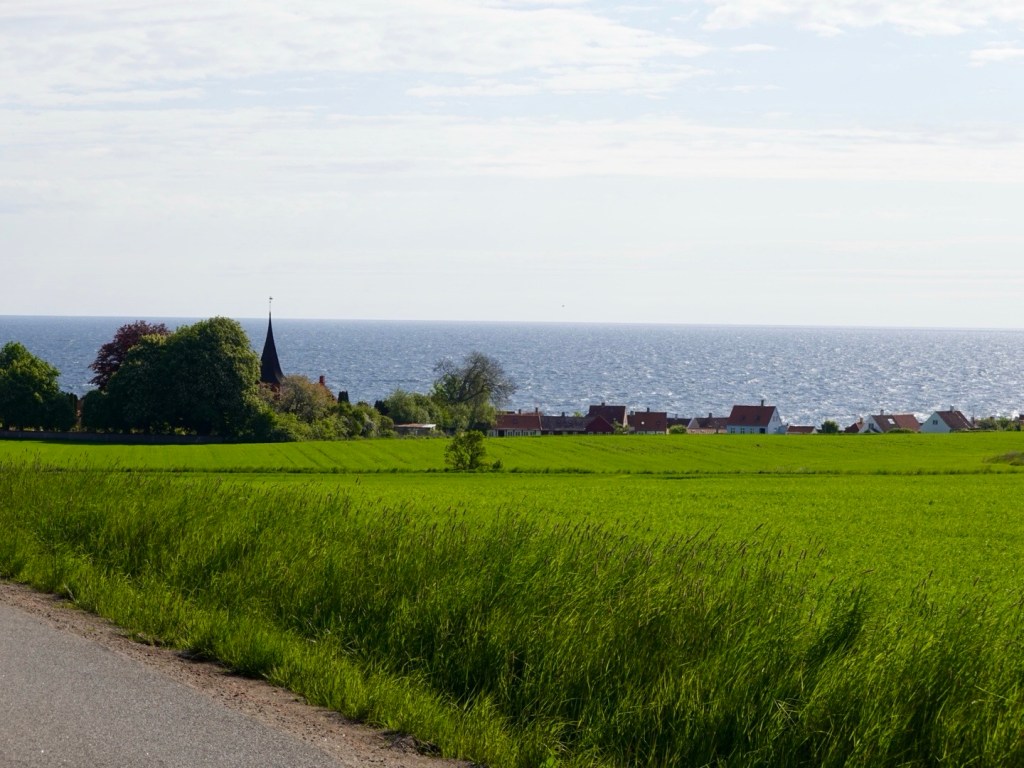
Two lovely vistas looking back to the coast.

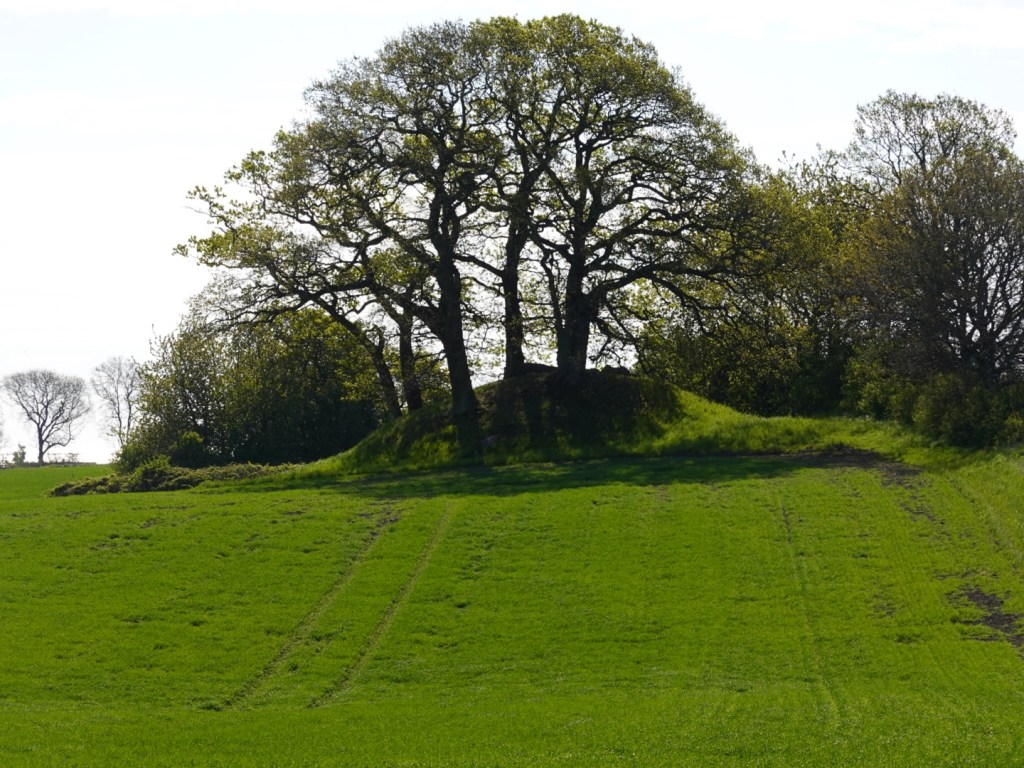
Hallebrondshoj is a sorte muld, constructed in the Neolithic era, some 5,500 years ago, as a burial site.

Ibs kirke dates from the 12th century.

The route today was a mix of cycle paths, road, dirt trails. This section was lovely as it protected us from the very strong winds we were experiencing.

Looking towards Snogebaek and Dueodde, where we had ridden yesterday.

The next three churches….

Bodils kirke built around 1200
Vestermarie kirke circa 1885 after the former church was demolished. Why are there doors up on the top level of the tower?
Ny kirke, built in the 12th century and considered the youngest of Bornholms four round churches.

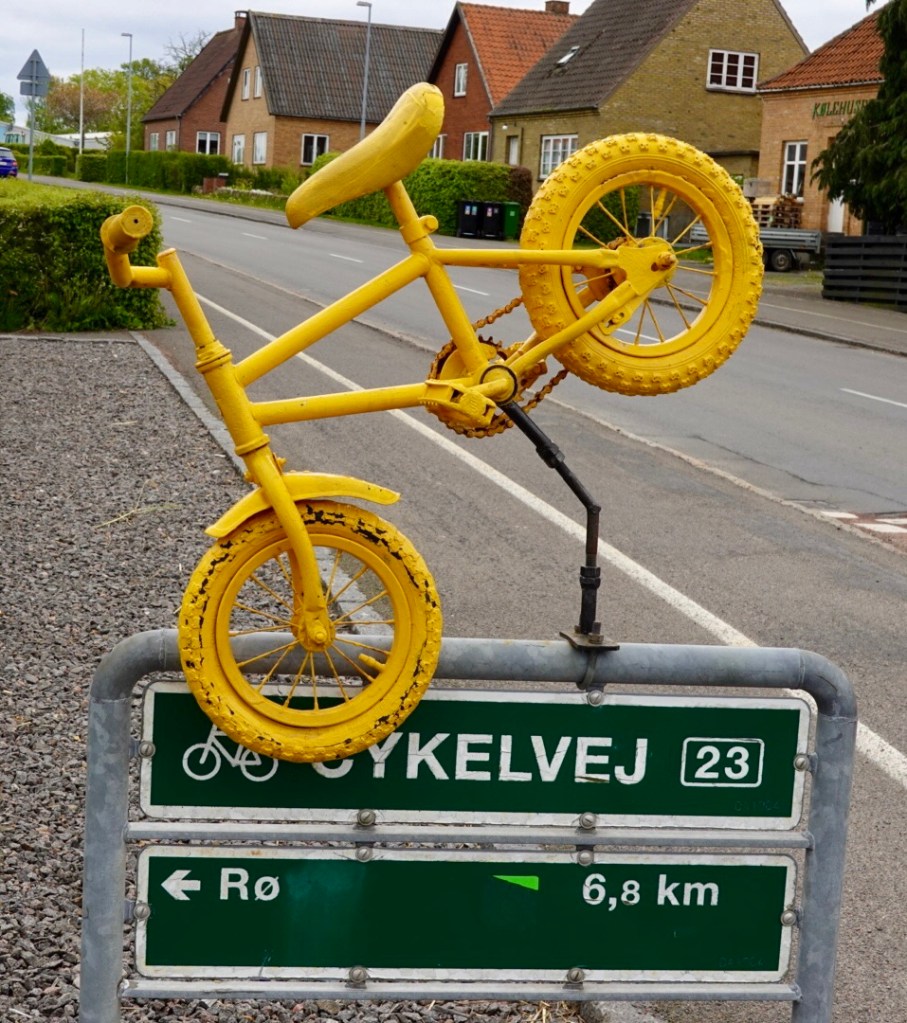
Cykelvej signs are what we have used extensively on the island. There are over 230 km of marked cycle paths. Very impressive and one of the factors that attracted our visit.

This sign was embellished, the first one we had seen like this. We turned left to head to Ro, and this section was great following what seemed to be an old rail line.

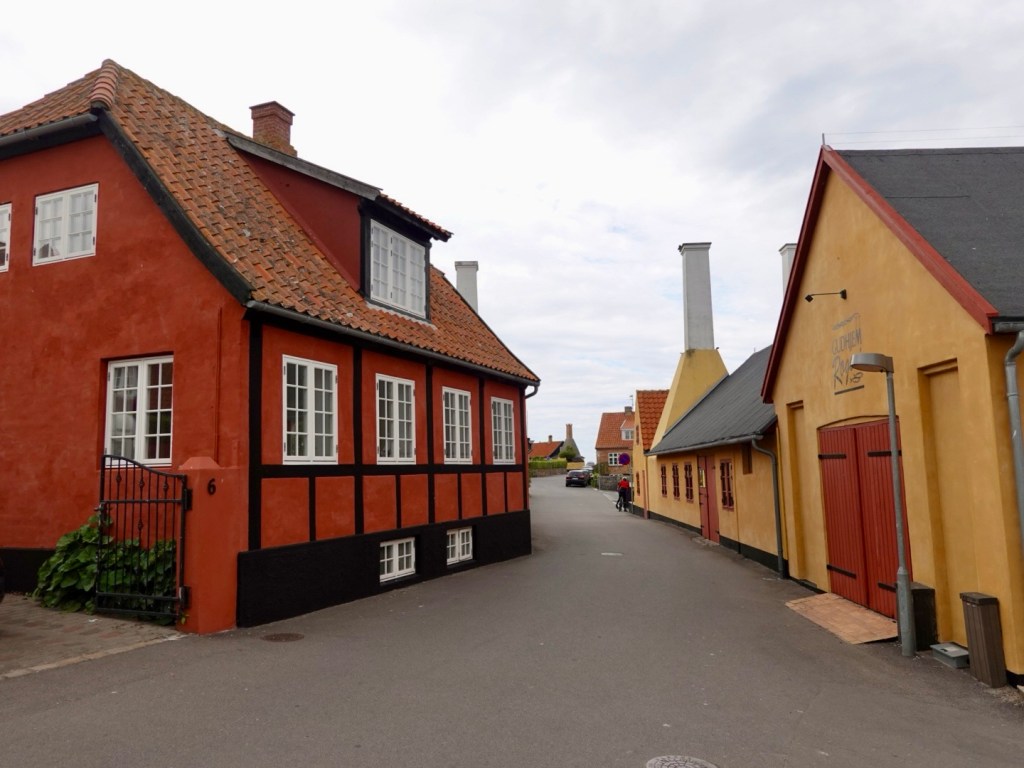
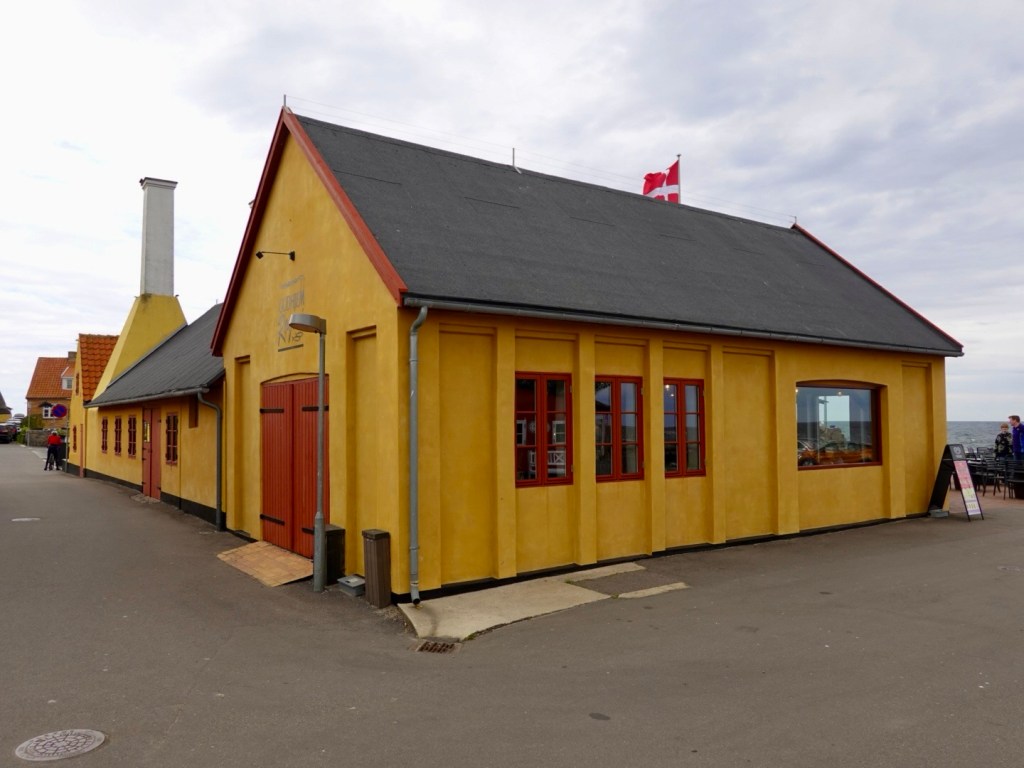
Gudhjem is the prettiest village on the island in our opinion. We descended steeply with many tourists walking slowly up the hill. I did think that will be an interesting climb out for us.

Gudhjem was established as a fishing village with smoked herring a product sent to Copenhagen.

There are an assortment of restaurants and gift shops and yes, we spied the gelato shop, as had many of the tourists. We are not great with queues and did not want the old leg muscles cooling down before climbing back out of the village.

A few photos of the village.

The chimneys are used for smoking herring

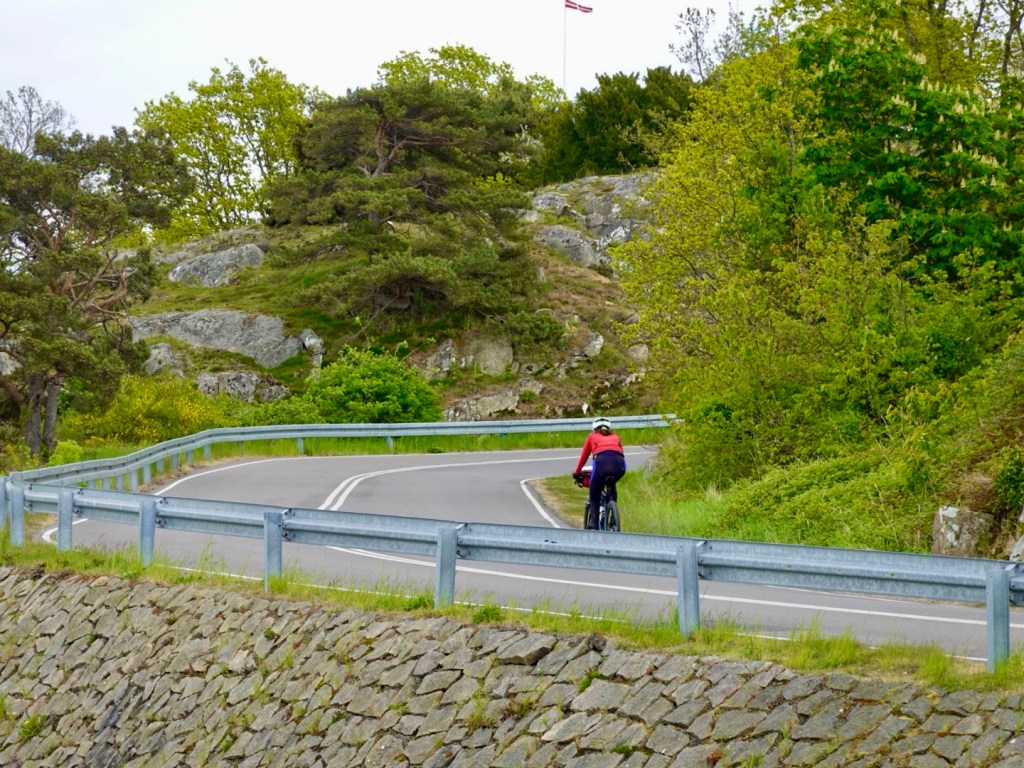
Looking at our Hammerhead (bike computer) map we spied a possible alternative climb out of town. It was heaps better as there were no tourists wandering around.

Sharron climbing up and out of the village

To finish off our ride we headed to the supermarket in Osterlars to source dinner and then back home via Osterlars kirke.

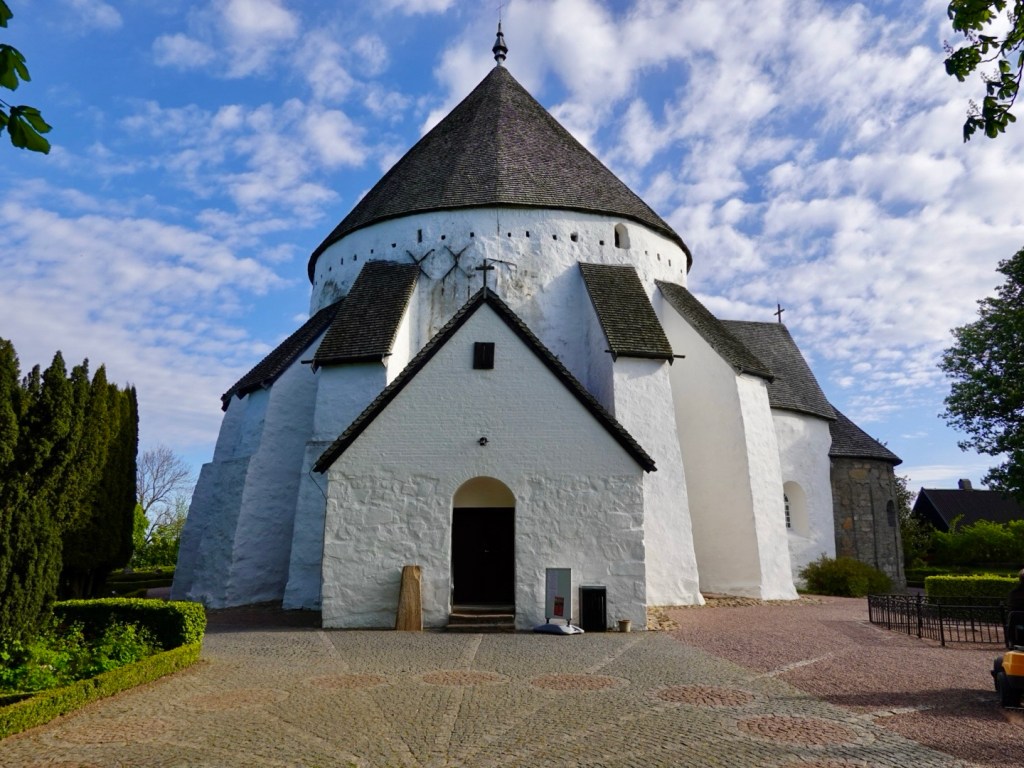
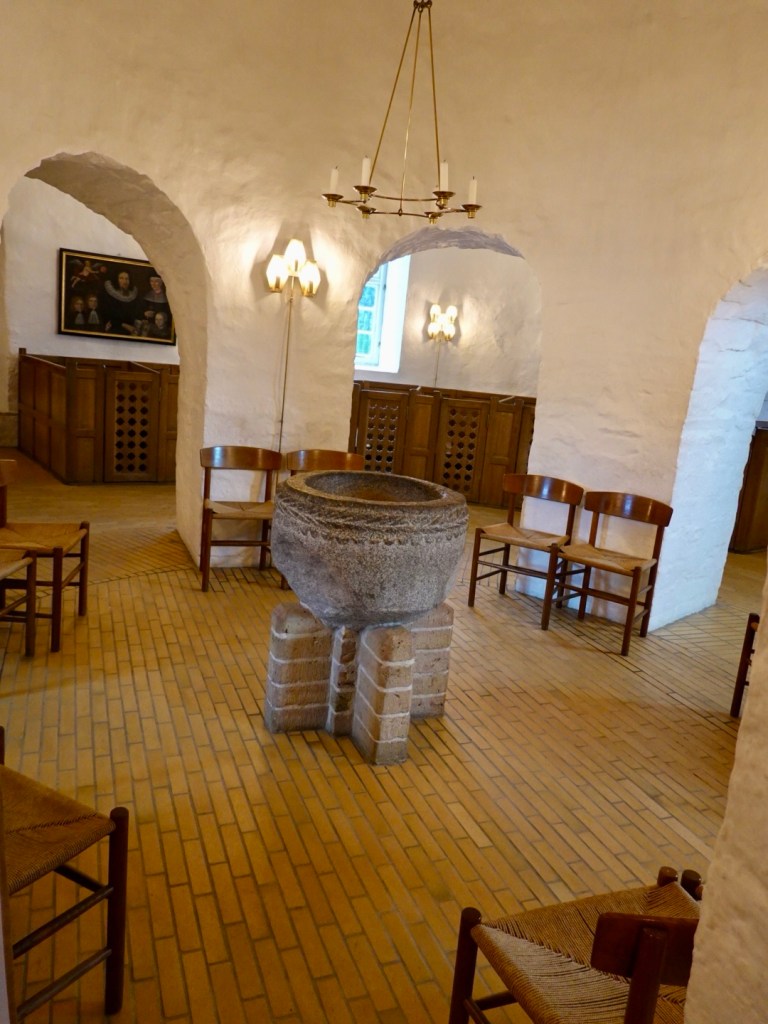
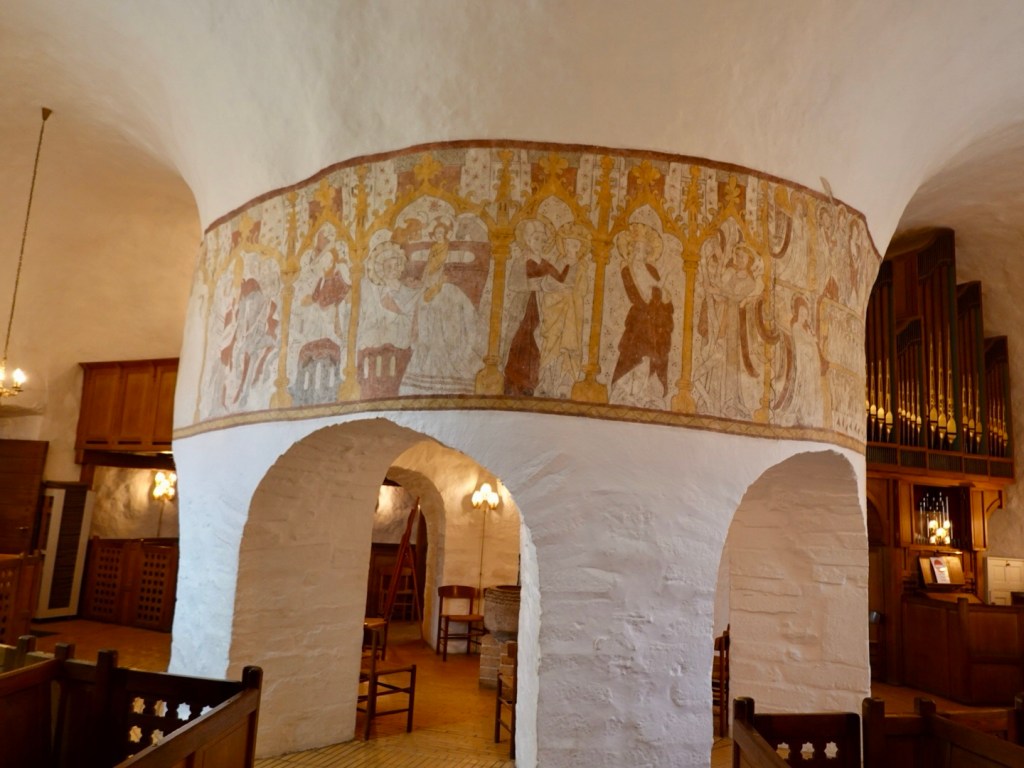
30 kronor got me in. The church was built around 1150 and is the oldest round church on the island.

Men and women used to have separate entrance’s but today all use the front door!

The external walls are an incredible two metres thick.

The beautiful frescoes were created in the first half of the 12th century. Not all church attendees understood written and spoken Latin so the images told the biblical stories of the priest. In latter years these frescoes were covered with whitewash and rediscovered in 1889, restored in 1960.

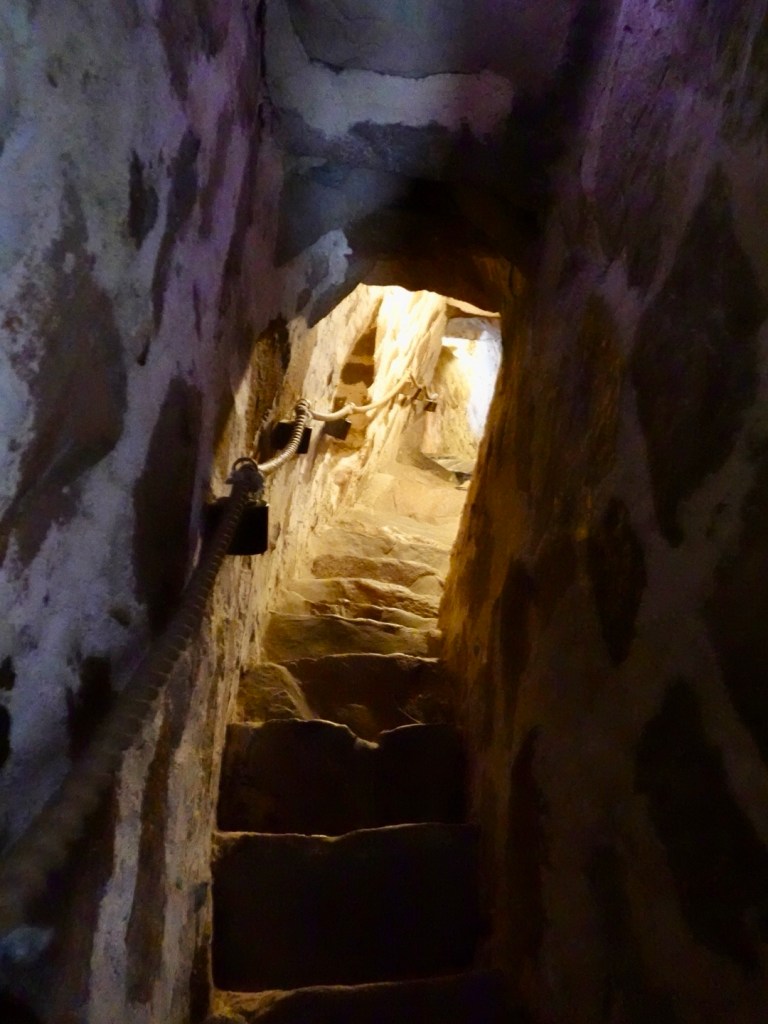
These steps were super steep, narrow, highly polished and slippery. I was wearing my cycling shoes, so an added challenge.

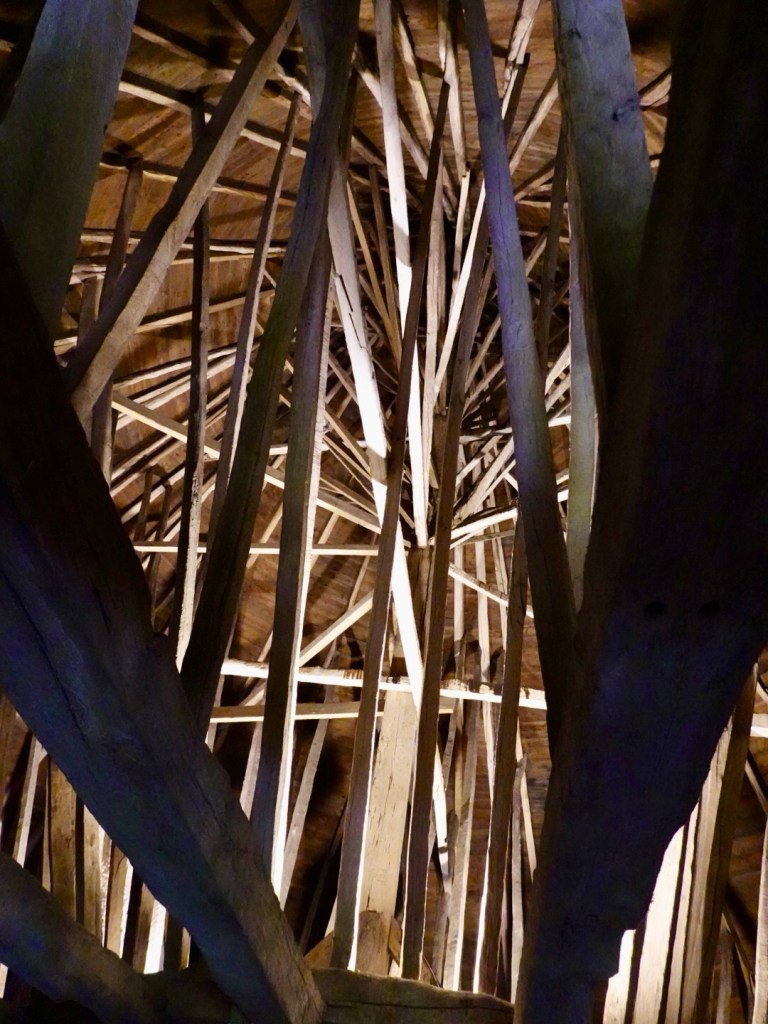
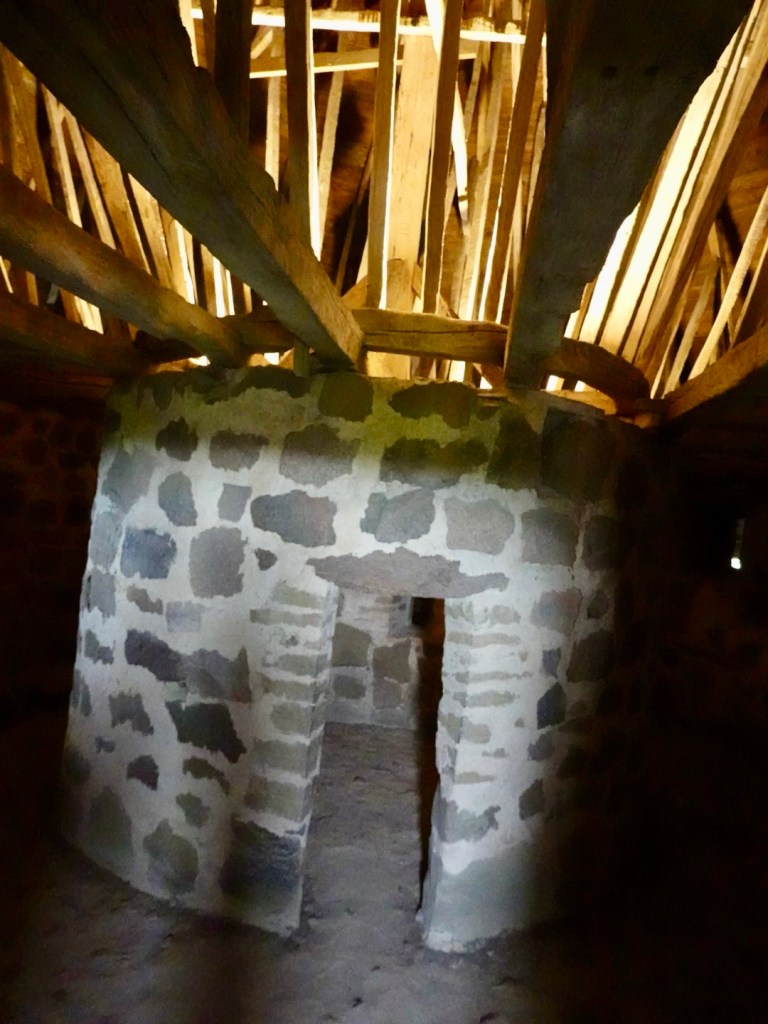
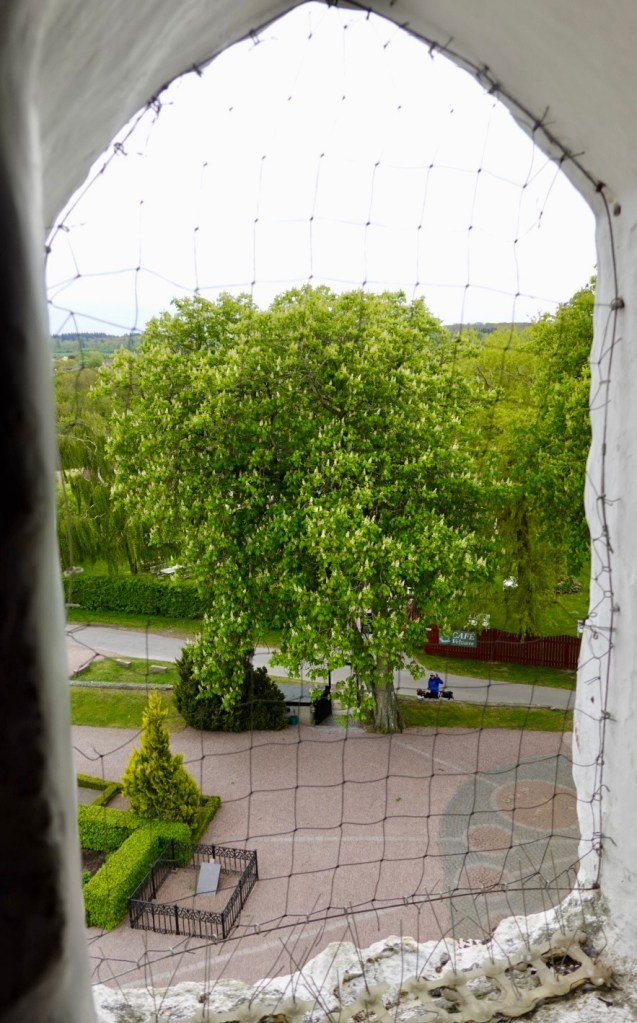
Climbing the stairs there are two step off points. At the top level you can see the foundations for the cone top, an incredible meccano like slithers of timber.

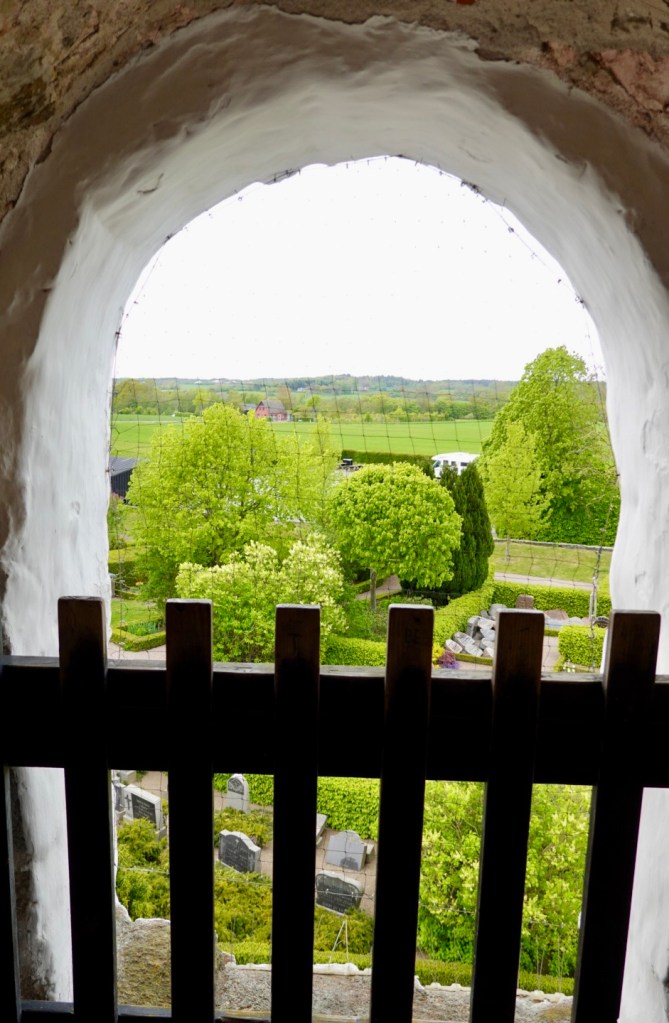
Lovely views out.

There is Tony waving as he minds the bikes.

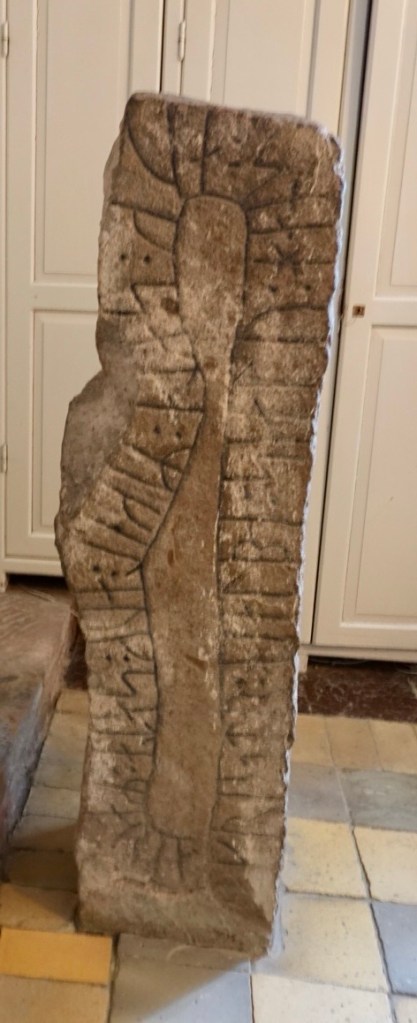
This runic stone was previously used as a casing stone in the belfry. The inscription dates to 1025-1075.

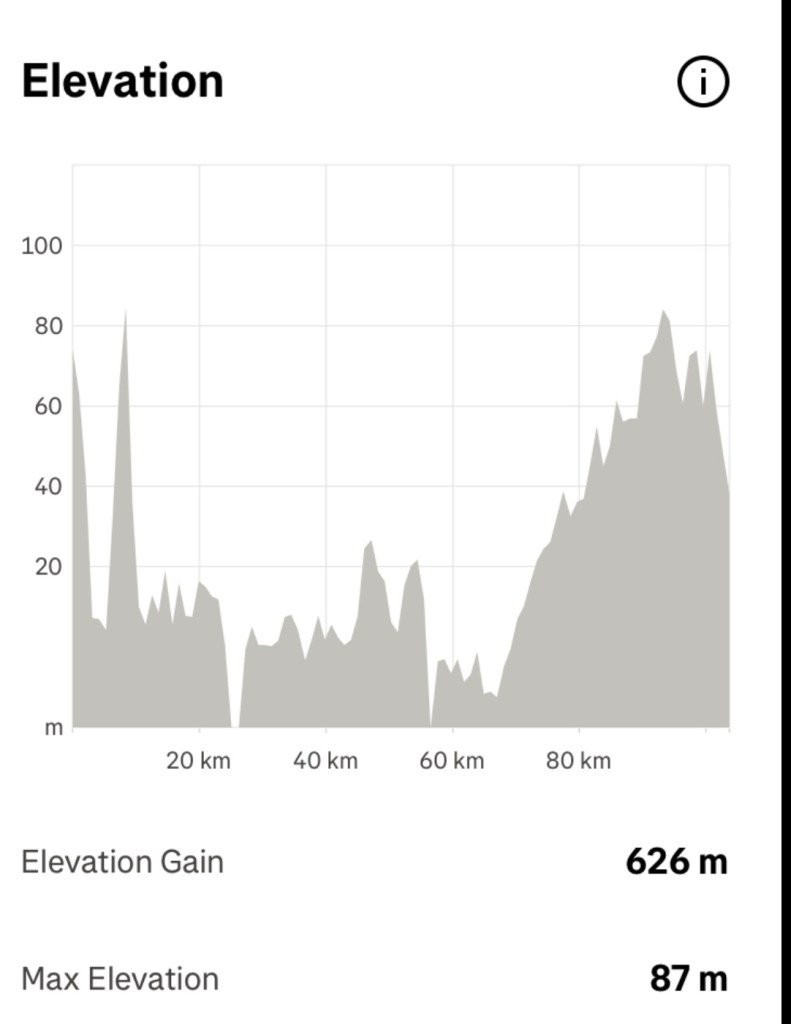
88 km completed today and over 600 metres climbing. A very pleasant day riding despite some of the headwind challenges. We both enjoyed today.

Tomorrow morning we have one more ride left here, and that is to head back to Ronne to connect with our ferry to Germany.

Todays route.

Thanks for reading this blog, and look out for our continuing Viking odyssey adventures.

😊❣️🚴💪

Day 3: Bornholm Island

We slept well in our converted barn. We had seen wild deer and giant hares outside. It is so very quiet and peaceful here.

The plan today was to check out another part of the island, and in doing so, complete a lap (including our ride yesterday).

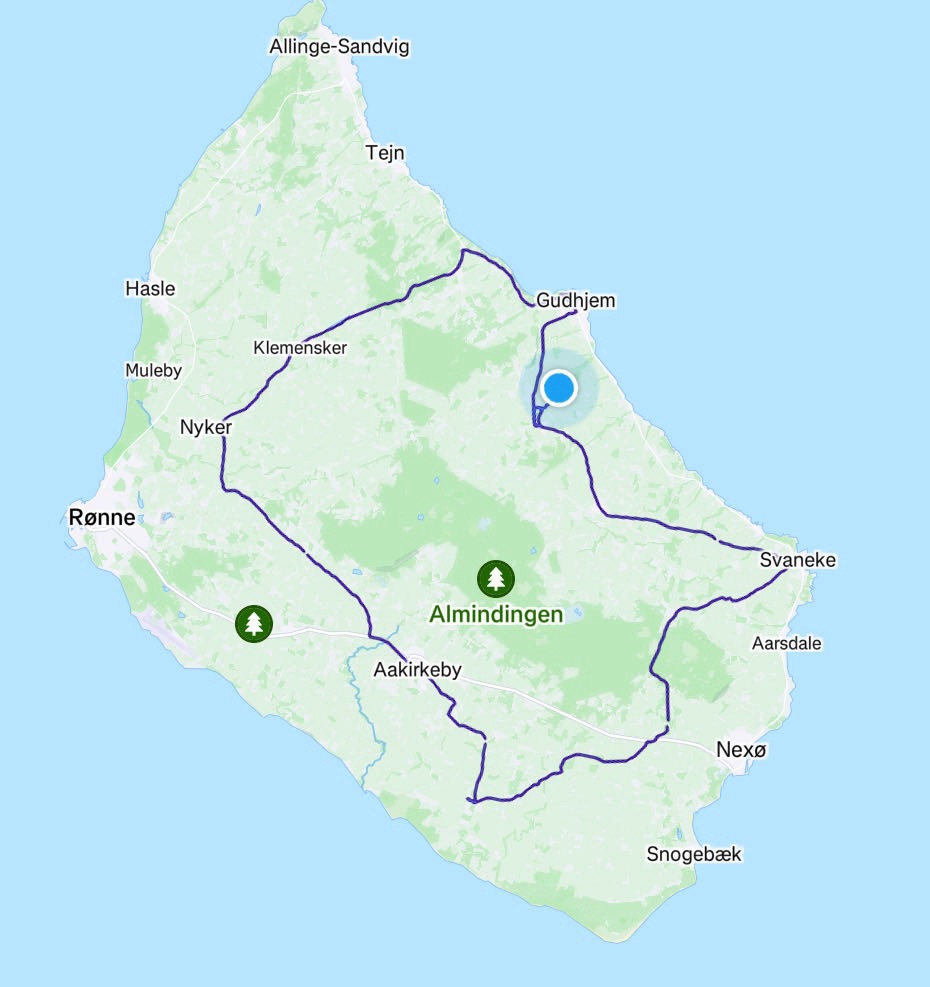
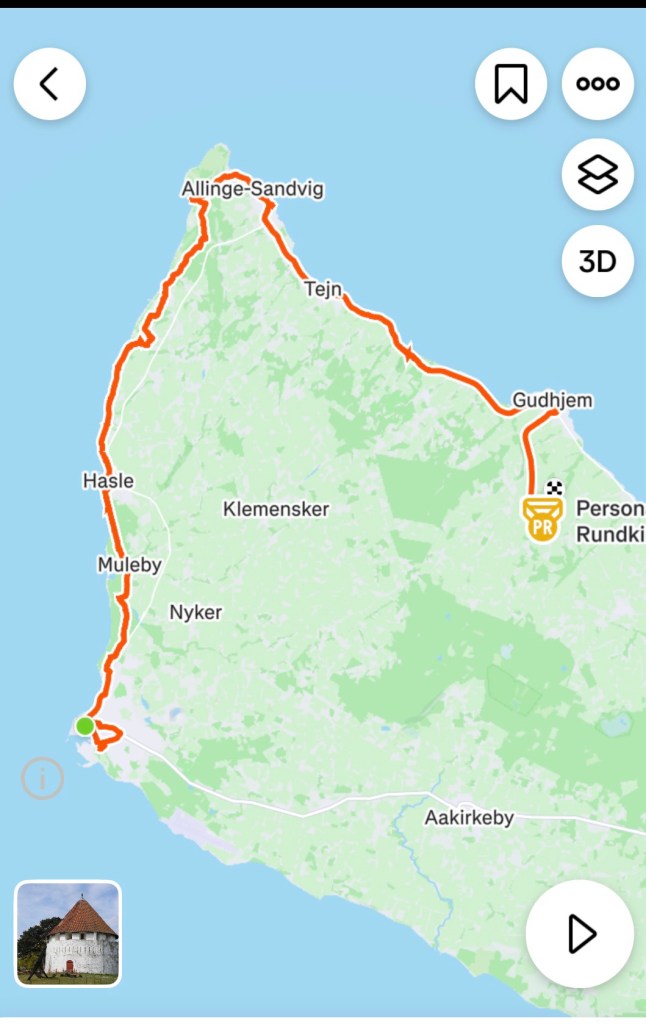
Today’s route:

Starting at the green dot in Stavehol, we headed out along the dirt cycle way to the coast near Gudhjem.

It was cold. It was 6C and we had our winter cycling gear on.

Rain was a possibility with a 30% chance at 10 am, but only 0.5 mm for the day.

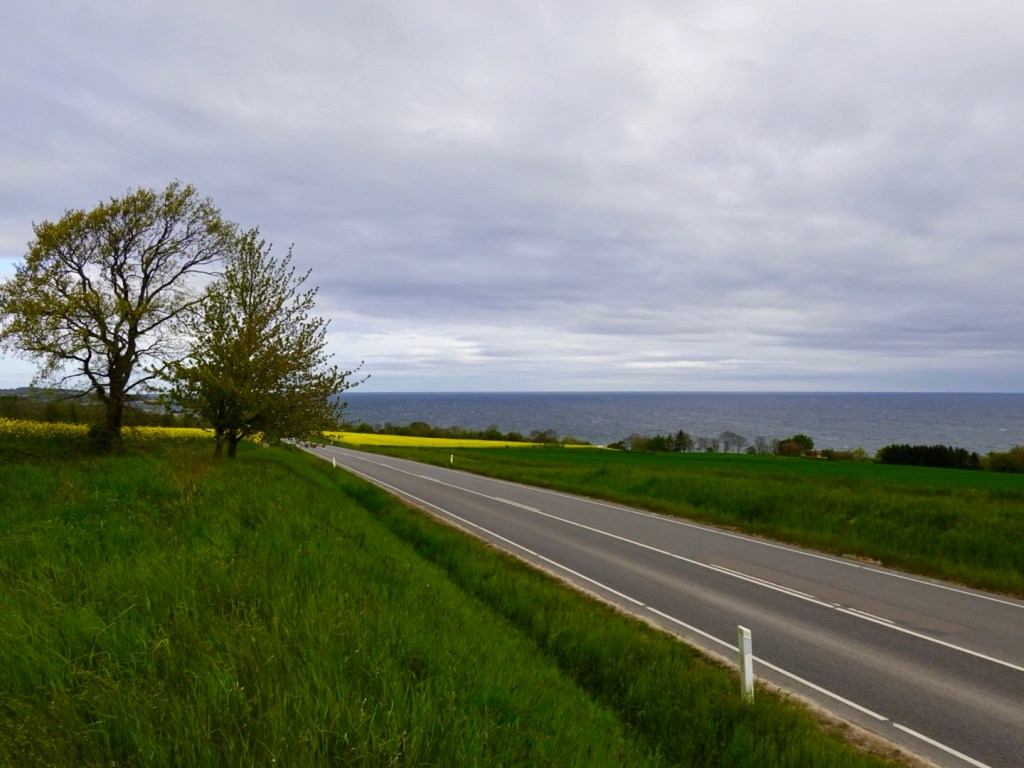
Along the north west coast the roads were super quiet. The cycle way is adjacent for the great majority.

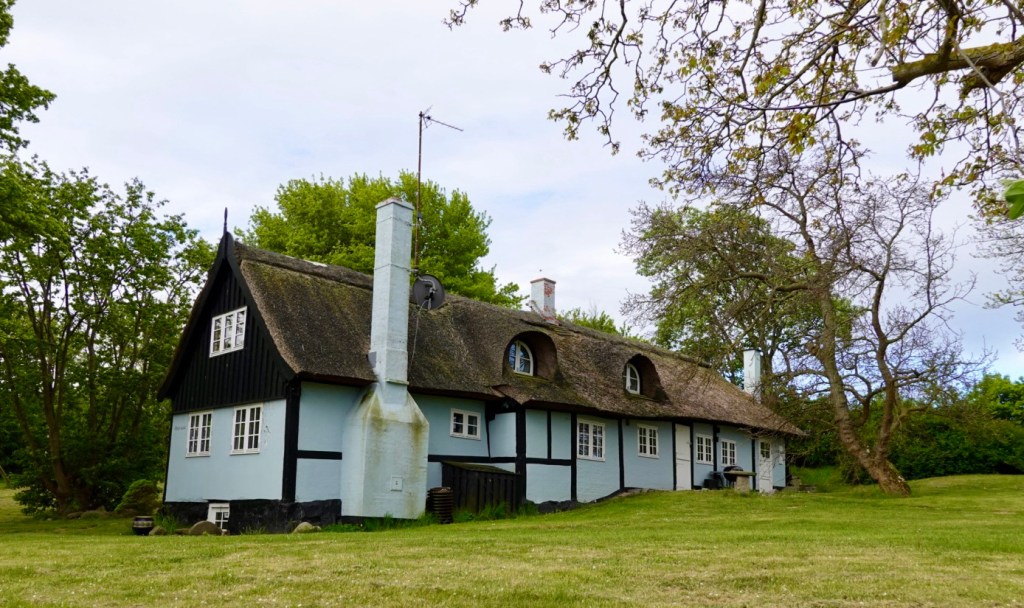
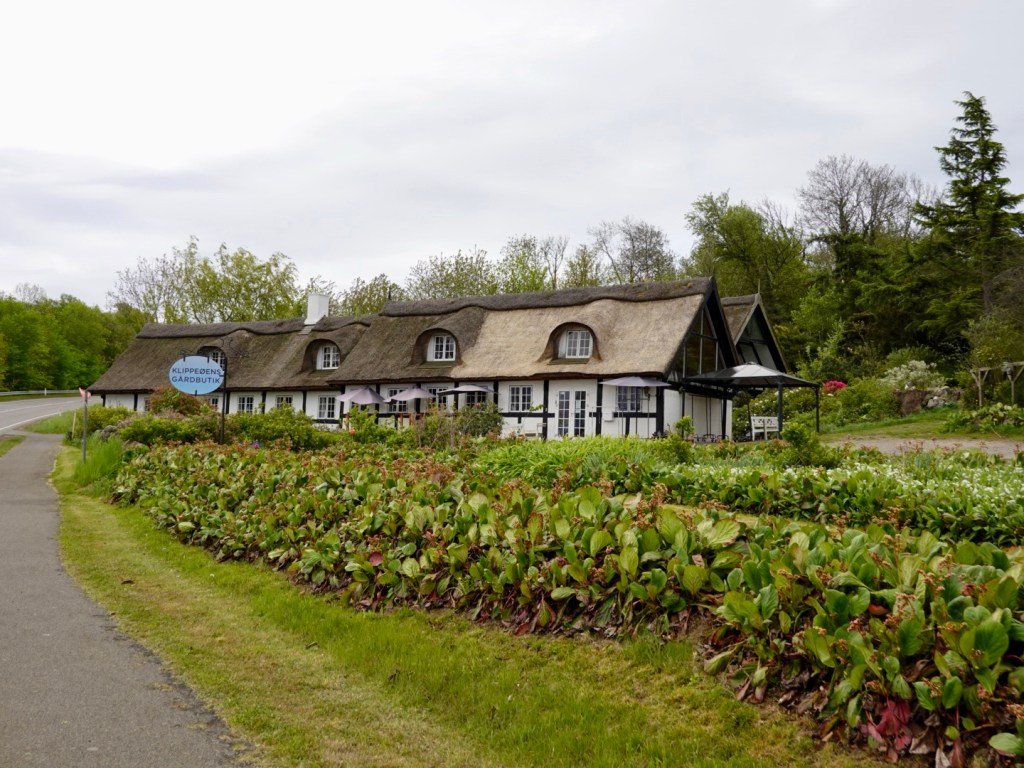
Some lovely thatched houses.

Looking out to sea the waters look calm, but the waves were crashing closer.

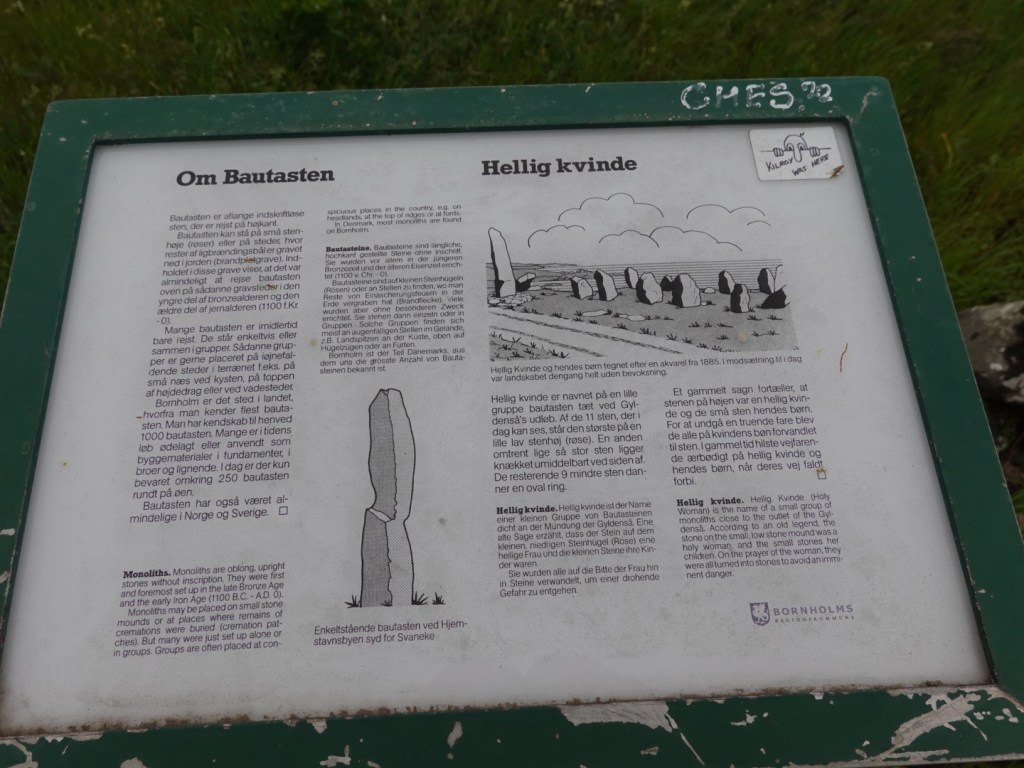
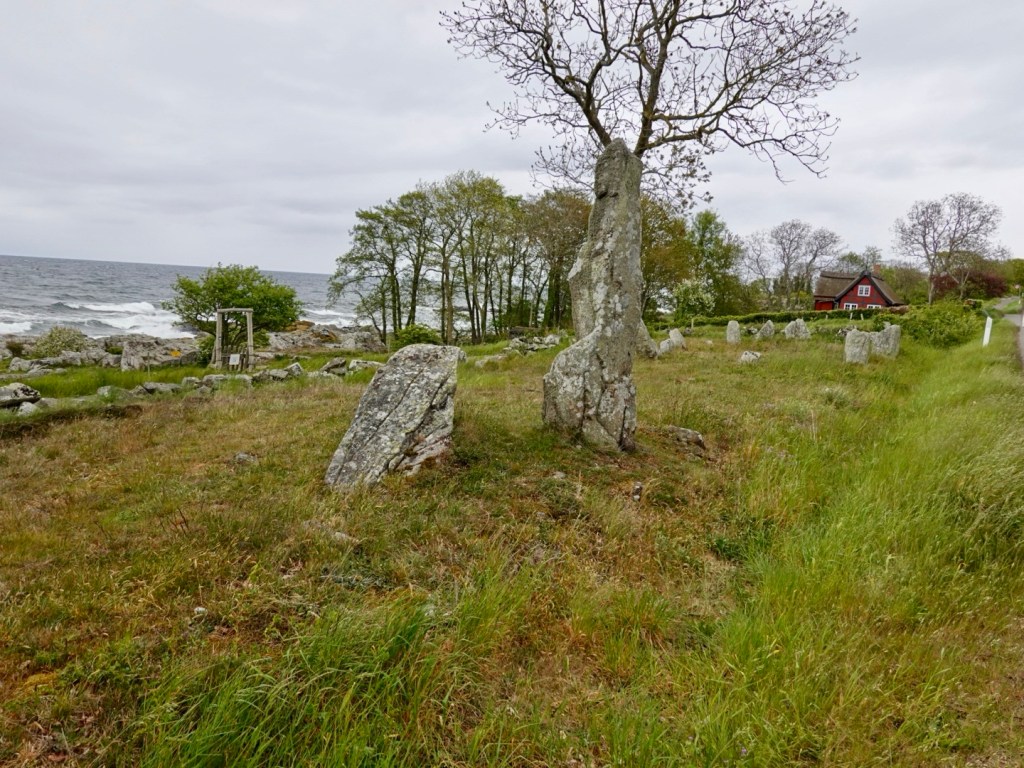
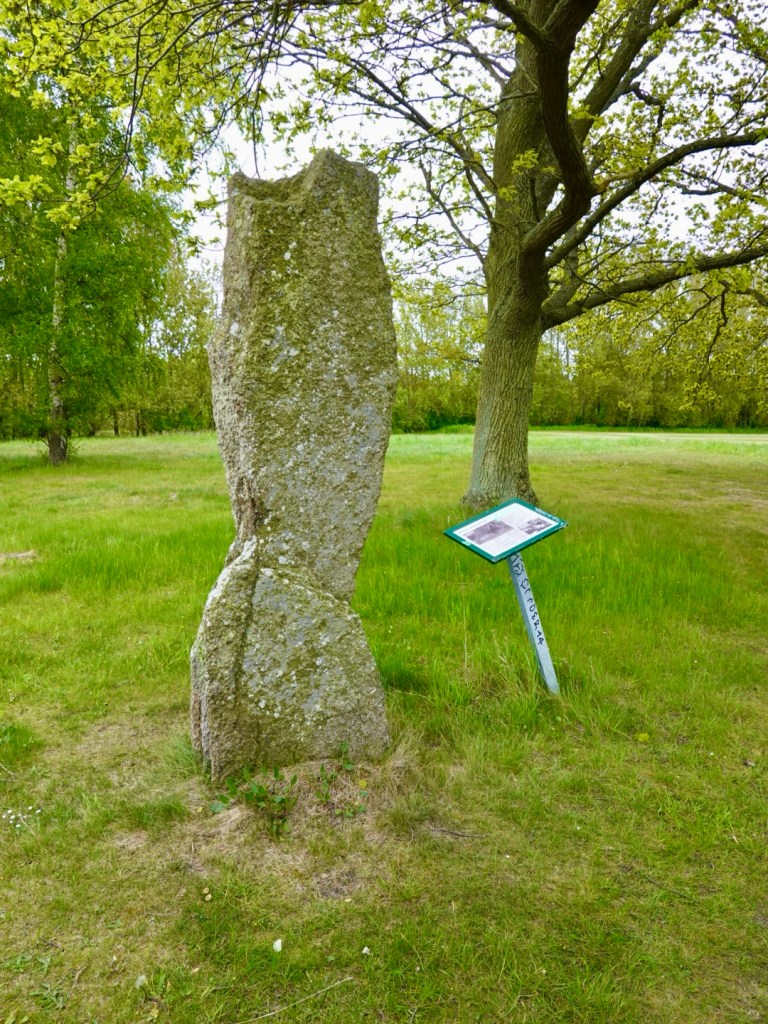
There are lots of ancient artefacts on Bornholm. This one is a single monolith meaning Holy Woman. Each have an information board.

The Holy Woman monolith. The stones in the background are formed into the shape of a ship.

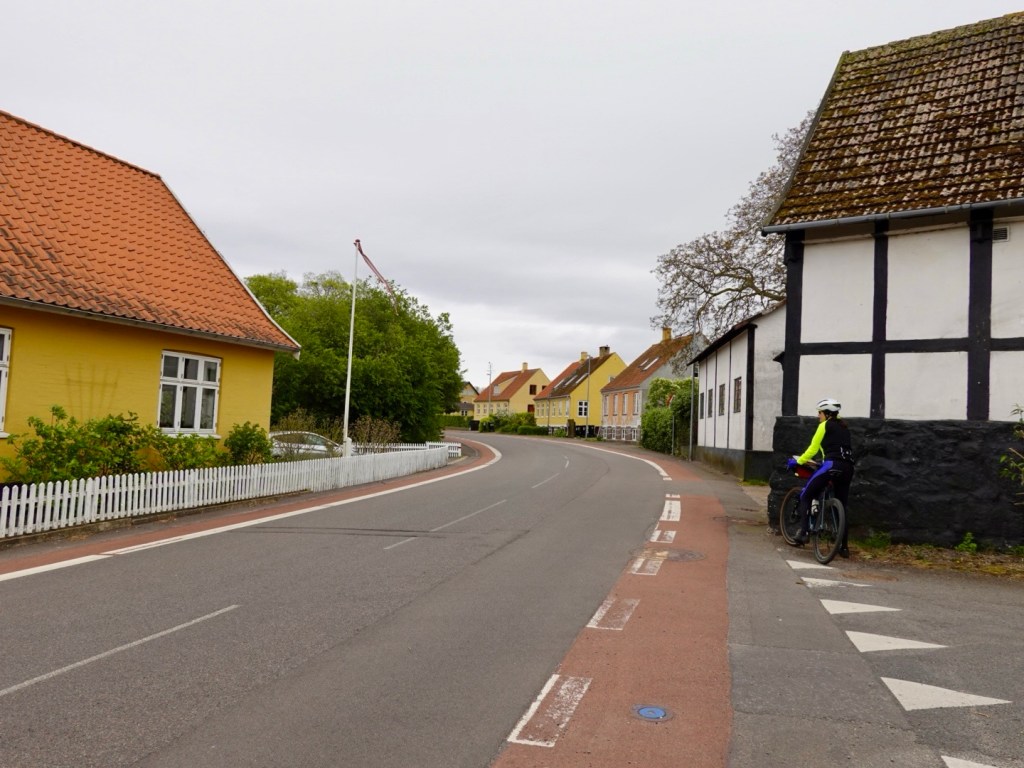
We ride through the village of Listed. Wondering where everyone is?

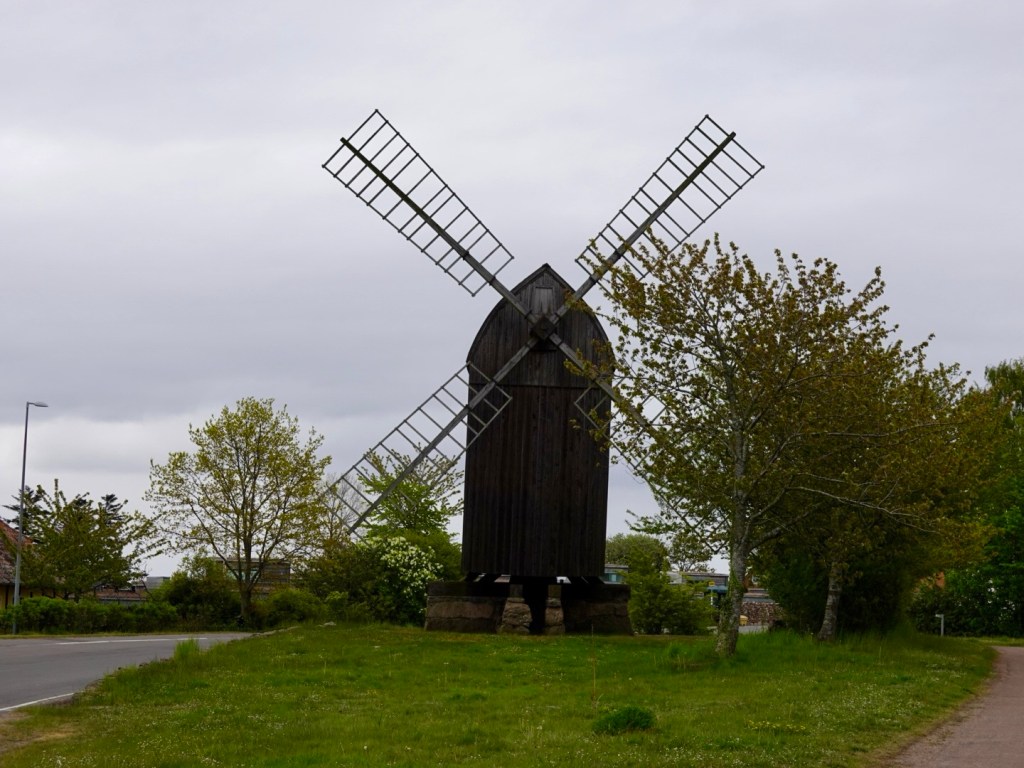
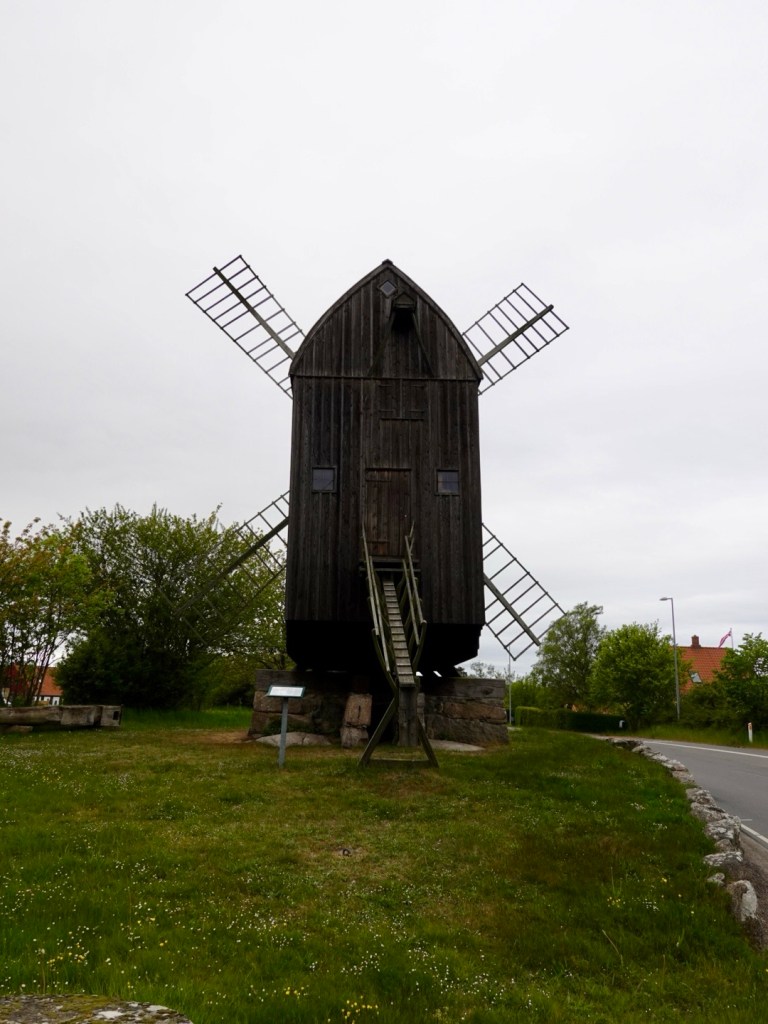
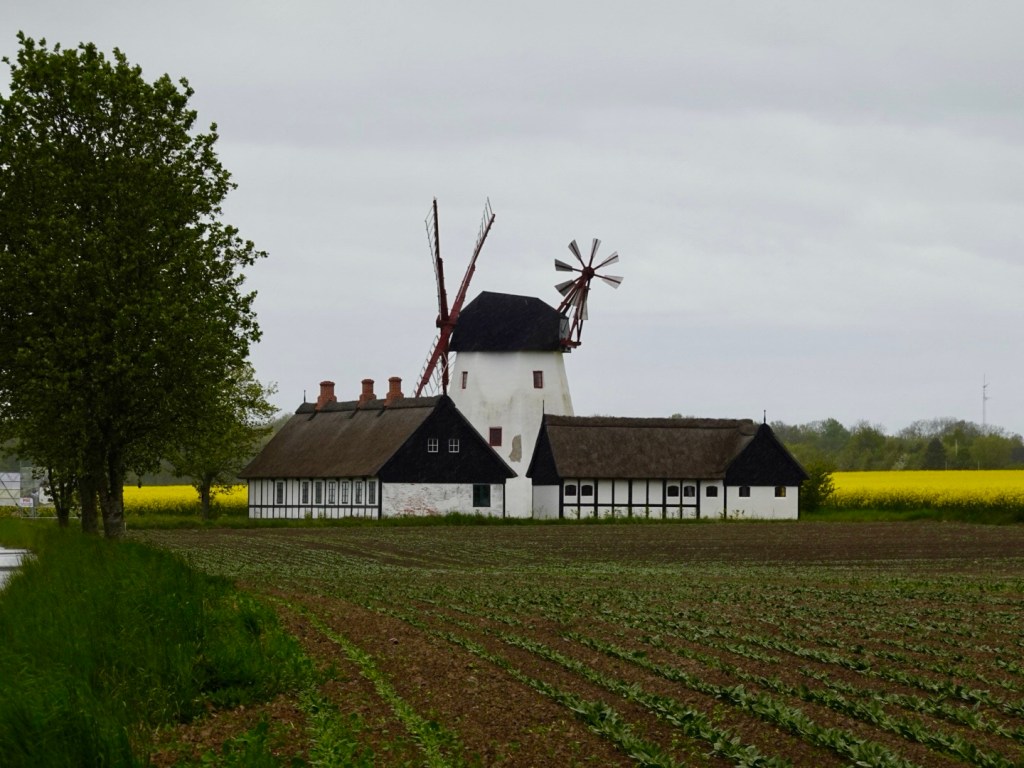
In the larger village of Svaneke is this lovely old windmill known as Bechs Molle (Bech’s windmill).

The rear of the windmill.

Bechs Molle was built in 1629 and is the oldest standing windmill in Denmark.

Svaneke harbour also quiet.

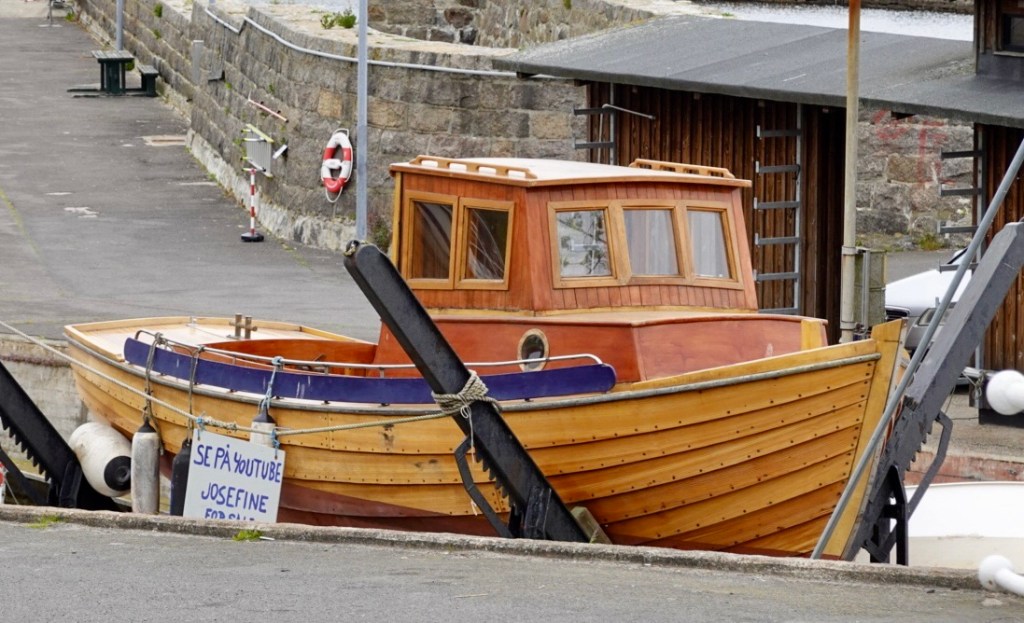
Lovely old wooden boat

Another monolith at the site of medieval herring fishing huts

Nexo is on the east side of Bornholm and has around 4,000 residents. It is the second largest town on Bornholm, centred around a fishing harbour.

The Gothic church stands out as a highlight, established in the Middle Ages, as a chapel for seafarers.

Dueodde is Bornholm’s southernmost tip, known for its fine white sand beach.

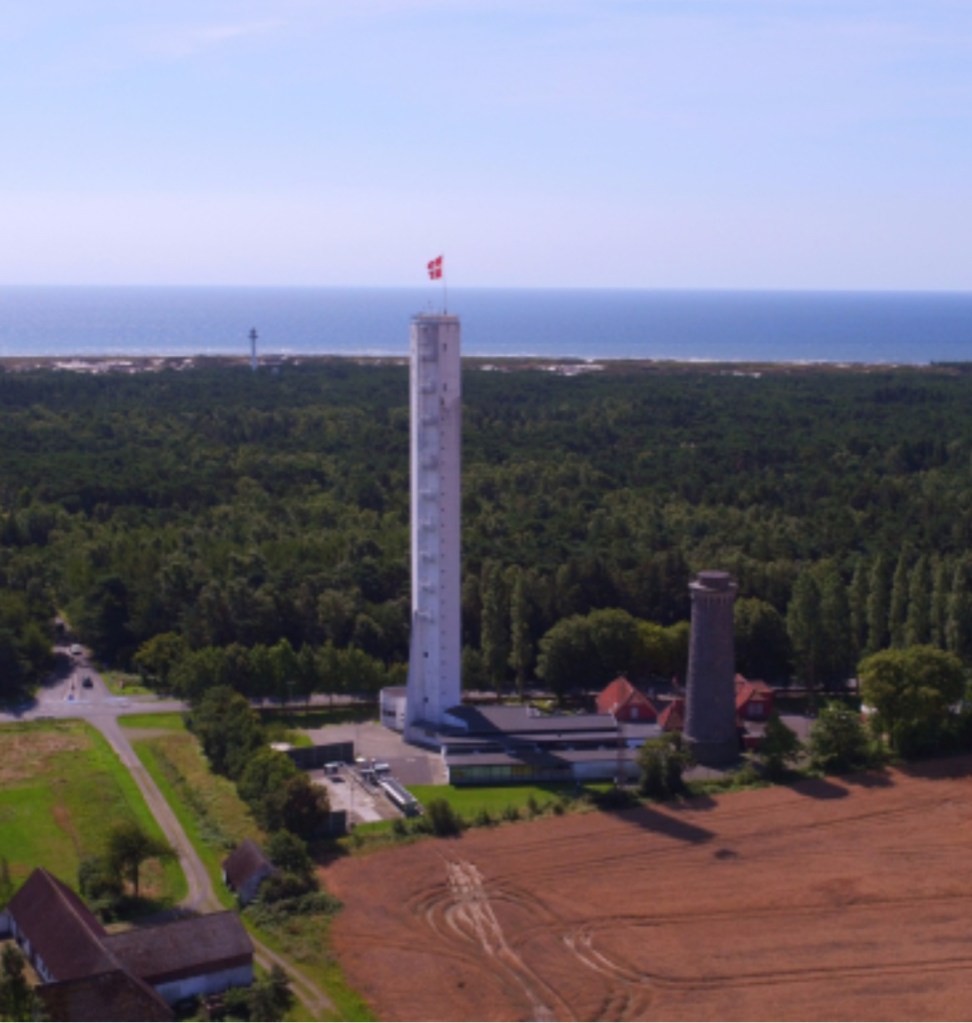
Riding back to the cycle path, takes us past an imposing concrete tower. A borrowed photo below shows two towers.

The Bornholm tower is the Danish Intelligence Service former listening post, active during the Cold War. Surveillance and listening activities began in 1948 from the brown lighthouse tower.

It is no longer active closing in 2012.

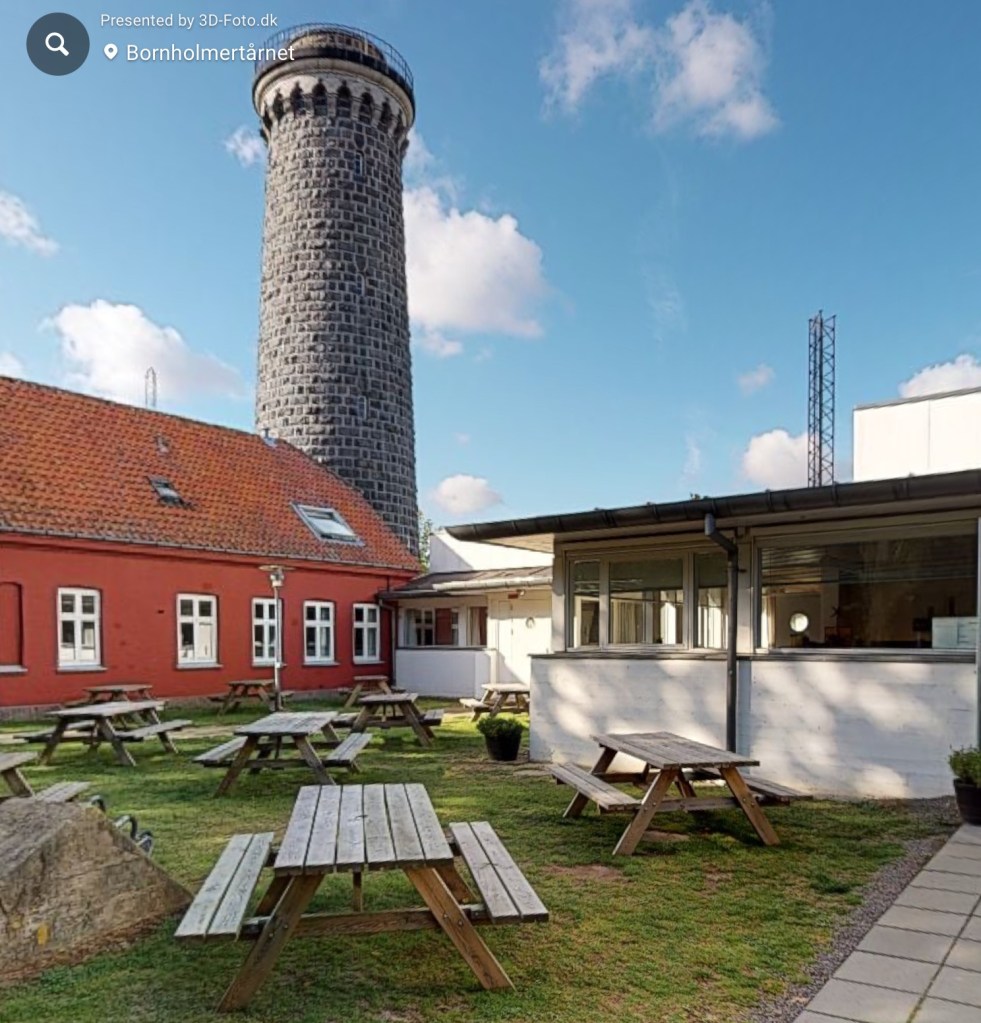
Closer up of the first tower, and where we sat and had a hot chocolate. This photo is also borrowed as there was no blue sky. We donned our rain jackets at this point as the spits of rain increased.

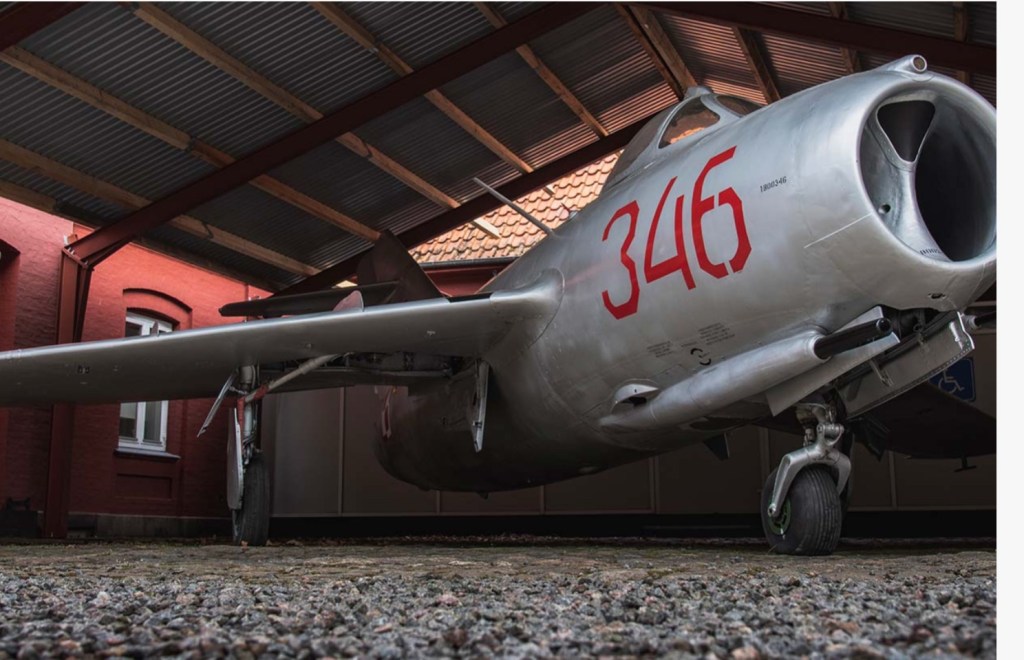
Through the windows of the museum you could see an old fighter jet.

The riding became a bit harder now as we had a very strong headwind. Winds of up to 35 mph had been predicted. It was a balmy 9c now. The rain also picked up, but more nuisance level.

Some sights along the way as we made our way towards Ronne.

Back in the capital of Ronne completed our loop of the island, but we were not done riding wise. We still had to get back to our accomodation.

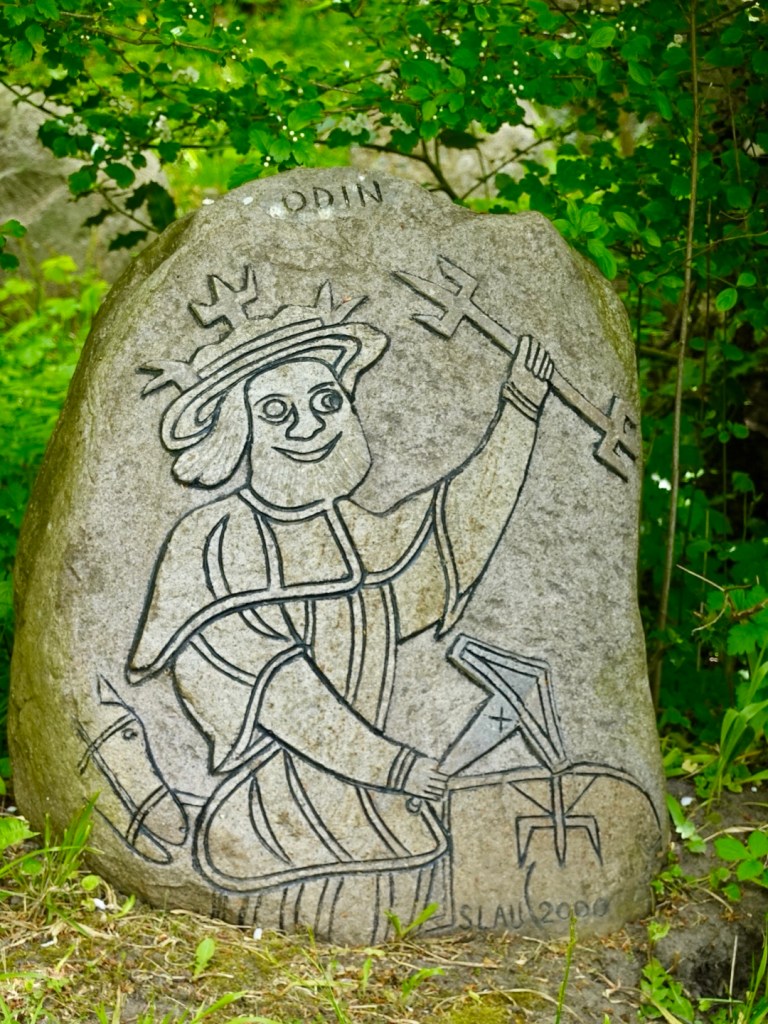
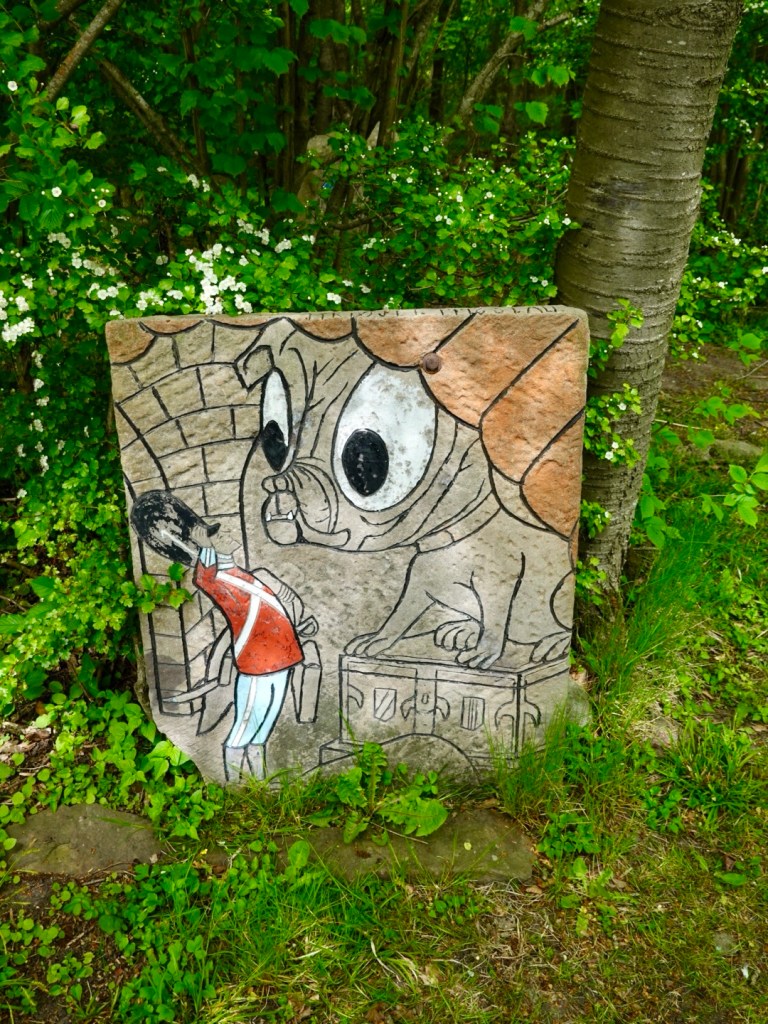
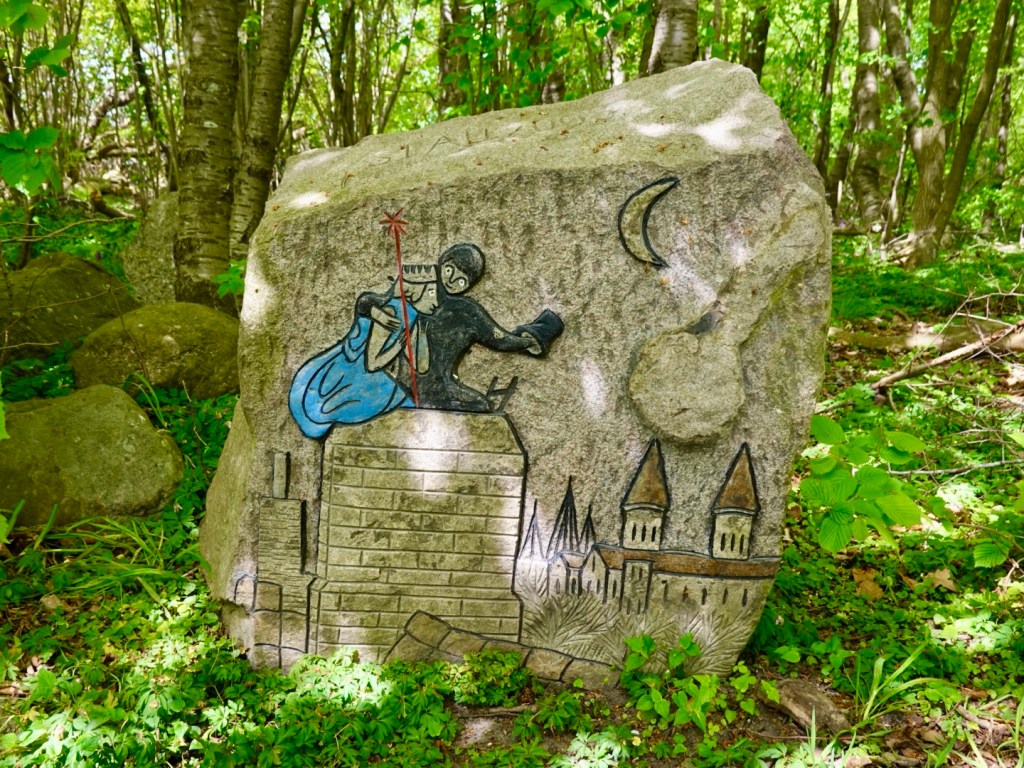
Riding on the cycleway towards Akirkeby we noticed a series of carved and painted stones in a shrubby area. Stopping to look we found about 30.

The area is known as Slau’s Stones. Slau was a local farmer who upon retirement discovered new skills. He set up an area for cyclists to stop with rock table and seats. He then expanded searching for suitable rocks in his farm and then working what image could best be carved.

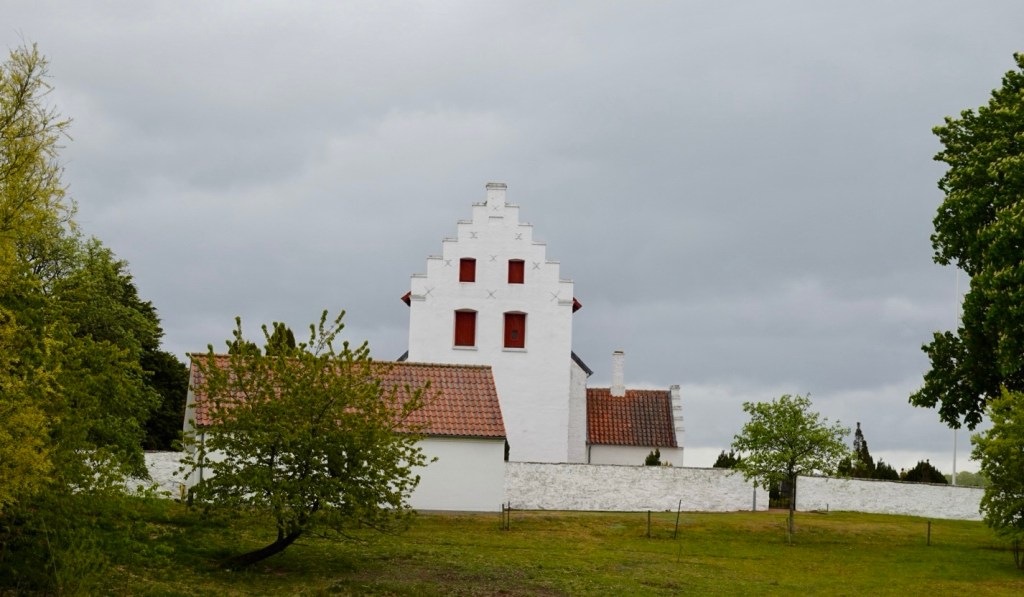
The pathway went past this lovely church at Nylars. It is a 12th century round church, originally designed for a defensive role. This church is the oldest of Bornholm’s four round churches.

Originally built around 1165 the church was dedicated to St Nicholas. The old Danish name for Nicolas was Nilaus and hence the present town name Nylars.

Another immaculate and beautiful cemetery and gardens.

Just randomly on the side of the road in a very small village was this….

More forest pathways.

We rode into Akirkeby and the highlight is this old church, built in the 1100s. It is the largest church on Bornholm.

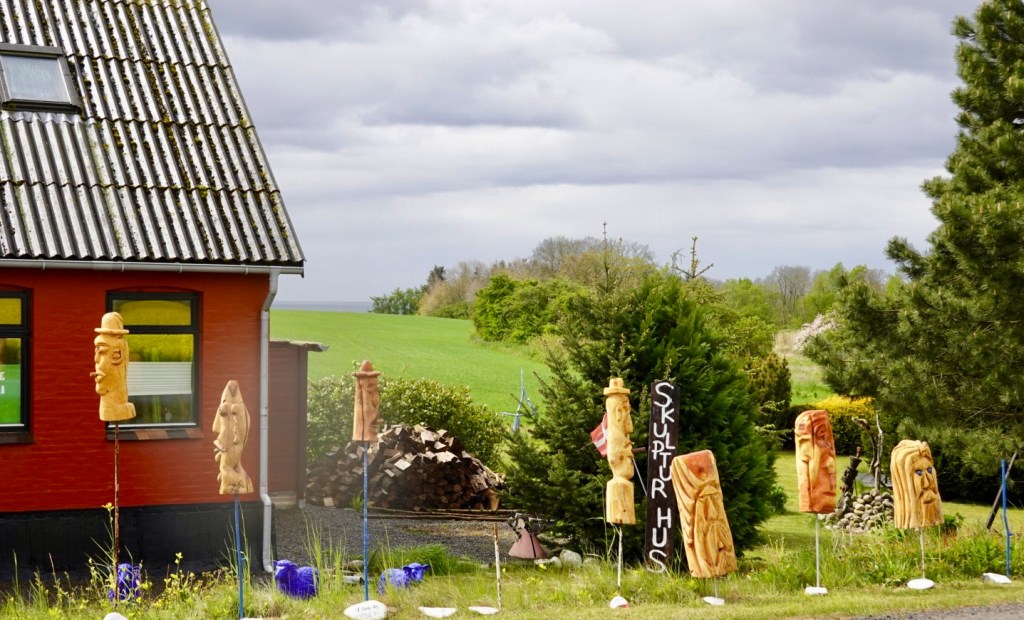
Another random sighting. Someone who is clever with a chainsaw.

We stopped in Osterlars to collect food from the supermarket and completed our 103 km ride for the day.

The map below shows yesterday and today’s ride, so we have covered a good chunk of the island. One day to go here.

Although no great hills here, we have still climbed over 600 metres.

Another day is done on our great Viking Odyssey.

We sat down to home made spaghetti bolognese tonight and creamed rice that I also made, garnished with fresh raspberries and banana.

I do recommend our accomodation to any cyclists touring. It is self contained and a nice 2 km ride to a well stocked supermarket. If interested, please send me a PM or email and I will provide details.

Thanks for following and joining us vicariously. We do enjoy the messages so thankyou.

❣️😊🚴💪

Day 2: Ystad (Sweden) to Bornholm Island (Denmark)

Today we were to catch the first of many ferries on this trip to transfer us from Ystad in Sweden to Bornholm Island.

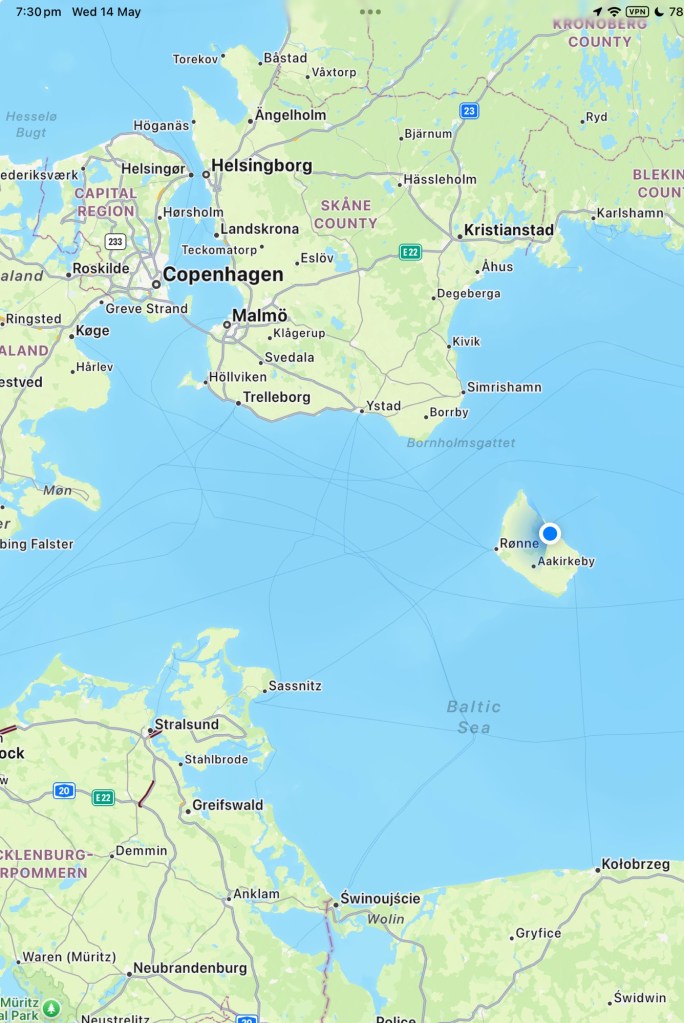
The map below shows Bornholm, with the blue dot indicating our current location.

To the upper left we have Denmark, to the north we have Sweden, lower left Germany and south Poland.

Being in the middle of the Baltic Sea means it’s windy and cooler.

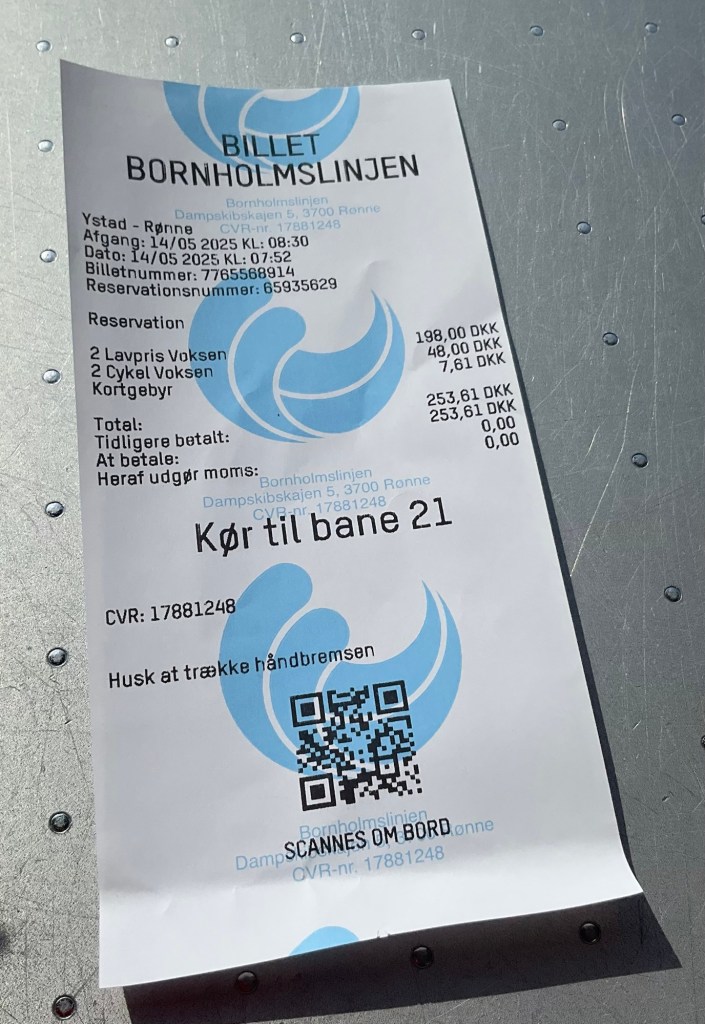
We self check in at the port using an interactive machine and out pops our ticket, the security gate lifts and we head towards the ferry.

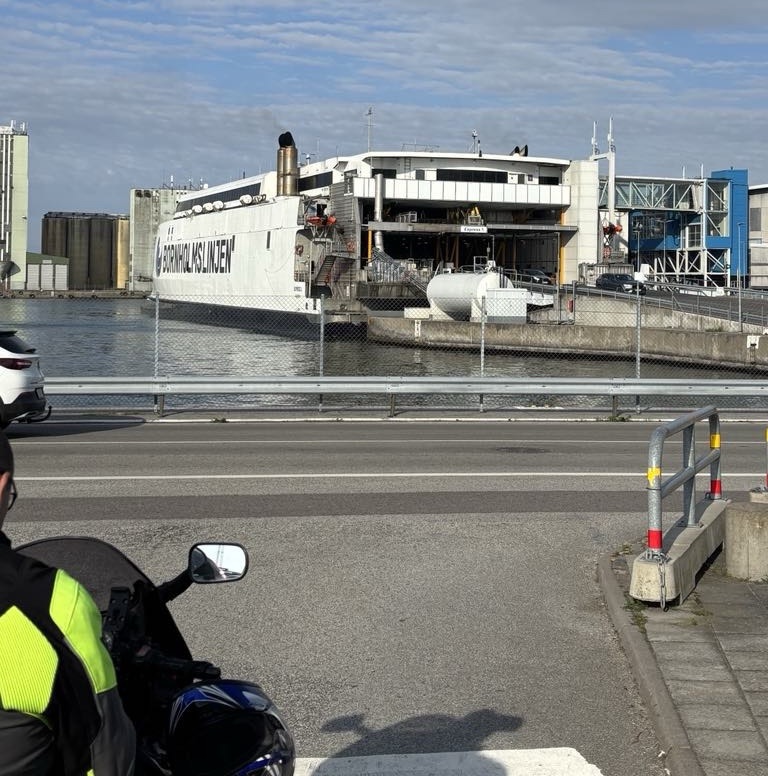
The ferry had just arrived and emptied quickly. When it was our turn we followed the motor cyclist to the far end under a ramp to store the bikes. Gathering our more valuable valuables (passport, plastic cards, bike computer, front and rear lights) we popped up to seating by a window in the front facing lounge.

It is a great set up with two good cafes and a cafeteria. We settled in enjoying coffee and a croissant.

The crossing takes 1 hour 20 and not a lot to see other than ocean. The waters are flattish and the passage calm.

We arrive in the town of Ronne and quickly ride off the ship following numerous large truck rigs.

Bornholm Island is Danish territory in the Baltic Sea, closer to Sweden and Germany than Denmark. The Island was surrendered to Sweden in 1658 but regained by Denmark in 1660 after a local revolt.

The Island is home to many of Denmark’s round churches and the discovery of ancient burial mounds suggests that it was inhabited by 3,000 BC

It has a populations of around 39,000 people.

Ronne is the largest town on the Island with one third of the population living there.

We do a short look and see around town.

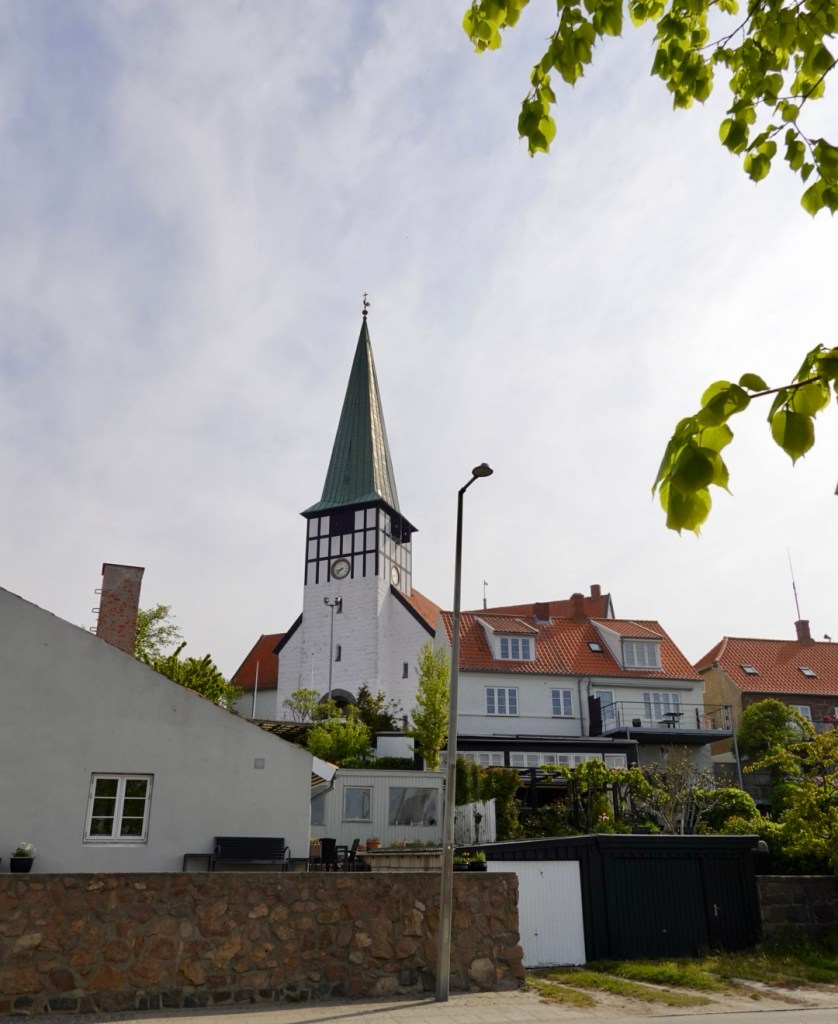
The Church of St Nicholas dates from the late Middle Ages constructed in the late 1200s with many updates and renovations since.

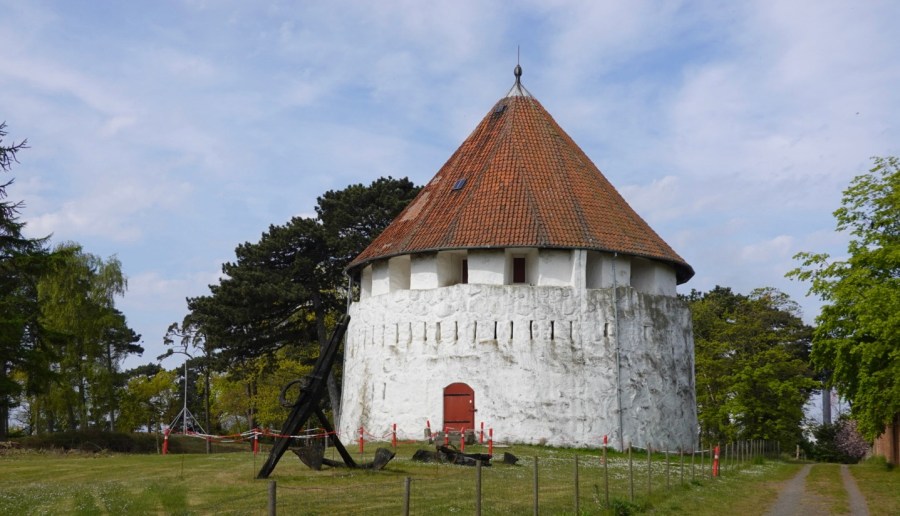
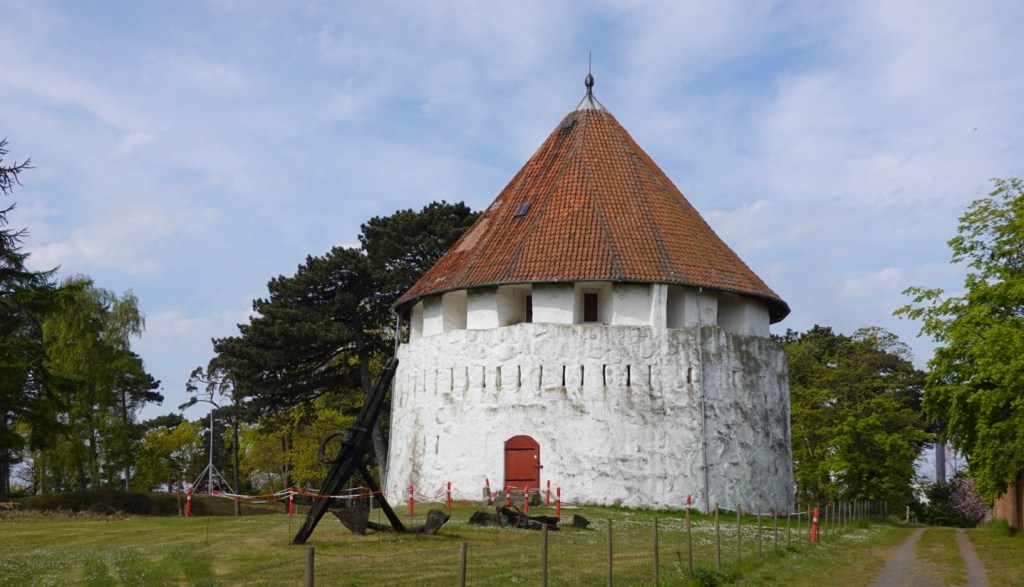
The Citadel Battery is part of Ronne’s fortifications from the 1700’s. It was originally seaside, but land reclamation has it further inland now.

A small market was underway in this small park.

Heading out of town, having plenty of time up our sleeves we decided to take the dirt trails for bikes along the western coastline.

For the most part the trail was in good condition heading through forest. There were a multitude of other trails intersecting and criss crossing and there were an impressive number of people out walking, running and cycling.

It followed the Baltic coast line, in places providing coastal views. Nice white beach looking back towards Ronne.

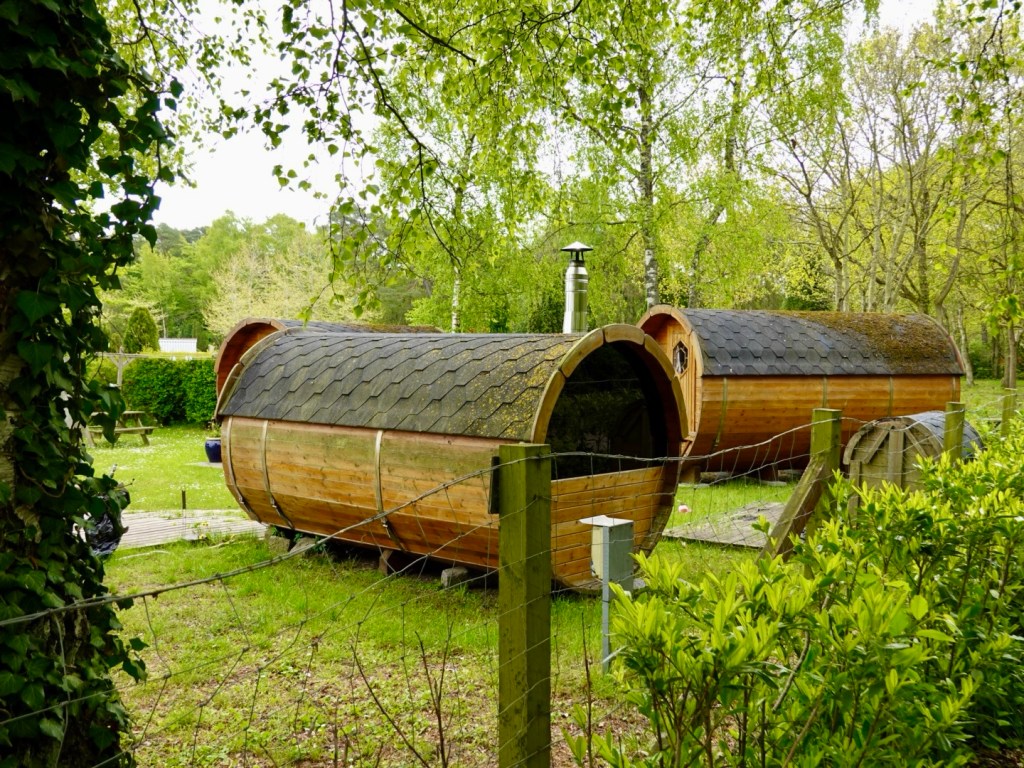
On the edge of one village were these interesting pods. We were not sure if some were accomodation or all saunas?

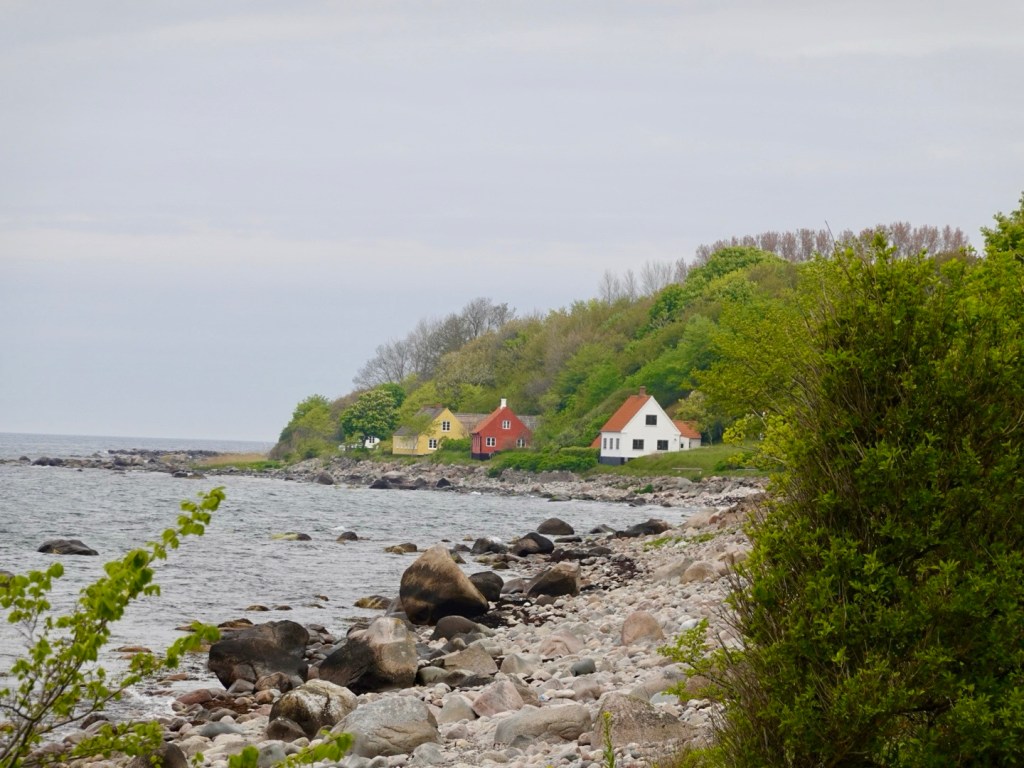
I liked this rugged vista, with just a few houses tucked away.

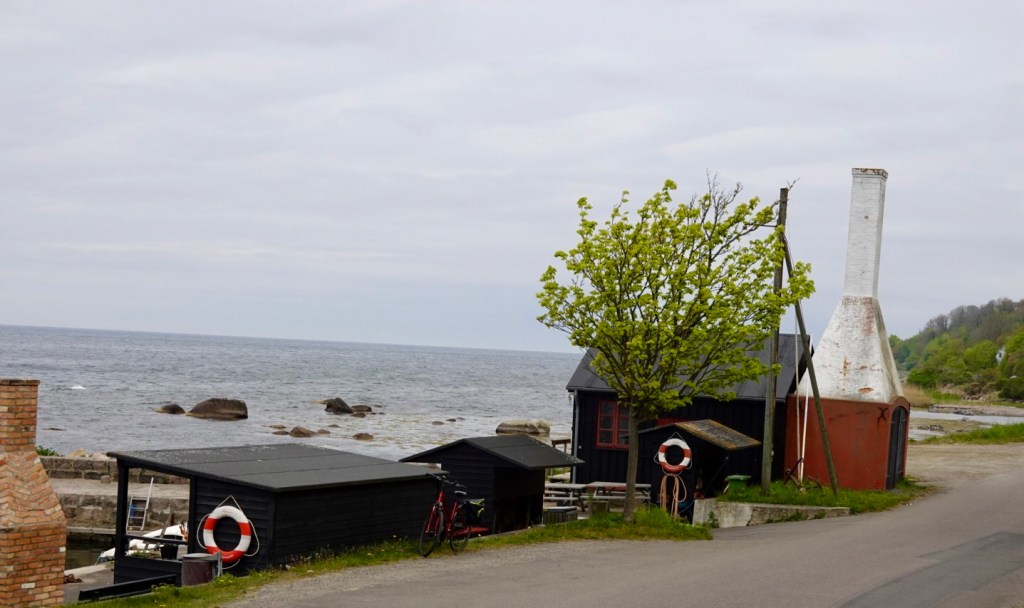
A small fishing village and port, with smokehouses. Smoked fish is quite an industry still here on the island.

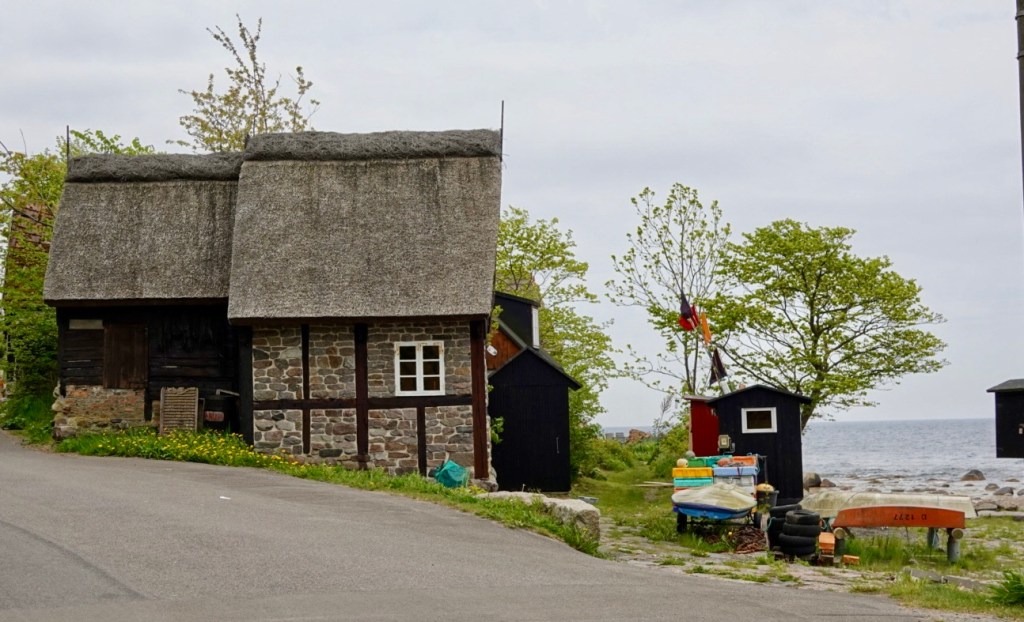
I liked this fisherman’s house
Kids having fun fishing. There was a bit of excitement as one had caught a fish and others gathered into help.
Quite typical colours of houses in the area

All was going well until we hit this section. Photos never do slopes any favours making them look far less steep. The section ahead increased to 22% gradient with loose and slippery dirt in between part seal.

I dismounted at 10% whilst I could safely as I knew I’d be in trouble otherwise.

I pushed my bike up watching the gradient increase and using my bike brakes to hold as I was walking on the gravel and slipping.

Tony got up before me and came back to help! He’s a keeper!

In the middle section are little steps with dirt.

Sitting at the top smiling. A little further past here there is a carpark and we met another cyclist who was on a mtb bike. He too pushed his bike. Nice bloke was with the Island police force, having originally been in the Danish military.

Hammershus Slot is one of the larger medieval fortifications in northern Europe and stand on a 70 metre high cliff. The medieval fortification was bult in the 13th century.

Saene Harbour was a peaceful harbour near Hammershus. It was all happening with a water training activity underway and a class of school children returning from a walk.

We headed along towards Gudhjem, passing through other towns and villages including Allinge.

It was not warm with the temperature around 8-9 C and a chilly wind. We were rugged up though so no difficulties there.

Some of the buildings along the way.

Still on gravel we found another steep section. Tony rode it, I did not as it was 15%. I did descend it.

Gudhjem is a pretty seaside town that we will explore more tomorrow. The next four photos are the section we did see.

Gudhjem is built on a steep hill overlooking the Baltic Sea.

We turned inland at Gudhjem heading towards Osterlars where we are spending the next three nights.

Looking back along the coast where tomorrow’s adventures lay. Rapeseed is plentiful here too.

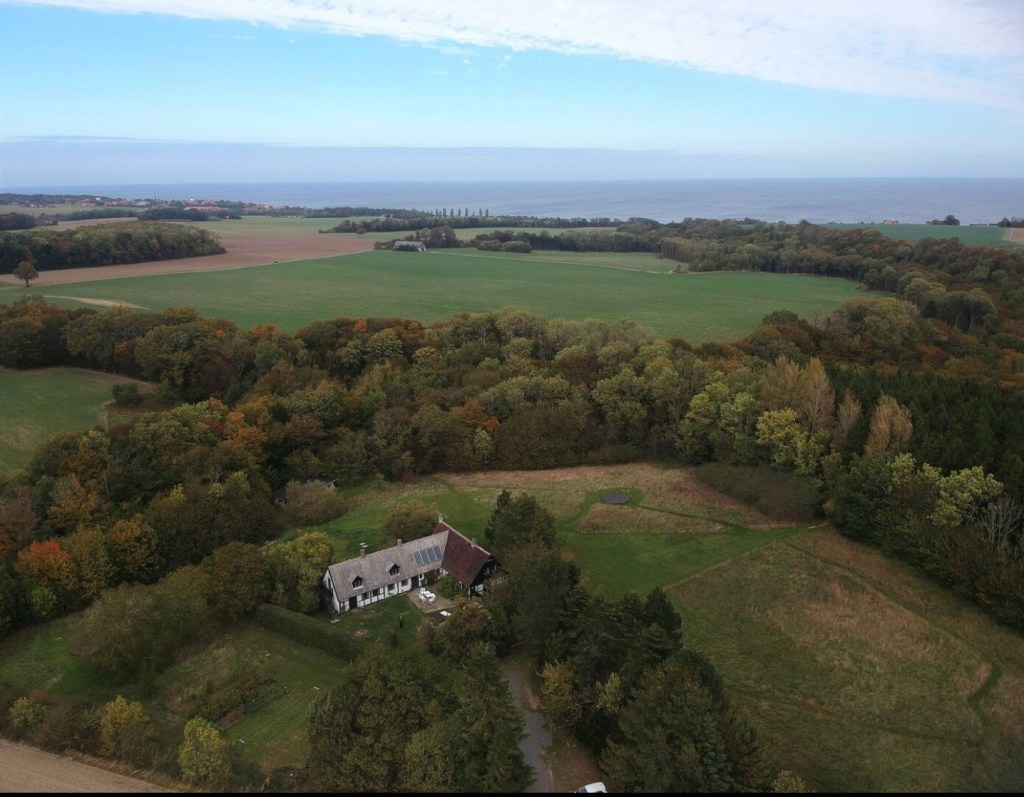
Our lodgings are located within the property below. We are in a renovated barn. In the line of bushes to the right is a cycle path that runs between Osterlars and Gudhjem. We just needed to find the right opening in the hedge and head across their field.

After dumping most of our gear, we headed straight back out to the local supermarket for supplies to make dinner and breakfast.

This famous church is en route, and to be discovered more in the next two days.

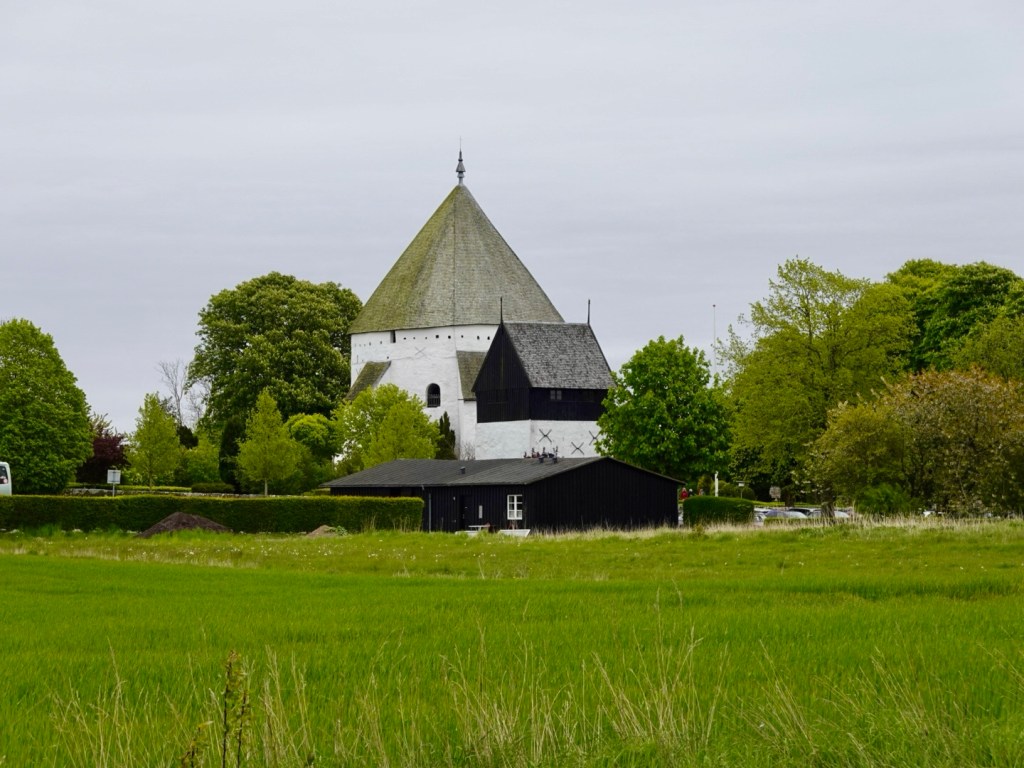
Osterlars Rundkirke is regarded as the Islands most impressive round church, constructed in the 12th century. Originally the roof was flat, serving as a battle platform for hurling projectiles at attackers. The conical roof was added in 1744.

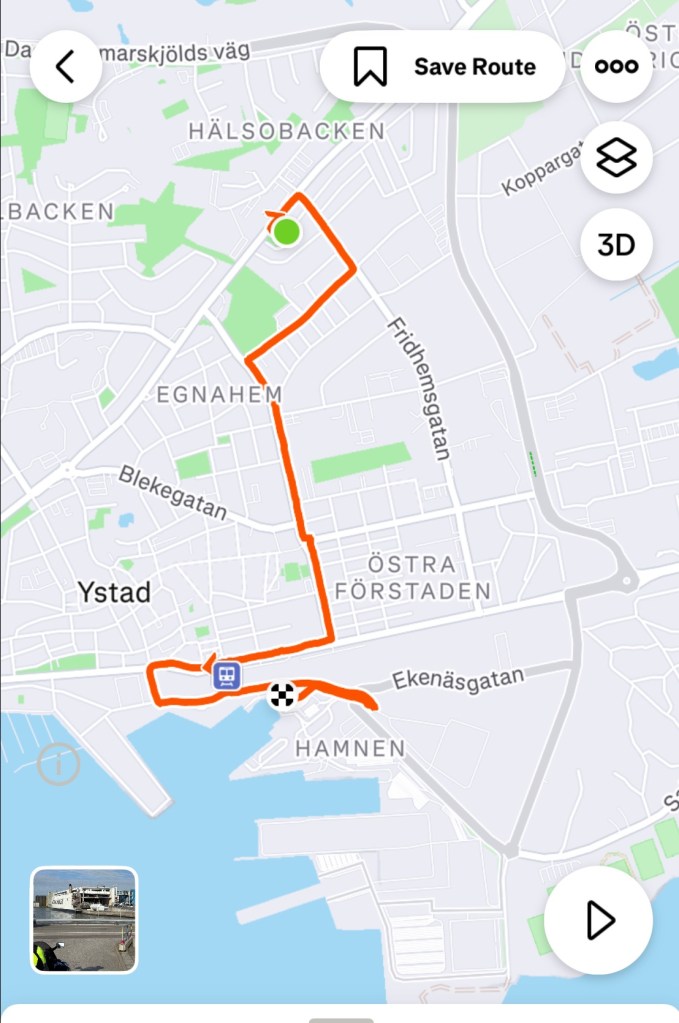
Today’s routes covering 64 km, 590 metres climbing.

That’s it folks for today. Thanks for joining us and check in again as we learn more about Bornholm Island.

😊❣️🚴💪
Day 1: Copenhagen (Denmark) to Ystad (Sweden)

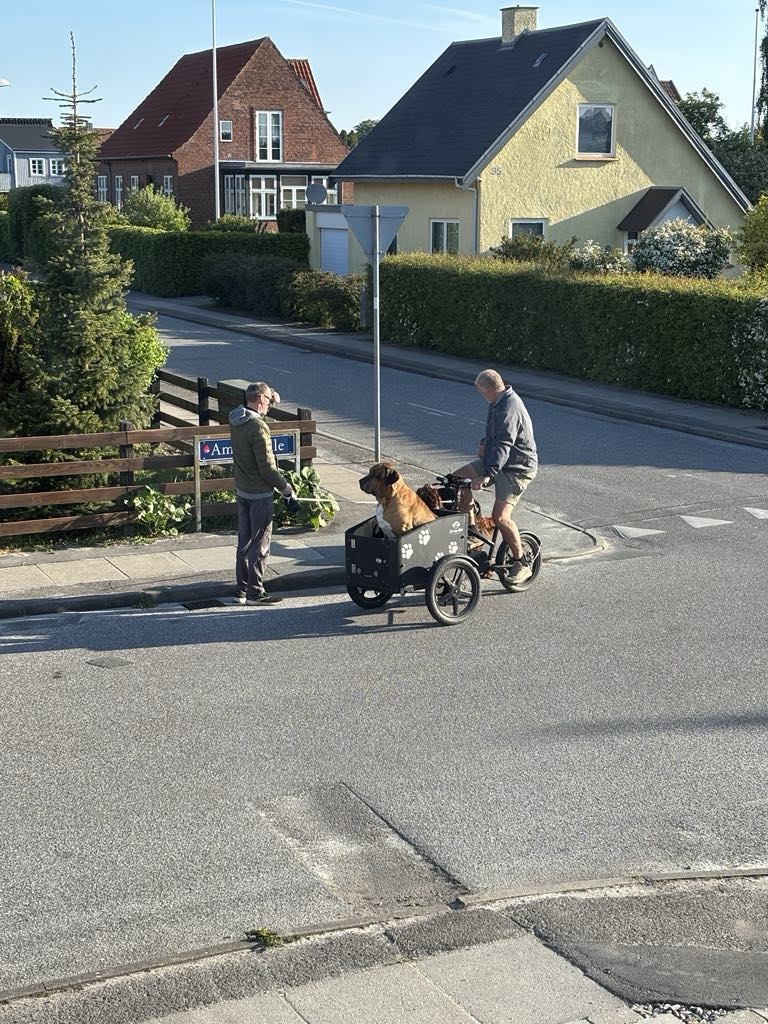
What a lovely sight looking out our bedroom window. Cargo bikes are popular here. We saw one man with triplets in the front but this one is delightful.

The day was looking great weather wise as we packed the bikes for our grand departure.

First ride was to Copenhagen Airport railway station to cross into Sweden. A lovely station lady helped us to buy the tickets including bikes.

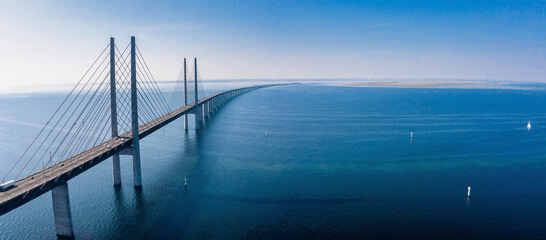
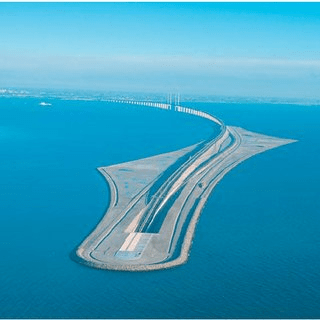
The Oresund bridge is a combined railway and motorway crossing the Oresund strait between Denmark and Sweden. It is also the second longest bridge in Europe at 7.845 km in length. As such cyclists are not permitted on the bridge, and it is necessary for us to cross by train.

I have grabbed two publicly available photos of the bridge. I don’t have the capacity to get a nice aerial shot. I find it fascinating that the bridge heads under the water for a section. This design is great for keeping shipping canals over. It looks awesome in a photo.

We got off at the first station we could in south Malmo.

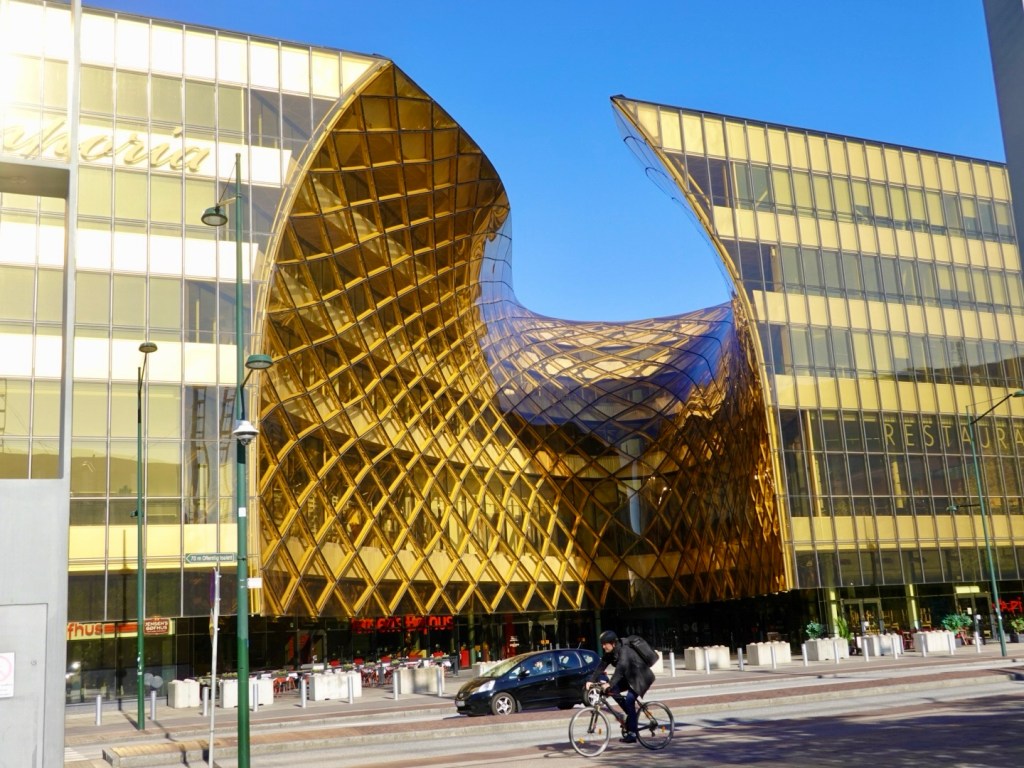
Malmo is the largest city in the Swedish county of Skane, and the third largest in Sweden but today we were more interested in navigating our way out of the city safely.

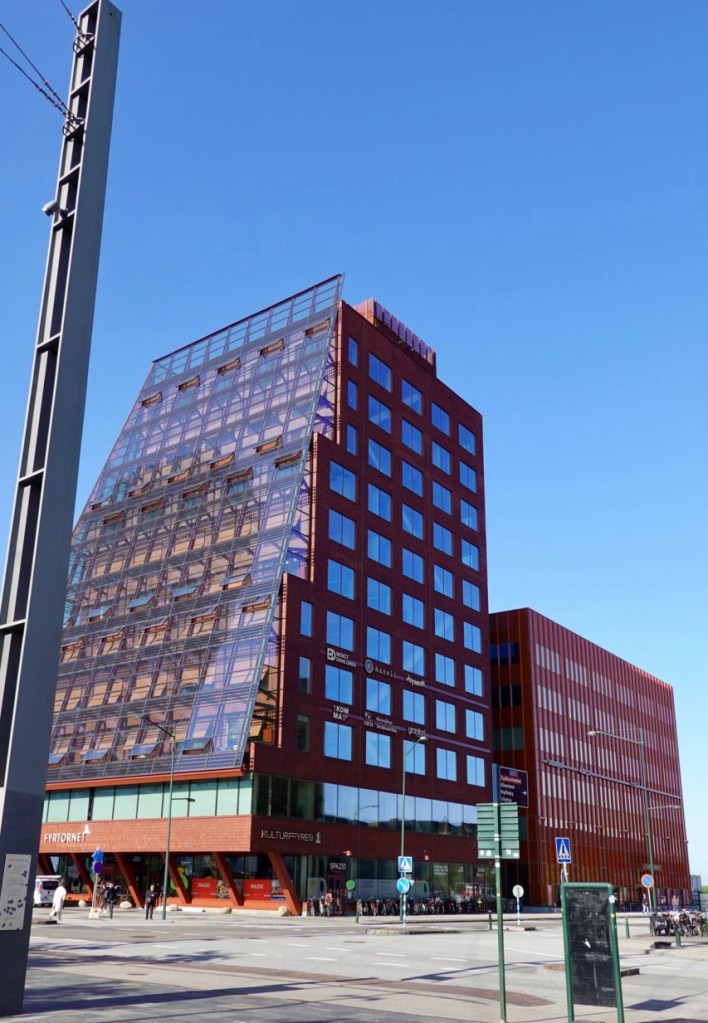
Some interesting architecture noted as we left.

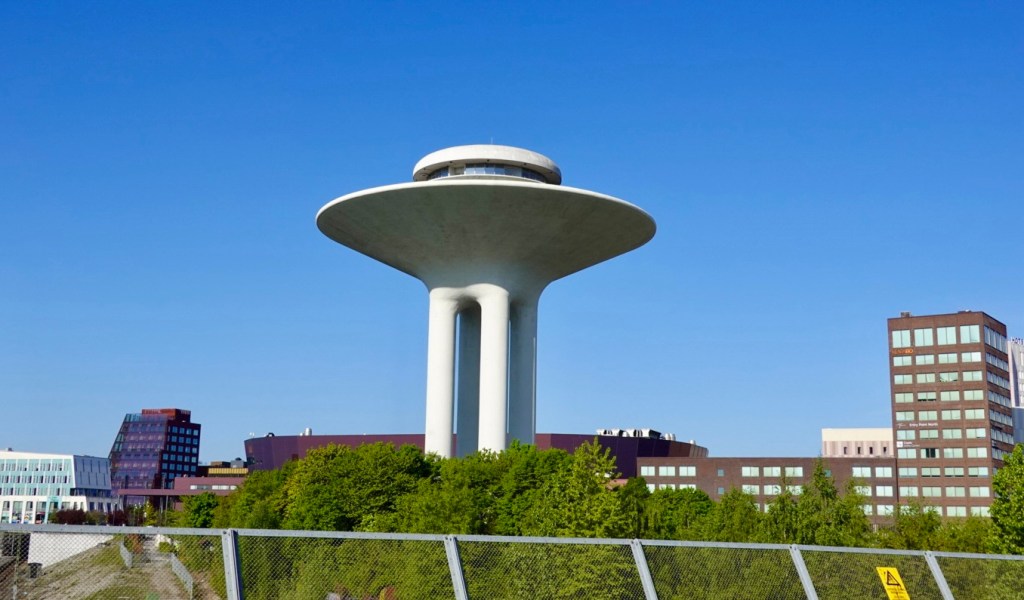
The Hyllie water tower is quite imposing designed to look like a flying saucer. It is 62 m high, holding 10,200 cubic metres of water.

A restaurant operated for many years from the top. A striking visual at night when the tower is light up in blue.

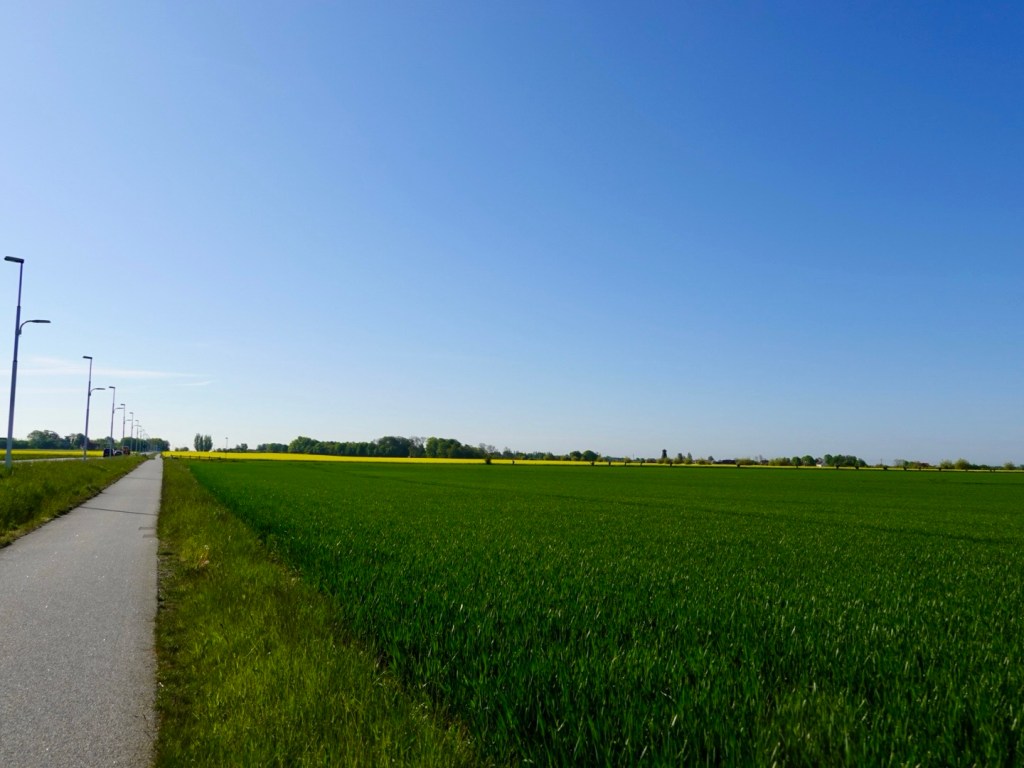
Leaving Malmo was all on divided cycle paths heading into rural Skåne (the region name).

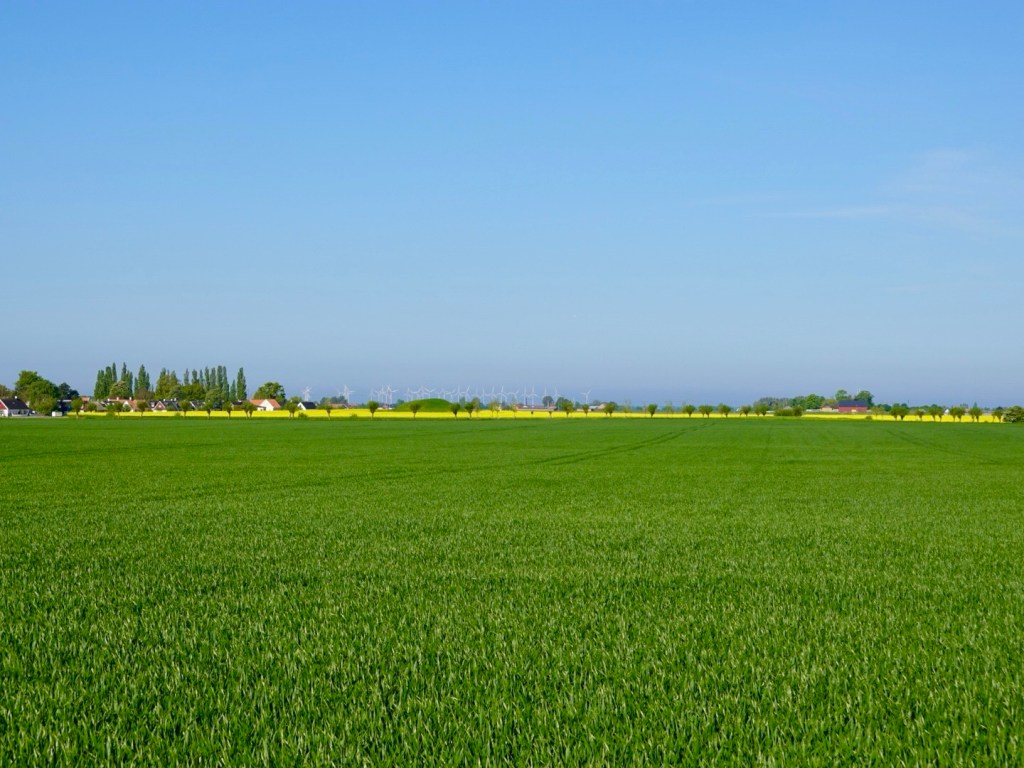
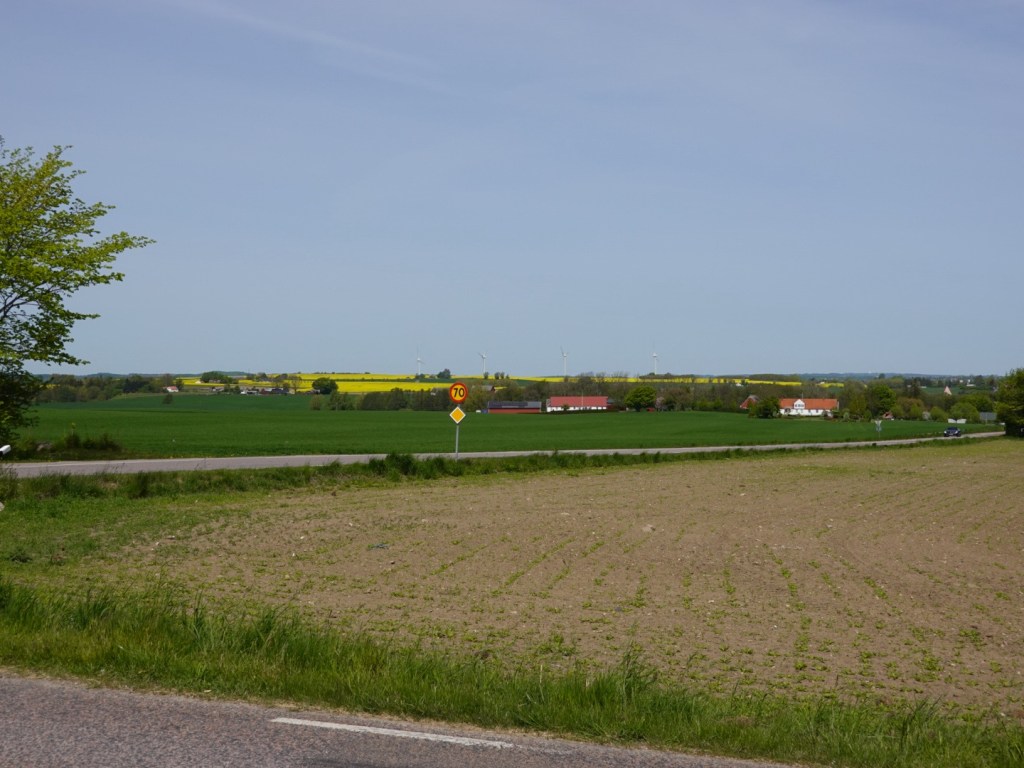
It was quiet, peaceful and the vistas predominantly agricultural with villages dotted around.

You can see a distant wind farm looking back towards Denmark
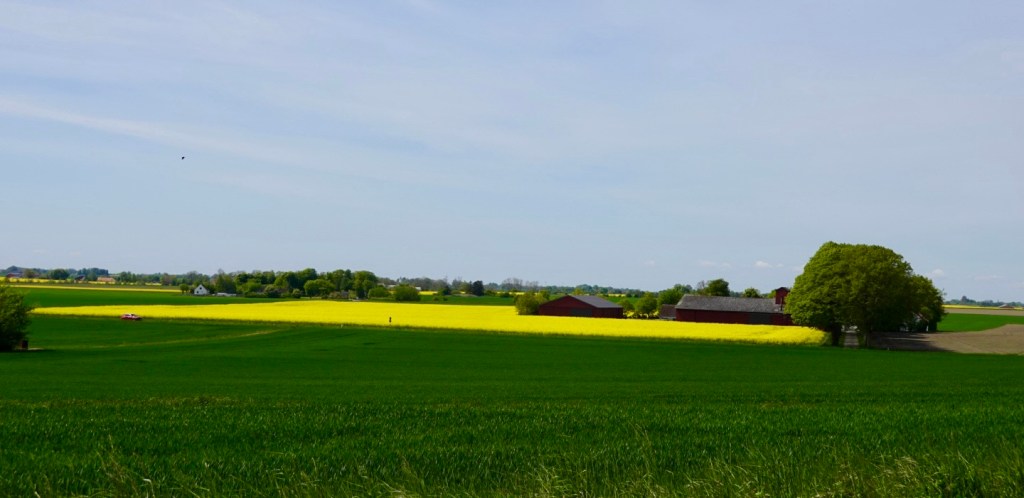
Cycle path along fields of wheat and rapeseed (canola)
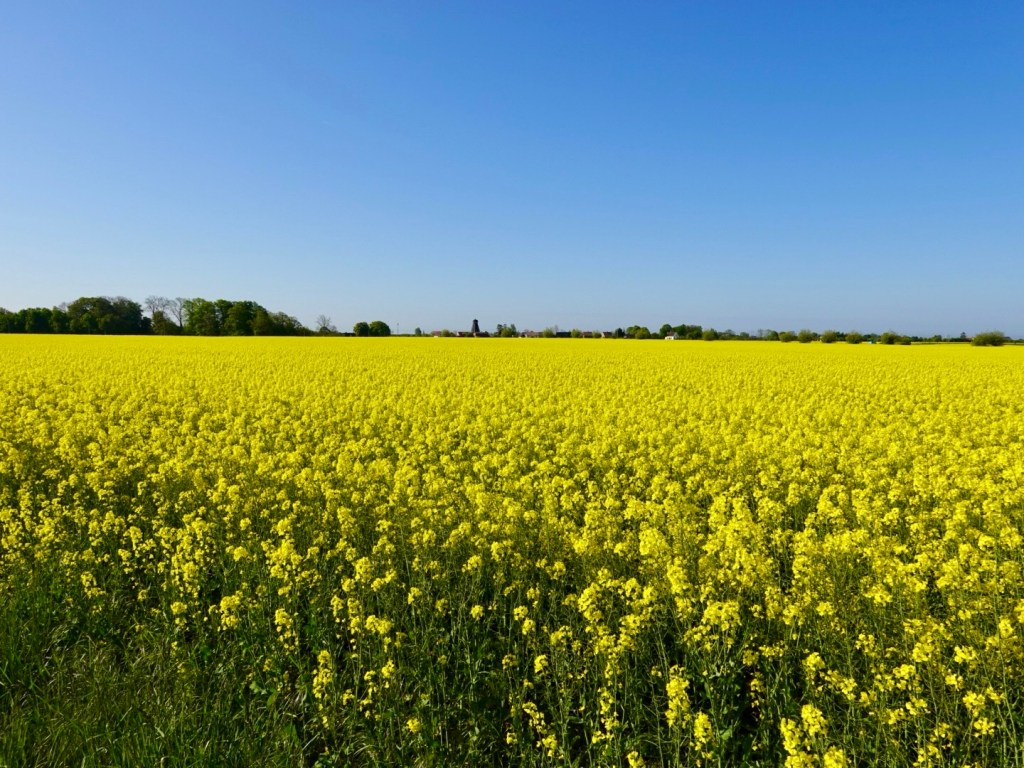
Closer up of the rapeseed, brilliant yellow.

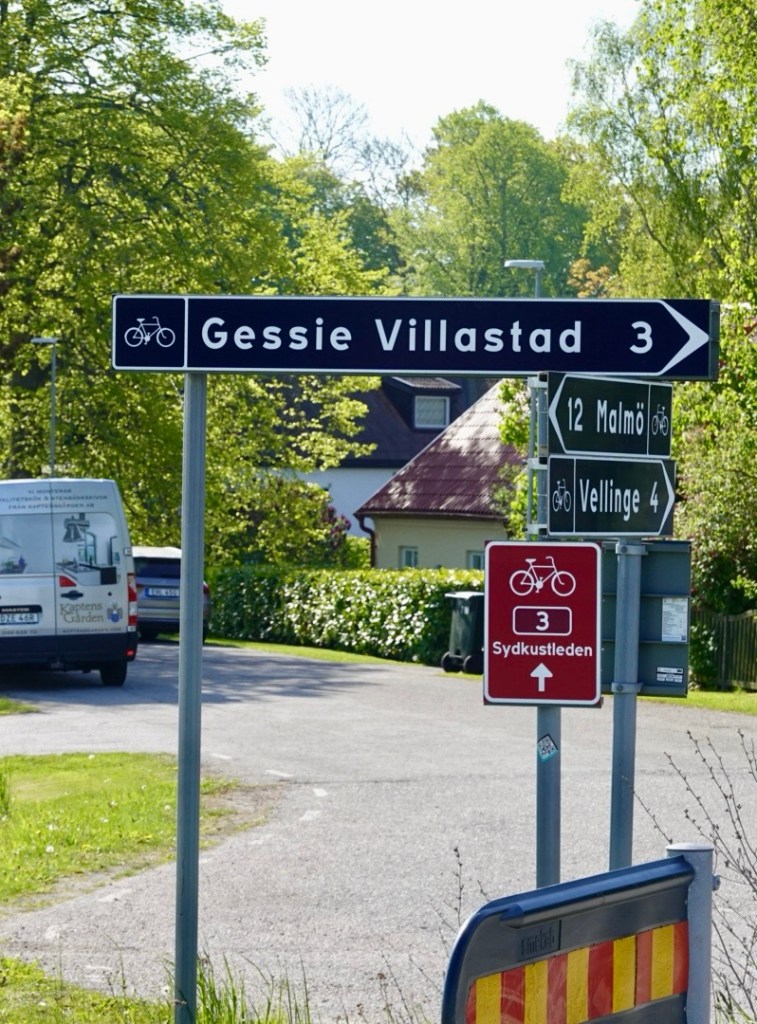
Great signage, multiple paths intersecting. The Sydkustleden is the one we predominantly followed today. It is a 260 km coastal cycle way. There are small sections on the road.

We stopped for morning tea at a local supermarket and found a cafe to grab a coffee. Coffee was around AUD $10. Prices seemed a bit cheaper than Denmark.

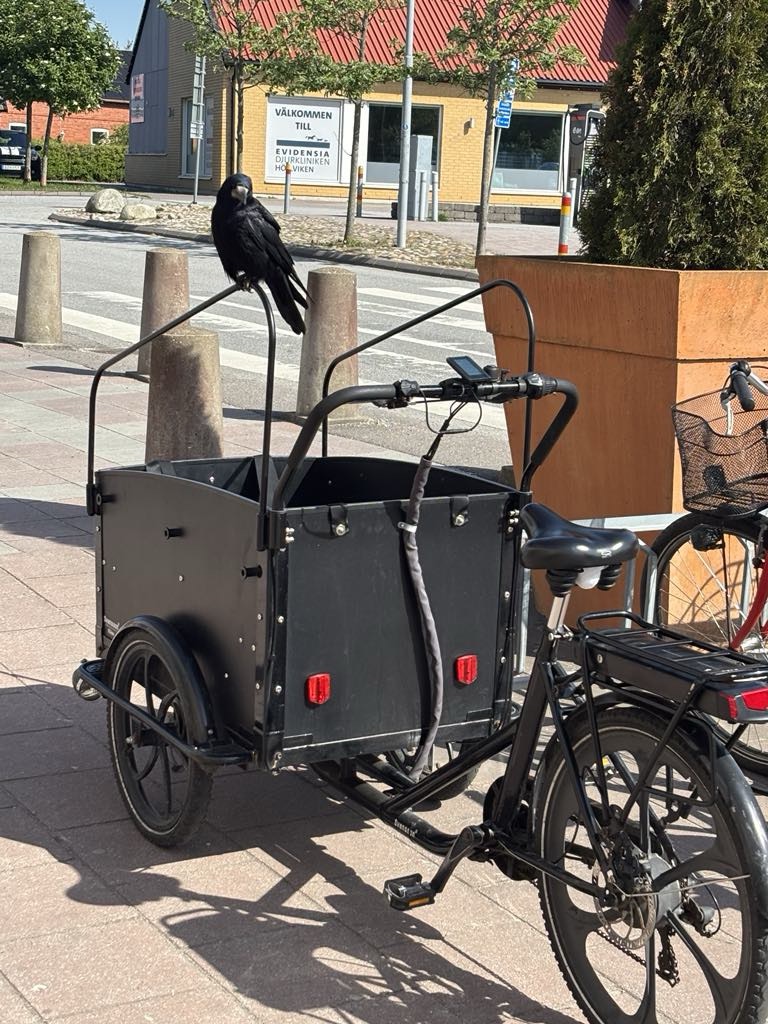
Bossy bird keeping an eye on us as we sat and enjoyed coffee and a little treat, perched on a cargo bike.

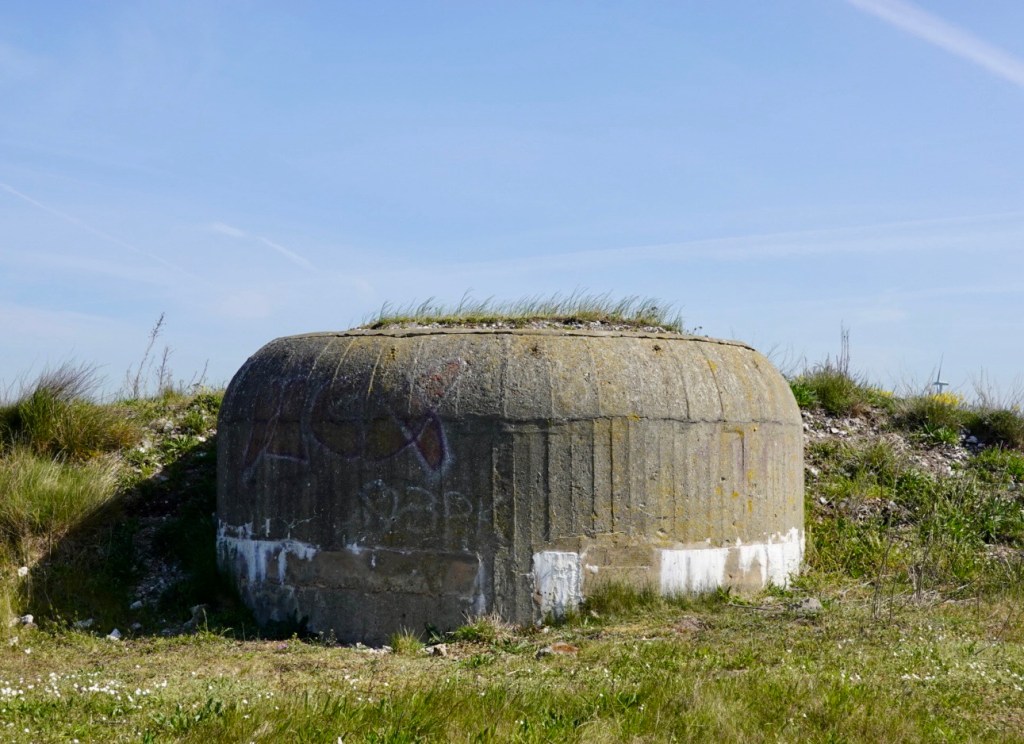
Riding along the Baltic coastline we became curious about the many defence fortifications, often every few hundred metres.

This was part of the Skane Line, a 500 km line of light fortifications constructed during World War II to protect the Swedish southern coast from Germans and Soviets.

There were two lines of defence. The concrete bunkers along the shore were armed with guns and light cannons.

The second line was 300 metres in where armed troops were behind barbed wire, some in more concrete bunkers.

There were 1,063 coastal fortifications, strengthened during the Cold War with the addition of turrets and 75 mm tank guns.

Decommissioning commenced in the late 1990s.

One of the many fortifications

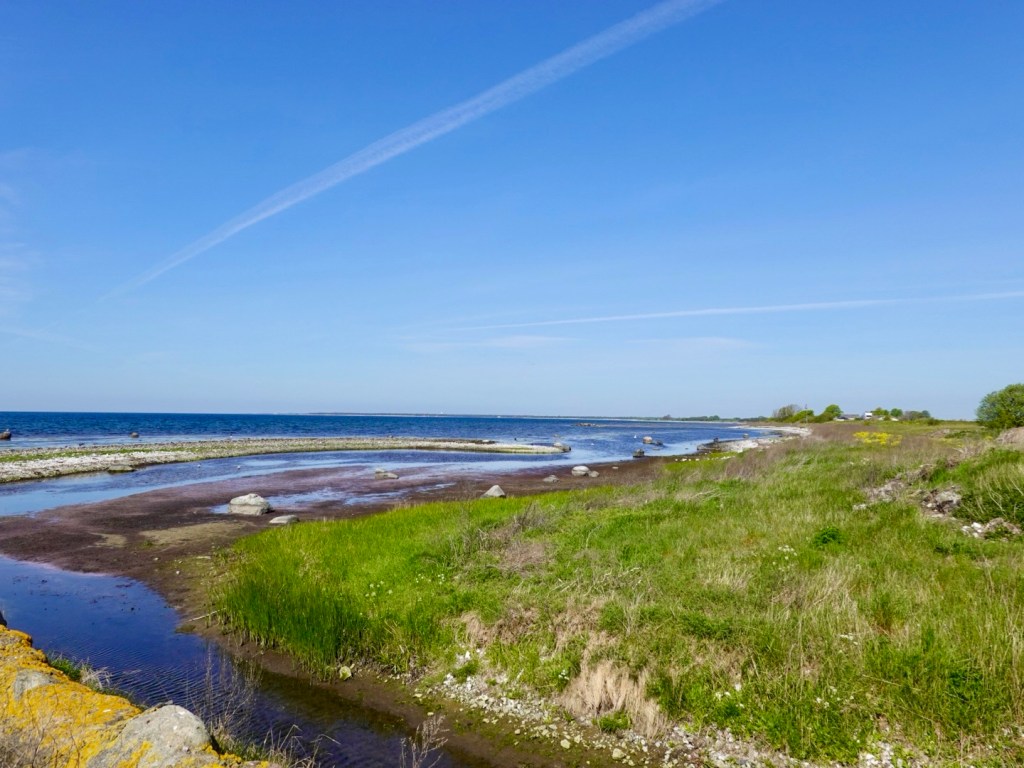
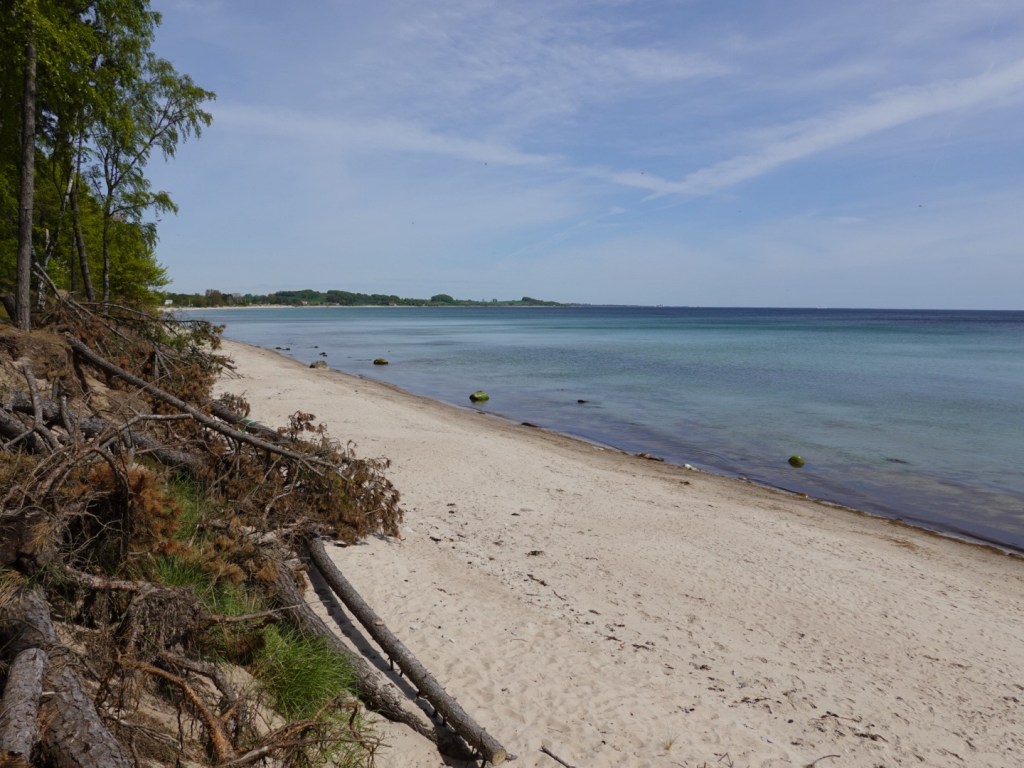
Aside from the fortifications, the coast was a mix of rocky outcrops and nice white beaches.

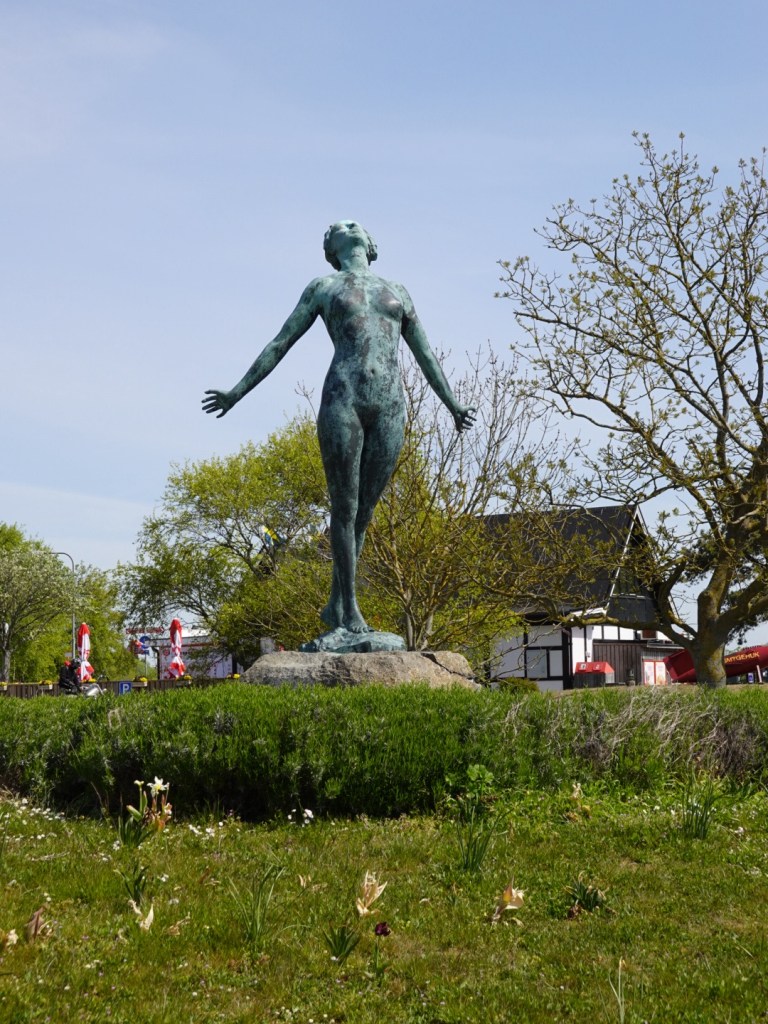
Overlooking the harbour of Smygehuyk is a statue of a nude woman. The model was actress Uma Thurman’s grandmother!

I imagine this bunker housed troops.

In the distance we saw this ship, TT Line being the operators of the Spirit of Tasmania, but this is a different TT Line.

We deviated from the coast to head inland, up our only climb of the day into strong headwinds. The target was the village of Tullstorp.

Lovely vistas as we headed inland

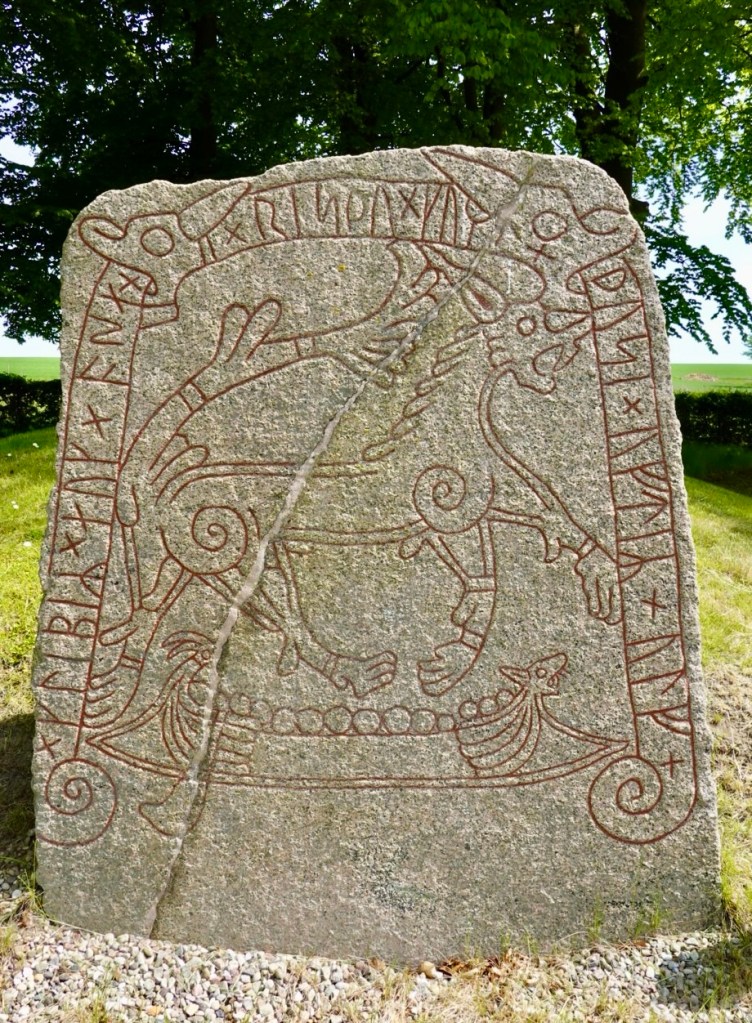
Tullstorp runestone is a viking age memorial stone. The inscription consists of runic text on a serpent band that frames a central image of a ship and a beast. It is 1.7 metre in height . Apparently the images reflect the Ragnarok myth

The stone is dated to about 980AD and until the 1840’s was built into the medieval church wall. Its original location is unknown. Today it is located in a memorial mound in the local churchyard.

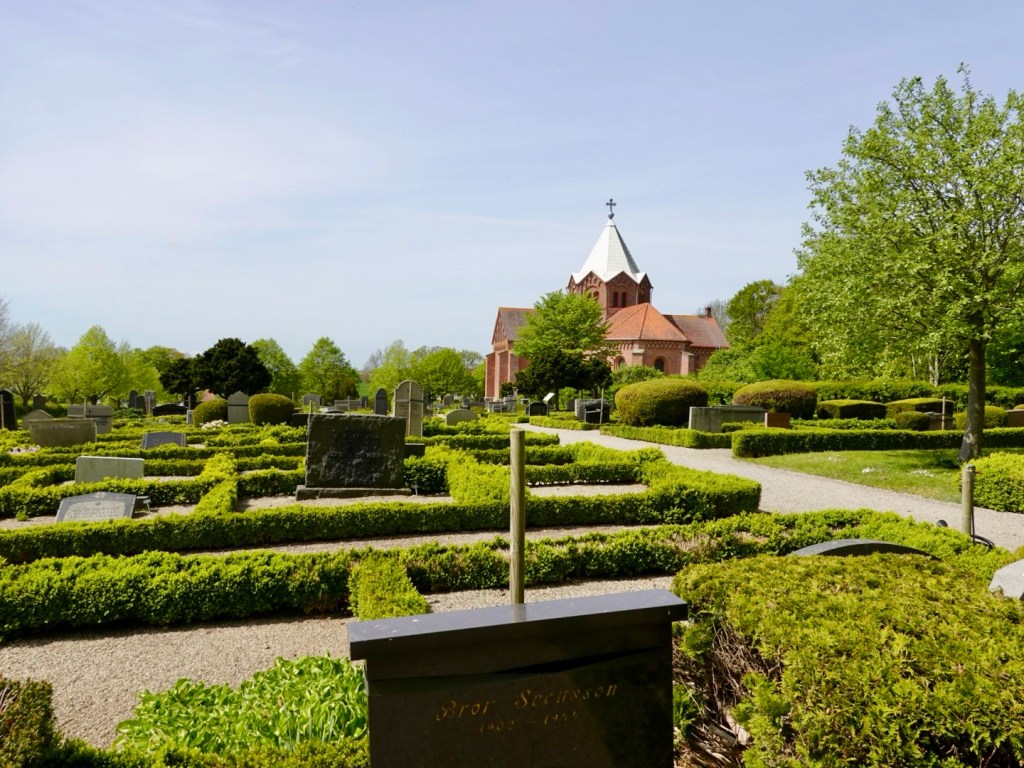
The church and surrounding cemetery was really beautiful. It is perhaps the nicest cemetery I’ve ever been in, with immaculately manicured and maintained gardens.

Leaving the church we headed a little further up the hill, then headed east again.

As we stood off the road on gravel, a car stopped and an older lady had a lot to say to us. We had no idea what she said but she didn’t appear happy.

Other than that, it was peaceful and quiet as we kept moving towards our destination of Ystad.

We arrived in Ystad earlier than we could check in so we sat in a park uploading photos.

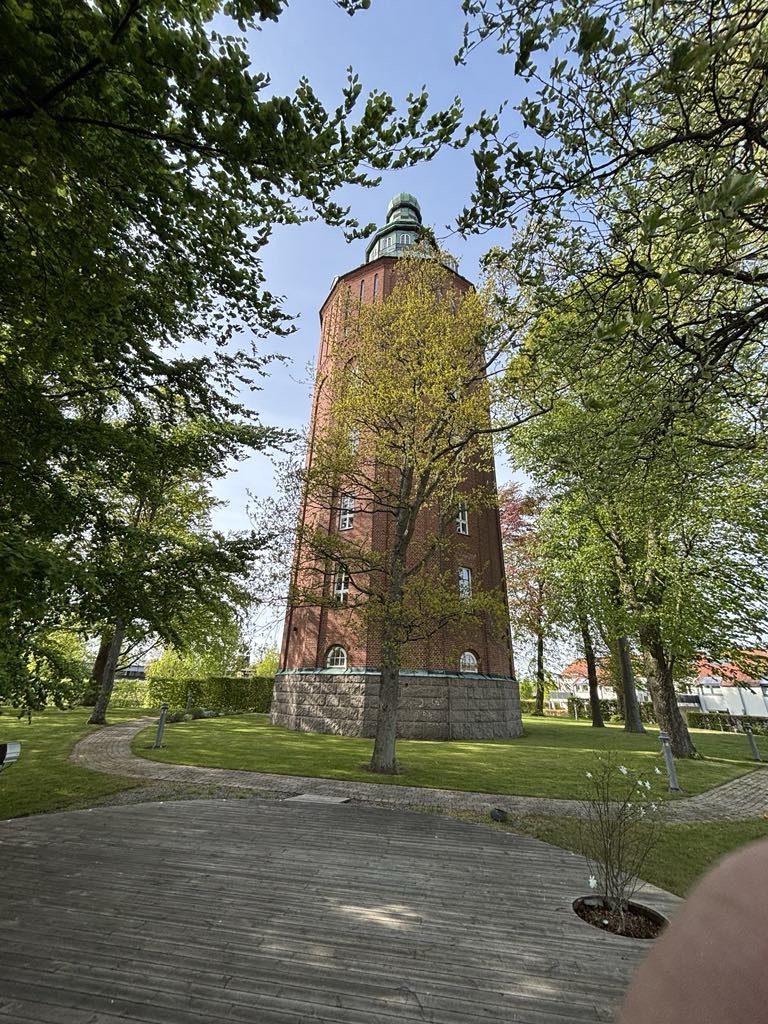
At 3 pm we arrived at our accomodation at the old water tower.

This is a beautiful building converted housing numerous short stay apartments.

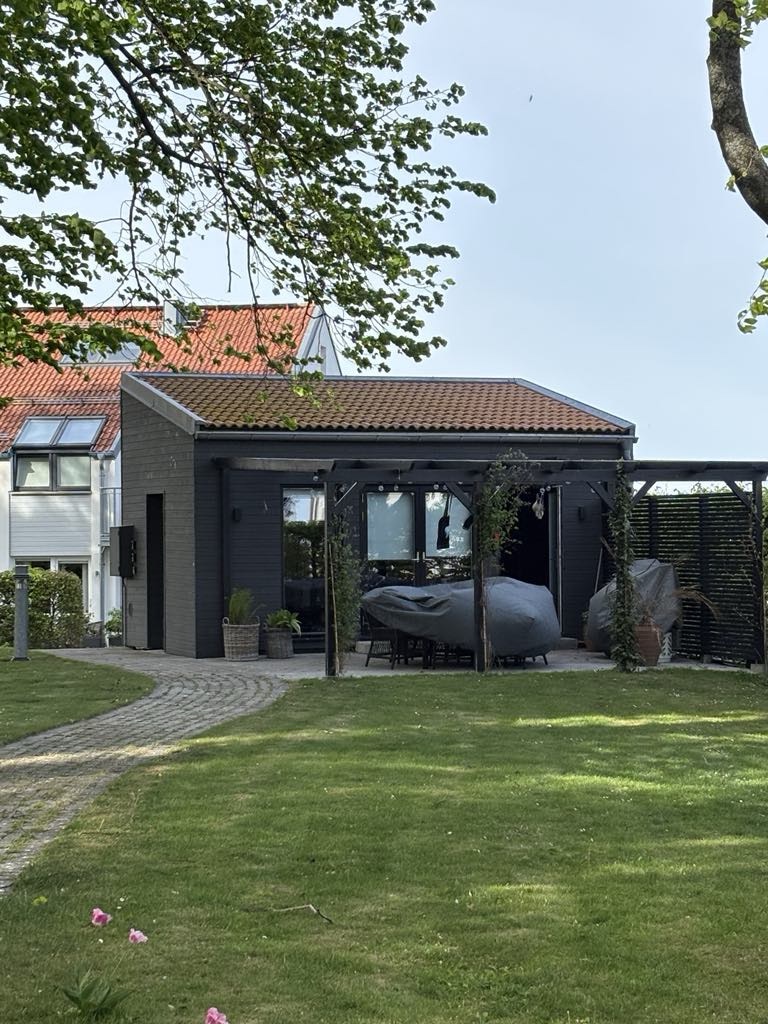
This is our accomodation, a detached small building just thirty metres from the tower in parkland.

The owner provided a key to store our bikes in the base of the water tower. She later wrote back and told us that the same key would operate the lift and offered that we could go up to the top apartment, level 6 then ascend the stairs to the top see the view.

We did that. What an incredible apartment spread over four levels with a spiral staircase and some 50 steps.

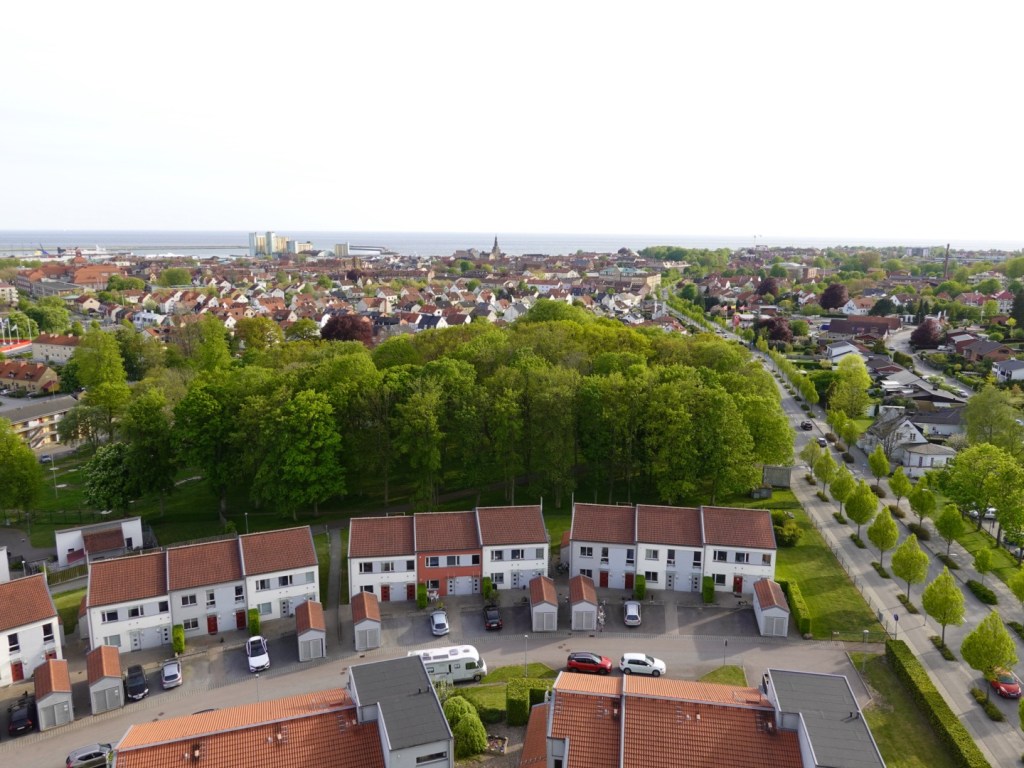
It was a 360 degree view and this one looks towards old Ystad and the harbour.

For dinner we walked to a local supermarket to grab supplies, as we have a good kitchen and fridge here.

It is very peaceful bar the black crows nesting in the surrounding park trees.

A successful first day saw us ride 98.5 km, leaving Denmark to ride the most part in Sweden.

Today’s routes.

Thanks for reading and joining us on our great Viking adventure 2025. 😊🚴❣️💪