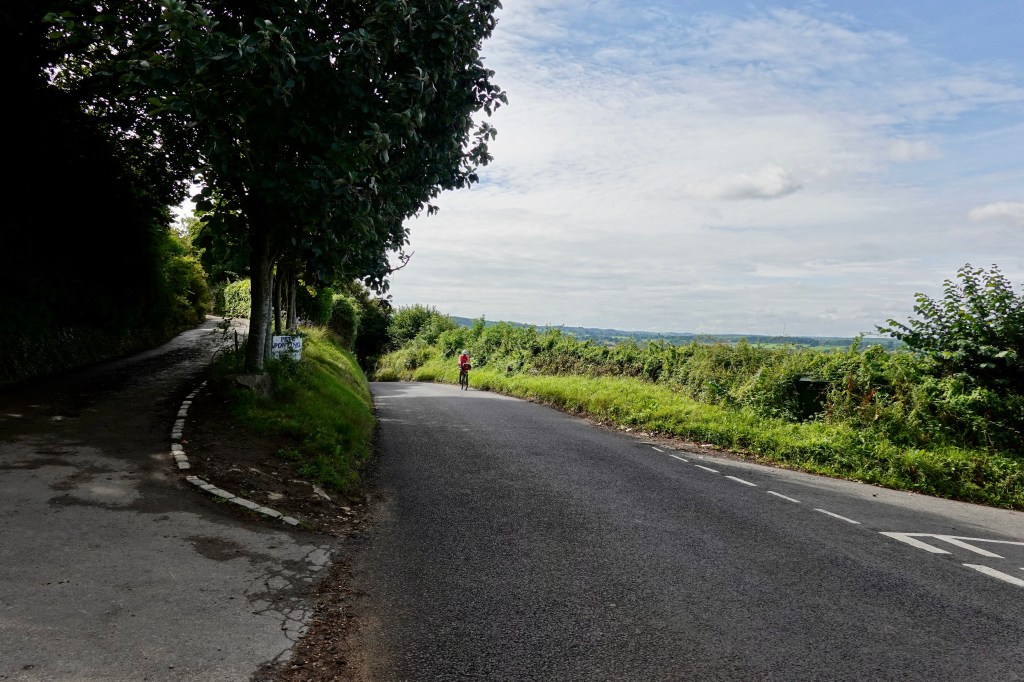
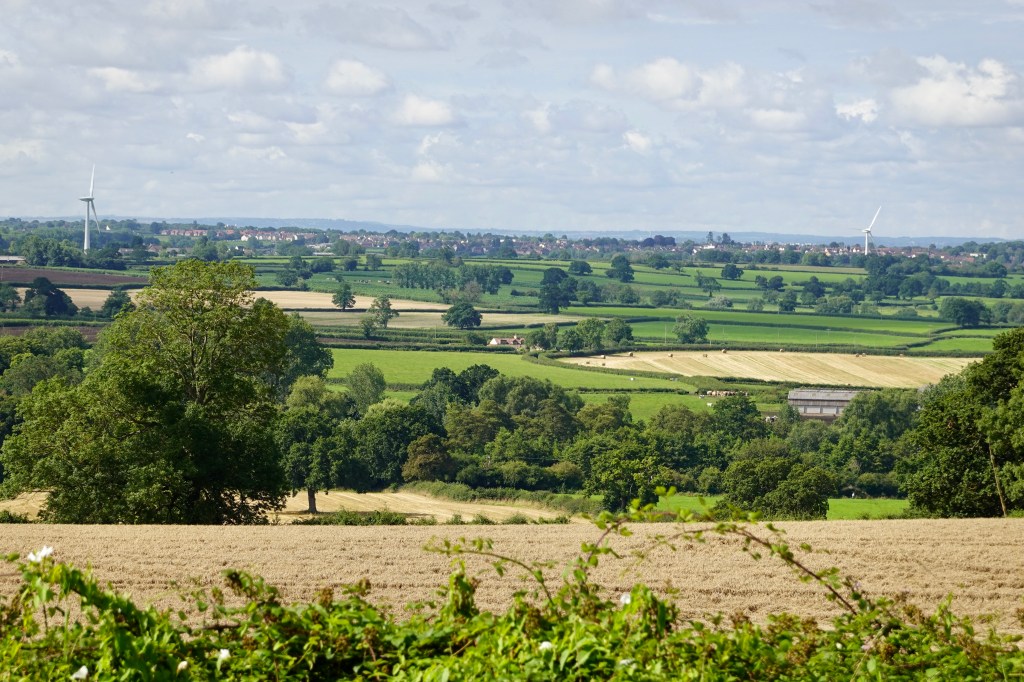
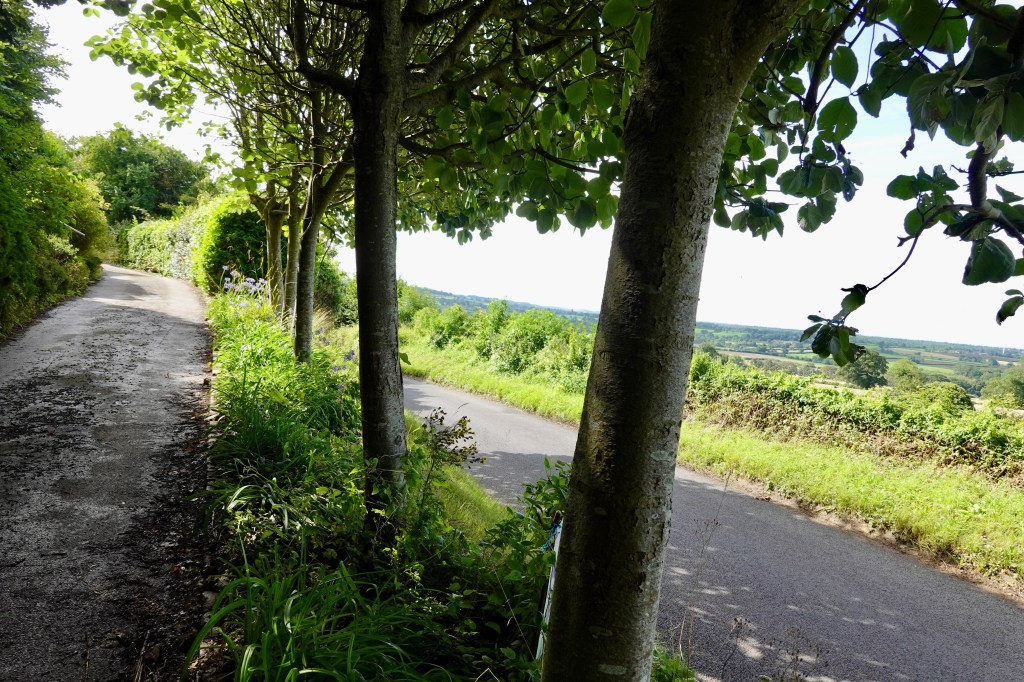
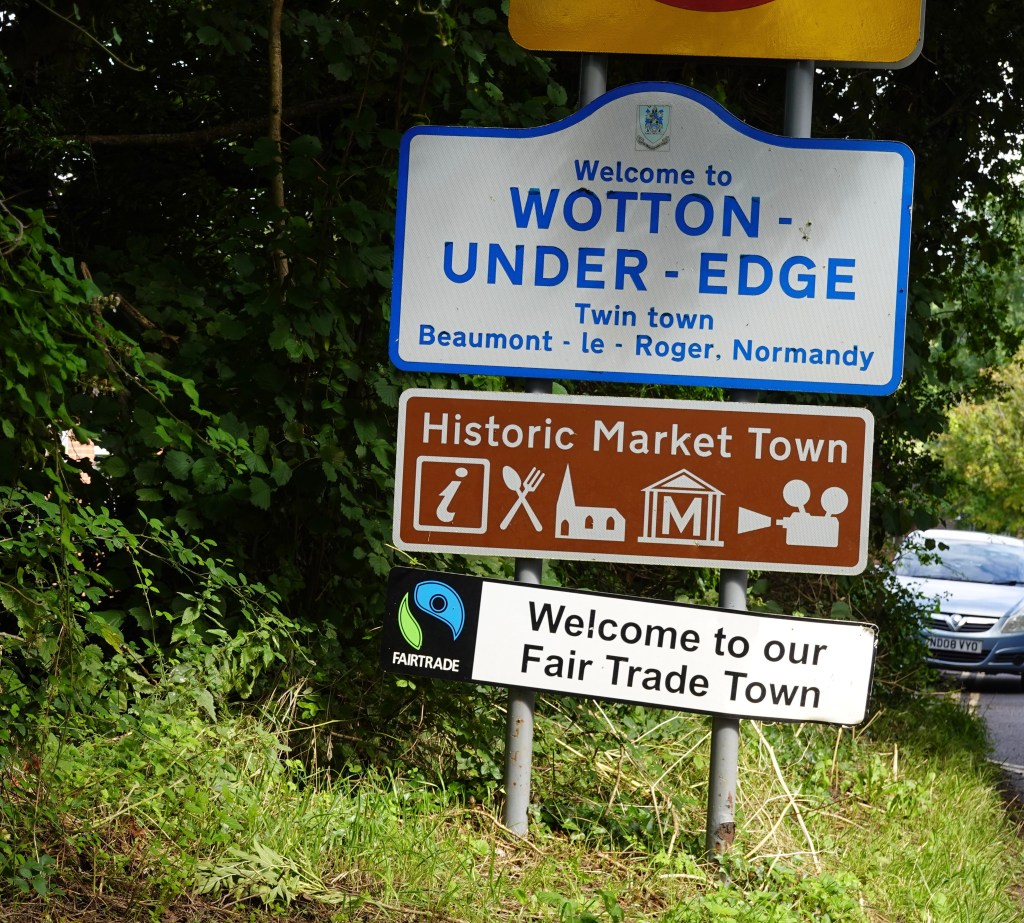
Day 9: Arklow to Waterford

After a solid breakfast, including tucking away a few spare items for morning tea we left Arklow.

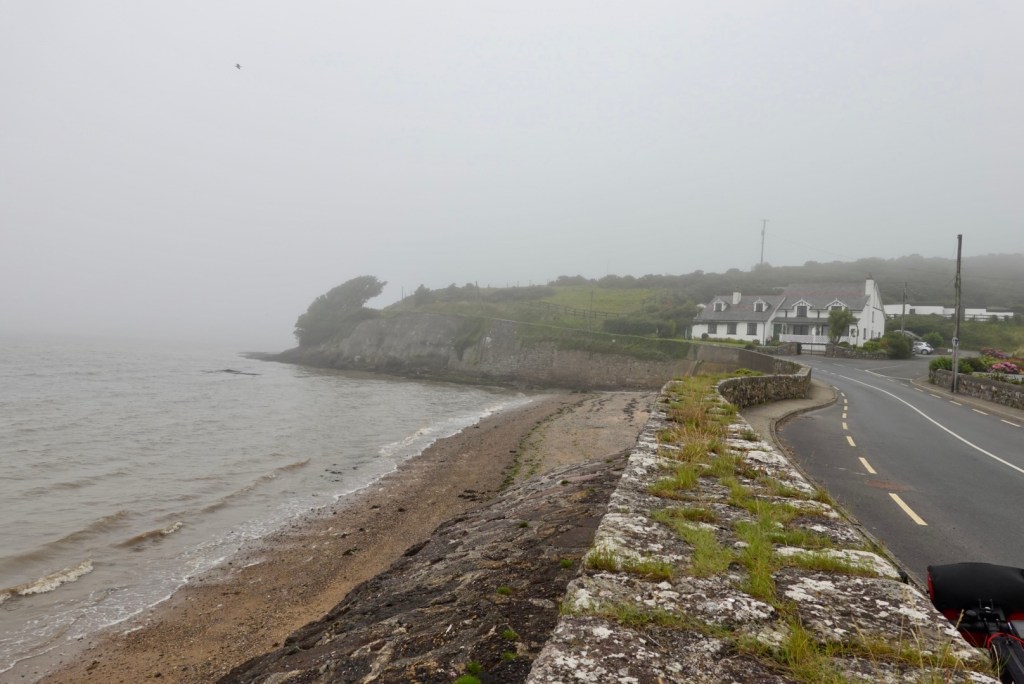
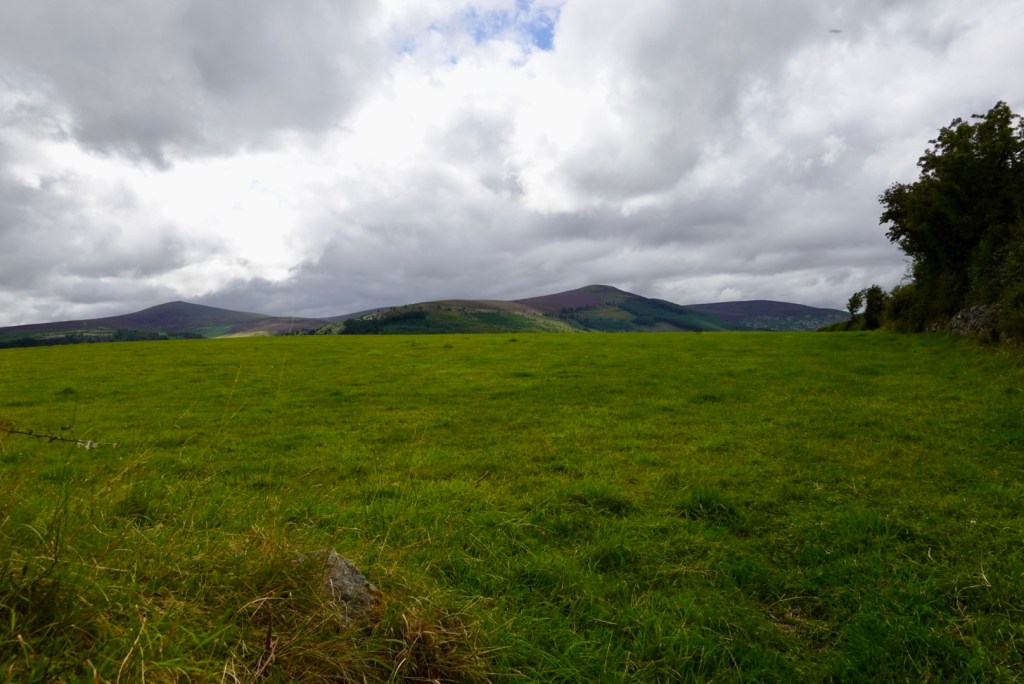
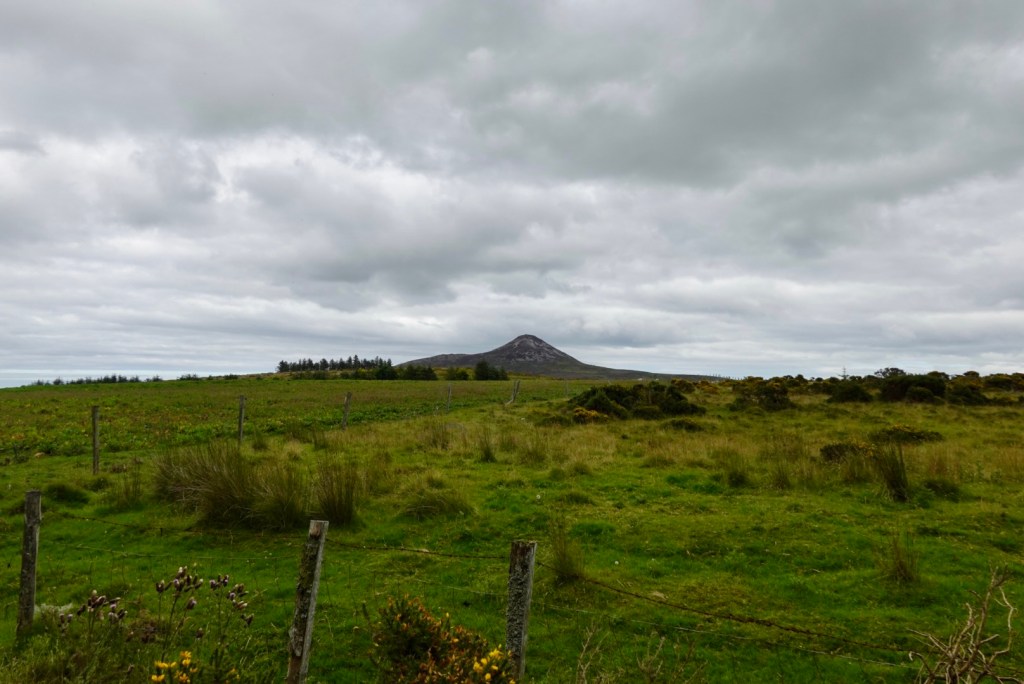
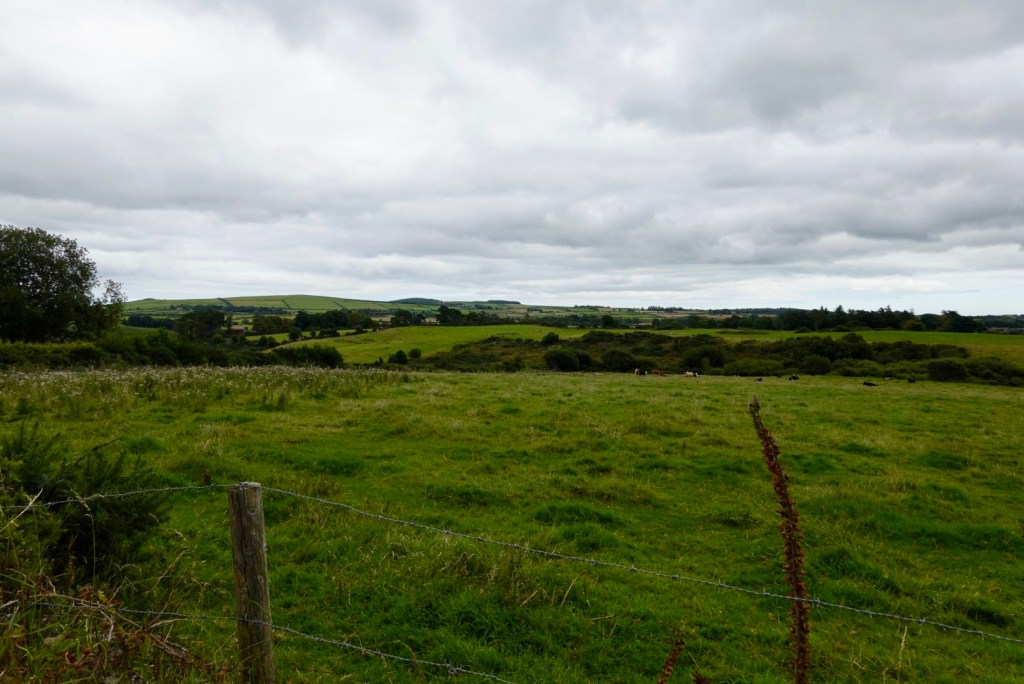
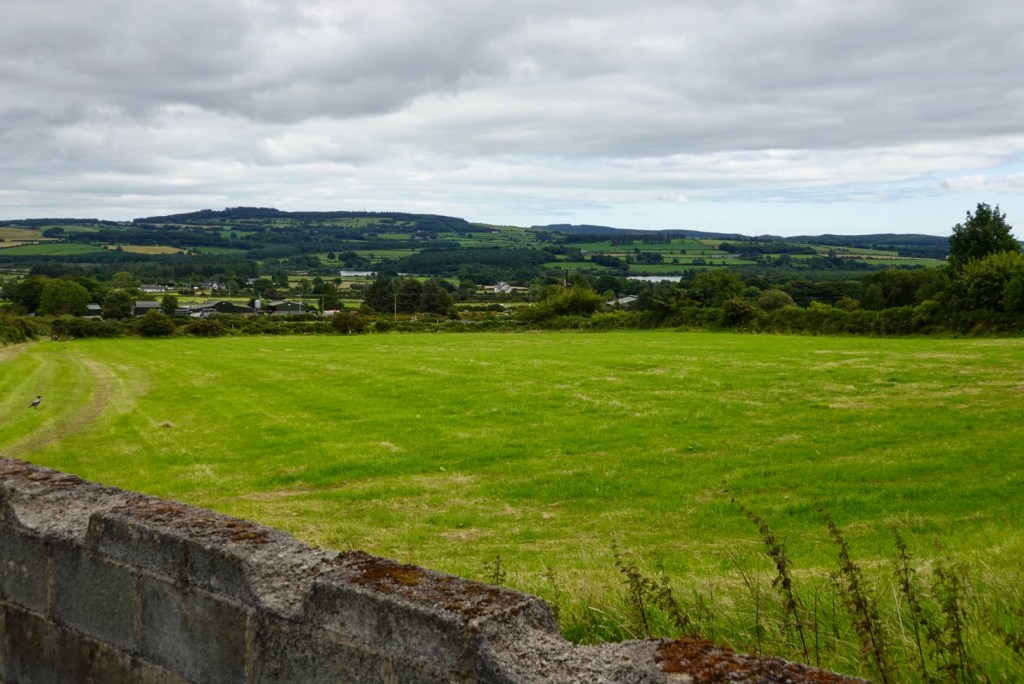
We had weird weather today. It drizzled and mizzled but did not really rain. We had a very low mist for much of the day.

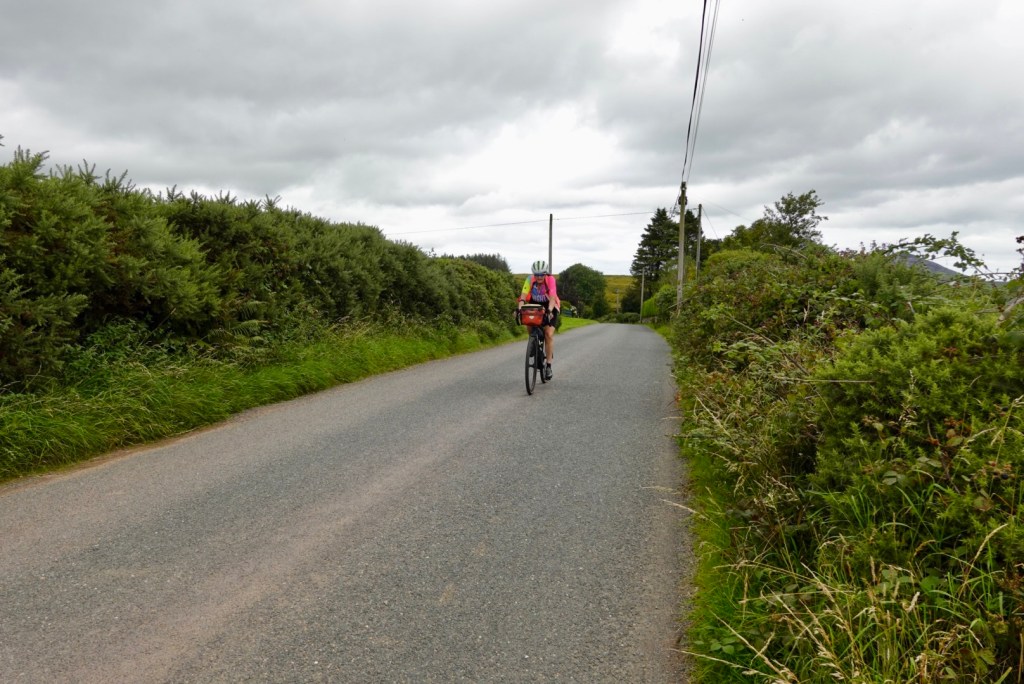
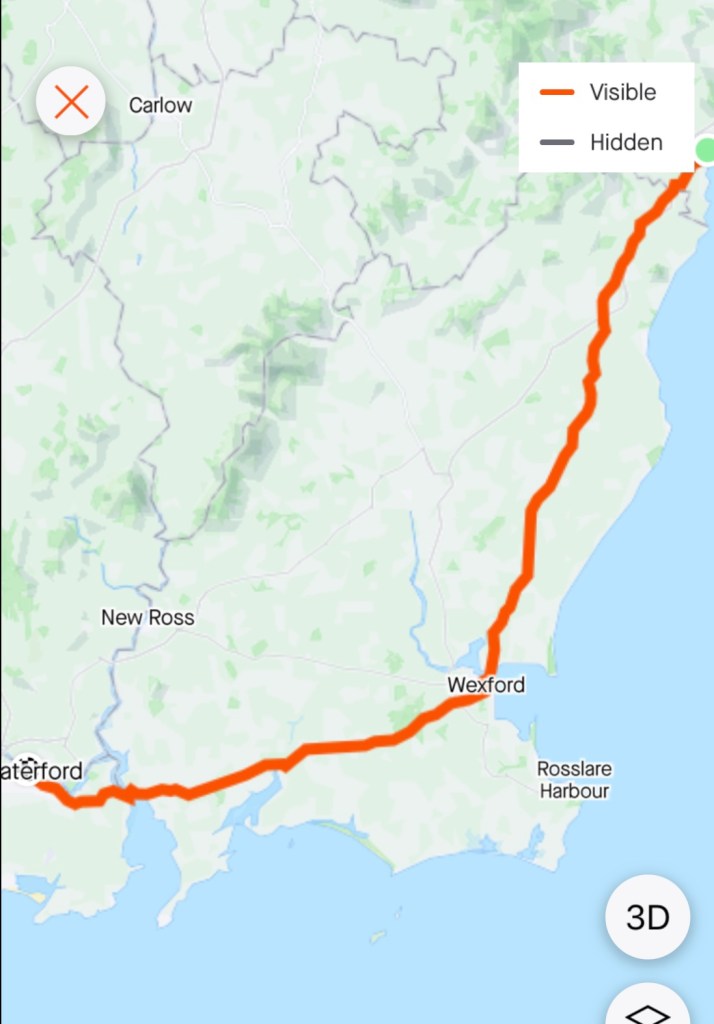
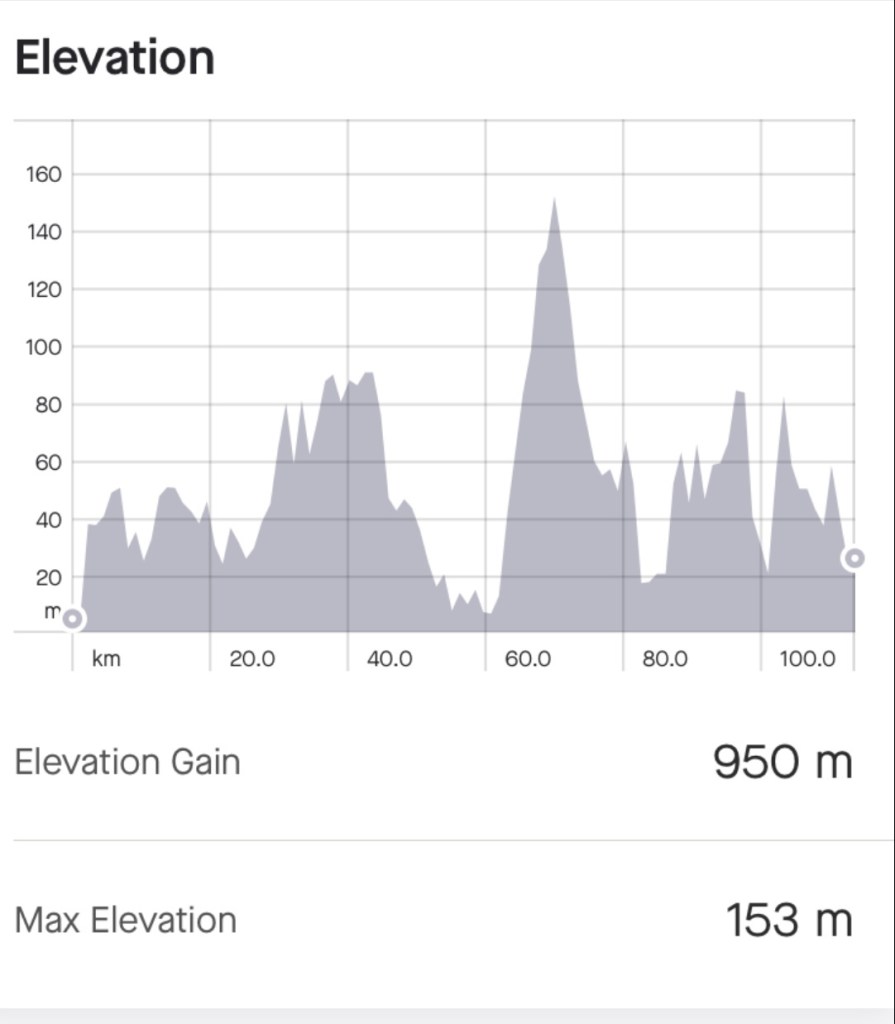
The ride today was 114 km with 950m climbing. The climbs were all ok, nothing too onerous. The roads varied, some were very busy, some had no verge, others had a verge of even a cycle path.

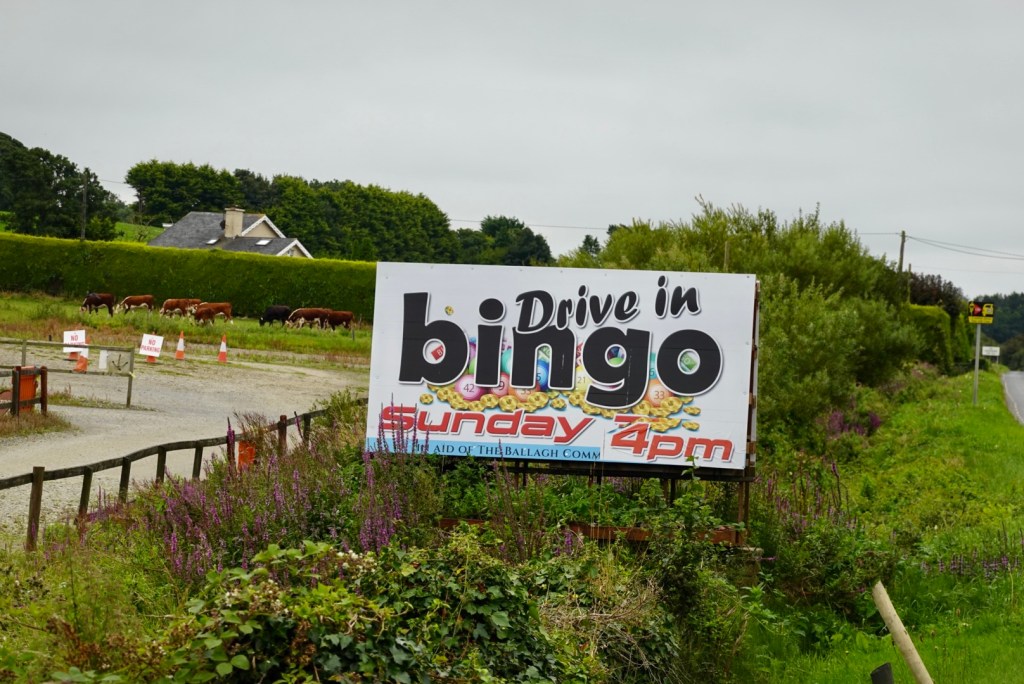
A series of one off sights to start with. Leaving Arklow at this roundabout was the honey hive.

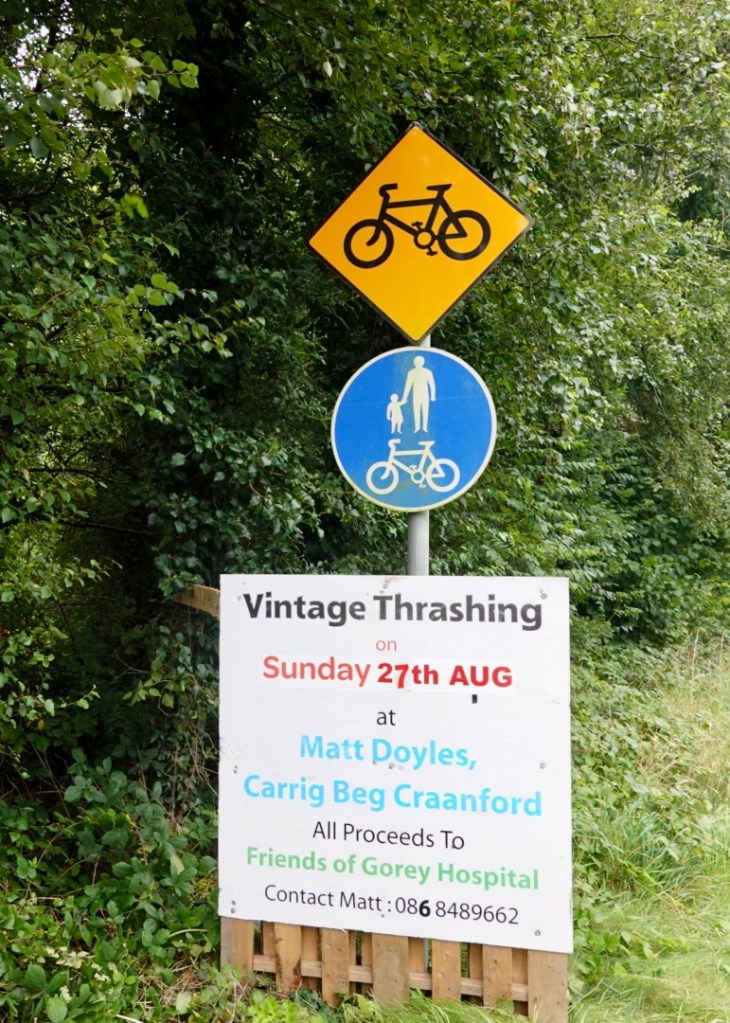
Pity we are not around for this event. Lock away your treasured oldies!
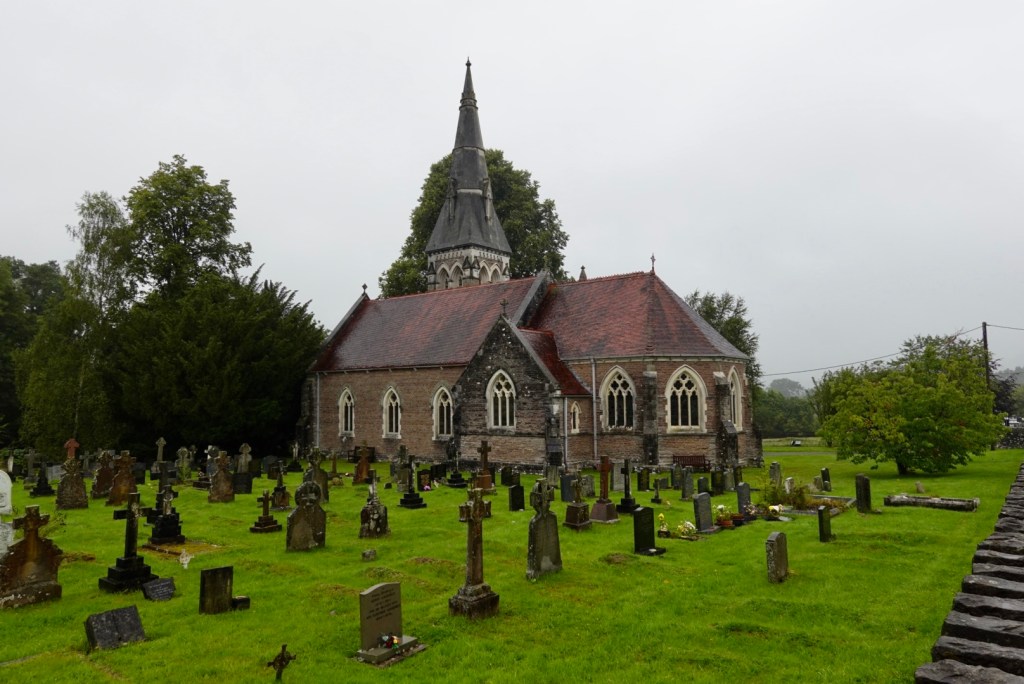
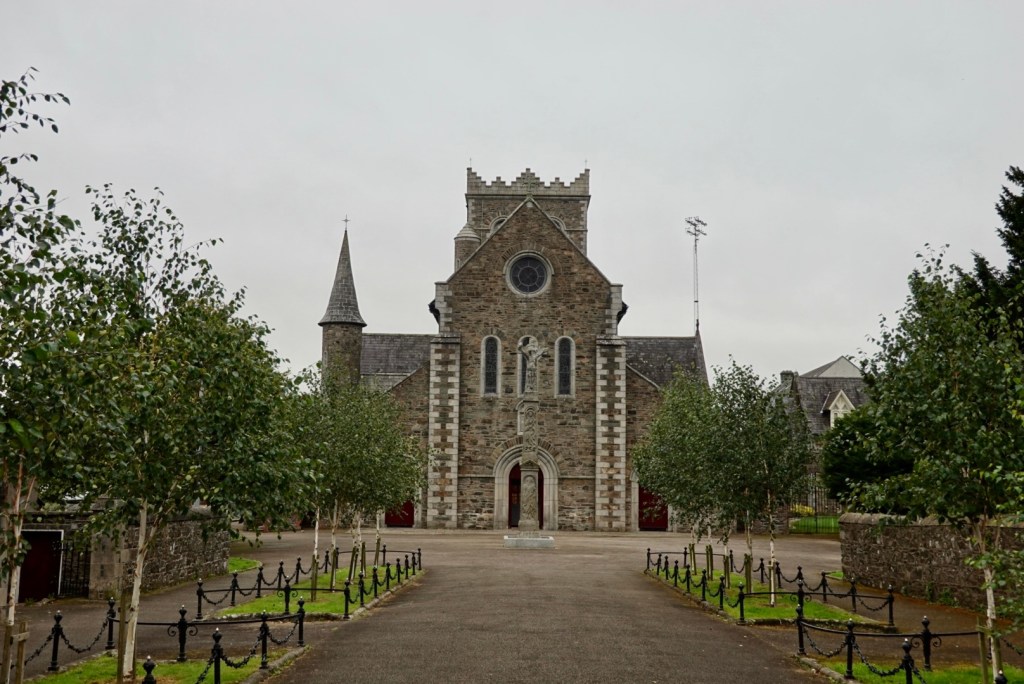
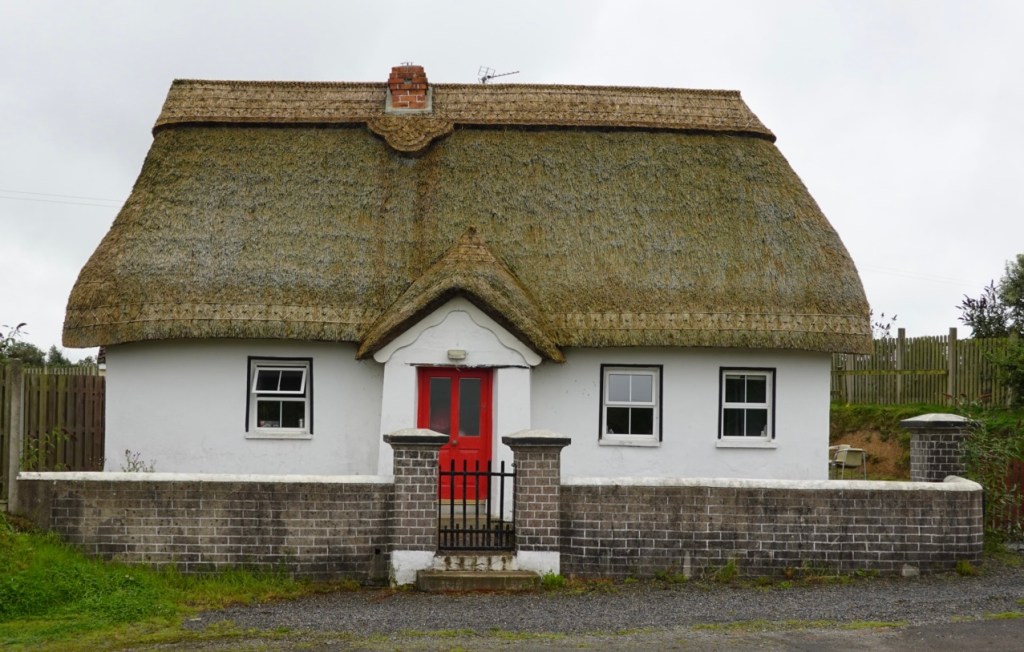
A nice church and house.
Beautiful gardens with nice security detail.
Don’t shoot me!
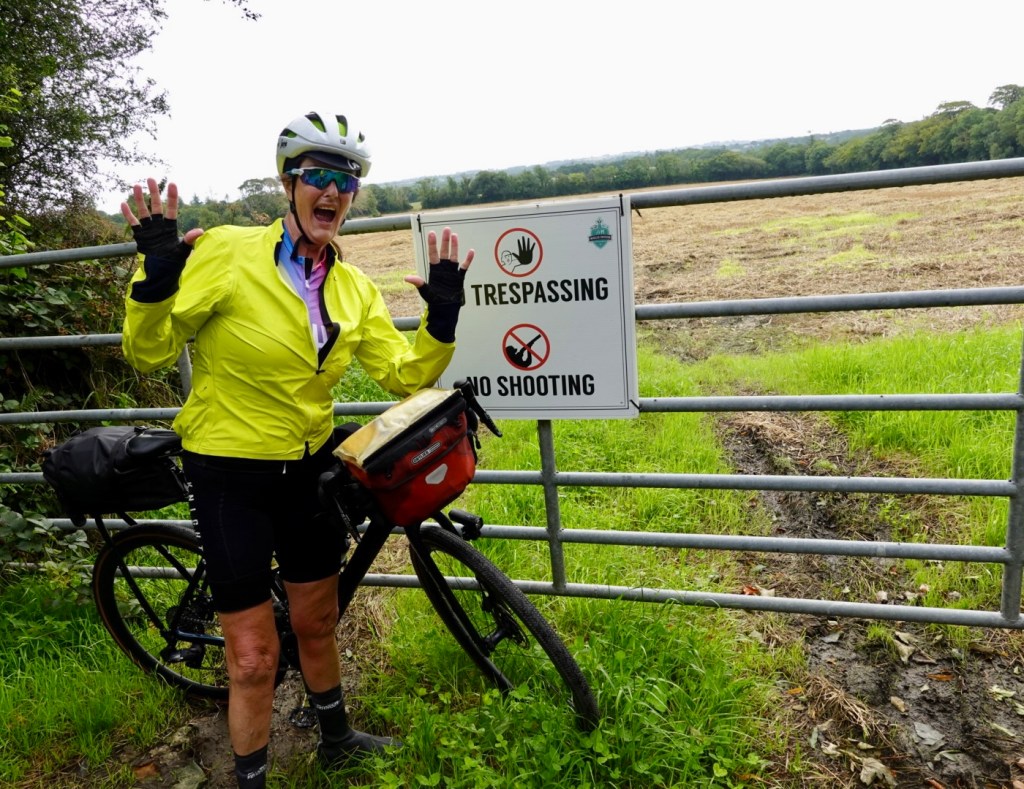
Dang, another event we are missing out on 🀣🀣.

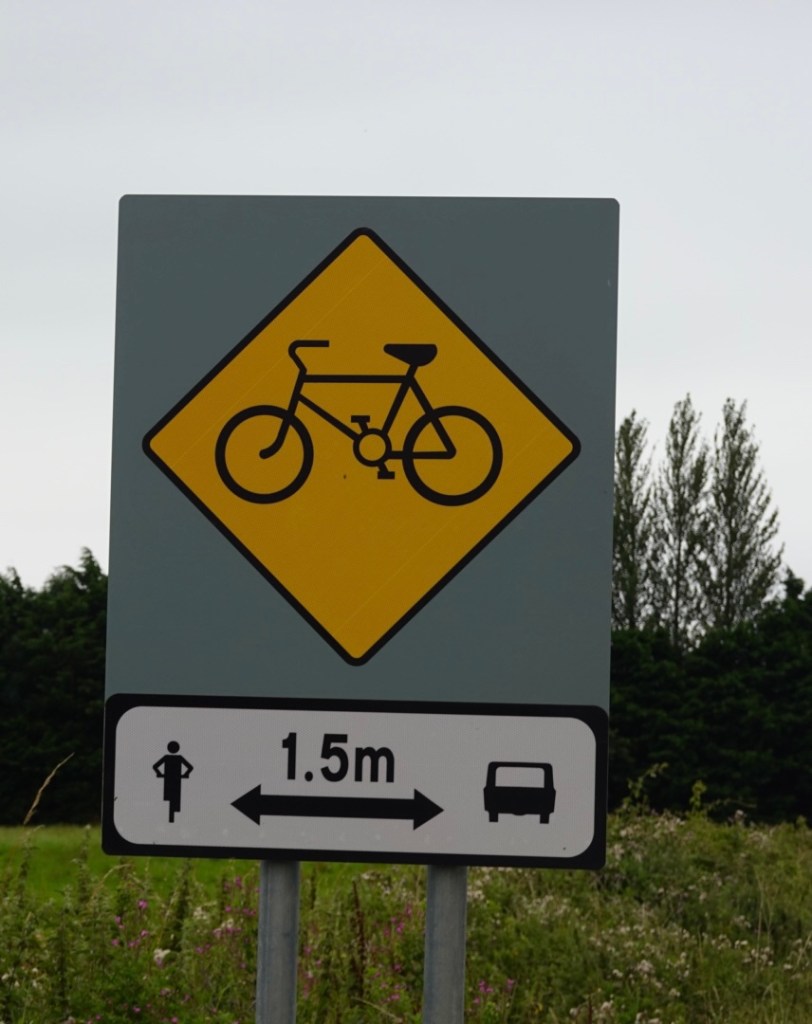
Really new signage, but some drivers today did not get that particular memo.
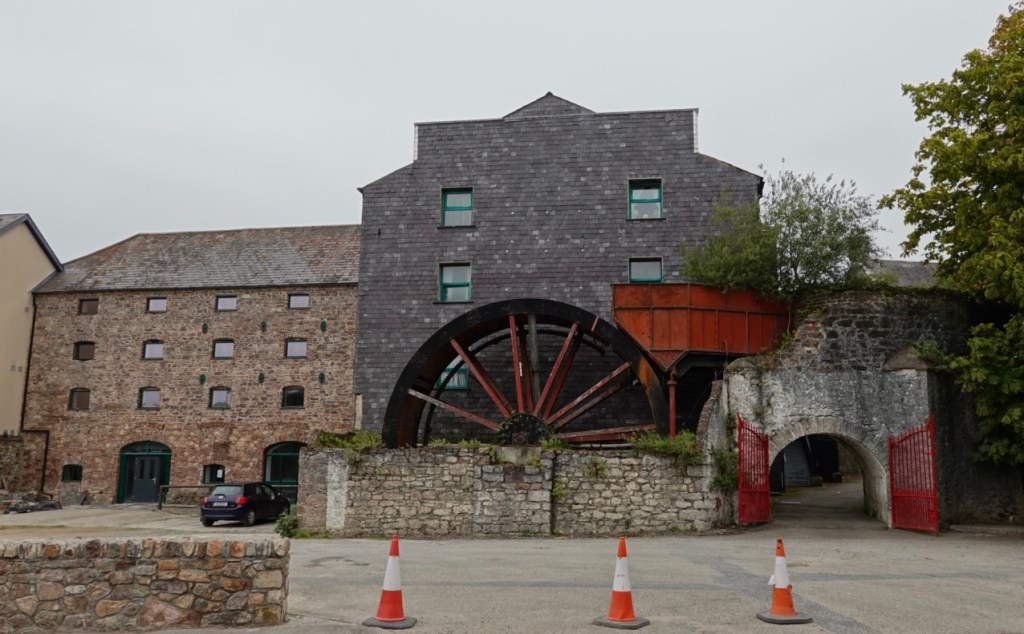
An old flour mill.
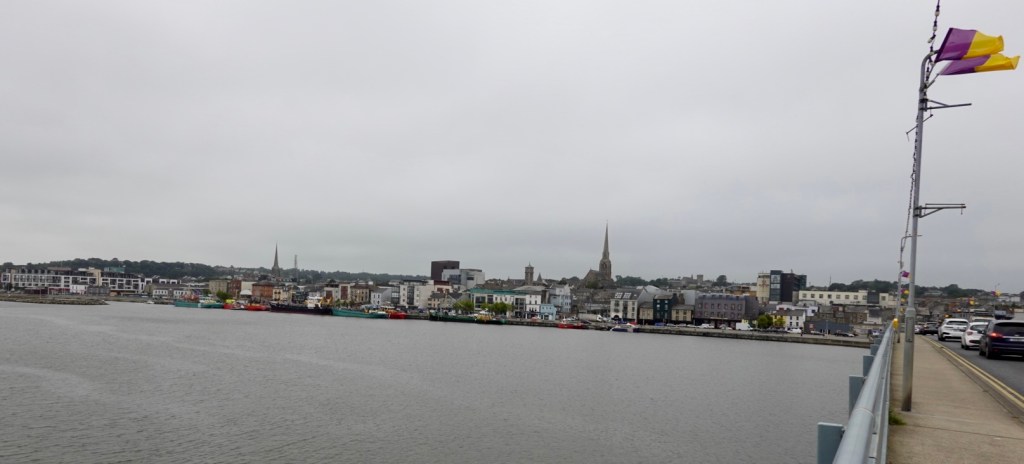
Wexford another town founded by the Vikings around 800 AD. Nearby is Rosslare Harbour, a ferry terminal with ferries travelling to Wales, France and Spain.

Lunch was planned for Wexford. We crossed the bridge, and I fancied sitting outside in a cafe along the river. Not to be, as we could not find one. We went to Tesco supermarket up the hill instead and sat in the carpark. Food was good!
A statue dedicated to John Barry, the father of the USA Navy, who was born in a nearby village.

Lots of pretty flowers along the waterfront.

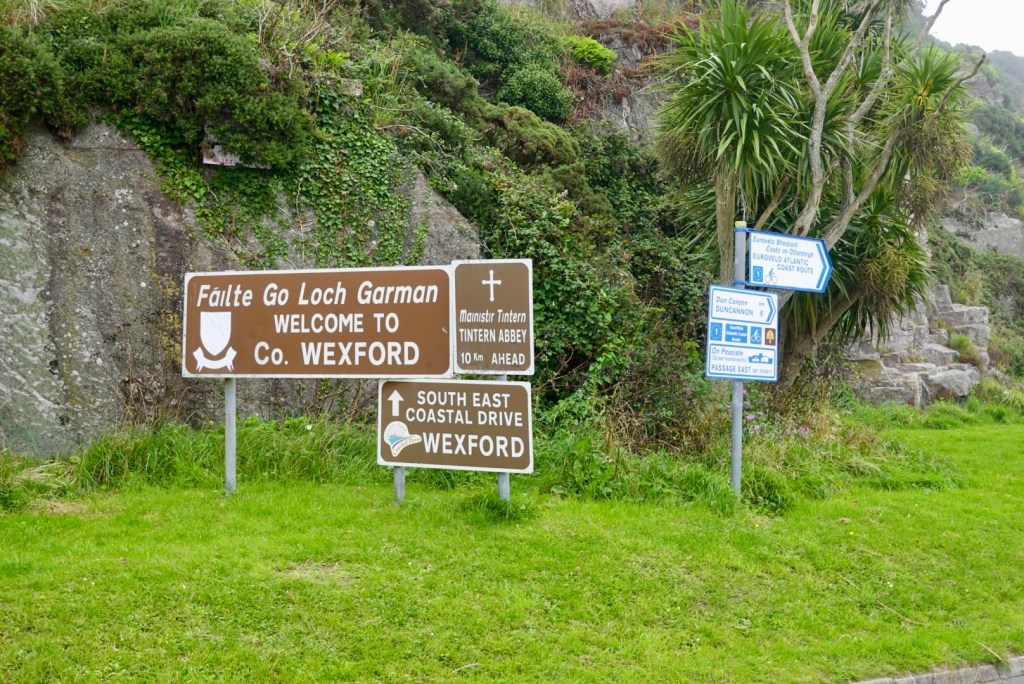
Leaving Wexford, this sign had me off the bike to photograph. My four children have an Irish heritage, and their surname is Geelan. Their great grandfather emigrated to Australia from Ireland. However, he was from Co. Leitrim, further north, closer to Northern Ireland.

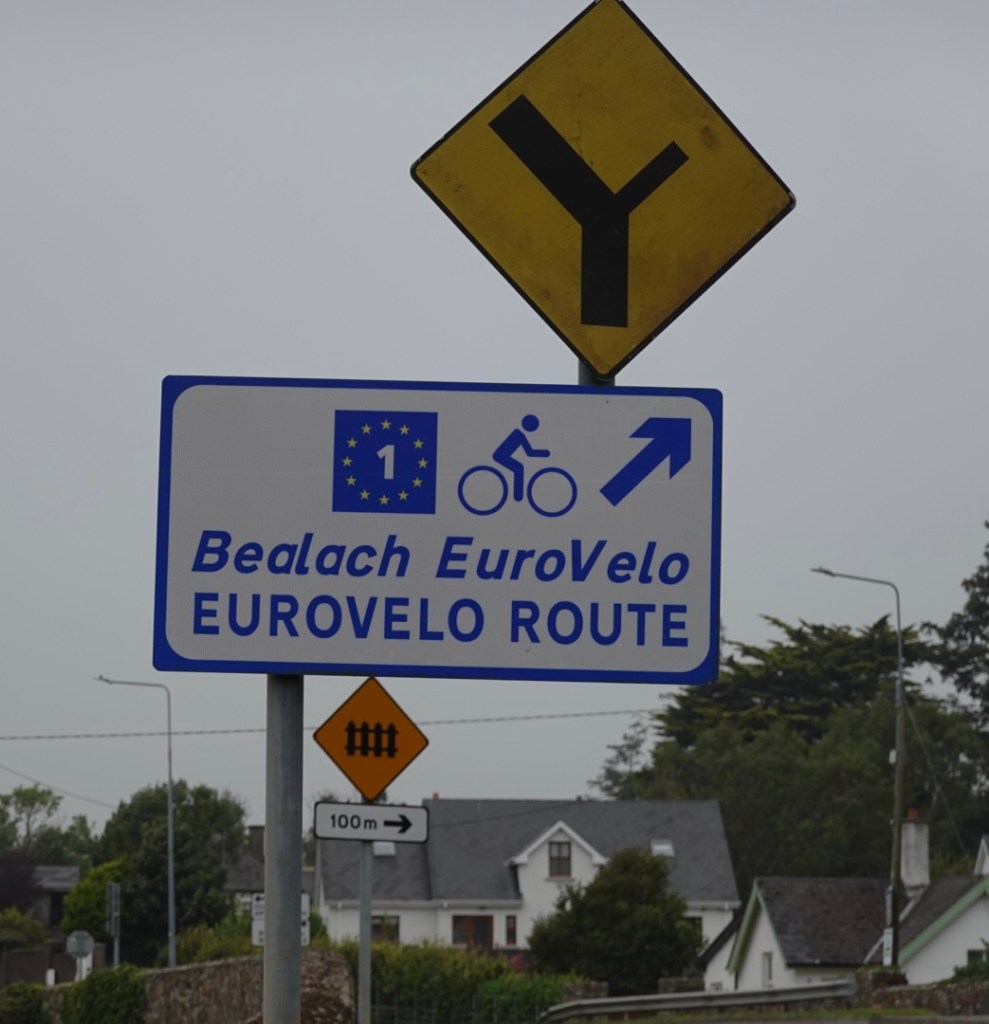
We started to see some of the EuroVelo 1 signs. We will criss cross, and follow EV1 on our continuing journey.
We stopped at this ruined church, then noted something else across the water, per the following photo.
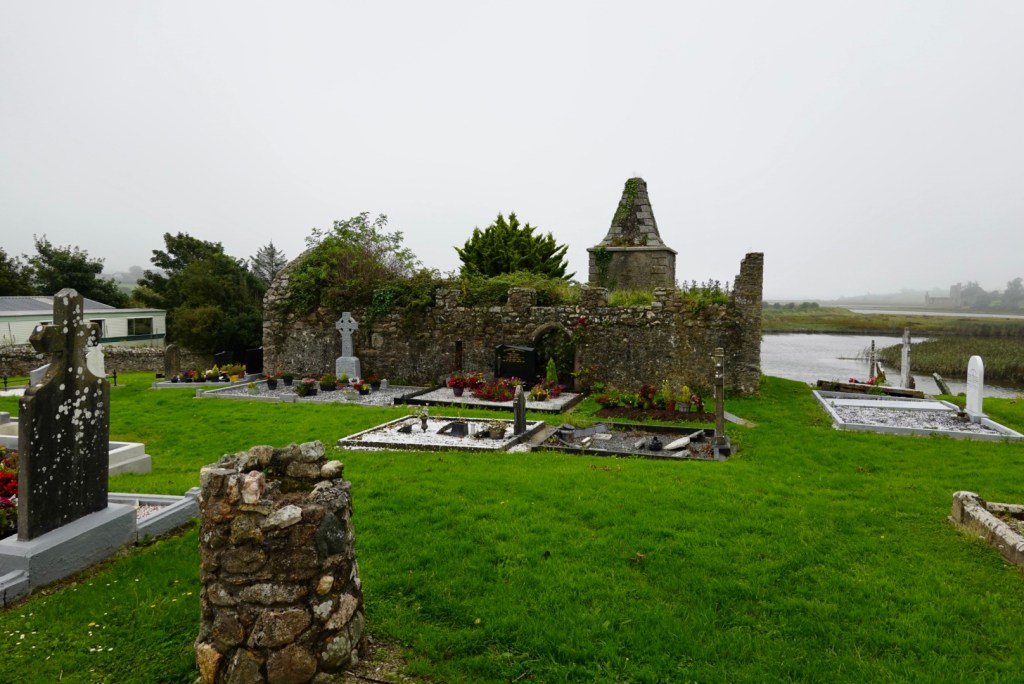
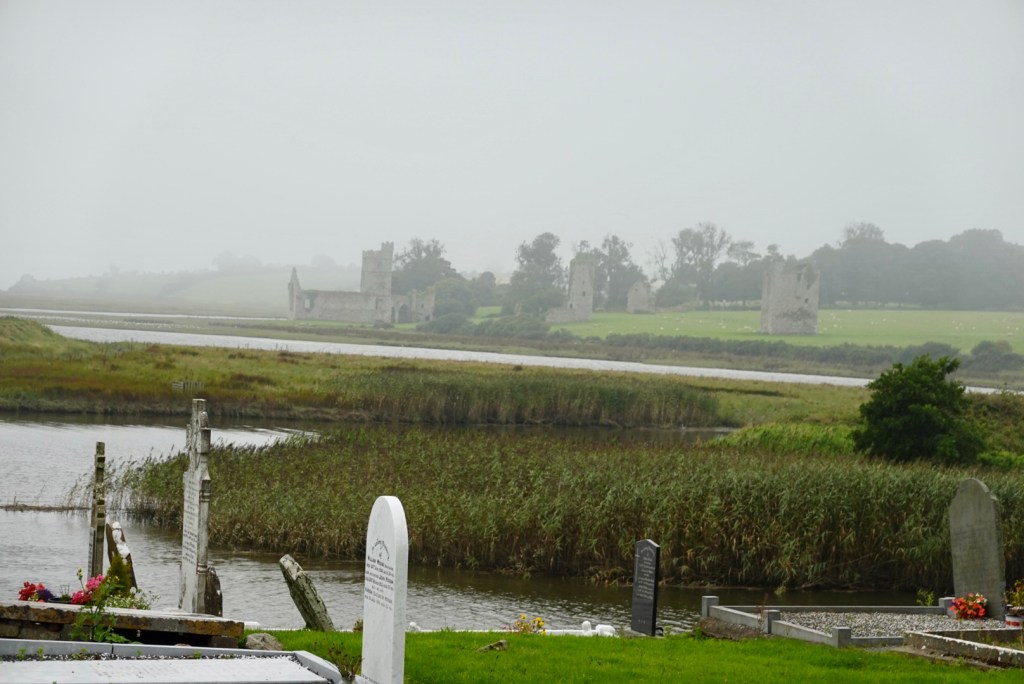
The ruins across the water look interesting, and very eerie in the mist.

Post ride research indicates that this site is known as Clonmines Abbey. It is on private land. It is a deserted medieval borough dating back to the 13th century.

Arthurstown looked eerie too.
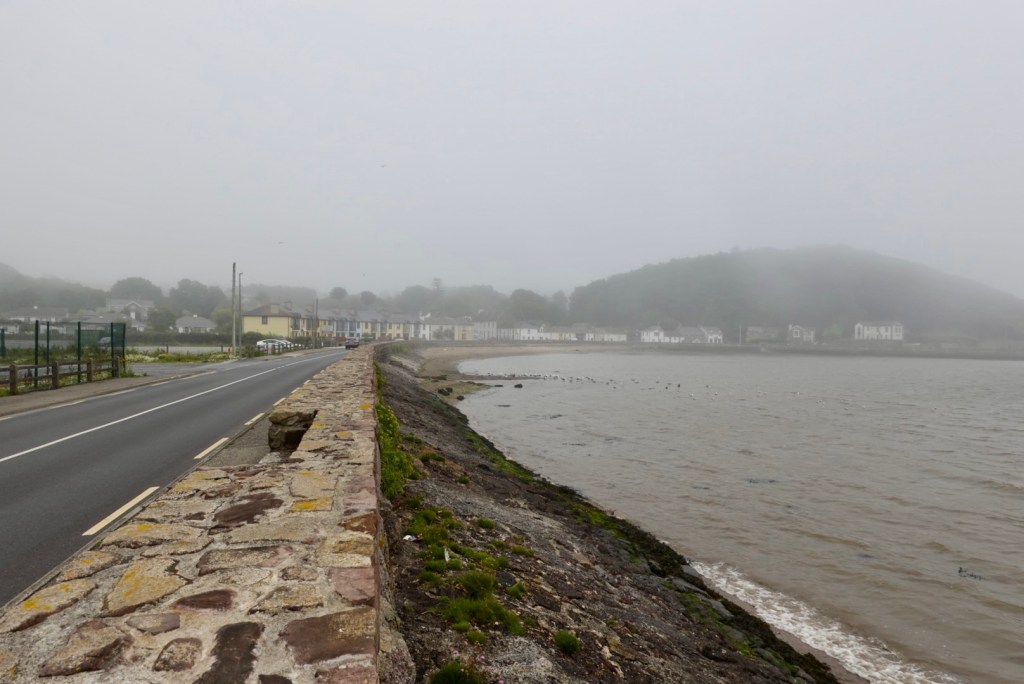
We rode up to the left and around this headland

Up the hill, and around the corner from Arthurstown is Ballyhack.

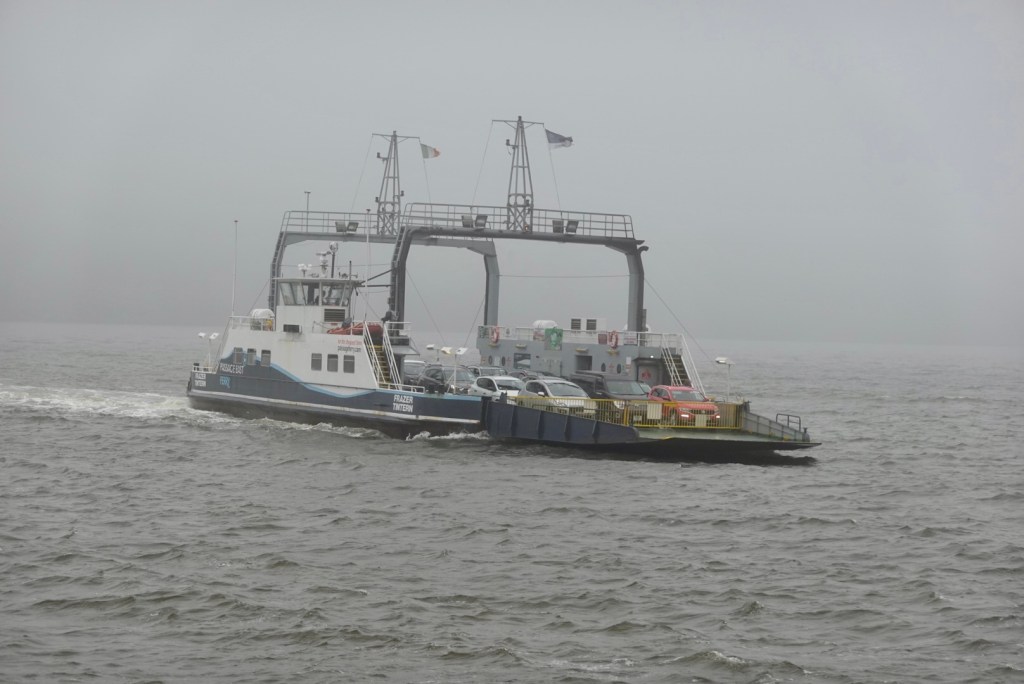
Ballyhack contains a 15th century Norman castle that has been partially restored. Features include its dungeon and a murder hole! It was from this village that we hopped onto the ferry, that crosses the broad estuary of The Three Sisters, to Passage East. Using the ferry saves around 55 km cycling.

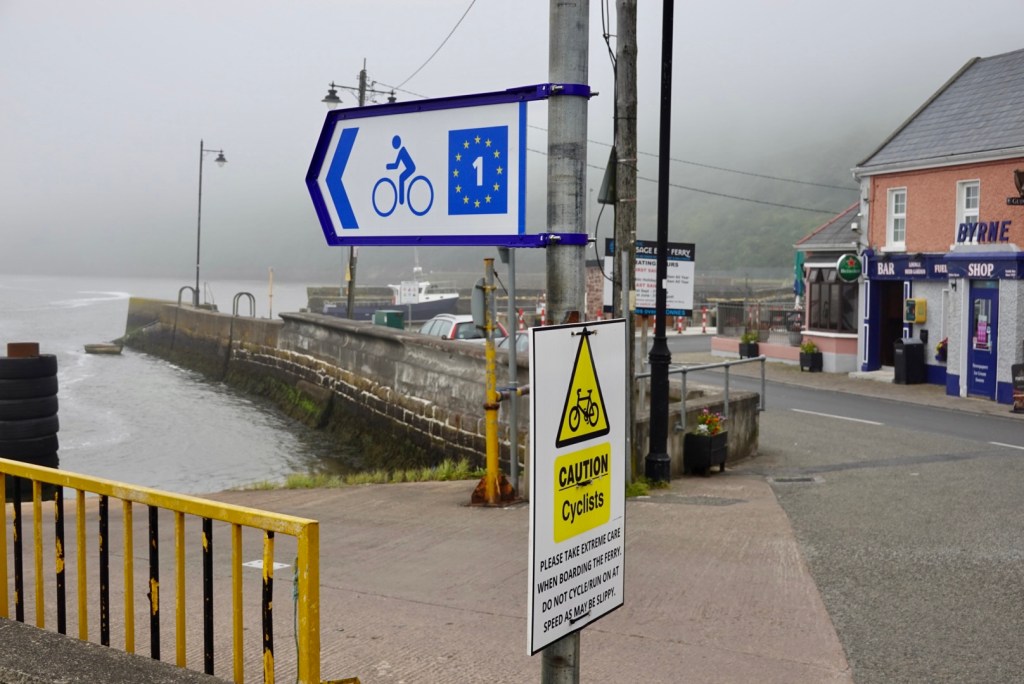
Over the road from the ferry
The ferry arriving

I chatted with another cyclist. He is from France, living near the Swiss border. He is on a three week cycle ride and following a similar route to us.
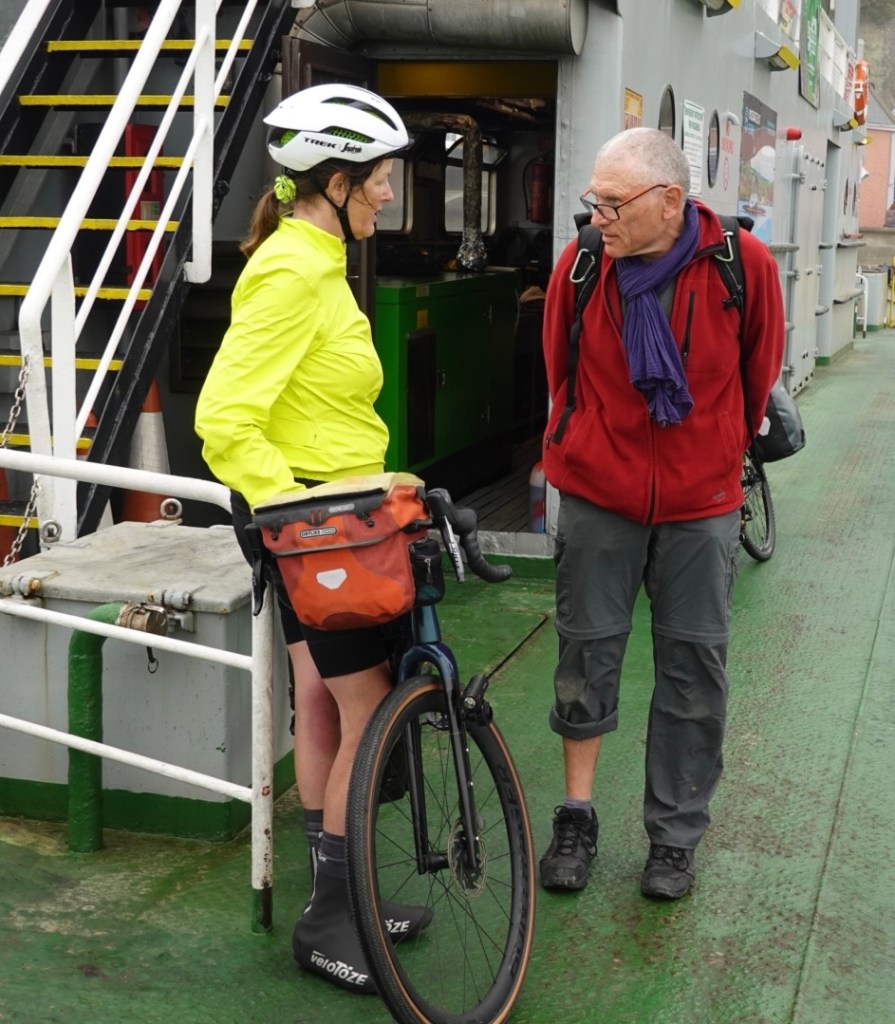
In earnest conversation

Passage East is a small fishing village on the west bank of Waterford Harbour. The Norman invasion of Ireland began here in 1170.
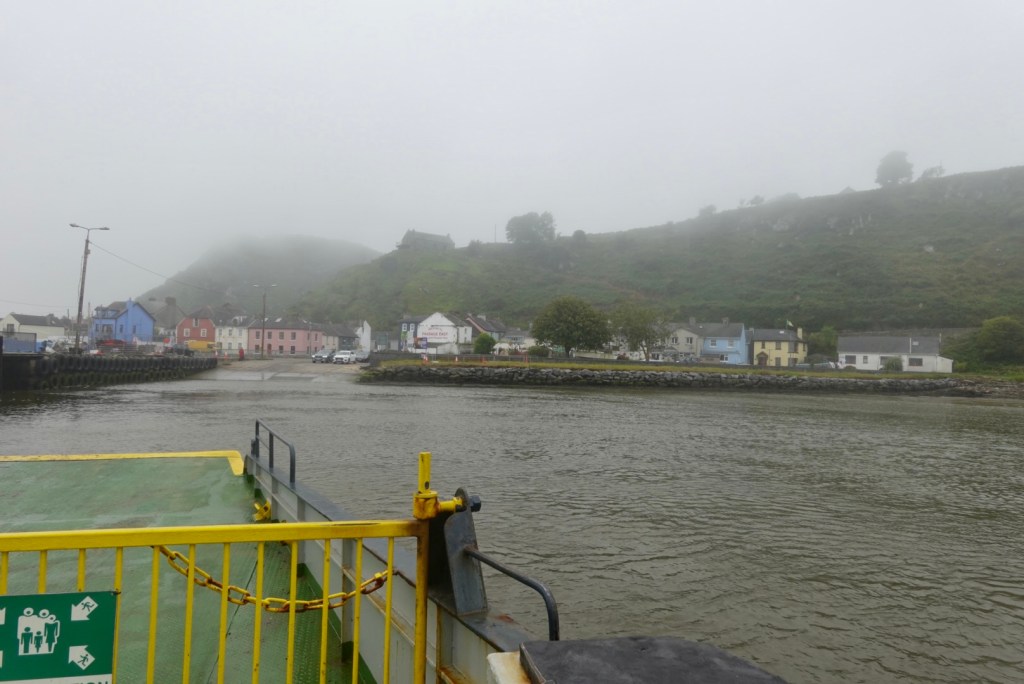
Up the hill and around, was very pleasant. After about 8 km we were on the outskirts of Waterford, in super busy traffic again.
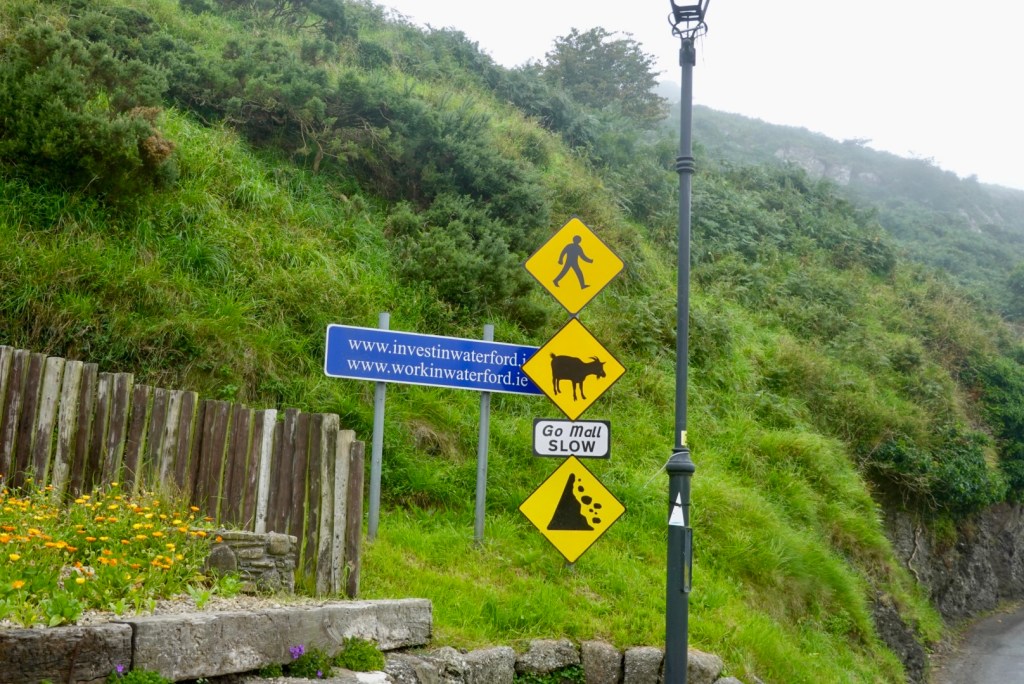
Waterford is the fifth largest city in the Republic of Ireland famous these days for Waterford Crystal (although sadly was shut down in 2009 after the falling into receivership).

Again, it was the Viking raiders who first established a settlement nearby in 853.

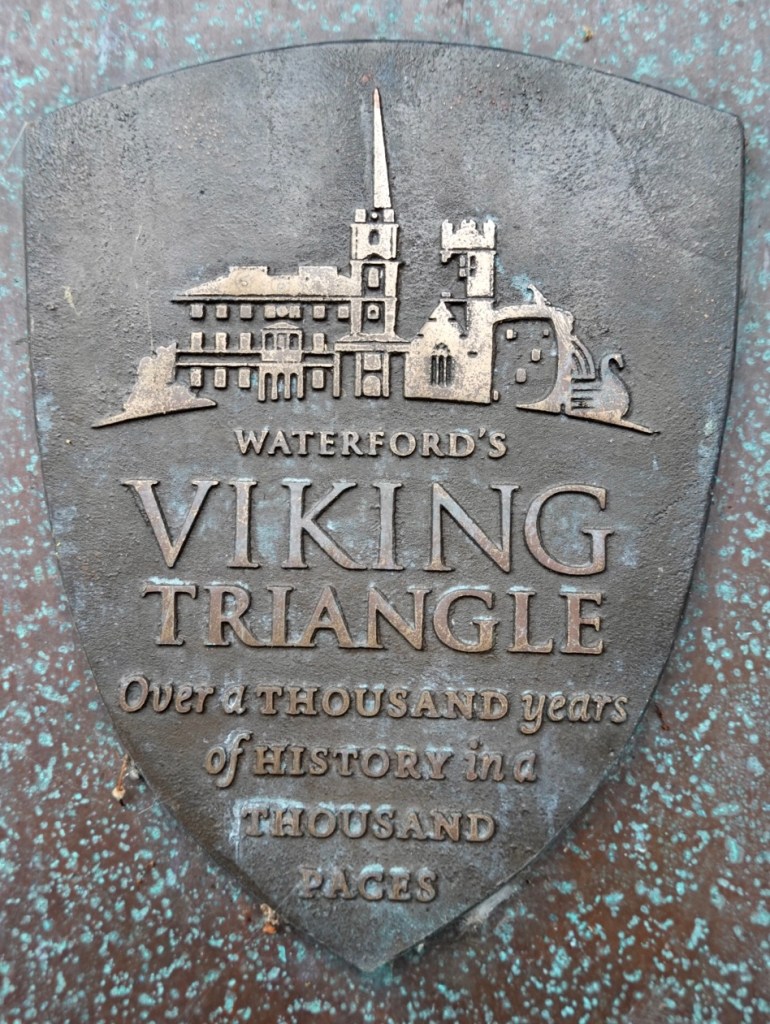
Reginalds Tower is the oldest building in Ireland and believed to be the first in Ireland to use mortar. It is located in the area known as the Viking Triangle. A replica Viking longship, 12 metres in length is on display outside the Tower.

The tower has a long and interesting history.
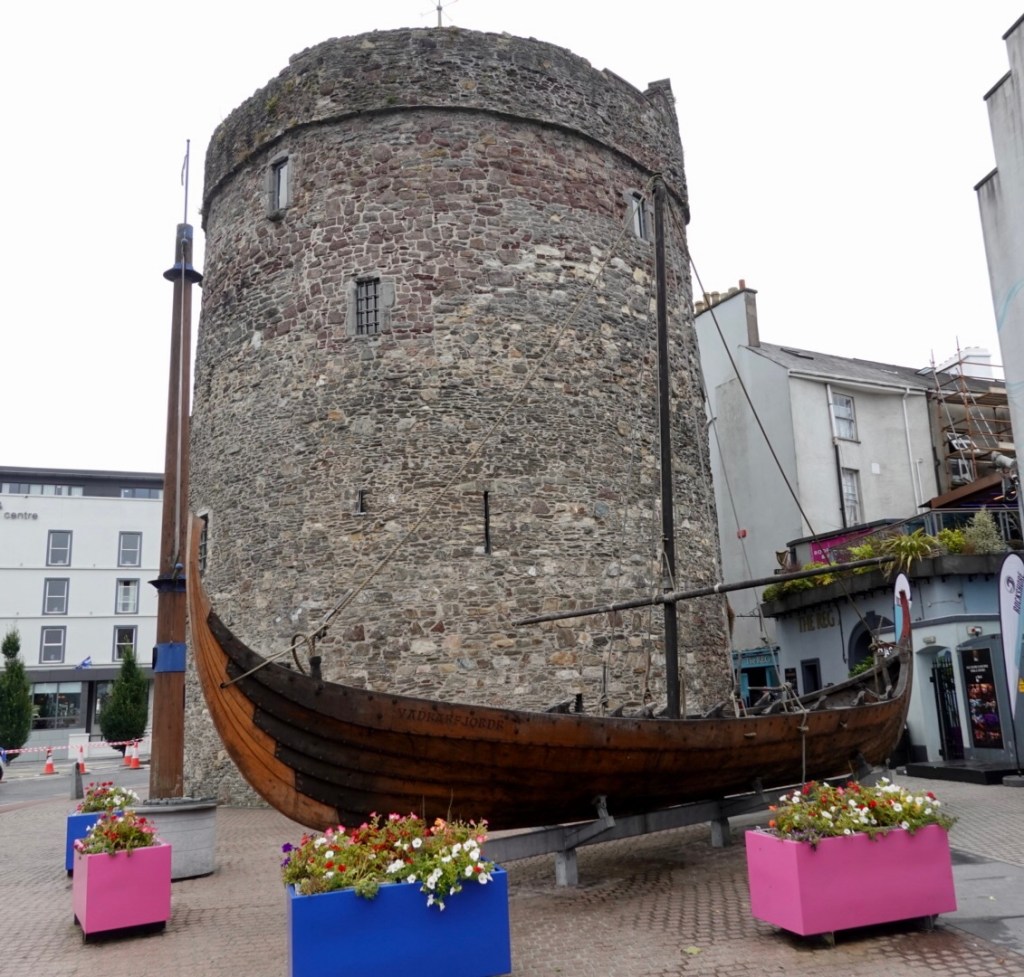
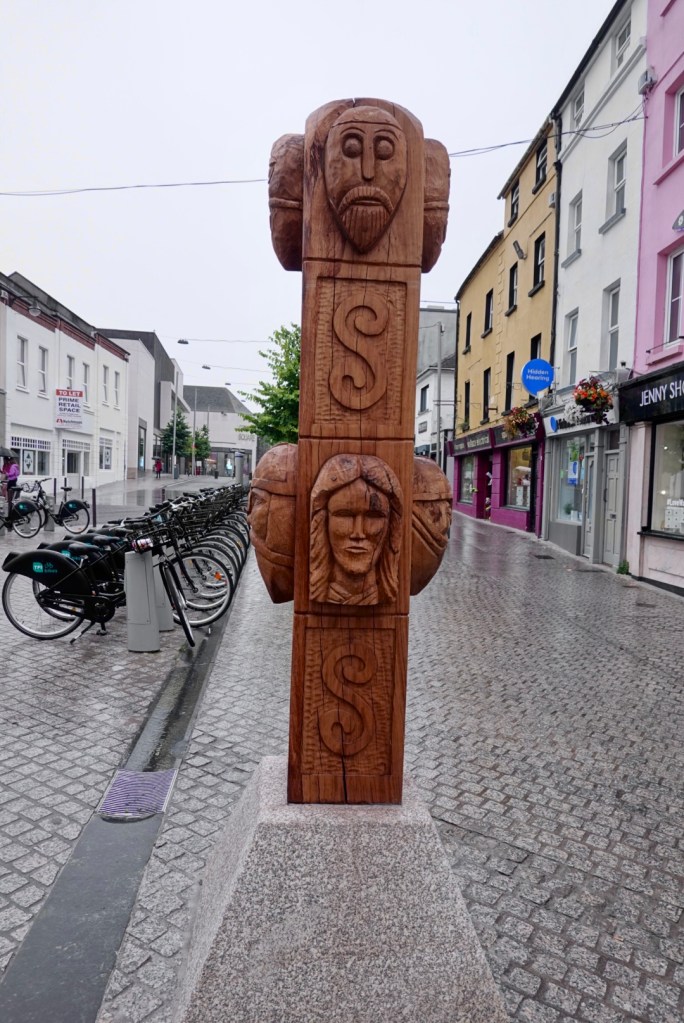
Waterford has an interesting series of buildings relating to their history, within an area known as the Viking triangle. Everywhere you walk, there are Viking references. Even the wifi password at our accomodation is β€˜Viking city’.

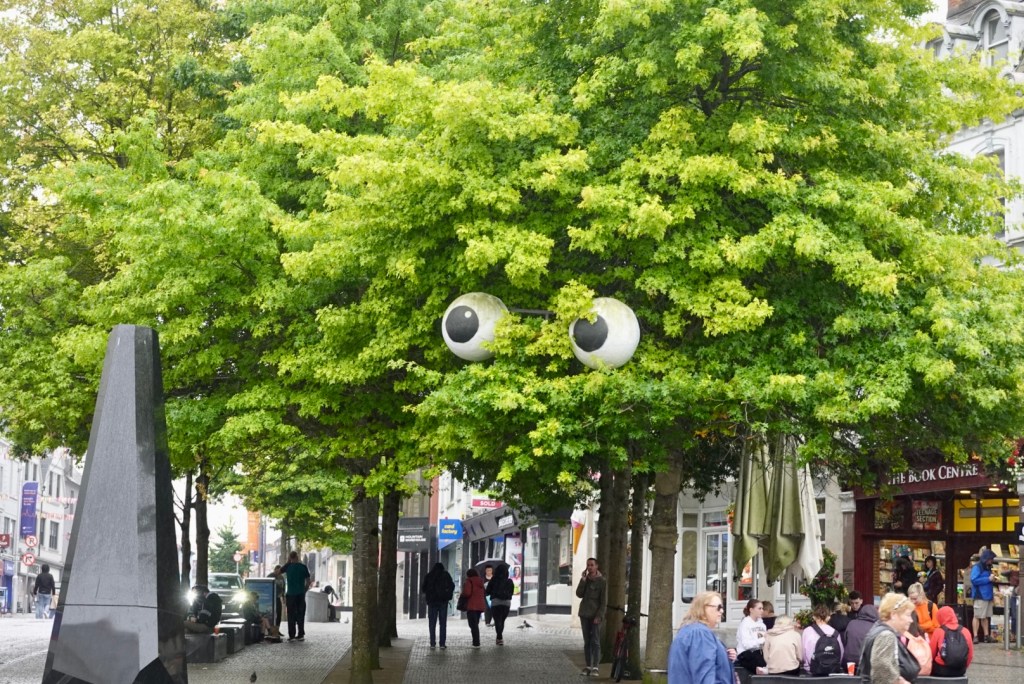
Eyes are watching you

This is a memorial to the youngest British soldier killed in Word War 1, John Condon, aged 14. His war grave is one of the most visited in Belgium. John was born in Waterford in 1900.

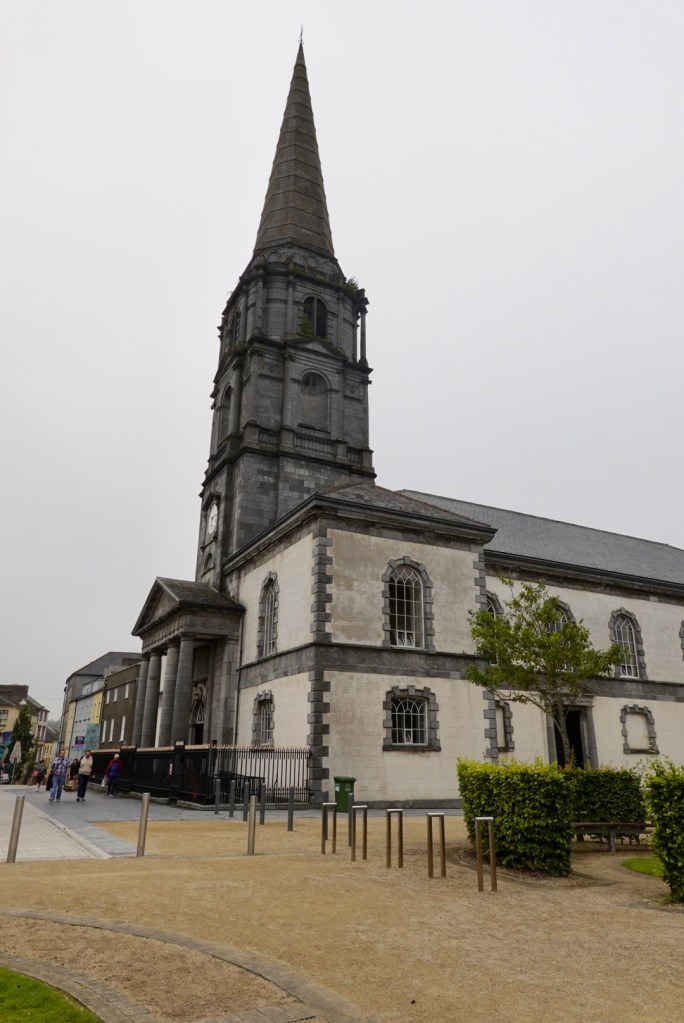
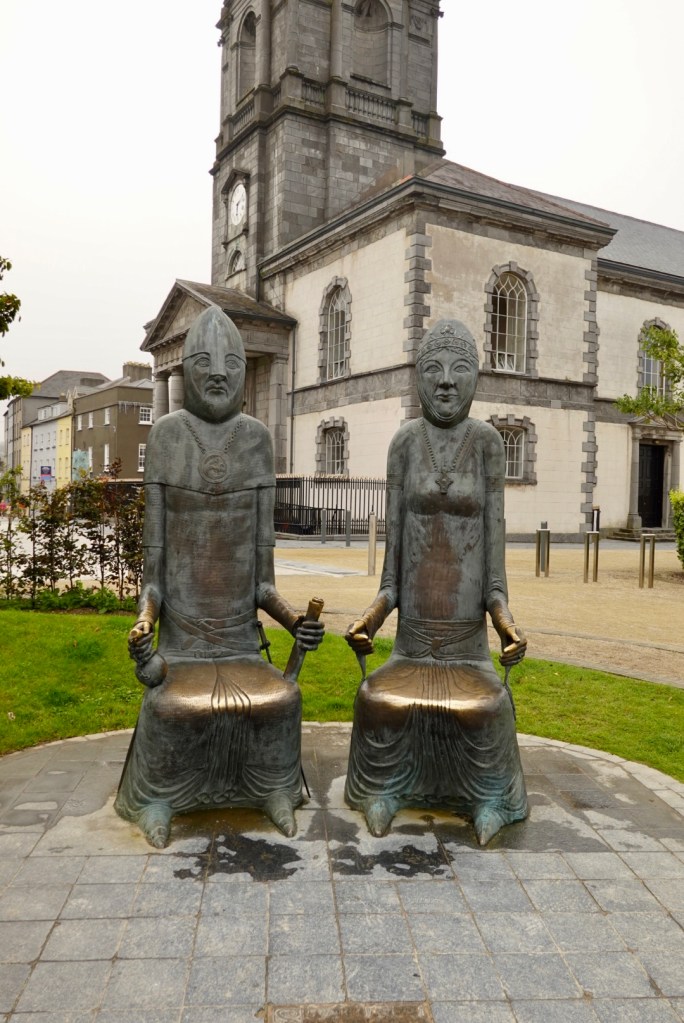
A cathedral has stood on this site since 1096 when Malchus, the first bishop was consecrated by the Archbishop of Canterbury. With an extensive history, the medieval cathedral was demolished in 1773 and Rep,aced by this current cathedral.
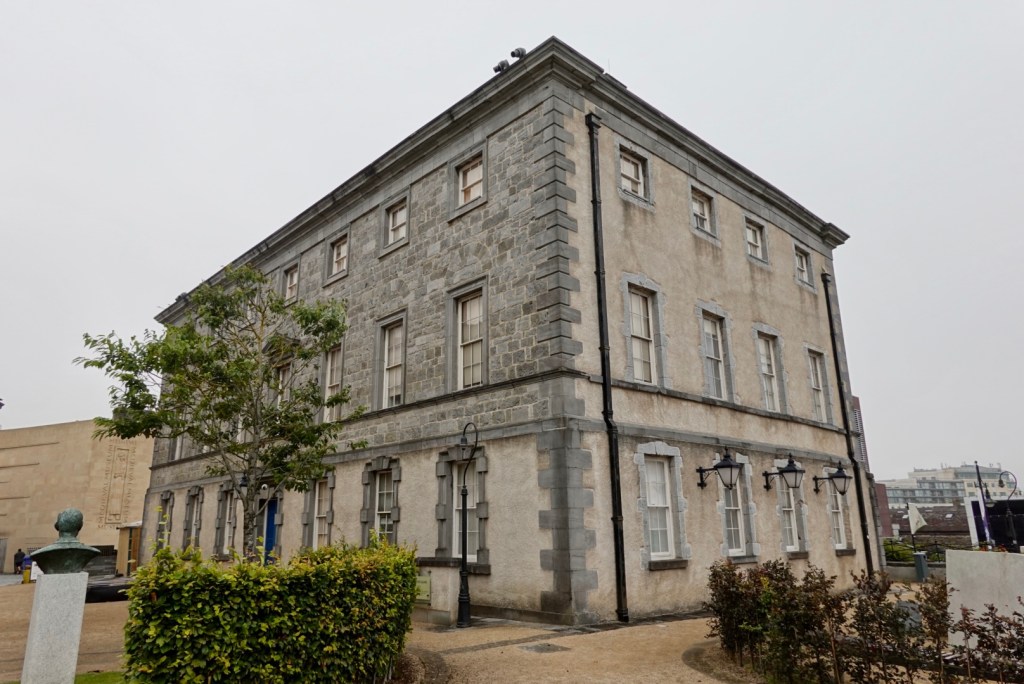
The Bishop’s Palace was built in the site of the medieval palace. It has been describes the finest 18th century ecclesiastical palace in Ireland.
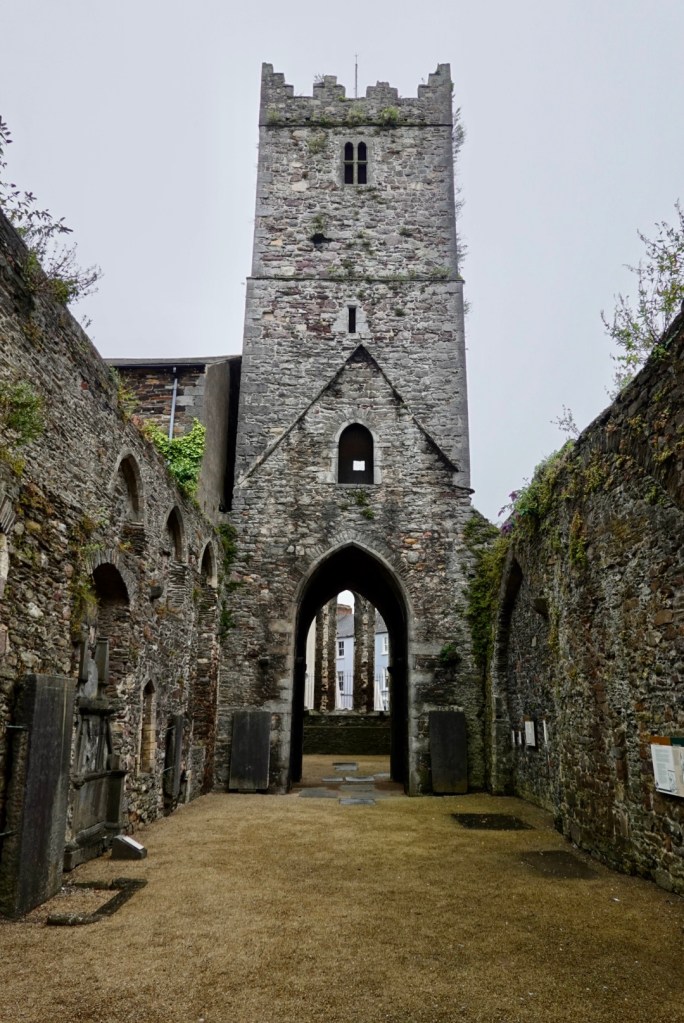
These are the remains of the Franciscan Friary, funded in 1241 by King Henry III. In 1541 King Henry VIIIclosed the monasteries and it reopened as an alms house. Inmates were required to pray for the soul of Henry VIII right up until the middle of the 20th century!

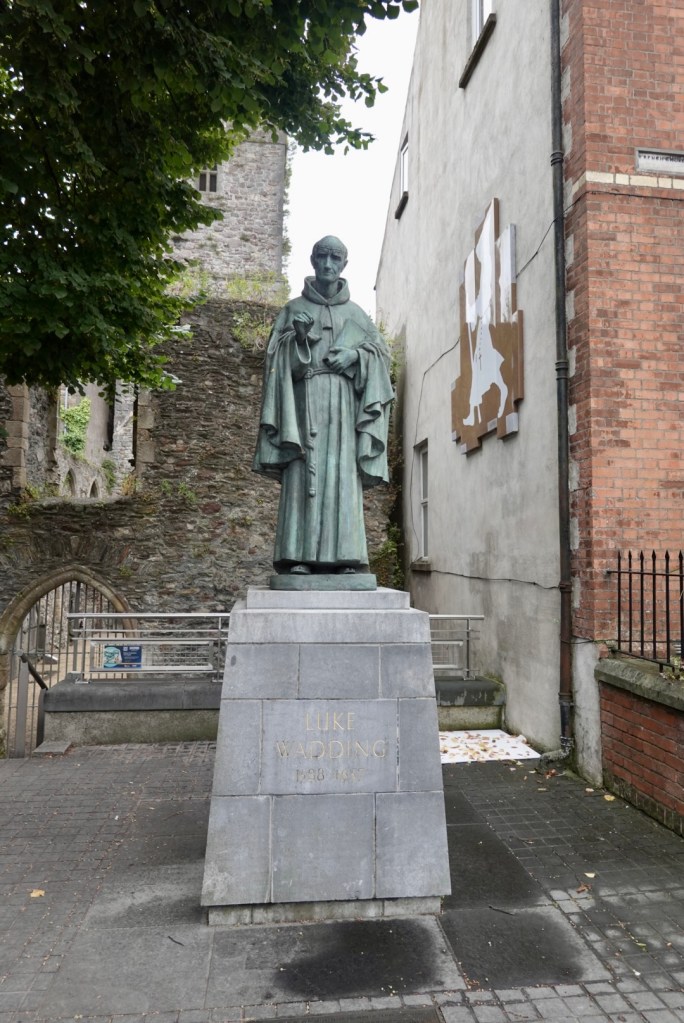
The entrance is watched over by Luke Wadding the only Irishman to have ever received votes in a papal enclave.
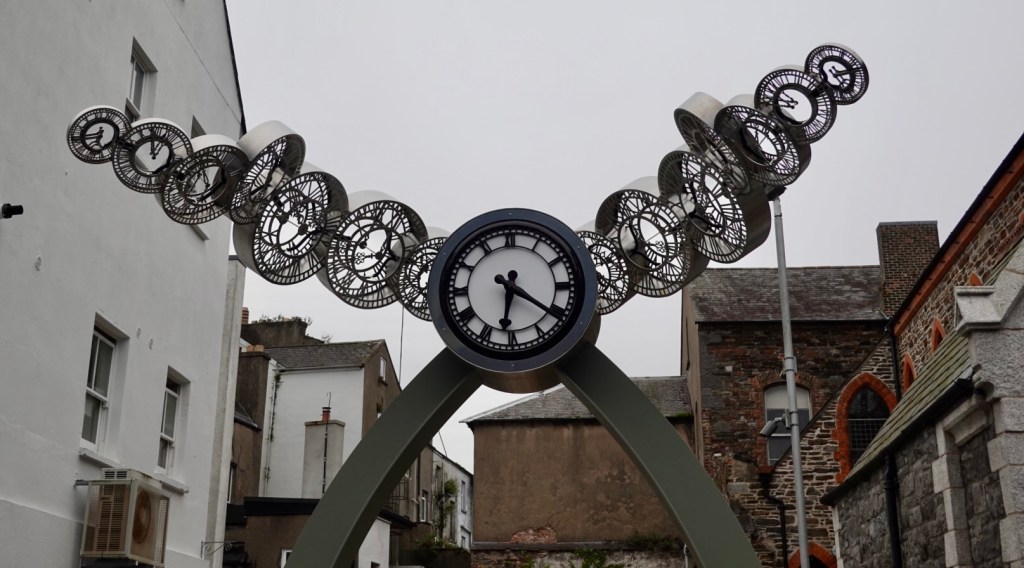
There are a number of museums in the area including Waterford crystal, medieval and a Time museum. Everything had closed when we wandered around by this installation is outside the Time Museum.
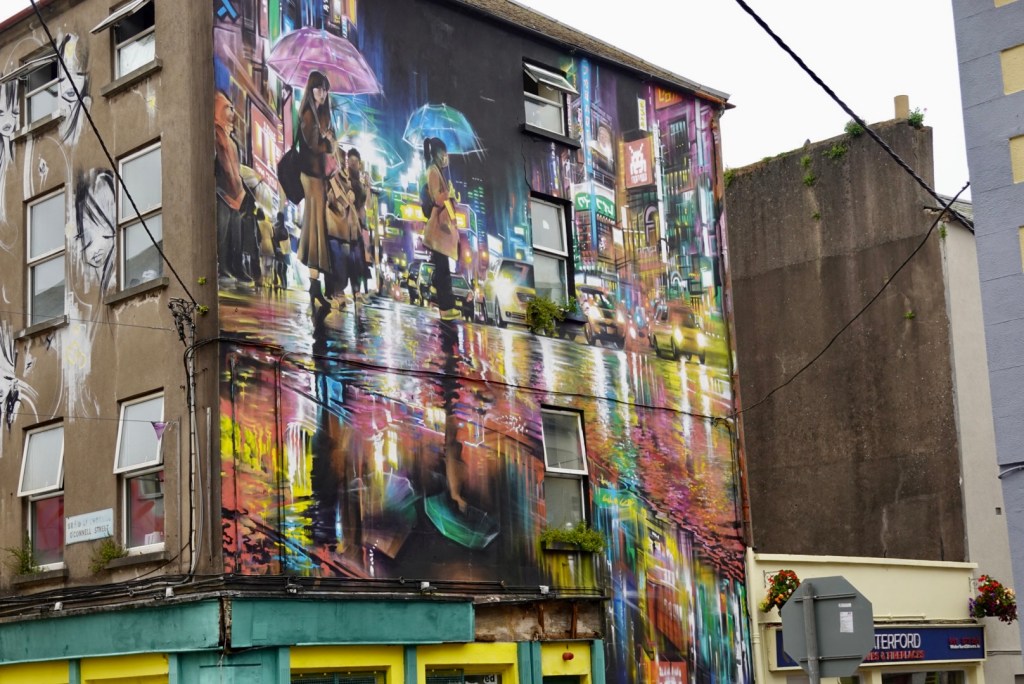
Paintings on building exteriors is another feature in Waterford. Many clever ones, but given it was rainy, this seemed appropriate.
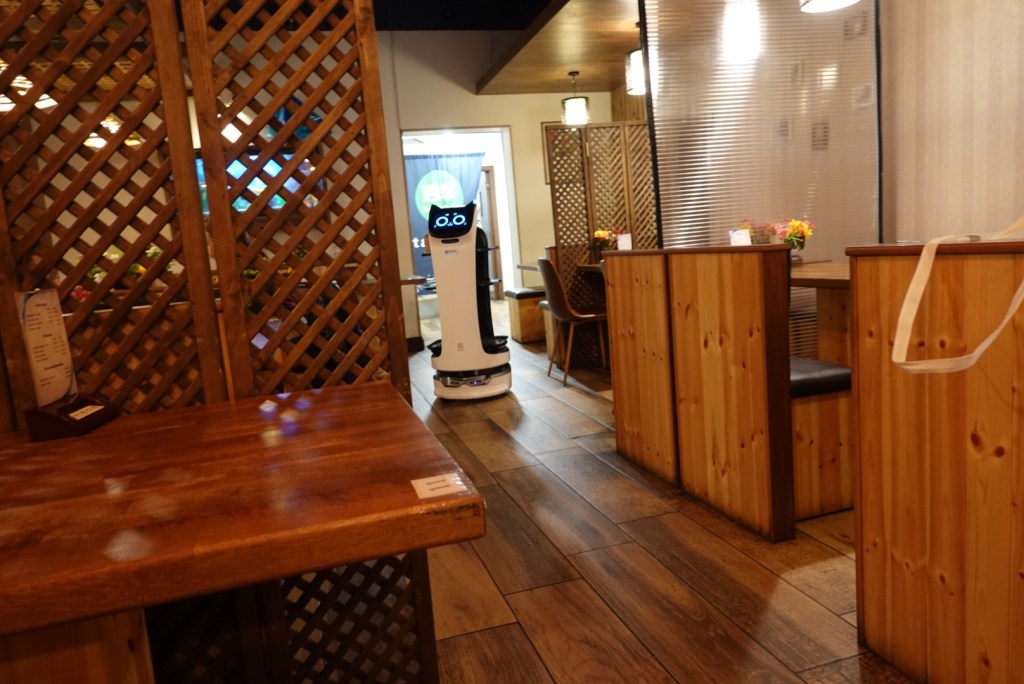
We had dinner at a Japanese restaurant. It has a robot that delivers food to tables, and takeaway to the front. It’s name is Bella.
Another day is done. Thankyou for reading 😊❣️
Day 8: Holyhead to Arklow

A new country day today. The Republic of Ireland.

We headed off to the ferry around 730 am. You cannot head directly in to the port as there is a very long security fence you need to get around first.

As we headed to the ferry, view of boats in the harbour at Holyhead

Once in, check in was quite simple. Security even simpler. Foot passengers were having luggage and belongings xrayed and walking through a scanner.

Take a bike, security not checked. We were sent around the side of security to meet two men at oversized luggage. That lack of security surprised us for cyclists vs foot passengers.

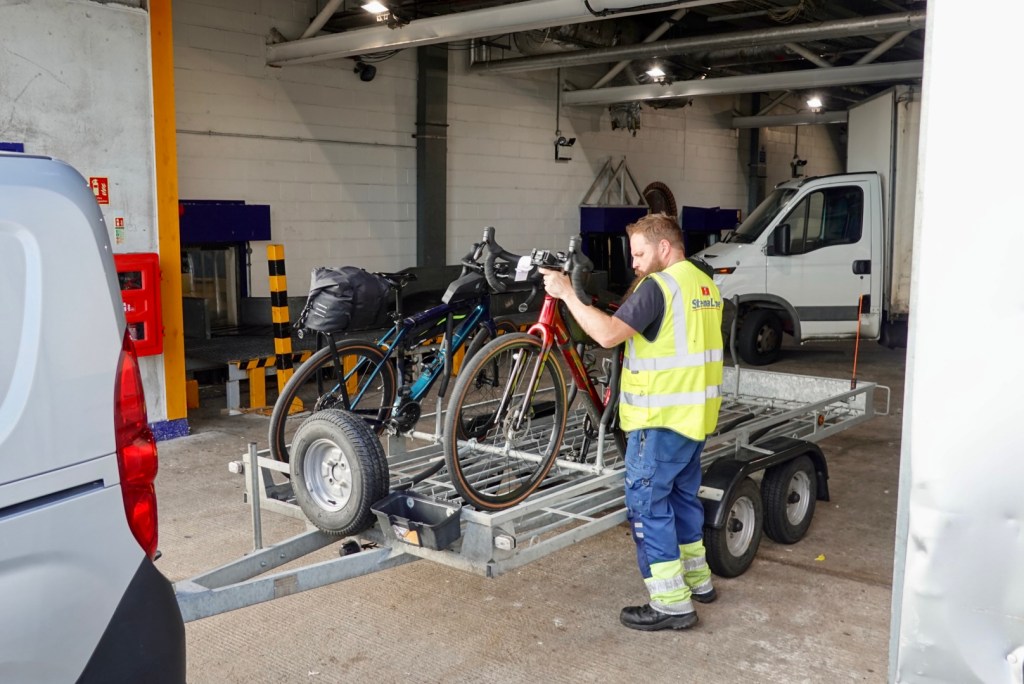
The bikes are strapped onto a trailer, that is towed onto the ferry, remains in situ for the trip, trailer towed off in Dublin.

We then boarded a transfer bus that drives onto a vehicle deck, and we then headed to our cabin on deck level 9.

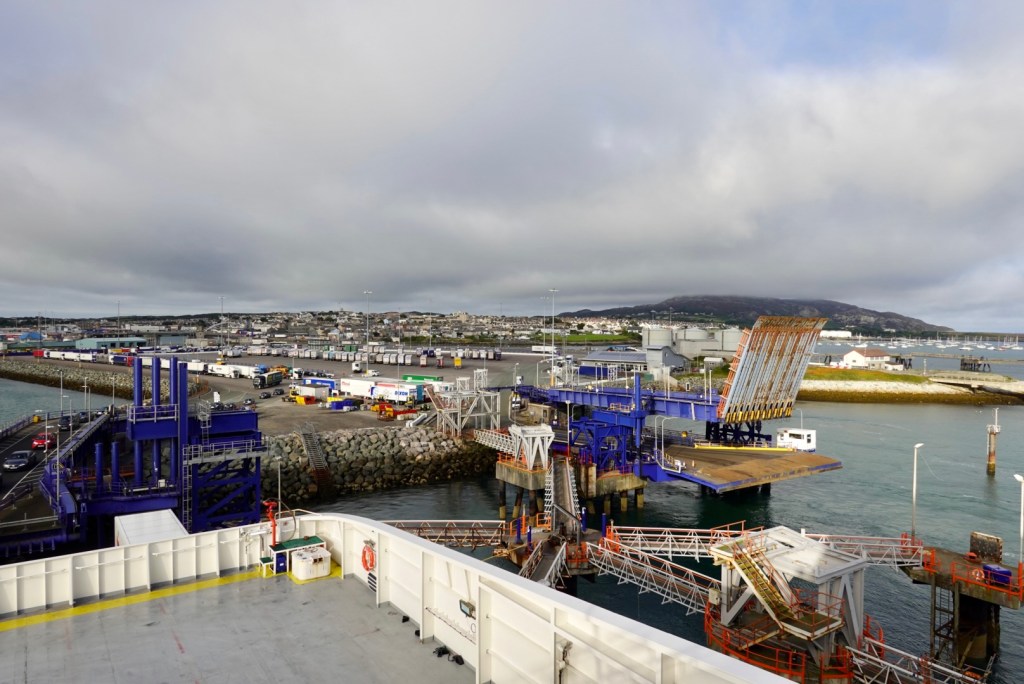
Looking back to Holyhead port , an Irish ferry had just departed from the next berth. We had initially tried to book on that one as it left earlier, but they do not take bikes on that crossing.

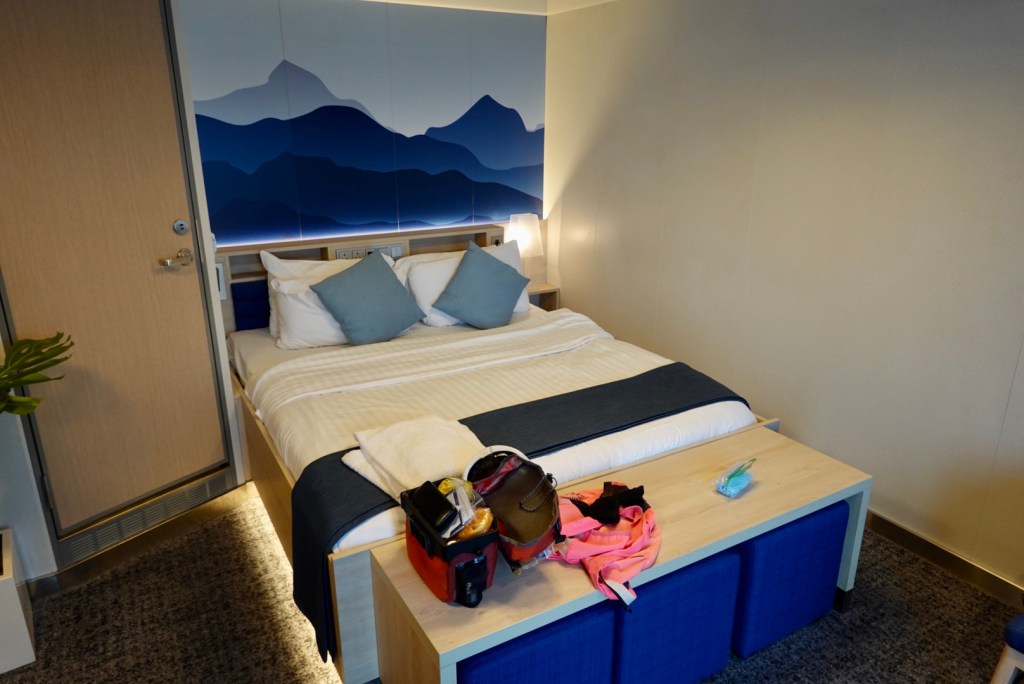
I had purchased a cabin for the trip, a superior portside. We were both very impressed with it vs our experiences in Tasmania and Croatia with ferry cabins.

The cabin was so spacious it had a full sized double bed
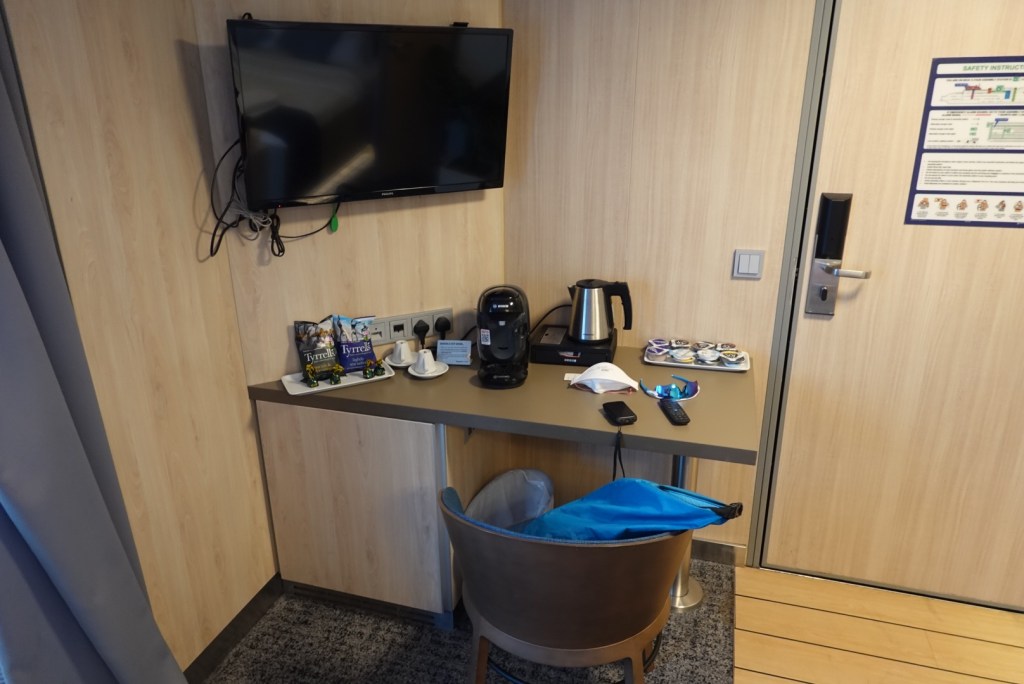
Pod coffee maker with a huge range of coffee pods, and hot chocolate. The fridge had 6 drinks in there. Plus there were chocolate and chips.
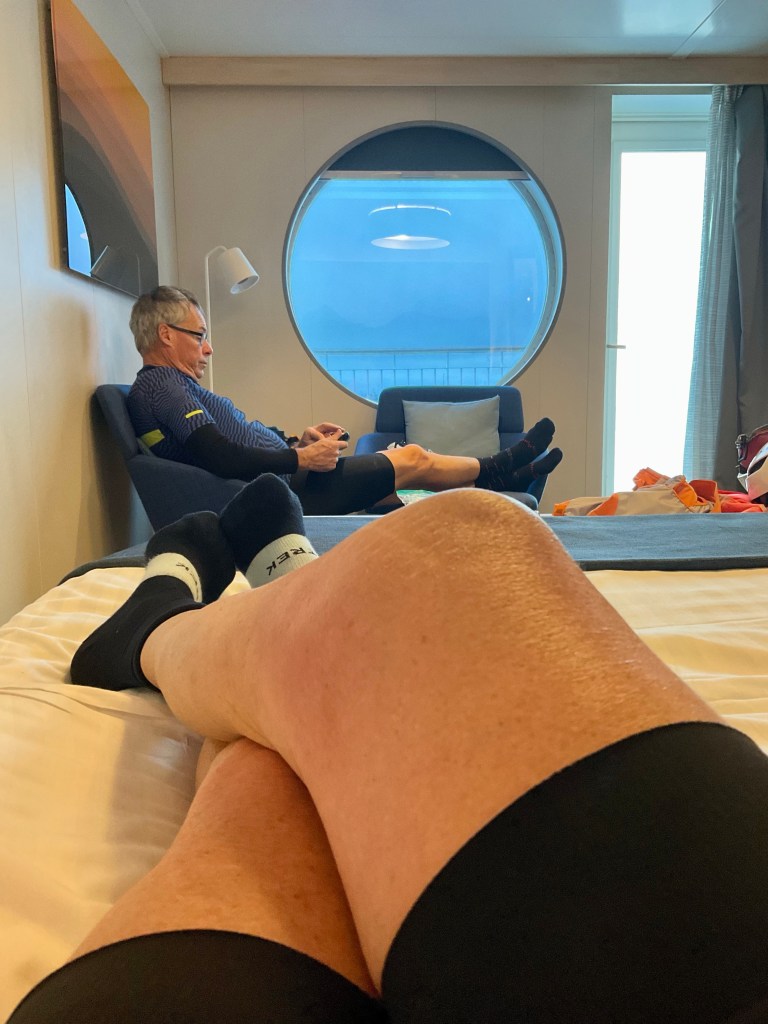
There were two lounge chairs, plus a huge window. You could sit up on the bed and see out the window.

So we had a super chillaxing trip. We were in the cabin for over four hours, with the actual travel time 3 hours 20.

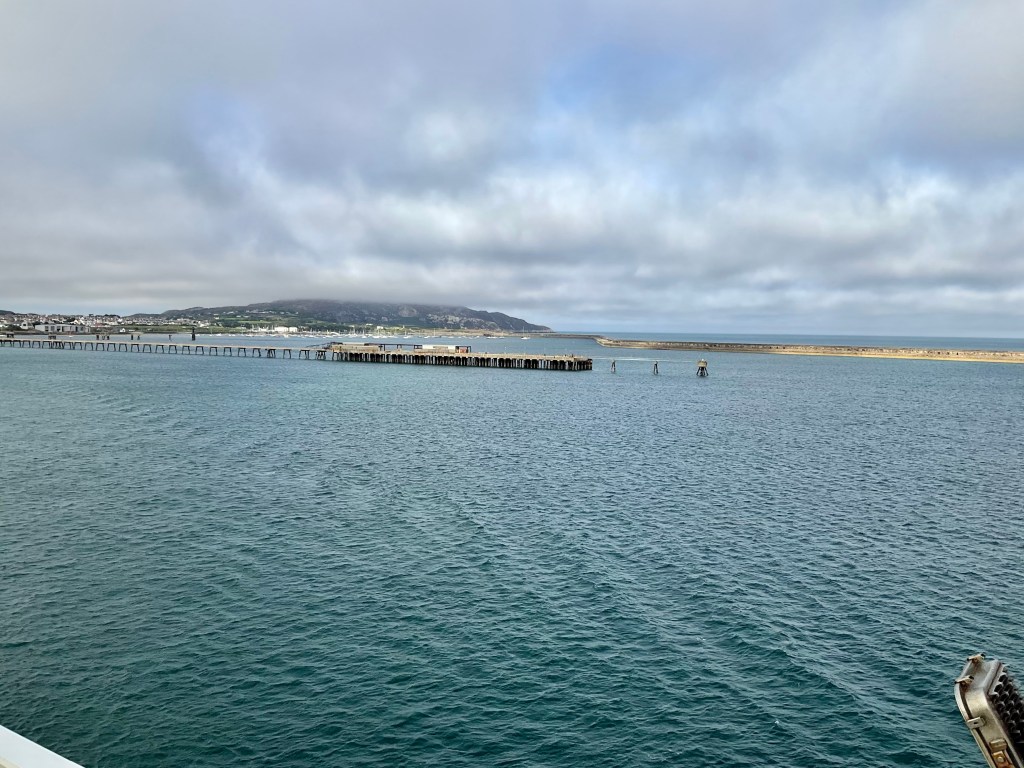
Leaving the harbour, Holyhead Mountain under cloud.

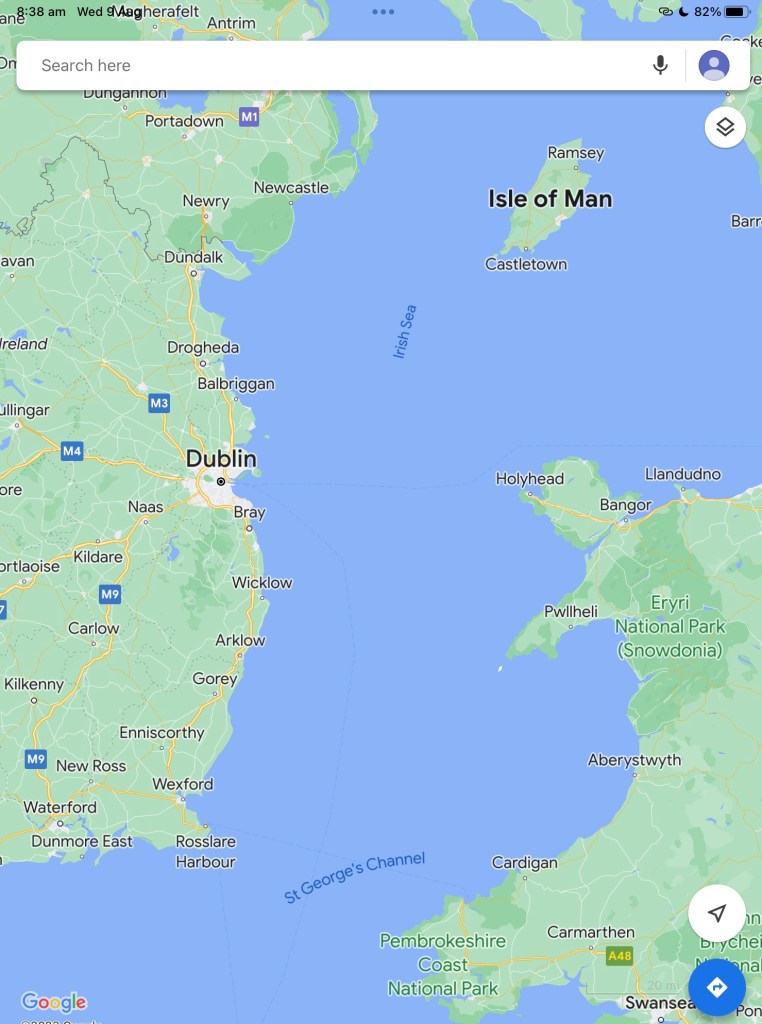
You can see both Holyhead and Dublin on this map, close points between Wales and Ireland. Arklow, to the south, was our destination today.

It was a non eventful crossing. Tony slept for part of it.

As we closed in on the Irish coast land ahoy.

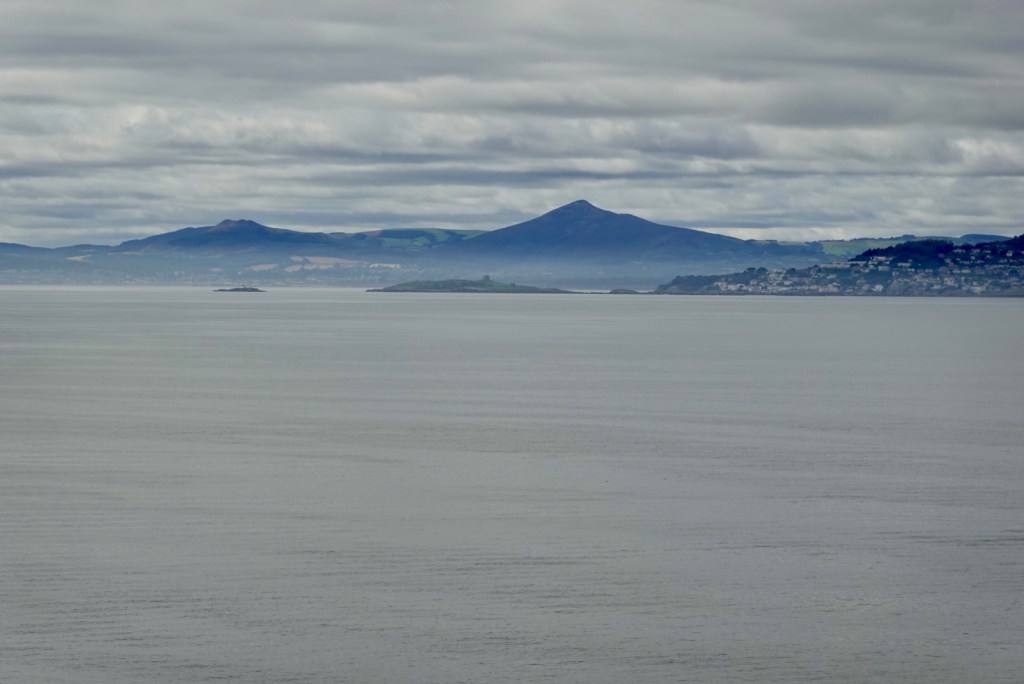
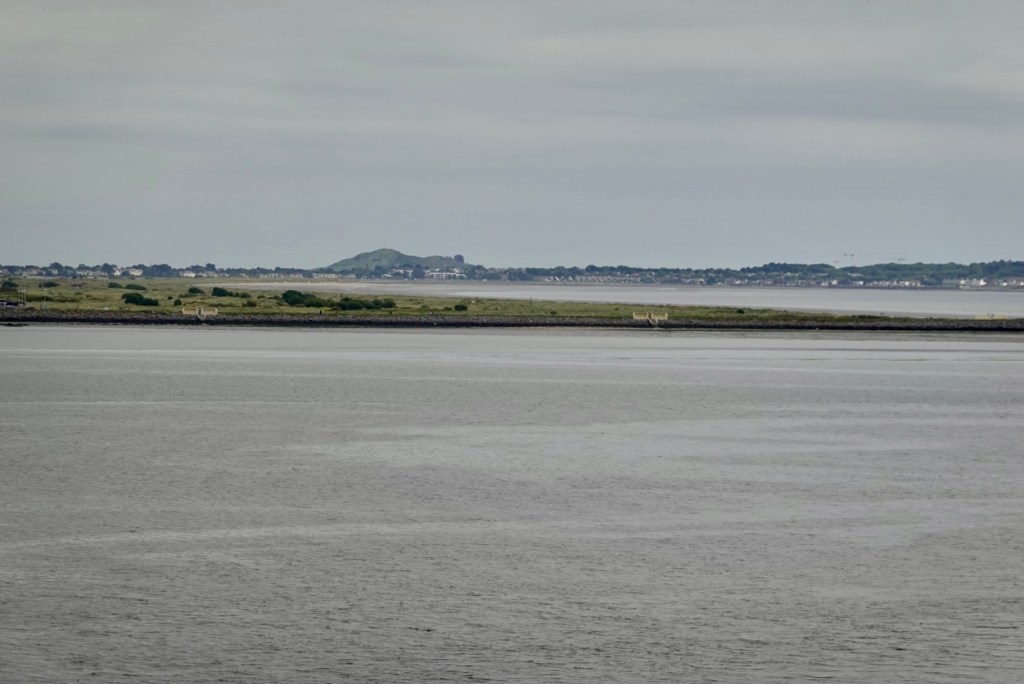
Looking south towards the Wicklow Mountains, where we were headed.
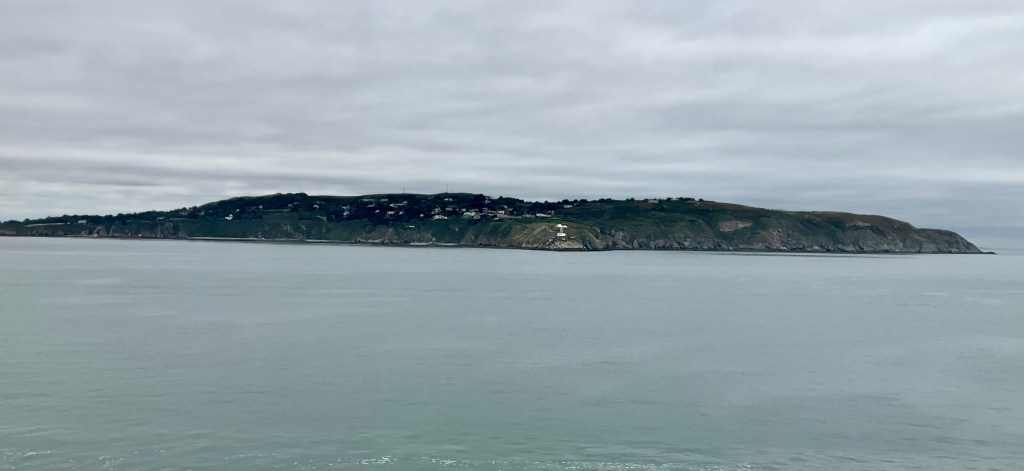
Looking north, Howth, a nice suburb of Dublin.
Looking north towards North Bull Island, a flat sand island and Howth. We have just entered Dublin Bay and the mouth of the River Liffey.

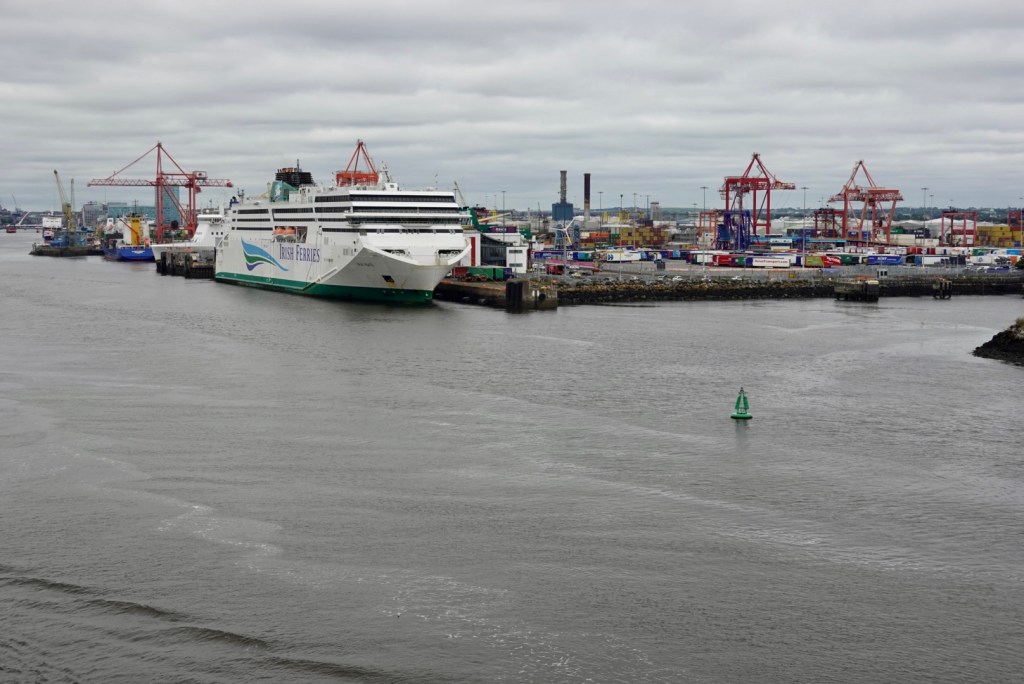
The port is spread out over a larger area. Our ferry nosed into its dock, as it is a roll on, roll off ferry with openings either end.

Being a foot passenger, keen to get pedalling, was super frustrating. It took maybe 45 minutes to leave the ferry, transfer onto a bus, then get our bikes, waiting for us at the luggage carousel.

Then getting out of the port took time. It is hugely busy with big trucks and cargo container movements. . There is a cycle path and many red lights. After a few km we left the port premises to begin the next part of our ride.

Dublin is the capital of the Republic of Ireland, located on a bay at the mouth of the River Liffey It was established by the Gaels around the 7th century followed by the Vikings.

Today it seems we had the route β€˜tour de red lights, road works and crazy antics’ to commence our Dublin memories.

It was super stressful riding out. There are some crazy drivers, but also patient ones. Thencyclists were the worst. No helmets, going across the flow of traffic, weaving in and out of cars, whilst we just went with the flow, obeying everything.

It is taxing as you do not realise until later how exhausting it is concentrating so hard. Make no mistake, we do concentrate on the open road too, but the intensity and adrenaline factor is just different.

After about 10 km, we were on quieter arterial roads heading towards the Wicklow Mountain National Park, Irelands largest national park covering 23,000 hectares.

The area we went through was Djouce and Tonduff on the eastern flank.

We stopped at a local convenience store and grabbed some food, as were were both hungry. The map on the outside of the local park section. We had just been through Killegar Woods, and Knocksink Woods were next.

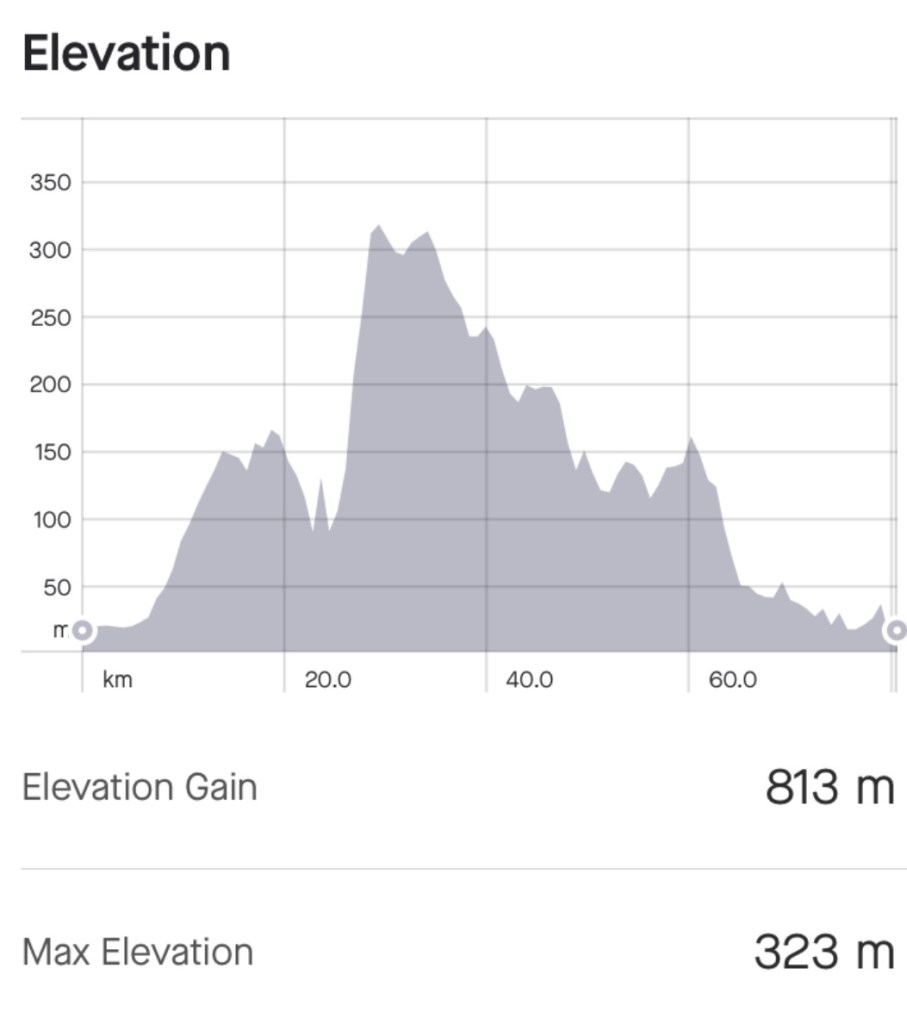
The area was hilly. The graph below shows our bigger climbs. The first was getting out of Dublin from sea level. The second was ahead through the Wicklow NP.

When we climb, our bike computer has a graph for each climb, showing where you are, what the gradient is currently, what the gradient is ahead, and each gradient section is colour coded. This climb had a red section, ie steep steep steep.

The view on the red section looking west
The view looking east
East
West

Looking towards Roundwood, where we stopped at the chemist to grab more toothpaste, and Panadol for Tony.

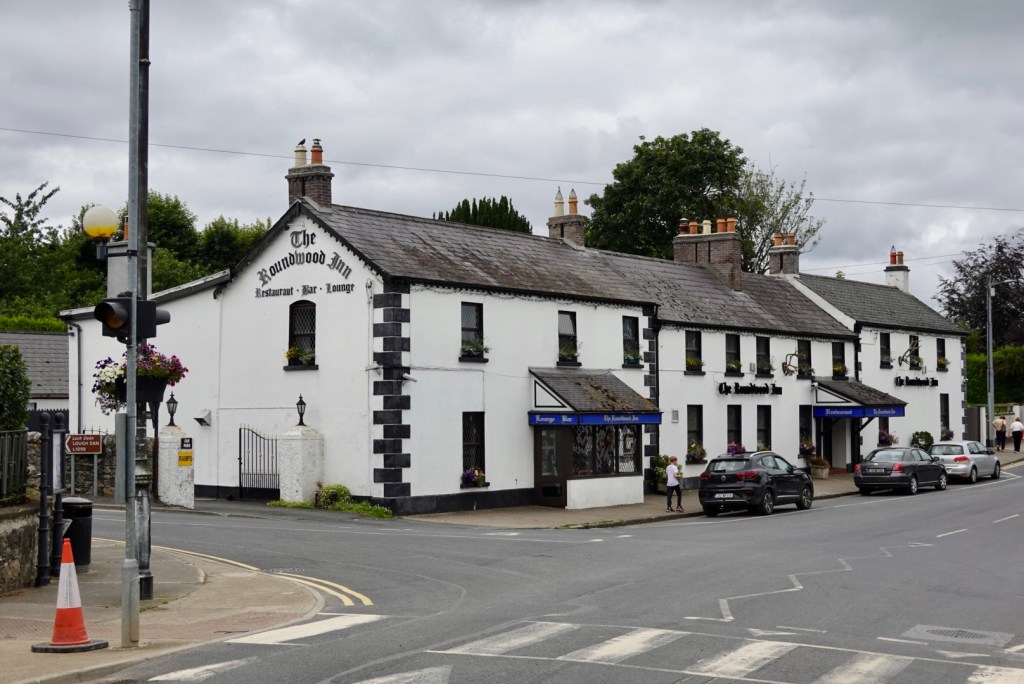
The pub in Roundwood

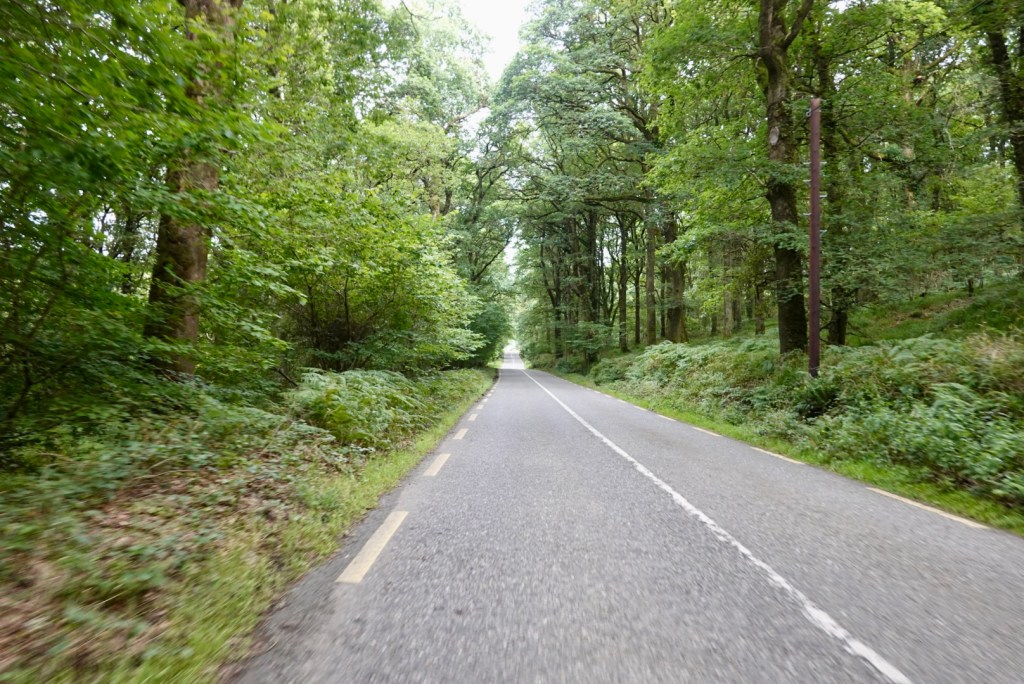
Riding through forests was to be a feature for the rest of the ride. Lush, green, stone walls edging.

Most of these were taken by Tony as he rode. Without slowing significantly, he opens up his front bag, gets the camera out, takes the photos, puts the camera back. I watch from behind knowing I would end up on the ground if I tried that.

Rathdrum situated high on the western side of the Avonmore River valley, flowing through the Vale of Clara.

A local business promoted in the area is “donkey walking” where you travel from village to village at a donkey’s pace and overnight in local accommodation. The donkey can carry 15 kilos and cover 10-15 km per day.

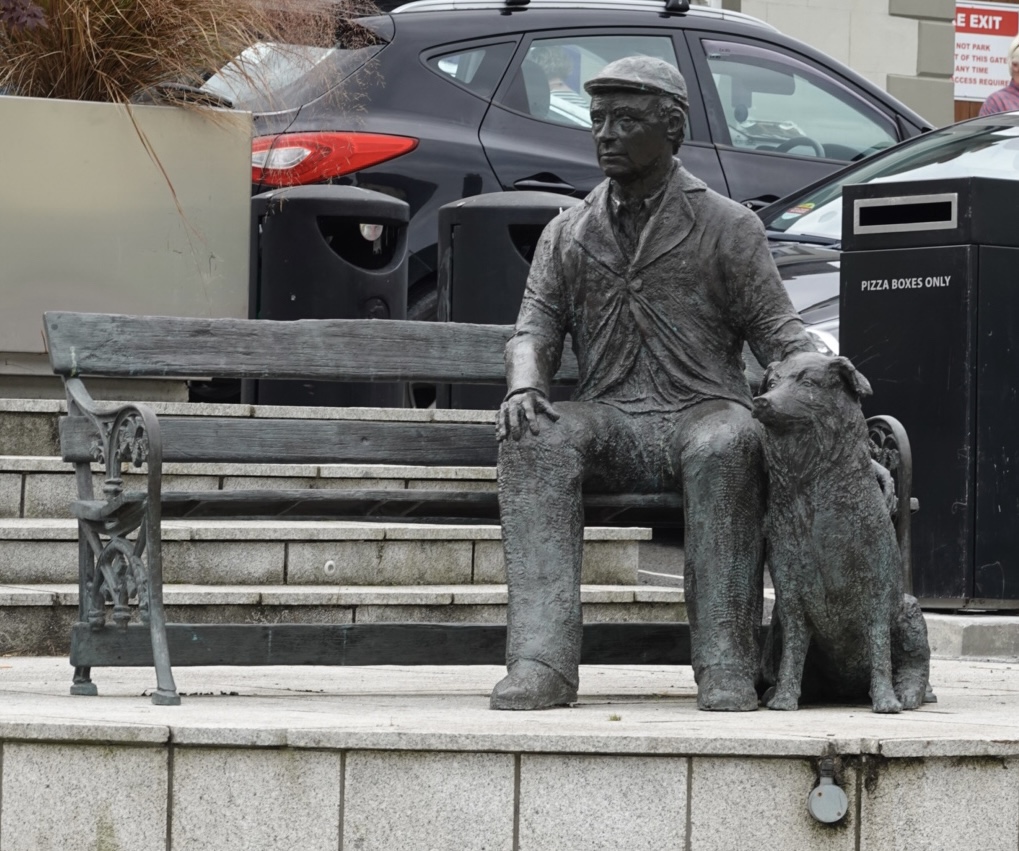
We did not see the donkeys today, but saw this statue. Named the Farmer and his dog. It was placed as part of a town rejuvenation project in 2019.

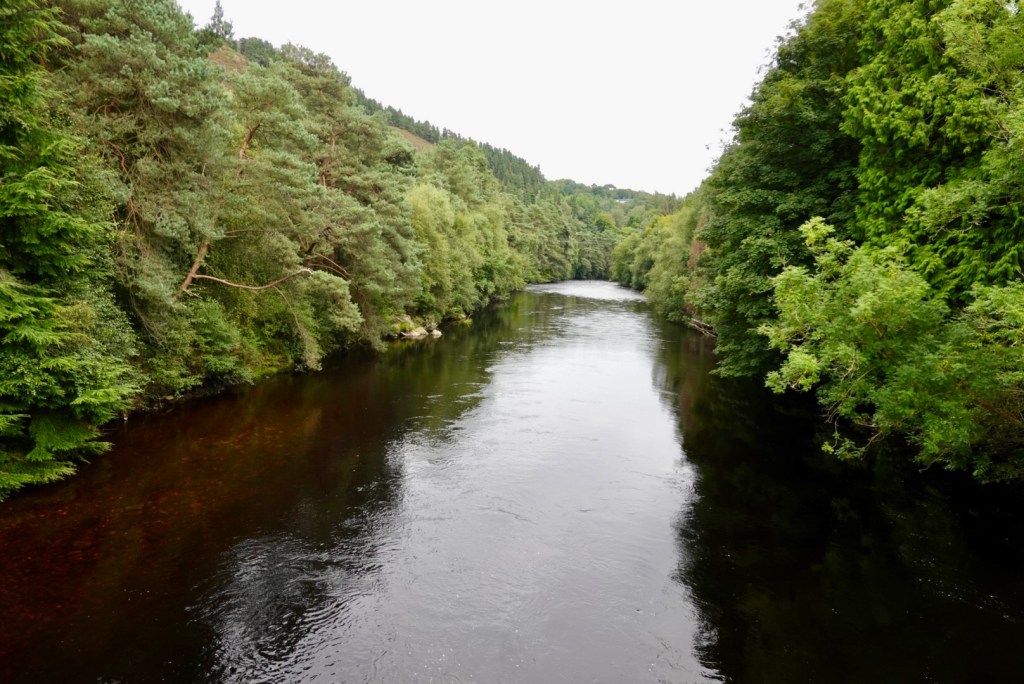
The Vale of Avoca was very pleasant to ride through, as it was predominantly downhill, following the River Avoca. The area is known for its woven products, with many smaller mills and local producers having signs out.

River Avoca

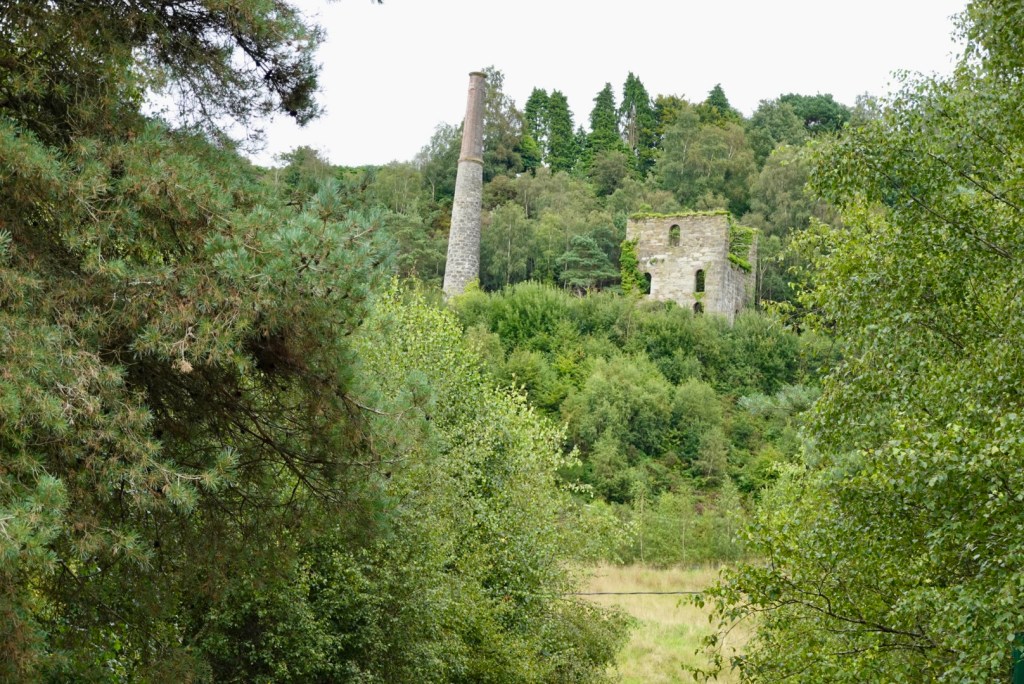
Looking up the hill from the river, is this old mine installation, known as Williams Engine House, one of the few remaining in Ireland. Mining was huge here in the 1800’s predominantly copper and pyrite.

Williams engine house

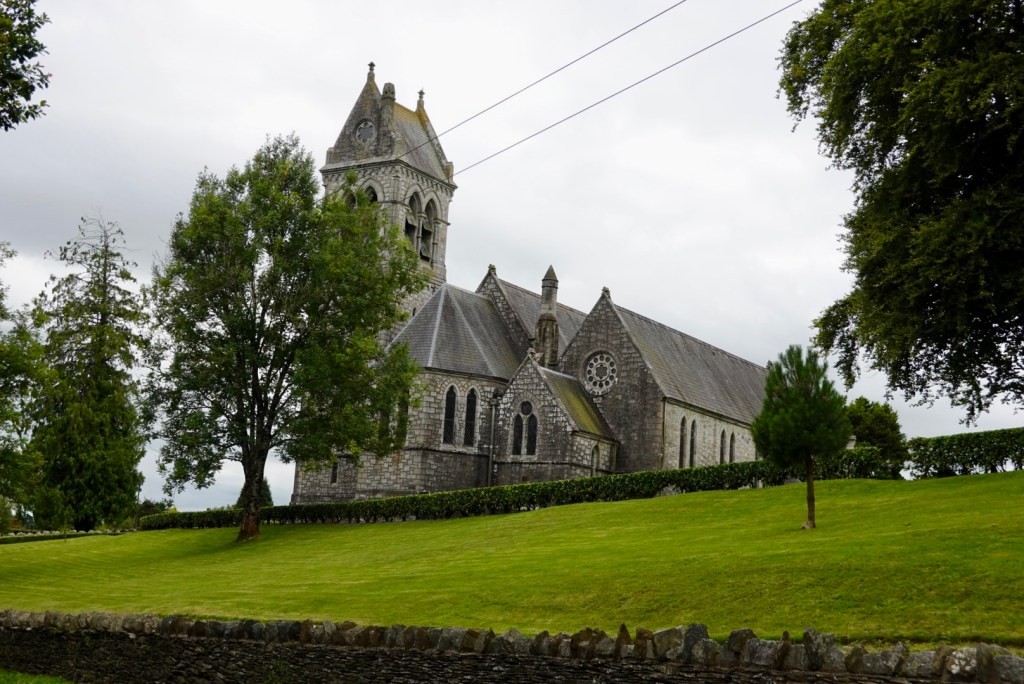
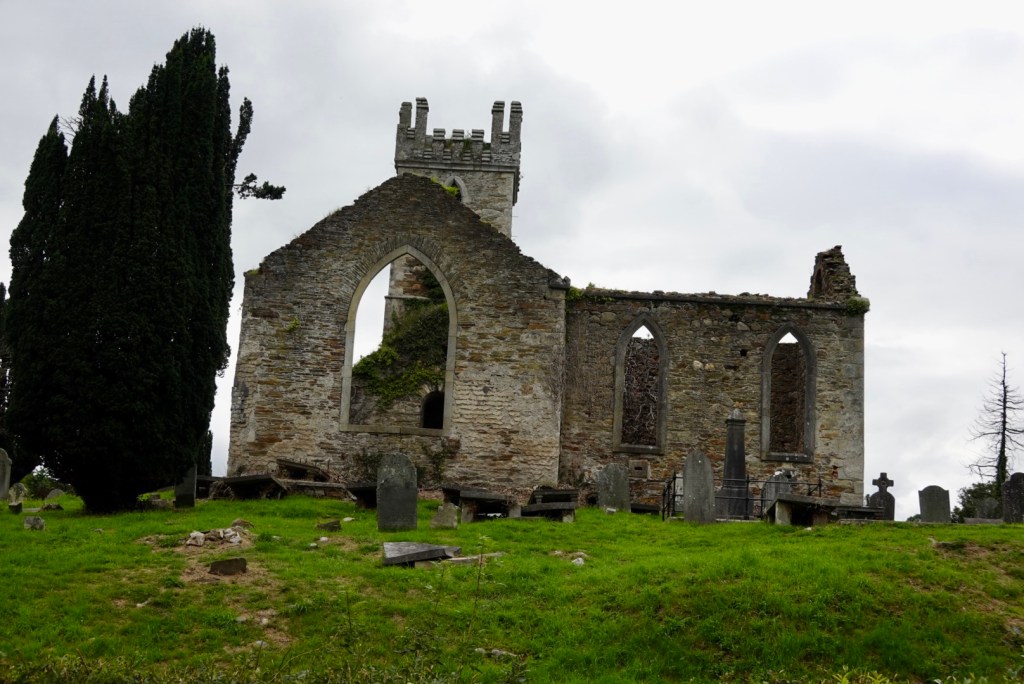
These are both newer churches, from the 1800’s, one in better knick than the other.

The final major town today was Woodenbridge, where I originally had us staying. It has a stone bridge known as the “wooden bridge” – only in Ireland!

Arklow was today’s final destination and we are now on the southeast coast of Ireland. The town was founded by the Vikings in the ninth century. The town is at the mouth of the River Avoca, the longest river within County Wicklow.

We were really pleased to arrive at our accomodation. Super friendly lady stored one bike in a locked area but she was apologetic for the junk in there leaving no room for the second.

She would find another area to lock the second bike. I casually suggested perhaps we could take it to our room? (That always tests the accomodation providers and you get a very clear no if unacceptable to them).

She said, oh yes you can, but won’t it be in your way? We are like…..nope ! So we have one bike with us. That means we can get it set up before breakfast at 7.15.

We had a great meal in their restaurant. Fish and vegetables for me, beef, sweet potatoes chips and vegetables Tony.

So that’s a wrap for today. Total km less at 81 for the day with just over 800 metres of climbing.

Tomorrow is about 113 km, 900 metres of climbing ( I think?) and we are heading to Waterford. A bit of rain is possible, but we will see.

Thanks for reading 😊❣️
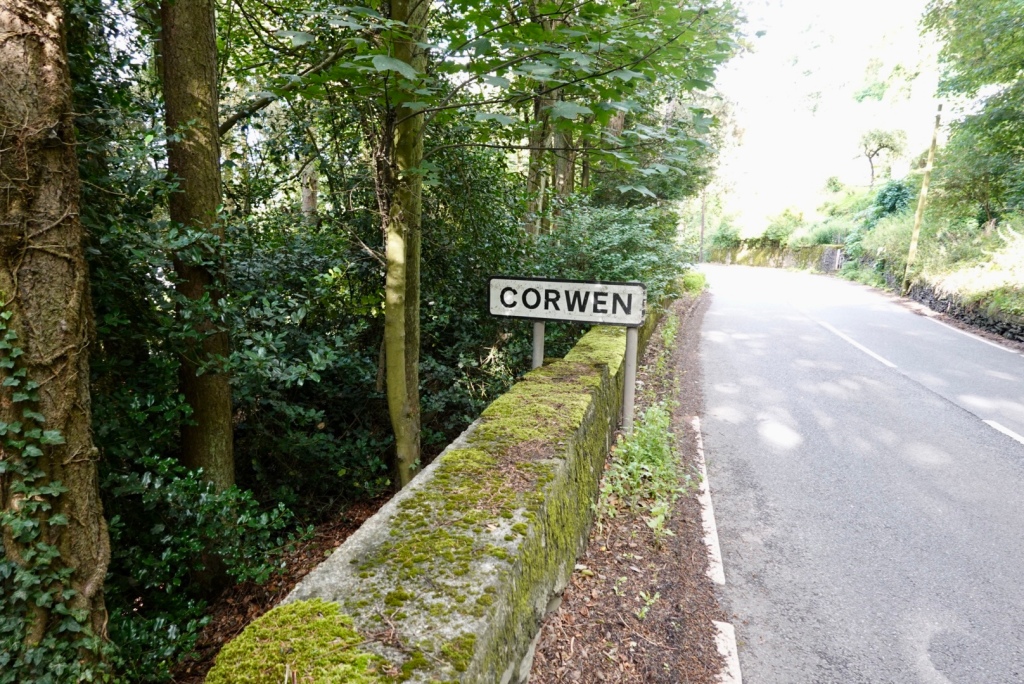
Day 5: Aberystwyth to Corwen

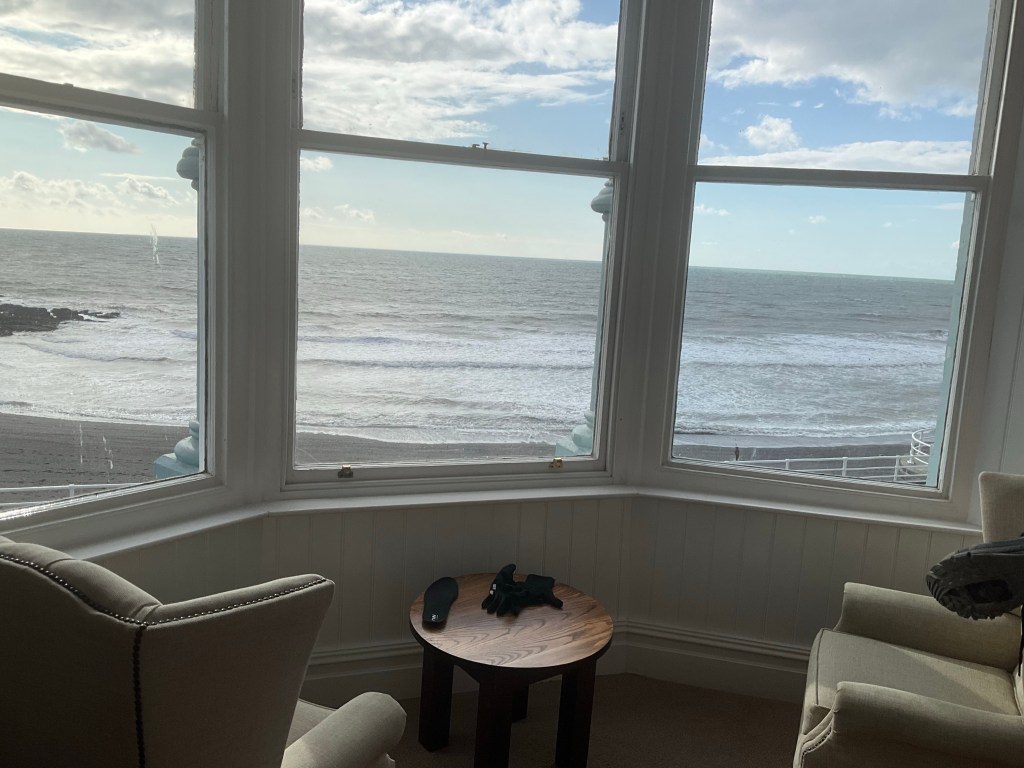
The weather was cool and blowing a gale when we awoke. We had beautiful harbour views and amazing long, bay windows to enjoy the view.

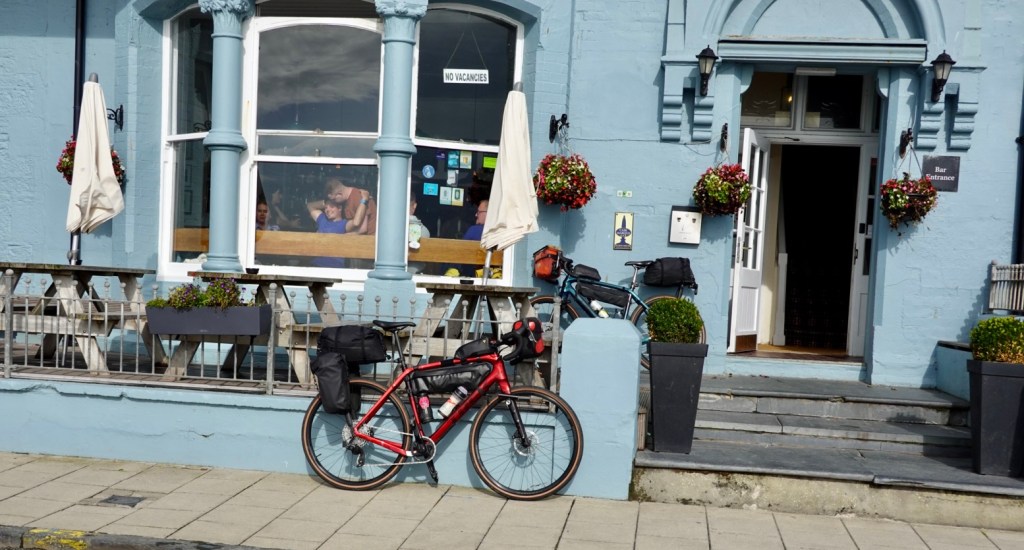
I can recommend the Glenrowan Hotel for cyclists. We had cleaned our filthy bikes up before checking in, and they allowed the bikes in our room. The bathroom was huge and could easily hold multiple bikes without issue.

We had a big bowl of porridge and fruit for breakfast and headed off. We were surprised just how cool and breezy it was.

After a flat one km or so, we entered a nasty one km steep climb up last the Aberystwyth University. With cold legs, lungs and a racing heart, the body did protest greatly, so I walked the second half.

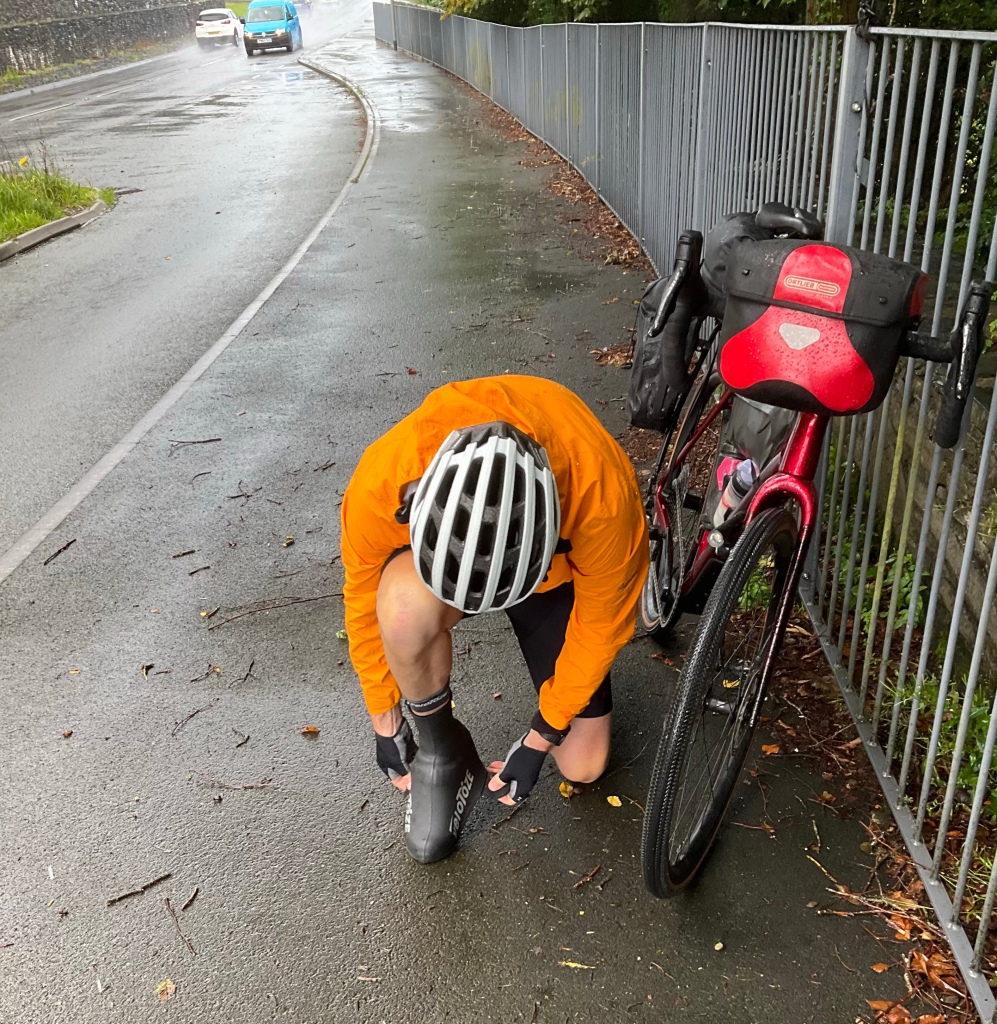
The ride levelled out with ups and downs, and the first of the rain showers hit us. So we stopped in a lay by and popped our booties on.

You can guarantee when you do that, it will stop raining. Looking forward, the rain stopped!

Looking north, it flattened along the coast, and this picture is looking towards Aberdovey, at the mouth of the Dovey river.

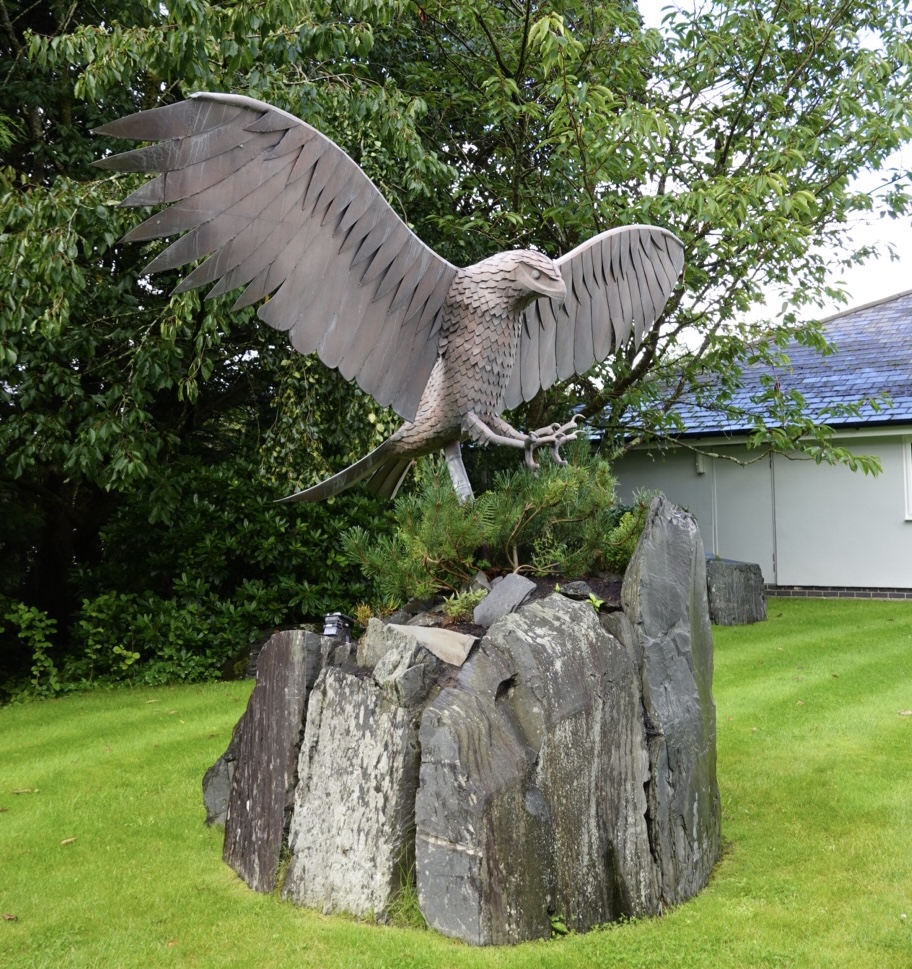
We had noticed signs re an osprey project, then saw this metal art work, and stopped to look at it.

Whilst there we got chatting to Shaun and Jason, who were from Cardiff and off on a day trip to the Snowdonia’s.

We headed back in the road in the search for coffee, hoping the town of Machynnlleth would have something open on a Sunday morning.

Machynlleth is a market town in the Dyfi Valley, and the seat of Owain Glyndwr’s Welsh Parliament in 1404, thereby claiming to be the ancient capital of Wales. Owain was the last native born Welshman to hold the title Prince of Wales.

There was a pub open, and we were able to grab a coffee, sitting outside pondering whether to out the rain jacket back on.

I reckon the rain jackets were on/ off 25-30 times today. Put them on, rains, climb a hill, get too hot, take them off. Repeat.

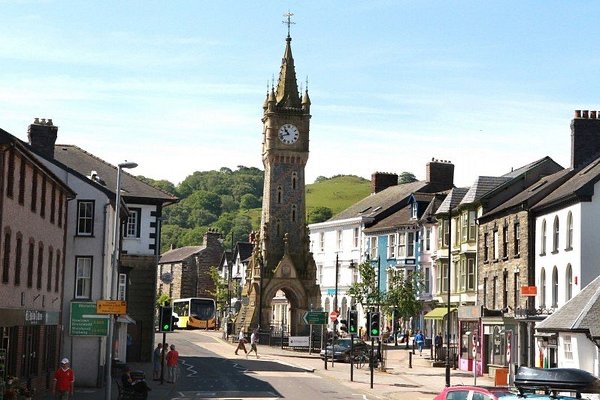
This is a stolen photo showing the town clock, which was significant covered by scaffolding due to refurbishment works. It looked to be the nicest structure in town.

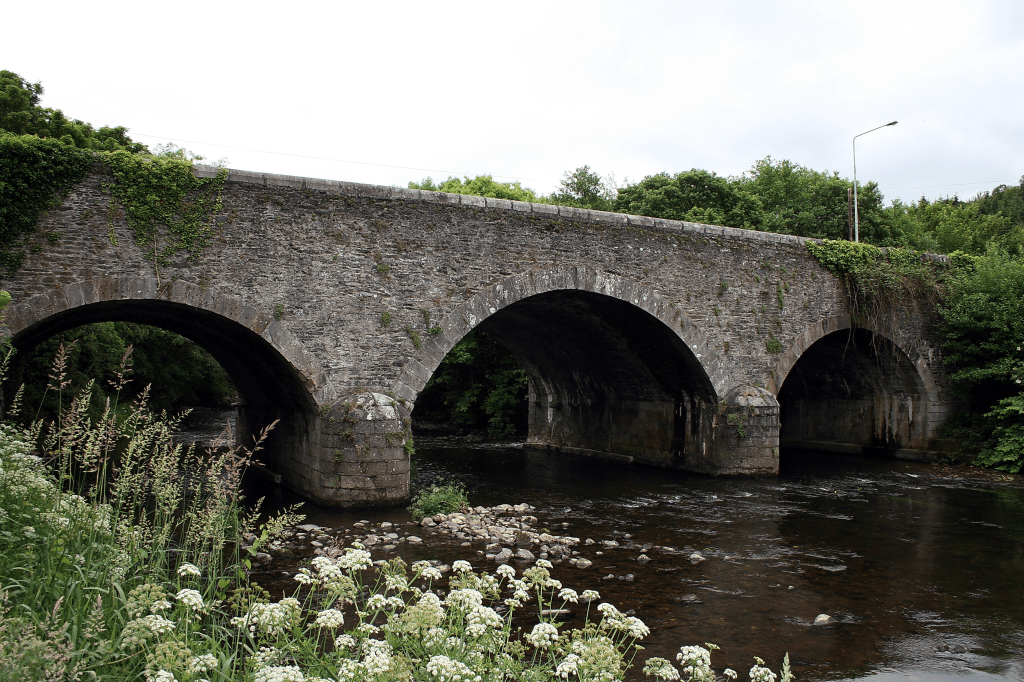
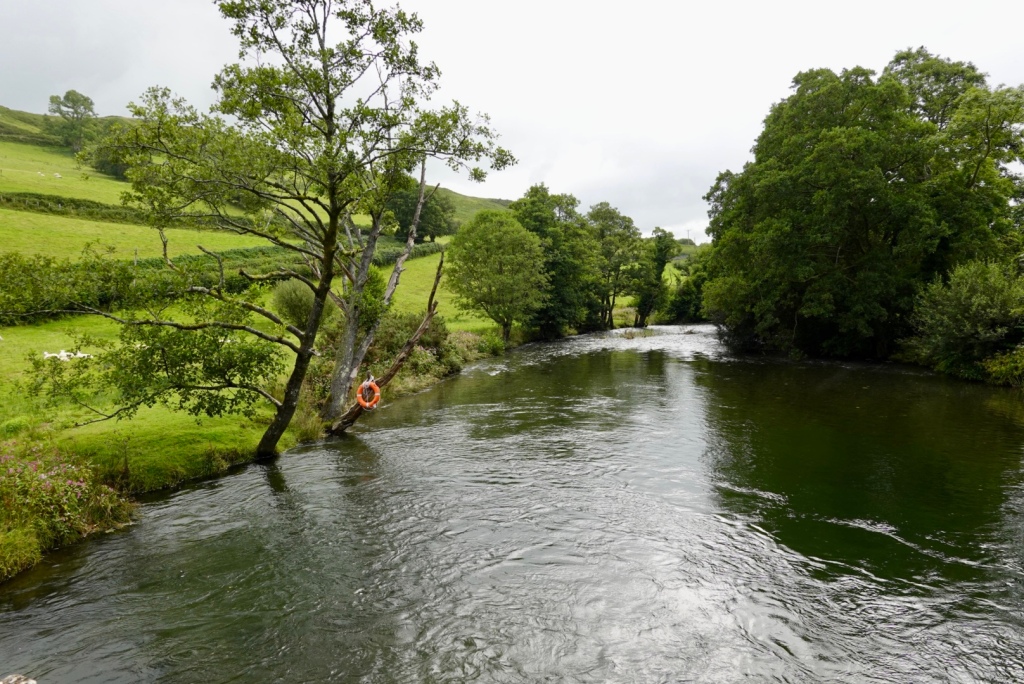
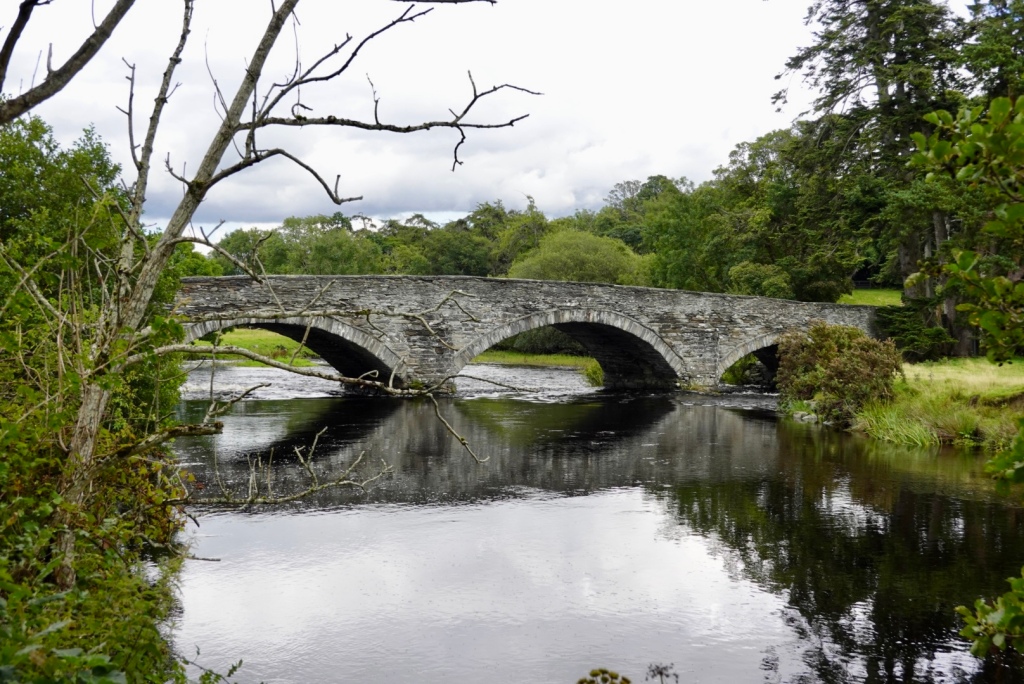
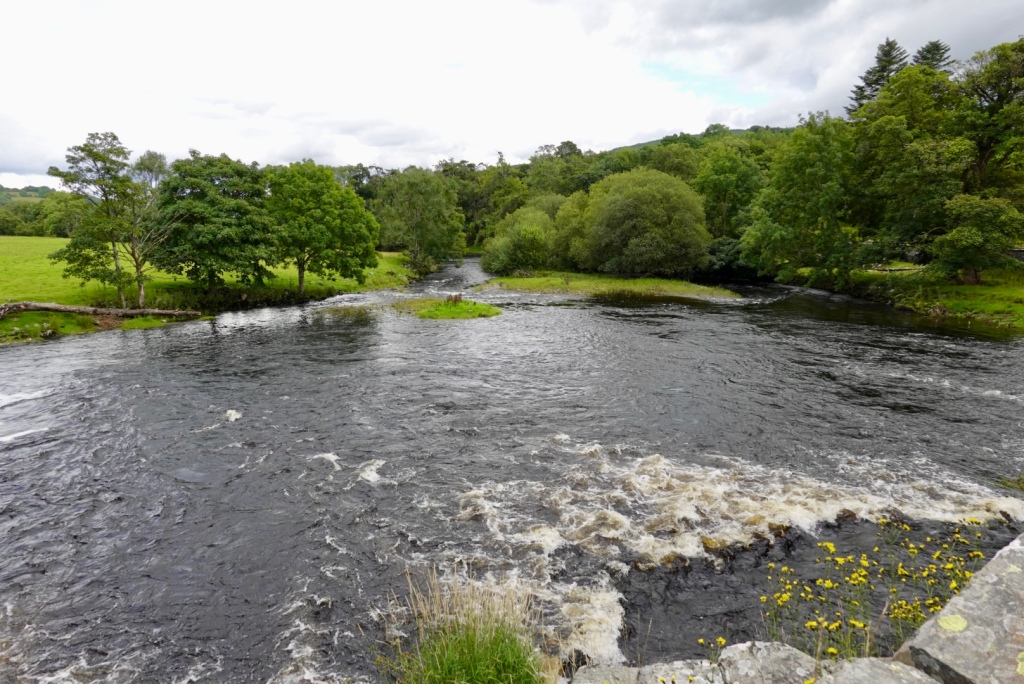
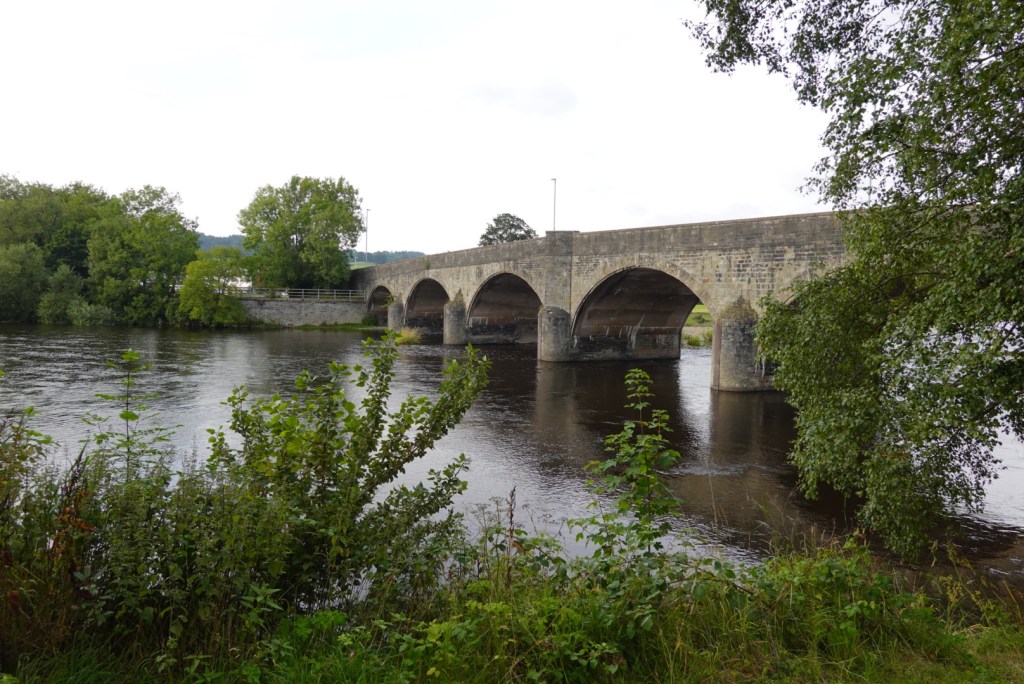
We headed off onto quieter rural roads and crossed this bridge, smiling at the life buoy. It was quite shallow, but fast flowing. I am sure older kids who can swim competently would have some fun here.

This section of the ride was very pleasant, passing through Llanwrin, Mathafam, Cemmaes Road, Cemmaes, Aberangell and Mailwyd.

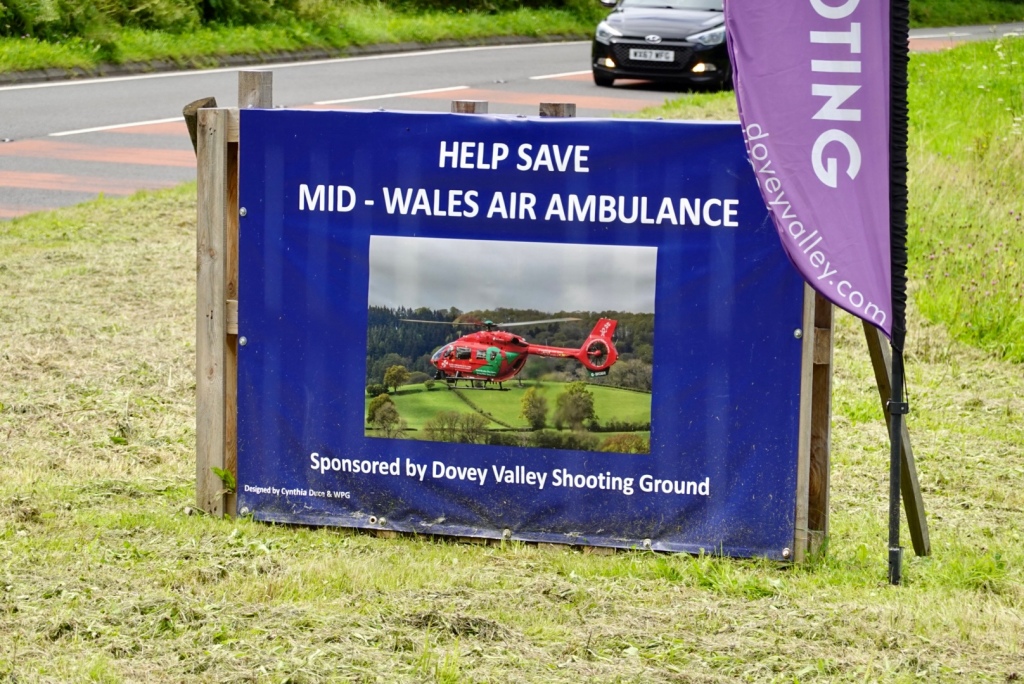
It was a fairly quiet road, except around the shooting range. It seemed very active in the range, with the sound of gunshot echoing around.

It was good that they sponsor the Air Ambulance.

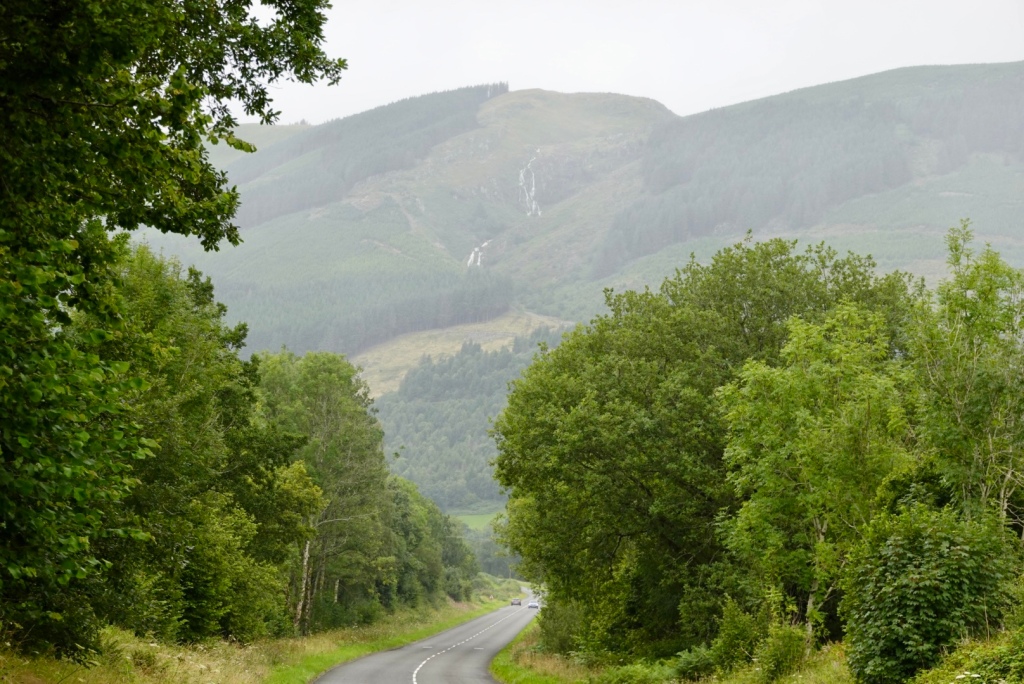
The hardest task of the day way just ahead. We knew it was a tough one. It started to rain again, and we could see waterfalls high in the hills.

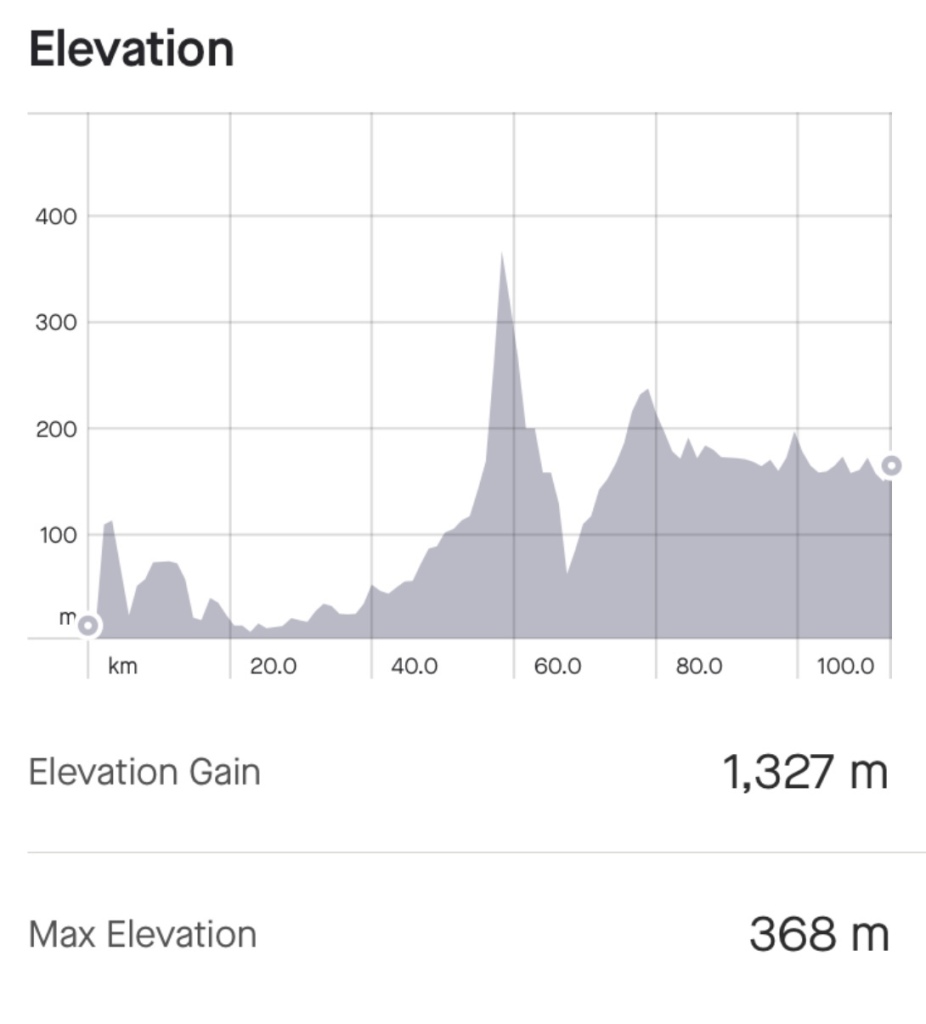
This is our climbing graph for the day. You can see that we had gradually climbed from about the 20 km mark to 47 km. Then there is that brute of a chapel spire.

We did not find out until later that this hill had a name, Bwlch Y Groes…or Hellfire Pass.

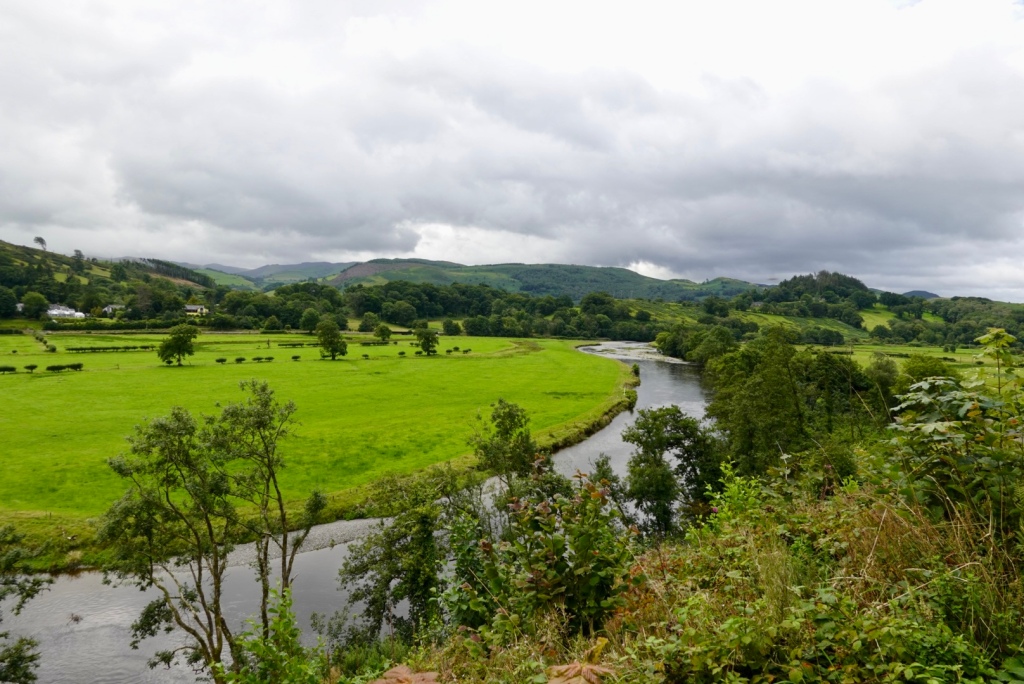
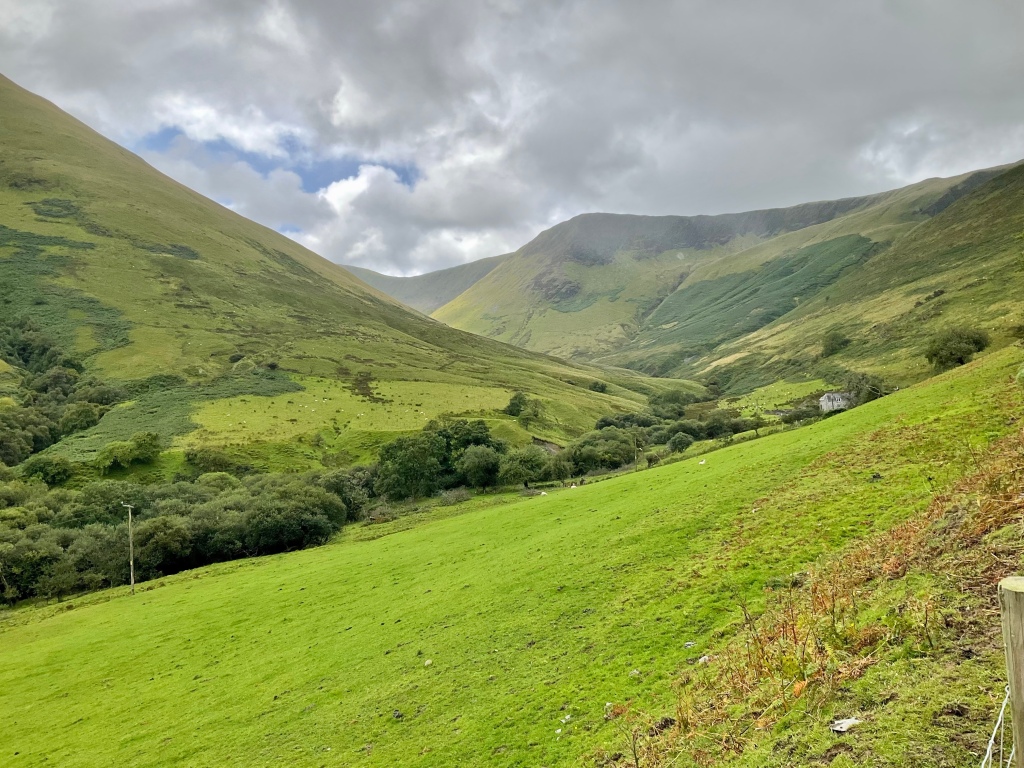
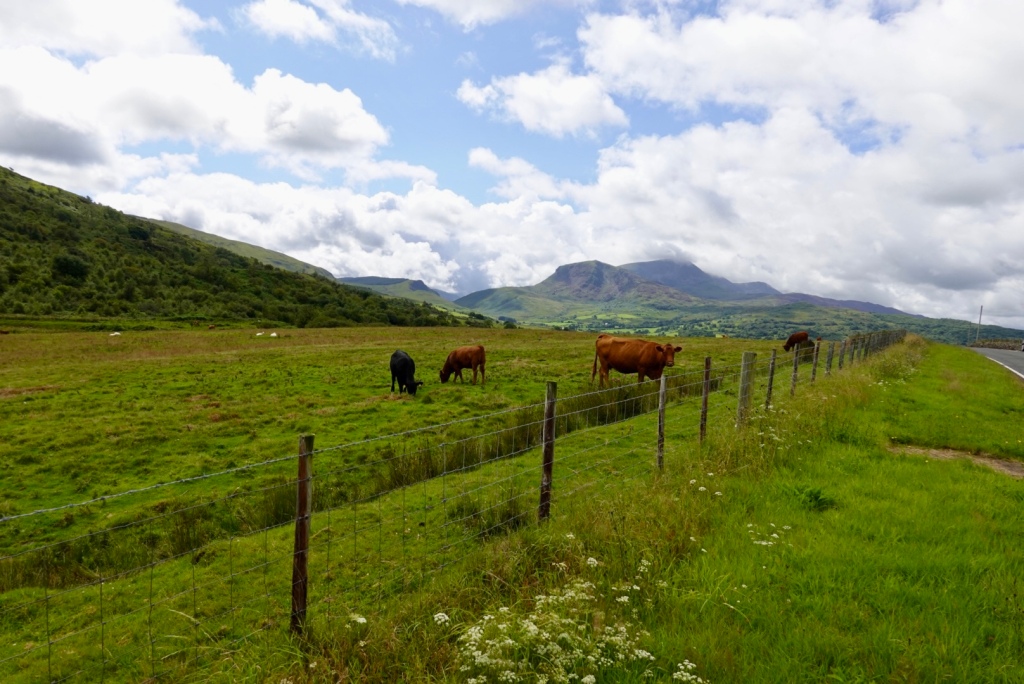
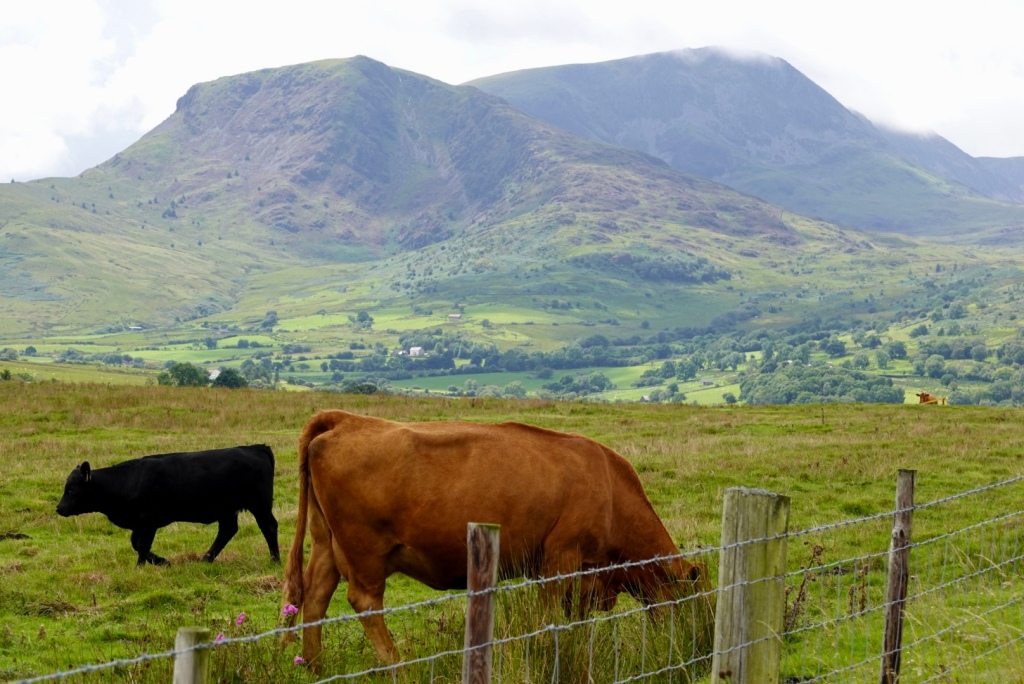
On the upside, it did offer brilliant views of the surrounding Welsh countryside of the Aran mountains. On the flipside, it was a seriously difficult and brutal climb on a loaded bike.

The road is sealed, but narrow with no verge. It hits a maximum of 25% through some of the ramps. It is regarded as one of the steepest, toughest and most spectacular climbs in the country and regarded as a truly definitive climb.

It was used between and after the wars by the Austin Motor Company and the Standard Triumph Motor Company to test prototype cars and their performance during hill climbing.

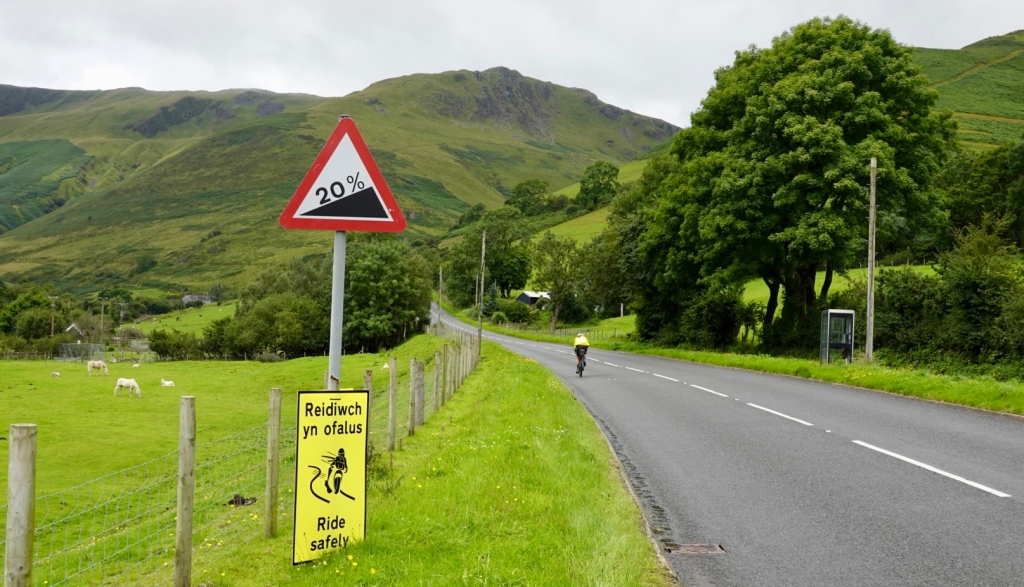
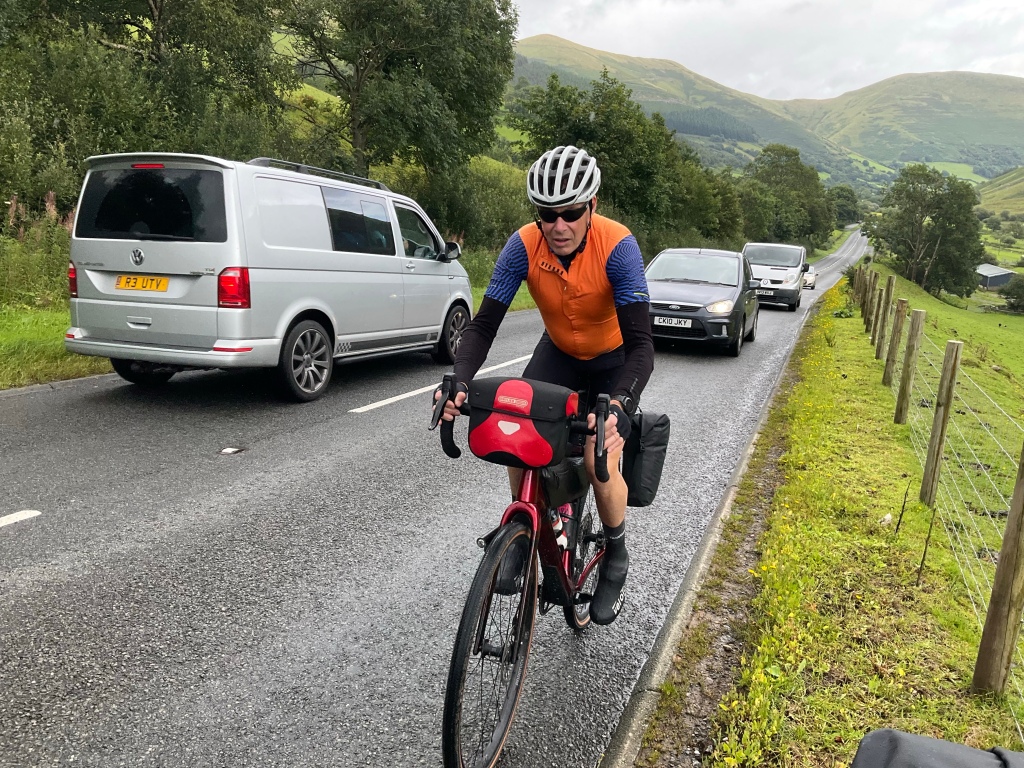
Heading up here was the first warning sign and there is me peddling along to start the serious stuff some few hundred metres ahead.

Well I lasted 300 metres or so, and got off the bike. There were a few issues.

I need space climbing so I can weave a little. With the heavy flow of traffic this was impossible.

Then there was the headwind, it was fierce.

The cars back up on a climb with no verge, and with lots of cars also descending you can frustrate drivers ( mind you, the Welsh drivers have been friendly and fantastic). You stop to let them pass, but climbing is super hard to start again on a slope once stopped.

With an imminent total knee replacement now scheduled, recovering open heart surgery and let’s face it, I did not have the strength nor skill to ride up this. I made the safe decision and walked.

Taking the next few photos was super hard. Holding the bike on the slope, in the wind, without it falling over took all my strength. Pushing the bike up is also very hard.

I swung back to snap this one of Tony. He lasted about another 20 metres. You can see the lack of space on the road.

I did get back on the bike for a few short sections but walked the majority. A camper van stopped and asked if I would like a lift. I immediately said β€œyes” but then changed my mind as I knew I’d be disappointed to not do this under my own steam.

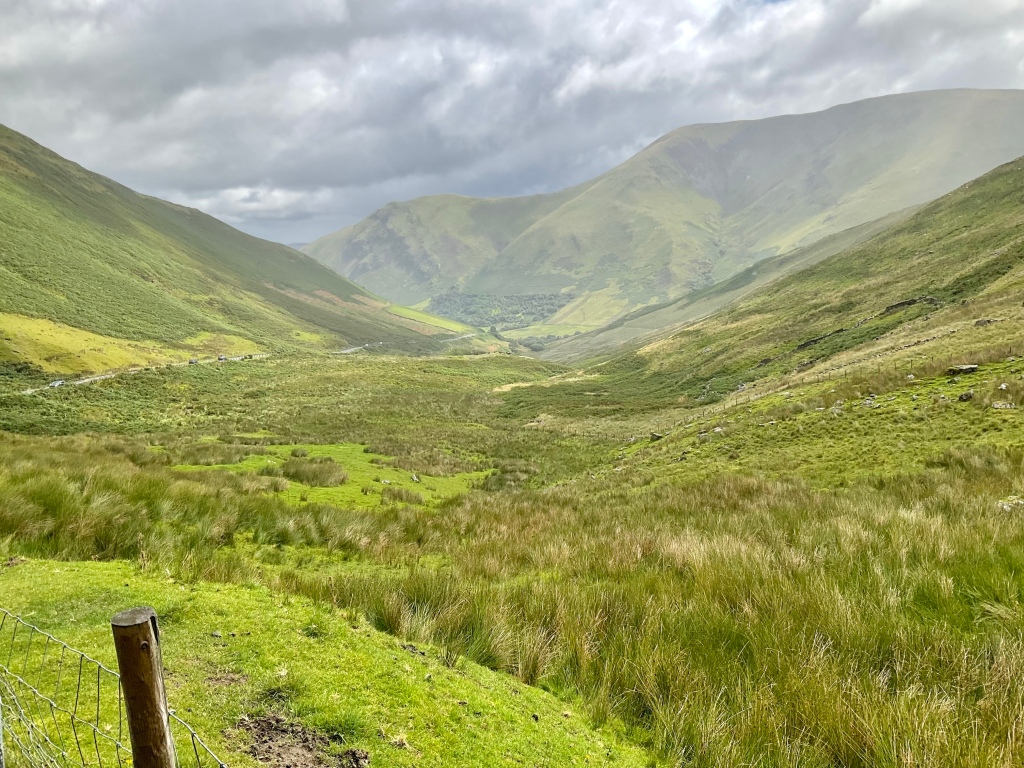
At the top looking back down the valley you can see the road to the left.

The top

Once at the top Tony took a video he later put onto social media. Near the end of the video there was a toot from two motor cyclists. Amazingly it was Shaun and Jason whom we had met earlier in the day.

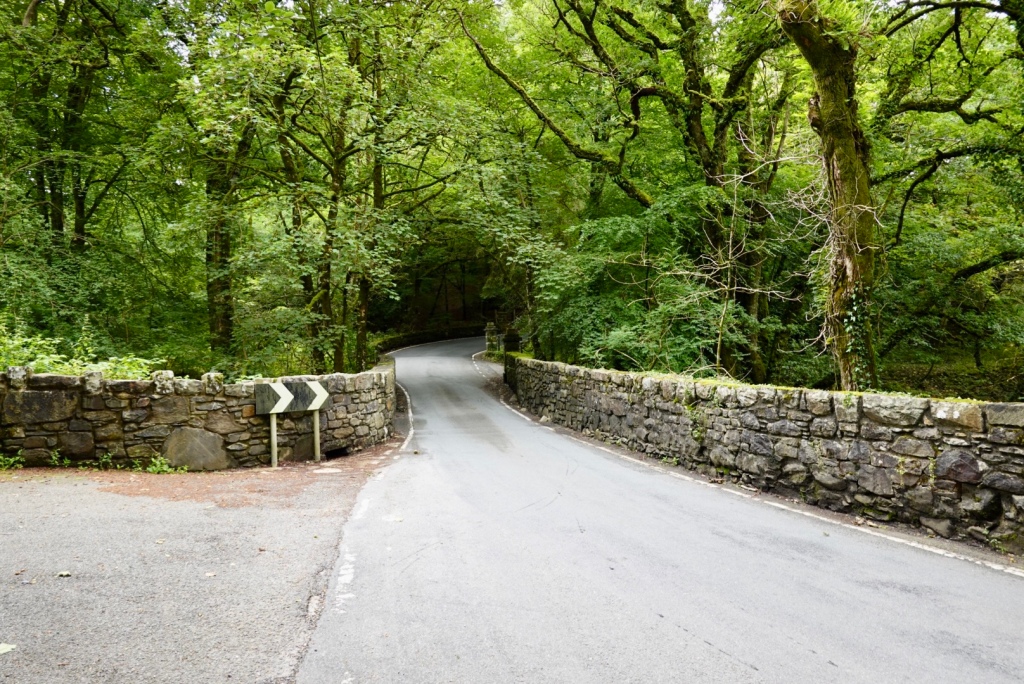
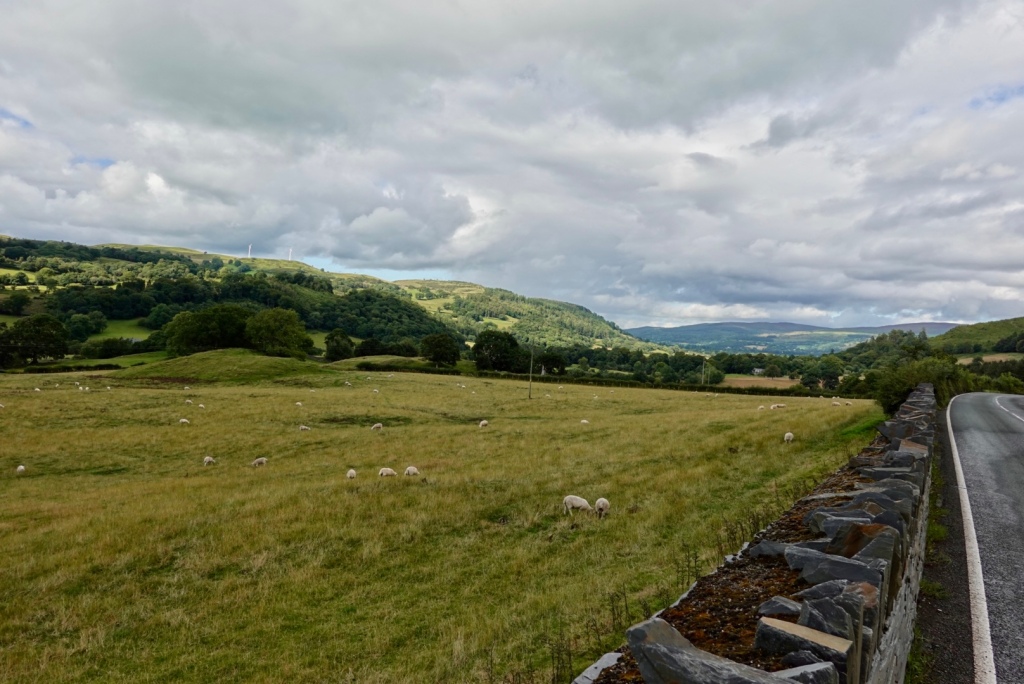
Descending was pleasant. We liked these old stone walls.

The views opened up, and we looked forward to Cross Foxes, a pub located at a busy road junction part way through the descent.

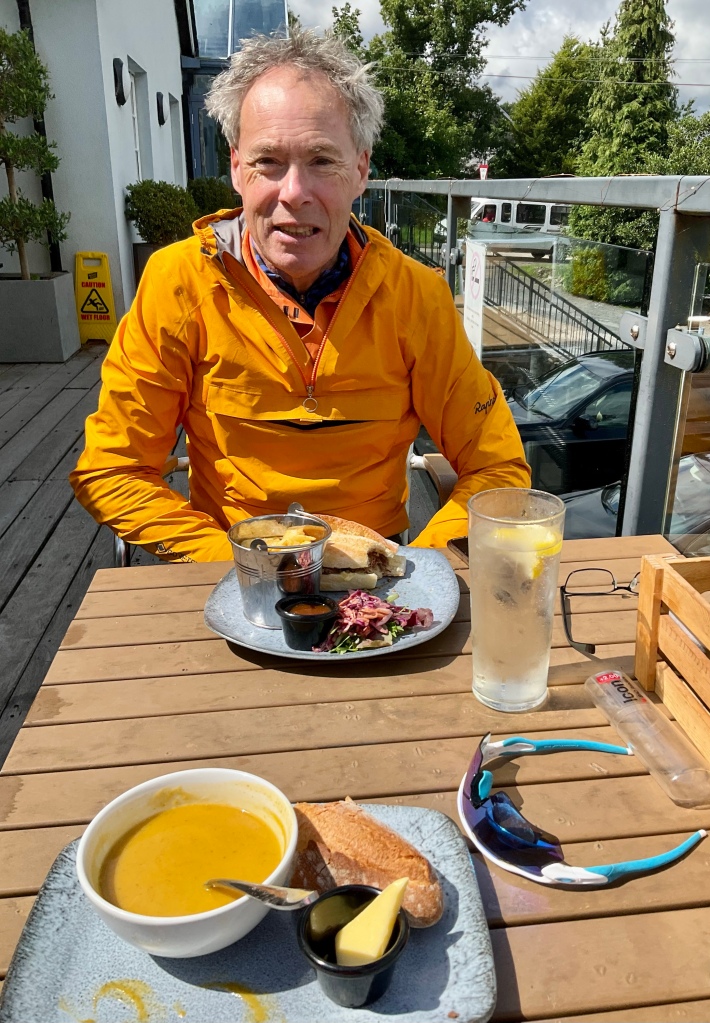
Boom, and here we are. We got a table outside, and do you note something? It is sunny!! It had been slow progress to this point and we felt we would be getting to Corwen at dinner time!

The post lunch ride was totally different. It was downhill for a while, then a series of uphills, and then undulating for the rest of the ride. We made up some time as we were able to ride at a faster pace.

Some of the views.

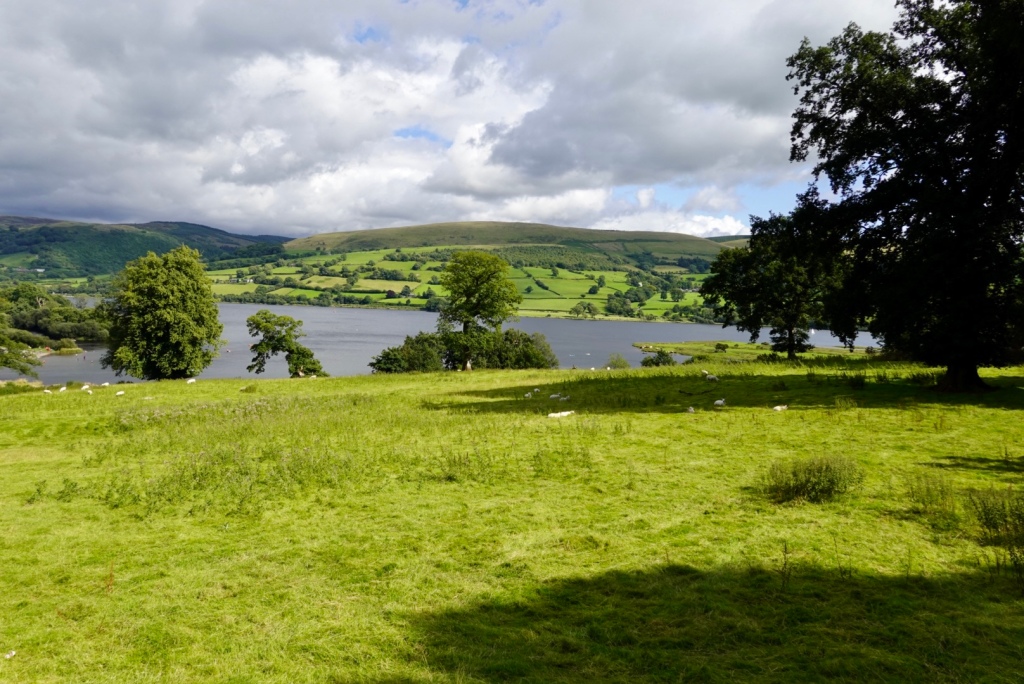
This is Lake Bala. To the left, there are people swimming in the lake. there was a campground full of campers.

Bala Lake was the largest natural body of water in Wales before its level was raised to provide water for the Ellesmere Canal. It lies between the Aran and Arenig mountains at the fringes of Snowdonia National Park.

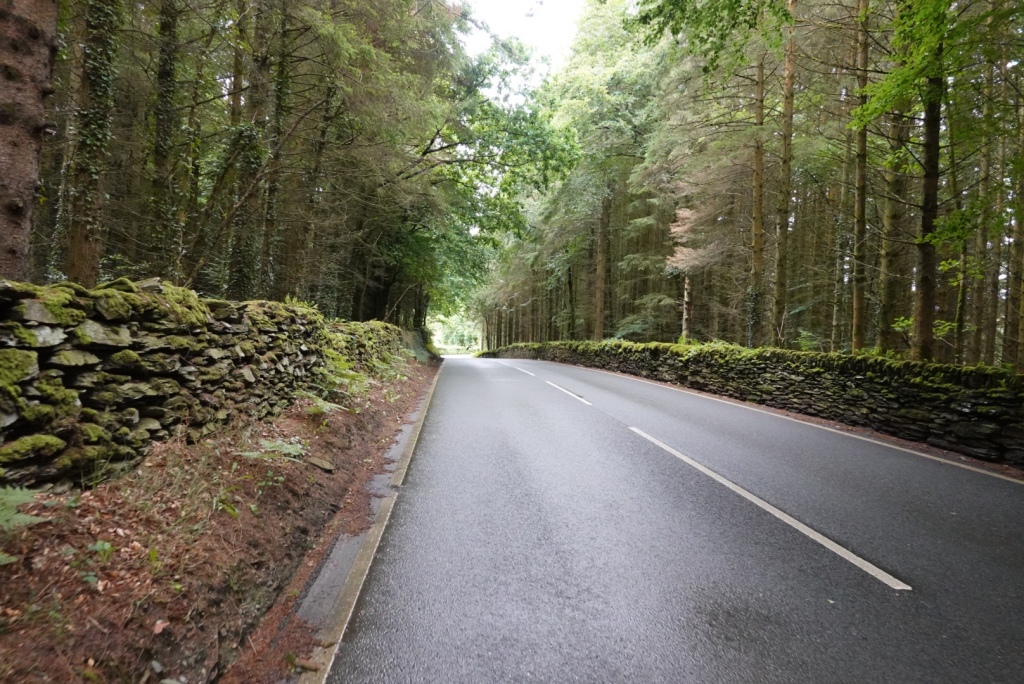
Getting closer to,our destination we enjoyed this forest.

Stopping to photograph this bridge, that we then rode over.

Looking down towards Corwen, we were ready to finish.

Nearly there!

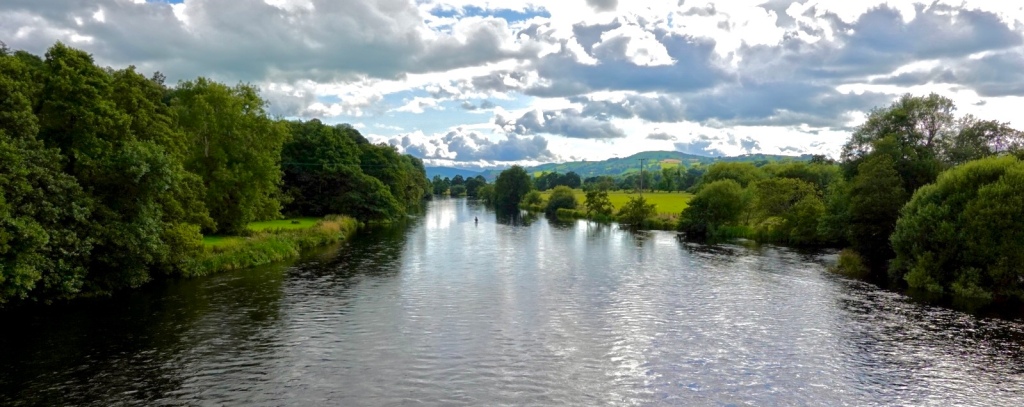
Corwen stands on the banks of the River Dee beneath the Berwyn mountains. There is a man standing in the river fishing.

After 114 km and 1327 m climbing, we arrived at the home of Alan and Sue. We have not seen them since they visited Australia around 2015. We had ridden Lands End to John O’Groats with Alan in 2013.

I did not write the blog last night as we chatted. Instead I got up before 5 am, whilst the house sleeps, to do the blog. It is now 7.15 am, and the house is still quiet.

We have our first and only scheduled rest day today. The day is looking beautiful.

Thanks for reading 😊❣️
Day 4: Builth Wells to Aberystwyth

Following on from last nights Storm Antoni warning, we were in a conundrum as to what to do. Safety is paramount.

Options included getting the train to Shrewsbury, staying there, or getting a second train to Aberystwyth from Shrewsbury.

Our friend Graeme rang us with his thoughts and he suggested a taxi to Rhayader and riding from there.

We went down to breakfast at 7.30 am still unsure. There was a lady cyclist from Germany there pouring over train time tables. We chatted and she was also unsure as to what to do.

The guy in the corner said it was going to hail today. I jokingly told him we did not need that kind of negativity, laughing. He laughed and said it was a typical Welsh summer.

The owners of the accomodation said the only taxi was a sedan.

We has a very yummy breakfast and went outside and looked around. We rechecked the rain radar, wind forecasts and thought we would just go for it. Whilst it was likely to be wet, for the majority the wind would not be an issue.

Heading out of Builth Wells past the random cow, we followed the river. Park Run was setting up for the diehards.

The first two km was pleasant following a bike path adjacent to the river. Then the climbs started.

Down one hill and looking up to the next short climb
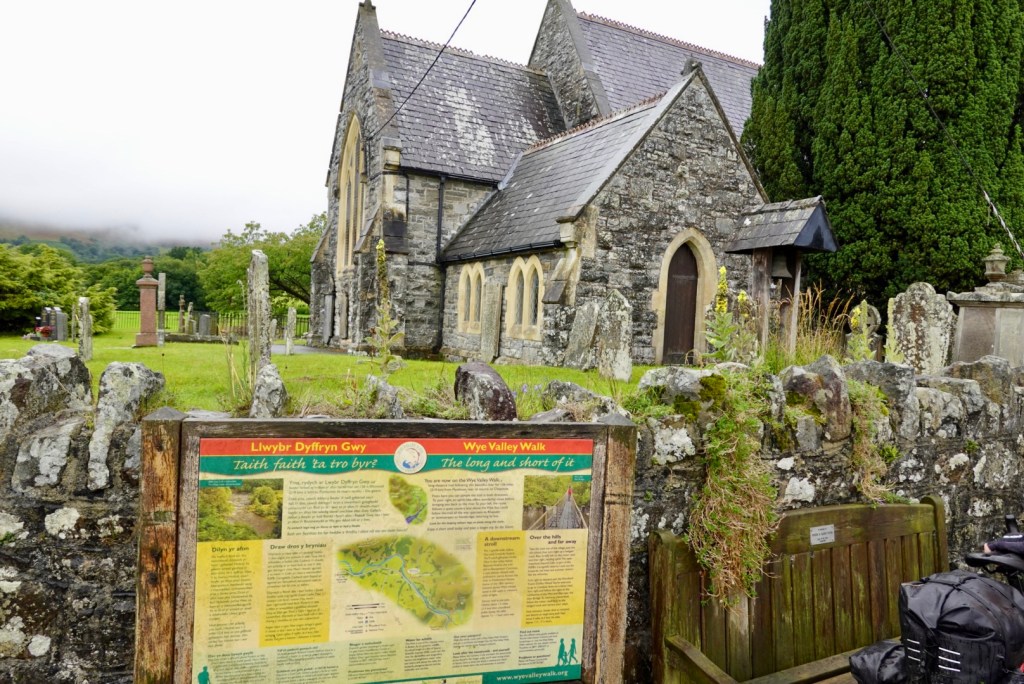
We were predominantly in an agricultural area except for this church.

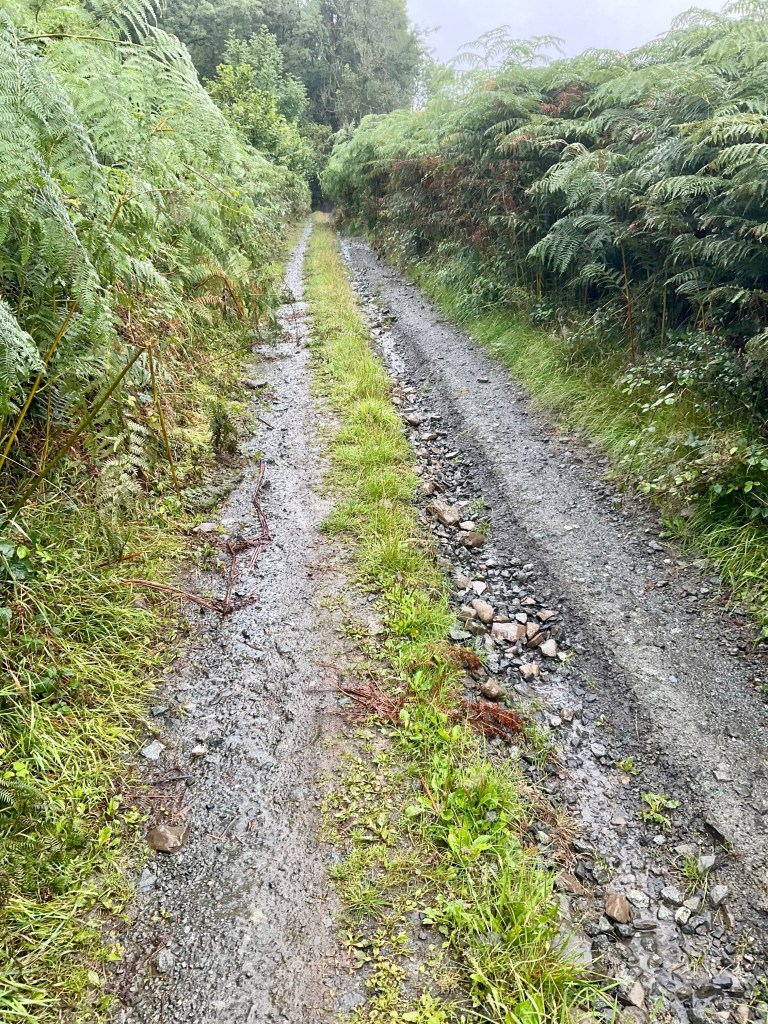
When Graeme suggested we bypass the first part of todays ride it was partly because of this β€˜cycle path’ being unsealed, and of course, the recent rain, that was continuing to fall.

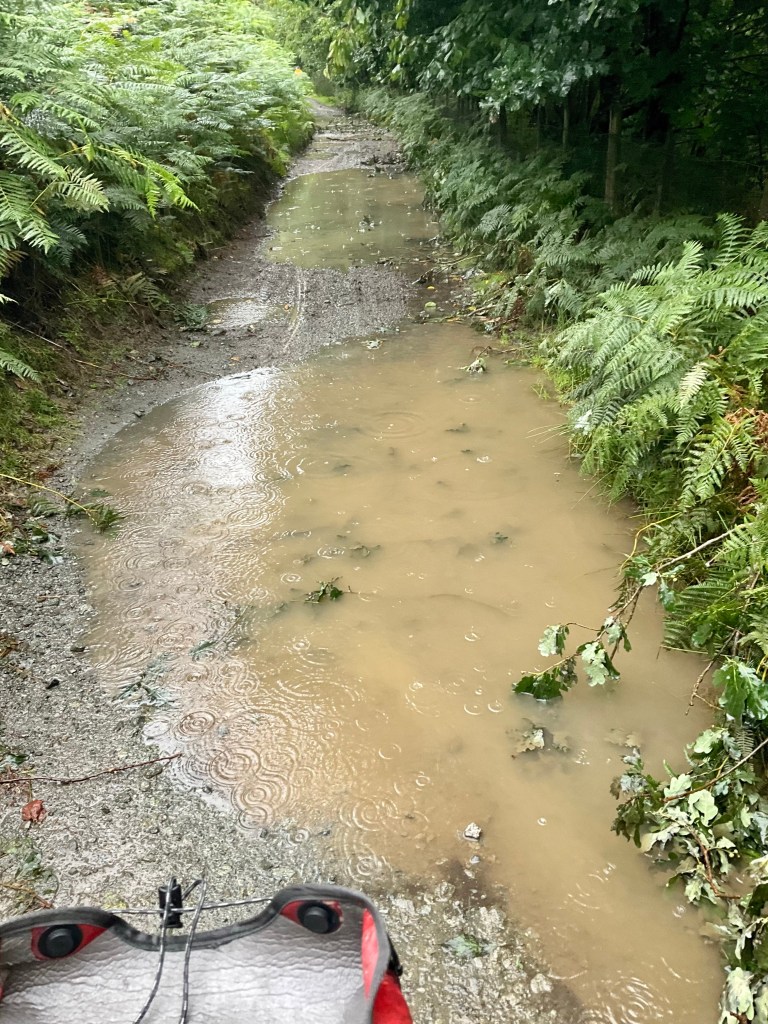
When we started, it looked like this. Ok, we could cope with that. But then it went into a 2 km climb and the puddles dominated.

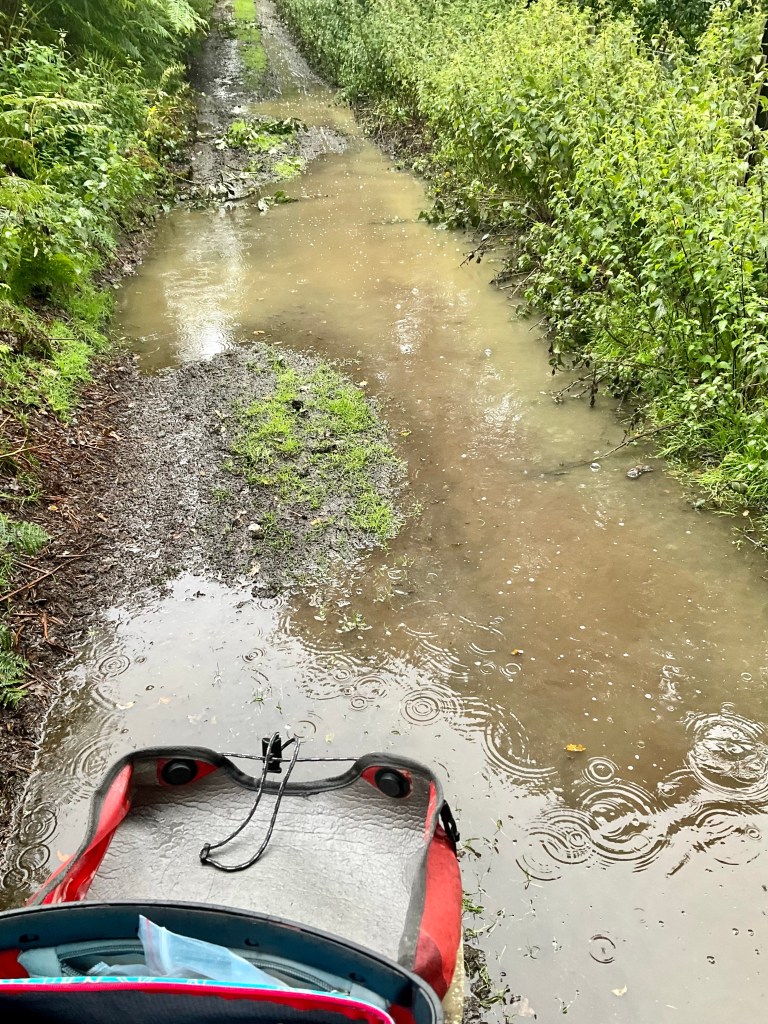
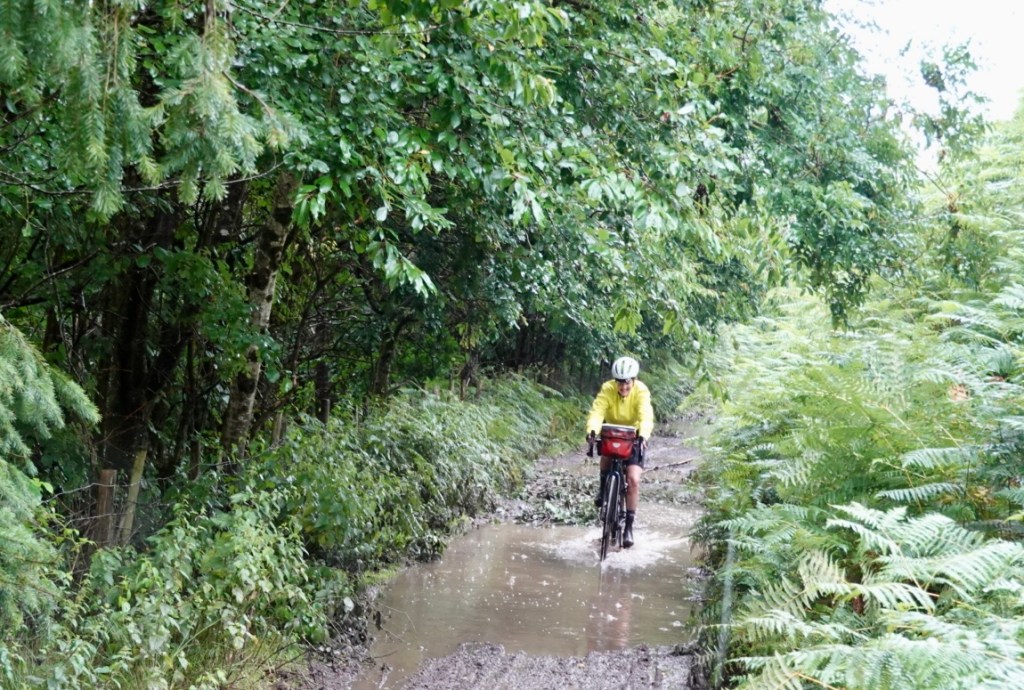
It is hard to tell how deep the puddles are, unless Tony is ahead of you πŸ€£πŸ™ˆ but then he coped better than me, and pulled clear.

I really thought I would end up on my side, soaked. However, proud to say I got through this 5 km quagmire unscathed, bar my filthy legs and bike.

Tony managed to snap me going through one. There was one super deep puddle. The water went up to my ankles as I peddled through.

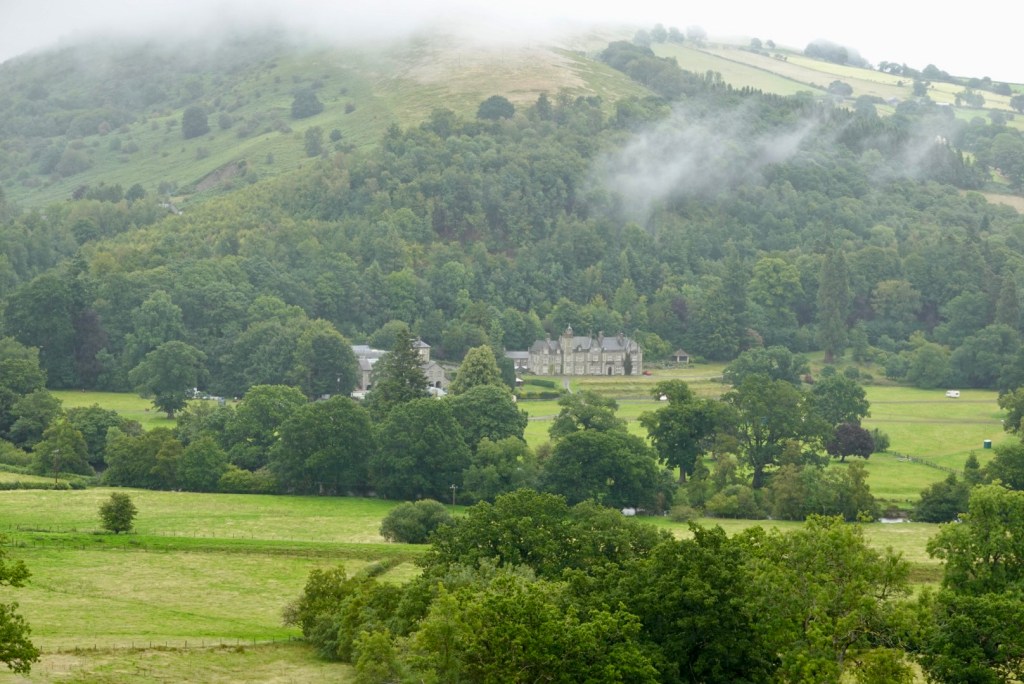
There were pleasant views, and this looked like a pretty fancy home.

We popped out at this village, and I did not write down the name. From the signpost, it appears to have many walks in the area.

Tony managed to be considerably cleaner than me on his legs. He grabbed his drink bottle and squirted water over our disc brakes to clean them.

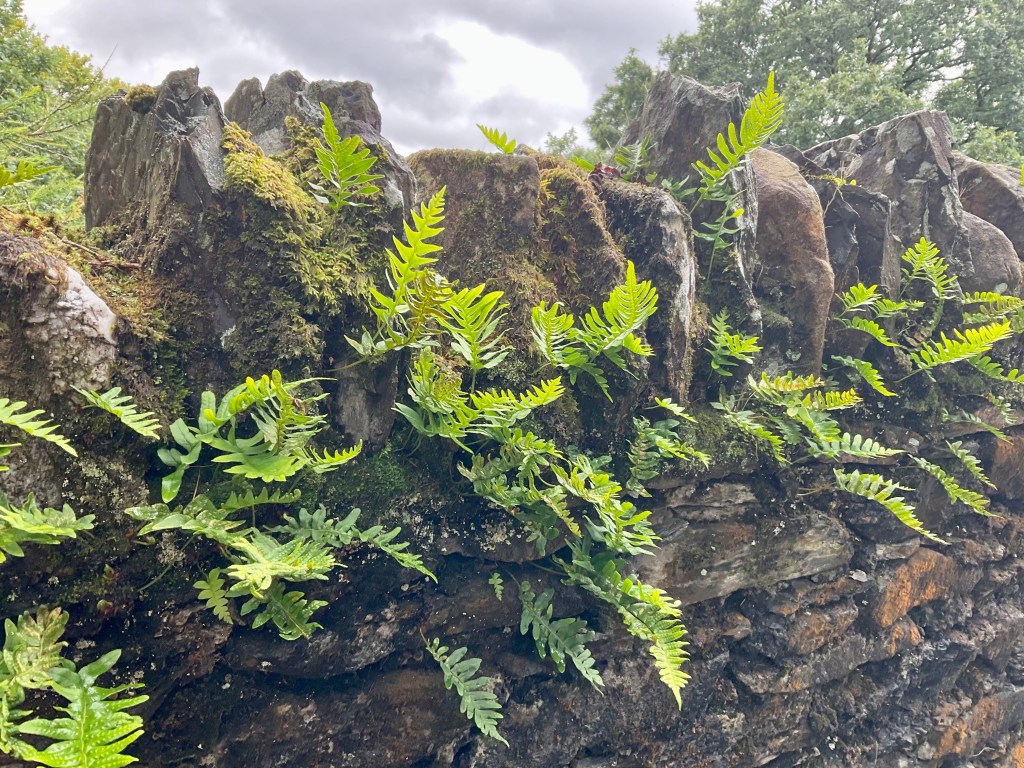
On the next sets of climbs, we were on sealed single track, with the occasional house or farm. I really liked the ferns on the stone wall.

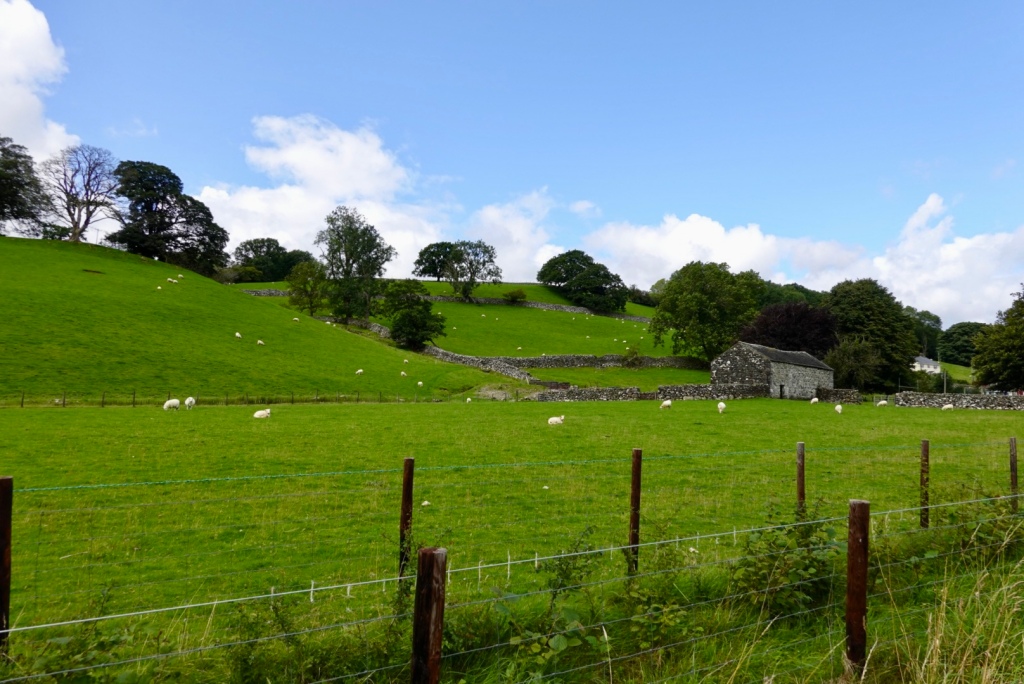
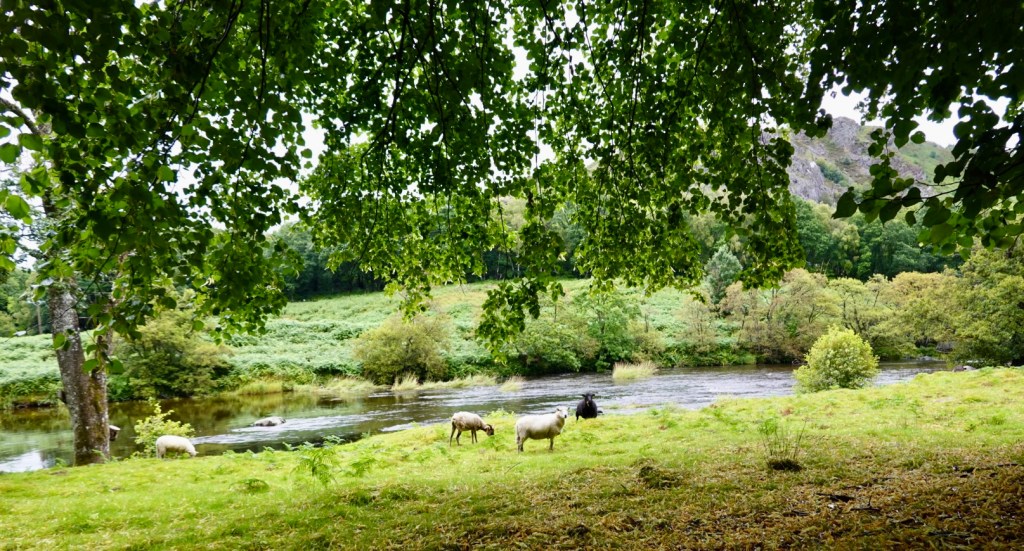
We stopped here, as we thought this was a very pleasant sight by the river, with sheep grazing. Sheep seem to freely roam these parts.

Another flash home.

We turned right to ride through the Elan valley. We arrived at the Elan Village looking for a toilet and food, as we thought the visitor centre looked closed as we rode past.

I went up to the Elan Valley Lodge to see if we could purchase a drink. I was told β€œNo, this is a private lodge”.

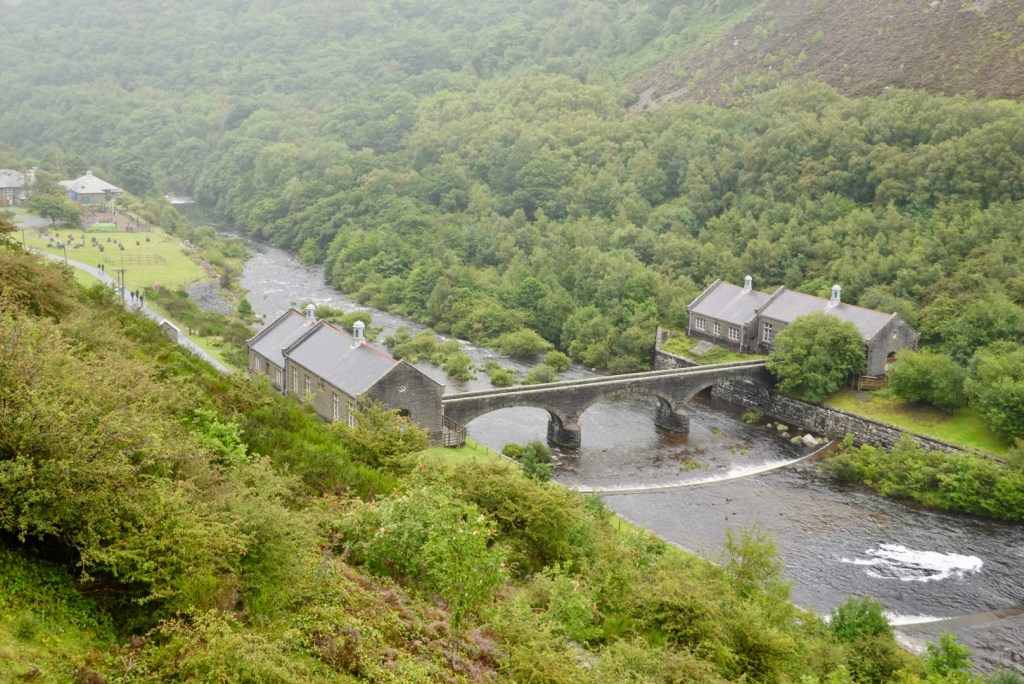
The village and reservoirs were designed by the architect Herbert Tudor Buckland as part of the scheme, and the village is the only purpose built model village in Wales.

Call me ignorant, but the village seemed to me to be a string of building all in a row. Maybe I missed something.

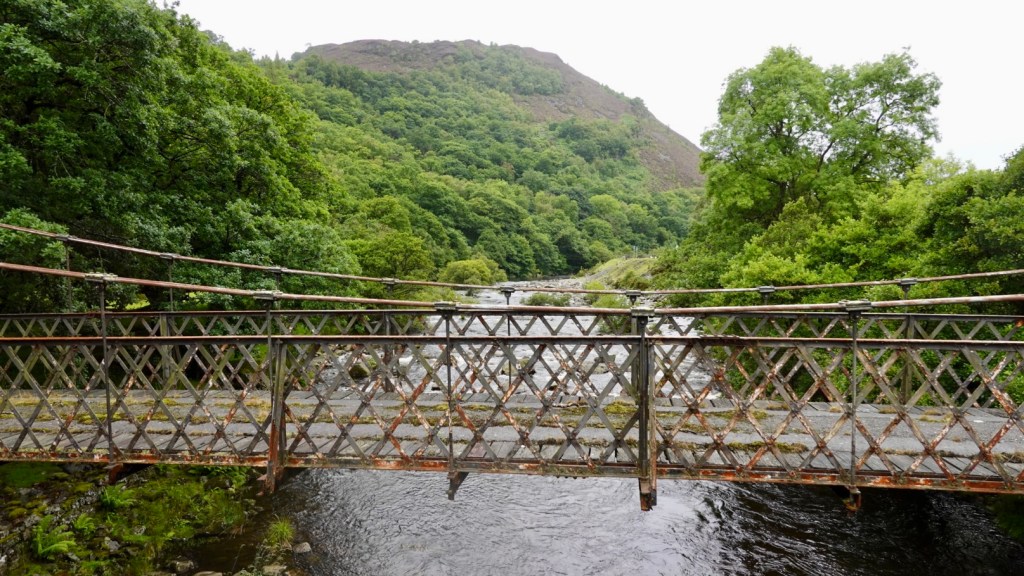
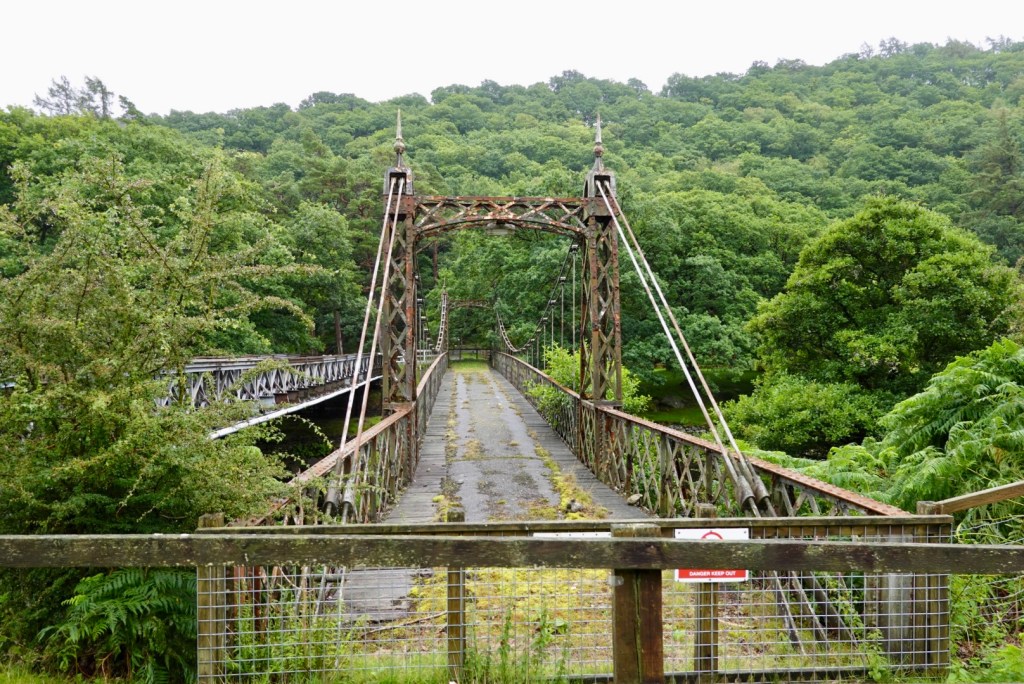
Heading back out across the river, there are these old bridges.

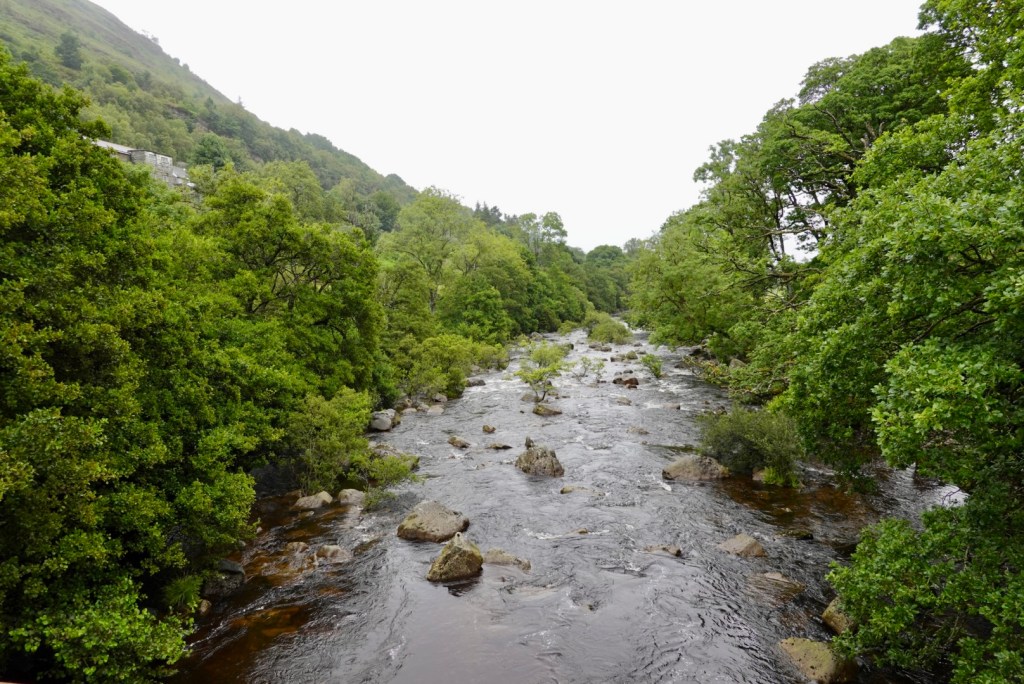
The Elan River, looking south from the bridge

As we rode past the visitor centre, the buildings we presumed to be closed, were in fact, not in use. We needed to ride a farther 300 metres or so past the entrance. We found our food and coffee!

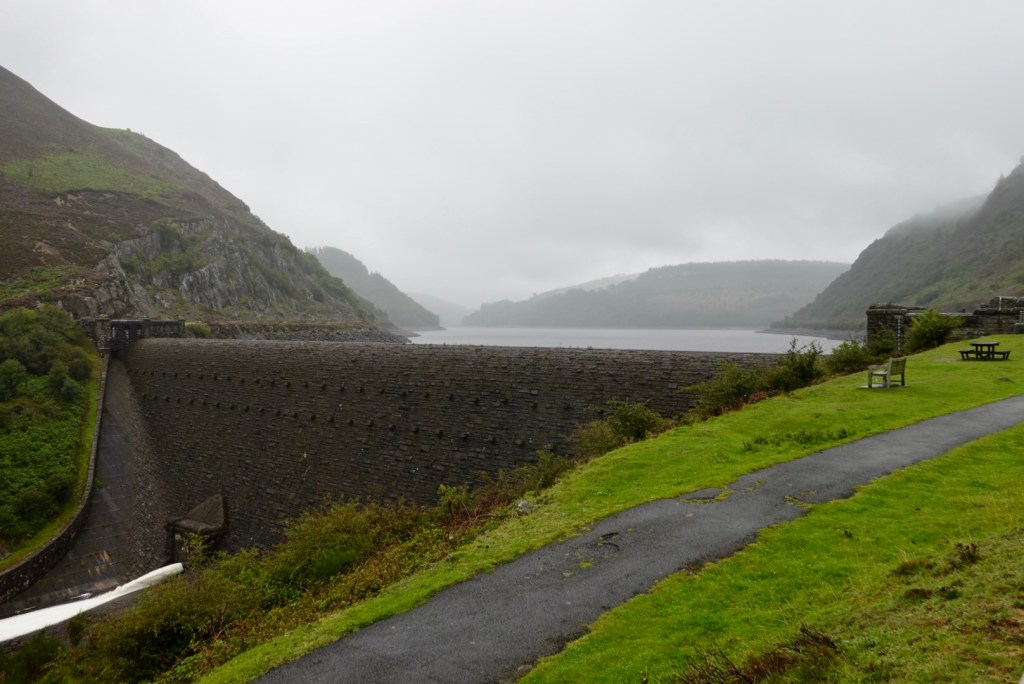
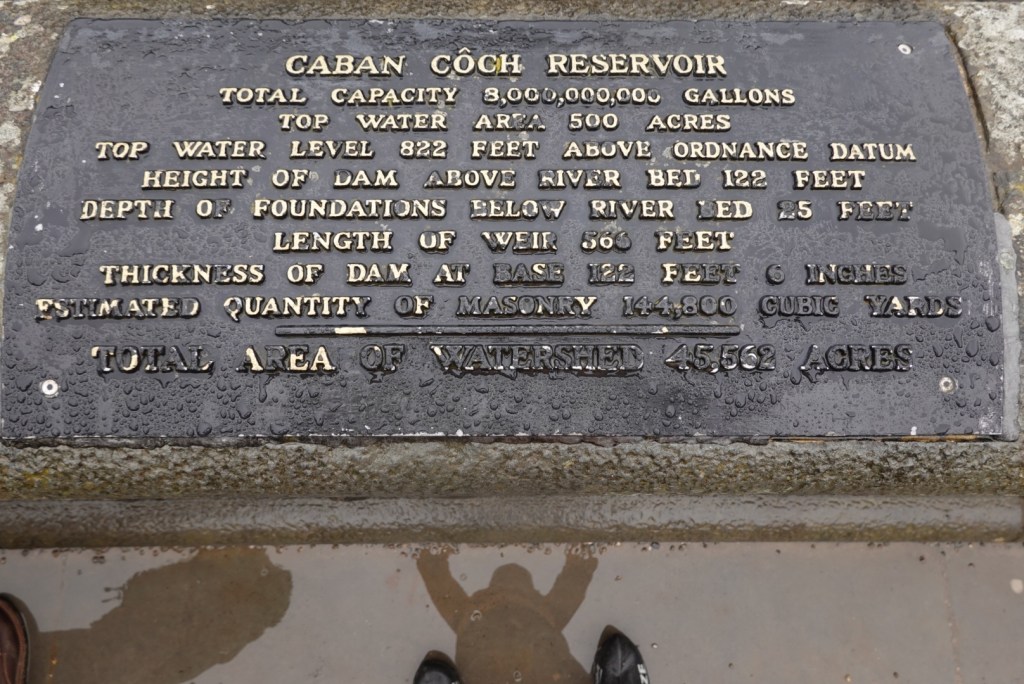
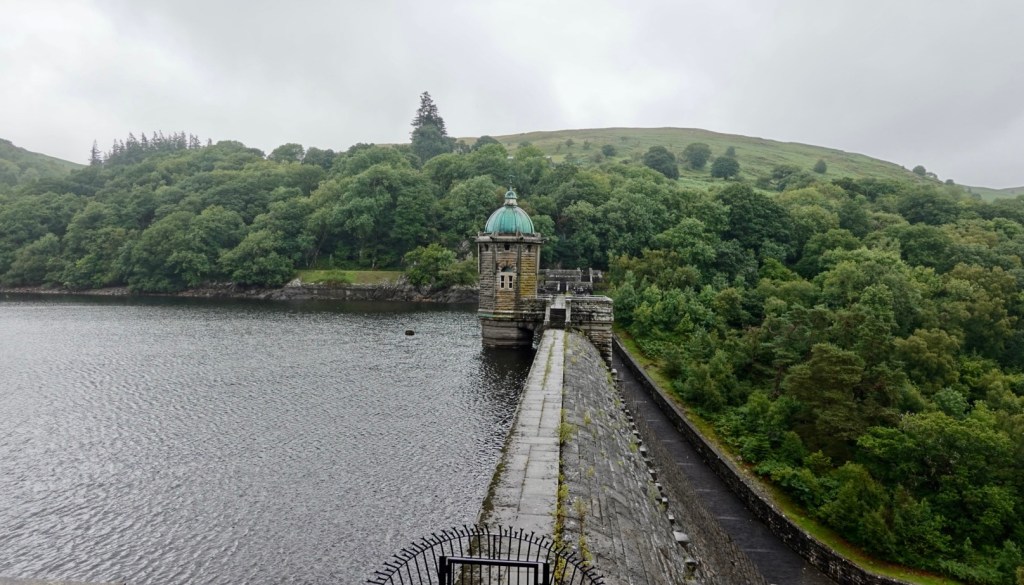
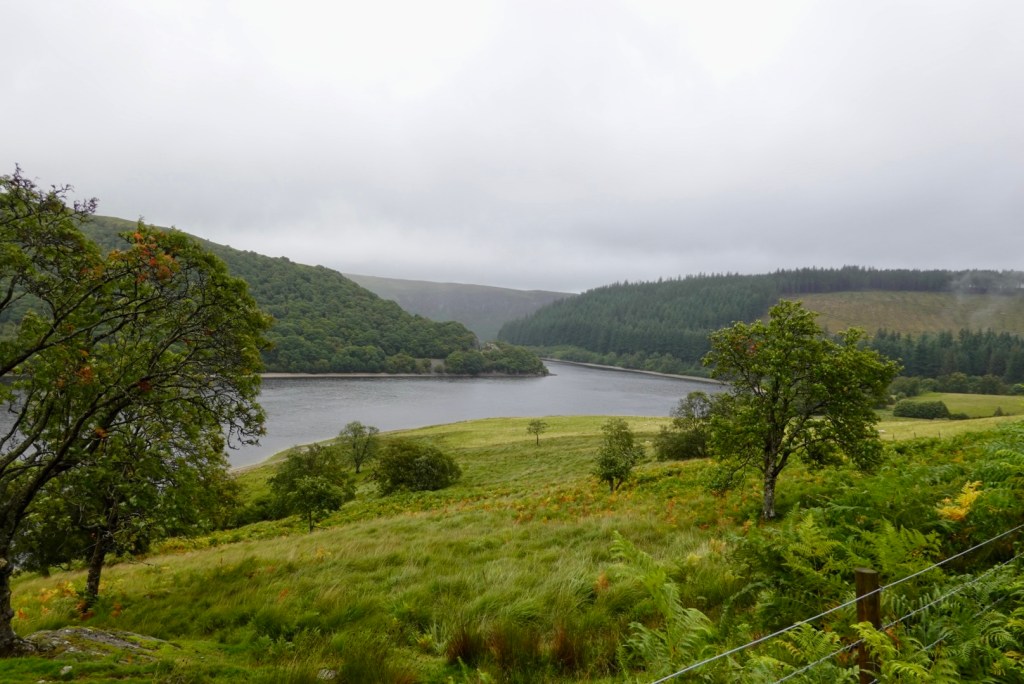
The Elan Valley contains four dams along the Elan River.

It is also famous for its picturesque scenery. Over 80% of the valley is designated as Sites of Special Scientific Interest, and a popular cycle trail, the Elan Valley Trail, makes a loop from Rhayader around the reservoirs.

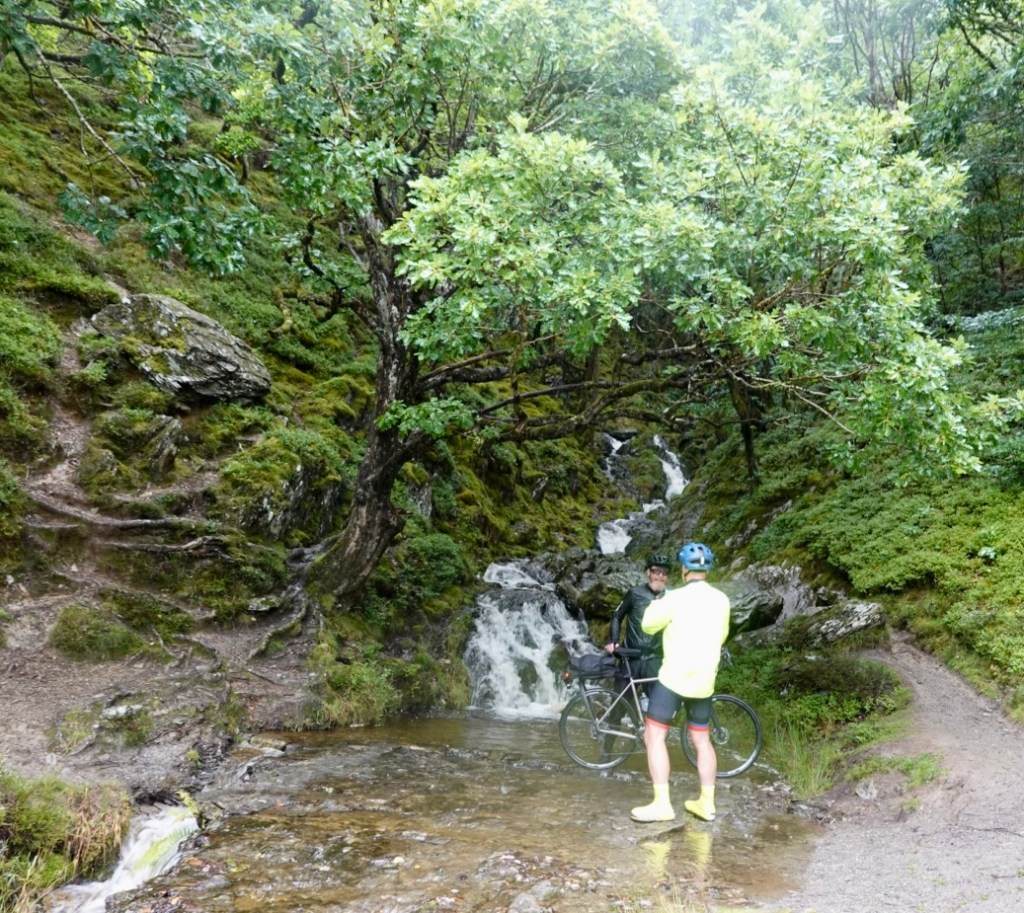
In between dams we were passed by these two cyclists. We did laugh at how keen one was for this photo, standing in the water with his bike.

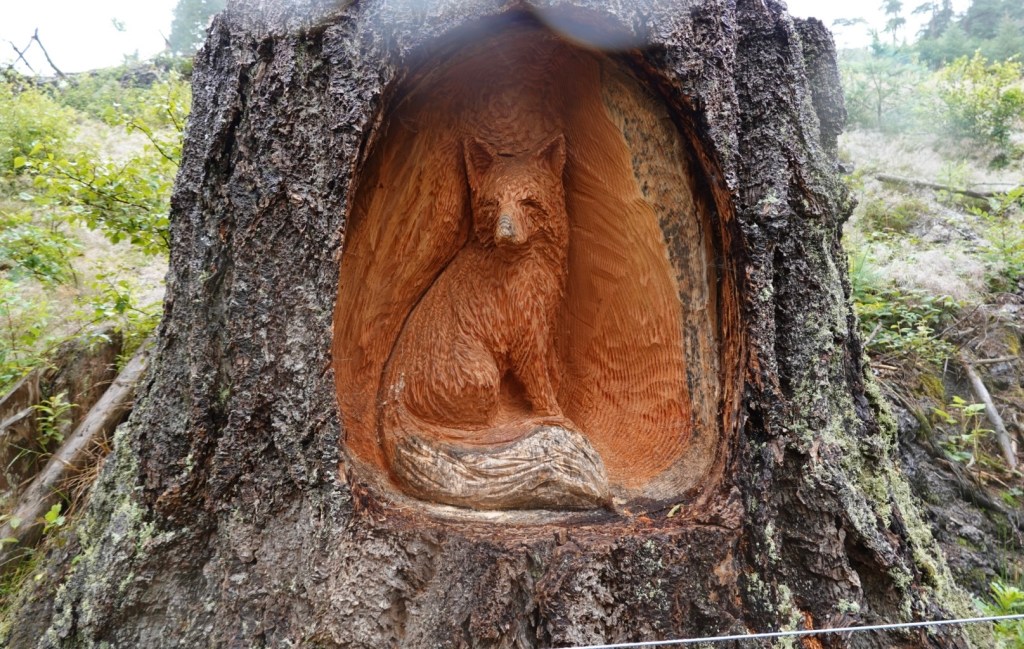
We noted many trees had been cut down. Carvings had been done on numerous.

Back to the dams….

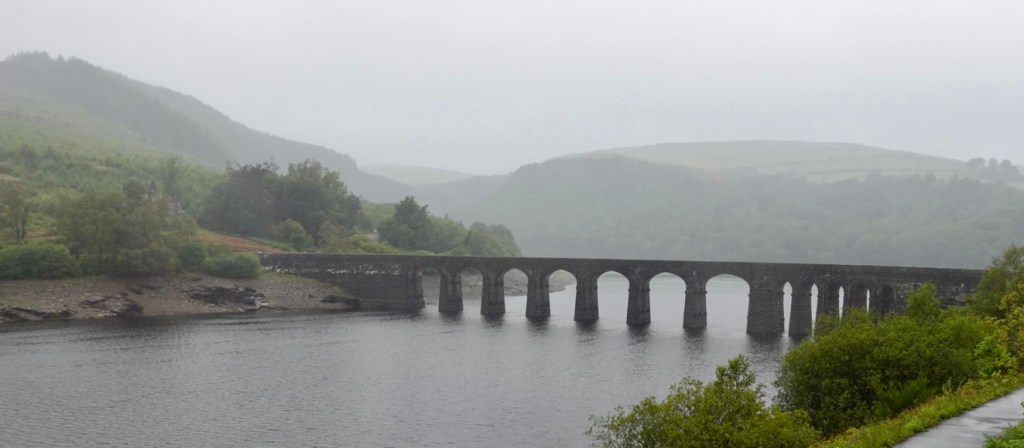
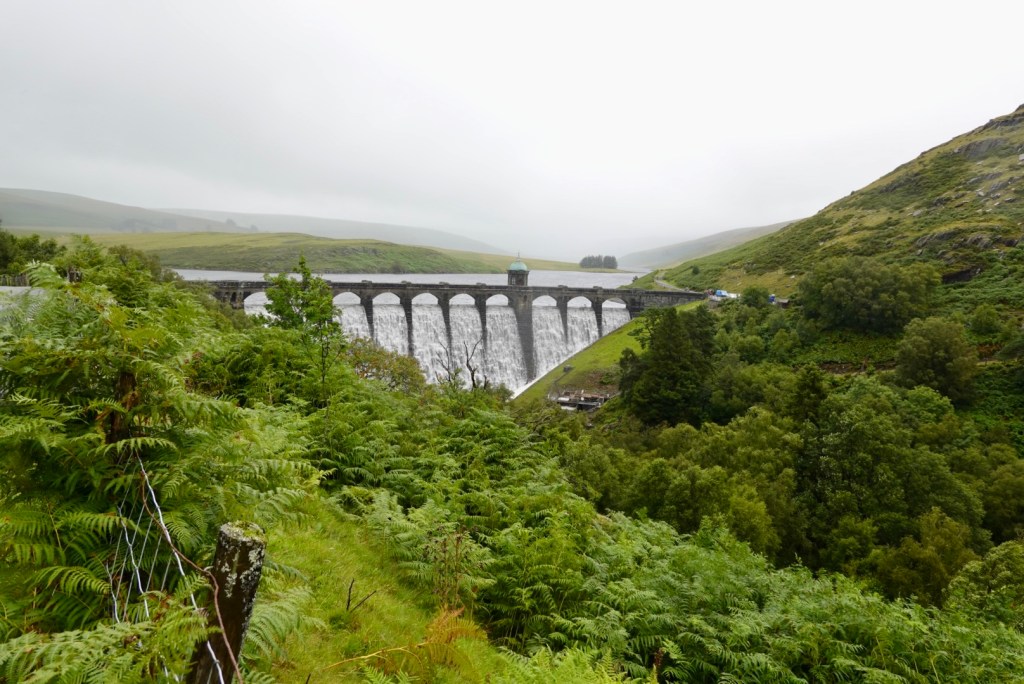
The dam is overflowing here, going under the lovely bridge.
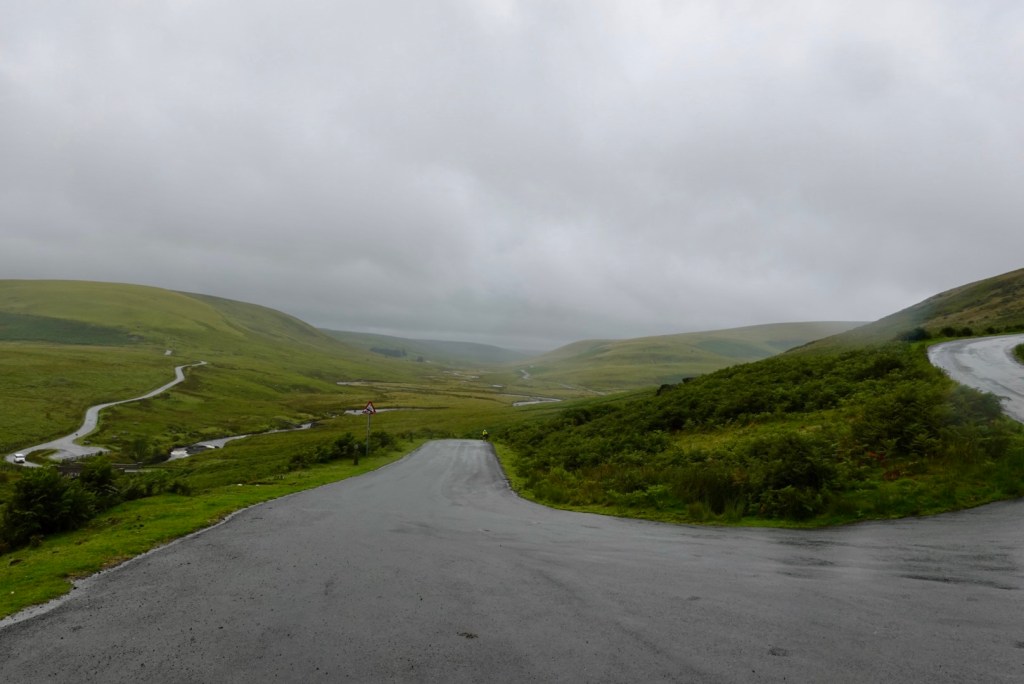
The road goes up, then up a bit more to the junction. You can see further down the valley.
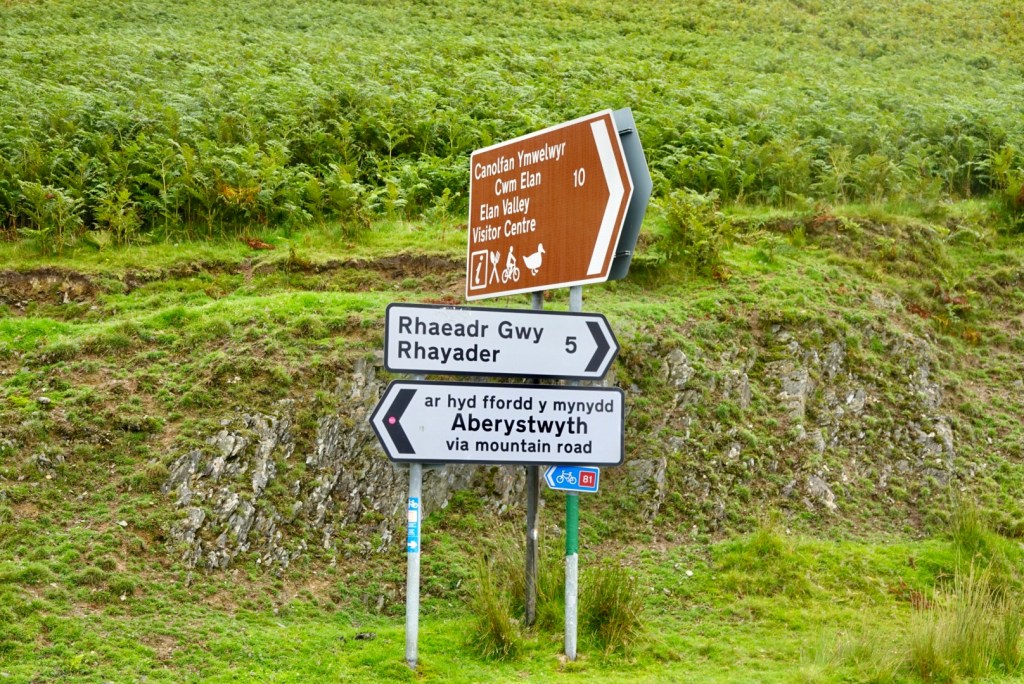
Eek, via mountain road …hmmm

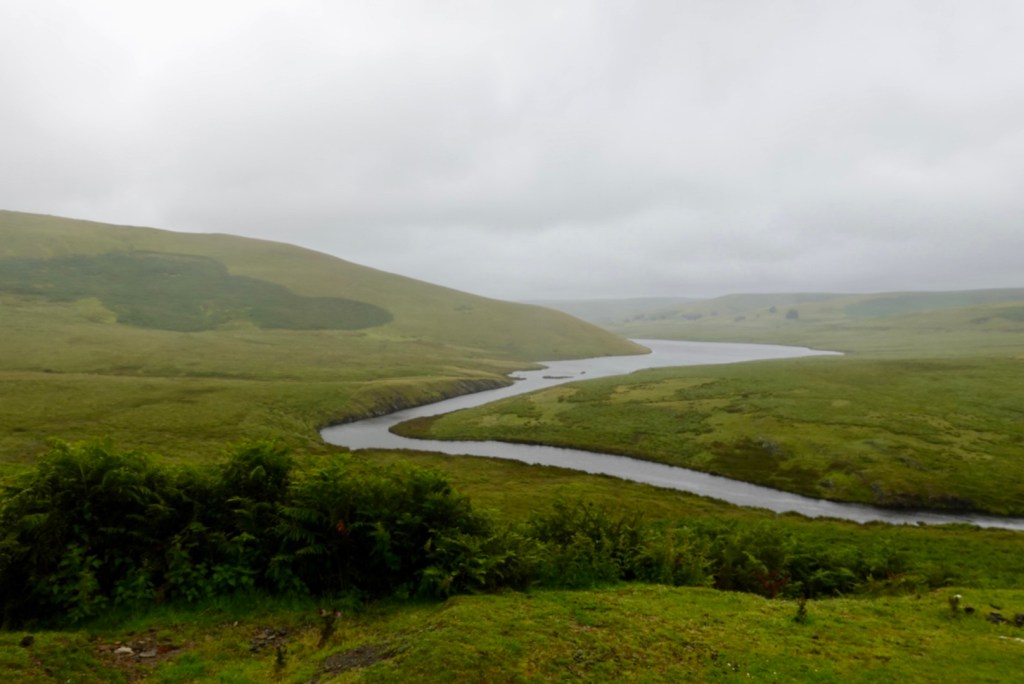
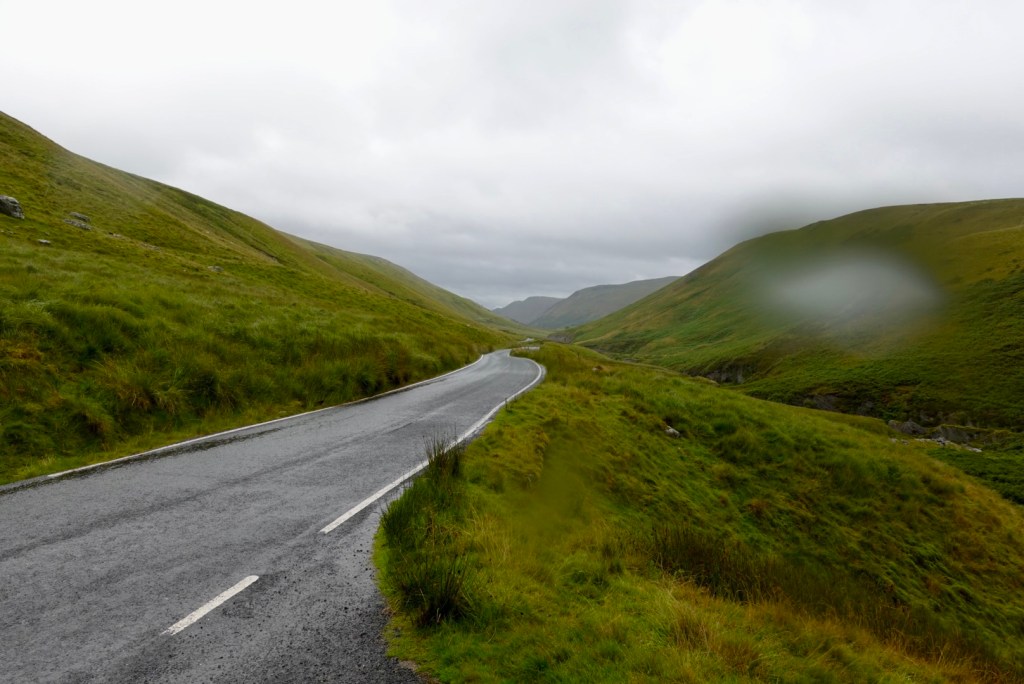
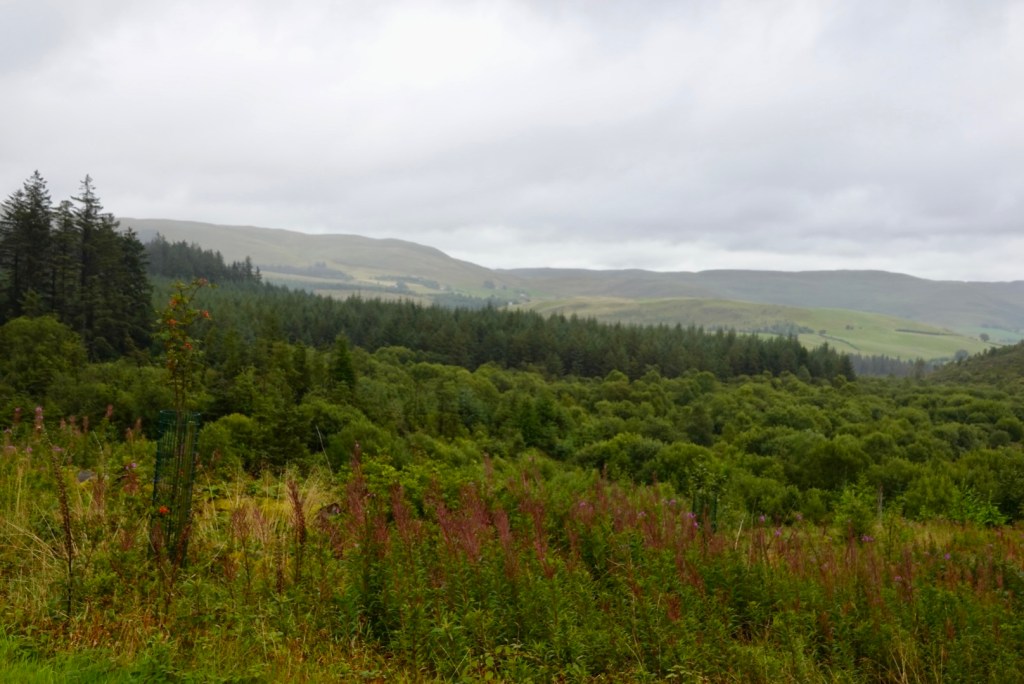
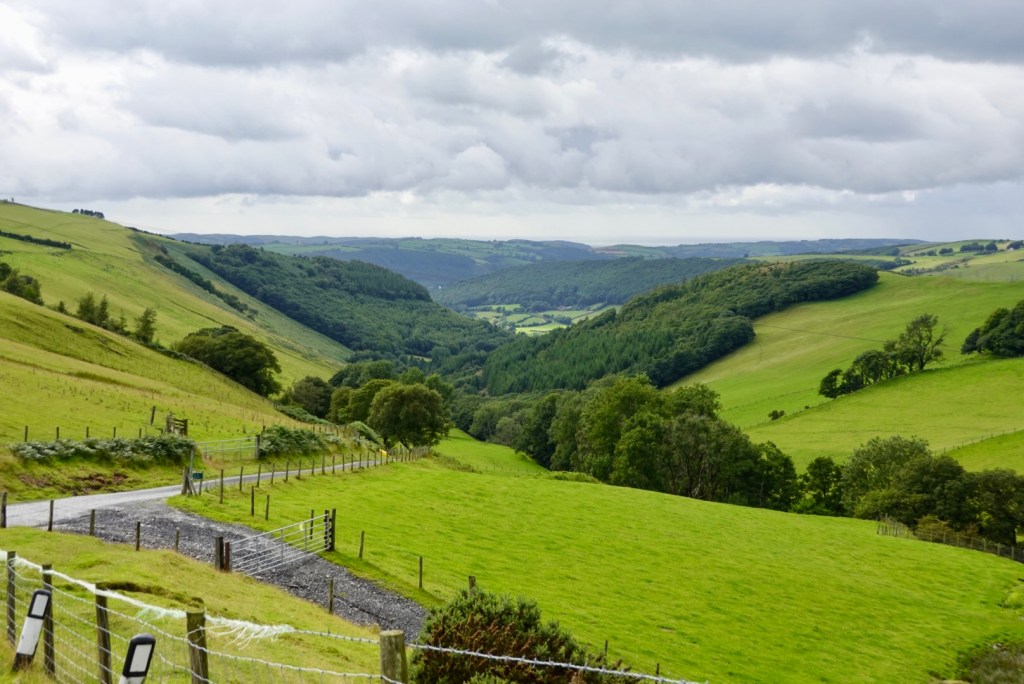
As it turned out the mountain must have been more hill like, but the views were outstanding here. The area reminded us very much of Scotland.

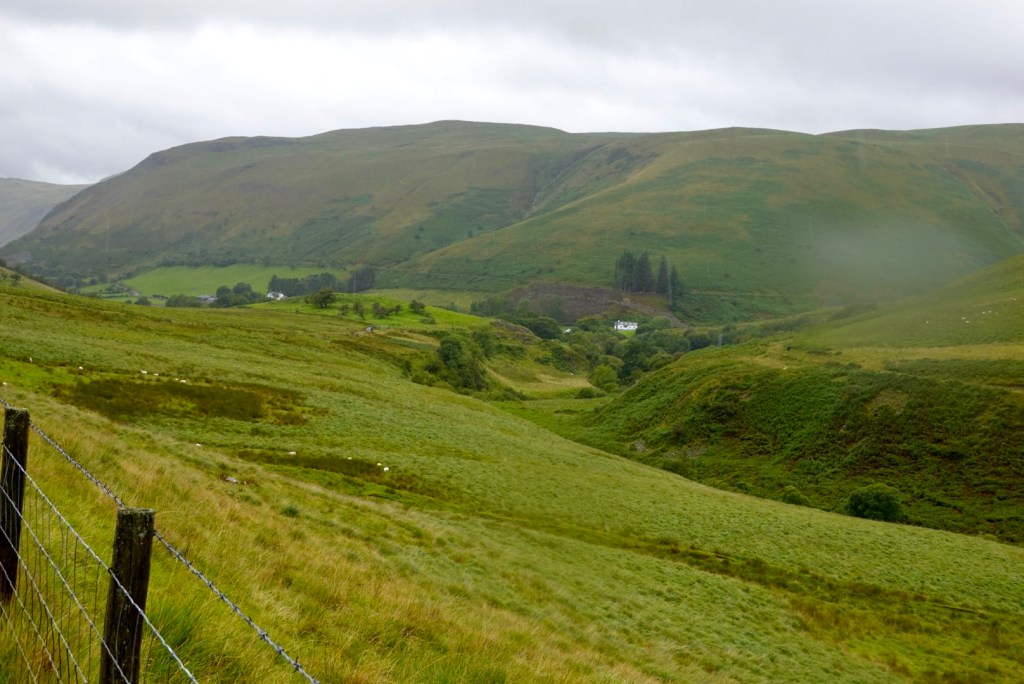
We descended down to that white dot of a house

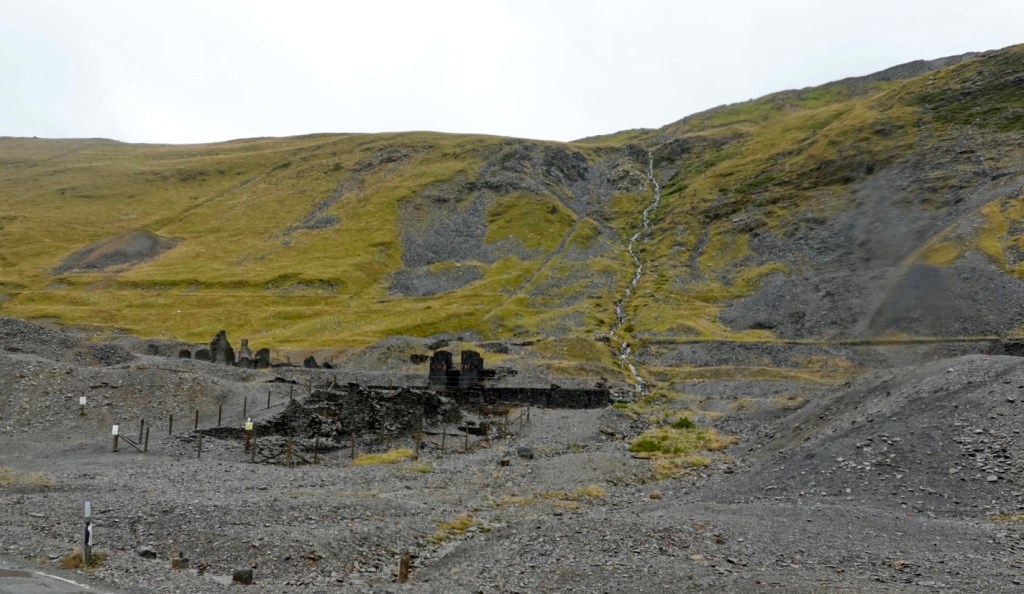
This area was interesting, with many km of mining residue on both sides of the road. Lead mining used to be very prevalent in the region. Piles of waste are dumped everywhere. Old buildings are all destroyed, looking like there had been fires within?

Oh here I am again, climbing, with Tony waiting. Today there were six climbs that had pinches over 20%. Tony rode each of them. I walked those pinches! No way can I do 20% even without gear on my bike.

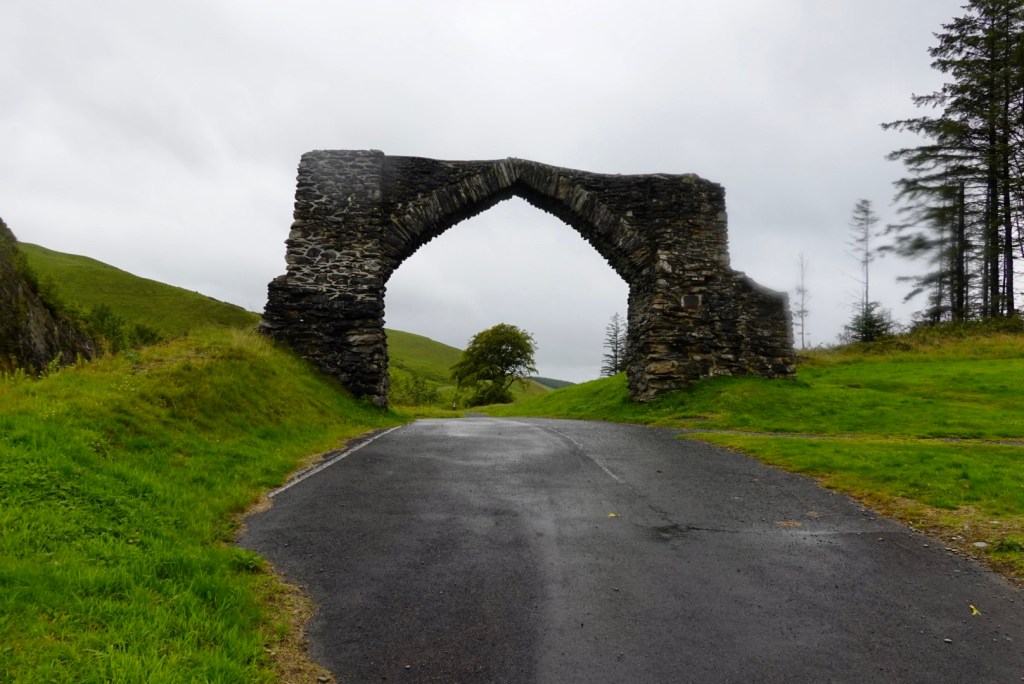
At the top of this climb was β€œthe arch” a former gateway to a local estate. But marking the start/finish of the Elan Valley

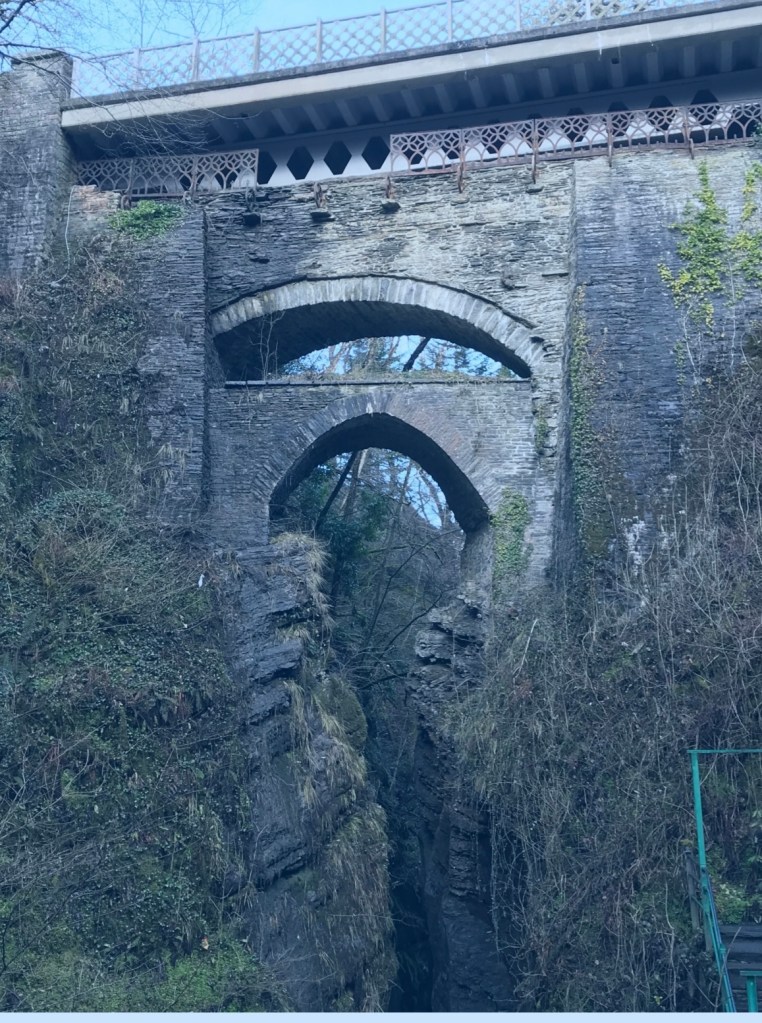
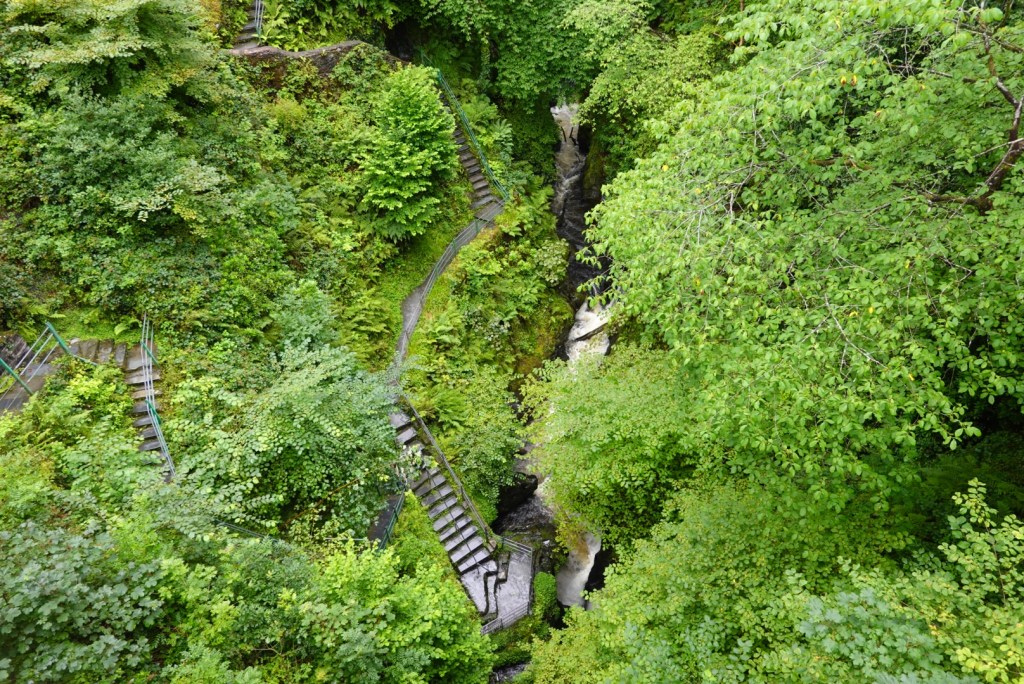
Next stop was Devils Bridge – unique in that there are three separate bridges, each one built upon the previous bridge. The most recent was an iron bridge erected above the older arches in 1901. The original bridge is medieval and the second was built in 1753.

The name Devils Bridge was named reportedly after an old woman lost her cow and saw it grazing on the other side of the river. The Devil appeared and agreed to build a bridge in return for the soul of the first living thing to cross it. When the bridge was finished, the old woman threw a crust of bread over the river, which her dog crossed to retrieve, thus becoming the first living thing to cross it. The devil was left with only the soul of the dog.

Not taken today, I’ve stolen this one, but showing the three bridges.
Standing on top of Devils Bridge, looking down, walkers head down to admire the bridge and river.

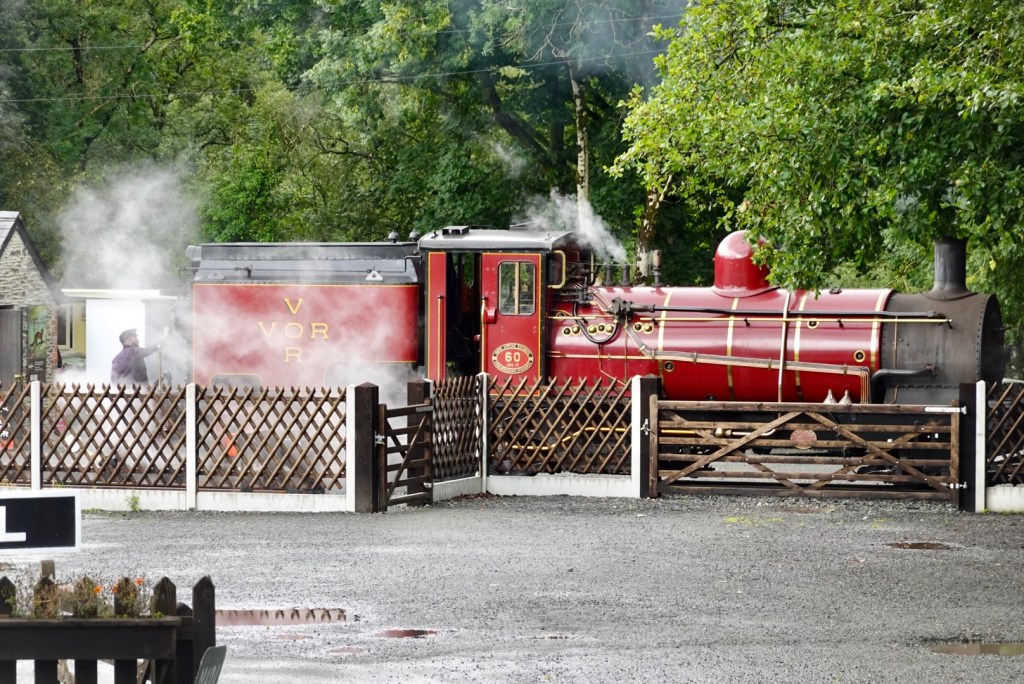
During the summer a narrow guage railway (The Vale of Rheidol) runs 19 km from Aberystwyth to Devils Bridge. The railway opened in 1902. Since 1989 it is operated and maintained by a charity group.

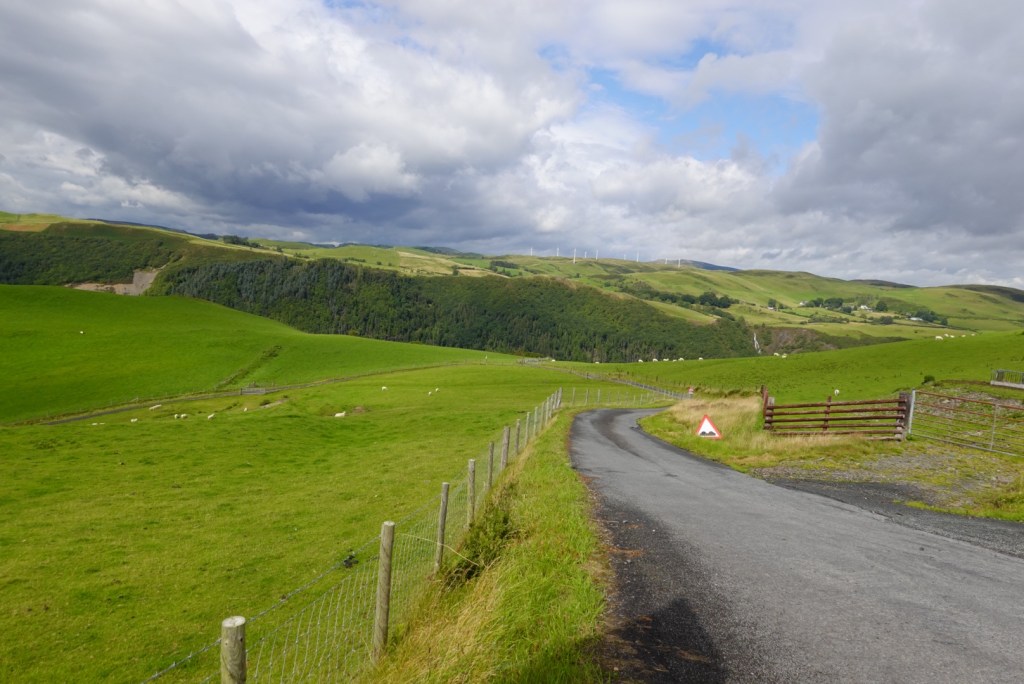
After all our climbing, we needed to get back to sea level. We did this on a cycle trail down this narrow road. The skies are lifting, and the rain has stopped.

It was super steep. My hands ached from squeezing the brakes so hard. There were pitches in excess of 25%.

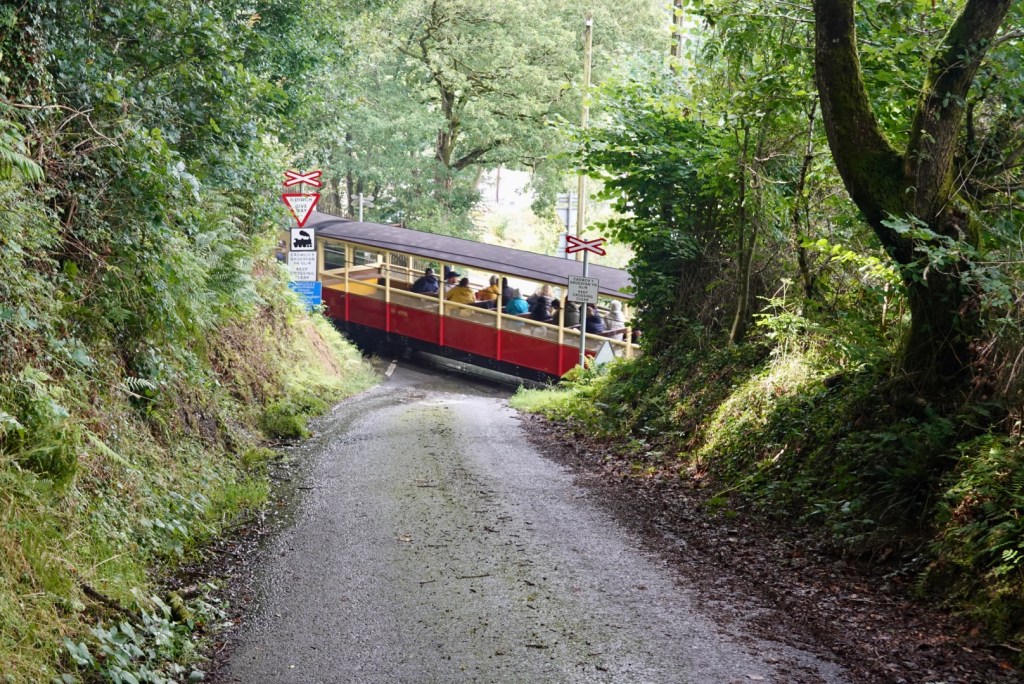
On a steep descent section, we needed to give way to the train heading back to Aberystwyth.

There was about another 10 km before arriving in Aberystwyth, and it was blowing a gale on the waterfront. It was a super strong headwind with gusts.

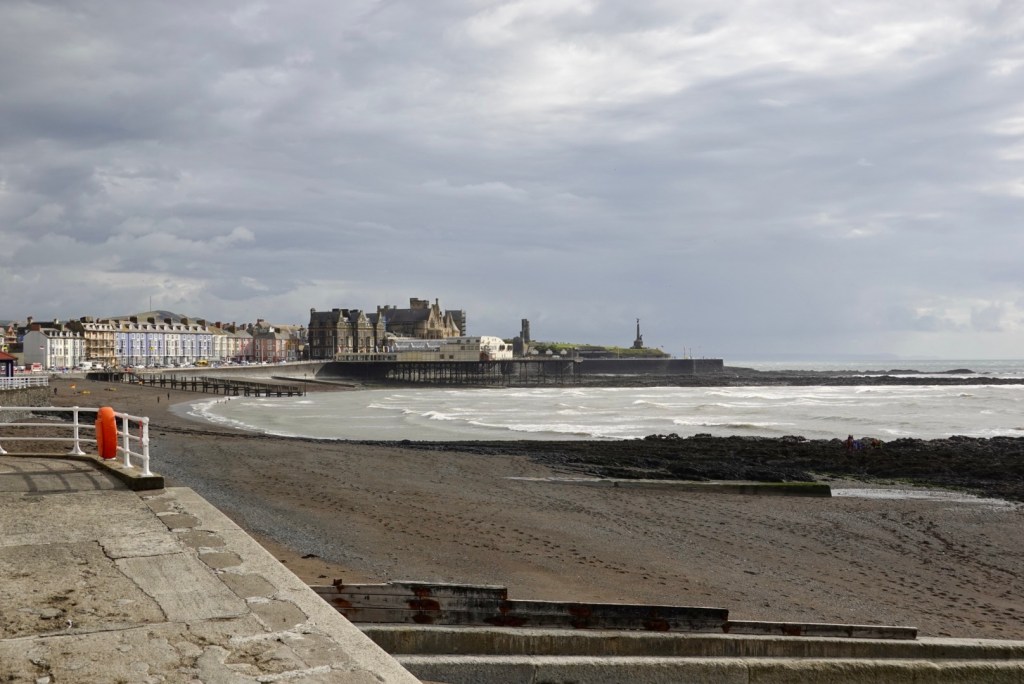
Aberystwyth, a university town, is situated on Cardigan Bay on the west coast of Wales. A long seafront with a pier stretches from Constitution Hill at the north end of the Promenade to the harbour at the south.

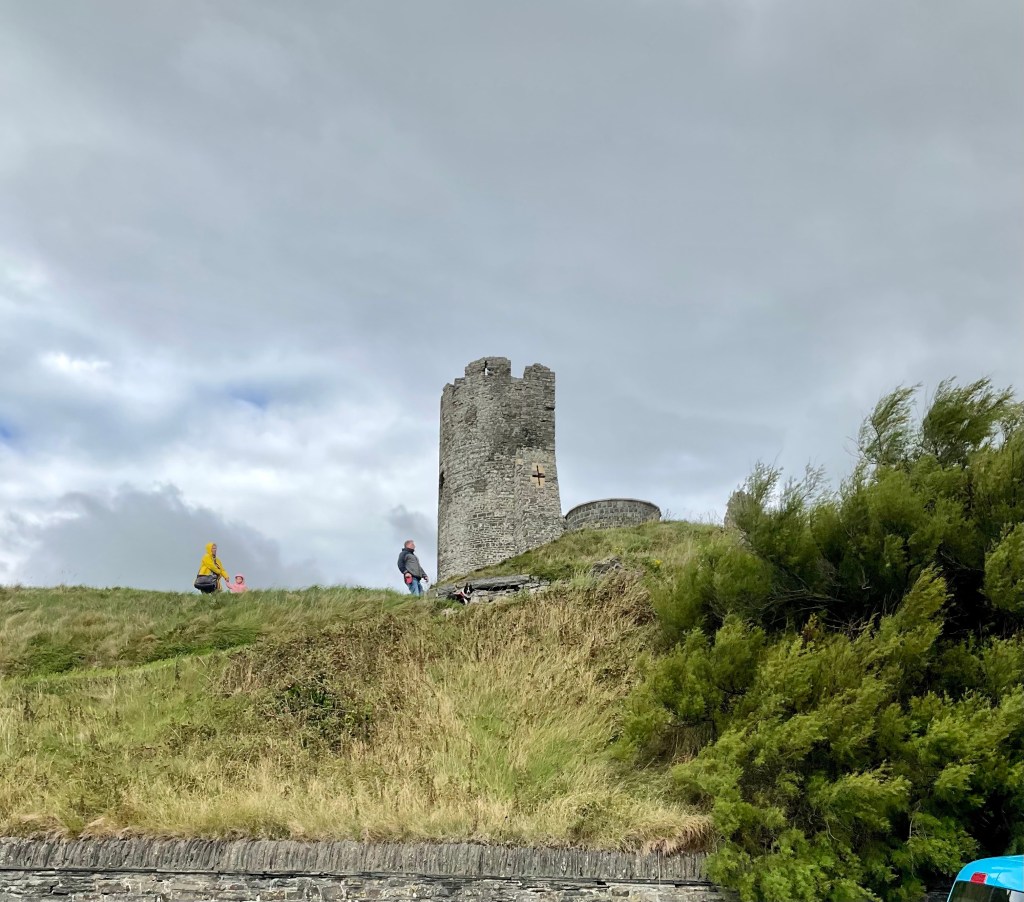
The beach is divided by the ruined Aberystwyth castle (1277) that was destroyed by Oliver Cromwell in 1649.

Part of the remains. Look at the angle of the tree limbs. It is super windy.
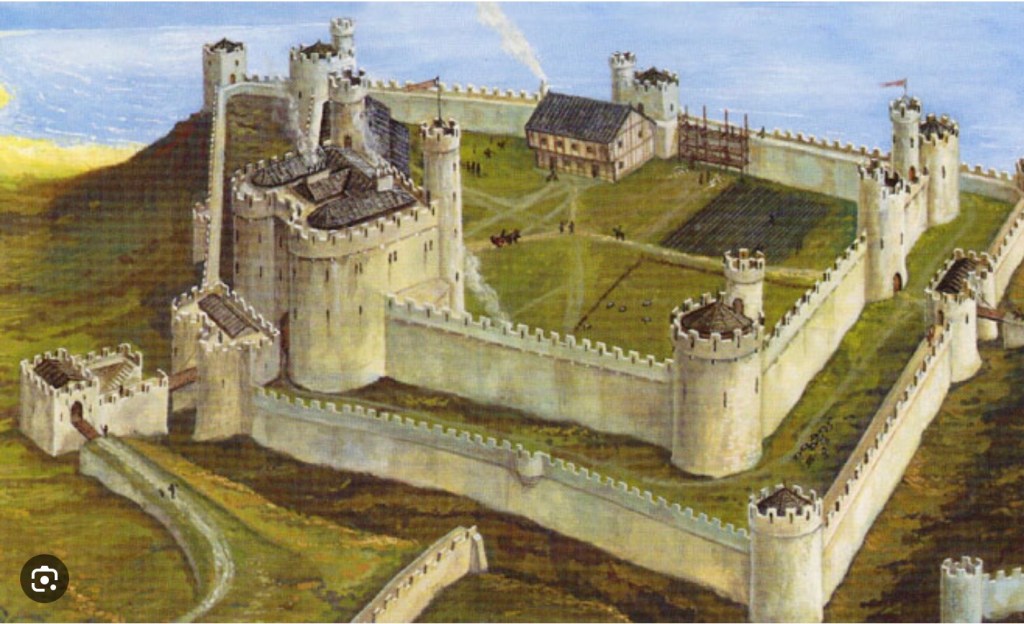
What the castle looked like way back,when.

Our final stint was to head down the far end of the waterfront to the coloured buildings. Our accomodation is in one of those. The tide is low, with substantial exposed rock.

Nearly at our accomodation looking back towards the castle ruins

When we arrived at our accomodation, the sun came out. Of course!

The beach over the road from the hotel
Waterfront sea view looking towards the Republic of Ireland, with the Irish Sea in between. We arrive in Ireland on Wednesday.

Today was tough (95 km and 1385m ascent). Yesterday was tough too. It rained today for about 90% of the ride. Just consistent mizzle and drizzle interspersed with some heavier showers.

We did get a bit cold there for a while thinking about warmer clothes in our bags. We could have stopped but did not fancy stripping off in the rain.

The challenges today were definitely the 5 km of dirt and mud. I found that super challenging.

We had six climbs with over 20% but got through them each in our own way.

The views scored highly!

Thanks to Graeme for this route. He did this with his daughter Matilda only a few weeks ago, also staying in this hotel. Great recommendation.

Tomorrow is another day. It is another biggie with 115 km planned and about 1500m climbing. I’m not even checking the weather tonight. I tend to wake by 5 am so I will do it then.

Thanks for reading, I’m going to get some shut eye now. 😊❣️
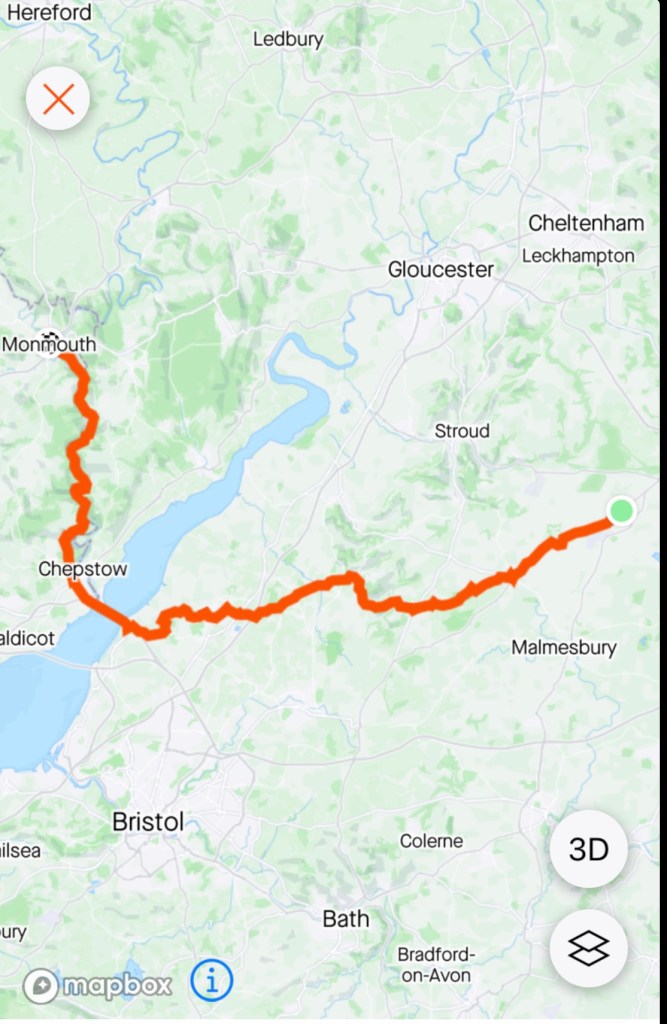
Day 2: Thames Head to Monmouth

We were awake by 5.30 am, but breakfast was not until 8 am πŸ™ˆπŸ˜³ The bikes were packed and ready to go and at 8 am we presented ourselves.

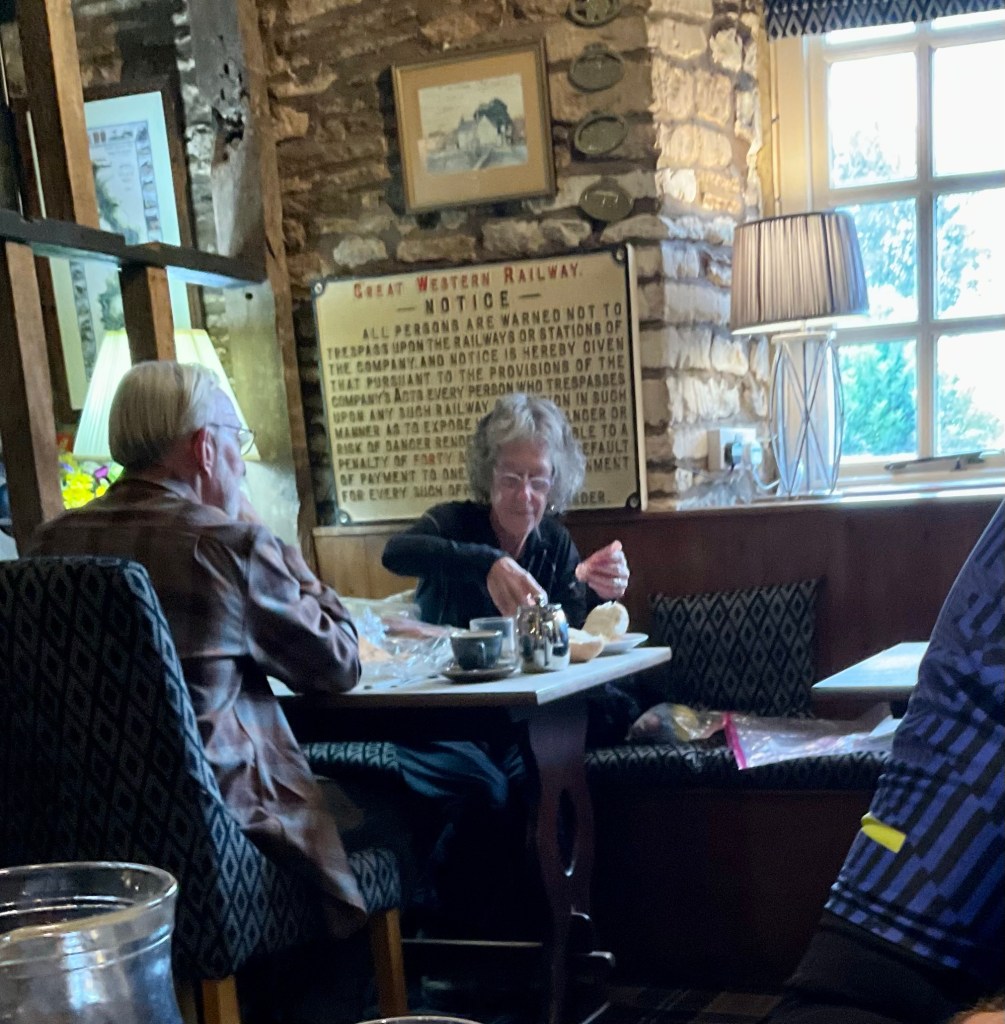
Whilst waiting for our order, a couple from Chicago turned up. We had spoken with them the previous day. They are walking the Thames Path to London and were starting today.

The lady busily chopped raw onion, added sliced pancetta, and sliced a 1 kg block of cheese, making bread rolls for the day. I did wonder how long the left over cheese and pancetta would last in her backpack en route to London.

I’m being a total sticky beak here, but somewhat bemused and curious re the cheese and meat, let alone carrying a large partial.lt cut onion in your back pack.

We were on the road by 8.35 and the first 12 km or so was on the very busy Bath Road. I was certainly pleased to reach Tetbury.

Tetbury is the village location of King Charles III private residence, Highgrove House, although legally, I think it is actually now owned by the new Prince of Wales via the Duchy of Cornwall.

The town has a history over 1300 years, since 681, when King Ethelred of Mercia gifted the land to an Abbott.

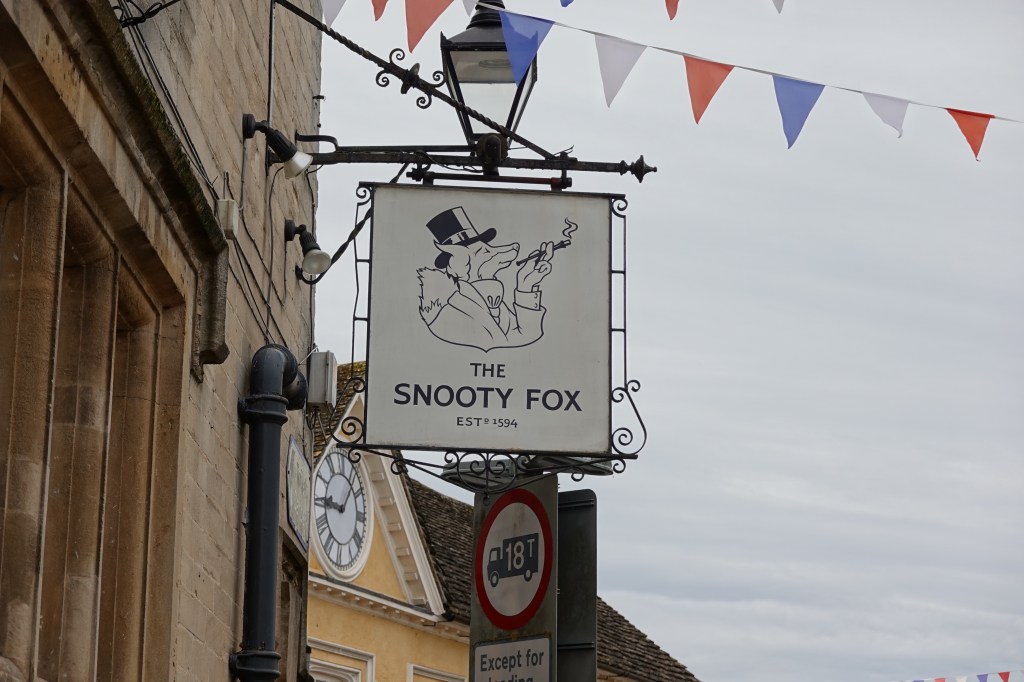
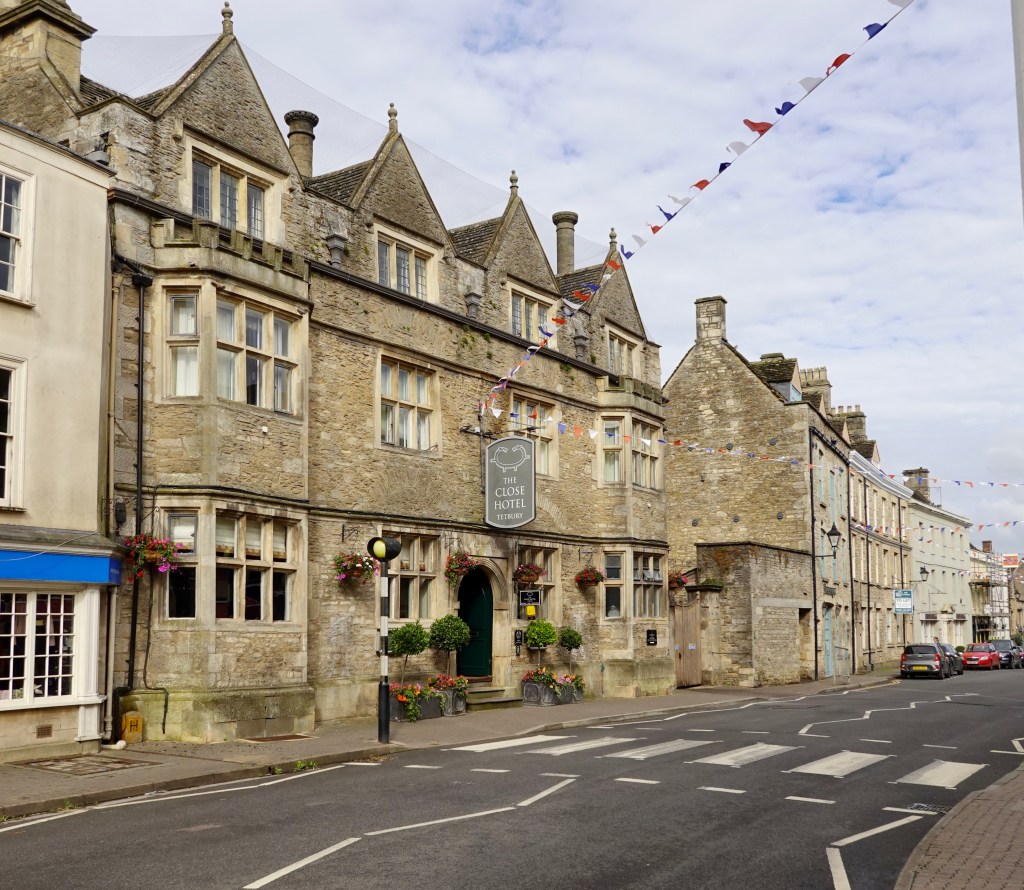
The Snooty Fox, a pub in town, great name.

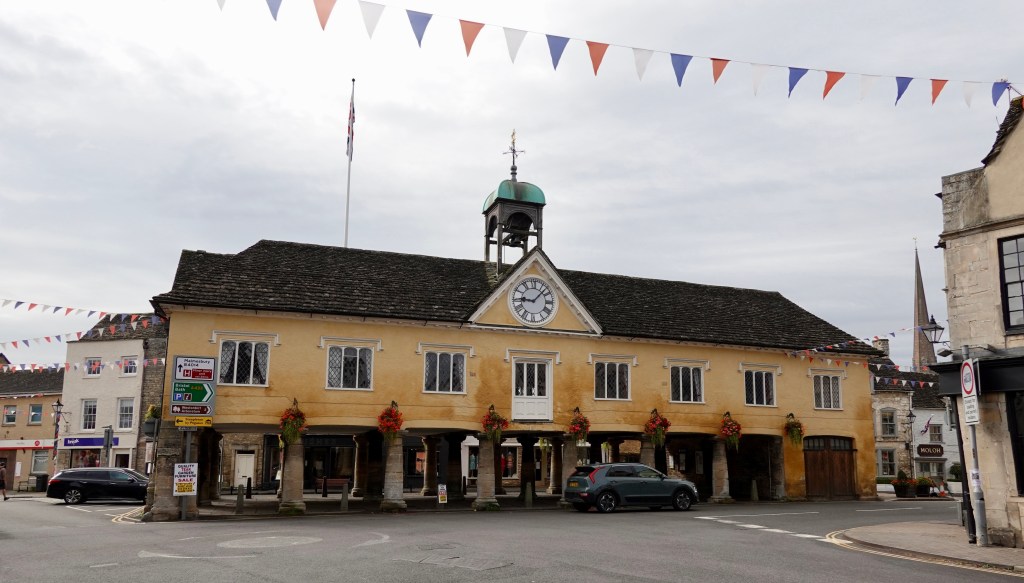
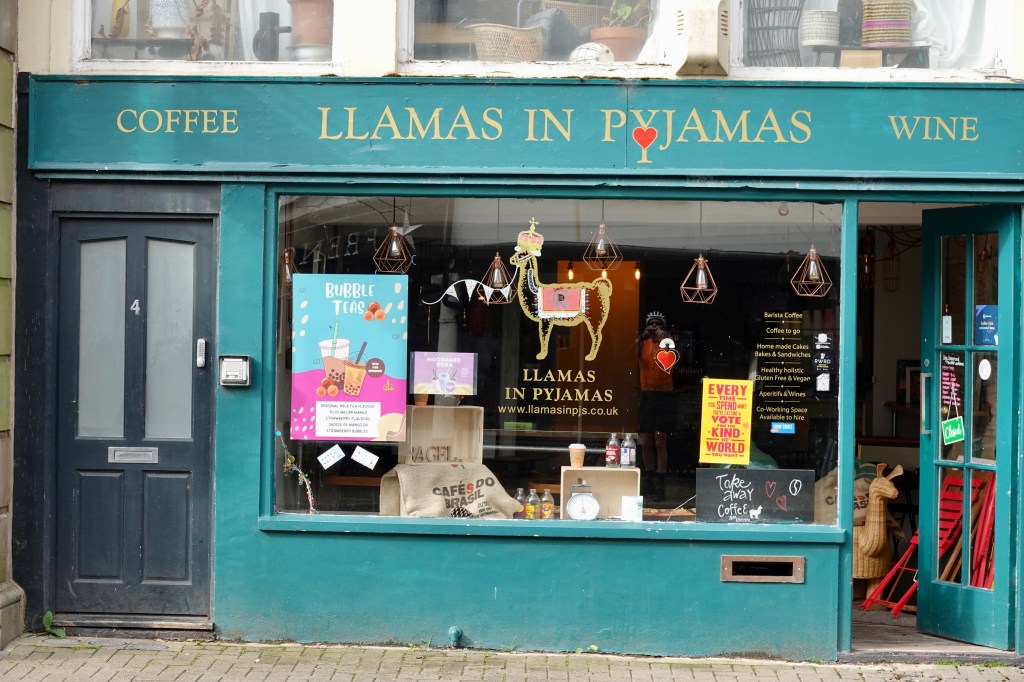
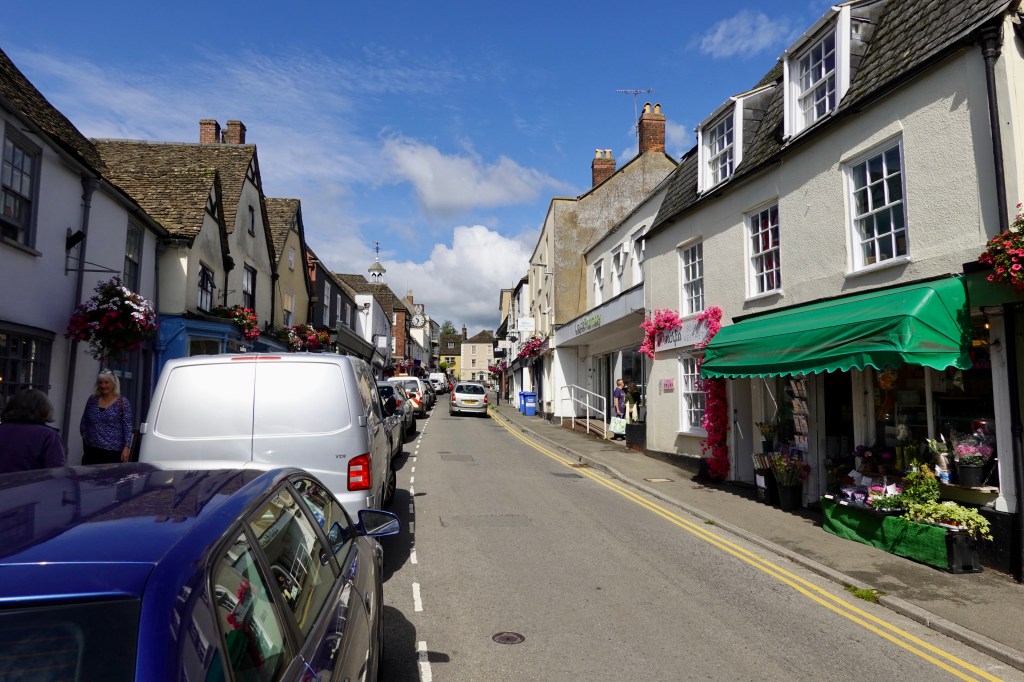
Some of the town buildings including the old market square, Cotswold stone buildings and Llamas in Pyjamas 🀣

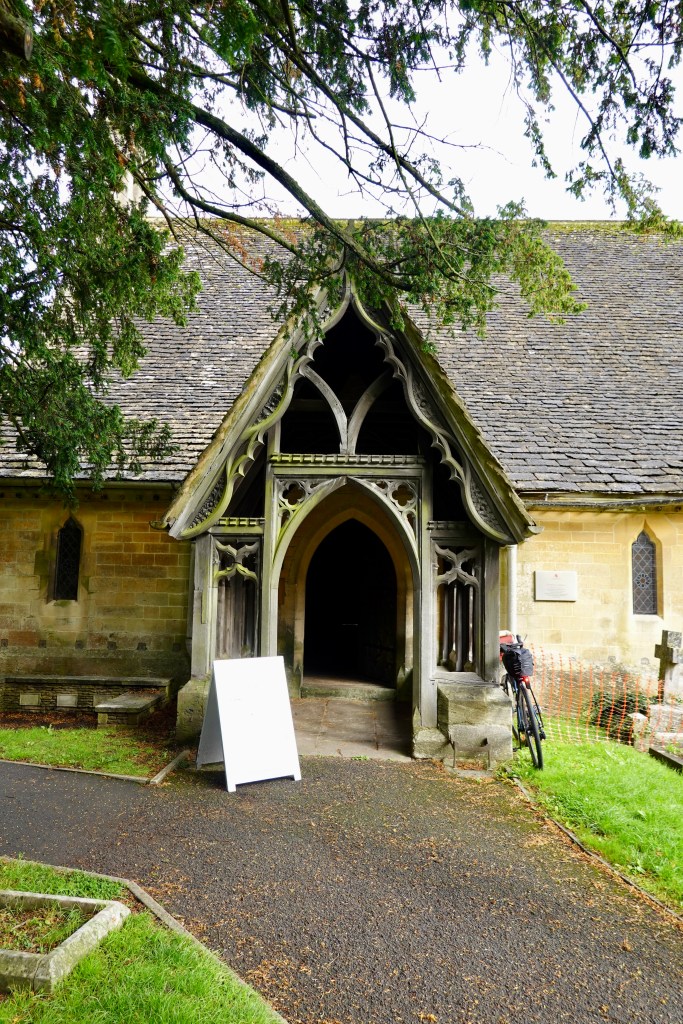
Nice old church entrance

Leaving Tetbury we were riding along farming lanes connecting villages. The one below is around the rear boundary of Highgrove land.

The stone walls have been incredibly well constructed. They are all dry and works of art.

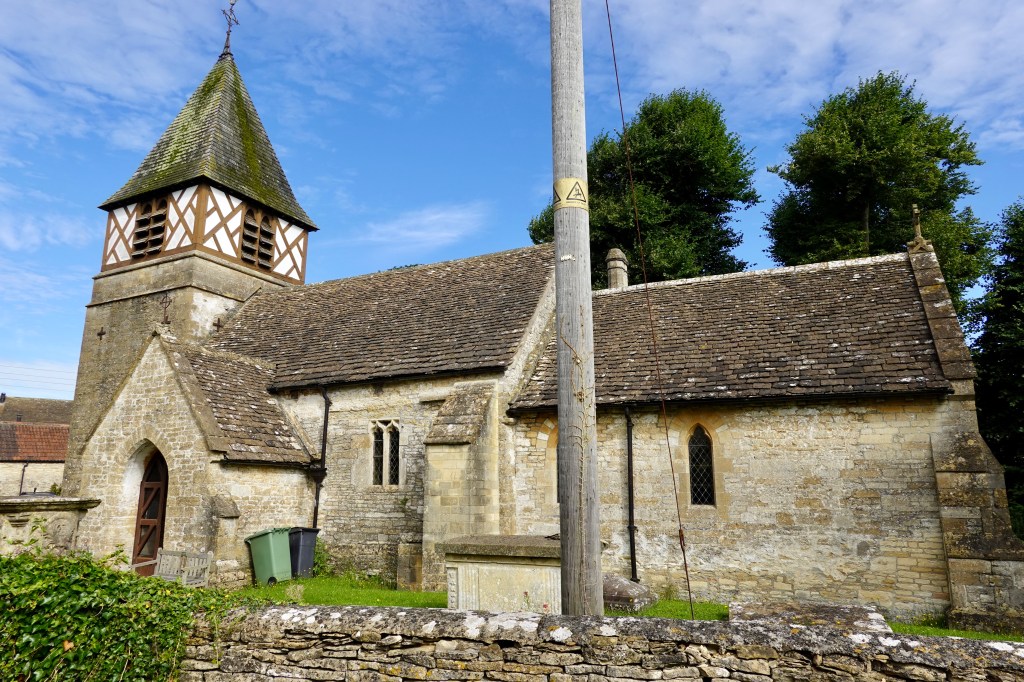
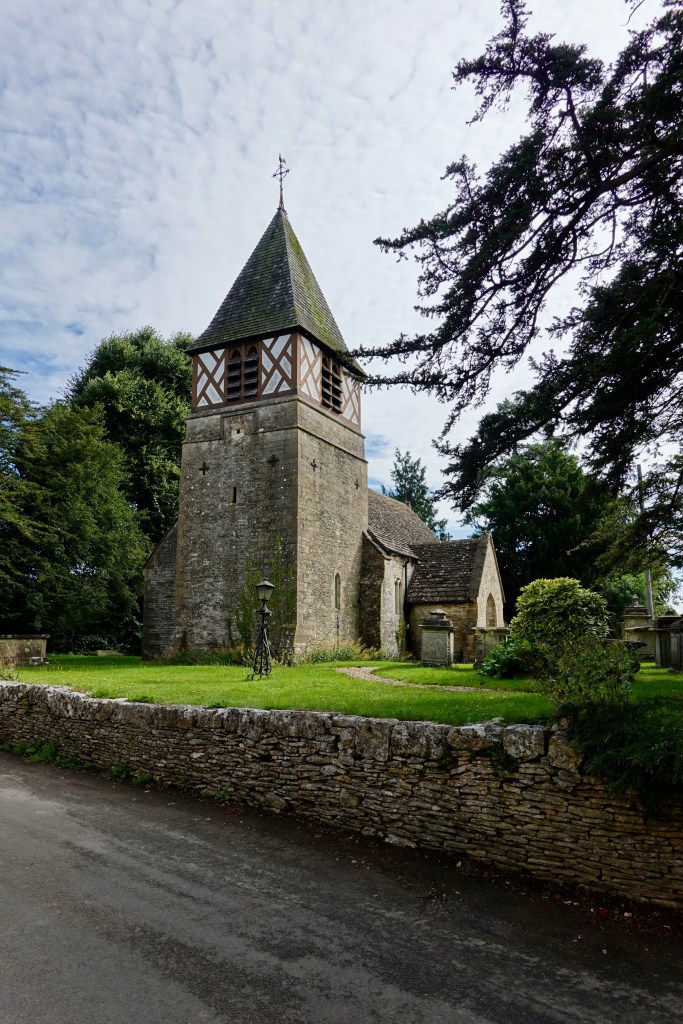
In the village of Leighterton is St Andrew’s, a thirteenth century parish church. I like the timber clad belfrey with its shingle roof. The church has a slate roof.

More agricultural views. It makes for pleasant riding, despite the continual up and down slopes and infrequent cow pats on the road (one of the reasons our drink bottles have enclosed lids).

Lovely forests and distant views towards Wales. Riding laneways like the one below are great, but you always need to be wary as this is quite narrow and cars pass with difficulty.

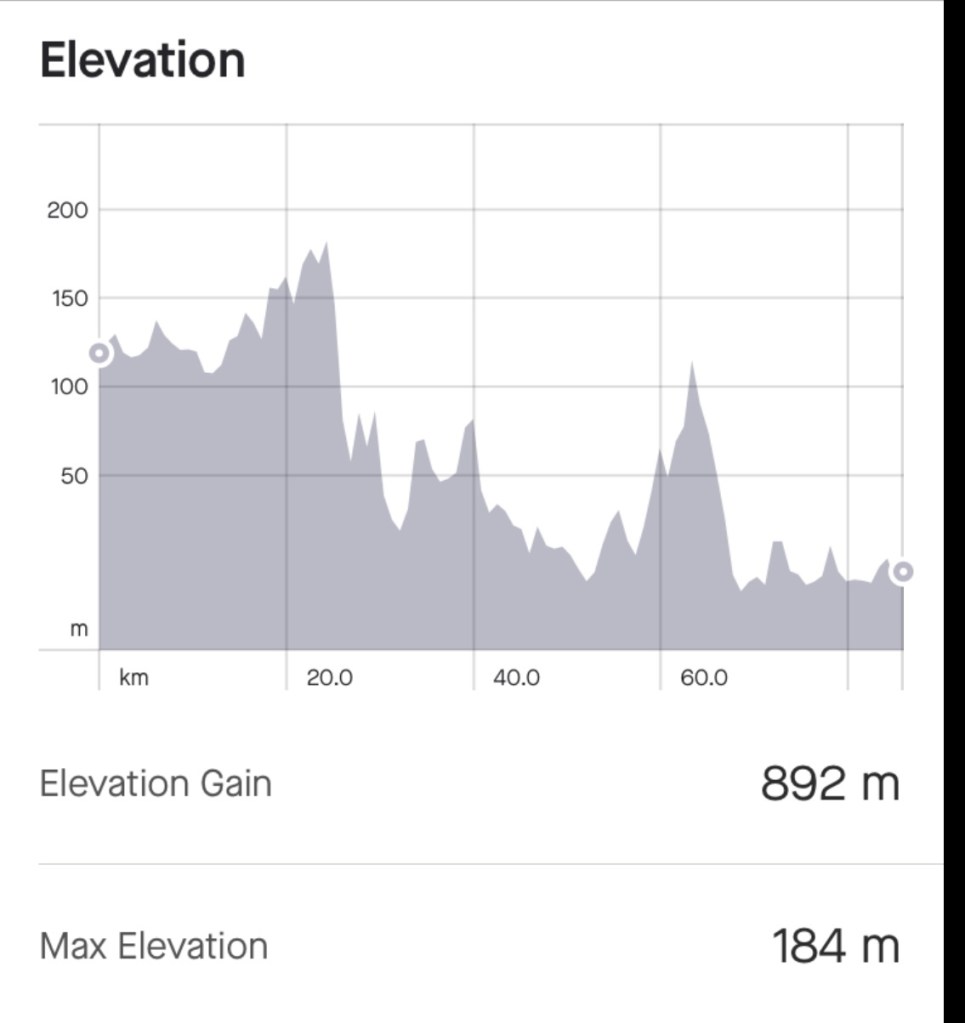
It was a hilly ride today, climbing around 900 metres. Here I am near the top of yet another climb. Most of the rural climbs were upwards of 12%, which is more than enough with the extra gear on the bike.

You can see Wales now in the background. Just out of view on the left is the Severn bridge, where we will cross into Wales.

Another interesting town, but we really busted our boilers here. Our mapping took us up the seeming shortest route to the Main Street, with a nasty 15-16% climb up Ludgate Hill.

I was hoping I did not need to give way at the top as I need a metre or so of flat to be safe in removing feet from the cleats to give way ( versus falling over)! Fortunately no cars and I was ok.

The Main Street half way up from Ludgate Hill junction

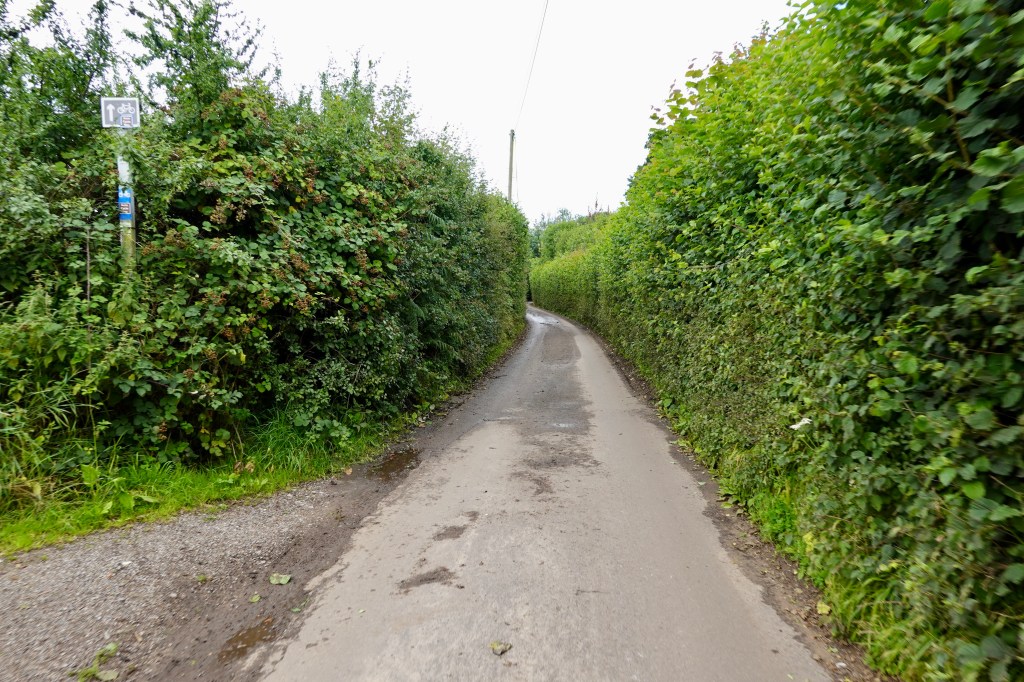
A series of super narrow lanes ensued. These are barely one car wide. If a car comes either way you need to either get into the bushes or move forward hoping to find a lane access into a farm.

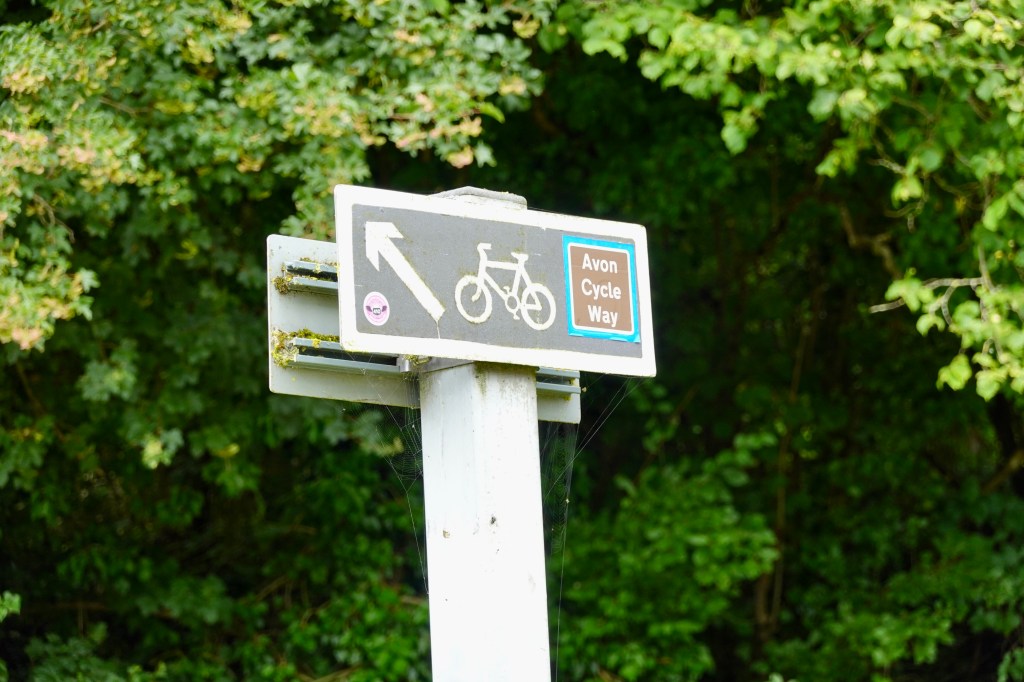
Chunks of our route today were on the Avon Cycle Way which is an 85 mile circular route around Bristol. We were on parts of the northern section.

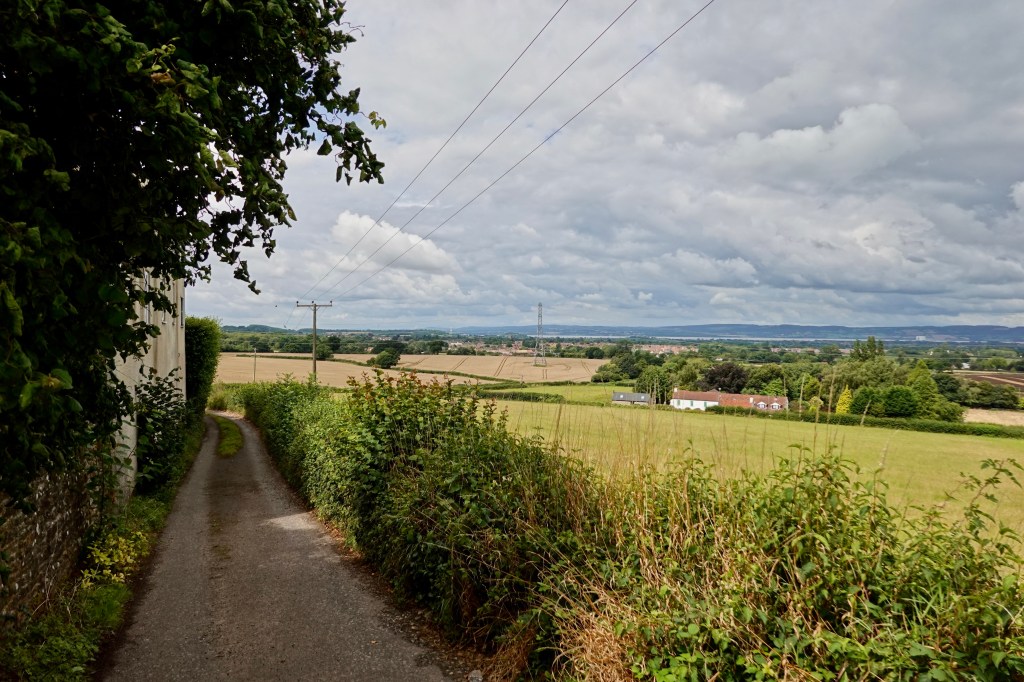
This laneway was a bit of a goat track. You can see the Severn bridge to the left with its white tall towers. Behind the crane is the Thornbury parish church.

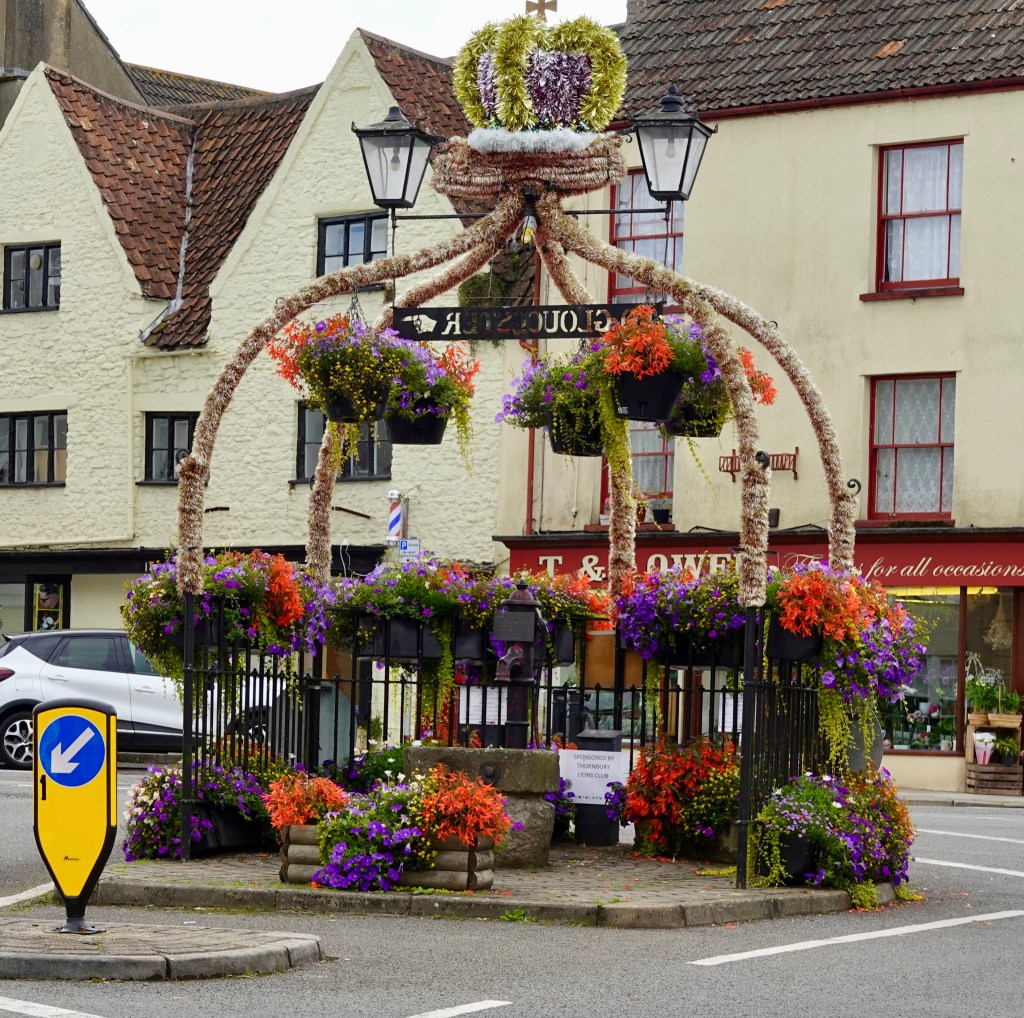
Thornbury is quite pretty. I liked this regal flower display.

Thornbury Castle is a Tudor structure commenced in 1511. The castle was confiscated by King Henry Viii who stayed there for ten days with Anne Boleyn in 1535. The castle fell into disprepair after the English Civil War, but was renovated in 1824 and now serves as a hotel and restaurant.

I was fortunate to have stayed in the Castle in 2007 for two nights so passing by today was to admire the building only, as this was not to be our destination tonight.

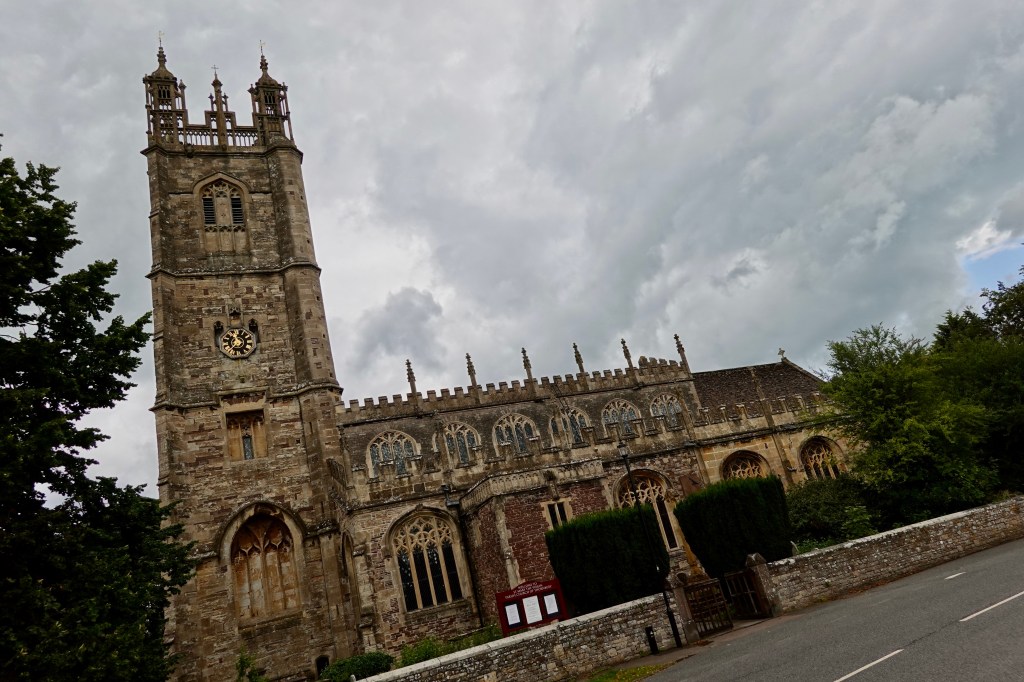
The Parish church of Saint Mary started in 1340 with latter major additions. The church is the resting place of the entrails of Jasper Tudor, uncle and mentor to the young Henry Tudor, later Henry VII of England.

We were hungry but we pushed on. The sky was quite dark in patches, and rain was forecast.

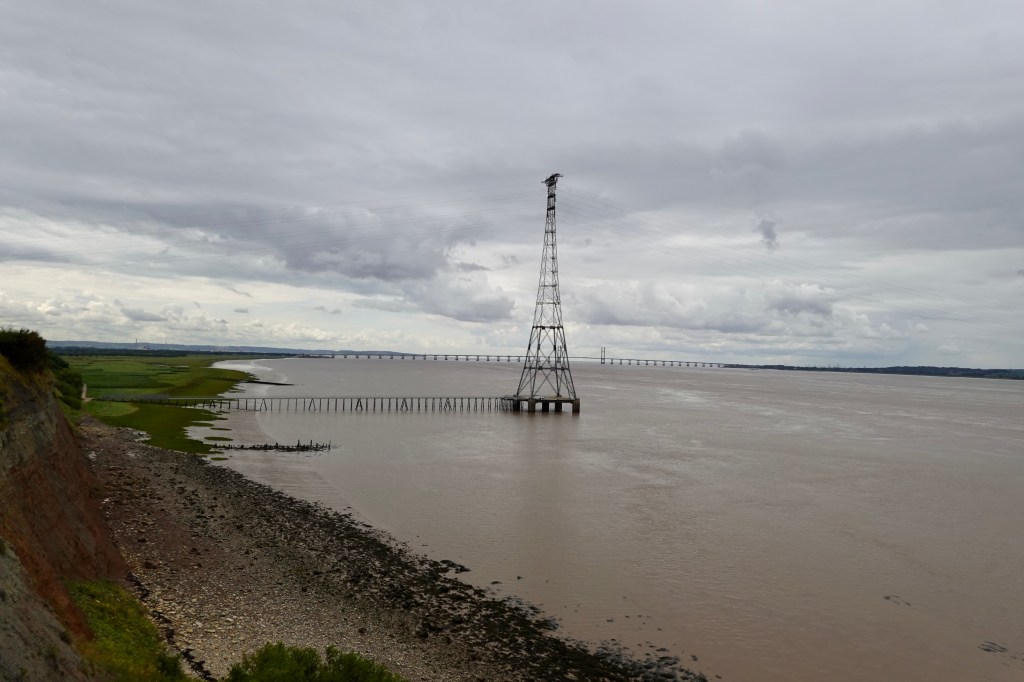
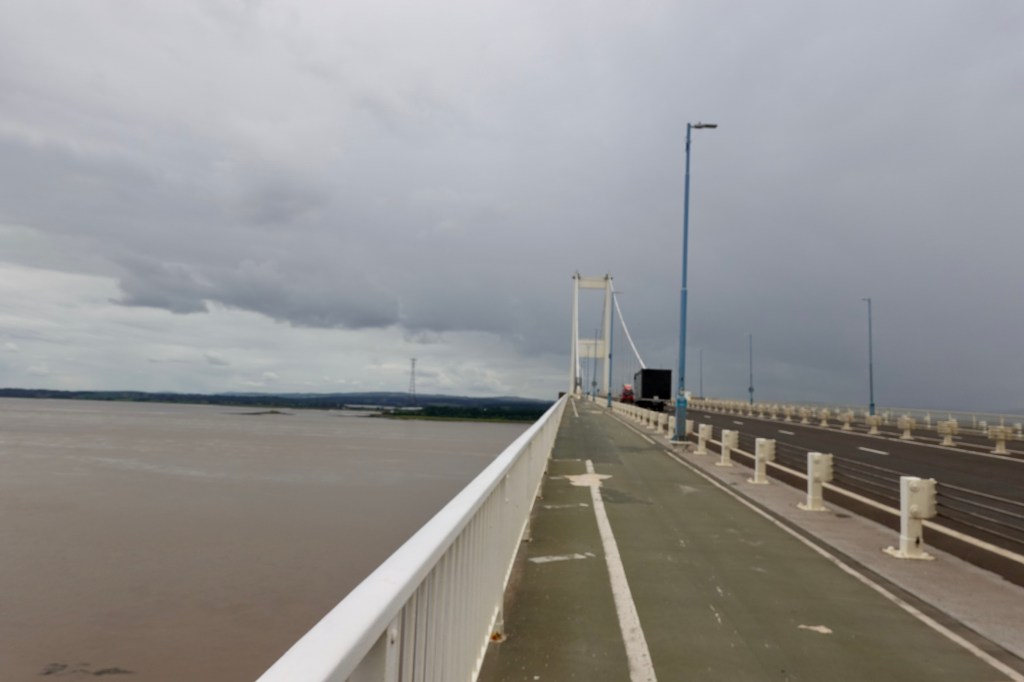
As we crossed the Severn river and entered Wales, it started raining. The river is the longest in Great Britain at around 354 km in length. It is tidal here, and quite muddy.

Heading into Wales

We stopped to put our rain jackets and booties on after exiting a narrow laneway, and sat under a rail tunnel.

Looking down the laneway
Tony coming down the laneway
Colourful graffiti
Where we sat.

Chepstow, is the first major town we entered in Wales, adjacent to the border with Gloucestershire, England. It is located on the tidal River Wye.

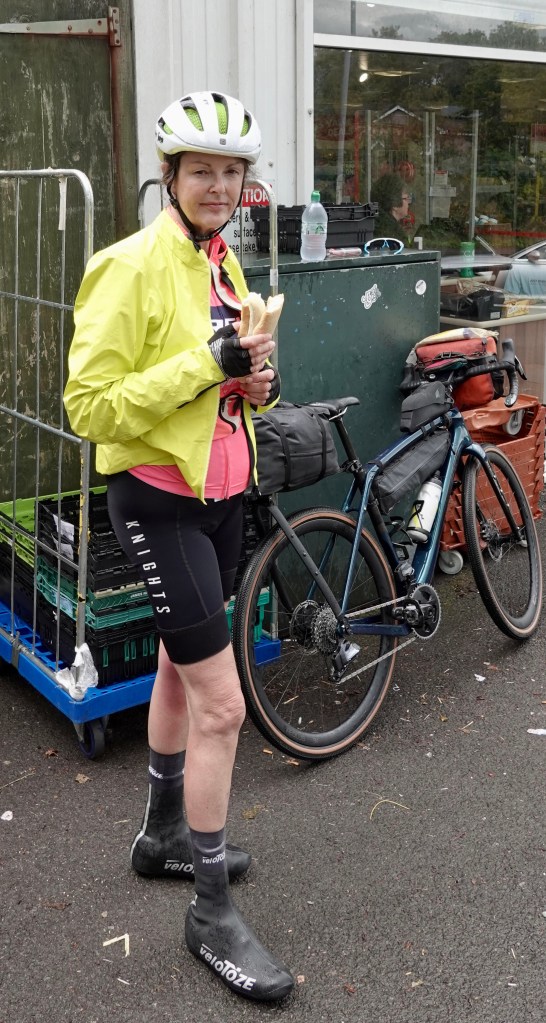
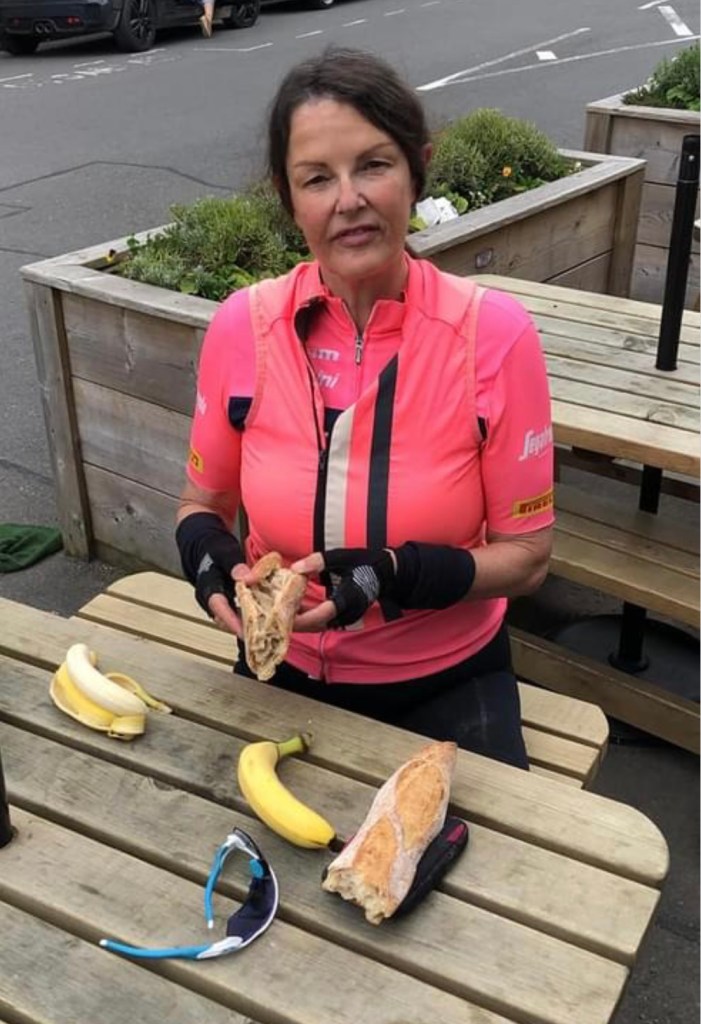
We stopped at a small supermarket on the busy road versus heading into the town, as the rain motivated us to keep moving. Lunch was a fresh bread roll with a banana in it.

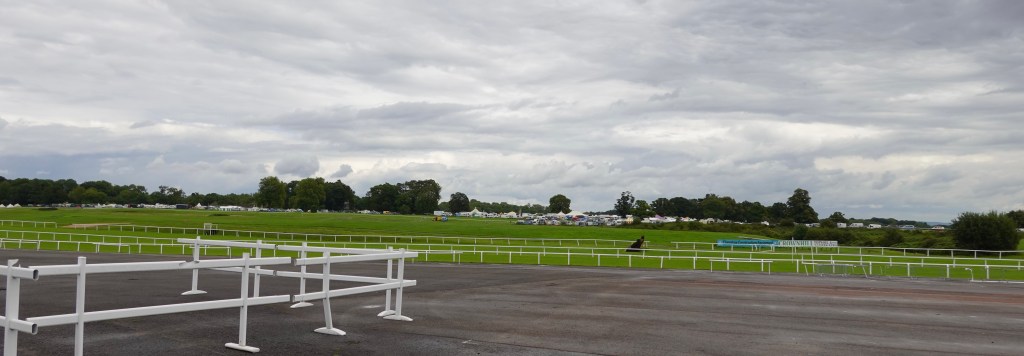
We passed the Chepstow race course. There were cars everywhere, including a flea market in one car park. Families were heading down with their children.

A small section of the racecourse marquees

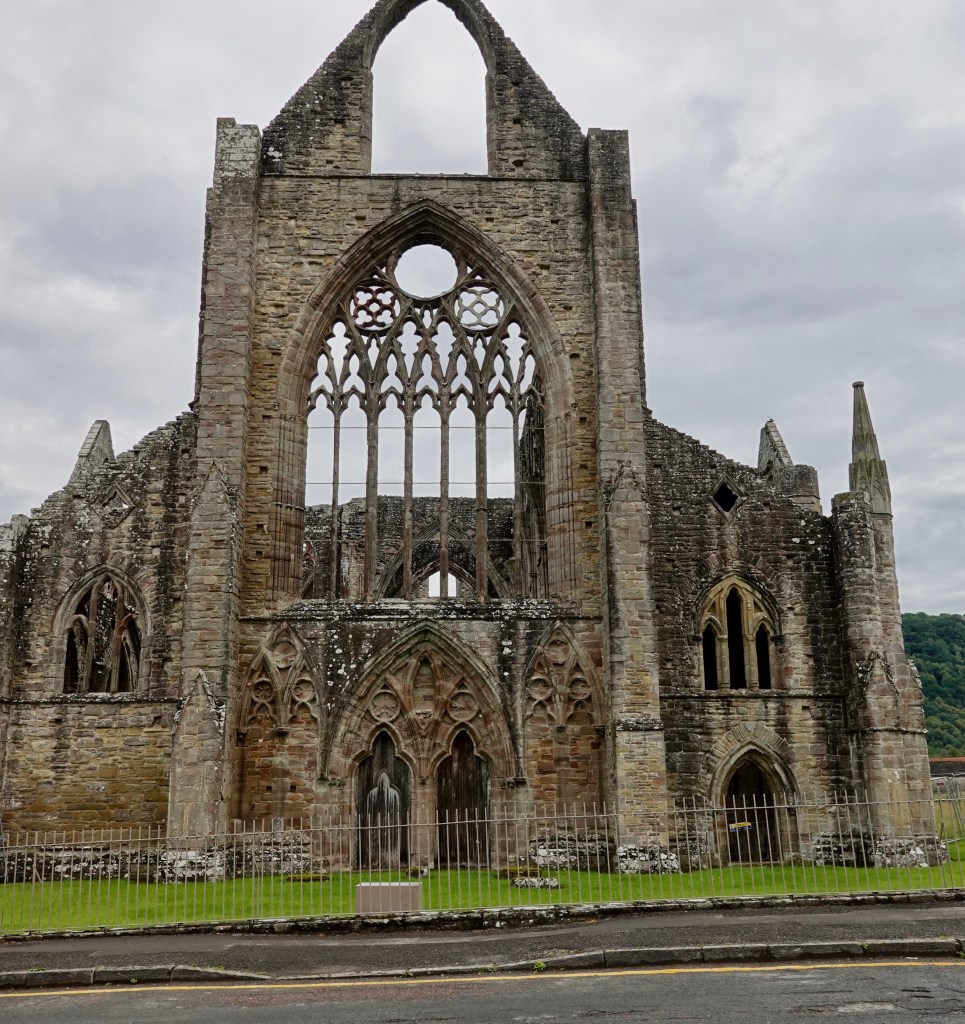
Wye Valley, is an area of outstanding natural beauty, running along the border between England and Wales here. We followed the valley for the rest of our ride today. Tintern Abbey is a site that encourages you to stop and stare.

Tintern Abbey was built by Walter de Clare, Lord of Chepstow, in 1131. It was the first Cistercian foundation in Wales, and only the second in Britain. It fell into ruin after the Dissolution of the Monasteries in 1536(good old King Henry VIII!), treasures were removed, lead from the roof was sold, and the building decay began.

Over 70,000 visitors year visit the abbey – and this is also my third visit (2007, 2013)

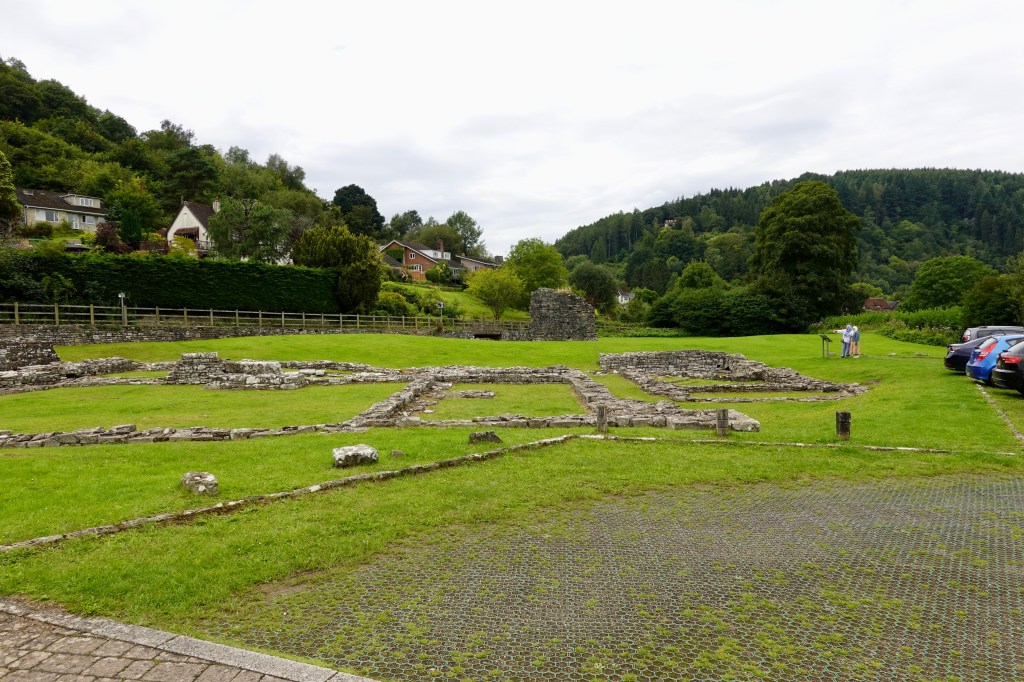
Old adjacent ruins

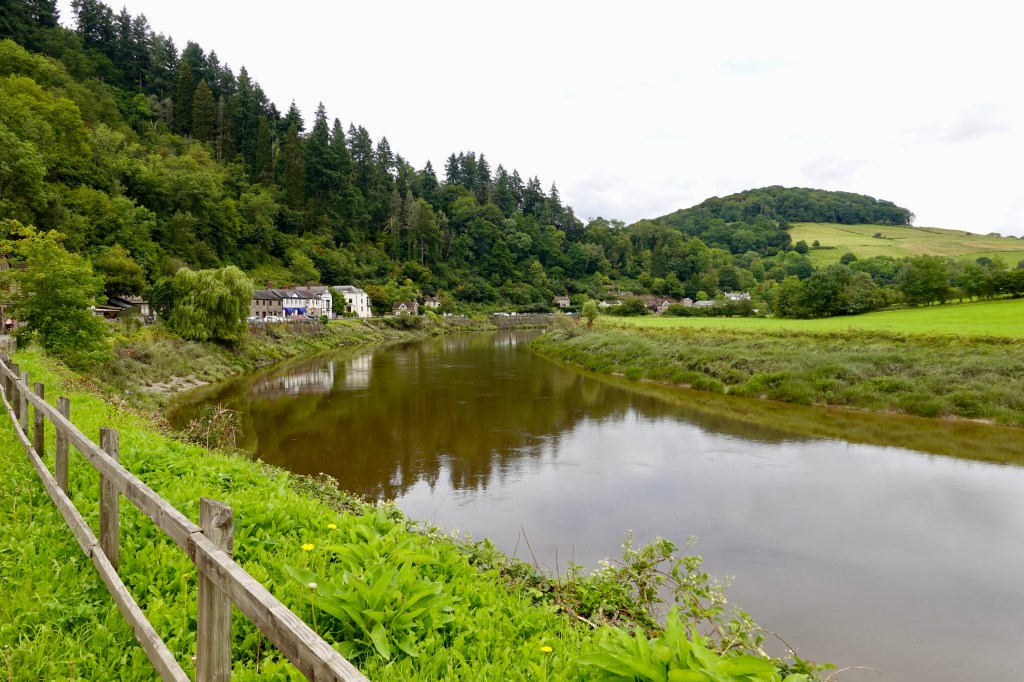
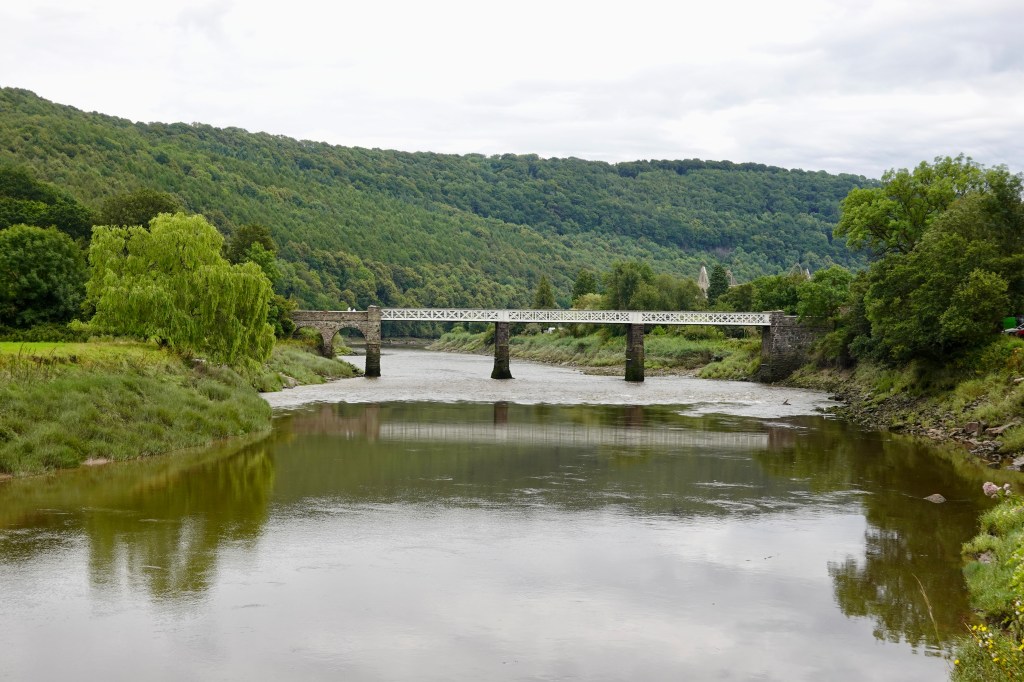
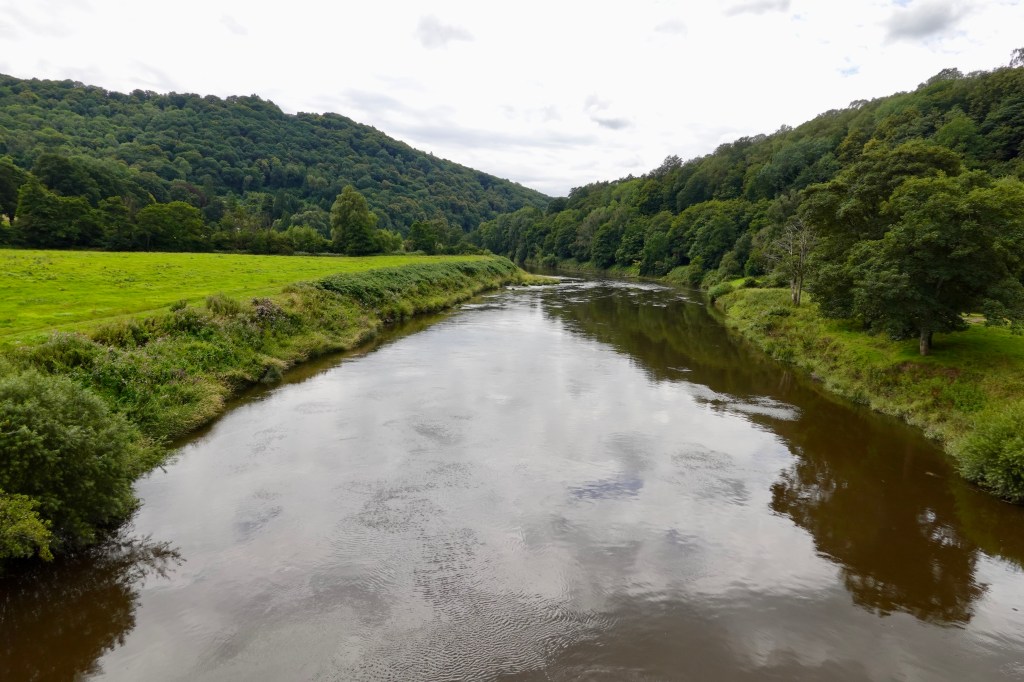
Continuing on we followed the Wye River as it meandered along the picturesque Wye Valley.

Eventually we arrived in Monmouth which is situated where the River Monnow joins the River Wye. The town was the site of a small Roman fort and became established after Monmouth Castle was constructed in 1067.

Crossing the first bridge, looking at a local boys school
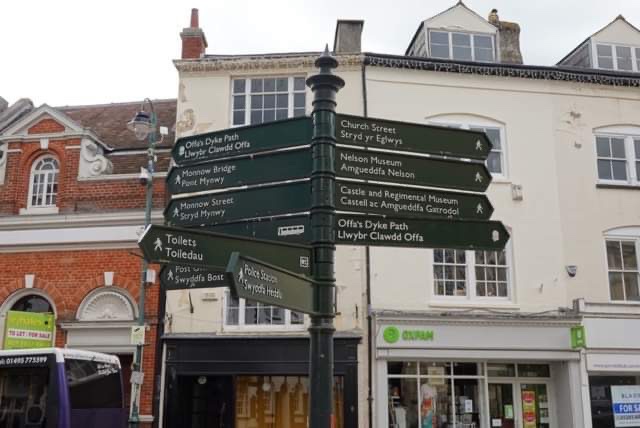
Signage in dual languages

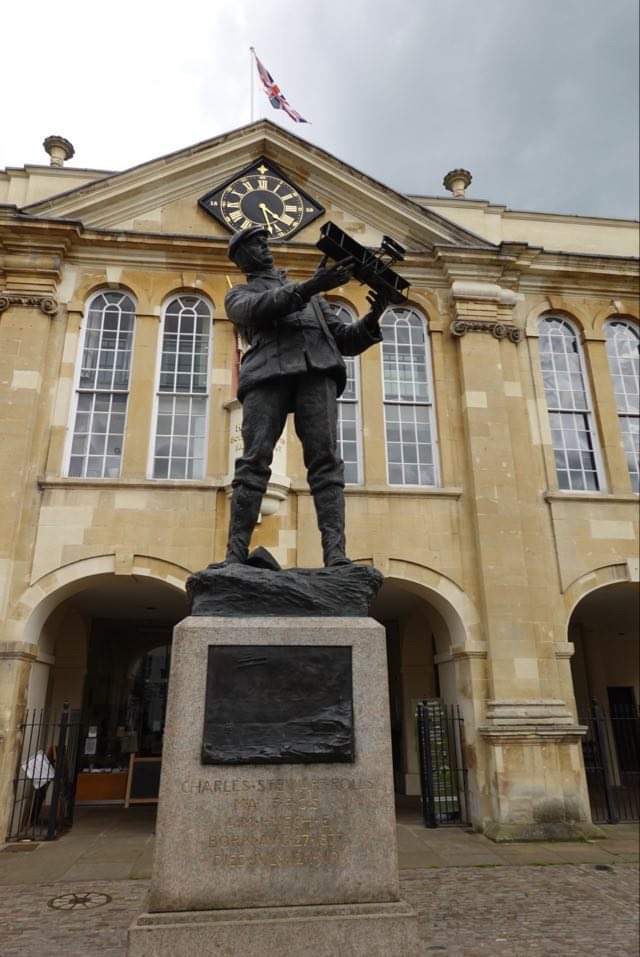
This is an interesting statue of Charles Rolls, as in Rolls Royce. Aside from that venture, he was an aviation pioneer and a cyclist, having captained Cambridge University cycling club. Despite a great future he was killed at the age of 32 in his plane during a display. He was the first Briton to be killed in an aeronautics, accident, and the 11th internationally.

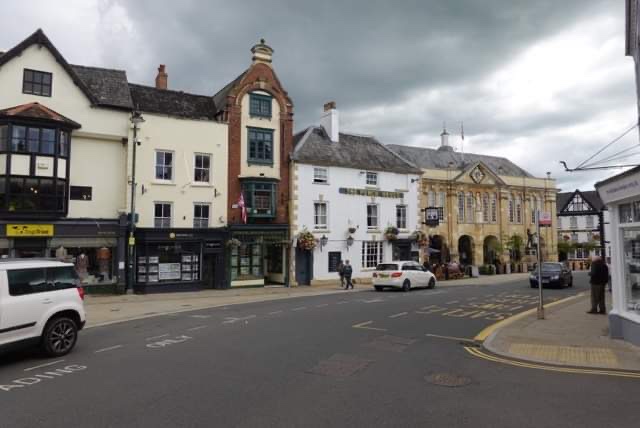
Agincourt Square with our hotel in the background.
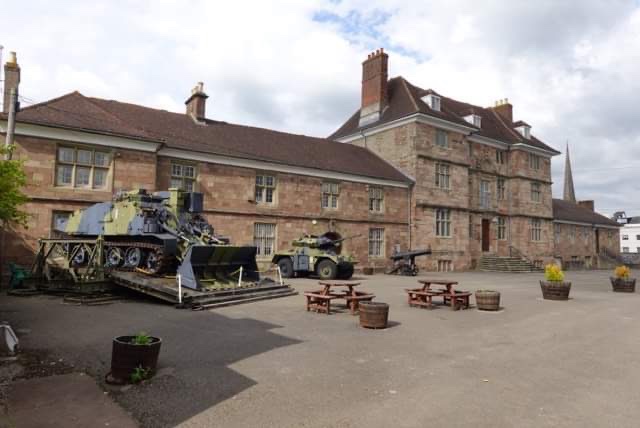
Local military museum adjacent to the castle

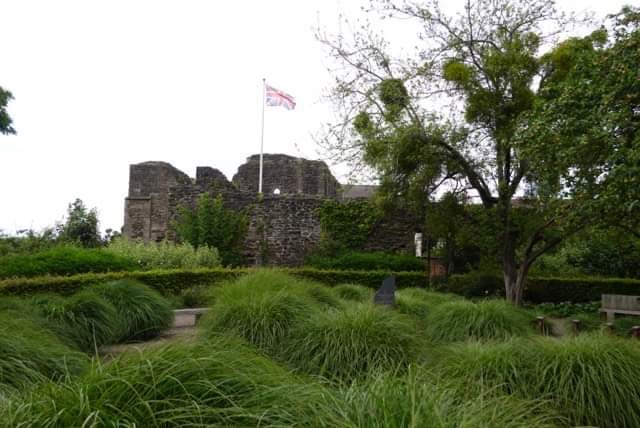
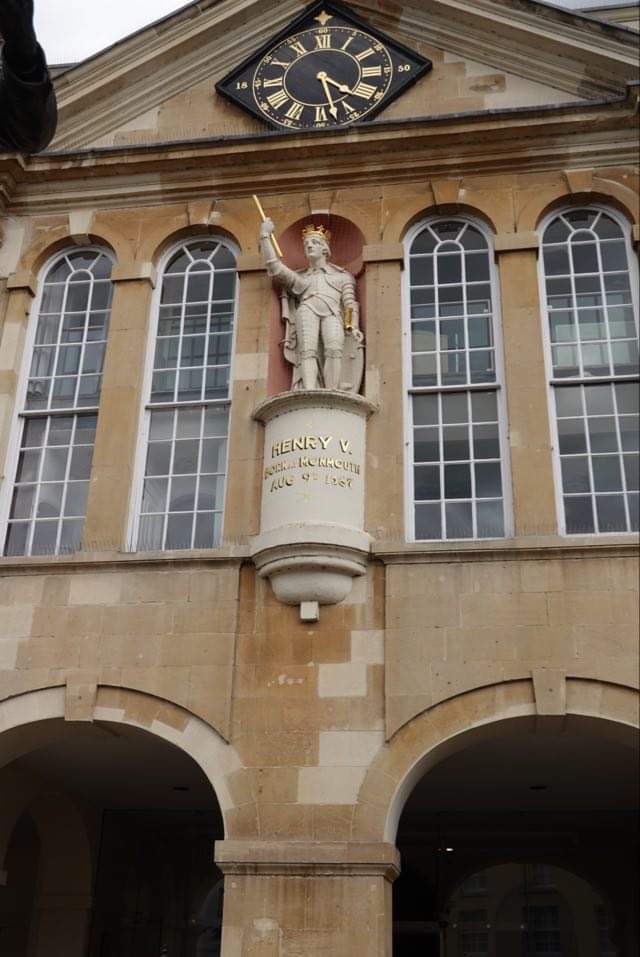
Monmouth castle was the birthplace of King Henry V in 1396 is now in ruins. There is a statue of Henry V in town. Sadly not much remains of the former stronghold of Henry IV.

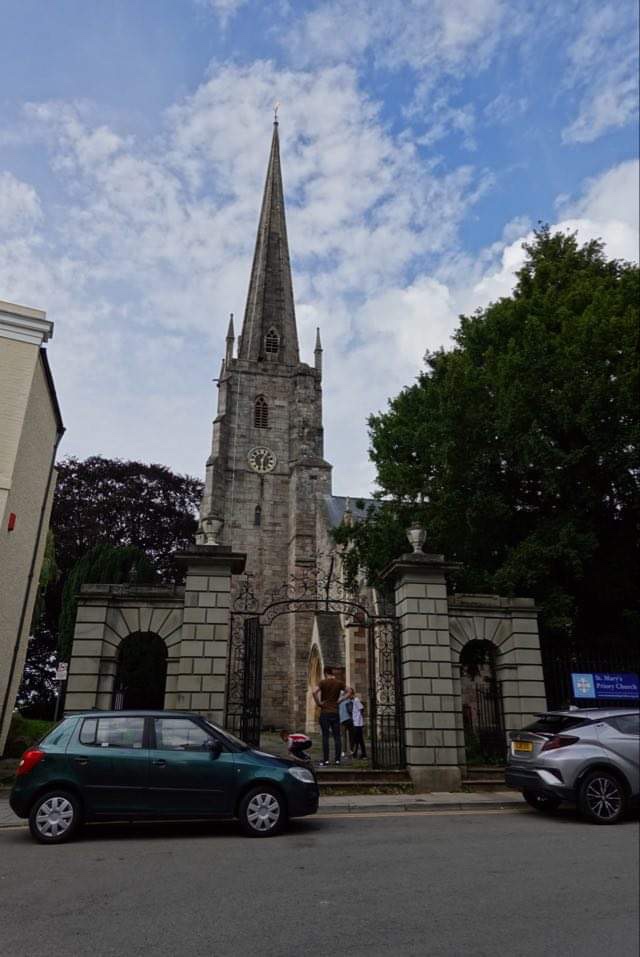
Another old church….

Our accomodation is here tonight. The reception lady has been super helpful and our bikes are stored in their β€˜bike shed’ under lock and key.

A solid day on the bike with a doubling of the climbing to gear us up for more tomorrow. We are weary tonight and looking forward to a good sleep.

Thanks for reading 😳❣️
Day 3: Monmouth to Builth Wells

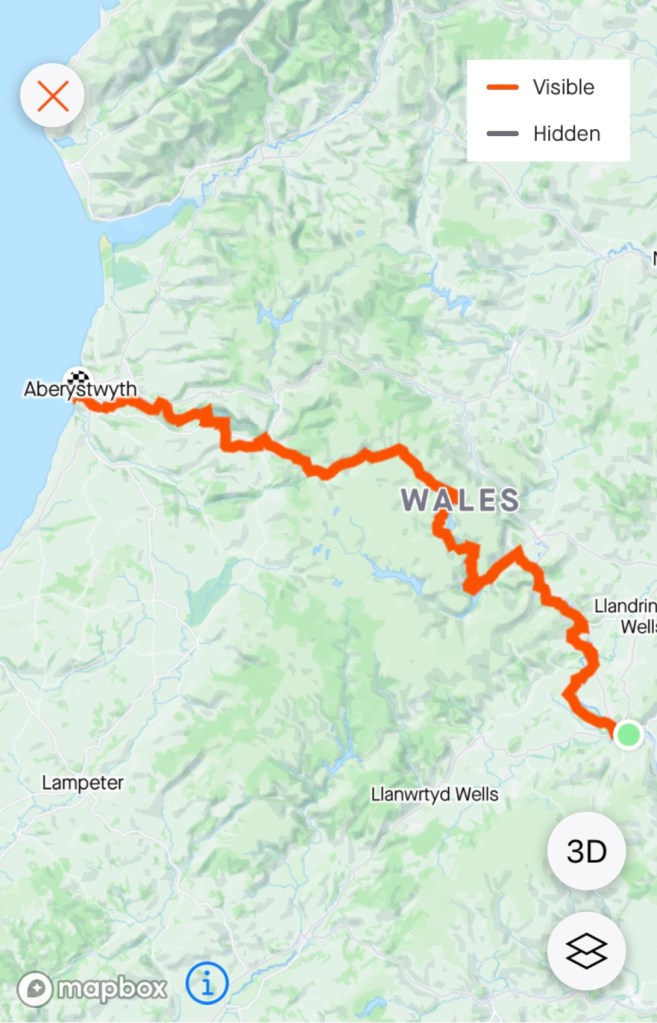
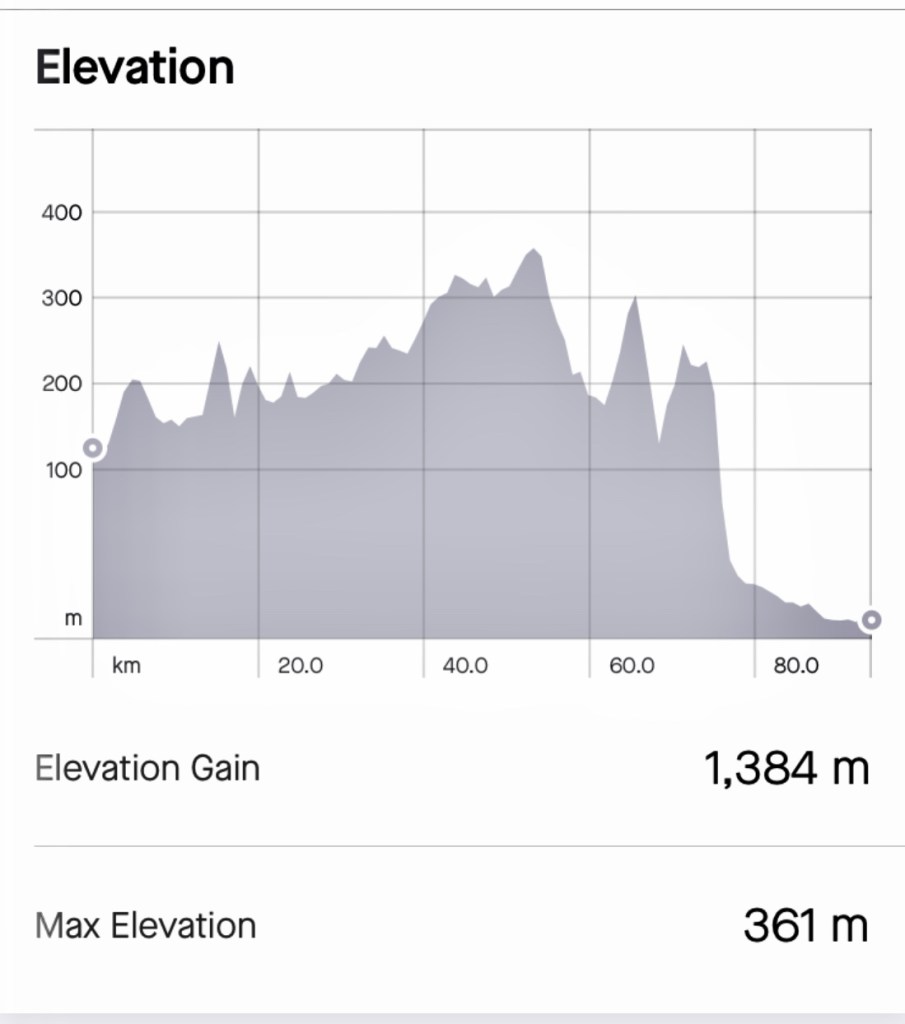
A tough day riding today in trying conditions (head winds and never ending climbs), plus a spill from the bike. However, the ride was great overall, great route, towns and scenery. 94 km and 1600 metres climbing with a loaded bike is challenging but we did it. Knowing you got through the day is always satisfying but we’re tired now,

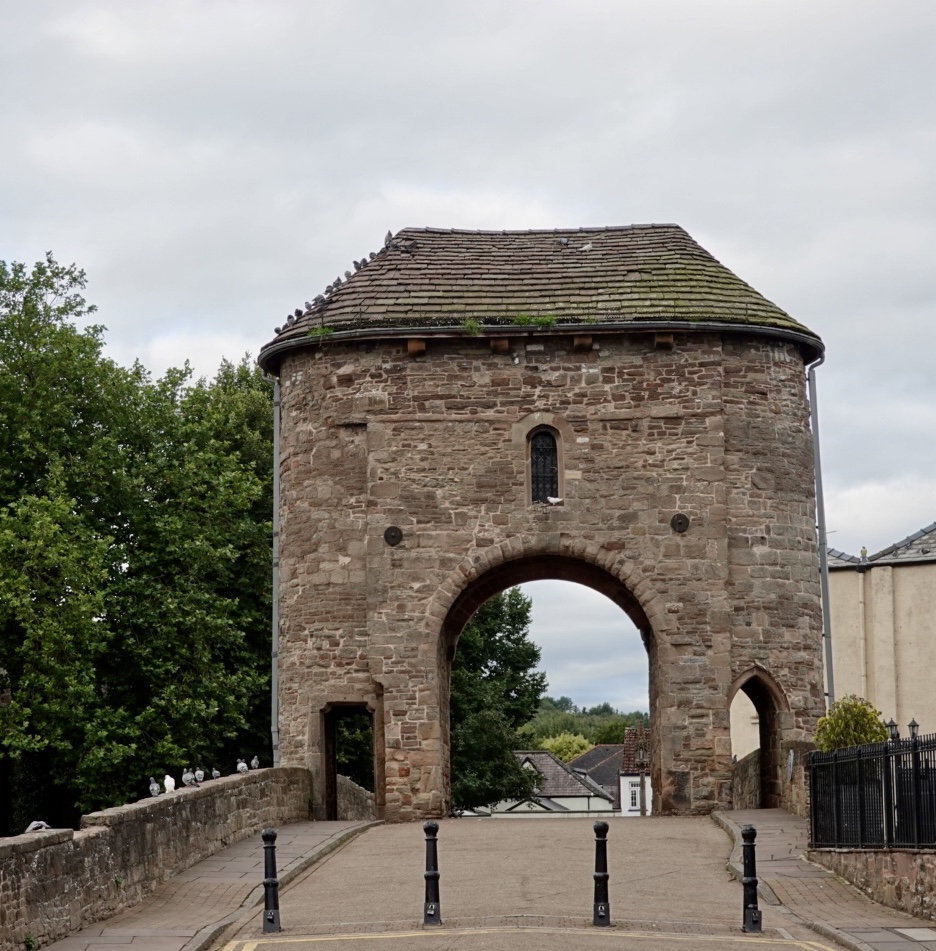
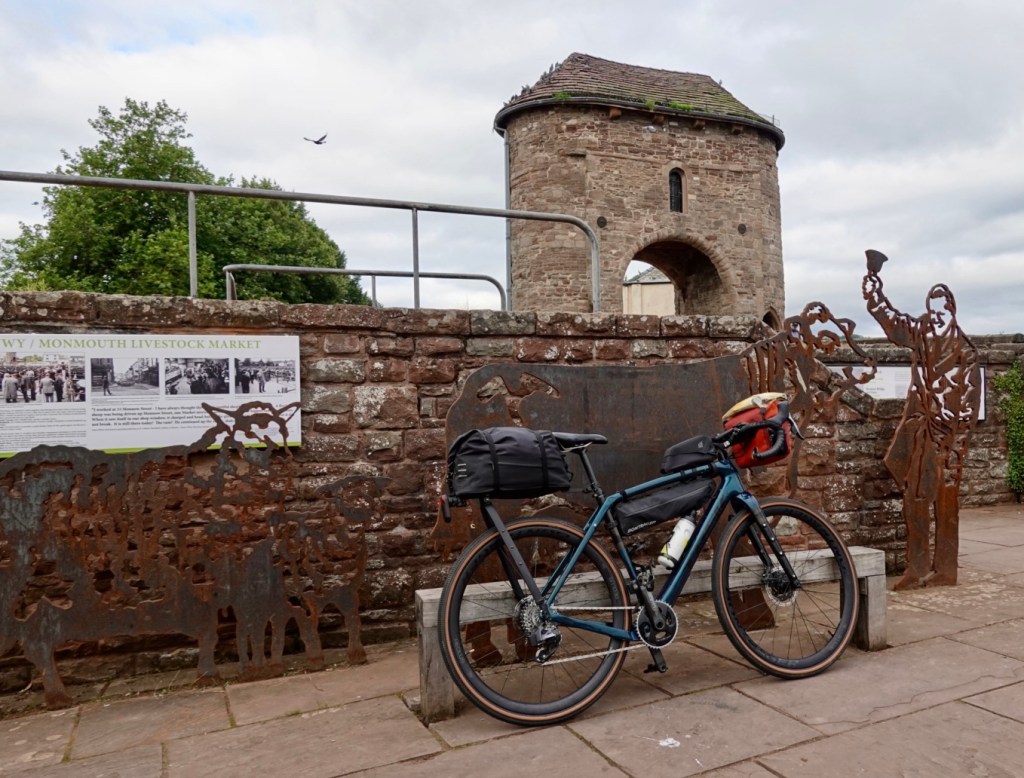
Leaving Monmouth we crossed the Morrow river passing under this famous gate tower, The bridge was believed to have been built around 1272 to replace a Norman timber bridge.

It is the only remaining fortified river bridge in Great Britain with its gate tower standing on the bridge.

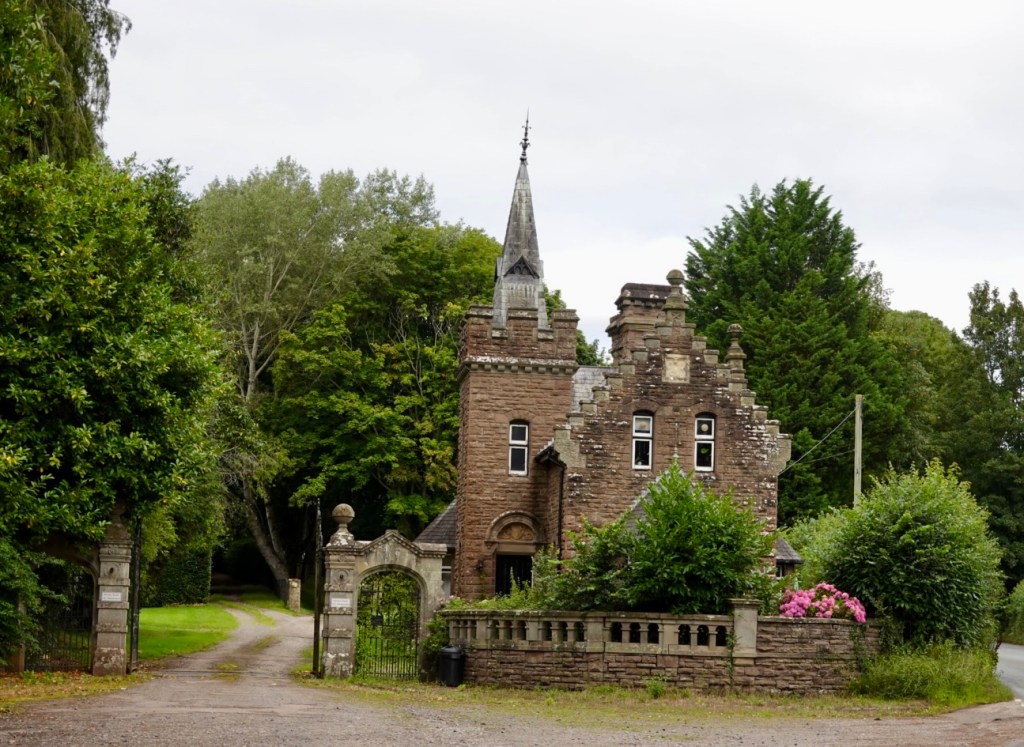
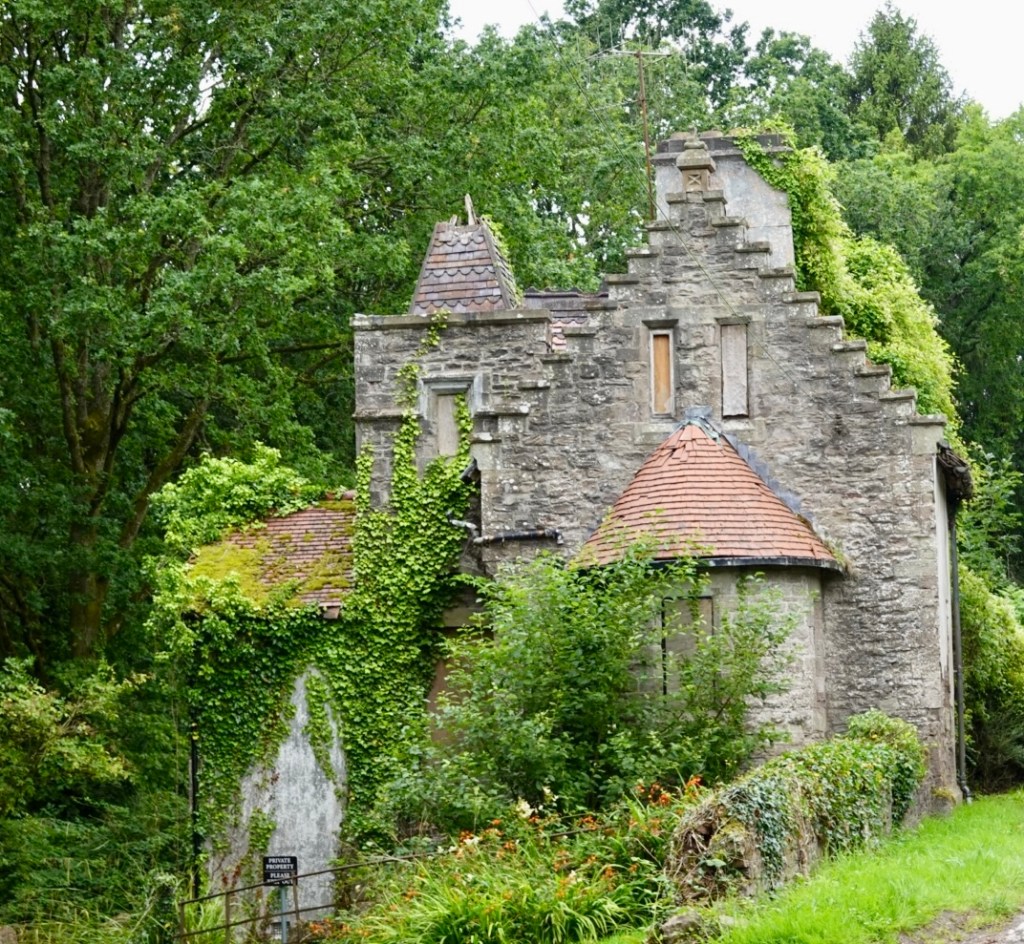
We rode past two interesting gate cottages. It makes you wonder what the main house is like.

This one appears to be occupied
This one is a abandoned. A renovators delight!

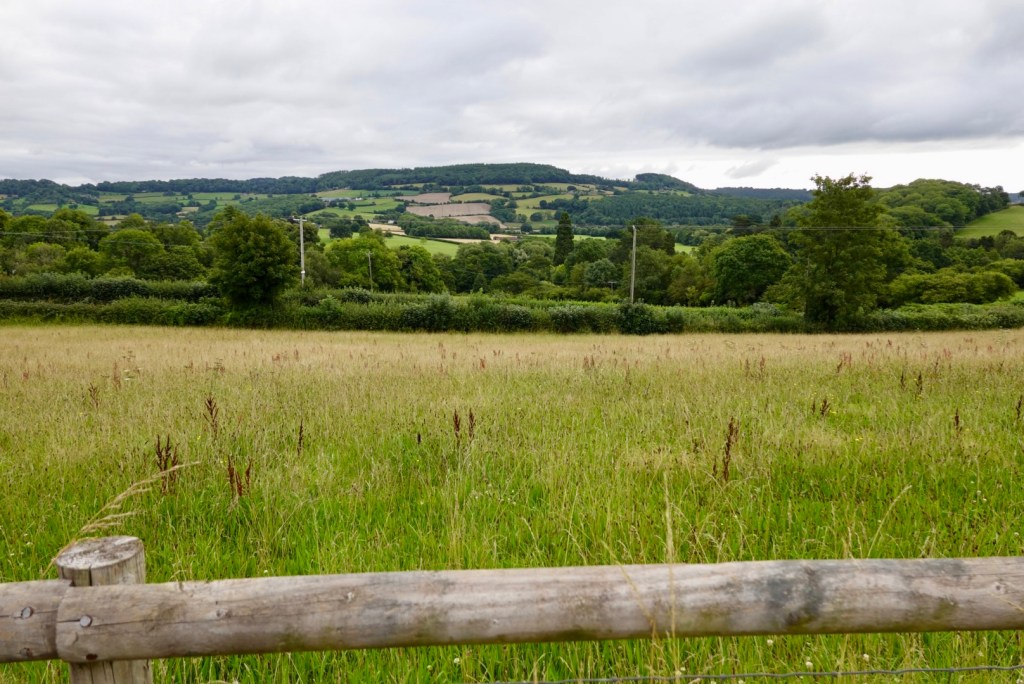
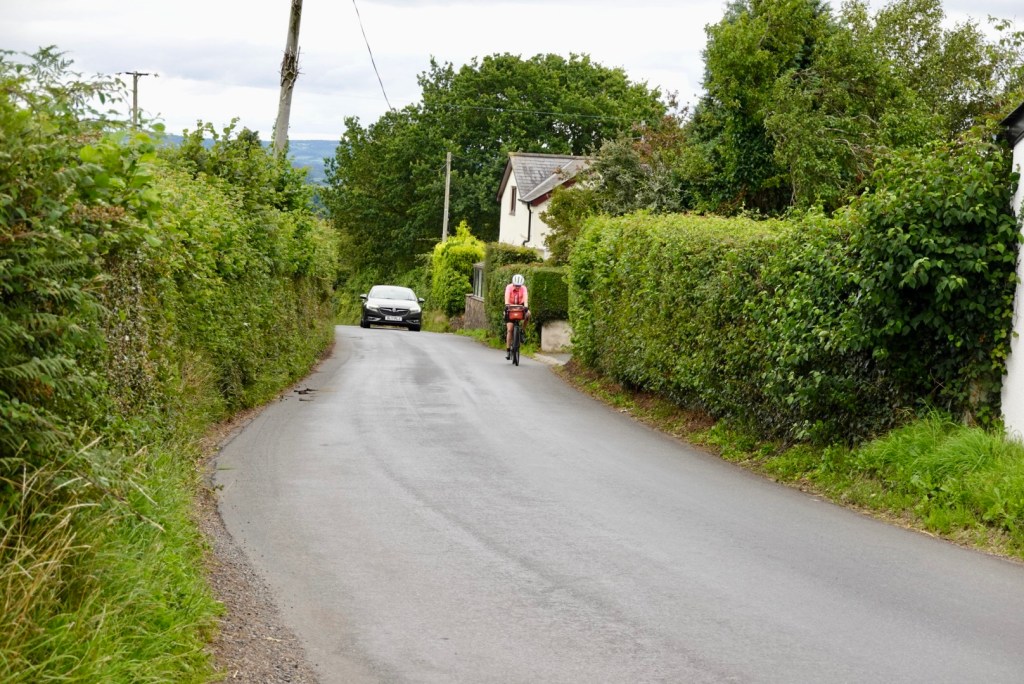
The rural scenery was very pleasant and green.

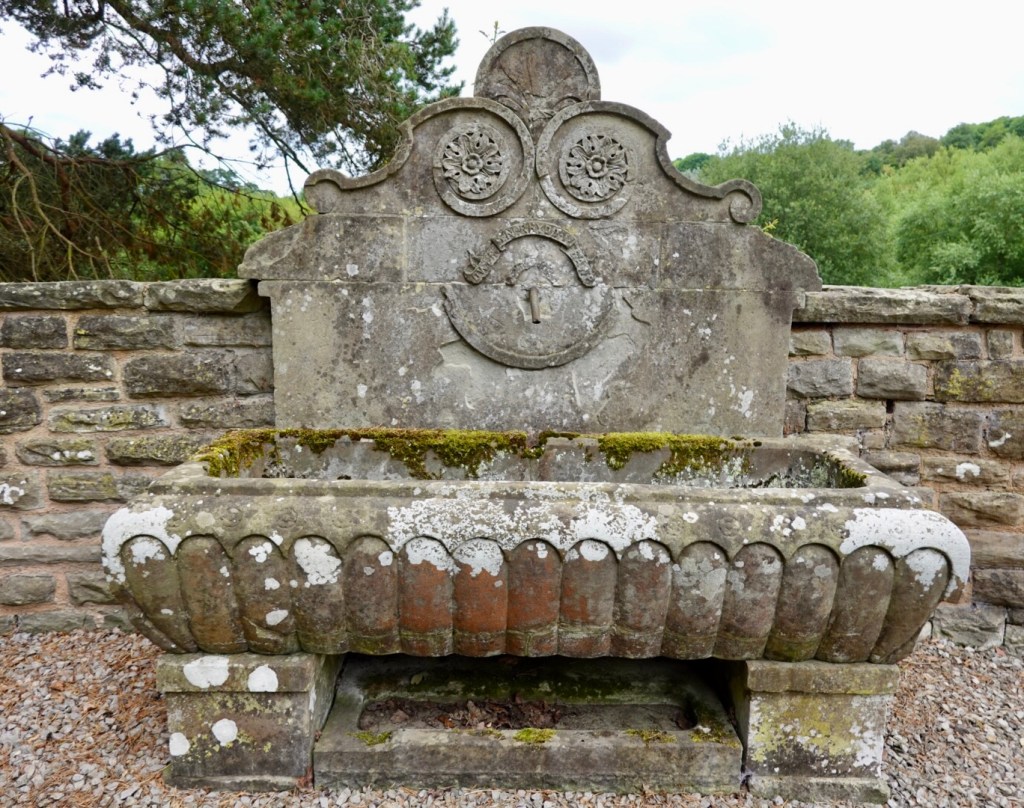
A memorial water fountain, no longer used, dedicated to a local citizen from the 1800’s.

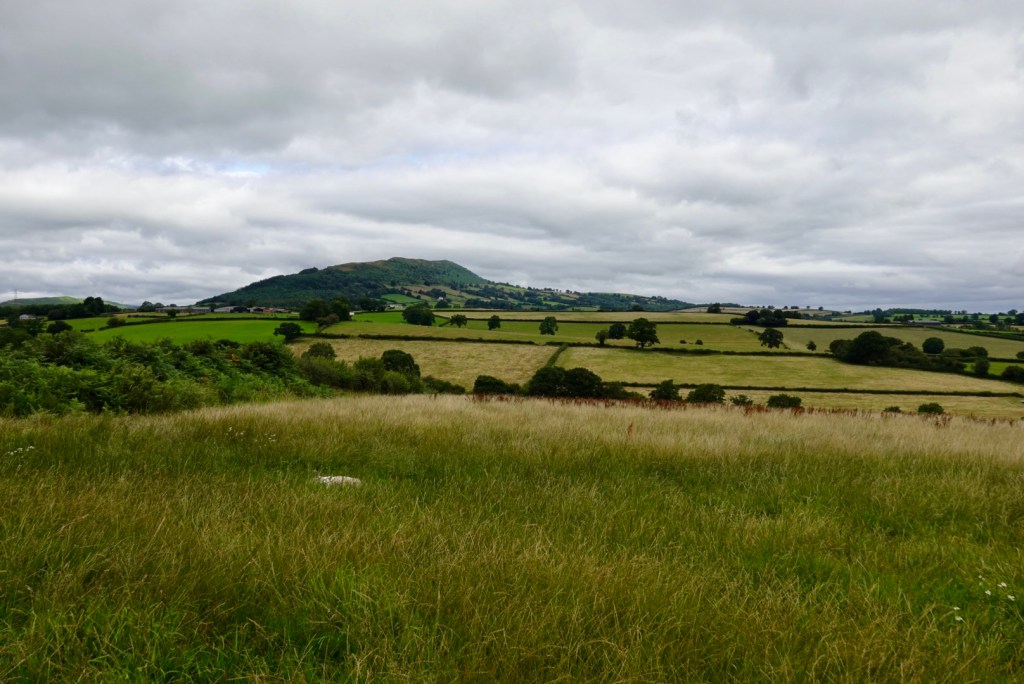
I particularly liked this vista, across the paddocks, to the nicely shaped church. A jigsaw puzzle picture.

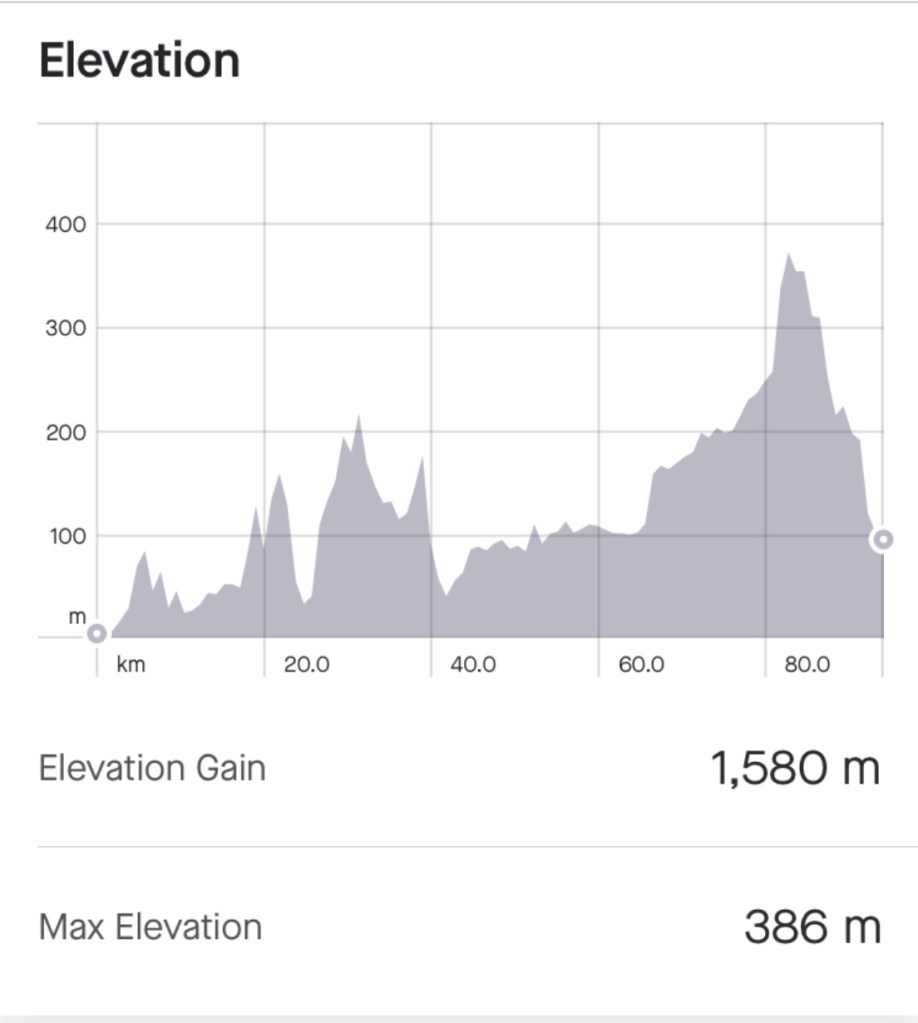
Today was all about climbs. Lots of them. The graph does not show all the individual smaller climbs.

The third major climb at around the 20 km point, my chain dropped as I climbed started to climb a steeper section (when I changed rings) and that meant I had no ability to pedal, nor could I get my feet\ shoes out of the cleats quick enough.

So on a busy road, in slow motion, over I went.

The front bag burst open, stuff went everywhere, I was on my side and picked myself up as quickly as I could. My bum and hip took most of the hit, my knee just a couple of small grazes made to look worse due to the blood thinners I take.

I have stiffened tonight though 😳

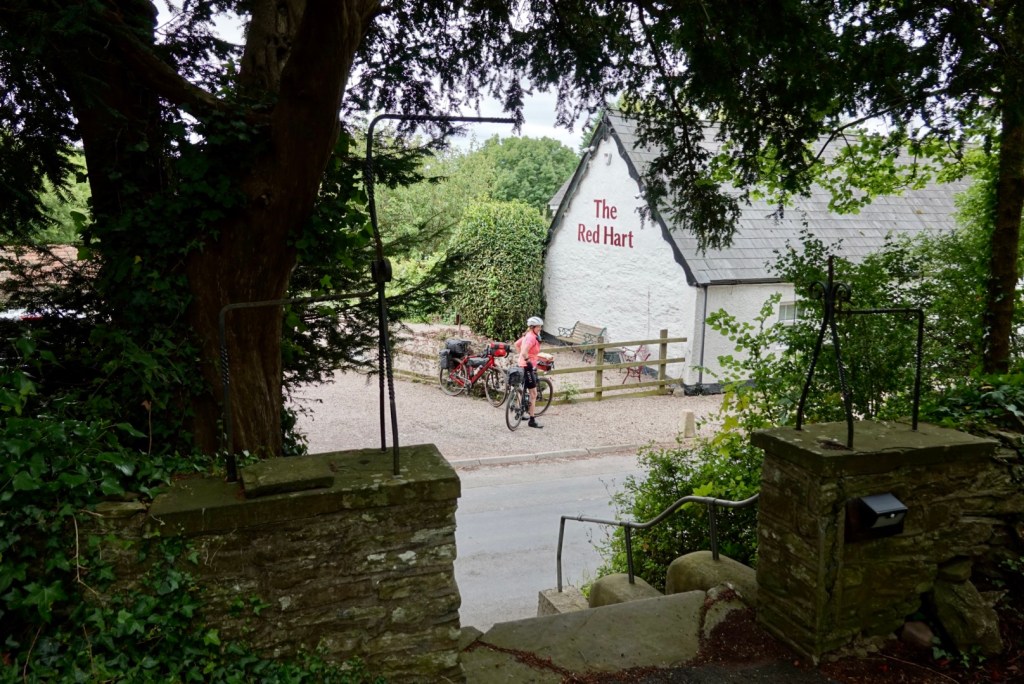
I rolled back down the hill to start it again, resting at The Red Heart.

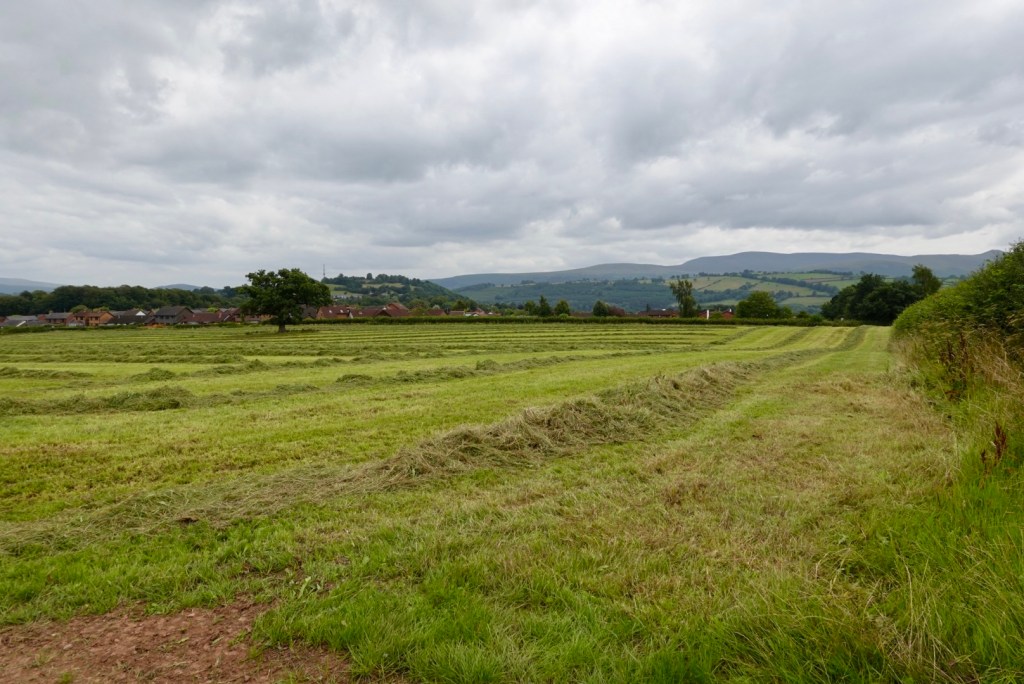
Continuing on, the fields are wide and open, still super green.

The climbs keep appearing.

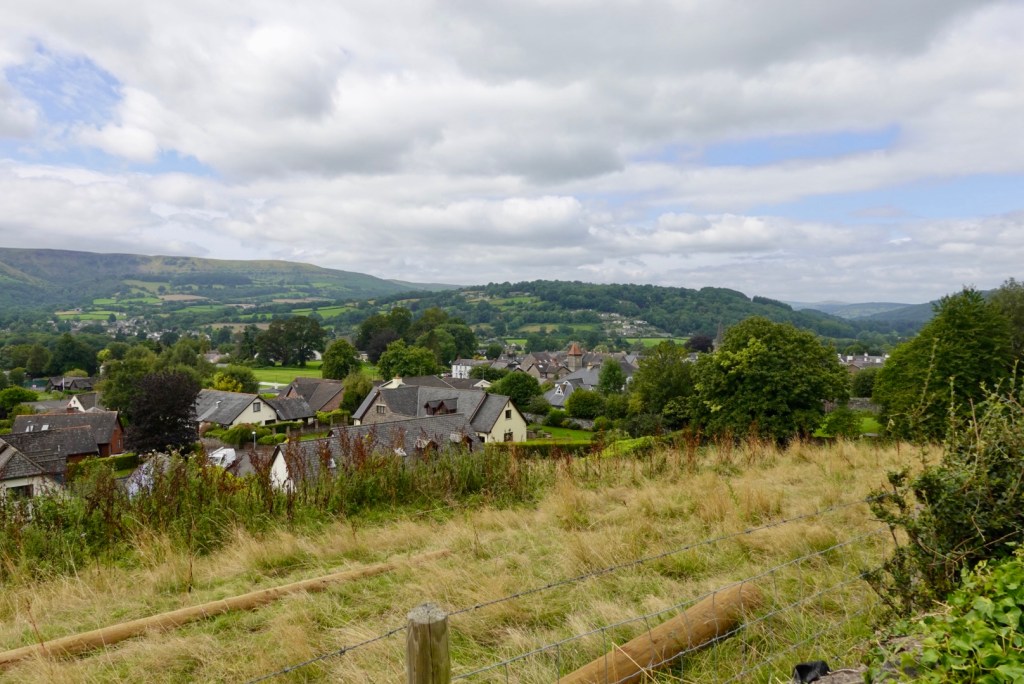
The first major town today was Abergavenny. Situated at the confluence of the River Usk and a tributary stream, the Gavenny. It is surrounded by mountains and hills, including the Sugar Loaf. It is known as a gateway to the Brecon Beacons National Park.

The view as we descended into Abergavenny
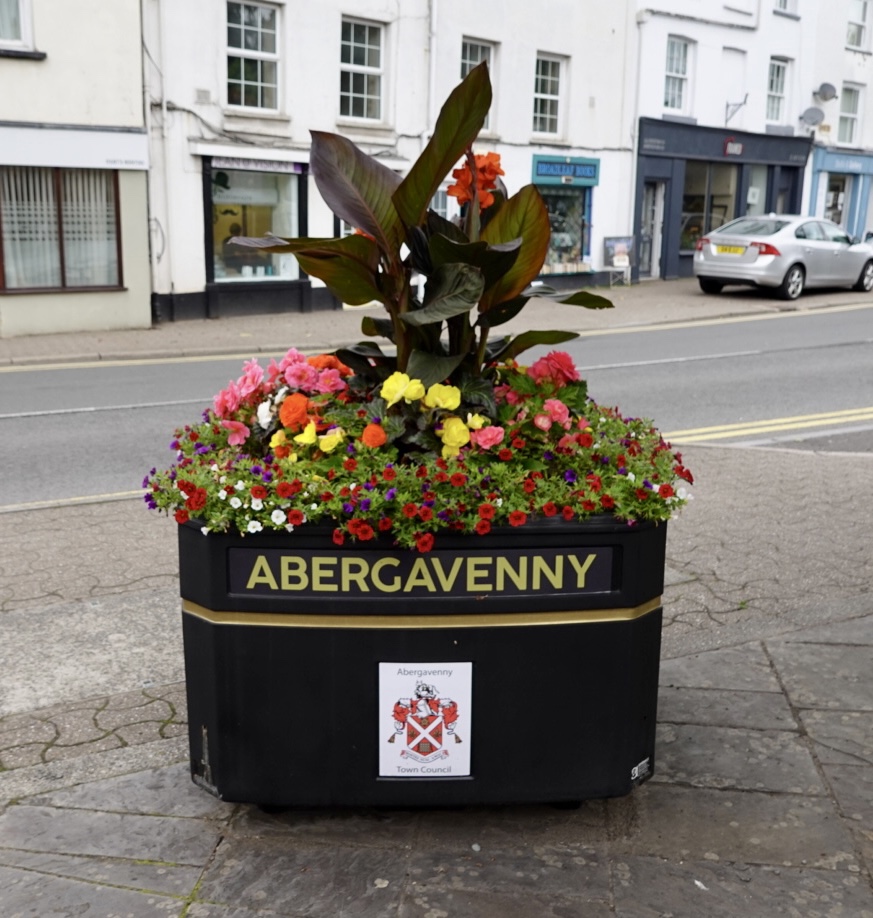
Pretty flowers

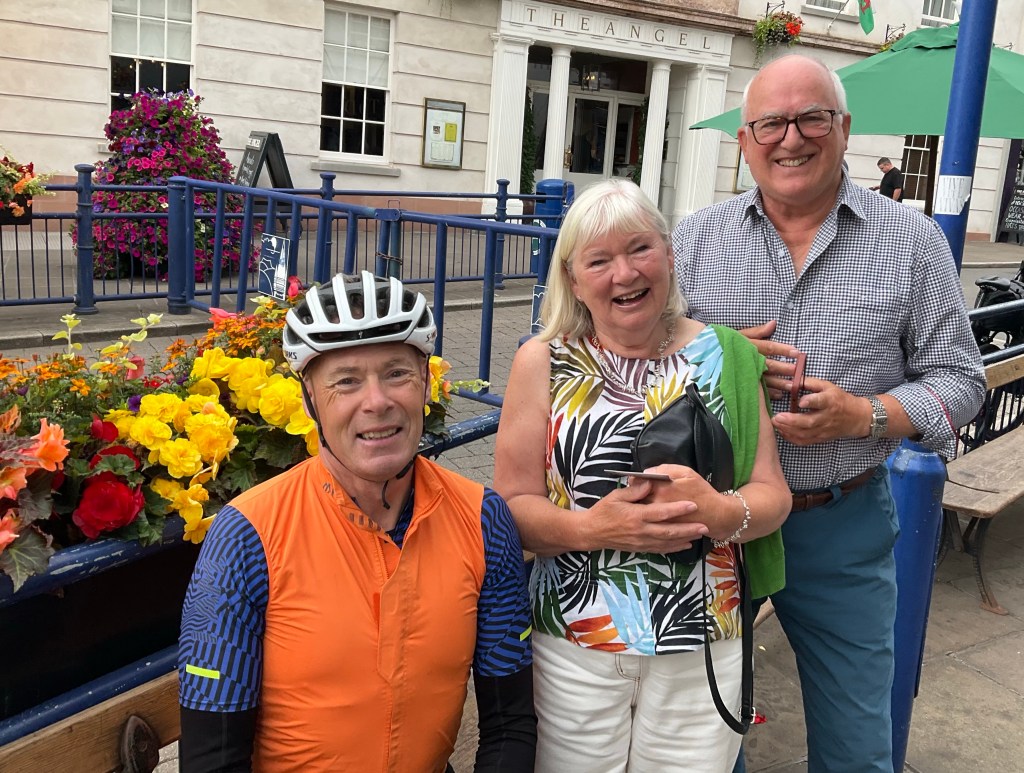
We stopped outside a bakery for refreshments. As we consumed our goods, we met Vernon and Jill from Derbyshire. They have cycled toured in the last and were curious about our trip.

They shared photos of their grandson Leon Atkinson who currently has four National (UK) age championships to his name in four events. A name to watch out for in the future.

Leaving town, waiting for Tony while he takes this photo.

Blackberries are plentiful and Tony sampled some today, and said they were really nice.

More climbs, more views.

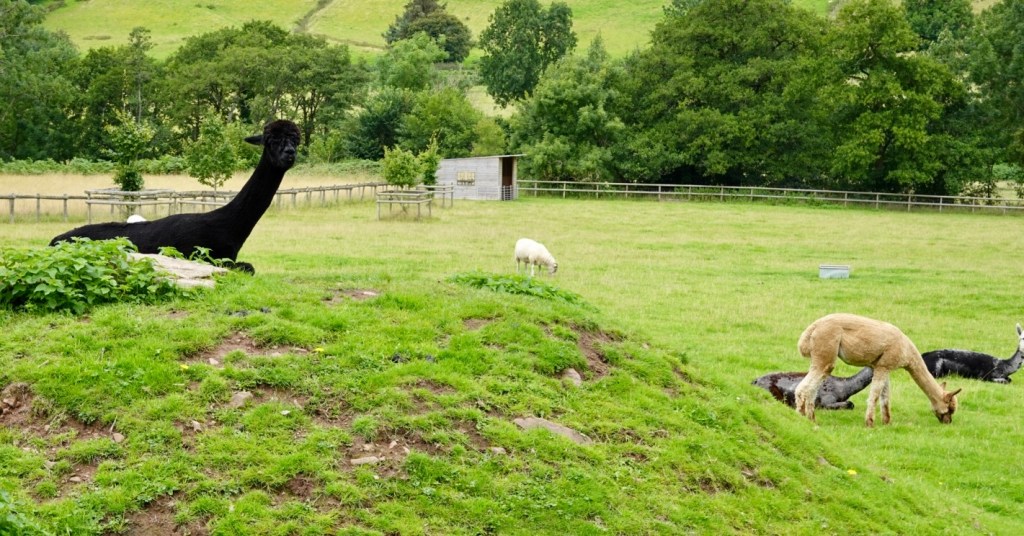
I’m not sure if these are llamas or alpacas, I always get confused. The black one intrigued as as when we talked to him, he stopped chewing. When we stopped he would chew. Maybe he is a sheβ€¦πŸ€£

All the main towns today were at the bottom of descents, meaning there were tough climbs out of each town.

This view is just above Crickhowell, my favourite town today.

Crickhowell lies on the River Usk, on the edge of the Black Mountains. it is the birth place of Roddy Llewllyn, better known as Sir Roderic Llewellyn, 5th Baronet – aka Princess Margaret’s playboy back in the 70’s.

We stopped for lunch here, a fresh baguette with a fresh banana.

Squinting…

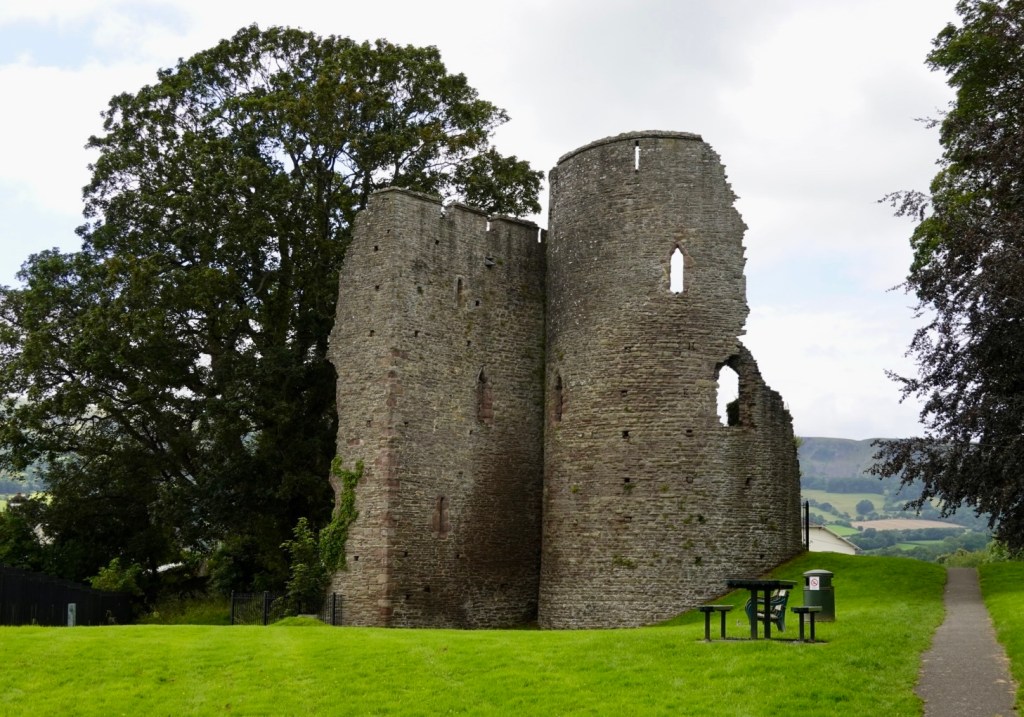
The old castle was initially a motte and bailey castle built from around 1121. It was damaged badly in the 1400’s by the last born Prince of Wales, Owain Glyndwyr.

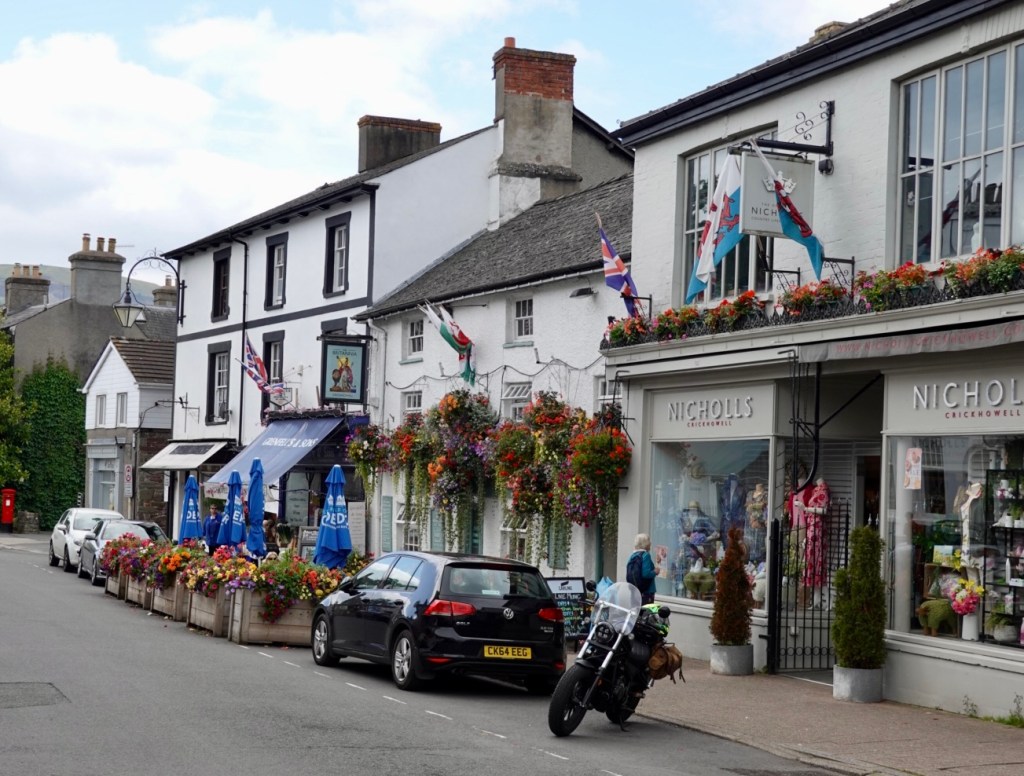
The town was vibrant, and many buildings had colourful flower displays.

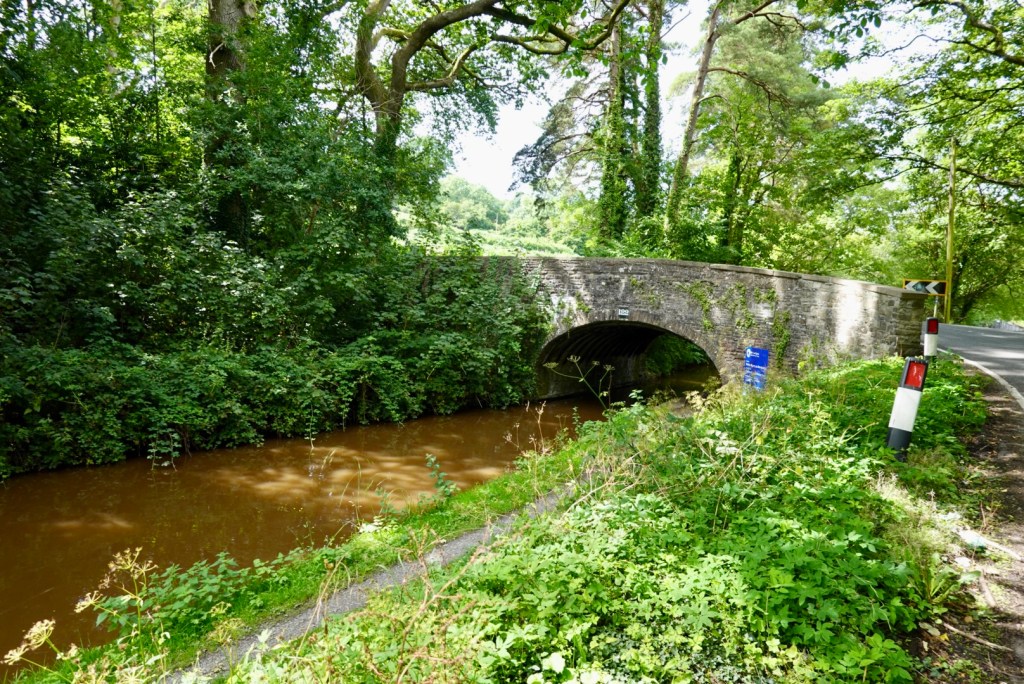
Leaving town we crossed the river, and followed a canal.

River Usk
The muddy canal

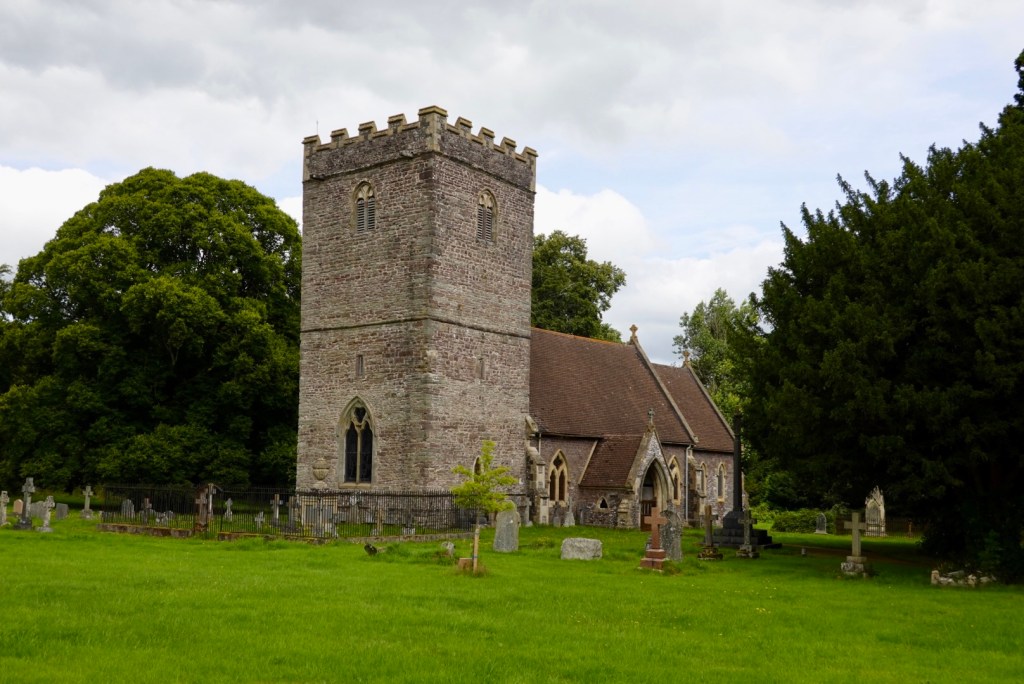
There were nice forests and more churches.

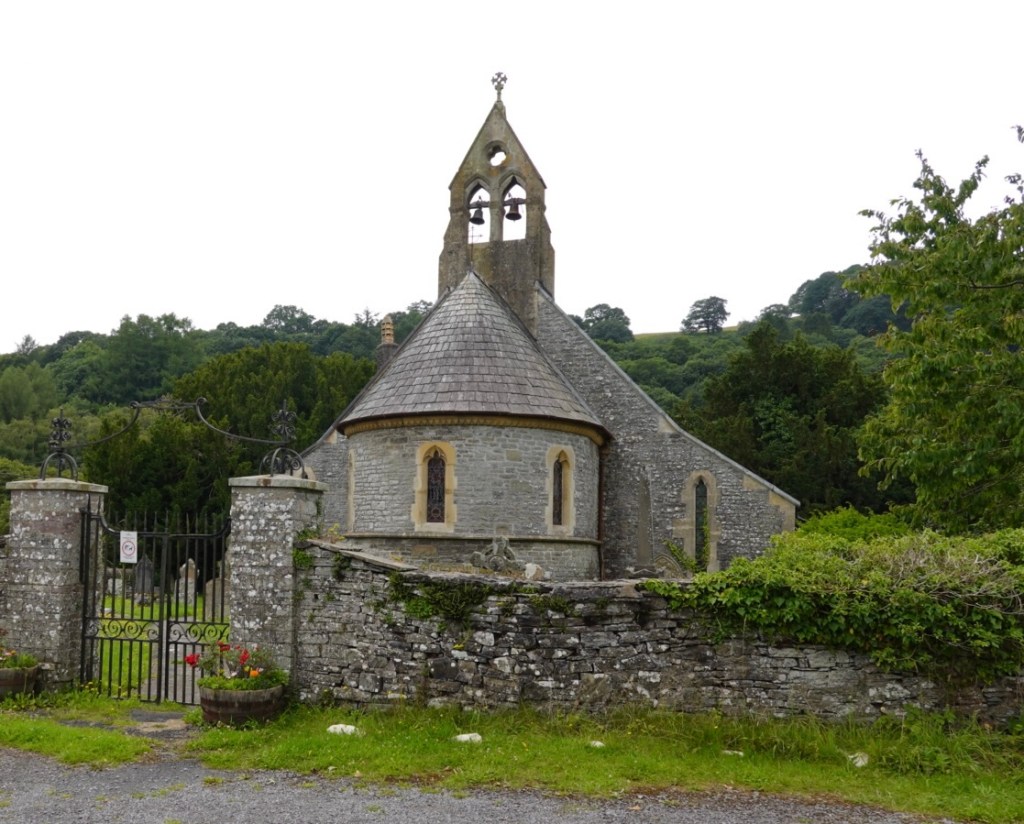
llanfrynach St Brynach churchyard

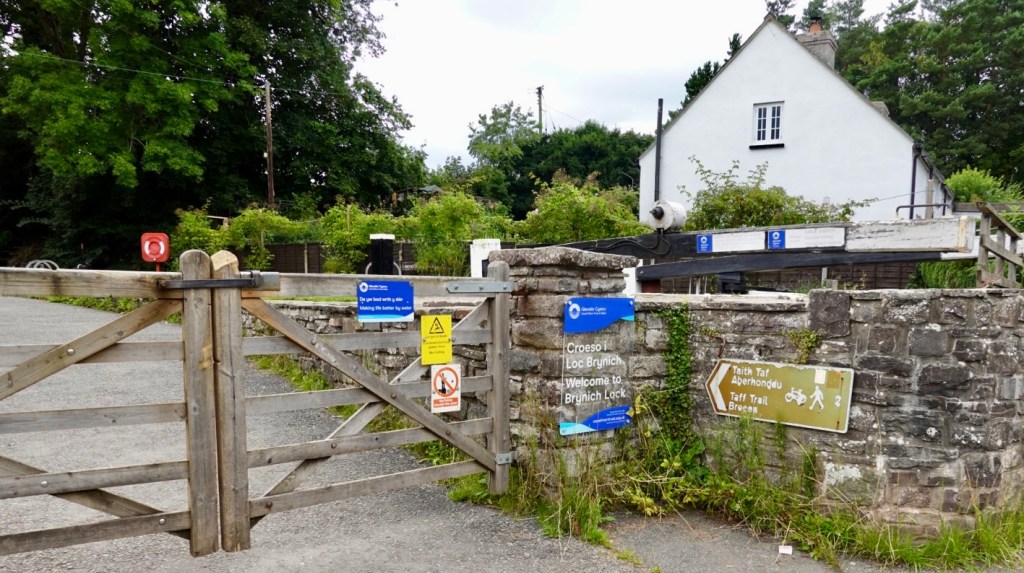
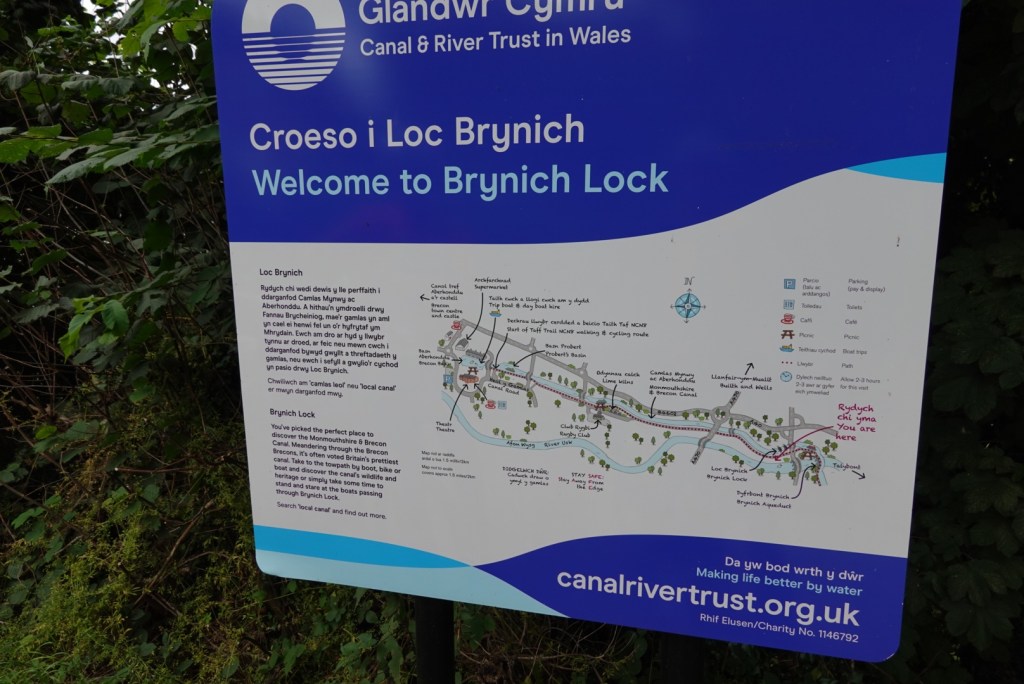
Our route took us along the Brecon canal, apparently voted Britains prettiest canal.

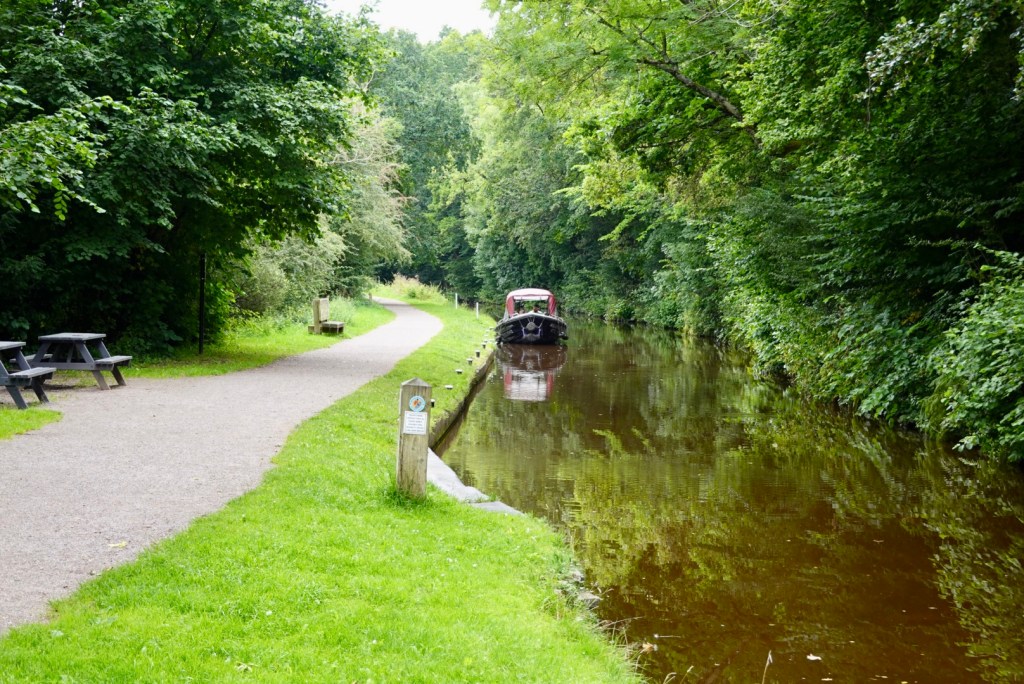
It was lovely riding the two miles along here. It was a flat gravel path. It was busy with people walking their dogs.

Through the gate and past the lock
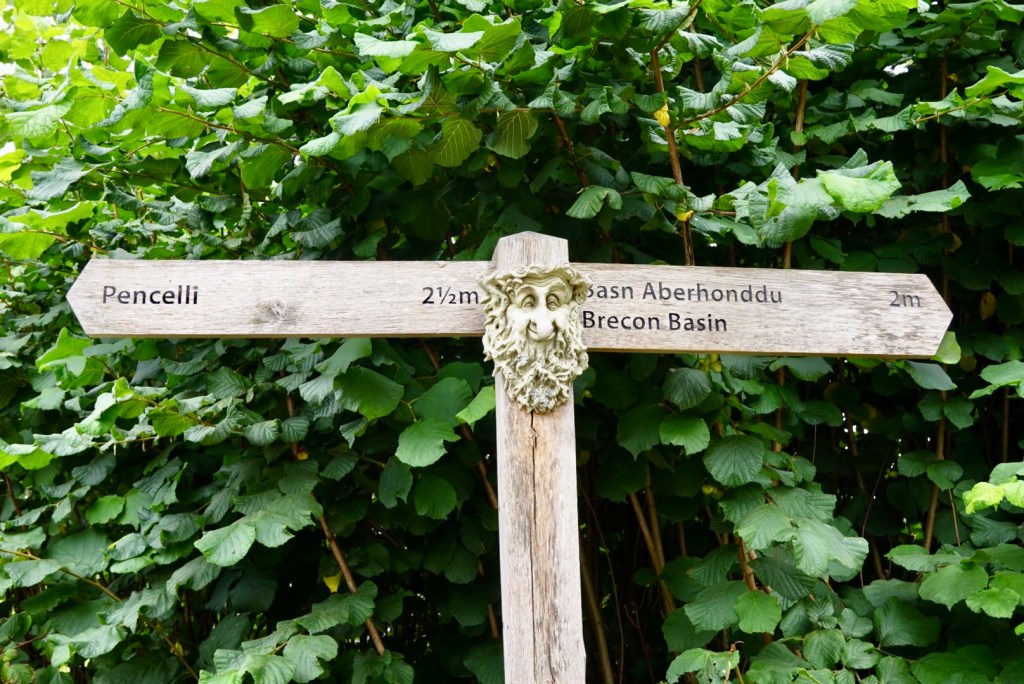
We were heading towards the Brecon basin
A canal boat

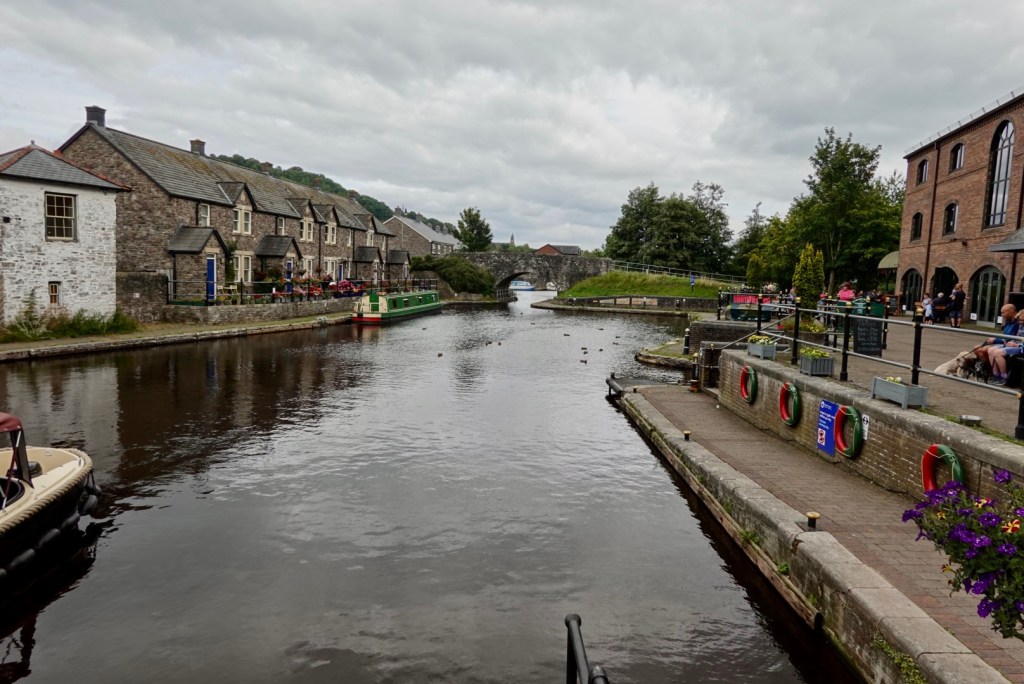
In the town of Brecon the canal becomes a basin. You can hire a boat here for one hour, 40 pounds.

We did not stop in Brecon. We weaved our way around the town to head back into the hills.

A statue of Wellington

More cute churches and fields.

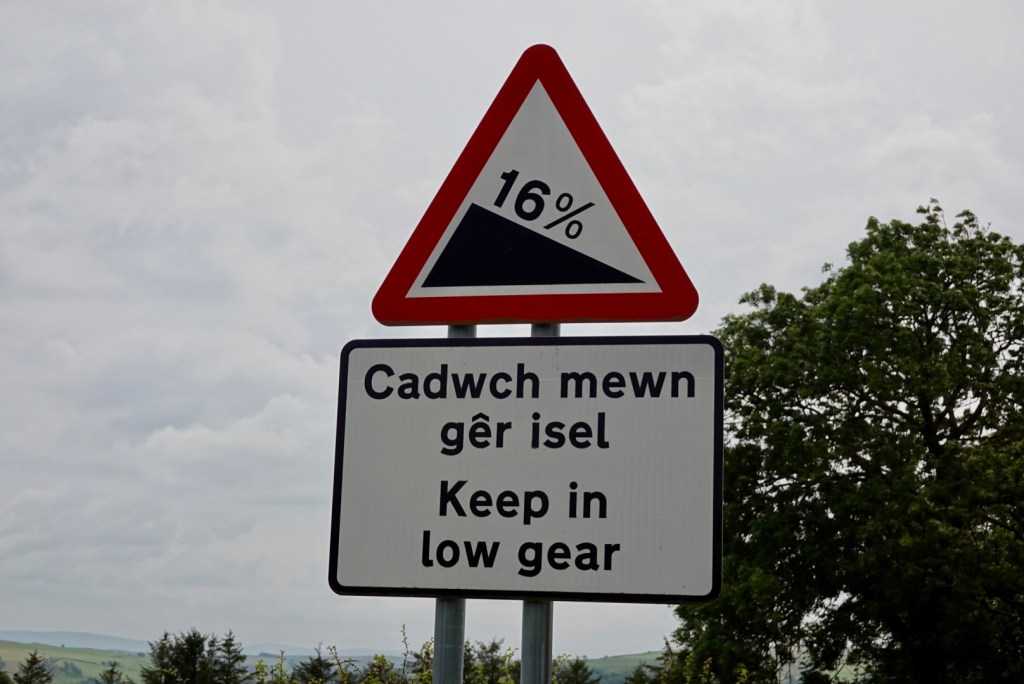
We were quite tired by now, but climbing was not done with us yet. As we started to climb, there was a warning sign stating the climb was 16%. It was also 2 km in length.

Per our computer data we could see that the super steep section was for maybe 500 metres or so. I walked! I pushed the bike up and it got to 20.4%

As I rounded a bend, Tony was also walking. It is actually hard pushing your bike with gear up such a steep hill. The knee did complain.

At the top, this was the warning sign for cars descending.

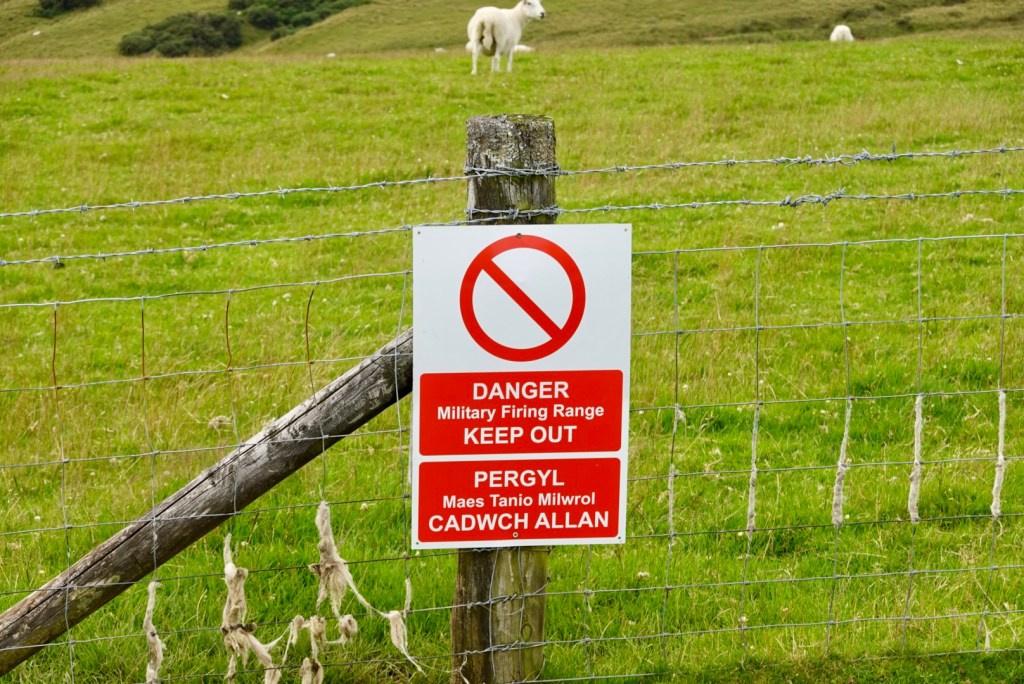
Adjacent was a military firing range. The red flags were flying, the sheep oblivious. These sheep are fenced, but there were many others wandering around the roadside.

The vegetation had changed considerably. It was very open and bare. Exposed to the headwinds, making the challenge harder.

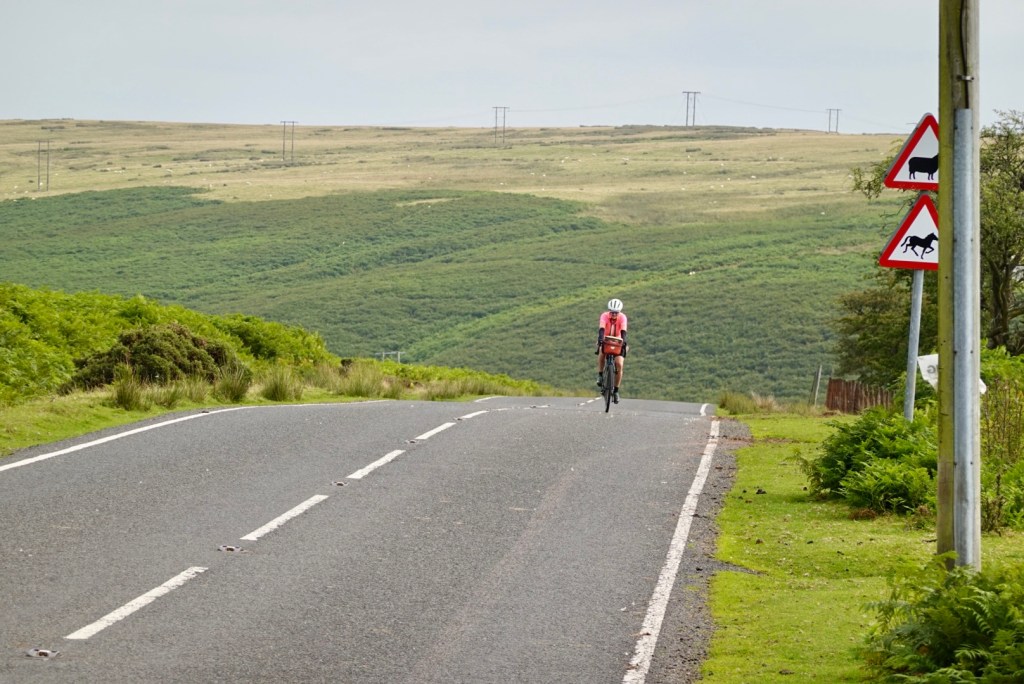
After the steeper section, we were able to continue climbing on our bikes. Here I am near the top.

As we rested, we met a local mtb rider John (known to his friends as β€˜the pope’). We were at a junction with what seemed to be a farm road and the main road. John had come off the farm road.

Talking to him he imparted his local knowledge and suggested we get off the main road, and head to Builth Wells by this alternative route. It is always great to chat to other cyclists.

He assured us it was all downhill.

Well it was mainly downhill bar the uphill bits 🀣🀣 However, what goes up, must go down, and Builth Wells like every other town today, is at the bottom of a big hill.

These are some views along the alternative route.

We arrived at our accomodation in town, and after showering and laundering headed off to search for dinner and check out the town.

Builth Wells at the confluence of the rivers Wye and Irfon – in the upper part of the Wye Valley.

Random bull
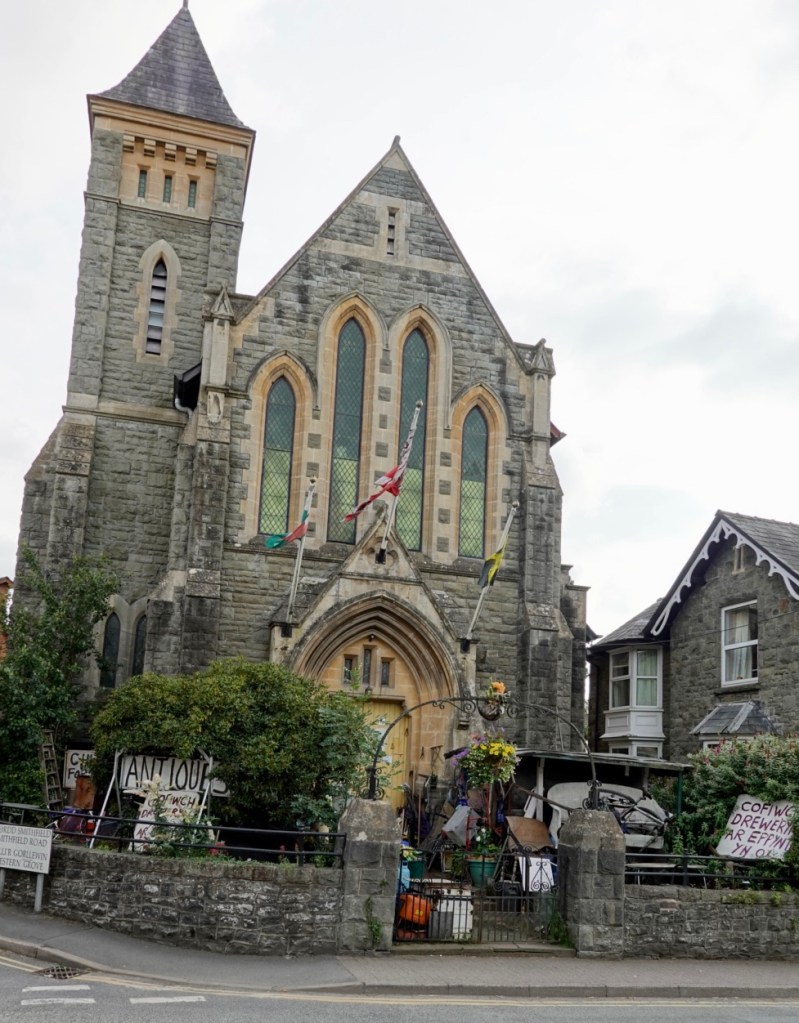
Sad demise for an otherwise nice church. Junk everywhere including bikes.

Tomorrow a storm weather warning has been issued, Storm Antoni, with winds of up to 55 mph, plus lots of rain. We will reassess tomorrow but a train is an option. We are scheduled to climb over 1500 m again and that would be dangerous on a bike in a storm.

Anyway, let’s see what tomorrow brings.

What’s in the bag?

I have often been asked, what’s in my bags. Yes we travel as minimally as possible. When you have to cart your gear 3000 km you look critically at everything.

Certainly there are non negotiable items clothing wise, first aid, medicines, tools and spare bike parts. You need casual clothes for evenings. You need cycling clothes for rain, cold and warm conditions.

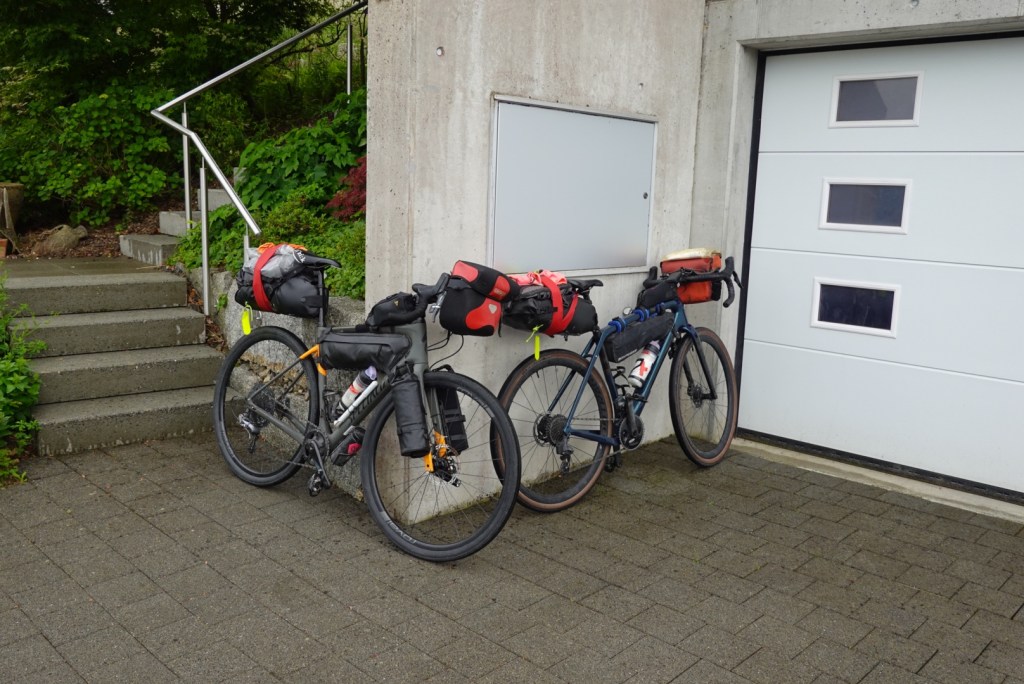
Here are our two bikes just as we arrived back at my sons place in Switzerland, 3000 km later.

The set up with the two bikes is similar, bar the two small front panniers on Tony’s bike. In addition, his bike is bigger and therefore he has a larger rear post bag

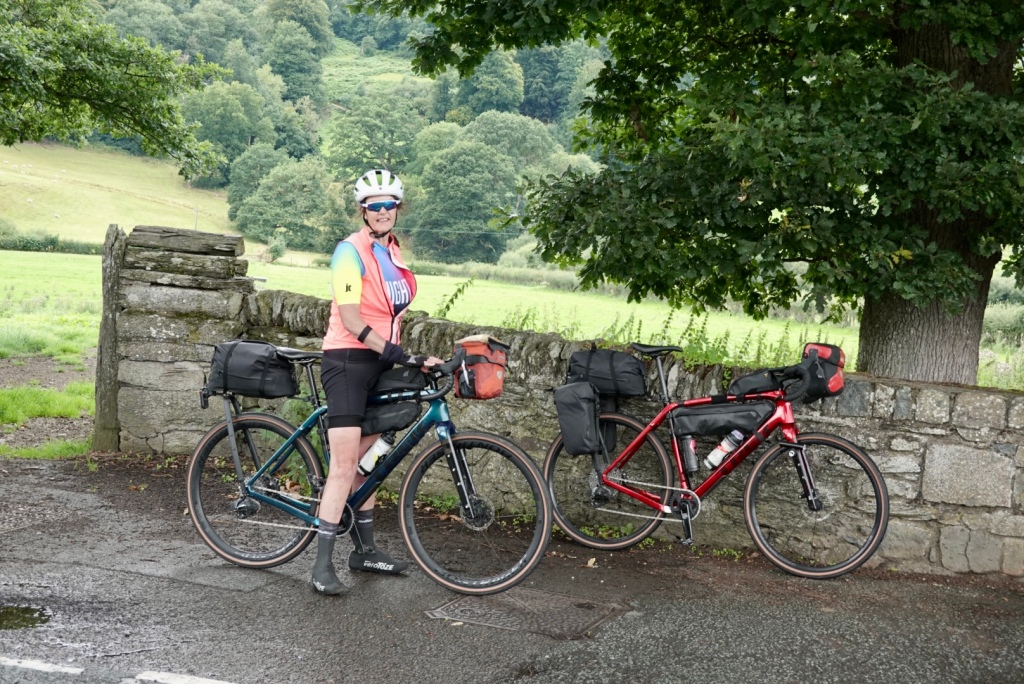
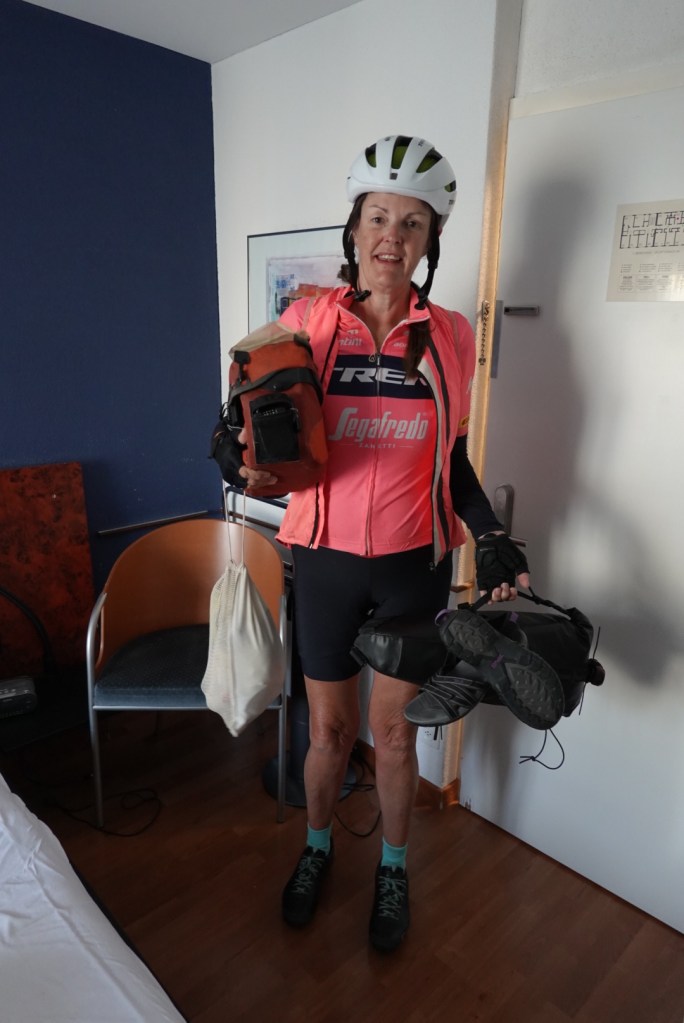
Here I am leaving accomodation ready to pack the bike. Three bags in hand. You need to be able to cart your gear to and from your bike easily,

I am carrying my front handle bar bag, my rear tube saddle bag plus a stuff bag with all the odds and ends that have a specific home on the bike.

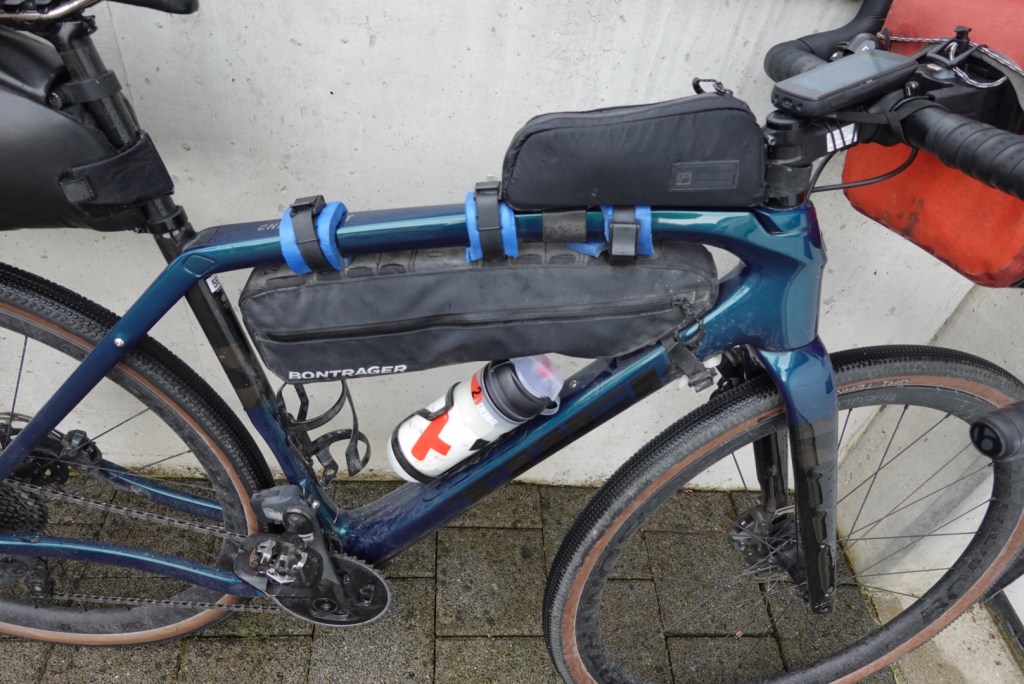
Storage choices. You have seen two bags above. I also have two bags on my top tube. The smaller upright one plus the hanging lower and longer one.

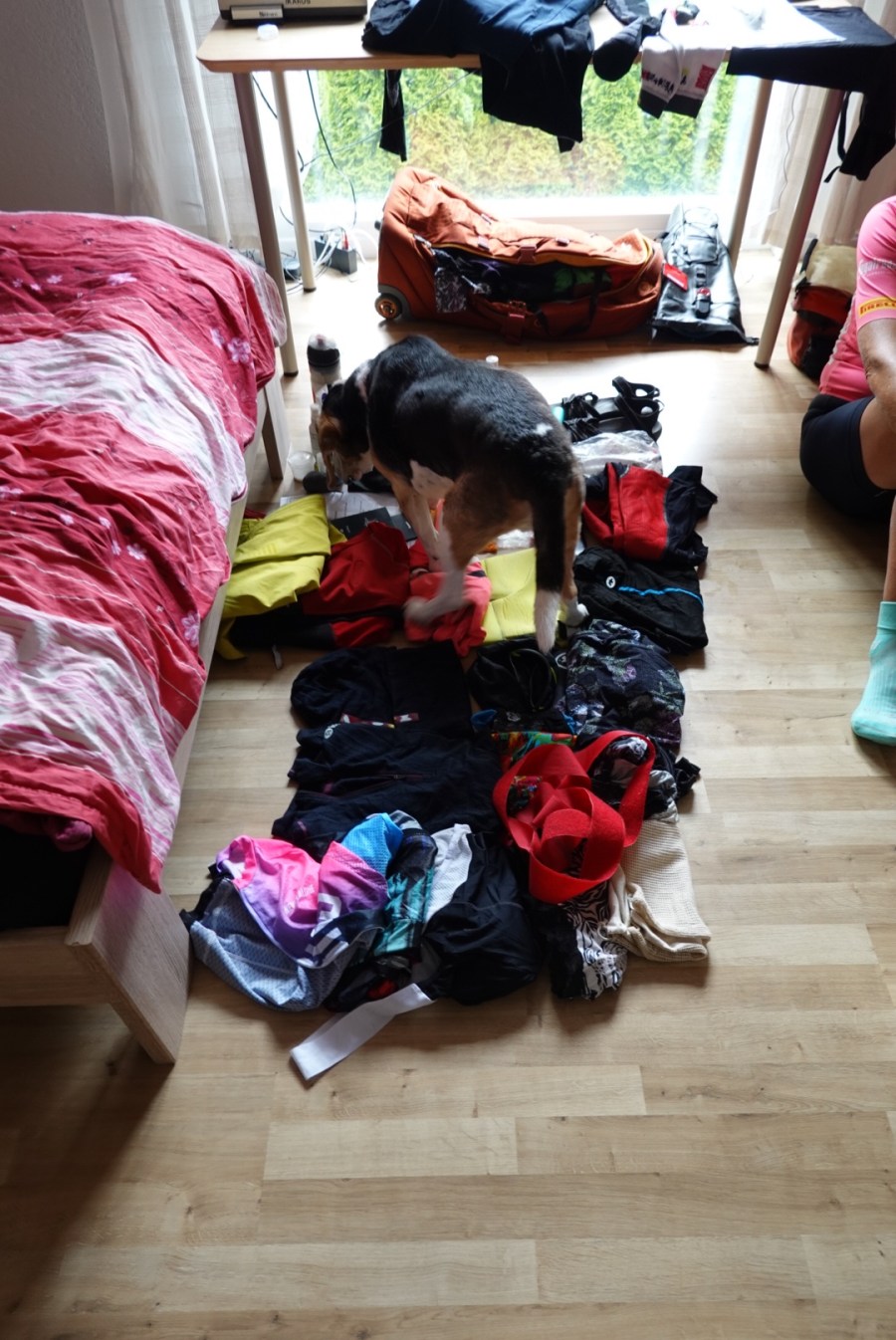
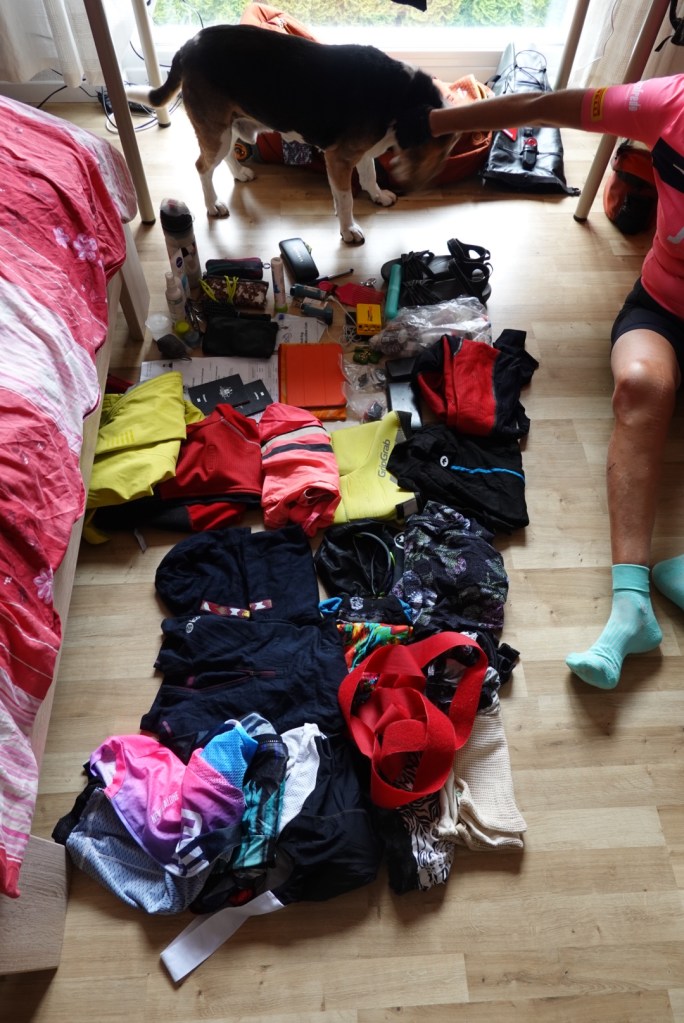
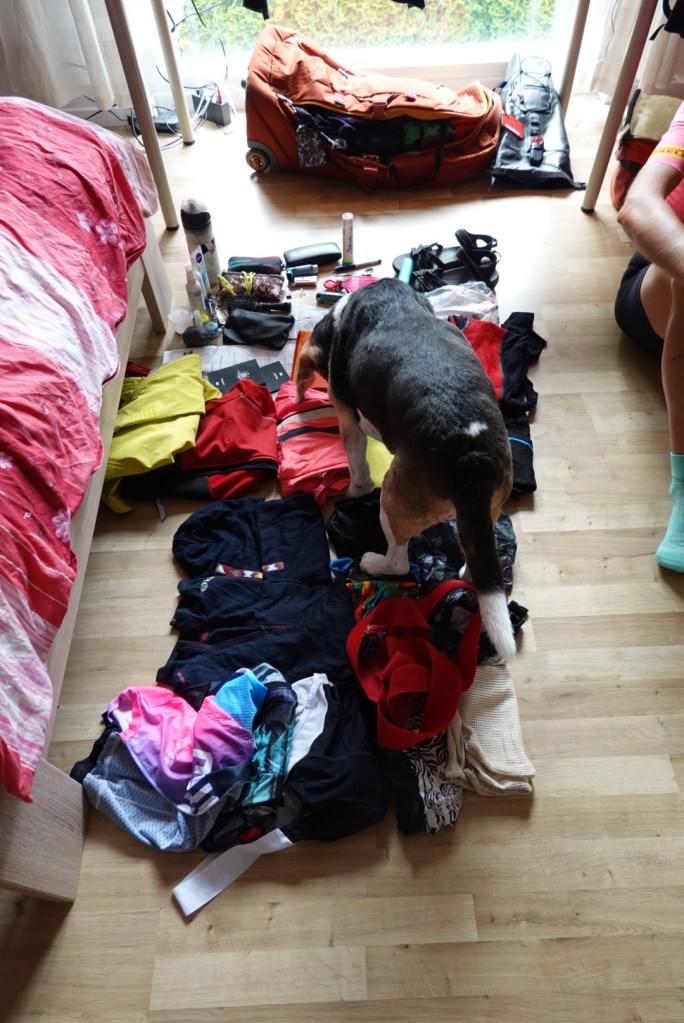
So let’s see what I have all spread out on the floor.

In more detail. The rear saddle bag is basically everything I hope I do not need during the day riding. In the bag you would find….long leg bib and brace for cold weather riding, a thermal long sleeve top, a second short leg bib and brace kit, spare short sleeve jersey, a pair woollen cycling socks wet weather, yak wool beanie and snood, a casual dress, a long leg casual outfit, yak wool casual top, nightie, spare underwear and medicines and toiletries (except ventolin), tens machine ( for our backs, could be considered non essential but given our back history very handy as you can ride and use it simultaneously).

Strapped to the top of the bag are my casual sandals, neoprene over booties and my gilet (indicating that it was hot when this photo was taken).

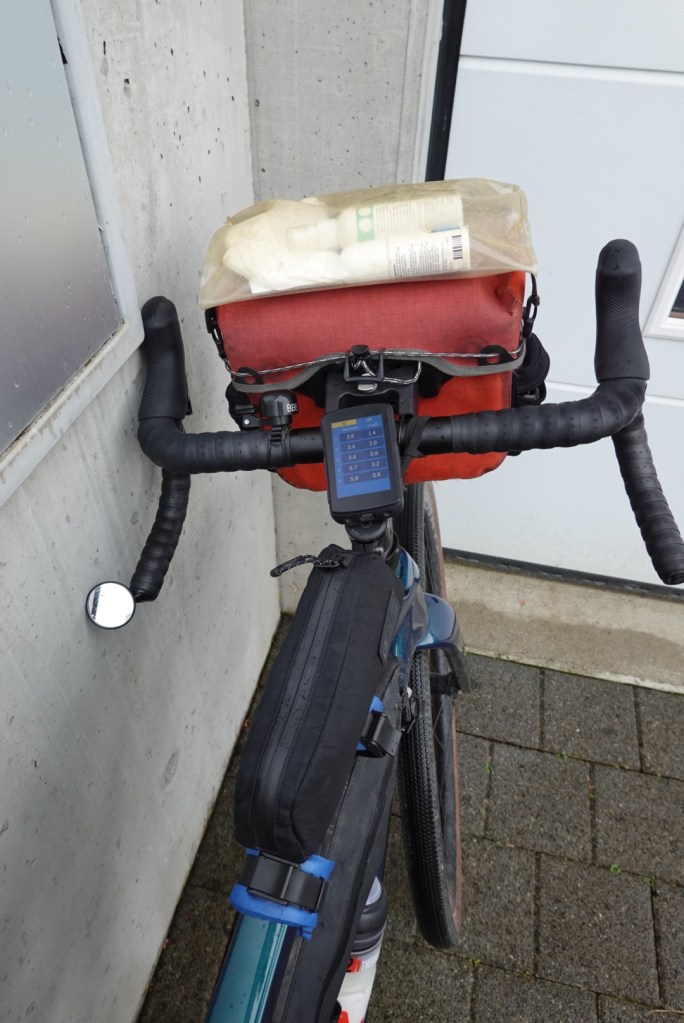
The front bag has stuff that I may need during the day. It has our first aid kit, a teaspoon (very handy at times), safety pins ( useful if zips break), a nail file (also very handy at times for all things not involving nails), long sleeve warm jacket, arm warmers, passports, vaccination certificates, travel insurance info, food, rear derailleur hangers (never leave home without spares),biro, my iPad, masks, small torch, shopping bag, hair bands and small hairbrush, bike lock, tyre pressure gauge, spare fully charged etap battery, drink tablets….

On top is a map pocket which I use for sunscreen, hand sanitiser and tissues.

The top tube bag has my purse (debit card, credit card emergency, cash- in this case euro and Swiss francs), lip balm and ventolin.

I have exercise induced asthma and part of my asthma management is ventolin regularly during the day as I ride. I also take Symbicort twice daily for asthma. Well managed my asthma is rarely problematic. If I get a cold etc, it can be problematic.

I also need to carry an epilepsy drug having complex partial seizures at various intervals since I was 20 (but only diagnosed by a neurologist 5 years ago).

This is Wags, my sons dog, very keen to check my gear out.

The hanging longer top tube bag opens both sides. The larger area contains my rain coat and rain cap.

The smaller pocket contains a battery pack (to charge the Hammerhead gps bike computer if the battery gets low), and my stuff bag (used to transport loose items to and from our accomodation). Spare food is sometimes stored there too.

I also have an internal tube storage area under a bidon holder. It is really nifty and we stored 3 x rat test kits there. I intend to find long skinny bags for our first aid kit for the future to place in the tube.

The extra bags on Tony’s bike has his spare tubes (my wheels are tubeless), plus our two lightweight down jackets ( they stuff down very small), some tools and spare parts (brake pads, derailleur hangers etc).

We choose to travel light. Most touring cyclists we see travel with more gear and bags. Many also carry tents and sleeping bags.

This works for us. We do intend to replace our rear seat post bags with a newer Tailfin setup for our next trip. Not cheap ($1400-$1500 for the two bikes) but the benefit is the weight is not hanging off the seat post being mounted to the rear axle.

I think that about covers it. This setup and gear replicates what we carried for 35 days in central and Western Europe in 2019 and we’ve not made any major changes for this trip (26 days riding).

We get to the luggage collection carousels post trip and are quite bemused by the number of suitcases many travel with. Yes, we keep wearing the same gear, no it does it bother us, yes we launder cycling kits daily, and casual clothes regularly.

Itchy feet

What do you do after an epic bike tour? You get back in your bike of course, even for a shorter 48 km or so.

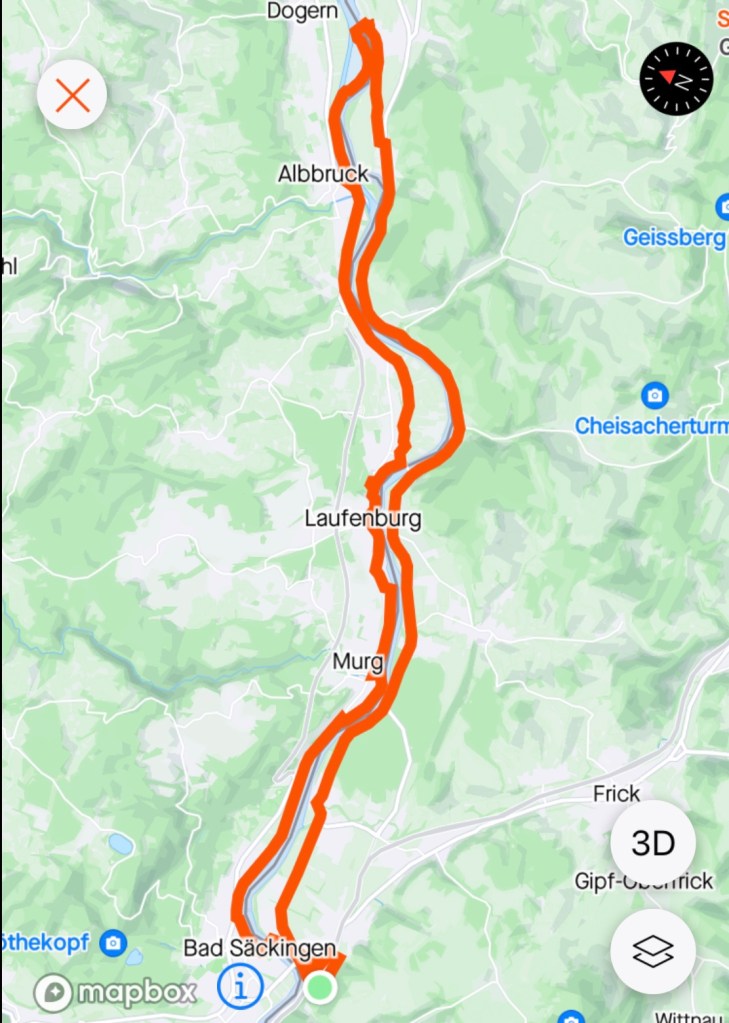
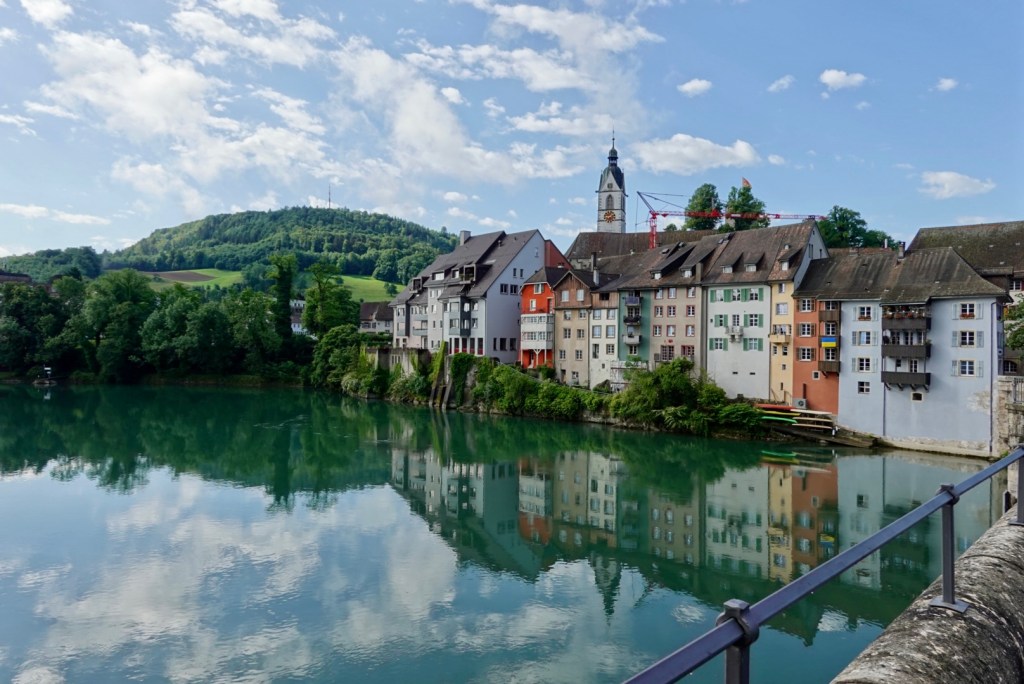
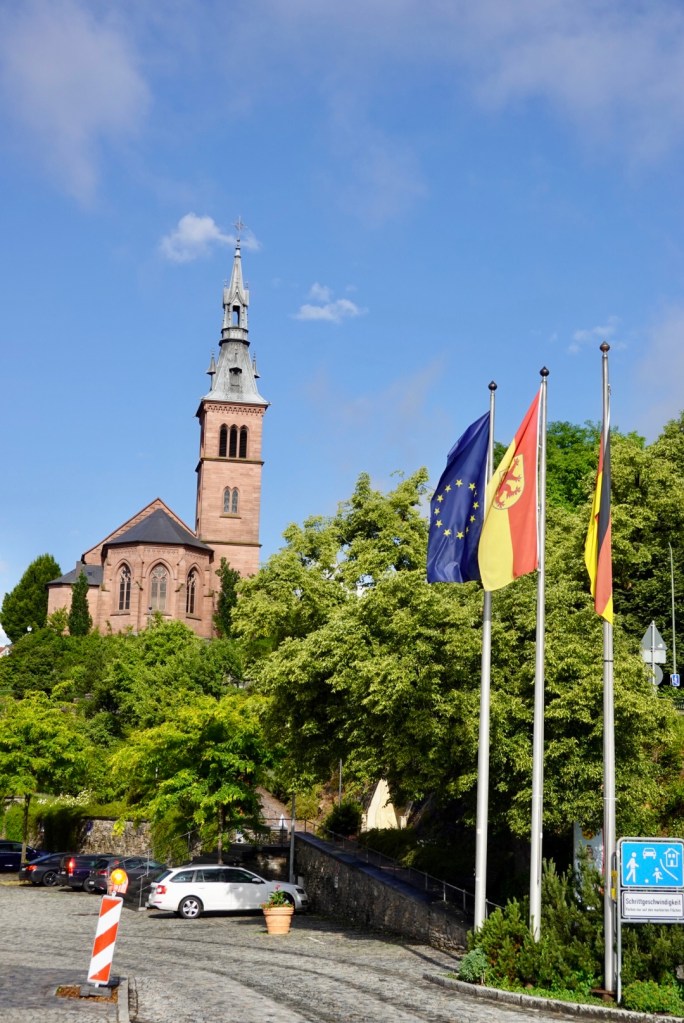
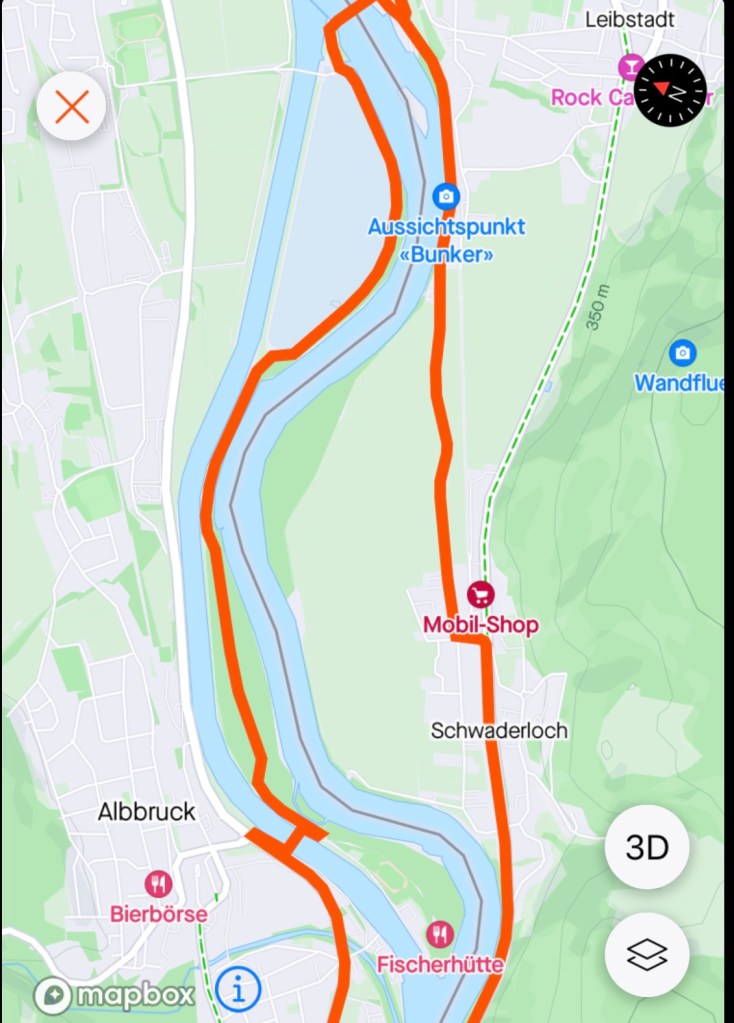
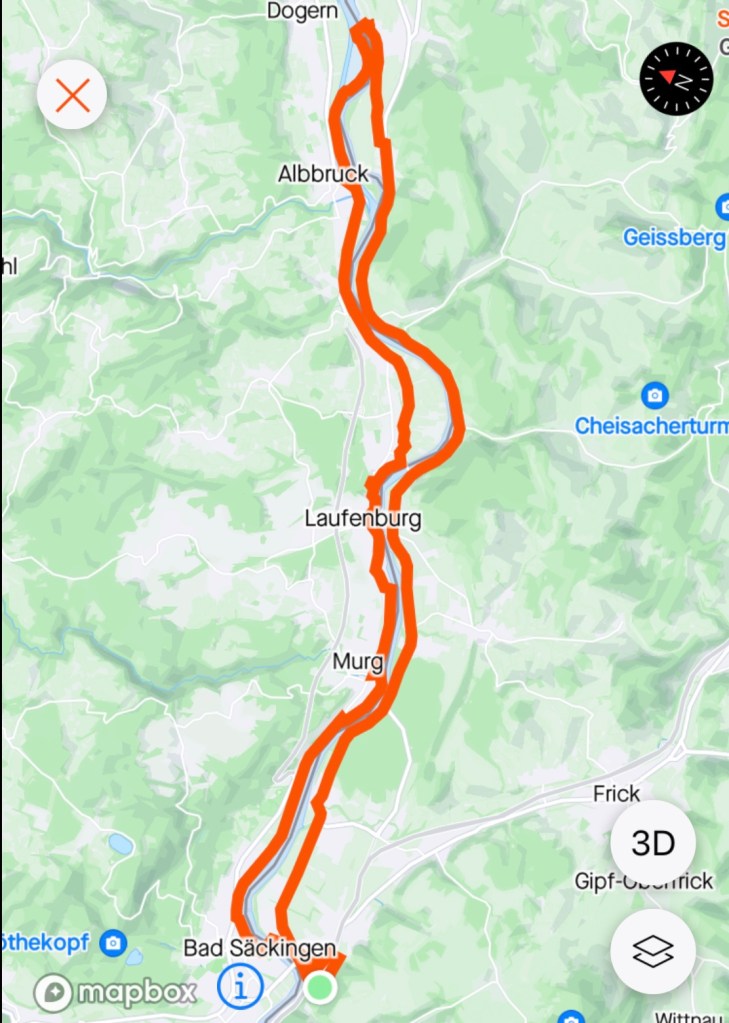
Itchy feet, waiting for the rain to ease and we went off on an exploratory ride to check out both sides of the Rhine and its villages.

Our route, Germany to the left, Switzerland to the right.
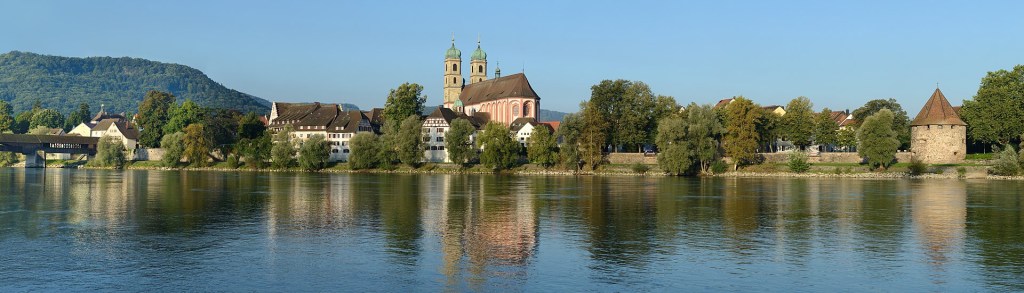
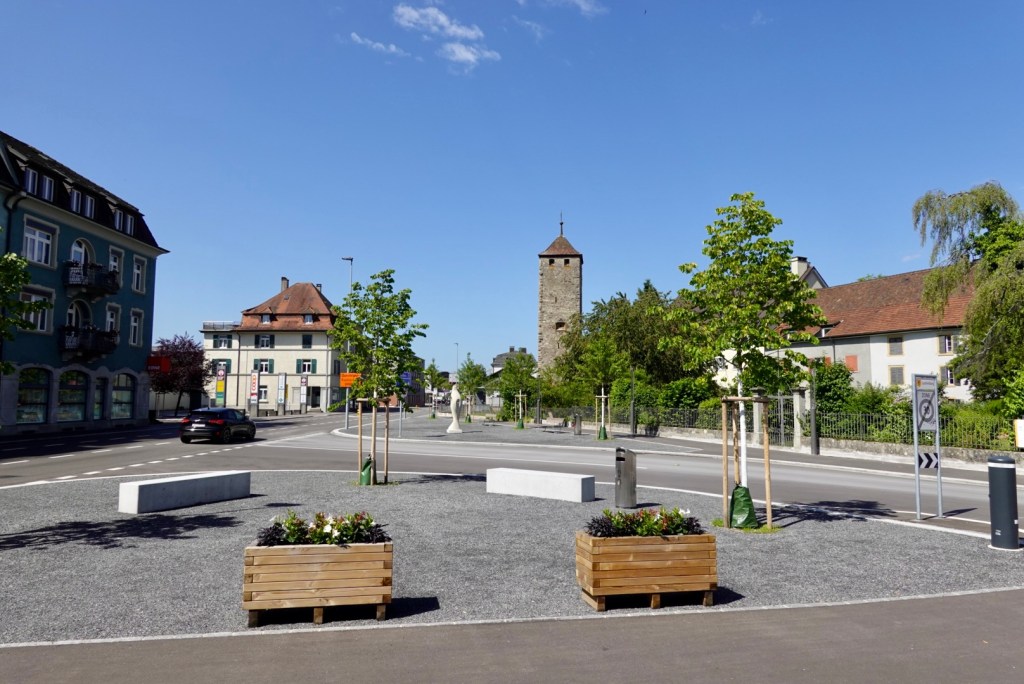
Borrowed photo showing Bad Sackingen from the Swiss side of the Rhine River up from the long wooden bridge.

Bad Sackingen was coming to life. A market was setting up, looking like lots of fresh produce.

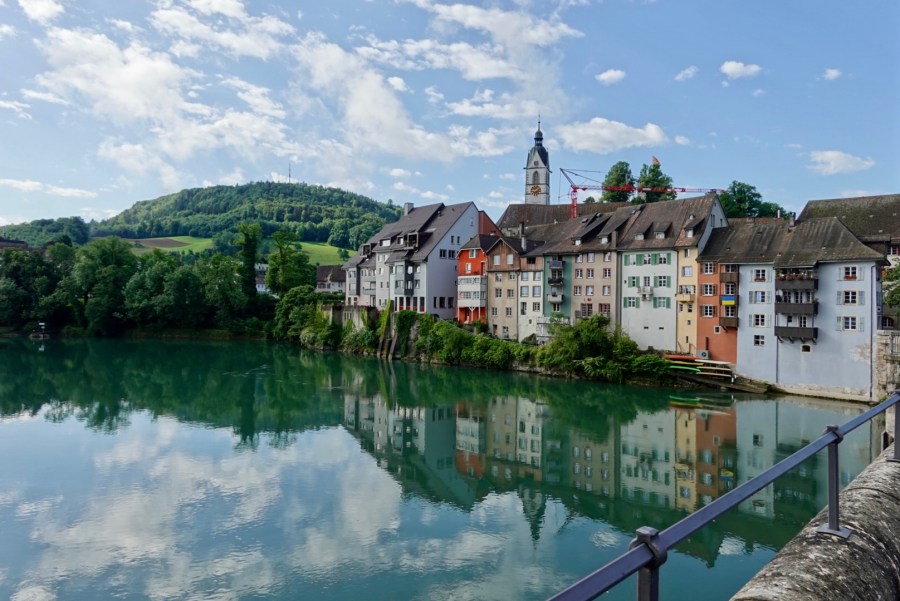
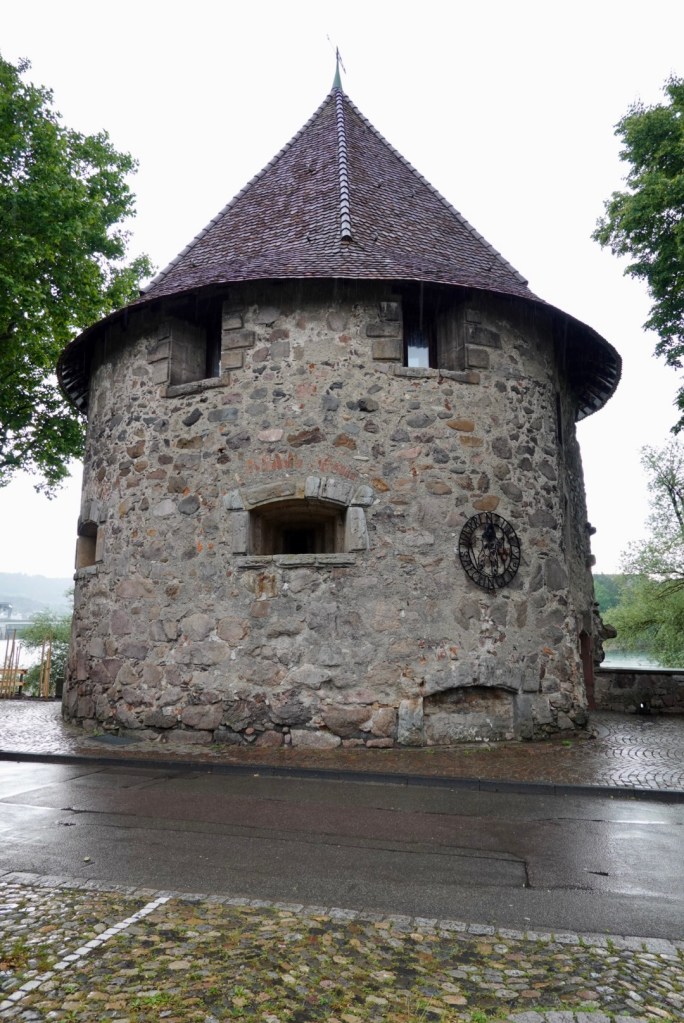
Adjacent to the river is Gallasturm dating from 1343.

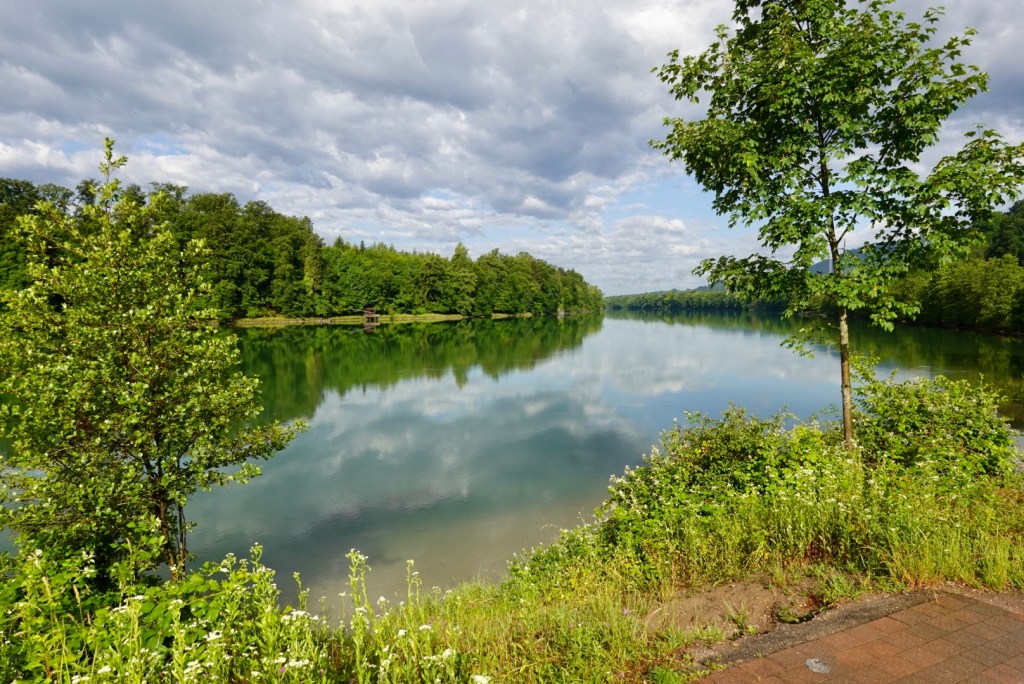
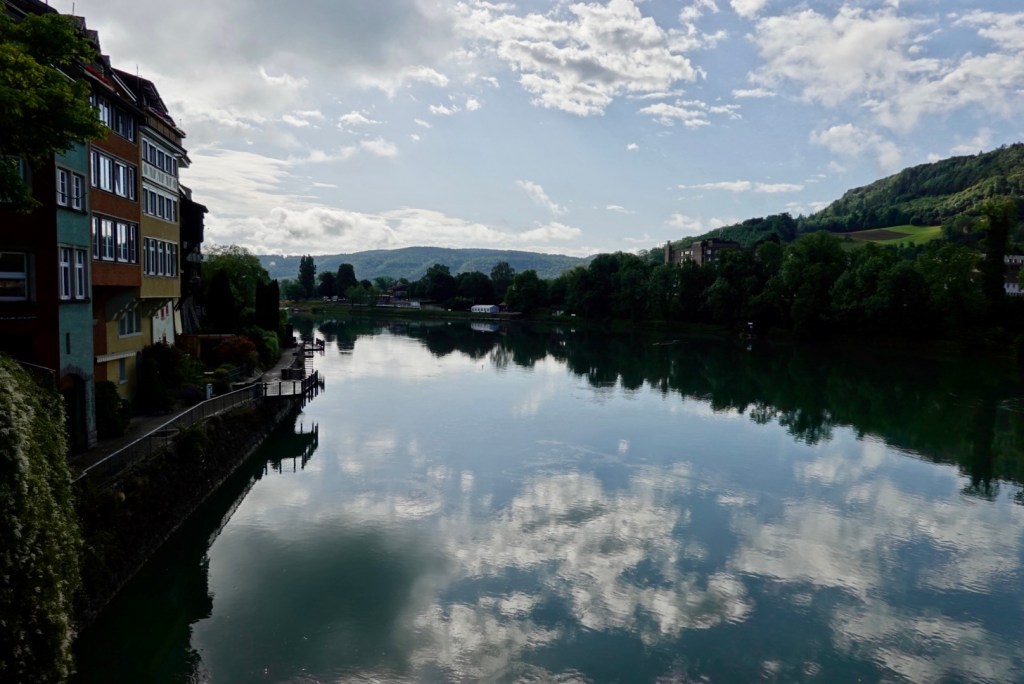
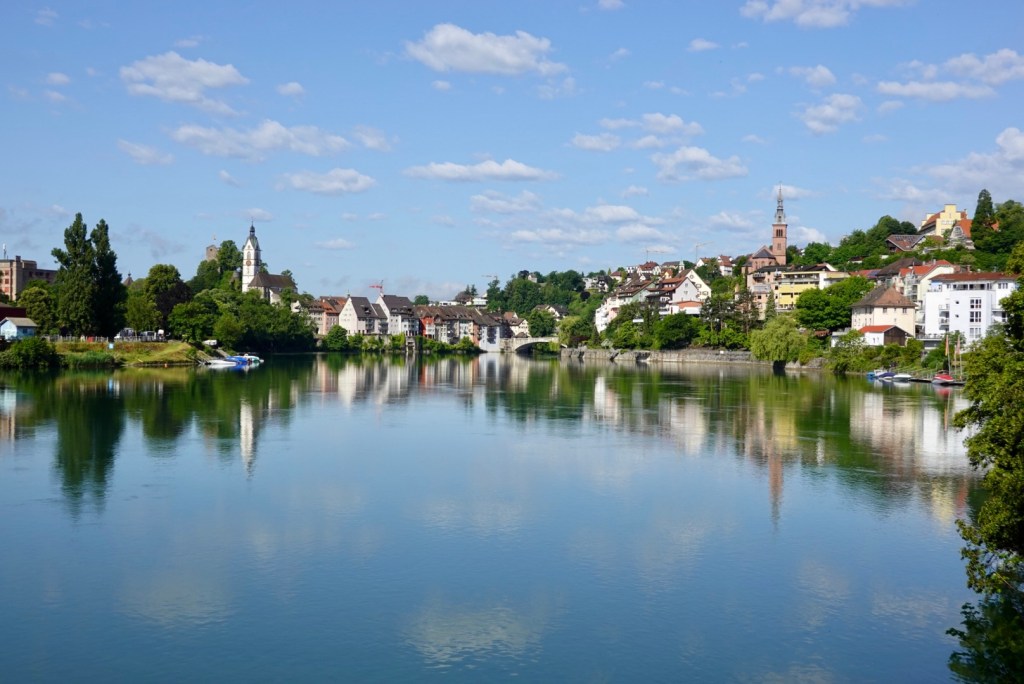
The river looks calm as the clouds start to lift.

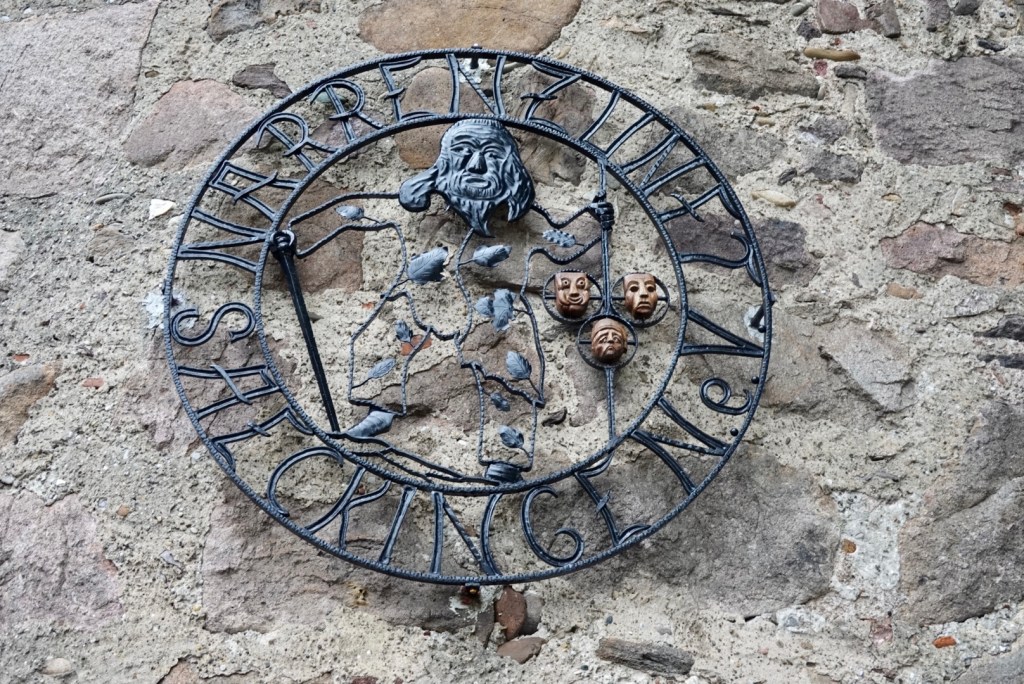
We call this guy Lewis, after a character in Suits.

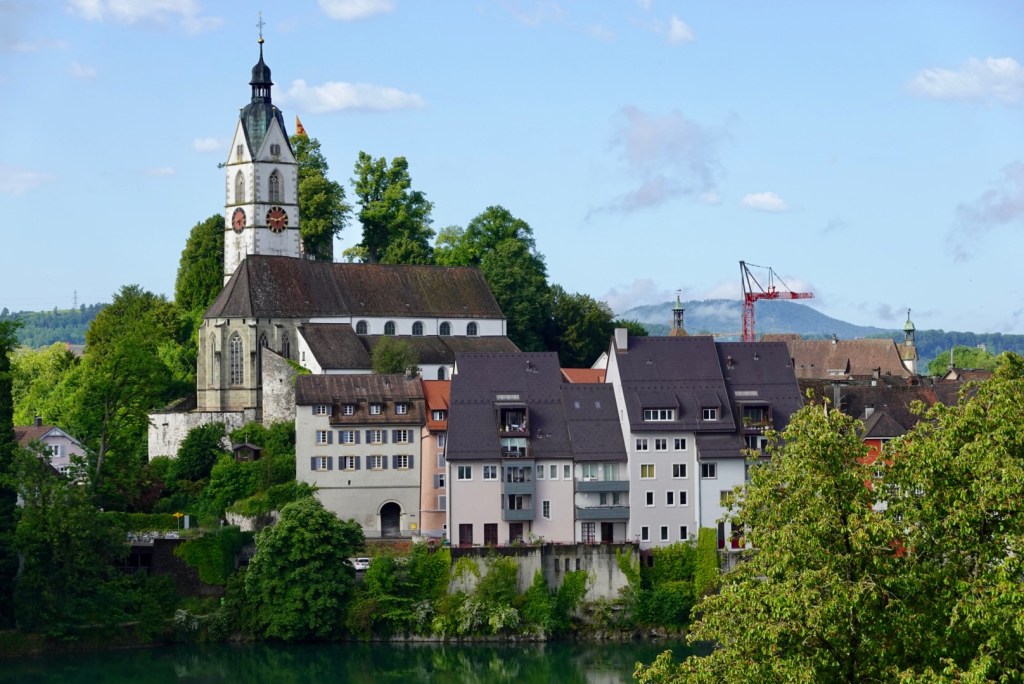
Laufenburg was our first bigger village, and we were on the German side at this point. On the other side of the bridge lies Laufenburg Switzerland.

The same name is not by accident as the two were the one town. In the early 19th century, Napoleon divided the town, with a bridge linking the two.

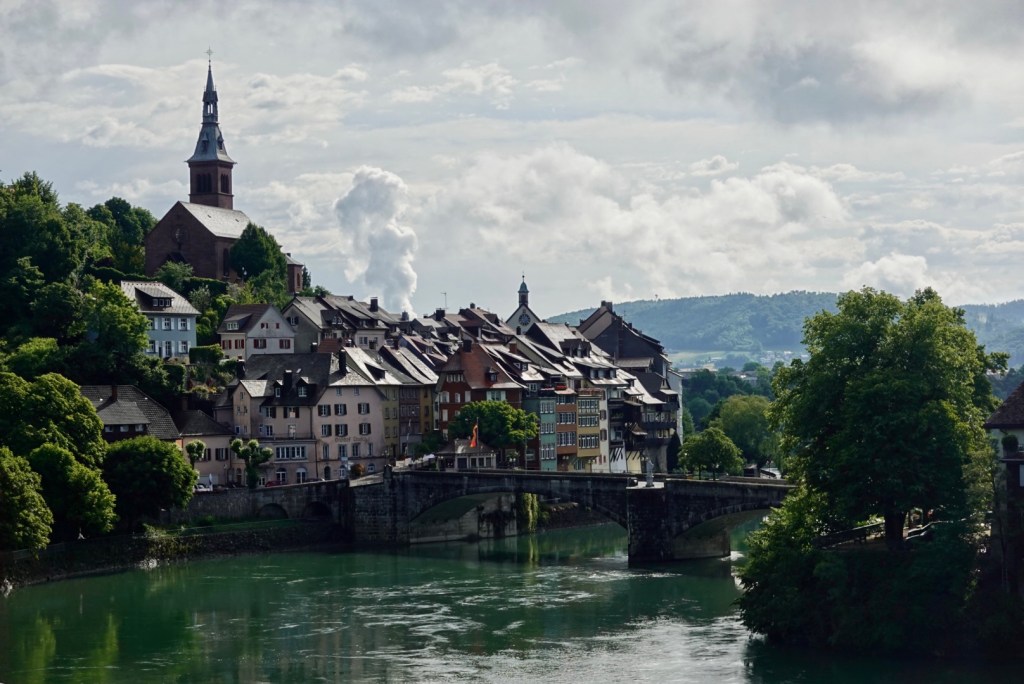
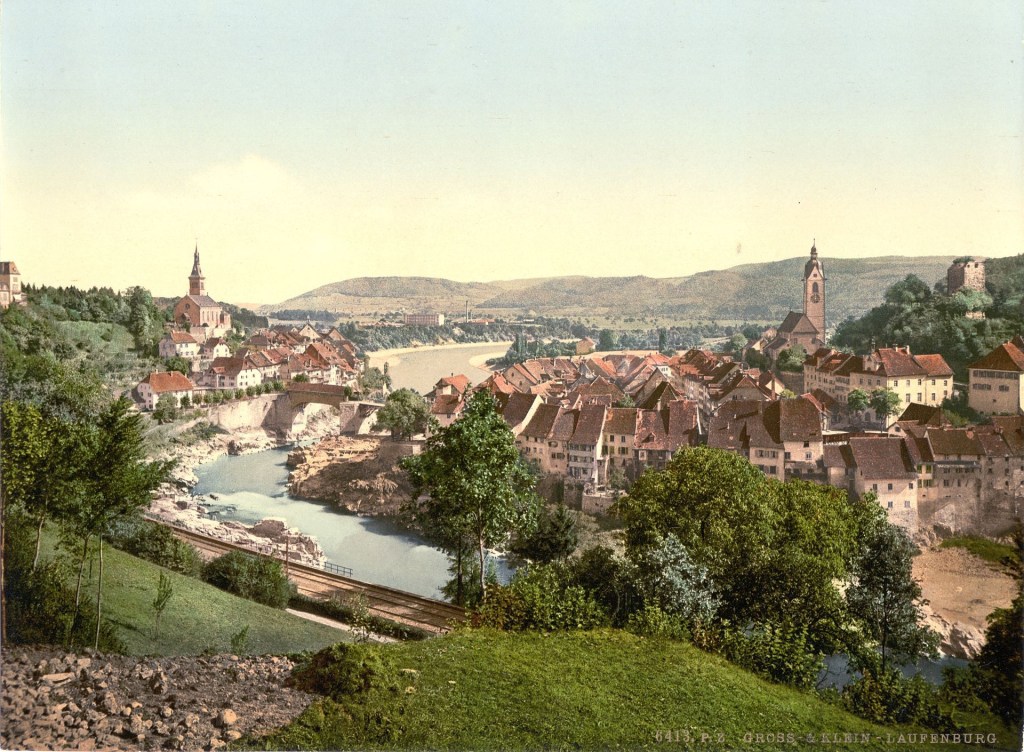
Below is our picture and following is one from 1896. Much remains the same.

2022, the German side
1896 German and Swiss sides
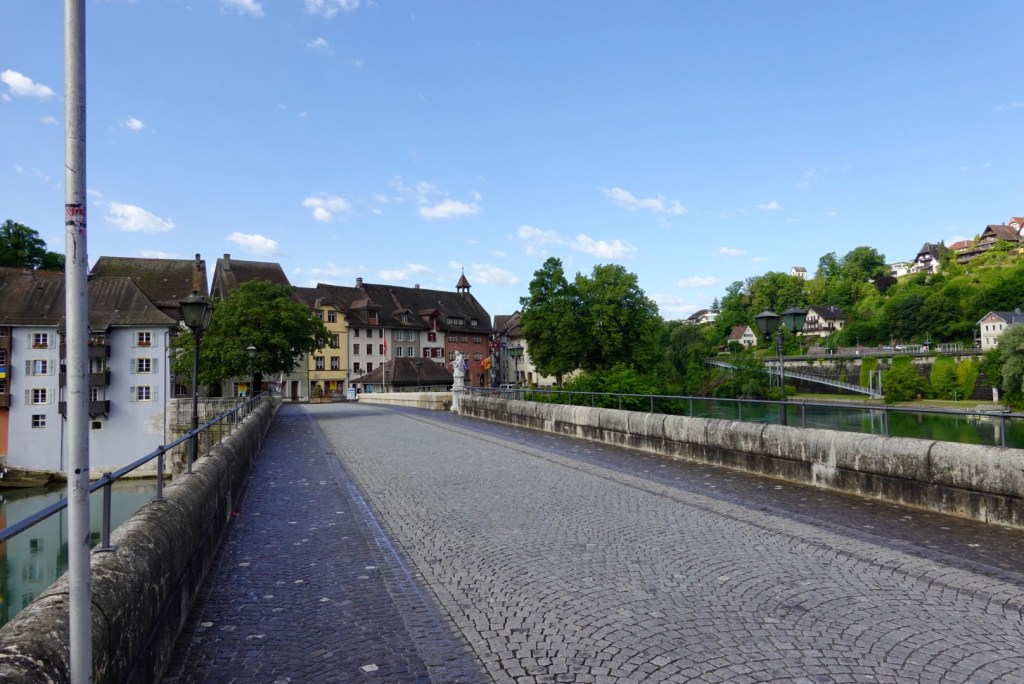
The bridge from the German side, Switzerland just metres away
The Swiss side
Both sides
As we left the German Laufenburg, looking back into town

We continued riding along the German side of the Rhine

We crossed over onto a largish island in the middle of the Rhine that you can see on our route map below. The trail is all dirt and our bikes are now filthy. We have mud up along our bottoms as it flicks up off the rear wheel.

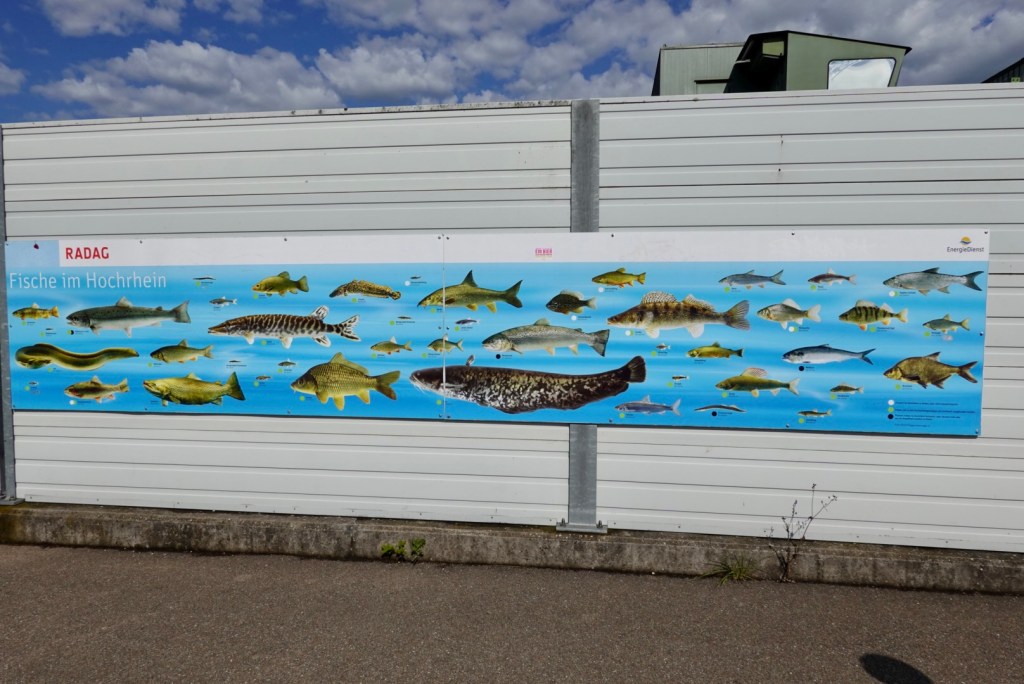
Lots of fish in the Rhine including a very large 3 metre variety.

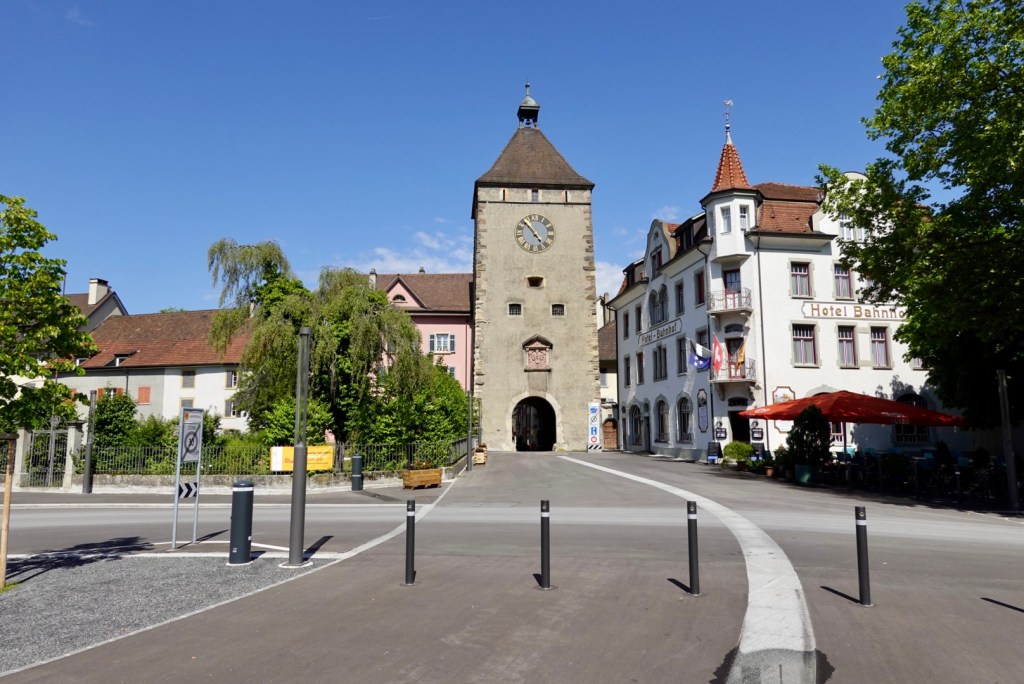
Leaving the island and returning to Switzerland we enter the Swiss Laufenburg and find a place to grab a coffee and some breakfast. Lovely spot and we hope to sneak a return visit in on Monday, the same day we fly out to Australia late in the evening.

Thanks for reading. Stay safe, smile on 😊

Finished our blockie

I always have a tendency to feel somewhat melancholy on the last day of a cycle tour. You out so much time and effort into organising it (research, mapping, coordinating accomodation, blogs).

Then there is the actual having to ride it, the physical and mental challenge. Setting out at aged 60 (very close) and 61 to ride 3000 km is something that not many have the desire or capability to achieve.

You get an array of comments, and for those who take the time to write positive comments via the blog page or fb we are appreciative. The support and encouragement of your words is acknowledged and not taken for granted.

There are many who β€˜like’ the blog without actually reading it (easy to tell….as the number of likes on two fb pages versus actual number of reads is significantly different).

But to those who do reach out, our gratitude and thanks.

So after our breakfast we left Luzern during peak hour traffic, and once clear of the city found ourselves in the burbs.

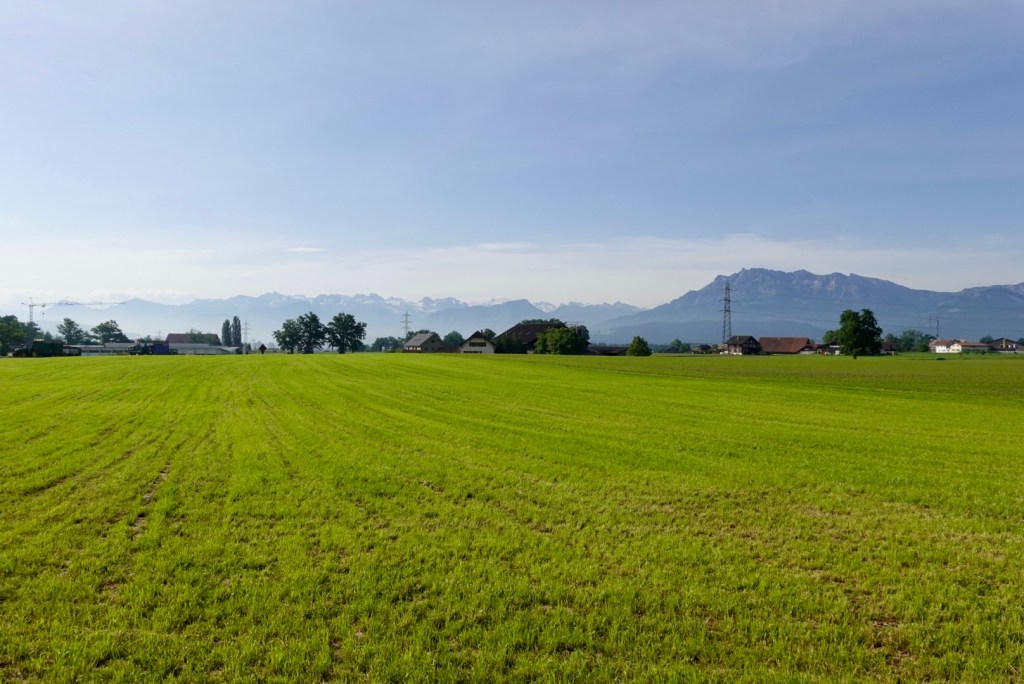
Shortly thereafter we were back riding in agricultural fields of wheat, corn, potatoes and poppies. Looking back there were the mountains again. Lovely vista.

Rothenburg was a pretty town we rode through.

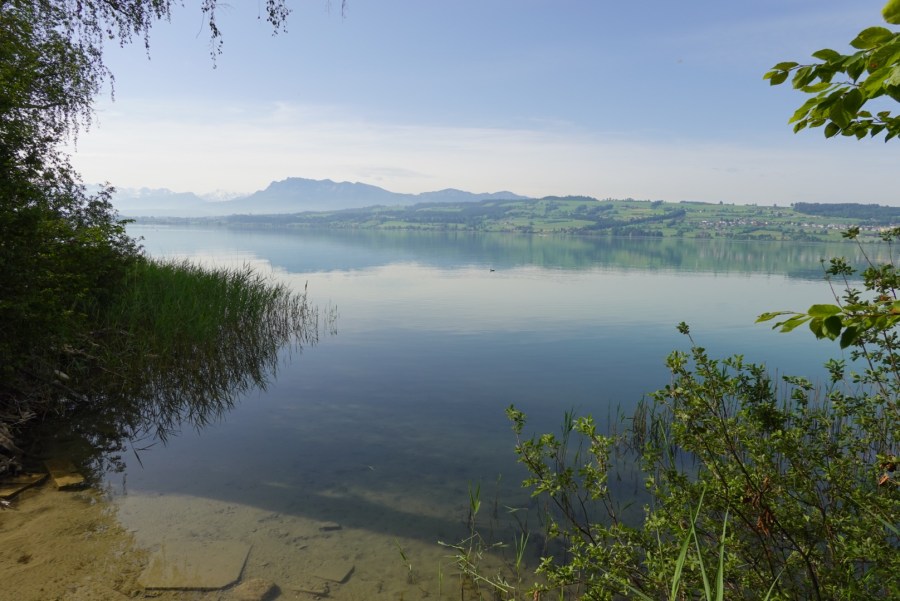
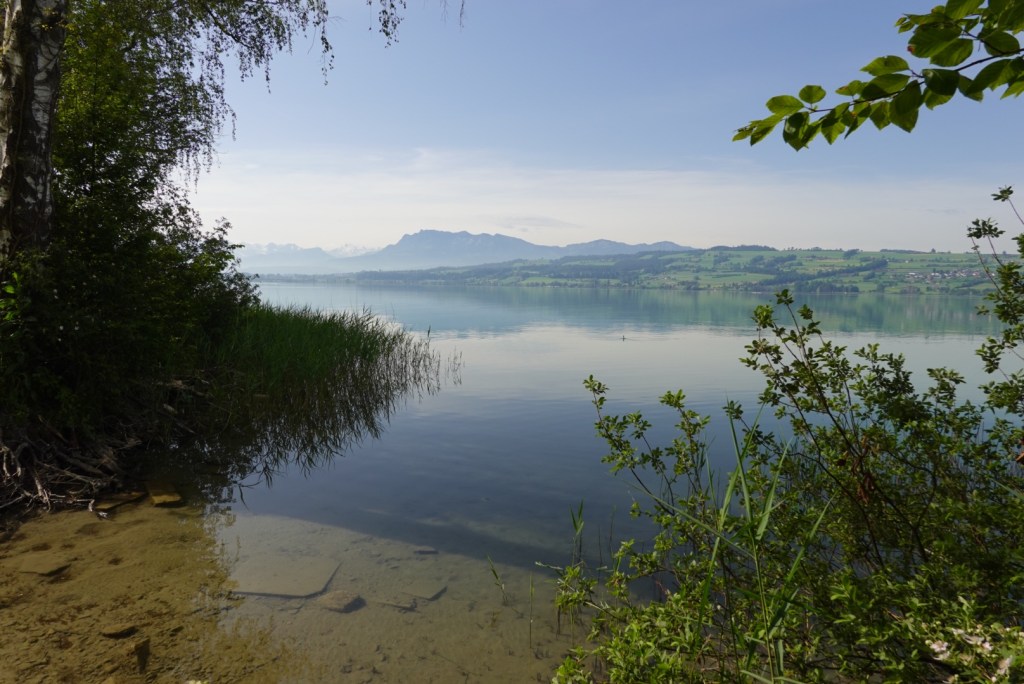
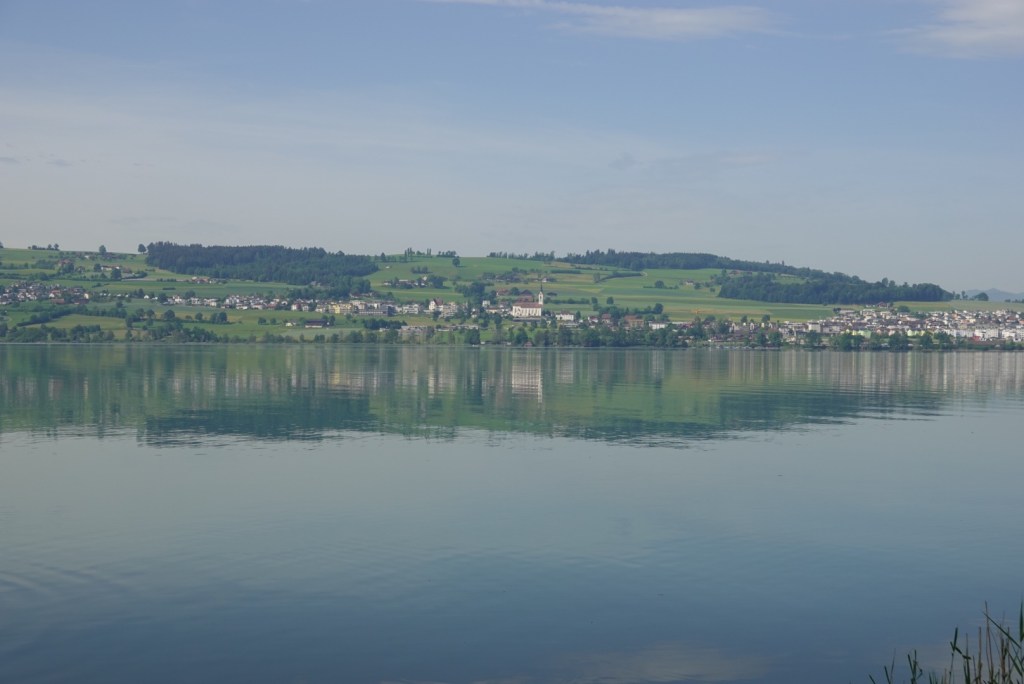
Then we passed Lake Sempach.

The final mountain views, until next time

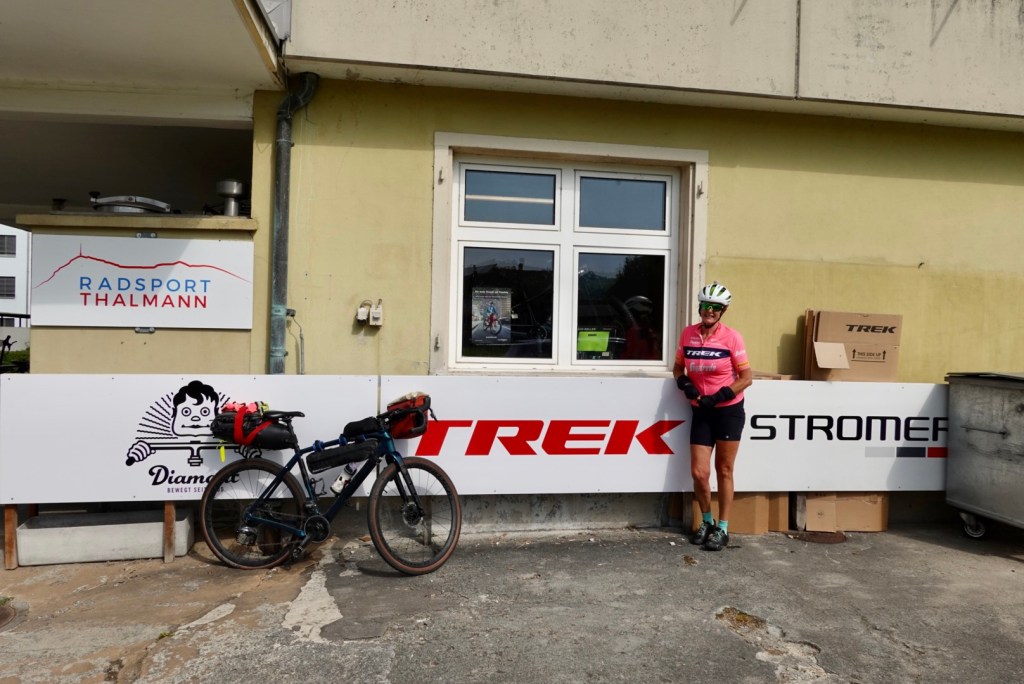
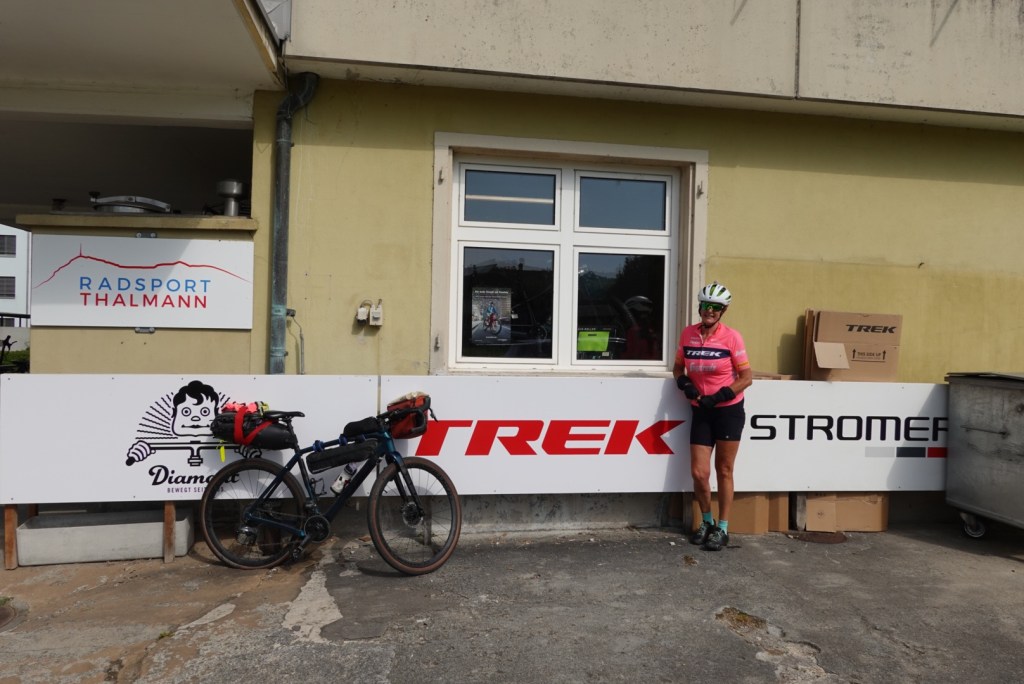
We saw this Trek sign in a village. Being a Trek Ambassador in Australia, I thought I’d grab this photo for my Instagram account, where all things Trek are tagged.

We had no time pressures today. We only needed to ride about 75 km to finish, and we had told my son Ben we would arrive after 3 pm, trying to fit in with his work meetings.

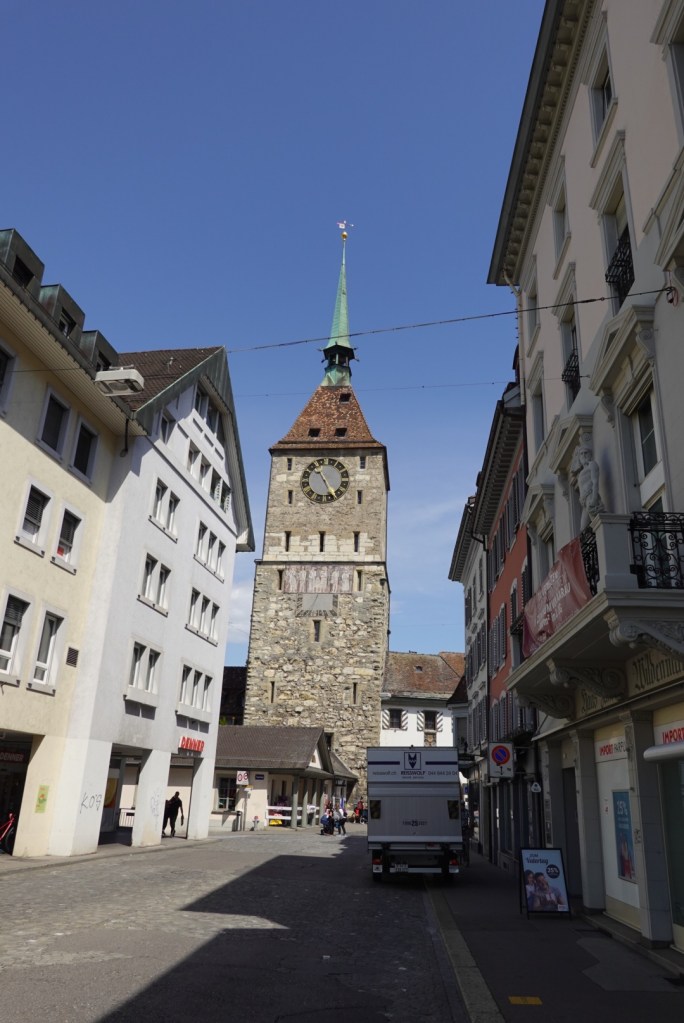
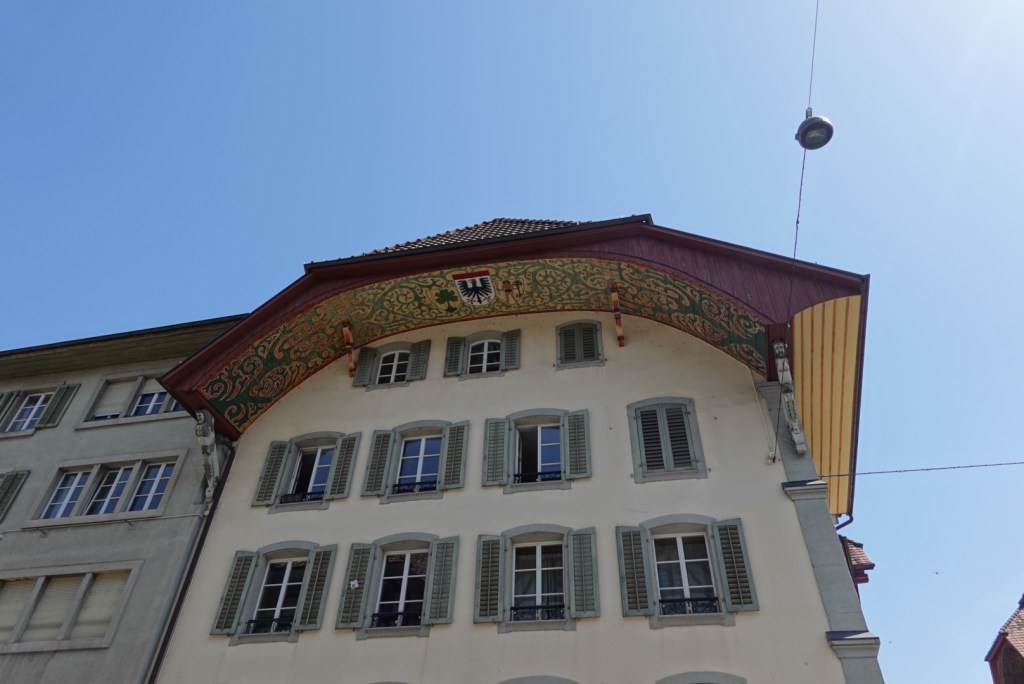
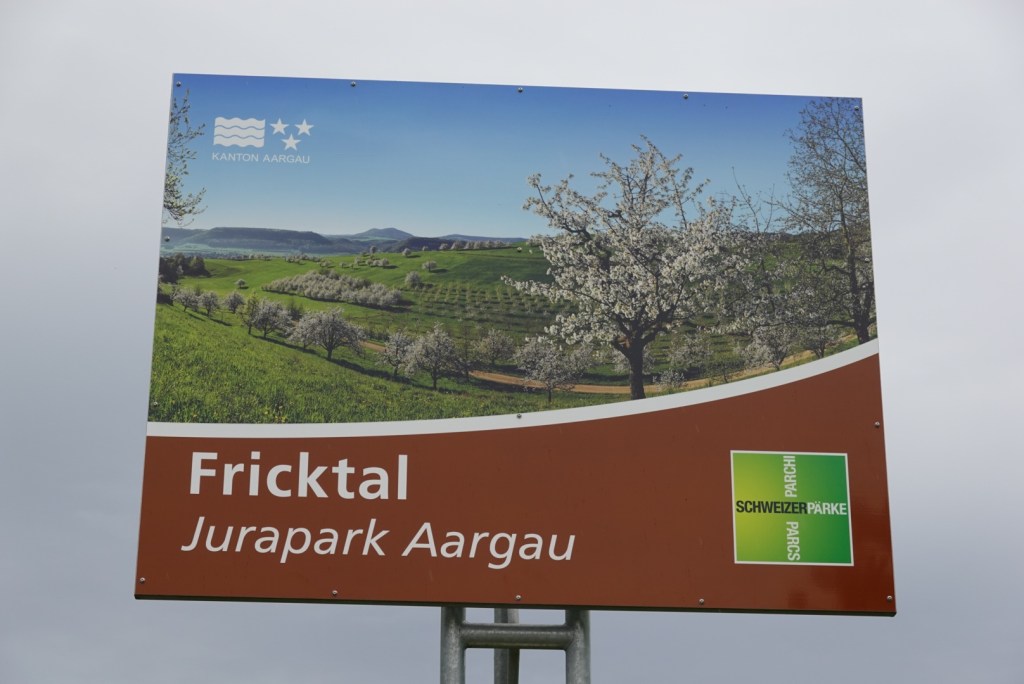
We planned to sit in Aarau for a while. The weather was lovely, and we had a fruit smoothie each after wandering around the town. Note the paintings under the eaves.

A very pretty town, that is the capital of the northern Swiss canton of Aargau. It is located on the Aare River, and also the southern foot of the Jura Mountains as we were about to discover.

We ended up moving on sooner than planned as we realised we had a lumpsch to get over, and we both preferred warmer legs. It was nearly 4 km long at an average of 6.8% with pinches of around 11-12%.

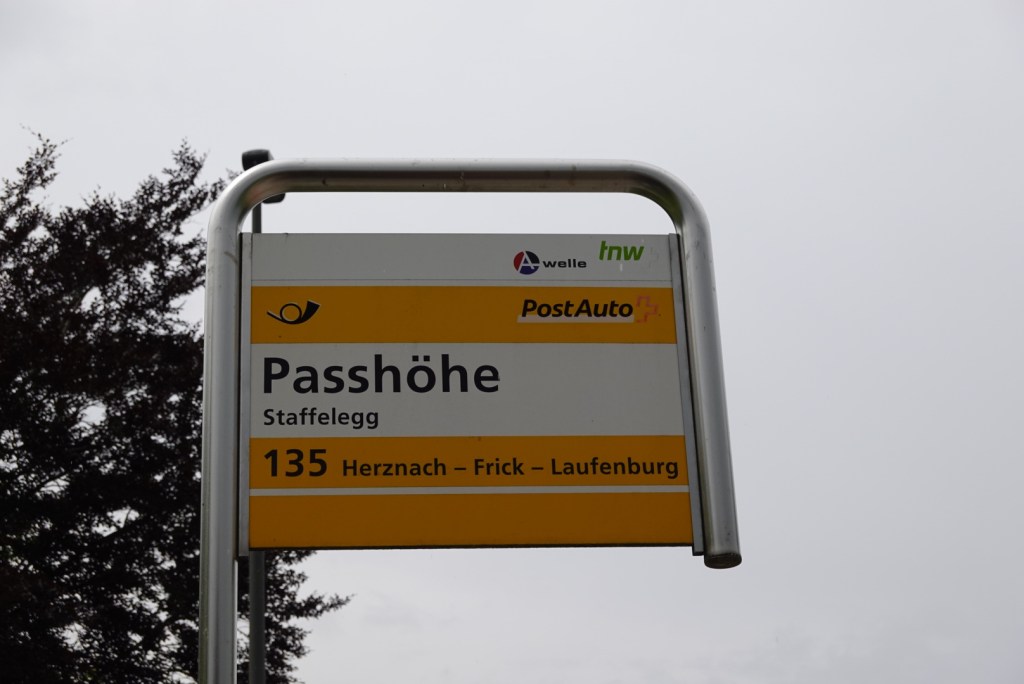
It was warm climbing and when we got to,the top we discovered it had a name. Staffelegg Pass at 621 m altitude is one of the lowest Jura mountain passes and is surrounded by Wasserflue and Gisiflie, popular hikes.

I saw these signs though and laughed and twisted a bit, how I was thinking.

There was a bus shelter at the top of the climb that we sat in as it had just started to spit with rain. Checking the Swiss rain radar site, we could see the band moving towards Basel and knew we were likely to get more rain.

So we kept moving, stopping at a CoOp in Frick to grab an iced coffee and sushi.

About 8 km later, we made it back to Ben’s including his 14.4% pinch up his road. Accomodation is always at the top of a climb😳

So here we are. Done and dusted bar some short rides we will do in the area before our departure home on Monday night.

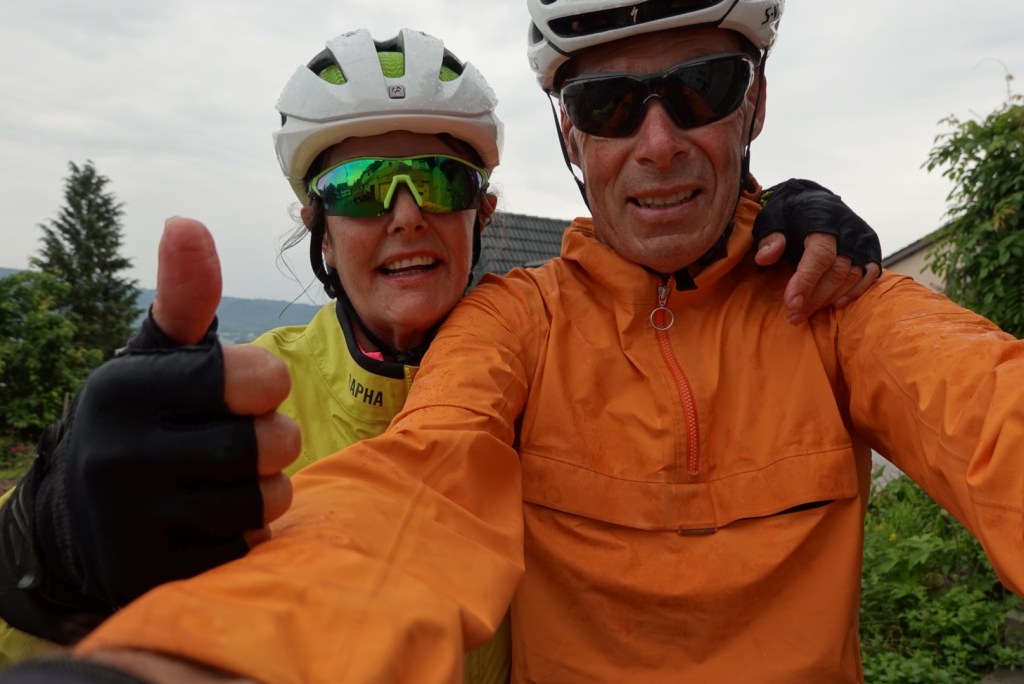
I could not do this without my partner in crime, Tony. He looks after all my mechanical β€˜stuff’, takes the photos, and engages in lively navigational debate at times.

Doing a trip such as this, you see each other tested fully both physically and mentally. We survived each other and we both gain a greater appreciation and respect for each other as we know what each other goes through.

Time to celebrate some say. Think we’ve only had one ever finishing a tour, and that was LeJog where a group of partners got to John O’Groats ahead of us and cheered us all on, giving us champagne.

Oh actually, same tour company at the ends of London to Venice greeted us with champagne too.

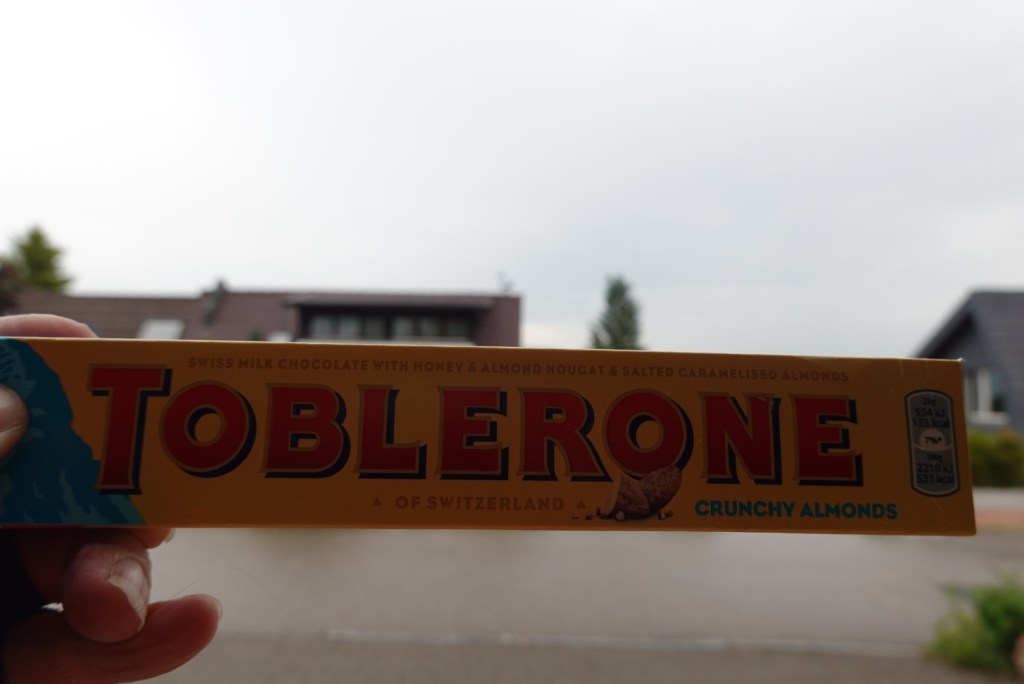
This time, we shared this! Sandra gave it to us last night. πŸ’•

Someone was pleased to see us!

There will be a few more blog posts yet as we will do some small rides whilst Ben sleeps weather permitting. Plus I have promised others to cover a few topics including…..what’s in the bags so stay tuned.

Could this be my new number one ride ever?

We are staying in a hotel with a Peruvian theme….restaurant and staff. I would not recommend it, poor quality mattress that has one of those rubber sheets like you put in your children’s bed when first toilet training at night, that makes you sweat.

Breakfast was a mess, made worse by a power failure in the dining room and an incredible influx of a tourist group. Food handling techniques were poor to non existent, no hand sanitiser in sight.

We ended up grabbing our breakfast and relocating to an adjacent room that had no one in it.

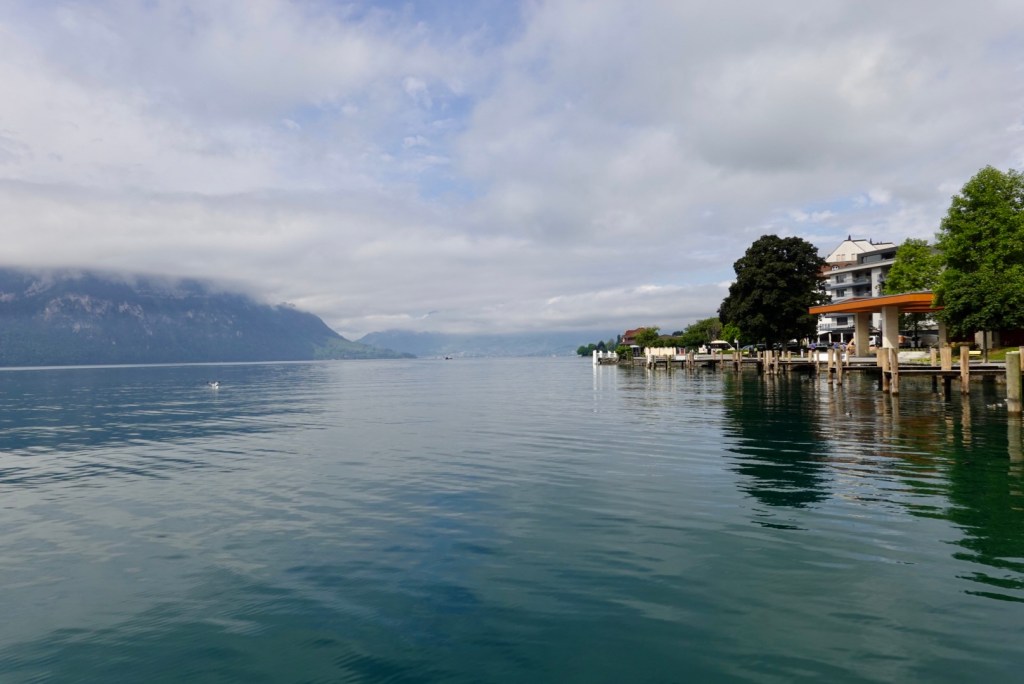
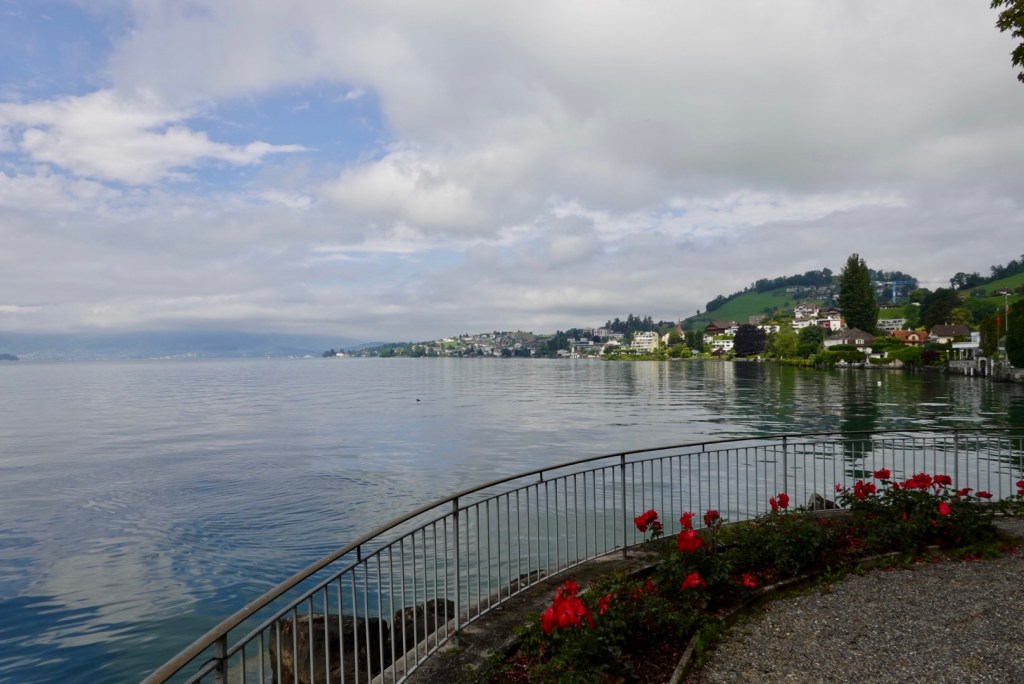
The rain radar contradicted the weather forecast that said it was going to rain. I could not see that the rain would hit the area, so we took off to ride down to the far end of Lake Luzern to Fluelen 51 km away, planning to return by the ferry.

We grabbed our bikes and made our way out of Luzern through the peak hour traffic. We had some 20 km of more suburbian like riding to do through a series of built up areas, but some nice vistas from the lake promenades.

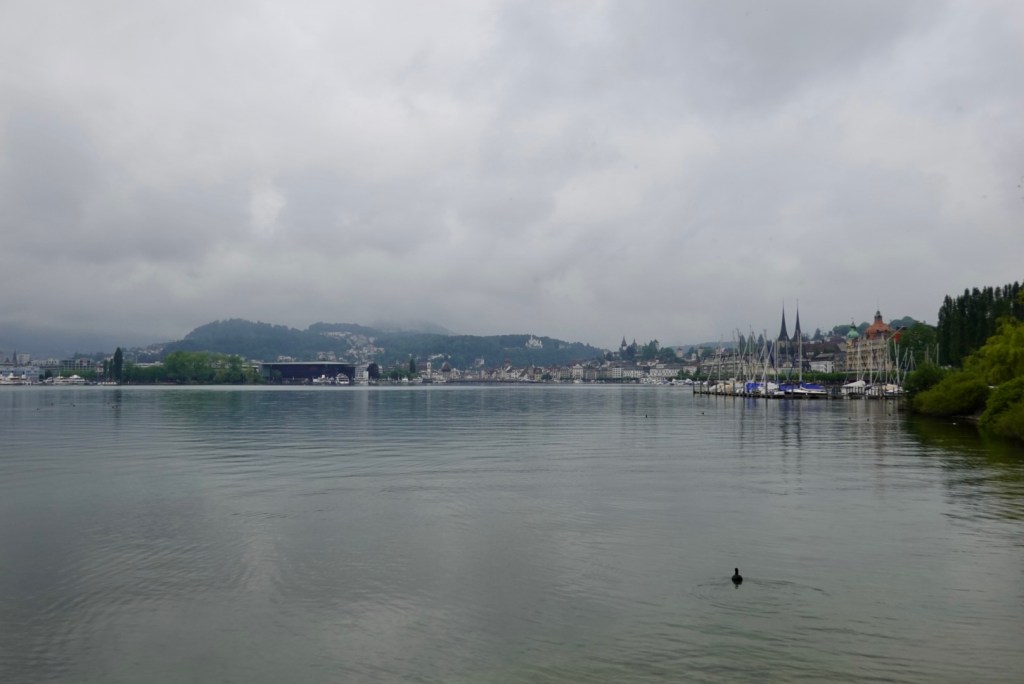
Looking back to Luzern the clouds are still very low, mountains high in the clouds.
Very still and peaceful
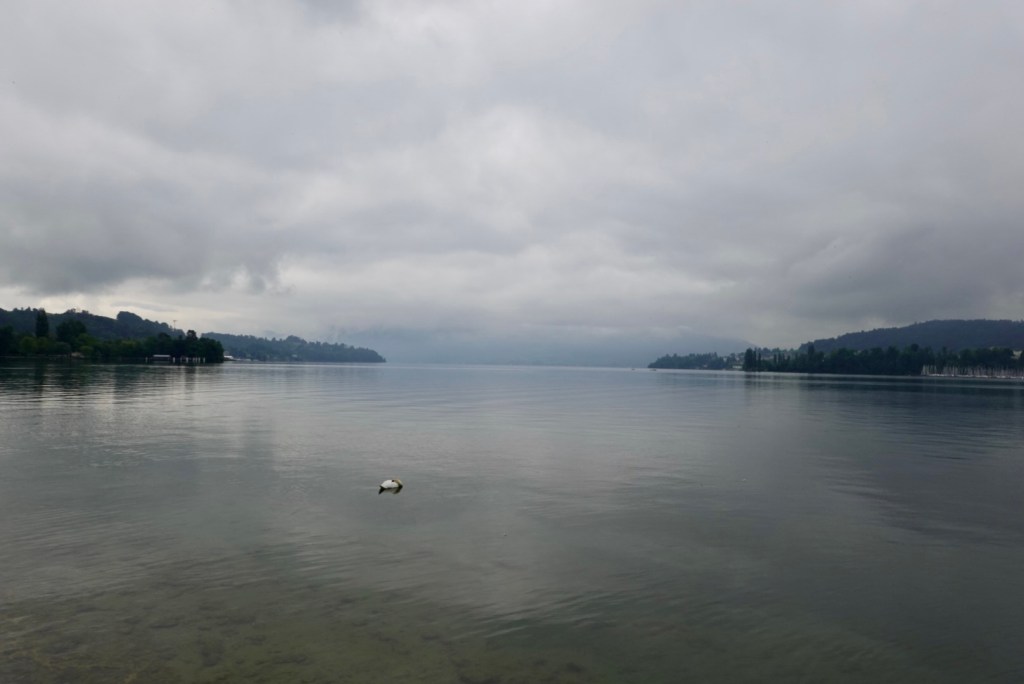
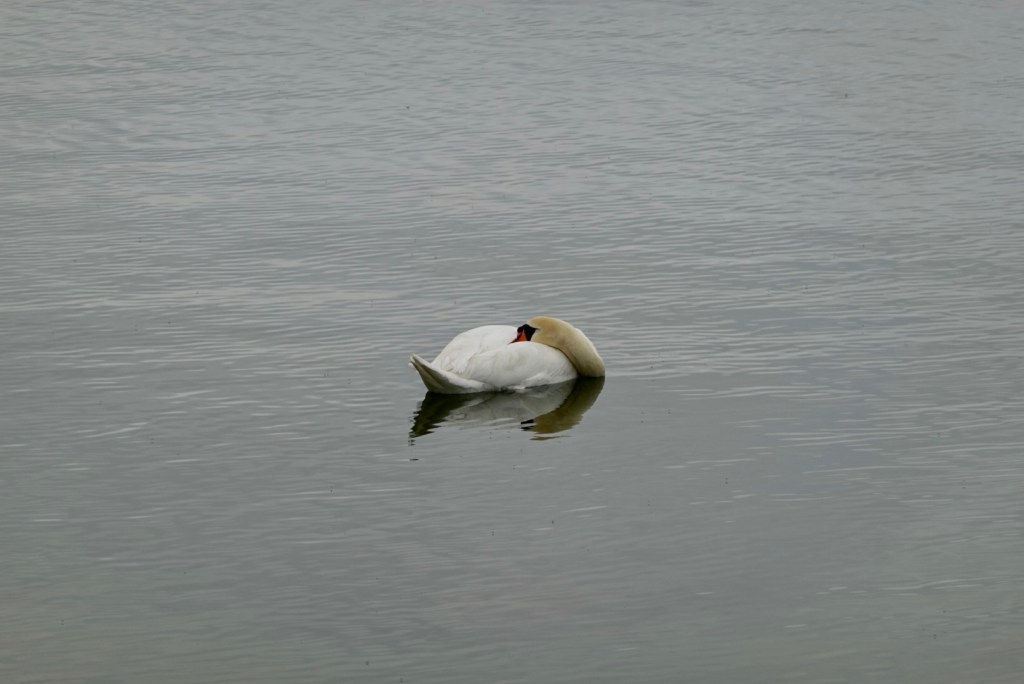
So peaceful, the swan sleeps
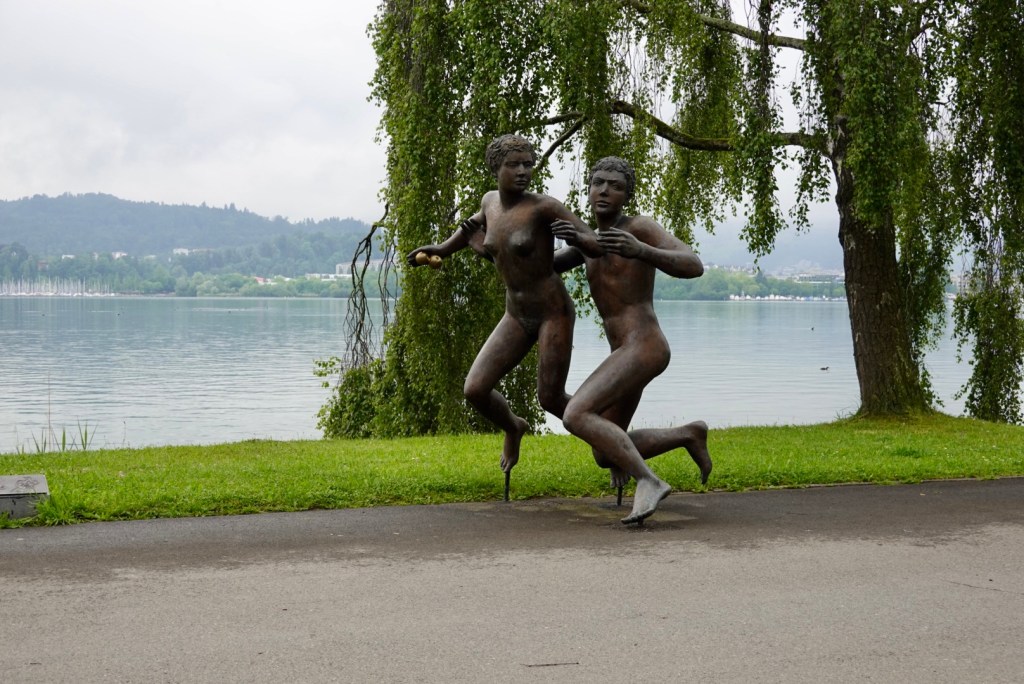
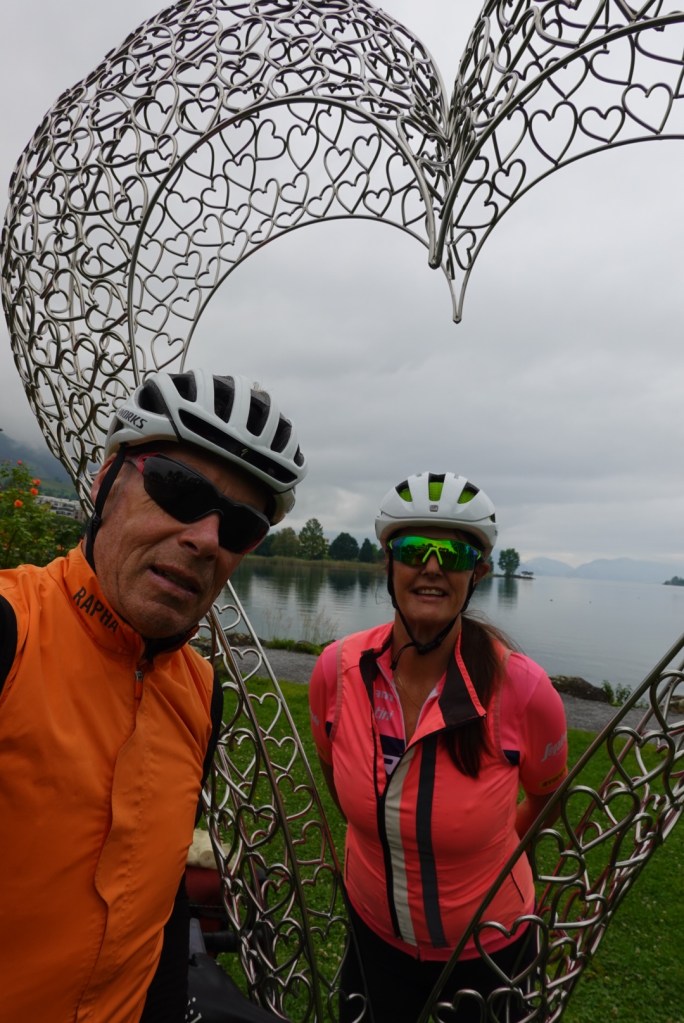
Adam and Eve are very still too, well we presumed it was them as the girl does hold an apple.

We cut across a couple of sections of land turning away from the lake.

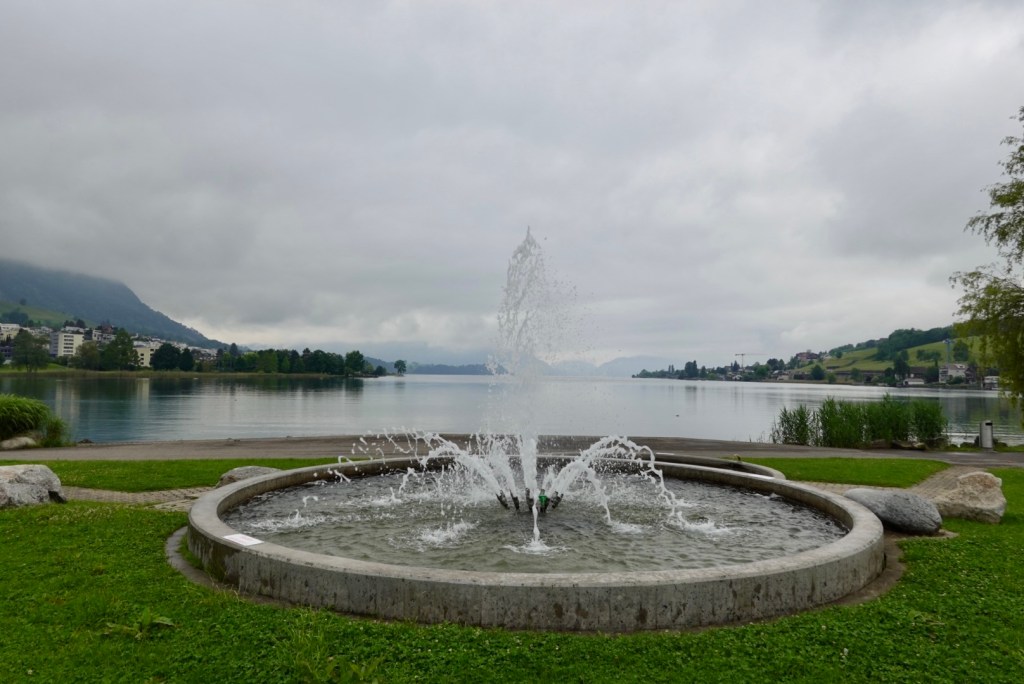
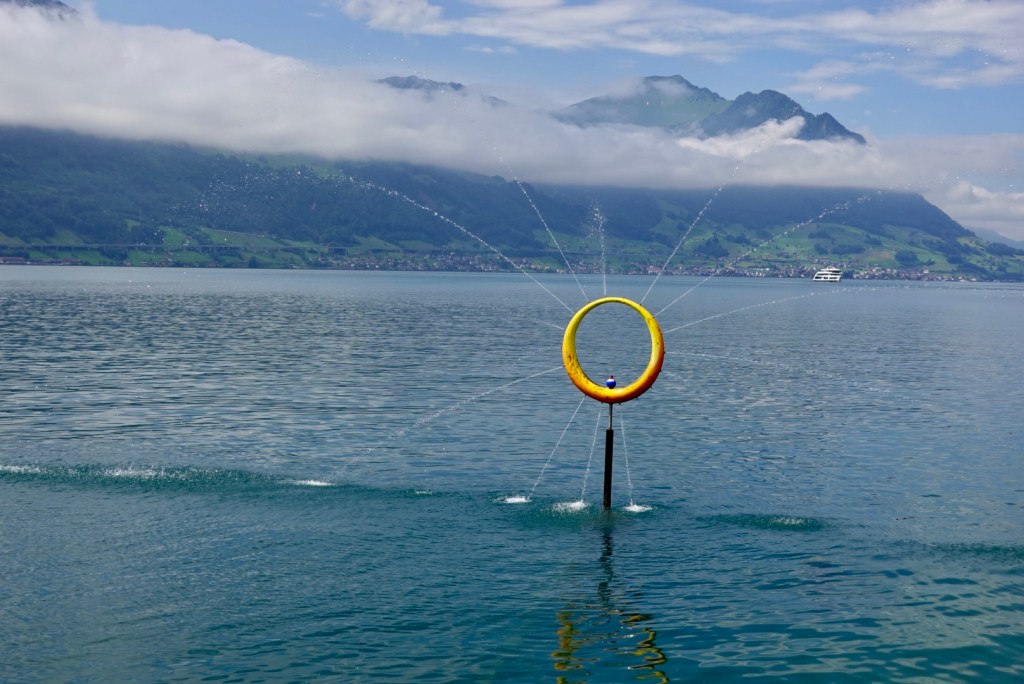
Returning to the lake and various sculptures and water features.

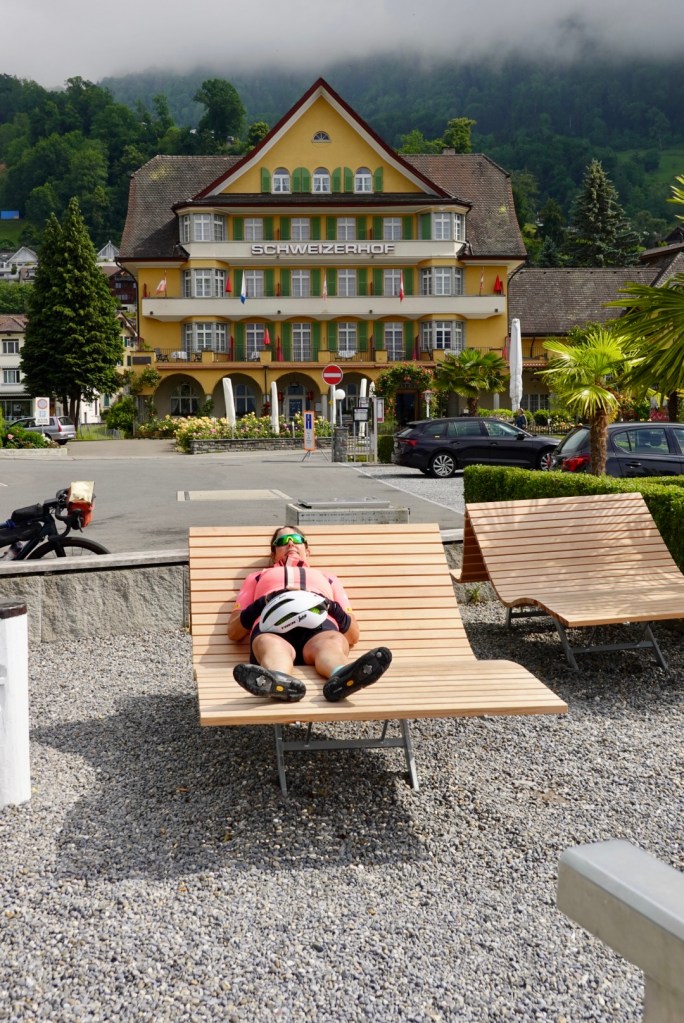
Just chilling.

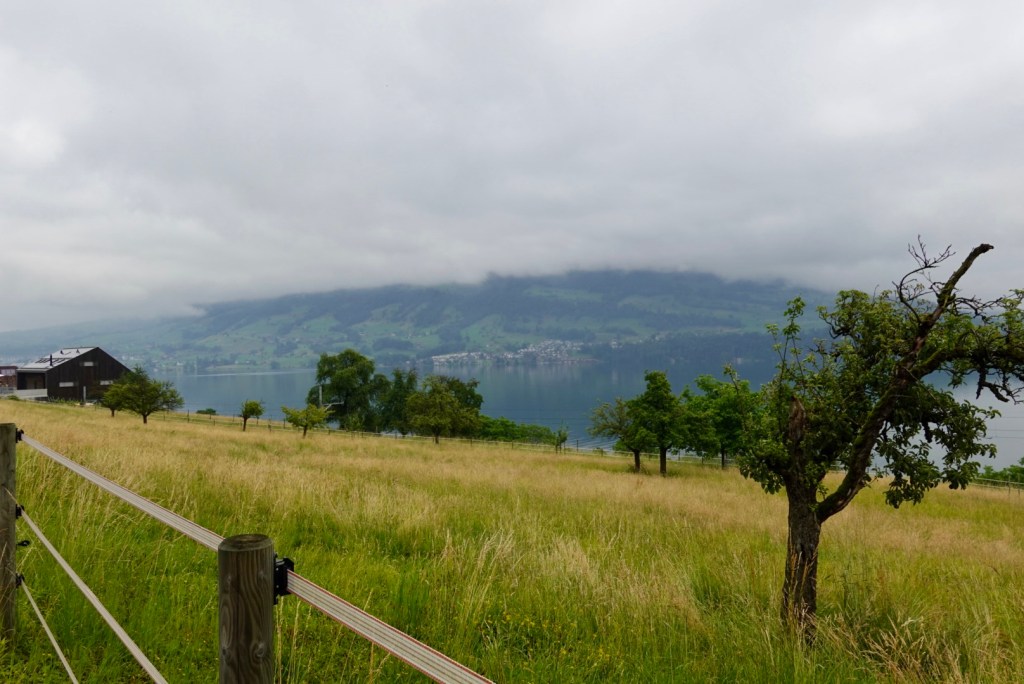
The skies were lifting, and we could gradually see more

Blue sky trying to make an appearance
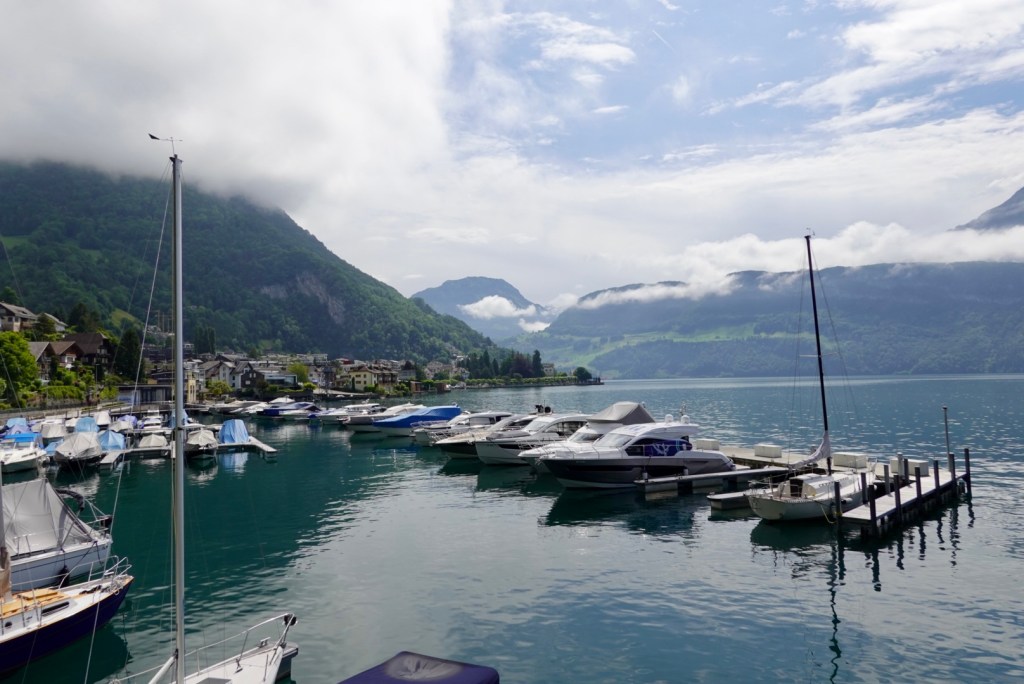
We liked how the boat β€˜just’ fitted into the boat house.

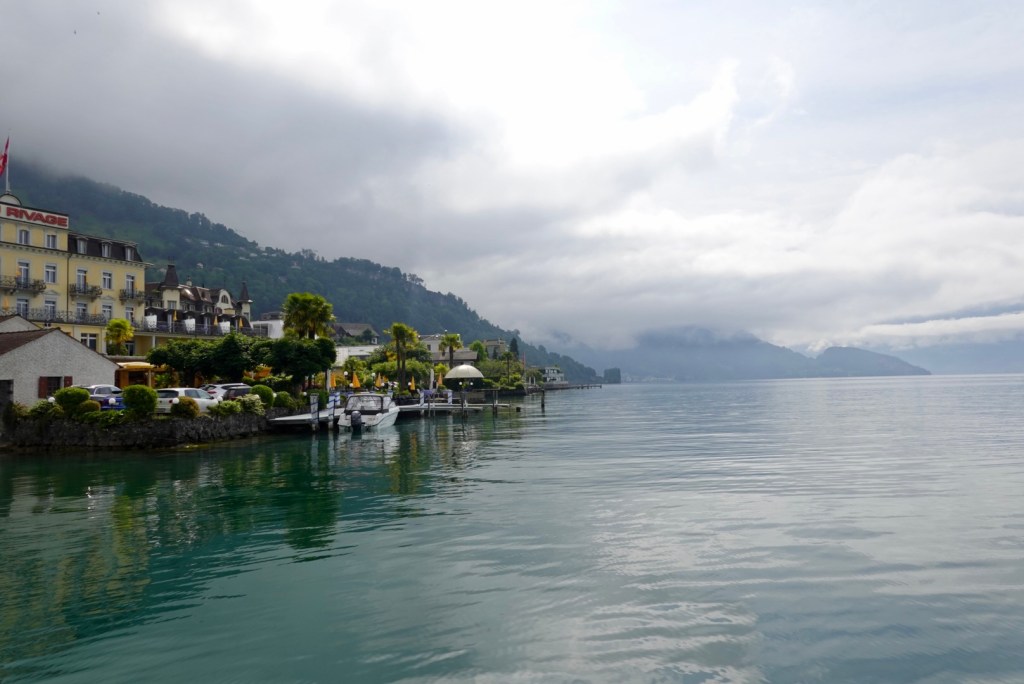
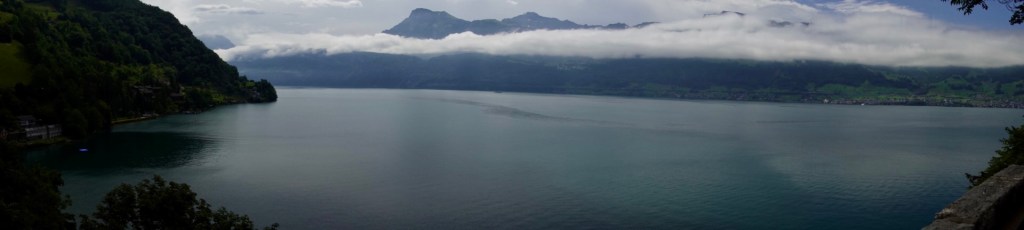
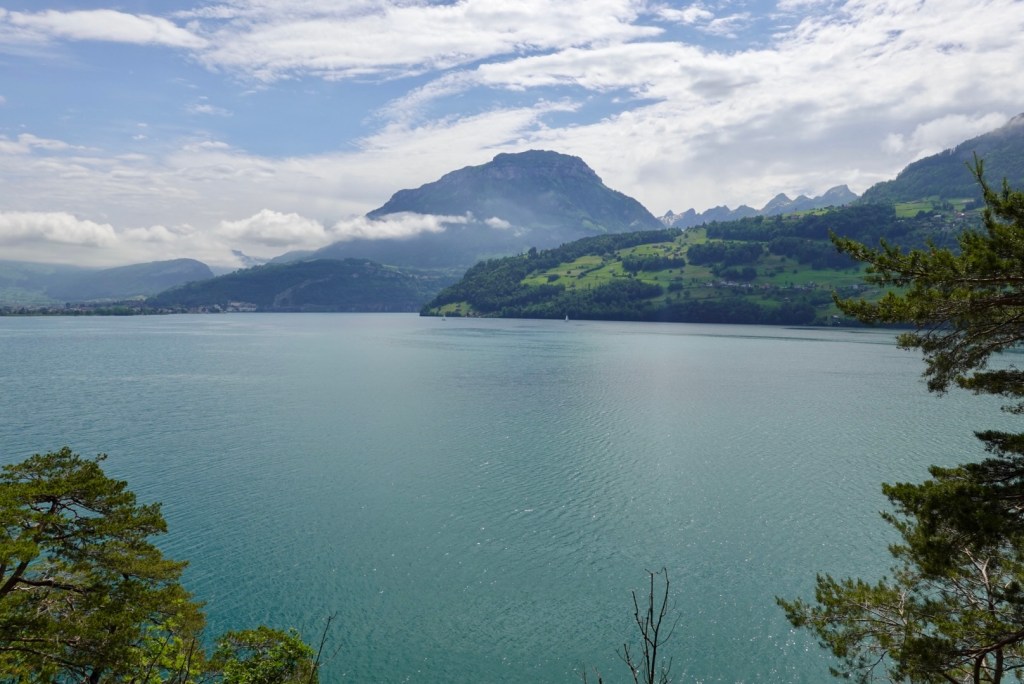
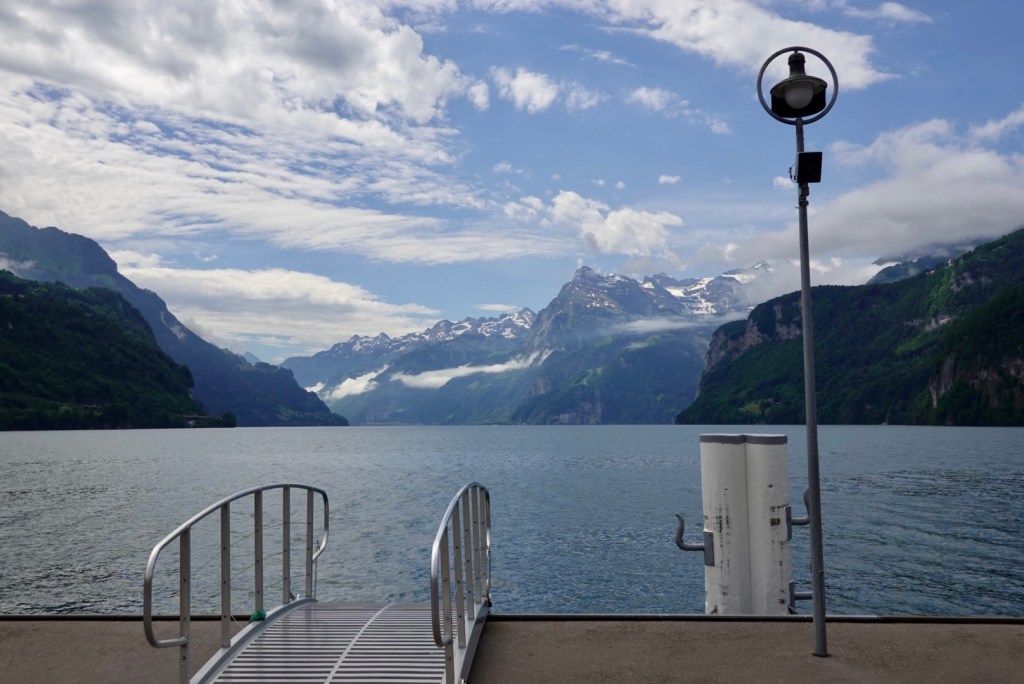
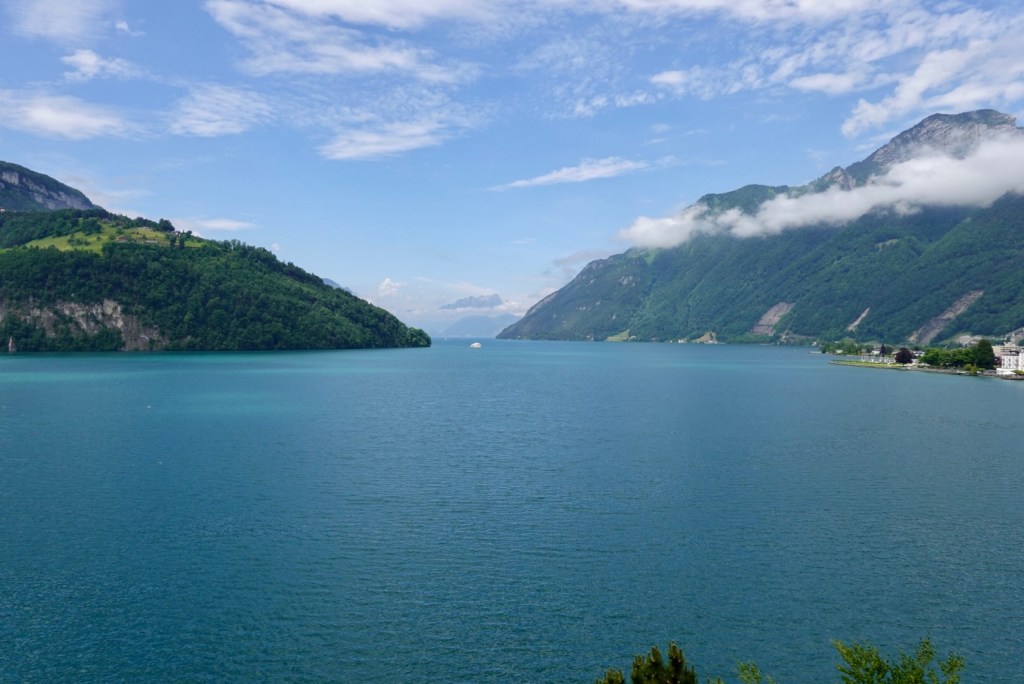
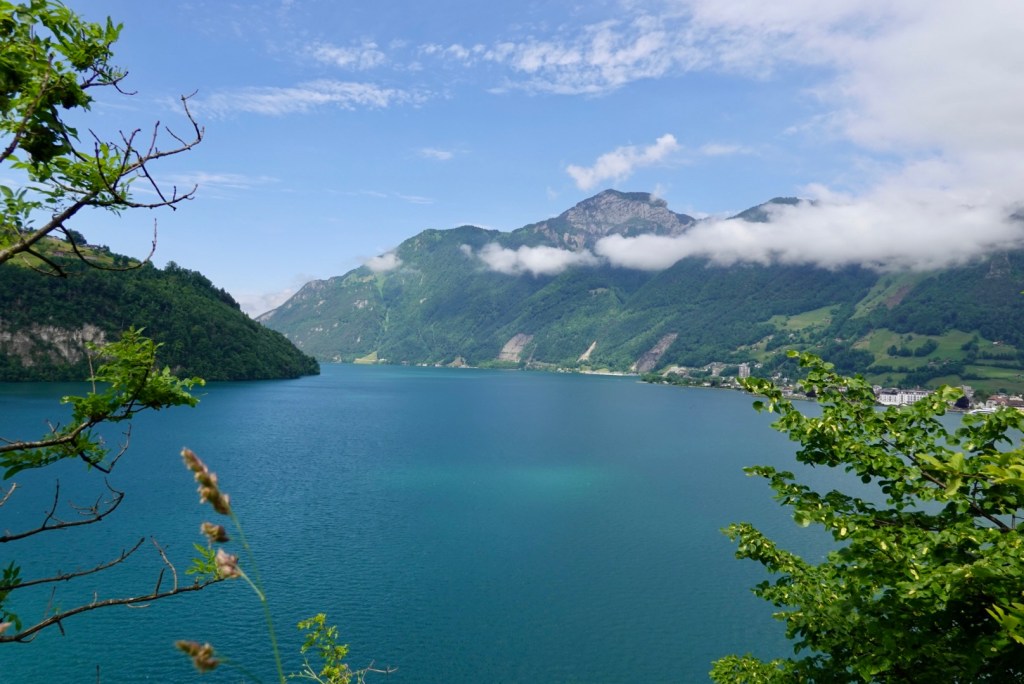
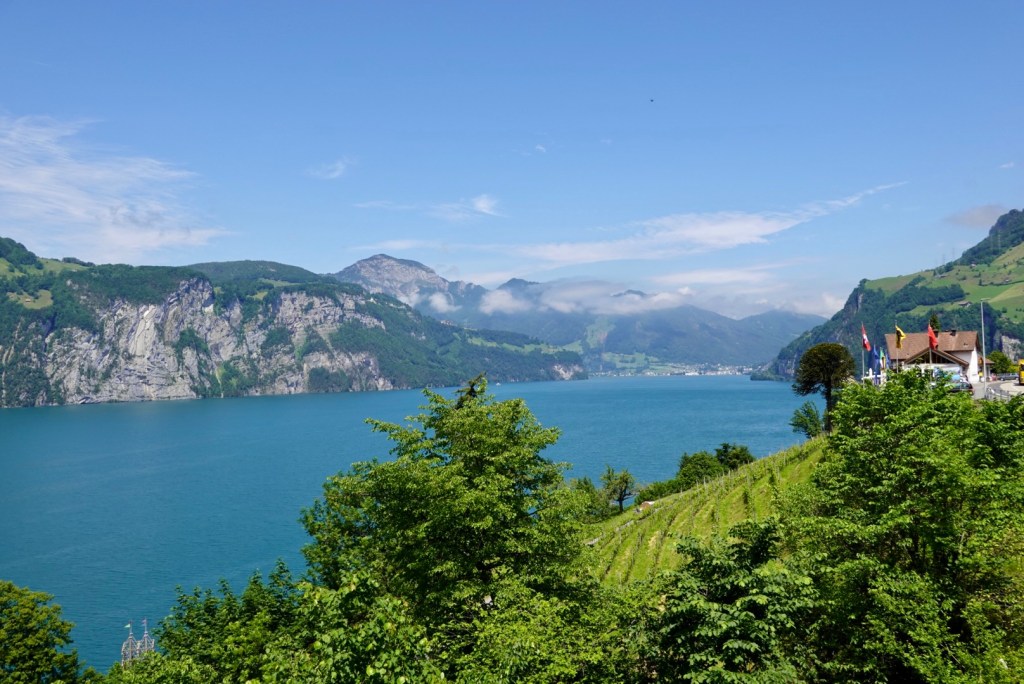
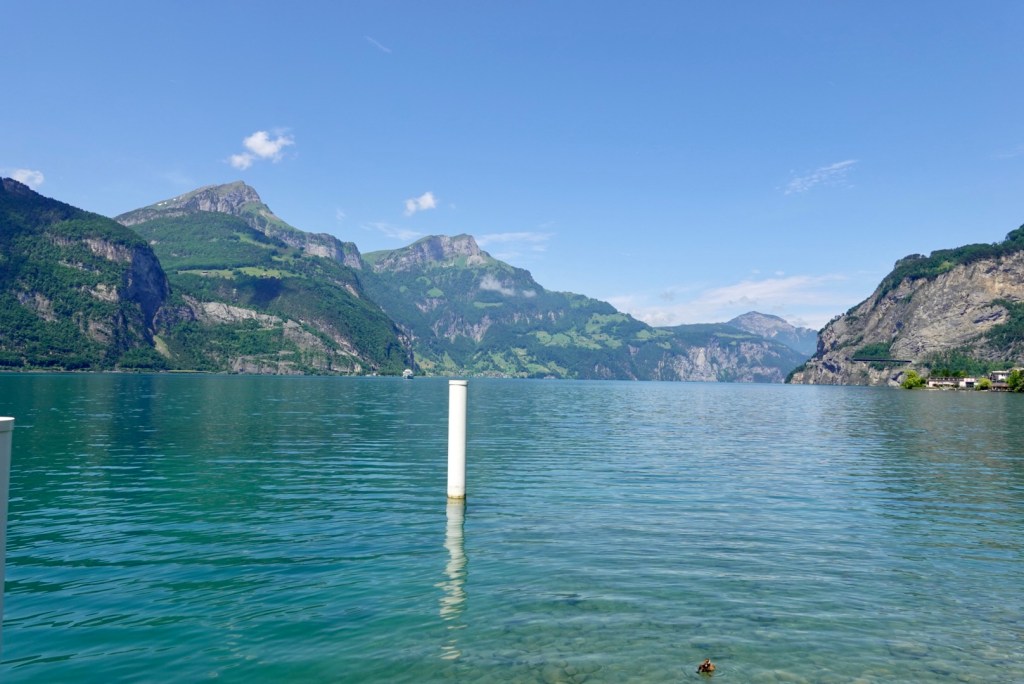
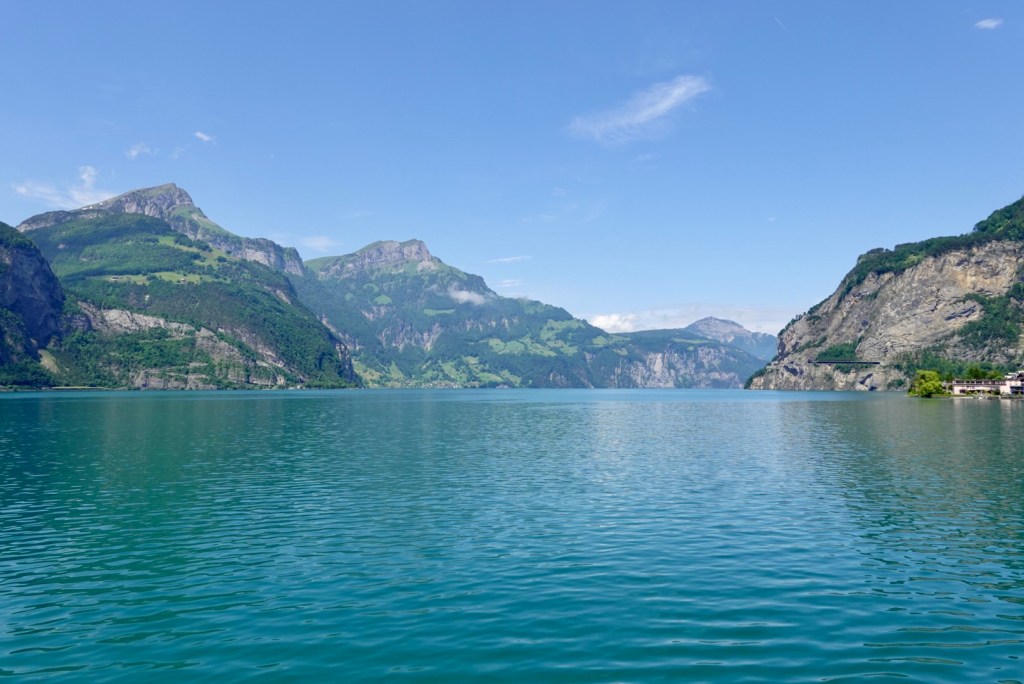
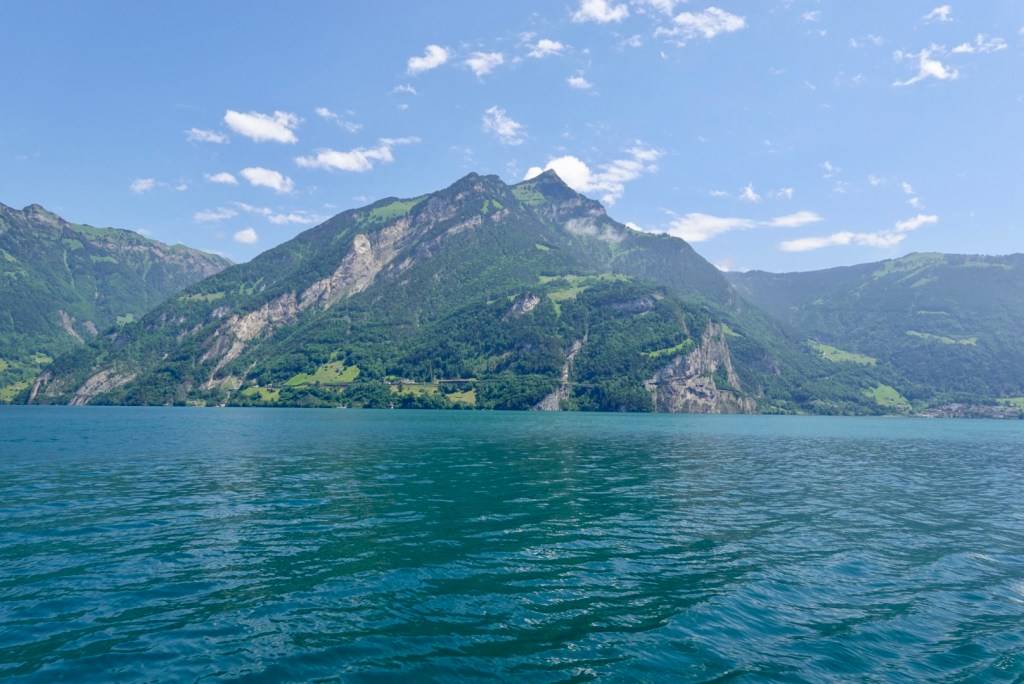
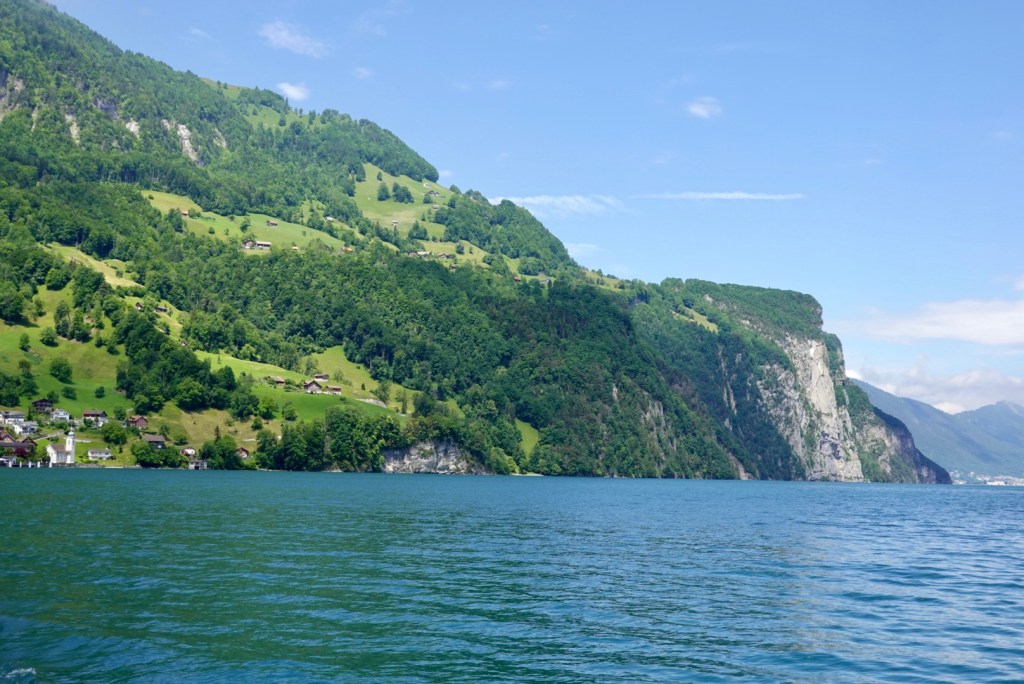
The further down the lake we went, the better the scenery got.

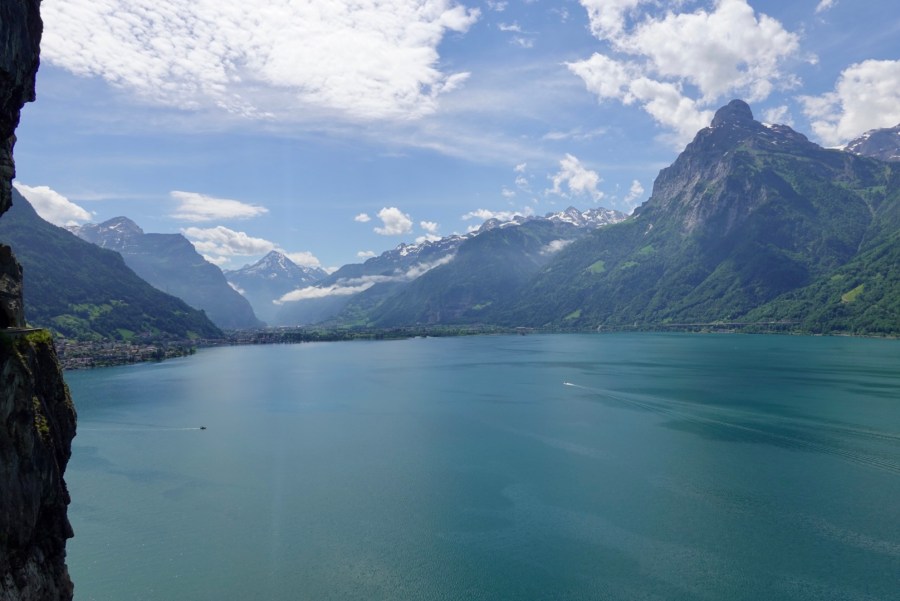
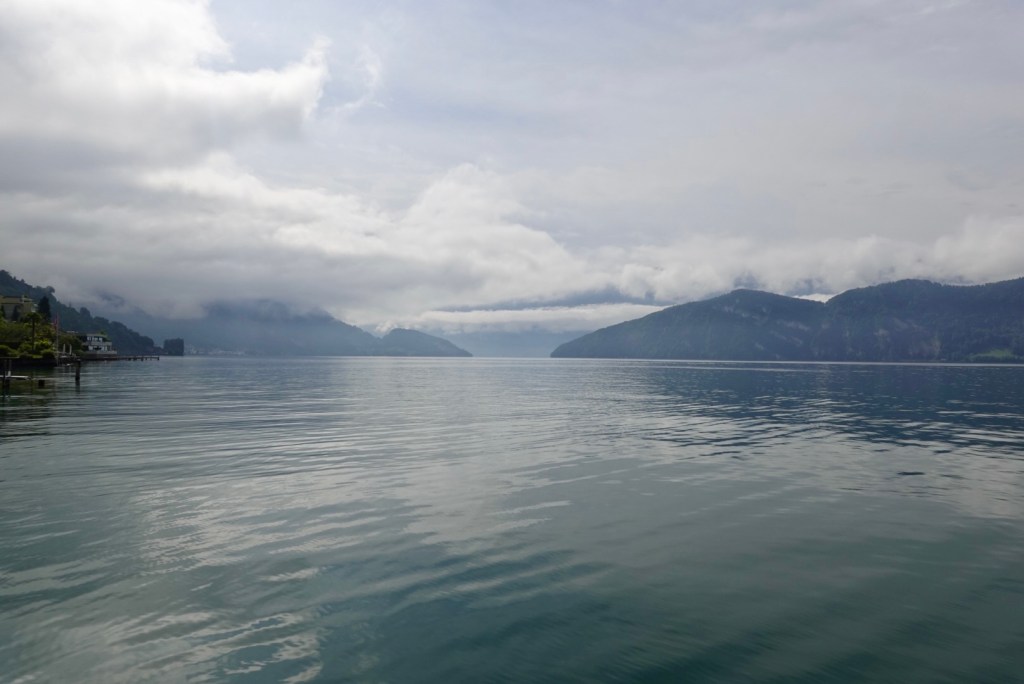
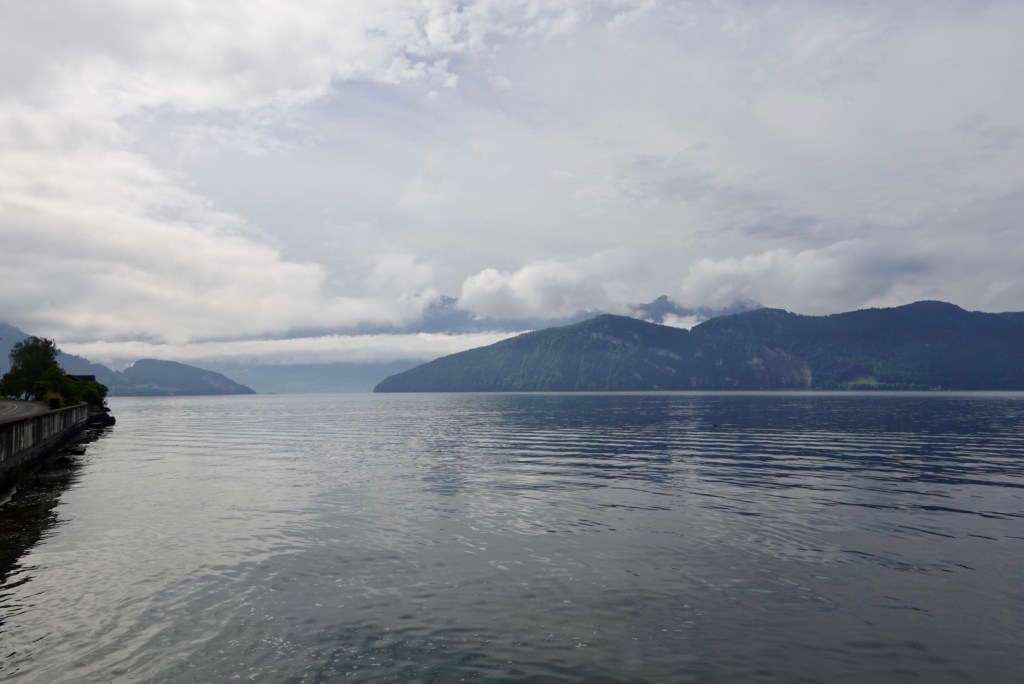
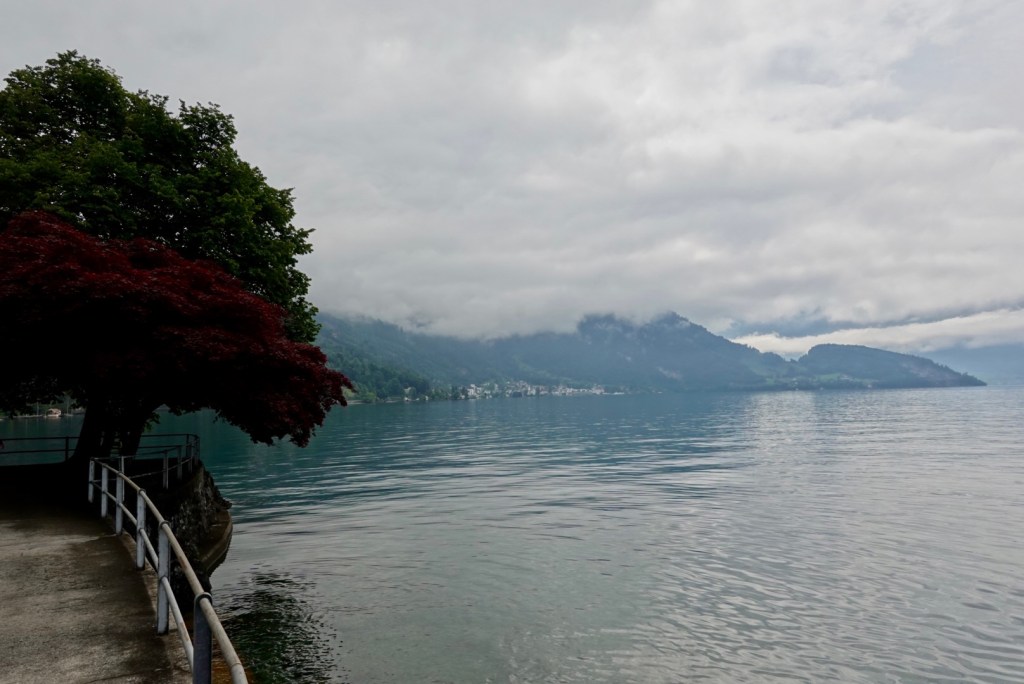
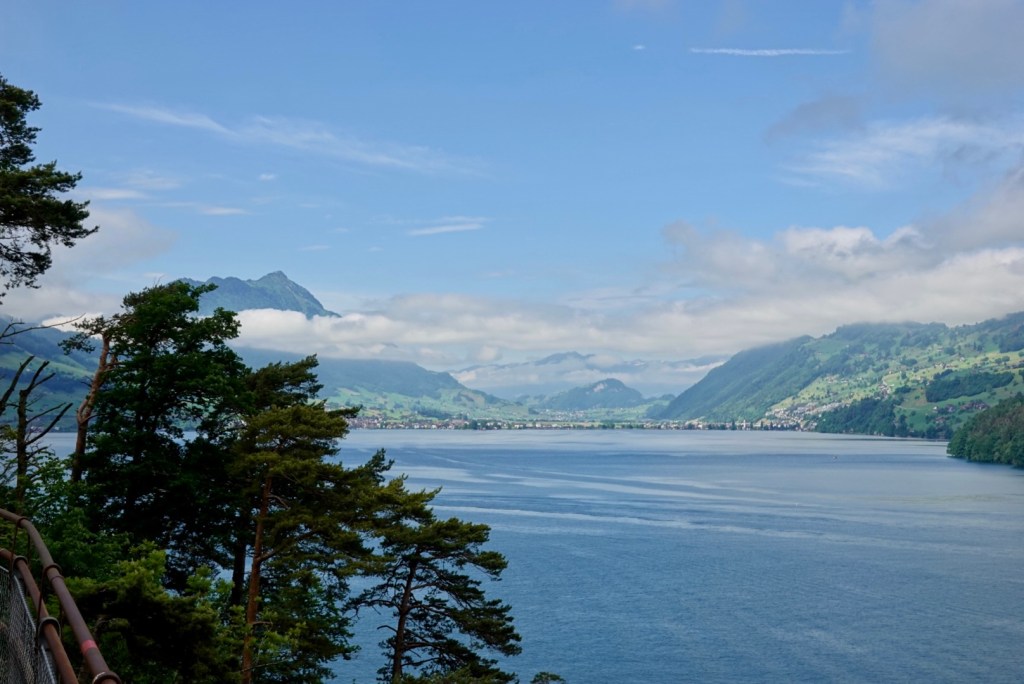
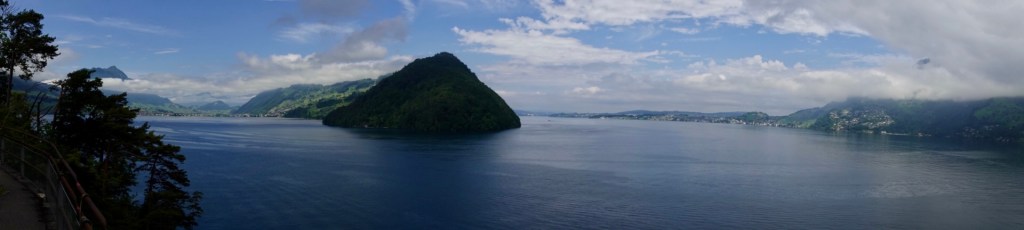
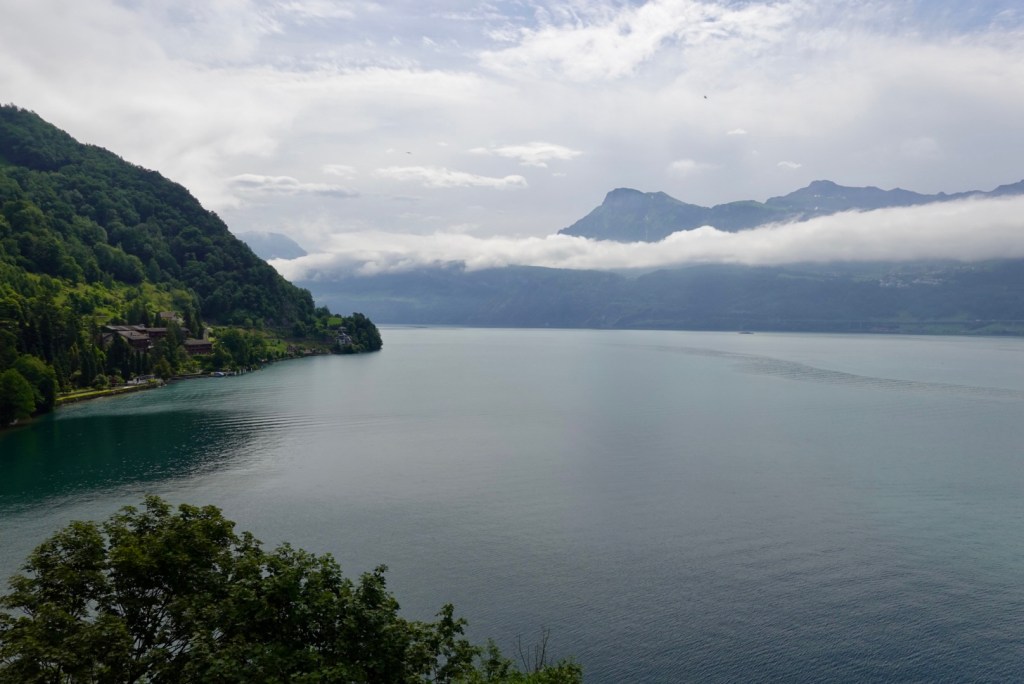
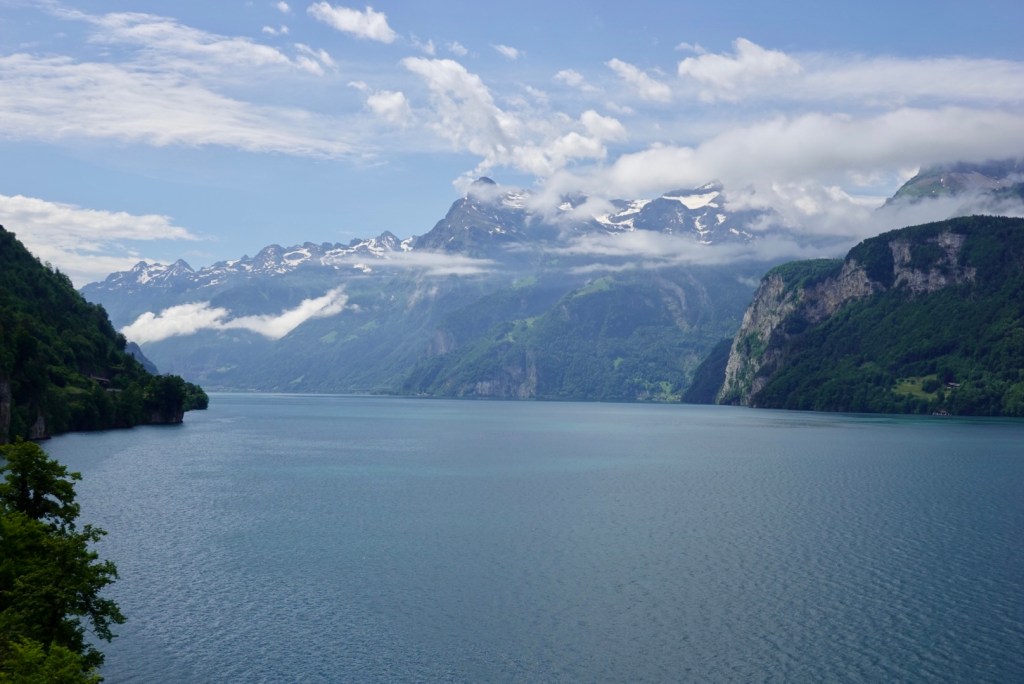
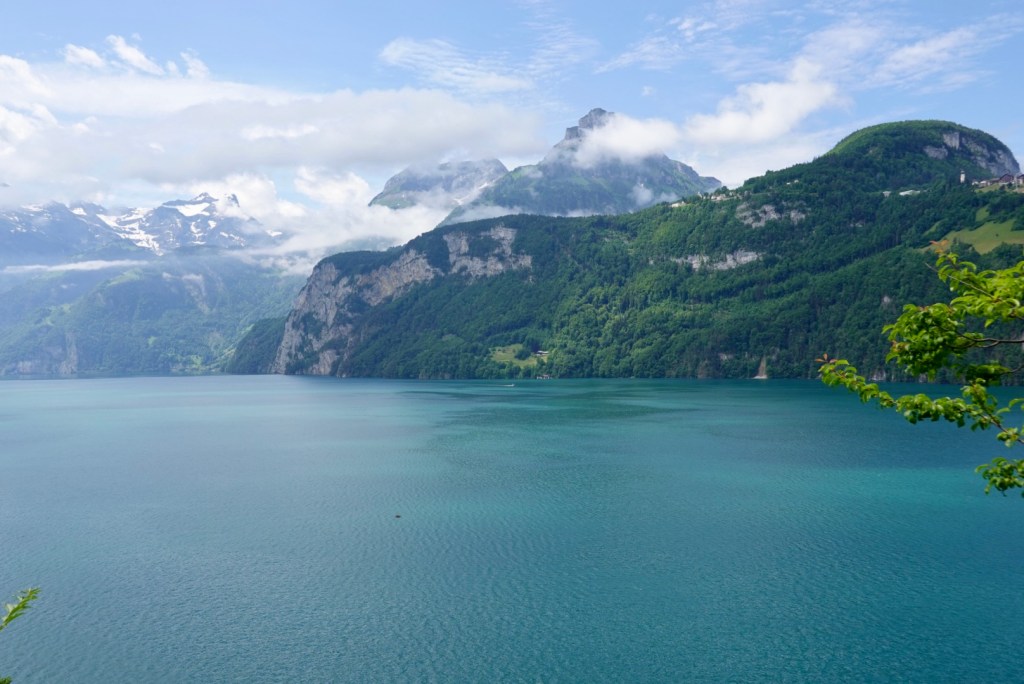
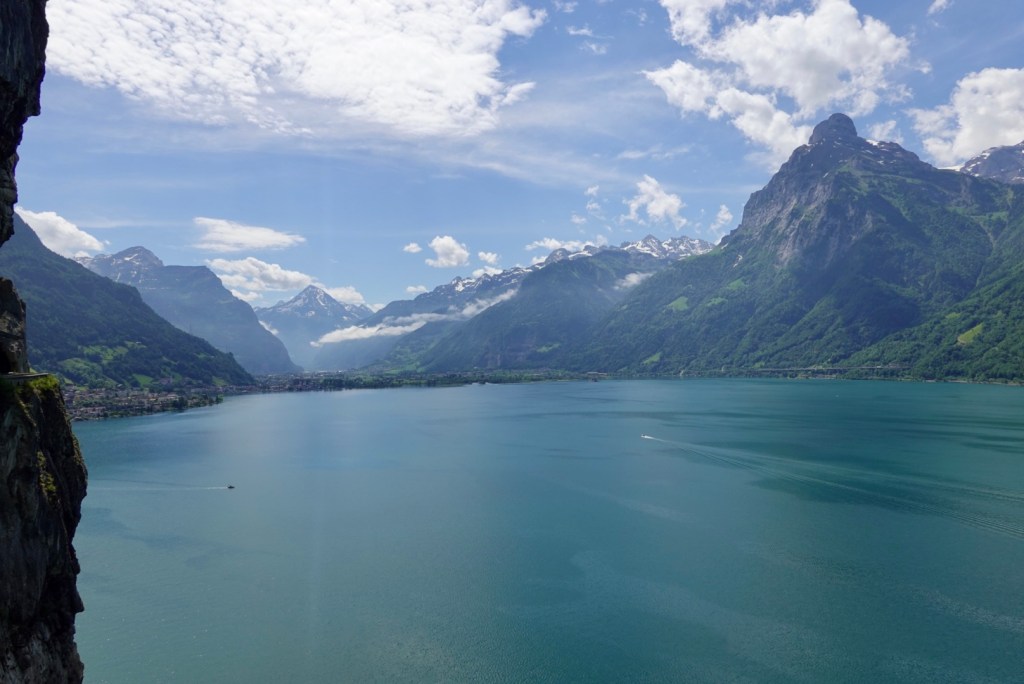
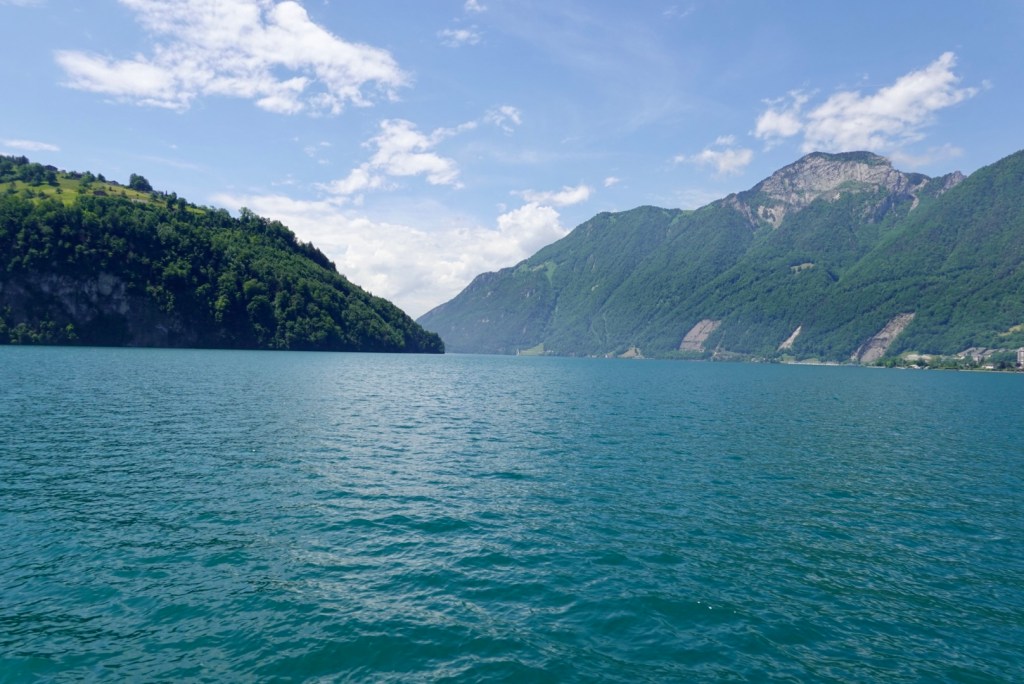
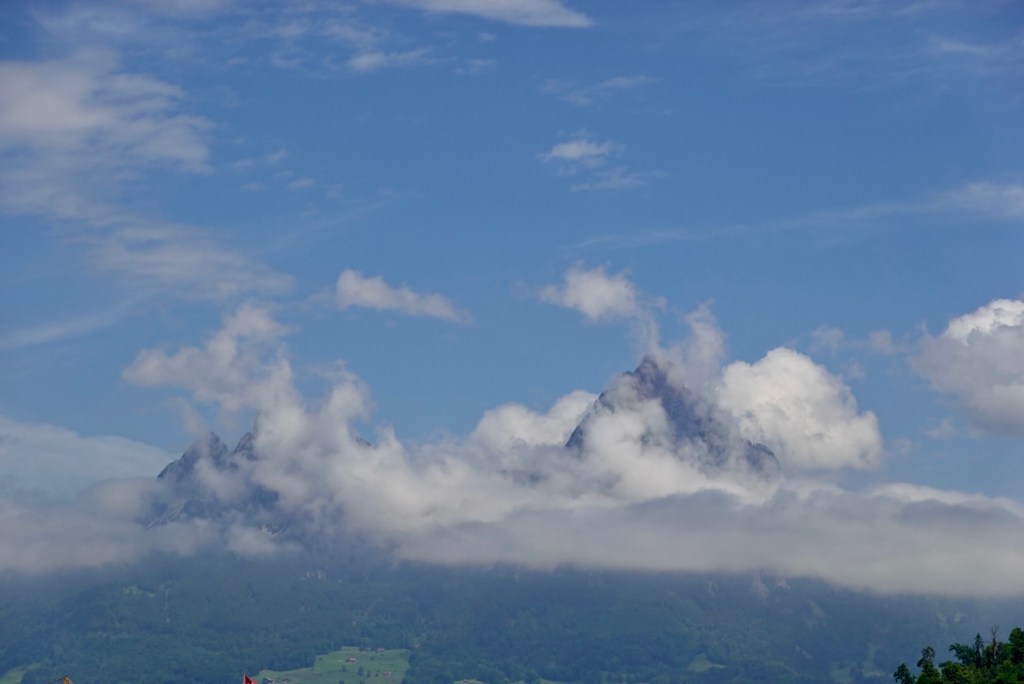
The lake weaves around, with varying headlands jutting out, on both sides, creating narrow passages looking reminiscent of fjords. We are heading towards those snow capped mountains.

When you head up hill from Brunnen there is a sign saying the road ahead is dangerous and that it is recommended you catch the train or ferry. I have never seen such a sign before and we were like β€˜eek’.

However very quickly we realised that this was not the case and that cyclists and walkers were very safely accommodated.

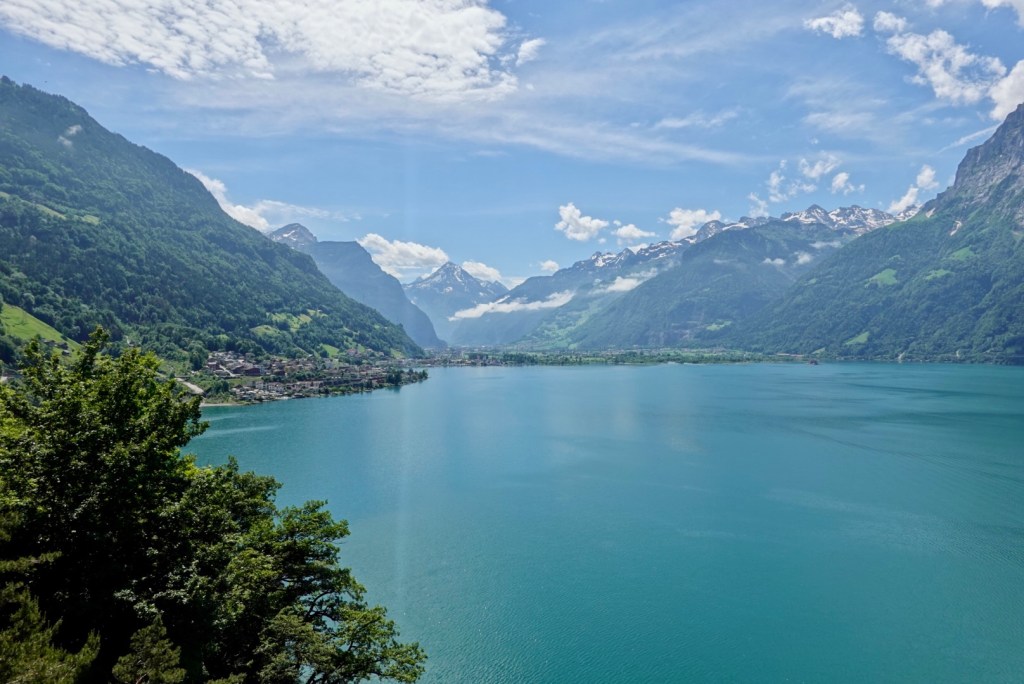
The last section of the lake, riding from Brunnen to Fluelen is the best section of riding scenery and infrastructure wise.

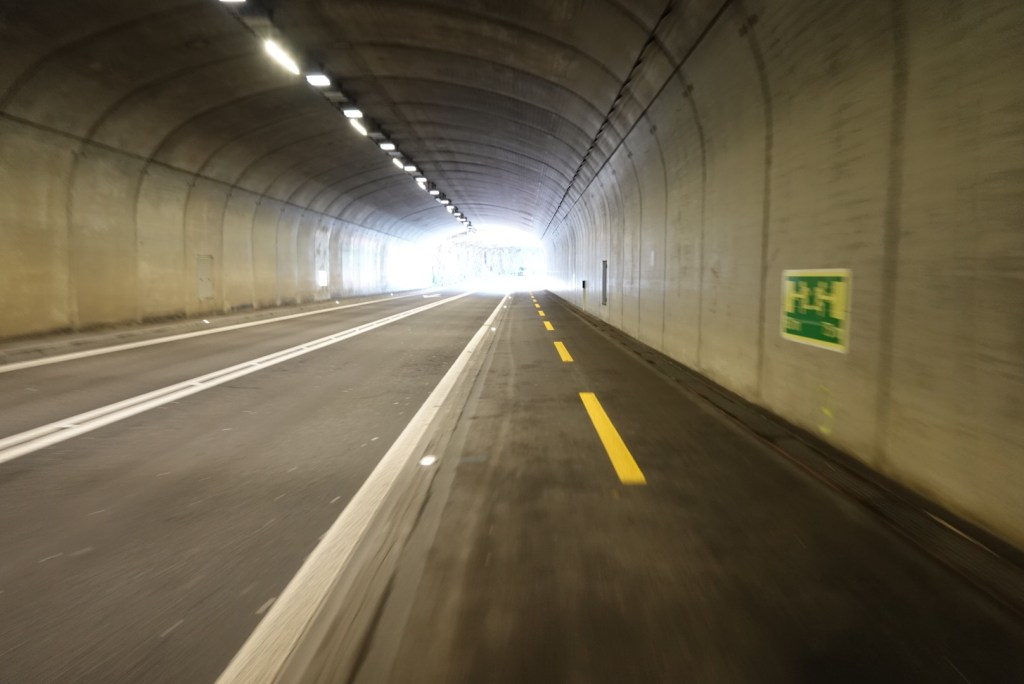
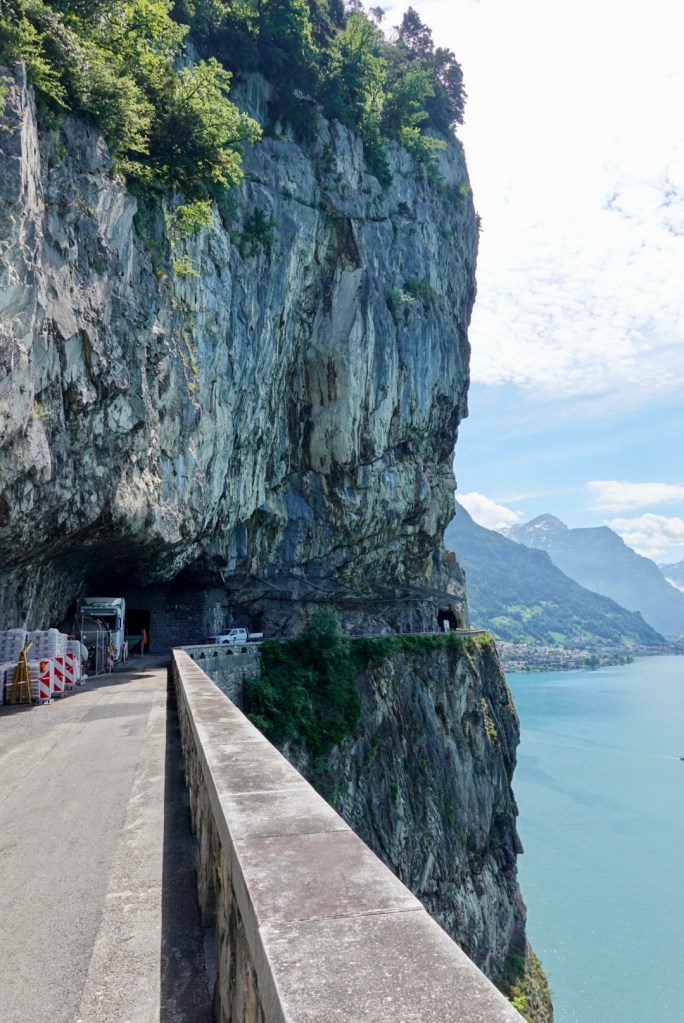
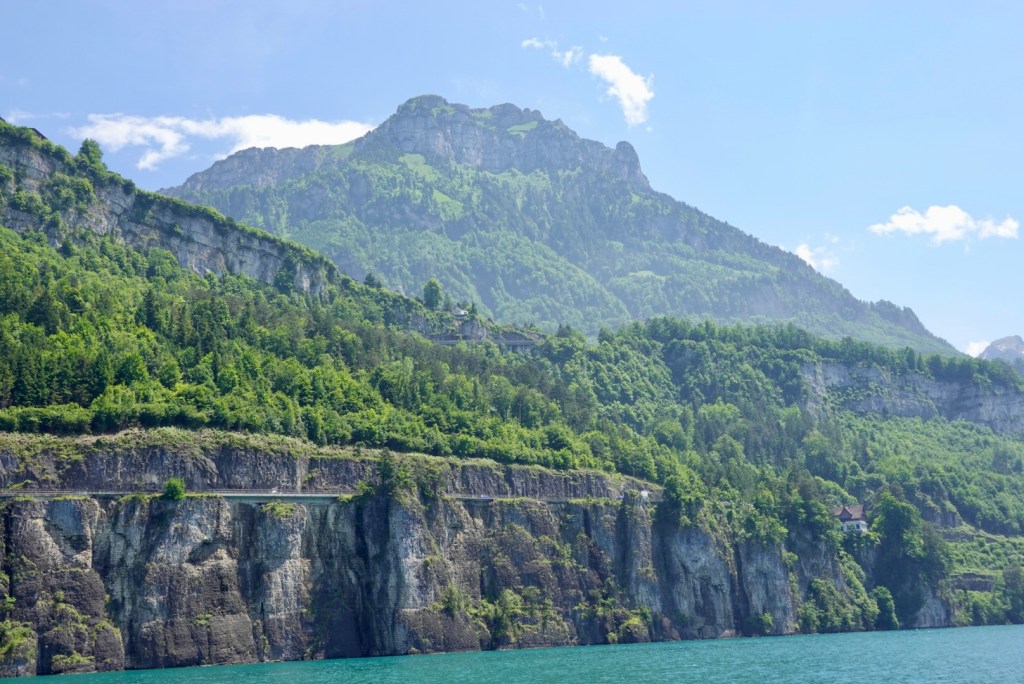
Getting to those mountains was an engineering masterpiece. We rode through multiple tunnels. Some were newer two lane tunnels, with a raised broad footpath for bikes and walkers. Others were older tunnels adjacent to newer ones for cars. The older tunnels were just for cycles and walkers. We must have ridden through nearly one km worth all up.

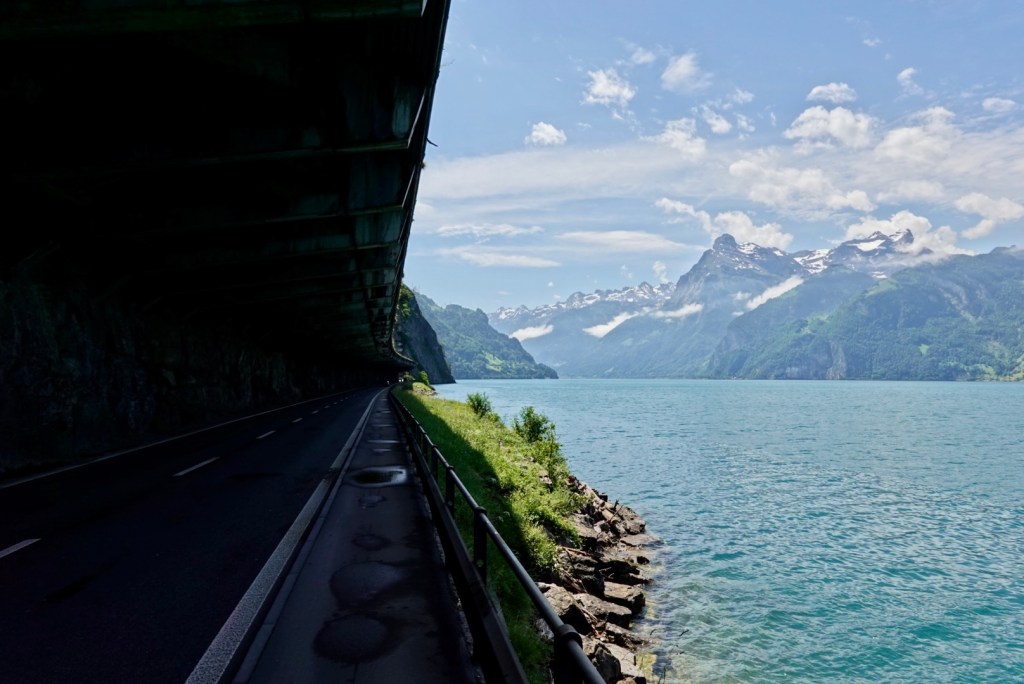
In other places the sides were open with a cycle track to the side.

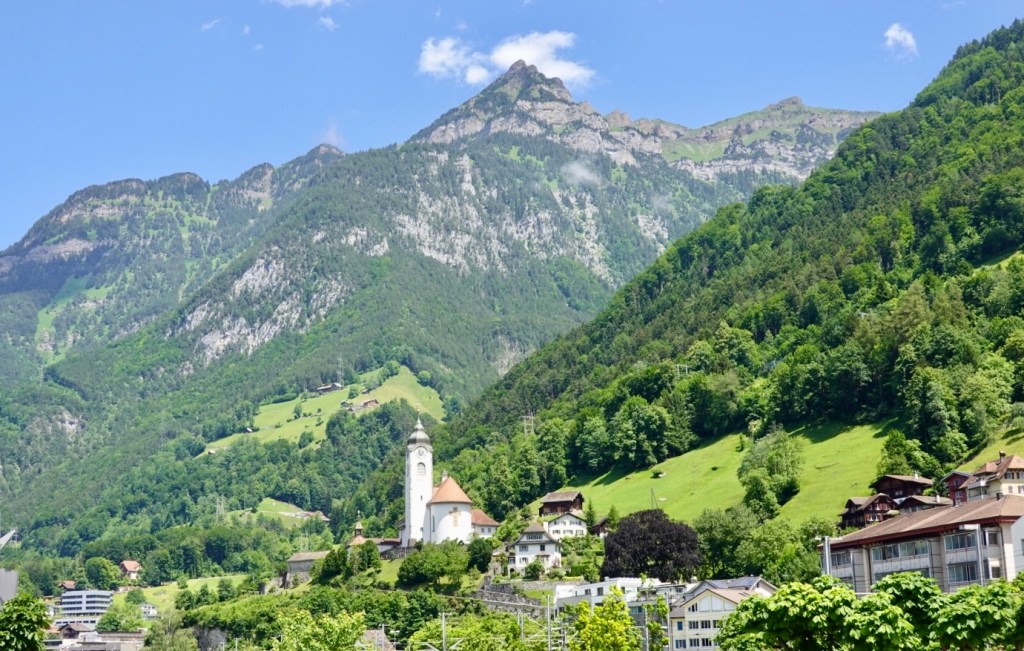
What a view
Cycling through one of the tunnels where you can see two car lanes, and the raised pathway for bikes and walkers.

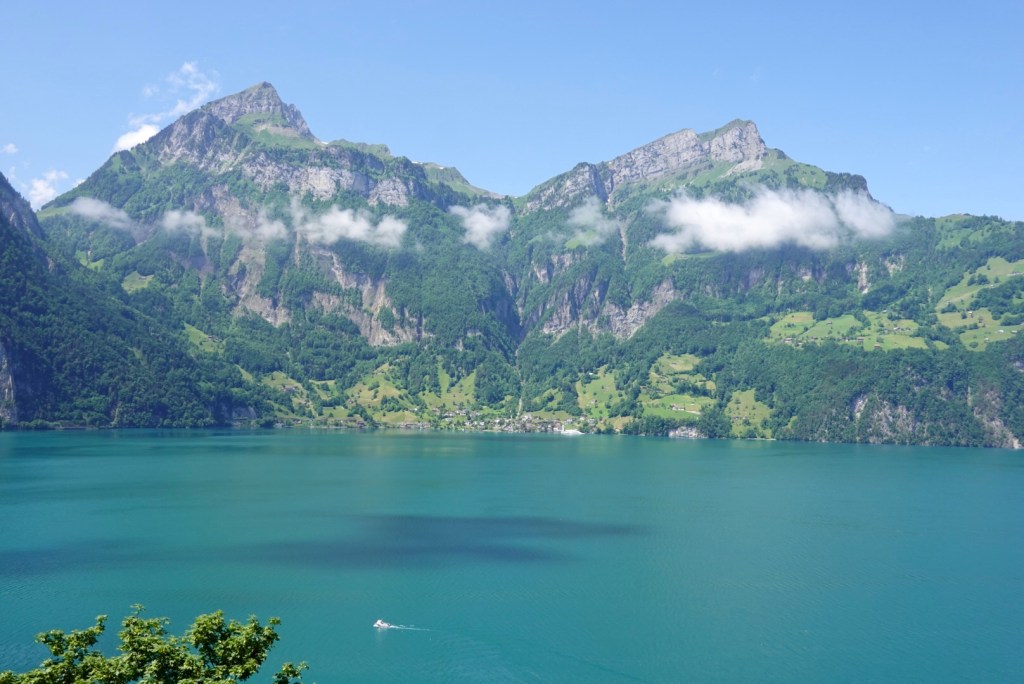
The closer we got to Fluelen the more amazing the scenery became.

An older rock road and tunnel ahead now used for cyclists and walkers.
Just beautiful

As we rode the last section of lake, we could see the ferry criss crossing the lake to various villages. We arrived at the ferry terminal 10 minutes before it was due to arrive and leave.The ferry departed hourly and the return trip took 3 hours.

As it was approaching 1 pm we decided to catch this ferry rather than explore further. The weather was lovely now, sun shining so it promised to be a great trip back. It cost a total of 112 Swiss francs (about Aud $185) including 16 Swiss francs for the bikes.

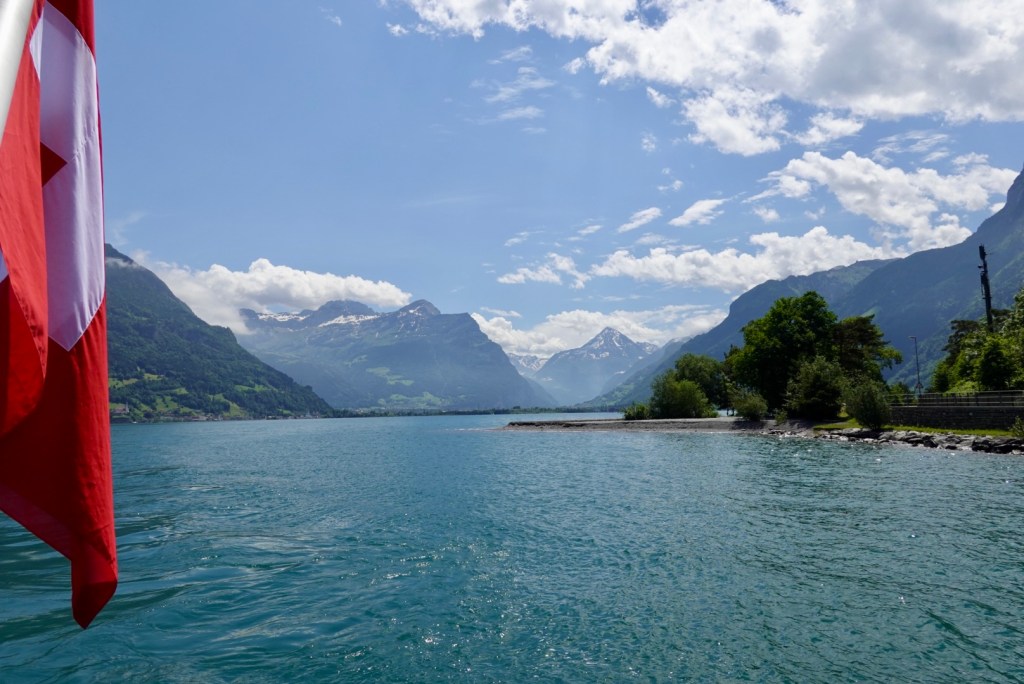
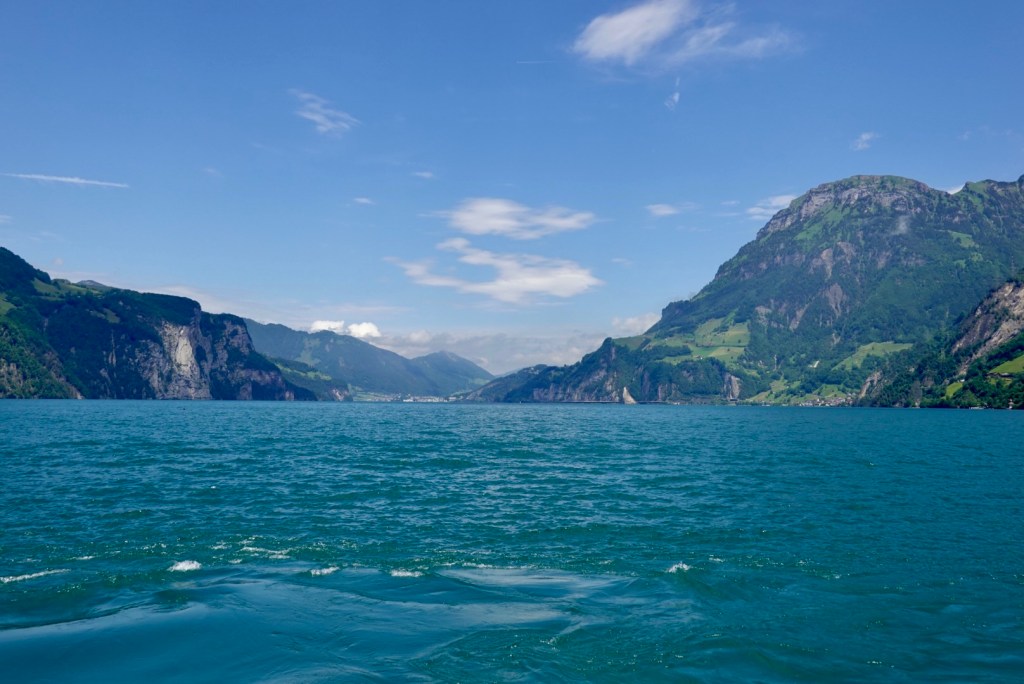
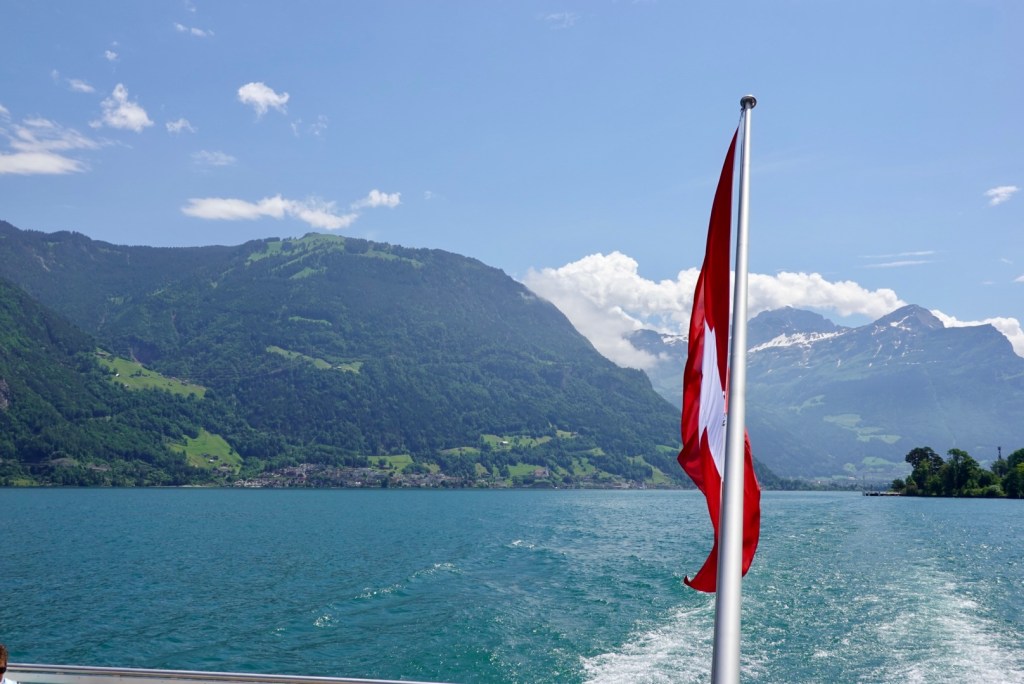
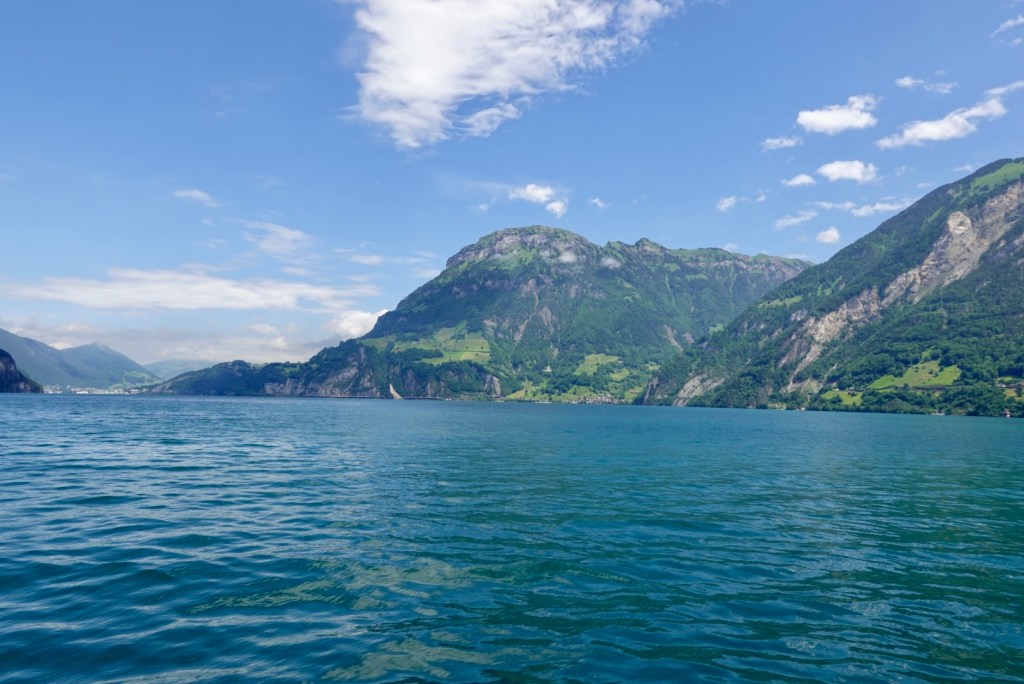
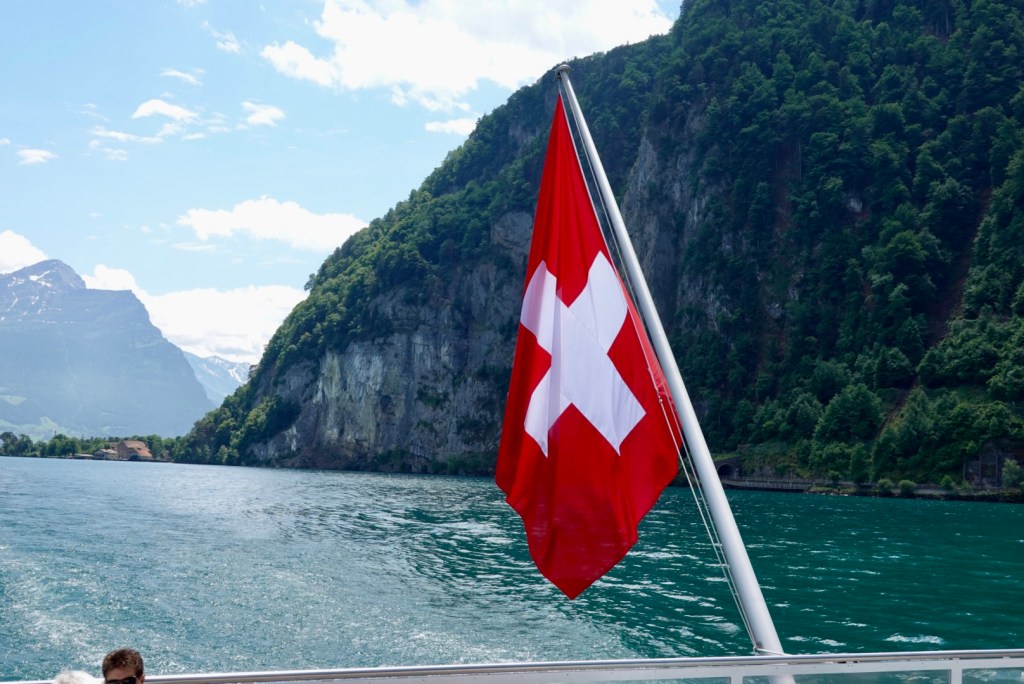
We found ourselves a great outdoor seat at the rear of the ferry looking backwards, so that we could savour the view of the mountains for as long as we could.

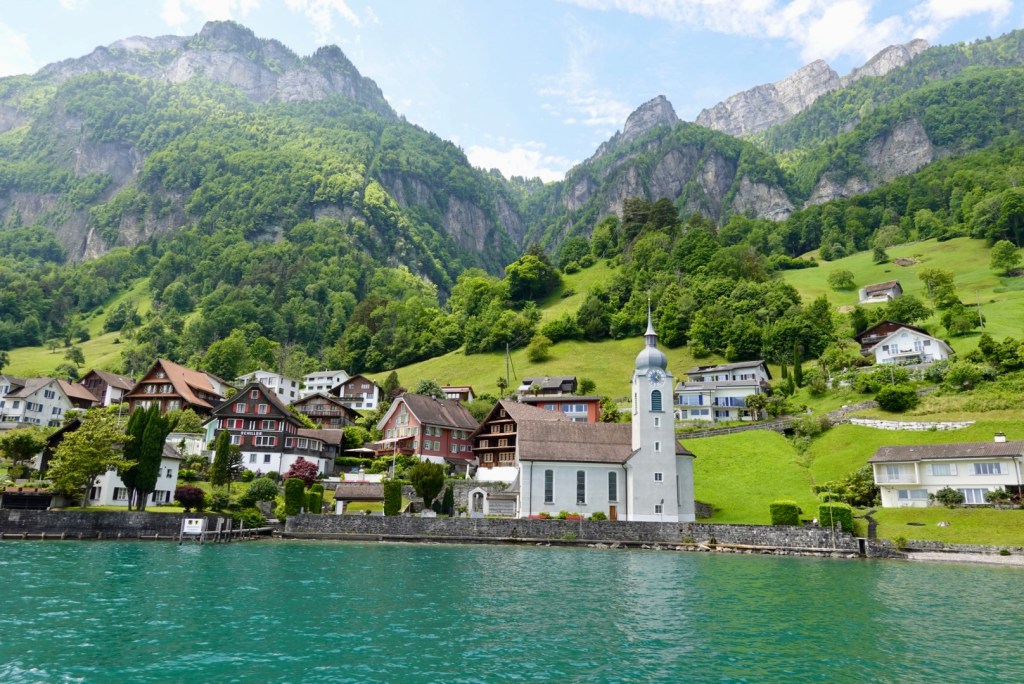
Church in Fleulen
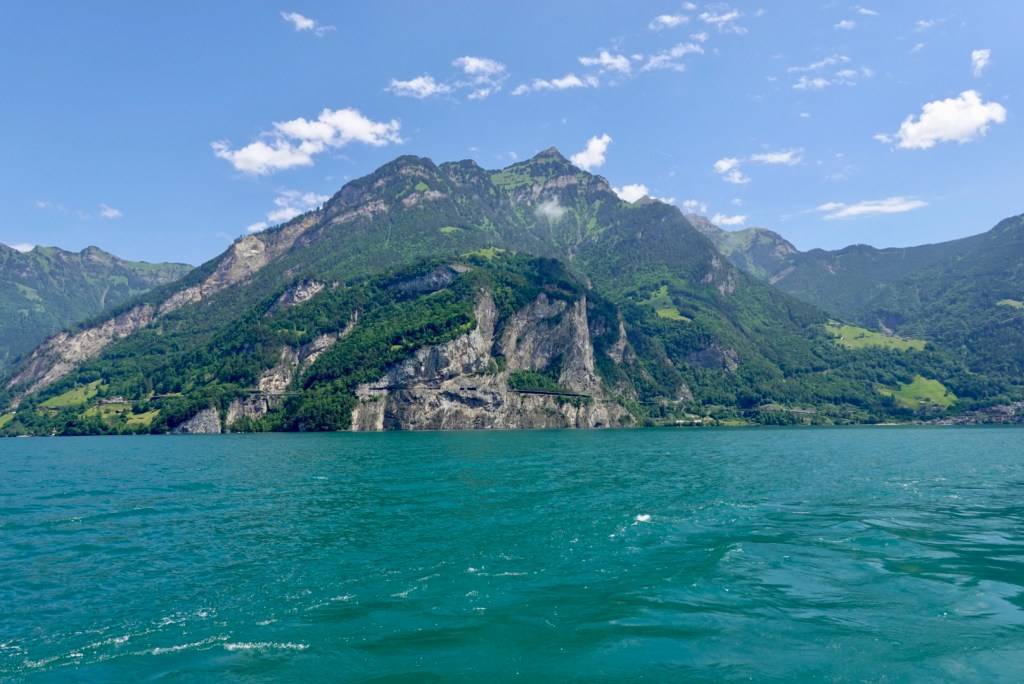
Look closely at this photo and you can see the open cut road and where the tunnels are that we rode through.
Another section we had ridden where the road goes across various gorges and crevices

The closer we got to Luzern the clouds came rolling in, like some great performance on stage, the curtains were closing. It was a magnificent performance and one that we would long remember.

This ride rates. If you are a cyclist and heading this way we can recommend the route. A shorter option would be to get the ferry to Vitznau and ride from there.

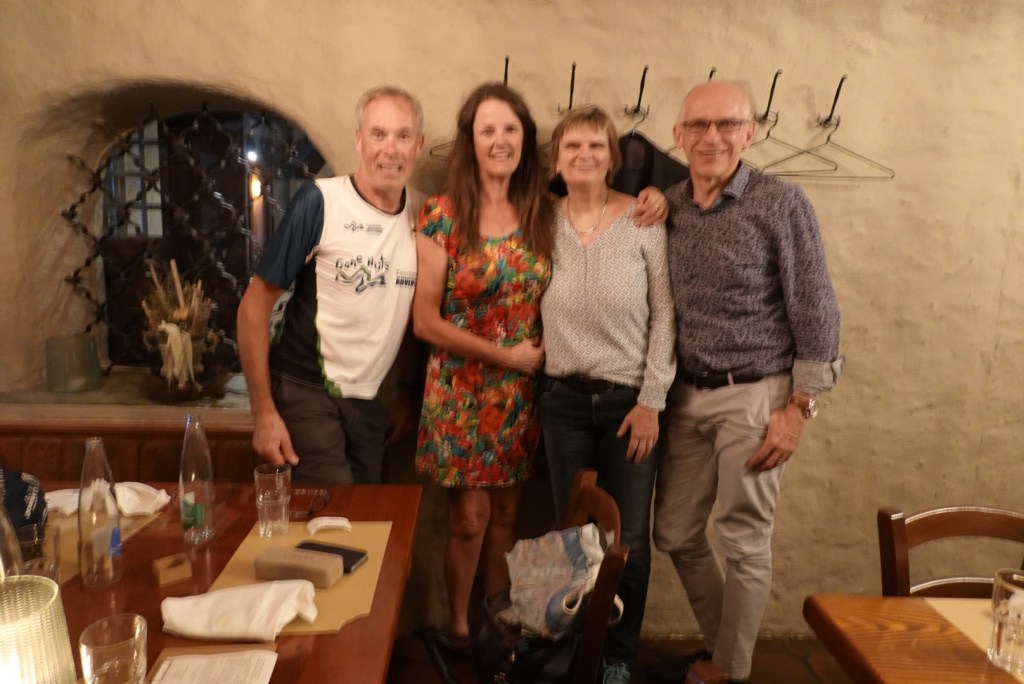
The day held another highlight, as we had dinner with friends Sandra and Rolf, friends I met in the Maldives in 1985. I have had a few catch ups in recent years, but not since 2019 due to not being able to travel.

We had a lovely meal at a local Swiss restaurant and I do so value our friendship lasting so many years.

The photo is a little blurry but the quality of the friendship is not. πŸ’•

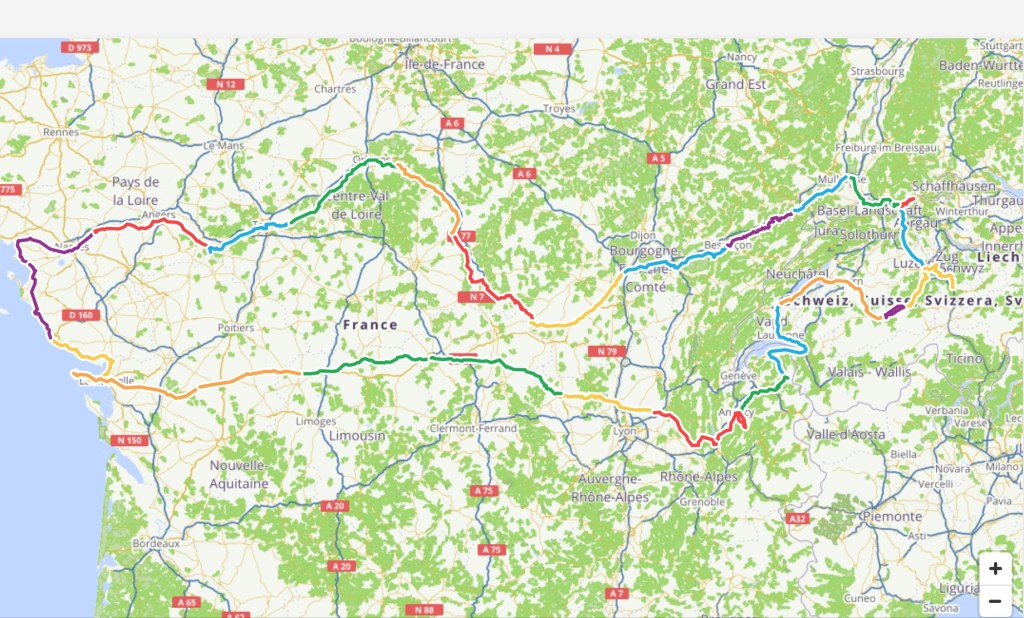
Well another day has gone, and tomorrow we ride back to where we started 3.5 weeks ago.

Thank you for reading, stay safe, smile on 😊